
Will Sellers: Benito Mussolini’s rise to power

One hundred years ago this month, Italy succumbed to a new political order that would ignite a worldwide struggle for freedom. Completely abandoning its rightful claim as the birthplace of republican self-government, Italy embraced the fanatical politics of Benito Mussolini and embarked on a sad journey of prioritizing rhetoric over reason and ideology over experience. The permanent scarring and disability of the veterans who suffered the horrors of trench warfare were a constant reminder of the failure of leadership that led to World War I. Each country would come to terms with its economy in this aftermath. Initially, countries experienced internal conflicts as citizens tried to define their new role in the world. The old leadership had clearly failed, but scant options were available to replace it. This was the age when academic discussions of government promoted communism, socialism, and nationalism in various combinations. Even though none of these systems was tried, much less true, people were restless for something new. In Italy, this search for something new gave rise to Mussolini. Remembering his ascension to power is not something to be celebrated, but rather observed. Even after 100 years, it is hard to reconcile the positive influence of Roman civilization with the destructive ideas of Mussolini. Nothing about Mussolini’s character is commendable. His youthful experiences revealed a bigoted bully who constantly fought his classmates; his knife play resulted in expulsion from a number of schools. Originally a socialist who advocated against war, his opinion gradually changed as he realized that the resulting destruction created possibilities for change and advancement. He thus became an advocate for war and against neutrality. So fervent was his newfound bellicosity that he was paid by the British to stir up Italians to fight against the Central Powers. This was not the first or last time that foreign powers would attempt to foment local support for an objective, only to have the instigator turn and become a mortal threat. It would be unfair to say that Mussolini was created by the British, but it is appropriate to note that his politics were financed by British pounds. Mussolini was a powerful advocate in speech and in print. He was an engaging writer and a mesmerizing orator. The cadence of his words and his soothing patronizing rhetoric gave him a following that morphed into a national movement. He was convinced that the answer to the constant post-war strikes and riots was a strong leader. And as he read various political tracts, Mussolini became convinced that he was the only leader who could unite his country and achieve prosperity. As Mussolini’s popularity grew and his stature increased, he forgot about any institutions of government and concluded he could be the government. He came to believe his own rhetoric, and his followers’ applause confirmed this view. Against any sense of traditional, liberal republican government, Mussolini assembled leaders of various disaffected groups and urged them to come together to form a new party. In giving an example of how tight their union and commitment to change should be, Mussolini advocated an image that would become the symbol of his government and an ill-used pejorative. Harking back to ancient Roman times, the symbol of power was a bundle of wooden rods surrounding an axe. Mussolini urged his followers to be a tight-knit group just like these “fascis” that surrounded the axe. Thus, the word fascist as a political movement was born. Sporting black shirts as an appeal to unnamed and forgotten men, Mussolini’s thugs imitated their leaders’ bullying tactics. In various towns and other political subdivisions, these gangs took power by force. The local leadership was not sure how to handle this development, but they were intimidated and succumbed to the demands of these unruly groups. A century ago, the Italian trade unions called a general strike. Mussolini used this event to demand that the national government act to restore order. Failing that, Mussolini threatened to march on Rome to take control. While simply using rhetoric as propaganda to promote himself, his words resonated with his followers. What started out as an opportunistic speech now became a rallying cry, and his followers heeded his encouragement by actually marching on Rome. At the time, the government in Italy was akin to a constitutional monarchy like England. While the King, Victor Emmanuel III, was generally respected, the prime minister and the parliament were not. When the Italian political leaders realized that Mussolini was serious about marching on Rome, they became afraid and asked the King to declare martial law. When he refused, the political leaders resigned. For reasons still debated, the King decided to ask Mussolini to become his prime minister and form a government. Mussolini did exactly this, but not willing to completely upset the status quo, he governed in coalition with other parties. Thus, he used the trappings of the official government to begin to seize power. Using extrajudicial means, including murder, he eliminated other political parties and leaders until he achieved his goal of becoming an absolute dictator. Initially, people were willing to tolerate the new government as it did provide the benefit of centralized efficiencies that the previous parliamentary system lacked. But eventually, when freedoms were curtailed, and the economy did not prosper as promised, Mussolini did what dictators always do; he found a national cause for distraction. Mussolini did this in a series of aggressive military actions culminating in the invasion of Ethiopia. The League of Nations tried to stop these naked aggressions, but without international leadership and with no real power, it took symbolic steps that not only failed to stop Italian atrocities but destroyed the League, opening the way, if not encouraging, other, more significant military aggressions culminating in World War II. Remembering Mussolini’s rise to power is to recall the consequences of not confronting a national bully who became an international pariah. If at any point in Mussolini’s infamy, someone in power had forcefully challenged him, the world would be a better place. Will Sellers is a
Alabama Medical Cannabis Association launches, names Patrick Lindsey as executive director

The Alabama Medical Cannabis Association has formally launched and named Patrick Lindsey as executive director, effective immediately. Lindsey is a native of Butler, Alabama, and has lived in Montgomery for over 25 years. He worked in governmental affairs for 17 years, running and managing successful political campaigns for various candidates and lobbying the state legislature on diverse issues. The Alabama Medical Cannabis Association’s mission is “to protect and promote a rational and compassionate approach to Alabama’s emerging medical cannabis regulatory framework, to serve as a responsible resource for policymakers, and to support and cultivate homegrown business opportunities for the medical cannabis industry in Alabama.” “I am excited to announce the official launch of the Alabama Medical Cannabis Association,” Lindsey said in a press release. “It is a true honor to serve as the first executive director of this novel association, which is launching at the perfect time to advance the well-being and future of Alabamians. “With illicit and deadly fentanyl lacing street drugs and the opioid epidemic ravaging communities across our state, there has never been more of a need for safe, controlled, medically prescribed cannabis in Alabama,” Lindsey continued. “This association will work diligently every single day to ensure Alabama’s medical cannabis system is a commonsense operation that successfully saves lives, eases suffering, promotes law and order, and supports Alabama agriculture and small businesses. There is nothing more important than the health and safety of Alabama families, and this association will be their champion.” Alva Lambert is the association’s Deputy Director. The Alabama State Legislature passed medical cannabis legislation in the Spring of 2021 and tasked the Alabama Medical Cannabis Commission with regulating the new industry. On September 1, the Commission began allowing applications for interested Alabamians to apply to be a licensed medical marijuana grower, transporter, processor, dispensary operator, or vertical integrator. It is estimated that it will be late 2023, at the earliest, before Alabamians can purchase Alabama-grown medical cannabis.
Barry Moore says investigation of Hunter Biden ‘long overdue’
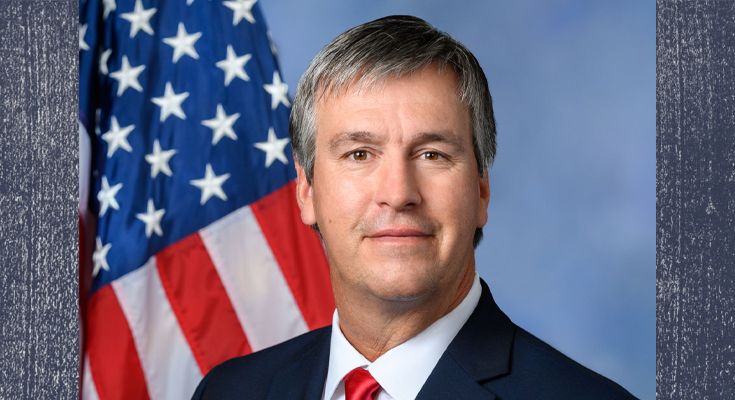
Federal prosecutors last week expressed confidence that they have enough evidence to charge the President’s son, Hunter Biden, with tax crimes and with lying on a gun application form. On Tuesday, Congressman Barry Moore said that the charges are overdue and are “just the tip of the iceberg.” “Federal agents are finally admitting they have more than enough evidence to charge Hunter Biden with a crime,” Rep. Moore wrote on Facebook. “The media wanted you to believe this was Russian disinformation, but American banks have filed over 150 suspicious activity reports involving Hunter and James Biden – and that’s just the tip of the iceberg. A thorough investigation into Hunter Biden’s shady business dealings is long overdue. This is a threat to our national security!” Republicans, including former President Donald Trump, have been publicly calling for an investigation of Hunter Biden. In fact, Trump was impeached by Congress for asking the President of Ukraine to investigate the younger Biden and appearing to tie U.S. aid to the investigation demand. On Tuesday, President Joe Biden acknowledged the pending charges against Hunter in an interview with CNN’s Jake Tapper. The President said that he was “proud” of his son and blamed drug addiction for Hunter’s apparent lapses of judgment. “I’m proud of my son,” the president told Tapper. “This is a kid who got, not a kid. He’s a grown man. He got hooked on, like many families have had happen, hooked on drugs. He’s overcome that. He’s established a new life.” Federal authorities now acknowledge that there has been an ongoing investigation of Hunter Biden since 2018. Democrats in control of Congress have repeatedly thwarted Republican efforts to investigate the growing swirl of controversies surrounding Hunter Biden. Conservatives have criticized many media outlets for giving extensive coverage to allegations against Donald Trump and members of his family, while, until recently, largely ignoring the Hunter Biden scandals and alleged influence peddling both here and overseas by Hunter Biden. The Hunter Biden stories have largely been relegated to reporting by Fox News and more right-leaning news sources. Now the open revelation that there may be some substance to those reports is being welcomed by Republicans. Hunter is being represented by Chris Clark. “It is a federal felony for a federal agent to leak information about a Grand Jury investigation such as this one,” Clark told NBC News. “Any agent you cite as a source in your article apparently has committed such a felony. We expect the Department of Justice will diligently investigate and prosecute such bad actors.” “As is proper and legally required, we believe the prosecutors in this case are diligently and thoroughly weighing not just evidence provided by agents, but also all the other witnesses in this case, including witnesses for the defense,” Clark said. “That is the job of the prosecutors. They should not be pressured, rushed, or criticized for doing their job.” It appears increasingly likely that Hunter will be charged. A charge is merely an accusation of a crime, and Hunter Biden, like every defendant, is presumed innocent until found guilty by a jury of his peers. Republicans view the pending Hunter Biden charges as vindication for their persistent focus on the President’s son. To connect with the author of this story, or to comment, email brandonmreporter@gmail.com.
Novelis begins work on new Baldwin County aluminum plant

Governor Kay Ivey and the Alabama Department of Commerce announced that site work is now underway on the new Novelis aluminum mill at Bay Minette, where a groundbreaking ceremony was held on Friday. The $2.5 billion aluminum mill is being built on the 3,000-acre Baldwin County Mega Site by Atlanta-based Novelis. This is the first facility of its kind constructed in this country in forty years. Construction crews are now engaged in earthwork, excavation, and piling. Over the next three months, Novelis will construct two new roadways on the site and expand the utility infrastructure necessary to begin building construction. The start of the construction project was celebrated last Friday with a formal groundbreaking ceremony attended by Ivey, Congressman Jerry Carl, local dignitaries, and corporate leaders from Novelis, Alabama Power, and CSX railroad. “I joined my friends down in Baldwin Co. to break ground on @Novelis $2.5B aluminum recycling and manufacturing plant!” Ivey announced on Twitter. “This project is expected to create 1,000 high-wage jobs and will support Alabama’s booming automotive industry.” Tom Boney is the Executive Vice President and President of Novelis North America. “Today marks an important milestone for our Novelis team as we ramp up construction and grow our team,” said Boney. “We seek to become an integral part of this community, contributing to the local economy and advancing residents’ quality of life every step of the way. We are grateful for the support we have received from the state, Baldwin County, Bay Minette, and other partners as we build our home here in Alabama.” The company will recycle aluminum cans into new ones and produce aluminum sheets for use in the automobile industry. Steve Fisher is the President and CEO of Novelis. “Through this investment, we want to demonstrate the strength of our growing customer partnerships, the commitment we have to sustainably grow our business, and the innovative, forward-thinking approach we are taking to modern manufacturing,” Fisher stated. “We are especially proud to celebrate our groundbreaking of this state-of-the-art facility on National Manufacturing Day, which highlights the exciting career opportunities available in our industry.” The company emphasized that the plant will be a low emitter of carbon. Bay Minette Mayor Robert “Bob” Wills was on hand to welcome the massive new employer to his small Baldwin County town. Wills said that workers will be well compensated for their efforts. “I believe the average salary to be paid by Novelis is about 65 thousand dollars, so that’s certainly a handsome salary, so I think a lot of people would be interested,” Wills told NBC Channel 15. “We have a small-town atmosphere. Our goal is to try to maintain that.” Baldwin was already the fastest-growing county in Alabama and is also one of the fastest-growing counties in America. This new employer will only add to the county’s transformation. Novelis expects to open the new plant sometime in 2025. To connect with the author of this story, or to comment, email brandonmreporter@gmail.com.
Steve Flowers: National trends do not affect Alabama
As mentioned last week, all polling points to a significant Republican pickup of congressional seats in the upcoming November General Election. It is a historical fact that the party that loses the White House in a presidential year picks up congressional seats in the following midterm elections. Furthermore, Democrats are in disfavor because of runaway inflation. Voters blame Joe Biden and the Democratic Congress for the inflated price of gas, groceries, and everything else. Americans vote their pocketbook. It’s the economy that counts, is what they say. We, however, in Alabama will vote party no matter what is going on in the economy. Over 60% of Alabamians will vote Republican. Although, the libertarian party fielding a slate of state candidates may skew these numbers. We have six Republican congressional seats, all white men, and one Democratic congressional seat held by an African American woman. It would not matter if the inflation rate was 30% and a Republican was in the White House, we would still elect six Republican congressmen and one Democratic congressperson. We do not fit into national politics. We are automatically placed in the Republican column for presidential elections, regardless of the Democratic or Republican nominees. We are colored red way before the election night numbers are counted. Both of our U.S. Senate seats are held by Republicans. When Katie Britt won the Republican Primary in June, the race was over. This race will be on the ballot next month. However, Katie Britt will win. Winning the Republican Primary in the Heart of Dixie is tantamount to election. The same was true for the Democratic Party in Alabama six decades ago. Folks, when we change, we change. We do not do things halfway. Sixty years ago, every statewide official was a Democrat. Every state judge was a Democrat. Our entire congressional delegation was Democratic. Today, not only is our congressional delegation 6-to-1 Republican, our legislature, both Senate and House, is 75% Republican. Every statewide elected official in Alabama is a Republican. The Republican control of Alabama politics today is so dominating that we could safely be called a one-party state, again, when it comes to statewide politics. A prevailing theme has continued in Alabama for over a century, and it is still pronounced today. Our state is divided politically based on race. Over 84% of whites vote Republican, and almost all, 96% of Black voters, vote Democratic. It is that simple; most parts of the country vote based on pocketbook issues, but Alabama and the Deep South vote on race and religion. Therefore, the national congressional numbers in the U.S. House may change to Republican, but we are Republican regardless. Our legislature will not change the congressional makeup of Alabama’s delegation from 6-to-1 Republican. However, that does not mean that the Federal Courts will not. African American Democratic lawmakers filed suit in federal court in the Northern District of Alabama late last year, asking the court to change the lines to create a second Black-majority congressional district. They argued that the current six Republican seats to one Democratic seat majority, which has been in effect since 1992, blatantly violates their Constitutional rights under the 1965 Voting Rights Act. If you put a percentage of the Black citizens, who, as we have said vote straight Democratic, into having one African American Democratic Congressman, that gives Black voters 13% of the representation. The Black population of Alabama is 27%. The argument that there should be two majority-minority districts has some merit. A three-judge federal panel made up of two Republican appointed jurists and one Democratic appointee agreed with the plaintiffs and ruled in their favor. They ordered the state legislature to go back to the drawing board and map out a second African American Democratic district. The Supreme Court intervened on January 24 and stayed the lower court’s decision. However, the stay was granted not on the merits of the case, but because it was too close to Alabama’s election, which had already begun. Supreme Court Justice, Brett Kavanaugh, wrote that the high courts have set precedents that federal courts should not disrupt state election procedures close to the time of an election. We have not seen the last of this ssue. We could see our congressional line-up change to five Republicans and two Democrats in the 2024 election. We will see. Steve Flowers is Alabama’s leading political columnist. His weekly column is in over 60 Alabama newspapers. He served 16 years in the state legislature. Steve may be reached at www.steveflowers.us.
Joe Guzzardi: Bill Clinton’s post-1994 mid-term immigration awakening
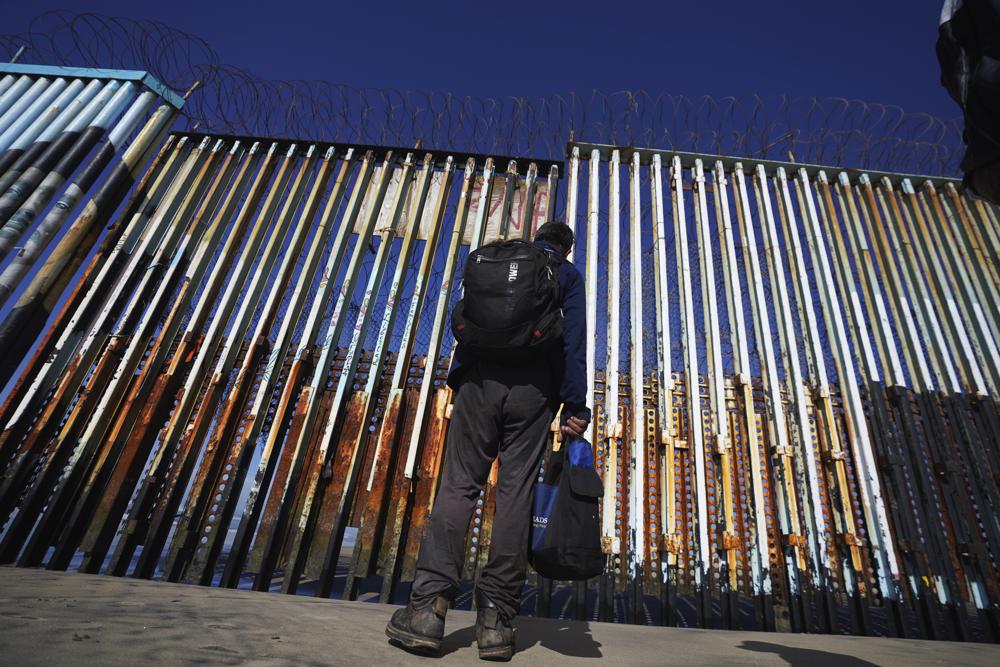
Every now and again, both during and after his two-term presidency, Bill Clinton espoused sound immigration thoughts that focused on the nation’s best interests. Most recently, Clinton, without naming Joe Biden, took direct aim at the sitting president’s open border fiasco. On a CNN podcast, and in response to a question about economic migrants who are, in the host’s description, “gaming” the asylum system, Clinton replied that “there’s a limit,” at which point open borders will cause “severe disruption.” Clinton added that the established immigration protocols, presumably a reference to the traditional agencies that assist incoming immigrants, function on the assumption that border conditions would “be more normal.” “Severe disruption” may be the kindest way to describe the chaos in the Rio Grande Valley and other entry points along the Southwest Border. And severely disrupted is an understatement to define the conditions in sanctuary cities New York, Chicago, and Washington, D.C., where the mayors are grappling unsuccessfully to accommodate the migrants that Texas and Florida governors Greg Abbott and Ron DeSantis send north. New York Gov. Kathy Hochul summoned the National Guard to help Eric Adams with his plan, still in flux, to relocate the migrants to a Randall Island tent city. Adams, who declared the incoming migrants’ need for assistance “a humanitarian crisis,” pleaded to no avail with Biden for a minimum $500 million emergency aid infusion. Having no money to deal with incoming migrants is as disruptive, to use Clinton’s word, as conditions get. Clinton has long been aware of over immigration’s effect on American citizens. In his 1995 State of the Union address, given shortly after Republicans picked up eight Senate seats and a net 54 House seats post a GOP mid-term rout to win congressional control for the first time in four decades, Clinton spoke about the anxiety Americans experience during periods of unchecked immigration. Clinton listed many dangers that illegal immigration presents to Americans that, included illegal hiring, the subsequent U.S. job losses, and providing costly social services. Clinton’s word-for-word conclusion: “It is wrong and ultimately self-defeating for a nation of immigrants to permit the kind of abuse of our immigration laws we have seen in recent years, and we must do more to stop it.” During his SOU speech, Clinton mentioned Barbara Jordan, the former U.S. representative who chaired the U.S. Commission on Immigration Reform. The commission’s goal was to establish a “credible, coherent immigrant and immigration policy.” The African-American Democrat from Texas endorsed significant legal immigration reductions, emphasizing high-skilled admissions, fewer refugees, more deportations, and a chain migration overhaul that would limit sponsorship to nuclear family members. Jordan distilled her immigration vision in a sentence: “Those who should get in, get in; those who should be kept out, are kept out; and those who should not be here will be required to leave. However, Jordan died just months after releasing her report, after which a civil rights, Hispanic advocacy coalition opposed to Jordan’s immigration goals strong-armed Clinton into backing away. Had Jordan lived, her presence would have kept Clinton committed to her commonsense immigration reform rules. Should the GOP manage to recapture Congress, no sure thing, the results won’t spawn a 1995-style immigration awareness in Biden similar to Clinton’s. As Vice President, Biden continuously hailed “constant” and “unrelenting” immigration stream “in large numbers” as America’s source of strength. Given the red carpet welcome Biden has extended to millions of illegal immigrants and gotaways, complete with, in many cases, parole and work authorization, a presidential immigration awakening is highly improbable. Joe Guzzardi is a nationally syndicated newspaper columnist who writes about immigration and related social issues. Joe joined Progressives for Immigration Reform in 2018 as an analyst after a ten-year career directing media relations for Californians for Population Stabilization, where he also was a Senior Writing Fellow. A native Californian, Joe now lives in Pennsylvania. Contact him at jguzzardi@pfirdc.org.
Voters in some key swing states to decide on voting access
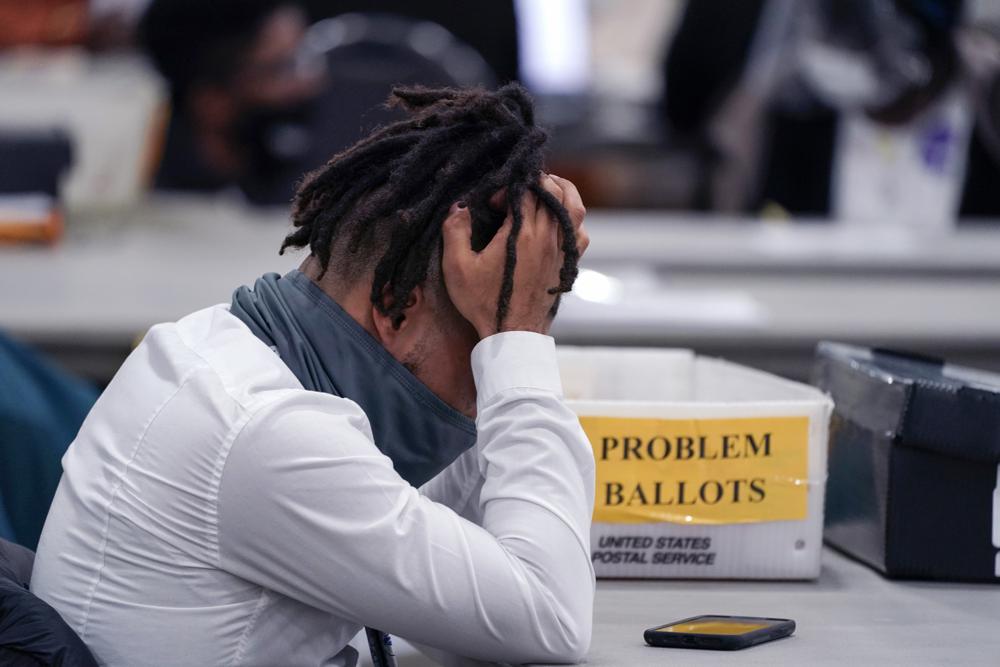
All but lost in the shadow of major contests for U.S. Senate and governor, voters in some battleground states will be deciding ballot proposals this November that could reshape the way they vote in the next presidential election. In Arizona, scene of the closest presidential contest in 2020, the question is whether to require more identification to vote in the future. In Michigan, another swing state, voters will consider whether to make it easier to cast early ballots. Voting-related proposals will be on the ballot in several other states, including a measure to adopt ranked-choice voting in Nevada that — if approved this year — would need a second vote in 2024 to take effect.” Most of the measures are garnering little attention but could have profound effects on voting in some of the most politically competitive states for years to come. They mark an escalation of what voting expert Jon Sherman describes as “the voting wars” — battles between Democrats, Republicans, and activist groups over laws specifying how people register, obtain mail-in ballots, prove their identity, and cast ballots. “The parties and their allies are fighting over every last voting rule and trying to make predictions about how they think it will help or hurt their chances of winning, particularly in closely competitive states,” said Sherman, litigation director and senior counsel at the Fair Elections Center, a nonprofit that advocates for voting access. Efforts to change voting laws ramped up after the 2000 presidential election when a U.S. Supreme Court decision in Florida’s exceptionally close race gave Republican George W. Bush the victory over Democrat Al Gore. It intensified after the 2020 election, as Republican President Donald Trump refused to acknowledge his loss to Democrat Joe Biden while pressing false claims of widespread fraud, and some Republican-led states responded by passing restrictive voting laws. Arizona, which Biden won by about 10,500 votes, was one center of controversy. After a six-month review focused on Arizona’s largest county, a Trump-friendly firm hired by Republican state lawmakers ended up with vote results confirming Democrat Biden’s victory. Republicans who control the Legislature subsequently placed a proposed constitutional amendment on the November ballot that would strengthen voter identification laws. It would require people voting in person to show a photo ID, and eliminate a current alternative of providing two documents bearing a person’s name and address, such as a recent utility bill and bank statement. People voting with mailed ballots — the vast majority in Arizona — would have to list their date of birth and either their driver’s license number, a state identification number, or the last four digits of their Social Security number. Republican state Sen. J.D. Mesnard, who sponsored the measure, said the intent is to “make the election as secure as possible” while addressing “a growing crisis in confidence” that could discourage some people from voting. But rather than reassuring voters, tougher ID requirements could dissuade some from voting at all and actually lead to fraud by exposing personal information, said Darrell Hill, policy director of the American Civil Liberties Union of Arizona, which opposes the measure. “You’re opening people up to greater potential identity theft,” Hill said. Only a few states — Georgia, Minnesota, Ohio — have similar proof-of-identity measures for mailed ballots, according to the National Conference of State Legislatures. Arkansas requires voters to provide a copy of a photo ID when returning a mailed ballot. In Michigan next month, a ballot initiative would pre-empt Republican attempts to tighten photo identification laws by amending the state Constitution to include the current alternative of signing an affidavit. It also would expand early voting options, require state-funded return postage and drop boxes for absentee ballots, and specify that the Board of State Canvassers has only a “clerical, nondiscretionary” duty to certify election results. Trump allies had tried to persuade canvassers to delay certifying the 2020 results. The goal of the new initiative is to “enhance the integrity and security of the elections by sort of modernizing how they’re administered and making them more accessible,” said Khalilah Spencer, president of Promote the Vote, which backs the measure. On the other side, Michigan Republican Party spokesman Gustavo Portela said the initiative “opens the door up for fraud” through the combination of early voting and a constitutional exception to showing photo ID. Just four states — Alabama, Connecticut, Mississippi, and New Hampshire — lack an in-person early voting option for all voters. Connecticut’s November ballot will feature a proposed constitutional amendment authorizing the Democratic-led General Assembly to create an early voting law. A similar ballot proposal failed in 2014. Supporters in Connecticut hope this time is different — both because the new version is more clearly written and because the vote comes after the coronavirus pandemic heightened awareness about early voting. “The idea that everybody has free time on a Tuesday between 6 a.m. and 8 p.m. — and that’s their only opportunity to participate in our democracy — is a little dated,” said Democratic state Sen. Mae Flexer, co-chair of the Connecticut legislative committee that sponsored the measure. In Nebraska, Republicans haven’t been able to get a voter photo ID bill through the nonpartisan Legislature. But it will appear on the November ballot, thanks to an initiative petition drive bankrolled by Marlene Ricketts, the mother of term-limited Republican Gov. Pete Ricketts. Civic Nebraska, a voting rights group opposed to the measure, describes it as “a solution in search of a problem.” “There’s not an iota of evidence in Nebraska that says we would need this extra step” to vote, said Civic Nebraska spokesman Steve Smith. Gov. Ricketts acknowledged during a recent radio call-in show that there hasn’t been much election fraud. But he said, “one of the things that came out of the 2020 election is that people had concern about the integrity of our voting systems.” There is no evidence of widespread fraud in the 2020 election. Judges have turned away dozens of challenges by Trump and his allies, multiple state reviews have confirmed the results, and Trump’s own Department of Justice concluded the election outcome was accurate. Nevada’s proposed constitutional amendment would advance the top
Florida shrimpers race to get battered fleet back to sea
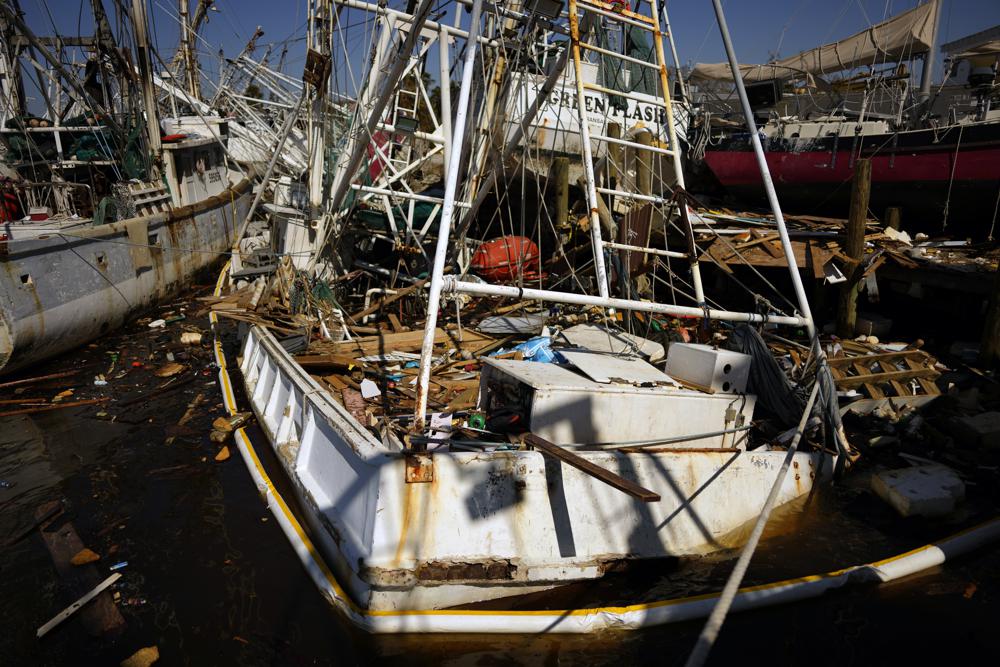
The seafood industry in southwest Florida is racing against time and the elements to save what’s left of a major shrimping fleet — and a lifestyle — that was battered by Hurricane Ian. The storm’s ferocious wind and powerful surge hurled a couple dozen shrimp boats atop wharves and homes along the harbor on Estero Island. Jesse Clapham, who oversees a dozen trawlers for a large seafood company at Fort Myers Beach, is trying to get boats back to sea as quickly as possible — before their engines, winches, and pulleys seize up from being out of the water. One of two shrimpers that didn’t sink or get tossed onto land went out Sunday, but the victory was small compared with the task ahead. “There’s 300 people who work for us, and all of them are out of a job right now. I’m sure they’d rather just mow all this stuff down and build a giant condo here, but we’re not going to give up,” said Clapham, who manages the fishing fleet at Erickson and Jensen Seafood, which he said handles $10 million in shrimp annually. The company’s fractured wharves, flooded office, and processing house are located on Main Street beside another large seafood company, Trico Shrimp Co. There, a crane lifted the outrigger of grounded shrimper Aces & Eights — the first step toward getting it back in the water. Across the yard, the massive Kayden Nicole and Renee Lynn sat side-by-side in the parking lot, stern to bow. Shrimping is the largest piece of Florida’s seafood industry, with a value of almost $52 million in 2016, state statistics show. Gulf of Mexico shrimp from Fort Myers has been shipped all over the United States for generations. Now, it’s a matter of when the fishing can resume and whether there will still be experienced crews to operate the boats when that happens. Deckhand Michele Bryant didn’t just lose a job when the boat where she works was grounded, she lost her home. Shrimping crews are at sea for as long as two months at a time, she said, so members often don’t have homes on land. “I’ve got nowhere to stay,” she said. “I’m living in a tent.” Richard Brown’s situation is just as precarious. A citizen of Guyana who was working on a boat out of Miami when Ian hit southwest Florida, Brown rode out the storm on one of four boats that were lashed together along a harbor seawall. “We tried to fight the storm. The lines were bursting. We kept replacing them but when the wind turned everybody was on land,” he said. There’s no way to catch shrimp on a boat surrounded by dirt, so Brown is staying busy scraping barnacles off the hull of the Gulf Star. “It’s like it’s on dry dock,” he said — but he’s no more sure what to do now than at the height of the storm. “It was terrifying – the worst experience,” said Brown, who is more than 2,160 miles (3,480 kilometers) from his home in South America. “I was just thinking, ‘You could abandon the ship.’ But where are you going?” Seafood fleets along the Gulf Coast are used to getting wiped out by hurricanes. Katrina pummeled the industry from Louisiana to Alabama in 2005, and the seafood business in southern Louisiana is still recovering from Hurricane Ida’s punch last year. But this part of Florida hasn’t seen a storm like Ian in a century, leaving people to wonder what happens next. Dale Kalliainen and his brother followed their father into the shrimping business and owns the trawler Night Wind, which landed amid a mobile home park near a bridge. He said high fuel prices and low-cost imported seafood took a bite out of the industry long before Ian did its worst. “There used to be 300 boats in this harbor, and now there’s maybe 50,” he said. “It’s going to be probably years before this business is even close to being back to what it was.” Clapham, the 47-year-old fleet manager, has spent his entire life on shrimp boats. The industry already operates on a thin margin and needs help recovering from Ian, he said. “These boats go out and catch $60,000, $70,000 worth of shrimp a month, but it costs $30,000 to $50,000 to put fuel on them and groceries and supplies, and then you’ve got to pay the crew. And sometimes these boats’ (catches) don’t even pay for everything,” he said. “We take money from one boat and get another boat going and send ’em back fishing just to keep going.” Republished with the permission of The Associated Press.
