
City of Enterprise issues a proclamation honoring Richard Shelby

U.S. Senator Richard Shelby was in Enterprise last Thursday, where the City awarded him a proclamation honoring him for his 36 years of service to the state in the Senate. “Grateful to the City of Enterprise and Mayor [William] Cooper for the proclamation regarding my career in public service,” Shelby said on Twitter. “I’ve had the pleasure of representing the people of Enterprise in the Senate for the last 36 years. Thank you, Enterprise, for allowing me that high honor.” Shelby is retiring at the end of this year after six terms in the Senate. He is the Ranking Republican on the powerful Senate Appropriations committee, which he chaired until Republicans lost control of the Senate in 2021. Despite his pending retirement, Shelby is still very engaged in national affairs. “Since President [Joe] Biden took office in January 2021, inflation has risen 13.5%,” Shelby said on Twitter. “Democrats are clearly in over their heads and unable to bring down costs. The American people are tired of overpaying for gas, groceries, utility bills, etc. It’s unaffordable and unacceptable.” Shelby defeated incumbent Republican Senator Jeremiah Denton in 1986 to win the office as a Democrat. Shelby never really had a close election after that first election, easily besting five general election opponents in the years since. In 1994 Shelby switched from the Democratic Party to the Republican Party. Shelby has been credited with landing federal dollars for projects across the state over the years. “There is not a city or county in Alabama that has not benefitted from Senator Shelby’s seniority and power,” political columnist former State Rep. Steve Flowers wrote recently. “Every major university has received additional federal dollars for development and new buildings. He has literally transformed the University of Alabama. An entire section of the massive campus has a cadre of buildings, mostly science, technology, and engineering that are or should be named for him because he brought the money from Washington to pay for them. Shelby had sixteen years of public service prior to his Senate service. From 1970 to 1978, he represented Tuscaloosa in the Alabama Senate. From 1978 to 1986, he represented Alabama’s Seventh Congressional District in the U.S. House of Representatives. Shelby has a bachelor’s degree from the University of Alabama and a law degree from the University of Alabama School of Law. Katie Britt is the presumptive heir apparent to Shelby’s seat in the Senate. The Republican nominee served an internship in Shelby’s office, where she eventually worked her way up to chief of staff after obtaining he law degree. Shelby has endorsed Britt, who won the Republican nomination after a hard-fought primary fight against Congressman Mo Brooks and veteran and millionaire defense contractor Mike Durant. Britt still faces voters in the November 8 general election, where she faces Democratic nominee Dr. Will Boyd and Libertarian nominee John Sophocleus. Even though the Senate is divided 50:50 between Republicans and Democrats (including two independents who caucus with the Democrats) the open Senate seat has not become a national battleground. Both of Britt’s opponents have been unable to raise money, either in Alabama or nationally. Virtually all indications are that Shelby’s seat will remain in Republican hands. To connect with the author of this story, or to comment, email brandonmreporter@gmail.com.
Terri Sewell speaks to citizens at Tuscaloosa town hall
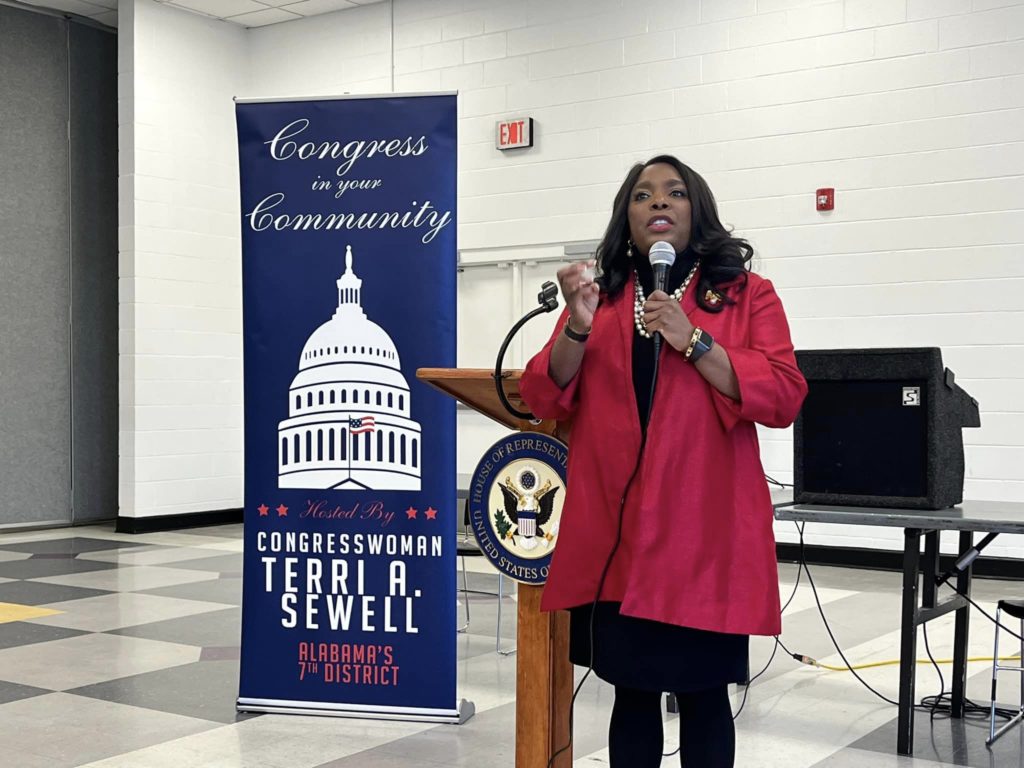
Congresswoman Terri Sewell held a town hall in Tuscaloosa on Tuesday, followed by stops where she announced federal funding awards at the University of Alabama and Stillman College. Sewell hosted the town hall at the McDonald Hughes Center in Tuscaloosa, where she was joined by Tuscaloosa Mayor Walt Maddox, constituents, as well as members of the media. “It is my honor to welcome someone who really makes a difference in our community,” Mayor Maddox said. Maddox thanked Sewell for voting for the American Rescue Plan Act that delivered aid directly to cities and counties, “Let’s not forget that a year and a half ago, we did not know if we would even make payroll,” Maddox said. “Without that help from Congresswoman Sewell’s office, who knows where we would be.” Maddox also thanked Sewell for federal funding that Tuscaloosa has received to extend its riverwalk for another mile. “We could not have done that without that help from Congresswoman Sewell,” Maddox said. “Thank you all for the opportunity to represent you in Congress,” Sewell said. “So many people ask what do you do in Congress. You read a lot of stuff in the news, but I have to tell you most of the legislation, most of the negotiation goes on behind the scenes, and I have to tell you that the state of Alabama has a delegation that seeks to work together. The fact that Alabama’s delegation tries to work together makes a difference for everybody in this room.” Sewell said that despite differences in opinion between herself and the other members of the Alabama Congressional District, “Ultimately, everyone one of us wants what’s best for our districts and the whole state of Alabama.” “My heart is in the blackbelt of Selma, Alabama, and the Seventh Congressional Delegation, which includes Tuscaloosa and Birmingham,” Sewell continued. “I wouldn’t be where I am today without the whole community’s nurturing. No one journeys alone.” Sewell praised Mayor Maddox and the Tuscaloosa City Council for their work, stating, “I want to thank you for all that you do to bridge the gap. None of us is proud of the economic disparity. It is a joy to work with the council every day.” Sewell spoke about the student loan debt forgiveness program that President Joe Biden announced recently. “While the fancy schools sound great, and I did get scholarships to go there, I still came out of law school with $140,000 in debt, and I did direct the next seven years of my life until I could pay it off,” Sewell said. “There are so many students who graduate from great schools and are still in homes with mom and dad because the cost of living is so high, but also because they have so much student loan debt. Some of them never graduate from college but still have student loan debt.” Sewell explained that the new program would provide $20,000 of debt forgiveness for Pell Grant recipients and $10,000 for other federal loans. “The site to apply is Studentaid.gov,” Sewell said. “Monday was the first day that it opened up. I know that $20,000 is not a lot of money,” Sewell said. “But I would love to have had that opportunity. Let me just say that I was one of the first around the table to say that we needed to do something about student loan debt.” Sewell said that she was proud to have voted for President Biden’s COVID relief bill. “ARPA, the American Rescue Plan Act, was voted on while we were still in the pandemic, and it came after the CARES Act,” Sewell said. “For the very first time, Congress gave money directly to towns and cities to keep our government functioning during this pandemic.” Sewell also said that she supported Biden’s infrastructure bill. “It is a one trillion-dollar investment in our roads and bridges, but not just our roads and bridges because your Congresswoman understands that water and sewer is essential infrastructure,” Sewell said. “We have not invested in our roads since Eisenhower built the interstates.” Sewell said that the bill also addressed the uneven investment in broadband. “I was proud to work with the Biden Administration to help get Alabama $100 million for broadband alone to make sure that it goes not just the last mile,” Sewell explained. “There are communities in the Seventh Congressional District that have not gotten the first mile yet.” Sewell said that the state will also get $182 million for water and sewer and that she made sure that the Seventh Congressional District gets most of that. Sewell said that she also voted for the “Inflation Reduction Act, which was passed right before we left for our August recess.” “One of the things that we did was lower prescription drug costs for our seniors who are on Medicare,” Sewell said. “We capped it at $2,000 so that the most that our seniors on Medicare will have to pay out of pocket is $2,000.” Sewell said that Congress capped the cost that seniors on Medicare pay for a vial of insulin at $35. “Insulin was costing twenty times more than in the United Kingdom,” Sewell said. “Now, for all Medicare recipients, it is $35 a vial.” Sewell said she is, “Laser focused on trying to bring down the cost of groceries of prescription drugs, but it won’t happen overnight.” Sewell said she would not tell voters how to vote in the November 8 general election but urged them to vote. “Nothing is more important to the history of our district Alabama’s Seventh Congressional District is civil rights, and voting rights-it is a proud legacy,” Sewell said. “None of us can afford to stay at home.” “Let’s make sure that we do the right thing and vote for the people who have our backs, whether it is Congress, the governor’s house, or the state house,” Sewell said. “It is important that you don’t go to the polls by yourself but that you make sure that you bring someone to the polls with you.” Each year, Rep. Sewell hosts a series of town hall meetings in
Alabama Court of Criminal Appeals upholds Lawrence County man’s stalking conviction
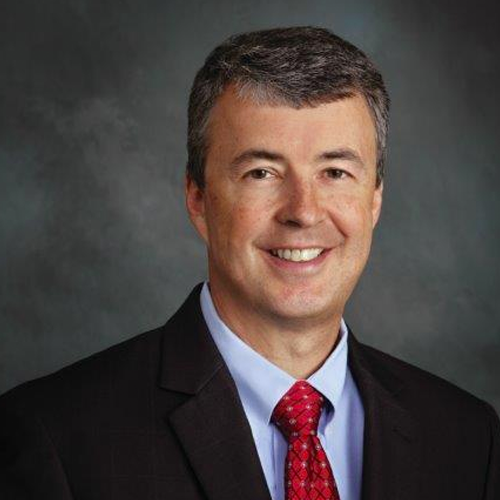
Attorney General Steve Marshall announced Tuesday that the Alabama Court of Criminal Appeals has affirmed the conviction of William Earl Latham, age 71, for first-degree aggravated stalking in Lawrence County. The decision was released on October 7, 2022. AG Marshall said, “William Earl Latham received a 20-year prison sentence for his repeated stalking and abusive behavior toward his former wife. In the past, stalking offenders like Latham would have received minimal, if any, prison time for this kind of terrorizing behavior. As underscored by this sentence, Alabama now imposes severe penalties for aggravated stalkers.” Latham and his wife/victim were married for many years. According to evidence presented in the trial, during the marriage, Latham began physically abusing his wife. In 2020, she sought a protection from abuse order which Latham repeatedly violated. The prosecutors showed that eventually, Latham’s threatening and abusive behavior led to a dangerous altercation which resulted in an automobile accident. Lawrence County District Attorney Errek Jett’s office prosecuted the case and obtained a guilty verdict from the jury on February 3, 2022. Latham was convicted and received a 20-year prison sentence for first-degree aggravated stalking of his former wife. Latham’s subsequent 20-year sentence is one of the most severe imposed for aggravated stalking in the state. Latham appealed his conviction to the Alabama Court of Criminal Appeals. The Attorney General’s Criminal Appeals Division handled the case during the appeals process. The AG’s office successfully argued that Latham’s conviction be affirmed. The Court did so in a decision issued October 7, 2022. Marshall commended Assistant Attorney General John J. Davis and law clerk Jeremiah Johansen for their successful work on this case and thanked Lawrence County District Attorney Errek Jett and his staff for their valuable assistance in defending the first-degree aggravated stalking conviction. According to a study by the CDC, one out of six women and one out of 19 men have been stalked in their lifetimes. 66% of women who were stalked were stalked by a former husband or cohabitating partner. 81% of those stalked by a former husband or cohabitating partners were assaulted, and 31% were sexually assaulted. 54% of women killed by their stalker had previously reported the stalker to the police. Marshall is a former Marshall County District Attorney. He was appointed AG in 2017 by then-Gov. Robert Bentley. He was elected to his own term in office in 2018 and is seeking a second term. He faces Democratic nominee Tarrant Police Chief Wendell Major in the November 8 general election. To connect with the author of this story, or to comment, email brandonmreporter@gmail.com.
Joe Biden to release 15M barrels from oil reserve, more possible

President Joe Biden will announce the release of 15 million barrels of oil from the U.S. strategic reserve Wednesday as part of a response to recent production cuts announced by OPEC+ nations, and he will say more oil sales are possible this winter, as his administration rushes to be seen as pulling out all the stops ahead of next month’s midterm elections. Biden will deliver remarks Wednesday to announce the drawdown from the strategic reserve, senior administration officials said Tuesday on the condition of anonymity to outline Biden’s plans. It completes the release of 180 million barrels authorized by Biden in March that was initially supposed to occur over six months. That has sent the strategic reserve to its lowest level since 1984 in what the administration called a “bridge” until domestic production could be increased. The reserve now contains roughly 400 million barrels of oil. Biden will also open the door to additional releases this winter in an effort to keep prices down. But administration officials would not detail how much the president would be willing to tap, nor how much they want domestic and production to increase by in order to end the drawdown. Biden will also say that the U.S. government will restock the strategic reserve when oil prices are at or lower than $67 to $72 a barrel, an offer that administration officials argue will increase domestic production by guaranteeing a baseline level of demand. Yet the president is also expected to renew his criticism of the profits reaped by oil companies — repeating a bet made this summer that public condemnation would matter more to these companies than shareholders’ focus on returns. It marks the continuation of an about-face by Biden, who has tried to move the U.S. past fossil fuels to identify additional sources of energy to satisfy U.S. and global supply as a result of disruptions from Russia’s invasion of Ukraine and production cuts announced by the Saudi Arabia-led oil cartel. The prospective loss of 2 million barrels a day — 2% of global supply — has had the White House saying Saudi Arabia sided with Russian President Vladimir Putin and pledging there will be consequences for supply cuts that could prop up energy prices. The 15 million-barrel release would not cover even one full day’s use of oil in the U.S., according to the Energy Information Administration. The administration could make a decision on future releases a month from now, as it requires a month and a half for the government to notify would-be buyers. Biden still faces political headwinds because of gas prices. AAA reports that gas is averaging $3.87 a gallon. That’s down slightly over the past week, but it’s up from a month ago. The recent increase at prices stalled the momentum that the president and his fellow Democrats had been seeing in the polls ahead of the November elections. An analysis Monday by ClearView Energy Partners, an independent energy research firm based in Washington, suggested that two states that could decide control of the evenly split Senate — Nevada and Pennsylvania — are sensitive to energy prices. The analysis noted that gas prices over the past month rose above the national average in 18 states, which are home to 29 potentially “at risk” House seats. Even if voters want cheaper gasoline, expected gains in supply are not materializing because of a weaker global economy. The U.S. government last week revised downward its forecasts, saying that domestic firms would produce 270,000 fewer barrels a day in 2023 than was forecast in September. Global production would be 600,000 barrels a day lower than forecast in September. The hard math for Biden is that oil production has yet to return to its pre-pandemic level of roughly 13 million barrels a day. It’s about a million barrels a day shy of that level. The oil industry would like the administration to open up more federal lands for drilling, approve pipeline construction and reverse its recent changes to raise corporate taxes. The administration counters that the oil industry is sitting on thousands of unused federal leases and says new permits would take years to produce oil with no impact on current gas prices. Environmental groups, meanwhile, have asked Biden to keep a campaign promise to block new drilling on federal lands. Biden has resisted the policies favored by U.S. oil producers. Instead, he’s sought to reduce prices by releasing oil from the U.S. reserve, shaming oil companies for their profits, and calling on greater production from countries in OPEC+ that have different geopolitical interests, said Frank Macchiarola, senior vice president of policy, economics, and regulatory affairs at the American Petroleum Institute. “If they continue to offer the same old so-called solutions, they’ll continue to get the same old results,” Macchiarola said. Because fossil fuels lead to carbon emissions, Biden has sought to move away from them entirely with a commitment to zero emissions by 2050. When discussing that commitment nearly a year ago after the G-20 leading rich and developing nations met in Rome, the president said he still wanted to also lower gas prices because at “$3.35 a gallon, it has profound impact on working-class families just to get back and forth to work.” Since Biden spoke of the pain of gas at $3.35 a gallon and his hopes to reduce costs, the price has on balance risen another 15.5%. Republished with the permission of The Associated Press.
Steve Flowers: Congressional delegation reelected in November
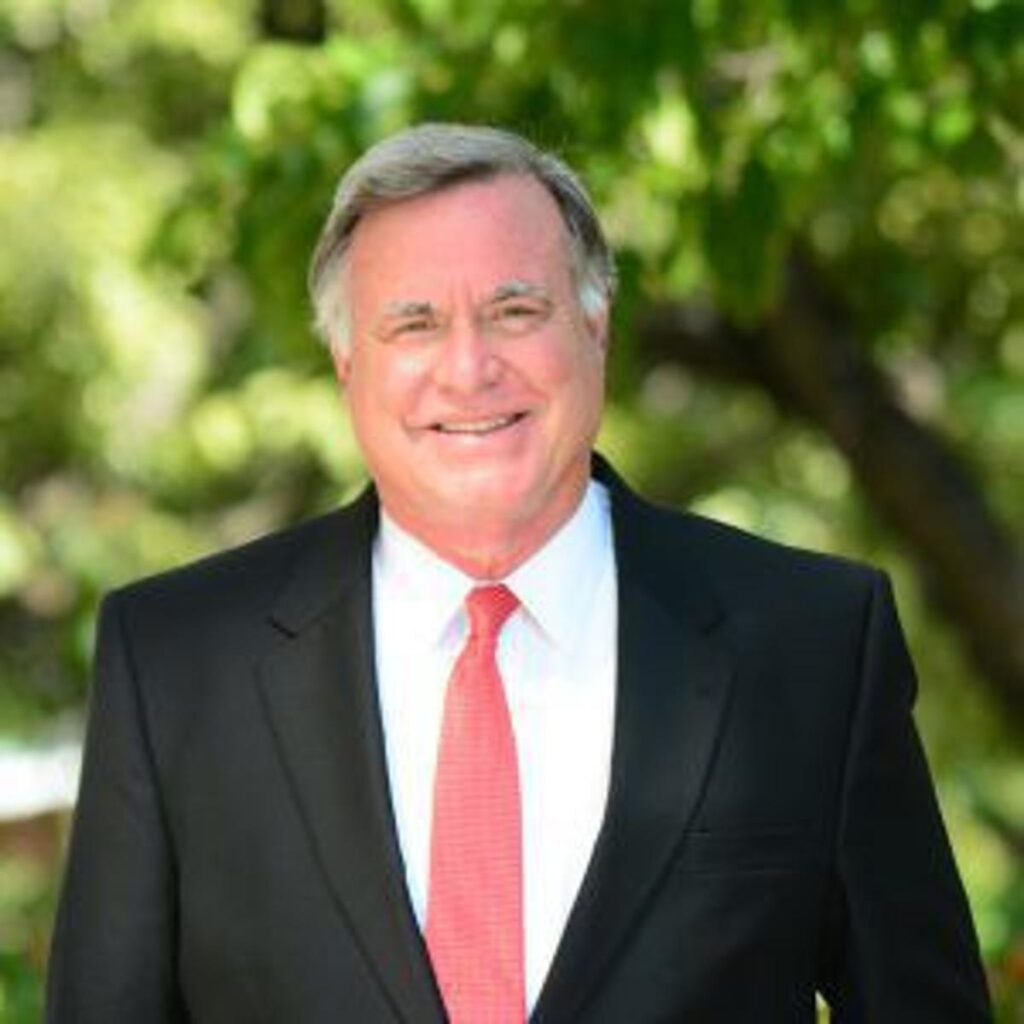
Our Alabama Congressional delegation will all be reelected next month, as usual. We are no different than any other state when it comes to the incumbency advantage of being a congressperson. When someone is elected to the U.S. Congress, they are usually there for life unless they run for higher office. They probably would not be defeated unless they killed someone, and that probably would not be enough. It would probably depend on who they killed. The Congress is so divided and acrimonious along party lines that if they killed another member of Congress from a different party, it would probably help them and enshrine them in their seat for life. The reelection rate for members of the U.S. Congress is over 93%. That is similar to the Communist Russian Politburo. Our Congress is more akin to the British parliament, where they quasi-own their seat. Our delegation will have one new member. Dale Strong will take the Republican seat of Mo Brooks in the 5th District, Huntsville-Tennessee Valley area. He started early and stayed late. He began the campaign as the favorite and remained the frontrunner throughout the two-year campaign to capture the open seat. Strong has been a popular chairman of the Madison County Commission. He is a native Huntsvillian and was even educated grade school through college in the Madison County area. He was backed strongly by the Huntsville/Madison business community. They realize the importance of having a pragmatic, pro-business conservative who will be a GOP team player in Washington. It is imperative for the Redstone Arsenal to have a workhorse in that seat. They will miss Richard Shelby, who has done all the heavy lifting for federal growth. They are glad and fortunate to swap Mo Brooks for Dale Strong. Strong is relatively young and will probably be a long-termer. Jerry Carl will be reelected to his first district Mobile/Baldwin GOP Seat next month. He has taken to Congress like a duck to water. He also has long-term workhorse written all over him. Barry Moore will be reelected to his second term as the congressman from the 2nd District, which encompasses the Wiregrass and east Montgomery. It is a very Republican district. Mike Rogers of Anniston will be reelected to his eleventh term in November. He is gaining seniority and power. If the GOP takes over control of the U.S. House, as is expected next month, he is in line to possibly be chairman of the House Armed Services Committee. Robert Aderholt of the 4th District is the dean of the delegation, thus under the entrenched seniority system, he is our most powerful Congressman. Aderholt got to Congress at a very early age. He will be reelected to his 14th two-year term. He serves on the important and prestigious Appropriations Committee. Gary Palmer will begin his fourth term representing the Jefferson/Hoover/Shelby GOP district. Gary is a policy and issues guy. The GOP leadership recognized this early, and he has advanced as a policy leader in the House. The lone Democrat in our delegation is Congresswoman Terri Sewell of Birmingham. She will be reelected to her seventh term in the U.S. House in a few weeks. She has emerged as a leader within the Democratic House Caucus. She is very well respected in Washington. She is a native of Selma and holds Ivy League undergraduate and law degrees. Hopefully, for Alabama, she is a long-timer. She has a large, sprawling district that covers most of Birmingham, Montgomery, and all of the Black Belt, including her hometown of Selma. Sewell, being the only African American Democrat in our seven-member Congressional district, is the subject of a case pending in the U.S. Supreme Court. Democratic leaders contend that Alabama could and should have two majority-minority districts in the state rather than one. The argument is that Sewell’s 7th District contains only 14% of the Black voters in the state. Alabama’s African American population is 27%. If the Supreme Court rules in favor of the plaintiffs, then our delegation may go from six Republicans and one Democrat to five Republicans and two Democrats. The two prominent, powerful, young African American mayors of Birmingham and Montgomery, Randall Woodfin and Steven Reed, would both be eyeing the new Democratic Congressional Seat. See you next week. Steve Flowers is Alabama’s leading political columnist. His weekly column appears in over 60 Alabama newspapers. Steve served 16 years in the state legislature. Steve may be reached at: www.steveflowers.us.
Former Alabama state attorney Chase Espy pleads guilty to child porn
An attorney who worked on the staff of Gov. Kay Ivey pleaded guilty to a child pornography charge and faces a maximum sentence of 20 years in prison, federal prosecutors said Tuesday. Chase Tristian Espy, 36, pleaded guilty to possessing child pornography, authorities said in a statement, and a judge scheduled a sentencing hearing for Jan. 24. Espy, of Vestavia Hills, previously worked as deputy general counsel in the office of Ivey. He was only employed there a few months and was fired at the time of his arrest last August, officials said at the time. Investigators seized Espy’s cellphone after he engaged in online chats with an investigator he believed to be a 15-year-old girl, authorities said in a statement. A search found multiple videos and several images portraying child sexual abuse, authorities said. Republished with the permission of The Associated Press.
Justin Bogie: Permanent tax relief is ‘very important’ to Alabamians
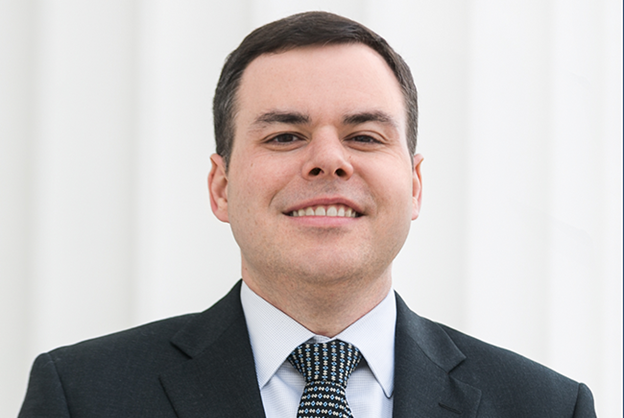
Appearing Friday night on Alabama Public Television’s “Capitol Journal,” State Senate President Pro-Tem Greg Reed (R-Jasper) said that Alabama’s record $2 billion revenue surplus was a “one-time thing” and should not be spent like “water through our fingers.” The fact is that Alabama’s record surplus is not a “one-time thing.” State government finished 2021 with a then-record $1.5 billion in new revenue. It continued to build on that wealth, on the backs of citizens, in 2022. In fact, for four years in a row, the state has had revenue surpluses of at least $600 million. What did lawmakers do with the money? They used it to increase spending all four years. Reed went on to expand, saying that the influx of dollars into state government will not continue. He warned, “We’re already experiencing what we see at the national level and even in our own state. Inflation; that is a real challenge – and economic opportunity that may be facing a recession in the future. So, as you look at these resources being extraordinarily high, you have to think about do we need to give some of these resources back to the people of Alabama?” Senator Reed is correct in saying that record inflation and the threat of a recession are already having an impact in Alabama. The problem is that the focus seems to remain on protecting government from these problems, not those they represent. At a minimum, Alabama’s government and the people that it serves should be sharing in the pain. That has not happened thus far. Judging by Reed’s comments last week, the hopes of that dynamic changing remain dim. First and foremost, Senator Reed said that the current budget surplus should be used on things “that are very important to our state.” He said that only after that should looking at ways to provide relief to Alabamians be up for discussion. For Alabama families being crushed by inflation and high gas prices, I would think tax relief is “very important” to them. Unfortunately, the mindset of too many elected officials still seems to be that the government comes before the people. Comments by Gov. Kay Ivey last week, that all but ruled out any form of relief besides a limited tax rebate, did not help to embolden lawmakers to push for broader tax reforms. The argument that an economic recession is coming, and the state must be fiscally responsible to weather that storm, does not line up with the actions of the legislature over the last four years. From 2019-2022, state spending increased by about 35%, a record expansion of Alabama’s government. Despite already experiencing decades-high inflation and the very real threat of a recession, lawmakers passed the largest budgets in state history in April 2022. Given the now multi-billion dollar revenue surplus and recent comments from lawmakers, there will be heavy pressure to increase fiscal year 2023 spending through additional appropriations. You cannot claim that we are running up on a cliff and need a parachute to ensure a soft landing, and then spend all your money on other things and not buy the parachute. State government did not put all of last year’s $1.5 billion into reserves for a rainy day; it spent most of it, with less than 10% going towards “targeted” tax relief – targeted meaning that many citizens saw no benefit. The truth is that providing tax relief for citizens, as well as preparing for a recession, does not have to be mutually exclusive. Last month, the Alabama Policy Institute (API) called on lawmakers to enact a minimum of $750 million in permanent tax cuts during the next special or regular legislative session, less than half of the current surplus. In a perfect world, lawmakers would also cut or at least freeze spending at the current levels. If, after cutting taxes surpluses remain, that money should go towards retiring existing state debt or paying for essential one-time projects of significant benefit to citizens. Lawmakers cannot squander this remarkable opportunity to make structural reforms to the state’s tax code and budget process. If Alabamians are ever going to see meaningful economic relief, it must start at the top. Governor Ivey and the leadership of the Alabama Legislature must make tax reform the number one priority moving forward, not an afterthought once the state has taken a significant cut of the latest record-breaking surplus, which all taxpayers funded. Most Alabama families did not have close to a 15% surplus last year, let alone two years in a row. It is past time for state government to provide permanent tax relief and return some of our money back to Alabamians. Justin Bogie is the Senior Director of Fiscal Policy for the Alabama Policy Institute.
