
Early voting on the rise ahead of midterm elections

With one week until election day, new research shows more and more Americans have already voted. Gallup released new polling data that found far more Americans are voting early these midterms than the midterm elections in years past. “Four in 10 U.S. registered voters say they plan to vote before Election Day or have already voted, a higher proportion than in recent midterm elections,” Gallup said. “Significantly more voters plan to vote before Election Day this year (41%) than did in 2010 (26%), the first time Gallup asked the question in a midterm election year.” Early voting and mail-in voting has become an area of focus for both parties’ campaign efforts, along with legal challenges regarding election integrity. Late Tuesday, the Pennsylvania Supreme Court ruled in a major elections case that mail-in ballots that have incorrect information or leave parts blank cannot be counted. Pennsylvania often has close races and was one of the states in the center of the questions surrounding the integrity of the 2020 presidential election. “Today’s Pennsylvania Supreme Court ruling is a victory for the rule of law,” said Sen. Pat Toomey, R-Penn. “The law in Pennsylvania is clear: Mail-in ballot envelopes must be dated. Counting undated ballots would be in violation of the law. Not a close call.” Gallup’s polling data shows that these legal challenges become more important. While early voting is higher than in previous midterms, it doesn’t top the COVID-era voting trends, where the pandemic drastically changed voting habits. “Two years ago, 64% of U.S. registered voters planned to vote early versus 32% who planned to vote on Election Day,” the group said. “It is unclear how much pandemic concerns boosted early voting in 2020 because the practice has historically been more common in presidential than in midterm election years. “Early voting intentions this year, though more prevalent than in the last (2018) midterm election, match those from the 2016 presidential election (40%),” Gallup added. Republished with the permission of The Center Square.
Johnny Cochran challenging Robert Aderholt for congressional seat; claims to be more ‘fiscally conservative’
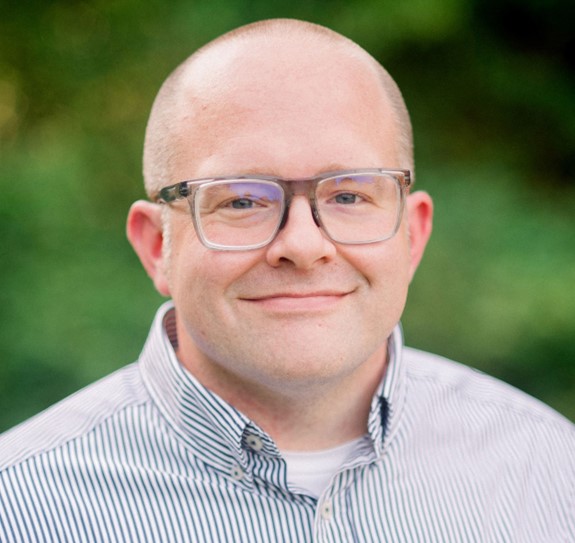
Johnny Cochran is the Libertarian candidate running to represent Alabama’s Fourth Congressional District in the U.S. House of Representatives. Cochran is challenging incumbent Congressman Robert Aderholt. “For the last 25 years, AL’s 4th Congressional district has been represented by Robert Aderholt,” Cochran said in a statement. “He often runs unopposed, and if someone does run against him, he wins by a typical spread of 80%-20%. Many politicos consider Alabama’s 4th to be the most Republican district in the entire country. While Aderholt represents pro-life conservatives well, his record on fiscal responsibility is terrible.” Even though Cochran is a Libertarian, he claims that he would be more fiscally conservative than Aderholt. “Aderholt has a lifetime score from the conservative Heritage group of 66% and a lifetime score from the Club for Growth of 63%,” Cochran continued. “How come his scores are so low? The national debt has increased 600% during Aderholt’s 25 years in D.C. from $5 trillion to now over $31 trillion. Aderholt voted for a giant portion of that spending. Whether it was bloated omnibus spending bills or things like Obama’s Cash for Clunkers, Aderholt is a big fan of spending our hard-earned tax dollars. He routinely votes to increase the debt ceiling, the equivalent of kicking the can down the road for younger generations to deal with.” Rick Neighbors is the Democratic nominee running against Aderholt and Cochran on the ballot on Tuesday. Cochran claims that he, and not Neighbors, has the best chance of unseating Aderholt. “The historical voting data shows that Democrat Rick Neighbors is unlikely to win,” Cochran claimed. “2020 is a year where Democrats made gains all over the country, Mr. Neighbors lost 82%-18%. The Democrats in D.C. are doing such a poor job that many are projecting a “red wave.” Being generous, Mr. Neighbors isn’t likely to break 30% – aka, he can’t win.” Cochran stated that if he wins, “It is a victory for fiscal responsibility. It would send shockwaves to the Establishment class in D.C. and perhaps spook enough politicians to reign in their blatant disregard of squandering our hard-earned tax dollars.” Cochran claims that if he loses, but “Outperforms most third-party candidates, maybe comes in second, at a minimum, it should give pause to Mr. Aderholt. If he wants to continue being a resident of metro D.C., perhaps it will cause him to vote in a more fiscally responsible manner.” Cochran says that he supports term limits, and if eight years is enough for a President, then it should be enough for a member of Congress. Cochran is married and the father of two. He is a graduate of the University of Alabama and Vestavia Hills High School. The Cochrans live in Tuscaloosa. Republicans are hoping for a red-wave election that will vault them into control of one or both Houses of Congress. If the Republicans take control of the House of Representatives (and Aderholt is re-elected), there is a strong likelihood that Aderholt would be the Chairman of the powerful House Appropriations Committee. The Libertarians have 65 candidates running for office across Alabama. Polls open at 7:00 am on Tuesday and close at 7:00 pm. Voters must bring a valid photo ID with them to the polls in order to participate in any Alabama election. If you do not have a photo ID, you can obtain a free photo ID from your local board of registrars or by contacting the Alabama Secretary of State’s office. To connect with the author of this story, or to comment, email brandonmreporter@gmail.com.
Kay Ivey announces $1.3 million for state innovation and research
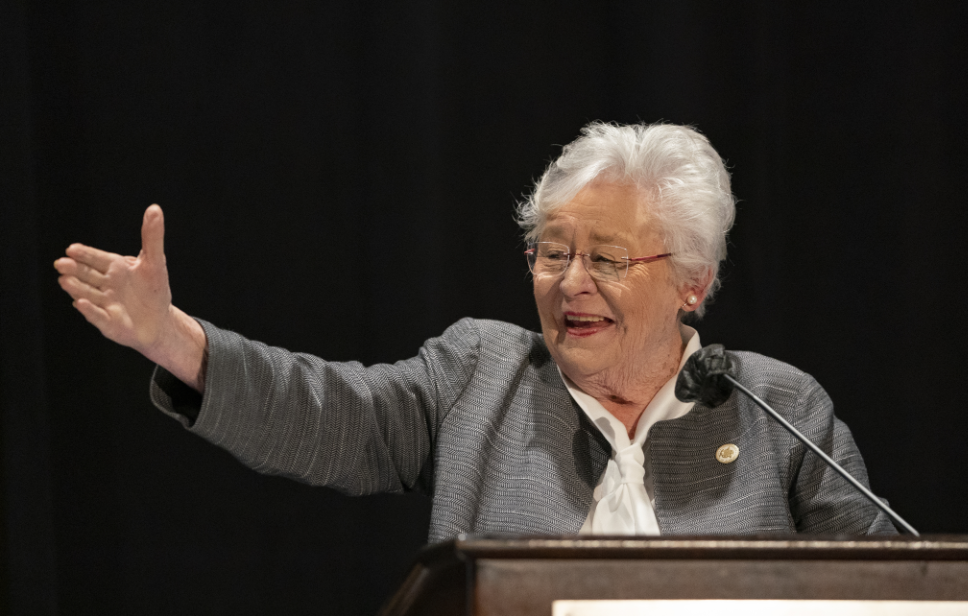
Governor Kay Ivey announced Wednesday awards of $1.3 million in order to stimulate new research and development at three Alabama universities and university systems hoping to help improve lives. The University of Alabama at Birmingham was awarded two grants totaling $666,910, the University of Alabama was awarded two grants totaling $486,026, and Auburn University received a grant of $184,773. “Often, the research and development that comes out of our universities has far-reaching and life-altering impacts across a wide array of issue areas,” said Gov. Ivey. “Alabama’s future outlook is largely dependent on our ability to find solutions to the problems of tomorrow, and I commend the students and professors for their dedication and time-consuming efforts to ensure Alabama remains the leader in innovation that it is.” The grants are from the Alabama Research and Development Enhancement Fund. The state-funded program was created in 2019 under the Alabama Innovation Act, which was approved by the Alabama State Legislature and signed into law by Gov. Ivey. The Alabama Department of Economic and Community Affairs (ADECA) is administering the grants. “ADECA is pleased to join with Governor Ivey in supporting and encouraging research and innovation at our state universities,” said ADECA Director Kenneth Boswell. “It is amazing to see solutions arise out of challenges relating to science and technology and other fields of study.” The grants awards: University of Alabama at Birmingham • $316,910 to conduct research relating to the development of a new neurovascular stent for stroke treatment. • $350,000 to conduct research involving the development of a new material in dental root-canal treatment. University of Alabama • $399,831 to conduct research relating to development of a membrane for the removal of some man-made chemicals which may cause harm in humans. • $86,314 to conduct research involving the development of ultra-high performance concrete using materials available in Alabama Auburn University • $184,773 to conduct research relating to the development of an iron-based contrast agent in an angiography procedure that examines blood flow in the body. ADECA administers a wide range of programs that support law enforcement, victim programs, economic development, water resource management, energy conservation and recreation. Gov. Ivey grew up on a cattle farm in Wilcox County. She graduated from Auburn University and taught school in California before returning to Alabama to hold several positions in state government. In 2002 she was elected State Treasurer. She has served two terms as Treasurer and two as Lieutenant Governor. In 2017 she was elevated to Governor and then elected in her own right in 2018. Ivey seeks a second term in Tuesday’s general election. Ivey faces Libertarian nominee Dr. James “Jimmy” Blake and Democratic nominee Yolanda Flowers. There are also two write-in candidates seeking the office. To connect with the author of this story, or to comment, email brandonmreporter@gmail.com.
Robert Aderholt says that diesel fuel shortage is due to Biden’s energy failure
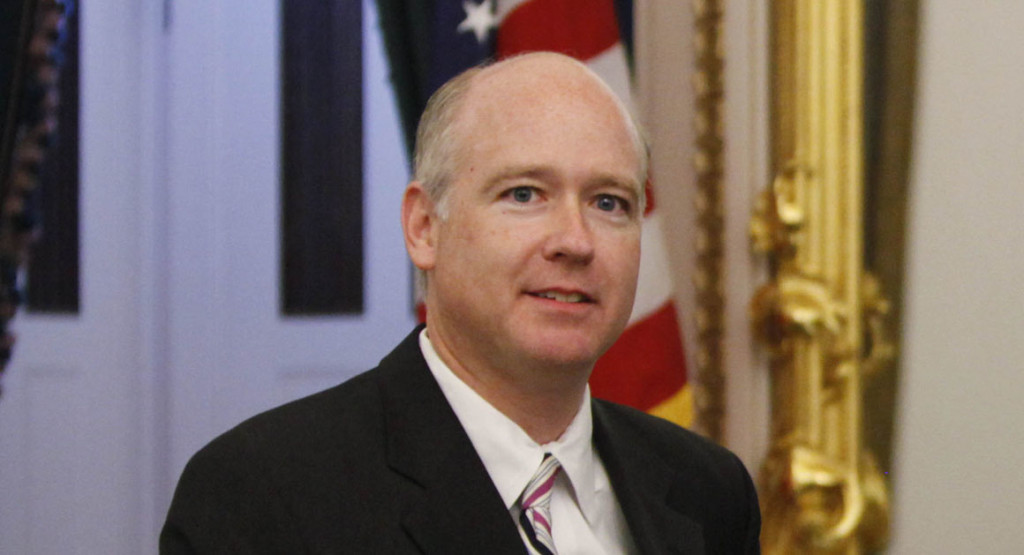
Congressman Robert Aderholt released the following statement on Monday criticizing President Joe Biden for the worsening diesel fuel shortage impacting several states in the southeast, including Alabama. “My staff and I are closely monitoring the current issues with the diesel fuel supply in the Southeast,” Rep. Aderholt said. “It’s no secret we are in this situation because of President Biden’s failure to focus on American energy. European nations, because of overzealous green energy policies, are already feeling the pain of these type problems, and now the Biden Administration is following suit here in the U.S., with the same results. I’m ready to do what I can to help ease the impact of any diesel shortages in Alabama. I also recently sent a letter to President Biden, with many of my Republican colleagues, urging him to put together a five-year energy plan to ensure that these types of shortages and price hikes never happen again.” Diesel is essential to the U.S. trucking industry and agriculture. Farmers are trying to finish harvesting their fall crops and are having to pay prices approaching $6 a gallon for fuel. On October 14, the Energy Information Administration (EIA) reported that the United States had only 25 days of diesel fuel left in tanks and fuel storage depots – this even as the Biden Administration was in the process of releasing the last oil from the Strategic Petroleum Reserve. Republicans, like Aderholt, have blamed Biden and his controversial Green New Deal policies for the fuel shortage, which threatens to further exacerbate both the supply chain bottlenecks and inflation. Patrick De Haan, who heads petroleum analysis for GasBuddy, however, told Newsweek that Biden is not to blame for the current low inventories. “Biden is not to blame—this is due to lack of refining capacity, which has fallen 1 million barrels a day, primarily due to COVID-19 in 2020 curbing demand,” De Haan said. “Hurricane Ida badly damaged a refinery in 2021, and an explosion took out the Philadelphia Energy Solutions refinery in Pennsylvania in 2019. This is simply not enough refining capacity exacerbated by Russia’s war on Ukraine and countries looking for supply elsewhere that isn’t Russian.” The Administration has diverted some diesel shipments that were bound for Europe back to the United States in an effort to avoid running out of fuel by Thanksgiving. The decline in American refining capacity may not be Biden’s fault, but he and his party, however, control the Whitehouse and both Houses of Congress, and Americans are increasingly frustrated by the rising prices and the high interest rates. Republicans hope that those frustrations will spill over to the November 8 midterm elections. Republicans are encouraging a red wave to give them back control of the House as well as increase their strength in state legislatures across the country. “We are here on election eve, and I am so excited by what we are going to see here Tuesday,” said Aderholt, predicting a Republican wave election on Tuesday. “If we are going to put this nation back on the right track, we are going to have to do it by putting in Republicans from the top to the bottom of the ballot,” said Republican nominee for U.S. Senate Katie Britt. “We have to stand up and fight for our children and grandchildren, or they might not have much left to fight for.” Robert Aderholt has represented Alabama’s Fourth Congressional District since 1996. On Tuesday, he faces challenges from Democratic nominee Rick Neighbors and Libertarian nominee Johnny Cochran. To connect with the author of this story, or to comment, email brandonmreporter@gmail.com.
Passing Amendment six would allow cities to use special property tax revenues to fund capital improvements
Alabamians go to the polls on Tuesday to vote on two major things: to choose new leaders going forward and to approve or reject state constitutional changes recommended by the Alabama Legislature. Amendment 6 would authorize certain cities to use special property tax revenues to pay for capital improvements. The Authorize Certain Cities to Use Special Property Tax Revenue to Pay for Capital Improvements Directly Amendment was sponsored by State Rep. Mike Ball. A “yes” vote would amend the Alabama Constitution to allow certain cities that were previously authorized to pass a special property tax to pay for bonds or other forms of debt to fund capital improvements to instead use the tax revenue to pay for capital improvements directly. Essentially it would allow city governments to use the tax revenues to pay for capital improvements on a pay-as-you-go basis rather than having to do a bond issue and then using the tax to pay the bondholders. Passing Amendment six would also validate the previous actions of cities that have previously used their special property tax revenues for capital improvements. A “no” vote would prevent those certain cities that were previously authorized to pass a special property tax to pay for bonds or other forms of debt to fund capital improvements from using that tax revenue to pay for capital improvements directly. If the voters do not ratify Amendment six, then cities that have used such taxes previously may have a legal issue to resolve. The Alabama House of Representatives unanimously approved the Ball amendment on February 4, 2021. The state Senate followed up and unanimously passed the amendment on April 29, 2021. Amendment six reads: “Proposing an amendment to the Constitution of Alabama of 1901, as amended, each municipality authorized under Amendment No. 8 to the Constitution of Alabama of 1901, now appearing Section 216.01 of the Recompiled Constitution of Alabama of 1901, as amended, to levy and collect the ad valorem tax pursuant to Amendment No. 8 for the purpose of paying bonds and the interest thereon, and may also levy and collect such ad valorem tax and utilize such funds for capital improvements on a pay-as-you-go basis at a rate not exceeding the rate then lawfully permitted for the municipality to directly pay the costs of public capital improvements, as well as to pay the principal and interest on bonds, warrants, or other securities issued to finance or refinance the costs of the improvements; and to ratify, validate, and confirm the levy and collection of such tax levied and collected for any of these purposes prior to the ratification of this amendment. (Proposed by Act 2021-327).” There are no costs to Amendment 6. The oft-amended Alabama Constitution of 1901 is the longest constitution in the world, and it is the oldest state constitution in use today in the USA. Polls open on Tuesday at 7:00 am and close at 7:00 pm. You must vote at your assigned polling place, and you must bring a valid photo ID to the polls with you. If you do not have a photo ID, you may obtain one at no cost from your local board of registrar’s office or by contacting the Alabama Secretary of State’s office. To connect with the author of this story, or to comment, email brandonmreporter@gmail.com.
