
Paul DeMarco: Early presidential primary means many visits to Alabama by White House hopefuls
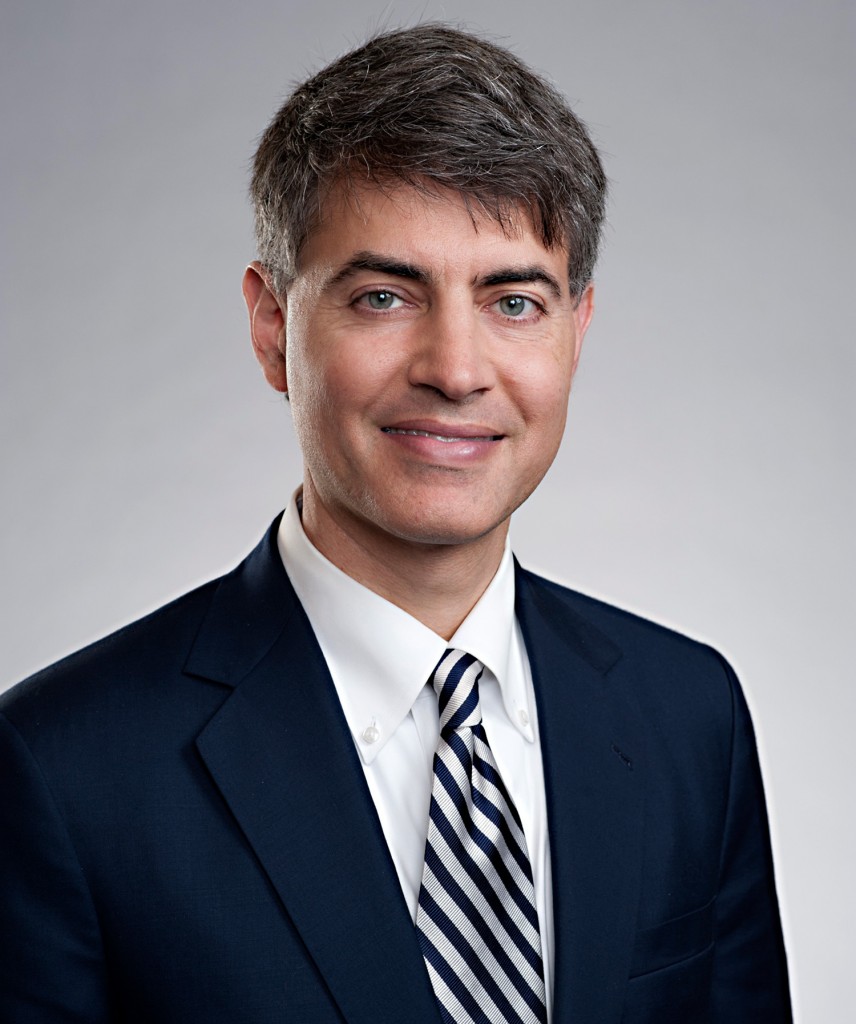
We have not even gotten to year-end, and states around the country are already fighting over who will hold the first presidential primaries. This past week President Joe Biden and the Democratic National Committee made the first moves to strip Iowa of its first in the Nation primary status. South Carolina would now come first, and then New Hampshire, Nevada, Michigan, and Georgia would go next. Of course, Iowa and New Hampshire are not backing down yet and may not yield to their desire to be the first caucus and primaries. Alabama is set to have its presidential primary on March 23rd, much earlier than the usual May or June primary dates of the past. And while Alabama will not be one of the very first primaries, 2023 will see a lot of presidential candidates visit the state. Whether President Biden decides to run again is still up in the air, but it appears the Republican Party will be a competitive affair now that former President Donald Trump has put his name back in the hat. Alabama could be seen as the kingmaker for those seeking the Republican nomination based on its place on the primary calendar. Alabama is very conservative, along with being a solidly Republican state. Thus, the state will be sought after as presidential hopefuls look to GOP voters to punch their ticket to the road to the White House. In 2016, Donald Trump made Alabama one of his first states to hold a rally that eventually propelled him to the presidency. So while we are still over a year away, get ready for the next presidential election as candidates start making plans to travel to Alabama. Paul DeMarco is a former member of the Alabama House of Representatives and can be found on Twitter at @Paul_DeMarco.
U.S. added 263,000 jobs in November

Friday’s jobs report by the U.S. Bureau of Labor Statistics showed that the U.S. economy created 263,000 jobs in November. The continuing growth in the job sector, however, indicates that inflation is likely to continue and perhaps even worsen. The unemployment rate held steady at 3.7 percent. This is good news for job seekers or people looking to find a better position than the one they currently have, but employers can expect no relief on the immediate horizon as they attempt to hire staff. Notable job gains occurred in the leisure and hospitality (+88,000 jobs), health care (+45,000 jobs), and government sectors (+42,000 jobs) – mostly in local government. Employment declined in retail trade and transportation (-32,000 jobs), with general merchandise, appliance, and furniture stores, and warehousing (-15,000 jobs) losing the most workers. The unemployment of 3.7 percent in November maintains the narrow range of 3.5 percent to 3.7 percent seen since March. The number of unemployed persons was essentially unchanged at 6.0 million in November. The unemployment rate for adult men was just 3.4 percent, adult women at 3.3 percent, and teenagers at 11.3 percent. White unemployment was just 3.2 percent, Blacks 5.7 percent, Asians 2.7 percent, and Hispanics 3.9 percent. This showed little or no change from last month. Among the unemployed, permanent job losers rose by 127,000 to 1.4 million in November. The number of persons on temporary layoff changed little to 803,000. The number of long-term unemployed (those jobless for 27 weeks or more) showed little change at 1.2 million in November. The long-term unemployed accounted for 20.6 percent of all unemployed persons. The U.S. labor force participation rate was 62.1 percent, while the employment-population ratio was at 59.9 percent, little changed in November and has shown little net change since early this year. These measures are each 1.3 percentage points below their values in February 2020, before the COVID-19 pandemic. The number of people not in the labor force who say they currently want a job was little changed at 5.6 million in November and remained above its February 2020 level of 5.0 million. These individuals were not counted as unemployed because they were not actively looking for work during the four weeks preceding the survey or were unavailable to take a job. Monthly job growth has averaged 392,000 thus far in 2022, compared with 562,000 per month in 2021. In November, average hourly earnings for all employees on private nonfarm payrolls rose by 18 cents, or 0.6 percent, to $32.82. Over the past 12 months, average hourly earnings have increased by 5.1 percent. In November, the average workweek for all employees on private nonfarm payrolls declined by 0.1 to 34.4 hours. In manufacturing, the average workweek for all employees decreased by .2 hour to 40.2 hours, and overtime declined by 0.1 hour to 3.1 hours. The average workweek for production and nonsupervisory employees on private nonfarm payrolls decreased by 0.1 hour to 33.9 hours. The total labor force is still 3.5 million smaller than pre-pandemic and does not appear to be making progress toward returning to that level. The jobs report comes days after Federal Reserve Chief Jerome Powell signaled the central bank would like to reduce its interest rate hikes even though inflation remained below the Fed’s target of 2 percent. Powell said that the Fed would like to reduce the number of open jobs and employers’ need for new workers—two key forces behind fast wage growth. “To be clear, strong wage growth is a good thing,” Powell said in remarks at The Brookings Institution. “But for wage growth to be sustainable, it needs to be consistent with 2 percent inflation.” In its eighth and final meeting of 2022, the Federal Reserve is expected to raise interest rates by another 50 basis points, or 0.5 percentage point, Powell implied Wednesday. The previous four Fed rate hikes were for 75 basis points or 0.75 percentage points. “It makes sense to moderate the pace of our rate increases as we approach the level of restraint that will be sufficient to bring inflation down,” Powell said. “Time for moderating the pace of rate increases may come as soon as the December meeting.” A 50-basis point hike would lift short-term rates to a target range of 4.25 to 4.50%. “The ultimate level of rates will need to be somewhat higher than thought at the time of the September meeting in the summary of economic projections,” Powell added. It is usually another week before the Labor Department releases state unemployment data. The state of Alabama’s unemployment rate was 2.7 percent in October. To connect with the author of this story, or to comment, email brandonmreporter@gmail.com.
Barry Moore announces passage of bipartisan bill to support Veterans
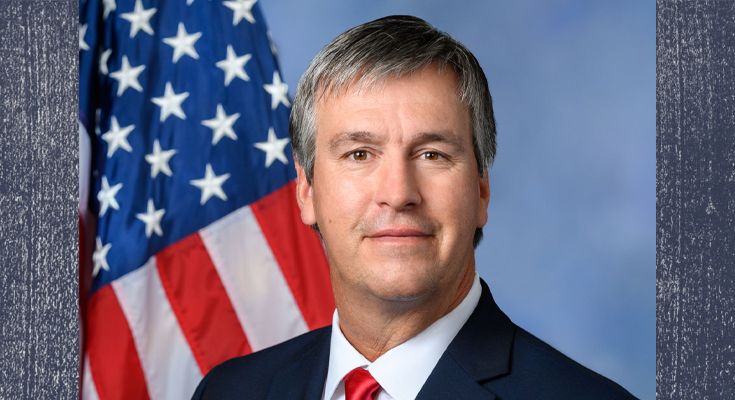
On Thursday, the U.S. House of Representatives passed a bipartisan bill that Reps. Barry Moore and Mike Levin introduced to support veterans. The Mark O’Brien VA Clothing Allowance Improvement Act helps veterans replace clothing that is routinely damaged by prosthetics, orthopedic devices, or skin medicines they need as a result of active-duty injuries. “I am excited to announce that my bipartisan bill with Rep. Mike Levin passed the House of Representatives yesterday!” Moore said in a statement on social media. “The Mark O’Brien VA Clothing Allowance Act simplifies the process for veterans with service-connected conditions to receive the clothing allowances they deserve.” “I’m proud to see Democrats and Republicans come together once again to improve the benefits veterans have earned,” said Rep. Levin in a statement. “The CVSO Act and the Mark O’Brien VA Clothing Allowance Improvement Act will cut red tape and simplify VA processes that have prevented too many veterans from receiving the services they deserve. While these types of bills rarely make national headlines, this is the work that truly makes a difference for our nation’s heroes. These bills put action behind the words ‘thank you for your service.’ As we approach the 118th Congress, I look forward to continuing to work with colleagues on both sides of the aisle to improve the lives of veterans and their families.” According to information provided by Congressman Levin’s office, the Mark O’Brien VA Clothing Allowance Improvement Act bill would amend an existing VA clothing allowance program by enabling payments to continue on an automatically recurring annual basis until the veteran elects to no longer receive payments or VA determines the veteran is no longer eligible. Currently, a veteran must provide a clothing allowance form to their local VA medical center annually, an unnecessarily burdensome process for those who have a lifelong condition that requires a device or medicine which damages their clothing. The bill is named after Marine Corporal Mark O’Brien, who was injured in combat in Iraq and lost his right arm and leg. He also suffered a Traumatic Brain Injury (TBI), which often causes him to forget to reapply for the clothing allowance. “Our nation’s heroes shouldn’t have to face repetitive red tape to receive the assistance they deserve,” explained Rep. Moore. “By removing burdensome hurdles, our bipartisan bill streamlines the process for our veterans to collect a clothing allowance. I’m proud to work with Rep. Levin in providing a commonsense solution that ensures our veterans have easier access to this beneficial program.” The Mark O’Brien VA Clothing Allowance Improvement Act is endorsed by the Wounded Warrior Project (WWP), Iraq and Afghanistan Veterans of America (IAVA), Veterans of Foreign Wars (VFW), Disabled American Veterans (DAV), Paralyzed Veterans of America (PVA), Military Officers Association of America (MOAA), Army Aviation Association of America (AAAA), Blinded Veterans Association (BVA), The Retired Enlisted Association (TREA), and the USCG Chief Petty Officers Association (CPOA). Hearing testimony from the VA and Minority Veterans of America (MVA) also expressed support for the bill. Barry Moore was recently re-elected to a second term representing Alabama’s Second Congressional District.
Will Sellers: A birthday no one celebrates

One hundred years ago this month, delegates from various parts of the old Russian Empire met in Moscow to create the Union of Soviet Socialist Republics. The world would never be the same. Prior to this declaration, an internal conflict pitted a variety of groups with differing political ideologies against each other. At the cost of more than 10 million dead, the communists emerged as the victor. Under Vladimir Lenin, they consolidated power to create the first communist state, an experiment that would fail almost 70 years later. The political theories of Marx and Engels, as interpreted by Lenin, were applied in ways that were never intended and created an economy devoid of practical experience. As pointy-headed intellectuals, Marx and Engels theorized an idea of history that saw capitalism losing steam as workers gained power and created a totally egalitarian society. These theories made for interesting discussion among academics and theorists but should never have been taken seriously as a basis for government. It would be akin to founding a new political system based on a combination of Aesop’s fables and Mother Goose. But Lenin, as an idealist, believed the doctrine, and it became, for him, a religion based on a binary concept of society as either capitalist or socialist. If the end of history was the decline of capitalism, why not accept the inevitable, skip a few steps, accelerate the process, and embrace a form of socialism that was bound to occur anyway? This belief set the stage for the most brutal concentration of power that left countless millions dead, all in the name of achieving a workers’ paradise. If you must break eggs to make an omelet, then to create a communist society, you had to murder upwards of 60 million people. But, thought Lenin and his successors, the achievement was worth the sacrifice…of someone else. As with many other utopian dreams, nothing was based on any rational experience. Lenin failed to consider human nature and that various groups might take exception to his goals and objectives. In a modern contorted version of the divine right of kings, Lenin’s anointed vision served as the basis of his ideas and could not be questioned. Anyone standing in the way was banished, if not summarily executed. Rather than advancing, history was retreating. Consider the sharp contrast with the founding of the United States. Here, the experience of colonists formed the basis of America. Rather than discard the English system of government, we embraced what worked, modified faulty systems, and exchanged only the King and Parliament for a President and Congress. Unlike the British experience as conveyed to the new world, Russia never really experienced an Enlightenment that supported liberty and freedom. Indeed, Russia is a sad history of a firm dictator issuing decrees without any thought of getting consent, much less considering the consequences to his subjects. Lenin and his ilk easily slid into this role, but initially, with peasants experiencing freedoms they’d never possessed, there was a certain euphoria about this new state. They subscribed and could see that their lives might be improved. And, with any change or conversion, the newness creates an excitement that something different is happening. Peasants previously under the yoke of their masters were liberated, and their labor marshaled to support the new system. But this did not last forever. Once they tasted a little freedom, they wanted more. But with all things being equal and scarce, freedom was apportioned and limited. Working for the common good was a great motivating factor and created an initial enthusiasm. But in the USSR, under communism, the common good was decided by others. Any sense of individuality, creativity, or ambition was subjected to state control, reducing liberty to the lowest common denominator. People from other countries flocked to see this new workers’ paradise where greed, profit, and selfishness were eliminated and subjugated to a new vision. But just like Russia under the Tsars, what people saw was filtered and limited; the reality was much different. The USSR would have its apologists who would celebrate the collective factories and farms and dream of a new world order. But under the surface, all dissent was barred, fear ruled the day, and any disagreements were met with severe punishment and, in many cases, disappearance and death. Once Lenin died, and Joseph Stalin muscled his way to the top, a killing machine that far surpassed anything seen before assassinated all rivals, banished dissidents to Siberia, and systematically starved untold millions. But elite intellectuals who knew no distinction between theory and practice praised Stalin’s achievements. The USSR was on the cusp of something great, and people across the world were invited to get on board. But then, Stalin allied himself with Adolf Hitler, which ended most optimism about the future of Stalin’s regime. And even when Stalin joined the Allied cause, the reports of the brutality of the Red Army, not only to the Nazis but to their own soldiers were unbelievable. After the war, the rest of the world knew something was wrong when Soviet prisoners of war committed suicide when faced with repatriation. During his concert in Moscow, Paul Robeson was shocked when he learned of Stalin’s elimination of intellectuals. Other activists also realized the workers’ paradise was a myth. After visiting the USSR, United Auto Workers union leader Walter Reuther saw clearly that the American labor movement needed to stay clear. To his credit, he disabused any labor leaders of any miracle in the USSR. He saw firsthand the exploitation of the Soviet workers and anchored labor to a democratic society. Ronald Reagan would be criticized for calling the USSR an “evil empire” and was deemed by detractors to have an inordinate fear of communism. As president, Reagan would pursue an aggressive policy of luring the USSR into a competition they could not win. The Berlin Wall fell soon after, the USSR dissolved, and Reagan’s critics were silenced when his assessment was vindicated. The birth 100 years ago of
Mamie King-Chalmers, woman in civil rights photo, dies at 81

Mamie King-Chalmers, who as a young Black woman appeared in an iconic photo about civil rights struggles in Alabama, has died at the age of 81. She died Tuesday in Detroit, her home since the 1970s, daughter Lasuria Allman said. A cause wasn’t disclosed. King-Chalmers, 21 at the time, was one of three Black people forced to brace themselves against a building while being blasted with water from a firehose in Birmingham, Alabama, in 1963. The photo by Charles Moore appeared in Life magazine. King-Chalmers, years later, recalled how she was attending a protest in a park when her group was confronted by police and dogs. “It trapped me in the doorway,” King-Chalmers said during a Detroit school visit in 2013, referring to the firehose. “The hose was so strong it damaged my hearing.” Another activist claimed to be the woman in the photo, but she dropped that claim in 2013 after The Detroit News investigated. King-Chalmers earned an associate degree in gerontology from Wayne County Community College, married twice, and raised eight children, Allman said. Her husband, Walter Chalmers, died in February. “She should be remembered for her courage, strength, and determination to make a difference,” Allman said. Republished with the permission of The Associated Press.
Supreme Court weighs ‘most important case’ on democracy
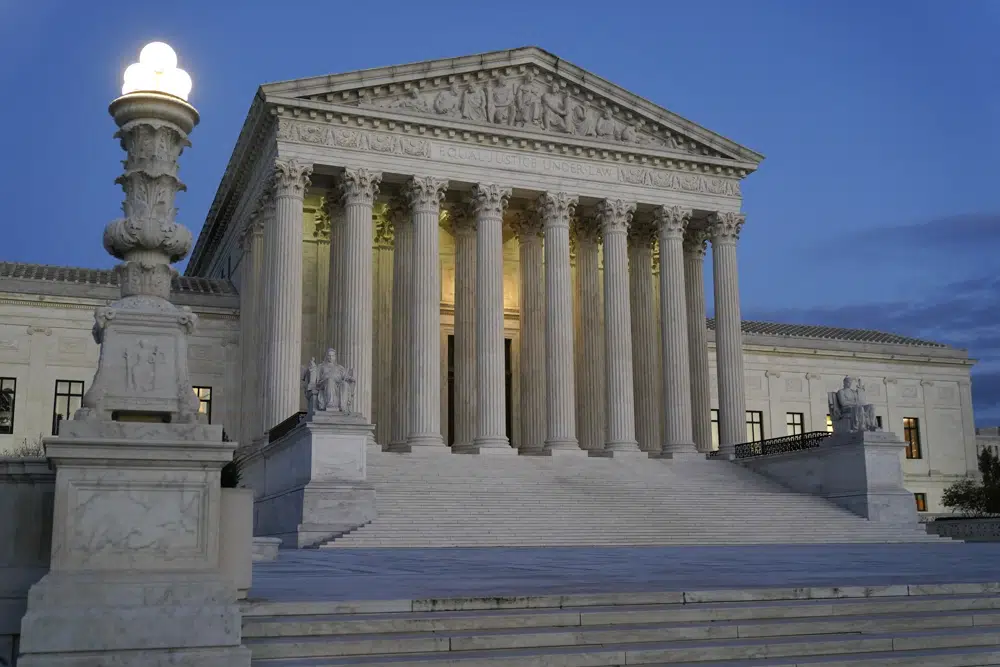
The Supreme Court is about to confront a new elections case, a Republican-led challenge asking the justices for a novel ruling that could significantly increase the power of state lawmakers over elections for Congress and the presidency. The court is set to hear arguments Wednesday in a case from North Carolina, where Republican efforts to draw congressional districts heavily in their favor were blocked by a Democratic majority on the state Supreme Court because the GOP map violated the state constitution. A court-drawn map produced seven seats for each party in last month’s midterm elections in highly competitive North Carolina. The question for the justices is whether the U.S. Constitution’s provision giving state legislatures the power to make the rules about the “times, places and manner” of congressional elections cuts state courts out of the process. “This is the single most important case on American democracy — and for American democracy — in the nation’s history,” said former federal judge Michael Luttig, a prominent conservative who has joined the legal team defending the North Carolina court decision. The Republican leaders of North Carolina’s legislature told the Supreme Court that the Constitution’s “carefully drawn lines place the regulation of federal elections in the hands of state legislatures, Congress, and no one else.” Three conservative justices already have voiced some support for the idea that the state court had improperly taken powers given by the Constitution when it comes to federal elections. A fourth has written approvingly about limiting the power of state courts in this area. But the Supreme Court has never invoked what is known as the independent state legislature theory. It was, though, mentioned in a separate opinion by three conservatives in the Bush v. Gore case that settled the 2000 presidential election. If the court were to recognize it now, opponents of the concept argue, the effects could be much broader than just redistricting. The most robust ruling for North Carolina Republicans could undermine more than 170 state constitutional provisions, over 650 state laws delegating authority to make election policies to state and local officials, and thousands of regulations down to the location of polling places, according to the Brennan Center for Justice at the New York University School of Law. Luttig, who advised former Vice President Mike Pence that he had no authority to reject electoral votes following the 2020 election, is among several prominent conservatives and Republicans who have lined up against the broad assertion that legislatures can’t be challenged in state courts when they make decisions about federal elections, including congressional redistricting. That group includes former California Gov. Arnold Schwarzenegger, law professor Steven Calabresi, a founder of the conservative Federalist Society, and Benjamin Ginsberg, a longtime lawyer for Republican candidates and the party. “Unfortunately, because of ongoing and widespread efforts to sow distrust and spread disinformation, confidence in our elections is at a low ebb,” Ginsberg wrote in a Supreme Court filing. “The version of the independent state legislature theory advanced by Petitioners, in this case, threatens to make a bad situation much worse, exacerbating the current moment of political polarization and further undermining confidence in our elections.” The arguments are taking place a day after the final contest of the 2022 midterms, the Georgia Senate runoff between Democratic Sen. Raphael Warnock and Republican Herschel Walker. In that contest, state courts ruled in favor of Democrats to allow for voting on the Saturday before the election, over the objections of Republicans. Jason Snead, of the conservative Honest Elections Project, said the case is an opportunity for the high court to rein in out-of-control state courts which are being pushed by Democratic attorneys to effectively create new rules governing voting, including the Georgia example. “We’ve seen a fairly pervasive attempt to use courts to rewrite election laws if those laws don’t suit partisan agendas,” Snead said in a call with reporters. “That’s not something we want to see when it flies in the face of the Constitution.” He is among proponents of the high court’s intervention who argue the case doesn’t represent “a threat to democracy.” The justices can instead write a narrow opinion that places limits on state courts without upsetting the choices New York and other states have made to restrict partisan redistricting, a group of New York voters wrote in a court filing. The New Yorkers implicitly recognize that if the court gives more power to state legislatures over drawing congressional lines, Republicans may not necessarily benefit. During the last redistricting cycle, states that used independent redistricting commissions rather than legislatures were largely Democratic-dominated ones. Commissions drew 95 House seats in states with Democratic legislatures and governors, as opposed to only 12 in states with GOP control. A ruling that grants legislatures ultimate power over redistricting could eradicate those commissions and let Democrats redraw a major chunk of the House map. “The bottom line is the impact of this fringe theory would be terrible,” said former Attorney General Eric Holder, chairman of the National Democratic Redistricting Committee. “It could unleash a wave of gerrymandering from both parties.” Even less dramatic changes may not necessarily tilt the GOP’s way on a national redistricting map that was essentially fought to a draw, and where state court rulings cost Democrats about as many House seats as Republicans. The Supreme Court refused to step into the North Carolina case in March, allowing the court-drawn districts to be used this year. Justices Samuel Alito, Neil Gorsuch, and Clarence Thomas dissented. Writing for the three, Alito said, “there must be some limit on the authority of state courts to countermand actions taken by state legislatures when they are prescribing rules for the conduct of federal elections. I think it is likely that the applicants would succeed in showing that the North Carolina Supreme Court exceeded those limits.” Justice Brett Kavanaugh has separately written about the need for federal courts to police the actions of state courts when it comes to federal elections. Chief Justice John Roberts’ record on this question gives both sides some hope. In 2015,
Jim Zeigler: Pearl Harbor in Alabama

Eighty-one years ago, in the sneak attack on Pearl Harbor, Japanese forces surprised and killed 2,403 Americans and wounded more than 1,100. Thirty-two Alabama servicemen died aboard the USS Arizona, docked in Pearl Harbor. In a speech to the U.S. Congress the next day, President Franklin Roosevelt referred to December 7, 1941, as “a date which will live in infamy.” That prediction remains true on this observance of Pearl Harbor Day, 2022. In December 1941, the people of Alabama, and indeed most of the then-48 states, did not know where Pearl Harbor was. They learned quickly and have never forgotten. The 1941 Congress quickly passed a formal declaration of war, and America entered World War II. The attack on Pearl Harbor swept away the feeling of security of many Americans that we were immune from attack due to our separation from the old world by the Atlantic and Pacific oceans. Suddenly, Pearl Harbor, Hawaii, did not seem so distant from Alabama. The Pearl Harbor attack ignited American determination to disable the Japanese war machine. Americans were filled with patriotism, and individuals sought to aid in victory. Many enlisted in the military and fought for their country. My own father, Bloise Zeigler, was already working in a defense-support job at Huntsville Arsenal (now Redstone Arsenal). Two days after Pearl Harbor, Dad went down and enlisted. The next day, management pulled him into the Huntsville office and told him they had gotten his enlistment canceled because he was needed in the defense effort right where he was, in a vital defense job. He served his country right here in Alabama. For other Alabamians, their role in the war effort consisted of rationing their use of items such as gasoline, sugar, butter, and canned goods. A war was to be won, and Alabama folks were willing to do their part to win it. As we remember those who lost their lives in the Pearl Harbor attack, let us be mindful of the privilege of living in America. After World War II, America became a world superpower. Today, America is blessed with abundant wealth, resources, and global influence. Most of all, America is blessed with citizens who face adversity with resilience and determination. Jim Zeigler is the State Auditor of Alabama.
