
Kay Ivey names Curtis Stewart new ABC Administrator
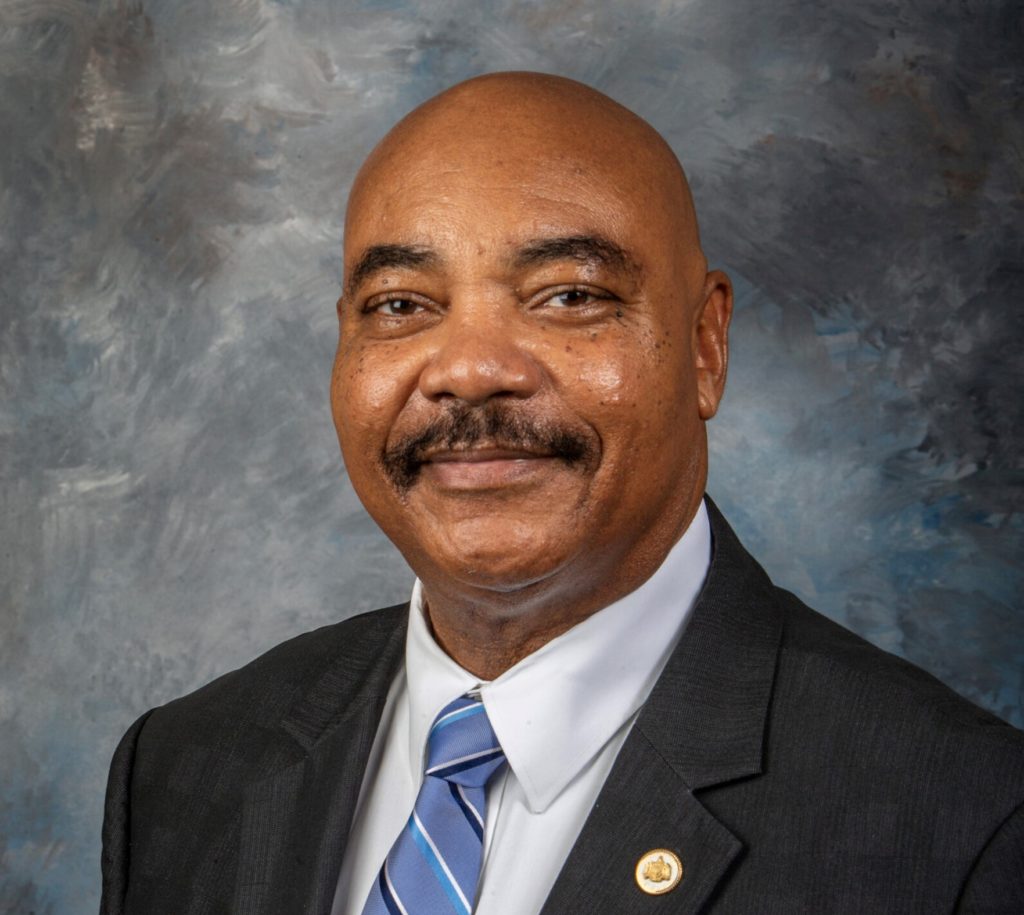
Today, Gov. Kay Ivey announced she is naming Curtis Stewart the new ABC Administrator for her second term. Current Administrator Mac Gipson, 87, has served in this capacity for 12 years and announced his retirement Thursday. This announcement marks the first cabinet appointment for Ivey’s second term. Stewart’s appointment is effective January 1, 2023. Stewart comes to the helm of ABC from the Alabama Department of Revenue, where he most recently served as deputy commissioner for the last ten years. He also served as director of the Department of Revenue’s Tax Policy and Research Division. “As we continue working hard for the people of Alabama, I am proud to assemble the best team, and that includes Curtis Stewart. I am truly grateful to Mac for his years of service to Alabama, and I am confident that Curtis is the natural fit to take the lead at ABC,” Ivey said in a press release. “No doubt, there will be a lot to accomplish in my next term, and I certainly feel good that we have Curtis to help continue navigating what’s to come at ABC. His depth of knowledge and heart for public service will be of true benefit to the folks across our state.” Stewart is a Greenville native and received his Bachelor of Science degree from the Commerce School of Washington and Lee University. He began his career with the Atlanta office of Peat, Marwick, Mitchell, and Co., Certified Public Accountants (now KPMG). He has also worked as a sole practitioner in public accounting in the Atlanta, Georgia, area. Stewart thanked Ivey for the opportunity. “I am honored for Governor Ivey to give me this opportunity to serve in her administration and to continue my service to the great state of Alabama,” Stewart said. “I am excited about getting to know the team members of the ABC and working together with them to provide products to the citizens of Alabama, along with providing funds used for governmental services throughout the state.”
House passes the National Defense Authorization Act
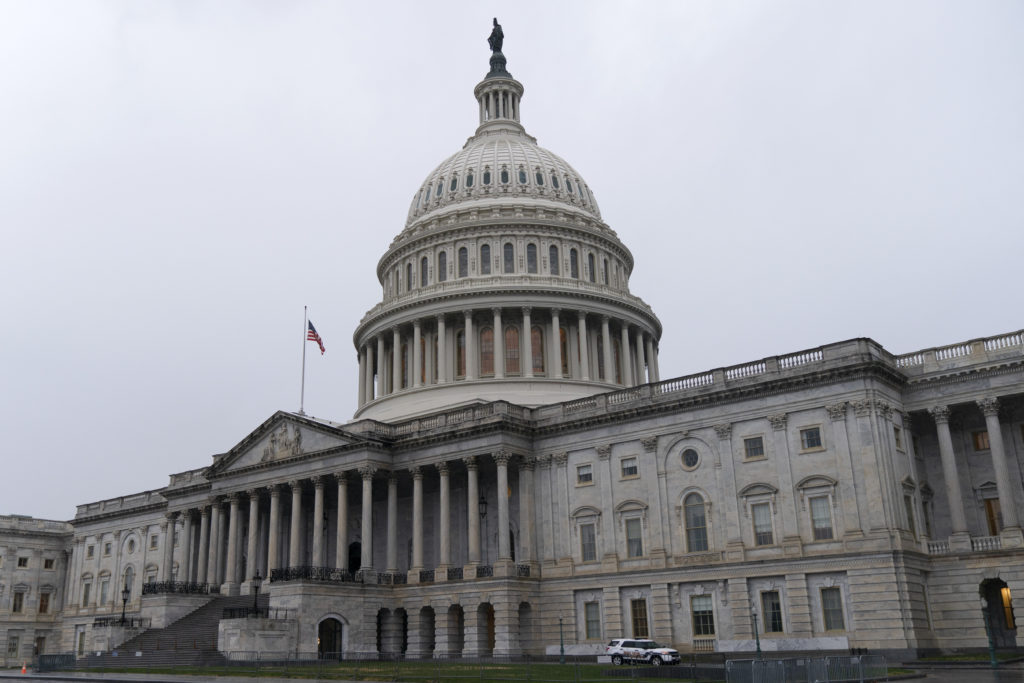
On Thursday, the U.S. House of Representatives passed H.R. 7900, the National Defense Authorization Act (NDAA) for Fiscal Year 2023 with bipartisan support. The NDAA has been passed annually by Congress since 1961. It authorizes funding levels for the Department of Defense. This legislation allows the Armed Forces to pay, train, and equip U.S. service members, support America’s allies around the world, and carry out essential national security operations. U.S. Representative Mike Rogers is the Lead Republican on the House Armed Services Committee (HASC) and is expected to chair the HASC Committee next month when the next Congress begins. HASC is the committee that prepares the NDAA each year in the House of Representatives. “The U.S. Constitution tasked Congress with our nation’s most important responsibility – to provide for our national defense – the National Defense Authorization Act is a vital part of this responsibility,” Rogers said in a statement. “This year’s NDAA makes critical investments in our military to maintain overmatch with China – from boosting deterrence to securing our supply chain this legislation demonstrates strength in the face of China’s threats. I am also proud that this year’s NDAA supports our servicemembers by repealing the COVID-19 vaccine mandate as well as providing a boost in servicemember pay and allowances to counteract the effects of Biden’s inflation.” “The responsibility to ensure that our service members can keep our nation safe and free is one that I will never take lightly,” said Rep. Terri Sewel in a statement. “I’m thrilled that this year’s defense bill includes a hard-earned raise for our service members and authorizes millions of dollars for Maxwell Air Force Base and Montgomery Regional Airport Base. This NDAA will bolster America’s national security and advance our leadership on the world stage, and I was proud to vote for it.” “It is critical that we continue to fund and strengthen our military, especially at this crucial time when China, in particular, is an ever-growing threat,” said Rep. Gary Palmer. “This legislation repeals the unnecessary COVID vaccine mandate on our military which will help mitigate the slump in our recruitment and retention levels. The bill provides funding stability badly needed for our armed forces to prepare for future threats to our country. It also provides a nearly 5% pay raise for our soldiers, some of whom have been forced to use food stamps to make ends meet for their families during this record level of inflation. Additionally, this bill includes a provision which I authored that authorizes funding for the National Computer Forensics Institute (NCFI) based in Hoover for another five years. With an increasing number of state-sponsored attacks occurring online, NCFI will play a role in training those combating these actions. I am proud to see Alabama’s 6th District continuing to play an important role in our protecting our nation.” “I was proud to vote yes on the National Defense Authorization Act, NDAA, which authorizes funds for our military,” said Congressman Robert Aderholt. Even though Republicans are not yet in the majority in the House, we were able to strip the leftist, woke elements Democrats wanted to include. We were also able to put guardrails in to make sure the money Congress authorized for Ukraine is not wasted. But on top of all of that, we have increased funding for our military, we’ve continued our support for hypersonics, and we started the process of weaning our nation off of critical minerals that come from China and other unfriendly nations. This is crucial as China continues to strengthen its own military in the attempt to surpass us in strength and technology. I will continue to push for more spending on our military, because truly the most important vote members of Congress make is one to defend our nation.” “I’m thrilled the National Defense Authorization Act has passed the House,” said Rep. Jerry Carl (R-AL01) in a statement on Facebook. “My colleagues and I successfully fought back against President Biden’s reckless cuts to our national security and put an end to the COVID-19 vaccine mandate on all active and reserve servicemembers. This bill ensures our armed forces are fully funded to combat growing threats around the world, gives our servicemembers a much-needed pay raise to combat inflation, and modernizes our military, all while cutting waste to save taxpayers billions of dollars. This is a win for Alabama and the United States!” “This year’s NDAA also continues to bolster the crucial role that Alabama plays in our national defense by reversing President Biden’s dangerous cuts to our missile defense, supporting the work done at the Anniston Army Depot and expanding and modernizing our shipbuilding, among other initiatives,” Rogers added. “I also want to thank my Alabama colleague, Rep. Mike Rogers, the incoming Chairman of the House Armed Services Committee, for his leadership in shepherding this bill through the House,” Aderholt said. “I look forward to working with him in the new Congress to continue to build and strengthen our nation’s defenses.” “I’m proud of the many provisions in this legislation that will fortify our national security and keep our nation safe,” Rogers said. Rogers listed several FY23 NDAA provisions that support Alabama’s defense industrial base. These include: · Community Funded Project for Anniston Army Depot DLA Warehouse. · Community Funded Project for Auburn University Battery Research Program. · Increase in authorized funds for AMPV procurement. · Increase in authorized funds for Stryker Upgrades. · Includes historic levels of investment to accelerate depot and shipyard maintenance projects and expedite facility improvements across all services. · Reverses President Joe Biden’s cuts to the procurement of new aircraft, combat vehicles, autonomous systems, missiles, and ammunition. · Authorizes $15.5 billion for military construction and military family housing projects throughout the United States and around the world. · Includes $1.03 billion to support expansion and modernization of the shipyard industrial base. · Improves the test and evaluation enterprise to expedite the fielding of advanced capabilities. · Establishes a National Hypersonic Initiative, to accelerate the development of hypersonic missiles and catch-up to Chinese and Russian programs. · Reverses President Biden’s cuts to missile defense. · Extension of a DoDEA pilot program at Maxwell AFB. · Vehicle Inspection Station Community Funded Project for Maxwell AFB. · Community Funded Project for Montgomery Regional Airport Base F-35
Kay Ivey to attend the groundbreaking of Mobile International Airport

Governor Kay Ivey announced on Thursday that she will be participating in Friday’s groundbreaking of the Mobile International Airport(BFM). Mobile plans to open the new airport in 2025. The new facility will cost an estimated $330 million and will be approximately 143,000 square feet, with five gates, eventually expanding to host 12. The governor will be joined by U.S. Senator Richard Shelby, Mobile Airport Authority President Chris Curry, Mobile Mayor Sandy Stimpson, and Mobile Airport Authority Chairman Elliot Maisel. The Mobile International Airport will be located on Mobile Bay within the Mobile Aeroplex at Brookley. Mobile International Airport (BFM) is the Gulf Coast’s newest airport terminal and is conveniently located off I-10. The airport is designed to serve as a gateway to the global market and the thriving economy across the entire Mobile Region. The airport will have facilities to accommodate tourists, persons flying in or out for business, as well as the transportation of cargo. Economic developer Dr. Nicole Jones told Alabama Today, “This is a monumental achievement for transportation in south Alabama. The additional terminal and gates will make Mobile, AL, more competitive with other regional airports such as Gulfport, MS, and Pensacola, FL. Commercial airlines will have increased opportunities for growth in a facility closer to downtown Mobile, major industrial sites, the Port, and interstates. Ultimately the project will help us keep business here at home, which is exciting for the entire state of Alabama.” “A feasibility study conducted in 2018 determined that it was both feasible and critical for the Mobile Airport Authority to move commercial air passenger service from the Mobile Regional Airport in west Mobile to the Mobile Downtown Airport in order to re-capture passenger traffic,” Airport Authority President Curry said. The reasoning in that study remains sound.” The airport is conveniently located just minutes from Downtown Mobile, immediately off Interstate 10. A full-service FBO (Fixed Base Operation) will operate 24 hours a day, seven days a week, offering on-site aircraft maintenance and repair. Brookley is also home to Airbus’s passenger jet assembly facility. The Aeroplex at Brookley is a former military base. “The Mobile Airport Authority, its Board of Directors and Staff, along with the Federal Aviation Administration and consulting experts Leigh Fisher, are developing a Master Plan which will support the aerospace and related industries at the Brookley Aeroplex, while also designing options, alternatives, and a process for a complete relocation of commercial air passenger service from Mobile Regional Airport to the Mobile Downtown Airport,” Curry explained. “The Master Plan will direct our efforts to more effectively serve the regional market, creating competitive service that delivers more options and cost savings for our customers. Improving service is critical to improving our opportunities for economic development, jobs, and quality of life into the future.” A recent study suggested that moving the existing passenger air traffic from the Mobile Regional Airport to the new international airport being built at Brookley could take as much as five years and cost as much as $400 million. To connect with the author of this story, or to comment, email brandonmreporter@gmail.com.
Terri Sewell votes for the Defense of Marriage Act
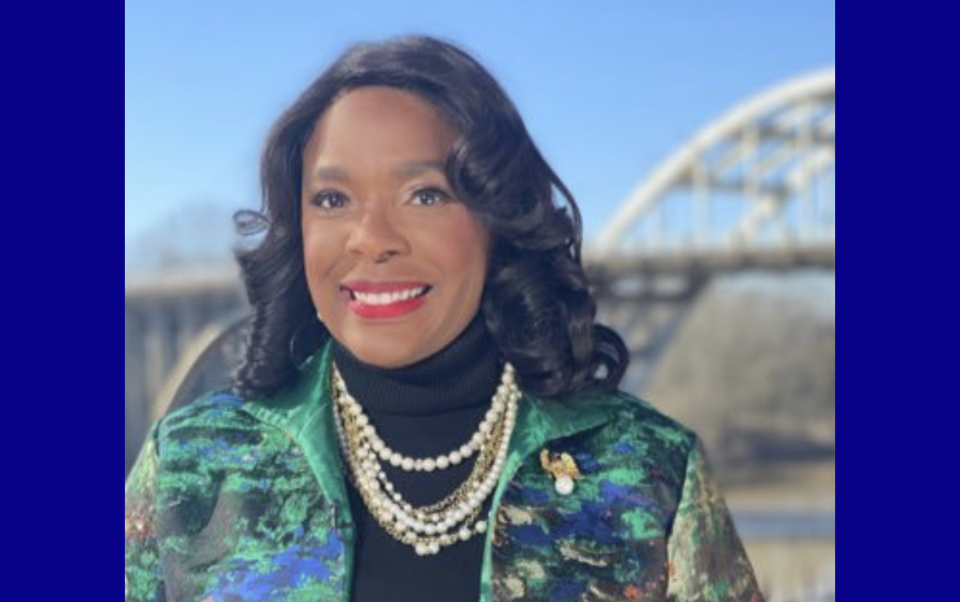
Thursday, Congresswoman Terri Sewell voted to send H.R. 8404, the Respect for Marriage Act, to President Joe Biden’s desk. This controversial legislation was passed by the U.S. House of Representatives by a vote of 258 to 169. This also repeals the Defense of Marriage Act (DOMA), upholding couples’ right to equal protection under federal law and requiring states to recognize valid out-of-state marriages. “No American should be discriminated against because of who they love,” said Rep. Sewell. “As the Supreme Court threatens to strip away more of Americans’ hard-fought personal liberties, I’m proud that this Democratic Congress is standing up for the dignity and equality of every American by sending the Respect for Marriage Act to President Biden’s desk. As the representative of America’s Civil Rights District, I will always fight for the equal treatment of all Americans under the law!” Supporters justified the need for federal legislation on marriage, citing a statement made by Supreme Court Justice Clarence Thomas. Thomas, in his concurring opinion in the Dobbs abortion decision, called for the Court to similarly reconsider the controversial Obergefell versus Hodges decision creating the right to same-sex marriage. Obergefell overturned state laws, including the Alabama Constitutional Amendment, stating that marriage is between one man and one woman only. The Respect for Marriage Act will take several steps to protect same-sex and interracial marriages. While the Supreme Court has effectively voided DOMA, this federal law still remains on the books. The Respect for Marriage Act will repeal this statute once and for all. The legislation will uphold married couples’ right to equal protection in all areas covered under federal law, such as Social Security, tax filings, and veterans’ benefits. The bill prohibits state officials from denying recognition of an out-of-state marriage on the basis of sex, race, ethnicity, or national origin. Sewell was the only member of the Alabama House delegation to vote in favor of the bill. The final bill now heads to the President’s desk for his signature. “Today, Congress took a critical step to ensure that Americans have the right to marry the person they love,” President Biden said in a statement. “The House’s bipartisan passage of the Respect for Marriage Act—by a significant margin—will give peace of mind to millions of LGBTQI+ and interracial couples who are now guaranteed the rights and protections to which they and their children are entitled.” Sewell was recently re-elected to her seventh term representing Alabama’s Seventh Congressional District. She is the only Democrat in Alabama’s congressional delegation and the only Black woman to represent the state of Alabama in Congress in its history. To connect with the author of this story, or to comment, email brandonmreporter@gmail.com.
White House says that repealing the COVID-19 vaccine mandate was a “mistake”
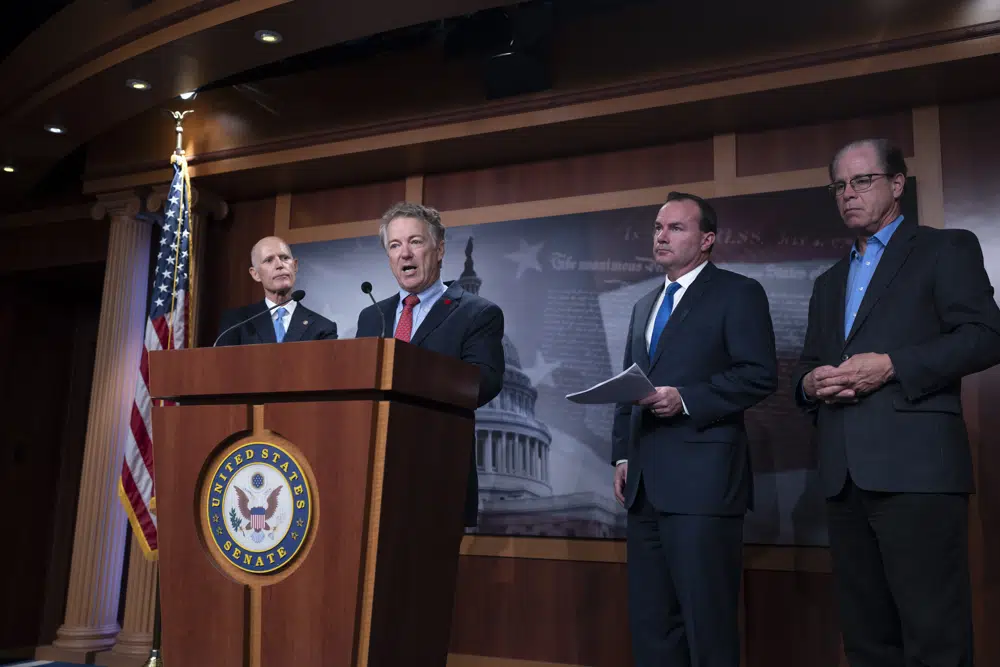
Earlier this week, conservative Senators, including Tommy Tuberville, amended the National Defense Authorization Act (NDAA) to overturn President Joe Biden’s controversial COVID-19 vaccine mandate for members of America’s armed forces. On Wednesday, White House Press Secretary Karine Jean-Pierre told reporters that Tuberville and the other Senators had made a “mistake.” “I will note — just to be very, very clear here — what we saw, what we think happened here is Republicans in Congress have decided that they’d rather fight against the health and wellbeing of our troops than protecting them,” Sec. Jean-Pierre said. “And we believe that it is a mistake what we saw — what we saw happen on the NDAA, as it relates to the vaccine mandate. Making sure our troops are prepared and ready for service is a priority for President Biden. The vaccination requirement for COVID does just that.” “I’ll add one more thing,” Sec. Jean-Pierre said. “Before the COVID vaccine existed, nearly 700 Department of Defense personnel and service members died of COVID. Almost 100 of them were active duty. And so, since this past spring, there has been one death due to COVID. So vaccinations work and save the lives of our service members. So we believe that it was a mistake.” The COVID-19 vaccine remains highly controversial even within the medical community. Last week the Alabama Department of Public Health (ADPH) released a statement urging Alabamians to get the newest bivalent version of the COVID-19 vaccine. “COVID-19 vaccines are safe and effective at protecting you from serious illness, hospitalization, and death,” ADPH informed the public. “Since every COVID-19 infection gives the virus a chance to mutate, being vaccinated helps prevent the spread of COVID-19 and its variants in our state and world.” Dr. Stewart Tankersley has served three tours overseas in the armed services in the Global War on Terror. Alabama Governor Kay Ivey appointed him to the state’s task force on COVID-19. Tankersley is one of a group of Alabama doctors who fundamentally disagree with the prevalent view on COVID-19 as articulated by ADPH and the Centers for Disease Control and Prevention. Alabama Concerned Doctors was formed to share information on alternative treatments for COVID-19. When the vaccine began being given in mass, they claim they have documented a growing number of adverse vaccine side effects, including some life-threatening. “That is a lie,” Tankersley told Alabama Today in a phone interview in response to the ADPH claim that the vaccine is safe and effective. “They are not going by the data. The evidence is overwhelming that this vaccine is dangerous. That is an absurd statement.” “The panic is what led to this,” Tankersley claimed. “There is no safety data on this. When you get the vaccine out of the package, it does not come with a safety insert.” “All of them should be outlawed, much less be given to our troops,” Tankersley said. “They (vaccines) cause our bodies to have a massive immune response. The mRNA is surrounded by a very nasty lipid particle.” Tankersley said that ADPH and the medical establishment are reluctant to debate the physicians who are skeptical of the safety and effectiveness of the vaccine. “They will not debate us on this,” Tankersley said. “The British Medical Journal said that it was unethical to give this to medical students. It does more harm than good.” “The sooner you are vaccinated, the sooner you have protection,” the ADPH said in their release. “To find COVID-19 vaccination locations near you, search vaccines.gov, text your zip code to 438829, or call 1-800-232-0233. Helpful information about recommended COVID-19 vaccines and boosters for individuals is available at the following website: cdc.gov/coronavirus/2019-ncov/vaccines/stay-up-to-date.html.” “The public has decided,” Tankersley said. “They are not taking this. Only ten percent of the public has gotten the new bivalent vaccine, and it has been out for three months.” Tuberville has suggested that the vaccine mandates are keeping the armed services from reaching their recruitment goals. “In the United States, the number of new servicemembers joining the military is reaching a near record low,” Tuberville and other conservative Senators wrote in a joint statement. “The United States needs a strong military to protect our country against the growing threats facing our nation. We are pleased that the final conferenced bill includes language mirroring our amendments’ efforts to protect troops from being fired due to Biden’s COVID vaccine mandate without fair appeal and to the harm of service readiness.” “The reasons why our military is not able to attain its recruitment goals is multifaceted, but not the least of these is forcing these young people to take this vaccine they do not need that causes injury,” Tankersley said. To connect with the author of this story, or to comment, email brandonmreporter@gmail.com.
Tommy Tuberville addresses need for domestic production of critical minerals
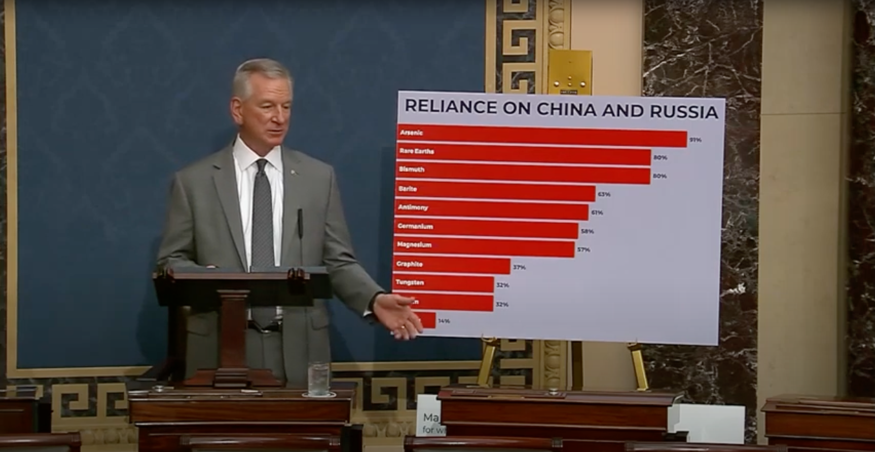
On Wednesday, U.S. Senator Tommy Tuberville spoke about his concern that America’s dependence on foreign countries for critical minerals that are crucial to U.S. food, energy, and military supply chains. “The pandemic revealed America’s concerning dependence on foreign adversaries for items we used to produce here in the United States,” Tuberville said in a speech on the Senate floor. “Our military is dependent on imported tungsten, cobalt, and rare earth elements. In addition to the military, our nation’s food supply depends on imported materials for fertilizer. Our energy supply chains are dependent on imported aluminum, copper, graphite, and uranium. All of these have been listed by the U.S. Geological Survey as ‘critical minerals’ in 2018 and most recently in 2022.” Tuberville warned that the nation’s food supply chain depends on imported materials for fertilizer, while energy producers need the same elements to produce and transport energy sources, and the military needs rare earth materials to build everything from ships to missile guidance systems. Even though the United States houses vast supplies of critical minerals waiting to be extracted, America imports 100 percent of its supply of 14 of the 35 critical minerals as defined by the Department of Interior. Many of its foreign supplies are potential adversaries with values in conflict with those of the United States, like Russia and China. “We import 100 percent — 100 percent — of our supply of 14 of the 35 critical minerals as defined by the Department of Interior,” Tuberville explained. “That means our domestic production of these minerals is zero. Our dependence on foreign countries is growing every day. It’s putting us in a bad situation. Where are we getting our imports? Mainly from Russia, China, and their surrogates…All the while, America boasts these minerals in abundance right here in the United States. This is a disgrace.” Tuberville argues that the U.S. should take steps to responsibly produce critical minerals from America’s vast geologic bounty. “It’s a self-inflicted crisis…We are in a tough situation that’s getting worse every day. Instead of using what we have at home — here in the United States — we’re importing them by doing business with nations that run counter to everything that we stand for and that we value,” Tuberville continued. “We depend on these adversaries for huge amounts of our supply of minerals and materials we need to produce everything from batteries to pharmaceuticals.” “The U.S. shuns its mineral wealth rather than wisely and responsibly produce critical minerals from America’s vast geologic bounty,” said Tuberville. “We have it all right here under our feet. It’s possible to mine critical minerals in an environmentally-responsible way, we can do that. We are the United States of America. We can do that like they do in Canada and Australia…We can protect our environment and the national interest at the same time. And the future of this country.” Tuberville was elected to the Senate in 2020 and is a member of the Senate Armed Services, Agriculture, Veterans Affairs, and HELP Committees. To connect with the author of this story, or to comment, email brandonmreporter@gmail.com.
Gary Palmer votes against the Respect for Marriage Act

On Thursday, the U.S. House of Representatives passed the controversial Respect for Marriage Act. Congressman Gary Palmer voted against the measure. Palmer warned that this bill was “about forcibly imposing a new definition of marriage and silencing those who disagree.” The bill had already passed the U.S. Senate 61 to 36. It now goes to the desk of President Joe Biden where he has said that he will sign it. “Marriage between a man and a woman is one of the self-evident truths that pre-exist the concept and institution of culture and government,” Palmer said in a statement emailed to Alabama Today. “Marriage is the fundamental building block of all cultures and civilizations. It is essential for family formation and for the bearing and raising of children. Attempts to redefine marriage through the deceptively titled ‘Respect for Marriage Act’ will not change what marriage is by nature nor its importance to the future well-being of our nation.” “This bill is not about the freedom of individuals to live and love as they choose but about forcibly imposing a new definition of marriage and silencing those who disagree, particularly people of faith,” Palmer stated. “This bill jeopardizes religious liberty for people of all faiths who do not support redefining marriage and will only accelerate discrimination against individuals, businesses, and organizations who refuse to promote same-sex unions. For these reasons, I opposed passage of this bill.” The legislation was passed in a 258-169-1 vote. Thirty-nine Republicans joined all Democrats in supporting the measure. By passing the bill into law before Republicans take control of the House next month, it means that this law will be in effect in the states even if the controversial Supreme Court ruling – Obergefell versus Hodges – making gay marriage legal across the nation is eventually overturned by the Court. Justice Clarence Thomas, who vociferously opposed Obergefell v. Hodges when it passed, had recently publicly floated the idea of overturning the controversial decision. Following the bill’s passage in the Senate, Biden said he would “promptly and proudly” sign it into law. The bill gives federal protections to same-sex couples, requiring that the federal government and all states recognize marriages if the pair were wed in a state where the union was legal. It also cements protections for interracial couples, ordering states to recognize marriages regardless of “the sex, race, ethnicity, or national origin of those individuals.” The bill also repeals the 1996 Defense of Marriage Act. The House had passed an earlier version of the Respect for Marriage Act 267 to 157 vote in July. That earlier version of the bill was altered in the Senate after Republicans expressed concerns that it lacked religious freedom protections. Gary Palmer was recently re-elected to his fifth term representing Alabama’s Sixth Congressional District. To connect with the author of this story, or to comment, email brandonmreporter@gmail.com.
House passes defense bill scrapping COVID vaccine mandate
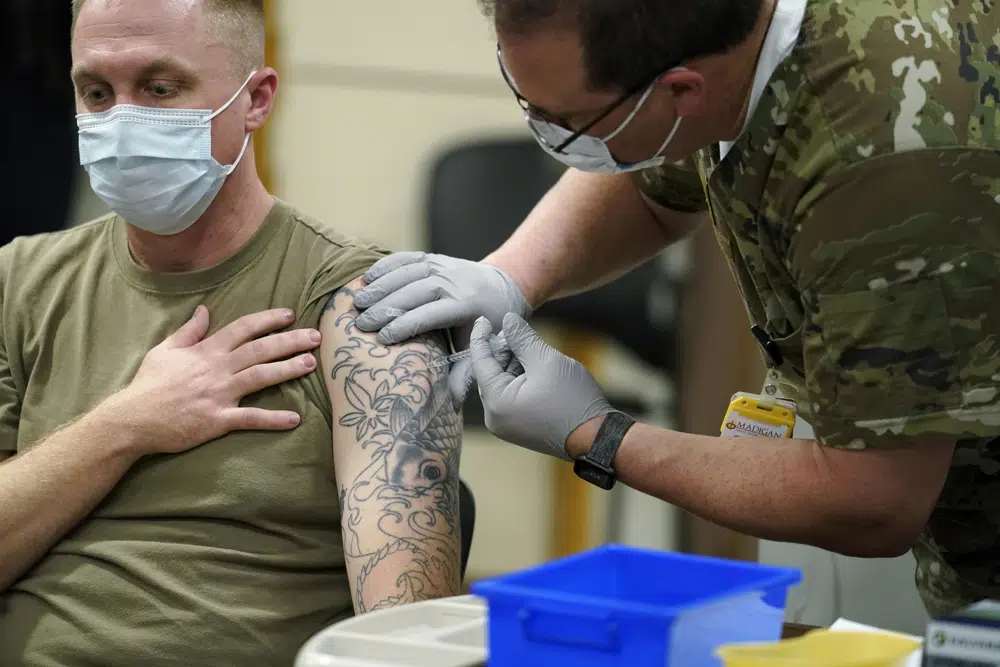
A bill to rescind the COVID-19 vaccine mandate for members of the U.S. military and provide nearly $858 billion for national defense passed the House on Thursday as lawmakers scratch off one of the final items on their yearly to-do list. The bill provides for about $45 billion more for defense programs than President Joe Biden requested, the second consecutive year Congress significantly exceeded his request, as lawmakers seek to boost the nation’s military competitiveness with China and Russia. The House passed the bill by a vote of 350-80. It now goes to the Senate, where it is expected to pass easily, then to the president to be signed into law. To win bipartisan support for the bill, Democrats agreed to Republican demands to scrap the requirement for service members to get a COVID-19 vaccination. The bill directs Defense Secretary Lloyd Austin to rescind his August 2021 memorandum imposing the mandate. Only days earlier, he voiced support for keeping the mandate in effect. Rep. Adam Smith, Democratic chairman of the House Armed Services Committee, told colleagues that the decision to impose the vaccine mandate was the right call at the time. “It saved lives, and it made sure that our force was as ready as it could possibly be in the face of the pandemic,” Smith said. But, he said the directive only required the initial vaccination, and by now, that protection has worn off. “It’s time to update the policy,” Smith said. Republicans said the mandate hurt recruiting and retention efforts. Rep. Mike Rogers, top Republican on the House Armed Services Committee, said he intends in the next Congress to examine who was adversely affected by the mandate, “so we can try to revisit that and make them whole to the extent desirable.” More than 8,000 active-duty service members were discharged for failure to obey a lawful order when they refused the vaccine. “Some of the folks who have moved on are not going to want to come back,” said Rogers, who will become chairman of the Armed Services Committee in the next Congress. Smith said he opposed efforts to reward those service members who disobeyed a military order. “Orders are not optional in the United States military,” Smith said. “And if Congress expresses the opinion that they are, I cannot imagine anything that would more significantly undermine the good order and discipline within our military.” Military leaders have argued that troops for decades have been required to get as many as 17 vaccines in order to maintain the health of the force, particularly those deploying overseas. Recruits arriving at the military academies or at basic training get a regimen of shots on their first day — such as measles, mumps, and rubella — if they aren’t already vaccinated. And they routinely get flu shots in the fall. Service leaders have said that the number of troops who requested religious or other exemptions to any of those required vaccines — prior to the COVID pandemic — was negligible. The politicization of the COVID-19 vaccine, however, triggered an onslaught of exemption requests from troops. As many as 16,000 religious exemptions have been or are still pending, and only about 190 have been approved. Small numbers of temporary and permanent medical exemptions have also been granted. While the rescission of the COVID-19 vaccine mandate has generated much attention, it takes up one paragraph of what is a 4,408-page bill. The defense policy legislation is critical in shaping the military’s future. It sets the maximum number of service members authorized to be in the various branches of the military. It authorizes money for specific major weapons programs, and it establishes pay and benefits. This year’s bill authorizes money to support a $4.6% pay raise for military members and the Defense Department’s civilian workers. The bill also authorizes $800 million in additional security assistance for Ukraine and calls for a report on whether any gaps exist in the oversight of aid to that country. That addresses the concerns of some Republicans who have been calling for a more detailed accounting of how the money has been spent. The legislation received broad support from House members of both political parties. Opposition came from 45 Democrats and 35 Republicans. Some Democrats said the bill authorized too much defense spending. “While working families are being crushed by inflation, we shouldn’t be spending $45 billion MORE than the President requested,” tweeted Rep. Mondaire Jones, D-N.Y. Rep. Troy Nehls, R-Texas, said stripping the vaccine mandate did not go far enough. “We must rehire these heroes with mandatory backpay,” he said of those who were kicked out for refusing the vaccine order. White House press secretary Karine Jean-Pierre defended the Pentagon’s COVID vaccination policy but said Biden would judge the bill “on its entirety.” “What we think happened here is Republicans in Congress have decided that they’d rather fight against the health and well-being of our troops than protecting them,” Jean-Pierre said. “And we believe that it is a mistake.” The defense policy bill also has a variety of environmental measures, such as legislation to boost healthy choral reefs, enhance marine mammal research and eliminate shark fin sales. Lawmakers failed in some instances to attach their priorities to the bill, such as an effort to prevent federal banking regulators from imposing penalties on banks that offer services to cannabis-related businesses. Also left out was legislation from Sen. Joe Manchin, D-W.V.., to speed permits for natural gas pipelines and other energy projects, including a pipeline project in his home state and Virginia. Republished with the permission of The Associated Press.
Bill protecting same-sex, interracial unions clears Congress

The House gave final approval Thursday to legislation protecting same-sex marriages, a monumental step in a decadeslong battle for nationwide recognition that reflects a stark turnaround in societal attitudes. President Joe Biden has said he will promptly sign the measure, which requires all states to recognize same-sex marriages. It is a relief for hundreds of thousands of couples who have married since the Supreme Court’s 2015 decision that legalized those marriages and have worried about what would happen if the ruling were overturned. In a statement after the vote, Biden called the legislation a “critical step to ensure that Americans have the right to marry the person they love.” He said the legislation provides “hope and dignity to millions of young people across this country who can grow up knowing that their government will recognize and respect the families they build.” The bipartisan legislation, which passed 258-169 with 39 Republican votes, would also protect interracial unions by requiring states to recognize legal marriages regardless of “sex, race, ethnicity, or national origin.” After months of negotiations, the Senate passed the bill last week with 12 Republican votes. Democrats moved the bill quickly through the House and Senate after the Supreme Court’s decision in June that overturned the federal right to an abortion — including a concurring opinion from Justice Clarence Thomas that suggested the 2015 Obergefell v. Hodges decision legalizing same-sex marriage could also be reconsidered. While many Republicans predicted that was unlikely to happen, and said the bill was unnecessary, Democrats and GOP supporters of the bill said it shouldn’t be left to chance. “We need it,” said House Speaker Nancy Pelosi, who presided over the vote as one of her last acts in leadership before stepping aside in January. “It is magic.” The bill is “a glorious triumph of love and freedom,” Pelosi said, tearing up as she celebrated its passage. In debate before the vote, several gay members of Congress talked about what a federal law would mean for them and their families. Rep. Mark Pocan, D-Wis., said he and his husband should be able to visit each other in the hospital just like any other married couple and receive spousal benefits “regardless of if your spouse’s name is Samuel or Samantha.” Rep. Chris Pappas, D-N.H., said he was set to marry “the love of my life” next year, and it is “unthinkable” that his marriage might not be recognized in some states if Obergefell were to be overturned. “The idea of marriage equality used to be a far-fetched idea,” said Rep. David Cicilline, D-R.I. “Now it’s the law of the land and supported by the vast majority of Americans.” The legislation lost some Republican support since July, when 47 Republicans voted for it — a robust and unexpected show of support that kick-started serious negotiations in the Senate. But most of those lawmakers held firm, with a cross-section of the party, from conservatives to moderates, voting for the bill. House Republican Leader Kevin McCarthy voted against it. “To me, this is really just standing with the Constitution,” said Republican Rep. Ann Wagner of Missouri, who voted for the bill both times. She pushed back on GOP arguments that it would affect the religious rights of those who don’t believe in same-sex marriage. “No one’s religious liberties are affected in any way, shape, or form,” Wagner said. Republican Rep. Chris Stewart of Utah said he was “proud to once again vote in favor of protecting our LGBTQ and religious friends and neighbors.” He praised Senate changes to the bill, ensuring that it would not affect current rights of religious institutions and groups. “Civil rights are not a finite resource, we do not have to take from one group to give to another,” Stewart said. The legislation would not require states to allow same-sex couples to marry, as Obergefell now does. But it would require states to recognize all marriages that were legal where they were performed and protect current same-sex unions if the Supreme Court decision were overturned. While it’s not everything advocates may have wanted, passage of the legislation represents a watershed moment. Just a decade ago, many Republicans openly campaigned on blocking same-sex marriages; today, more than two-thirds of the public support them. Still, most Republicans opposed the legislation, and some conservative advocacy groups lobbied aggressively against it in recent weeks, arguing that it doesn’t do enough to protect those who want to refuse services for same-sex couples. “God’s perfect design is indeed marriage between one man and one woman for life,” said Rep. Bob Good, R-Va, before the vote. “And it doesn’t matter what you think or what I think; that’s what the Bible says.” Rep. Vicky Hartzler, R-Mo., choked up as she begged colleagues to vote against the bill, which she said undermines “natural marriage” between a man and a woman. “I’ll tell you my priorities,” Hartzler said. “Protect religious liberty, protect people of faith and protect Americans who believe in the true meaning of marriage.” Democrats in the Senate, led by Wisconsin’s Tammy Baldwin and Arizona’s Kyrsten Sinema, worked with supportive Republican senators to address those GOP concerns by negotiating changes to clarify that the legislation does not impair the rights of private individuals or businesses. The amended bill would also make clear that a marriage is between two people, an effort to ward off some far-right criticism that the legislation could endorse polygamy. In the end, several religious groups, including the Church of Jesus Christ of Latter-day Saints, came out in support of the bill. The Mormon church said it would support rights for same-sex couples as long as they didn’t infringe upon religious groups’ right to believe as they choose. Republican Sen. Susan Collins of Maine, who led negotiations with Baldwin and Sinema in the Senate, attended a ceremony after the House vote with Pelosi and Senate Majority Leader Chuck Schumer. “When I think about this bill, I think about how much it matters to people in each of our lives, our family members, our coworkers, our
