
Tommy Tuberville salutes retiring Richard Shelby

On Wednesday, U.S. Senator Tommy Tuberville spoke on the Senate floor saluting Sen. Richard Shelby, who is retiring at the end of this term after 44 years of congressional service – 36 of them in the U.S. Senate. “To say Senator Shelby committed his career to the betterment of his state and nation would be a huge understatement,” Tuberville said. “His retirement is well earned, and his work should be celebrated.” Tuberville entered the Senate after a long career coaching college football, including serving as the head football coach at the University of Mississippi, Auburn University, Texas Tech, and Cincinnati. “It was quite the transition from college football to politics, but I jumped into the ring because I care deeply about the future of our nation — and I realized very quickly, so does Richard Shelby,” Tuberville said. “My transition to public office was supported by some great advisors who shared my belief in America. Chief among those allies is Senator Shelby…Congress is like a football team; it has a lot of great players in different positions. But to come together, form a game plan, and get some wins for our country, those players need good coaches. Senator Shelby has been one of the best.” “Today, I want to honor the countless hours — countless hours — he has spent fighting for Alabama and the many achievements he has championed for the betterment of all Americans,” Tuberville continued. “Senator Shelby’s work has hit almost every corner of Alabama…His focus on national defense, manufacturing, infrastructure, and education will be the hallmarks of his legacy.” “His support for America’s military and belief in the abilities of Alabamians cemented our state’s role as a leader in America’s national defense infrastructure,” Tuberville said. “Second, thanks to Senator Shelby’s commitment to bringing jobs and industry to Alabama, our state has also grown into one of the country’s leading manufacturing hubs…Third, that growth would not be possible without solid infrastructure, which Senator Shelby has helped build for decades… Fourth, all of this growth — in defense, manufacturing, infrastructure, and more — would mean nothing without the talented men and women who serve our military, lead our companies, and pioneer the new industries driving economic development. That talent and those are cultivated through education — and Senator Shelby believes in the value of a quality education.” “As we bid farewell to Senator Shelby, I encourage all my colleagues to honor his legacy by following his example,” Tuberville concluded. “Put your family, your country, and your principles first — and the rest will fall into place. We all know public service is not just a burden of time and effort for the servant but also for their families. So, to Dr. [Annette] Shelby — thank you for your steadfast service to our state alongside your husband. And, to Senator Shelby — thank you for your mentorship over the past two years. I will use these lessons learned by serving you for the rest of my time in the Senate and beyond.” Shelby represented Tuscaloosa in the Alabama State Senate from 1970 to 1978. He represented Alabama’s Seventh Congressional District in the U.S. House of Representatives from 1979 to 1987. He was elected to the United State Senate in 1986 and re-elected five times. Shelby is 87 years old. Shelby is the outgoing Vice Chair of the Senate Appropriations Committee. To connect with the author of this story, or to comment, email brandonmreporter@gmail.com.
Nathaniel Ledbetter announces third round of committee chairmanships
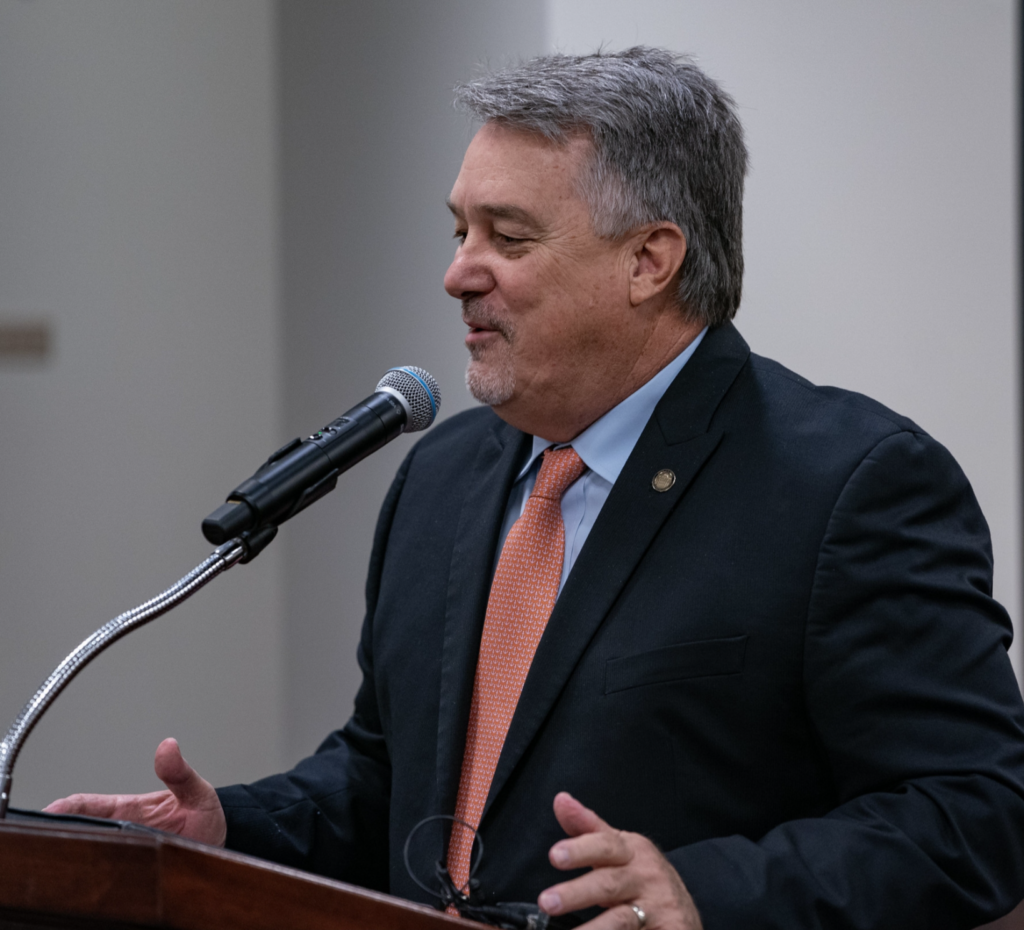
State Rep. Nathaniel Ledbetter announced his third round of intended committee chair appointments on Wednesday. Ledbetter was chosen to be the next Speaker of the House in November by the Alabama House Republican Caucus – which holds a commanding supermajority in the Alabama House of Representatives. The Republicans hold a 77 to 28 supermajority in the Alabama House of Representatives, so the selection of the House Republican Caucus will almost certainly be elected as the next Speaker of the House when the Legislature meets for its organizational session in January. Ledbetter has appointed Rep. Ginny Shaver as Chair of the Children and Senior Advocacy Committee. Ledbetter also appointed Rep. Chris Blackshear to chair the Financial Services Committee. Rep. Matt Simpson was appointed to chair the House Ethics and Campaign Finance Committee. Simpson is an attorney and former prosecutor. Rep. David Standridge will chair the Rural and Urban Development Committee. Standridge is the longtime chair of the House Rural Caucus. Rep. Corley Ellis was appointed to chair the House Insurance Committee. State Rep. Chris Sells will serve as the chairman of the State Government Committee. State Rep. Andy Whitt will be the chairman of the Economic Development and Tourism Committee. State Rep. Allen Treadaway will continue to chair the Public Safety and Homeland Security Committee. Treadaway is a retired Birmingham City assistant police chief. “These appointments represent a mix of veteran chairs with valuable experience and newly appointed members of the leadership team with fresh perspectives,” Ledbetter said. “All of them have the knowledge and skills necessary to lead their committees and ensure that bills and measures are well vetted before reaching the House floor.” All of Ledbetter’s appointments will formally go into effect once he is elevated to Speaker once the full body is in session for the organizational session. To connect with the author of this story, or to comment, email brandonmreporter@gmail.com.
Alabama DA frustrated over national nonprofit posting bail for Mobile prisoners
A California-based nonprofit organization called The Bail Project has begun putting up bail money to help prisoners get out of Mobile County Metro Jail, Fox10News reported. According to their website, the organization has helped over 27,000 people with bail. The organization is based in Los Angeles and has around $33 million in funding to help bail out people who cannot afford the bond in criminal cases. The group doesn’t have a Mobile office, but they have put up bail money for a handful of “test cases” to determine whether they will stay in Mobile permanently. According to the report, one of the first “test cases” was Shane Danovan Singleton who received help from the group when they paid his $5,000 bail. The condition was that the Mobile County resident was supposed to complete the Wings of Life treatment program. However, he failed to appear and was at large until police arrested him on a charge that he threatened to kill someone. Alabama prosecutors are calling the move dangerous. Mobile County District Attorney Ashley Rich explained that the organization has no bounty hunters to track people down when they flee. But Rich argued that it took Singleton getting arrested again to put him behind bars. “The Mobile Police Department did the Bail Project’s job and put him back in jail, and he got immediately back out,” she told FOX10 News. “And the Bail Project is still not having to pay any money.” Adrienne Johnson, regional director of The Bail Project, told Fox10News that her organization provides an important service for people eligible for release but unable to afford bail. She defended the group stating that they provide transportation and reminders of court dates. “What we do at the bail project is we come in and try to level the playing field by providing bail assistance to individuals who are only in custody because they cannot afford to pay their bail,” Johnson explained. “It is a public safety concern,” Rich said. “But for The Bail Project getting exceptional circumstances granted to them, this new offense wouldn’t have happened.” A judge will decide if the bail money that The Bail Project put up in Singleton’s case should be forfeited. Singleton is not the only defendant accused of failing to comply with court orders after getting assistance from The Bail Project. Grand Bay resident Marquita Ross’s restitution of $1,453 was paid by the organization in a criminal mischief case. She missed a hearing the following month. When she failed to appear again, Mobile County District Judge George Hardesty ordered the money forfeited to the state. While prosecutors in Alabama are calling foul, Johnson argued that judges have the option to deny bail to people who they believe pose too a great a risk to flee or endanger the public or impose additional restrictions, such as electronic monitoring. “We are bailing out folks that a judge has already determined are eligible for release by paying bail,” she explained. Mobile County’s presiding circuit judge, Michael Youngpeter supports the program. He told FOX10 News that the program in Mobile County is limited to nonviolent offenders with low bail. He also said many of them sit in jail so long that they already have served their entire sentence by the time they resolve their cases. “And that’s just because they’re poor,” he said. “And that just doesn’t seem fair. It isn’t fair. And so, this project remedies that. And so that’s, you know, that limited purpose is why we’ve got them involved here.” Recently Indiana passed a new law aimed at stopping organizations like The Bail Project. Under the new Indiana law known as House Bill 1300, nonprofits that pay the bail of more than three people in a span of 180 days are subject to regulations that require them to obtain a certification. The ACLU argued before the Seventh Circuit that the bail law unfairly targets charitable organizations and violates their free speech rights. The judges have not issued a ruling.
Kay Ivey calls on legislators to serve the people, not themselves
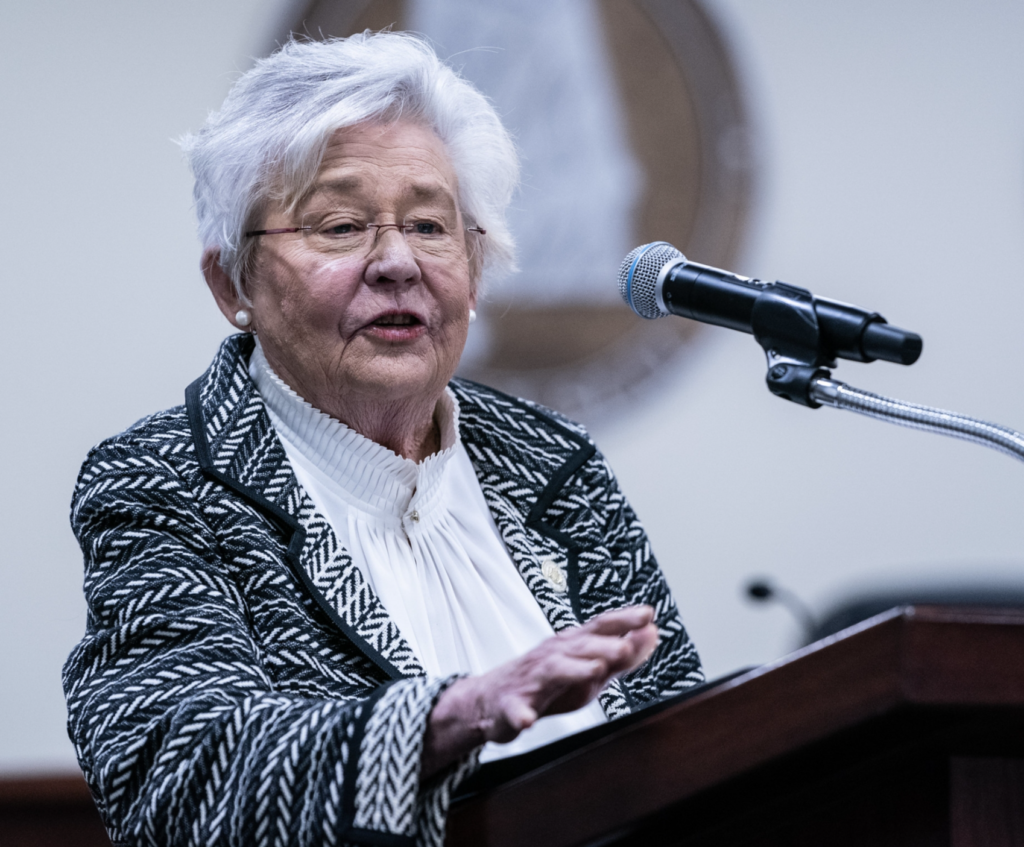
On Wednesday, Governor Kay Ivey addressed legislators’ attending orientation training in Montgomery. “It is an absolute pleasure to be with you for your legislative orientation,” Gov. Ivey told the legislators – most of those present were new members for their first term in the Legislature. “I have had the opportunity to talk to many of you today and have enjoyed talking with you. I look forward to working with you.” Ivey thanked the spouses of the legislators. “We all know that when someone runs for officer, their entire family are along for the ride,” Ivey said. Ivey advised the legislators. “Be on time, show up, and be informed,” Ivey said. “You were elected by the people of Alabama to serve the people of Alabama and not yourself. They will hold you accountable for every decision that you make. You must always be willing to learn.” Ivey praised the leadership of the Legislature. “You are very fortunate to have folks like Senate Pro Tem Greg Reed, Senator Bobby Singleton, Minority Leader Anthony Daniels, and soon-to-be Speaker Nathaniel Ledbetter.” Ivey credited bipartisanship for the strong economic shape that the state is in. “We reach across the aisle to work on important issues every day,” Ivey said. Ivey cited her Rebuild Alabama roads initiative that passed in 2019 as an example. “The roads in our state had been neglected for over thirty years,” Ivey said. “It was holding Alabama’s economy back in a big way.” “We all worked together,” Ivey continued. “It passed with a 84 to 20 vote in the House and 24 to 6 in the Senate.” Ivey listed some legislative priorities for the four years, including addressing the “failing and underperforming” schools as well as continuing “our work with the Alabama prisons.” Ivey also spoke out in favor of renewing Alabama’s economic incentives to continue to grow the economy. “Our economic and workforce development efforts start with renewing Alabama incentives,” Ivey said. Reporters asked Ivey if she would call a special session for allocating the second round of American Rescue Plan Act (ARPA) funds. “All options are on the table,” Ivey replied. Ivey was introduced by Senate President Pro Tempore Greg Reed. “Governor Ivey is one of the most popular Governors in America,” Reed said, citing recent polling showing that Ivey has the seventh-highest approval rate among American governors. “We are so thankful for your willingness to be Alabama’s Governor,” Reed told Ivey. Ivey was re-elected in a landslide election last month. The Legislature will be formally in session early in January for an organizational session. The 2023 Alabama regular legislative session will begin on March 7. To connect with the author of this story, or to comment, email brandonmreporter@gmail.com.
15 states demand Apple, Google relabel TikTok for ‘mature’ content

Attorneys general from 15 states have demanded Apple and Google increase the age-appropriate rating for social media app TikTok from “teen” to “mature” in their online stores or face possible legal action. The demand was made in nearly identical letters to Apple and Google sent on December 13 by Montana Attorney General Austin Knudsen, co-signed by attorneys general from Alabama, Arkansas, Florida, Georgia, Indiana, Kentucky, Louisiana, Mississippi, North Dakota, Oklahoma, South Carolina, Texas, Utah, and Virginia. Currently, Apple’s App Store labels TikTok as appropriate for “Age 12+ Years Old,” and Google labels it “T” for “Teen” appropriate. Both ratings mean, “Content is generally suitable for ages 13 and up. May contain violence, suggestive themes, crude humor, minimal blood, simulated gambling and/or infrequent use of strong language,” according to the company’s websites. The AGs contend the content available on TikTok goes well beyond those guidelines and is not suitable for children under age 17. “The TikTok app contains frequent and intense alcohol, tobacco, and drug use or references, sexual content, profanity, and mature/suggestive themes,” the letters state, drawing the conclusion “The TikTok app can only plausibly qualify for an ‘M’ for ‘Mature’ rating.” The Center Square requested comments from both Apple and Google but did not receive a reply. The move comes amid growing pressure on TikTok by state governments over alleged deceptive practices and data security. Indiana Attorney General Todd Rokita filed a pair of lawsuits against the app maker on December 8, alleging the company has engaged in deceptive practices aimed at minors in violation of state law by luring children to the platform with misleading messaging about the site’s content, and it deceives consumers into believing their personal information is protected from the Chinese government and Communist Party. TikTok is owned by the Chinese company ByteDance Ltd., also named in the suits. Also December 8, Texas Gov. Greg Abbott ordered all Texas state agencies to ban the use of TikTok on any government-issued electronic devices, alleging a growing threat posed by the platform in exposing critical information to the Chinese government. Maryland, Oklahoma, South Dakota, South Carolina, Alabama, North Dakota, and Utah have subsequently banned use of the app on state-owned electronic devices. According to Apple’s App Store, TikTok collects information and “identifiers” in order to track each user and collects other data specifically linked to the user’s identity, including contact information, purchases, financial information, contacts, search history, browsing history, and data usage. As for Apple and Google, the AGs stated both tech giants are partly responsible for any harm caused by the alleged mislabeling of TikTok. The AGs write that Apple and Google share “the responsibility to ensure that apps like TikTok display an accurate age rating to consumers. When parents are deceived into letting their kids download TikTok, there are real consequences. Exposure to drug, alcohol, and tobacco content on social media makes kids more likely to use or experiment with those illicit substances in real life. And exposure to sexual content on TikTok can lead to pornography addiction and even the sexual exploitation of kids by online predators.” The app has been downloaded more than 1 billion times from Google, according to Google Play, and about 70 million times from Apple through April 2002, according to 9to5Mac. The letters conclude with the warning that if Apple and Google do not change their age ratings for TikTok, the attorneys general reserve the right to take legal action against both vendors, including litigation and civil penalties. A spokesperson for TikTok said earlier this month that concerns by state leaders “are largely fueled by misinformation about our company,” The Washington Post reported. The Center Square requested additional comment from ByteDance, but none was received. Republished with the permission of The Center Square.
16 AGs, other groups file petition opposing EPA rule setting new greenhouse gas standards
Sixteen state attorneys general, 15 state associations, and multiple organizations are fighting against another Environmental Protection Agency rule they argue jeopardizes American energy and national security. The AGs, led by Texas Attorney General Ken Paxton, filed a brief with the U.S. Court of Appeals for the D.C. Circuit to halt the EPA from implementing “radical climate regulations.” Their efforts follow another led by Paxton and 12 attorneys general last month opposing a new EPA “environmental justice” rule they also argue will risk Americans’ safety. Texas, which leads the U.S. in energy production powered by oil and natural gas, argues the standards “would make America weaker and increasingly reliant on hostile nations like China.” At issue is the EPA’s “Revised 2023 and Later Model Year Light Duty Vehicle Greenhouse Gas Emissions Standards,” 86 Fed. Reg. 74,434, which was slated to go into effect on February 28, 2022. After eight lawsuits were filed over the rule, both the rule and cases, which were consolidated, are pending. The EPA is still trying to exceed its statutory authority, Paxton argued, after the U.S. Supreme Court curtailed it in June. In the historic ruling in West Virginia v EPA, the high court “ended EPA’s plan to ‘substantially restructure the American energy market’ in pursuit of the agency’s unauthorized climate goals,” the AG’s brief says. The EPA’s greenhouse gas rule “is a rerun of West Virginia, except here, EPA seeks to substantially restructure the American automobile market in pursuit of unauthorized climate goals. EPA’s action should fail for the same reason as in West Virginia – under no plausible reading of the Clean Air Act was EPA given authority to perform this restructuring,” they argue. Section 202 of the Clean Air Act charges the EPA with promulgating “standards” about how much air pollutants vehicles may lawfully emit. After a 2007 case, Massachusetts v. EPA, the EPA began including greenhouse gases in Clean Air Act standards. And in 2020, it promulgated carbon dioxide emissions standards on car manufacturers for cars made between 2022 and 2026. However, once President Joe Biden took office, the EPA “radically shifted course,” Paxton argues. On his first day in office, Biden issued an executive order instituting a new climate agenda that included revising the EPA’s 2020 standards. He also directed a then-defunct “Interagency Working Group” to reform to provide monetized estimates of the “social cost” of a unit of greenhouse gases, which the AGs argue is “enormous.” By doing so, the president “stacked the regulatory deck by directing EPA to rewrite its emission standards in a way that accounts for those extraordinary estimates,” the AGs argue, citing a January 20, 2021, Federal Register entry. The standards aren’t based on individual vehicle compliance but on averaging the emissions from vehicles fleet-wide – which counts electric vehicle emissions as a zero. The standards are so stringent that the EPA stated in a December 30, 2021, Federal Register entry that they will “necessitate” manufacturers to “further deploy” electric vehicles to comply using fleet-averaging. The EPA also estimated its new rule would force 17% of new car sales in 2026 to be electric. But the “EPA had no authority to promulgate the Standards and functionally force vehicle manufacturers to produce more electric vehicles,” the AGs argue. The standards “place enormous new strain on the electric grid,” they argue, “threatening the grid’s reliability altogether.” Federal agencies without “clear congressional authorization” don’t have the authority to take any action that would “threaten the reliability of the grid,” they also point out, arguing the EPA was granted no such authority in this case. Paxton said the standards “unreasonably target car and light truck greenhouse gas emissions” with the goal of destroying “financial incentives to manufacture gas-powered vehicles. These actions will likely lead to substantial increases in the cost of transportation for working Americans.” Another cause for concern, the AGs argue, is the standards jeopardize national security. “An overwhelming share of the materials required to produce electric vehicles are in China and other hostile countries,” they maintain. “The State Petitioners have long partnered with the federal government to enhance energy security and diminish our reliance on hostile foreign actors. And Congress has expressly legislated on that topic. It is implausible that Congress would have empowered EPA . . . to jeopardize this goal by forcing vehicle manufacturers to increase reliance on foreign actors.” Joining Paxton are the AGs from Alabama, Alaska, Arkansas, Arizona, Indiana, Kentucky, Louisiana, Mississippi, Missouri, Montana, Nebraska, Ohio, Oklahoma, South Carolina, and Utah. Republished with the permission of The Center Square.
Federal Reserve hikes rates again
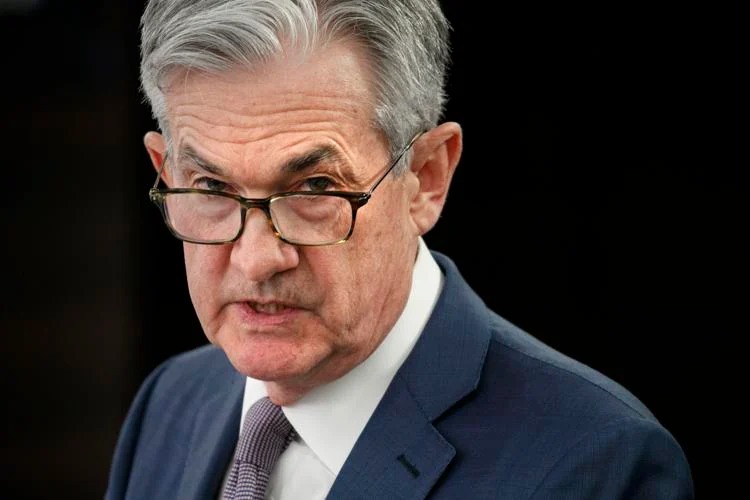
The U.S. Federal Reserve announced a new rate increase of half a percentage point Wednesday in its ongoing effort to curb inflation. The Fed raised the rate by 50 basis points, as expected, the seventh rate hike this year. This increase is smaller than the four previous 75 basis point increases but is still a notable increase, putting the range at 4.25%-4.5%. “Recent indicators point to modest growth in spending and production. Job gains have been robust in recent months, and the unemployment rate has remained low,” the Fed said. “Inflation remains elevated, reflecting supply and demand imbalances related to the pandemic, higher food and energy prices, and broader price pressures.” The Fed blamed the Russian war in Ukraine for the price hikes. That war delayed the supply chain and increased costs, but the price increases began long before that war, due in part to trillions of dollars in federal debt spending since the pandemic began. “The war and related events are contributing to upward pressure on inflation and are weighing on global economic activity,” the group said. “The Committee is highly attentive to inflation risks. The Committee seeks to achieve maximum employment and inflation at the rate of 2 percent over the longer run.” The increase comes in response to inflation, which has soared during President Joe Biden’s term. The latest federal inflation data shows that those price increases have slowed but not stopped entirely. Economists say these rate hikes help curb inflation but have negative economic consequences. Raising rates too much too fast can send the economy into a recession. “We expect that as the Fed moves closer to its terminal rate, the market will shift more directly towards growth, especially if valuations become compelling if the market sells off as the economy slows,” said Quincy Krosby, chief global strategist for LPL Financial. Analysts say the U.S. economy and the possibility of a recession are still in flux. “Though yesterday’s CPI report was encouraging, we believe the market has overreacted to an easing of inflationary pressures,” said John Lynch, Chief Investment Officer for Comerica Wealth Management. “A drop from 9.0% to 7.0% is likely the easiest of the 200 basis point moves lower that investors hope for … we suspect the next 200 basis point reduction will be much more difficult to achieve as wages, housing, and energy prove stickier than consensus believes. Moreover, while the move lower in market interest rates has been received warmly by investors, balance sheet reduction remains a wildcard and may provide further upward pressure on market interest rates in 2023.” Republished with the permission of The Center Square.
Recount requests delay Pennsylvania election certification
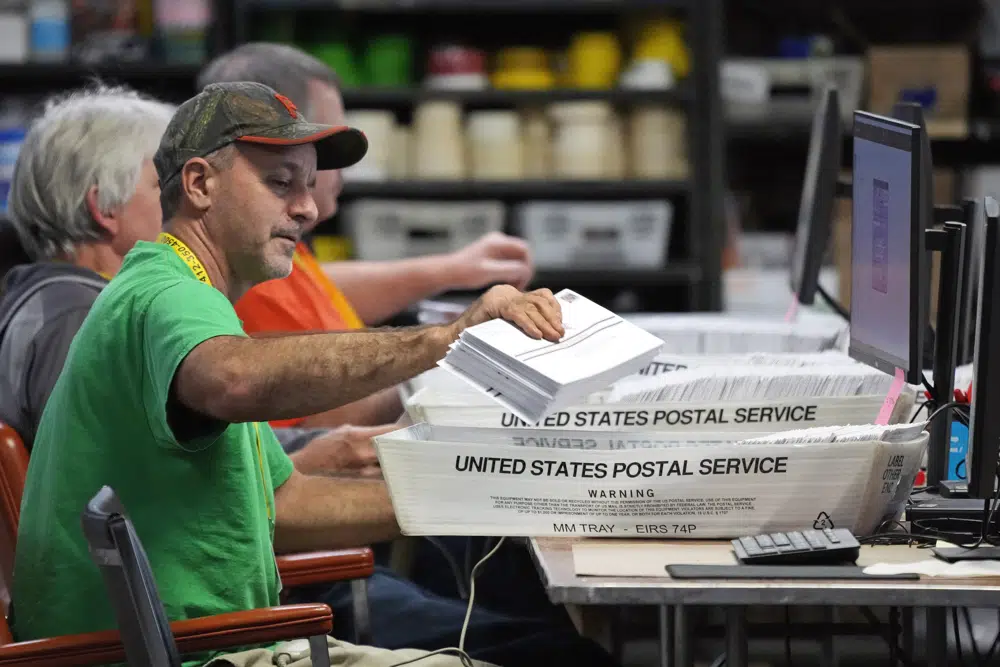
Five weeks after Election Day, winning candidates in Pennsylvania from governor to Congress are waiting for their victories to become official. An effort that appears to be at least partially coordinated among conservatives has inundated counties with ballot recount requests even though no races are close enough to require a recount, and there has been no evidence of any potential problems. The attempt to delay certification could foreshadow a potential strategy for the 2024 presidential election if the results don’t go the way disaffected voters want in one of the nation’s most closely contested states. Recounts have been sought in 172 voting precincts across 40% of Pennsylvania’s 67 counties. That led to nine counties missing their November 29 certification deadline, though all but one has since been certified. The Pennsylvania Department of State, in a response to The Associated Press on Wednesday, gave no date for certifying the results statewide but said it planned to comply with a request from the clerk of the U.S. House to send certification documents to Congress by mid-December. Wednesday was December 14. Chris Deluzio, a Pittsburgh Democrat elected in November to the U.S. House, said the delay has had only a minor effect on him so far. Without his win being official, however, the congressman-elect doesn’t get to send out mail at no charge, as other members of Congress do, for example. “I think if people are able to come to the courts and delay certification results without any real evidence, that’s a problem, and I see some abuse of that process here,” Deluzio said. Judges authorized at least 19 precinct recounts in six counties. Those requesting the recounts said they wanted to check the accuracy of the state’s election equipment and processes, echoing the conspiracy claims of voting machine manipulation for which there is no evidence. Brittany Crampsie, a political consultant involved with Democratic campaigns in Pennsylvania, said she expects the recount tactic to continue “as long as Donald Trump and his acolytes remain prevalent in the Republican Party.” “In a lot of these cases, it’s entirely political, and it’s a waste of taxpayer funds,” Crampsie said. Rural county commissions in Arizona and New Mexico delayed or threatened to delay certification of primary or general elections results this year, in each case without evidence that anything was amiss in the vote counting. An AP survey of the Pennsylvania precinct recounts found the recount challenges altered vote tallies barely or not at all. The absence of any problems led one county judge to urge state legislators to amend Pennsylvania’s recount law. Westmoreland Common Pleas Judge Harry Smail Jr., in a footnote to orders granting recounts, said such demands ought to be accompanied by specific claims of error or fraud. “A sustained failure to address this deficiency will continue to burden the courts, elections bureaus, elections boards, county executive branches, and the voting public by allowing manufactured challenges without a scintilla of evidentiary support to any and possibly all election certification processes in future elections,” Smail wrote. Rep. Leanne Krueger, who leads the state House Democratic Campaign Committee, said those who deny the results of the 2020 presidential election have been trying to stop election certification for several years. “These petitions are unsuccessful largely because they’re not grounded,” Krueger said. “And every time there’s a request for the county board of elections to do something like this, they are forcing the spending of taxpayer money on elections that have already been decided.” By state law, recounts must be done for all election districts where ballots were cast in a given race. For statewide contests, that would mean all precincts in a county. There is an exception to permit more narrow recounts if the petitioners claim “a particular act of fraud or error occurred,” and they provide some evidence to support that. A lack of any evidence or particular claim was the grounds cited by many of the judges who rejected recount petitions. At least two of the recount requests were supported by local Republican Party groups. It’s unclear whether the wider request effort also is linked to Audit the Vote PA, a group founded in early 2021 out of the false belief that something was wrong with the 2020 presidential results in Pennsylvania, where Trump lost to Democrat Joe Biden. Audit the Vote PA founder Karen Taylor filed a recount petition in Westmoreland County. The group’s co-founder, Toni Shuppe, said during a November 28 question-and-answer session on the social media platform Rumble that people had found a way to submit petitions, but she didn’t attribute the effort to her organization. “It’s our sacred vote, and this movement isn’t going away, and people aren’t going to shut up,” Shuppe said in the online forum, urging that ballots be counted by hand. The requests have generally sought hand counts in the races for governor and U.S. Senate, but some also have asked to double-check the vote totals for U.S. House and for state representative. Many used a form letter with blank spaces to fill in the precinct and county. The AP precinct survey did not turn up any recount requests driven by candidates who lost close contests. Several petitioners were turned down because they worked as election officials on November 8 and certified the results as accurate. Others were rejected for not living in the precinct for which a recount was requested or for not paying a required $50 bond. Some counties targeted for recounts had already sent their totals to the Department of State before being notified of the legal actions, but others had not yet certified or had certified only partial results. Lycoming County elections chief Forrest Lehman said defending a single recount petition required making copies of poll books and collecting a variety of records. “We felt compelled to be ready for anything,” Lehman said. “That certainly took hours of my time and then hours of our solicitor’s time.” Republished with the permission of The Associated Press.
