
State announces $47 million in funding for gulf restoration project
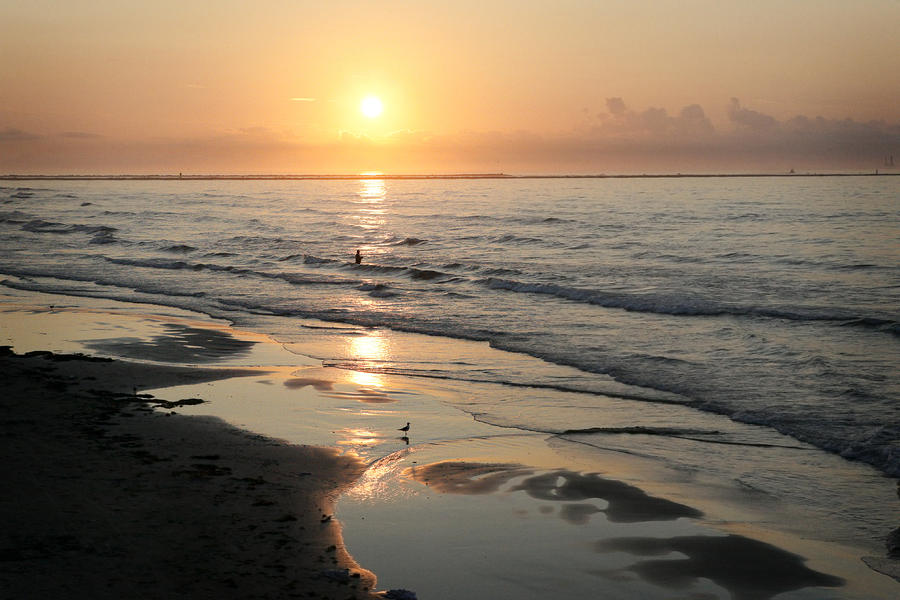
On Friday, the Alabama Department of Conservation and Natural Resources (ADCNR) announced that the final phase of funding from the National Fish and Wildlife Foundation-Gulf Environmental Benefit Fund (NFWF-GEBF) had been approved for projects in Alabama. The money is from the settlement for the 2010 Deepwater Horizon (DWH) oil spill. “As we celebrate Alabama’s 2022 slate of NFWF projects and announce the final allocation of Alabama’s portion of the Gulf Environmental Benefit Funds (GEBF), we recognize another landmark in Alabama’s recovery from the Deepwater Horizon Oil Spill disaster,” Alabama Governor Kay Ivey said. “The $356 million awarded to Alabama in criminal fines, managed by NFWF and implemented by the Alabama Department of Conservation and Natural Resources (ADCNR), funded some of the first Deepwater Horizon Restoration Projects in Coastal Alabama.” Ivey continued, “Together, these investments tell a story of significant accomplishments that will go a long way in protecting Alabama’s diverse coastal ecosystem for decades to come. Whether it be our investments into maintaining the coastal reefs that support our thriving red snapper fishery or our land conservation efforts to protect game and non-game species in places like the Perdido River Corridor, Fort Morgan Peninsula, and the Grand Bay Savanna, there is no doubt Alabama has made the absolute most of these funds.” Ivey thanked the foundation for its dedication. “I thank the National Fish and Wildlife Foundation for their partnership and dedication to the restoration and protection of Alabama’s natural resources and for their capable and dedicated management of the Gulf Environmental Benefit Fund,” Governor Ivey said. “While this marks the completion of our allocation of the NFWF portion of the BP Settlement, our work continues to restore Coastal Alabama.” The most recent projects include $26,066,000 for Phase II of the Dauphin Island East End Restoration. The Dauphin Island project will restore approximately 1.5 miles of beach shoreline and about 85 acres of beach and dune habitat on the 14-mile barrier island that protects a portion of the Alabama Gulf Coast. Dauphin Island Mayor Jeff Collier said that this project will significantly impact the area. “This is going to be significant,” Mayor Collier stated. “So, we’re greatly certainly appreciative of that. The focus is really going to be on trying to protect the area that encompasses the Audubon sanctuary, the freshwater lake that’s within that location.” The tentative plan is to renourish and extend the 2015-2016 beach restoration project to provide healthy beaches and dunes. The East End beach protects the Audubon Bird Sanctuary and other upland resources from beach erosion from storms. Sand has migrated to the west, which has caused wider downdrift beaches and growth of a sand spit south of the Isle Dauphine Golf Course. NFWF has awarded nearly $70 million in GEBF funds to nearly a dozen projects to enhance and protect this vital island. The Gulf Highlands Conservation Acquisition project was awarded $8.2 million in additional funding to expand the project footprint to include the adjacent Beach Club West property. The goal of the entire project is to acquire, conserve and manage the largest privately held, undeveloped Gulf frontage beach and dune habitat. This habitat will benefit nesting sea turtles, migratory birds and shorebirds, and the endangered Alabama beach mouse. $9 million will go to Phase II of the Lower Fish River Watershed Restoration project. The funding will be used to continue the work of Phase I by implementing designs to reduce the sediment and nutrients that flow into Weeks Bay. $2,788,000 will be used for Phase II of the Wolf and Sandy Creek Headwaters Restoration project. The money will be used for stream restoration, bank stabilization, invasive species removal, monitoring, and adaptive management. The project will restore nearly half a mile of instream habitat and 50 acres of wetlands through invasive species removal. $1 million will fund Alabama Coastal Adaptive Management, which will continue maintenance, repair, rehabilitation, or replacement of active projects funded by GEBF, as well as for expanding the ecological benefits of the projects to ensure the long-term viability of these efforts during unforeseen changes. These new projects bring the total awards from the GEBF fund to Alabama to more than $356 million. Efforts to restore Alabama’s coastline will continue. To connect with the author of this story, or to comment, email brandonmreporter@gmail.com.
Barry Moore opposes $1.7 trillion spending bill passed by ‘lame duck’ Congress
Republicans will take control of the U.S. House of Representatives in two weeks, but despite this, Congress is poised to vote on an omnibus spending bill this week – before Christmas. On Thursday, Congressman Barry Moore voted against a one-week continuing resolution (CR) that kept the government funded until Friday while a handful of lawmakers prepare a massive $1.7 trillion omnibus spending bill outside of the normal budgeting process. Moore has spoken out against a lame-duck session spending bill since August. “The one-week CR is nothing more than a surrender to Democrats that greases the skids for a wasteful $1.7 trillion spending bill next week – which we still have not seen yet,” said Moore. “Instead of rolling over and submitting to retiring and defeated Democrats, Republicans must insist that funding levels are extended past the lame duck session into the new Congress so that the American people can hold accountable the elected officials spending their tax dollars.” On September 30, a continuing resolution was passed, funding the government through December 16 and postponing the normal budgeting order until after the midterm elections. On Tuesday, Senate Appropriations Chairman Patrick Leahy said that he and Sen. Richard Shelby, the Vice Chair of the Appropriation Committee, have agreed on a framework that should lead to a bipartisan vote on an omnibus spending bill. “Today, Vice Chairman Shelby, Chair DeLauro, and I reached a bipartisan, bicameral framework that should allow us to finish an omnibus appropriations bill that can pass the House and Senate and be signed into law by the president,” Sen. Leahy said in a statement Tuesday. The omnibus spending bill will likely be voted on this week. However, some Republicans would like to do another CR to carry the government over to January, when Republicans will have control of the U.S. House of Representatives. Without some sort of a deal, there could be a partial government shutdown on December 24. A partial government shutdown at Christmas could adversely impact millions of American families – particularly given the inflation Americans have experienced this year. “The pain of inflation is real, and it is being felt across the federal government and by American families right now,” Leahy said. “We cannot delay our work any further, and a two-month continuing resolution does not provide any relief. I look forward to continuing to work with my friend, Vice Chairman Shelby, and Chair [Rosa] DeLauro over the next week to finish the job the American people sent us here to do.” Moore was just reelected to his second term in the House of Representatives. Moore served in the Alabama House of Representatives from 2010 to 2018. To connect with the author of this story, or to comment, email brandonmreporter@gmail.com.
Kevin McCarthy’s race for speaker risks upending House on Day One
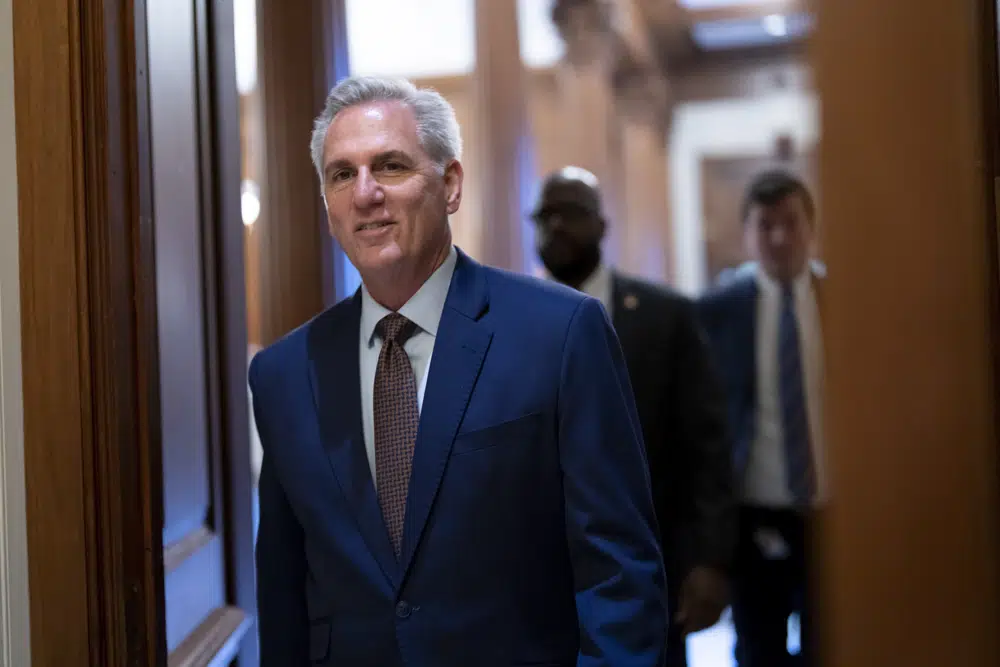
In his quest to rise to House speaker, Kevin McCarthy is charging straight into history — potentially becoming the first nominee in 100 years unable to win the job on a first-round floor vote. The increasingly real prospect of a messy fight over the speaker’s gavel on Day One of the new Congress on Jan. 3 is worrying House Republicans, who are bracing for the spectacle. They have been meeting endlessly in private at the Capitol, trying to resolve the standoff. Taking hold of a perilously slim 222-seat Republican majority in the 435-member House and facing a handful of defectors, McCarthy is working furiously to reach the 218-vote threshold typically needed to become speaker. “The fear is that if we stumble out of the gate,” said Rep. Jim Banks, R-Ind., a McCarthy ally, then the voters who sent the Republicans to Washington “will revolt over that and they will feel let down.” Not since the disputed election of 1923 has a candidate for House speaker faced the public scrutiny of convening a new session of Congress only to have it descend into political chaos, with one vote after another, until a new speaker is chosen. At that time, it eventually took a grueling nine ballots to secure the gavel. McCarthy, a Republican from Bakersfield, California, who was first elected in 2006 and who remains allied with Donald Trump, has signaled he is willing to go as long as it takes in a floor vote to secure the speaker’s job he has wanted for years. The former president has endorsed McCarthy and is said to be making calls on McCarthy’s behalf. McCarthy has given no indication he would step aside, as he did in 2015 when it was clear he did not have the support. But McCarthy also is acknowledging the holdouts won’t budge. “It’s all in jeopardy,” McCarthy said Friday in an interview with conservative Hugh Hewitt. The dilemma reflects not just McCarthy’s uncertain stature among his peers but also the shifting political norms in Congress as party leaders who once wielded immense power — the names of Cannon, Rayburn, and now Pelosi adorn House meeting rooms and office buildings — are seeing it slip away in the 21st century. Rank-and-file lawmakers have become political stars on their own terms, able to shape their brands on social media and raise their own money for campaigns. House members are less reliant than they once were on the party leaders to dole out favors in exchange for support. The test for McCarthy, if he is able to shore up the votes on Jan. 3 or in the days that follow, will be whether he emerges a weakened speaker, forced to pay an enormous price for the gavel, or whether the potentially brutal power struggle emboldens his new leadership. “Does he want to go down as the first speaker candidate in 100 years to go to the floor and have to essentially, you know, give up?” said Jeffrey A. Jenkins, a professor at the University of Southern California and co-author of “Fighting for the Speakership.” “But if he pulls this rabbit out of the hat, you know, maybe he actually has more of the right stuff.” Republicans met in private this past week for another lengthy session as McCarthy’s detractors, largely a handful of conservative stalwarts from the Freedom Caucus, demand changes to House rules that would diminish the power of the speaker’s office. The Freedom Caucus members and others want assurances they will be able to help draft legislation from the ground up and have opportunities to amend bills during the floor debates. They want enforcement of the 72-hour rule that requires bills to be presented for review before voting. Outgoing Speaker Nancy Pelosi, D-Calif., and the past two Republican speakers, John Boehner and Paul Ryan, faced similar challenges, but they were able to rely on the currency of their position to hand out favors, negotiate deals, and otherwise win over opponents to keep them in line — for a time. Boehner and Ryan ended up retiring early. But the central demand by McCarthy’s opponents’ could go too far: They want to reinstate a House rule that allows any single lawmaker to file a motion to “vacate the chair,” essentially allowing a floor vote to boot the speaker from office. The early leaders of the Freedom Caucus, under BC, the former North Carolina congressman turned Trump’s chief of staff, wielded the little-used procedure as a threat over Boehner and later, over Ryan. It wasn’t until Pelosi seized the gavel the second time, in 2019, that House Democrats voted to do away with the rule and require a majority vote of the caucus to mount a floor vote challenge to the speaker. Rep. Chip Roy, R-Texas, said the 200-year-old rule was good enough for Thomas Jefferson, so it’s one he would like to see in place. “We’re still a long way from fixing this institution the way it needs to be fixed,” Roy told reporters Thursday at the Capitol. What’s unclear for McCarthy is even if he gives in to the various demands being made by the conservatives, whether that will be enough for them to drop their opposition to his leadership. Several House Republicans said they do not believe McCarthy will ever be able to overcome the detractors. “I don’t believe he’s going to get to 218 votes,” said Rep. Bob Good, R-Va., among the holdouts. “And so I look forward to when that recognition sets in and, for the good of the country, for the good of the Congress, he steps aside, and we can consider other candidates.” The opposition to McCarthy has promoted a counteroffensive from other groups of House Republicans who are becoming more vocal in their support of the GOP leader — and more concerned about the fallout if the start of the new Congress descends into an internal party fight. Rep. David Joyce, R-Ohio, who leads the Republican Governance Group, was wearing an “O.K.” button on his lapel — meaning, “Only Kevin,” he explained. Some have
Alabama Supreme Court denies new trial for death row inmate Toforest Johnson

The Alabama Supreme Court on Friday denied a new trial for a death row inmate in a case that has seen the district attorney, former state attorney general, and a former chief justice join calls to reexamine his conviction. Justices rejected Toforest Johnson’s appeal of a lower court decision denying him a new trial. The request was one part of an ongoing effort to overturn the conviction. Johnson was convicted and sentenced to death for the 1995 killing of Jefferson County Deputy Sheriff William Hardy while Hardy was working off-duty security at a hotel. Johnson’s lawyers had argued he was due a new trial because the state failed to disclose a key prosecution witness was paid a reward several years after testifying. The Court of Criminal Appeals in May ruled that Johnson’s attorneys had not established that the witness knew about the reward or was motivated by it. Johnson’s lawyers will appeal the decision to the U.S. Supreme Court. They also have a separate new trial petition before a Jefferson County judge based on the district attorney’s concerns about the conviction. Danny Carr, the current district attorney in the county where Johnson was convicted, filed a brief in 2020 with the court saying Johnson should get a new trial “in the interest of justice.” Carr wrote that he took no position on Johnson’s innocence or guilt but said he had multiple concerns about the case. He wrote that his concerns about the conviction include the reward issue and that alibi witnesses place Johnson in another part of town at the time of the shooting. Carr said the original lead prosecutor had also expressed concerns about the case. The key prosecution witness at the 1998 trial testified that, while eavesdropping on a phone call, she heard a man she believed was Johnson admitting to the crime. She was paid a $5,000 reward in 2001. Former Alabama Attorney General Bill Baxley, former Chief Justice Drayton Nabers, and several former judges and prosecutors submitted briefs to the circuit court or wrote editorials supporting a new trial for Johnson. Republished with the permission of The Associated Press.
Alabama closes some oystering areas, sparking complaints

Alabama officials have closed some oystering grounds in Mobile Bay, prompting complaints from harvesters. The move by the Alabama Marine Resource Division is part of a continuing effort to keep wild oyster reefs in the Gulf of Mexico from being killed by overharvesting. The state closed the western half of its oystering area in Mobile Bay on Nov. 23, WKRG-TV reports, and closed two small but productive areas in the eastern half of the bay on Tuesday. Meeting with oyster harvesters on Dauphin Island, AMRD director Scott Bannon said the closure was part of an effort to rebuild the state’s population of the bivalve. “Unfortunately, there’s just not enough oyster harvest available to do a longer season and to maintain that,” Bannon told the television station. “We would love to do that. We’d love to keep Alabama product in the market longer; we would love for them to be working longer and making good money.” Some harvesters say the state is cutting off their main source of income during the peak winter season for Gulf oysters. “They shut us down all the time, and there’s oysters out there, and they won’t let us work them,” said Harry Harris. Much harvesting is done from small boats, and oyster catchers say the water is too choppy for those vessels in the parts of Mobile Bay that are still open. “A lot of small vessels can’t get that limit; they can’t even get out there,” said Michael Williams. “It’s too rough.” Bannon said a new grid system implemented by the state is meant to keep small areas like the ones closed from being overworked. The department opened Alabama’s reefs October 3. It reported late that month that the number of harvesters seeking oysters had risen from last year and that 1,200 sacks of oysters per day were being pulled out of Mobile Bay, up from 800 a day last year. Oyster harvesters are limited to six sacks per day, each holding 85 pounds (39 kilograms). Bannon said those catching the limit can make $500 a day. Other Gulf states have also imposed restrictions. Mississippi allowed no harvest at all in 2021-2022 and has not announced an opening date for this year. That state’s oyster stocks, already in sharp decline, collapsed after the Mississippi Sound was swamped by Mississippi River floodwaters released through the Bonnet Carre Spillway in 2019. Heavy rains also dumped large amounts of freshwater into the Mississippi Sound in 2021, again upsetting the salinity needed for oysters to thrive. The spillway release also led Louisiana to close public oyster harvests east of the Mississippi River from 2019 through 2022. Louisiana reopened those areas in October. Republished with the permission of The Associated Press.
