
Autauga County Sheriff Joe Sedinger has died

Autauga County Sheriff Joe Sedinger died late on Monday. The Autauga County Sheriff’s Department announced the news on social media: “It is with a very heavy heart that we announce the unexpected passing of our beloved Autauga County Sheriff Joe Sedinger. Please continue to pray for not only his family but his blue family as well. He will be greatly missed by all.” Sedinger had just entered his third term as Sheriff after being re-elected in the Republican primary in May. Sedinger worked with the Sheriff’s office for decades and was a beloved fixture in the community. “It is a solemn day among the entire law enforcement community within Alabama as we all mourn the tragic and heartbreaking loss of Sheriff Sedinger,” said Alabama Law Enforcement Agency Secretary Hal Taylor. “On behalf of the Alabama Law Enforcement Agency, I would like to extend my deepest condolences to the family and friends of Sheriff Sedinger. He was a true professional and his dedication to serve the public will always be remembered. We recognize this is a devastating time for the Autauga County Sheriff’s Office as well as the entire community, which Sheriff Sedinger so faithfully served. As we continue to mourn alongside the law enforcement community, we also pray for Sheriff Sedinger’s family as they attempt to manage and cope with this terrible loss. Sheriff Sedinger’s courage, resolve, and never-ending bravery will continue to live on and provide us all with an example of a courageous servant’s heart. Along with sharing our sincerest condolences, we pledge to make all resources available to the Autauga County Sheriff’s Office as well as the surrounding community as they grieve this unfortunate and heartbreaking situation.” The county coroner takes over the role of Sheriff on an interim basis until the position can be filled. State Sen. Clyde Chambliss said on Facebook, “I am saddened by the passing of my friend and colleague Sheriff Joe Sedinger. I first met Joe in the early 90’s when we were both working on replacing the fuel tanks at the Sheriff’s office. He rose to be the top lawman in Autauga County. He was a Godly man, and I look forward to seeing him again in Heaven, worshiping our Lord and Savior. Well done Sheriff. Well done.” Covington County Sheriff Blake Turman said on Facebook, “It is with a heavy heart that I inform you that Autauga County Sheriff Joe Sedinger has passed away. Sheriff Sedinger is a good friend and a mentor of mine. He will be greatly missed. Please keep his family and the Autauga County Sheriffs Office in your prayers.” Sedinger said in his last Sheriff’s report on the official website, “As Thanksgiving approaches, I am reminded of how fortunate I am to serve Autauga County with such an outstanding group of people. The deputies and administrative support staff at Autauga County Sheriff’s Office are dedicated, hard-working, and committed to serving our County’s citizens. To show them that you value them as much as I do, I encourage you to give them a friendly smile or a kind word to let them know you appreciate them as much as I do. I am truly fortunate to have them by my side.” “I would especially like to extend my sincerest appreciation to the citizens of Autauga County,” Sedinger wrote. “Your efforts to enhance safety and cooperation with our office help make our County a great place to live and work. I am grateful for your assistance through the crime tips hotline, website, and in person. I sincerely appreciate your commitment to the safety of our community. My commitment to the citizens of this County has never been more substantial. I will continue to work with you to improve the quality of life for each resident we serve. The support you’ve shown the Sheriff’s Office during 2022 has been overwhelming. I am very thankful. Happy Thanksgiving!” The cause of death has not been released, and funeral arrangements are still being finalized. To connect with the author of this story, or to comment, email brandonmreporter@gmail.com.
Daniel Sutter: Losing the Christmas trade war

Every December, Santa delivers toys, games, and electronics to children across our nation. Yet residents of the North Pole buy almost nothing from us, producing a massive trade deficit. Santa’s gift-giving offers perspective on international trade in addition to spreading Christmas joy. What do we learn from our Santa trade deficit? For one, our trade deficit (or surplus) with any nation is a statistic aggregating thousands of transactions. Nations do not trade. Individuals and businesses trade. We buy imports because they offer better value than other available products. Businesses outsource production when this offers better value than producing domestically. Santa’s trade policy would normally draw outrage. China merely subsidizes its exports through either government assistance or currency manipulation currency. China makes its exports more affordable, not free. Santa gives stuff away, the ultimate form of dumping in international trade. Indeed, Santa personifies the extreme economists use to illustrate the benefits of one-sided international trade. Suppose China (or Japan when I started teaching) sent us goods and wanted nothing in return, not even green pieces of paper. Children’s joy on Christmas morning reminds us that we benefit from one-way trade. Export subsidies break the rules of a pure market. Economists often use sports analogies to illustrate markets. In sports, cheating harms us or our favorite team. But market competition differs here. Apple and Samsung compete to sell phones, with each sale like a score. The value creation in sports ends when the contest concludes. Thus, rigging a contest necessarily undermines its entertainment value. Customers use their phones after purchasing them, which is the true value creation. A company that sells its products at a lower price due to cheating benefits consumers. Are there downsides to gifts, either from Santa or nations subsidizing exports? I see two, national security and dependence. The potential for war to disrupt trade creates a cost of imports, one which market prices may not incorporate. For instance, Taiwanese companies have great expertise in and manufacture most of the world’s semiconductors. American companies might not expect any profit producing computer chips under normal circumstances. But this leaves the world economy vulnerable to a Chinese invasion of Taiwan. National security concerns extend beyond economics, so I will not discuss this further. But national security has long provided cover for businesses seeking protection from foreign competition. Security claims must be very closely scrutinized. Dependence is also a danger. Consider a young man whose generous grandmother gives him $3,000 a month. He decides to live on this, drops out of college, and plays video games all day. He might face difficult circumstances with no degree, job skills, or work history when the money runs out. (Unless he makes lots of money on Twitch and YouTube.) Becoming dependent on gifts is a problem, one also extending to international trade. We will face adjustment costs if export subsidies we have benefitted from the end. Suppose China’s leaders decide in a fit of economic sanity to stop subsidizing America. We would have to start making things China currently sells cheap. The line between adjustment costs and dependence is a matter of subjective perception. One criterion for dependence is perhaps a lack of domestic production capacity. Increasing the production if Santa closed his toy shop would be much easier if there were still U.S. toy makers. We would retain the know-how of production. Economic integration involves interdependence, which limits the exploitation of dependence. Remember that nations do not trade. Chinese companies produce for Americans and Europeans, not Chinese consumers. They have factories, machines and workers specialized in producing these goods and cannot easily switch to producing other things. Being cut off from the global market leaves these companies with no customers and, ultimately, no way to pay their workers. We benefit from Santa’s “dumping” of toys and games on the U.S. market. But just as dependence on the kindness of others is bad, we should not become dependent on other nations’ misguided economic policies. Daniel Sutter is the Charles G. Koch Professor of Economics with the Manuel H. Johnson Center for Political Economy at Troy University and host of Econversations on TrojanVision. The opinions expressed in this column are the author’s and do not necessarily reflect the views of Troy University.
New ‘Twitter files’ allege Biden administration worked with Twitter to control COVID conversation
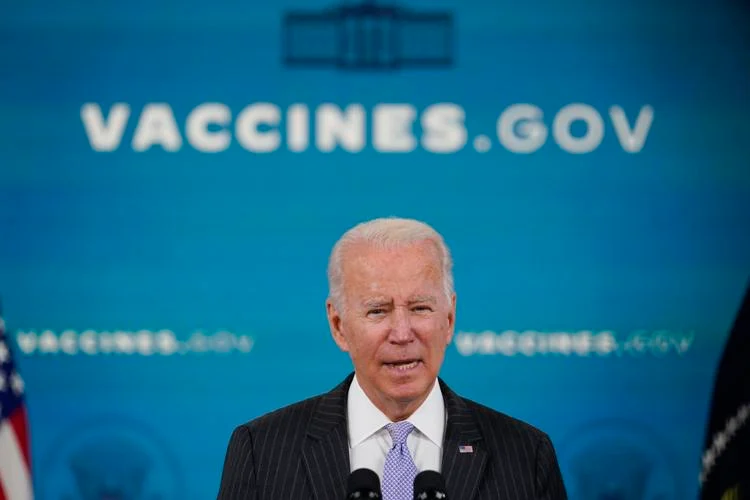
A new batch of “Twitter files” released Monday allegedly indicates the Biden administration worked with Twitter to control the public conversation about COVID, which included censoring accounts skeptical of the vaccine. This update is the latest in a string of internal Twitter revelations since billionaire Elon Musk took over Twitter and vowed to make public any wrongdoing previous to his ownership that might have gone on behind the scenes. Since then, Musk has released a trove of troublesome information, including evidence federal law enforcement worked closely with the social media giant to censor Americans. The Biden administration has pushed back against these allegations, but the Twitter files are not the only source giving evidence to that collusion. Musk shared a Twitter thread Monday posted by author and journalist David Zweig, where Zweig laid out some introductory points, though Musk said more details are coming soon. Zweig said Twitter “rigged the COVID debate” by “censoring info that was true but inconvenient to U.S. govt. Policy” and “by discrediting doctors and other experts who disagreed” as well as “suppressing ordinary users, including some sharing the CDC’s *own data*.” “So far, the Twitter Files have focused on evidence of Twitter’s secret blacklists; how the company functioned as a kind of subsidiary of the FBI; and how execs rewrote the platform’s rules to accommodate their own political desires,” he said. “The United States government pressured Twitter and other social media platforms to elevate certain content and suppress other content about Covid-19.” Zweig, who says he personally reviewed internal documents, said both the Trump and Biden administration participated in the collusion. He said Donald Trump’s team was more worried about “panic buying” at grocery stores, while Biden was interested in shutting down accounts skeptical of the vaccine. “When the Biden admin took over, one of their first meeting requests with Twitter executives was on Covid. The focus was on ‘anti-vaxxer accounts,’” he said. “In the summer of 2021, president Biden said social media companies were ‘killing people’ for allowing vaccine misinformation.” “But Twitter did suppress views – many from doctors and scientific experts – that conflicted with the official positions of the White House,” he added. “As a result, legitimate findings and questions that would have expanded the public debate went missing.” The Twitter files have sparked calls for accountability. House Oversight Committee Republicans, who will have the majority come January, promised an investigation into the Twitter censorship and the Biden administration’s role earlier this month. This latest dump will likely only add fuel to that fire. “Committee Republicans continue to investigate whether U.S. government officials have participated in suppression and censorship of lawful speech in violation of the U.S. Constitution. Reports continue to surface that social media companies acted on behest of government agencies and officials when removing, restricting, or disclaiming content,” the House Republicans wrote in a letter earlier this month. “The American people and their elected representatives must know the extent to which their government has engaged in prohibited censorship to expose and prevent this unlawful conduct.” As The Center Square previously reported, critics have also lambasted the FBI after Musk’s document release appeared to show the FBI gave social media companies information leading them to believe the Hunter Biden story could be part of a disinformation campaign. Social media companies banned or shadow-banned the Hunter Biden story just before the last presidential election. Two years later, more and more details of the Hunter Biden story have been verified by leading news outlets. But the idea of law enforcement pressuring social media companies on COVID is not new. House Oversight Republicans launched an investigation last month into a “taxpayer-funded censorship campaign” after media reports indicated the Department of Homeland Security had been pressuring big tech companies to censor certain viewpoints on several issues, including COVID. The lawmakers sent a letter to DHS Secretary Alejandro Mayorkas calling out DHS in particular, saying it “leverages partnerships with left-leaning private organizations – who have received millions of dollars in federal money – to identify and then take action against political speech unfavorable to the Administration, especially around its handling of COVID-19 policy.” Republished with the permission of The Center Square.
New Alabama conceal carry law goes into effect in 2023
Background checks to acquire conceal carry permits in Alabama will be a thing of the past next year. Earlier this year, the Alabama Legislature ratified House Bill 272, which makes the state the 22nd in the country to permit individuals to carry concealed pistols without acquiring a permit or undergoing a background check. The new law goes into effect on January 1, according to the law. It passed the House of Representatives with a 70-29 vote and 24-6 in the Senate. Republican Gov. Kay Ivey was quick to sign the legislation into law shortly after it was approved by lawmakers. Under the law, the requirement for a person to obtain a concealed carry permit to carry a loaded pistol under their clothes, in a vehicle, or in a purse or other carrying bag is dropped. The law amends a 1975 Alabama code to delete language pertaining to carrying a visible pistol, review penalties for carrying weapons unlawfully and delete language surrounding the practice of carrying a concealed pistol. Additionally, the law revises restrictions for carrying or possessing a pistol on private property and revises the definition of a shotgun. Residents will be permitted to carry a pistol, holstered or otherwise secured on or about one’s person, without brandishing the weapon, in a public place. The law states brandishing involves waving, flourishing, displaying, or holding the weapon in a threatening manner or would appear threatening to a reasonable person without threat or in a reckless manner. A person may not carry a pistol on their person on private property that is not his or her own or under his or her control unless the person has the consent of the owner or legal possessor of the property. Law enforcement would not be subject to that provision of the law, under the bill. Additionally, it is not permitted to carry the weapon inside a police, sheriff, or highway patrol station, inside a prison, jail, halfway house, or corrections of detention facility. Residents, under the law, will not be permitted to carry a pistol inside a courthouse, courthouse annex, a building where a district attorney’s office is situated or a building containing county commissioners or city council is currently having a meeting. The definition of a shotgun is changed to reflect a weapon designed, or redesigned, and made, or remade, to use the energy of the explosive in a fixed shotgun shell to fire through a smooth bore, either a number or shots or a single projectile for each single pull of the trigger. Republished with the permission of The Center Square.
Joe Biden gives federal employees major raise, still doesn’t keep up with inflation
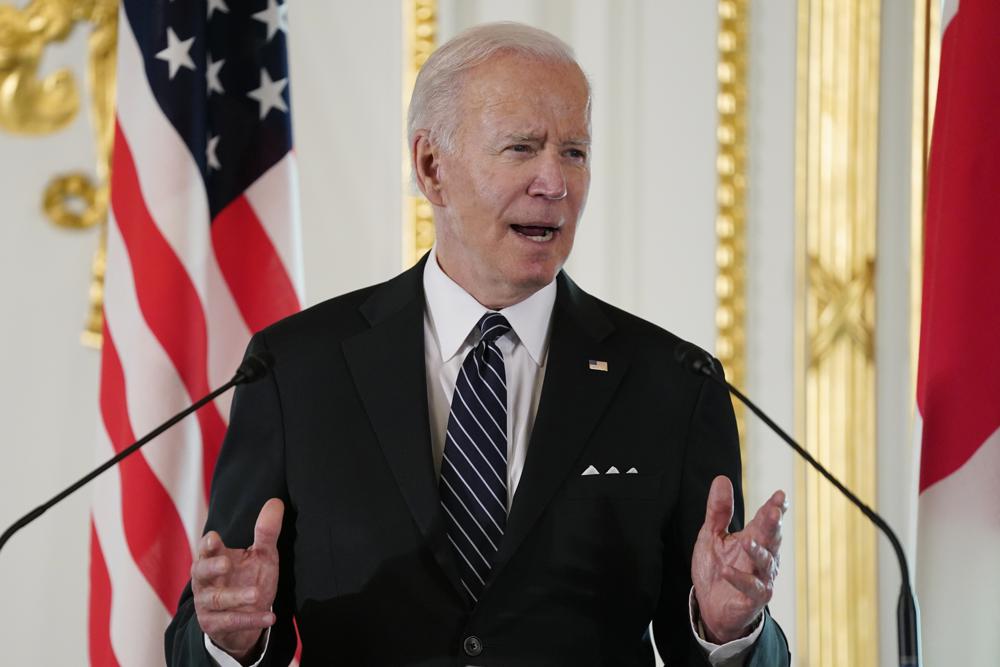
President Joe Biden signed an executive order giving federal employees a significant pay bump heading into the new year, but that increase still does not keep up with inflation. The executive order gives “General Schedule” employees a 4.6% pay increase, 4.1% as a raise, and 0.5% as a cost-of-living adjustment. General Schedule employees include a wide range of civilian federal workers. “The other schedules contained herein are effective on the first day of the first applicable pay period beginning on or after January 1, 2023,” the order said. The raise is higher than the 2.7% increase from the same time last year. Biden indicated the raise was coming in August. He sent a letter to House Speaker Nancy Pelosi, D-Calif., and Kamala Harris in her role as vice president of the Senate about the change. “Title 5, United States Code, authorizes me to implement alternative plans for pay adjustments for civilian Federal employees covered by the General Schedule and certain other pay systems if, because of “national emergency or serious economic conditions affecting the general welfare,’ I view the increases that would otherwise take effect as inappropriate,” the letter said. “Accordingly, I have determined that it is appropriate to exercise my authority to set alternative pay adjustments for 2023.” That increase, though, fails to keep up with the rising prices since Biden took office. The 4.6% increase is far less than the rise in consumer prices, and nearly a third of the increase in some items like groceries in the last year. The U.S. Bureau of Labor Statistics released its latest Consumer Price Index report earlier this month, which showed prices rose 7.1% in the previous 12 months. Another federal inflation marker released this month, the Personal Consumption Expenditure Index, showed a 5.5% increase in the previous twelve months, nearly one point higher than the pay raise. CPI data shows grocery prices rose 12% in the last year. “Four of the six major grocery store food group indexes increased over the month,” BLS said. “The index for fruits and vegetables increased 1.4% in November, after falling 0.9% in October. The index for cereals and bakery products rose 1.1% over the month while the index for dairy and related products increased by 1.0% in November. The index for nonalcoholic beverages rose 0.7% in November, after rising 0.5% last month.” Republished with the permission of The Center Square.
