
Dale Strong, Mo Brooks criticize TVA for winter storm rolling blackouts

Tennessee Valley Authority (TVA) is facing backlash from leaders and citizens across the state after rolling blackouts occurred during the winter storm late last week. In its 90-year history, this is the first time the energy company has instituted rolling blackouts and cut power to customers in several states, including customers in north Alabama. “We at TVA take full responsibility for the impact we had on our customers. We never want to impact anyone’s energy at any time. This is not the way we want to serve our communities and customers,” TVA said in a press release. “We are conducting a thorough review of what occurred and why. We are committed to sharing these lessons learned and – more importantly – the corrective actions we take in the weeks ahead to ensure we are prepared to manage significant events in the future.” Winter storm “Elliott” strained power grids across the nation. The storm had record-breaking cold temperatures and high winds. The event produced the highest winter power peak in TVA history. TVA said it takes full responsibility for the issues experienced and vowed to thoroughly review the incident. “We will learn from this unprecedented event and are committed to providing you with the reliable service you expect and deserve,” the release stated. Some officials in Alabama blame TVA’s pursuit of “green energy” and its failure to complete the Bellefonte Nuclear Plant in Jackson County and closing other power sources in the state. On Twitter, Rep. Mo Brooks stated, “#TVA mandates rolling blackouts in frigid weather. TVA should finish #Bellefonte Nuclear Power Plant – worst federal boondoggle in history. BILLIONS $$ misspent. ZERO power production. Citizens need power to heat homes, not lump of coal for Christmas.” Rep. Brooks told 1819 News, “There’s a big picture and a smaller picture. The big picture is that the TVA Board of Directors and officers have shifted away from more reliable energy sources such as nuclear and coal to exotics such as wind and solar. Coal and nuclear are cheaper, thus saving TVA citizens on their utility bills. Notwithstanding that, TVA has shifted in favor of exotics that are both less reliable and more expensive.” Brooks referred to the abandonment of the Bellefonte Nuclear Facility as an example of the “shift.” “Bellefonte Nuclear Facility is one of the, if not the, worst federal boondoggles of all time given the billions of dollars in cost, paid for by TVA ratepayers, without a single watt of electricity having been generated,” Brooks said. In 2020, TVA began offering local power companies a long-term partnership option that includes the flexibility for them to meet a portion of their power needs through their own generating sources. Huntsville Utilities recently announced a new green initiative allowing the company to purchase electricity from a Toyota Tsusho, the first time the company will purchase power from a company other than TVA. At the time, TVA President and CEO Jeff Lyash explained that the TVA supported green initiatives. “Over the past few months, we collaborated with our new Valley Partners to develop a set of principles to help them serve some of their own customers’ requests for cleaner energy,” Lyash said. “Among the principles we’ve jointly developed, up to 5% of a partner’s average energy needs can be met by new distributed energy solutions built in their own service territory, ultimately helping TVA’s carbon reduction efforts in the future.” U.S. Rep-elect Dale Strong also criticized the abandonment of the Bellefonte Nuclear Plant. “Over the last several years, the Tennessee Valley Authority has declined to pursue completing the Bellefonte Nuclear Plant and closed two coal-fired plants in North Alabama. When each of these decisions were made, we were assured the TVA had plenty of generating capacity to power the Tennessee Valley,” Strong told 1819 News. “In light of the recent rolling blackouts across north Alabama, I would like to hear from TVA on the status of current capacity,” he added. “It is my goal to ensure we have enough power capacity to meet current and future needs so that North Alabamians do not have to experience rolling blackouts during a winter storm again.” The Tennessee Valley Authority withdrew its construction permit for the project in 2021. The project actually began in the 1970s and was halted in the late 1980s. TVA sold it to a company headed by the Haney family, but recently a federal judge canceled that five-year-old deal. Franklin Haney offered to buy the plant for roughly $111 million — a fraction of the TVA’s estimated $6 billion investment. After accepting the deal, the TVA backed out, claiming Haney failed to get the proper permits. “Had TVA completed Bellefonte themselves or cooperated with Franklin Haney, who is willing to complete it, we would have more electricity being generated in the TVA region and be less likely to have the rolling blackouts we just saw,” Brooks said. “On a side benefit perspective, Jackson County really needed Bellefonte to be completed and operational because it would have been producing a lot of jobs that pay over $100,000 per year.” The Tennessee Valley Authority is a corporate agency that provides electricity for business customers and local power distributors, serving nearly 10 million people in parts of seven southeastern states. TVA receives no taxpayer funding, deriving virtually all of its revenues from sales of electricity.
Friday is last day to turn in marijuana license applications
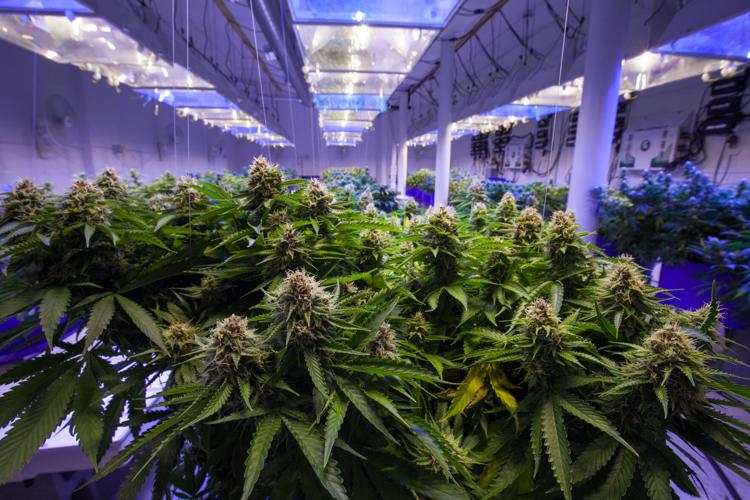
The Alabama Medical Cannabis Commission (AMCC) is still accepting applications from Alabama individuals and companies that want to be licensed to participate in the state’s new medical marijuana industry, but the deadline is Friday, December 30. Chey Garrigan, the founder and President of the Alabama Cannabis Industry Association, told Alabama Today that applicants are rushing to finalize plans and obtain sites for potential cannabis locations. “We in the industry are working really hard this week to finalize details in order to get these applications turned in,” Garrigan said. “Time is running out to get the application finished and turned in.” The AMCC began allowing potential business applicants to download the application forms on September 1 and closed those requests for application forms on October 17. The Commission wrote the rules for the new industry in August, following the requirements set in the legislation (SB46) passed in the 2021 Alabama Regular Commission. Only applicants who submitted a Request for Business Application by that October 17 deadline can turn in an application. Those requestors then received a Business Application Form. The deadline to turn in those forms to the Commission is Friday at 4:00. “Since the passage of the Darren Wesley “Ato” Hall Compassion Act last year, the Commission has worked diligently to lay the groundwork for the new medical cannabis industry in Alabama by developing administrative rules and regulations and by obtaining necessary software systems,” said AMCC Director John McMillan in a statement. “We are excited to see the many components of the program come together and provide not only business and career opportunities to Alabamians, but most importantly, we are one step closer to meeting the needs of thousands of residents who suffer from various medical conditions whose symptoms may be alleviated by the proper use of medical cannabis products.” Applicants will be allowed to submit amendments and corrections to their previously filed applications in the coming months. Garrigan said that she is helping members finish their applications. “Along with being the most regulated state in the country, this is the most complicated application anyone in the industry has seen,” Garrigan said. “We still will have time to file amended applications to make any necessary changes. Also, the Commission will review the applications and make requests for applicants to make corrections. The applicants will have time to submit a corrected application.” The number of licenses is strictly limited by the statute passed by the Alabama Legislature. The Commission may award up to twelve cultivator licenses, four processor licenses, four dispensary licenses, five integrated facility licenses, and an unspecified number of secure transport and state testing laboratory licenses. “Throughout the development of the program, the Commission’s focus has been to ensure that future patients receive high-quality, safe, and affordable products. That focus will continue as we begin to evaluate medical cannabis business applicants,” explained Commission Chairman and Oncologist Dr. Steven Stokes. “We hope our efforts will foster a model program where Alabama’s medical cannabis business licensees are providing qualified patients with safe products that they can trust.” The University of South Alabama has been contracted to review all of the applications for the Commission. Under Alabama’s program, only registered certifying physicians will be allowed to recommend medical cannabis to their patients. Those doctors must take mandatory training approved by the AMCC and the Alabama Medical Association. The doctors may only prescribe medical cannabis to patients who have been diagnosed with autism spectrum disorder; cancer-related pain or nausea; Crohn’s Disease; depression; epilepsy or conditions causing seizures; HIV/AIDS-related nausea or weight loss; panic disorder; Parkinson’s Disease; persistent nausea; post-traumatic stress disorder (PTSD); sickle cell anemia; spasticity associated with multiple sclerosis or spinal cord injury; Tourette’s Syndrome; a terminal illness; or conditions causing chronic or intractable pain. Alabama law does not allow dispensing of raw plant material or smokable products. Medical cannabis products that may be recommended to patients are limited to tablets, capsules, tinctures, gelatinous cubes, gels, oils or creams for topical use, suppositories, transdermal patches, nebulizers, or liquids or oils for use in an inhaler. Qualifying patients are expected to be able to obtain a state-issued Alabama medical cannabis card and the first legal Alabama medical cannabis late in 2023. To connect with the author of this story, or to comment, email brandonmreporter@gmail.com.
Maryland Rep. Jamie Raskin says he’s been diagnosed with lymphoma
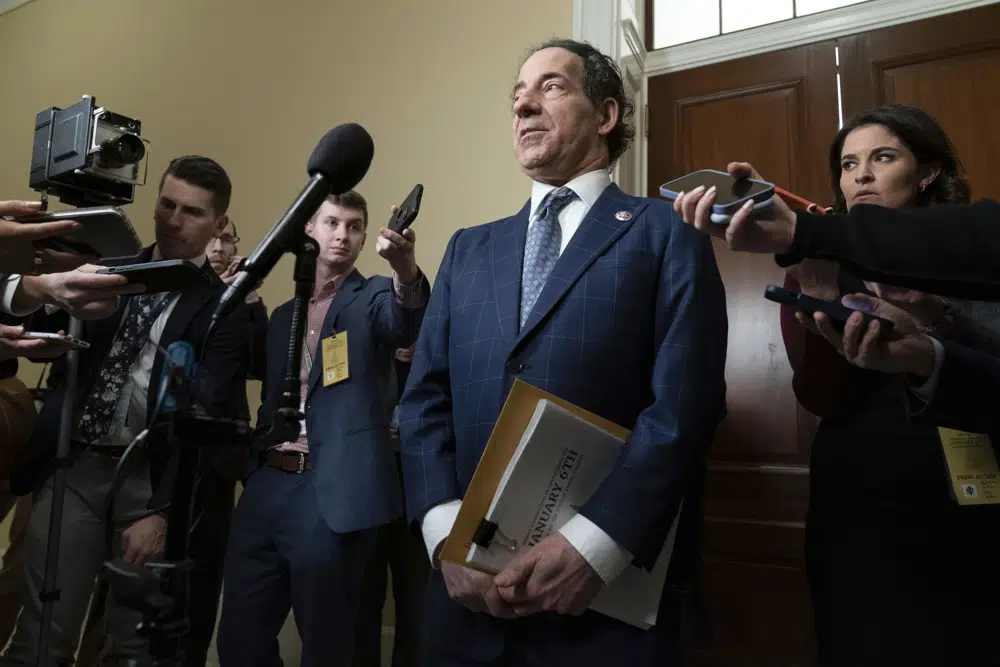
Maryland Rep. Jamie Raskin said Wednesday that he has a type of lymphoma that’s a “serious but curable form of cancer” and is beginning several months of treatment. Raskin, who will be the top Democrat on the House Oversight and Reform Committee in the next Congress, said he expects to be able to work through his outpatient treatment at a Washington-area hospital. In a statement Wednesday, Raskin said he has diffuse large B-cell lymphoma, and the “prognosis for most people in my situation is excellent after four months of treatment.” He said he has been advised his chemotherapy treatment will cause hair loss and weight gain. “I am still holding out hope for the kind that causes hair gain and weight loss,” he joked. Raskin has played a leading role in recent years as House Democrats twice impeached then-President Donald Trump and investigated Trump’s role in the January 6, 2021, insurrection. He was the lead impeachment manager when the House impeached Trump one week after the attack, and he currently sits on the House committee investigating the siege. That panel issued its final report last week and is set to dissolve when the new Republican-led House is sworn in on January 3. This is the second time the Maryland Democrat has been diagnosed with cancer, as he previously battled colorectal cancer in 2010. The news comes almost exactly two years after his 25-year-old son, Tommy, committed suicide on December 31, 2020. Tommy’s death came just a week before the insurrection, and Raskin had brought his daughter and son-in-law to the Capitol that day. Through tears, Raskin spoke about their ordeal as he argued for Trump’s conviction in the Senate impeachment trial. The two hid under a desk as the violence unfolded, and his daughter later told him she didn’t want to return to the Capitol. “Of all the terrible, brutal things I saw and I heard on that day, and since then, that one hit me the hardest,” Raskin told the Senate jurors, who later acquitted Trump for a second time. Raskin wrote a book, “Unthinkable,” about working through his trauma from both events. Of his most recent trial, Raskin says, “I plan to get through this and, in the meantime, to keep making progress every day in Congress for American democracy.” Republished with the permission of The Associated Press.
Mississippi exceeds $2.3B in gaming revenue in first 11 months of 2022
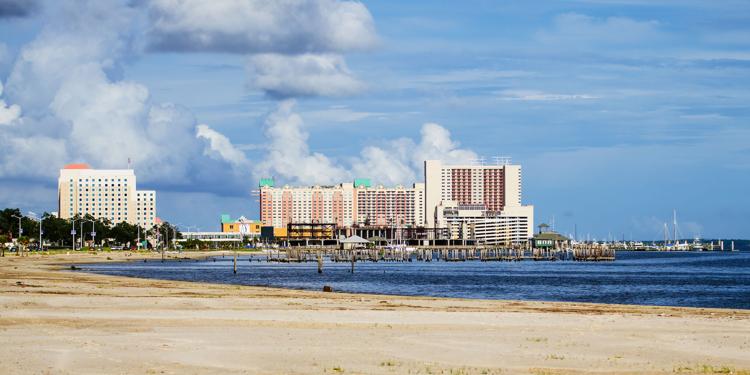
Gambling revenue in Mississippi has generated billions of dollars in revenue this year. The Mississippi Department of Revenue reported that through the first 11 months of the year, the state has had more than $2.3 billion in gross receipts from gambling generated at casinos around the Magnolia State. According to the Department of Revenue, gambling revenue is taxed at 4% for the first $50,000 in gross revenue. A 6% tax is placed on the next $84,000 in gross revenue, and all gross revenue over $134,000 is taxed at 8%. Casinos operating in the Gulf Coast have brought in $1,471,798,808.50 this calendar year. Those gaming houses situated along the Mississippi River have brought in $871,153,076.71, absent of December’s numbers. The total revenue generated from casinos equates to $2,342,861,855.21, as of Tuesday. March was the highest month for gambling revenue as $247,970,068.99 was brought into casinos. In November alone, casino revenue stood at $194,634,357. December’s figures won’t be available until Jan. 20 at the earliest. In 2021, according to the Department of Revenue, Gulf Coast counties generated $1,608,201,421.48 in revenue, while Mississippi River counties generated $1,062,359,093.31. For the year, the state conducted $2,670,560,514.79 in gambling revenue. From July through November, according to the Department of Revenue, tax revenue generated from gambling has put $65,852,246.71 into the general fund, with another $15 million going into the Special Bond Sinking Fund. Each month, $3 million in tax revenue from gambling is placed into the account. Meanwhile, $41,713,070.87 has been directed to local governments through gambling tax revenue. In total, $122,565,317.58 in tax revenue has been generated from gaming in fiscal year 2023. Gambling in Mississippi also generates revenue from gaming establishments and licenses, according to the Department of Revenue. License fees are set at $5,000 for each applicant for a license to conduct gaming, and each licensee must pay an annual license fee of the same amount. Fees collected by the department for manufacturer, sellers, or distributors in the state stands at $1,000 for a manufacturer license and $500 for a distributor or seller. Fees are due before the license will be issues and are due annually on the anniversary date of the license. The state also collects license fees based on the number of games. For a single game, a $50 fee is charged and $81,200 plus $100 for each game over 35. According to previous reporting from The Center Square, the state finished fiscal year 2022 with $310.5 million in revenue. The state came out ahead of 2021 receipts when the state had just $283 million, which followed a dip to $215.5 million in 2020, which was the first year of the COVID-19 pandemic. Tourism, as previously reported, was a key component to the rise in gambling revenue, primarily from the Gulf Coast region. Mississippi does not have mobile sports gambling; Senate Bill 2462 would have changed that fact but didn’t make it out of committee during the legislative session earlier this year. There are 29 casinos operating in the state that support 37,722 jobs, according to the American Gaming Association. Republished with the permission of The Center Square.
Alabama prisons pick new inmate health care provider
The Alabama Department of Corrections, for the second time this year, has picked a Tennessee-based company to provide health care services at its 27 facilities. YesCare Corp., based in Brentwood, Tennessee, was chosen over three other companies that submitted proposals. The department said it would negotiate with YesCare and release information about the contract once it is final. The four-and-a-half-year contract is scheduled to take effect April 1, al.com reported. The department had issued a request for proposals on September 26. The other companies that submitted proposals were Centurion, Vital Core, and Wexford. Wexford is the current provider, and its employees who work in department facilities will be offered jobs with YesCare, corrections officials said. Department commissioner John Hamm said YesCare was chosen based on a combination of quality, cost, and experience. YesCare has more than 40 years of correctional healthcare experience at more than 475 facilities across the country, the department said. The department said in July that it had picked YesCare Corp. over four other companies but rescinded the decision and issued a new request for proposals. The agency did not give a specific reason for repeating the process, saying only that it was done “out of an abundance of caution.” The quality of health care and mental health care for inmates is the subject of a federal lawsuit filed on behalf of inmates in 2014. U.S. District Judge Myron Thompson ruled in 2017 that the department’s mental health care was “horrendously inadequate.” The court is overseeing efforts by the state to increase staffing and make other changes to improve mental health care. The case is separate but has overlapping issues with the Department of Justice lawsuit filed in 2020 alleging unconstitutional conditions in Alabama’s prisons for men. Republished with the permission of The Associated Press.
Terri Sewell says Fiscal Year 2023 Omnibus Bill provides billions in federal funds for Alabama projects
On Wednesday, Congresswoman Terri Sewell (D-AL07) celebrated the inclusion of billions in federal funding for the state of Alabama in the Fiscal Year 2023 omnibus funding bill, which passed the House and Senate last week. Sewell holds a senior leadership role in the Democratic leadership team in the outgoing Democratic leadership in the House. U.S. Sen. Richard Shelby was the lead Republican negotiator on the Omnibus in the Senate. This bill was most likely his last vote in Congress after 44 years of service to the State of Alabama. “I was thrilled to vote in favor of the FY23 funding bill because I know that it will be a game changer for the people of Alabama,” Rep. Sewell said in a press release. “I would also like to thank Senator Richard Shelby for his work to ensure that Alabama received a historic amount of funding during his last year as a United States Senator. His leadership, his pragmatic approach to governing, and his fierce advocacy for the people of Alabama will be missed.” President Joe Biden announced that he would sign the bill after it passed both the Senate and the House of Representatives. “This bill is good for our economy, our competitiveness, and our communities – and I will sign it into law as soon as it reaches my desk,” Biden said in a statement. “This bill will advance cutting-edge research on cancer and other diseases through my ARPA-H initiative. It will put more cops on the beat, invest in community policing, and provide the highest funding level for the Violence Against Women Act in history. It will help us meet our sacred obligation to America’s veterans and deliver on the promise of the PACT Act, my bipartisan legislation to expand health care benefits to veterans. It will provide additional assistance to Ukraine, another demonstration of our bipartisan support for Ukraine after President [Volodymyr] Zelenskyy’s visit. It will help communities recovering from devastating natural disasters get back on their feet. And it’ll strengthen worker protections for pregnant women.” President Biden also thanked Shelby for his leadership in the passage of the bipartisan Year-End Omnibus. “I want to thank Senator Leahy, Senator Shelby, and Chairwoman DeLauro for their tireless work to get this done. Neither side got everything it wanted in this agreement – that’s what happens in a negotiation. And bipartisan members of Congress passed the Electoral Count Act and took long overdue steps to protect the integrity of our elections. This is critical bipartisan action that will help ensure that the will of the people is preserved. I want to thank Senators [Susan] Collins and [Joe] Manchin, as well as Senators [Amy] Klobuchar and [Roy]Blunt, for finding compromise to strengthen our democracy in the face of election denialism and assaults on our bedrock constitutional values.” “This bill is further proof that Republicans and Democrats can come together to deliver for the American people, and I’m looking forward to continued bipartisan progress in the year ahead,” Biden concluded. Shelby has retired from public service, so there will be a new Vice Chair of the Senate appropriations committee in January. Democrats no longer control the House of Representatives. There is a strong likelihood that when House Republicans finally figure out their leadership conundrum that Congressman Robert Aderholt will be the new Chairman of the House Appropriations Committee. Sewell shared the list of funding items for Alabama in the FY23 Omnibus funding bill. The list includes: $76 million for the University of Alabama Birmingham (UAB) Heersink School of Medicine to build a new biomedical research building. $55 million for the Secret Service’s National Computer Forensics Institute (NCFI), located in Hoover, to expand training opportunities for state and local law enforcement and legal and judicial professionals in computer forensics and cyber investigations. $5 million for the Secret Service’s Cyber Fraud Task Forces to increase mission effectiveness and provide modern investigative capabilities to combat transnational crimes. $23 million to repurpose and renovate NCFI facilities to accommodate for the ongoing growth of the program. $30 million in funding for Alabama’s Northern Beltline of the Appalachian Development Highway System. $47.5 billion for the National Institutes of Health (NIH), an increase of nearly $2.5 billion above FY22 funding level. $7.32 billion for the National Cancer Institute (NCI), an increase of $407.6 million from FY22. $923 million for the National Center for Advancing Translational Sciences (NCATS). $629 million for Clinical and Translational Science Awards (CTSAs), which continues funding for a CTSA award at UAB. $25 million in grant funding for the Regional Pediatric Pandemic Network, a network of ten Children’s hospitals, including Children’s of Alabama. $52 million in targeted funds for Regional Biocontainment Laboratories (RBLs) to test FDA-approved drugs at research institutions across the country, including UAB. $280.295 million for the NIH, Helping to End Addiction Long-term (HEAL) Initiative, to address addiction and develop alternative opioids for safe and effective pain management. $520.163 million for the National Institute of Dental and Craniofacial Research and continued support of the National Dental Practice-Based Research Network, founded and hosted at UAB. $47 million for Area Health Education Centers (AHECs), which supports the Alabama Statewide AHEC Program that is hosted within the UAB Department of Family and Community Medicine. $119 million for the National Institute on Disability, Independent Living, and Rehabilitation Research (NIDILRR), which supports the Rehabilitation Engineering Research Center on Recreational Technologies (RERC Rec-Tech) in Birmingham. $8 million in Emerging Infectious Diseases for the Centers for Disease Control and Prevention (CDC) to utilize its clinical trial partners and the Mycoses Study Group, which is affiliated with UAB. Funding consistent with a cooperative agreement to support the Department of Energy’s National Carbon Capture Center in Wilsonville, Alabama. $4.5 million, $1.5 million above the FY22 enacted level, for the NIST Cybersecurity of Genomic Data program, which supports ongoing research in cybersecurity for genomic and biomedical-based systems at the University of Alabama at Birmingham. $15 million military construction project building a Commercial Vehicle Inspection Gate at Maxwell Air Force Base. $6+ million military construction project building an F-35 Weapons Load Crew
