
Alabama leaders celebrate Martin Luther King Day
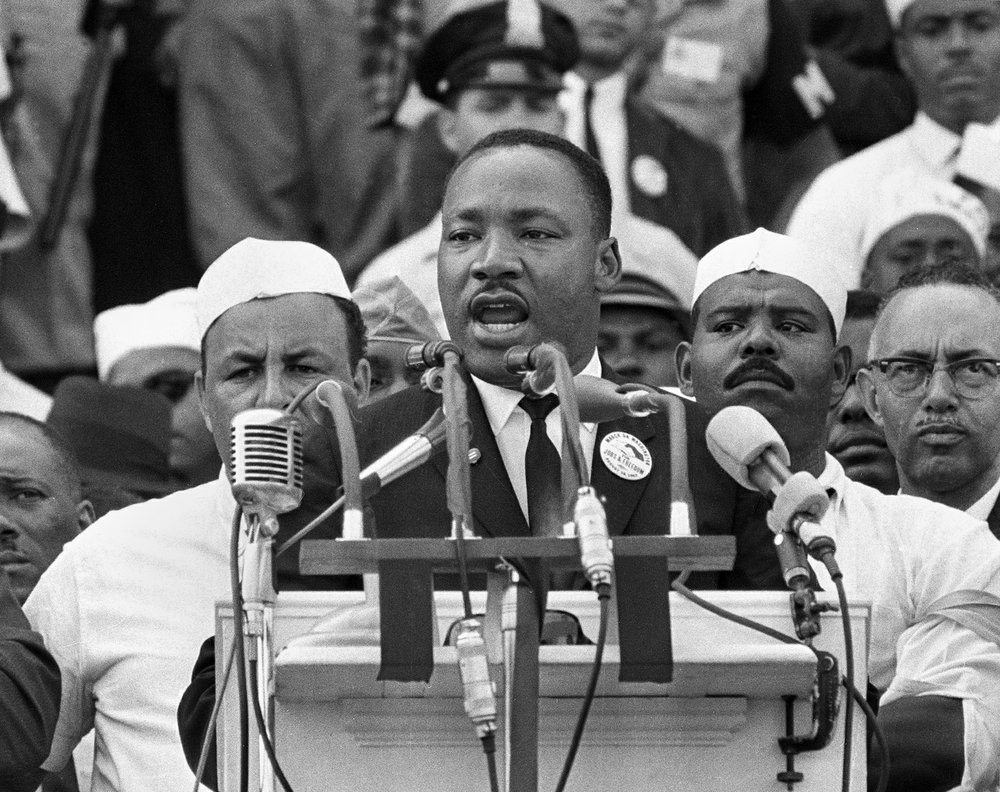
Today is a national and state holiday honoring the Civil Rights Movement icon, the Rev. Martin Luther King Jr. Banks, government offices, post offices, most schools, and many businesses will be closed today in observance of the holiday. King was born in Atlanta on October 15, 1929. In 1955 he was the new pastor of the Dexter Avenue Baptist Church just a block from Alabama Capitol Building in Montgomery. King ignited the Civil Rights Movement when Rosa Parks was arrested for failing to surrender her seat to a White man on a Montgomery bus – then the law in Montgomery and many southern cities. King responded to Parks’ arrest by launching the Montgomery Bus Boycott. Black people, at the urging of King and the NAACP, refused to ride the buses, bringing the bus system to its knees. Eventually, the U.S. Supreme Court ruled that government buses could not discriminate on the basis of race. The Montgomery Bus Boycott made King a national celebrity. He and like-minded Black ministers formed the Southern Christian Leadership Conference (SCLC) to urge non-violent protest to fight discrimination and for social justice. King was the SCLC’s first president. When Alabama State Troopers attacked voting rights marchers in Selma, King went to Selma and led a new march that went all the way to Montgomery, protesting for voting rights. He was beaten, jailed, and his life threatened repeatedly for his bold activism. The Civil Rights Act of 1964 outlawed discrimination in the United States and the Jim Crow laws that had been on the books for generations in southern states. King won the Nobel Peace Prize in 1965 for his work. He was assassinated in Memphis in 1968. He was only 39. King’s “I have a Dream” speech that he made at the Civil Rights March in Washington D.C., was highly influential at the time and is quoted frequently today. King Jr. is easily the most well-known and celebrated civil rights leader in American history, though many people were involved in the movement. President Ronald Reagan signed legislation making Martin Luther King Jr. Day a national holiday. On Monday, at 1:00 p.m. CST, Congresswoman Terri Sewell will host a “TerriTalks” virtual discussion entitled “Carrying the Torch Forward: The Life and Legacy of Dr. Martin Luther King Jr.” Sewell will be joined by King’s son, global human rights activist Martin Luther King III. The conversation will focus on the legacy of Dr. King and the struggle for racial equality and voting rights that continues to this day. It will be streamed live on Sewell’s official Facebook, Twitter, and YouTube pages. Sewell is the first Black woman to represent Alabama in the United States Congress. There are a number of prayers, breakfasts, and other events today across the state honoring Dr. King and his legacy. The Birmingham Civil Rights Institute is hosting a whole day of activities beginning at 10:00 am CST. Visit their website for more information or to buy tickets. Alabama celebrates Martin Luther King Jr. Day and Robert E. Lee Day on the same day. Lee, a noted Confederate general, was born on January 19. This angers some in the civil rights movement. To connect with the author of this story, or to comment, email brandonmreporter@gmail.com.
Kay Ivey sworn in for her second full term
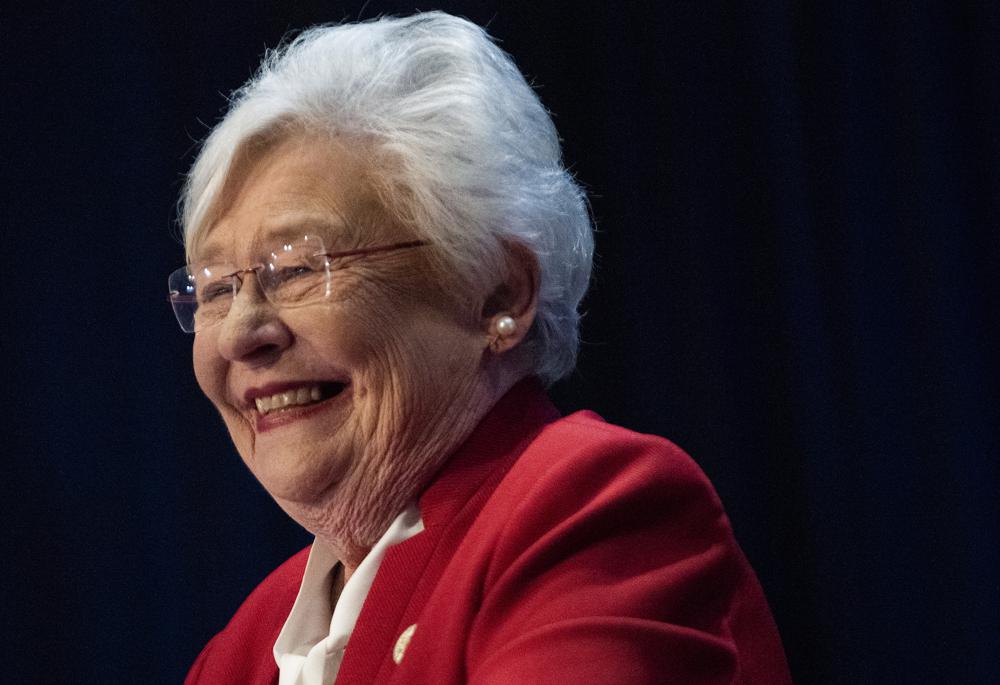
Alabama Governor Kay Ivey and other state constitutional officers will be sworn in today in Montgomery. Gov. Ivey, Attorney General Steve Marshall, Lieutenant Governor Will Ainsworth, and Commissioner of Agriculture and Industries Commissioner Rick Pate will be sworn in for their second term. Secretary of State Wes Allen and State Auditor Andrew Sorrell will be sworn in for their first terms. State Treasurer Young Boozer returns for another term. The festivities began Sunday with the Made in Alabama Reception at the Alabama Governor’s Mansion. The traditional Morning Prayer Service was held at 8:15 am. The Governor began inauguration day with an early morning prayer service at her home church, First Baptist Church in Montgomery. The Swearing-in Ceremony followed at 10:00 am. With one hand on the Bible, Governor Ivey took the oath of office on the Alabama State Capitol steps and was sworn into her second term as governor. The investiture ceremony for new Associate Alabama Supreme Court Justice Greg Cooke was on Friday. All of Alabama’s Constitutional Officers are Republicans since Democrats have been able to field a competitive slate of candidates since 2008 as the state increasingly tends to vote overwhelmingly Republican. Following the swearing-in ceremony, there will be a celebratory parade to mark the inauguration and another peaceful transfer of power. The parade will follow up Dexter Avenue to the historic 1859 State Capitol Building. The parade will showcase and celebrate Alabama’s diverse communities and talent. Attendance at the parade is free for all Alabamians and their families. Ivey will host an exclusive donor reception at 6:00 pm for her donors to thank those supporters who went above and beyond to keep Alabama working. The Inaugural Gala will follow at 7:00 pm. A formal gala will be held to commemorate Alabama’s first Republican female governor and celebrate Governor Ivey’s dedication to keep Alabama growing. Ivey was born on a cattle farm in Wilcox County during World War II on October 15, 1944. She is the oldest governor in the country. She graduated from Auburn University, where she served in the school’s student government association. She worked as a teacher in California before returning to Alabama, where she has held several posts in state government, including serving in Gov. Fob James’ cabinet and working for Speaker of the House Joe McCorquodale. Ivey served two terms as State Treasurer from 2003 to 2011. In 2010 she shocked the political world by unseating Lieutenant Governor Jim Folsom Jr. in the 2010 Republican wave election that gave the GOP undivided control of the Alabama State government. Ivey was re-elected Lt. Gov in 2014. She was elevated to governor in April 2017 when then-Governor Robert Bentley resigned rather than be impeached. Ivey was elected in 2018 and then re-elected last November. To connect with the author of this story, or to comment, email brandonmreporter@gmail.com.
Today is Robert E. Lee Day
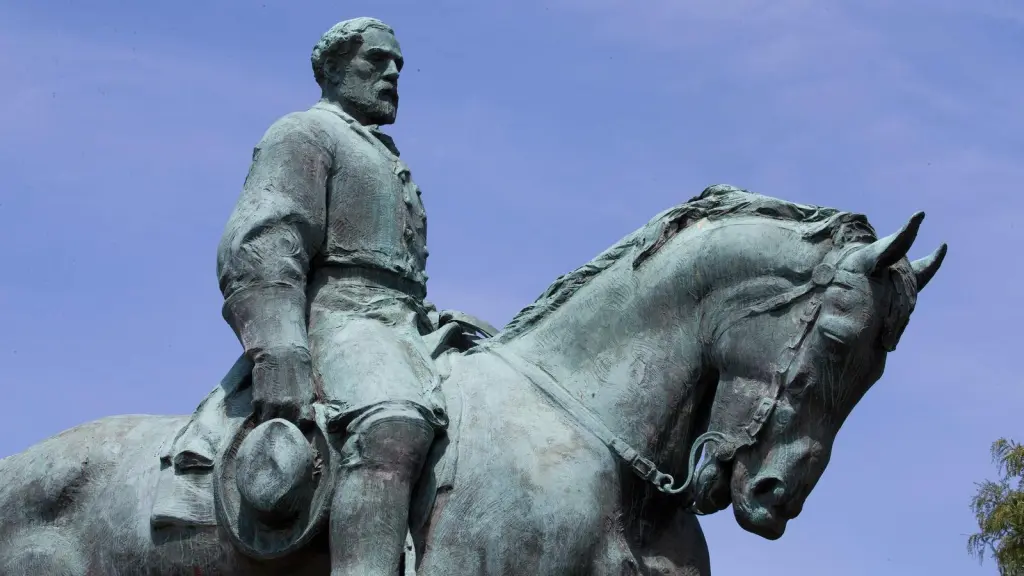
Confederate General Robert E. Lee’s birthday is on January 19, but it is celebrated by the State of Alabama today. Robert E. Lee Day has been an official state holiday in Alabama since sometime in the late 1800s. Lee was the most renowned general of the Confederacy in the Civil War. Today is an official state holiday. State offices and most schools will be closed in observance of the holiday. Federal offices, post offices, and many businesses will also be closed, but that is because today is also Martin Luther King Jr. Day. Alabama and Mississippi merged its Lee celebration with MLK Day after President Ronald Reagan signed legislation, making it a national holiday. Some state legislators have advocated for dropping Robert E. Lee Day from the list of official holidays and making the holiday observance for Dr. King alone. That legislation has not advanced in past legislative sessions. Robert Edward Lee was the son of Revolutionary War hero General Henry “Light-Horse Harry” Lee. Lee was born in Stratford Hall, Virginia, in 1807. His father was a hero, a governor of Virginia, and the dignitary was chosen to write the eulogy for President George Washington. By young Robert’s birth, the Lee’s fortunes had turned sour, and Light Horse Harry served time in debtor’s prison. The older Lee’s health declined, and he passed away in the West Indies without ever getting to know his young son. Robert received an appointment to the United States Military Academy at West Point, where he graduated second in the class of 1829. Lee married Mary Anna Randolph Custis. Lee spent most of his early military career as an engineer, where he supervised and inspected the construction of the nation’s coastal defenses. During the Mexico-American War, Lee served on the staff of General Winfield Scott. Lee distinguished himself in that war and became a colonel. He was the Superintendent of West Point from 1852 to 1855. He then took command of the cavalry. In 1859 he crushed abolitionist John Brown’s attempted insurrection at Harpers Ferry. President Abraham Lincoln offered Lee the command of the Union Army being assembled to invade the South. Lee declined and resigned from the army when Virginia seceded. The Confederacy made Lee a general. His first military engagement in the Civil War was at Cheat Mountain (now West Virginia) on September 11, 1861. On June 1862, he was given command of what he would rename the Army of Northern Virginia when General Joseph E. Johnston was wounded. Lee would become a legend in that command. He won several victories against vastly superior Union forces. Ultimately though, his two attempts to invade the North at Antietam and Gettysburg were failures – costly failures that the outmanned Confederates could not sustain. After the simultaneous Union victories at Gettysburg and Vicksburg, Mississippi, Ulysses S. Grant assumed command of Union forces. Rather than making Richmond the aim of his campaign as previous generals had done – with no success – Grant attacked Lee’s Army. By the summer of 1864, the Confederates were forced into waging trench warfare outside of Petersburg. On April 9, 1865, Lee was forced to surrender his depleted army to Grant at Appomattox Court House. Lee returned home from the war and eventually became the president of Washington College in Virginia (now known as Washington and Lee University). He died on October 12, 1870, in Lexington, Virginia. His life and military exploits have been revered by generations of southerners. To connect with the author of this story, or to comment, email brandonmreporter@gmail.com.
Alabama leaders survey storm damage
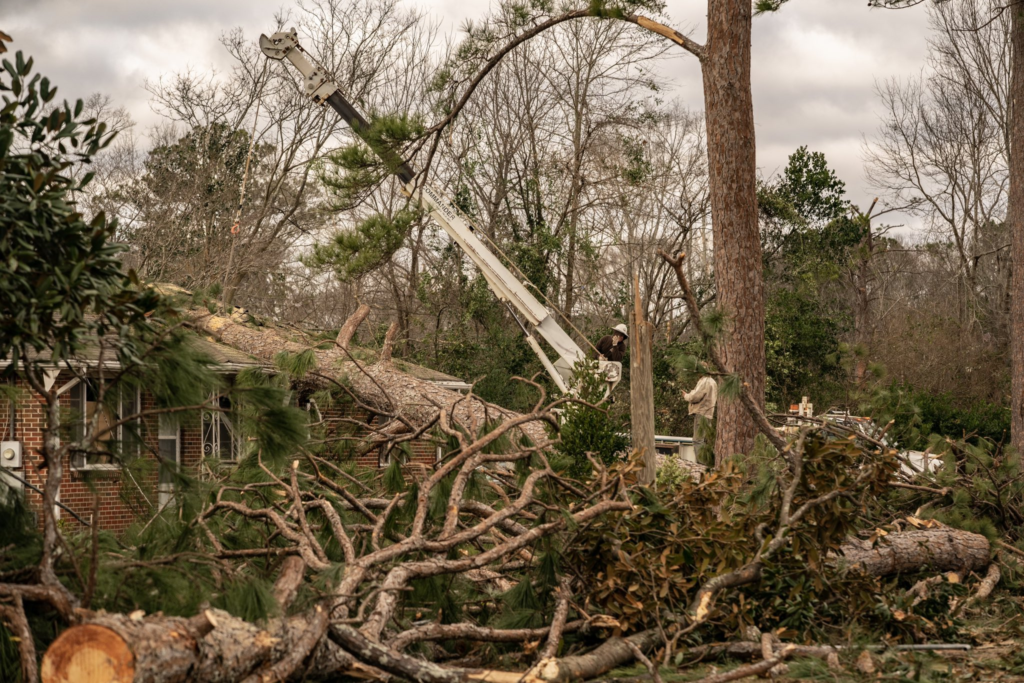
Governor Kay Ivey, U.S. Senator Katie Boyd Britt, and Congressmembers Terri Sewell and Barry Moore surveyed the storm damage in Central Alabama, following Thursday’s devastating tornados. “I surveyed yesterday’s tornado damage in Selma with Mayor [James] Perkins, @SenKatieBritt & @RepTerriSewell, and it is extensive. We are working on the federal, state & local level to ensure we can get those affected as many resources as possible in their recovery,” Gov, Ivey said on Twitter Saturday. Ivey, Sewell. And Britt held a press conference to provide updates on their coordinated response. “I want to thank the many first responders, workers, and volunteers who came together to assist with the recovery effort following Thursday’s devastating storm,” said Rep. Sewell. “While the destruction impacting Selma and the Black Belt is widespread, our community is nothing if not strong and resilient. I’m confident that with the close coordination of federal, state, and local partners, we will be able to secure the necessary resources to build our community back better and stronger than before.” Autauga and Dallas counties were heavily impacted by the tornados on Thursday. “This afternoon, I surveyed yesterday’s storm damage from the air with state and local officials,” Rep. Moore said on Twitter. “The devastation is heartbreaking, and I continue to pray for the families who lost loved ones. I am thankful to all our dedicated first responders and state officials who are already working to put our communities back together. My staff and I are continuing to monitor the situation and will be ready in the days and weeks ahead to help with any federal issues.” “Our prayers continue to be with Alabamians across our state who were impacted by Thursday’s severe weather, especially those who have lost loved ones, those who have been injured, and those who have lost their homes and livelihoods,” said Sen. Britt in a statement emailed to reporters. “Today, I joined Governor Kay Ivey, Congresswoman Terri Sewell, and local officials to see firsthand the devastation in Dallas and Autauga Counties. We saw damage and destruction, but we also witnessed the best of Alabama – people from all walks of life coming together to help each other. My office is working alongside our partners in Alabama’s congressional delegation to support Governor Ivey’s request for an expedited federal major disaster declaration, and we will continue to work to ensure every possible federal resource is made available to affected Alabamians. Thank you to the courageous law enforcement officers, first responders, and linemen who have been working tirelessly to serve their fellow Alabamians across impacted communities. We are grateful for the incredible volunteers, like those I visited with today, who are already giving their time, talent, and resources to help complete strangers get back on their feet. Autauga and Dallas Counties will need the support of Alabamians in every corner of our state as communities and families look to recover and rebuild, and I am confident that our people will step up to support one another. Please do not hesitate to reach out to my office if you need assistance. We stand ready and willing to help.” President Joe Biden declared Dallas and Autauga Counties a major disaster area Sunday. “Individuals in Autauga and Dallas Counties can apply online with FEMA at https://DisasterAssistance.gov or by phone at 1-800-621-3362. My office will continue to work alongside the Governor, local officials, and my Alabama congressional colleagues throughout the recovery process,” Sen. Britt said on Twitter. “I join all Alabamians in praying for the impacted families and mourning the lives lost to the extreme weather in our state this week,” said U.S. Senator Tommy Tuberville in a statement. We’re also praying for those whose lives have been put on pause as they find their homes and neighborhoods torn apart. Amid this time of death and destruction, I know the strength and spirit of Alabama’s communities will prevail as we rebuild. “We are blessed to have dedicated first responders and state officials working around the clock to get Alabamians out of harm’s way and put our communities back together,” Tuberville continued. “I strongly support Governor Ivey’s work so far and have full faith in our state’s emergency relief network. I will continue to monitor the situation closely, and my team stands ready to offer any assistance needed by Alabamians during ongoing recovery efforts.” To connect with the author of this story, or to comment, email brandonmreporter@gmail.com.
Joe Biden declares storm ravaged central Alabama a disaster area
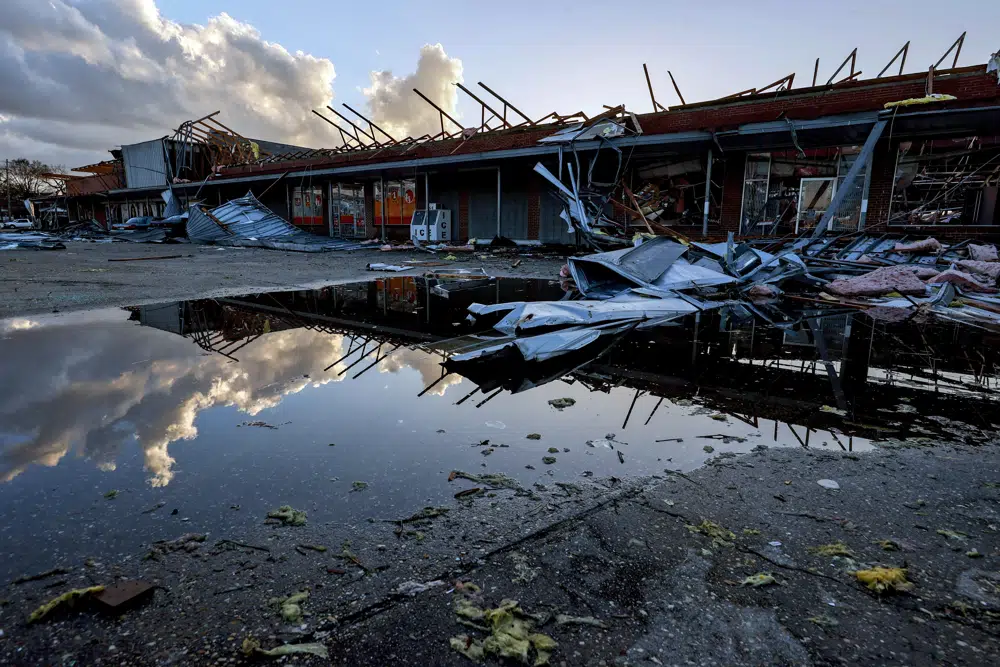
President Joe Biden has declared a major disaster in the State of Alabama and ordered Federal aid to supplement State, tribal, and local recovery efforts in the areas affected by severe storms, straight-line winds, and tornadoes on January 12, 2023. The President’s action makes Federal funding available to affected individuals in Dallas and Autauga Counties. “Alabama has been approved for a major disaster declaration in Dallas & Autauga counties following Thursday’s devastating weather. @POTUS and @FEMA have been good partners in our recovery efforts, and we are thankful. Alabamians are resilient folks, and we will come back stronger,” Alabama Governor Kay Ivey announced on Twitter. “I’m thankful that President Biden has heard our calls and expedited a declaration of major disaster for the State of Alabama following Thursday’s devastating storms,” said Congresswoman Terri Sewell (D-AL07). “This declaration will free up critical federal resources to relieve, recover and rebuild. I look forward to continuing to partner with Governor Ivey, Alabama’s congressional delegation, as well as state, local, and community stakeholders to use these resources as an opportunity to build back Selma and all the affected areas better for the people of Alabama.” A powerful tornado touched down in Selma, Sewell’s hometown, destroying dozens of homes and businesses on Thursday afternoon. Another devastating tornado touchdown followed that tornado in Autauga County, where dozens of homes were destroyed, and six people died. Dozens more were injured. Many families were left homeless. Damage assessments continue in other areas, and additional areas may be designated for assistance after the assessments are fully completed. Federal assistance can include grants for temporary housing and home repairs, low-cost loans to cover uninsured property losses, and other programs to help individuals and business owners recover from the effects of the disaster. Federal funding also is available to State, tribal, and eligible local governments and certain private nonprofit organizations on a cost-sharing basis for emergency work in the counties of Autauga and Dallas. Lastly, Federal funding is available on a cost-sharing basis for hazard mitigation measures statewide. FEMA Administrator Deanne Criswell has named Kevin A. Wallace, Sr. as the Federal Coordinating Officer for Federal recovery operations in the affected areas. Residents and business owners who sustained losses in the designated areas can begin applying for assistance at www.DisasterAssistance.gov or by calling 800-621-FEMA (3362), or by using the FEMA App. Sewell, Ivey, U.S. Senator Katie Boyd Britt, FEMA response experts, and other state officials joined local officials as they surveyed the area on Friday. Cleanup efforts are ongoing. Restoring people’s homes, businesses, and lives will likely take many months. To connect with the author of this story, or to comment, email brandonmreporter@gmail.com.
Daniel Sutter: To compete or not compete?
The Federal Trade Commission (FTC) is proposing banning non-compete clauses in labor contracts. What are these clauses’ pros and cons, and will a ban benefit workers? Non-compete clauses prevent employees from working for a competitor or starting their own business. The prohibition is limited over time and geography and usually only for closely related jobs. An estimated 25 to 40 percent of workers have such clauses. The freedom to work for any employer willing to hire you or to start a business is fundamental. Non-compete clauses can keep someone from practicing their profession or taking the best-paying job available and seemingly restrict economic freedom. Yet contracting away some freedom is sometimes beneficial. The clauses help protect businesses’ trade secrets. Note, though, that other protections for intellectual property exist, including non-disclosure agreements and patents. Non-compete clauses are better for more general knowledge, like how an industry leader outperforms competitors. And trade secrets are likely only valuable to firms in close competition, not all businesses. Non-compete clauses can also keep a professional from going back into business. Suppose a dentist wants to sell her practice and retire early. The value of the practice to a buyer depends significantly on whether the retiring dentist continues to work. Longtime patients might well go to see their old dentist at a new office, significantly reducing the existing practice’s value. Non-compete clauses can make people better off. The retiring dentist will likely sell her practice for more if she accepts a non-compete clause. A manager may only receive specialized training by accepting such a clause. Yet these clauses can hurt workers due to an important aspect of many investments. Economists refer to knowledge and skills as human capital as they resemble physical capital. Human capital must be produced using investment, just like physical capital. Physical and human capital can be of two forms, general or specific. General capital can produce many goods or services. Specific capital is tailored and has few uses, and possibly only one. For example, consider the specific human capital of knowing how to get things done within a business, the important information not contained in the manual of operations; this is not valuable to any other firm. Most human capital has considerable specificity. While some managerial skills transfer widely, a Burger King manager’s knowledge is most valuable to McDonald’s or Wendy’s, who will accordingly pay more. Non-compete clauses reduce competition for labor, and competition ensures workers get paid the value they produce. Businesses will pay workers or managers up to the value they create in their job. Competition for workers drives pay up to this amount. If a good manager of a dentist’s office is worth $75,000 but is currently paid only $50,000, economics predicts that she will be hired away for a raise by another dentist. Legal and economic factors prevent employers from tying down all workers with non-competes. Many state laws enforce non-compete clauses only for workers potentially possessing trade secrets. Workers will not want to sign non-compete clauses since they restrict job opportunities and should demand higher pay to accept one. The higher pay makes businesses think carefully about whether an employee needs to be covered. This should limit the clauses to cases where they create value for employers. The FTC contends that perhaps as many as 90 percent of covered U.S. workers do not know they have non-compete clauses. Businesses may not be lying here but simply burying the clause in a contract. This is a problem since workers will demand higher salaries only if know what they agree to but also suggests informed consent as an alternative to a ban. Informed consent might involve putting the clause on the first page, showing a video explaining the clauses, and requiring employees to initial to indicate acceptance. The FTC’s alleged harms result, I think, from the subterfuge, not the clauses themselves. Contracts represent a sophisticated form of cooperation based on voluntary consent. People can benefit from constraining their freedom via contract. The FTC should try strengthening disclosure before banning such powerful and valuable contracts. Daniel Sutter is the Charles G. Koch Professor of Economics with the Manuel H. Johnson Center for Political Economy at Troy University and host of Econversations on TrojanVision. The opinions expressed in this column are the author’s and do not necessarily reflect the views of Troy University.
Joe Guzzardi: Clock ticking on Alejandro Mayorkas; House files impeachment articles
The 118th Congress had barely convened before the Senate’s amnesty addicts traveled to the border and began pontificating about the bipartisan immigration action they were about to embark upon. Whenever Congress touts bipartisanship as it relates to immigration, the sub rosa message is that amnesty legislation, which Americans have consistently rejected, is percolating. Neither amnesty’s failed history – countless futile efforts since the 1986 Immigration Reform and Control Act – nor the Republican-controlled House of Representatives stopped determined Senators Kyrsten Sinema (I-Ariz.), Mark Kelly, (D-Ariz.), Thom Tillis (R-N.C.), John Cornyn (R-Texas), Chris Murphy (D-Conn.), James Lankford (R-Okla.) and Jerry Moran (R-Kan.). Tillis tipped off the group’s hand when he said, “It’s not just about border security; it’s not just about a path to citizenship or some certainty for a population.” One of those populations would be the “Dreamers,” with a 20-year-long failed legislative record. Sinema took advantage of the border trip to promote her failed amnesty, her leftovers from the December Lame Duck session, a three-week period when radical immigration legislation usually finds a home. Sen. Chris Coons (D-Del.) tweeted that “our immigration system is badly broken…” drivel that’s been repeated so often it’s lost whatever meaning it once may have had. The immigration system is “badly broken,” to quote Coons, because immigration laws have been ignored for decades. Critics laughingly call the out-of-touch, border-visiting senators the “Sell-Out Safari.” Coons’ tweet is classic duplicity. Coons, Sinema, Kelly, and Murphy have consistently voted against measures to enforce border security and against fortifying the interior by providing more agents and by giving more authority to Immigration and Customs Enforcement. Republicans Tillis and Cornyn are also immigration expansionists. Tillis worked with Sinema on her unsuccessful Lame Duck amnesty. Cornyn sponsored, with Sinema and Tillis as cosponsors, the “Bipartisan Border Solutions” bill that would have built more processing centers to expedite migrants’ release and to create a “fairer and more efficient” way to decide asylum cases. The bill, which never got off the ground, would have rolled out the red carpet to more prospective migrants at a time when the border is under siege. The good news is that the border safari, an updated version of the 2013 Gang of Eight that promoted but couldn’t deliver an amnesty, was a cheap photo op that intended to reflect concern about the border crisis when, in fact, the senators’ voting records prove that the invasion doesn’t trouble them in the least. More good news is that Kevin McCarthy (R-Calif.), the new Speaker of the House, represents enforcement proponents’ best chance to move their agenda forward since 2007 when Nancy Pelosi (D-Calif.) first held the job. Republicans John Boehner (R-Ohio) and Paul Ryan (R-Wis.) followed Pelosi from 2011 to 2019 when Pelosi returned as Speaker. Although Boehner and Ryan are Republicans, their commitment to higher immigration levels was not much different than Pelosi’s. Boehner and Ryan received 0 percent scores on immigration, meaning that they favor looser immigration enforcement and more employment-based visas for foreign-born workers. Also in McCarthy’s favor is the public support for tightening the border. Polls taken in September 2022 showed that a majority of Americans, including 76 percent of Republicans and 55 percent of Independents, thought President Joe Biden should be doing more to ensure border security. Moreover, a plurality of Americans opposes using tax dollars to transport migrants, a common practice in the Biden catch-and-release era. McCarthy must become more proactive and make good on his November call for the secretary of the Department of Homeland Security to resign or face impeachment. “He cannot and must not remain in that position,” McCarthy said. “If Secretary [Alejandro] Mayorkas does not resign, House Republicans will investigate every order, every action, and every failure to determine whether we can begin an impeachment inquiry.” McCarthy has the backing of the Chairmen of the Judiciary and Oversight Committees, Jim Jordan and James Comer. On January 9, Pat Fallon (R-Texas) filed articles of impeachment that charged Mayorkas with, among other offenses, “high crimes and misdemeanors.” Mayorkas insists he won’t resign and that he’s prepared for whatever investigations may come his way. Assuming the House presses on, and that the DHS secretary remains committed to keeping his post, Capitol Hill fireworks are assured, the fallout from which could lead to Mayorkas’ departure. Joe Guzzardi is a nationally syndicated newspaper columnist who writes about immigration and related social issues. Joe joined Progressives for Immigration Reform in 2018 as an analyst after a ten-year career directing media relations for Californians for Population Stabilization, where he also was a Senior Writing Fellow. A native Californian, Joe now lives in Pennsylvania. Contact him at jguzzardi@pfirdc.org.
