
Personnel Update: Lori Jhons to join Alabama League of Municipalities

The Alabama League of Municipalities announced on Tuesday that Lori Jhons has joined the League as the Director of its communications team. “We are thrilled to welcome Lori Jhons to the team as our communications director Jhons, a native of Browntown, AL, most recently served as Governor Kay Ivey’s director of digital media relations, the League announced on Facebook. “She was an integral part of the communications team, where she held various roles facilitating media interactions, social media engagement, event preparations and video production. Prior to that, Jhons was appointed by Governor Robert Bentley in 2016 to serve as a digital content producer in his administration. To read more about Lori, visit www.almonline.org.” “I am excited to join the team! I sincerely appreciate Greg Cochran and @Al_League for entrusting me with leading the League’s communication efforts as we work to support our cities and towns,” Jhons stated on Twitter. Lorelai Lean is the general counsel of the League. The League traces its roots to 1935 during the Great Depression. Then-Governor Bibb Graves gave the fledgling organization office space on Goat Hill in the Capital until they could afford to lease space. Ed Reid was the first salaried director of the association. To connect with the author of this story, or to comment, email brandonmreporter@gmail.com.
Joe Guzzardi: Population pressures drying up Great Salt Lake

Utah’s Great Salt Lake may disappear within the next five years, experts predict. A Brigham Young University report found that as of January 2023, the lake is 19 feet below its average level. Since 1850, the Great Salt Lake has lost 73 percent of its water and more than half of its surface area. BYU ecologist Benjamin Abbott, noting “unprecedented danger,” called for emergency measures to save the Great Salt Lake from further collapse. Abbott wrote that despite encouraging growth in legislative action and public awareness, “most Utahns do not realize the urgency of this crisis.” At this point, and since 2020, the lake has lost more than 1 million acre-feet of water annually. Each acre-foot represents about 360 gallons of water, nearly the size of a one-foot-deep football field. Today, only about 0.1 million acre-feet of water is returned to the lake each year. Abbott pointed to worldwide examples which show that saline lake loss triggers a long-term cycle of environmental, health, and economic suffering. He urges a coordinated rescue to stave off widespread air and water pollution, further losses from animals listed as part of the Endangered Species Act, and greater declines in agriculture, industry, and overall quality of life. If Utah Governor Spencer Cox hopes to deliver on his promise that the Great Salt Lake will not go dry on his watch, he’ll have to adopt some if not all of Abbott’s suggested measures, many of which will be unpopular among constituents. Specifically, the BYU scholars called on Cox to implement a watershed-wide emergency rescue plan that will set a requirement of at least 2.5 million acre-feet per year until the lake reaches its minimum healthy elevation of 4,198 feet. In conclusion, and in light of what the authors called an “all-hands-on-deck emergency,” the BYU analysis asked farmers, counties, cities, businesses, churches, universities, and other organizations to “do everything in their power to reduce outdoor water use.” Utahns must, BYU counseled, adopt a “Lake First” approach to water preservation. The Great Salt Lake’s rapidly dwindling water level is attributable to two factors: the ongoing drought that’s affected large swathes of the nation and an unprecedented population boom. Despite above-average snowfall in 2022, most of Utah remains in severe to extreme drought mode. The bigger culprit in the Great Salt Lake’s demise, however, is population growth. Between July 2021 and July 2022, Utah’s estimated population grew by more than 61,000, which marked the state’s largest spike in absolute growth since 2006, putting its total population at slightly more than 3.4 million residents. Of Utah’s 29 counties, 28 added population, except for Daggett, which declined by six people. Utah’s population growth is calculated by the standard formula: net migration accounted for an estimated 38,141 more residents, while natural increase – births minus deaths – accounted for another 23,101 residents. From 2010 to 2020, Utah was the nation’s fastest-growing state. Utah’s growth will continue unabated. By 2060, Utah’s population will hit 5.5 million, with intervals of 4 million between 2032 and 2033 and 5 million between 2050 and 2051. Put another way, in the next 40 years, Utah’s population will increase 66 percent. By the time the 2030 Census rolls around, Utah will have more Venezuelan migrants admitted under President Joe Biden’s immigration policies. Already in Utah in significant numbers, Venezuelans are part of Biden’s program to grant immigration parole every month to 30,000 total Haitians, Cubans, Nicaraguans, and Venezuelans. For Venezuelans who have family ties and prospective sponsors in Utah, the state becomes a magnet. And once settled, the migrant Venezuelans will start families or expand their existing families, thereby putting more pressure on Utah’s natural resources. The Great Salt Lake is one of many disappearing U.S. lakes and rivers, victimized by overpopulation and mismanagement. Others in grave danger of drying up include the Colorado and California’s Lake Mead and Lake Tahoe. BYU’s environmentalists have rolled out a sound plan to save the Great Salt Lake. For its part, the federal government is irresponsibly adding population to states like Utah that are struggling to provide precious water and other resources for existing residents. Joe Guzzardi is a nationally syndicated newspaper columnist who writes about immigration and related social issues. Joe joined Progressives for Immigration Reform in 2018 as an analyst after a ten-year career directing media relations for Californians for Population Stabilization, where he also was a Senior Writing Fellow. A native Californian, Joe now lives in Pennsylvania. Contact him at jguzzardi@pfirdc.org.
Tommy Tuberville urges Congress to ‘protect freedom’ from Covid-19 lockdowns
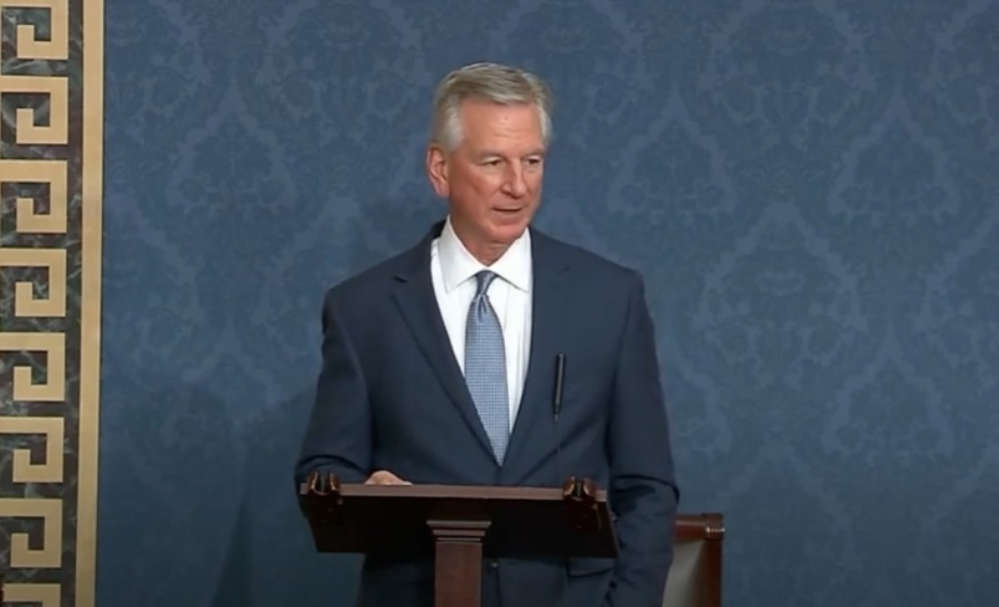
As the 118th Congress begins, U.S. Senator Tommy Tuberville urged his fellow legislators to address the serious and deadly consequences of COVID-19 lockdown measures on Americans’ health and the country’s educational system. In a speech on the floor of the U.S. Senate on Monday, Tuberville laid out the rise in excess mortality rates and decrease in academic success during COVID-19 lockdowns. Tuberville called on Congress to vote to end the federal COVID-19 emergency declaration and vow to never again use such dangerous lockdown measures. “It’s high time we take a look back at the devastating impacts some of the federal and state government policies in response to COVID-19,” Sen. Tuberville said. “Most importantly, we have to focus on education. We have to look at the toll the lockdowns have taken on our country’s youngest citizens. Unfortunately, like many issues in D.C., the COVID crisis was weaponized for some political gain. The government misused emergency measures to grow its control over Americans’ daily lives. Hopefully, those days are over.” “The excess rate is a term used to describe the number of deaths above historical norms, or how many Americans died than we would typically expect to pass away during any given year,” Tuberville explained. “According to data from the CDC, the number of non-COVID excess deaths reached almost 100,000 people in 2020 and 2021. The hundreds of thousands of non-COVID excess deaths during the pandemic can be mainly attributed to shocking increases in accidents, overdoses, and death from alcoholism and homicide. And those causes disproportionately impacted minorities and low-income Americans, the same groups lockdowns were often billed and made to protect.” “In total, excess deaths among young adults throughout the pandemic were 27 percent higher than they should be, according to historical trends,” Tuberville said. “It does not take a scientist to draw the connection between lockdowns and all the excess deaths that we’ve had the past three years. Not only were Americans kept out of gyms, parks, churches, social settings, and family gatherings — they were forced to skip routine doctor visits, surgeries, and in-person medical treatments out of fear. And fear was the main weapon used against the American people. As a result, mental and physical health plummeted.” According to the Centers for Disease Control and Prevention (CDC), American life expectancy dropped .9 years in 2021 and 1.8 years in 2021 to 76.1 years – the lowest level since 1996 after decades of gradually increasing American life expectancy. “Today, our schools are facing a shortage of teachers, months of instruction still missing, [and] a mental health and behavioral crisis among our country’s students,” Tuberville added. “As someone who spent decades as an educator and a coach and fostered the potential of young adults, I am committed to ensuring we never inflict the damage on our school-aged kids again.” “We must be the barrier between the American people and tyranny because tyranny [and] orders — like COVID lockdowns — are dangerous. As we get to work this Congress, I hope all of my colleagues join me in recognizing the tough realities I have just laid out…We have to commit to defending freedom in every circumstance.” New end-of-year testing showed a significant drop in test scores and learning for elementary school-aged children in the United States. The decline in reading and math for 9-year-olds was the largest in decades. Math scores dropped even more among Black students. The declines were sharpest among students still struggling with basic math skills and simple reading. The gaps between the haves and have-nots increased. Some students will never be able to recover from the months of limited or no instruction. Tuberville is still in his first term representing Alabama in the United States Senate. Tuberville was elected in 2020 after a long successful career coaching football. To connect with the author of this story, or to comment, email brandonmreporter@gmail.com.
Barry Moore signs on to bill to reinstate troops fired over COVID vaccine mandate
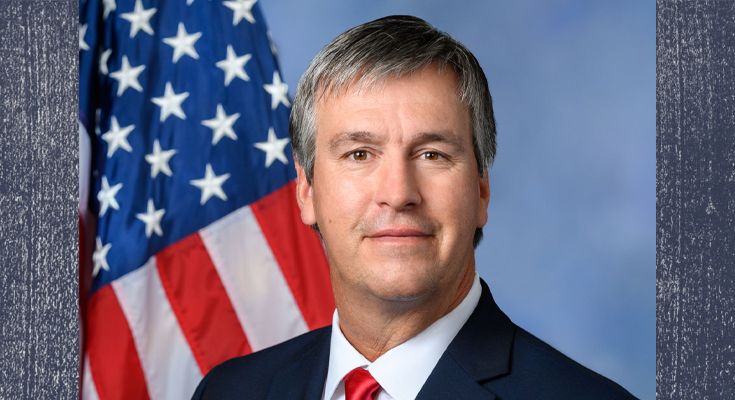
Congressman Barry Moore (R-AL02) joined the Service Restoration Act on Monday. The legislation will permanently end the COVID-19 military vaccine mandate, protect unvaccinated servicemembers, and ensure that those service members who were fired for not complying with President Joe Biden’s COVID-19 vaccine mandate can return to serving their country with honor. “Many of those purged from the military are from my district, patriots who were ready to give it all for our freedom, only to have their livelihoods stripped away because of a politically motivated, unscientific mandate,” Rep. Moore said in a press release. “They deserve to be restored to good standing and given full backpay, and that’s what I’m fighting for.” The bill was introduced by Congressman Chip Roy. “Thanks to the hard work of many of my Republican colleagues, the Biden administration’s disastrous COVID-19 vaccine mandate was finally ended,” said Rep. Roy. “But there is more work to be done. Republicans must fight to permanently end these mandates and make whole all the service members harmed by President Biden’s senseless policies. I’ve introduced the Service Restoration Act to do just that.” The DOD’s COVID-19 vaccine mandate was repealed in the FY20323 NDAA that passed in the 117th Congress. This legislation would protect service members who chose not to receive the COVID-19 vaccine. The Service Restoration Act prohibits federal funds from being used to require members of the Armed Forces to receive the COVID-19 vaccine. It also prohibits the DOD from taking adverse action against unvaccinated service members. It requires the Secretary to reinstate members of the Armed Forces who wish to return to duty at the same rank as when separated. If a service member does elect to be reinstated, their time separated from the military will be counted towards their retirement benefits. It also requires the Secretary to expunge from service members’ record any disciplinary action taken due to refusing to receive the COVID-19 vaccine and ensures those separated from the Armed Forces for refusing the COVID-19 vaccine receive an Honorable discharge. The White House and the Pentagon has opposed efforts to lift the mandates. A spokesperson for the DoD said that the issue is readiness. With Democrats in control of the Senate and the President opposed, it is unlikely that this can pass as stand-alone legislation. The COVID-19 vaccine remains very controversial even to this day – more than two years after it was made available to the public. Moore has been staunchly opposed to the vaccine mandate and has continued calling for the reinstatement with full backpay of members discharged for refusal to submit to the vaccination. Moore is in his second term in the U.S. House of Representatives. He previously served in the Alabama House of Representatives. To connect with the author of this story, or to comment, email brandonmreporter@gmail.com.
Sen. Katie Britt votes against confirming Brendan Owens

On Monday, U.S. Senator Katie Britt today cast her first-ever vote in the Senate; when she voted against the confirmation of Brendan Owens to serve as Assistant Secretary for Energy, Installations, and Environment in the Department of Defense. Owens was originally nominated by President Joe Biden in March 2022 but failed to muster the support to get a floor vote during the 117th Congress. President Biden re-nominated Owens in January 2023 at the start of the 118th Congress. “The Biden Administration has consistently prioritized their reckless leftwing political agenda to the detriment of our military readiness,” said Sen. Britt. “This nominee would simply be the tip of the spear in continuing President Biden’s radical ‘Green New Deal’ priorities at the Department of Defense, which should be focused on ensuring our incredible men and women in uniform are the best equipped, resourced, and trained in the world. We achieve peace through strength, not wokeness. The last thing we need is a DOD appointee from the ESG movement.” The U.S. Senate confirmed Owens on Monday night with 60 “yea” and 35 “nay” votes. A number of Republicans voted to confirm Owens, including Sens. Shelley Moore Capito of West Virginia, Susan Collins of Maine, John Cornyn of Texas, Joni Ernst of Iowa, Lindsey Graham of South Carolina, Chuck Grassley of Iowa, Mitch McConnell of Kentucky, Jerry Moran of Kansas, Mitt Romney of Utah, Mike Rounds of South Dakota, Thom Tillis of North Carolina, Roger Wicker of Mississippi, and Todd Young of Indiana. Britt was elected in a landslide by the voters of Alabama in November after besting four rivals in the Alabama Republican Primary last spring. Senate is the first elected office she has ever held. Britt and her husband, Wesley, live in Montgomery with their two children. To connect with the author of this story, or to comment, email brandonmreporter@gmail.com.
Daniel Sutter: A tale of two debacles
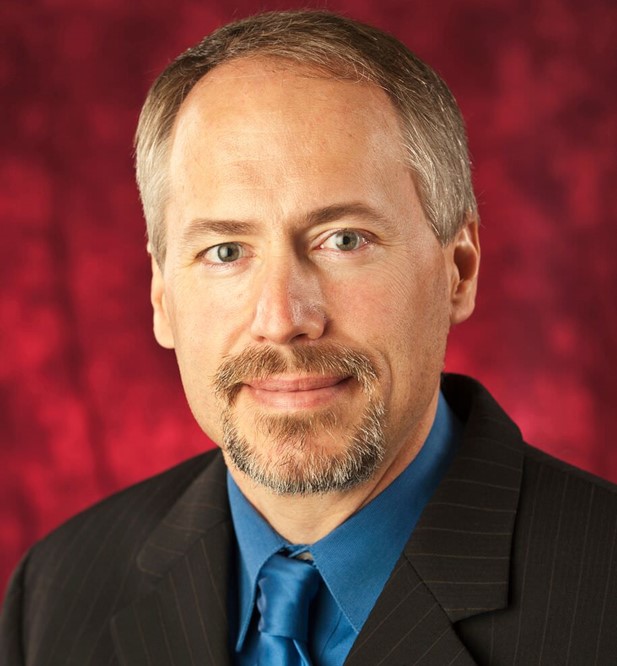
In December, a winter storm grounded Southwest Airlines for nearly a week, even though major airlines quickly resumed service. In January, all flights were temporarily grounded due to the crash of a Federal Aviation Administration (FAA) system. The consequences of these debacles illustrate accountability in markets and politics. A winter storm across the northern United States snarled air and ground Christmas travel. But days after Christmas, Southwest was still canceling about half of its flights, almost ten times more than any other airline. Southwest’s disruption must then have involved additional factors. One appears to be Southwest’s point-to-point route structure in contrast with other airlines’ hub-and-spoke systems. This seemingly left many planes and crews stranded in weather-impacted cities. Failure of an outmoded crew tracking system is a second culprit, as it kept available crews from being used. The FAA’s Notice to Air Missions (NOTAM) system crashed on January 11, causing 7,000 flight delays and 1,000 cancellations. NOTAM delivers safety messages to flight crews prior to takeoffs, prompting the FAA to suspend takeoffs until the aged computers were back online. Neither debacle was unexpected since out-of-date technology was bound to eventually crash when stressed. Timely investment in new systems could have avoided the debacle. Why did this not happen, and what consequences have Southwest and the FAA faced? Gary Kelly was Southwest’s CEO from 2004 until early 2022 when current CEO Bob Jordan took over. Mr. Kelley’s background was in accounting, and he reportedly was not convinced of a sufficient return on investing to modernize crew communications. An alternative interpretation here is that the potential for December’s meltdown was too hypothetical to register in a cost analysis. New CEO Mr. Jordan was talking in November about overhauling antiquated systems, but then it was too late. The FAA’s failure combines the government’s long-standing underinvestment in infrastructure with mindless bureaucracy. The NOTAMs have been called useless. One aviation group described them as presenting “information in a coded, upper case, incredibly un-human-friendly format” and “overloaded with irrelevant information.” The NOTAMS included items like grass cutting at airports, resulting in reports upwards of 100 pages. Reason’s Christian Britschgi reports how two Air Canada pilots in 2017 missed a notice about a closed runway buried in a report and almost collided with four other planes. Let’s turn now to consequences. Mess-ups cost businesses customers and stock value. Stock markets are forward-looking; investors evaluate everything about a company, its competitors, and the economy to project future profitability. Once all current information is digested, stock price changes should reflect new information. Not surprisingly, Southwest’s stock price fell 11 percent between December 23rd and 27th, yielding a $2 billion loss based on market capitalization. The stocks for American, Delta, and United fell by only 2 to 3 percent over these days. A formal event study would be needed to confirm attribution, but markets punish businesses for mess-ups. Politics produces criticism. Transportation Secretary Pete Buttigieg has been ripped over the NOTAM failure and will likely face a Congressional hearing. Doing poorly as Transportation Secretary could degrade Mr. Buttigieg’s political prospects. But how many FAA bureaucrats will lose their jobs and pensions over this? Moreover, history shows that failure in the public sector frequently yields budget increases to “fix” the problem. Political “accountability” has produced continual technological obsolescence at the FAA. In the 1990s, the computers running America’s air traffic control system still used vacuum tubes, making the FAA scour the former Soviet bloc for spare parts. The FAA today tracks planes with paper flight strips instead of electronic slips like other developed nations; a partial transition may be completed by 2031. As Wired magazine noted, “Modernization, a struggle for any federal agency, is practically antithetical to the FAA’s operational culture, which is risk averse, methodical, and bureaucratic.” Every organization will make mistakes. Economic freedom necessarily entails the freedom for businesses to mess up. But because private businesses – unlike government bureaucracies – face financial penalties for their mistakes, businesses must improve or eventually face bankruptcy. Daniel Sutter is the Charles G. Koch Professor of Economics with the Manuel H. Johnson Center for Political Economy at Troy University and host of Econversations on TrojanVision. The opinions expressed in this column are the author’s and do not necessarily reflect the views of Troy University.
NTSB details deadly accident involving airport ground worker

A co-worker who saw an Alabama airport employee nearly knocked over by exhaust from a jet tried to warn her to stay back, but moments later, the employee walked in front of one of the engines and was pulled in, killing her on December 31, federal investigators said Monday. Another ground worker on the other side of the plane had backed away after a pilot leaned out the window and said the engines were still running. Throughout the incident, rotating beacons on the plane appeared to be illuminated, warning that engines were still running, investigators said. The National Transportation Safety Board provided new details about the fatal accident involving an American Eagle jet in a preliminary report that relied on video surveillance and witness accounts. The board did not state a probable cause for the incident — that step usually follows an investigation that can take a year or longer. The flight from Dallas to Montgomery Regional Airport with 63 passengers and crew was operated by Envoy Air, an affiliate of American Airlines. An auxiliary power unit used to power the plane without using the engines was not working, according to the safety board, and pilots decided to leave both engines running for a two-minute engine cool-down period while they waited to for the plane to be connected to ground power. The NTSB said the ground crew huddled shortly before the Embraer jet arrived at the gate to note that engines would remain running until the plane was connected to ground power, and the plane shouldn’t be approached until the engines were shut down and pilots turned off the beacon light. The board also noted that an American Eagle manual revised in July warns workers never to come within 15 feet of the front of an engine — an area called the “ingestion zone” — until the engine’s blades stop spinning. Republished with the permission of The Associated Press.
Tax mandate under ARPA overruled on appeal

A federal tax mandate has been shot down by the 11th U.S. Circuit Court of Appeals. The appellate court ruled a tax mandate tucked into the American Rescue Plan Act that would have prohibited states from using federal funds under the law to “either directly or indirectly” offset any tax decreases or delays in tax increases was unconstitutional. The court rendered a unanimous decision, granting a permanent injunction against the mandate. Under the ruling, according to a release, the federal government is barred from enforcing the tax mandate against New Hampshire. “The ARPA tax mandate was an improper and unconstitutional intrusion on the rights of New Hampshire’s elected policymakers to make decisions regarding state tax policy,” New Hampshire Attorney General John Formella said in the release. Under the 2020 law, which was a $1.9 billion aid package created to mitigate the economic and public health impact caused by the COVID-19 pandemic, states would have been required to prove their compliance with the mandate and other requirements in order to receive ARPA funds. If states didn’t certify, the U.S. Treasury was authorized to seek a return of the federal dollars. U.S. Circuit Judge Andrew L. Brasher, in his opinion, wrote the “Constitution doesn’t grant the federal government the authority to require states to enact the laws or policies of Congress.” However, he said the law does grant Congress “the power of the purse.” Brasher went on to write that the federal government “can’t control state conduct directly,” but Congress “often uses the power of tax and spend as a work-around” in an effort to give federal funds in exchange for establishing certain programs or enacting laws.” The appeal, Brasher wrote, was about the limits of that authority. “The offset provision in ARPA funds “to either directly or indirectly offset a reduction in [their] net tax revenue” that would result from a change in law that “reduces any tax,” Brasher wrote. The states argued that the tax mandate written into the law “exceeded Congress’s authority under the Constitution,” Brasher continued. New Hampshire joined the lawsuit with Alabama, Alaska, Arkansas, Florida, Iowa, Kansas, Montana, Oklahoma, South Carolina, South Dakota, Utah, and West Virginia. Republished with the permission of The Center Square.
Fabrication company Morgan Metals announces growth plans in north Alabama

Morgan Metals Inc., an Athens metal manufacturing company, plans to expand its north Alabama operations in 2023, according to an announcement by the Limestone County Economic Development Association. Morgan Metals President Patrick Townsend said the growth plans will allow the company to serve the growing number of industries in the region. The expansion will take place at the company’s current location on U.S. Highway 31 and will include an additional 4,800-square-foot building and a loading dock. “This expansion gives us the necessary space for additional painting and packaging product finishing,” Townsend said. “We will now be able to complete larger projects for our customers.” Morgan Metals plans to invest about $286,000 in the expansion, which will create four jobs. “We are excited that this expansion will allow us to add more jobs to Athens and Limestone County and better serve our customers,” Townsend said. Morgan Metals plans to invest $286,000 in an expansion in Athens, Alabama, which will create four jobs and allow it to serve more customers. (Morgan Metals) Investment plans The Athens City Council approved a tax abatement for noneducational taxes to assist Morgan Metals with this expansion. “Morgan Metals has a history that dates back to 1944 in our state, and when you have a solid company like that investing in an expansion in our city, that’s a win for Athens,” Mayor Ronnie Marks said. Greg Canfield, secretary of the Alabama Department of Commerce, said expansion plans by a company with long-lasting roots in a community is a strong signal of confidence in local business conditions. “It’s always satisfying to see a company with an established presence in Alabama decide to reinvest in its operations and position them for the future,” he said. Bethany Shockney, president and CEO of the Limestone County Economic Development Association (LCEDA), congratulated Townsend and his team on the success that sparked the growth plans. “This expansion is a testament to Limestone County’s history of existing industries expanding to meet the needs of their customers,” Shockney said. “It was LCEDA’s pleasure to work with Morgan Metals Inc. on this project.” This story originally appeared on the Alabama Department of Commerce’s Made in Alabama website. Republished with the permission of The Alabama NewsCenter.
