
Alabama has the fifth-highest gun death rate in the U.S.

New data from the Centers for Disease Control and Prevention (CDC) show that Alabama has the fifth-highest death rate by shootings. That includes murder, suicide, and unintentional accidents. Alabama had 26.09 gun deaths per 100,000 residents in 2021. Mississippi had the highest rate of gun deaths at 32.61 deaths per 100,000. Louisiana came in second with 28.42 deaths per 100,000. New Mexico was third with 27.32 and Wyoming with 26.78. The national average is 14.71 gun deaths per 100,000 citizens. The five states with the lowest rates of gun deaths in 2021 were Rhode Island with 5.84, New York with 5.43, New Jersey with 5.13, Hawaii with 4.93, and Massachusetts at 3.54. Gun control advocates with the Violence Policy Center (VPC) insist that states with the lowest rates of overall gun death in the nation have strong gun violence prevention laws and low rates of gun ownership. The VPC analysis used 2021 CDC Wonder data and refers to overall gun death rates in 2021, the most recent year for which data is available. The total number of Americans killed by gunfire in 2021 was 48,830, an eight percent increase from 45,222 in 2020. The nationwide gun death rate in 2021 increased from 13.73 per 100,000 in 2020 to 14.71 per 100,000 in 2021. Both gun homicides and gun suicides increased in 2021. The number of gun homicides increased from 19,384 in 2020 to 20,958 in 2021 – an eight percent increase. Firearm suicide deaths also increased by eight percent in 2021 – from 24,292 in 2020 to 26,328 in 2021. 67,423 Alabamians died in 2022. The largest cause of death in Alabama was from heart disease, with 15,563 – up 6.96%. The second leading cause of death was cancer, with 9,830 – down 2.45%. 1,098 Alabamians died from firearms (suicides, murders, and accidents). Firearm deaths were up .64%. 598 Alabamians were murdered in 2022 by all methods. Murders were up .67% in the state last year. The total number of deaths by suicide (all methods) was 819. That was up .61%. Both total deaths and death rates were up in 2022. These numbers are still very preliminary. Beginning on January 1, all Alabamians who have not lost their legal gun rights can carry their handguns with them on their person or in their vehicles whether they have a concealed carry permit or not. This is due to the passage of permitless carry (also called constitutional carry) legislation by the state legislature in 2021. The end of the permit requirement went into effect on January 1. Alabama is a strong Second Amendment state with a very high rate of gun ownership. To connect with the author of this story or to comment, email brandonmreporter@gmail.com.
Ten pre-filed bills to watch

Winter is almost over. The coming of Spring means flowers, cutting grass, weekend trips to the beach, lazy days on the lake fishing, turkey hunting, and baseball. It also means the Alabama Legislature is returning for the 2023 Alabama Regular Legislative Session. The constitutional purpose of the legislative session is to pass the state budgets for 2024. However, Alabama has 105 members of the State House of Representatives and 35 members of the Alabama Senate, and all of them have their own ideas about laws that they want to change. Thirty-six bills have already been pre-filed ahead of the session. Some of these bills will be dead on arrival and won’t even get a hearing in committee. Some bills, like increasing the scope of practice for podiatrists to include procedures on the ankle, are debated almost every year. This year that bill is being carried by Sen. Greg Albritton as Senate Bill 8 (SB8). The podiatrists’ scope of practice is limited by state law. This bill would make Alabama more in line with other states regarding podiatry. In the past, this legislation has been staunchly opposed by orthopedic surgeons and the Alabama Medical Association. One bill on a fast track toward passage increases the criminal penalties for drug traffickers who sell and distribute fentanyl. House Bill 1 is sponsored by State Representative Matt Simpson. This bill “would provide for mandatory terms of imprisonment for a person who engages in the unlawful sale, manufacture, delivery, or possession of one or more grams of fentanyl as a single component. This bill would also impose additional criminal penalties for subsequent violations.” As introduced, HB1 would make the sale, manufacture, or possession of one gram or more of fentanyl “trafficking” under Alabama Law. The penalty for one to less than two grams of fentanyl would be a mandatory minimum sentence of three years in prison and a minimum fine of $50,000. If two grams, but less than four grams, the mandatory minimum sentence would be ten years and a fine of $100,000. For four grams or more but less than eight grams, the sentence would be at least 25 years and a fine of $500,000. If eight grams or more life and $750,000. 107,000 Americans died of drug overdoses in 2021 – most of them from fentanyl. In Alabama, high schools dealing with overdoses during the school day is becoming a real problem for teachers and administrators. New Speaker of the House Nathaniel Ledbetter told reporters during the organizational session in January that Simpson’s legislation will be a top priority for the House Republican Caucus this session. Expect early movement on this bill. Senate Bill 12 (SB12) would make Law Enforcement Memorial Day, which is celebrated on the first Friday in May of each year, a state holiday. The bill was sponsored by State Sen. Will Barfoot. State Rep. Russell Bedsole has introduced similar legislation in the House as HB5. House Bill 4 (HB4) would make it a felony for employers to have their employees microchipped. HB4 “would prohibit employers and certain other individuals from requiring another individual to be implanted with a microchip. This bill would also make a violation of this act a Class D felony.” HB4 is sponsored by State Rep. Prince Chestnut. House Bill 24 (HB24) would ban persons “from loitering on a public roadway or in the right-of-way of a public roadway.” HB24 is sponsored by Rep. Reed Ingram. The legislation would also ban fishing from bridges. House Bill 6 (HB6) is a parental rights bill sponsored by Rep. Kenneth Paschal. HB6 would “provide that the government may not burden certain fundamental rights of parents unless the burden is narrowly tailored to a compelling state interest.” The bill affirms that fit parents have a fundamental right “to direct the education, upbringing, care, custody, and control of their children.” State Rep. Ed Oliver has introduced a bill to ban the teaching of divisive concepts. That legislation is House Bill 7. “This bill would prohibit certain public entities, including state agencies, local boards of education, and public institutions of higher education, from promoting or endorsing, or requiring affirmation of, certain divisive concepts relating to race, sex, or religion.” Banned concepts would include: a. That any race, color, religion, sex, ethnicity, or national origin is inherently superior or inferior. b. That individuals should be discriminated against or adversely treated solely because of their race, color, religion, sex, ethnicity, or national origin. c. That the individual moral character of an individual is solely determined by his or her race, color, religion, sex, ethnicity, or national origin. d. That solely by virtue of an individual’s race, color, religion, sex, ethnicity, or national origin, the individual is inherently racist, sexist, or oppressive, whether consciously or subconsciously. e. That individuals, by virtue of race, color, religion, sex, ethnicity, or national origin, are inherently responsible for actions committed in the past by other members of the same race, color, religion, sex, ethnicity, or national origin. f. That fault, blame, or bias should be assigned to a race, color, religion, sex, ethnicity, or national origin, or to members of a race, color, religion, sex, ethnicity, or national origin, solely on the basis of race, color, religion, sex, ethnicity, or national origin. g. That any individual should be asked to accept, acknowledge, affirm, or assent to a sense of guilt, complicity, or a need to apologize solely on the basis of his or her race, color, religion, sex, ethnicity, or national origin. House Bill 14 (HB14) by Rep. Chris England would require that a death penalty sentence can only be applied when there is a unanimous vote of the jurors to impose the death penalty. Presently all it takes is a majority of the jurors. House Bill 12 (HB12), also sponsored by England, would make it a class A misdemeanor if a person carrying a concealed firearm fails to inform law enforcement upon request that he or she is in possession of a concealed pistol or firearm. This
Terri Sewell announces $52 million in EPA funding to expand access to clean drinking water

Congresswoman Terri Sewell announced that the State of Alabama will receive $52,638,000 in federal grant dollars from the U.S. Environmental Protection Agency (EPA) to address emerging contaminants in drinking water. This funding was made possible by the Biden Administration’s Build Back Better Infrastructure Act. This is part of the EPA’s Emerging Contaminants in Small or Disadvantaged Communities (EC-SDC) Grant Program, designed to promote access to safe and clean water in small, rural, and disadvantaged communities. “I am thrilled that the Environmental Protection Agency is providing over $52 million to Alabama communities to expand access to clean water in our rural and underserved communities,” said Rep. Sewell. “I am proud to be the only member of the Alabama Congressional Delegation to vote in favor of President [Joe] Biden’s Bipartisan Infrastructure Law because grant programs like this will make a world of difference in the lives of Alabamians. Every American deserves access to safe and clean water, and this investment is a transformative step forward.” Specifically, there is a concern by the federal government that there may be excessive Per- and Polyfluoroalkyl Substances (PFAS) in Drinking Water across Alabama. It is possible that ingesting PFAS could cause increased cholesterol levels, changes in liver enzymes, hormone disruption and increased risk for thyroid disease, decreased odds of women becoming pregnant, and/or high blood pressure or pre-eclampsia during pregnancy. The infrastructure bill invests $5 billion over five years to help communities reduce PFAS in drinking water. EPA announced that the funds are part of an allotment of $2 billion to states and territories that can be used to prioritize infrastructure and source water treatment for pollutants like PFAS and other emerging contaminants and to conduct water quality testing. “EPA’s Emerging Contaminants Grant Program is a solid community investment for the Southeast region,” said EPA Region 4 Administrator Daniel Blackman. “The expansion of safe and clean water access to small, rural, and disadvantaged communities is crucial to the protection of human health and the environment.” EPA is also releasing the Emerging Contaminants in Small or Disadvantaged Communities Grant Implementation document. The implementation document provides states and communities with the information necessary to use this funding to address local water quality and public health challenges. These grants will enable communities to improve local water infrastructure and reduce emerging contaminants in drinking water by implementing solutions such as installing necessary treatment solutions. In addition to this new grant, EPA is also working to propose a PFAS NPDWR in the coming weeks. The draft proposed rule is currently undergoing interagency review, and EPA will issue the proposed rule for public comment when it clears the Office of Management and Budget (OMB). The agency anticipates finalizing the rule by the end of 2023. The infrastructure bill, the American Rescue Plan Act and the 2023 omnibus spending bill passed in December all have new funds to address water systems. Access to clean drinking water has been an issue in many communities in rural Alabama, including in the Black Belt. Terri Sewell is in her seventh term representing Alabama’s Seventh Congressional District. To connect with the author of this story or to comment, email brandonmreporter@gmail.com.
A third deer with Chronic Wasting Disease confirmed in Lauderdale County

The Alabama Department of Conservation and Natural Resources (ADCNR) announced on Thursday that a third case of Chronic Wasting Disease (CWD) in a hunter-harvested, white-tailed deer has been confirmed in Lauderdale County in northwest Alabama. All of Lauderdale and Colbert counties have been designated as a CWD Management Zone (CMZ). Samples were collected from more than 3,500 white-tailed deer harvested statewide, with over 1,100 of those samples collected within the CMZ during the 2022-2023 hunting season. More than 98% of all samples collected within the CMZ have been tested by the Alabama Department of Agriculture and Industries, and the results have been received by ADCNR. At this point, this latest Lauderdale deer has been the only one positive detected this season. A hunter voluntarily submitted that sample as part of ADCNR’s ongoing CWD monitoring efforts. Chris Blankenship is the Commissioner of ADCNR. “I would like to thank hunters for their overwhelming support by providing a robust number of samples submitted for CWD testing this season,” said Blankenship. “As they have been in the past few years, hunters will continue to be our most important partners in the management of this disease as we move forward with future deer seasons. We also thank the Alabama Department of Agriculture and Industries for their continued partnership with statewide CWD monitoring. Their assistance testing the samples allows us to better serve our constituents by providing them with timely information on the distribution and extent of CWD in Alabama.” CWD is a member of the group of diseases called transmissible spongiform encephalopathies (TSEs). Among cervids, CWD is a progressive, fatal disease that commonly results in altered behavior due to microscopic changes made to the brain of affected animals. An animal may carry the disease for years without outward indication. In latter stages of the disease, signs may include listlessness, lowering of the head, weight loss, repetitive walking in set patterns, and a lack of responsiveness. The disease is caused by a mutated protein called a prion. It is always fatal for white-tailed deer. The best-known prion disease is mad cow disease. Prions accumulate in the brain from being ingested in the environment. It is not a living disease organism, so the disease can’t be killed and will remain in the soil for decades. Unlike Mad Cow Disease, there is no known case of CWD infecting humans who consume infected animals; however, avoid consuming the brain or spinal cord tissue of any deer as a precaution. Under Alabama’s Chronic Wasting Disease (CWD) Management Zone Regulation (220-2-.167), all deer harvested in the High-Risk Zone and the Buffer Zone of the state’s CWD Management Zone (CMZ) were required to be submitted for CWD testing during specific weekends of the 2022-2023 white-tailed deer season. The first case of CWD in Alabama’s deer herd was detected in Lauderdale County in January 2022. To connect with the author of this story or to comment, email brandonmreporter@gmail.com.
Senators call on Mexico, China to do more to stop illicit fentanyl trafficking
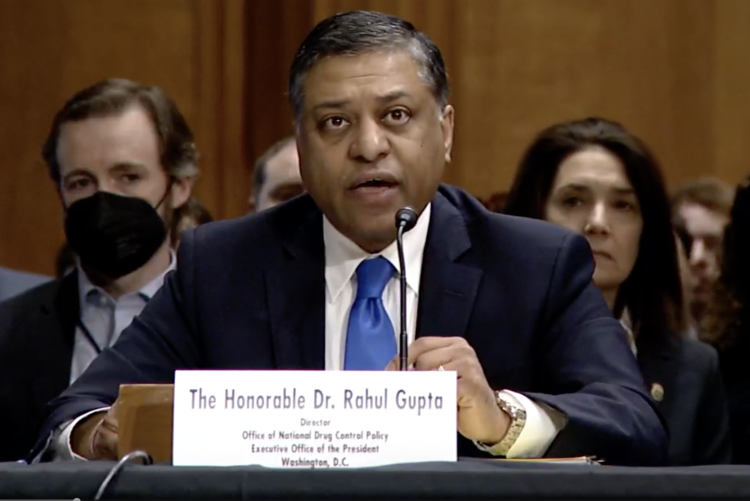
The U.S. Senate Foreign Relations Committee wants Mexico and countries that supply the precursor chemicals for making cheap and potent fentanyl to be held accountable and do more to stop illicit trafficking as deaths from the drug continue to surge in the United States. Chairman U.S. Sen. Robert Menendez, D-N.J., said more needs to be done both within the U.S. and abroad. “I’m urging the Biden administration to take additional steps to confront the fentanyl epidemic,” he said. ” … It’s time for the United States to build a multi-lateral coalition to hold China accountable for failure to meet its international obligation to stop illicit drug trafficking.” Menendez said China needs to immediately implement Know-Your-Customer standards to protect against fraud, corruption, and money laundering or face sanctions. At home, he said the U.S. needs more high-tech screening at the borders to disrupt open fentanyl sales on social media and to improve access to treatment for those with substance use disorders. U.S. Sen. James Risch, R-Idaho, said more than 100,000 Americans died from drug overdoses in 2021. He said fentanyl was responsible for nearly 70% of those deaths. Addressing the issue will require “very effective international cooperation,” he said. “Another way to stem this crisis is to identify and cut off the pipelines,” he said. Those pipelines include precursor chemicals from China that Mexican cartels use to make fentanyl, which is then smuggled into the U.S., Risch said. “The same cartels are profiting from and prolonging the illegal migration crisis caused by the Biden administration’s weak enforcement of border security and immigration controls,” he said. More than 46 million Americans have substance use disorders, said Dr. Rahul Gupta, director of the Office of National Drug Control Policy. “America is facing the worst drug crisis we’ve ever seen,” he said. “It is tearing the very fabric of our nation. It presents a direct and surging threat to public health.” Anne Milgram, administrator for the Drug Enforcement Administration, said the Sinaloa Cartel and the Jalisco New Generation Cartel are responsible for the majority of the illicit fentanyl that enters the United States. She said the two cartels buy precursor chemicals from China, which they use to make fentanyl powder. That powder is then pressed into fake prescription pills, Milgram said. “It is the deadliest drug threat our country has ever faced,” she said. The Mexican Army this week announced that it seized a fentanyl pill manufacturing center and the laboratory with the largest methamphetamine production capacity in Culiacán, Sinaloa. The army found about 282 pounds of possible granulated fentanyl, 629,138 pills of probable fentanyl, 220 pounds of possible methamphetamine, other chemicals, and 28 organic synthesis reactors. “Due to the number of reactors, the laboratory is the one with the largest synthetic drug production capacity that has been recorded historically and during the present administration,” Mexico’s Secretary of National Defense said in a news release. Republished with the permission of The Center Square.
Black Hawk pilots killed in Alabama crash were experienced
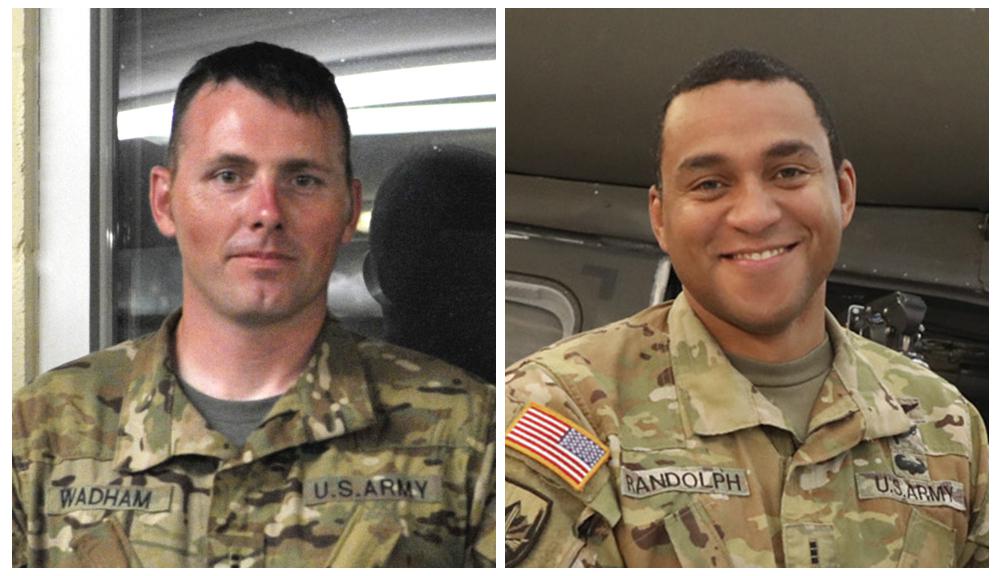
Two Tennessee National Guard pilots killed when their Black Hawk helicopter crashed along an Alabama highway were both experienced aviators with more than a dozen years of military service apiece, military officials said Thursday. The National Guard identified the pilots as Chief Warrant Officer 3 Daniel Wadham of Joelton, Tennessee, and Chief Warrant Officer 3 Danny Randolph of Murfreesboro. Tennessee. The soldiers were assigned to A Company, 1-230th Assault Helicopter Battalion, from Nashville’s Berry Field Air National Guard Base. Wadham had 15 years of military service, and Randolph had had 13 years of military service, officials said. The helicopter crashed during a training exercise Wednesday, plummeting into a highway in a community just outside Huntsville, Alabama, and catching fire as it hit the ground. The Tennessee National Guard said in a statement that the helicopter was approaching the Huntsville Executive Airport, “when the aircraft rapidly descended and impacted the ground.” “Words cannot express my sorrow for the loss of these two Tennessee National Guardsmen,” Brig. Gen. Warner Ross, Tennessee’s adjutant general, said in a statement. “It is felt not only within the ranks of the Tennessee National Guard, but across our entire military community. We ask that Tennesseans continue to join us in prayer for these soldiers’ families amid this tragic loss.” The UH-60 helicopter, more widely known as a Black Hawk, crashed along Alabama Highway 53 in the unincorporated community of Harvest, the Alabama Law Enforcement Agency said. The Madison County sheriff’s office said there were no injuries to anyone on the ground when the helicopter crashed. Officials have not yet released information about a possible cause of the crash. A safety investigation team from the U.S. Army Combat Readiness Center, headquartered at Fort Rucker, Alabama, will lead the investigation into the accident, Jimmie E. Cummings, Jr., a spokesman for the U.S. Army Combat Readiness Center wrote in an email. The center normally assumes responsibility of lead investigating agency when accident findings may have an Army-wide impact, Cummings said. Tammy Adams told WAAY that she was driving along Alabama 53 in Harvest when she saw the helicopter fall and explode on impact. “We heard a very loud — like a car without a muffler, but we knew it was in the sky. Looking up in the air, we saw the helicopter and BAM! We hear it hit. We saw it hit the ground, and it exploded,” Adams recalled. I just hollered, ‘My Lord! My God!’ Because nobody could have survived that,” she said. Micheal Mclein told WAFF that he was on his way to pick up his daughter from school when he heard the crash. “As soon as it hits, you heard it, you seen the smoke,” Mclein told the station. Local news outlets showed large plumes of black smoke rising from the crash site. “It’s a travesty because you know these guys go out here to put their lives on the line and fight for us, and then you got this where they’re just flying and die like that? It’s not the way it should’ve went.” The sheriff’s office cautioned residents that debris could be scattered across areas near the crash site and asked residents to call authorities if they find any wreckage. Harvest is just northwest of Huntsville, which is home to NASA’s Marshall Space Flight Center and the U.S. Army’s Redstone Arsenal. The once-rural area has become increasingly suburban and is about 90 miles south of Nashville. “Maria and I are deeply saddened by the tragic loss of two Tennessee National Guard members,” said Tennessee Gov. Bill Lee on Wednesday. “Please join us in lifting their families up in prayer and support during this time of unspeakable grief.” A spokesperson for the Federal Aviation Administration referred questions to the military. “Governor Lee, Alabamians will continue to uplift in prayer the families affected by this heartbreaking tragedy,” Alabama Gov. Kay Ivey said. “The Guardsmen who lost their lives today will be remembered as heroes. The people of Alabama stand with our neighbors in Tennessee.” Over the years, a handful of Black Hawk helicopters were in crashes during training exercises. In 2022 in Utah, whiteout conditions caused a Black Hawk helicopter pilot during a training exercise to lose sight of where he was trying to land, causing a crash with another helicopter near a Utah ski resort. None of the men and women aboard the helicopter or the dozens of skiers nearby at the resort were injured. In 2021, three Idaho Army National Guard pilots died when their Black Hawk helicopter crashed near Boise during a training flight. And in 2020, two soldiers were killed, and three were injured when their Black Hawk helicopter crashed during a training exercise off Southern California’s coast. Republished with the permission of the Associated Press.
