
Millions who rely on Medicaid may be booted from program
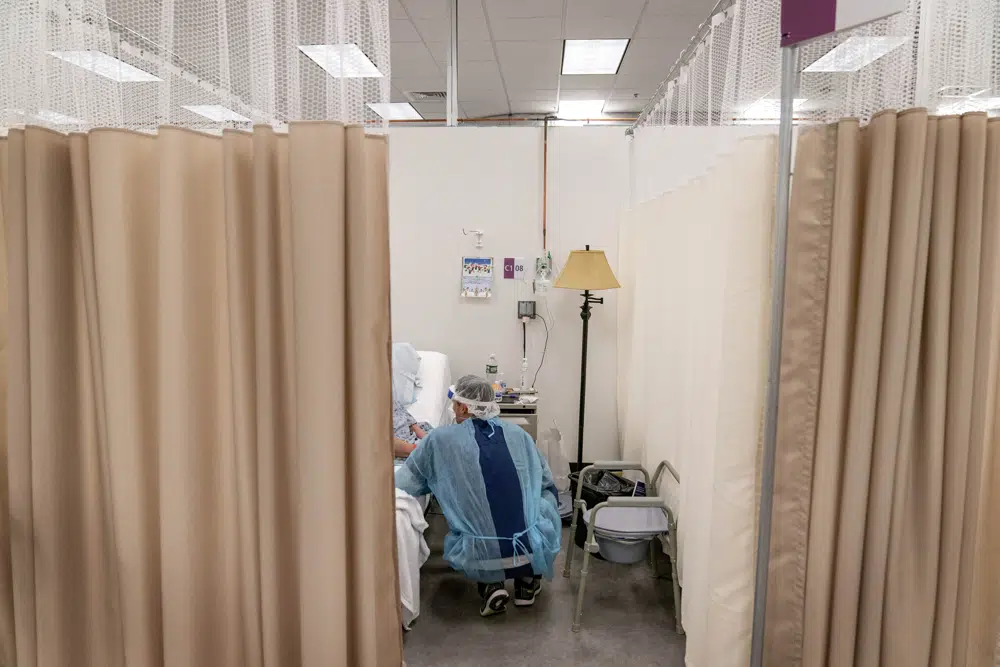
If you get health care coverage through Medicaid, you might be at risk of losing that coverage over the next year. Roughly 84 million people are covered by the government-sponsored program, which has grown by 20 million people since January 2020, just before the COVID-19 pandemic hit. But as states begin checking everyone’s eligibility for Medicaid for the first time in three years, as many as 14 million people could lose access to that health care coverage. A look at why so many people may no longer qualify for the Medicaid program over the next year and what you need to know if you’re one of those people who rely on the program. WHAT’S HAPPENING TO MEDICAID? At the beginning of the pandemic, the federal government prohibited states from kicking people off Medicaid, even if they were no longer eligible. Before the pandemic, people would regularly lose their Medicaid coverage if they started making too much money to qualify for the program, gained health care coverage through their employer, or moved into a new state. That all stopped once COVID-19 started spreading across the country. Over the next year, states will be required to start checking the eligibility again of every person who is on Medicaid. People will have to fill out forms to verify their personal information, including address, income, and household size. ___ WHEN MIGHT I LOSE MY COVERAGE? That will vary depending on which state you live in; some states are moving faster than others to check eligibility. Arizona, Arkansas, Florida, Idaho, Iowa, New Hampshire, Ohio, Oklahoma, and West Virginia are among the states that will begin removing ineligible Medicaid recipients as early as April. Other states will start taking that step in May, June, or July. Not everyone will be removed from the program all at once. States plan to verify all recipients’ eligibility over periods of nine months to one year. ___ HOW WILL I BE NOTIFIED IF I’M LOSING COVERAGE? If you rely on Medicaid for care, it’s important to update your contact information, including your home address, phone number, and email, with the state from which you receive benefits. States will mail a renewal form to your home. The federal government also requires states to contact you in another way -– by phone, text message, or email –- to remind you to fill out the form. Even if mailed notices reach the right address, they can be set aside and forgotten, said Kate McEvoy, executive director of the nonprofit National Association of Medicaid Directors. “A text might just grab someone’s attention in a way that would be more accessible,” she said, noting that a quick message also may be less intimidating than a mailed notice. Most states have already used texting for things such as reminding patients to get a COVID-19 vaccine or about upcoming doctor’s visits. But sending mass texts on Medicaid eligibility will be new, McEvoy said. You will have at least 30 days to fill out the form. If you do not fill out the form, states will be able to remove you from Medicaid. ___ WHAT ARE MY OPTIONS IF I’M KICKED OFF MEDICAID? Many people who will no longer qualify for Medicaid coverage can turn to the Affordable Care Act’s marketplace for coverage, where they’ll find health care coverage options that may cost less than $10 a month. But the coverage available on the marketplace will still be vastly different from what’s offered through Medicaid. Out-of-pocket expenses and co-pays are often higher. Also, people will need to check if the insurance plans offered through the marketplace will still cover their doctors. A special enrollment period will open for people who are unenrolled from Medicaid that will start on March 31 and last through July 31, 2024. People who lose Medicaid coverage will have up to 60 days to enroll after losing coverage, according to guidance the Centers for Medicare and Medicaid Services sent to states last month. ___ MY CHILDREN ARE ENROLLED IN MEDICAID. WHAT WILL HAPPEN TO THEIR COVERAGE? More than half of U.S. children receive health care coverage through Medicaid or the Children’s Health Insurance Program. Even if you receive a notice that you’re no longer eligible for Medicaid, it’s likely that your child still qualifies for the program or for health care coverage through CHIP, which covers children whose families make too much money to qualify for Medicaid but don’t earn enough to afford private health insurance. Between 80% and 90% percent of children will still be eligible for those programs, according to estimates from the Georgetown University Health Policy Institute’s Center for Children and Families. “When a parent receives a message that they aren’t eligible anymore, they often assume their child is no longer eligible either,” said Joan Alker, the center’s executive director. “It’s more common to find that the parent is no longer eligible for Medicaid, but the child still is.” Republished with the permission of The Associated Press.
Gov. Kay Ivey says state will resume executions
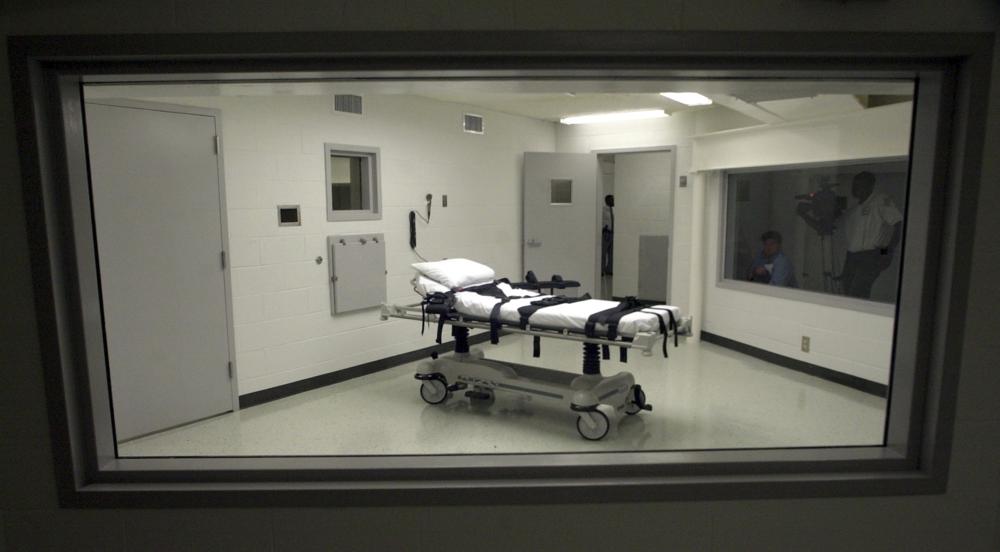
Alabama Gov. Kay Ivey said Friday that the state is ready to resume executions and “obtain justice” for victims’ families after lethal injections were paused for three months for an internal review of the state’s death penalty procedures. The governor in November directed the state prison system to undertake a “top-to-bottom” review of death penalty procedures after the state was forced to cancel three lethal injections because of problems with intravenous lines. Alabama Corrections Commissioner John Hamm told Ivey in a letter shared with news outlets that his staff is ready to resume executions after making internal changes related to staffing and equipment. However, critics argued that the review should have been conducted by an outside group instead of the state agency “responsible for botching multiple executions.” The governor’s office did not release a detailed report on the review’s findings but shared the letter from the head of the prison system. Hamm said the prison system is adding to its pool of medical professionals, ordered new equipment, and has conducted rehearsals. He also noted changes that will give the execution team more time to complete its duties. The Alabama Supreme Court, at Ivey’s request, last month issued a ruling that gives the state more time to carry out a death sentence by allowing the warrants that authorize executions to last for longer than 24 hours. In a Friday letter to Alabama Attorney General Steve Marshall, Ivey wrote that it is “time to resume our duty in carrying out lawful death sentences.” Ivey had asked Marshall to stop seeking execution dates until the review was complete. “Far too many Alabama families have waited for far too long — often for decades — to obtain justice for the loss of a loved one and to obtain closure for themselves,” Ivey said in the letter, which was also released publicly. “This brief pause in executions was necessary to make sure that we can successfully deliver that justice and that closure.” Marshall on Friday filed a motion with the Alabama Supreme Court seeking an execution date for James Barber, who was sentenced to death for the 2001 beating death of 75-year-old Dorothy Epps. Marshall said his office would be “seeking death warrants for other murderers in short order.” “In Alabama, we recognize that there are crimes so heinous, atrocious, and cruel … that the only just punishment is death,” Marshall said. Ivey rebuffed requests from a group of faith leaders and advocates to follow the example of Tennessee Gov. Bill Lee and authorize an independent review of the state’s execution procedures. Dozens of attorneys sent a letter to Ivey this week seeking an independent review instead of the internal one she authorized. “Throughout this process, we have argued that it is unreasonable to believe that the agency responsible for botching multiple executions can thoroughly investigate itself and suggest remedies to correct its own behavior,” JaTaune Bosby Gilchrist, executive director of the ACLU of Alabama, said in a statement. Christine Freeman, executive director of the Middle District of Alabama Federal Defender Program, a nonprofit that represents people on death row, said the result of Ivey’s review is “disappointing, but sadly not surprising.” “Instead of acting in the measured manner of the governor of Tennessee, by operating in the open with an independent commission, Alabama has once again chosen to pretend that there are no problems and not disclose what ‘review’ actually occurred,” Freeman wrote in an emailed statement. Ivey announced a pause on executions in November after a third lethal injection failed. Executioners were unable to get an intravenous line connected to death row inmate Kenneth Eugene Smith within the 100-minute window between the time courts cleared the way and midnight when the death warrant expired. It was the third such instance of the state calling off an execution because of IV line difficulties. The state completed an execution in July after problems establishing an IV line, but an anti-death penalty group has claimed the execution was botched. Hamm said the Department of Corrections reviewed its training for staff and medical workers involved in executions and its legal strategy in litigation; and increased the number of medical personnel utilized by the department for executions and the equipment available to assist them. He said the department also conducted rehearsals and reviewed procedures in other states. Hamm said the vetting process for the new medical personnel will begin immediately. His letter did not elaborate on what duties those workers will perform or what additional equipment was ordered. “I am confident that the Department is prepared as possible to resume carrying out executions consistent with the mandates of the Constitution,” Hamm wrote. “This is true in spite of the fact that death row inmates will continue seeking to evade their lawfully imposed death sentences.” The Alabama Department of Corrections did not immediately respond to an email requesting more information. The independent Tennessee review found the state had not complied with its own lethal injection process ever since it was revised in 2018, resulting in several executions that were conducted without proper testing of the drugs used. A review was also conducted in Oklahoma after the 2014 execution of Clayton Lockett where Lockett struggled on a gurney for 43 minutes before he was declared dead. The review was conducted by a separate state agency from the prison system. Republished with the permission of The Associated Press.
Failing at polls, election deniers focus on state GOP posts

In a basement event space in the Denver suburb of Parker, Tina Peters surveyed a crowd of Colorado Republicans last week and made an unusual pitch for why she should become chair of their beleaguered party: “There’s no way a jury of 12 people is going to put me in prison.” Peters was referring to her upcoming trial on seven felony charges related to her role in allegedly accessing confidential voting machine data while she was clerk in western Colorado’s Mesa County. The incident made her a hero to election conspiracy theorists but unpopular with all but her party’s hardest-core voters. Peters, who condemns the charges as politically motivated, finished second in last year’s GOP primary for secretary of state, Colorado’s top elections position. Now Peters has become part of a wave of election deniers who, unable to succeed at the polls, have targeted the one post—state party chair — that depends entirely on those hardest-core Republicans. Embracing election conspiracy theories was a political albatross for Republicans in states that weren’t completely red last year, with deniers losing every statewide bid in the swing states of Arizona, Michigan, Nevada, Pennsylvania, and Wisconsin. But the movement has focused on GOP state party chairs — positions that usually are selected by only dedicated activists and have the power to influence the party’s presidential nominating contest and some aspects of election operations, such as recruiting poll watchers. “The rise of this dangerous ideology nationwide and the rise within party machinery are ominous,” said Norm Eisen, a prominent Washington lawyer and former ambassador who is executive chair of States United Democracy Center, which tracks election deniers. “It’s an outrageous phenomenon.” Kristina Karamo, a former community college instructor who lost her bid last fall to become Michigan’s secretary of state by 14 percentage points, won the chair of the Michigan Republican Party a week ago. She beat a fellow election denier, failed attorney general candidate Matthew DePerno. In Kansas, Mike Brown, a conspiracy theorist who lost his primary bid for secretary of state, was named chair of the state party. Peters is just one of multiple candidates for the Colorado position who have repeated former President Donald Trump’s lies that President Joe Biden did not legitimately win the 2020 election. “We can’t just say, ‘Oh, it’s time to get over 2020 and be done with that,’” said Aaron Wood, a self-described Christian conservative father also running for Colorado GOP chair, who organized a slate of candidates to take over the party’s top posts. “Until I have 100% confidence that the election has integrity, I will not be done with that.” The wave of election deniers follows a push by Trump during his administration to stock the roster of party chairs with loyalists, several of whom supported his attempt to overturn the 2020 election and remain in the White House. Of those, Kelli Ward, the chair of the Arizona GOP, did not run again and was replaced by another Trump loyalist, former state Treasurer Jeff DeWitt. In Georgia, chairman David Shafer has announced he won’t seek another term this June amid scrutiny over whether he could be indicted for efforts to help Trump overturn the 2020 election. As in most states, the new Georgia party head will be selected by leaders of local county parties. Many of those are Trump loyalists who also backed Shafer’s bid to overturn Trump’s 2020 loss in the state. But Republican Gov. Brian Kemp, who defied Trump’s request and easily beat a primary challenger last year backed by Shafer, has marginalized the state party, creating a parallel structure to raise money and turn out voters. That’s an example of how the once powerful post of state party chair has changed. “It used to be adjacent to public service, to be the state party chair, and now it’s something where you get to dunk on Democrats on Twitter,” said Robert Jones, a Republican pollster in Idaho. In that state, Dorothy Moon, an election denier and former state representative who made an unsuccessful primary run for secretary of state, became the Idaho GOP chair last year. Still, Eisen noted that state parties have important roles in appointing poll workers and poll watchers in many states. A perennial fear has been that conspiracists could fill those positions and disrupt elections, though that did not happen in 2022 despite a prominent conservative effort to find more poll watchers. “Maybe the Karamos and the Browns and the Moons will implode,” Eisen said. “There is a kind of incompetence that goes with this ideology. But it’s a concerning trend given the power these state parties have.” Parties also have a major role in structuring their primaries. In Michigan, the party apparatus that Karamo now leads has the power to move its nominating contest to a closed convention, where activists select the winner. “Donald Trump would love there to be a convention for Michigan’s delegates,” Jason Roe, the former executive director of the state party, said in an interview. Ironically, Trump had endorsed DePerno, a lawyer who unsuccessfully sued to force a new count in 2020. Instead, Karamo, whom the former president had supported in her secretary-of-state race, won. She has described abortion as “child sacrifice” and Democrats as having a “Satanic agenda.” Last week, on the podcast of Trump adviser Steve Bannon last week, Karamo said Michigan was “ground zero for the globalist takeover of the United States of America.” In Colorado, many Republican strategists say they are prepared for Peters or another election denier to win the party chair position next month. “People seem almost resigned that the party is going to fall into the hands of this crowd for the next two years,” said Sage Naumann, one of the operatives, who said usually a chair’s impact on elections is “neutral,” but that could change. “If they’re constantly making controversial statements, then they can be detrimental,” Naumann said. The insurgent candidates running for Colorado’s chair argue things can’t get worse for the GOP in the state. Republicans lost every statewide race by double digits in November and have their smallest share of seats in the Legislature in state history. The candidates
Mike Rogers comments on the anniversary of the Russian invasion of Ukraine
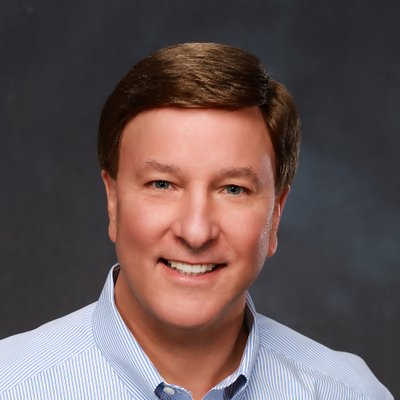
Friday marked the one-year anniversary of the start of the war between Russia and Ukraine. Congressman Mike Rogers, Chairman of the House Armed Services Committee, Michael McCaul, Chairman of the House Foreign Affairs Committee, and Mike Turner, the Chairman of the House Permanent Select Committee on Intelligence, released a joint statement to mark the one-year anniversary of the war. “[Vladimir] Putin’s unprovoked, full-scale invasion of Ukraine has lasted a year too long,” Rogers, McCaul, and Turner wrote. “The people of Ukraine have shown unmatched strength and courage, and with the aid of western weaponry, they have decimated Russia’s war machine. In supporting Ukraine’s fight, House Republicans have also continued to conduct robust oversight of U.S. assistance – protecting the American taxpayer while ensuring these weapons continue to make an impact on the battlefield.” “The gruesome Russian war crimes and atrocities must end,” the three Congressmen wrote. “President [Joe] Biden needs to stop dragging his feet on providing the lethal aid necessary to end this war. Continued half-measures by the Biden administration will only drive up the cost of this war in lives and dollars.” Most international and military observers had expected the vaunted Russian army to roll over undermanned Ukraine. Instead of folding to the onslaught, the Ukrainians stopped an assault on their capitol at Kiev, sunk the Russian Navy’s flagship on the Black Sea, and thwarted a Russian advance on Kherson and Mariupol intended to cut the Ukrainians. The Ukrainians followed that with a late summer and fall offensive that pushed the Russians back to the heavily contested Donbas region and recaptured the cities of Kharkiv and Bakhmut. Now Russia appears poised to launch a major spring offensive. The U.S. and its western allies have committed tanks, combat vehicles, rocket launchers, Lancer antitank missiles, artillery, and money to help Ukraine defend its territorial integrity. The war has seen massive battles with tanks versus tanks and artillery versus artillery. This is the most intense combat that has taken place in Europe since World War II. The Pentagon estimates that over 200,000 people have died on both sides. Thousands of Ukrainian civilians have been killed, and 8 million persons have been displaced. The Biden administration has announced another round of aid for Ukraine. “Today, in Kyiv, I am meeting with President [Volodymyr] Zelenskyy and his team for an extended discussion on our support for Ukraine.” President Biden said in a statement. “I will announce another delivery of critical equipment, including artillery ammunition, anti-armor systems, and air surveillance radars to help protect the Ukrainian people from aerial bombardments. And I will share that later this week, we will announce additional sanctions against elites and companies that are trying to evade or backfill Russia’s war machine. Over the last year, the United States has built a coalition of nations from the Atlantic to the Pacific to help defend Ukraine with unprecedented military, economic, and humanitarian support – and that support will endure.” Russia and Ukraine have a long-shared history that dates back to the Kievan Rus in the tenth century. Rogers is in his eleventh term representing Alabama’s Third Congressional District. He previously served in the Alabama House of Representatives and on the Calhoun County Commission. He and his family live in Saks. To connect with the author of this story or to comment, email brandonmreporter@gmail.com.
Alabama Republican Party holds winter meeting
The Alabama Republican Party Executive Committee held its Winter Meeting in Birmingham on Saturday. Chairman John Wahl was elected to a second term. Joan Reynolds was elected as vice chairman. “It is an honor for me to represent you, not just you, the Republican executive committee, but you, the Republican primary voters,” Wahl said. “In the last election cycle, we picked up 50 seats across the state,” Wahl said. “Many of those were rural and minority seats.” The Alabama Republican Party actively promoted Republican candidates outside of the state. The GOP took control of the U.S. House of Representatives; but failed to retake the Senate. “Alabama volunteers knocked on 85,000 doors in swing districts and swing states,” Wahl said. “We fired Nancy Pelosi.” “I am incredibly humbled by the support of my fellow committee members and the trust they have put in me,” Wahl said in a statement. “I look forward to working with them, as well as our County Parties and Auxiliary organizations, to promote and defend our Conservative values. The Alabama Republican Party has had an amazing two years, and I am looking forward to seeing what we can accomplish together during my second term.” “I would also like to thank so many of my friends and family for their support. It’s not always easy being in the spotlight, and I am blessed to have so many people standing by my side,” Wahl said. “I especially want to thank the ALGOP staff for their hard work. They help make my vision a reality, and I am grateful for what they do.” Vice Chairman John Skipper did not seek re-election due to health issues. Joan Reynolds, who previously chaired the Shelby County Republican Party, was elected vice chair over Pat Wilson, who represented the fourth and fifth congressional districts on the steering committee, and True the Vote activist Greg Phillips. Phillips’ last-minute pursuit of the position was particularly surprising as he was not a member of the executive committee. “I appreciate you for putting your faith in me as Vice Chair,” said Reynolds. “Alabama is probably the number one state in the country for standing up to woke policies to our kids,” Wahl added. “We don’t back down, and we stand up for our principles.” “Liberals are the ones who will use the power of government to force you to be injected with something even if it is against your will. Those are the radicals,” Wahl said. Florida Governor and possible presidential contender Ron DeSantis will be a guest of the Alabama GOP in Hoover on March 9. “Ron DeSantis has taught us: don’t be afraid to be a bold conservative,” Wahl said. ALGOP Treasurer Sallie Bryant said the party only has $783,513.28 in cash following the midterms. “A lot of money is coming in for our dinner on March 9,” Wahl said. “I am very confident that we will have over a million dollars by the time of the event.” Reynolds said, “We have already sold 416 individual tickets, 90 sponsorship tables, 137 other tables, and have raised $530,000. We currently have 1,300 people coming. The 440-member Republican Party State Executive Committee meets twice a year – February for the Winter Meeting and August for the Summer Meeting. The Summer Meeting will be held in Montgomery at the Renaissance Hotel and Conference Center. The Alabama Republican Presidential Primary will be on March 4, 2024. To connect with the author of this story or to comment, email brandonmreporter@gmail.com.
Personnel Update: Mike Lewis joins Kay Ivey team
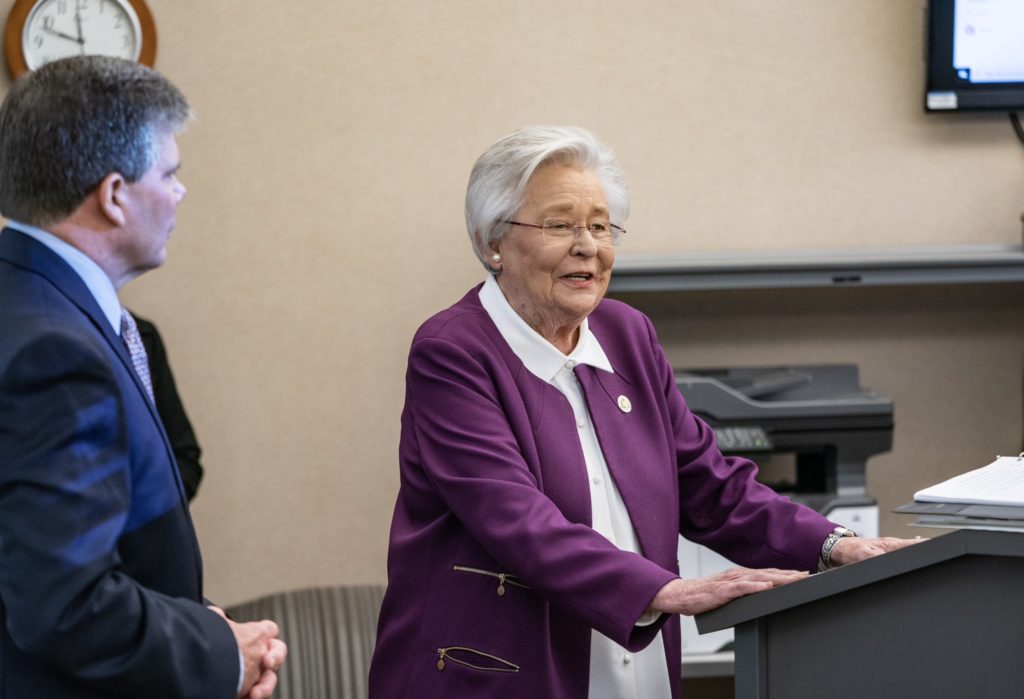
On Friday, Gina Maiola, Governor Kay Ivey’s Communication Director, announced that Mike Lewis would be joining the Governor’s communications team as deputy communications director. “I am excited to share Governor Ivey has appointed Mike Lewis to serve as deputy communications director,” Maioloa said.” We are thrilled to have him add to the strong team we have in the Governor’s Press Office. Many of you already know Mike from his time serving as communications director for the attorney general or his years on the Hill.” Lewis joins Maiola, Charles Murry, Alyssa Turner, and Hal Yeager on Governor Ivey’s Communications team. Lewis previously served as Communications Director for the Alabama Attorney General’s office. Lewis is a graduate of Troy University with a major in journalism. He has held the position of press secretary for former Congressmen Bill Dickinson and Terry Everett. He also served as communications director for Congressman Jo Bonner (R-Mobile) and as a speechwriter and senior policy adviser for Ohio Congressman Mike Turner. He is a native of Alexander City. To connect with the author of this story or to comment, email brandonmreporter@gmail.com.
Will Ainsworth addresses Safari Club International

Alabama Lieutenant Governor Will Ainsworth addressed the Safari Club International (SCI) convention on Friday. Ainsworth thanked God for Safari Club as he led the group in prayer. “Join me as I pray, Lord,” Ainsworth prayed. “Thank you for SCI. Thank you for all the people in this room that work so hard to protect the sport that we love. Lord, we thank you for freedom. We thank you for countries that protect freedom, Lord, and pray for all hunters as they go out throughout the year that you will protect them. Protect their outfitters, Lord, and protect their businesses. Lord, we thank you for the food. Thank you for the hams that were prepared. And again, Lord, thank you for letting us be in this greatest nation. In Jesus’s name, we pray. Amen.” “Hunter and Hays joined me at the Safari Club International dinner in Nashville where I delivered the invocation, and Alaska Gov. Mike Dunleavy received the “Governor of the Year Award” for his work in conservation,” Ainsworth said on Facebook. “The future of hunting is in the hands of the next generation.” Following his studies at Auburn University, Ainsworth was a youth pastor at a Church in Guntersville. Ainsworth is an avid hunter. He and his father and brother founded the Dream Ranch – where hunters from around the country could come to Alabama to hunt trophy whitetail deer and other game. Ainsworth also started the annual hunting expo in Huntsville. He is also a farmer, rancher, builder, and real estate broker. According to the SCI website, “The politically active members of SCI hunt on federal, state, and private lands, and globally. They vote in federal, state, and local elections to protect their hunting opportunities, to conserve our nation’s wildlife, and to conserve wildlife around the world. SCI is the country’s leader in advocacy to protect the freedom to hunt and to promote wildlife conservation worldwide. SCI’s approximately 50,000 members and 200 Chapters represent all 50 of the United States as well as 106 other countries. Through our active advocacy network, SCI works with federal and state legislators and policymakers to develop, promote and communicate positions on important issues, laws, regulations, and initiatives. SCI generates broad support for candidates who support hunting and the issues that are important to them.” The stated mission of SCI is to protect the freedom to hunt and to promote wildlife conservation worldwide. The purposes of SCI are…. To advocate, preserve and protect the rights of all hunters. To promote safe, legal, and ethical hunting and related activities. To advocate within the limits imposed by law and regulation. To monitor, support, or otherwise take positions on local, national, and international legislative, executive, judicial or organizational endeavors that foster and support SCI’s mission and purposes. To inform and educate the public concerning hunting and related activities. Ainsworth served in the Alabama House of Representatives from 2014 to 2018. In 2018 he was elected Lieutenant Governor. He was re-elected to his second term in a landslide in 2022. He faced no Republican or Democratic opponent in his re-election effort but did face a Libertarian opponent. Ainsworth is widely believed by politicos to be a contender for the Governor’s office in 2026. Incumbent Gov. Kay Ivey, whom Ainsworth endorsed last year, is term-limited from running again. To connect with the author of this story or to comment, email brandonmreporter@gmail.com
