
Tommy Tuberville expresses concerns about new federal red snapper limits

The new U.S. Department of Commerce regulation on red snapper harvest is expected to cut the amount of fish that Alabama’s red snapper fishermen are allowed to harvest during Alabama’s red snapper season. U.S. Senator Tommy Tuberville expressed his concerns about the new regulation on Monday. The Department of Commerce’s new rule requires the National Marine Fisheries Service to convert all fisheries into a single federal system. Tuberville said that this will have negative implications for Alabama’s red snapper industry. “Once again, the Biden administration is trying to force its one-size-fits-all approach and ignore the adverse effects of its decisions,” said Senator Tuberville. “Red snapper fishing is a huge part of Alabama’s Gulf Coast economy, which is why I’ll continue pushing back against the Department of Commerce’s disastrous proposal to decrease limits for red snapper anglers based on inaccurate data.” Last August, Tuberville joined his congressional colleagues in urging Commerce Secretary Gina Raimondo to reverse the department’s proposed rule to undo the National Marine Fisheries Service’s standard of setting quotas and annual catch data on a state-by-state basis. Instead, the department proceeded with its rule to implement a standardized catch limit in all states, even Alabama, with fishery programs certified by the National Marine Fisheries Service. This rule is expected to severely cut Alabama’s red snapper catch limits for 2023 by 51 percent, according to the Alabama Department of Conservation and Natural Resources (ADCNR). In 2021, the Gulf of Mexico Fishery Management Council decided to delay the calibration of red snapper allocation until January 2023 and approve a moderate increase in the 2021 annual catch limit rejecting the National Oceanic and Atmospheric Administration’s (NOAA) attempts to cut Alabama’s red snapper season in half. Under a final rule published by NOAA Fisheries on December 1, Alabama’s private recreational anglers will see a 51% decrease in the 2023 red snapper quota. The rule went into effect on January 1, reducing Alabama’s private recreational quota from 1,122,662 pounds in 2022 to just 558,200 pounds in 2023. Critics of the new federal regulation claim that there are three times as many red snapper in the Gulf than previously estimated. Scott Bannon is the Commissioner of the Alabama Department of Conservation and Natural Resources “Each Gulf state is accounting for their recreational harvests using different data programs from what the federal government is using,” Bannon stated. “Under the other final rule that created state management of red snapper in 2018, there was a requirement to align the landings into the same currency through a calibration method. Alabama and Mississippi have very accurate reporting systems, and we feel the harvest estimates from NOAA are inflated and unreasonable. “Since before state management of red snapper was initiated, we have pushed the Gulf of Mexico Fishery Management Council (Gulf Council) that we should manage the amount of fish off each state. From Alabama’s perspective, this is in part due to the investments made by the state and private individuals in artificial reef building from which a significant number of red snapper and other reef species are produced in Alabama’s reef zones.” Bannon points to Alabama’s investments in creating artificial reefs to provide habitat for the snapper and other reef fish as one reason Alabama’s quota should be higher. Federal regulation of the red snapper season has been a point of contention with state officials for years. Federal authorities are essentially ignoring years of data that state wildlife managers have collected on red snapper numbers. The new rules mean that red snapper fishermen will be able to spend fewer days on the water pursuing the fish this year and that while doing so, they will be allowed to keep fewer fish. Fishermen who customarily fill their freezers with red snapper for their family’s protein needs will have to pursue a different fish species this year and be prepared for this dramatic change in their fishing habits and strategy. Alabama Today will continue to follow this story and have more details when the 2023 red snapper season rules are finalized. Tommy Tuberville has represented Alabama in the United States Senate since 2021. Tuberville unseated incumbent Sen. Doug Jones in the 2020 election. To connect with the author of this story or to comment, email brandonmreporter@gmail.com.
Katie Britt and Tom Cotton lead bipartisan letter to Biden Administration about surge of Mexican steel

U.S. Senators Katie Britt and Tom Cotton, along with a bipartisan group of 11 of their Senate colleagues, sent a letter to Secretary of Commerce Gina Raimondo and U.S. Trade Representative Katherine Tai urging them to take action against the surge of Mexican steel imports, which they claim is unsustainable. The Sens. claim that the rising steel imports from Mexico raise grave concerns in America’s steel industry and steel communities such as those in Alabama. They also claim that this surge violates a 2019 agreement between the United States and Mexico negotiated by the Trump Administration. The letter contends that the United States deserves and should demand fair treatment from all trading partners, including its friends. “We urge the Biden administration to immediately begin consultations under the 2019 agreement to address this surge of Mexican steel and return imports to ‘historic volumes of trade,’ with quotas, if necessary,” the Senators wrote. “However, if the Mexican government refuses to remedy this breach, we regretfully urge the administration to consider other mechanisms to ensure compliance and protect American jobs, including the reapplication of Section 232 tariffs.” “The Administration has a responsibility to strongly enforce trade agreements to ensure fairness for hardworking Americans,” said Sen. Britt. “This unprecedented, unacceptable surge in Mexican steel imports is endangering good-paying Alabama jobs and negatively impacting communities across our nation. Additionally, our domestic iron and steel industry is critical for our national security. I will continue to fight to grow opportunities for families in every corner of Alabama and America, while keeping our homeland safe and strong.” Alabama still has a significant iron and steel industry. The iron and steel industry is an original economic engine for the state and supports approximately 15,000 jobs and indirectly supports more than 76,000 jobs, including subcontractors and suppliers. The average annual Alabama wage in the industry is nearly $100,000. Every two Alabama iron and steel industry jobs also supports ten additional jobs throughout the supply chain. Co-signing the letter are Senators Sherrod Brown (D-Ohio), John Boozman (R-Arkansas), Bob Casey (D-Pennsylvania), Thom Tillis (R-North Carolina), Tammy Baldwin (D-Wisconsin), Ted Budd (R-North Carolina), Elizabeth Warren (D-Massachusetts), Tina Smith (D-Minnesota), Rick Scott (R-Florida), Marco Rubio (R-Florida), and J.D. Vance (R-Ohio). The American Iron and Steel Institute (AISI) says that imports of finished steel increased by more than 18 percent in January compared with December. Mexico was the second-largest supplier (behind Canada) of finished and semi-finished steel to the U.S. in January. Mexico shipped 456,000 tons of steel to the U.S. in January – an increase of 10 percent from December. Britt is also a member of the National Security and International Trade and Finance Subcommittee of the Senate Committee on Banking, Housing, and Urban Affairs. To connect with the author of this story or to comment, email brandonmreporter@gmail.com.
Three more states follow Alabama out of ERIC system
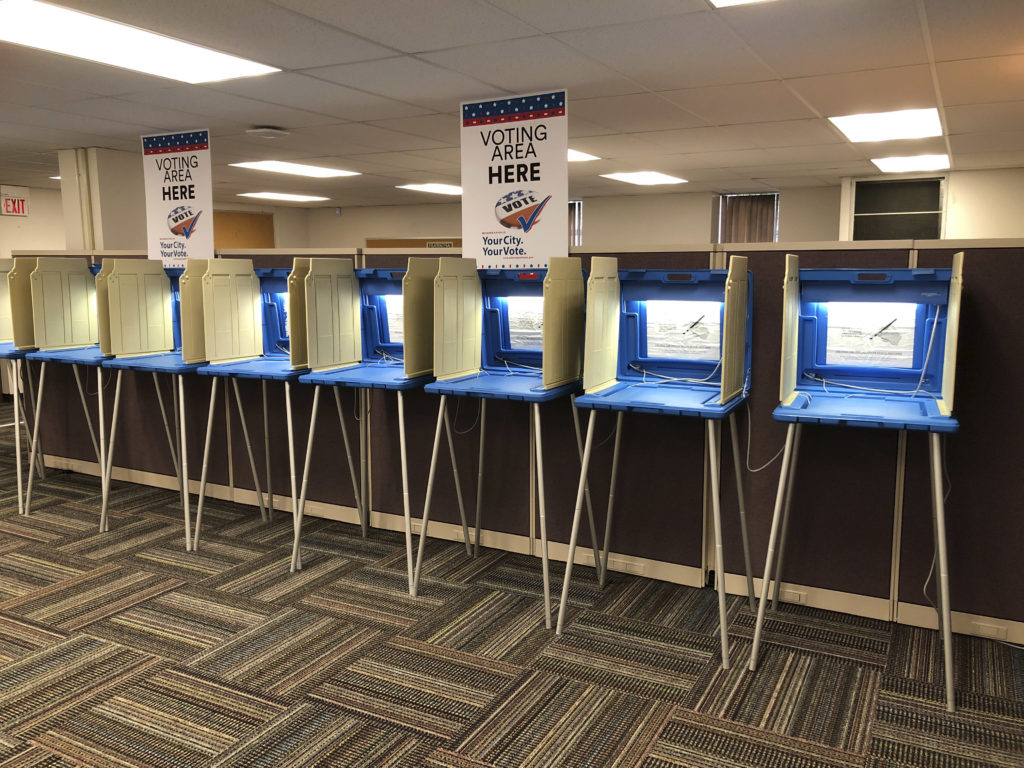
On Monday, Florida, Missouri, and West Virginia all followed Alabama’s lead and withdrew from the controversial ERIC system. The Electronic Registration Information Center, or ERIC, is a multi-state partnership that is used between the states to keep their voter rolls up to date. As more states stop sharing their data with ERIC the system will become less value to the remaining states as many Americans move in and out of ERIC member states. New Alabama Secretary of State Wes Allen began the process of withdrawing from ERIC as soon as he was inaugurated in January. The three states on Monday announced that they made the decision following weeks of negotiations over potential changes to ERIC failed to reach an agreement. Florida Secretary of State Cord Byrd notified the Electronic Registration Information Center, Inc. (ERIC), that Florida is terminating its ERIC Membership. Today’s announcement follows efforts led by Florida and Missouri over the past year to reform ERIC through attempts to secure data and eliminate ERIC’s partisan tendencies, all of which were rejected the Florida Secretary claimed. “As Secretary of State, I have an obligation to protect the personal information of Florida’s citizens, which the ERIC agreement requires us to share,” said Sec. Byrd in a statement. “Florida has tried to back reforms to increase protections, but these protections were refused. Therefore, we have lost confidence in ERIC.” “There is no defensible justification to allow any opportunity for partisanship in voter registration and list maintenance, much less in the administration of our nation’s elections,” said West Virginia Secretary of State Mac Warner. “It truly is a shame that an organization founded on the principle of nonpartisanship would allow the opportunity for partisanship to stray the organization from the equally important principle of upholding the public’s confidence.” In 2022, a working group of ERIC member states was formed and proposed necessary changes to the ERIC Membership agreement. These reforms would have eliminated concerns about ERIC’s potential partisan leanings, and made the information shared with ERIC more secure. Those changes were rejected in a Board of Governors meeting on Sunday, prompting the three GOP states to leave the system. “We have worked hard over the last several years to implement procedures that will make Missouri elections better, voter rolls more accurate, and bring greater trust to the election process,” Missouri Secretary of State Jay Ashcroft said. “Voter confidence is compromised when individuals vote in more than one state and nothing is done. It appears that ERIC will not make the necessary changes to address these concerns, therefore, it is time to move on.” In a recent visit to ERIC’s stated address, Allen found an empty meeting place with no offices. “Before I took office, Alabama transmitted the personal information of millions of our citizens to this private organization for the past several years,” Allen said. “That information is stored on a server somewhere, but we do not know where. There is no ERIC operation at the location they claim is their office. A lot of personal data and taxpayer money has been transferred to ERIC. Where is that data? Where are the employees? Where are the offices? Where are the computers?” Before he was elected, Allen had promised that Alabama would leave the ERIC system. “I made a promise to the people of Alabama that ending our state’s relationship with the ERIC organization would be my first official act as Secretary of State,” Allen said in a statement. The letter said that Alabama would immediately cease transmitting data. Allen cited privacy concerns for his decision. “Providing the private information of Alabama citizens, including underage minors, to an out-of-state organization is troubling to me and to people that I heard from as I traveled the state for the last 20 months,” Allen said. The database was created as a tool to maintain accurate voter rolls and combat fraud by allowing states to know when someone moves, dies or registers elsewhere. The ERIC system has been criticized by many election critics on the right, who have expressed their concerns about voter integrity. ERIC had grown to include more than 30 states and governments across the political spectrum, including Rhode Island, the District of Columbia, South Carolina, and Texas. Now with four states leaving in rapid succession the future viability of ERIC may be in question. To connect with the author of this story or to comment, email brandonmreporter@gmail.com.
Spring Hill College announces inauguration of first female president, Mary H. Van Brunt

Spring Hill College in Mobile marked the beginning of Women’s History Month by preparing for the inauguration of Mary H. Van Brunt, Ph.D., the first female president in the college’s 193-year history. The ceremony will take place Friday, March 17, at 10 a.m. in the Arthur R. Outlaw Recreation Center. The college announced Van Brunt’s selection as its 39th president in October. She brings more than 20 years of leadership experience in Catholic higher education and also spent 12 years in the banking, securities, and pharmaceutical industries. “Dr. Van Brunt has a successful, proven track record of leadership that demonstrates her depth of financial training and communication skills,” said Jack F. McKinney, chair of the Spring Hill College Board of Trustees. “Her reputation as a tireless, persistent, and charismatic leader convinced us that she will unite and transform us into leaders for the next century.” Mary H. Van Brunt, Ph.D., is the new president of Spring Hill College. (contributed) Van Brunt served as provost and vice president for Academic Affairs at Gwynedd Mercy University in Gwynedd Valley, Pennsylvania, and as founding dean of the School of Business, Arts, and Media at Cabrini University in Radnor, Pennsylvania. She is a published author, consultant, certified global business professional, and prior certified management accountant. She earned a bachelor’s degree in economics from Ursinus College in Collegeville, Pennsylvania, an MBA in accounting from St. Joseph’s University in Philadelphia, and a Ph.D. in economics from Lehigh University in Bethlehem, Pennsylvania. In her spare time, Van Brunt enjoys swimming, kayaking, traveling abroad, and spending time with her six adult children, family, and friends. She began her presidency in January after relocating to Mobile with her husband, Chris, and her dog, Stella. The Commissioning Mass by the Provincial, Father Thomas Greene, S.J., will be held Thursday, March 16, in St. Joseph Chapel at 9:30 a.m., followed by a coffee reception at Einstein’s and a golf tournament at 11:30 a.m. The full schedule of activities for inauguration week is available here. Republished with the permission of Alabama NewsCenter.
Groups accuse Alabama of discrimination in wastewater funds

Environmental organizations filed a civil rights complaint against Alabama on Monday, accusing the state of discriminating against minority communities in how it distributes funding for wastewater infrastructure, including money for families who need help dealing with raw sewage in their yards. The complaint filed with the U.S. Environmental Protection Agency maintains Alabama’s policies for distributing money from a revolving fund have left behind many poor households by making it “impossible for people who need help with onsite sanitation to access this money.” “This country’s neglect of wastewater infrastructure in majority Black communities — both urban and rural — is resulting in a hygienic hell for far too many people. A hell that climate change is only making worse,” said Catherine Coleman Flowers, founder of The Center for Rural Enterprise and Environmental Justice, which was one of the organizations that filed the complaint. National environmental and social justice activists have long tried to put a spotlight on sanitation problems in Alabama’s Black Belt region, where intense poverty and inadequate municipal infrastructure have left some residents dealing with raw sewage from broken or outdated septic systems. The complaint maintains that Alabama’s policies for distributing money from the Clean Water State Revolving Fund, a federal-state partnership that provides communities low-cost financing for infrastructure, make it impossible for people who need help with onsite wastewater systems benefit. The Alabama Department of Environmental Management disputed the claim and said audits have shown the agency to be in compliance with federal rules. “In 2022, 34% ($157 million) of the $463 million of drinking water and wastewater funding awarded by ADEM went to Black Belt counties, where 10.6% of Alabama’s population resides. Disadvantaged Black Belt areas received funding at three times the rate of other areas,” the state agency wrote in a statement. Federal and state officials have vowed in recent years to address sanitation problems through money in the American Rescue Plan — a portion of which state officials steered to high-need water and sewer projects — and the Bipartisan Infrastructure Act. Federal and state officials in January marked the start of a $10 million project aimed at repairing and upgrading Hayneville’s failing sewer system, which has left residents dealing with pools of raw sewage at their homes. The complaint filed Monday argued many people in the region aren’t connected to a sewer system and can’t afford adequate on-site systems. Maintaining septic tanks has typically been the responsibility of a homeowner. However, the dark rich soil for which the Black Belt region is named — and that once gave rise to cotton plantations — also makes it difficult for traditional septic tanks, in which wastewater filters through the ground, to function properly. Some homes in the rural county still have “straight pipe” systems, letting sewage run untreated from home to yard. “The link between race, poverty, and sanitation inequity in the Black Belt is a product of centuries of racism and discrimination that can be traced directly to slavery, sharecropping, and enforced racial segregation,” the complaint stated The Natural Resources Defense Council, represented by Southern Poverty Law Center, also signed the complaint, which was filed under a section of the Civil Rights Act of 1964 that prohibits discrimination in programs that receive federal funds. Republished with the permission of The Associated Press.
Daniel Sutter: Should taxpayers support Birmingham Southern?

Birmingham Southern College (BSC), founded in 1856, has requested $37.5 million in assistance from the state, the city of Birmingham, and Jefferson County. President Daniel Coleman warns that without assistance, the school could close this May. BSC’s troubles afford state lawmakers an opportunity for bold higher education reform. I will first mention but not evaluate several relevant considerations for potential aid. Is BSC truly near closing, or is the crisis being manufactured to help solicit state funds? Will this be one-time or continuing support? Will other Alabama colleges seek government assistance if BSC succeeds? One could take the principled stand that government should not assist private businesses or colleges. I favor this principle. Our state and local governments, however, do not follow this. They frequently offer incentives to businesses like paying for land and employee training. Large retailers get to keep some sales tax revenue. Tuskegee University receives annual appropriations from the state. Lawmakers cannot claim principle here. The important question becomes, what is the value proposition for taxpayers from supporting BSC? The state already has 14 four-year universities, including one in Birmingham and a liberal arts college in Montevallo. Similarity to our existing state universities lowers the value of preserving BSC. A transformed college could add value. Although a deep red state, Alabama’s state universities do not promote America’s founding values of personal freedom and limited government. Conservative and libertarian faculty and programs do exist, like Troy’s Johnson Center and Free Enterprise Scholars program. We lack a “red state” university. Florida Governor Ron DeSantis is acting on higher education, including appointing former Republican Senator Ben Sasse president of the University of Florida. Of relevance for BSC’s request, Governor DeSantis has appointed trustees with a mandate to transform Sarasota’s New College into the Hillsdale of the South. Why should Florida or Alabama emulate Hillsdale College? Hillsdale is a private liberal arts college in Michigan that achieved notoriety for refusing Federal funding. The school is highly conservative and free market and has often partnered with the Heritage Foundation. Hillsdale is perhaps the nation’s most recognized conservative college, attracting students from across the country. State assistance transforming BSC into Alabama’s Hillsdale would create value. One objection is public funding of education and scholarship with a political or ideological orientation. Liberals should not be forced to support an institution dedicated to teaching and researching about conservative and free market philosophies. Yet this objection implies ending government support for higher education. Many disciplines, including economics yield theories about the organization of society and role of government. Privatizing Alabama’s state universities is not on the table. Ideological neutrality by elected officials toward universities might seem appropriate, given bias concerns. Yet liberals far outnumber conservatives and libertarians in academia, with the imbalance growing. Official neutrality ensures liberal hegemony. Economist John Merrifield contends that creating a diverse menu of options should be the goal of K-12 education reform. Many students (and their parents) favor a traditional college education on the Hillsdale model. Ensuring diverse and valuable options means making this available in Alabama at in-state tuition rates. Changing the character of BSC would alter the terms of service for faculty and administrators who have worked for years. I am very sensitive to such an objection. I would prefer starting a new “red state” university, so everyone knew the mission from day one. Yet BSC’s financial problems mean change is likely coming without government support. Private investors or philanthropists could take over and transform BSC as proposed here. A college dedicated to traditional American values arguably should be private. BSC’s request for government assistance is why I have proposed state action. Public support for higher education is declining, and largely along partisan lines. Universities have birthed many ideas hostile to the traditional American way of life. We need red state universities, and state governments must step up, given their role in higher education. Birmingham Southern’s request offers our elected representatives an opportunity for bold action. Daniel Sutter is the Charles G. Koch Professor of Economics with the Manuel H. Johnson Center for Political Economy at Troy University and host of Econversations on TrojanVision. The opinions expressed in this column are the author’s and do not necessarily reflect the views of Troy University.
Drug overdose deaths at an all-time high in Alabama

Americans like drugs. Americans have historically abused alcohol, marijuana, and prescription drugs. Some people to this day make and sell outlaw alcohol, “moonshine.” Today, however, hard drugs are more prevalent than ever, killing Americans like never before. Medical care has never been better, and first responders are better prepared than ever to deal with drug overdoses than any generation of police officers and paramedics we have ever seen. It is still not enough. Drug overdose deaths are now at an all-time high, increasing rapidly in Alabama. A recent study found that there has been a 15 percent increase in drug-related overdose deaths in Alabama over the last year – that’s the 8th highest increase nationwide. 1,394 Alabamians died of drug overdoses in the most recent 12 months. Drug overdoses are nothing new. Someone may take too many prescription opioids, a heroin addict quits the drug and then relapses and dies from that relapse, or a meth or crack addict having a bad last experience sadly has become a part of American culture for most of the last sixty years. It has never been as bad as it is now, though. Overdose deaths nationwide are up over 50 percent since just 2019. Opioids account for almost 70% of drug-related deaths in this country. 107,477 Americans died of an overdose in the last 12 months. Maine, with 24%, Oklahoma, with 22%, New Hampshire, with 21%, and Delaware, with 19%, had the largest increase in overdose deaths. They were followed by Washington, Vermont, and Georgia; all posted 17% increases in overdose deaths. Alabama comes in at eighth with a 15% increase. South Dakota, Nebraska, and Iowa have the highest rates of overdose deaths. The states with the most overdose deaths are California with 11,602, Florida with 8,123, Texas with 5,347, Pennsylvania with 5,178, and Ohio with 5,080. Fentanyl, much of it mass-produced in factories in China. Then it smuggled into this country over the southern border by the Mexican drug cartels, which has contributed heavily to the drug overdose epidemic in this country. U.S. Senator Katie Britt is urging the Biden administration to do something about the drugs flowing across the U.S. southern border. “As a mama, I look at the fentanyl crisis,” Britt said recently during a trip to the Mexican border in Texas. “I have a seventh-grader and an eighth-grader. This crisis knows no bounds. In the state of Alabama, we have had to use Narcan 15 times since the start of the school year. What I am telling you is that under the failed policies of [Joe] Biden, every state, including my great state of Alabama, has to become a border state. How many people have to die before enough is enough?” Britt and Sen. Marco Rubio have introduced legislation to crack down on fentanyl traffickers. The Alabama Legislature is also looking at addressing this crisis. One bill on a fast track toward passage increases the criminal penalties for drug traffickers who sell and distribute fentanyl. House Bill 1 is sponsored by State Representative Matt Simpson. This bill “would provide for mandatory terms of imprisonment for a person who engages in the unlawful sale, manufacture, delivery, or possession of one or more grams of fentanyl as a single component. This bill would also impose additional criminal penalties for subsequent violations.” Many Americans who die from overdoses don’t even know what they are taking. Drug dealers use fentanyl to lace marijuana, heroin, cocaine, and even counterfeit prescription drugs because it is cheaper and more addictive than anything else they can sell. Simply do not buy anything from street dealers or shadowy internet sellers of bargain drugs. Some dealers are even putting fentanyl in counterfeit candies to grow their illicit business. It has become far too dangerous to risk death by taking a chance on purchasing anything to put in your body from illegal sellers. To connect with the author of this story or to comment, email brandonmreporter@gmail.com.
