
Rep. Gary Palmer says energy is a significant component of inflation
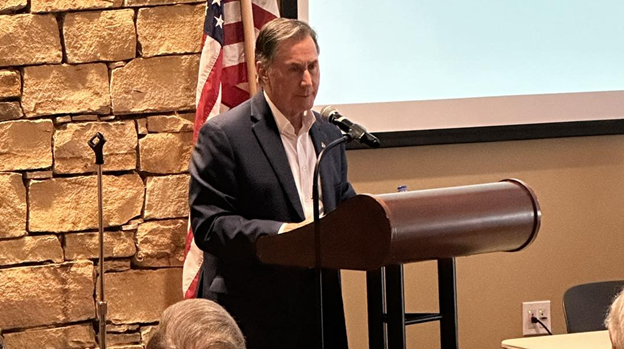
Following the unveiling of H.R. 1, the Lowering Energy Cost Act, which included H.R. 1023, the Greenhouse Gas Reduction Fund Repeal, Congressman Gary Palmer said that energy is a significant component of inflation. “A significant factor of increased inflation is energy,” Palmer said in a press release. “Millions of American households are struggling to make ends meet because of President Biden’s highly inflationary energy policies. Today, House Republicans are charting a better path forward. One that lowers energy costs and keeps our nation more secure through energy independence. H.R. 1, the Lower Energy Costs Act, shows the priorities of Republicans who are focused on ensuring American households have reliable and affordable energy and that our nation does not become reliant on China. I am glad to see my bill to eliminate President Biden’s climate bank is included in this legislation. I applaud the work of my colleagues on both the Energy & Commerce Committee and the Natural Resources Committee for putting together this comprehensive American energy bill.” Palmer is the author of a portion of the bill eliminating the EPA’s climate bank. “The Democrat’s misnamed Inflation Reduction Act established a taxpayer-funded $27 billion slush fund to fund investments in green energy projects, much like those funded by the failed Silicon Valley Bank,” said Rep. Palmer. “That bill, which received no Republican support, created this Green New Deal slush fund and raises many concerns about lack of accountability and oversight.” “Over 20 million Americans are currently behind on their utility bills, and lower-income and senior citizen Americans are especially hard pressed,” Palmer explained. “They are not begging for more electric vehicles or solar panels, they are asking for their energy bills to be more affordable. If Democrats and the Biden Administration wanted to do something about the current energy crisis, they would unleash American energy instead of forcing us into inadequate and unreliable green energy. Their policies will not only fail to meet our economy’s energy needs, they will also make America reliant on China for materials needed for wind turbines and solar panels. If we learn nothing else from the war in Ukraine, it should be this fact: that no nation should become reliant on an adversarial nation for something as critical for its economy and national security as energy. America is an energy superpower. We should use our vast resources to restore our economy’s vitality, to ensure our national security, and to meet the energy needs of our allies around the world.” In 2022, Democrats, under the leadership of then-Speaker of the House Nancy Pelosi, approved a $27 billion slush fund called the “Greenhouse Gas Reduction Fund” as part of the omnibus “Inflation Reduction Act.” This fund was given to the Environmental Protection Agency (EPA) to hand out to local governments and private entities to reduce greenhouse gas emissions by promoting green energy sources. Gary Palmer was interviewed about the Greenhouse Gas Reduction Fund by the Daily Signal. $7 billion of that money is reserved for states, municipalities, tribal governments, and nonprofit organizations. The goal is to leverage private funding, according to the EPA. This money will be used “to enable the deployment of residential rooftop solar, community solar, and associated storage and upgrades in low-income and disadvantaged communities,” the agency says. The $20 billion pot is reserved for nonprofits “that will collaborate with community financing institutions like green banks, community development financial institutions, credit unions, housing finance agencies, and others,” according to the EPA. $8 billion will be for low-income and disadvantaged communities in alignment with the Biden administration’s Justice40 Initiative and primarily will involve nonprofit organizations. If H.R. 1 were to become law, it would repeal the Greenhouse Reduction Act and end this wasteful slush fund reducing the deficit by $27 billion. Palmer is in his fifth term in office representing Alabama’s Sixth Congressional District. He recently announced to the Mid-Alabama Republican Club in Vestavia Hills that he will run for re-election in 2024. To connect with the author of this story or to comment, email brandonmreporter@gmail.com.
Alabama Senate Committee amends ARPA funding bill
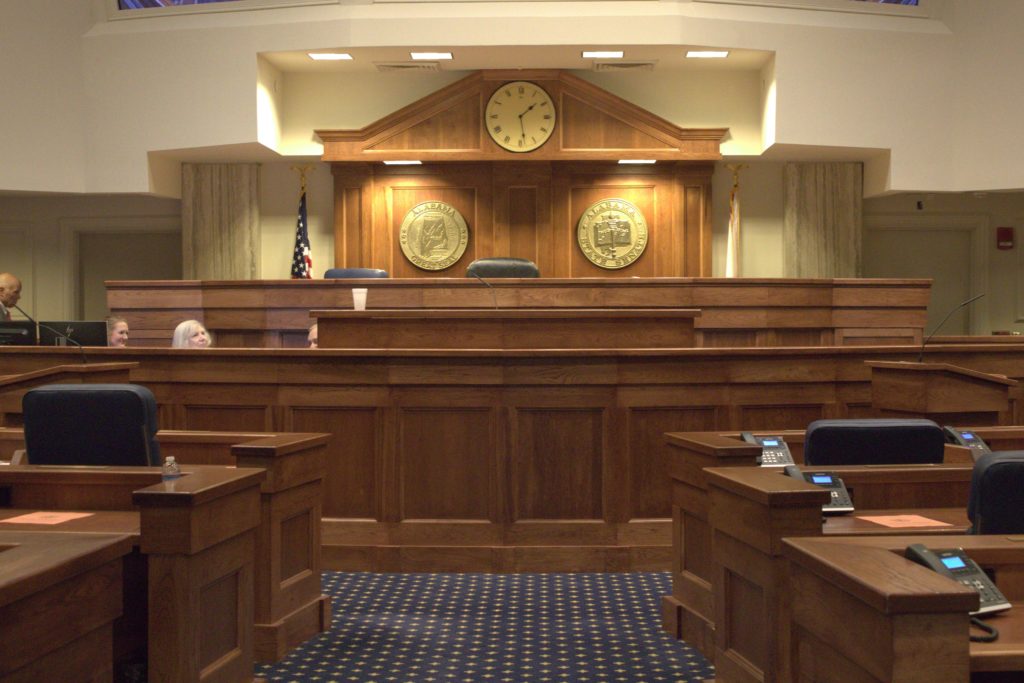
The Alabama Senate Finance and Taxation General Fund Committee met on Wednesday morning to consider the American Rescue Plan Act appropriation bill passed by the House on Tuesday. The Committee voted to give the legislation a favorable report but only after amending how the sewer and water funds are distributed. House Bill 1 (HB1) is sponsored by State Rep. Rex Reynolds, who chairs the House Ways and Means General Fund Committee. The legislation appropriates the second $1,060,000,000 that the state received from the federal government through the controversial ARPA Act – all of which are paid for through federal deficit spending. State Sen. Greg Albritton chairs the Senate Finance and Taxation General Fund Committee. Albritton shared two documents with the members of the Committee. The first was an email from the Alabama Department of Environmental Management (ADEM) outlining where the first round of ARPA money for water and sewer projects has been allocated. “This data is also available online,” Chairman Albritton said. “The second is the MOA (Memorandum of Understanding) between the Department of Finance and ADEM on the distribution of that money.” “HB1 is the ARPA document,” Albritton said. “It passed the House 101 to 3.” Sen. Chris Elliott presented an amendment to HB1. Elliott explained that his amendment further defines the use of the water and sewer projects portion of the ARPA funds to include stormwater projects. The amendment also sets aside up to $100 million for the water and sewer projects to require matching grants of up to 35% and includes changes to the formula to factor in for growing communities. “It allows this money to be used for stormwater infrastructure,” Elliott explained. “It further stretches this money out by requiring matching grants from local communities.” $395 million of the ARPA will go to water and sewer projects. ADEM will award the projects to water and sewer systems that apply for the funds. State Sen. Linda Coleman Madison said, “I had an amendment to add, but your amendment includes that. What is the difference between the two amendments?” Albritton said, “It includes that and goes further to delineate that a portion of the money requires a 35% match.” The Elliott amendment was adopted by a 15 to 0 vote. “I know Sen Coleman Madison calls me Senator No,” said Sen. Sam Givhan. “It’s better, but it’s still not there yet.” HB received final passage by the Committee, with 12 members voting in favor and three members, including Givan, voting to abstain. The full Senate can now consider the legislation as early as Thursday. If the legislation passes the Senate with the Elliott amendment, it would have to go back to the Alabama House of Representatives for them to consider the changes. The Alabama Legislature is currently in its First Special Session. It is hoped that the body will be able to resume the 2023 Alabama Regular Session on Tuesday, March 21. To connect with the author of this story or to comment, email brandonmreporter@gmail.com.
Katie Britt backs balanced budget amendment
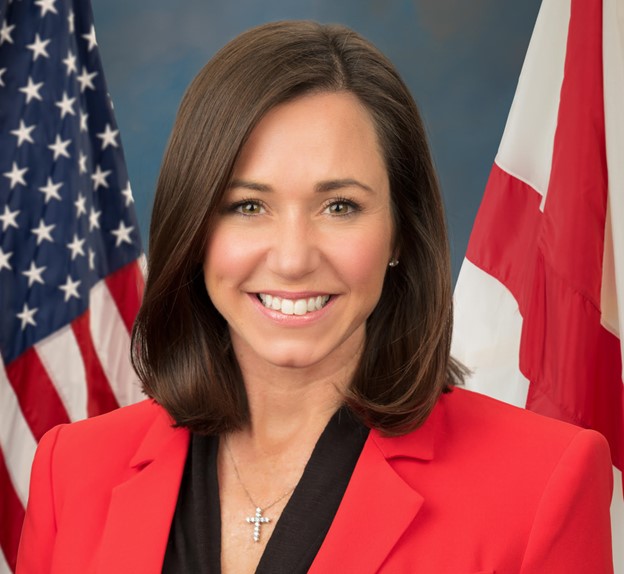
U.S. Senator Katie Britt joined U.S. Senator Cindy Hyde-Smith and 22 additional Senate cosponsors in introducing a balanced budget amendment to the U.S. Constitution to force the President and Congress to pass annual balanced budgets. The joint resolution, S.J.Res.13, proposes a constitutional amendment to establish requirements for the submission and approval of annual balanced budgets, including guidelines regarding exceeding spending caps and raising taxes. “Our ballooning national debt is already an economic and security crisis,” said Sen. Britt. “Just this week, President [Joe] Biden proposed an unserious budget that would continue to recklessly pile this burden on the backs of our children and our children’s children. Alabama families balance their household budgets every day, and we must expect the federal government to do the same. It is past time to hold Washington accountable for runaway, wasteful spending that is fueling inflation and endangering our nation’s future.” “A balanced budget amendment to the Constitution would compel our nation’s leaders and the American people to make difficult choices to get our fiscal house in order,” said Sen. Hyde-Smith, who serves on the Senate Appropriations Committee along with Britt. “Our national response to the coronavirus pandemic has accelerated federal spending at a rate that compounds our already serious debt problems. The new deficit spending is a necessary answer to a national health emergency, but it would be completely irresponsible not to establish a strong framework from which to tackle our nation’s long-term fiscal problems—and ultimately the future of this great country.” The legislation would amend the U.S. Constitution to: • Require the President to submit a balanced budget and Congress to pass a balanced budget • Restrict federal spending to 18% of the Gross Domestic Product • Require a two-thirds majority votes in both the House and Senate to raise taxes • Require a new three-fifths majority vote in both houses of Congress to raise the debt limit On Thursday, President Biden released an outline of his Fiscal Year 2024 budget proposal, which would raise taxes by $4.7 trillion and see the gross national debt rise to $50.7 trillion by 2033. Sens. Britt and Hyde-Smith were both critical of that budget, which made no serious effort to cut the deficit. “President Biden’s budget proposal is completely out of touch with the harsh reality hardworking Alabamians are facing every day of his term,” said Senator Britt. “Prices have already skyrocketed 14.4% since he took office, while Americans’ personal savings have fallen to a nearly 15-year low. Today, President Biden confirmed that he wants to raise taxes and spend more. His unserious, yet unsurprising, budget proposal only doubles down on the failed tax-and-spend agenda fueling this kitchen table crisis. The people of Alabama know that the federal government does not have a revenue problem; this Administration has a spending problem.” “The best thing about President Biden’s 2024 budget wish list is that it’s dead on arrival,” said Hyde-Smith. “It is not the serious fiscal blueprint that we need as a nation to deal with the national debt, deficits, national defense, and other critical problems facing the American people. Instead, the President and his administration seem to be divorced from reality by producing a budget plan that doubles down on the runaway spending and taxes that characterized the first half of the Biden presidency.” President Biden defended his budget. “My budget will deliver funding to help us lead the world again,” Biden claimed. “My budget also invests in critical issues that matter to families — increasing the supply of affordable housing, lower rental costs, and making it easier to buy a home — all of which will generate economic growth and prosperity.” “I said to my introducer — he said, “I bought a small home, and I worked on it.” I said, “Guess what? That’s how every middle-class family came to be,” Biden continued. “Why? Because you build equity in that home. And after two years, five years, ten years, you may have $10-, $20-, $30,000 in equity. You can borrow against it to send a kid to school. You can borrow against it to do a lot of things.” “And so, folks, look, MAGA Republicans are calling for defunding the police departments and defunding the FBI now,” Biden said. “That’s a good one. I like that one. Well, guess what? And they refuse to provide funding that is going to keep communities safe and secure. We talk about he- — about crime. Well, it’s outra- — My budget invests in public safety. It includes funding for more training, more support for law enforcement at a time when they’re expected to pay ma- — play many roles.” The White House claims that the President’s budget will cut the deficit by $3 trillion over the next ten years, but at no time in that decade would the budget ever be balanced. The national debt is $32 trillion now and is climbing. Congress has not passed a balanced budget in 23 years. Katie Britt is in her first term representing Alabama in the U.S. Senate. Her predecessor, Richard Shelby, introduced a balanced budget amendment every one of the 36 years he was in the Senate, and it never did pass. To connect with the author of this story or to comment, email brandonmreporter@gmail.com.
Mike Rogers and colleagues comment on Annual Threat Assessment

Committee on Armed Services Chairman Mike Rogers, Committee on Homeland Security Chairman Mark E. Green, MD, Committee on Foreign Affairs Chairman Michael McCaul, and Permanent Select Committee on Intelligence Chairman Mike Turner issued a joint statement following the release of the non-classified part of the 2023 Annual Threat Assessment of the U.S. Intelligence Community. “As a nation, we are facing a myriad of threats like never before, from foreign malign actors seeking to undermine our way of life to increasingly aggressive adversaries attempting to displace the United States as a leading power on the world stage,” Chairmen Rogers, McCaul, and Turner said. “This ODNI threat assessment only reinforces the fact that China, Russia, Iran, al-Qaeda, ISIS, and North Korea all present grave threats to our national security that demand sustained attention from Congress.” “From cyber threats to attacks on U.S. critical infrastructure and brazen acts of espionage, our adversaries are pushing boundaries to see how far the United States will let them go,” Rogers and the other Congressmen continued. “We have witnessed this in Russia’s full-scale invasion of Ukraine, al-Qaeda’s growing confidence following the Taliban’s seizure of power in Afghanistan, the rebuilding of ISIS, the Chinese Communist Party’s consistent acts of espionage and cyber intrusions in addition to their military build-up and rapid nuclear expansion, as well as North Korea’s missile tests aimed in the direction of U.S. allies. We have also witnessed this with other transnational issues, including a devastating opioid crisis in the U.S., fueled by the production and trafficking of illicit fentanyl and precursor chemicals by nefarious actors.” “It is evident from this threat assessment that the tactics the CCP uses to accomplish its goals have not worked entirely in its favor, leaving our nation at a tipping point,” Rogers et. al. continued. “The CCP must not be underestimated, but the U.S. can still triumph in a peer-to-peer competition with the CCP if our government acts in a swift and unified manner. Ultimately, this threat assessment only reinforces the concerns we have about the U.S. threat posture under the Biden administration. Our committees will continue working together to combat these threats and strengthen our national security, while demanding the Biden administration hold our adversaries accountable in response to acts of aggression.” The full text of the 2023 edition of the unclassified Annual Threat Assessment of the U.S. Intelligence Community was presented in testimony to Congress by the U.S. director of National Intelligence. The full report is nearly a 40-page document that provides the best official U.S. summary of both the threats the free world faces and of the combined mix of both military and civil threats now available. According to the Assessment, “Russia’s unprovoked full-scale invasion of Ukraine has highlighted that the era of nation-state competition and conflict has not been relegated to the past but instead has emerged as a defining characteristic of the current era. While Russia is challenging the United States and some norms in the international order in its war of territorial aggression, China has the capability to directly attempt to alter the rules-based global order in every realm and across multiple regions, as a near-peer competitor that is increasingly pushing to change global norms and potentially threatening its neighbors. Russia’s military action against Ukraine demonstrates that it remains a revanchist power, intent on using whatever tools are needed to try to reestablish a perceived sphere of influence despite what its neighbors desire for themselves and is willing to push back on Washington both locally and globally. Besides these strategic competitors, local and regional powers are seeking to exert their influence, often at the cost of neighbors and the world order itself. Iran will remain a regional menace with broader malign influence activities, and North Korea will expand its WMD capabilities while being a disruptive player on the regional and world stages.” Mike Rogers is in his eleventh term representing Alabama’s Third Congressional District. To connect with the author of this story or to comment, email brandonmreporter@gmail.com.
Alabama Senate passes legislation to pay off debt to Alabama Trust Fund
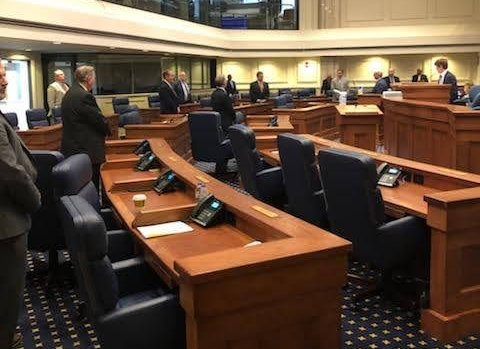
On Tuesday, the Alabama Senate passed legislation that would authorize a supplemental appropriation to pay off the remaining balance the state owes to the Alabama Trust Fund, which was raided almost a decade ago by the Legislature to make up for what was then a significant shortfall in the State General Fund (SGF). Senate Bill 1 (SB1) is sponsored by State Senator Greg Albritton. Albritton is the Chairman of the Senate Finance and Taxation Committee. “This is not even one page,” Albritton said. “This is one paragraph, as we are paying off the Alabama Trust fund.” Sen. Clyde Chambliss said, “I grew up in Prattville. My father taught me that you take care of your debts. You pay off your debts and try not to accumulate debts. Sometimes though, you need a helping hand, and we had that situation during the Great Recession.” “This is part of the historical process to pay off that debt,” Albritton said. “Fortunately, we owe it to ourselves. Thanks to the people that went before us and set up the trust fund. Then we were $250 million in the hole and trying to find money.” “I didn’t want us to gloss over and pass this without pointing out what we have achieved,” Chambliss said. “Frankly, there were ways we could have gotten around this and not pay this.” Albritton said, “It was thought about.” Sen. Rodger Smitherman said, “I am with you 100% for what you are trying to do with this bill.” “We got all this money in the general fund,” said Smitherman. “We got plenty of money. It is about time for us to come up with 10 or 12 million to fund all of our needs for judges. We have got a real-life need for the state of Alabama.” Smitherman said that the judges would pay for themselves by completing the backlog of cases and generating court costs and fines. “We are going to make four times that off the court system if we have the judges in place to hear those cases,” Smitherman said. “I am with you 100% on paying the money back.” “I look forward to all of us seriously addressing that to try to solve the needs problem that exists in all of our circuits,” Smitherman said. “I look forward to voting with you on this bill.” The funds to pay off the debts will be paid with a supplemental appropriation from surplus funds from the 2022 fiscal year that ended on September 30. SB1 passes the Senate by a vote of 33 to 0. The Alabama House passed similar legislation earlier in the day. House Bill 2 (HB2) is sponsored by State Representative Rex Reynolds, who chairs the powerful House Ways and Means General Fund Committee. The bill appropriates $59,997,772 to pay off the remaining debt owed to the Alabama Trust Fund. “This is a good bill. This body knew that this was the time to pay those bills,” Reynolds said. The House passed HB2 104 to 0. Ninety-four members cosponsored the bill. HB2 passed the House 103 to 0. The Senate Finance and Taxation General Fund Committee will meet at 9:00 a.m. to consider an appropriations bill, HB1, to appropriate $1,060,000,000 of American Rescue Plan Act funds. The full State Senate will meet at 1:00 p.m. The Legislature is currently in a special session called by Alabama Governor Kay Ivey to deal with appropriating the ARPA funds. To connect with the author of this story or to comment, email brandonmreporter@gmail.com.
Summer food benefits OK’d for 530K Alabama children

An estimated 530,000 Alabama children who get free or reduced-price school meals are now eligible for food benefits this summer after the school year ends, officials said Tuesday. The Alabama Department of Human Resources said qualifying households will get $120 for each participating student to buy food that is eligible for the Supplemental Nutrition Assistance Program at stores that accept Electronic Benefit Transfer cards. The Summer Pandemic EBT program benefits are expected to begin rolling out in mid-to-late summer. “Inflation has transformed each grocery trip into a balancing act for low-income families struggling to afford food for their children on top of other costs like housing and transportation,” said Alabama Department of Human Resources Commissioner Nancy Buckner in a news release. “Every dollar of support from programs like P-EBT strengthens their spending power and weakens the prospect of hunger while promoting nutritious meals for children.” Summer P-EBT benefits are limited to students who receive free or reduced-price meals under the National School Lunch Program. To become eligible, families may apply by contacting their schools. Applications must be approved by May 16 to qualify for summer benefits. Households with eligible students who received P-EBT benefits previously will access Summer P-EBT benefits on their existing EBT cards. Those who are new to the National School Lunch Program will get EBT cards in the mail. Republished with the permission of The Associated Press.
House passes ARPA funding legislation
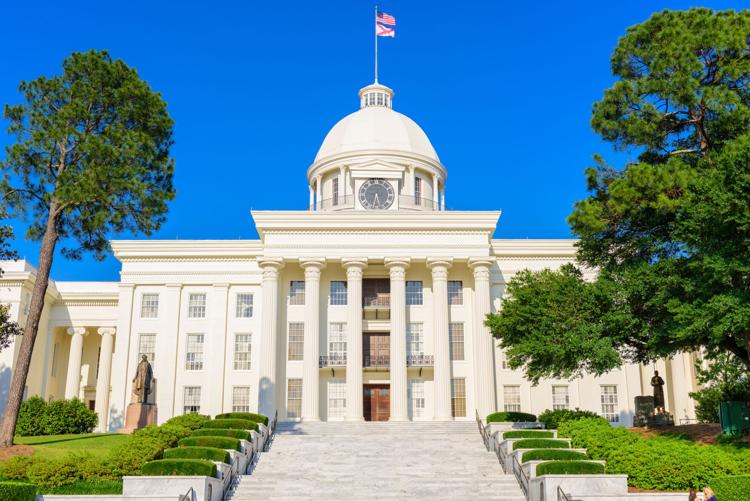
On Tuesday, the Alabama House of Representatives passed the American Rescue Plan Act (ARPA) appropriations legislation – House Bill 1. The legislation, House Bill 1, is sponsored by State Rep. Rex Reynolds, who chairs the powerful House Ways and Means General Fund Committee. Reynolds explained that the state had received approximately $2.1 billion in ARPA funding from the federal government. Half of that money has already been appropriated by the Legislative and is in the process of being allocated by the executive branch to projects across Alabama. This tranche of ARPA money is about $1,060,000. $339,175,000 will go for healthcare needs, including $25 million for Mental health and $9 million for the expansion of telemedicine. $260 million will be used for broadband, including a cybersecurity component. $395 million will go to water and sewer projects. $55 million will be used to compensate state agencies for the negative impacts of the COVID-19 pandemic. The Alabama Department of Labor will get $5 million to recover some of their costs for dealing with the surge in unemployment applications and other costs. $1,179,000 will go for administrative costs of overseeing and allocating the money. Rep. Mary Moore asked if there was sufficient legislative oversight in place. Reynolds said, “The Legislative Oversight Committee gives this body oversight in case they may need to reallocate those funds when the Legislature is not in session.” “There might be a project in my district that is not reallocated,” Moore said. House Minority Leader Anthony Daniels said to Reynolds, “I just came down to give you a compliment, and I appreciate all the hard work you have done in this bill. This has been a great process, and everybody has had an opportunity to be involved in this process.” State Rep. John Rogers expressed concern that a project in his district might be reallocated when he is unavailable. “I may be in Alaska – I may be in Florida laying on a beach drinking a martini,” Rogers said. Reynolds replied, “As part of the ARPA funds when the ARPA funds were allocated, that legislation created that Oversight Committee for the ARPA funds. I think you can feel comfortable in the authority given to that committee.” Reynolds explained, “Executive Budget Office would have to come back in and exercise the executive authority they have under that bill,” if insufficient funds are allocated to a project. “You can go to their website and see the progress of individual projects.” “Huntsville is like Birmingham – they got money coming in that we don’t know about,” Rogers said. “What I want to know is how much they really got that didn’t come through us?” Reynolds said the Oversight Committee “is a 14-member body including budget chairs. It is spelled out in the 2022 legislation that we passed last year.” State Rep. Juandalynn Givan asked, “Could you give me a breakdown of how much is coming to Jefferson County?” “No, I do not have access to that,” Reynolds said. “This legislation we are asking you to pass does not break that down by county.” 63 of the 67 counties have received money already, but four have not. “We have language in this bill that says that those applications should have priority,” Reynolds said. “We would not want to preset that based on county, because you want to prioritize that by need, and one county would not have the same need as another need.” Givan replied, “My folks don’t really care how much went to this or that county. What they want to know is how much of the bacon is coming back to the district. We need to be able to report that back to our people.” Reynolds replied, “The money will not be allocated until after we pass this bill.” Givan said, “I was here in another session, and we appropriated over a billion dollars, including ARPA dollars, for prisons that still are not built yet.” Givan was angry that no ARPA money was appropriated to bail out Birmingham Southern College – a private college in financial distress. “We can’t figure out how to find $37 million for ARPA money for an educational institution, but we could find money to build prisons. Lord knows we don’t need to lose another educational institution in the state of Alabama,” Givan said. Givan complained that public housing communities in Alabama, even in urban areas, still do not have broadband. HB1 passed the House 102 to 3. 71 members cosponsored the resolution. Reynolds was also the sponsor of House Bill 2. This bill appropriates money from supplemental 2022 funds to spend $59,997,772 to pay off the remaining debt owed to the Alabama Trust Fund during the previous decade. “This is a good bill. This body knew that this was the time to pay those bills,” Reynolds said. The House passed HB2 104 to 0. 94 members cosponsored HB2. Both bills now go to the Alabama Senate for their consideration. Speaker of the House Nathaniel Ledbetter told the members before the House adjourned, “Good work today, a great investment in our state. Congratulations.” The Legislature is currently in a special session called by Alabama Governor Kay Ivey last week to address the issue of the ARPA funds. To connect with the author of this story or to comment, email brandonmreporter@gmail.com.
Treasury Department agrees to hand over Hunter Biden files
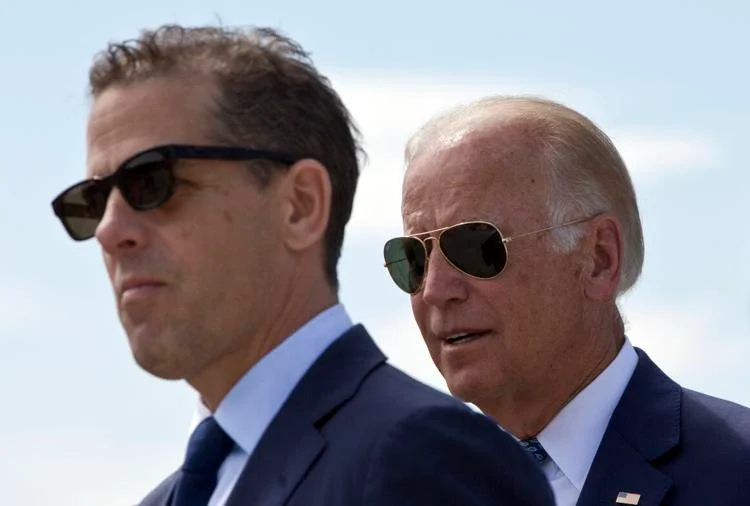
The House Oversight Committee said Tuesday that the U.S. Treasury Department is providing the investigatory committee with access to Hunter Biden’s Suspicious Activity Reports after months of delay. The revelation is the latest chapter in the committee’s ongoing investigation into the president’s son and his associates. The lawmakers concerned with the issue argue the president could be compromised if foreign sources have knowledge of his or his son’s alleged wrongdoing. “According to bank documents we’ve already obtained, we know one company owned by a Biden associate received a $3 million wire from a Chinese energy company two months after Joe Biden left the vice presidency,” House Committee on Oversight and Accountability Chairman James Comer, R-Ky, said. “Soon after, hundreds of thousands of dollars in payouts went to members of the Biden family.” Lawmakers are also looking into Hunter’s associates. They sent letters to James Biden, and Eric Schwerin demanding they hand over documents concerning their foreign dealings. Now, the committee has reportedly issued subpoenas to some of Hunter’s business associates as well. “We are going to continue to use bank documents, and suspicious activity reports to follow the money trail to determine the extent of the Biden family’s business schemes, if Joe Biden is compromised by these deals, and if there is a national security threat,” Comer said. The committee still blasted the Biden administration, saying the Treasury Department delayed in providing access to the files. “After two months of dragging their feet, the Treasury Department is finally providing us with access to the suspicious activity reports for the Biden family and their associates’ business transactions,” Comer said. “It should never have taken us threatening to hold a hearing and conduct a transcribed interview with an official under the penalty of perjury for Treasury to finally accommodate part of our request. For over 20 years, Congress had access to these reports, but the Biden Administration changed the rules out of the blue to restrict our ability to conduct oversight.” Republished with the permission of The Center Square.
Report: Alabama lawmakers should scrap state’s certificate of need program

A report by an Alabama think tank urges lawmakers to scrap the state’s certificate of need program. The report by the Alabama Policy Institute says the program, which requires any health care provider to request permission from state officials to build a new facility, add a new piece of equipment or treatment beds, is one of the most stringent in the nation. Alabama’s Certificate of Need Review Board manages CONs for 17 different types of care, something the policy institute says is costing taxpayers money and limiting health care options. The policy institute report also says that certificate of need laws benefit established providers and limit both competition and innovation. “There is no evidence that free-market competition cannot work to control rising health care costs,” the report read. “CON laws have had the opposite effect of this intent. In areas where providers have been allowed to flourish, customers have been rewarded with an increase in healthcare options and more competitive pricing. “It is time for the Alabama Legislature to repeal CON regulations and unleash the power of the free market.” The report cites research by the free market Mercatus Institute, which showed that per-patient spending in the Yellowhammer State could be reduced by $203 if the certificate of need laws were repealed. The Mercatus Institute also predicted that scrapping Alabama’s certificate of need regime would increase the number of hospitals by 53 (18 of those in rural areas) and add six more ambulatory surgical centers. Alabama is one of 35 states with a certificate of need laws. Florida is the most recent to scrap either partially or all of its regulations. North Carolina is looking to ease some of its certificate of need regulations in exchange for an expansion of Medicaid for 600,000 able-bodied adults. Republished with the permission of The Center Square.
