
Legislature finishes the ARPA special session

On Thursday, the Alabama Senate voted to pass House Bill 1 (HB1), which appropriates $1,060,000,000 in federal American Rescue Plan Act (ARPA) funds for water projects, broadband, healthcare, and other projects. Following Senate passage, the Alabama House of Representatives voted to concur with the changes made by the Senate, and the bill has been sent to the governor. HB1 was sponsored by State Representative Rex Reynolds and was carried by Sen. Greg Albritton. The state has received approximately $2.1 billion in ARPA funding from the federal government. Half of that money has already been appropriated by the Legislative and is in the process of being allocated by the executive branch to projects across Alabama. This second tranche of ARPA money includes about $339,175,000 that will go for healthcare needs, including $25 million for Mental health and $9 million for the expansion of telemedicine. $260 million will be used for broadband, including a cybersecurity component. $395 million will go to water and sewer projects. $55 million will be used to compensate state agencies for the negative impacts of the COVID-19 pandemic. $1,179,000 will go for administrative costs of overseeing and allocating the money. State Sen. Arthur Orr said, “I don’t see what a lot of this has to do with COVID, but I can also see when a train is coming. “We have also got $55 million that can be for food assistance for food banks and nutritional programs,” Orr said. “I appreciate all your hard work on both of these ARPA bills,” Orr said to Albritton. “I think if we never have another ARPA, you would be happy with that.” “It does not fully fund the PEEHIP assistance, which is why the fed passed the original assistance bill,” Orr said. The full Senate voted to adopt the committee amendment introduced Wednesday for Sen. Chris Elliott. Sen. Linda Coleman-Madison offered a floor amendment to the bill. Coleman Madison said, “I would like to know why in-kind contributions was left out. It saves money from contracting out. It saves time. It helps the money go further.” “All of these moneys are under very strict guidelines by the federal Treasury Department,” Albritton said. “If we allow an in-kind contribution that opens up a means of reporting that may become problematic,” Albritton said, “We are talking about the $395 million for water and sewer projects. That is less than 40% of the total ARPA money.” “I ask that you withdraw the amendment,” Albritton said. Coleman Madison said, “I do not want to do anything where the federal government will come back and require a clawback. They want money and not any kind of service. I would like to withdraw my amendment.” Albritton provided a breakdown of the water and sewer dollars in the bill as amended by Elliott’s committee amendment. · $195 million is for water and sewer. · 100 million is water, sewer, and stormwater and may have, but does not require a match. · $100 million in water, sewer, and stormwater and does require a match “Every county in the state will have an opportunity to apply and will actually get funding for a project in their county,” Albritton told the members. “Counties across this state got $495 million directly to counties, and some of them chose to do nothing about stormwater with it,” Senate Minority Leader Bobby Singleton said. “Now they come to us and want us to fix it for them.” State Sen. Rodger Smitherman proposed an amendment to require ADEM to work with a town or county whose application was denied due to an error on the application. “This is simply to help our small towns,” Smitherman said. “If you are in a metropolitan area, you probably have someone who can do this, but our small towns cannot afford that.” “It has already been done,” Albritton objected. “That was in ARPA one. I hesitate to put that language which is already occurring in statute. I am going to vote no on this. We have already added one amendment. I don’t want another amendment one. It raises the possibility of nonconcurrence.” Smitherman’s amendment passed over Albritton’s objection 29 to 1. State Sen. Will Barfoot applauded the members for providing funding for healthcare but urged the members to do more for rural healthcare in the regular session. “I am challenging each of you here to start looking at bills to address healthcare in our rural communities,” Barfoot said. Senate Pro Tem Greg Reed said, “We have to stay focused on rural healthcare.” “We are going to have several pieces of legislation addressing nursing,” Reed said. “A lot of areas in my district, we would not have healthcare if we did not have nurse practitioners.” Reed said that broadband expansion is part of healthcare because of telemedicine. “The technology is advancing tremendously,” Reed said. “That is one way that local hospitals will be able to stay in business. We need to find ways to increase healthcare benefits, particularly in rural places like in my district.” State Sen. Vivian Figures said to Albritton, “Thank you for making sure that the cities and counties that can’t afford to put up a 35% match will be able to do these projects as well.” “I want to thank you for all the work that you have done,” Singleton said to Albritton. “It is a lot of money to spend. We have a lot of needs, but we are beginning to see a difference in the state. We are not going to be able to get it all, but we are knocking a dent in it.” “I wish you could have set aside more of the money for rural hospitals like we did in the first round,” Singleton said. “When that $40 million was cut out for them in the last round, they were ecstatic.” Reynolds asked that the House concur with the Senate changes to HB1. “The second amendment requires that ADEM has to work with a system if an application is denied because of an error,” Reynolds explained. “That system has to have an opportunity to correct that error, and if that application is denied, it has to be
100k jobs ads posted in Alabama in January
The Alabama economy is continuing to boom and would grow even faster if only employers could fill all the positions they have. According to the most recent data collected and analyzed by the Alabama Department of Labor’s Labor Market Information (LMI) Division, there were 100,635 job ads posted in Alabama in January. The five occupations with the most online job ads are Registered Nurses, Retail Salespersons, Supervisors of Retail Sales Workers, Fast Food & Counter Workers, Sales Reps, and Wholesale & Manufacturing, with 16,494 ads placed for just those occupations in January. The HWOL data is compiled from all online job postings in the state, including those posted on the state’s free online jobs database, AlabamaWorks.alabama.gov, and other sources, such as traditional job boards, corporate boards, and social media sites. In January 2023, there were 9,091 job ads with salaries of $70,000 and above. Five thousand seven hundred thirty-one job ads were for positions with salaries in the $50,000 to $69,000 range. There were 8,462 ads for positions with salaries in the $35 to 50,000 range. There were only 10,976 job ads with salaries of less than $35,000. The top two employers posting the most online ads in January were Walmart, with 1,342 posted job ads, and Huntsville Hospital, with 1,314. Among the top 10 were UAB Medicine with 1,211, the University of Alabama at Birmingham with 762, Dollar General with 702, Grandview Medical Center with 663, Auburn University with 623, Baptist Health with 585, Regions with 554, and Walgreens with 482. In 2022, wage and salary employment increased by 54,100 jobs. There were notable gains in the manufacturing sector of +10,400 jobs, the professional and business services sector of +8,700 jobs, and the private education and health services sector of +7,500 jobs, among others. Wages are also rising to keep up with the growing demand. “Additionally, we’re continuing to see positive increases in our wages, meaning more money in Alabamians’ pockets,” said Alabama Department of Labor Secretary Fitzgerald Washington. “This month, we reached one of our highest average weekly wages in history.” Total private wages increased by $30.12/weekly over the year to $1,008.61 in January. This marks the third-highest weekly wages in the history of the state. More Alabamians are employed now than at any point in state history. January unemployment remained at a historically low rate of just 2.6%, as anyone searching for work can quickly find it. On Monday, Gov. Kay Ivey announced that Alabama’s preliminary, seasonally adjusted January unemployment rate was just 2.6%. The state hopes the plethora of available jobs and higher wages will lure more Alabamians into the labor force. The state’s labor force participation rate is just 56.7% which trails the national average of 62.2%. To connect with the author of this story or to comment, email brandonmreporter@gmail.com.
Terri Sewell announces $1.4 Million SMART grant to improve transportation efficiency, safety
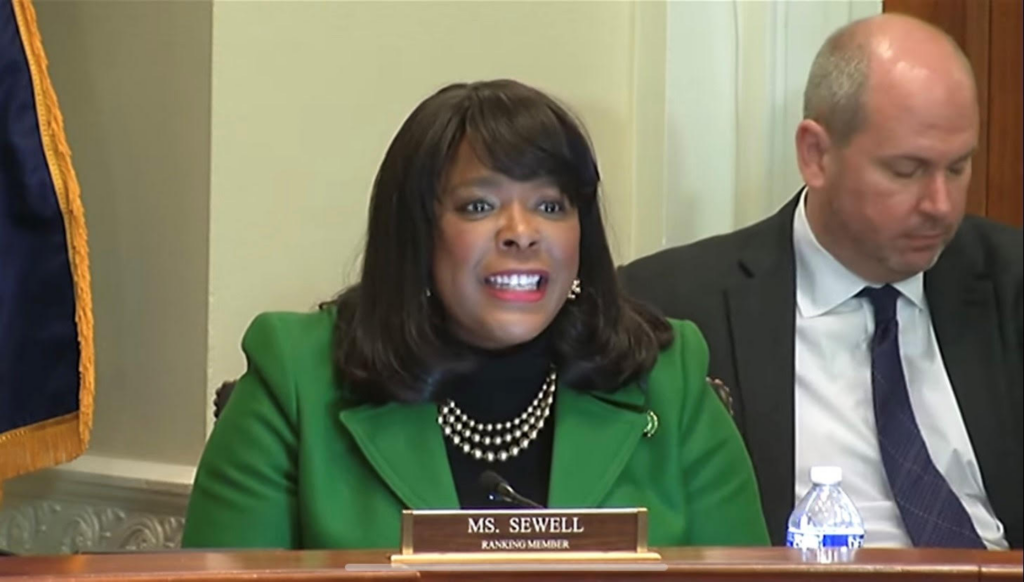
On Thursday, Congresswoman Terri Sewell announced that the Regional Planning Commission of Greater Birmingham will receive $1,492,204 from the Department of Transportation’s Strengthening Mobility and Revolutionizing Transportation (SMART) Grants Program. “As the only member of Alabama’s Congressional Delegation to vote in favor of the Bipartisan Infrastructure Law, I am thrilled to see the outpouring of critical investments like these coming to our communities,” said Rep. Sewell. “I am even more proud that the SMART Program provides an innovative avenue to revitalize our current transportation system. I applaud Secretary [Pete] Buttigieg and the entire Biden-Harris Administration for their continued dedication to investing in a sustainable and more equitable future.” The SMART Program is based on the supposition that planning, prototyping, and team building are critical to advancing the state of the practice for data and technology projects in the public sector. The SMART program is currently appropriated at $100 million a year from fiscal year 2022 through 2026. The SMART Grants Program will fund projects that use technology interventions to solve real-world challenges facing communities today. The SMART program is divided into two stages. Stage 1 is the Planning and Prototyping Grants and determines eligible projects for Stage 2 Implementation Grants. During Stage 1, public sector project leaders should build internal buy-in and partnerships with public, private, academic, nonprofit, and community organizations and community networks to refine and prototype their concepts and report on results. This grant is intended to develop a fully integrated mobility system addressing the longstanding disinvestment in public transportation across Central Alabama. This funding was made possible by the Bipartisan Infrastructure Law. Terri Sewell is the only Democrat in Alabama’s congressional delegation. Since Democrats hold no elected offices statewide in Alabama, and the GOP holds a filibuster-proof majority in both Houses of the Alabama Legislature, she is effectively by far the most powerful Democratic officeholder in Alabama. She is the first Black woman to represent Alabama in the U.S. House of Representatives and the only member of Alabama’s congressional delegation to support President Joe Biden’s Bipartisan Infrastructure Law. Sewell is an attorney and a native of Selma. She presently resides in Hoover. Sewell is in her seventh term representing Alabama’s Seventh Congressional District. To connect with the author of this story or to comment, email brandonmreporter@gmail.com.
Sunbelt Solomon Services to build a $5 million facility in Coffee County

On Tuesday, Alabama Governor Kay Ivey announced that Sunbelt Solomon Services plans to open a new facility in Coffee County to repair and recycle electrical transformers. Sunbelt Solomona is one of the world’s largest providers of commercial and industrial electrical distribution equipment. The Kansas-based company will invest over $5 million in the facility in Elba, creating 50 jobs initially, with more to come as the operation grow. “Sunbelt Solomon is a welcome addition to Alabama’s dynamic business community,” said Gov. Ivey. “The company has made a great choice by locating this new operation in Coffee County, and I know the hard-working people of Elba will help make it a long-lasting success. This is just another reminder that Sweet Home Alabama is a top state for business.” Sunbelt Solomon will base its operation in an existing building at 2450 Industrial Boulevard in Elba, where it will install manufacturing equipment and outfit its office. The facility will officially open its doors for business in June. “Elba is the first greenfield facility we’ve built in several years, reaffirming our strategy of getting closer to our customer base while developing the human capital wherever we operate,” said CEO Gus Cedeño. “Sunbelt Solomon is excited to provide new, well-paying jobs and career paths to the Elba community while continuing the growth and expansion of our business.” Economic developer Dr. Nicole Jones told Alabama Today, “Sunbelt Solomon has over 100 years of combined experience and takes pride in providing comprehensive solutions for utility, industrial, and commercial applications. The company has experience in transformers, regulators, recycling, reclosers, field service, and oil processing. Their latest announcement is an exciting expansion for the Elba plant in Coffee County and is the first greenfield facility Sunbelt Solomon has added to its portfolio in several years.” “We are committed to an excellent customer experience, and expanding our footprint in Alabama brings us closer to many of our valuable customers, increasing our ability to provide fast and dependable services,” Cedeño added. The new job will pay from $18 to $37 an hour. The average salary range for roles offered at Sunbelt Solomon’s new facility is anticipated to be 45% higher than the annual salary range for existing manufacturing roles in Coffee County, according to the Alabama Department of Labor. Sunbelt Solomon also offers its employees a competitive suite of benefits, including health care coverage, annual incentive compensation, and opportunities for advancement. The company’s growth project is expected to boost Elba economically. The city’s population has declined since 1970, and today, the Southeast Alabama city has just 3,379 residents. Greg Canfield is the Secretary of the Alabama Department of Commerce. “Growing companies like Sunbelt Solomon are discovering that Alabama offers abundant opportunities that will help them expand the scope of their operations,” said Sec. Canfield. “I look forward to seeing Sunbelt Solomon put down roots in Elba and watching this operation thrive.” Jesse Quillen is the executive director of the Wiregrass Economic Development Corp. “The new jobs, new capital investment, and new energy provided by Sunbelt Solomon are all incredibly important and attractive for Elba citizens; but, I believe the most important and welcome attribute that Sunbelt Solomon brings to Elba is its tremendous corporate culture, as exhibited throughout this process,” said Quillen. “Sunbelt Solomon’s corporate culture will be a perfect fit in Elba.” Tom Maddox is the Mayor of Elba. “On behalf of the citizens of Elba, we are thrilled to have a new corporate citizen in Sunbelt Solomon,” Maddox said. “The investment and jobs that will be provided bring a great deal of energy and excitement to our community.” To connect with the author of this story or to comment, email brandonmreporter@gmail.com.
House Committee approves bill to pay off debt to Alabama Trust Fund
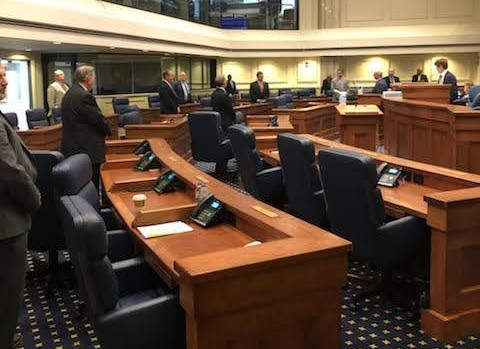
On Wednesday, the Alabama Housed Ways and Means General Fund Committee advanced Senate legislation, SB1, to pay off the final balance on a debt that the Legislature borrowed from the Alabama Trust Fund. Senate Bill 1 is chaired by State Sen. Greg Albritton. State Representative Rex Reynolds chairs the committee. “I expect this to go quick as this committee passed the same legislation as a House Bill last week and passed on the House floor,” Reynolds said. “Since I am carrying the bill, I will turn over this to my Co-Chair, Rep. [Kyle] South.” Rep. Kyle South asked that the bill be brought up. Reynolds said, “SB1 is the exact same bill as HB2. It appropriates $59,975,672 to pay off the balance owed to the Alabama Trust Fund. It is what we committed to under the People’s Trust Act.” The bill received a favorable report, and the committee adjourned. The full House can consider SB1 as early as Thursday. The Senate passed SB1 on Tuesday. The House also passed its trust fund debt bill, HB2, on Tuesday. The Alabama Trust Fund is funded by revenues from the state’s oil and gas leases. It serves as the state’s savings account. A portion (69%) of the investment revenue from the Alabama Trust Fund is used to fund the state general fund (SGF). The remainder of the ATF revenues also funds cities, counties, Forever Wild, and senior services. State SGF revenues dropped from approximately $2.1 billion a year during the Great Recession to $1.6 billion. Once all the reserve fund and federal emergency bailout funds were exhausted, and budget cuts were made, state Legislators were left with the difficult decision. They could release thousands of state prisoners and/or cut benefits for hundreds of thousands of Alabamians who get their healthcare from Alabama Medicaid (which would have resulted in a federal lawsuit). Alabama Medicaid and the Alabama Department of Corrections are the two largest agencies funded by the SGF. Voters in 2014 approved a plan by legislators to raid the $3.2 billion Alabama Trust Fund to avoid devastating general fund cuts The ATF balance was $2,430,232,27 in 2015. As of September 30, 2022, the balance declined by $767 million due to investment downturns to $3.1 billion. The ATF distributed $197.4 million in FY2022. The Senate Finance and Taxation General Fund Committee, chaired by Albritton, met on Wednesday and gave a favorable report to the American Rescue Plan Act appropriations bill, HB1, which appropriates $1,060,000,000 in one-time federal dollars given to the state by Congress. The committee did not take up HB2, so at this point, it appears that SB1 will be the trust fund repayment bill that is best positioned for passage. The full House can now consider the legislation as early as Thursday. The Alabama Legislature is currently in its First Special Session. It is hoped that the body will be able to resume the 2023 Alabama Regular Session on Tuesday, March 21. To connect with the author of this story or to comment, email brandonmreporter@gmail.com.
In nursing homes, impoverished live final days on pennies
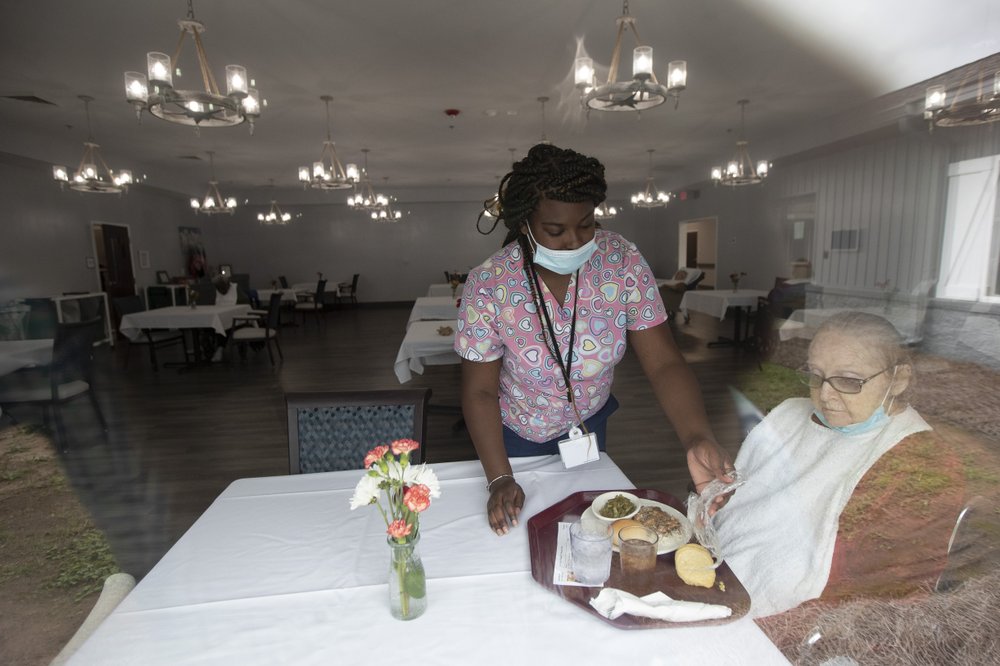
New pants to replace Alex Morisey’s tattered khakis will have to wait. There’s no cash left for sugar-free cookies, either. Even at the month’s start, the budget is so bare that Fixodent is a luxury. Now, halfway through it, things are so tight that even a Diet Pepsi is a stretch. “How many years do I have left?” asks 82-year-old Morisey, who lives in a Philadelphia nursing home. “I want to live those as well as I can. But to some degree, you lose your dignity.” Across the U.S., hundreds of thousands of nursing home residents are locked in a wretched bind: Driven into poverty, forced to hand over all income, and left to live on an allowance as low as $30 a month. In a long-term care system that subjects some of society’s frailest to daily indignities, Medicaid’s personal needs allowance, as the stipend is called, is among the most ubiquitous, yet least known. Nearly two-thirds of American nursing home residents have their care paid for by Medicaid, and, in exchange, all Social Security, pension, and other income is rerouted to go toward their bill. The personal needs allowance is meant to pay for anything not provided by the home, from a phone to clothes to a birthday present for a grandchild. One problem: Congress hasn’t raised the allowance in decades. “It’s really one of the most humiliating things for them,” says Sam Brooks, an attorney for The National Consumer Voice for Quality Long-Term Care, which advocates for nursing home residents and has urged an increase in the allowance. “It can really be a point of shame.” Especially when an individual has no close relatives or no one able to financially help, the allowance can breed striking need. When Marla Carter visits her mother-in-law at a nursing home in Owensboro, Kentucky, the scene feels more 19th-century poorhouse than modern-day America. With just a $40 allowance, residents are dressed in ill-fitting hand-me-downs or hospital gowns that drape open. Some have no socks or shoes. Basic supplies run low. Many don’t even have a pen to write with. “That’s what was so surprising to us,” Carter says, “the poverty.” Medicaid was created in 1965, and a 1972 amendment established the personal needs allowance, set at a minimum of $25 each month. Had it been linked to inflation, it would be about $180 today. But regular cost-of-living increases were not built into the allowance, and Congress has raised the minimum rate only once, to $30, in 1987. It has remained there ever since. Some politicians have tried to fix the problem, including Rep. Jennifer Wexton, a Democrat from Virginia who, in 2019, introduced a bill to raise the minimum allowance to $60 and cement annual increases tied to those for Social Security. It didn’t even get a hearing. “I was shocked,” Wexton says. “It’s about dignity for these people.” Faced with federal inaction, states have taken it upon themselves to raise allowances. Even so, most remain low. A majority of states – 28 – have allowances of $50 or less, according to a state-by-state survey by the American Council on Aging. Just five states grant residents $100 or more each month, including Alaska, which stands alone in offering $200 monthly, the maximum under federal law. Four states – Alabama, Illinois, North Carolina, and South Carolina – remain at the $30 minimum. “As soon as I get it, it’s gone,” says Chris Hackney, a 74-year-old resident of a nursing home in Durham, North Carolina, who spends his $30 monthly allowance on body wash, toothpaste, deodorant, and some items his facility used to provide but has cut back on, wipes and diapers. Down the hall, 56-year-old Janine Cox gets an occasional bag of chips from the vending machine and scrimps to add to the collection plate at church. Her neighbors are even worse off. “It’s like a fight for them to survive another day,” she says. With no financial wiggle room, nursing home residents find what little freedom they have evaporates even more, putting out of reach the chance to take a taxi to see a friend, to get lost in a newly purchased book, or to escape the monotony of the cafeteria with some take-out food. Even after two years of institutionalized life, it is a confounding truth for Morisey. With each $45 allowance he receives, a monthly juggling act begins. Can his razors last a bit longer to put off refills? Can he squeeze a bit more out of the Fixodent tube? Has he cut corners enough to get some aftershave or peanut butter crackers? “It’s the little things,” he says. “You don’t think about these things until you no longer have them.” He is a lifelong Quaker, has always cherished living simply, and accepts his situation with a smile. But it doesn’t seem too much, he says, to ask for a soda. Republished with the permission of The Associated Press.
Judge strikes down Alabama laws against panhandling

A federal judge last week struck down Alabama laws against panhandling, ruling that the statutes are unconstitutional. U.S. District Judge W. Keith Watkins issued the order Friday permanently enjoining the state from enforcing the laws against begging and pedestrian solicitation. The ruling came after the Alabama Law Enforcement Agency conceded that the appellate court ruled similar laws violate a person’s right to free speech. The decision ended litigation filed in 2020 challenging the laws on behalf of people who had been ticketed or jailed for panhandling in Montgomery. Legal groups that filed the lawsuit said the laws criminalized poverty. “The injunction is a victory for marginalized groups that find themselves in tough economic circumstances and in need of help,” Tish Gotell Faulks, legal director for the American Civil Liberties Union of Alabama, said in a statement about the litigation. “Criminalizing the solicitation of charitable donations does nothing to advance public safety. Instead, it multiplies already existing barriers for people experiencing homelessness. This can include unaffordable fines and fees, the loss of their freedom through incarceration, and a criminal record – all of which are obstacles to obtaining housing and economic security.” State lawyers conceded in an earlier court filing that the judge was bound by a decision from the 11th U.S. Circuit Court of Appeals finding such statutes as a violation of free speech rights. “The First Amendment was not originally understood to require the government to permit panhandling on public … even so, that begging is entitled to First Amendment protection is currently the law of this circuit,” state attorneys representing Alabama Law Enforcement Agency Secretary Hal Taylor wrote. Alabama lawmakers in the coming weeks are expected to take up new legislation aimed at preventing people from loitering on public highways, which could be a new avenue to target panhandlers. The bill by Republican Rep. Reed Ingram of Pike Road would increase the penalties for loitering on the side of state highways. “This bill is a public safety bill. We’re going after making the roads safer,” Ingram said. Ingram said he expects to adjust the legislation to spell out that the officer has the option to take the person to a shelter. “We want to find out if this person has mental health issues, drug issues whatever it may be, so we can find a way to help,” he said. Ingram said he expects the bill to be debated by a legislative committee as soon as next week. Republished with the permission of The Associated Press.
Alabama prison system raises officer pay to recruit staff
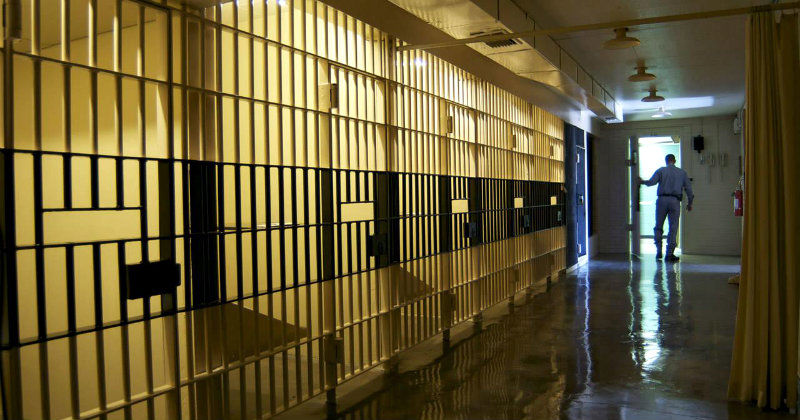
The Alabama prison system is raising pay for correctional officers beginning Thursday in an effort to address an ongoing staff shortage. The starting pay for a correctional officer trainee will rise from a minimum of $33,381 to a minimum of $50,712, with additional pay for those who work at high-security facilities. The starting pay at a medium security facility will be $53,244, and $55,855 at a maximum security facility. “Everybody knows about our staffing challenges, and we hope this will certainly be a good start in remedying those challenges,” Alabama Corrections Commissioner John Hamm told reporters on Wednesday. “This is something that we are excited about because in the tight labor market that we have, we need to be competitive with other law enforcement entities. This makes us competitive.” The Alabama Department of Corrections announced the raises earlier this month. The department has scheduled recruitment events across the state. The pay raises come as the state has seen the number of officers working in state prisons shrink despite a court order to increase staffing. The number of security employees, in positions ranging from cubicle operator to warden, dropped from 2,225 on September 30, 2021, to 1,758 on December 31, according to quarterly reports submitted to the Joint Legislative Prison Oversight Committee. A federal judge last month questioned the state’s lack of progress in complying with his order to increase the number of officers working in state lock-ups. In 2017, U.S. District Judge Myron Thompson found that mental health care in Alabama prisons is so inadequate that it violates the U.S. Constitution’s ban on cruel and unusual punishment. He said understaffing is a root issue of the problem and ordered the state to increase the number of corrections officers. Republished with the permission of The Associated Press.
