
Mike Rogers and James Comer say DOD failed to protect servicemembers private information

On Friday, Chairman of the House Armed Services Committee Mike Rogers and Chairman of the House Committee on Oversight and Reform James Comer released a statement saying that they are “disappointed’ with the Department of Defense for failing to protect servicemember records after receiving a response from the DoD on the matter. “The Department of Defense failed to protect the private information of our servicemembers,” Rogers and Comer wrote. “To publicly rectify this unacceptable mistake, we hoped DoD would provide full transparency in their response – unfortunately, full transparency is not what we received.” “We are extremely disappointed in DoD’s inadequate response to our questions,” Rogers and Comer wrote. “We asked Secretary (Lloyd) Austin for information on all servicemembers who had their records improperly released to the Democrat-aligned research firm Due Diligence Group. However, DoD only provided our committees with answers from the Department of the Air Force, despite public reporting that DDG attempted to gather information from other services.” “DoD’s response did not give us confidence that all services have put safeguards in place to ensure that servicemembers’ private information is not mishandled,” Rogers and Comer stated. “DoD also failed to provide our committees with information on what actions were taken with the individuals involved in the mishandling of servicemember records and if criminal referrals have been made. We will be demanding the Secretary provide full transparency and accountability on this matter. It is imperative the Secretary take every action possible to ensure this egregious incident will never happen again. We will continue to fight on behalf of our servicemembers and their privacy.” This follows recent public reports that the Office of the Secretary of the Air Force (OSAF) improperly released information from several servicemembers’ personnel files to political operatives. The released information includes at least two Members of Congress, reportedly released to an opposition research firm Due Diligence Group that received money from the Democratic Congressional Campaign Committee (DCCC). Congressman Chris Stewart and House Judiciary Committee Chairman Jim Jordan last week sent a letter to U.S. Air Force Secretary Frank Kendall demanding information on the breach of servicemembers’ personal information without their knowledge or consent. “The Committee on the Judiciary and the Select Subcommittee on the Weaponization of the Federal Government are investigating the mass collection and dissemination of information about American citizens by federal agencies,” Stewart and Kendall wrote. “Following reports last fall, Members of Congress, including Congressman Stewart, corresponded with Air Force Inspector General Lieutenant General Stephen Davis regarding the steps his office is taking to investigate the circumstances of this improper release of personnel materials. Recent public reports have disclosed that the Office of the Secretary of the Air Force (OSAF) improperly released information from several additional servicemembers’ personnel files to political operatives. As alleged in the reporting, this is a serious breach of law and servicemember privacy. To advance our oversight and to inform potential legislative reforms, we write to request information about this serious breach of our servicemembers’ personal information.” Mike Rogers is in his eleventh term representing Alabama’s Third Congressional District. To connect with the author of this story or to comment, email brandonmreporter@gmail.com.
Kay Ivey: Paving the road to progress- Four years of Rebuilding Alabama

March 12th marked the fourth anniversary of Rebuild Alabama, possibly the most monumental legislation ever passed in Alabama’s history. Since its enactment, Rebuild Alabama has accounted for record investment across our state. Those investments are represented by 234 projects in all 67 counties, 400 miles of resurfaced roadways, and more than $170 million in state transportation funding awarded to cities and counties. That is what I call real, tangible results. Four years after Rebuild Alabama’s enactment, we have only just begun. More projects are underway and under development, and more transformative announcements will be made in the coming months and years. Our world-class surface transportation system will include four-lane interstate connectors in every county. Highway 411 in Cherokee County, Highway 52 in Geneva County, and Highways 43 and 129 in Fayette and Marion Counties are great examples. Traffic congestion is being addressed to improve working Alabamians’ daily commutes. From Interstate system improvements on I-10 in Mobile County, I-59 in Jefferson County, the Eastern Connector in Etowah County, and I-565 in Limestone and Madison Counties to urban corridors like McFarland Boulevard in Tuscaloosa, traffic capacity is being increased everywhere we drive. As promised, projects of local interest are being prioritized by those who know their county and municipality the best. Local officials are checking off needed projects that simply would not be possible without revenues provided by Rebuild Alabama. That means their citizens will have safer, more efficient routes to school and to work; drives to the grocery store or to visit family are quicker and smoother; and critical healthcare is more accessible. Four years after its enactment, it is clear that Rebuild Alabama’s overall impact extends far beyond just roads and bridges. Driver safety, commercial efficiency, and economic productivity are all aspects of the enhanced quality of life being delivered by Rebuild Alabama. It also tells the world, “Alabama is open for business!” Just as Alabama is making record investments in infrastructure, businesses are making record investments in Alabama. More than $42 billion in new investments and more than 78,000 new jobs have come to our state since I became governor. A robust surface transportation system is critical to support this growth. Many of these companies also rely on the Port of Mobile, one of the nation’s top ten seaports. Rebuild Alabama’s investment in the Port has positively impacted all corners of our state’s economy, and it will continue to do so for years to come. The Port, in many respects, is Alabama’s gateway to the global economy, and I predict that many more Alabama communities will realize its effect. For example, the West Alabama Corridor will provide direct Port access to a portion of our state that is primed for industrial development. As I look in the rearview mirror and reflect on the four-year anniversary of Rebuild Alabama, it is remarkable to think how we addressed an Alabama problem with an Alabama solution. Yes, the progress we have made is commendable. It is certainly worth celebrating. But the road ahead is long, and much work remains undone. Now is not the time to tap the brakes or to take a middle-of-the-road approach. Alabama has a roadmap to prosperity and the means to get us there, so let’s ride in the fast lane, accelerate toward progress, and continue to Rebuild Alabama. Kay Ivey was inaugurated to her second full term as Governor in January.
Alabama Basketball team wins its NCAA tournament game, Auburn loses

The University of Alabama men’s basketball team defeated Maryland 73 to 51 on Saturday in round 2 of the NCAA tournament and advanced to “the Sweet 16.” Cross-state rival Auburn University lost to Houston 64 to 81 in its second-round game. The Crimson Tide men cruised through their second NCAA tournament game. Jahvon Quinerly led all scorers for Alabama with 22 points, 2 rebounds, and 2 assists. He is a 6-foot-1-inch Senior guard from Hackensack, New Jersey. All-American forward Brandon Miller bounced back on Saturday with 19 points after suffering a groin injury in the Tide’s opening-round game and being held scoreless. The six-foot-nine-inch Freshman from Antioch, Tennessee, also had 7 rebounds and 1 shot block. The basketball phenom is projected to be among the top 3 players in this year’s NBA draft. Charles Bediako had 10 points, 10 rebounds, and 1 assist. Bediako is a 7-foot-10-inch Sophomore center from Brampton, Ontario. Mark Sears had 6 points, 5 rebounds, and three assists. Sears is a 6-foot-1-inch Junior guard from Muscle Shoals. Head coach Nate Oats, in his fourth year leading the Tide. He is now 4-2 in NCAA Tournament games in Tuscaloosa. Alabama has appeared in the NCAA Tournament in three of his four seasons as the head coach. This is the second time he has led the Tide to the sweet 16. He lost to UCLA in the regional semifinals in 2021. In the history of Alabama men’s basketball, only Kentucky has won more SEC basketball tournaments than Alabama. Bama is tied for second behind Kentucky in SEC regular season titles. Bama won both the SEC regular season and SEC tournament titles this year. Deep NCAA tournament runs are, however, rare for the Tide. In 2004 Alabama advanced to the elite 8 under Coach Mark Godfrey. The Tide had 5 Sweet 16 appearances under Coach Wimp Sanderson in the 1980s. The Tide entered the tournament as the Associated Press number one team in the country and as the number one overall seed in the tournament. Over 15,000 people packed Birmingham’s Legacy Arena at the Birmingham Jefferson Civic Center on Saturday to watch Alabama defeat Maryland. The Auburn Tigers, a nine seed, lost to Houston, the number-one seed in the Midwest Region. Under the NCAA’s quirky scheduling, that game was also in Birmingham on Saturday. Sophomore Johni Broome led the Tigers in the loss with 14 points, 6 rebounds, 1 assist, and 1 blocked shot. The 6’10” forward is a native of Plant City, Florida. Jaylin Williams had 14 points, 2 rebounds, and 2 assists. The 6-foot-8-inch forward is a native of Mahunta, Georgia. Allen Flanigan had 10 points, 9 rebounds, and 2 assists. The 6-foot 6-inch senior guard is from Littlerock, Aransas. Wendell Green Jr. had 9 points, 2 rebounds, and 4 assists. Green is a 5 foot 11 inch Guard from Detroit, Michigan. The Tide will play San Diego State, a number 5 seed, next. That game is scheduled for Friday at 4:30 p.m. at the KFC Yum Center in Louisville, Kentucky. Alabama is now in the Sweet 16 for the eighth time in the program’s history. If they win their next game, they advance to the elite 8. To connect with the author of this story or to comment, email brandonmreporter@gmail.com.
Katie Britt denounces seizure of Vulcan Materials’ port facility by the Mexican government
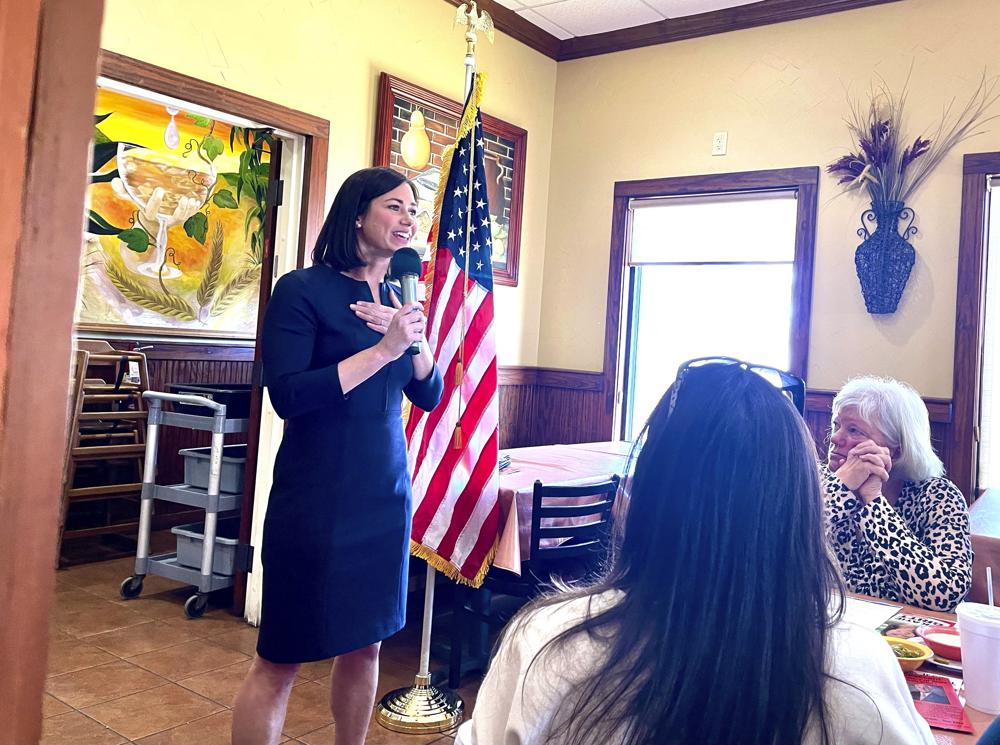
On Sunday, U.S. Senator Katie Britt called the seizure of a Vulcan Materials port facility by Mexican armed forces “unlawful and unacceptable” in a statement. This was in response to the militarized seizure of Vulcan Materials Company’s port facility at Punta Venado in Quintana Roo, Mexico, by forces of the Mexican government. “This forcible seizure of private property is unlawful and unacceptable,” Sen. Britt said in a press release. “It is shameful that this Mexican presidential administration would rather confiscate American assets than the fentanyl killing hundreds of Americans per day. Mexico should be more focused on going after the cartels than law-abiding businesses and hardworking people. President Biden must raise this directly with President López Obrador and assure the American people that this will not be tolerated. The ramifications of this illicit seizure extend into the United States, significantly hamstringing important American infrastructure, energy, and other construction projects that currently rely on Vulcan’s operations in Mexico for materials. My office and I will continue to monitor this situation and ensure this is not swept under the rug.” Early on the morning of March 14, heavily armed Mexican military and police forces breached the facility and confiscated it. A Mexican federal district court on March 16 ordered governmental forces to vacate the premises within 24 hours. However, the property remains under military occupation as of late Sunday night. Senator Britt in February traveled to Mexico City and discussed the increasing illegal aggression by the Mexican government towards Vulcan with Mexican Secretary of Foreign Affairs Marcelo Ebrard. Senator Britt has also addressed the matter with senior U.S. Embassy personnel in Mexico City. Vulcan Materials Company is headquartered in Birmingham, Alabama. The company owns a string of quarries providing building materials. Most of Vulcan’s facilities are in the U.S. except for two large quarries and marine terminals on Vancouver Island in British Columbia, Canada, and Mexico’s Yucatán Peninsula. Vulcan is the nation’s largest producer of construction aggregates—primarily crushed stone, sand, and gravel—and a major producer of aggregates-based construction materials, including asphalt and ready-mixed concrete. The company reported revenues of $7.3 billion last year. The seizure was due to a dispute over the use of the port facility by Mexican aggregate maker CEMEX. Vulcan Chairman and CEO J. Thomas Hill wrote to the Mexican ambassador Esteban Moctezuma Barragán, “On Tuesday, March 14, at approximately 5:30 am local time, heavily armed Naval forces, state police, and special investigative forces answering to the state prosecutor, along with CEMEX personnel, arrived at the gates of Vulcan/Calica property at Punta Venado in Quintana Roo. They informed the unarmed Vulcan security guards that they had an order to bring a CEMEX vessel into the port to unload cement. CEMEX, the military, and the police forced entry into our private property. They did not possess or present at that time any court order, warrant, or other official justifications for the action. As of today, March 16, we have not been presented a single legal document, court order, or warrant justifying or ordering this act. Government forces and CEMEX personnel continue to illegally occupy Vulcan’s private property, as CEMEX unloads its ship supported by armed military and police forces. I am writing to request that your government immediately order its forces and officials to leave our private property. The government’s participation in this gross violation of our property rights is yet another example of the government’s arbitrary and illegal treatment of Vulcan and its investments in Mexico. This occupation must cease immediately.” Britt is the ranking member of the Homeland Security Subcommittee of the Senate Committee on Appropriations. She is in her first term representing Alabama in the U.S. Senate. To connect with the author of this story or to comment, email brandonmreporter@gmail.com.
Katie Britt and colleagues introduce legislation to require federal agencies to publish their regulatory guidance on the internet
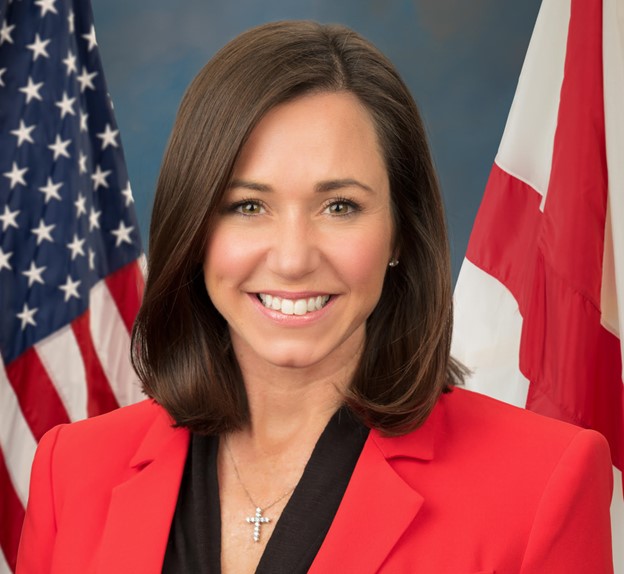
U.S. Senators Katie Britt and Ron Johnson and 14 of their colleagues reintroduced the Guidance Out of Darkness (GOOD) Act, which requires federal agencies to publish their regulatory guidance on the internet in an easily accessible location. Sponsors claim that the GOOD Act will enhance the transparency of guidance documents issued by government agencies, helping all entities — including small businesses, workers, and households — to comply with regulations. The bill was advanced by the Senate Homeland Security and Governmental Affairs Committee by voice vote twice and passed the House in 2018. “Sunlight is often the best disinfectant, and that’s exactly what the Biden Administration’s runaway red tape regime needs,” said Sen. Britt. “Unelected federal bureaucrats should not be taking actions that affect hardworking Americans’ lives without robust transparency and the opportunity to hold them publicly accountable. This is a commonsense measure that my colleagues on both sides of the aisle should support.” “As an advocate for transparency and accountability in government, I am proud to reintroduce the Guidance Out of Darkness Act. This bill reduces the regulatory burden placed on small businesses, workers, and households by holding federal agencies accountable,” stated Sen. Johnson. “Increasing transparency and simplifying the regulatory process will further economic growth for all Americans. I look forward to working with my colleagues to advance this bill and provide the American people with the transparency they deserve.” Senators Britt and Johnson were joined on the legislation by Sens. Mike Braun (R-Indiana), Kevin Cramer (R-North Dakota), Ted Cruz (R-Texas), Joni Ernst (R-Iowa), Lindsey Graham (R-South Carolina), James Lankford (R-Oklahoma), Mike Lee (R-Utah), Cynthia Lummis (R-Wyoming), Rand Paul (R-Kentucky), Rick Scott (R-Florida), Thom Tillis (R-North Carolina), Bill Hagerty (R-Tennessee), Marsha Blackburn (R-Tennessee), and Mitt Romney (R-Utah). “Transparency in government is crucial. That is why I am proud to join Senator Ron Johnson in sponsoring the GOOD Act. People deserve to know just what government agencies are up to, especially when it comes to their hard-earned tax dollars,” said Sen. Scott. “This bill will bring commonsense reform and shed light on how the government operates—which is something we should all support.” “People in Wyoming deserve transparency from the federal government, which is why I’m joining my colleague Senator Ron Johnson in introducing the Guidance Out of Darkness Act,” said Sen. Lummis. “This bill would require federal agencies to post regulations and guidance to the agency website, making it easy for small businesses, workers, and the people of Wyoming to know about the federal regulations that impact their daily lives.” “Unlike other regulatory actions, agency guidance documents are not required to undergo the public notice and comment process. James Madison warned that our laws would be of little use if they can ‘be repealed or revised before they are promulgated, or undergo such incessant changes, that no man who knows what the law is today, can guess what it will be tomorrow,’” said Sen. Lee. “I’m proud to cosponsor Sen. Johnson’s legislation to reduce the regulatory burden placed on small businesses, workers, and American households and increase transparency for all the entities needed to comply.” Navigating through all of the regulations promulgated by federal agencies and keeping up to date with all of the periodic changes to guidance as well as administrative reinterpretations and changes of previous rules can be very difficult for businesses operating in those regulated agencies. Katie Britt is serving in her first term in the U.S. Senate after her election in November. To connect with the author of this story or to comment, email brandonmreporter@gmail.com.
Senate leaders reflect on successful special session
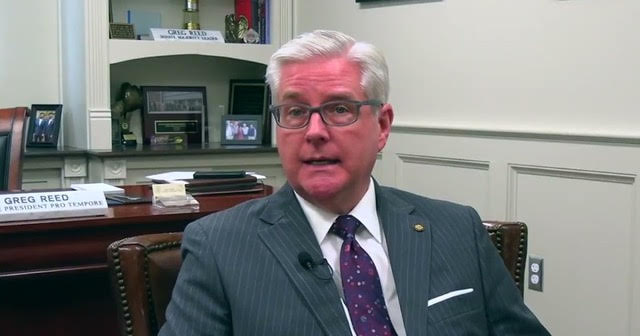
On Thursday, the Legislature passed, and the Governor signed both bills, which were the objectives of the First 2023 Special Session. As the Governor requested in her state of the state speech on March 7, the Legislature appropriated $1,060,000,000 in American Rescue Plan Act (ARPA) funds in House Bill 1. The Legislature also appropriated money to finally repay the money borrowed from the Alabama Trust Fund (ATF) to make up for a shortfall in the state general fund (SGF) during the Great Recession. “It’s been our responsibility at the state level to appropriate this $1.1 billion for the benefit of the people of Alabama,” said State Senate President Pro Tempore Greg Reed. “We have been able to move through that process this week. All the membership has been very involved and engaged.” Priorities included investing in sewer and water infrastructure, broadband internet expansion, and supporting hospitals, nursing homes, and other health care providers across the state. “One of the things that we wanted to look at, of course, was hospitals, nursing homes, those that were providing care during the pandemic, which was very important. They had a lot of reimbursable requirements,” Reed explained. “Also looking at water, sewer projects. Basically, if you’re looking to invest in Alabama, you’re trying to put infrastructure in the ground that’s going to be there for the next 30, 40, 50 years. That is going to be very important for the people of our state. We did that in the first round of ARPA. We are doing that again. There is going to wind up being hundreds of hundreds of millions of dollars of infrastructure investment in our state.” The plan allocates $400 million to water and sewer projects, $339 million to healthcare costs, and $260 million to expand access to broadband internet. The remaining $55 million in funding will be eligible for those that serve food banks, child welfare, long-term housing, victims of domestic violence, mental health disorders, and senior citizens. The healthcare funding will be divided to include $100 million for hospitals, $100 million for nursing homes, $5 million for state veterans’ homes, $40 million for the state employees’ health insurance program, and $40 million for the public education employee’s health insurance program. Mental health services will receive $25 million, while $9 million will promote telemedicine. $20 million will go to a voluntary clinical trial and healthcare research program. “Broadband internet access, which is a huge issue for Alabamians. Trying to make sure that everybody across that state can access the internet,” Reed said. “That helps us in quality of life, but also as far as topics of economic development and healthcare with telemedicine; and of course, as we learned during the pandemic, our children’s education sometimes needs to be done from home, and that gives us the opportunity to grow that opportunity as well. We worked diligently to make sure this is a bipartisan effort. There are elements all across Alabama, no matter where you are, that will benefit from these ARPA funds.” “I make it my business to work closely with my colleagues in the Minority Caucus,” Reed stated. “I have a great friendship with Senator [Bobby] Singleton, who is my minority leader. He and I are great buddies. We work closely and carefully together. This is a topic, sometimes we disagree, as you would expect, but in this instance, there was a lot of collaboration, cooperation where we thought Alabama would benefit the most in being able to use them the most, so I am proud of that.” The Senate amended the House version of the bill to allow a portion of the money for water and sewer projects to be used for stormwater drainage projects. Of the water and sewer funds, up to $100 million are to be awarded based on a ranking system established by the Department of Environmental Management that includes a factor for the water and sewer needs of growing communities. State Senator Greg Albritton chairs the Senate Finance and Taxation General Fund Committee and carried both bills in the Senate. “We believe that we have allocated these funds to the best of our ability at the guidance of the Federal government,” said Albritton. “Water and sewer, broadband expansion, and healthcare were the backbone of this round due to no lost revenues. Our foremost intent was to make smart and intuitive investments in these critical infrastructure areas that will pay dividends for generations to come.” The Legislature passed Senate Bill 1, which transfers $59.9 million from the SGF budget to the ATF. The ATF was created as a ‘rainy day’ account to be used only in times of fiscal crisis and is funded by royalty payments that are received monthly from oil and gas companies. In 2012, the ATF transferred $437 million to the SGF to help with proration. The financial crisis that the Alabama Legislature found itself in after the Great Recession decreased SGF revenues by $300 million a year. “During those years, amid a national recession, we had a significant shortfall in funds,” Albritton explained. “It was the Legislature’s responsibility to fill the gap of the General Fund and keep Alabama operational. To overcome these critical shortfalls, the Legislature went to the Alabama taxpayers to seek their approval through a constitutional amendment to authorize the use of monies from the Alabama Trust Fund.” In 2013, the Legislature took action to repay the debts with The People’s Trust Act which implemented a schedule of repayments of the amounts transferred from the ATF. With the assistance of the Deepwater Horizon BP Settlement Funds and the State of Alabama’s annual disbursements, the total amount repaid to the ATF to date is $377.3 million. This one-time appropriation from surplus general fund dollars from the fiscal year 2022 will pay off that debt. “This final payment to the Alabama Trust will make us ‘debt-free’ and fulfills our obligation to the citizens we represent,” stated Sen. Albritton. “When this money was initially borrowed, we made a promise and commitment to pay it back. I am glad to say that due to our fiscal conservative
New Construction: Alabama’s new $975 million prison in Elmore County

A panel of state officials approved a resolution to set a new price of $975 million for constructing the new prison in Elmore County. Lawmakers will have to authorize more funding during the legislative session to fill that gap, reported WTVY. Elmore County is the home to four super prisons just in the state of Alabama alone. Elmore County Commission Chairman Troy Stubbs stated, “The prisons employ an estimated 700 people, with an annual payroll of about $30 million.” The passing of this resolution to increase the spending limit for the construction of this new super prison has received extensive backlash from many lawmakers in Alabama. Rep. Chris England tweeted, “Actual prison construction hasn’t even started yet but we are already up to a billion dollars. We haven’t even started talking about paying for the second prison yet. Add this to the billion dollars we are spending on a prison healthcare contract. This is not sustainable.” As of 2022, Alabama spends $610 Million on mass incarceration, nearly a quarter of the state’s general fund. Many question why the state is spending so much on prisons and not putting that money into children’s education to prevent incarceration in the future. For more information about the Alabama Department of Corrections, click HERE. To connect with the author of this story or to comment, email beniraeharmony@gmail.com.
Tommy Tuberville and colleagues introduce bipartisan legislation to encourage Americans to pursue skills training and credentialing programs
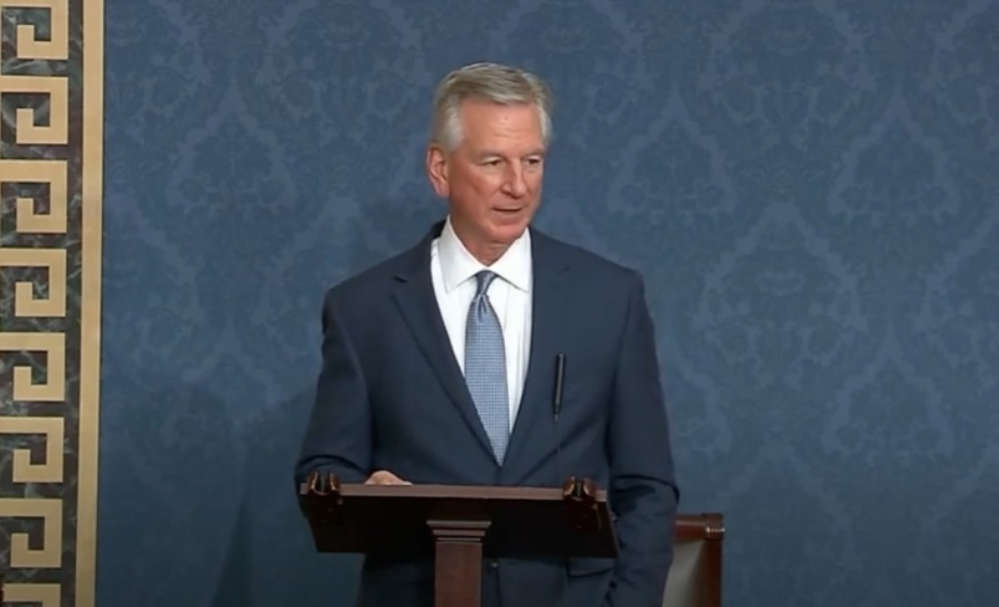
U.S. Senator Tommy Tuberville (R-Alabama) joined a group of bipartisan colleagues to reintroduce the Freedom to Invest in Tomorrow’s Workforce Act. The legislation would support economic growth and workforce development by allowing Americans to use ‘529’ education savings accounts for skills training, credentialing, and certification programs. Under current law, workers and their families can only use ‘529’ accounts to pay for college, university, and vocational school expenses. “During my four decades as a coach and educator, I met many students with unique skills they learned and applied outside of a traditional classroom setting,” said Sen. Tuberville. “Our economy cannot grow without skilled workers, and it’s important we incentivize Americans to pursue careers that both align with their interests and fill crucial gaps in our workforce. Not all of those valuable careers require college degrees. This legislation allows savings accounts set aside for education to be applied to other forms of training and certification.” The legislation is cosponsored by U.S. Sens. Amy Klobuchar (D-Minnesota), Mike Braun (R-Indiana), Tammy Duckworth (D-Illinois), Susan Collins (R-Maine), Dianne Feinstein (D-California), Joe Manchin (D-West Virginia), Martin Heinrich (D-New Mexico), and Peter Welch (D-Vermont). “Skills training and development programs help provide people with the tools and resources they need to succeed in our economy,” said Sen. Klobuchar. “By allowing workers to use their ‘529’ educational savings to pay for additional training and certification, our bipartisan legislation will enable more Americans to access and benefit from these valuable programs.” “Every high school student in America needs to know that you don’t necessarily have to go to college to have a great career,” said Braun. “By expanding opportunities and access to skills training programs, and letting Americans use their ‘529’ education savings to pay for it, we can address the nationwide skills shortage and fill American jobs,” said Braun. Tuberville spent four decades working with young adults as a coach and educator. Now he is a vocal advocate for improving workforce development and skills training throughout the United States. Tuberville has argued that career and technical education programs like dual enrollment and apprenticeships should be considered respectable paths to opportunity, not second-rate. As the baby boomers leave the workforce, many industries, including trades, are struggling to fill the void. According to a study by the American Action Forum, over the next decade, the USA could face a shortage of about 765,000 needed workers with the skills that come from an associate degree or some college. The figure for workers needing a bachelor’s degree or higher is about 8.62 million. This translates to about 5.6 percent of the estimated 2029 labor force. According to their report, Alabama has a projected shortage of 43,000 credentialed/associate degree workers and 129,000 four-year college graduates and higher. The health sector is already feeling shortages of 2-year nursing graduates (ADNs), 4-year nursing graduates (RNs), doctors, and specialists. Tommy Tuberville is in his first term representing Alabama in the United States Senate following a successful coaching career. He is a member of the Senate Armed Services, Agriculture, Veterans Affairs, and HELP Committees. To connect with the author of this story or to comment, email brandonmreporter@gmail.com.
Rep. Mike Rogers and colleagues warn that Russians are helping China obtain plutonium
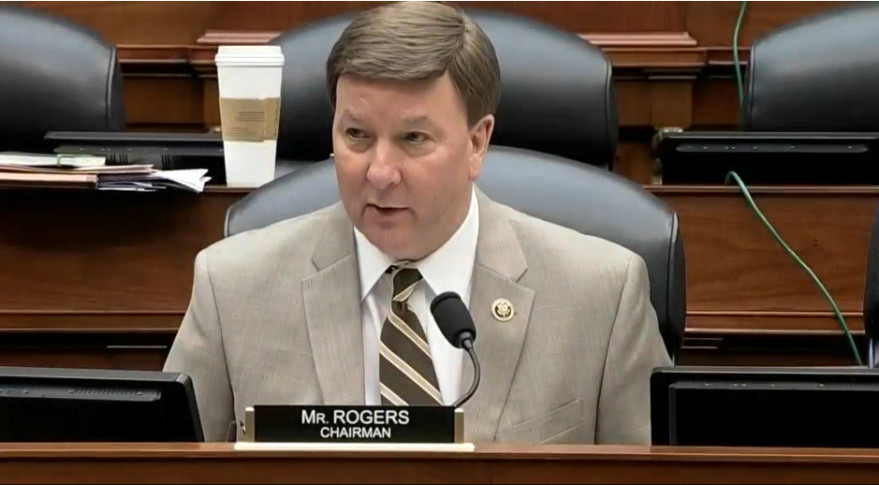
On Thursday, House Armed Services Committee Chairman Mike Rogers, House Foreign Affairs Committee Chairman Michael McCaul, and House Permanent Select Committee on Intelligence Chairman Mike Turner urged National Security Advisor Jake Sullivan, Secretary of State Antony Blinken, Secretary of Defense Lloyd Austin, Secretary of the Treasury Janet Yellen, Secretary of Energy Jennifer Granholm, Secretary of Commerce Gina Raimondo, and Director of National Intelligence Avril Haines, to utilize the full application of sanctions, export controls, and diplomacy, to hinder the nuclear cooperation between Russia’s Rosatom and China. In the letter, Rogers and the other Chairmen wrote, “Russia’s state-owned nuclear energy corporation, Rosatom, is helping the People’s Republic of China (PRC) acquire enough weapons-grade plutonium to fuel its strategic nuclear breakout. Beyond fueling the PRC’s strategic nuclear breakout, then-U.S. Strategic Command commander Admiral Charles Richard called “breathtaking,” Rosatom helps fuel Putin’s war efforts in Ukraine. We call on the Administration to view this cooperation for what it is, a direct threat to U.S. security and more evidence that Russia and China are working in tandem against the United States. The Administration should use all tools at its disposal to stop Rosatom and the PRC’s dangerous cooperation.” “Despite these malign activities, Rosatom’s position in the global market is only getting stronger,” Rogers et al. wrote. “The longer we wait to act, the more difficult it will be to address Rosatom’s nefarious and malign dealings. Putin uses these funds to fund his war machine and keep his favorite weapons programs on schedule. In short, every dollar and euro that Rosatom brings in directly finances the death and destruction we see in Ukraine, China’s nuclear weapon expansion, and is a direct threat to the American way of life.” The chairmen say in the letter is based on “Our classified correspondence from earlier this year.” “Russia’s role in China’s nuclear energy program is well documented,” the Chairmen wrote. “Rosatom opened an office in Beijing in 2016 and partnered extensively with the PRC’s China National Nuclear Corporation (CNNC) on major projects worth billions. On May 19, 2021, Xi Jinping and Vladimir Putin tuned in via video link to witness the commencement ceremony of two of the countries’ major nuclear energy cooperation projects, the Tianwan Nuclear Power Plant and Xudabao Nuclear Power Plant.” “Rosatom now appears to be supplying equipment and highly enriched uranium (HEU) for the PRC’ CFR-600 sodium-cooled fast breeder nuclear reactors, which will produce plutonium, fissile material critical to the PRC’s nuclear breakout,” the Chairmen wrote. “Russian deliveries of HEU to the PRC are slated to begin this year. The Department of Defense’s 2022 report to Congress on the Military and Security Developments Involving the People’s Republic of China noted the key role that increased weapons-grade plutonium production is key to the PRC nuclear program, stating: “The PRC is also supporting this expansion by increasing its capacity to produce and separate plutonium by constructing fast breeder reactors and reprocessing facilities.” The DoD report also cites the CFR-600 reactors and notes that each will be capable of producing “enough plutonium for dozens of nuclear warheads annually.” This buildup puts the PRC in violation of Article VI of the NPT, requiring states to make good-faith efforts to cease an arms race and to engage in good-faith arms control negotiations. Make no mistake, the PRC and Russia’s actions constitute an acceleration of their ongoing arms race.” According to the U.S. Intelligence National Threat Assessment, “China is building hundreds of new ICBM silos.” “Moscow continues to develop long-range nuclear-capable missile and underwater delivery systems meant to penetrate or bypass U.S. missile defenses,” said the report. “Russia is expanding and modernizing its large, diverse, and modern set of nonstrategic systems, which are capable of delivering nuclear or conventional warheads because Moscow believes such systems offer options to deter adversaries, control the escalation of potential hostilities, and counter U.S. and allied conventional forces.” In response to China and Russia’s modernization of their strategic forces, including the development of hypersonics, the U.S. is rushing to deploy hypersonics. The U.S. Air Force is expected to deploy Air-launched Rapid Response Weapon, a boost-glide vehicle, as soon as this fall. Russia has begun deploying its conventionally armed Kinzhal hypersonic missiles in Ukraine. Kyiv says that it is unable to defend itself against the strikes. Rogers is in his eleventh term representing Alabama’s Third Congressional District. To connect with the author of this story or to comment, email brandonmreporter@gmail.com.
