
Katies Britt joins bipartisan group of colleagues questioning Federal Reserve’s actions in Silicon Valley Bank crisis
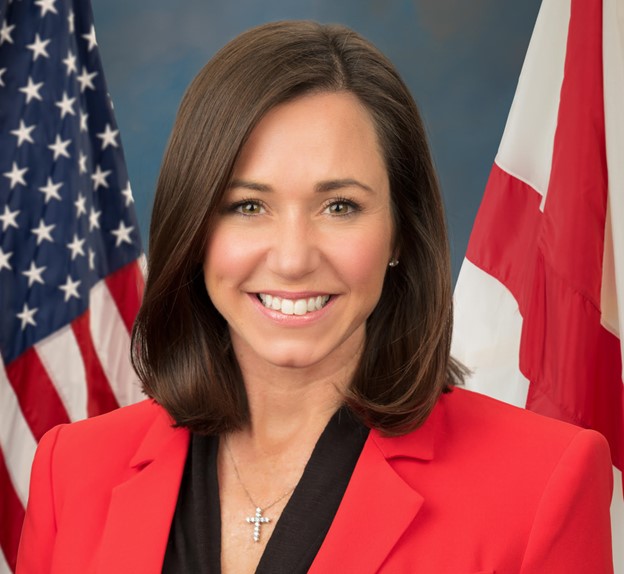
On Monday, U.S. Senator Katie Britt joined Senators Kyrsten Sinema, Thom Tillis, and a bipartisan group of Senators questioning the Federal Reserve its’ oversight of troubled Silicon Valley Bank before the bank’s failure. The Sens. claim that the Federal Reserve missed clear warning signs – including bank leadership’s failure to appropriately manage customer deposits. That it missed as part of its responsibilities to conduct oversight and examinations ahead of Silicon Valley Bank’s collapse. “SVB is a clear case of regulators refusing to do their job despite the fact that all of the red flags were there,” said Sen. Britt. “The Fed failed to use the tools in their toolbox to prevent what we saw in recent weeks, and I want to know why. Alabamians don’t just want answers, they deserve answers. And I, for one, will not stop until we get them.” “It is gravely concerning that retail participants, utilizing only publicly available information, were able to identify clear and compelling examples of financial mismanagement and asset over-concentration at SVB, while the Fed, which can draw even deeper from non-public supervisory information, was unable to ascertain a similar conclusion,” the Sens. wrote in their letter. “The fact that the San Francisco Fed, among other regulatory agencies, found no reason to take appropriate regulatory action or even investigate SVB further in the months, weeks, and days prior to the bank’s collapse must be addressed in a manner that restores public confidence in Fed supervision.” “Safety and soundness is the cornerstone regulatory principle of the U.S. banking system, and it is important we assess what went wrong at SVB to ensure future stability in the U.S. financial services sector. Specifically, we support any efforts that will provide further information on all relevant risks, actions, and inactions – taken by SVB and by regulators, supervisors, and examiners – that contributed to this failure,” the Sens. wrote. “It is gravely concerning that retail participants, utilizing only publicly available information, were able to identify clear and compelling examples of financial mismanagement and asset over-concentration at SVB, while the Fed, which can draw even deeper from non-public supervisory information, was unable to ascertain a similar conclusion. The fact that the San Francisco Fed, among other regulatory agencies, found no reason to take appropriate regulatory action or even investigate SVB further in the months, weeks, and days prior to the bank’s collapse must be addressed in a manner that restores public confidence in Fed supervision. We look forward to evaluating the results of your review, particularly with respect to the robustness of Fed supervision and examination of SVB.” Britt joined Sinema and Tillis in cosigning the letter. Also cosigning were Sens. John Hickenlooper (D-Colorado), Kevin Cramer (R-North Dakota), Chris Murphy (D-Connecticut), Mike Rounds (R-South Dakota), Cynthia Lummis (R-Wyoming), Bill Hagerty (R-Tennessee), Catherine Cortez Masto (D-Nevada), J.D. Vance (R-Ohio), and Michael Bennet (D-Colorado). There are media reports that federal regulators knew about the problems at SVB for more than a year, and yet they hesitated to act. The Wall Street Journal reported that federal bank regulators knew Silicon Valley Bank was a troubled bank as early as 2019. In 2021, the Federal Reserve cautioned the bank about significant vulnerabilities in the bank’s containment of risk. SVB had a uniquely concentrated customer base of venture capital funds, venture investors, and start-ups, many of whom have or have had financial relationships or business partnerships with one another. That customer base includes a significant level of financial interdependency that potentially increased risk. The Fed identified the risks to the bank, yet SVB did nothing to mitigate any of the risks. The Federal Reserve has already announced an internal investigation into its regulatory oversight, supervision, and examination of Silicon Valley Bank. The Senators urged that as part of this investigation, the Fed should focus on the role of concentration risk in the bank examination process and review the financial arrangements between Silicon Valley Bank and its customers to determine their impact on the bank’s collapse. Katie Britt is a member of the Financial Institutions and Consumer Protection Subcommittee of the Senate Committee on Banking, Housing, and Urban Affairs. To connect with the author of this story or to comment, email brandonmreporter@gmail.com.
Gary Palmer and Tommy Tuberville condemn Mexican takeover of Vulcan Materials Port
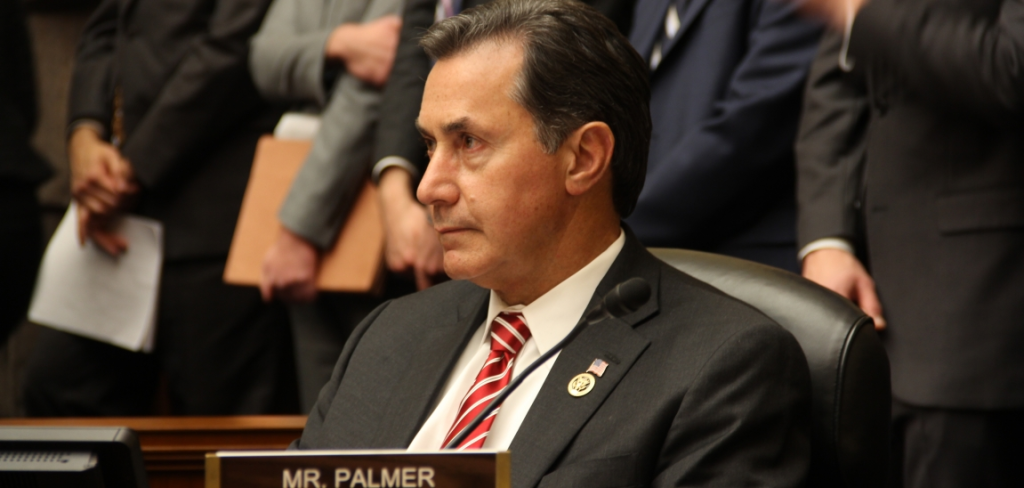
U.S. Senator Tommy Tuberville and Congressman Gary Palmer both Tuberville and Palmer both issued statements on Monday denouncing the Mexican military’s takeover of a Vulcan Materials port in the Yucatan. The Mexican Navy and police forces seized the Vulcan Materials Company owned port facility in Mexico’s Quintana Roo state last week. Both Tuberville and Palmer condemned the seizure that has been ruled illegal by a Mexican District Court. “This armed takeover of Vulcan’s property shows just how corrupt the Mexican government has become,” said Rep. Gary Palmer. Birmingham-based Vulcan Materials Company is America’s largest supplier of construction aggregates, including gravel, sand, and crushed stone. The company also markets ready-mix cement products and asphalt. Most of the company’s quarries are in the United States, but it also owns a facility in Quintana Roo, Mexico, and one in Canada. “For more than 30 years, Vulcan Materials Company has operated a limestone quarry in Mexico that has created good jobs both in Mexico and in Alabama,” Sen. Tuberville explained. “Yet time and again, President [Andrés Manuel] López Obrador and the Mexican government have undermined Vulcan’s ability to operate in Mexico. Last year, I urged President [Joe] Biden to confront President López Obrador about the Mexican government’s aggression toward Vulcan Materials. As usual, President Biden buried his head in the sand. President Biden’s failure of leadership has only emboldened Mexico to continue taking hostile action against Vulcan that puts employees at risk and jeopardizes our supply chains in the southeast region of the United States. The illegal seizure of Vulcan’s port facility is just the latest example of the Mexican government exploiting President Biden’s weakness, and the situation will only get worse until the President addresses it head on.” Last May, Sen. Tuberville sent a letter urging President Biden to take action against aggression from Mexican President López Obrador after the Mexican government ordered Vulcan to shut down quarrying and extraction operations on one of its three active mining parcels, despite its owning the property and possessing all the necessary permits for lawful operation. Tuberville also spoke about the issue on the floor of the U.S. Senate, where he warned how the Mexican government’s actions against Vulcan Materials Company could potentially disrupt international supply chains. “This is a gross abuse by the Mexican government to which President Biden must immediately respond in the strongest possible terms,” Rep. Palmer stated. The unjust takeover of a private American enterprise should cause every American company to reconsider locating in Mexico. If the Mexican government can do this to one company, they can do it to all. The Biden Administration should immediately respond to this assault against an American company and demand the Mexican government withdraw from the Vulcan Materials facility. It is essential the Biden Administration acts to protect America’s interests, or it will risk other actions against American companies.” The armed takeover of the Vulcan facility last Tuesday stems from a dispute between Vulcan and Mexican-based cement company CEMEX over use of the facility. The agreement for CEMEX to use the facility expired in December. CEMEX employees accompanied the security forces last week during the unlawful takeover of the Vulcan port terminal. CEMEX needed to use the facility to unload one of its ships. “We are shocked in Cemex and in the Mexican government entities that supported this reckless and reprehensible armed seizure of our private property,” Vulcan said in a statement. The Mexican government shut down Vulcan’s Mexican quarries last May, claiming ecological damage. While headquartered in Monterrey, Mexico, CEMEX operates on four continents and in 50 countries, including the U.S. Sen. Katie Britt (R-Alabama) denounced the actions of the Mexican government in a statement on Sunday. Congressman Palmer is in his fifth term representing Alabama’s Sixth Congressional District. Tuberville is in his first term in the U.S. Senate. To connect with the author of this story or to comment, email brandonmreporter@gmail.com.
Legislature returns for session on Tuesday

Both Houses of the Alabama Legislature will be in session on Tuesday for Day 2 of the 2023 Alabama Regular Legislative Session. The regular session started on March 7, but Alabama Governor Kay Ivey called for a special session during her state of the state address for Legislators to appropriate the second tranche of American Rescue Plan Act (ARPA) funds as well as to appropriate funds to repay the remaining balance of a debt owed to the Alabama Trust Fund. Both bills were passed by the Legislature and signed by the governor. Gov. Ivey declared the special session a success. The Legislature declared an end to the 2023 First Special Session on Thursday, allowing the legislators to return to the business of the regular session. The full Alabama House of Representatives will go into session at 1:00 p.m. on Tuesday. The Alabama Senate will follow with its session at 3:30 p.m. Both sessions can be viewed on the live stream at the Legislature’s website. 174 bills have already been pre-filed by legislators ahead of the 2023 regular session. Many of those bills will be in committee on Tuesday and Wednesday. Alabama Today has already previewed 30 of those pre-filed bills. It takes five legislative days to pass a bill on to the governor, and this is only the second legislative day, so no bills will be ready to go to the governor this week. More bills will be introduced this week. The Legislature also will be holding committee meetings on Tuesday. The Senate County and Municipal Government Standing Committee meeting will meet Tuesday at 1:30 p.m. in Room 325 of the Statehouse. The Senate Agriculture, Conservation, and Forestry Standing Committee meeting will also be held at 1:30 p.m. The Select Joint Committee on Reapportionment will meet in Room 317 at 2:00 p.m. The Senate Education Policy Committee will meet at 2:00 p.m. on the eighth floor of the Statehouse. The Senate Finance and Taxation General Fund Committee will meet on the eighth floor of the Statehouse at 2:30 p.m. An early priority of the Legislature will be renewing and extending the Alabama Jobs Act and the Growing Alabama Incentives Act, which are set to expire without legislative action. Gov. Ivey urged the Legislature to make extending the states incentives and high priority during her state of the state speech. Another high priority of the Governor will be passing State Rep. Matt Simpson’s House Bill 1. HB1 will increase the penalties for people convicted of trafficking in fentanyl. The state, like the rest of the country, is being flooded with fentanyl resulting in skyrocketing drug overdose deaths. The regular session is limited by law to no more than thirty legislative days. The primary purpose of the regular session is to prepare the state’s budgets. Due to conservative budgeting and a stronger-than-expected post-pandemic economic recovery, the state has billions of surplus dollars over and above one of the largest budgets in state history. The Legislature normally meets on Tuesdays and Thursdays. Wednesdays are reserved for committee days though some Wednesdays, the Legislature will go into session following their committee work. To connect with the author of this story or to comment, email brandonmreporter@gmail.com.
Dan Sutter: A national divorce and economic policy
Comments from U.S. Representative Marjorie Taylor Greene have brought attention to the idea of a national divorce. A national divorce would enable the enactment of the economic agendas of the left and right and is worth thinking about. National dissolution has been broached via calls for secession following the 2012 and 2016 elections. Michael Anton of the Claremont Institute, author of the influential essay “The Flight 93 Election,” recently penned a brilliant dialogue on national divorce for The Asylum. The dialogue is between childhood friends Tom and Malcolm, who have grown apart on ideological grounds. Tom recognizes how Blue state residents, including his former friend Malcolm, hate everything about Red state conservatives. If this were a marriage, the spouses would be separated and talking exclusively through insults. Why not end this nightmare marriage peacefully? Malcolm’s not unexpected dismissal of national dissolution leads Tom to wonder, if Blue America so hates everything Red, why not break up? The answer: Blue America intends to subjugate and rule folks like Tom through legal manipulation, if not outright force. Mr. Anton notes Abraham Lincoln’s observation that North and South shared 99 percent of values and differed only over one thing. That one thing, slavery, was a doozy, but other common values offered potential for continued union. And Lincoln was right; after a terrible Civil War ended slavery, we eventually healed back into a United States. Today’s differences are far more extensive, including economic policy (taxes, spending, and regulation), the form of government (the desirability of the Constitution), and culture (religion, abortion, parental rights, etc.) Red and Blue America seemingly cannot even agree on who is a woman! A divorce differs from secession in being mutual. Precedent for peaceful dissolution exists, most notably division of Czechoslovakia into the Czech Republic and Slovakia in 1992. What is the alternative to a divorce? Polls suggest that many Americans fear civil war or descent into authoritarian rule. When the FBI investigates parents speaking at school board meetings as domestic terrorists, we may already no longer be a liberal democracy. To be clear, some polls indicate more common ground between Americans than suggested by MSNBC and Fox News. During the selection of Kevin McCarthy as Speaker of the House, television cameras caught Democrats and Republicans talking cordially to each other! Pursuit of clicks and followers may drive the news media to be excessively venomous. A national divorce offers benefits and not just avoid conflict. Economists view nations in terms of institutions, things like property rights, the rule of law, and constitutional limits on government. Red and Blue America want different institutions, not just slightly more or less government spending. America was founded on freedom, which in 1776 meant not being ruled by a king. Multiple visions of freedom have since evolved. Liberals (generally) favor economic rights and expansive government to liberate people from necessity. Conservatives and libertarians want limited government and view high taxes as negating freedom. One nation cannot have two sets of institutions. Government cannot both spend half of the GDP and only 10 percent of the GDP. We cannot have government control of the economy and free markets. Pinballing between these extremes every four or eight years might be even worse. Perhaps we just need to decide the correct vision of freedom. This has not worked. We are no closer to consensus now than fifty or one hundred years ago. Waiting for consensus means never implementing either vision. The seeming authoritarian turn in American politics reflects, I think, an unwillingness to never achieve our preferred vision of freedom. Blue and Red America see each other as preventing the realization of a just America. Yet the only true barrier to implementing both visions is remaining one nation. Perhaps America is still the land of the free, but we embrace different and incompatible visions of freedom. Should we never implement either due to a lack of consensus, have half the country try to force their vision on the other, or try to realize both through mutual separation? Daniel Sutter is the Charles G. Koch Professor of Economics with the Manuel H. Johnson Center for Political Economy at Troy University and host of Econversations on TrojanVision. The opinions expressed in this column are the author’s and do not necessarily reflect the views of Troy University.
U.S. company says Mexican police illegally seized property

A U.S. company said Monday that Mexican police and soldiers have illegally entered and seized a cargo port it operates on land it owns on Mexico’s Caribbean coast. Alabama-based Vulcan Materials said police forced their way into the Caribbean coast dock at Punta Venado, near Playa del Carmen, last week. “It should be clear that the rule of law is no longer assured for foreign companies in Mexico,” the company said in a statement. “This invasion, unsupported by legal warrants, violates Vulcan’s commercial and property rights.” Police and marines first occupied the property last Tuesday night, and they were still there as of Monday, according to the company. President Andrés Manuel López Obrador has been in a dispute with Vulcan for several years. López Obrador needs the dock to get cement, crushed stone, and other materials into the area to finish his pet project, a tourist train known as the Train Maya. The president shut down Vulcan’s stone quarries last May, arguing the company had extracted or exported stone without approval. Video from the incident showed a long line of police and military patrol trucks open a locked gate and enter the property. Vulcan said they did not present any legal paperwork to justify their actions. The company said the police officers then oversaw the unloading of cement at the port facility. The cement was apparently destined for the Maya Train project, which the president has vowed to open by December, despite the fact it is well behind schedule. U.S. Sen. Katie Britt, a Republican from Alabama, released a statement saying that “this forcible seizure of private property is unlawful and unacceptable.” “It is shameful that this Mexican presidential administration would rather confiscate American assets than the fentanyl killing hundreds of Americans per day,” Britt wrote. “Mexico should be more focused on going after the cartels than law-abiding businesses and hardworking people.” While the cement company in question, Mexico’s Cemex, had once had an agreement with Vulcan to use the port, Vulcan said that agreement had ended. Cemex said in a press statement that it had a long had a contract with a Vulcan subsidiary to use the port and that it had held months of negotiations with the subsidiary but failed to reach an agreement. Cemex said it filed a criminal complaint and was granted “injunctive relief and a legal warrant to access the property and continue operating” by the state prosecutor’s office. The wording is odd, since such injunctions are normally issued by Mexico’s federal courts rather than prosecutors, and such disputes are seldom resolved through criminal complaints. Cemex did not specify what crime it alleged had been committed. López Obrador’s office did not immediately respond to requests for comment on the situation. Because there aren’t any local supplies of crushed stone needed to stabilize the train’s tracks, López Obrador has been forced to import the stone, known as ballast, from Cuba. Even so, ships carrying the Cuban ballast have to land at the port of Sisal, on the other side of the Yucatan peninsula, and be trucked about 180 miles (300 km) to some train construction sites. The only private Caribbean coast freight dock that could handle the Cuban shipments — and other shipments of cement and steel — is owned and operated by Vulcan. López Obrador has offered to buy the property, but talks have apparently not gone well. “That (port) would be ideal, it is deep enough, but relations are not good” with the company, López Obrador said in November. In May, the Environment Department closed Vulcan’s limestone quarry and forbade the company from exporting stone that has long been used in U.S. and Mexican building projects. López Obrador wants the water-filled quarry to be used as a theme park to rival the nearby XCaret park. He also wants Vulcan to build a cruise ship dock at the freight terminal. He has pressured the Alabama-based aggregates company to sell the property to the government, or open a water park itself. The water park idea has complications. The water-filled sections of the quarry, while they might look inviting, are populated by crocodiles. The 950-mile (1,500-kilometer) Maya Train line is meant to run in a rough loop around the Yucatan Peninsula, connecting beach resorts and archaeological sites. López Obrador touts the train as a way to bring some of Cancun’s massive tourism income to inland communities that haven’t shared in the wealth. But there are no credible feasibility studies yet showing tourists will want to use the train. Moreover, with no prior environmental studies, the president decided to cut down a swath of low jungle between the resorts of Cancun and Tulum. Republished with the permission of The Associated Press.
Joe Biden signs bill on COVID origins declassification
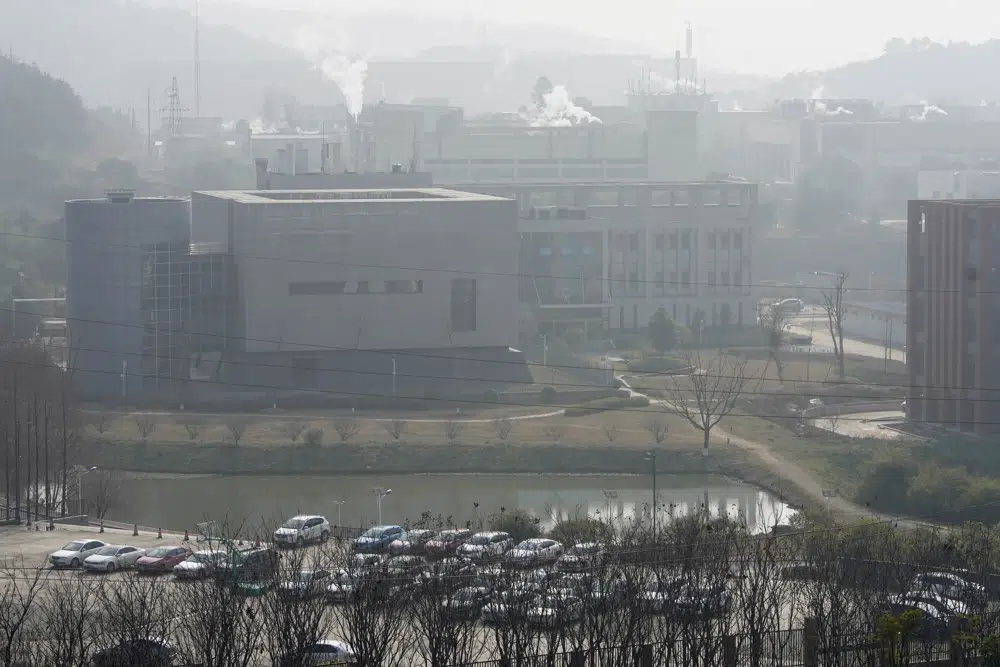
President Joe Biden signed a bipartisan bill Monday that directs the federal government to declassify as much intelligence as possible about the origins of COVID-19 more than three years after the start of the pandemic. The legislation, which passed both the House and Senate without dissent, directs the Office of the Director of National Intelligence to declassify intelligence related to China’s Wuhan Institute of Virology. It cites “potential links” between the research that was done there and the outbreak of COVID-19, which the World Health Organization declared a pandemic on March 11, 2020. The law allows for redactions to protect sensitive sources and methods. U.S. intelligence agencies are divided over whether a lab leak or a spillover from animals is the likely source of the deadly virus. Experts say the true origin of the coronavirus pandemic, which has killed more than 1.1 million in the U.S. and millions more around the globe, may not be known for many years — if ever. Biden, in a statement, said he was pleased to sign the legislation. “My Administration will continue to review all classified information relating to COVID–19’s origins, including potential links to the Wuhan Institute of Virology,” he said. “In implementing this legislation, my Administration will declassify and share as much of that information as possible, consistent with my constitutional authority to protect against the disclosure of information that would harm national security.” Republished with the permission of The Associated Press.
Inflation continues to outpace wages, data shows

Inflation has outpaced wages for nearly two years, recently released federal data shows. A closer look at federal wage and pricing data shows workers are making less overall as the price for all kinds of goods and services rise faster than average hourly wages. The U.S. Bureau of Labor Statistics tracks “real” average hourly earnings, which are wages of Americans with rising inflation taken into account. “From February 2022 to February 2023, real average hourly earnings decreased 0.3 percent, seasonally adjusted,” BLS said. “The change in real average hourly earnings combined with a decrease of 0.9 percent in the average workweek resulted in a 1.2-percent decrease in real average weekly earnings over this period.” According to the BLS inflation calculator, since Joe Biden has taken office, the dollar has lost about 15% of its purchasing power. To put it another way, what cost Americans $100 to buy in January 2021 now costs $115. For some goods, like groceries and energy, the picture is even worse. While workers have seen sizeable pay raises, inflation has risen faster. Last year, hourly wages increased about 5%, but inflation rose 7%. Critics blame the Biden administration’s trillions of dollars in federal spending and the money-printing that supports it. “My comment is that as Milton Friedman pointed out, inflation is always and everywhere a monetary phenomenon,” Gary Wolfram, an economics professor at Hillsdale College, told The Center Square. “It is when the money supply increases faster than output. For two years, 20 and 21, the money supply, M2, grew by 40%, peaking in early 2022. Since then, it has been declining. As inflation appears with a variable lag, again, as Friedman noted, inflation began to be a problem. However, we are beginning to see a slowing of inflation due to the decline in the money supply, and will this will continue. I am concerned that the Fed’s approach of raising interest rates in order to slow economic activity is actually slowing the reduction in inflation by reducing output.” Supply chain issues and the Russian invasion of Ukraine have also played a role in increasing the cost as certain goods as well. Biden’s latest budget proposed trillions in federal spending. Biden has touted the rising wages and deficit cuts, but inflation is still rising faster than wages, and the national debt is expected to surpass $50 trillion within a decade. “We must act now to stop reckless [government] spending and relieve Montanans of the crushing weight of inflation that is taking a bite out of their paychecks,” Sen. Steve Daines, R-Montana, wrote on Twitter. Experts say this year could be another of high inflation and overall falling wages. “There was some optimism after the release of February’s Consumer Price Index that inflation is moderating,” Randall Holcombe, an economic expert at the Independent Institute, told The Center Square. “Year over year, the inflation rate was 6% in February. But looking at just the first two months of the year, the Consumer Price Index has already risen 1.36%. If that keeps up for the rest of the year, we’ll be looking at more than 8% inflation for the year. It’s too early to declare that we have inflation under control.” Republished with the permission of The Center Square.
