
State Senate Committee advances election integrity bills
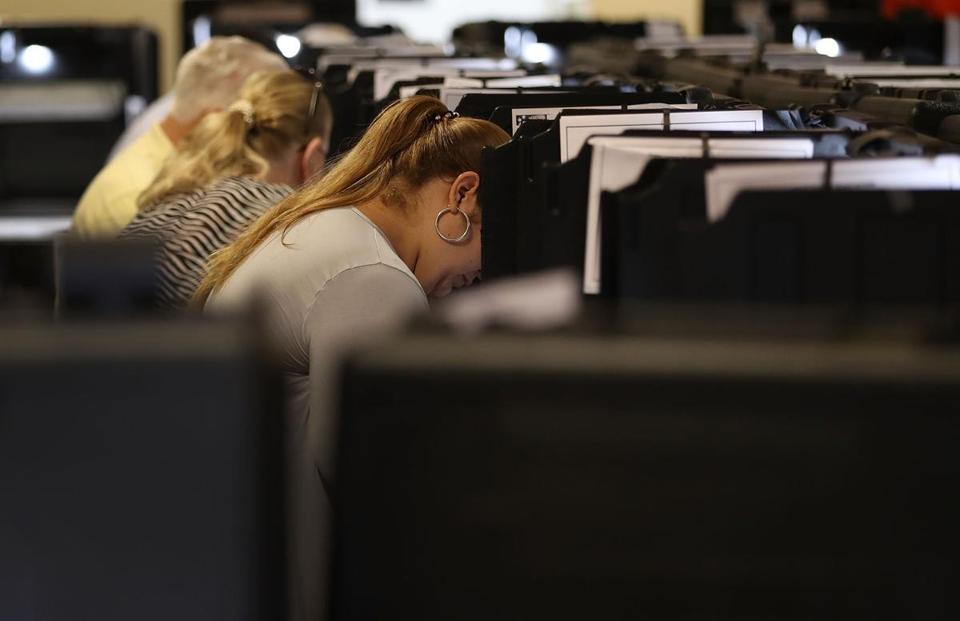
On Wednesday, the Alabama Senate State Governmental Affairs Committee advanced two bills designed to protect the integrity of Alabama elections. Both bills are sponsored by State Sen. Clyde Chambliss. Senate Bill 9 (SB9) would require that the state’s electronic voting counting system must require the use of a paper ballot that is marked and inspected by the voter prior to being cast and counted. The second bill, SB 10, prohibits the use of electronic vote counting systems that are capable of connecting to the Internet or cell phone networks or that possess modem technology. The State Government Affairs Committee is chaired by State Sen. Tom Butler. “We had both of these two bills last session,” Butler said. “They simply put into law things that we already do,” Chambliss said. “Paper ballots for voting. We do that, but it is not currently in the law.” State Sen. Dan Roberts motioned to give SB9 a favorable report. The Committee voted unanimously to give SB9 a favorable report. “This deals with internet modems on voting machines,” Chambliss said of SB10. “Obviously, if they have those connections, people can hack into the system and possibly influence the vote count.” “This puts our current practice into law,” Chambliss said. “Do we have problems with electronic voting in Alabama?” asked Sen. Merika Coleman. “I don’t know,” answered Chambliss. “This is trying to be proactive.” “We want to make it illegal for anybody to connect the electronic vote counting machines to the internet,” Chambliss explained. “If we had problems with voting, it is with the absentee ballot process,” Coleman said. “I was on the Electronic Voting Machines Task Force, and I started asking questions,” Chambliss said. “It is not policy to have modems on the counting machines. Policy is not strong enough for me. I want to put this into law. This is a bill that is looking forward. I don’t want to be reactionary.” “We have electronic vote counting machines. We do not have electronic voting,” Chambliss explained. “You have a point,” said Sen. Linda Coleman-Madison. “This is a trust issue. I have some trust issues myself. This is a good bill.” Sen. Robert Stewart asked if this legislation would prevent the state from adopting new technology. “It does not prevent changing to new technology, but it would prohibit a modem being in that machine,” Chambliss said. SB10 was given a favorable report on an 11 to 0 vote. Both bills are supported by Alabama Secretary of State Wes Allen, who was present to show his support and answer any questions the committee members might have. The legislation can be considered by the full Senate as soon as Tuesday, April 4, when the 2023 Alabama Regular Legislative Session resumes. To connect with the author of this story or to comment, email brandonmreporter@gmail.com.
Katie Britt questions HHS Secretary on placement of unaccompanied minors
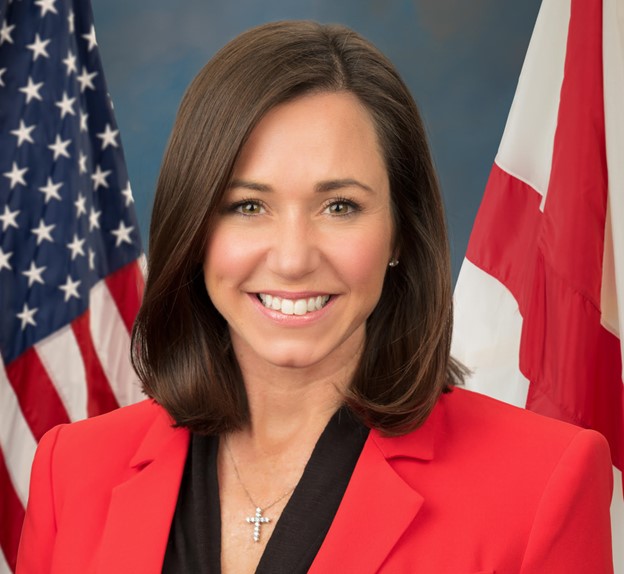
U.S. Senator Katie Britt recently questioned Health and Humans Services Secretary (HHS) Xavier Becerra about the Biden treatment of unaccompanied migrant children. “[T]he UAC Program is plagued by deficiencies and poor management which, combined with this Administration’s reckless and irresponsible policies, encourage illegal immigration, and, I believe, has put the lives of children and their well-being at risk,” said Senator Britt in Wednesday’s hearing. Britt participated in the Senate Committee on Appropriations Subcommittee for Labor, Health and Human Services, Education, and Related Agencies hearing regarding President Joe Biden’s Fiscal Year 2024 budget proposal for the Department of Health and Human Services (HHS). Due to the ongoing border crisis and overcrowding at HHS shelter facilities, the Biden Administration has taken several steps to help speed up the process of releasing unaccompanied minors to sponsors. One of these controversial decisions was the Office of Refugee Resettlement field guidance introduced on March 31, 2021, stating HHS would no longer require background checks for adult household members and alternate adult caregivers within certain categories of sponsors. The New York Times published an article on February 25 detailing how many unaccompanied minors have wound up in exploitative and illegal labor situations after arriving in the United States. Among other deficiencies, the piece noted issues with HHS’ vetting policies and practices. “We’re spending a lot of money on a program that just isn’t working very well,” Sen. Britt said. “I believe it isn’t a lack of funding; it is departmental policy and management failures that are our problem.” “On March 31, 2021, HHS’ Office of Refugee Resettlement issued field guidance that waived background check requirements for adult household members and alternate adult caregivers identified in a sponsor care plan submitted by Category 2 sponsors,” Sen. Britt said. “As you know, Category 2 sponsors include certain relatives of a child other than a parent. So, the department put in place a policy that allowed a waiver of background checks for other adults in the household of those relatives. That strikes me as deeply irresponsible.” Senator Britt then asked Sec. Becerra, “In light of recent events, can you tell me if the March 31, 2021, field guidance is still in effect?” “I’ll get back to you on the field guidance,” Sec. Becerra responded. “If it is not a parent that you are placing [an accompanied child] with, do you do a background check of the other individuals in that home?” Senator Britt asked. “It will depend [on the sponsor],” Secretary Becerra admitted. “These children – it’s a passion for me as a momma of two school-aged children that we’re not putting them in harm’s way,” Senator Britt concluded. The United States is experiencing a surge of unaccompanied minors at the southern border. More than 330,000 unaccompanied minors have been encountered at the border since President Biden took office in January 2021. Under the law, most unaccompanied minors are referred to the Unaccompanied Alien Children (UAC) Program within the Office of Refugee Resettlement in the Administration for Children and Families of HHS to be resettled with a sponsor in the U.S. while awaiting their removal proceedings in immigration court at a future date, often several years into the future. Sponsors are supposed to be capable of providing for the physical and mental well-being of unaccompanied minors. The New York Times interviewed more than 100 children, most of them from Central America, who detailed working long hours frequently in violation of child labor laws. The Biden Administration also rescinded a Trump-era memorandum of agreement between HHS and the Department of Homeland Security under which information regarding potential sponsors of unaccompanied minors, as well as all adult members of the sponsor’s household, was turned over to U.S. Immigration and Customs Enforcement for further background review and screening. Katie Britt has been critical of the Biden administration’s handling of the border crisis since her being sworn into the U.S. Senate in January. To connect with the author of this story or to comment, email brandonmreporter@gmail.com.
Daniel Sutter: Is this a bailout?
Silicon Valley Bank (SVB) became the second-largest bank failure in American history this month. How has the government responded, and does this constitute a bailout? Washington gave all SVB depositors access to all their money. We have a system of government deposit insurance administered by the Federal Deposit Insurance Corporation (FDIC), established after 9,000 banks failed between 1929 and 1933. The FDIC insures deposits up to $250,000, and banks pay premiums for coverage. Only 11 percent of SVB’s deposits were FDIC-insured, reflecting numerous big-dollar accounts. The stockholders of SVB, who had $20 billion invested, are not (currently) being assisted. In the 2008 financial crisis, many investors were saved from losses. I see this as a large depositor bailout. And uninsured depositors would have gotten some money back after liquidation of SVB’s assets. The bailout may only have let depositors get their money sooner. The consequences of this action depend largely on whether FDIC coverage is now unlimited or if this is a one-time deal. If truly a change in coverage, the consequences involve trading off a potential bank run versus worsening moral hazard, both of which require some explanation. Let’s consider bank runs first. In our fractional reserve system, banks keep only a small percentage of deposits as reserves with the Federal Reserve. Banks make loans and other investments with deposits, earning returns to cover their costs, pay interest on deposits, and make a profit. Most of these investments are illiquid. Liquidity refers to how quickly an investment can be converted into cash without a loss. You could sell a house today but at a poor price. Obtaining the market price might take weeks or months, so homes are not liquid assets. You can lose a lot of money selling an illiquid asset quickly. This creates a vulnerability for banks, as depositors can withdraw their funds at any time. Selling assets at “fire sale” prices can render sound a bank insolvent. Economists Douglas Diamond and Philip Dybvig, who shared the 2022 Nobel Prize, demonstrated many of the dynamics of bank runs. The failure of one bank can make other depositors fear their bank. Bank runs can spread like wildfire. Milton Friedman and Anna Schwartz in A Monetary History of the United States, argued that most of the failing banks in the 1930s were sound, and these failures turned a routine recession into the Great Depression. Businesses operate on credit, so a banking breakdown is truly calamitous. Daniel Sutter is the Charles G. Koch Professor of Economics with the Manuel H. Johnson Center for Political Economy at Troy University and host of Econversations on TrojanVision. The opinions expressed in this column are the author’s and do not necessarily reflect the views of Troy University.
Alabama’s tournament run is over: UAB is making deep NIT run
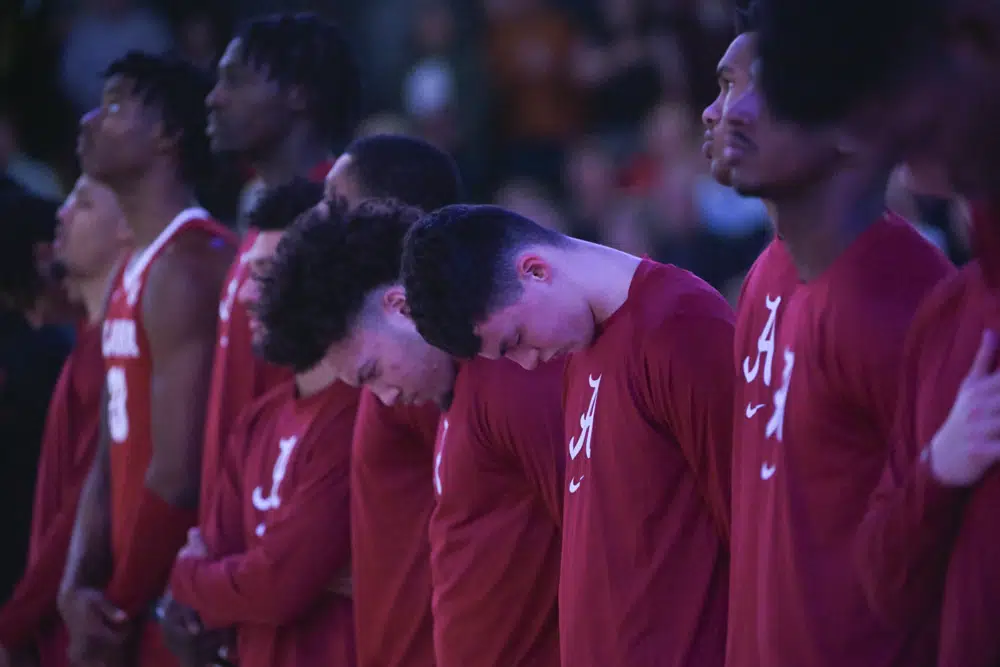
On Friday, the University of Alabama men’s basketball team’s magical NCAA tournament run ended when the San Diego Aztecs defeated Alabama 71 to 64. The University of Alabama Birmingham (UAB) men’s basketball team has made a deep run in the NIT tournament. UAB defeated Vanderbilt 67 to 59 in the NIT quarterfinals. The 2022/2023 Alabama basketball team won the SEC tournament, the SEC regular season title, and their first two games in the NCAA tournament. Nate Oats is the head basketball Coach for the University of Alabama. “It’s not easy to win the regular season, the SEC tournament in the same year and make a Sweet 16 run,” Oats said. “It’s a great group that really loves each other. I mean, they’re going to be close for life, most of them. You know, I love the group, they love each other, and it’s just really disappointing that it’s ending early. But I think it’s one of the most memorable seasons in Alabama history, and they can walk out of here with their heads up.” In many ways, however, the season’s success was overshadowed by the January 15 slaying of 23-year-old Tamea Harris. According to the Tuscaloosa district attorney’s office, Harris was murdered by Tide player Darius Miles and associate Michael Davis in Tuscaloosa. Tuscaloosa police detective Branden Culpepper testified that standout Tide freshman Brandon Miller was responsible for bringing the murder weapon to the crime scene after Miles instructed him to do so. Miles was kicked off the team, but Miller was never charged in the murder and was not disciplined by the team. The story has drawn national headlines. Miller scored 9 points on Friday but was 3 of 19 from the field shooting. Despite a poor NCAA tournament performance, Miller is still expected to be among the top four players in the upcoming NBA draft. The University of Alabama, in its program history, has never gone to the final four of an NCAA tournament. San Diego State defeated Creighton 57 to 56 on Sunday to advance to the NCAA final four. UAB’s win over Vanderbilt was led by Trey Jemison, who scored 17 points and had 12 rebounds, and Jordan Walker, who had nineteen points and five assists. UAB is 3 and 0 versus Southeastern Conference (SEC) opponents this season. UAB Coach Andy Kennedy said, “That was just about desire and wanting to continue to play. That’s all it was for us. Certainly not our best game offensively, and Vanderbilt had a lot to do with that. I was really proud of our guys for finding ways on the defensive end. We’ve got Trey Jemison, who I thought was a huge difference maker with his presence in the paint.” UAB has a 28 and 9 record. They finished third in Conference USA behind Florida Atlantic and North Texas. UAB has gone to the NCAA tournament 15 times and the NIT 12 times. While this year’s UAB team did not make the NCAA field of 64, the 28 wins set a new program record for wins in a season. Walker’s 698 points for the season also set a new single-season record for the program. North Texas, Wisconsin, and Utah Valley State joined UAB in the NIT final four. UAB will play Utah Valley Tuesday night in Los Vegas. To connect with the author of this story or to comment, email brandonmreporter@gmail.com.
372 bills have been filed in Alabama legislative session

Only four legislative days have passed in the 2023 Alabama Regular Legislative Session, but already 372 bills have been filed by legislators. Alabama Today has worked on writing about as many of these as possible so that our readers stay informed on issues before the Alabama Legislature. Two hundred bills were filed in the last week alone. Below is a short recap of 15 of these. Senate Bill 143 (SB143) by State Senator Will Barfoot targets youth gangs. The legislation seeks to identify members of criminal gangs. SB143 would enhance penalties for any criminal activity that benefits, promotes, or furthers the interest of a gang. The bill would establish mandatory consecutive penalties for any individual who knowingly possesses, uses, or carries a firearm during the commission of any act intended to benefit, promote, or further the interest of a gang. This bill would require any juvenile 16 or older to be tried as an adult for any gang-related criminal activity. State Representative Allen Treadaway has introduced similar legislation in the House – HB191. House Bill 217 (HB217) is sponsored by State Rep. Anthony Daniels. It would exempt overtime from state income taxes and a substantial tax cut for many hardworking hourly workers. Under existing law, gross income is defined for state income tax. Also, the existing law exempts certain amounts from the calculation of gross income. This bill would exclude work performed in excess of 40 hours in any week from being included in the gross income calculation. Daniels, the House Minority Leader, has some powerful cosponsors on this legislation, which has just dropped, including Speaker of the House Nathaniel Ledbetter and education fund budget Chairman Danny Garrett. Sen. Sam Givhan has introduced similar legislation in the Senate – SB137. House Bill 115 (HB115) by Rep. Danny Garrett would lower the top state income tax rate. Under existing law, Alabama levies an individual income tax at rates ranging from two percent on taxable income to a top rate of five percent on taxable income. This bill would phase in a reduction in the top tax rate from five percent to four and ninety-five hundredths percent. House Bill 181 (HB181) by Rep. Mack Butler would prohibit financial institutions from disclosing certain customer financial records of firearms transactions. HB181 would allow the Department of Finance to disqualify a financial institution from any selection process for state contracts for violation of this prohibition and to provide civil penalties and criminal penalties for violation of the act. Butler told Alabama Today that he did not believe that credit card companies need to be tracking customers’ gun and ammunition purchases. “That’s too much information for the credit card companies or the government to have,” said Butler. “The Sons of liberty would have had a big problem with that.” Senate Bill 144 (SB144) by Barfoot would address the shortage of judges by creating three additional circuit judgeships and two additional district judgeships to be funded out of the State General Fund in Fiscal Year 2024. House Bill 209 (HB209) by Rep. Jamie Kiel would effectively outlaw ballot harvesting in Alabama. This bill would prohibit any person from distributing, ordering, requesting, collecting, completing, obtaining, or delivering an absentee ballot application or absentee ballot of another person in certain circumstances and would provide for exceptions. This bill would prohibit any person from receiving a payment or providing payment to another person for distributing, ordering, requesting, collecting, completing, obtaining, or delivering an absentee ballot application or absentee ballot of another person in certain circumstances. This bill would also establish criminal penalties for violations. HB209 already has 42 House cosponsors. Senate Bill 141 (SB141) by Sen. Linda Coleman-Madison lowers the crime of chemical endangerment of a child to a misdemeanor under some circumstances. Under existing law, a person commits the crime of chemical endangerment of a child if the child is exposed to a controlled substance, chemical substance, or drug paraphernalia. A violation is a Class C felony. This bill would provide that chemical endangerment of a child where the child is exposed to marijuana or drug paraphernalia is a Class A misdemeanor. This bill would also provide that a confirmatory positive drug test must be obtained before an agency or law enforcement initiates any action for a violation. Senate Bill 127 (SB127), sponsored by Sen. Merika Coleman, would expand the statute of limitations on civil suits for alleged sexual misconduct, and it would be retroactive. Under existing law, a civil action for an injury to an individual that involves certain sex offenses must be brought within six years. This bill would expand the statute of limitations for certain sex offenses. Senate Bill 130 (SB130), sponsored by Sen. Vivian Figures, would move the official state celebration of Confederate General Robert E. Lee’s birthday as a state holiday observed on the third Monday in January to the second Monday in October. Currently, the state celebrates Robert E. Lee’s birthday on the same day as Martin Luther King Jr.’s birthday. SB130 would move Robert E. Lee’s birthday to Columbus Day, so Robert E Lee Day would remain a state holiday but would not add a new state holiday. House Bill 187 (HB187), sponsored by Rep. Chip Brown, would require parental or guardian’s consent for a minor to get a vaccine. Under existing law, a minor 14 years of age or older may give consent for medical, dental, and mental health services for themselves without parental consent. HB187 would require consent of a parent or a legal guardian for any minor to receive a vaccination. This became an issue during the recent COVID-19 global pandemic. House Bill 186 (HB186), also by Brown, would allow a parent to opt their child out of any school policy requiring students to wear a face covering at school, at a school function, a school bus, or at a school bus stop. Many parents were upset that their schools required face masks during the pandemic. House Bill 182 (HB182), sponsored by Rep. Traci Estes, would expand the definition of a dependent to include an unborn child. Under current law, taxpayers are allowed a dependent exemption for a son or daughter for
State Senate votes to advance property tax increase for Vestavia

Vestavia Hills residents could soon be voting on whether or not to raise their property taxes after the Alabama Senate voted on Thursday to advance legislation authorizing the school system to hold a referendum on raising ad valorem taxes. Senate Bill 63 (SB63) is sponsored by State Sen. James T. “Jabo” Waggoner Jr., who chairs the powerful Senate Rules Committee. “This is on behalf of the Vestavia Hills Board of Education,” Waggoner said on the floor of the Senate. “As you know, we have one of the better school systems in the state. They are asking for 9.4 mills.” Sen. Rodger Smitherman said, “It is a tax bill, and I am going to vote for the bill.” “We did the same for Center Point,” Smitherman said. “With Center Point, we did that with street light cameras. What concerns me is that Birmingham does not get the same consideration. I had the same bill for the city of Birmingham, but I did not get the same consideration.” Senate Minority Leader Bobby Singleton said, “Thank you for bringing this bill. Education is important. I applaud you for bringing this and doing what is best for the school children in your district.” SB63 would authorize Vestavia to increase the rate at which ad valorem taxes are levied and collected by the city on all taxable property situated within the city. If passed, the bill would raise the maximum rate to $3.54 on each one hundred dollars ($100) (35.4 mills on each dollar) of assessed value. The city presently levies and collects the Special Tax at a rate of $2.56 on each one hundred dollars (25.6 mills on each dollar) of assessed value. The increase is subject to the approval of a majority of the qualified voters residing in the City who vote on the proposed increase at a special election called and held for that purpose. Singleton said that the Alabama Farmer’s Federation (without naming them) had opposed a rural tax referendum with “Vote No” signs because they don’t want to pay higher taxes on their farmland and forest land. Whether or not they will oppose this tax increase remains to be seen. SB63 was passed by the Senate in a 16 to 0 vote. SB63 is a local bill. It is customary practice in the Alabama Legislature for members who do not represent the county affected by the legislation, in this case Jefferson County, not to oppose other members’ local bills. Waggoner is the dean of the Legislature, having served in the House of Representatives for five terms from 1966 to 1984 and nine terms in the Alabama Senate from 1990 to the present. The legislation now goes to the Alabama House of Representatives for their consideration. Thursday was Day 4 of the 2023 Alabama Regular Legislative Session. To connect with the author of this story or to comment, email brandonmreporter@gmail.com
GOP states press voter photo ID rules, with unclear effects
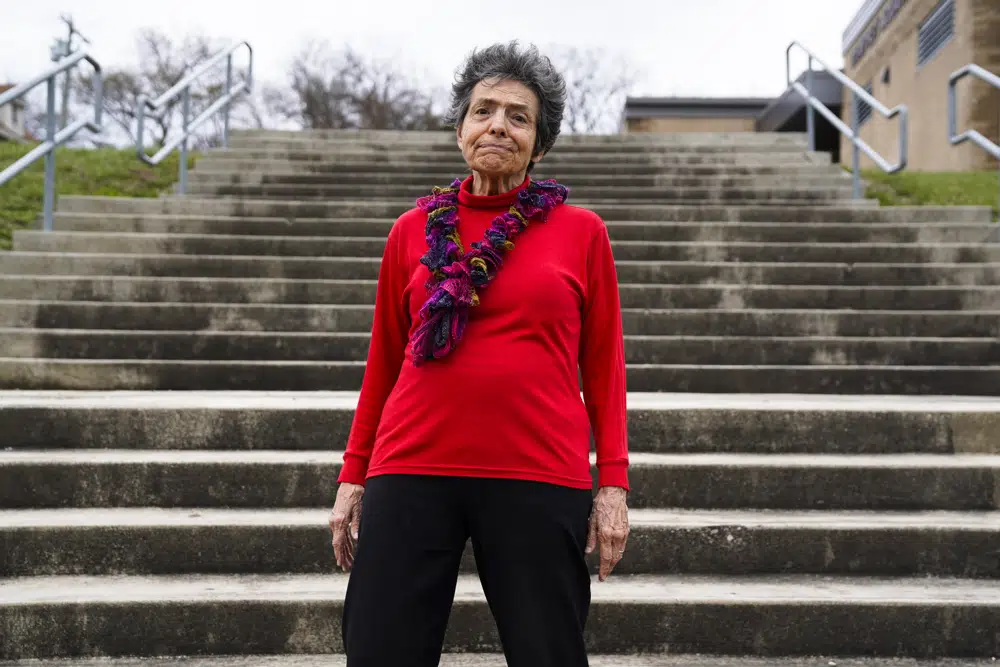
As Ohio’s primary approaches, a strict new photo ID requirement is stirring concerns for military veterans and out-of-state college students, in Amish communities, and among older voters. Other Republican-led states are moving in the same direction as they respond to conservative voters unsettled by unfounded claims of widespread fraud and persistent conspiracy theories over the accuracy of U.S. elections. Critics characterize such requirements as an overreaction that could end up disenfranchising eligible voters. Ruth Kohake is among those caught up in the confusion over Ohio’s law, which is going into effect this year. The retired nurse from Cincinnati gave up her driver’s license and her car in 2019. Now 82, she thought she might never have to step foot in another state license agency. But Ohio now requires an unexpired photo ID in order for someone to vote, and she’ll have to get that at the Bureau of Motor Vehicles. The law adds passports as valid ID but eliminates nonphoto documentation such as a bank statement, government check, or utility bill for registration and in-person voting. Military IDs also are no longer acceptable when registering to vote. “I’m very, very, very concerned that people are not going to know. They’re going to come to vote, and they’re not going to be able to, or they’re going to have to vote provisional,” she said. “It’s just a very upsetting time. Us old people, we have other things to worry about.” Of 35 states that request or require a photo ID to vote, Ohio is now the ninth Republican-controlled state to move to a strict law allowing few to no alternatives, according to the National Conference of State Legislatures. Fifteen states allow other ways voters can verify their identity, such as an electric bill, bank statement, or signature match. The number of states where voters face strict photo ID requirements is poised to rise in the coming months. Nebraska lawmakers are in the process of establishing a new photo ID program after voters approved a requirement in November. In North Carolina, a photo ID requirement declared unconstitutional just three months ago could be revived by the state Supreme Court that has a new Republican majority. Meanwhile, a new Idaho law, which prohibits students from using college IDs at the polls, drew a recent legal challenge. Wendy Weiser, vice president for democracy at the Brennan Center for Justice, said the new Ohio law undercuts the Republican narrative about the state having a record of clean and well-run elections. “Ohio election officials have long been adamant that this wasn’t needed, that Ohio had a good system for vetting and rooting out any fraud, and the proof was in the pudding,” she said. Republican state Sen. Theresa Gavarone, a supporter of the law, said the change will make it harder to cheat. It already has led to frustration and confusion, in part because of the fast-approaching state primary on May 2. Republican Secretary of State Frank LaRose ordered counties to begin implementing the fast-tracked law so it would be in effect for the primary, though its start date falls within the early voting period. Waiting until fall, LaRose said, “would result in a clear violation of Ohio law.” That decision is not without complications. The free state photo IDs the law provides won’t be available until April 7, the law’s effective date, despite military and overseas voting already having begun and early, in-person voting set to start April 4. At the same time, a legal challenge to the law by a Democratic law firm remains unresolved. The lawsuit alleges the law creates “needless discriminatory burdens,” including by requiring photo IDs, making it harder to correct minor mistakes on ballots, and restricting mail balloting. Veterans’ organizations and county recorders, particularly in the populous, Democratic-leaning counties that include Columbus, Cleveland, and Cincinnati, have been vocal about the law excluding county-issued veteran photo IDs, though it does allow military IDs, to vote. They cost less and are valid longer — 10 years — than a driver’s license. “People find reasons to fix something that doesn’t need to be fixed,” said Larry Anderson, 85, a veteran from Columbus who has found the veteran ID card a convenience. “Veterans could come back from the wars and not have a driver’s license and not drive a car, and it just creates more problems for them.” AMVETS Executive Director Don McCauley said the issue has been brought to lawmakers’ attention, and he hopes to see it resolved before the next election. Access issues also have arisen among the roughly 37,000 Amish in Ohio’s Holmes County, where the largely conservative voters reject being photographed and often lack other forms of government ID. Lawmakers allowed for religious exceptions through an affidavit that the law’s supporters say will be easy to use, but Holmes County Elections Director Lisa Welch is worried that confusion and extra paperwork could add to the workloads of already stressed boards of elections. “My biggest concern is the first time through, we get a whole bunch of provisionals (that must be processed separately later),” she said. “I’m the only full-time person in the office right now, and we can’t do everything.” Holmes County Commissioner Joe Miller fears the new process could deter some voters. “I want honest voting, I understand that, but a lot of the Amish don’t have the photo ID and won’t do a photo ID,” he said. “So what the Amish do usually — they’re pacifists, they don’t fight anybody — they just walk away.” Ohio State University has advised its roughly 16,000 out-of-state students against voting in person on Election Day — for fear that obtaining the necessary state ID card could invalidate their driver’s license in their home state and disrupt their financial aid and residency status. The schools suggests such students casting Ohio ballots do so by mail. Backers of the photo ID requirements have widely moved away from the argument that such laws prevent voter fraud, which happens only rarely. The conservative Heritage Foundation’s database lists only 26 convictions for voter impersonation fraud — the type deterred by photo ID requirements — anywhere
Bipartisan congressional caucus forms to address fentanyl crisis
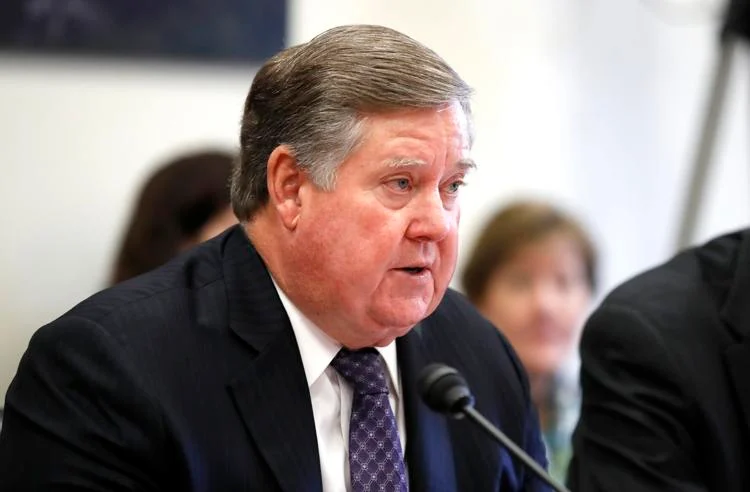
Labeling the smuggling of illicit fentanyl into the U.S. from Mexico “a national crisis,” a group of lawmakers has formed a bipartisan caucus to address the issue. Led by Republican California Reps. Ken Calvert and Darrell Issa and Democratic Reps. Joe Neguse of Colorado and Madeleine Dean of Pennsylvania, the Bipartisan Fentanyl Prevention Caucus was formed to “coordinate with members from both sides of the aisle to combat the nationwide spike in fentanyl-related overdoses and drug poisonings.” The group says it will work with federal and state law enforcement and “to educate the public and the Congress, in cooperation with prevention and awareness groups to better understand the ongoing threat of fentanyl in communities across America.” “Fentanyl is devastating the lives of Americans in every corner of our country. With fentanyl-related deaths climbing every year, we need new solutions to stop this alarming trend,” Calvert said. “This is not a partisan issue – it’s a national crisis.” Rather than pledging to end the fentanyl crisis, Calvert said he hoped the caucus would “educate Americans on the dangers of fentanyl and provide real solutions that will stop the destruction of this deadly drug.” “Fentanyl is not a new danger. But the deadly threat it poses has now reached every corner of our country, and no community is being spared,” Issa said. “The stakes could not be more clear: If we don’t win the fentanyl fight, we’re not going to just lose my community or my neighbor’s. Or any one of my colleagues. We’re going to lose this country. This caucus is needed now as we tell the truth, develop solutions, and save lives.” When announcing its formation, the caucus didn’t call on the president or Secretary of State Antony Blinken to declare Mexican cartels as Foreign Terrorist Organizations, as Texas Gov. Greg Abbott and 21 attorneys general have repeatedly done. Last September, Abbott issued an executive order designating the Sinaloa Cartel, the Jalisco New Generation Cartel, and any similarly situated Mexican drug cartels as foreign terrorist organizations” under Section 219 of the Immigration and Nationality Act. He also requested President Joe Biden do likewise, the second time he’d made the request since April 2021. In his September 21, 2022 letter, Abbott said since then, “There was no action, no response.” He’s still received no response, his office has told The Center Square. Last week, Blinken told Congress he’d consider designating cartels as FTOs. Two weeks prior, the White House said it didn’t have any intention of doing so. Republican U.S. Sens. Rick Scott of Florida and Roger Marshall of Kansas introduced the Drug Cartel Terrorist Designation Act, which Florida Attorney General Ashley Moody said will “do the job Biden refuses to do – protect the American people.” The caucus also hasn’t demanded the president designate fentanyl as a weapon of mass destruction, as 18 attorneys general have done led by Moody. Fentanyl poisoning remains the leading cause of death among adults between the ages of 18 and 45. Two milligrams, the weight of a mosquito, is lethal. In fiscal years 2021 and 2022, CBP agents confiscated enough fentanyl to kill nearly 5 billion people. Since March 2021, Texas Operation Lone Star officers have seized over 373 million lethal doses of fentanyl. Florida law enforcement officers in a few month’s time last year seized enough fentanyl to kill everyone in Florida. The U.S. Drug Enforcement Administration has issued several public alerts warning Americans about the dangers of fentanyl. Most recently it issued another public alert about the “sharp increase in the trafficking of fentanyl mixed with Xylazine,” an animal tranquilizer referred to on the streets as “Tranq.” It did so after the FDA, CDC, and multiple state agencies issued warnings about Xyzaline being detected in an increasing number of illicit drug mixtures and a growing number of overdose deaths nationwide. “Xylazine is making the deadliest drug threat our country has ever faced, fentanyl, even deadlier,” DEA Administrator Anne Milgram said. DEA has so far seized Xylazine and fentanyl mixtures in 48 of 50 states. Caucus members also include Angie Craig (D-MN), Chris Pappas (D-NH), Raja Krishnamoorthi (D-IL), Melanie Stansbury (D-NM), Chrissy Houlahan (D-PA), Ruben Gallego (D-TX), Nikki Budzinski (D-IL), Marc Veasey (D-TX), Sheila Jackson Lee (D-TX), Raúl Grijalva (D-AZ), Doug Lamborn (R-CO), Sharice Davids (D-KS), Don Bacon (R-NE), Claudia Tenney (R-NY), Andre Carson (D-IN), Ralph Norman (R-SC), Chris Smith (R-NJ), Lance Gooden (R-TX), Bob Latta (R-OH), Andy Biggs (R-AZ), Jake LaTurner (R-KS), Barry Moore (R-AL), David Valadao (R-CA), and Robert Aderholt (R-AL). Republished with the permission of The Center Square.
