
House makes it illegal for a non law enforcement person to put a vehicle tracker on someone else’s vehicle

The Alabama House of Representatives passed legislation that would prohibit citizens from placing electronic vehicle tracking devices on other people’s vehicles. People could still place tracking devices on vehicles they own. House Bill 153 (HB153) is sponsored by State Representative Allen Treadaway. Treadaway is a retired police chief for the City of Birmingham. He chairs the House Public Safety and Public Safety Committee. According to the synopsis, “This bill would make it a crime to place an electronic tracking device on the property of another person without the consent of the owner and would provide for penalties. This bill would prohibit a person from placing an electronic tracking device on the property of another in violation of an established court order and would provide for penalties. “A person who, without the consent of the owner or except as otherwise authorized by law, places any electronic tracking device on the property of another person with the intent to surveil, stalk, or harass, or for any other unlawful purpose, is guilty of the crime of electronic stalking in the first degree.” This would be a Class C felony. “A person who violates this section and whose conduct violates an existing domestic violence protection order, elder abuse protection order, temporary restraining order, or any other court order, shall be guilty of a Class B felony.” Outside of those circumstances, this would be, “the crime of electronic stalking in the second degree.” – a Class A misdemeanor. Rep. Juandalynn Givan asked if this would prevent a woman from putting a tracking device on her boyfriend’s vehicle. “Why would you want to put a tracking device on the vehicle of a car of someone you are dating?” Treadaway answered. “Sometimes men do lie,” Givan responded. Treadaway said, “If they want to get away, just let them go away.” Treadaway was asked if this would prevent a parent from putting a tracking device on their child’s car. “You can still put a tracking device on any vehicle that you own,” Treadaway explained. Treadaway explained that the Judiciary Committee replaced the original bill with a committee substitute. The House voted to adopt the committee substitute on a 101 to 0 vote. HB153 then passed the House of Representatives as substituted and amended on a 101 to 0 vote. The legislation now goes to the Alabama Senate, where it has not yet been assigned to a committee. Tuesday is day 16 of the regular session. The regular session is limited by the Alabama Constitution to no more than thirty legislative days. The House will convene at 1:00 p.m., and the Senate will convene at 2:30 p.m. To connect with the author of this story or to comment, email brandonmreporter@gmail.com.
Katie Britt cosponsors legislation to protect Supreme Court Justices
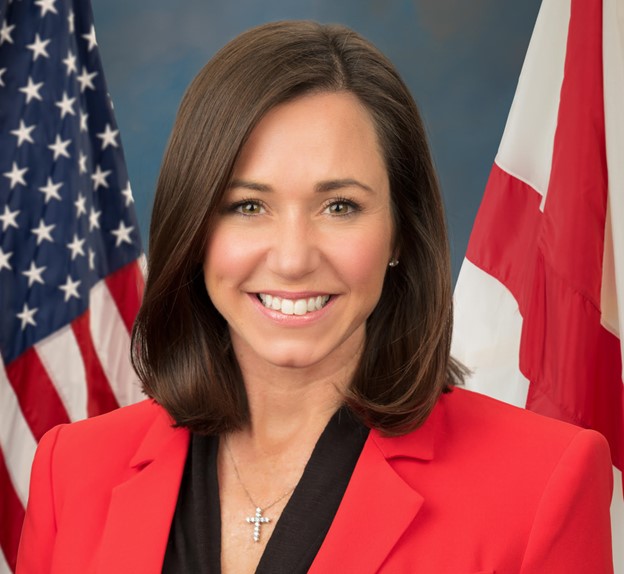
On Monday, U.S. Senator Katie Britt joined Senator Marsha Blackburn and a group of nine additional Republican senators in introducing the Protect Our Supreme Court Justices Act, a bill to further protect Supreme Court Justices from intimidation and threats of violence. The legislation is partially in response to threats and intimidation that the Justices received following the leaking of the Dobbs versus Jackson Women’s Health Organization decision overturning the controversial Roe versus Wade decision. “Protesters attempting to influence judicial decisions through harassment, intimidation, or violence outside the homes of Justices and judges need to be held accountable to the fullest extent of the law,” Sen. Britt stated. “The rule of law cannot be replaced with mob rule in the United States. The integrity and effectiveness of our judicial system hinges on the ability of judges to impartially interpret the law and rule on the legal merits of cases without fearing retribution to themselves or their families. I’m proud to co-sponsor the Protecting Our Supreme Court Justices Act to ensure we have a strong deterrent that can keep our Justices, judges, and their families safe while safeguarding the rule of law.” “As we saw last summer, the woke liberal mob will go to great lengths to target those they disagree with – even illegally intimidating Supreme Court Justices at their private residences,” said Sen. Blackburn. “It’s extremely concerning that none of these protesters have been arrested for breaking the law, and the DOJ has not issued any guidance on enforcing this statute. The Protecting Our Supreme Court Justices Act will deter intimidation of our Justices and send a message that the Biden administration has refused to send: Justices must be allowed to do their jobs without fearing for the safety of themselves or their families.” The legislation will raise the maximum term of imprisonment for individuals who attempt to unlawfully influence the decision-making of a federal judge from one year to five years, creating a stronger deterrent amid increased threats against the Court. Senators Britt and Blackburn were joined by Sens. Tom Cotton (R-Ark.), John Cornyn (R-Texas), Ted Cruz (R-Texas), Bill Hagerty (R-Tennessee), Josh Hawley (R-Missouri), Marco Rubio (R-Florida), Cindy Hyde-Smith (R-Mississippi), Roger Wicker (R-Mississippi), and John Boozman (R-Arkansas) in introducing the bill. “Conservative Supreme Court justices are facing increasing protests from far-left extremists trying to intimidate or punish the justices for their decisions,” said Sen. Cotton. “This legislation will help protect all Supreme Court justices from threats of violence so they can do their jobs as impartial interpreters of the law.” “Justices must be able to rule without fear of retribution or intimidation, and the politicization of our judicial branch is unacceptable and downright dangerous,” said Sen. Cornyn. “By increasing the maximum term of imprisonment for those attempting to influence judicial decision making, we can ensure Supreme Court justices can operate with impartiality and uphold the Constitution without worrying about their safety or that of their family.” “I’ve been a passionate proponent of protecting our Supreme Court justices and their families from the coordinated campaign of harassment and intimidation following the Dobbs decision last year,” said Sen. Cruz. “Not a single one of those protestors have been prosecuted because President Biden’s attorney general disagrees with the Dobbs decision. I’m proud to join Sen. Blackburn and my colleagues in working to expand the consequences of breaking the law and trying to intimidate Supreme Court justices.” “Protesting at the homes of Supreme Court justices and their families is an unlawful and dangerous intimidation tactic, as we’ve witnessed over the last year,” said Sen. Hagerty. “I’m pleased to join Senator Blackburn in working to stop this indefensible conduct.” “The Biden administration has weaponized the judicial system for two years already,” said Sen. Hawley. “Making matters worse, when Republican-appointed Justices are under attack, this Department of Justice won’t defend them. It’s time for Congress to step into the breach.” “Last summer, in an attempt to intimidate U.S. Supreme Court Justices from doing their job, progressive activists protested outside of their homes,” said Sen. Rubio. “We must ensure that Justices are able to carry out their duties without fear for their safety or that of their families. The Protecting Our Supreme Court Justices Act is a necessary step to deter intimidation and ensure that those who seek to influence the decision-making process of our Justices face the full force of the law.” “There is no other way to view the threats and protests we’ve witnessed recently against Supreme Court justices and other federal jurists as anything other than attempts to influence their decisions through fear and intimidation,” said Sen. Hyde-Smith. “This legislation should not be needed to protect the judiciary, but it is. Enacting this bill will make it crystal clear to everyone that these threatening activities are illegal and will be punished.” “Supreme Court justices should be able to carry out their duties without fear of intimidation,” said Sen. Wicker. “This legislation would help ensure their safety and protect our highest court.” “Intimidating members of the judicial branch into ruling a certain way goes against everything our justice system and democracy were founded on,” said Sen. Boozman. “We cannot continue to let this behavior go unchecked or tolerate further targeted acts of violence and harassment. Our legislation prioritizes the safety of Supreme Court justices and their families and ensures accountability for those responsible for adopting such disturbing, lawless tactics.” Federal law already explicitly prohibits protesting at the residence of a judge with the intent of influencing the decision-making process of a judge in a case. The protestors against the Dobbs decision outside of the Justices’ homes could have all been arrested and prosecuted, facing criminal monetary penalties or a maximum of one year of imprisonment, or both. But since they were political allies, the Biden administration ignored the law. The U.S. Department of Justice, under the leadership of Attorney General Merrick Garland, has refused to arrest, charge, or prosecute any individuals who illegally protested outside of the homes of Supreme Court Justices in 2022. The Protecting Our Supreme
House passed legislation banning employers from requiring that employers be microchipped

On Thursday, the Alabama House of Representatives passed legislation that would prohibit employers from requiring that their employees have microchips inserted in their bodies. House Bill 4 (HB4) is sponsored by State Representative Prince Chestnut. Chestnut said that this bill’s purpose is “preventing the microchipping of employees by employers.” State Rep. Kenneth Paschal said, “I love your original bill as written, but I have a problem with an amendment in the committee substitute.” Chestnut said, “My plan is to table the committee substitute and pass the original bill.” “What are we doing?” Rep. Laura Hall (D-Huntsville) asked. “What is the intent?” “I read a lot, and one of the things that concerned me is a push in certain areas to microchip people in some places in the workplaces,” Chestnut said. “It is really catching on in Europe. It is taking place in parts of this country.” Hall asked where it was being done. “I did find where it is happening at a tech company in Wisconsin,” Chestnut said. “Wisconsin passed legislation after the fact. Nevada has passed legislation prohibiting it, and Arkansas has passed legislation.” Hall asked if it was occurring in Alabama. Chestnut said that it wasn’t happening in Alabama to his knowledge, but this legislation is being proactive rather than waiting until it does happen and legislating after the fact. “If somebody wants to voluntarily get microchipped, you still can,” Chestnut stated. Chestnut explained that the technology exists so people can access a secure building by having a microchip implanted into the body or the hand. There are even applications where people are getting a microchip installed in their body that functions as a debit or credit card; you just put your hand in front of the scanner, and the funds for your purchase are deducted from your purchase account electronically. This bill does not prevent people from voluntarily being microchipped. “What I want to do is stop it from being mandated,” Chestnut said, “That is everyone’s personal body integrity.” Chestnut explained that the committee substitute would “allow prisoners in the Department of Corrections can be microchipped. I talked with Mr. (Cam) Ward at Pardons and Paroles, and he said that the surveillance in place is sufficient. They don’t want it. I don’t want to see it on inmates because sooner or later, it will work its way up to us.” Rep. Matt Simpson said, “I am completely in support of taking off the committee amendment.” Simpson said that the whole Judiciary Committee favored tabling the committee substitute. Rep. Thomas Jackson said, “I understand microchipping a pet so that if it gets lost that it can get back to its master. How does microchipping an inmate ever make sense?” The House voted 105 to 0 to table the House Judiciary Committee substitute and consider HB4 as originally introduced. Rep. Ritchie Whorton said, “I agree with you that we should have a right to decide what goes in our bodies. My bill, HB31, the Healthcare Freedom Act, would have prevented an employer from requiring that employees take vaccines against their will.” Violating this act would be a Class D felony in Alabama. Whorton said that business interests in Alabama blocked his bill and asked where they were on Chestnut’s bill. Chestnut said, “I don’t know who is against it, but I had to work it really hard to get it to the floor.” HB4 passed the Alabama House of Representatives 104 to 0. The legislation now goes to the Alabama Senate for their consideration. It has been referred to the Senate Judiciary Committee. Tuesday will be day 16 of the 2023 Alabama Regular Legislative Session. To connect with the author of this story or to comment, email brandonmreporter@gmail.com.
Mike Rogers criticizes Biden administration for seeking to shrink the Navy
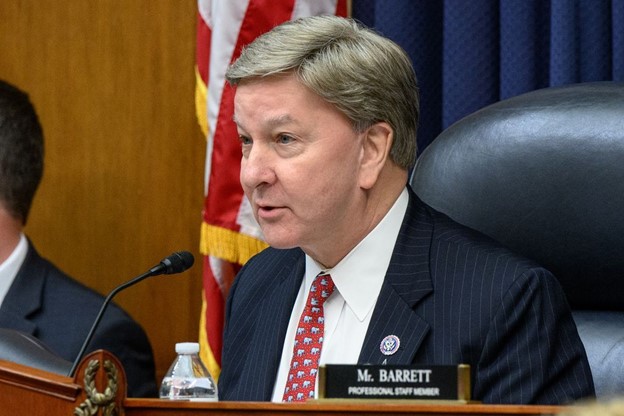
Congressman Mike Rogers criticized Joe Biden’s budget request for a plan to retire more Navy ships than the Navy plans on building. Rogers is the Chairman of the House Armed Services Committee and delivered his remarks during a hearing on the Department of the Navy’s Fiscal Year 2024 budget request. “Today, we complete our FY24 budget and posture hearings with the Department of the Navy,” Rogers said. “The President is requesting a 5 percent increase for the Navy and a 3 percent increase for the Marine Corps. Unfortunately, with today’s record level of inflation, those increases don’t go very far. We are seeing that very clearly in the request for shipbuilding. The President is seeking to build a paltry nine battle force ships in FY24. At the same time, he wants to retire 11.” As part of its Fiscal Year 2023 budget request, the Navy plans to decommission nine Freedom-class Littoral Combat Ships, five Ticonderoga-class cruisers, two Los Angeles-class submarines, four Landing Dock Ships, two oilers, and two Expeditionary Transfer Docks. “Several of these ships have years of service life remaining,” Rogers said. “These retirements represent a huge loss of capability, especially for the Marine Corps. The President plans to slash the number of amphibs by 10 percent, leaving the fleet below the statutory floor of 31. We put 31 into law because that’s what the Marine Corps told us was the bare minimum they needed to successfully carry out their mission. Going below that number invites a tremendous amount of risk. That’s clearly why General Berger included a new amphib as his number one unfunded priority this year.” “But even if we fund that amphib, the Navy still plans to reduce the number of battle force ships by 11 over the next five years,” Rogers said. “Forget about the 500-ship Navy many say we need to counter China. At no point, over the next 18 years does the size of the fleet even reach the statutory goal of 355 ships.” Rogers warned that while the United States is retiring ships early, China is an increasing threat to our Navy. “While this administration dithers, the CCP is rapidly growing and modernizing its navy,” Rogers said. “It already controls the largest Navy in the world. Our fleet of 296 ships was eclipsed years ago by a Chinese fleet of over 350 ships. In two short years, the DoD predicts the CCP will control over 400 battle force ships. I don’t understand how this administration can conclude reducing the size of our fleet will somehow deter China.” Rogers complained that the Pentagon itself is divided over the forces it needs and plans to build. “Making matters worse is confusion surrounding the Navy’s shipbuilding plan,” Rogers stated. “It’s not one plan. It’s four plans—each of them with different force structures and total number of ships. Our shipyards can’t plan, make investments, and properly operate with this uncertainty. It is also the absolute worst signal to send our adversaries, especially the CCP.” Rogers is also concerned that the Pentagon does not have enough naval strike fighters. “Finally, I’m also concerned about the strike fighter gap,” Rogers said. “It’s not forecasted to close until 2031. But that assumes Congress grants the Navy relief from the statutory requirement to field an air wing for each deployed aircraft carrier. I would inform the Navy that it’s highly unlikely we will grant that relief. The Navy should focus on mitigating the fighter gap in the short term by accelerating planned upgrades to our existing fighters, especially the F-35s. They should also expedite the fielding of unmanned collaborative drones and pair them with our existing fleet to enhance capabilities.” “The point is we should be modernizing and expanding our naval capabilities,” Rogers concluded. “We absolutely should not be cutting them.” Mike Rogers is in his eleventh term representing Alabama’s Third Congressional District. To connect with the author of this story or to comment, email brandonmreporter@gmail.com
Tommy Tuberville and Bill Cassidy demand answers of Joe Biden’s nominee for Labor Secretary
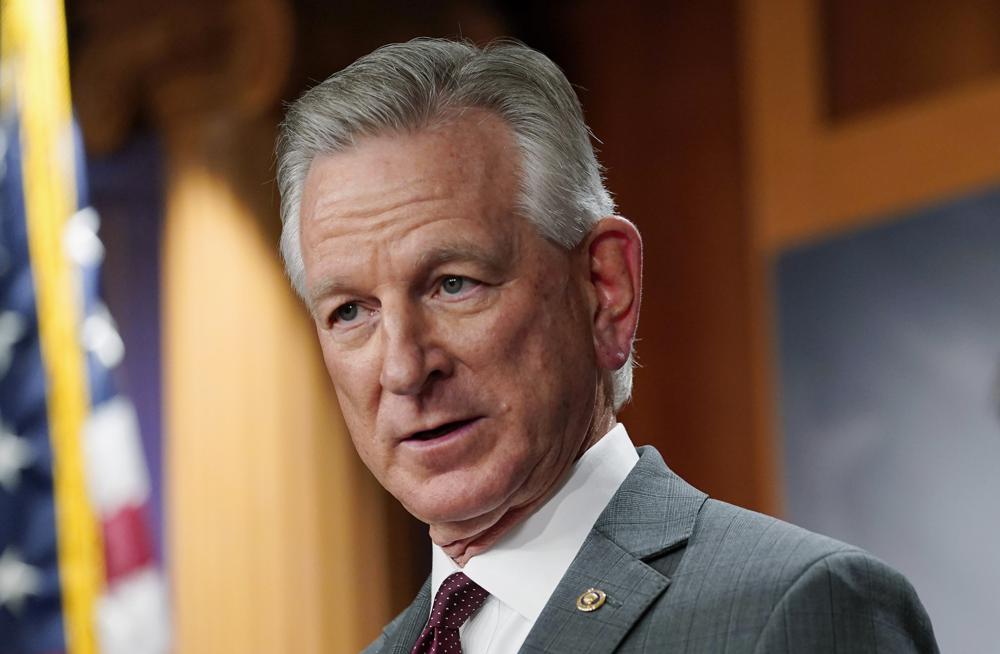
U.S. Senator Tommy Tuberville and Sen. Bill Cassidy, M.D. demanded answers from California regarding Julie Su, President Joe Biden’s nominee to be secretary of the U.S. Department of Labor (DOL), about her previous alleged obstruction of immigration officials. “As part of the Committee’s vetting process for presidentially-appointed nominees, it has come to our attention that, in July 2017, as California State Labor Commissioner, Julie Su issued a memorandum to her staff which allegedly instructed them to refuse entry to U.S. Immigration Customs and Enforcement (ICE) agents who visited state labor offices,” wrote the senators. “In response to her questions for the record, and in response to Senator Tuberville requesting the production of this memorandum, Julie Su stated that she ‘does not have access to this reported memo and do[es] not recall its precise contents. Therefore, pursuant to our constitutional responsibilities, we request that your office produce a copy of the 2017 memorandum issued by Julie Su to the Committee by May 8, 2023.” Public reports indicate that Su, while chief of California’s Division of Labor Standards Enforcement (DLSE), ordered DLSE employees to obstruct requests from ICE. Su’s nomination was approved in the HELP Committee on an 11 to 10 vote on Wednesday. She now faces consideration by the full Senate. Tuberville, Cassidy, and all the other Republicans voted against confirming Su. During last week’s nomination hearing before the HELP Committee, Tuberville asked Su about the existence of a memorandum from July 2017 instructing DLSE staff to tell ICE agents “to leave our office” and to demand a search warrant signed by a judge before allowing them onto the premises. Su responded that she neither had a copy of the memo nor could she provide one. When Senator Tuberville submitted a Question for the Record (QFR) asking for the memo after the hearing, Su again failed to provide a copy. On Monday, Senators Tuberville and Cassidy requested the California Labor and Workforce Development Agency (LWDA) provide the memo Su admitted during the hearing. The two Senators wrote, “Under Article II, § 2 of the U.S. Constitution, the Senate has the responsibility to advise the president about presidentially-appointed nominees and the authority to consent to those nominations.1 On April 20, 2023, the Senate Health, Education, Labor and Pensions (HELP) Committee held a confirmation hearing for Julie Su, President Biden’s nominee for the Department of Labor (DOL) in Washington, D.C.2 As part of the Committee’s vetting process for presidentially-appointed nominees, it has come to our attention that, in July 2017, as California State Labor Commissioner, Julie Su issued a memorandum to her staff which allegedly instructed them to refuse entry to U.S. Immigration Customs and Enforcement (ICE) agents who visited state labor offices.3 The memorandum also allegedly directs staff to tell ICE agents “to leave our office” and to demand a search warrant signed by a judge before allowing them onto the premise.” “In response to her questions for the record, and in response to Senator Tuberville requesting the production of this memorandum, Julie Su stated that she “does not have access to this reported memo and do[es] not recall its precise contents.” Therefore, pursuant to our constitutional responsibilities, we request that your office produce a copy of the 2017 memorandum issued by Julie Su to the Committee by May 8, 2023.” President Joe Biden is defending the nomination. “Julie knows in her bones as well the people who get up every morning and go to work and bust their necks just to make an honest living deserve something — someone to fight on their side to give them an even shot,” President Biden said. “Just a — just a shot so they don’t get stiffed. Well, that’s been happening to too many workers for much too long. Fighting to make sure they have a fair shot is — and no one is left behind. Julie has spent her life fighting for that vision, her entire professional career. “ “And as a civil rights lawyer and a leader of California’s state labor department, the biggest in the entire country, Julie spent two years [decades] representing workers — many without college degrees, many who didn’t speak English but who worked long, long hours at low pay and were just looking for a little bit of dignity — just a little bit of dignity for themselves and their families,” Biden said. “She’s increased the minimum wage, cracked down on wage theft, protrec- — protected trafficked workers, established and enforced workplace safety standards, and so much more.” “Born in Wisconsin, she’s the daughter of Chinese immigrants,” Biden continued. “Mom of a union worker — her mom was a union worker, and her dad was a small-business owner. She went on to law school, served the people of California. Julie is the American Dream. And she is what the American Dream is about. More importantly — I think even more importantly, she is committed to making sure that dream is within the reach of every American. Every American. That’s what she’s all about. She is going to make sure it happens as the fourth Asian American woman in my Cabinet.” Su is the Acting Secretary of Labor following Secretary Marty Walsh’s having left the administration. Su was deputy labor secretary prior to Walsh’s leaving the cabinet. “We have an extraordinary opportunity to build an economy where no one feels invisible, where every individual and community not only gets to benefit from the President’s transformative vision for America but also gets to help make it real,” Su said. “So let’s build together.” Tuberville serves on the Senate Health, Education, Labor, and Pensions (HELP) Committee. Cassidy is the Ranking Member. Tuberville is also a member of the Senate Armed Services, Agriculture, and Veterans’ Affairs Committees. To connect with the author of this story or to comment, email brandonmreporter@gmail.com.
U.S. could hit the debt ceiling as early as June 1, Treasury Secretary Janet Yellen says
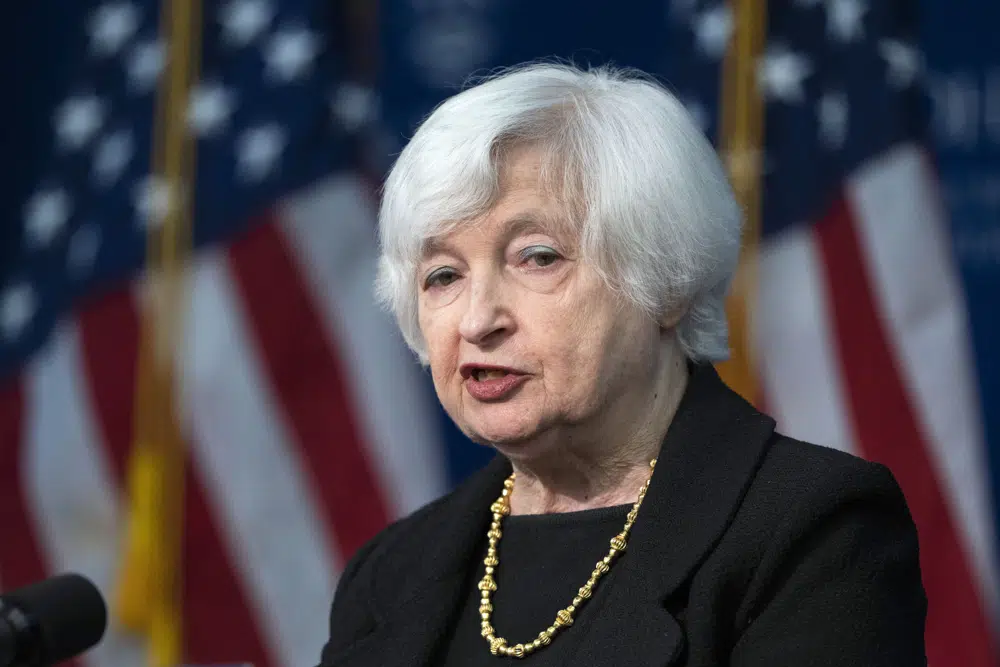
Treasury Secretary Janet Yellen notified Congress on Monday that the U.S. could default on its debt as early as June 1, if legislators do not raise or suspend the nation’s statutory borrowing authority before then. In a letter to House and Senate leaders, Yellen urged congressional leaders “to protect the full faith and credit of the United States by acting as soon as possible” to address the $31.4 trillion limit on its legal borrowing authority. She added that it is impossible to predict with certainty the exact date of when the U.S. will run out of cash. “We have learned from past debt limit impasses that waiting until the last minute to suspend or increase the debt limit can cause serious harm to business and consumer confidence, raise short-term borrowing costs for taxpayers, and negatively impact the credit rating of the United States,” Yellen said in the letter. Also Monday, the Congressional Budget Office reported that it saw a greater risk of the U.S. running out of funds in early June. CBO Director Phillip L. Swagel said because of less-than-expected tax receipts this filing season and a faster IRS having processed already received returns, “Treasury’s extraordinary measures will be exhausted sooner than we previously projected.” In January, Yellen sent a letter to congressional leaders, stating that her department had begun resorting to “extraordinary measures” to avoid a federal government default. The Treasury said Monday it plans to increase its borrowing during the April to June quarter of this year, even as the federal government is close to breaching the debt limit. The U.S. plans to borrow $726 billion during the quarter. That’s $449 billion more than projected in January, due to a lower beginning-of-quarter cash balance and projections of lower-than-expected income tax receipts and higher spending. While Russia’s invasion of Ukraine remains a burden on U.S. economic growth, Treasury officials say the debate over the debt ceiling poses the greatest risk to the U.S. financial position. Eric Van Nostrand, acting assistant secretary for economy policy, said in a statement that “even if Congress ultimately raises the debt limit before a default occurs, the ensuing uncertainty could raise borrowing costs and induce other financial stress that would weaken our labor market and our standing in the world.” “There is no time to waste,” said Shai Akabas, director of economic policy at the Bipartisan Policy Center, which forecasts the so-called X-date when the government exhausts its extraordinary measures. His organization will also provide an updated X-date projection in the coming days, he says. “The U.S. government is again within mere months or even weeks of failing to make good on all its obligations. That is not a position befitting of a country considered the bedrock of the financial system, and only adds uncertainty to an already shaky economy.” Democrats and the White House are pushing for Congress to increase the federal debt limit. President Joe Biden wants the cap raised without negotiation. The House Republican majority has most recently passed a bill to secure spending cuts in exchange for a debt limit increase. Yellen said last week, at the Cap-to-Cap policy conference in Washington that “Congress must vote to raise or suspend the debt limit, and it should do so without conditions and it should not wait until the last minute. I believe that is a basic responsibility of our nation’s leaders to get this done.” Republished with the permission of The Associate Press.
Alabama man fatally shot after firing at officers

An Alabama police officer shot and killed a man early Monday morning after officers were fired upon while trying to execute a search warrant, state investigators said in a news release. The Alabama Law Enforcement Agency said the shooting happened shortly after 6 a.m. in Cordova in Walker County and involved officers with the Gardendale Police Department. “Officers were attempting to execute a search warrant when they encountered a subject firing a weapon,” the agency said in a news release. Johnny Karris, 47, of Cordova, was fatally injured and pronounced deceased at the scene, the state agency said. No officers were injured. The state agency said it had no additional information to provide about the shooting. Investigators with the Alabama Law Enforcement Agency are reviewing the shooting at the request of the Gardendale Police Department. The results will be turned over to the Walker County district attorney. Republished with the permission of The Associated Press.
