
Lt. Gov. Will Ainsworth: As companies flee blue states, Alabama needs to make the case that they should relocate here
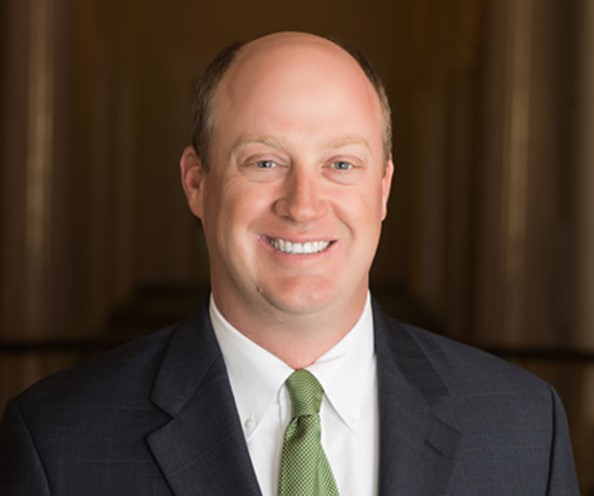
With companies across the globe looking to make big-dollar investments into communities and accompany those investments with high-paying, high-quality jobs, Alabama has an opportunity to take the bull by the horns and become one of the top states companies look toward to invest. But currently, Alabama is falling behind other states such as Tennessee, Georgia, and Virginia when it comes to a competitive supply of quality industrial sites, which companies depend on in order to build manufacturing facilities and plants. This can result in companies interested in investing in our state instead taking their jobs and economic impact elsewhere. But if our state’s leaders make the right investments now where they count, this problem can turn into an opportunity. There are thousands of jobs on the line, and we need to make sure that companies looking to establish manufacturing bases choose Alabama to set up shop. Last year I chaired the Joint Legislative Study Commission on Economic Development Incentives, which identified the need to increase the state’s number of sites to lure more industry and create more jobs for our state. That’s why we recommended legislation, called the Site Evaluation and Economic Development Strategy (SEEDS) Act, which the legislature unanimously passed, and the Governor signed into law, that would allow Alabama to close the gap with our competitors. We now need to fully fund that program so that it can be successful. Other states recognize this need and have continued to invest millions into preparing industrial sites for future development. Alabama is going to be left behind if we don’t act now to secure a future of economic success. A declining manufacturing base can be absolutely fatal for communities. Look at Detroit, Michigan, as an example. As their automotive manufacturing sector began to diminish, so did the city, which at the time was thriving. Look at it now. While losing a manufacturing base can destroy a community, a growing manufacturing base can literally change the trajectory and future of a community for decades. States across the country recognize this. For example, in Virginia’s 2022-2024 budget, which Virginia Governor Glenn Youngkin signed in June 2022, the state allocated $150 million for their site development program, of which $90 million in grants were announced in January 2023. Governor Youngkin has also proposed that this program receive an additional $350 million in new site development funding in fiscal year 2023. If approved by the Virginia legislature in its 2023 legislative session, the new allocation would bring the state’s total recent investments for site development to $500 million. Alabama should follow that example. Alabama needs to be a leader in economic development strategy and work to be the most business-friendly environment in the country. As companies are fleeing states with disastrous economic policies like California and New York, we need to be able to make a compelling case to those companies that they should choose to relocate here. If Alabama can make the investments needed for those companies to see that Alabama has industrial sites with the utilities, infrastructure, and other assets needed to be successful, the sky is the limit for what our state can achieve. To create an environment where Alabama is one of the first states companies consider when looking to locate, we need to step up and fully fund our economic development programs enacted under the SEEDS Act. Hindsight is 20/20, and it would be a shame for the leaders of our state to look back in 10 years and see the investments that could have been made here in Alabama, instead of paying off in dividends in competing states. Let’s create an environment where our state is heading in the right direction, instead of retreating in the wrong direction, like California and New York. Let’s take advantage of the opportunity to lure companies fleeing those states to make Alabama home. Let’s pave the way for a future where Alabama communities will have more jobs and economic opportunities than ever before. That’s a future for our state that I believe in – let’s invest into that future. Alabamians depend on our state’s government and elected leaders to get real results that benefit their communities and families. The best way to do that is to deliver high-quality jobs and economic investments that lift communities up and give Alabamians the future they deserve. Will Ainsworth has served as lieutenant governor of Alabama since 2019.
Alabama House passes bill to make it a crime to chemically endanger a first responder

Fentanyl has been a deadly scourge in the state killing thousands of drug users. It has also become dangerous for first responders who have to deal with drug dealers and drug users who are suffering from drug overdoses. House Bill 230 (HB230) is sponsored by State Representative Matt Simpson (R-Daphne). “This bill would create the offense of a criminal endangerment of a first responder,” Rep. Simpson explained, “With escalating penalties depending on the degree of the injuries to the first responder.” “If he knowingly, negligently, or intentionally injures a first responder with a scheduled one controlled substance,” Simpson said. “If it is just physical injury, it is a Class C felony. If it is a serious physical injury, it is a Class B felony. To cause the death of a first responder would be a Class A felony.” Of the four classes of felonies in Alabama – A, B, C, D – A is the most serious and typically carries the largest penalties. “Why did you not have this in your previous bill,” raising the penalties for fentanyl traffickers Rep. Juandalynn Givan asked. “I did not want to muddy the water with that bill,” Simpson explained. “Researching that bill, I talked with officers who had been injured in the line of duty from exposure (to drugs).” “It is not just being around it,” Simpson said. For the crime of chemical endangerment of a first responder, the injury must be caused by “ingestion, inhalation, or contact” with the controlled substance. Rep. Napoleon Bracy asked Simpson why he did not address this in the previous bill. “I did not want to add something on it,” Simpson explained. “I wanted that to get through clean. This came up while I was working on it. I heard so many stories from officers who had been injured. They have to get Narcan hit. They have to go to the emergency room. There have been serious injuries.” Bracy said, “You can have a crime scene that spills over into other areas.” Bracy, whose wife is in the medical field, wanted emergency room doctors and nurses who may be exposed to dangerous narcotics while tending to narco-traffickers also included in the definition of “first responders” in this bill. “I think we are missing a group of people that need to be included in this,” Bracy said. “They (the drug dealer/users) are either going to a hospital, a psychiatric facility, or a county jail. I think we need to include them.” Simpson said after some discussion with Bracy and staff, “They are included. The medical teams at the hospital would be included.” Rep. Laura Hall brought an amendment to the bill adding in some language to the bill. Simpson said that the Hall amendment was a friendly amendment. The Hall amendment was adopted in a 105 to 0 vote. The House of Representatives passed HB230 as amended on a 105 to 0 vote. The legislation now goes to the Alabama Senate for their consideration. Wednesday will be day 17 of the 2023 Alabama Regular Legislative Session. To connect with the author of this story or to comment, email brandonmreporter@gmail.com.
Legislature votes to ban exhibition driving

On Tuesday, the Alabama State Senate voted in favor of legislation outlawing street racing and other forms of exhibition driving, such as tire burnouts and doing donuts with a motor vehicle. State Representative Allen Treadaway sponsored House Bill 29 (HB29). HB29 was carried in the Senate by Sen. Rodger Smitherman, who sponsored the Senate version of the bill. Smitherman explained to the Senate that Rep. Treadaway is a former City of Birmingham Deputy Police Chief and is sponsoring the same legislation in the Alabama House of Representatives. “I don’t have a problem with the House bill,” Smitherman said. “It is the same bill.” “There have been several instances of people getting hurt through this dangerous driving,” Barfoot said. “I have been almost run over,” said Sen. Shay Shelnutt. “I have seen this problem personally in our county.” The Alabama Big 10 Mayors have endorsed legislation to impose criminal penalties on exhibition driving. “This is something that the Mayor of Birmingham and the Mayor of Hoover asked us to support,” Rep. Susan Dubose said. “We have had 16 persons and a baby killed by a Dodge Charger that was doing donuts with a crowd watching.” “In our area, we have had four people killed,” Smitherman said. “Currently, all you can do is misdemeanors.” “Exhibition driving” is when a driver purposefully drives intentionally to create unnecessary engine noise, tire skids, burnouts, and other dangerous and dangerous and damaging driving techniques. This growing problem across Alabama cities creates a public safety hazard for pedestrians and other drivers while draining limited law enforcement resources. A first violation shall be guilty of a Class C misdemeanor. A second or subsequent violation shall be guilty of a Class B misdemeanor. In addition, the court may prohibit the person from driving a motor vehicle on the public highways of this state for a period not exceeding six months. If a person operating a motor vehicle violating this ban causes bodily injury to another individual, or the offense proximately causes damage to any property, the person shall be guilty of a Class A misdemeanor. In addition, the court shall prohibit the person from operating a motor vehicle on the public highways of this state for six months. If a person violates this ban and, in the commission of this act, causes serious physical injury to a person other than the driver, the person shall be guilty of a Class C felony. In addition, the court shall prohibit the person from operating a motor vehicle on the public highways of this state for two years. If a person commits a violation of this law and the commission of the offense proximately causes death to any person, the person shall be guilty of a Class B felony. In addition, the court shall prohibit the person from operating a motor vehicle on the public highways of this state for not less than two years. HB29 passed the Senate 33 to 0. The legislation now goes to Gov. Kay Ivey’s desk for her consideration. Wednesday will be day 17 of the 2023 Alabama Regular Legislative Session. To connect with the author of this story or to comment, email brandonmreporter@gmail.com.
Legislature passes bill to give nonviable birth certificates to mothers who lost a pregnancy

On Tuesday, the Alabama Legislature passed bipartisan legislation allowing mothers whose preborn child was lost due to miscarriage to apply for and receive a state-issued birth certificate for that child whose life ended prematurely. House Bill 55 (HB55) is sponsored by State Representative Juandalynn Givan. Givan explained in committee that she was asked to carry this legislation by a woman she met at a town hall, who had lost her child, Genesis, to miscarriage. Givan agreed to carry the bill after other mothers approached her with similar stories. Givhan explained to the House Health Committee that she has spoken with State Health Officer Dr. Scott Harris and that he has agreed for the Department of Public Health to prepare the nonviable birth certificates. Givan explained that the Department already provides these but only for pregnancies lost at 20 weeks or later. HB55 extends that to earlier pregnancies. Rep. Givan explained that Florida was the first state to pass this legislation. Since then, other states have followed. Givan explained that mothers who have lost a child, even in the womb, feel a great sense of loss that deeply affects them. The legislation received favorable recommendations from both the House and Senate Health Committees. The Senate passed the legislation 33 to 0 on Tuesday. The legislation has already passed the House of Representatives. It now goes to the Governor for her consideration. According to the synopsis, “Under existing law, a nonviable birth that occurs before the twentieth week of gestation is not reported to the Office of Vital Statistics, and a parent of a nonviable birth that occurs before the twentieth week of gestation may not request a certificate of birth. Also, under existing law, a parent of a fetal death occurring after 20 weeks of gestation may request a Certificate of Birth Resulting in Stillbirth. This bill would create the Genesis Act to require the Alabama Department of Public Health to adopt rules allowing for the parents of a nonviable birth occurring before the twentieth week of gestation to request a Certificate of Nonviable Birth.” HB55 now goes to Governor Kay Ivey’s desk for her consideration. Wednesday will be Day 17 of the 2023 Alabama regular session. To connect with the author of this story or to comment, email brandonmreporter@gmail.com.
Steve Flowers: Jabo Waggoner – An Alabama political icon
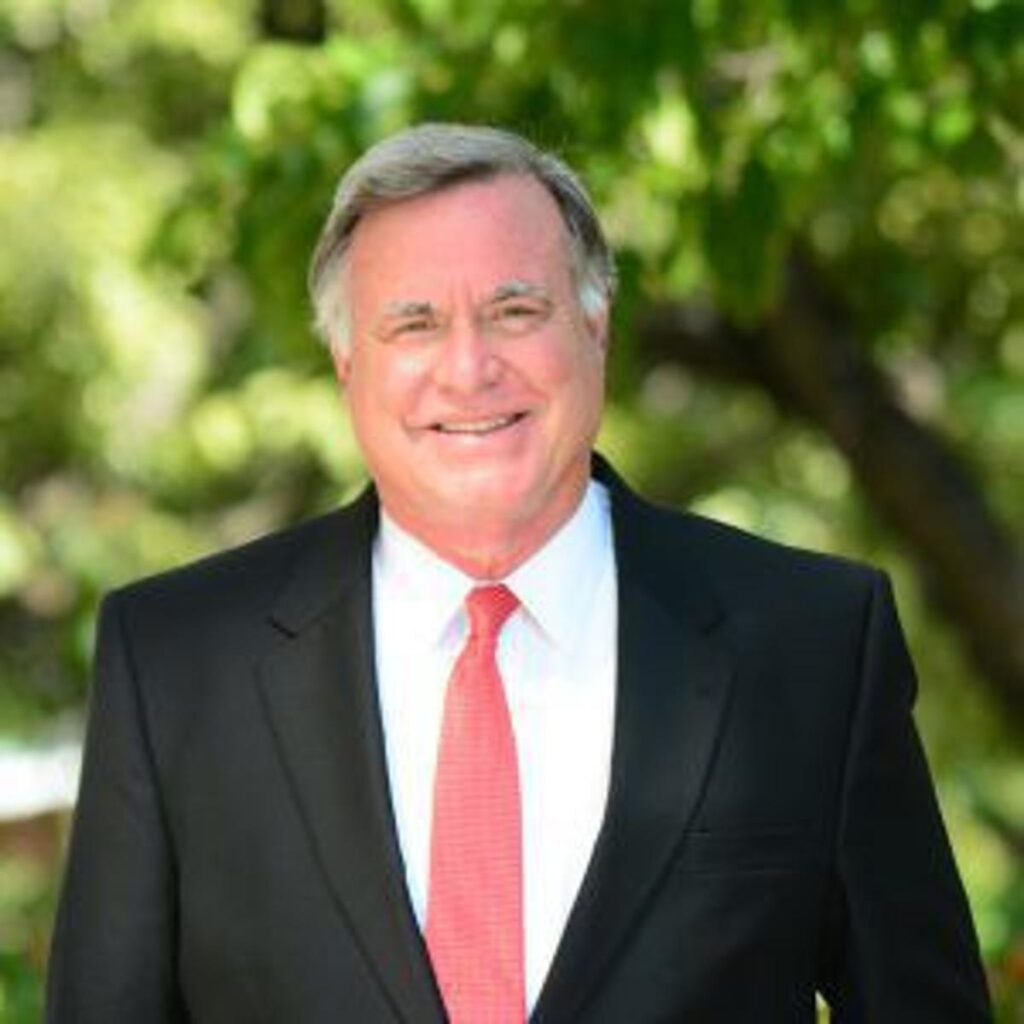
As I stroll down the halls of the Alabama Senate during this current Regular Session of the Alabama Legislature, I will stop and visit in the offices of my favorite legislative buddies. My favorite and first stop is with my longtime friend Jabo Waggoner. Jabo, being the Dean of the legislature, has the first prime corner office. He also chairs the agenda-setting Rules Committee. Therefore, there is a throng of high-priced lobbyists camped outside the door trying to get Jabo to put their bills on the Special Order Calendar. Jabo and I will swap stories of bygone years and reminisce about past experiences. Jabo is a big sports fan and was a great college basketball player. In fact, Jabo was one of the founders and remains on the Board of the Alabama Sports Hall of Fame, which is located in downtown Birmingham. Jabo, Gene Hallman, and Edgar Welden were the pillars and founders of this prestigious Institution. One of Jabo’s and my favorite remembrances is going together to the Olympic Soccer Games held at Legion Field in Birmingham. Recently while visiting Jabo, I thought, “I am with an Alabama political icon.” Jabo Waggoner has been in the Alabama Legislature for 50 years this year. Folks, that is an Alabama record. Jabo Waggoner is the longest-serving legislator in Alabama history. He served 17 years in the Alabama House of Representatives and is in his 33rd year in the Alabama Senate. Jabo was first elected to the Alabama Senate in 1990. The heart of his district has always been the entire city of Vestavia. He also represents parts of Homewood and Hoover. This is a very Republican area, and therefore, Jabo is an arch Republican. Jabo is revered in Jefferson County, but his popularity extends beyond Jefferson and Shelby counties. When Kay Ivey was running for Governor for the first time in 2018, she asked Jabo to be her titular campaign manager. He introduced her as she announced her candidacy. Jabo is adored by his Senate colleagues, especially the younger state senators. They throng to him for tutoring and mentoring. The Senate leaders, Greg Reed of Jasper and Clay Scofield of Arab, seek his guidance on tricky senate maneuverings. Jabo was the Republican Minority Leader of the State Senate from 1999 until the Republicans gained a legislative majority in 2010. He was the first Republican Majority Leader, then relinquished that role to be the Rules Chairman, where he currently serves. Jabo is married to his high school sweetheart Marilyn. They have been married for over 60 years. I have never met a more beautiful or sweeter lady than Marilyn Waggoner. They had four children, three sons, and a daughter. One of their sons, Scott, died at an early age in an automobile accident. Jabo and Marilyn are ardent members of the Homewood Church of Christ. They attend almost every Sunday and sit with Jabo’s best friend, Dr. Swaid and his wife, Christy. Jabo’s and Marilyn’s children attend the same church. Jabo Waggoner has done a lot for Jefferson County for over 50 years. It would take a book to chronicle his legislative accomplishments and good deeds. In the 1970s, Waggoner sponsored legislation that spearheaded the purchase of 45 blocks in downtown Birmingham for UAB’s expansion. UAB purchased this property, which was valued at $8.5 million at that time. There is no telling what that land is worth today – probably well over $200 million to $300 million. Jabo was first elected to the legislature in 1966. It is no coincidence that UAB has grown into one of the premier medical and research institutions in America and the Crown Jewel of Alabama during that same period. Although Jabo is an arch conservative Republican, he has forged a close working relationship with his fellow Democratic Senate leader Roger Smitherman to work across the aisle for the good of Jefferson County. In closing, in all my years of following Alabama politics, I have never seen a more modest or amicable leader than Jabo Waggoner, Jr. I have never seen or heard of anyone who has ever met Jabo that did not like him. Jabo Waggoner is an icon of Alabama political history. See you next week. Steve Flowers is Alabama’s leading political columnist. His weekly column appears in over 60 Alabama newspapers. He served 16 years in the state legislature. Steve may be reached at www.steveflowers.us.
Paul DeMarco: Alabama Legislative Session success so far, still work ahead for lawmakers
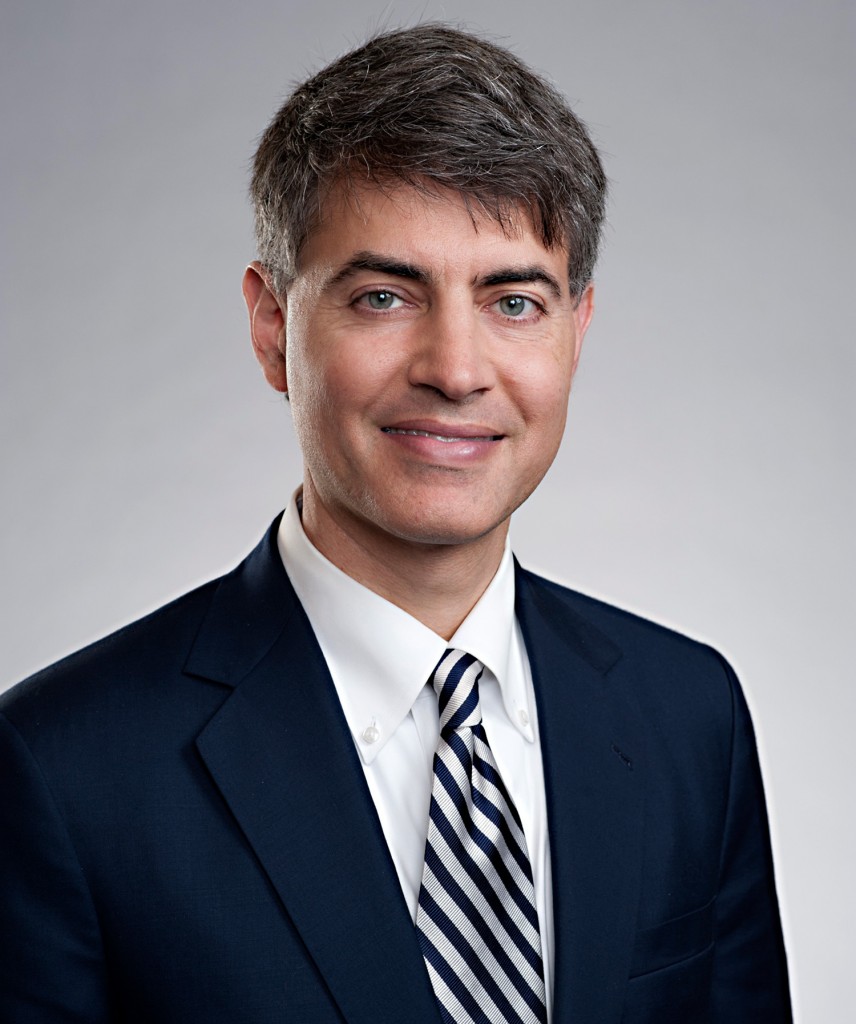
We are now just past the halfway point of the current session of the Alabama Legislature. While there has been a lot accomplished, there is still a lot to do. Lawmakers deserve praise for passing several pieces of needed legislation. Specifically, a bill that would require mandatory minimum sentences for trafficking of fentanyl and the reform of prison “good time” laws that allowed violent felons out of prison years before their sentence was complete are now law. At this point, still waiting for debate and final passage are a number of other bills that are being considered by state representatives and senators, which could include the following: All of this legislation is significant, and work by lawmakers to get them passed is happening in the committees. To get them to the governor’s desk, however, will take a lot of work with the sprint to the end of the session since there is so much left to do. The education and general fund budgets also must be approved by both chambers. With significant budget surpluses this year, there are a lot of eyes watching where state funds are being appropriated. In addition, the decades-long issues of problems with the state’s corrections facility have got to be addressed sooner rather than later. Even with the construction of three new facilities, the ongoing problems have to be addressed to avoid a federal takeover of the system. There are about fifteen days left in the session. We will see what lawmakers get accomplished before they adjourn for the year. Paul DeMarco is a former member of the Alabama House of Representatives and can be found on Twitter @Paul_DeMarco.
State fiscal watchdogs lead national pushback on new mortgage fees
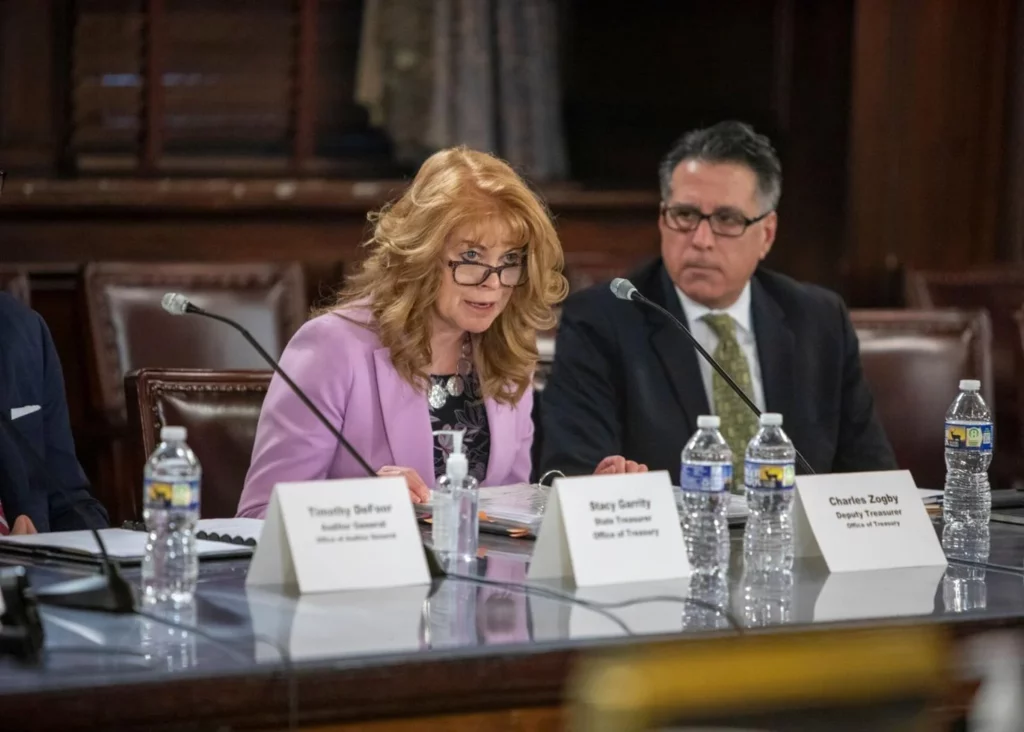
Pennsylvania Treasurer Stacy Garrity leads a coalition of state financial officials pushing back against new federal mortgage fees they call “unconscionable.” “This new policy makes it more expensive for people with good credit to buy houses – and that’s absurd,” she said. “Americans who have built a good credit score and saved enough to make a strong down payment should not be penalized and forced to pay more on their mortgage every single month.” The letter, sent Monday to President Joe Biden and Federal Housing Finance Agency Director Sandra L. Thompson, includes the signatures of 33 officials from 26 states – all of whom insist the administration should roll back the modified fee structure that applies to borrowers with more favorable credit profiles. The new rates, which went into effect Monday, raise upfront fees for borrowers with credit scores over 680 and down payments between 15% and 20%. The extra money collected subsidizes buyers with less favorable finances – part of the administration’s strategy to make homeownership more accessible for borrowers with less wealth and upward mobility. Only mortgages backed by Freddie Mac and Fannie Mae – which included more than half of home loans taken out in 2020 – will see the fee increase. Garrity and other critics said the backward incentive boils down to a middle-class tax hike that takes “money away from the people who played by the rules and did things right.” In multiple media reports, housing analysts say borrowers with better financial profiles still get lower interest rates and pay less overall compared to buyers with less favorable loan terms. The higher interest rates, smaller down payments, and added cost of mortgage insurance typically eclipse any savings on up front fees in a matter of years. In the letter, the officials shared in the administration’s goal of increasing home ownership but said “confiscating” the money from “hardworking, middle-class American families” and using it as a “handout” goes too far. Instead, they want to see the federal government adopt policies to reduce inflation, cut energy costs, and lower interest rates – all factors that would boost discretionary income and give people more leeway to save for a down payment. Republished with the permission of The Center Square.
Joe Biden sending 1,500 troops for Mexico border migrant surge

The Biden administration will send 1,500 active-duty troops to the U.S.-Mexico border starting next week, ahead of an expected migrant surge following the end of coronavirus pandemic-era restrictions. Military personnel will do data entry, warehouse support, and other administrative tasks so that U.S. Customs and Border Protection can focus on fieldwork, White House spokeswoman Karine Jean-Pierre said Tuesday. The troops “will not be performing law enforcement functions or interacting with immigrants, or migrants,” Jean-Pierre said. “This will free up Border Patrol agents to perform their critical law enforcement duties.” They will be deployed for 90 days and will be pulled from the Army and Marine Corps, and Defense Secretary Lloyd Austin will look to backfill with National Guard or Reserve troops during that period, Pentagon spokesman Air Force Brig. Gen. Pat Ryder said. There are already 2,500 National Guard members at the border. The COVID-19 restrictions have allowed U.S. officials to turn away tens of thousands of migrants crossing the southern border, but those restrictions will lift May 11, and border officials are bracing for a surge. Even amid the restrictions, the administration has seen record numbers of people crossing the border, and President Joe Biden has responded by cracking down on those who cross illegally and by creating new pathways meant to offer alternatives to a dangerous and often deadly journey. For Biden, who announced his Democratic reelection campaign a week ago, the decision signals his administration is taking seriously an effort to tamp down the number of illegal crossings, a potent source of Republican attacks, and sends a message to potential border crossers not to attempt the journey. But it also draws potentially unwelcome comparisons to Biden’s Republican predecessor, whose policies Biden frequently criticized. Congress, meanwhile, has refused to take any substantial immigration-related actions. Then-President Donald Trump deployed active-duty troops to the border to assist border patrol personnel in processing large migrant caravans, on top of National Guard forces that were already working in that capacity. Jean-Pierre downplayed any similarity between Biden’s immigration management and Trump’s use of troops during his term. “DOD personnel have been supporting CBP at the border for almost two decades now,” Jean-Pierre said. “So this is a common practice.” It’s another line of defense in an effort to manage overcrowding and other possible issues that might arise as border officials move away from the COVID-19 restrictions. Last week, administration officials announced they would work to swiftly screen migrants seeking asylum at the border, quickly deport those deemed as not being qualified, and penalize people who cross illegally into the U.S. or illegally through another country on their way to the U.S. border. They will also open centers outside the United States for people fleeing violence and poverty to apply to fly in legally and settle in the United States, Spain, or Canada. The first processing centers will open in Guatemala and Colombia, with others expected to follow. The Pentagon on Tuesday approved the request for troops by Homeland Security, which manages the border. The deployments have a catch: As a condition for Austin’s previous approval of National Guard troops to the border through Oct. 1, Homeland Security had to agree to work with the White House and Congress to develop a plan for longer-term staffing solutions and funding shortfalls, “to maintain border security and the safe, orderly, and humane processing of migrants that do not involve the continued use of DOD personnel and resources,” said Pentagon spokesman Air Force Lt. Col. Devin Robinson. As part of the agreement, the Pentagon has requested quarterly updates from Homeland Security on how it would staff its border mission without servicemembers. It was not immediately clear if those updates have happened or if border officials will be able to meet their terms of the agreement — particularly under the strain of another expected migrant surge. Homeland Security said it was working on it. “U.S. Customs and Border Protection is investing in technology and personnel to reduce its need for DOD support in coming years, and we continue to call on Congress to support us in this task,” the agency said in a statement. Republished with the permission of The Associated Press.
