
Alabama Legislature passes parental rights bill

The Alabama Legislature passed parental rights legislation on Wednesday. The Alabama Senate voted in favor of the bipartisan legislation 35 to 0. House Bill 6 (HB6) is sponsored by State Representative Kenneth Paschal (R-Pelham). The legislation was carried in the Senate by Sen. Greg Albritton (R-Atmore). “This bill simply codifies what is already case law,” Sen. Albritton explained. Senate Minority Leader Bobby Singleton (D-Greensboro) asked, “Why do we need it? “This would codify what is already in the law,” Albritton explained. “We believe that it strengthens the law and puts into the black letter law what we already have in the case law.” “HB6 is focused on two principles: God and Country,” Rep. Paschal said on the House floor. “Parental rights are related to the noble duty of parents to raise their children. Parental rights are natural rights that cannot be taken away by any form of government.” HB6, as amended, passed the Senate 35 to 0. It already passed the House by a vote of 87 to 8. The bill now goes to the Gov. Kay Ivey, for her consideration. The Alabama Legislature will meet on Tuesday for Day 30 of the legislative session. The Constitution of Alabama limits the legislative session to a maximum of thirty days. To connect with the author of this story or to comment, email brandonmreporter@gmail.com.
Tommy Tuberville again refuses Democrats’ eighth attempt to break hold on DoD nominees over taxpayer-funded abortions
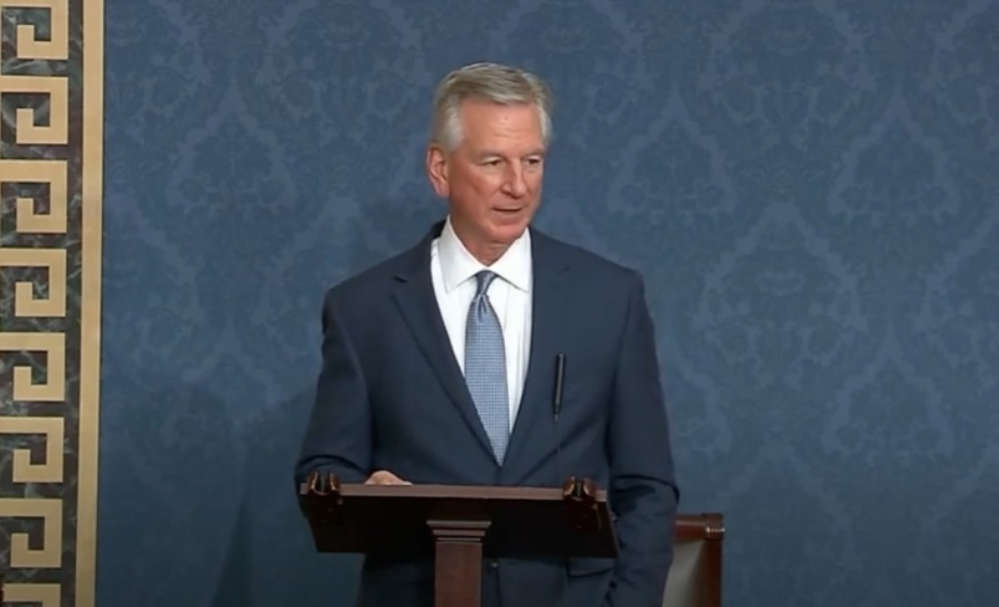
On Wednesday, U.S. Senator Tommy Tuberville blocked the eighth attempt by Senate Democrats to circumvent his delay of military promotions before the U.S. Senate. Tuberville has been widely criticized for placing a “hold” on all U.S. Department of Defense (DoD) general and flag officer nominations over the department’s new policy of funding travel and additional paid time off for service members and their dependents seeking an elective abortion. The hold simply requires military nominations and promotions to be processed through regular order rather than being approved by unanimous consent in large batches. “I continue to reiterate my stance and my position over the last, almost, four months now, about my opposition to this policy,” Tuberville said. “Now, the burden is not on me to pass legislation to stop this illegal policy. The burden is on the administration. The burden is on the administration to stop breaking the law.” “And so let me just say this one more time — because I keep getting asked the same question over and over again. I will keep my hold. I will keep it on until the Pentagon follows the law or changes the law. It’s that simple,” Tuberville stated. “Those are the two conditions that would get me to drop the hold. So, until these conditions are met, I object.” There had been questions about whether or not Tuberville would continue his policies after a Tuberville staffer resigned this week. Tuberville’s national security adviser Morgan Murphy resigned on Tuesday after a Washington Post story last week suggested he was largely behind the Senator’s controversial hold on hundreds of military nominations. The Post obtained an email Murphy sent to colleagues Tuesday night in which he said it was his last day of work for Tuberville. “Today is my last day with Coach, the best boss I’ve ever had,” Murphy wrote, referring to Tuberville’s nickname from his previous job as a college football coach. “It’s been an honor to work with each of you these past 2.5 years, and I hope you’ll keep in touch with me.” Tuberville’s office did not respond to a request for comment from Alabama Today on Murphy’s departure. Tuberville’s statement on Wednesday sends a strong message that the Senator is not changing his approach to the issue. Since March, Tuberville has held up the Senate from approving more than 200 Pentagon nominations over the Pentagon’s abortion travel policy. Senator Tuberville believes the Pentagon is circumventing the role of Congress and flouting existing federal law, which narrowly restricts the use of taxpayer funds and DoD facilities being used to provide or facilitate abortions for service members. Conservative leaders and pro-life groups have widely applauded Tuberville’s actions. To connect with the author of this story or to comment, email brandonmreporter@gmail.com.
Controversial anti-vaping legislation carried over in the Alabama Senate
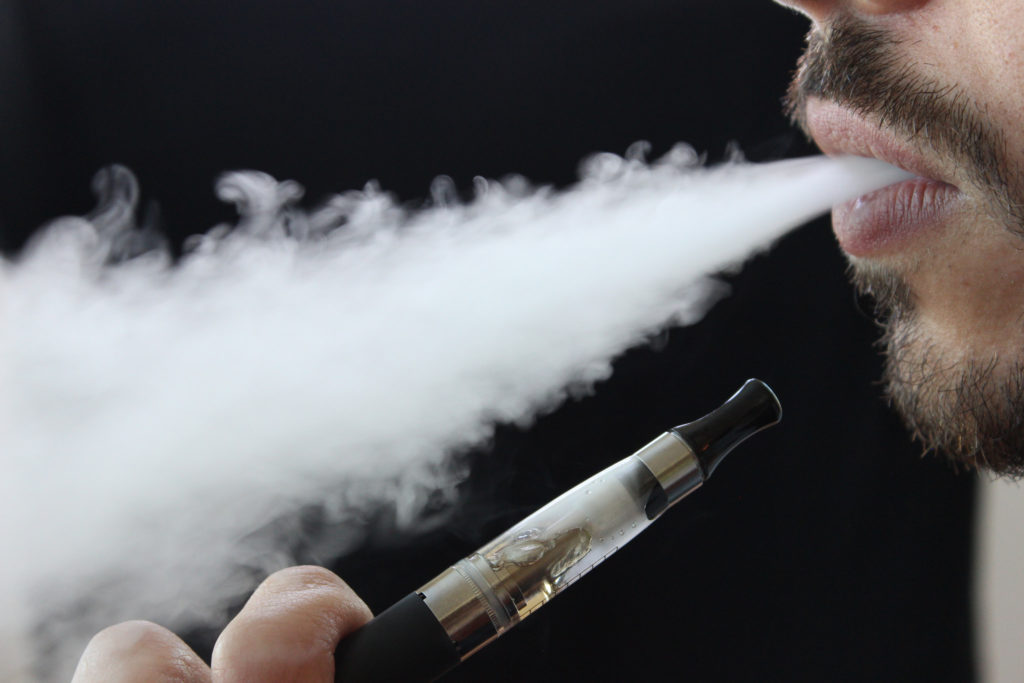
The Alabama Legislature passed dozens of bills on Thursday, with time running out on the 2023 Alabama Regular Legislative Session. Controversial anti-vaping legislation was not one of them. That bill was carried over in the Senate after widespread opposition lobbied Senators not to pass the bill. House Bill 319 (HB319) is sponsored by State Representative Barbara Drummond (D-Mobile). It is being carried in the Alabama Senate by State Senator Garlan Gudger (R-Cullman). Sen. Gudger said, “We do have a few amendments.” State Senator Tim Melson (R-Florence) said that the Alabama Cancer Action Network is opposing this bill. “This isn’t a quack organization,” Melson said. “They and the heart association and the lung people are against this bill.” Gudger said, “They want all tobacco and nicotine in existence eliminated.” “I don’t know how you are going to move it,” Melson said. “I can’t support this if they are against it.” Sen. Rodger Smitherman (D-Birmingham) said, “I think it is a crying shame that instead of doing something, they would rather do nothing. Doing nothing here is going to continue to allow these kids to continue vaping.” “They are going to continue vaping like I don’t know what,” Smitherman said. “They want to yank us around like a yoyo. Look at the impact if you don’t do anything.” Smitherman compared the Senator’s unwillingness to pass health legislation not supported by health associations to the failure of his plan to require a formal due process for school discipline decisions because it was universally opposed by the Alabama state school superintendents. “You care more about these little folks that call you, like the superintendents, than you do the little children,” Smitherman said. Smitherman said that Drummond had a negotiated bill. “She negotiated with them, and they agreed with what that bill was,” Smitherman said. “That’s not right.” “I am not going to stop fighting for the kids,” Smitherman said. “If you don’t pass this bill, they are going to vape for a whole year.” HB319 creates a registry of vape sellers and assigns that and enforcement of the bill to the Alcohol and Beverage Control Board. It also limits vaping to people 21 and above and fines underage persons who vape. “For the sake of the children, take out the due process,” Smitherman told Gudger. Sen. Shay Shelnutt (R-Trussville) told Gudger to “carry this over at the call of the chair.” Gudger finally asked that the bill be carried over at the call of the chair. It never came back that day. Gudger later told reporters, “(Health groups) want all tobacco eliminated, and we can’t do that. They want their way or nothing.” Groups like the Alabama Heart Association have opposed this legislation because they object to young people who vape being fined by the state and claim that it does not go far enough in regulating tobacco companies. Jada Shaffer is the senior regional lead of governmental affairs for the American Heart Association. “As the mother of a son who started using chewing tobacco at 14 and purchased it at our local gas station, I know this is a problem all too well,” said Shaffer. “I am pleading with lawmakers to take bold steps in ensuring that no child is exposed again to these deadly products and that the retailers in Alabama are held accountable if they sell to minors. Big tobacco targeted kids with fruity flavors and successfully addicted a whole new generation of kids to nicotine. And now they are shifting the blame to kids and penalizing them. HB319/SB271 further victimizes Alabama’s children all over again.” House Bill 319 could be brought back on Tuesday. If it does not pass the Senate – and then the House of Representatives approves any changes made by the Senate by the end of the legislative day on Tuesday, the legislation will die as Tuesday is Day 30 of the legislative session – the legislature is limited to a maximum of thirty days by the Alabama Constitution. To connect with the author of this story or to comment, email brandonmreporter@gmail.com.
Katie Britt votes against debt ceiling bill
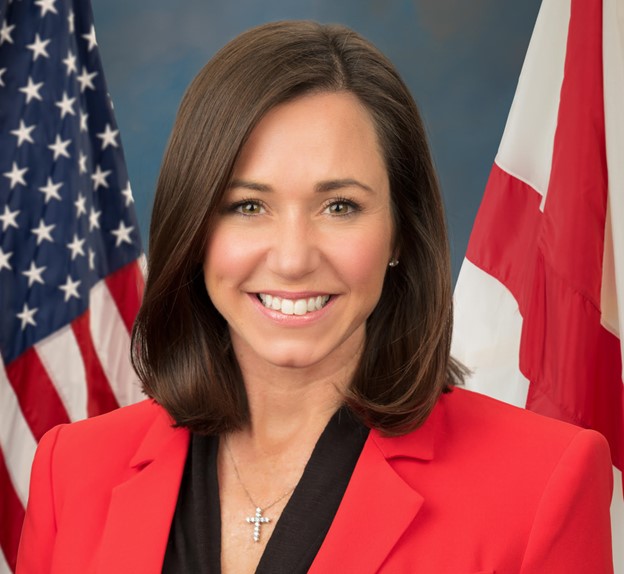
U.S. Senator Katie Britt voted against the bipartisan debt ceiling plan, H.R. 3746 – the Fiscal Responsibility Act, on Thursday after efforts to amend the package were blocked. The debt ceiling sets the amount of money the U.S. Department of the Treasury can legally borrow to pay the country’s financial obligations. H.R. 3746 will suspend the debt ceiling with no set monetary limit, among other provisions. The national debt is currently more than $31.8 trillion. The deficit is estimated to grow by as much as $4 trillion over the next 19 months. “The United States currently has a national debt of nearly $32 trillion, and it is rapidly rising with each passing minute,” said Senator Britt. “It’s clear that if we don’t change our dire financial trajectory, it will make the American Dream unattainable for our children and our children’s children. This issue is not only a question of our country’s economic security, but our moral obligations to future generations. Decisive action and tough decisions are needed to finally get control of wasteful government spending and put America’s fiscal house in order. While I appreciate the diligence of Speaker McCarthy in attempting to make the best out of the crisis scenario caused by months of President [Joe] Biden refusing to even have a conversation about this issue, we must do more.” Both Britt and Senator Tommy Tuberville voted no on the debt ceiling deal. Senator Britt joined Senator Rick Scott (R-Florida) and eight Republican colleagues to introduce the Full Faith and Credit Act, legislation that would have ensured that the federal government avoids default and prioritizes meeting America’s obligations to our military, veterans, and seniors after reaching the debt ceiling. During debate of H.R. 3746 on the Senate floor, Senator Britt supported several efforts to improve the legislation in a fiscally responsible manner. However, all of these amendments were defeated by Senate Democrats. On Thursday night, the Senate voted to send a compromise bill to President Biden’s desk that extends the government’s borrowing authority until January 2025 and staves off a potentially disastrous default next week. A large bipartisan majority of the Senate voted 63 to 36 to approve the bill, which passed the House on Wednesday night. 31 of the 49 Senate Republicans voted against the deal, including Senate Republican Conference Committee Chairman John Barrasso (Wyoming). Senate Democrats were not happy about caps on non-defense discretionary spending, tougher work requirements for federal food assistance, and approval of a controversial natural gas pipeline. Forty-five of the Senate Democrats voted for the bill to avoid default. Four Democrats and independent Bernie Sanders voted against the deal. The bill was negotiated between President Biden and Speaker of the House Kevin McCarthy (R-California). “No one gets everything they want in a negotiation, but make no mistake: this bipartisan agreement is a big win for our economy and the American people,” President Biden said in a statement. The federal government collects $4.7 trillion in taxes, including $2.6 trillion in income tax revenues. The federal government spends $6.1 trillion annually, producing a current budget deficit of $1.48 trillion annually. To connect with the author of this story or to comment, email brandonmreporter@gmail.com.
Gov. Kay Ivey signs biggest budget in state history
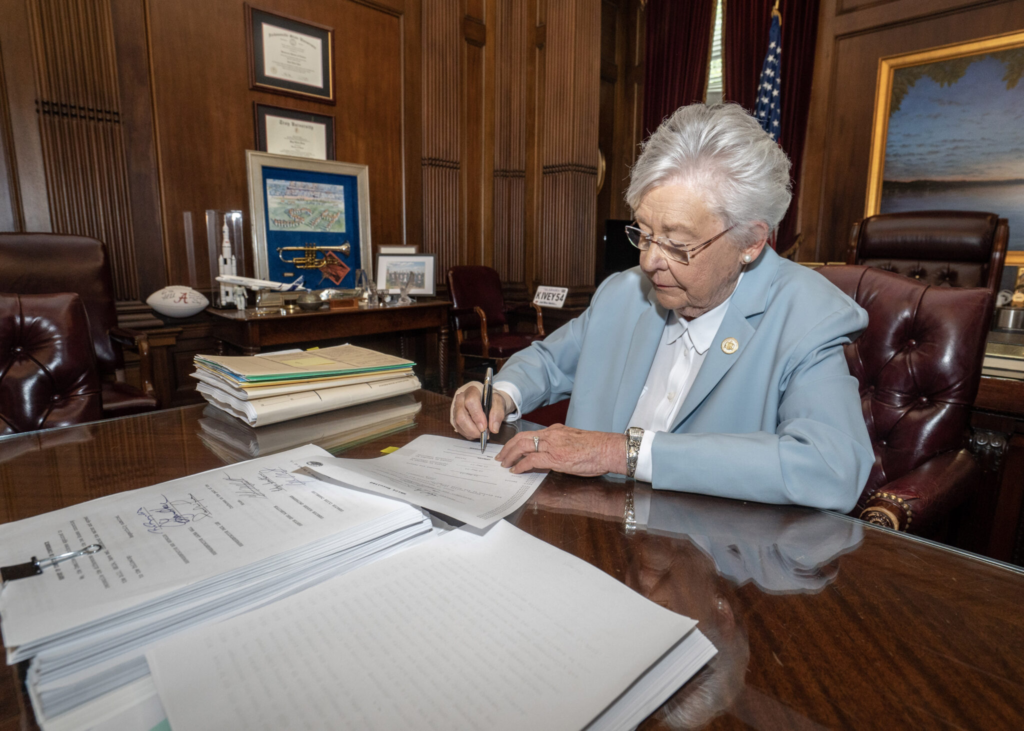
Alabama Governor Kay Ivey on Thursday signed the state general fund (SGF) budget and the education trust fund (ETF) budget, including two supplemental appropriations totaling $3.1 billion. This is the largest general fund and education budget in state history. The four budget bills total $14.7 billion. “I am proud to officially put my signature on yet another historic investment in our students, teachers, and schools,” Ivey said. “Alabama is serious about changing the trajectory of student outcomes, and our steady progress in the classroom and this record-setting education budget prove that to be the Gospel Truth. We are expanding our award-winning pre-K program into some of our highest poverty areas. We are supporting the implementation of the critical Literacy and Numeracy Acts. We are, once again, increasing teacher pay, giving us even more of a competitive edge to recruit and retain the educators of today and tomorrow. We are investing in our two-year and four-year colleges. And thanks to the work of the Alabama Legislature, we continue making these wise investments while paying down debts, adding to our savings, and returning the working people of Alabama’s money back to them through tax rebates. I have said it before, and I will say it again: Our students’ education is the single-most important issue facing our state, and Alabamians can rest assured that it will continue to be my top priority.” On the General Fund and the General Fund supplemental, Governor Ivey shared the following comment: “As I said in my State of State address, we can be proud of that fact that during my time as governor, we have not once used the word proration, nor have we spent beyond our means. I am equally proud to announce today that with my signature on the 2024 General Fund that positive trend will continue,” Ivey added. “Alabama’s record-setting $3 billion General Fund is generational money which makes possible greater investments in vital public services while also significantly paying down debt to reduce the impact of future economic downturns. This landmark budget is historic for Alabama. It will positively affect many agency operations from State Troopers protecting our highways to mental health professionals. It expands support for their important missions while rewarding their hard work with a much-needed pay raise. This budget’s robust commitment to our citizens is equally matched by our legislators’ strong bipartisanship to swiftly deliver it to my desk. I am pleased to sign it into law.” State employees can expect a two percent pay raise. Families will see their state grocery tax decrease, and every tax filer in the state can expect a $150 check. The budgets include more money for pre-K classrooms, math coaches, classroom materials, and economic incentives to spur further economic development. The budget also creates a new $500 million reserve fund in case there is an economic downturn. There is also a new grant program for K-12 school building and renovation projects. Lieutenant Governor Will Ainsworth will manage that fund. The fiscal year 2024 budgets go into effect on October 1. Money from the supplemental appropriations will be hitting state agencies and schools within just a few weeks. The record budgets are being driven by the booming economy and the record low unemployment. There is some criticism from conservatives that the budget grows government and that projects in South Alabama and Montgomery were shorted in the supplemental appropriation, with North Alabama getting just about everything they wanted. The last day of the legislative session will be on Tuesday. To connect with the author of this story or to comment, email brandonmreporter@gmail.com.
Gov. Kay Ivey signs bill to prevent purchase of land by enemy nations

Alabama Gov. Kay Ivey signed a bill on Wednesday that is intended to protect land from purchase by hostile nations. House Bill 379 is known as the Alabama Property Protection Act and was sponsored by Rep. Scott Stadthagen, R-Hartselle. The new law bans the sale of agricultural and forest land; and “critical infrastructure” such as chemical plants, electricity generation plants, airports or water treatment facilities to China, Iran, North Korea, and Russia. The new law also prohibits the sale to any foreign entity of agricultural and forest property and any real estate within 10 miles of a military base or “critical infrastructure.” The measure was passed on May 9 by the House 73-23 and on May 18 by the Senate 26-7. “Across the United States, we have seen alarming instances of foreign entities purchasing large tracts of land, which could have severe consequences for our country’s national defense and economy if no action is taken,” Ivey said in a news release. “From our forests to our farmland, Alabama is blessed with an abundance of highly valuable natural resources that must be protected. “We also have a large military presence, and Alabama will always do our part to put the security of our country and our people first. The simple fact of the matter is that foreign governments have no business owning land in Alabama, and I am proud to sign this bill and ensure that will never be the case going forward.” Alabama is not the only state considering a measure that would cap foreign purchase of farmland. The Louisiana Legislature is considering a bill that deals solely with farmland, while Mississippi’s similar legislation was watered down to a study committee in March before Gov. Tate Reeves signed it into law. Republished with the permission of The Center Square.
Alabama lawmakers approve cut in state’s 4% grocery tax

Alabama families could soon pay less at the grocery store after lawmakers Thursday voted to remove half of the 4% state sales tax on food. Lawmakers unanimously gave final approval to the long-sought legislation. It would gradually remove half of the state’s 4% sales tax on food by September 1, 2024, provided there is enough revenue growth to offset the loss. The bill now goes to Alabama Gov. Kay Ivey Alabama is one of only three states that tax groceries at the same rate as other purchases. “This is going be great for working Alabamians. Folks who are struggling to put food on the table,” Republican Sen. Andrew Jones, sponsor of the Senate version of the bill, said after Senate passage. The measure had been proposed unsuccessfully in Montgomery for decades. But it gained bipartisan support as the state sees a record budget surplus — partly driven by rising prices leading to higher sales tax collections — and consumer frustration over the cost of food. The bill would reduce the 4% tax on food to 3% on September 1. It would drop to 2% on September 1, 2024, provided that tax collections to the Education Trust Fund are projected to rise more than enough to offset the loss. Robyn Hyden, executive director of Alabama Arise, an advocacy group for low-income families, said, reducing the state sales tax on groceries “will provide meaningful help for Alabamians who struggle to make ends meet.” “This grocery tax reduction will benefit every Alabamian. And it is an important step toward righting the wrongs of our state’s upside-down tax system, which forces Alabamians with low and moderate incomes to pay a higher share of their incomes in state and local taxes than the wealthiest households,” Hyden said. The Senate on Thursday quickened the pace of the tax removal but also increased the required revenue growth from 2% to 3.5% to safeguard against a loss in education funding. The House accepted the change on Thursday afternoon. The current 4% tax provides more than $600 million annually to the state for education funding. Cutting it in half would cost the education budget an estimated $318 million annually. “I think there’s some concern among members we’re heading into potentially perilous economic times… so we wanted to make sure that we have enough growth in the ETF (Education Trust Fund) to sustain the drawdown in the grocery tax,” Jones said. If the growth requirement isn’t met to drop the tax to 2% in 2024, it would be reduced in the next year that the growth requirement is satisfied. Alabama lawmakers proposed multiple tax cuts this year. But the food tax proposal drew widespread support, with nearly all 140 legislators signing on as sponsors. The legislation also would prevent local governments from raising taxes on groceries after the bill is signed into law. Jones said lawmakers are creating a study commission to explore the possibility of eventually removing all of the tax. Republished with the permission of The Associated Press.
Alabama deputies fatally shoot man who fired at utility worker, sheriff says

Deputies on Wednesday fatally shot a man who earlier had fired a gun at a utility worker trying to shut off his water and later pointed a firearm at deputies, authorities said. The shooting happened in Russell County, in eastern Alabama, near the Georgia state line. The man “fired a round” at the water works employee who had gone to the home to shut off water service, Russell County Sheriff Heath Taylor said at a news conference. Deputies were then sent to the water works building to take a report, and saw the man leaving the parking lot, Taylor said. They pulled the man over during a traffic stop and shot him after he “presented a firearm out the window” of his vehicle, Taylor said. The man’s name was not released. The deputies and the utility worker were not hurt. Taylor said he did not think the man fired at the deputies, but their actions were appropriate. “This is a bad scenario. You don’t point a weapon at law enforcement, whether you are legal to have that weapon or not. This is a result, unfortunately, of a weapon being pointed at a deputy in a traffic stop,” the sheriff said. “And it could have ended so many different ways, and I am truly sorry that he has lost his life.” The Alabama Law Enforcement Agency is reviewing the shooting, which was caught on video. The recording will not be released at this time due to the investigation, Taylor said. Taylor said he believes the man might have gone to the water works building “to get in another altercation with his firearm with the people at the water works,” but left when he saw the deputies. The man had previously been denied a permit to carry a concealed handgun, the sheriff said. Taylor did not elaborate on why but said he had caused an altercation at a courthouse and been noted in law enforcement files as a “mental patient” who had a weapon. Since the earlier permit denial, Alabama has abolished a law requiring concealed carry permits. The two deputies involved in the shooting were on administrative leave with pay. Republished with the permission of The Associated Press.
Lawmakers approve expansion of private school scholarship program

Alabama lawmakers approved on Wednesday an expansion of a scholarship program aimed at helping low- and moderate-income students attend private schools. The House of Representatives voted 75-22 for the bill that would expand income eligibility and make other changes to increase the number of students participating in the program. The measure now goes to Gov. Kay Ivey. The bill advanced as Republicans across the country have championed various forms of so-called “school choice” legislation, ranging from vouchers to scholarship programs, to provide public support for private school or other alternative school options. “More children will have access to it,” Republican Rep. Terri Collins, of Decatur, said of the legislation during debate. Republican Sen. Donnie Chesteen, the bill’s sponsor, estimated last week that the number of students participating in the program could increase from about 3,000 to 4,400 with the changes. The existing program, known as the Alabama Accountability Act, gives tax credits for donations to organizations that provide the scholarships. Scholarship priority is given to students zoned to attend schools labeled as “failing” because they are in the lowest 6% of test scores. It also gives tax credits to help families transfer out of schools that have been designated as “failing.” The approved legislation raises the income cap for new scholarships from $55,500 for a family of four to $75,000. It expands eligibility to also include students with Individualized Education Programs because of a diagnosed learning disability or other condition. The bill raises the maximum scholarship to $10,000 per student. It would also provide more money for the program by gradually raising the annual cap on the tax credits from $30 million to $40 million and eventually up to $60 million. It would also do away with the label of “failing” school and replace it with “priority” schools. Schools would be given that label based on receiving a D or F on state report cards instead of just test scores. Republicans created the Alabama Accountability Act in 2013, pushing through the bill via conference committee during a chaotic legislative night. “I always have a bad taste in my mouth about this bill,” Democratic Rep. Laura Hall, of Huntsville said. Republished with the permission of The Associated Press.
