
Alabama cannabis applications to be awarded today

On Monday, the Alabama Medical Cannabis Commission (AMCC) will inform applicants whether their application has been accepted or rejected. The AMCC is tasked with regulating Alabama’s nascent medical cannabis industry. Only a limited number of permits will be accepted for farmers and businesses seeking to participate in the Alabama Cannabis Industry Ninety applications were accepted by the Commission at their meeting on April 13. The Commission will consider the following number of applications by license type: · 12 cultivator applications · 11 processor applications · 18 dispensary applications · 9 secure transporter applications · 2 state testing laboratory applications · 38 integrated facility applications The integrated facility application was the most popular. Business entities that receive an integrated facility license will be allowed to grow, process, transport, and sell medical cannabis, while the other applications strictly limit applicants to their role in the supply chain. The 2021 legislation legalizing medical cannabis in Alabama strictly limits the maximum number of licenses the AMCC can award. The Commission may award up to twelve cultivator licenses, four processor licenses, four dispensary licenses, five integrated facility licenses, and an unspecified number of secure transport and state testing laboratory licenses. The Commission was assisted in reviewing the applications by the University of South Alabama. The names of the 90 applicants and application contents (as redacted by applicants) were made available for public inspection on April 14, 2023. Public comments in favor or opposed to granting a license to a particular applicant were introduced electronically through the AMCC website between April 14 and May 14. Chey Garrigan is the founder and executive director of the Alabama Cannabis Industry Association. Garrigan said that the medical cannabis legislation that passed the Legislature in 2021 was due to broad bipartisan grassroots efforts. “This is an Alabama phenomenon,” Garrigan said. “Congratulations to all the applicants who received permits from the Commission today,” Garrigan said. (ACIA). “We in the ACIA look forward to working with you to make your business, and the Alabama cannabis industry as a whole as successful as possible.” Alabama has one of the most restrictive medical cannabis laws in the nation. No out-of-state product can be lawfully brought into the state. Dispensaries in Alabama will not fill medical cannabis orders from other states, and dispensaries in Alabama cannot market other products. Advertising is strictly limited. A patient must have one of the qualifying medical conditions, and patients must get a recommendation from their doctor. Raw plant product is still illegal; there is no lawful home-grow in Alabama. No smokable products can be sold, doctors must receive special training in order to be qualified to make cannabis recommendations, and dosage is strictly limited by statute except for terminal patients. People with a legitimate medical need for cannabis will be able to purchase products in Alabama, perhaps as soon as the end of this year. To connect with the author of this story or to comment, email brandonmreporter@gmail.com.
Top ten highlights of the legislative session

The 2023 Alabama Regular Legislative Session is over after months of work. The 2023 legislative session was marked by bipartisanship and record revenues. The state will be forever changed by the wide-ranging legislation passed this year. Here are the top ten takeaways from this session. Record revenues – both the education trust fund budget (ETF) and the state general fund budget (SGF) were record highs. The Legislature appropriated $8.7 billion in education dollars allowing legislators to appropriate more money for reading coaches, math coaches, pre-K classrooms, higher education, workforce development, mental health counselors, and a new grant program for K-12 capital projects. If any of these new expenditures can translate into increased academic achievement for Alabama students, then the 2023 legislative session could positively impact the state for generations to come. The SGF saw increased revenues of $3.1 billion. This is almost double the SGF’s approximately $1.7 billion size from the post-Great Recession fiscal issues. This has increased expenditures for virtually every state agency, particularly mental health and the Department of Corrections. Grocery tax cuts – Alabama tax revenues have been climbing faster than the inflation rate for the past four years. That has allowed legislators to look at ways to reduce the tax burdens on citizens of the state. Every family in the state, but particularly those of modest means, will benefit from the cut in the state tax on groceries. The first phase of this ambitious tax cut goes into effect in September, and if certain revenue targets are met in the education fund, it will be followed over the next four years with more cuts, eventually halving the state tax on groceries from 4% to 2%. Tax cut on overtime pay – hard work is at the epicenter of achieving the American dream, but many hourly workers see their taxes go up the harder they work, often defeating the purpose of working extra shifts. The state legislature flipped that with legislation to eliminate all state taxes on workers working past 40 hours a week. This will allow workers to keep more of their pay for their families and help Alabama businesses get more out of their current workforce while increasing economic output for the state. Economic incentives – Alabama has the lowest unemployment and the largest workforce in its history. The Ivey Administration, over the last six years, has used a highly competitive economic incentive package to lure new employers to the state. Those incentives were about to sunset, potentially hamstringing the Alabama Department of Commerce’s ability to compete for projects with other states. The administration asked the Legislature to renew and expand those incentives, and they did so, passing the Alabama Game Plan. They also passed a tax credit for businesses that use Alabama’s port of Mobile. School choice – the Legislature passed two bills to increase school choice options for thousands more families. Previously only students zoned to Alabama’s 79 worst schools were eligible for scholarships (those that performed so badly that they earned an F on the school’s report card. That was increased to include both schools that scored a D or an F – 212. The Legislature also increased household incomes to make more students eligible for scholarships to private schools. The Legislature also passed legislation to streamline the process for greenlighting a charter school and made the Charter School Commission more responsible to the Legislature. A billion-dollar investment in Alabama – the Legislature appropriated over a billion dollars in American Rescue Plan Act (ARPA) funds to improve the lives of Alabamians in rural and disadvantaged areas. Most of that money will go to address longstanding water, stormwater, and sewer improvement needs and expand broadband so more families can access the internet. Ban on exhibition driving – street racing and unauthorized automotive performances of spin-outs, donuts, or other automotive acrobats have proven increasingly dangerous for races, spectators, and residents of communities where this has become prevalent. The Legislature has imposed criminal penalties on such dangerous outlaw activities. Stiff penalties on organized retail theft – shoplifting has become endemic in the retail trade, and gangs that are systematically stealing easily marketable goods through the internet and other retail outlets have become an existential threat to retailers. As a result, the Legislature has made the crime of organized retail theft a felony. Participants in an organized theft ring will no longer be charged with a misdemeanor. Instead, those participating in these criminal enterprises, either by stealing the merchandise or receiving and marketing it for resale, will face serious prison time. Senate Bill 206 is still awaiting Governor Kay Ivey’s signature. Crackdown on fentanyl – fentanyl is now the leading cause of death for Americans younger than 45. We have had a drug problem in this country for sixty years and an alcohol problem far longer than that, but nothing in the past has killed Americans in numbers like fentanyl has. The Legislature has responded to this increasingly prevalent narcotic found in communities and schools all across Alabama with heightened penalties on fentanyl traffickers that will put drug kingpins away for life. The Legislature also made it a serious felony to kill or injure a law enforcement officer, paramedic, or other first responder by willfully, negligently, or recklessly exposing them to fentanyl or other dangerous narcotics. Adoption reform – anyone who has gone through the adoption process in Alabama knows that it takes too long, is overly complicated, and is far too expensive. The Alabama Law Institute also recognized this and endeavored to rewrite all the applicable statutes dealing with adoptions so that they are less onerous on citizens and it is easier to get children into their forever homes. The Legislature passed that legislation after three years of work by the lawyers and judges in the state closest to that area of law. That was the first major adoption reform in the state in three decades. The 2024 Alabama Regular Legislative Session begins on February 6, 2024. To connect with the author of this story or to comment, email brandonmreporter@gmail.com.
Alabama set to receive $249 million in opioid settlement

Last week, AG Steve Marshall announced the final approval of $17.3 billion in opioid agreements with drug makers Teva and Allergan and pharmacies CVS and Walgreens. The defendants have committed to the deal and will start releasing funds to a national administrator later this summer. Alabama will receive $248,948,247. “The opioid crisis is a blight on our society and has had costly effects on our communities,” stated Marshall. “My office will never stop holding those responsible companies accountable for the irreparable harm to our state.” The settlements require Teva’s opioid business to provide stringent injunctive relief that, among other things, will prevent all opioid marketing and ensure systems are in place to prevent drug misuse. Allergan is also required to stop selling opioids for the next 10 years. CVS and Walgreens have agreed to injunctive relief that requires the pharmacies to monitor, report, and share data about suspicious activity related to opioid prescriptions. This court-ordered injunctive relief will help ensure a crisis like this does not happen again. In April 2022, Alabama received a $276 million settlement with two pharmaceutical manufacturers and one pharmaceutical distributor to resolve the State’s lawsuit for their role in exacerbating the opioid crisis in the state. That settlement included Endo Pharmaceuticals, Johnson and Johnson, and McKesson. Teva and Allergan negotiations were led by Attorneys General from North Carolina, Iowa, California, Illinois, Maryland, Massachusetts, New York, Pennsylvania, Tennessee, Texas, Vermont, Virginia, and Wisconsin. CVS and Walgreens negotiations were led by Attorneys General from North Carolina, California, Colorado, Connecticut, Delaware, Illinois, Indiana, Iowa, Kentucky, Louisiana, Massachusetts, Nebraska, New York, Ohio, Pennsylvania, Rhode Island, Tennessee, and Texas.
Supreme Court voting rights ruling stuns minority voters, who hope it expands their representation
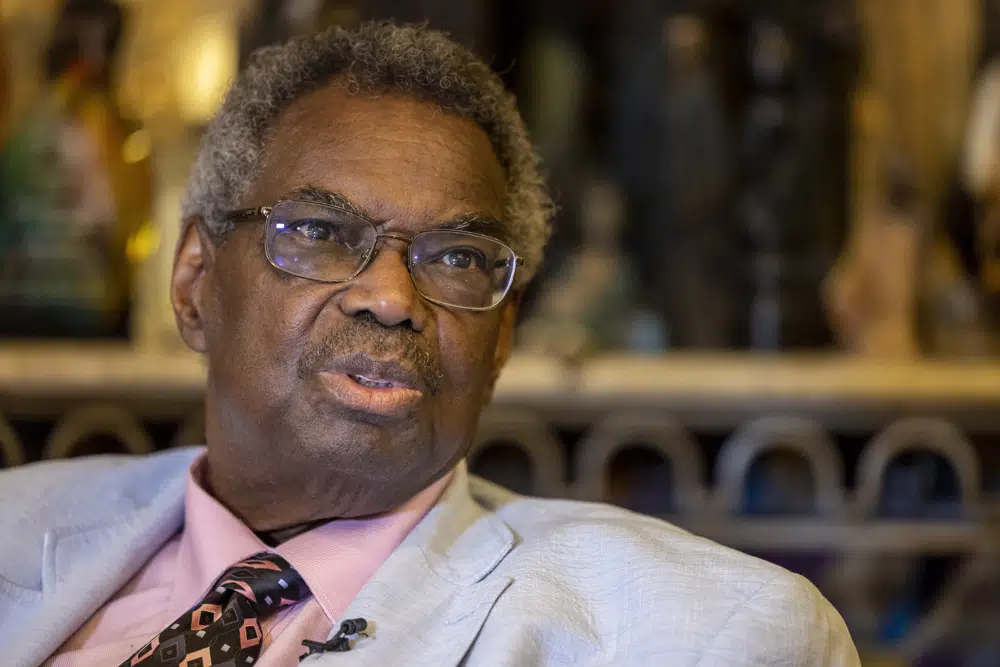
This week’s Supreme Court decision ordering Alabama to redraw its congressional districts was seen by many minority lawmakers and voting rights activists as a stunning victory with the potential to become a major stepping stone for undoing political maps that dilute the strength of communities of color. Hank Sanders, a former Alabama state lawmaker who has long been politically active in the state, knew there would be a decision since the court heard arguments in the case last fall. He was not anticipating being happy with the outcome, given that previous rulings of the conservative-leaning court had essentially gutted some of its most important provisions. “I was afraid they were going to go ahead and wipe out section 2,” he said, referring to the part of the Voting Rights Act at stake in the Alabama case. He was at his law office Thursday in Selma, scene of one of the most pivotal moments in the Civil Rights Movement, when news of the 5-4 ruling in favor of Alabama’s Black voters was announced. “It was a surprise that was good for my day,” he said. How the decision will affect similar lawsuits against political maps drawn in other states is unclear, although voting rights groups say the ruling provides firm guidance for lower courts to follow. The court majority found that Alabama concentrated Black voters in one district, while spreading them out among the others to make it much more difficult to elect more than one candidate of their choice. Alabama’s Black population is large enough and geographically compact enough to create a second district, the judges found. Just one of its seven congressional districts is majority Black, in a state where more than one in four residents is Black. Similar maps have been drawn in other states, primarily by Republican-controlled legislatures. Kareem Crayton, the Brennan Center’s senior director for voting and representation, called the court’s decision “a welcome surprise” and said challenges to the maps in Louisiana and Georgia were the most similar to the Alabama case. While it was considering the Alabama case, the Supreme Court had placed a hold on a lower court ruling in Louisiana allowing creation of a second majority-Black district. That’s now likely to be lifted. A federal judge last year also ruled that some of Georgia’s U.S. House and state legislative districts likely violated the Voting Rights Act, but he had allowed the districts to be used in the 2022 elections because it was too close to the election to redraw them. Maps in all three states could have to be redrawn for the 2024 elections. Louisiana Gov. John Bel Edwards, a Democrat, said in a statement that the court’s action reaffirmed his own belief that Louisiana’s map, which was drawn by the Republican-controlled Legislature, violated the law. “As I said when I vetoed it, Louisiana’s current congressional map violates the Voting Rights Act,” he said. “Louisiana’s voting population is one-third Black. We know that in compliance with the principles of the Voting Rights Act, Louisiana can have a congressional map where two of our six districts are majority Black.” Rep. Troy Carter, a Black Democrat representing Louisiana’s lone district that is majority Black, said the Legislature should immediately convene to draw a second majority-minority district. “This Supreme Court ruling is a win not just for Alabamians but for Louisianans as well,” Carter said in an emailed statement. “Rarely do we get a second chance to get things right — now Louisiana can.” In Georgia, Bishop Reginald Jackson, a plaintiff in one of the lawsuits challenging the state’s congressional map, said he was ecstatic when he heard the news about the ruling and hopes it will boost their case. He said he became involved in the lawsuit amid concerns that the state’s Black population had increased while the number of Black congressional representatives had decreased with the last round of redistricting. “So how could you have less Black representation when you have more Blacks moving into the state than before?” said Jackson, who presides over 534 African Methodist Episcopal churches in Georgia with over 90,000 parishioners The Alabama case, along with pending lawsuits in Georgia and Louisiana, means Black voters will likely have an opportunity to elect candidates in three additional districts, said Marina Jenkins, executive director of the National Redistricting Foundation, one of the organizations that has spearheaded voting rights challenges in the states. She said litigation in Texas by other plaintiff groups could mean additional seats there where minority voters “have the opportunity to elect candidates of their choice that don’t exist now.” Texas state Rep. Victoria Neave Criado, a Democrat who chairs the Mexican American Legislative Caucus, said the case was a “major win for voting rights.” She said following recent decisions by the current court in other areas she considers fundamental, such as last year’s overturning of the constitutional right to abortion, she was concerned about the direction the justices would take with voting rights and was relieved to see Thursday’s outcome. “As we are seeing the Latino community rise in many ways, we want to ensure that Latino power is translated into Latino political power,” Neave Criado said. Latinos and whites share an equal proportion of the Texas population, about 40% each, according to 2022 Census figures. Nina Perales, vice-president of litigation with the Mexican American Legal Defense and Educational Fund, said the ruling closes the door on Texas using arguments similar to those made by Alabama as the cases there go forward. Perales leads the litigation for a similar case out of Texas, which is based on the redistricting maps created in 2021. In addition to the Voting Rights Act challenge to Texas’ congressional districts, similar section 2 claims have been brought against numerous voting districts used for state legislatures and local governments around the country. Attorney Mark Gaber argued a case this week alleging Washington’s state legislative districts diluted the voting strength of Hispanic residents and will be arguing a similar case next week involving Native Americans and North Dakota’s state legislative districts. He thinks Thursday’s ruling will strengthen the case. In Alabama, the question
Sen. Tommy Tuberville makes plea for solutions to mental health crisis
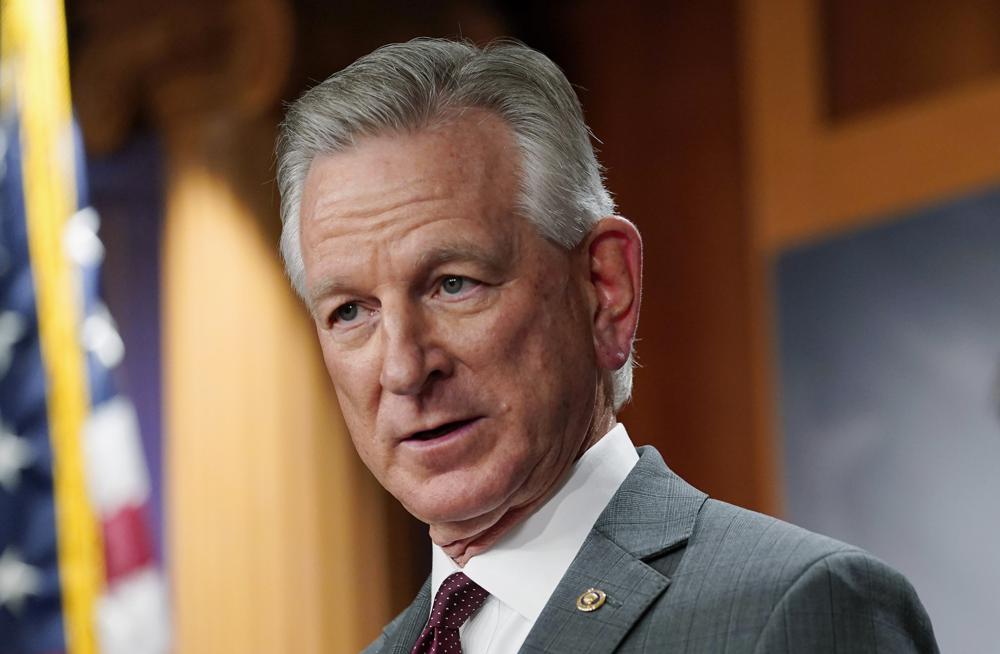
U.S. Senator Tommy Tuberville spoke with U.S. Surgeon General Vivek Murthy on exploring solutions to the mental health crisis in America during a U.S. Senate Health, Education, Labor and Pensions (HELP) hearing on Thursday. Senator Tuberville made a passionate appeal for state, federal, and local action on America’s mental health crisis, calling it “the biggest problem we have in this country” and “the number one problem in this country.” “I spent 35 years traveling this country as a coach and educator. And this is not just a crisis that we have of mental health. It’s an emergency. We’ve got huge problems,” said Tuberville. “This is probably the biggest problem we have in this country. It’s getting worse every day. I saw it change in just a short period of time. The number one commodity that we have in this country is not gold and silver. It’s our young people, and we’re destroying them, and we’re sitting back and watching it happen. I’ve seen prescription drugs take over our youth, especially a lot of kids that I work with. You know, we’ve ruined the nuclear family. And that’s where a lot of this has got to come from. I counted it up yesterday, 32 mental health programs that we have in this country… We spent tens of billions of dollars, and we’re not making any progress. We’re going the opposite way.” U.S. Surgeon General Murthy said, “I wish I could circle, underscore, and star so much of what you just said because you’re right on. And you’re right that the most important asset we have is our kids, and we’ve got to do more to protect them.” “We have a program in Alabama… that our state mental health department is running through our children’s hospital,” said Tuberville. “It works to connect interested primary providers with mental health specialists across the state and operates as sort of a command center out of the hospital in Birmingham. Kids experiencing all the issues that they have are connected with providers that are close to them, whether it’s rural or inner city. Money for this particular program has tripled in the last year in the Bipartisan Safer Communities Act. Now, I will tell you this. We can afford a lot of things around here. We cannot not afford to fund mental health. We can’t. We have to be able to afford it and through situations like this.” Tuberville continued, “So, Dr. Murthy, are we tracking the successes and failures of the rest of the billions of dollars that we spend? Are we tracking where it’s working? Have you got people that are doing that in your line of work that’s helping us track the money? Is that money helping to the degree where we can see success?” “Well, thanks, Senator, and I wish I could circle, underscore, and star so much of what you just said because you’re right on, and you’re right that the most important asset we have is our kids, and we’ve got to do more to protect them,” Surgeon General Murthy said. “I also agree with you that when we do put funds toward a cause, it’s important to know, is it actually working? Is it delivering the benefit? And while our office, the Office of Surgeon General, does not conduct evaluation trials, that’s not what we are resourced to do. We do have colleagues across the Department of Health and Human Services, at NIH, and at SAMHSA who do conduct evaluations of programs so that we understand what’s working, who it’s working for, and what more what’s missing. But I think, Senator — to pick up on something else you said here as well — I think, and I like the program you mentioned in Alabama in terms of the concept of building a network and an infrastructure so that primary care doctors in particular and others aren’t trying to manage all this on their own, like programs at the Pediatric Mental Health Access Program, for example, have been very helpful in making sure that those primary care doctors can get expertise, mental health expertise into the clinic when a patient is there. And we do need more programs like that.” “I don’t think that we will be able to keep up with the sheer, you know, disturbing trends that we’re seeing in terms of increased mental health concerns unless we attack some of these root causes,” Murphy continued. “And, you know, you mentioned our devices and particularly for young people. Social media has become — I worry for too many of them — a contributor, an important contributor to their mental health strains. I also spent a lot of time with student-athletes when I travel around the country to roundtables, specifically with student-athletes. And many of them tell me that, you know, not only are they having a hard time sometimes getting help, some of them have incredibly supportive coaches and administrations. Others do not. You know, I had one football player who told me that after having serious thoughts of taking his own life, he approached his coach and said it took a lot of courage for him. But he admitted to his coach what was going on and asked for help. But as the response from the coach was, well, you know, ‘If that’s how you’re feeling, maybe this program’s not for you, you should consider going to another university.’ And he was heartbroken. Now, thankfully, that’s not the response that most kids get. But we still have more to do in terms of making sure our kids get the help they need. But if we can focus on making social media safer for our kids, if we can focus on rebuilding the social connection and community that our kids need, families are a key part of that. Faith institutions are a key part of that. Other community organizations like YMCA, Boys and Girls Clubs, these all play a vital role in helping connect kids to each other families to each other. But
Donald Trump indicted in classified documents case, headed to Alabama in August
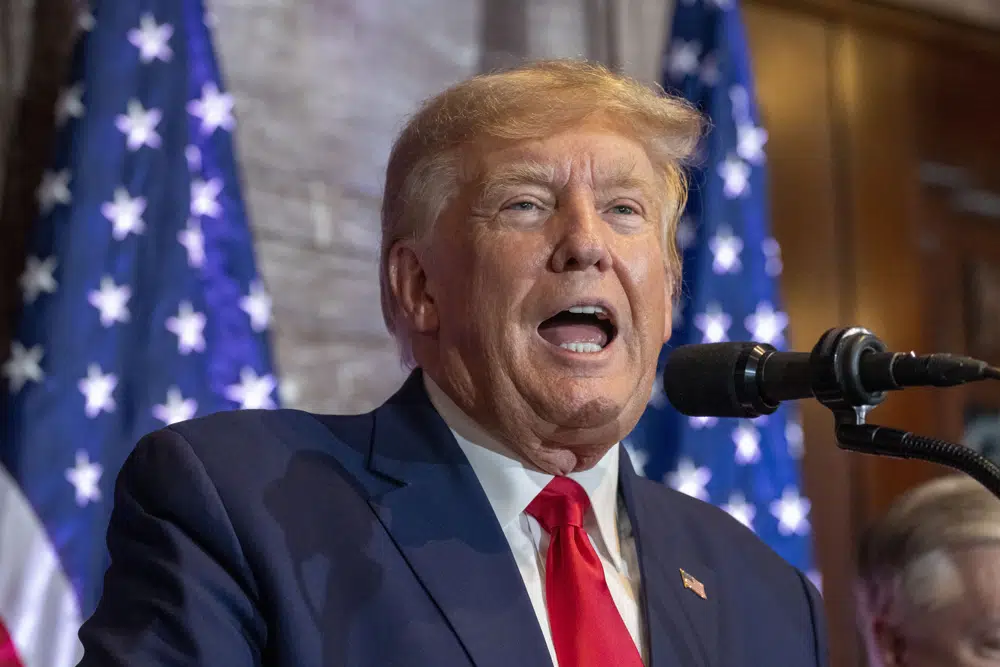
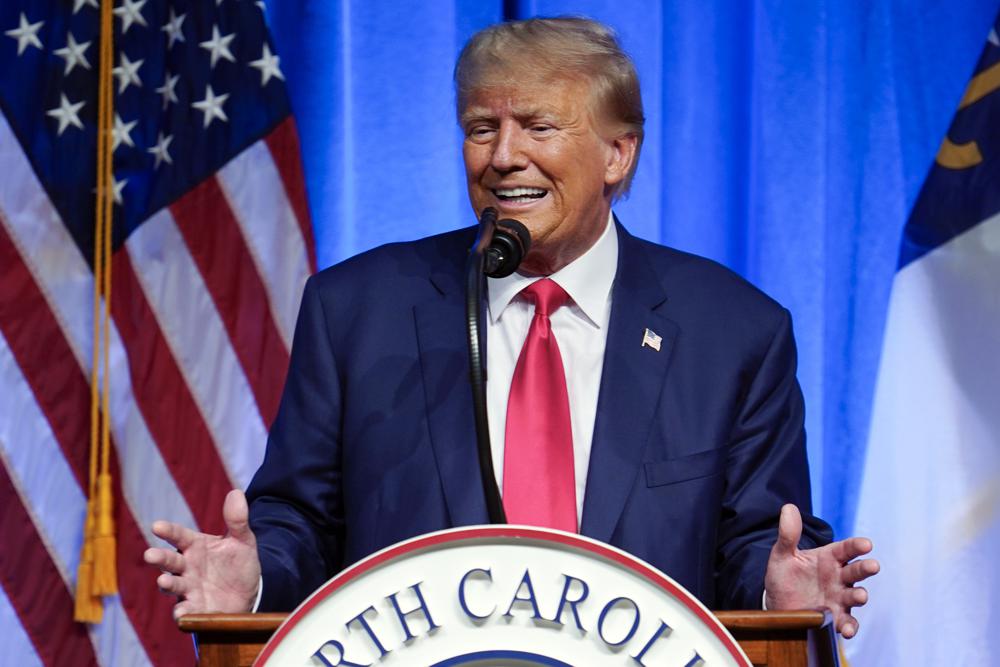
Former President Donald Trump was indicted Thursday in a case involving his handling of classified documents. Trump was already the President in American history to be impeached twice. These indictments also make him the first former U.S. president to face federal criminal charges. Despite that scandal, it was also announced this week that Trump, who is seeking to be the Republican nominee for President for a third consecutive time, will be the guest speaker for the Alabama Republican Party’s annual summer dinner fundraiser. The Biden Department of Justice unsealed the indictment Friday, ahead of Trump’s expected appearance in court next Tuesday. Trump has been indicted on 37 charges of mishandling classified documents. Throughout Trump’s presidency, newspaper clippings, press clippings, notes, letters, pictures, etc., were stored in cardboard boxes. Among those materials were hundreds of classified documents. The boxes were then shipped to the President’s resort at Mar-O-Lago, Florida which is a violation of existing federal law. The documents include information on the defense capabilities of the United States and other nations, the U.S. nuclear program, the military weaknesses of the United States military and those of our allies as well as what the U.S. response would be to an attack or an attack on our allies. The bulk of the 37 charges in the 49-page indictment, unsealed Friday afternoon, relate to willful retention of national defense information — a violation of the Espionage Act. The charges also include conspiracy to obstruct justice, withholding a document or record, corruptly concealing a document or record, concealing a document in an investigation, scheming to conceal, and false statements. Trump aide Walt Nauta also was indicted. “Our laws that protect national defense information are critical to the safety and security of the United States, and they must be enforced,” special counsel Jack Smith said. The special counsel alleges that the classified documents were spilled out on the floor at the Mar-A-Lago resort. The Trump defense team maintains that the documents were at Mar-O-Lago, which is secured by the U.S. Secret Service, and had not been published or made available to outside entities. Trump has vigorously denied any wrongdoing. U.S. District Judge for the Southern District of Florida, Aileen Cannon, has initially been tapped to oversee the case against Trump. Cannon is a Trump appointee. Also on Friday, Trump attorneys, Jim Trusty and John Rowley, announced that they were exiting the case, saying that the indictment on Friday, were a logical exit point. “Now that the case has been filed in Miami, this is a logical moment for us to step aside and let others carry the cases through to completion,” the attorneys wrote in a joint statement. “I want to thank Jim Trusty and John Rowley for their work, but they were up against a very dishonest, corrupt, evil, and ‘sick’ group of people, the likes of which has not been seen before,” Trump wrote. “We will be announcing additional lawyers in the coming days. When will Joe Biden be Indicted for his many crimes against our Nation? MAGA!” Despite the legal crowds encircling Trump, he is still going to be welcomed by the Alabama GOP in August. Alabama Republican Party Chairman John Wahl said on Facebook, “We are so excited that President Donald J. Trump has agreed to come back to Alabama for the Alabama Republican Party! We are still finalizing details, so be sure to sign up for updates so you’ll know when tickets go on sale.” The Summer Dinner is tentatively scheduled for August 4, 2023, in Montgomery. Trump still has solid support in Alabama, which he won in a landslide in both 2016 and 2020. Congressman Barry Moore (R-AL02) said on Facebook Thursday night, “Tonight’s news is another alarming chapter in the complete weaponization of our government. Biden’s corrupt Justice Department has gone after parents, Catholic parishioners, pro-life Christians, and now his top political opponent. America’s political battles belong at the ballot box, not in the hands of Biden’s DOJ.” Trump’s chief GOP rival, Florida Governor Ron DeSantis, was hosted by the Alabama GOP in Hoover last March. Trump is also facing indictments brought by the New York District Attorney in an unrelated case. There is also a federal investigation into his role in the alleged attempt to overthrow the 2020 election results. To connect with the author of this story or to comment, email brandonmreporter@gmail.com.
Gov. Kay Ivey Signs House Bill 77 to help small businesses succeed
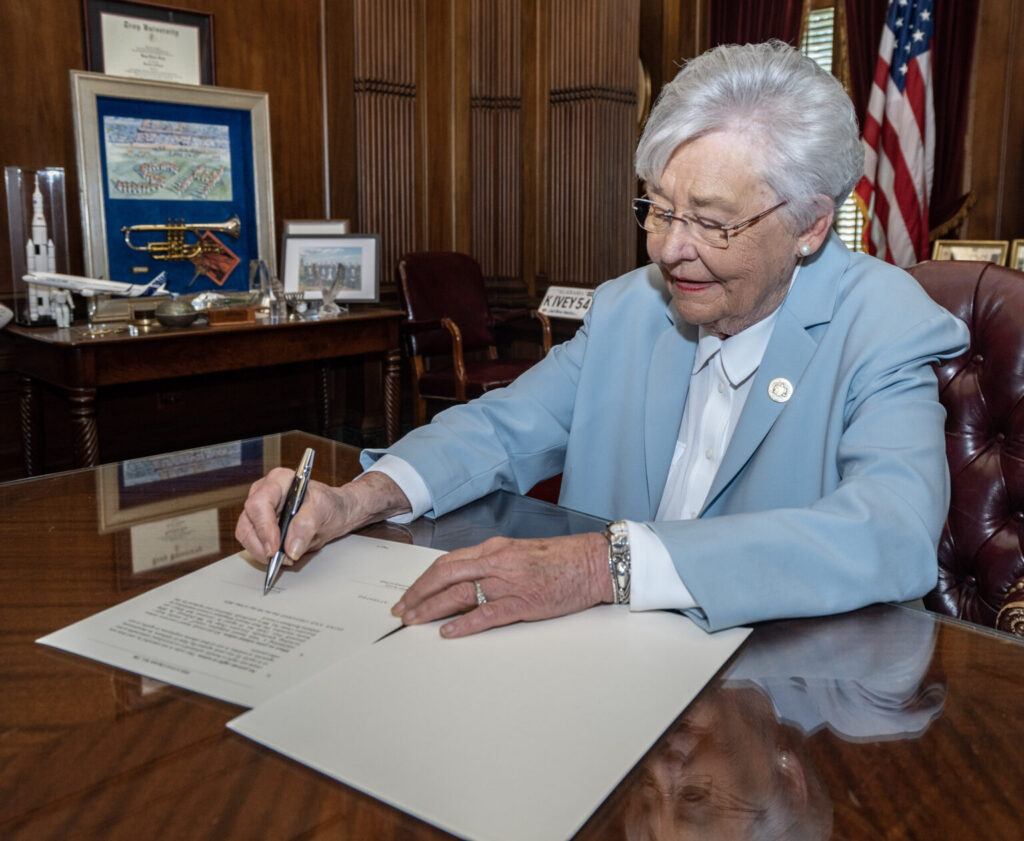
Governor Kay Ivey on Friday signed House Bill 77. During Governor Ivey’s 2023 State of the State Address, she called on the Legislature to help create greater economic stability for Alabama businesses operating in a challenging national economy. Ivey proposed that lawmakers reduce the financial load shouldered by small businesses by passing legislation lowering their prepaid sales tax burden. House Bill 77 increases the threshold for small businesses to submit their estimated monthly sales tax payments from $5,000 to $20,000 in average monthly sales tax liability. “Our economic stability begins and ends with the success of our small businesses, and it’s imperative that leaders at all levels of government actively look for ways to cut red tape and help them thrive,” said Gov. Ivey. “Eliminating the requirement for our small businesses with less than $500,000 in monthly sales to prepay taxes is a no-brainer. It not only frees up capital but also allows owners to focus solely on turning a profit every month and staying in business. This is an example of good government, and I commend the men and women of the Legislature for passing this bipartisan legislation for the people of our state.” The Alabama Department of Revenue estimates this legislation will positively impact over 3,000 small businesses in Alabama. House Bill 77 was sponsored by State Representative Danny Garrett (R-Trussville). Governor Ivey also signed House Bill 293 related to port credits. The governor released a statement saying that the port credit will encourage businesses in the state to increase shipping through the Alabama port. “As Alabama’s economy continues to grow, our public ports are valuable assets for businesses seeking to ship their in-demand products through the state,” said Gov. Ivey. “This legislation, which increases port-use tax credits, will encourage businesses engaged in manufacturing, warehousing, or distribution in the state to increase the volume of the cargo they ship through Alabama’s public ports. A compliment to Alabama’s successful ‘Game Plan’ economic incentives package which I signed into law in April, this legislation will also attract more jobs and investment to our state.” HB293 was sponsored by State Rep. Chip Brown (R-Hollinger’s Island). HB293 expands the cap of the port credit and expands tax incentives for businesses and enterprises that increase their cargo volume through Alabama public ports. Upon review of the applications, the commission may approve such applications as shall result in port credits being awarded so as not to exceed $20,000,000)for the life of the program, and shall not exceed $5,000,000) in a fiscal year. The commission shall charge application fees to offset the costs of administration of this article. Before claiming a port credit, the company shall submit to the Department of Commerce a certification containing information adequate to prove that the company is entitled to the credit. If approved by the commission, a port credit is allowed, in an amount equal to $50 per TEU, three dollars, $3 per net ton, $0.04 per kilogram for air freight, or $2.91 per VEU. The port credit may offset the tax levied by this chapter, but not below zero. The port credit may also offset the estimated payments of the tax levied by this chapter, but not below zero. In no event shall the port credits be allowed to reduce any estimated payment of the tax levied by this chapter before October 1, 2016. The 2023 Alabama Regular Legislative Session ended on Tuesday. To connect with the author of this story or to comment, email brandonmreporter@gmail.com.
Donald Trump allies cite Hillary Clinton email probe to attack classified records case. There are big differences
As former President Donald Trump prepares for a momentous court appearance Tuesday on charges related to the hoarding of top-secret documents, Republican allies are amplifying, without evidence, claims that he is the target of a political prosecution. To press their case, Trump’s backers are citing the Justice Department’s decision in 2016 not to bring charges against former Secretary of State Hillary Clinton, his Democratic opponent in that year’s presidential race, over her handling of classified information. His supporters also are invoking a separate classified documents investigation concerning President Joe Biden to allege a two-tier system of justice that is punishing Trump, the undisputed early front-runner for the GOP’s 2024 White House nomination, for conduct that Democrats have engaged in. “Is there a different standard for a Democratic secretary of state versus a former Republican president?” said Florida Gov. Ron DeSantis, a Trump primary rival. “I think there needs to be one standard of justice in this country.” But those arguments overlook abundant factual and legal differences — chiefly relating to intent, state of mind, and deliberate acts of obstruction — that limit the value of any such comparisons. A look at the Clinton, Biden, and Trump investigations and what separates them: WHAT DID CLINTON DO? Clinton relied on a private email system for the sake of convenience during her time as the Obama administration’s top diplomat. That decision came back to haunt her when, in 2015, the intelligence agencies’ internal watchdog alerted the FBI to the presence of potentially hundreds of emails containing classified information. FBI investigators would ultimately conclude that Clinton sent and received emails containing classified information on that unclassified system, including information classified at the top-secret level. Of the roughly 30,000 emails turned over by Clinton’s representatives, the FBI has said, 110 emails in 52 email chains were found to have classified information, including some at the top-secret level. After a roughly yearlong inquiry, the FBI closed out the investigation in July 2016, finding that Clinton did not intend to break the law. The bureau reopened the inquiry months later, 11 days before the presidential election, after discovering a new batch of emails. After reviewing those communications, the FBI again opted against recommending charges. WHAT IS TRUMP ACCUSED OF DOING? The indictment filed by Justice Department special counsel Jack Smith alleges that when Trump left the White House after his term ended in January 2021, he took hundreds of classified documents with him to his Florida estate, Mar-a-Lago — and then repeatedly impeded efforts by the government he once oversaw to get the records back. The material that Trump retained, prosecutors say, related to American nuclear programs, weapons and defense capabilities of the United States and foreign countries and potential vulnerabilities to an attack — information that, if exposed, could jeopardize the safety of the military and human sources. Beyond just the hoarding of documents — in locations including a bathroom, ballroom, shower and his bedroom — the Justice Department says Trump showed highly sensitive material to visitors without security clearances and obstructed the FBI by, among other things, directing a personal aide who was charged alongside him to move boxes around Mar-a-Lago to conceal them from investigators. Though Trump and his allies have claimed he could do with the documents as he pleased under the Presidential Records Act, the indictment makes short shrift of that argument and does not once reference that statute. All told, the indictment includes 37 felony counts against Trump, most under an Espionage Act statute pertaining to the willful retention of national defense information. WHAT SEPARATES THE CLINTON AND TRUMP CASES? A lot, but two important differences are in willfulness and obstruction. In an otherwise harshly critical assessment in which he condemned Clinton’s email practices as “extremely careless,” then-FBI Director James Comey announced that investigators had found no clear evidence that Clinton or her aides had intended to break laws governing classified information. As a result, he said, “no reasonable prosecutor” would move forward with a case. The relevant Espionage Act cases brought by the Justice Department over the past century, Comey said, all involved factors including efforts to obstruct justice, willful mishandling of classified documents, and indications of disloyalty to the U.S. None of those factors existed in the Clinton investigation, he said. That’s in contrast to the allegations against Trump, who prosecutors say was involved in the packing of boxes to go to Mar-a-Lago and then actively took steps to conceal classified documents from investigators. The indictment accuses him, for instance, of suggesting that a lawyer hide documents demanded by a Justice Department subpoena or falsely represent that all requested records had been turned over, even though more than 100 remained in the house. The indictment repeatedly cites Trump’s own words against him to make the case that he understood what he was doing and what the law did and did not permit him to do. It describes a July 2021 meeting at his golf club in Bedminster, New Jersey, in which he showed off a Pentagon “plan of attack” to people without security clearances to view the material and proclaimed that “as president, I could have declassified it.” “Now I can’t, you know, but this is still a secret,” the indictment quotes him as saying. That conversation, captured by an audio recording, is likely to be a powerful piece of evidence to the extent that it undercuts Trump’s oft-repeated claims that he had declassified the documents he brought with him to Mar-a-Lago. WHERE DOES BIDEN FIT IN? The White House disclosed in January that, two months earlier, a lawyer for Biden had located what it said was a “small number” of classified documents from his time as vice president during a search of the Washington office space of Biden’s former institute. The documents were turned over to the Justice Department. Lawyers for Biden subsequently located an additional batch of classified documents at Biden’s home in Wilmington, Delaware, and the FBI found even more during a voluntary search of the property. The revelations were a humbling setback for Biden’s efforts to draw a clear contrast between his handling of sensitive information and Trump’s. Even so, as
