
Alabama’s May unemployment remains at a record low 2.2%

On Friday, Governor Kay Ivey announced that Alabama’s preliminary, seasonally adjusted May unemployment rate was just 2.2%. This is unchanged from April’s all-time record low rate and below May 2022’s rate of 2.5%. May’s rate of just 2.2% represents 51,445 unemployed persons. This is a new record low, compared to 51,448 in April and 57,866 in May 2022. “I’m proud to announce that not only has our state’s unemployment rate remained strong and steady but is accompanied by a total jobs count that has once again reached a record high,” said Gov. Ivey. “Despite facing a challenging national economy, Alabama has pressed onward to deliver strong and stable economic results. With a highly skilled workforce, economic incentives curated for success and red tape being cut where necessary, Alabama remains as the Southeast’s hub for economic growth and opportunity for all.” The number of people in Alabama’s civilian labor force also increased to a new record high, with 7,713 more people counted this year over last year. Additionally, the number of people counted as employed rose to a new record high, gaining 14,134 over the year to 2,247,581. “Since last year, our employers have added more than 40,000 jobs, creating an excellent economic climate for Alabama,” said Alabama Labor Secretary Fitzgerald Washington. “We are holding steady with a record low unemployment rate, more and more people are working, and people are joining the labor force in record numbers, which indicates confidence in the economy.” Over the year, wage and salary employment increased by 40,500 people, with gains in the private education and health sector (+8,600), the government sector (+6,600), and the professional and business services sector (+6,300), among others. Total wage and salary employment increased in May by 2,100 over the month. Monthly gains were seen in the other services sector (+1,100), the leisure and hospitality sector (+900), and the government sector (+500), among others. The counties with the lowest unemployment rates are Shelby County at 1.6%, Morgan and Cullman Counties at 1.7%, and Limestone, Madison, Marshall, and St. Clair Counties at 1.8%. The counties with the highest unemployment rates are Wilcox County at 6.8%, Dallas County at 4.5%, and Clarke County at 4.3%. The major cities with the lowest unemployment rates are Vestavia Hills at 1.4%, Alabaster, Homewood, Madison, and Trussville at 1.5%, and Hoover at 1.6%. The major cities with the highest unemployment rates are Selma at 5.5%, Prichard at 4.3%, and Bessemer at 3.3%. The national unemployment rate in May was 3.7%, up .3% from April. Alabama’s labor force participation rate of just 56.9% continues to trail the national average of 62.8% To connect with the author of this story or to comment, email brandonmreporter@gmail.com.
Rob Vaughn introduced as new University of Alabama head baseball coach

The University of Alabama has chosen Rob Vaughn to lead the Alabama baseball team. The announcement was made on Tuesday at a press conference at the Mal Moore Athletics Facility attended by University of Alabama President Stuart Bell, Coach Vaughn, and Alabama Athletic Director Greg Byrne. “I want my program to be known for two things: culture and development,” Vaughn said. “It’s what we’re all about. It’s what I care about as a coach. My goal is that this group of people that I get to coach and we get to work alongside, will finish their time here equipped to be unbelievable dads, unbelievable husbands, and unbelievable leaders. Vaughn spent the last six seasons coaching at the University of Maryland. “There’s a lot of excitement around your first few days on campus,” said Vaughn. “I’ve had the opportunity to spend the last day and a half around the young people from the 2023 team, around JJ (Associate Head Coach Jason Jackson) and the rest of the coaching staff just getting to be a fly on the wall and listen to the way they communicate. As you do that, it becomes very, very evident and very clear how they were able to do what they did (this past season), and I’m so proud to get to be a small part of that.” “As I looked at ‘why Alabama?’” Vaughn continued, “You have the easy stuff. You have the SEC, and obviously, this is the most competitive brand of baseball there is. As a young kid, you always aspire to play there, and as a young coach, you always aspire to coach in and to have the opportunity to stand here to be a part of this and to get to coach these young people moving forward. That is something that we are so excited about. We understand what comes with that. There is pressure and a lot of expectations, especially based on what the 2023 team just did, but that’s what we want. That’s what we’re built for.” “Today is an exciting day for Alabama Athletics as we welcome Rob Vaughn as our new head baseball coach,” Byrne said. “As I mentioned, a lot has happened with our program over the last six weeks, but I’m so incredibly proud of the way our team finished out the season. I’ve been around this game for a long time, and this is as fine a group of young men as I’ve been around in any baseball program. Everybody around the program knows it, and even in our early conversations with Coach Vaughn, he says he can sense the same thing.” Vaughn led the Maryland Terrapins to a 183 and 117 record, with an 84 to 54 mark in conference play. The University of Alabama fired head baseball Coach Brad Bohannon midseason after he was implicated in a game-fixing scandal involving legal sports betting in Ohio. Despite the drama swirling around the program, the Tide was still able to make a deep NCAA playoff run under interim coach Jason Jackson, eventually losing to Wake Forest in the Super Regionals on Sunday. To connect with the author of this story or to comment, email brandonmreporter@gmail.com.
Florida deer tests positive for chronic wasting disease

The Florida Fish and Wildlife Conservation Commission (FWC) has confirmed that a road-killed 4.5-year-old female white-tailed deer in Holmes County sampled during routine surveillance activities has tested positive for chronic wasting disease (CWD). This is the first known case of CWD in Florida, a contagious disease of the brain and central nervous system that is fatal to deer. The first case of CWD in North America was discovered in mule deer in Colorado in 1967. Mississippi and Lauderdale County in Northwest Alabama were already CWD positive. Florida is the most recent of 31 states to detect the disease. It has also been confirmed in four Canadian provinces, Finland, Norway, Sweden, and South Korea. The Alabama Department of Conservation and Natural Resources (ADCNR) announced on Thursday that this state will be increasing chronic wasting disease (CWD) sampling surveillance efforts in southeast Alabama after the Florida announcement. ADCNR’s Wildlife and Freshwater Fisheries (WFF) Division will deploy additional self-service, drop-off CWD sampling freezer locations throughout southeast Alabama and increase CWD surveillance efforts, as outlined in Alabama’s CWD Surveillance and Response Plan. “With the continued support of Governor [Ron] DeSantis, the Florida Legislature, and hunters across the state, we have taken significant steps to prevent the spread of CWD,” said FWC Executive Director Roger Young. “Working with FDACS and our other partners, I’m hopeful that our combined efforts will limit the effects this will have on Florida’s deer population and preserve our exceptional hunting opportunities for future generations statewide.” “We take very seriously our responsibility to prevent, detect, and respond to animal health issues in Florida – all to safeguard our agriculture industry and our world-renowned wildlife and natural resources,” said FDACS Commissioner Wilton Simpson. “Ensuring the health of Florida’s deer population is a team effort, and we will continue to work diligently with our state and federal partners to respond.” Among deer, CWD is a progressive, fatal disease that commonly results in altered behavior due to microscopic changes in the brain of affected animals. An animal may carry the disease for years without outward indication. In later stages of the disease, it is a wasting disease where the animal’s weight drops. Symptoms include listlessness, lowering of the head, weight loss, repetitive walking in set patterns, and a lack of responsiveness. CWD is similar to Mad Cow Disease in cattle and scrapie in deer. It is caused by the ingestion of prions that build up in the brain over the animal’s life rather than from some sort of living infectious disease vector like a bacteria, protozoa, worm, or virus. There is no scientific evidence that CWD can be transmitted to humans or livestock under natural conditions. However, the Centers for Disease Control and Prevention do not recommend consuming meat from animals that test positive for CWD or from any sick animal. For more information about CWD sampling and a map of self-service, drop-off CWD sampling locations statewide, visit the Outdoor Alabama website. During deer season, hunters throughout the state are encouraged to provide deer heads for CWD sampling. The public is also encouraged to report roadkill deer and deer displaying unusual behavior to their local WFF District Office. To connect with the author of this story or to comment, email brandonmreporter@gmail.com.
Tommy Tuberville announces bipartisan bill to block Chinese owned companies from owning crypto-currency exchanges
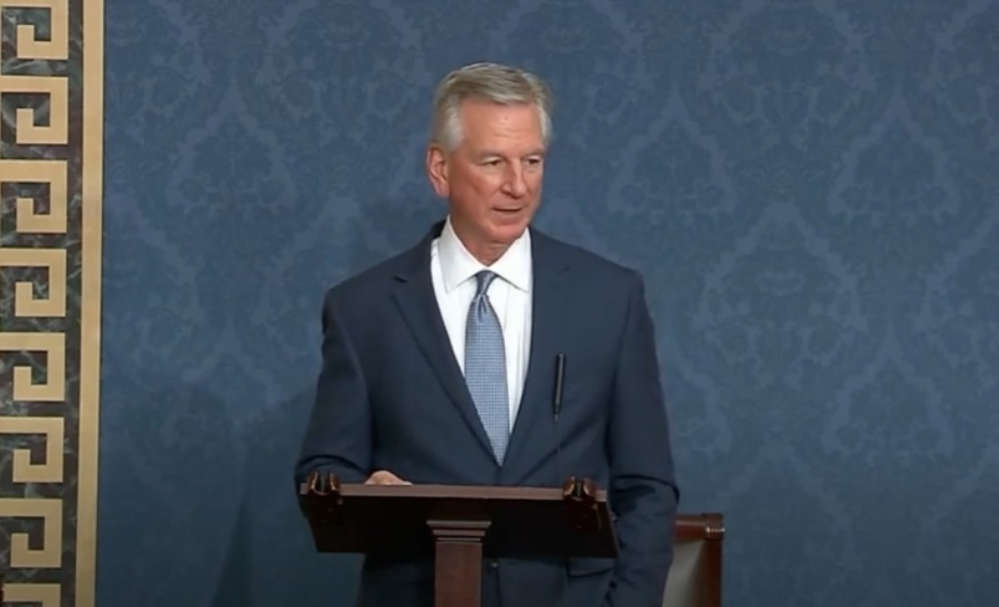
U.S. Senator Tommy Tuberville last week announced a bipartisan plan to block Chinese companies from owning American cryptocurrency companies. In an op-ed in The Wall Street Journal, Tuberville announced a bipartisan bill, with U.S. Senator Kirsten Gillibrand (D-New York), to amend the Commodity Exchange Act to prohibit entities organized or established in the People’s Republic of China (PRC) or a subsidiary of such an entity from acquiring a U.S. digital asset broker, dealer, custodian, or exchange. “This bipartisan bill will help to wall off the burgeoning American digital commodity industry from CCP interference and preserve our data privacy and investor protection rights,” wrote Senator Tuberville. “It will also help ensure that America continues to lead in financial innovation, which is essential to maintaining America’s position in the world.” The bill would prohibit the Commodity Futures Trading Commission (CFTC) from registering a digital commodity platform owned in whole or in part by an entity organized or established in the PRC. It also requires the CFTC to revoke the registration of any digital commodity platform if an entity with ties to the Chinese Communist Party (CCP) acquires all or any part of the ownership of the entity. Tuberville and Gillibrand say they are concerned because digital commodity platforms collect and store their users’ personally identifiable information — including Social Security numbers, mailing addresses, and sensitive financial account data. They claim that allowing entities based in the PRC to access this information raises serious concerns about investor protection, data privacy, national security, sanctions compliance, and anti-money laundering efforts. They also expressed concerns that companies based in the PRC all ultimately answer to the CCP. On Monday, Senator Tuberville sent an oversight letter to both the Securities and Exchange Commission (SEC) and the Financial Industry Regulatory Authority (FINRA), objecting to those agencies’ approval of a Chinese-connected crypto securities broker-dealer, Prometheum Ember Capital, LLC. In May, Senator Tuberville sent a similar letter to financial regulators asking for details surrounding Chinese-linked stock trading platforms operating in the U.S. Under current law, U.S. regulators have limited tools to block the purchase of a U.S. digital commodity platform by a CCP-tied entity. Tuberville and Gillibrand say that their bipartisan bill will help to shield the burgeoning U.S. digital asset industry from Chinese interference and help to ensure continued American leadership in financial innovation. Investors in crypto-currencies lost over $2 trillion last year, highlighting how speculative and risky those alternative investments actually are. Sen. Tuberville is also leading the call for an investigation into Webull Financial, LLC and Moomoo, Inc. — two Chinese-owned stock trading apps operating in the United States that are registered with the SEC and FINRA. Both apps are widely used by American investors and freely collect and store sensitive information about users, including Social Security numbers, mailing addresses, and financial account data. In May 2023, Senator Tuberville sent a letter to SEC Chair Gary Gensler and FINRA President and CEO Robert Cook calling for oversight of the trading platforms due to the potential CCP access of American user data. In the letter, Senator Tuberville expressed concerns about the ability of the SEC and FINRA to examine the Chinese companies’ compliance with U.S. law. Tuberville’s concerns about China are not limited to just financial markets. In March, Senator Tuberville led a congressional delegation to Panama to discuss countering China’s growing influence in the region. On the trip, Senator Tuberville met with American and Panamanian officials to strategize ways to combat Chinese attempts to control the Panama Canal, which would give China enormous influence over global supply chains. The United States built the Panama Canal in the early part of the 20th century. In the 1970s then-President Jimmy Carter transferred it back to Panama. The Panamanians, with Chinese technical assistance and capital, have since widened and modernized the canal. Tuberville has also introduced legislation to ban members of the CCP from receiving B-1 and B-2 visas to the United States for vacation and non-official government business, citing the CCP’s responsibility for trillions of dollars of intellectual property theft each year. The bill cosponsored by Senator Tuberville would bar all 93 million CCP members from entering the United States using nonimmigrant B-1 and B-2 visas. Tuberville has expressed concerns about the retirement savings of our military and federal government employees, known as the Thrift Savings Plan (TSP) being invested in the economies of our adversaries like China. Tuberville previously wrote about this issue in the Wall Street Journal in a column entitled, “I’ll Keep Veterans’ Pensions Safe From Communism.” To that end, Tuberville has pushed for accountability from the Federal Retirement Thrift Investment Board (FRTIB) surrounding the board’s policy on foreign investments. Tuberville has even placed a hold on nominees to the FRTIB until the nominees provided clarification regarding foreign investment policies, which forced the nominees to commit to opposing TSP investment in China. Tommy Tuberville was elected to the U.S. Senate in 2020 following decades as an educator, football coach, and sports broadcaster. To connect with the author of this story or to comment, email brandonmreporter@gmail.com.
Lawmakers to hold hearing on post-pandemic federal backlogs

Congress plans to hold a hearing to address government delays from the COVID-19 pandemic. U.S. Rep. Pete Sessions, R-Texas., the chairman for the Subcommittee on Government Operations and the Federal Workforce, announced Thursday that the subcommittee will hold the hearing. During the pandemic, backlogs grew exponentially, causing Americans to wait longer for records required during loan applications and government benefits and for their passports to process, among other issues. The subcommittee planned for the hearing, titled “Please Leave Your Message at the Tone: Addressing Post-Pandemic Backlogs and Delays at Federal Agencies,” to “examine the backlogs of military and civil service personnel records requests, the Social Security Administration’s customer service line and disability claims, and passport backlogs.” The subcommittee also will inquire on what the government agencies are doing to reverse the ongoing delays. Sessions expressed his desire for the agencies to be cleared of delays and backlogs so the American people can continue to receive quick responses and help from the services they rely on. He also wanted to ensure the agencies were taking steps to prevent future similar problems. “I look forward to hearing from the witnesses before the subcommittee on what plans are in place at these federal agencies to clear the backlogs, and ensure acceptable service now and in the future,” Sessions said. The hearing is scheduled for Wednesday, June 21st. Republished with the permission of The Center Square.
House passes bill to block federal gas stove ban

The U.S. House passed legislation this week to prevent a federal ban on gas stoves. The “Gas Stove Protection and Freedom Act” passed 248-180 with bipartisan support. The legislation, led by Republicans, would prevent the Consumer Products Safety Commission from using taxpayer dollars to treat gas stoves as a “banned hazardous product” or enact any regulations anything to make gas stoves practically prohibited by making them too expensive. “The Biden administration is intent on weaponizing every aspect of the federal government to achieve its ideological goals,” Rep. Kelly Armstrong, R-N.D., who sponsored the bill, said in a statement. “Consumer protection should be about safety, not used as a veiled push to eliminate fossil fuels and the millions of jobs they support. Americans should decide if gas stoves are right for their families, not the Federal Government.” The issue was thrust into the forefront with much controversy after news broke that the federal government was considering such a ban. Environmental activists have pointed to the impact of methane from the stove as well as potential research suggesting gas stoves could cause conditions like asthma. A federal ban could affect more than half the nation. “One hundred percent of the currently available free-standing gas stoves and 96 percent of gas cooktops will not meet the new standards proposed by the Biden Administration’s Department of Energy,” Rep. Debbie Lesko, R-Ariz., said in May after the House Energy and Commerce Committee passed the bill out of committee. Republished with the permission of The Center Square.
Supreme Court preserves law that aims to keep Native American children with tribal families

The Supreme Court on Thursday preserved the system that gives preference to Native American families in foster care and adoption proceedings of Native children, rejecting a broad attack from some Republican-led states and white families who argued it is based on race. The court left in place the 1978 Indian Child Welfare Act, which was enacted to address concerns that Native children were being separated from their families and, too frequently, placed in non-Native homes. Tribal leaders have backed the law as a means of preserving their families, traditions, and cultures and had warned that a broad ruling against the tribes could have undermined their ability to govern themselves. The “issues are complicated,” Justice Amy Coney Barrett wrote for a seven-justice majority that included the court’s three liberals and four of its six conservatives, but the “bottom line is that we reject all of petitioners’ challenges to the statute.” Justices Clarence Thomas and Samuel Alito dissented, each writing that Congress lacks the authority to interfere with foster care placements and adoptions, typically the province of the states. The decision, Alito wrote, “disserves the rights and interests of these children.” But Justice Neil Gorsuch, a Colorado native who has emerged as a champion of Native rights since joining the court in 2017, wrote in a separate opinion that the decision “safeguards the ability of tribal members to raise their children free from interference by state authorities and other outside parties.” The leaders of tribes involved in the case called the outcome a major victory for tribes and Native children. “We hope this decision will lay to rest the political attacks aimed at diminishing tribal sovereignty and creating instability throughout Indian law that have persisted for too long,” said a joint statement from Cherokee Nation Principal Chief Chuck Hoskin Jr., Morongo Band of Mission Indians Chairman Charles Martin, Oneida Nation Chairman Tehassi Hill, and Quinault Indian Nation President Guy Capoeman. President Joe Biden, whose administration defended the law at the high court, noted that he supported the law 45 years ago when was a Democratic senator from Delaware. “Our Nation’s painful history looms large over today’s decision. In the not-so-distant past, Native children were stolen from the arms of the people who loved them,” Biden said in a statement. Congress passed the law in response to the alarming rate at which Native American and Alaska Native children were taken from their homes by public and private agencies. The law requires states to notify tribes and seek placement with the child’s extended family, members of the child’s tribe, or other Native American families. Three white families, the state of Texas, and a small number of other states claimed the law is unconstitutional under the equal protection clause because it was based on race. They also contended it puts the interests of tribes ahead of children and improperly allows the federal government too much power over adoptions and foster placements, areas that typically are under state control. The lead plaintiffs in the Supreme Court case — Chad and Jennifer Brackeen of Fort Worth, Texas — adopted a Native American child after a prolonged legal fight with the Navajo Nation, one of the two largest Native American tribes, based in the Southwest. The Brackeens are trying to adopt the boy’s 5-year-old half-sister, known in court papers as Y.R.J., who has lived with them since infancy. The Navajo Nation has opposed that adoption. At last fall’s arguments, several conservative justices expressed concern about at least one aspect of the law that gives preference to Native parents, even if they are of a different tribe than the child they are seeking to adopt or foster. Among them was Justice Brett Kavanaugh, who was in the majority Thursday in favor of the tribes. But Kavanaugh injected a cautionary note in a separate opinion focused on the preferences for Native foster and adoptive parents. “In my view, the equal protection issue is serious,” Kavanaugh wrote, commenting that the race of prospective parents and children could be used to reject a foster placement or adoption, “even if the placement is otherwise determined to be in the child’s best interests.” The Supreme Court dealt with that issue by determining that neither Texas nor the parents had legal standing to make that argument in this case. The Brackeens and others can make those arguments in state court proceedings, the justices said. Matthew McGill, who represented the Brackeens at the Supreme Court, said he would press a racial discrimination claim in state court. “Our main concern is what today’s decision means for the little girl, Y.R.J . — now five years old — who has been a part of the Brackeen family for nearly her whole life. The Court did not address our core claim that ICWA impermissibly discriminates against Native American children and families that wish to adopt them, saying it must be brought in state court,” McGill said in a statement. All the children who have been involved in the current case at one point are enrolled or could be enrolled as Navajo, Cherokee, White Earth Band of Ojibwe, and Ysleta del Sur Pueblo. Some of the adoptions have been finalized, while some are still being challenged. More than three-quarters of the 574 federally recognized tribes in the country and nearly two dozen state attorneys general across the political spectrum had called on the high court to uphold the law. The Supreme Court had twice taken up cases on the Indian Child Welfare Act before, in 1989 and in 2013, that have stirred intense emotion. Before the Indian Child Welfare Act was enacted, between 25% and 35% of Native American children were being taken from their homes and placed with adoptive families, in foster care, or in institutions. Most were placed with white families or in boarding schools in attempts to assimilate them. Republished with the permission of The Associated Press.
Bryan Taylor, governor’s ex-chief legal adviser, to run for Alabama Supreme Court chief justice

Republican Bryan Taylor, a former state senator and former chief legal adviser to Gov. Kay Ivey, announced Wednesday that he is running for chief justice of the Alabama Supreme Court. The election for chief justice will be held next year. Chief Justice Tom Parker cannot run again because Alabama law prohibits judges from being elected or appointed after age 70. “I am uniquely qualified to lead our state’s court system,” Taylor said in a statement. “My experience as an attorney, Army Judge Advocate, and military prosecutor, along with my service in the executive and legislative branches of state government, has given me a unique perspective that will benefit Alabama’s courts and the Alabamians they serve.” The Alabama chief justice serves on the state’s highest court and also serves as the administrative head of the state court system. Taylor was elected to the Alabama Senate in 2010 and is best known for authoring the revamp of the state’s ethics law that was later used to prosecute former House Speaker Mike Hubbard. Taylor did not seek a second term in 2014. Before joining the Senate, Taylor was a legal adviser and policy director for Gov. Bob Riley. He later served as Ivey’s chief legal adviser. Taylor is an Iraq War veteran and served as a military prosecutor and lawyer with the Army Judge Advocate General Corps. He continues to serve in the Alabama National Guard. He was awarded the Bronze Star Medal for his service in Iraq. Taylor recently served as deputy legal counsel for legislative affairs for the Alabama Republican Party. He is stepping down from the position as he runs for office. Republished with the permission of The Associated Press.
