
Judge stays medical marijuana licenses as companies argue selection process was flawed

A judge on Friday ordered Alabama Medical Cannabis Commission to temporarily halt the issuance of licenses to growers and distributors as two companies argue the state used a flawed and secretive process to selecting winners for the potentially lucrative licenses. The order re-enforces a decision already made last week by the Alabama Medical Cannabis Commission to pull back the licenses awarded on June 12 after the chairman said they discovered “potential inconsistency in the tabulation of scoring data.” Montgomery Circuit Judge James Anderson on Friday issued a temporary restraining order on top of that, staying the licenses until the issue regarding the scoring data is resolved. The state and companies agreed to the stay. Anderson scheduled a July hearing on the companies’ request for a preliminary injunction as the companies argue the entire selection process was flawed. Alabama Always and Hornet Medicinals, two companies that applied for the five integrated “seed to sale” licenses, have sued the Alabama Medical Cannabis Commission arguing there were problems with the process for awarding licenses. A lawyer for Alabama Always argued in court filing that the commission used anonymous graders hired by the University of South Alabama to score applications and then awarded them without any discussion on June 12. “We think from day one that this process has been cloaked in secrecy,” William Somerville, an attorney for Alabama Always told Anderson during the Friday court hearing. Somerville told reporters that the company disagreed with how it was scored, particularly on finances, noting the company had already invested $4.5 million on a cultivation facility. The company wrote in court filings that it is prepared to open and stock stores with medical marijuana by January, if not sooner. Alabama Always is asking Anderson to order the commission to turn over additional information about the scoring and selection process. The commission has not elaborated on the problems with the scoring other than to say there were potential inconsistencies, “The stay is recommended due to the (commission’s) discovery of potential inconsistency in the tabulation of scoring data,” Dr. Steven Stokes, an oncologist who chairs the commission, said during last week’s meeting. Alabama lawmakers in 2021 ended years of resistance and approved the creation of a program to allow marijuana to be used for certain medical conditions. However, it is not available yet to patients because the state has to develop rules and award grower and distributor licenses. Republished with the permission of The Associated Press.
Brandon Miller drafted second overall
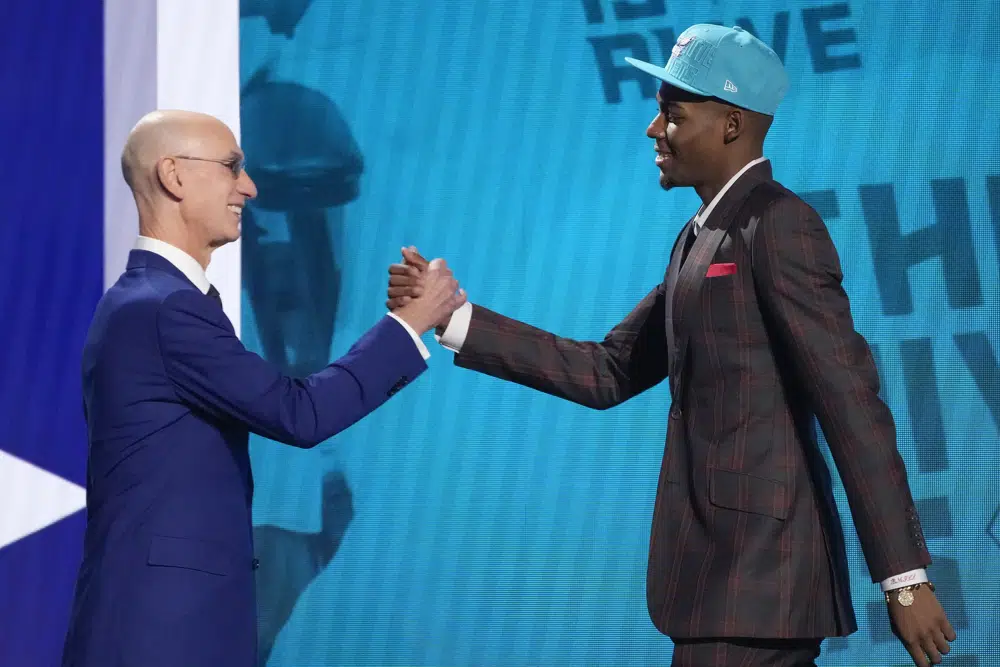
Thursday night was historic for the University of Alabama men’s basketball program as the Charlotte Hornets drafted Brandon Miller with the second player taken. “Brandon was our favorite all along,” Hornets general manager Mitch Kupchak said. “There was a lot of spirited discussion in the last three days, which I welcome. … But I think he’s the player that is the best player.’ “I know we are going to go in and have as much fun as we can in Charlotte,” Miller said. Teammate Noah Clowney was selected 21st overall by the Brooklyn Nets. “I want to get better and perfect my game in every part possible,” Clowney said. This is not the first time the NBA has selected two Tide players in the same draft. In 1995, Antonio McDyess was selected number 2 overall by the L.A. Clippers, and Jason Caffey was selected number 20 overall by Chicago Bulls. Under head coach Nate Oats four Alabama players have been drafted in the first round during his time at Alabama. Miller and Clowney are the 18th and 19th First Round selections in program history. Miller tied McDyess as the highest draft pick in school history. Miller became the first SEC player to win SEC Player of the Year, Freshman of the Year and Tournament MVP in the same season. Miller is the only Division I player in the last 30 years to score 696 points, record 305 rebounds, and make 106 three-pointers in a single season. He also scored 696 points, setting the program record for most points a freshman scored in a single season. France’s Victor Wembanyama was the first player taken in the draft by the San Antonio Spurs. The 7-foot-six-inch center was the consensus pick. Miller was the second player taken. Then the Portland Trailblazers took Scoot Henderson with the number three selection, Charlotte’s decision to take Miller over Henderson was the most controversial move of the night, and the two players are now linked by that comparison. Amen Thompson was selected fourth by the Houston Rockets, followed by his twin brother Ausar Thompson at five by the Detroit Pistons. After the top five 6. Orlando – Anthony Black (Arkansas) 7. Indiana – Bilal Coulibaly (Metropolitans 92) – Traded to Washington 8. Washington – Jarace Walker (Houston) – Traded to Indiana 9. Utah – Taylor Hendricks (Central Florida) 10. Dallas – Cason Wallace (Kentucky) – Traded to Oklahoma City 11. Orlando – Jett Howard (Michigan) 12. Oklahoma City – Dereck Lively II (Duke) – Traded to Dallas 13. Toronto – Gradey Dick (Kansas) 14. New Orleans – Jordan Hawkins (Connecticut) 15. Atlanta – Kobe Bufkin (Michigan) 16. Utah – Keyonte George (Baylor) 17. Lakers – Jalen Hood-Schifino (Indiana) 18. Miami – Jaime Jaquez Jr. (UCLA) 19. Golden State – Brandin Podziemski (Santa Clara) 20. Houston – Cam Whitmore (Villanova) 21. Brooklyn – Noah Clowney (Alabama) 22. Brooklyn – Dariq Whitehead (Duke) 23. Portland – Kris Murray (Iowa) 24. Sacramento – Olivier-Maxence Prosper (Marquette) – Reportedly traded to Dallas 25. Memphis – Marcus Sasser (Houston) – Traded to Detroit 26. Indiana – Ben Sheppard (Belmont) 27. Charlotte – Nick Smith Jr. (Arkansas) 28. Utah – Brice Sensabaugh (Ohio State) 29. Indiana – Julian Strawther (Gonzaga) – Traded to Denver 30. Clippers – Kobe Brown (Missouri) Second Round 31. Detroit – James Nnaji (FC Barcelona) – Reportedly traded to Boston 32. Indiana – Jalen Pickett (Penn State)– Traded to Denver 33. San Antonio – Leonard Miller (G League Ignite) – Traded to Minnesota 34. Charlotte – Colby Jones (Xavier) – Reportedly traded to Sacramento 35. Boston – Julian Phillips (Tennessee) – Reportedly traded to Chicago 36. Orlando – Andre Jackson Jr. (Connecticut) – Traded to Milwaukee 37. Oklahoma City – Hunter Tyson (Clemson) – Traded to Denver 38. Sacramento – Jordan Walsh (Arkansas) – Reportedly traded to Boston 39. Charlotte – Mouhamed Gueye (Washington State) – Reportedly traded to Atlanta 40. Denver – Maxwell Lewis (Pepperdine) – Reportedly traded to Lakers (via Indiana) 41. Charlotte – Amari Bailey (UCLA) 42. Washington – Tristan Vukcevic (Partizan Mozzart Bet Belgrade) 43. Portland – Rayan Rupert (NZ Breakers) 44. San Antonio – Sidy Cissoko (G League Ignite) 45. Memphis – Gregory Jackson II (South Carolina) 46. Atlanta – Seth Lundy (Penn State) 47. Lakers – Mojave King (G League Ignite) – Reportedly traded to Indiana 48. Clippers – Jordan Miller (Miami) 49. Cleveland – Emoni Bates (Eastern Michigan) 50. Oklahoma City – Keyontae Johnson (Kansas State) 51. Brooklyn – Jalen Wilson (Kansas) 52. Phoenix – Toumani Camara (Dayton) 53. Minnesota – Jaylen Clark (UCLA) 54. Sacramento – Jalen Slawson (Furman) 55. Indiana – Isaiah Wong (Miami) 56. Memphis – Tarik Biberovic (Fenerbahce Beko) 57. Washington – Trayce Jackson-Davis (Indiana) – Reportedly traded to Golden State 58. Milwaukee – Chris Livingston (Kentucky) Auburn point guard Wendell Green Jr. was not drafted but reportedly has signed to play in the NBA’s summer league for rookies for the Cleveland Cavaliers. To connect with the author of this story or to comment, email brandonmreporter@gmail.com.
Terri Sewell announces $21+ million grant to support the Birmingham Urban Trail and enhance multimodal transportation network
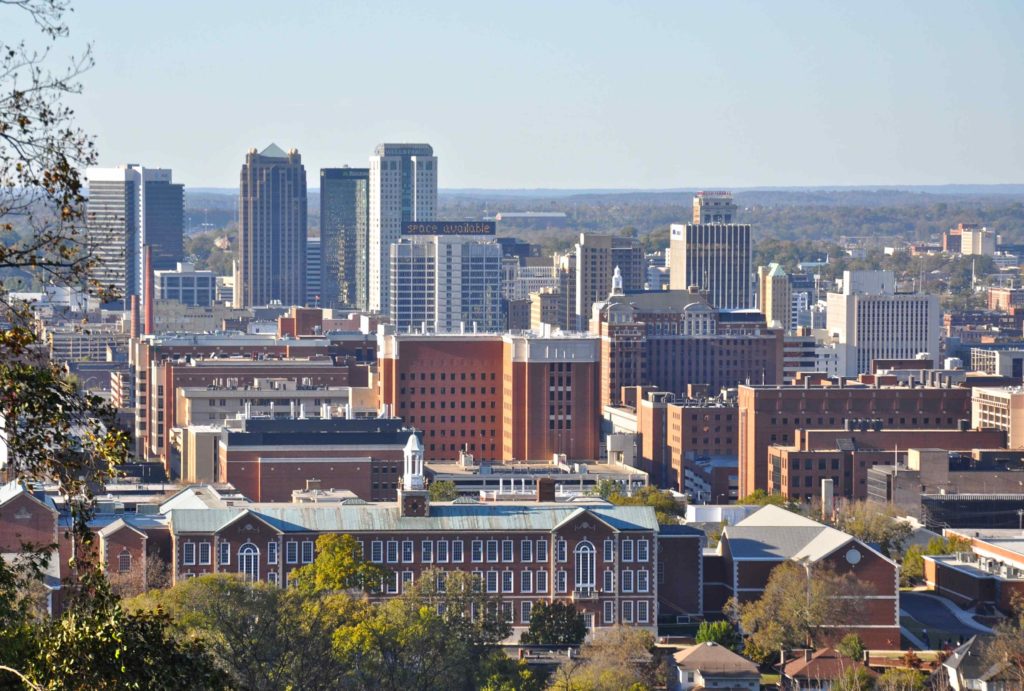
Congresswoman Terri Sewell (D-AL07) announced that the City of Birmingham has been awarded a $21,681,306 grant from the United States Department of Transportation (DOT) to support the development of the Birmingham Urban Trail and Multimodal Corridor. “This is such great news for the Birmingham area!,” said Rep. Sewell. “I was so proud to help the City of Birmingham secure this $21 million grant to develop the Birmingham Urban Trail, and I know that it will go a long way in making our city more walkable, bikeable and livable. I applaud the Biden-Harris Administration for making this transformational investment and for their continued partnership as we work to bring more resources and better opportunities to our communities here in Birmingham.” The @cityofbhamal has been awarded a nearly $22 million federal grant to create a new urban trail to connect downtown to historic neighborhoods just west of the city center.@RepTerriSewell lauded the grant as a “transformational investment.”https://t.co/oAA5UfoQbV — AL.com Birmingham (@ALcomBirmingham) June 23, 2023 The funding is part of DOT’s Rebuilding American Infrastructure with Sustainability and Equity (RAISE) Grant Program and will be used to enhance transportation networks and create a more walkable, bikeable, safe, connected, and livable community. This grant will support the “Birmingham Civil Rights Crossroads: Reconnecting Historic Neighborhoods Through Active Mobility” project which will create an urban trail and multi-modal corridor. The trail will be the spine of a growing multimodal transportation network, providing safe and equitable options via an urban trail and complete streets and creating a more walkable, bikeable, safe, connected, and livable community. This funding will be used to redevelop approximately 2.5-miles of road with a complete streets approach. The RAISE Grant program provides a unique opportunity for the DOT to invest in road, rail, transit and port projects that promise to achieve national objectives. Previously known as the Better Utilizing Investments to Leverage Development (BUILD) and Transportation Investment Generating Economic Recovery (TIGER) Discretionary Grants, Congress has dedicated nearly $12.1 billion for fourteen rounds of National Infrastructure Investments to fund projects that have a significant local or regional impact. The State of Alabama has long-term plans to develop a statewide trails initiative eventually linking all 67 Alabama Counties. Terri Sewell is in her seventh term representing Alabama’s Seventh Congressional District. To connect with the author of this story or to comment, email brandonmreporter@gmail.com.
Governor Kay Ivey signs pay increase for poll workers
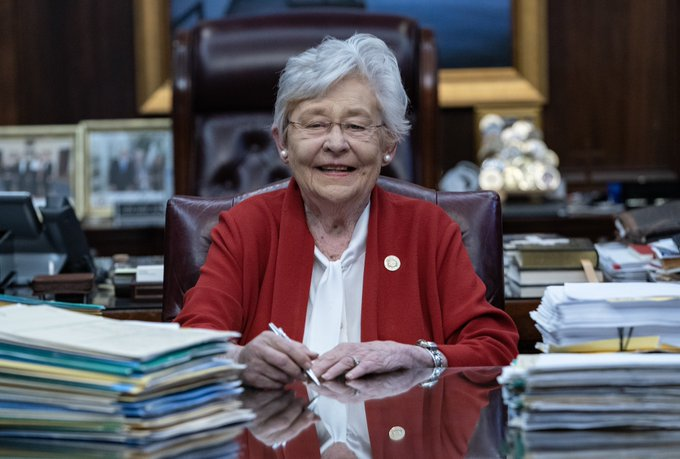
State Representative James Lomax (R – Huntsville) announced on Thursday that Alabama Governor Kay Ivey has signed into law his bill that provides a $25 pay increase for poll workers in Alabama and helps ensure that elections across the state remain fully staffed and voting remains easily accessible for all. “The men and women who work in almost 2,000 polling places across 67 counties provide an invaluable service to their fellow Alabamians, but despite working as long as 16 hours in a day, their pay has not been increased since 2006,” Rep. Lomax said. “Recruiting, retaining, and rewarding our poll workers is essential to conducting efficient and honest elections, and in these times of skyrocketing inflation and a tightening economy, any increase we can offer is helpful.” Madison County Probate Judge Frank Barger, who served as election administrator, applauded Lomax for his efforts. Barger said that he witnessed firsthand the dedication that poll workers demonstrate each election season. “Poll workers are the front-line defense for ensuring our secure and well-run elections,” Barger said. “I am so pleased to see compensation increased statewide for our dedicated election workers.” Probate judges across the state have reported a decrease in those willing to work the polls following the 2020 COVID-19 pandemic, which some say was marred by fraud in parts of the nation. This has led to some areas having to run advertisements encouraging citizens to serve. Others have had to resort to recruiting high school students to work alongside veteran precinct workers, many of whom are retired seniors. “In order to make sure voting is quick, simple, and easy for every Alabamian who wants to participate, we must have a sufficient number of workers available,” Lomax said. “That requires local officials to continually recruit and train new workers each election, and I am confident this pay increase will assist them in those efforts.” House Bill 435 (HB435) is estimated to cost the state general fund (SGF) an additional $396,000 per general election, according to the fiscal note. “Bill review is a wrap,” said Ivey on Twitter. “I have officially signed 527 bills and resolutions into law. I thank the Legislature for prioritizing keeping Alabama strong and prosperous for many years to come.” To connect with the author of this story or to comment, email brandonmreporter@gmail.com.
Tommy Tuberville leads first Alabama delegation prayer breakfast
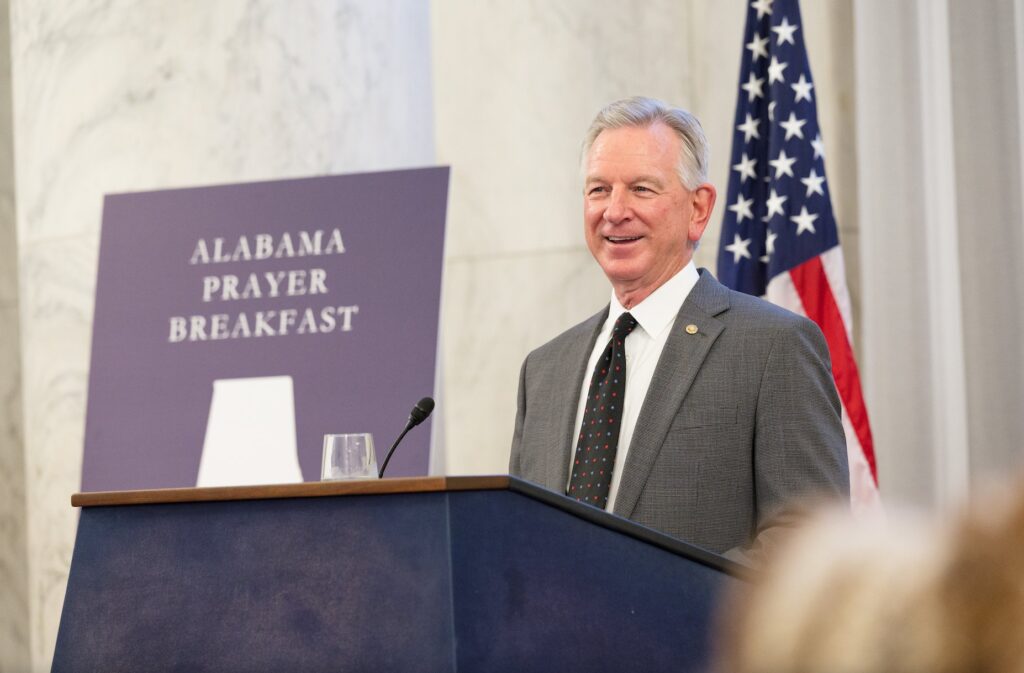
The Alabama Congressional delegation met for a prayer breakfast in Washington, D.C., this week. U.S. Senator Tommy Tuberville, along with U.S. Senator Katie Britt and U.S. Representatives Robert Aderholt, Terri Sewell, Gary Palmer, Barry Moore, Jerry Carl, and Dale Strong, joined to host an Alabama prayer breakfast. More than 100 Alabamians joined congressional leaders praying for the state and nation. “Our uniting in prayer is more important now than ever because I think we can all agree that we are facing a lot of division and brokenness in our country,” said Senator Tuberville. “And the solutions to these problems aren’t found in the Hall of Congress or the White House—but among God’s people. Our presence here today shows we recognize that God is the only one who can heal and restore. But first, America needs to turn back to God. That begins with you and me.” Honored to host the inaugural Alabama Prayer Breakfast with Alabama legislators, faith leaders, & constituents to pray for our great state & nation. Thank you to all those who joined us in prayer. May we continue to look to the Lord for guidance and remain one nation under God. pic.twitter.com/0sAGzZpznk — Coach Tommy Tuberville (@SenTuberville) June 21, 2023 Senator Britt said on Twitter, “Blessed to start the day in prayer with my colleagues and constituents. Thankful that we had such a great group of Alabamians join our congressional delegation for this morning’s prayer breakfast. All things are possible through Him!” Congressman Palmer said on Twitter, “It was an honor to join fellow Alabamians in prayer this morning for our state and our nation at the first annual Alabama Prayer Breakfast. Thank you to @SenTuberville for hosting.” The members were joined by faith leaders from Alabama, including University of Alabama President Stuart Bell, Dr. Jim Carter of Monroeville, Pastor Troy Garner of Huntsville, and Birmingham Theological Seminary President Ike Reeder. The leaders read passages from the Bible and took turns praying for our families, education system, churches, economy, and military. More than 100 Alabamians gathered in the Kennedy Caucus Room of the Russell Senate Office Building. To connect with the author of this story or to comment, email brandonmreporter@gmail.com.
Secretary of State Wes Allen removes Houston County registrar Dorothy Robbins

On Wednesday, Secretary of State Wes Allen announced that he has removed Dorothy Robbins from the Houston County Board of Registrars as a result of multiple violations. “We simply will not allow someone who has operated in this manner to continue to serve as a member of the Board of Registrars,” Allen said in a statement. “We took the appropriate action in light of the circumstances.” Allen has accused Robbins of having processed voter registration forms without signatures from the voters, made registrants active who had been convicted of disqualifying felony convictions, of having issued photo identification to non-registered voters, including individuals who had committed disqualifying felonies, of having registered a voter at her own home address who does not reside there, and of having processed voter registration forms without the required sign-off of a second registrar. Additionally, the Secretary of State’s office announced that Ms. Robbins no longer has access to any office, equipment, systems, or resources of the Board of Registrars. Except for Jefferson County, which is governed by its own unique system of rules, every county has three registrars. They are appointed by the Governor, the State Auditor, and the Alabama Commissioner of Agriculture and Industries. There was an attempt in the Legislature by the County Commissioners to usurp the state officers’ appointing authority for the commissioners. That effort was defeated in the recent regular session. Robbins was appointed by then State Auditor Jim Zeigler last year. Allen assumed office in January. He previously represented Pike County in the Alabama House of Representatives and was the Pike County Probate Judge before that. To connect with the author of this story or to comment, email brandonmreporter@gmail.com.
Alabama lawmakers to begin work on new congressional map

Alabama legislators will hold their first meeting next week to determine what the state’s new congressional map should look like after the U.S. Supreme Court ruled the state’s existing plan unlawfully diluted the power of Black voters. The chairmen of the Permanent Legislative Committee on Reapportionment on Wednesday released a schedule for hearings and deadlines. A three-judge panel last week gave lawmakers until July 21 to adopt a new congressional map. The deadline comes after the U.S. Supreme Court last week affirmed the panel’s finding that Alabama likely violated the Voting Rights Act with a congressional map that had only one majority Black district out of seven in a state where more than one in four residents is Black. The state must now draw a new map where Black voters comprise a majority, or close to it, in a second district. The reapportionment committee set a June 27 public hearing, a July 7 deadline to submit plans to the committee, and another public hearing for July 13. Hearings can be watched online at the Alabama Legislature’s website. Lawyers for the state of Alabama told the three-judge panel last week that they were prepared for a special session beginning the week of July 17. The court would then review the plan enacted by lawmakers. The judges tentatively set an Aug. 14 hearing date to review the new map. Republished with the permission of The Associated Press.
State data shows Mississippi gaming tax revenues fell slightly in May
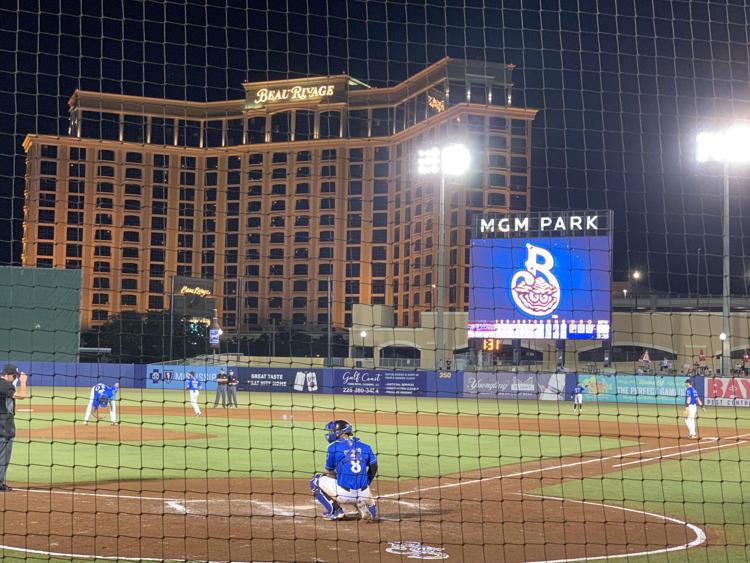
Data from the Mississippi Department of Revenue shows overall gambling tax revenues are down compared to the month before, with totals for the nearly-complete fiscal year less than the year before. May’s total was $24.84 million compared to May 2022, when state and local governments collected $25.77 million, a decrease of 3.64%. It was also down from April, when tax revenues totaled $25.26 million (1.7% decrease). The total for Fiscal 2023 is $272.75 million, a 4.1% decline from the first 11 months of fiscal 2022, when gambling tax revenues were $284.4 million. Fiscal 2022 ended with $310.6 million in tax revenue. The monthly average this fiscal year for gaming tax revenue has been $24.8 million, which would give state and local governments a final tally of $297.55 million, still a 4.86% gain from fiscal 2021’s $283.09 million. May sports wagers were $26.7 million, down from $31.8 million in April (a 16% drop) and $29.23 million from the same time last year (8.7% shortfall). “As the Magnolia State enters the slower summer months, things might get worse before they get better for sports betting operators and the state of Mississippi’s bottom line,” said BetMississippi.com analyst Chris Boan in a news release. “Rest assured, things will likely turn around when the pigskins start flying in Oxford and Starkville, as well as at NFL stadiums from coast to coast this fall – rectifying the slumps seen in Mississippi between January and May.” Taxable revenue from sports wagers added up to $3.18 million in May, down 25.8% from May 2022, when revenues were more than 4 million. In April, taxable revenue from sports betting was $4.35 million, a 36.8% drop. Republished with the permission of The Center Square.
Senate votes to keep Joe Biden rule toughening requirements on stabilizing braces for firearms
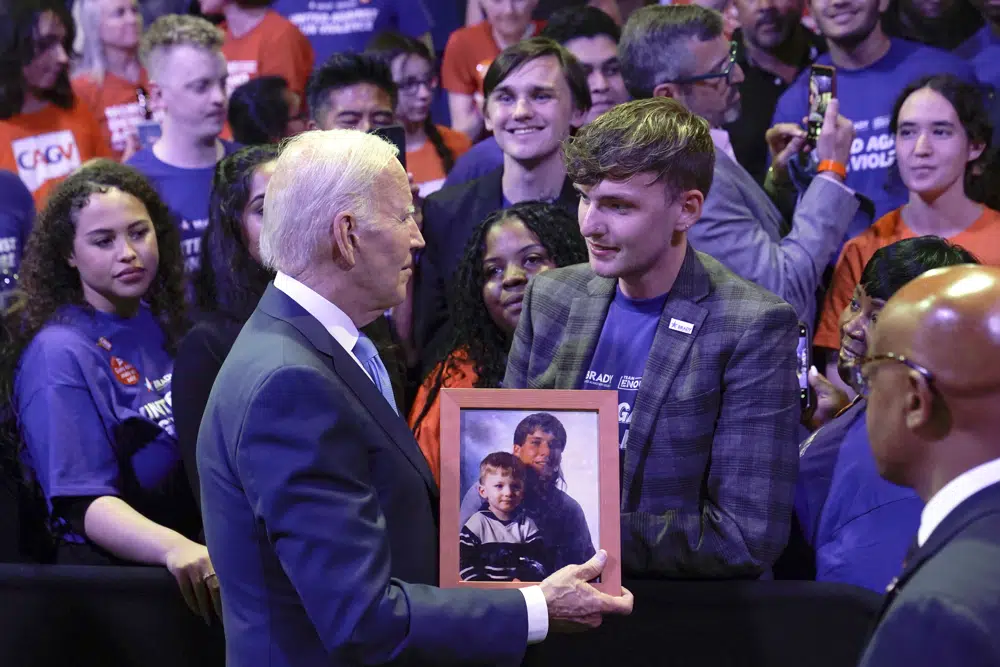
New rules that require owners to register stabilizing braces for firearms will stay in place after the Senate rejected a Republican effort on Thursday to overturn them. President Joe Biden had promised to veto the resolution overturning the rules if it had passed. In January, the Bureau of Alcohol, Tobacco, Firearms and Explosives finalized the new regulations on pistols with stabilizing braces, also called pistol braces, that require owners to register them and pay a fee or remove the braces. The agency found the accessories can make pistols as dangerously powerful and easy to conceal as short-barreled rifles or sawed-off shotguns. The Senate voted 50-49 to reject the resolution, with all Democrats voting against it and all Republicans voting for it. The Republican-led House had passed the resolution earlier this month. The regulation, which went into effect June 1, was one of several steps Biden first announced in 2021 after a man using a stabilizing brace killed 10 people at a grocery store in Boulder, Colorado. A stabilizing brace was also used in a shooting in Dayton, Ohio, that left nine people dead in 2019 and most recently in a school shooting in Nashville, Tennessee. Republicans argue that the braces are needed for Americans who have disabilities to be able to shoot guns with one hand. Sen. John Kennedy, the Louisiana Republican who sponsored the resolution, said he believes the regulations are a “backdoor way to subject pistols to more smothering regulations” and create a national gun registry. Democrats said that the country needs more gun regulations, not fewer, as mass shootings proliferate. The GOP effort to overturn the rule was “outrageous and it is completely removed from the conversation that families and kids are having all across the country,” said Connecticut Sen. Chris Murphy, D-Conn., ahead of the vote. The new rule is also being challenged in several lawsuits by gun owners and state attorneys general who say it violates the Second Amendment by requiring millions of people to alter or register their weapons. In some cases, judges have recently agreed to temporarily block enforcement of the rule for the plaintiffs. Biden mentioned the rule in a speech last week as he urged tougher gun restrictions around the country. This month marks the one-year anniversary of legislation passed by Congress that toughened background checks for the youngest gun buyers, sought to keep firearms from domestic violence offenders, and aimed to help states put in place red flag laws that make it easier to take weapons away from people judged to be dangerous. Biden noted that the pistol brace rule is one of several steps his administration has taken to try and curb gun violence. The braces are essentially turning a gun into a short-barreled rifle, he said, “which has been a weapon of choice by a number of mass shooters.” Republished with the permission of The Associated Press.
