
Former State Representative Will Dismukes to be sentenced today
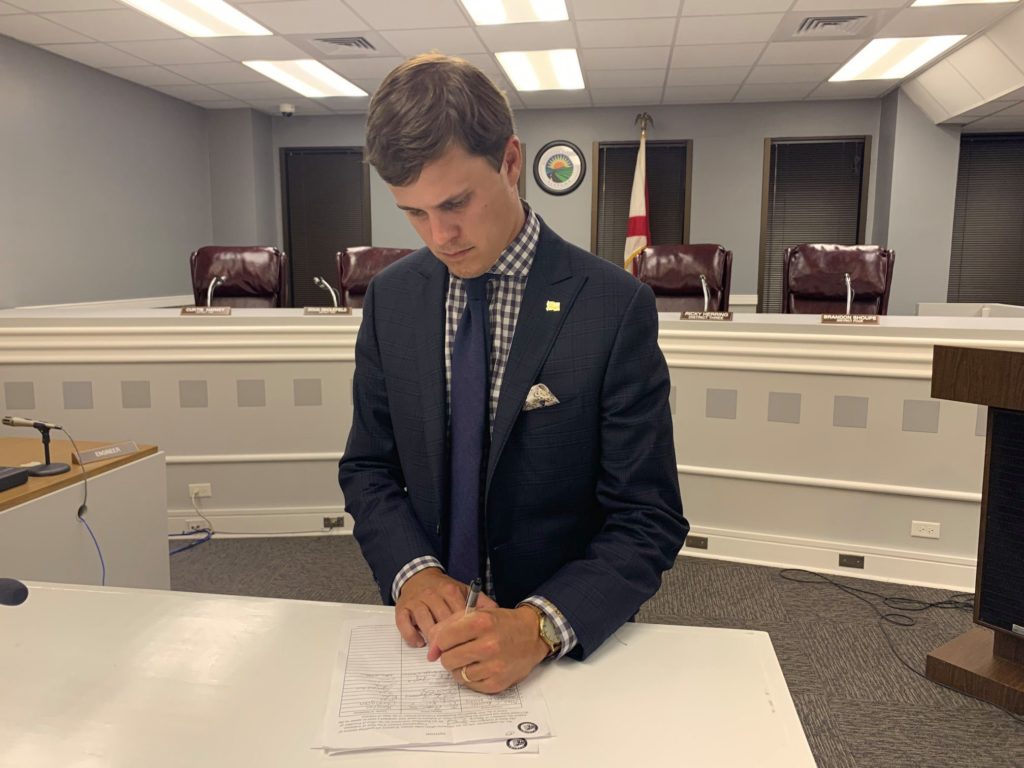
Former State Representative Will Dismukes is scheduled to be sentenced on Monday, July 17, on theft charges. The Prattville Republican was convicted on a first-degree theft of property charge. The jury also found Dismukes guilty of two aggravating factors, which will permit Judge Brooke Reid to sentence the former lawmaker to prison. Dismukes’ sentencing was scheduled for May 4 but was moved to July 17 after Dismukes’ father committed suicide in the aftermath of his son’s conviction. Dismukes was found guilty by a Montgomery County jury of stealing thousands of dollars from his former employer, Weiss Commercial Flooring. Prosecutors accused Dismukes of working for Weiss and then taking money, tools, and materials belonging to Weiss in order to start his own custom flooring company. None of the charges against Dismukes were related to public corruption or his tenure representing House District 88 in the Alabama House of Representatives. “I am very pleased with the jury’s conviction in this case,” said District Attorney Darrell Bailey. “Dismukes thievery cost a local business thousands of dollars in stolen revenue. This is the first time in history that a Montgomery jury has found an aggravator in a theft case. Because of this, my office will be seeking significant prison time for Mr. Dismukes.” Dismukes has steadfastly maintained his innocence and has vowed to appeal the conviction. Dismukes was a pastor and businessman in Prattville when he was elected to the Alabama House of Representatives in 2018. The young legislator appeared to be one of the Alabama Republican Party’s rising stars. He even announced that he was running for Congress in Alabama’s Second Congressional District before ultimately dropping out of the race and endorsing GOP rival Jessica Taylor. Dismukes drew statewide criticism for speaking at a birthday celebration in Selma for Confederate General Nathan Bedford Forest while former Congressman John Lewis’s body was lying-in-state in his native Selma. The Forest birthday celebration is an annual event in Selma and was scheduled before Congressman Lewis passed. Forest, who became wealthy as a slave trader before the Civil War and his rise to Confederate general, is believed by most historians to have become the first head of the Ku Klux Klan during the turbulent Reconstruction years following the Civil War. Dismukes was the Chaplain for his local Sons of Confederate Veterans chapter. The event and Dismukes’ participation in it likely would have gone unnoticed, except Dismukes posted about it on his social media. Under the circumstances, most observers statewide and nationally felt that the Forest birthday event should not have been held that year. Both Democrats and some Republicans called on Dismukes to resign from the Legislature. Dismukes was forced to resign as pastor at his church after the Forest scandal. Following the Forest controversy, it was announced that there was an investigation into Dismukes’ alleged theft from Weiss. Dismukes was indicted before the 2022 election. Despite this, Dismukes ran for re-election in 2022 but lost the Republican primary to Jerry Starnes 62 to 38%. Starnes subsequently won the general election. To connect with the author of this story or to comment, email brandonmreporter@gmail.com.
Special Session to address congressional redistricting begins today

Both Houses of the Alabama Legislature will be in session Monday for the second special session of the year. Last month Alabama Governor Kay Ivey issued a proclamation to call the Legislature for a special session beginning at 2:00 p.m. Monday, July 17, 2023, to address congressional redistricting. “It is critical that Alabama be fairly and accurately represented in Washington,” said Gov. Ivey. “That is why I support the Alabama Legislature readdressing our congressional map in a special session beginning July 17. It is of the utmost importance that this special session only address the congressional map and nothing else. The task at hand is too urgent and too important. The Alabama Legislature has one chance to get this done before the July 21 court deadline. Our Legislature knows our state, our people, and our districts better than the federal courts or activist groups do.” The special session is necessary because a special three-judge panel at the Eleventh Circuit Court of Appeals ruled that the 2021 Congressional redistricting violated the Voting Rights Act of 1965 and illegally diluted the political power of African Americans. The Supreme Court had stayed that decision allowing the 2022 elections to proceed with the 2021 redistricting, but after reviewing the case themselves, ruled that the Eleventh Circuit ruling was correct in its initial ruling and referred the issue back to the Atlanta appellate court. The three-judge panel has ordered the state Legislature to prepare a new redistricting plan with two majority-minority districts or something as close to that as possible by July 21. Many questions are swirling around today’s session. The Legislature may advance a plan with two 47-48 percent minority districts, a plan with two 51% minority districts, or a plan with a 47% minority district and a 51% minority district. Congresswoman Terri Sewell (D-AL07), Alabama’s lone Democrat in the congressional delegation since 2011, has said that she will not be satisfied unless her district and the second Congressional District are both majority-minority. Alabama is currently represented in the U.S. House of Representatives by six Republican White men and one Democratic Black woman. The new redistricting will go into place for the 2024 congressional elections. Most observers believe that to achieve a second majority-minority district, the Legislature will have to put a large part of Mobile County into one of the majority-minority districts. How much of Mobile County will be left in Republican Jerry Carl’s First Congressional District, and will Carl find himself in the same district as fellow Republican Congressman Barry Moore? Could the Republican Legislature save both Republican congressmen and still be in compliance with the letter of the law in the Supreme Court decision, or does one of the two-term Republican Congressmen have to be sacrificed to satisfy the demands of the federal court? If the plaintiffs in the lawsuit Milligan v. Allen are not happy with the maps drawn by the Legislature, they likely will ask the three-judge panel in Atlanta to reject the second redistricting and order a special master be appointed to draw the districts. If the court complies with that request, this special session could effectively become a waste of time. The court has given the state until July 21 to present them with a map that the judges find acceptable. There were efforts by some to get additional issues, such as gambling or absentee ballot reform, placed in the call. However, Gov. Ivey rejected those efforts and has urged the Legislature to focus strictly on the issue of congressional redistricting. This is the fourth session that the Alabama Legislature has held in 2023. The Alabama Legislature is a part-time legislative body that meets once a year to consider changes to state laws and pass the annual budgets. This year they met for a brief organizational session and used all thirty days of their maximum allotted regular session days. There was also a first special session to appropriate $1,030,000,000 in American Rescue Plan Act funds. This is the second special session of 2023. A court case, Thomas v. Allen, challenging the Alabama Senate district maps under Section 2 of the Voting Rights Act and challenging both legislative chambers’ district maps under the Fourteenth Amendment, was filed on November 16, 2021. Litigation was paused pending the outcome of Milligan. Since civil rights groups were successful in their challenge of Milligan, there is a possibility that the State of Alabama could be forced by the federal courts to redraw legislative districts as well, which would result in at least one more special session before the end of the year. To connect with the author of this story or to comment, email brandonmreporter@gmail.com.
Alabama rushes to adopt new congressional map amid disagreement on what district should look like
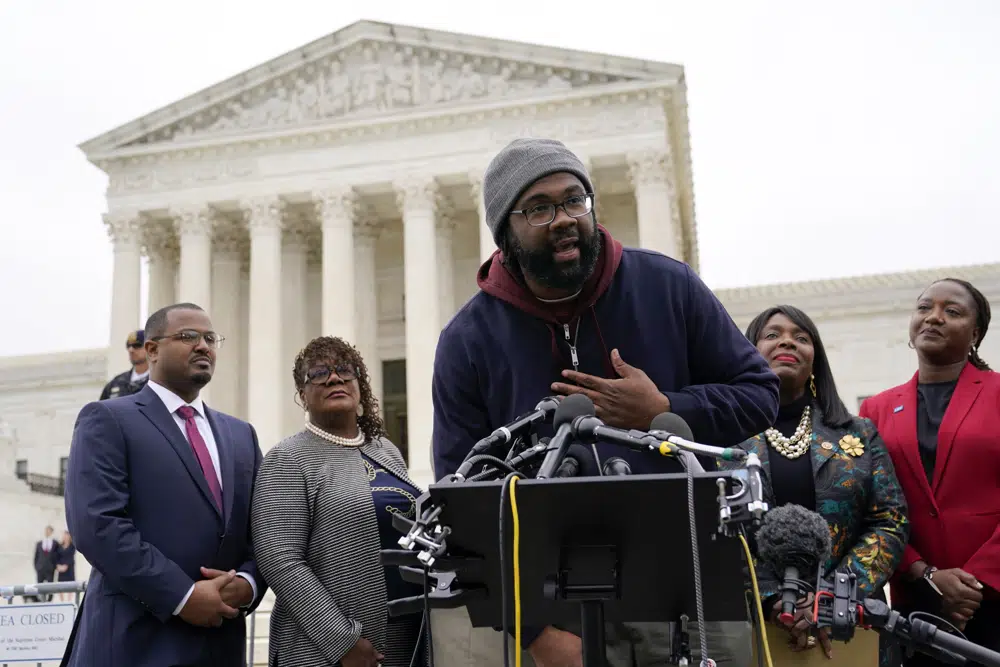
Federal judges that ordered Alabama to draw new congressional lines said the state should have a second district where Black voters are the majority “or something quite close to it” and have an opportunity to elect a representative of their choice. What exactly that map should look like is in dispute as lawmakers rush to draw new lines. Alabama lawmakers convene in a special session Monday tasked by the court with adopting a new map by the end of the week. The directive comes after a surprise U.S. Supreme Court ruling that affirmed the lower court’s ruling that Alabama’s existing congressional map — with a single Black district — likely violated the Voting Rights Act. The group of voters who sued the state and won before the Supreme Court have proposed the creation of a second district where Black residents are 50.5% of the population. But Alabama Republicans, who hold a lopsided majority in the Alabama Legislature and will control the redistricting process, have not ceded they must create a second majority-Black district and have pointed to proposals with lower percentages of Black voters. The GOP majority will release their proposed map on Monday. “Even among the plaintiffs suing the state, the meaning of an equal opportunity to elect candidates of choice is in dispute,” House Speaker Pro Tempore Chris Pringle, who serves as co-chairman of the state redistricting committee, said during a public hearing Thursday. The U.S. Supreme Court last month affirmed a lower-court ruling finding Alabama likely violated the Voting Rights Act with a congressional map that had only one majority Black district out of seven in a state where more than one in four residents is Black. The three-judge panel gave Alabama until Friday to adopt a new map and submit it for review. “The appropriate remedy is a congressional redistricting plan that includes either an additional majority-Black congressional district or an additional district in which Black voters otherwise have an opportunity to elect a representative of their choice,” the three-judge panel wrote in its 2022 ruling, adding that it will need to include two districts in which “Black voters either comprise a voting-age majority or something quite close to it.” The Supreme Court decision was cheered by voting rights groups who said it would give Black voters a greater voice in the Deep South state. “The eyes of the nation are looking at you. I know it’s hard. I know you have people that you answer to,” Evan Milligan, the lead plaintiff in the case that went to the U.S. Supreme Court, told lawmakers. “But if you can cut out the noise, look within, you can look to history. You can make a mark in history that will that will set a standard for this country.” Milligan, a longtime resident of Montgomery, said he is six generations removed from slavery. “My son and daughter are the seventh generation. When I look at them, I want to commit to them inheriting an Alabama that allows them an opportunity to lead, to dream and to make contributions to the community, the same that you want for your children and your grandchildren,” Milligan said. The Supreme Court decision sets up Alabama’s first significant revamp of its congressional districts since 1992, when Alabama was ordered by the courts to create its first majority-Black district. That led to the state electing its first Black member of Congress since Reconstruction. The district has been represented by a Black Democrat ever since. Partisan politics underlies the looming redistricting fight. Republicans who dominate elective office in Alabama have been resistant to creating a second district with a Democratic-leaning Black majority, or close to one, that could send another Democrat to Congress. Democrats cheered the possibility of gaining a seat or at least a swing district in the GOP-dominated state. Alabama Attorney General Steve Marshall, who represents the state in the redistricting lawsuit, wrote in a letter to the committee that plaintiffs had initially argued for a “fair chance” to compete but now want more. “Now they demand a plan that provides not just a ‘fair chance’ to compete, but instead a guarantee of Democratic victories in at least two districts,” Marshall wrote. Marshall said the plaintiffs’ proposed map divides voters based on “stereotypes about how voters of certain races will vote.” Joe Reed, chairman of the Alabama Democratic Conference — the state’s oldest Black political organization — urged lawmakers to compromise with plaintiffs on a plan. He said state lawmakers can either draw a plan that the court will approve or the court will draw it for them. “We know there will be two majority Black districts,” Reed said. Republished with the permission of The Associated Press.
Sen. Katie Britt supports bipartisan bills capping insulin prices
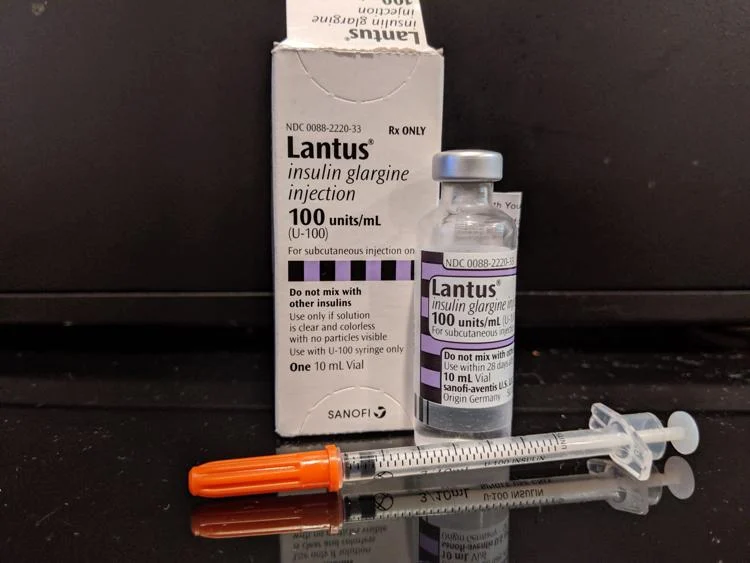
U.S. Senator Katie Britt announced that she is cosponsoring two pieces of bipartisan legislation to help all Alabamians access insulin. This includes the Affordable Insulin Now Act of 2023, which would cap the price of insulin for all patients, including those who are uninsured, at $35 for a 30-day supply. “For many, insulin is essential for their long-term health and survival. Alabamians should not have to make the unthinkable choice about whether to purchase life-saving insulin or another basic necessity like food simply due to the drug’s prohibitive cost,” said Sen. Britt. “Additionally, these pieces of legislation would help support our healthcare system by increasing access to insulin for diabetic Alabamians, keeping them healthy so they do not require more costly treatments and extensive medical care down the road. I’ll continue to fight to ensure that every Alabamian, no matter their zip code, can live the American Dream.” The bill was introduced by U.S. Senators John Kennedy (R-Louisiana) and Raphael Warnock (D-Georgia). “I’ve long been focused on strengthening access to affordable health care and lowering costs for Georgians, and that’s why I am proud to lead the effort in the Senate to cap patients’ out-of-pocket costs for insulin,” Sen. Warnock said. “Georgians should never have to choose between paying for life’s basic essentials or life-preserving medicines.” The Affordable Insulin Now Act would cap out-of-pocket costs of insulin products at $35 per month for people with private health plans and Medicare Part D plans, including Medicare Advantage drug plans. For commercial plans, this applies to one of each dosage form (ie. vial, pump, inhaler) of each different type of insulin (rapid-acting, short-acting, intermediate-acting, long-acting, ultra-long-acting, and premixed). For Medicare plans, this applies to all covered insulin products, and copays are capped at $35 for all preferred and nonpreferred products included on plan formularies. Require private group or individual plans to cover one of each insulin dosage form (i.e. vial, pen) and insulin type (i.e. rapid-acting, short-acting, intermediate-acting, and long-acting) for no more than $35 per month. The legislation requires the Secretary of Health and Human Services to establish a program to reimburse qualifying entities for covering any costs that exceed $35 for providing a 30-day supply of insulin to uninsured patients. “We need to stop nibbling around the edges,” Sen. Kennedy said. “We need to be smart enough to figure this out. And the cost? I think it can be done for $250 million a year, and I’m not talking about taking out a reverse mortgage on Alaska and borrowing more money. I’m talking about finding it in our budget. The federal budget is 6,000 billion dollars every year—and we can’t find $250 million to cap the price of insulin? Let’s do it right.” Sen. Britt says that she is bringing awareness to the devastating impact of diabetes across Alabama and fighting to ensure that all Alabamians are able to access the life-saving benefits of affordable insulin. Senator Britt this week discussed the topics during a hearing of the Senate Committee on Appropriations with medical experts and youth diabetes advocates. Dr. Griffin Rogers is the Director of the National Institute of Diabetes and Digestive and Kidney Diseases at the National Institutes of Health. During the questioning of Rogers, Senator Britt noted the high rate of diabetes among Alabamians. Approximately 568,000 people in Alabama, or almost 12% of the state’s population, have been diagnosed with diabetes. In Alabama, direct medical expenses total an estimated $4.2 billion a year for those who are diagnosed with diabetes. Sen. Britt has also signed on as a co-sponsor of the Improving Needed Safeguards for Users of Lifesaving Insulin Now (INSULIN) Act of 2023, which would comprehensively address the skyrocketing costs of insulin, removing barriers to care and making it more accessible for millions more Americans. This bipartisan legislation was introduced by U.S. Senators Susan Collins (R-Maine) and Jeanne Shaheen (D-N.H.). The INSULIN Act of 2023 would limit out-of-pocket costs for patients with diabetes by ensuring that group and individual market health plans must waive any deductible and limit cost-sharing to no more than $35 or 25% of the list price per month for at least one insulin of each type and dosage form. Additionally, the legislation forbids pharmacy benefit managers (PBMs) would be prohibited from placing utilization management tools – prior authorization, step therapy, etc. – on products with capped out-of-pocket costs. Mandate PBMs pass through 100% of insulin rebates and other discounts received from manufacturers to plan sponsors, reducing perverse incentives in the insulin market that encourage high list prices and helping patients in the form of reduced premiums. It also promotes generic and biosimilar competition to lower costs to patients by creating a new expedited FDA approval pathway for biologic drugs lacking adequate biosimilar competition, similar to FDA’s current Competitive Generic Therapies pathway. This will improve the timeliness of resolving regulatory barriers slowing down market entry of lower-cost products; ensuring adequate oversight of the Food and Drug Administration’s (FDA) citizen petition process, easing approval of generic and biosimilar drugs; allowing Medicare Part D plans to place biosimilar drugs on formulary immediately after entering the market, identical to other generic drugs; and, requiring a report to Congress on issues and market dynamics delaying or restricting biosimilar insulin competition. The Cardinal Institute opposes price caps on insulin. They argue that there is a growing idea that the government should create ceilings for drug pricing, manufacturing, and marketing, but that fundamental economics teaches that such restrictions fail to create an ethical, accessible healthcare system. The Cardinal Institute argues that when governments create price limits on goods and services, they always initiate scarcity. When supply is low, and demand is high, prices rise, or, in this case, where businesses are constrained, profits must be funneled away from research and innovation. They claim that numerous economic studies indicate price caps reduce the number of new drugs being brought into the market. Thus, temporary relief creates disastrous long-term effects. Katie Britt was elected to her first term in the U.S. Senate in 2022. To connect with the author of this story or to comment,
House Republicans amend the NDAA addressing Tommy Tuberville’s concerns
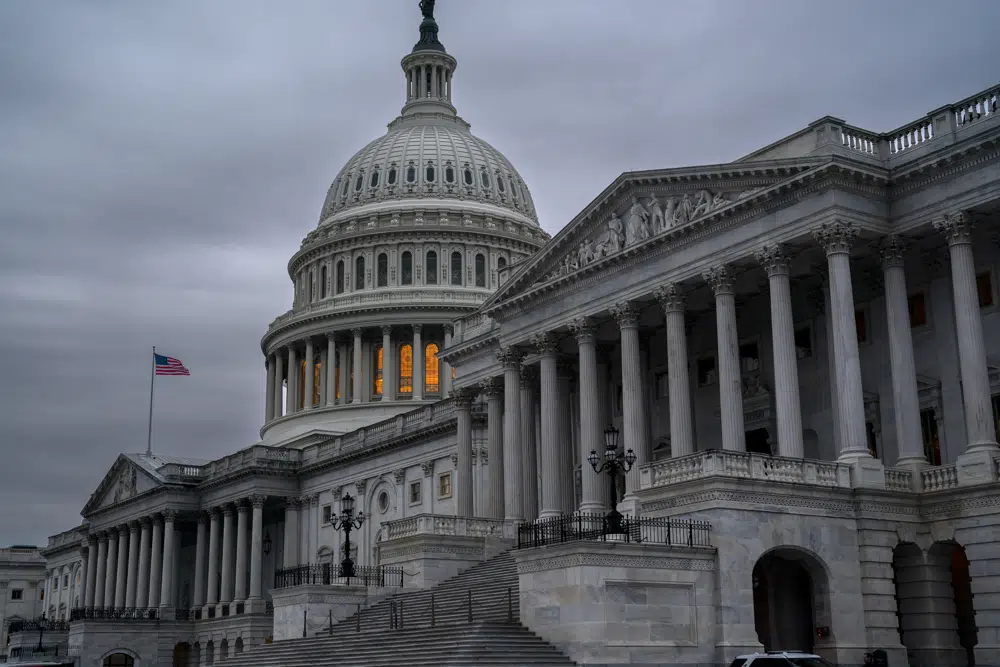
On Thursday, Congressional Republicans added several partisan amendments to the 2024 National Defense Authorization Act, including one overturning the DoD policy on abortions. The amended NDAA passed the U.S. House of Representatives on Friday. President Joe Biden said it is “irresponsible” for U.S. Senator Tommy Tuberville to block the confirmation of military officers in protest of a Defense Department policy that pays for travel for service members and their dependents to go out of state to get an abortion in state’s that have banned or restricted elective abortions. “He’s jeopardizing U.S. security by what he’s doing,” Biden said of Sen. Tommy Tuberville. “It’s just totally irresponsible, in my view.” Biden had demanded that Republicans address the Tuberville issue. “I expect the Republican Party to stand up — stand up and do something about it,” Biden continued. “The idea that we don’t have a chairman of the Joint Chiefs of Staff, the idea that we have all these promotions that are in abeyance right now and we don’t know what’s going to happen, the idea they were injecting into fundamental foreign policy decisions what in fact is a domestic social debate on social issues, is bizarre. I don’t ever recall it happening, ever. And it’s just totally irresponsible, in my view.” “I’m confident that the mainstream Republican Party no longer, does not support what he’s doing, but they got to stand up and be counted,” Biden said. “That’s how it ends.” House Republicans responded Thursday by amending the NDAA on the House floor. The House passed an amendment by Rep. Ronny Jackson (R-Texas) prohibiting the Secretary of Defense from paying for or reimbursing expenses relating to abortion services 221 – 213. Only two Republicans voted against including Jackson’s abortion amendment. The House also passed several other GOP priorities. The House passed an amendment by Rep. Matt Rosendale (R-Montana) that prohibits TRICARE from covering and the Department of Defense from furnishing sex reassignment surgeries and gender hormone treatments for transgender individuals 222 – 211. The House passed an amendment by Rep. Ralph Norman (R-South Carolina) prohibiting the provision of gender transition procedures, including surgery or medication, through the Exceptional Family Member Program 222 to 210. The House passed an amendment to prohibit federal funds from being used to establish a position within the Department of Defense for anything similar to Chief Diversity Officers or Senior Advisors for Diversity and Inclusion 217 – 212. The House passed an amendment by Rep. Lauren Boebert (R-Colorado) prohibiting the Department of Defense Education Activity schools from purchasing and having pornographic and radical gender ideology books in their libraries. The House passed an amendment by Rep. Warren Davidson (R-Ohio) that requires a study and report on health conditions arising in members of the Armed Forces after the administration of the COVID-19 vaccine by a voice vote. Rep. Boebert proposed an amendment prohibiting Defense Department schools from having “pornographic and radical gender ideology books in their libraries.” That passed 222-209. Rep. Norman’s amendment to ban Diversity, Equity, and Inclusion within the Department of Defense was narrowly adopted 214-213 on the second vote. An amendment from Rep. Eli Crane (R-Arizona) prohibiting the Pentagon from requiring training in certain “race-based concepts” was adopted 214-210. Not all amendments passed. A series of five proposals to limit U.S. involvement in Ukraine failed. An amendment from Rep. Matt Gaetz (R-Florida) to prohibit using federal funds for training on diversity, equity, and inclusion was rejected Thursday in a 210-221 vote. The House rejected an amendment from Reps. Davidson and Chip Roy (R-Texas) that “expresses a sense of Congress that the U.S. should not continue subsidizing NATO member countries who choose not to invest in their own defense by meeting” established financial contribution targets. The vote was 212-218, with two Democrats voting to support the measure and eight Republicans voting against it. An amendment to prohibit the transfer of cluster munitions to Ukraine was rejected 147-276-2. 98 Republicans and 49 Democrats voted in favor, and 121 Republicans and 155 Democrats voted against. The House rejected an amendment prohibiting using federal funds to rename military bases. The Republican changes to the NDAA meant that it lost Democratic support in the final vote. Democrats denounced the amendment as a cruel, harmful amendment to roll back a DoD policy helping service women travel to get the reproductive health care they need, putting the health and lives of over 230,000 women in uniform at risk. Democrats also denounced amendments that strip medically-necessary care for LGBTQ+ service members. Congresswoman Terri Sewell (D-AL07) voted against the NDAA due to the Republican changes on the floor. “For the past 62 years, Republicans and Democrats have come together to craft bipartisan defense authorization bills that would support our troops and strengthen our national security,” said Rep. Sewell. “But this year, rather than continuing that essential tradition, Speaker [Kevin] McCarthy has caved to the most extreme members of his party and allowed the radical right wing to poison the defense bill with culture war provisions that would undermine our military readiness and harm our service members.” “I did not take this vote lightly,” continued Sewell. “I have proudly voted in favor of the annual defense bill every year since coming to Congress. But I cannot and will not support a bill that would rip basic health care away from our service members and make bigotry and discrimination a centerpiece of our defense policy. Republicans need to stop playing politics with our national security.” The NDAA authorizes funding levels for the Department of Defense (DoD) and allows the Armed Forces to pay, train, and equip U.S. service members, support America’s allies worldwide, and carry out essential national security operations. House Minority Leader Hakeem Jeffries (D-New York), Minority Whip Katherine Clark (D-Massachusetts), and Democratic Caucus Chair Pete Aguilar (D-California) released a joint statement after the chamber approved a number of conservative amendments to the NDAA. “Extreme MAGA Republicans have chosen to hijack the historically bipartisan National Defense Authorization Act to continue attacking reproductive freedom and jamming their right-wing ideology down the throats of the American people,” the Democratic trio wrote in a joint statement. To connect with the author of this story or to comment, email brandonmreporter@gmail.com
Barry Moore introduces resolution in support of checkoffs
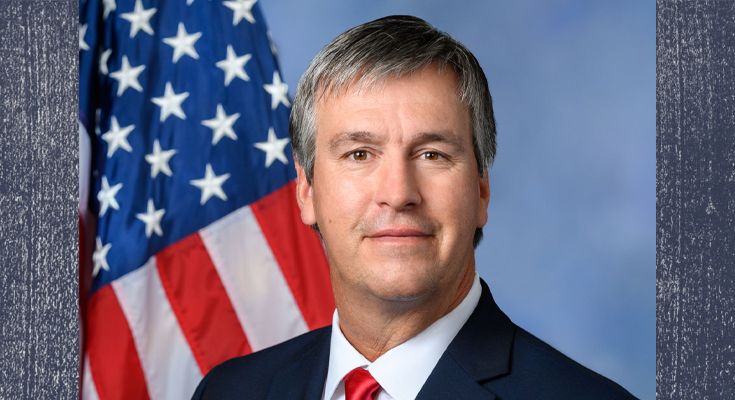
Om Thursday, Congressman Barry Moore (R-AL02) introduced a resolution expressing the sense of the House of Representatives that research and promotion boards, also known as “checkoffs,” support efforts to develop new markets while strengthening existing markets for specific agricultural commodities. “Checkoff programs have made significant, measurable strides in raising the level of demand and awareness for our farmers, ranchers and foresters’ products,” said Moore. “This resolution expresses Congressional support for checkoffs due to the research, education and promotion efforts they have provided to our producers.” Moore said that checkoffs have proven a return on investment and value through research findings for the producers supporting their programming. Through responsible stewardship and thorough producer-led, as well as Federal oversight of producer resources, these boards give producers across the industry access to robust marketplaces and cutting-edge research. The American Farm Bureau Federation, National Cotton Council, American Soybean Association, National Pork Producers Council, National Milk Producers Federation, National Cattlemen’s Beef Association, International Fresh Produce Association, American Mushroom Institute, American Sheep Industry Association, American Wood Council, National Christmas Tree Association, National Potato Council, National Pecan Federation, National Sorghum Producers, National Watermelon Association, North American Blueberry Council, U.S. Peanut Federation, Alabama Farmers Federation, Texas Farm Bureau, Texas Cattle Feeders Association, Texas Sheep & Goat Raisers Association and Texas & Southwestern Cattle Raisers Association have all endorsed the resolution. Checkoff programs promote and provide research and information for a particular agricultural commodity without reference to specific producers or brands. Currently, the USDA Agricultural Marketing Service (AMS) oversees twenty-one research and promotion boards at the federal level, which consist of large and small producers, importers, and other commodity stakeholders. These range from commodities like dairy, beef, and soybeans to honey, watermelons, softwood lumber, and potatoes. The number has been higher than twenty-one in the past and could increase in the future depending on whether new programs – hemp, for example – are approved by AMS or created via legislation. Checkoff programs have been challenged in courts and in USDA administrative proceedings in various ways on numerous occasions over the past decades by producers opposed to paying the mandatory assessments. In Johanns v. Livestock Mktg. Ass’n, 544 U.S. 550 (2005), the Supreme Court determined advertisements promoting beef as a generic commodity were government speech and thus not violative of the First Amendment. In 2016, new litigation was initiated in the United States District Court for the District of Montana — Ranchers Cattleman Action Legal Fund United Stockgrowers of America v. Perdue. In R-CALF, the plaintiffs primarily allege that the collection of a portion of the federally-mandated dollar-per head of cattle violates the First Amendment because the operation of several states’ Qualified State Beef Councils fall outside the government speech test set forth in Johanns. R-CALF argues that “The decades-old beef checkoff program is ill-suited to meet the needs of today’s cattle farmers and ranchers. In fact, the program promotes corporate control and globalization over the interests of America’s cattle producers.” Presently, checkoff programs collectively provide a billion dollars or more annually at the state and federal levels in funding to support research, education, and information activities. The programs have faced and survived numerous legal challenges over the past decades. The future of checkoff articles will likely be decided in the courts and through the lobbying efforts of the feuding ag—industry associations for and against the checkoff. Congressman Barry Moore is in his second term representing Alabama’s Second Congressional District. To connect with the author of this story or to comment, email brandonmreporter@gmail.com.
Reps. Gary Palmer and Mike Rogers vote for the NDAA
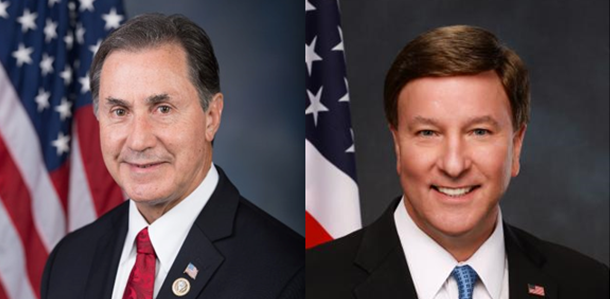
Congressmen Mike Rogers (R-AL03) and Gary Palmer (R-AL06) both released statements announcing the passage of the Fiscal Year 2024 (FY24) National Defense Authorization Act (NDAA). “The National Defense Authorization Act has been a critical part of our national security for over 60 years,” said Rogers. “The NDAA provides our warfighters with the resources and authorities they need to provide for the defense of our nation. This legislation is vital as our nation is faced with unprecedented threats from our adversaries.” “It is only because of the selflessness of the brave men and women who service in our armed forces that our nation remains free – the FY24 NDAA includes strong provisions that support our servicemembers and their families,” Rogers continued. “ “One of Congress’ most important responsibilities is prioritizing funding for our national defense, especially with China as an ever-growing threat,” said Rep. Palmer. “The world’s most powerful fighting force should be singularly focused on keeping Americans safe. Under the current administration, our military’s needs have been neglected. This year’s NDAA reorients our military to a goal of winning conflicts by providing the resources needed to deter aggression and, if it comes to it, fight and win. In order to do so, this legislation provides funding for much needed facility upgrades and additions in strategic locations and addresses key needs in weapon development and procurement. Additionally, service members are getting a well-deserved and long overdue pay increase. These are all necessary to deter aggression from China and other adversarial nations. Thanks to Chairman Mike Rogers (AL-03) for overseeing the creation of this bill and fighting to strengthen our military.” Rogers expressed concern about countering threats from China. ‘The threat we face from China is the most pressing national security threat we’ve faced in decades,” Rep. Rogers said. “The FY24 NDAA is laser-focused on countering China. The FY24 NDAA protects our homeland from threats by investing in a stronger missile defense and modernizing our nuclear deterrent. The legislation also boosts innovation and revitalizes the industrial base to ensure they can deliver the systems we need to prevail in any conflict.” “The FY24 NDAA also recognizes the critical role Alabama plays in our national defense and strengthens that role for years to come,” Rogers said. “This legislation is not just a win for our military, but also for Alabamians. Space Command’s move to Alabama is long overdue and is the best option for the long-term success of the newest military branch,” said Palmer. “To ensure the administration stops playing politics with our national security, section 2866 prohibits funds for being used to build a headquarters for Space Command and cuts the travel budget for the Secretary of the Air Force in half until he submits a report to the congressional defense committees justifying the selection of a permanent location for the headquarters. It’s time to bring Space Command home to Huntsville.” “Our adversaries will only be deterred by strength,” said Rogers. “The FY24 NDAA sends a stern message to our adversaries by bolstering our nation’s defense.” Rogers is the Chairman of the House Armed Services Committee, which is tasked with overseeing the nation’s military. While the NDAA passed out of committee with broad bipartisan support, amendments placed on the bill by Republicans in the House of Representatives cost the NDAA support from Democrats on the floor of the House. The NDAA now goes to the Democratic-controlled Senate, which likely will strip off many of the GOP-led amendments forcing the bill to go to a conference committee. To connect with the author of this story or to comment, email brandonmreporter@gmail.com.
Gov. Kay Ivey approves $67M in coastal projects
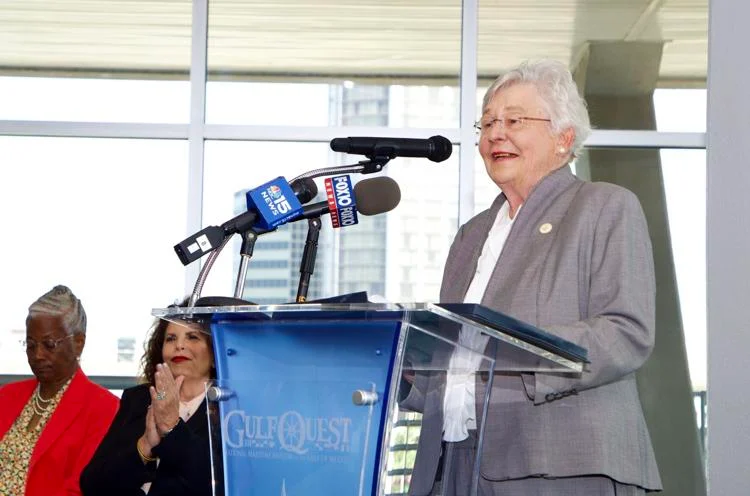
Gov. Kay Ivey announced Friday the award of $67 million for 27 projects for coastal Alabama, including sewer and water quality improvements, research grants, and new recreation facilities. The funds are from the Gulf of Mexico Energy Security Act of 2006, better known as GOMESA, which is a revenue-sharing model for oil- and gas-producing Gulf states. “Working closely with Commissioner Blankenship, I am pleased to report today that over $67 million dollars have been allocated to fund projects to further protect this region and provide quality public accessibility to the rivers, bay, and other waterways of South Alabama,” Ivey said at an event at the GulfQuest museum in Mobile. “Other projects announced today will vastly improve water quality in Mobile Bay by making sewer infrastructure improvements, convert septic tanks to sanitary sewers, and perform vital streambank and shoreline restorations.” During Ivey’s administration, there have been 78 GOMESA-funded projects awarded at a total cost of more than $180 million. The four Gulf states — Alabama, Louisiana, Mississippi, and Texas — and their eligible political subdivisions, such as cities and counties, receive 37.5% of the oil and gas lease revenues. Both Mobile and Baldwin counties receive separate GOMESA revenues. Administration costs for the projects added up to $278,686 in 2022 and $397,988 for this year. Here is the list of the projects: Republished with the permission of The Center Square.
