
Federal appeals court rejects Alabama Congressional redistricting map

On Tuesday, a three-judge panel struck down the Alabama Legislature’s new congressional redistricting map. The Court is expected to appoint a special master to redraw Alabama’s congressional map because the state Legislature refused to draw a map compliant with the Court’s previous order to draw a map with two majority-minority districts. In June, the Court ordered the state to submit a map with two majority-minority districts or something close to that. Instead, Alabama Republicans simply drew a map increasing the percentage of Black voters in Republican Congressman Barry Moore’s Second Congressional District from 30% to 39.9%. “We are not aware of any other case in which a state legislature — faced with a federal court order declaring that its electoral plan unlawfully dilutes minority votes and requiring a plan that provides an additional opportunity district — responded with a plan that the state concedes does not provide that district,” the judges wrote in a 196-page ruling. The plaintiffs in the Milligan v Allen case that challenged the original 2021 redistricting as not compliant with the Voting Rights Act of 1965 rejected the second map. On Tuesday, the Court issued a ruling agreeing with the plaintiffs. None of this was unexpected. Alabama Attorney General Steve Marshall in August told the Alabama Republican Executive Committee meeting in Montgomery that he was skeptical of the three-judge panel ruling in favor of the state. The state lost a narrow 5 to 4 decision before the U.S. Supreme Court. The Court in June affirmed that the three-judge panel in Atlanta was correct in its initial 2022 decision to halt Alabama’s election under the 2021 redistricting. After the initial judgment, the three-judge panel’s decision to block the 2022 election, the Supreme Court ruled that the three-judge panel likely had been right that the 2021 redistricting was not compliant with the Voting Rights Act. The special master has been given until September 25 to redraw Alabama’s Congressional districts, creating a second majority-minority district. The state is expected to ask the Supreme Court to stay the three-judge panel ruling and hear this case as they did last year. The state will likely ask the Supreme Court to again stay the three-judge panel’s ruling to allow the 2024 elections to take place under the partisan 2022 redistricting. The plaintiffs suing the state will undoubtedly challenge any legal maneuvering by the state of Alabama. State Senators close to the redistricting decision explained to Alabama Today that the state is staking its hope on Supreme Court Justice Brett Kavanaugh switching sides and voting with the four conservative jurists: Samuel Alito, Amy Coney Barrett, Clarence Thomas, and Neil Gorsuch. All of this is dependent on the Supreme Court even considering the case. They are not obligated by law to take up the matter. Kavanaugh voted with Chief Justice John Roberts, who wrote the decision for the majority. The three-judge panel is comprised of one Clinton appointee, Circuit Judge Stanley Marcus, and two Trump appointees, District Judge Anna Manasco and District Judge Terry Moorer. Candidate qualifying with the two major political parties begins in October, so the state needs to know what the district boundaries will look like by October 1. If this decision is applied to other southern states, including Texas and Florida, Democrats could pick up as many as twelve new majority-minority districts, likely flipping control of the U.S. House of Representatives to the Democrats in the 2024 elections. To connect with the author of this story or to comment, email brandonmreporter@gmail.com.
Alabama WIC Program seeks public comment about 2024 State Plan

On Friday, the Special Supplemental Nutrition Program for Women, Infants, and Children (WIC) in the Alabama Department of Public Health (ADPH) announced it is seeking public comment on the plan and what WIC could do better in 2024. WIC provides nutrition education and supplemental foods and serves pregnant, postpartum, and breastfeeding women, infants, and children up to age five whose family income is up to 185 percent of the federal poverty level. Special emphasis is placed on the participation of infants, children, and high-risk pregnant women. The federal WIC Program regulations require that each state agency establish a procedure under which members of the general public are provided an opportunity to comment on the development of the state agency plan for the coming year. The Alabama WIC Program’s 2024 State Plan of Program Operations may be reviewed online between September 1- 15, 2023. Members of the public are invited to submit their written comments via email by September 15, 2023. Comments can also be mailed to: Alabama Department of Public Health WIC Program, Attention Allison Hatchett The RSA Tower, Suite 1300 201 Monroe St. P.O. Box 303017 Montgomery, Ala. 36130-3017 Thursday was the 59th anniversary of the Supplemental Nutritional Assistant Program (SNAP) program. “For 59 years, SNAP has served as the first line of defense against hunger and food insecurity for low-income children and families,” Congresswoman Terri Sewell (D-AL07) said on Twitter. “I will always fight to preserve and protect SNAP benefits for those who rely on them!” Both SNAP and WIC are federal nutrition assistance programs for low-income families managed by the states. Both programs have income requirements, but WIC also has categorical requirements that limit who can participate. SNAP gives qualifying participants an Electronic Benefits Transfer (EBT) card, which works like a debit card and automatically loads a certain dollar amount onto it each month. The state determines how much benefit to give based on household size and income. SNAP can be used to purchase most foods, including fruits and vegetables, meat, dairy products, bread, cereal, and snacks. SNAP can also be used to buy seeds or plants that will grow into food. SNAP cannot be used for alcohol, tobacco, supplements, most live animals, or pet food. WIC participants receive a WIC card similar to a SNAP EBT card. However, instead of providing a monthly dollar limit participants can spend up to, it authorizes them to purchase certain foods the program has approved. These can include fruits and vegetables, meats, cereals, dairy products, and infant formula, among other things. Benefits expire on the last day of the month. In addition to this direct food assistance, WIC can also connect people with nutrition education and breastfeeding support. These services can help families squeeze the most value out of their WIC benefits. Generally, those who qualify for SNAP have gross incomes less than 130% of the poverty line, and net income may not be more than 100% of the poverty line. There are exceptions for the elderly or disabled. People may also be deemed categorically eligible if they qualify for another government assistance program, like Temporary Assistance for Needy Families (TANF) or Supplemental Security Income (SSI). Generally, you cannot have more than $2,750 in countable resources or $4,250 if at least one household member is over 60 or disabled to qualify for SNAP. Your home does not count against SNAP eligibility. WIC is open to pregnant, postpartum, and breastfeeding women and households with infants or children under five. Eligibility lasts only as long as the household meets at least one of these criteria. To qualify for WIC, you must have an income equal to or less than 185% of the poverty line. You may also qualify automatically if you’re eligible for SNAP, Medicaid, or TANF. To connect with the author of this story or to comment, email brandonmreporter@gmail.com.
Will Sellers: Remembering the life and legacy of Lee Kuan Yew

Imagine a country in the 20th century that, in a matter of 30 years, went from a per capita income of $500 to one of $50,000. Imagine further that the country had no natural resources and was roughly 150 times smaller than Alabama. And what would we think about a leader who achieved such spectacular results? Meet Lee Kuan Yew, who had he lived, would be 100 years old this month. From 1959 to 1990, he served as prime minister of Singapore and was largely responsible for bringing a third-world country into the first world. In short, he was a visionary leader who contemplated a greatness for his country that few could imagine. He refused to accept the low expectations of his people’s capabilities and embarked on a mission of almost unachievable goals. When Lee (in Singapore, last names come before given names) accepted the mantle of political leadership, the world bequeathed to him was neither stable nor secure or certain. Singapore was a city state with a strategically located port where ships from all over the world docked, but that seemed to be its only natural asset. Far from homogeneous, Singapore’s people were ethnically diverse, with a stratified community of various faiths and cultures, with little historical memory. Other than the business of trade, the country had no unifying or organizing principle for political cohesion. But, Lee, who trained as a lawyer in Cambridge with a smattering of additional education from the London School of Economics, created a political party that focused on a peaceful transition to home rule within the British Empire. Politically, he never sought independence but saw Singapore as part of a larger state, merged with other, smaller countries that were former colonies in his region. Initially, this concept worked, and for at least a few years, Singapore was part of Malaysia. But, with boundaries artificially defined and few commonalities between the people, Singapore was not a great fit as part of an emerging country. Within the combined territories that comprised Malaysia, there were many factions based on ethnic issues and fueled in many ways by competing cold war ideologies. Singapore became infected with racial strife leading to riots stirred up by Malaysian ethnic rivalries. To stop the bloodshed, Malaysia decided to expel Singapore, at which point Singapore became the first country to inadvertently achieve independence. Thus, against its will, Singapore was foisted, kicking and screaming, into nationhood. At this time, no one was sure how a large city could maintain a separate independent state in a rough neighborhood. Were it not for Lee’s leadership, Singapore could easily have become a pawn in the larger cold war or a satellite in the Chinese sphere of influence. But Lee had a different vision. While he was devastated by Singapore’s expulsion, he embraced the opportunity and created a vision for Singapore that would set in motion a prosperity unimaginable to anyone-except for Lee Kuan Yew. Realizing the vulnerabilities of the new country, Lee sought Singapore’s diplomatic recognition. He applied for entrance and was accepted into the United Nations. Largely dependent on other countries and with no minerals or other resources, he entered into treaties with surrounding nations. He also imposed conscription to rapidly built up a defense force. Within his government, he removed all communist elements and supported President Lyndon Johnson’s policies in Vietnam. Thus, within a few years of independence, Lee had placed his small city-state on the world stage. Economically, Lee realized he must create employment opportunities for his citizens. Knowing that work and a high standard of living were a key to his independent country’s growth and development, he created an economic policy that provided incentives for foreign investments. He built factories and provided job training. Critically, he embraced the British legal system, adopting the common law so that foreign investors would know with certainty their rights would be protected against any nationalization. This stability, along with a low tax base and a highly skilled, but cheap labor force, expanded Singapore’s economy to new heights. As prime minister, Lee ran a squeaky-clean government with zero tolerance for corruption. One means to prevent corruption was to pay government employees a high wage so there was no incentive to supplement a government salary with bribes. But the economic growth came at a cost. Even while embracing a market economy to efficiently allocate resources, the people of Singapore were not given the rights Lee observed from his time in Britain. The press was not especially free as censorship was practiced to prevent criticism of government policies. Under Lee, Singapore strictly enforced its criminal laws with public corporal punishment for littering and executing anyone found guilty of trafficking in narcotics. When questioned about the severity of these laws, Lee’s supporters pointed to the cleanliness of the city and the lack of serious crime. Even though several human rights groups objected to Singapore’s human rights violations, that did not stop foreign investment in the manufacturing sector, financial services, and international trade. Businesses liked the stability of the government but were also drawn to the work ethic of the people. When asked why Singapore experienced such dynamic growth, Lee said that the most critical factor to achieve national competitiveness is “manpower resources,” which he believed is exhibited in creativity, innovation, entrepreneurship, and good management. As Lee retired from government in 1990, he continued to serve in an advisory role and became a commentator about leadership, economic development, and the power of ideas. Even after his death in 2015, his legacy as a visionary leader has grown, and his accomplishments are studied and cited as authority for creating a dynamic economy from scratch. Remembering Lee Kwan Yew on his birthday, one quote is worth highlighting: “A nation is great not by its size alone. It is the will, the cohesion, the stamina, the discipline of its people, and the quality of their leaders which ensure an honorable place in history.” Will Sellers is a graduate of Hillsdale College and an Associate Justice
Mike Rogers comments on anniversary of Afghanistan withdrawal

Congressman Mike Rogers (R-AL03) is the Chairman of the House Armed Services Committee. On Saturday, Rogers released a statement on the two-year anniversary of the last plane of American soldiers leaving Afghanistan. On August 30, 2021, the last American soldier boarded an airplane at Kabul International Airport. Afghanistan was America’s longest war, with hundreds of thousands of Americans doing tours there over nearly 20 years of combat operations. The U.S. went in to topple the Taliban-led government there. When the U.S. left, the Taliban had far greater control of the nation than they had in 2001 when this war began. “President [Joe] Biden was warned by Congress and his senior military advisors that a withdrawal from Afghanistan, without a plan, would lead to disaster,” Rep. Rogers said. “Two years ago, President Biden ignored the warnings and pushed forward with an unconditional withdrawal from Afghanistan without a plan. President Biden’s irresponsible actions as Commander in Chief led to the fall of Afghanistan into Taliban hands and the Abbey Gate suicide bombing that resulted in the deaths of 13 U.S. servicemembers.” The terrorist bombing killed 13 U.S. service members and more than one hundred Afghan civilian evacuees – many of whom had worked with U.S. armed forces as interpreters or the elected Afghan government. The bombing ended any further efforts to evacuate Afghan civilians fearful of living under Taliban domination. “Today, Taliban-controlled Afghanistan is a hotspot for terrorists who seek to harm the United States,” Rogers said. “The Commander of U.S. Central Command, General Erik Kurilla, told the House Armed Services Committee that extremist groups see opportunity in Afghanistan and ISIS-K is capable of external operations against Western interests. Our nation is at higher risk today because of President Biden’s catastrophic withdrawal from Afghanistan.” “The American people deserve answers and accountability,” Rogers concluded. “Congress will continue to investigate the Biden administration, and we will hold his administration accountable for what occurred.” The Biden Administration has released documents defending the decision to leave Afghanistan and its handling of the withdrawal. The Biden Administration maintains that what happened is largely the fault of the Trump Administration. “Two decades after the war had started, America had become bogged down in a war in Afghanistan with unclear objectives and no end in sight and was underinvesting in today’s and tomorrow’s national security challenges. President Biden’s choices for how to execute a withdrawal from Afghanistan were severely constrained by conditions created by his predecessor,” the document stated. “When President [Donald] Trump took office in 2017, there were more than 10,000 troops in Afghanistan. Eighteen months later, after introducing more than 3,000 additional troops just to maintain the stalemate, President Trump ordered direct talks with the Taliban without consulting with our allies and partners or allowing the Afghan government at the negotiating table. In September 2019, President Trump emboldened the Taliban by publicly considering inviting them to Camp David on the anniversary of 9/11. In February 2020, the United States and the Taliban reached a deal, known as the Doha Agreement, under which the United States agreed to withdraw all U.S. forces from Afghanistan by May 2021. In return, the Taliban agreed to participate in a peace process and refrain from attacking U.S. troops and threatening Afghanistan’s major cities—but only as long as the United States remained committed to withdraw by the agreement’s deadline.” Rogers has represented Alabama’s Third Congressional District since his election in 2002. To connect with the author of this story or to comment, email brandonmreporter@gmail.com.
Akiesha Anderson: Alabama’s grocery tax reduction: A penny saved, a better future paved

The first stop on the road to untaxing groceries in Alabama is straight ahead. Lawmakers achieved a significant victory for the people this year by passing legislation to cut the state’s 4-cent grocery tax by half. That change will begin this Labor Day weekend, as the first 1-cent reduction takes effect September 1. Ultimately, this small change likely will result in large savings for Alabamians who are working hard to make ends meet. Once the new law is fully implemented, many families will have hundreds of dollars more available each year to spend on food or other expenses. For decades, Alabama Arise has focused on reducing and ultimately eliminating the state sales tax on groceries, which essentially taxes survival. At the beginning of the 2023 legislative session, Alabama stood as one of only three states with no tax break on groceries. Thanks to determined advocacy by Arise members and other advocates, our state is off that shameful list at last. The story behind the legislative triumph Arise collaborated this year with many partners and lawmakers to introduce and pass the grocery tax reduction. That list includes the Alabama Grocers Association, Lt. Gov. Will Ainsworth, Sens. Andrew Jones and Merika Coleman, and Reps. Danny Garrett and Penni McClammy. This year’s breakthrough also would not have happened without other legislative champions who laid the groundwork for this moment, including former Reps. John Knight and Thad McClammy, former Sen. Hank Sanders and Reps. Laura Hall, and Mary Moore. The grocery tax law’s passage is a testament to the importance of continuing to hold the line and fight for change for as long as it takes. It’s also a testament to the importance of seizing the moment when opportunity arrives. Something spectacular happened this year as the stars finally aligned after decades of advocacy. When this year’s session began, many Alabamians were struggling with inflation and higher costs for essentials like eggs and bread. Simultaneously, the state was witnessing strong revenue growth. As elected officials began talking about one-time tax rebates, advocates recognized an opportune moment to make permanent progress on reducing the state grocery tax. And the revenue growth ensured this reduction would not cause severe harm to funding for our children’s public schools. A positive step forward State leaders seized this window of opportunity and united across partisan lines to reduce the grocery tax. It was amazing to witness the culmination of decades of hard work. And it was inspiring to see nearly every legislator co-sponsoring this monumental legislation. Many lawmakers tout this as the state’s largest tax cut ever, and it is one that will provide the biggest everyday benefit to people with low incomes. Ultimately, Alabama Arise remains dedicated to transforming the state’s regressive tax system into a more progressive one. Progressive tax systems levy taxes based on one’s ability to pay, whereas regressive systems work in the reverse. The grocery tax has long exemplified regressive taxation, burdening those with fewer resources by requiring them to pay proportionally more than wealthier individuals. Reducing the state grocery tax is a step in the right direction for tax justice. This penny saved is symbolic of a better future being paved for Alabama. What lies ahead Arise will continue advocating to eliminate the state grocery tax while protecting Education Trust Fund revenues. We look forward to working with the new Joint Study Commission on Grocery Taxation to find a sustainable path forward. Rebalancing Alabama’s upside-down tax system will require both lower taxes for people with low incomes and higher taxes for wealthy households and highly profitable corporations that can afford to pay more. As this year’s grocery tax reduction takes effect, we celebrate its many champions – most notably the Alabamians who stayed vigilant to ensure their voices translated into tangible policy improvements. We also celebrate this policy change as a symbol of progress and unity, and as a testament to what state leaders can accomplish when they put partisanship aside to pass legislation with profound benefits for individuals and communities. Cheers to eliminating the first cent, and to the ongoing journey toward a more prosperous and equitable Alabama! Akiesha Anderson is policy and advocacy director of Alabama Arise, a statewide, member-led nonprofit organization advancing public policies to improve the lives of Alabamians who are marginalized by poverty. Arise’s membership includes faith-based, community, nonprofit and civic groups, grassroots leaders, and individuals from across Alabama.
Rep. Mike Rogers and Sen. Roger Wicker issue letter questioning details about speaking engagement with Iranian propagandist
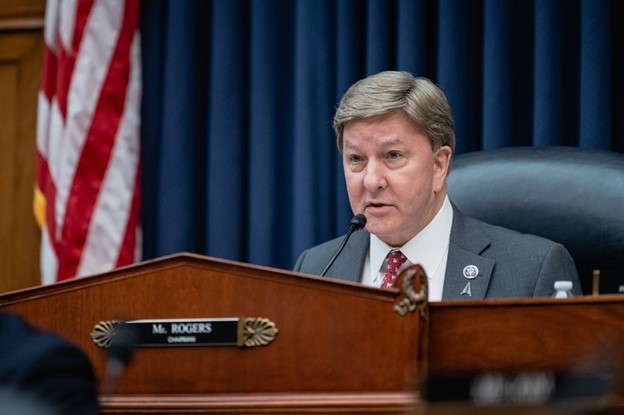
U.S. Representative Mike Rogers (R-AL03) and U.S. Senator Roger Wicker (R-Mississippi) issued a joint letter to United States Strategic Command (STRATCOM) demanding a full accounting of why an Iranian propagandist and former regime official participated as a keynote speaker in a STRATCOM-sponsored event. Rogers is the Chairman of the House Armed Services Committee, while Wicker is the Ranking member of the Senate Armed Services Committee. Press reports and a STRATCOM official statement indicate that Seyed Hossein Mousavian, a former spokesman for the Iranian nuclear negotiating team and a former senior staffer for the regime’s Supreme National Security Council, was a featured participant in the August 2023 STRATCOM Deterrence Symposium. “Providing Mousavian with an officially sanctioned U.S. Government platform for spreading historical falsehoods and Iranian regime propaganda is profoundly ill-advised,” Rogers and Wicker wrote. “The decision to invite Mousavian to address its Deterrence Symposium calls into question the judgment of any personnel involved in such a decision, and leads us to question whether the command is appropriately focused on meeting the rapidly growing strategic threats to the United States and its allies.” In addition to Mousavian’s former posts supporting the regime, Rogers claims that he continues to demonstrate sympathy and support for the adversarial government. In 2020, Mousavian termed Iranian terrorist Qassem Soleimani a “hero fighting terrorism” and has repeatedly mocked American officials living under the threat of assassination by Iranian-backed actors because of their role in formulating tough-on-Iran policies. The GOP’s two most powerful Armed Service Committee leaders criticized the decision to allow Mousavian to engage in the forum, expressing concern that it suggests an insufficient focus on the increasingly pressing nuclear threats from American adversaries. “We write with deep concern regarding the appearance of a notorious Iranian propagandist and former senior regime official, Seyed Hossein Mousavian, as a keynote speaker to the 2023 STRATCOM Deterrence Symposium on August 17, 2023,” Rogers and Wicker wrote. “A propagandist of the regime since 1980, Mousavian served as the Iranian regime’s Ambassador to Germany in 1992 when the regime’s intelligence operatives assassinated four Iranian dissidents in Berlin. In response, German authorities forced Mousavian to leave the country along with several other Iranian “diplomats” and intelligence operatives.” “In the subsequent decades, Mousavian served as spokesman for the Iranian nuclear negotiating team and as a senior staffer for the regime’s Supreme National Security Council,” Rogers and Wicker continued. “Despite Mousavian’s past claims that he is an exile of the Iranian government, former Iranian Foreign Minister Javad Zarif stated in 2016 that Mousavian has remained a loyal friend of the Iranian regime and “continued to, and continues to, work hard for the [Islamic Republic of Iran].” “Recent actions and remarks by Mousavian demonstrate his continued support for the Iranian regime.” Wrote Rogers and Wicker. “For example, in 2020, Mousavian attended the funeral in Iran of Qassem Soleimani, the Commander of the Islamic Revolutionary Guard Corps – Qods Force that was responsible for the deaths of at least 603 U.S. servicemembers in Iraq. Mousavian claimed that Soleimani was “a hero fighting terrorism.” Mousavian has also repeatedly mocked U.S. officials under assassination threat from the Iranian regime. In a 2022 documentary paying homage to Soleimani, Mousavian smiled while referring to Iranian death threats against former Special Representative for Iran Brian Hook. He gleefully said [in Farsi]: “An American told me that Brian Hook’s wife can’t sleep, and she cries and trembles as they say they’ll kill Hook…that is how shaken they are!” “While we appreciate the importance of improving our understanding of adversary perspectives and motivations in formulating deterrence policies, providing Mousavian with an officially sanctioned U.S. Government platform for spreading historical falsehoods and Iranian regime propaganda is profoundly ill-advised,” Rogers and Wicker continued. “The decision to invite Mousavian to address its Deterrence Symposium calls into question the judgement of any personnel involved in such a decision, and leads us to question whether the command is appropriately focused on meeting the rapidly growing strategic threats to the United States and its allies.” Rogers and Wicker requested the names and positions of all officials responsible for approving the invitation to Mousavian and information about any compensation for transportation, lodging, or a per diem to Mr. Mousavian. Mousavian earned a Ph.D. in international relations from the University of Kent, United Kingdom, and is today on the faculty at Princeton. According to his bio, “Mousavian studies and makes proposals for policy initiatives and diplomatic solutions to the crisis over Iran’s nuclear program, to advance the goal of a Middle East Weapon of Mass Destruction Free Zone, improve U.S.-Iran bilateral relations and foster peaceful resolution of security crises in the Middle East so as to advance nonproliferation, peace, and stability in the region. To better understand and inform scholarship and policy debates on these goals, he participates intensively in public and private discussions with high-level policymakers, Track 1.5 processes, and public diplomacy focused on the United States, Europe, leading countries in the international system, Iran and other states in the Middle East.” To connect with the author of this story or to comment, email brandonmreporter@gmail.com.
Alabama leaders commemorate Victory over Japan Day
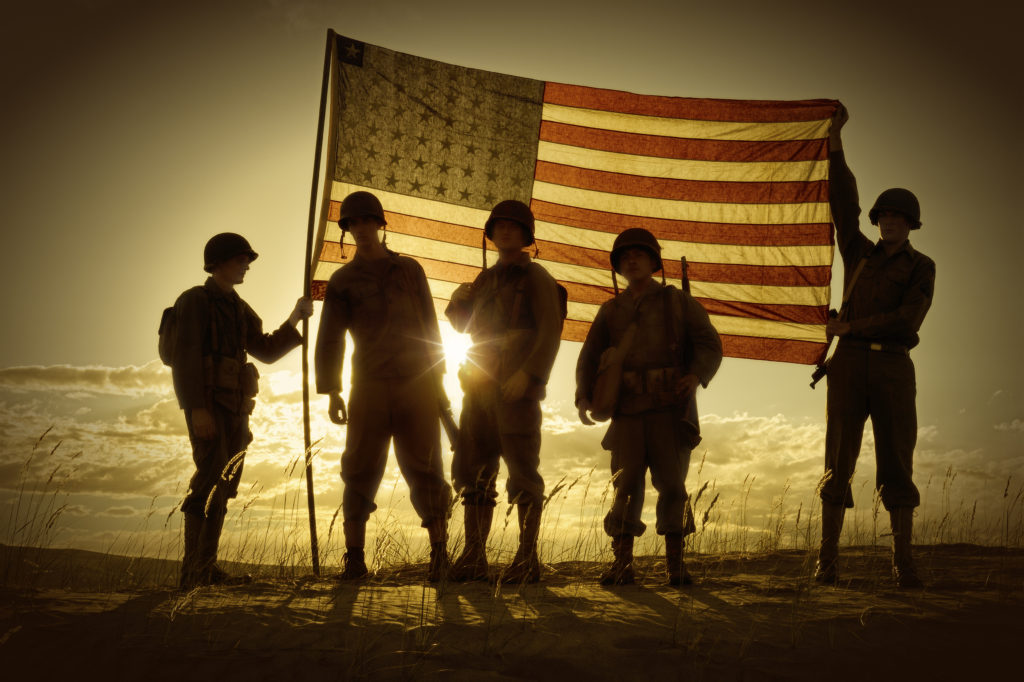
On September 2, 1945, representatives of the Empire of Japan formally surrendered to the U.S. and the Allies aboard the Battleship U.S.S. Missouri, formally ending World War II. The United States was forced into World War II on December 7, 1941, when the Japanese bombed the U.S. Navy base at Pearl Harbor. The Allies had defeated Nazi Germany months earlier. German Chancellor Adolf Hitler was dead, and the Nazi leadership was in custody: but Japan fought on alone, still holding large portions of China, Korea, Indochina, and Formosa (today Taiwan). On August 6 and 9, the U.S. dropped atomic bombs on the Cities of Nagasaki and Hiroshima. On August 15, Japan announced its surrender, with the formal signing of the surrender paper coming on September 2. General Douglas MacArthur signed the surrender papers on behalf of the Allies. This date is remembered in the U.S. as Victory over Japan Day (VJ-Day). The British commemorate August 15 as Victory over Japan Day. U.S. Senator Tommy Tuberville (R-Alabama) remembered the veterans who won World War II. “On September 2, 1945, Japan officially surrendered aboard the U.S.S. Missouri, ending one of the bloodiest wars in history,” Sen. Tuberville wrote on Twitter. “78 years later, we remember the courage, selflessness, and sacrifices of all our World War II veterans.” Congressman Barry Moore (R-AL02) acknowledged the historical significance of the date on Twitter. “On this 78th Anniversary of the Victory over Japan, we celebrate the Japanese surrender to allied forces, marking the end of World War II,” Rep. Moore said on Twitter. “Let us never forget those who sacrificed everything to defend our country and protect our freedom.” Sen. Katie Britt (R-Alabama) also honored the World War II vets. “Today, we remember the service and sacrifice of the heroic Americans who won the victory in the Pacific and brought an end to the largest war the world has ever seen,” Sen. Britt wrote on Twitter. World War II was the largest, bloodiest war in the history of the world and second only to the Civil War in American deaths. To connect with the author of this story or to comment, email brandonmreporter@gmail.com.
