
Robert Lane McCollum is running for PSC President

Conservative businessman Robert Lane McCollum has announced he will run for President of the Alabama Public Service Commission (PSC) in the March 5 Republican primary. McCollum will be challenging incumbent PSC President Twinkle Andress Cavanaugh. McCollum had previously announced that he would run for Tallapoosa County Probate Judge. He announced on Monday that he will not be seeking that office. Earlier this year, he explored possibly running for Congress against incumbent Mike Rogers (R-AL03). McCollum previously ran for PSC Commissioner in 2022, ultimately losing in the Republican primary runoff to incumbent Commissioner Chip Beeker. “I have decided to leave the race for Tallapoosa County Probate Judge, and instead challenge Twinkle Cavanaugh for President of the Alabama PSC,” McCollum said. “A conservative state like Alabama cannot stand four more years of swamp creatures like Twinkle raising their utility bills year after year. Alabamians want a PSC President that looks out for them and not the special interests. Twinkle isn’t that person.” McCollum is a private business owner in Dadeville, Alabama. “I learned in 2022 that people getting rich on the backs of hard-working Alabamians will stop at nothing to keep a conservative political outsider off of the PSC, “McCollum said. “Twinkle never saw a light bill she didn’t want to raise, and that stops now. Tallapoosa County will be in excellent hands with Judge Talmadge East, but Alabama can’t take anymore.” The upcoming Alabama Republican Primary will be held on March 5, 2024. Republican candidate qualifying opens on October 16. Candidate qualifying for the Alabama Democratic Party is expected to open on September 29. To connect with the author of this story or to comment, email brandonmreporter@gmail.com.
Governor announces special election dates in House District 10
Governor Kay Ivey signed a proclamation on Monday setting special election dates for Alabama House District 10. This seat was vacated by Republican David Cole, who resigned on August 30 after signing a plea agreement admitting that he knowingly voted at a polling place where he was not authorized to vote. Governor Ivey set the special primary election for Tuesday, December 12, 2023. The special primary runoff, if necessary, will be held on Tuesday, January 9, 2024. The special general election has been set for Tuesday, March 26, 2024. “The people in House District 10 deserve to be fully represented in the legislative process, and by calling this special election, we will ensure that to be the case. Those in public office must be held accountable and to the highest standard,” said Governor Ivey. “I encourage everyone in this district to get out and vote during this special election to ensure you have a strong voice advocating for you in the Alabama Legislature.” The deadline for qualifying with the two major political parties will be Tuesday, October 10, 2023, at 5:00 p.m. Independent and minor party candidates have until Tuesday, December 12, 2023, at 5:00 p.m. to turn in all of their paperwork with the Alabama Secretary of State’s office, including ballot access petition signatures. During the legislative session, the Alabama House of Representatives was divided 77 to 28, with Republicans having a commanding supermajority. There are vacancies, so the current split is 75 to 27, pending the results of the three special elections. House District 10 represents a portion of fast-growing Madison County. House District 10 was targeted by Democrats in 2022 as a possible swing district that they thought they could win. Cole is the second member of the Alabama House of Representatives to plead guilty to criminal misdeeds and resign from the Legislature this year. Fred “Coach” Plump (D-Fairfield) was the other. Plump was indicted in a federal corruption probe. It was widely known that Cole, a successful doctor, did not live in District 10 but ran (and was elected) for the seat anyway. In Alabama, every voter is assigned a polling place based on their home address. Cole admits to having broken that law by voting at a different polling place. Both Cole and Plumb were freshmen legislators. Contact the Alabama Republican Party or the Alabama Democratic Party for more information about running for the vacant HD10 seat. The eventual winner will serve for the remainder of Cole’s term and then have to face voters again, along with the rest of the Alabama Legislature, in the 2026 election. To connect with the author of this story or to comment, email brandonmreporter@gmail.com.
Katie Britt calls Biden Administration $6 billion payout to Iran “shameful”
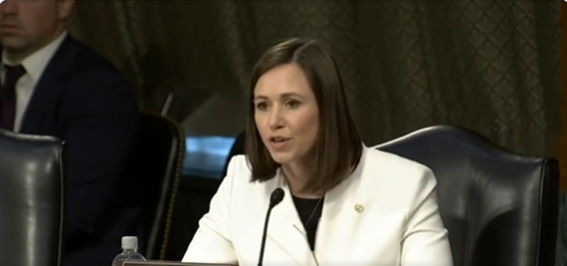
U.S. Senator Katie Britt (R-Alabama) released a statement condemning the deal with Iran after the Biden Administration formally notified Congress that it will unfreeze $6 billion in Iranian assets and release five Iranians currently detained by the United States in exchange for the return of five Americans currently being held captive. “The deal itself is shameful enough. But the Biden Administration choosing today of all days to notify Congress that the President is handing $6 billion to the biggest state sponsor of terrorism in the world just adds insult to injury,” Senator Britt wrote. “This irresponsible, weak appeasement sends a terrible message across the globe and only incentivizes further hostage-taking in the future. There is no doubt that President Biden’s actions once again endanger our national security and dishonor the sacrifice of American men and women who have fought valiantly for our country.” “If we’re paying a billion dollars per kidnapped individual, then you’re going to see more kidnappings,” said Sen. Mitt Romney (R-Utah). “That’s why you don’t negotiate with terrorists; that’s why you don’t negotiate with kidnappers. The idea of basically paying to release, in this effect, a hostage is a terrible idea.” “It’s ridiculous for US to be blackmailed into paying $6B for hostages which will help indirectly finance the number 1 foreign policy of Iran: terrorism,” Sen. Chuck Grassley (R-Iowa) wrote. “Last time it was $1.7B traded for hostages next time it will probably be $10B the price keeps going up & up.” Secretary of State Antony Blinken last week issued the sanction waiver to allow the frozen Iranian funds to move from South Korea to Qatar, which Iran could then use. “I determine that it is in the national security interest of the United States to waive the imposition of sanctions … with respect to foreign financial institutions under the primary jurisdiction of Germany, Ireland, Qatar, the Republic of Korea, and Switzerland that are notified directly in writing by the U.S. government, to the extent necessary for such institutions to engage in transactions occurring on or after August 9, 2023,” Blinken wrote. Last month, Senator Britt joined a group of 25 Republican colleagues in demanding answers from the Biden Administration about the specifics of the proposed deal with Iran. Katie Britt was elected to the U.S. Senate in 2022 after working as an attorney, the President and CEO of the Business Council of Alabama (BCA), and as former Senator Richard Shelby’s chief of staff. To connect with the author of this story or to comment, email brandonmreporter@gmail.com.
Alabama files emergency appeal with Supreme Court begging Court to stay a lower court ruling in the congressional redistricting case
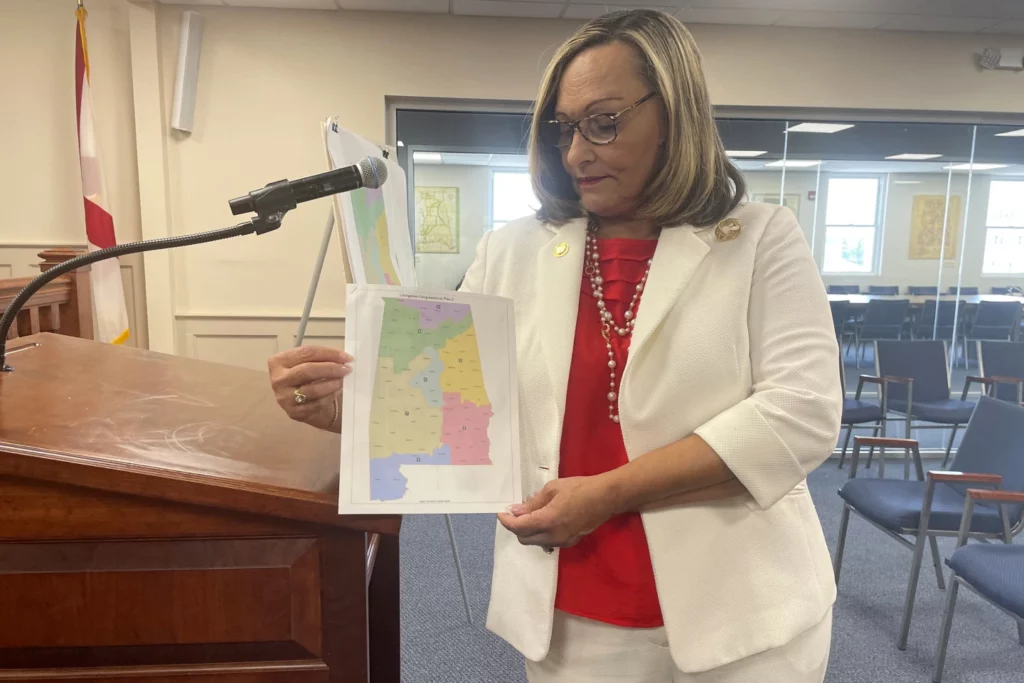
On Monday, a federal three-judge panel issued a decision rejecting a request by the State of Alabama to pause implementation of their September 4th ruling striking down a partisan redistricting plan passed by the Alabama Legislature in July while the state appeals the Court’s decision. Following that legal setback, the state has filed an emergency appeal to the U.S. Supreme Court, asking for the Court to freeze the three-judge panel’s ruling by October 1. The three-judge panel has appointed a special master to draw new redistricting maps for the state of Alabama after the Alabama Legislature failed twice to produce a map that the Court believes complies with the Voting Rights Act of 1965. The special master will present the three-judge panel with potential maps dividing the state of Alabama into seven congressional districts. The Court will then select the map that they think is best. The Alabama Democratic Party told Alabama Today that qualifying for Congress and other offices opens up for the Alabama Democratic Party on September 29 – before the district boundaries and racial compositions are even known. Republican qualifying does not begin until October 16. Candidate qualifying for both parties ends on November 10. The three-judge panel told the state that the state’s appeal will likely fail, which is why they did not grant the pause in their ruling. “The Secretary has lost three times already, and one of those losses occurred on appeal,” the three federal judges wrote in their ruling. “We have twice enjoined a plan that includes only one majority-Black or Black-opportunity district on the grounds that it likely dilutes the votes of Black Alabamians in violation of Section Two of the Voting Rights Act.” The Court has ruled that since the state is 27 percent Black, two of the seven congressional districts should be majority Black. Currently, Alabama has six majority White congressional districts and just one, the Seventh, majority Black district. At this time, we believe that all seven of Alabama’s congressional incumbents will run for another term. That could change depending on what the redrawn districts look like. The Constitution only requires that candidates for Congress be residents of the state. It does not require that they live in the congressional district. The uncertainty of the district lines most harms Independent and minor candidates. They have to get ballot access signatures from registered voters in their districts. Without knowing what any of the districts look like, those costly petition drives would be working purely on speculation and guesswork. Any voter’s signature that ultimately was not in the district would not count and would be rejected by the Secretary of State’s office. The state has argued that drawing two majority Black districts in the state of Alabama will result in districts that are not suitably compact and would result in the dividing communities of interest like the Alabama Gulf Coast or the Wiregrass region. The major party primaries will be on March 5. To connect with the author of this story or to comment, email brandonmreporter@gmail.com.
GOP candidate qualifying opens on October 16

The Alabama Republican Party announced on Monday that the 2024 election cycle formally begins on Monday, October 16, 2023, at 8:30 a.m. CDT with the opening of candidate qualifying. The Alabama Democratic Party told Alabama Today that candidate qualifying for Democrats will open on September 29. Those interested in running for office as a Republican or in serving as a delegate at the Republican National Convention can file a declaration of candidacy and pay the appropriate fees in person at ALGOP Headquarters, 3505 Lorna Road, Hoover, AL 35216, or online at www.algop.org. Republican Candidate qualifying will only be open for 25 days. Democrats will have open qualifying for 43 days. Qualifying for both parties will close on Friday, November 10, 2023, at 5:00 p.m. CST. Both major party primaries, including the presidential primary will be on Tuesday, March 5. By law, candidate qualifying has to end 116 days before the primary election. “The Alabama Republican Party is excited about the upcoming 2024 election cycle and working with all our candidates during the qualifying process,” said Alabama Republican Party Chairman John Wahl. “This is going to be an important election year with a lot at stake on both the national and local level. The Republican Party is proud to stand for the timeless principles of freedom and limited government that made our nation great, and we look forward to helping all of our candidates as they stand for these conservative values in 2024,” Wahl continued. “We also have our eyes on the national level as the presidential race heats up. As a Super Tuesday state, our goal is to see Alabama play a key role in choosing the party’s nominee and to highlight the state of Alabama during this process. We’ve seen this with recent visits from America’s leading conservatives, and we plan to continue this effort as we get closer to the primary election. Running for office is a calling and one which requires sacrifice and dedication. I want to thank each candidate that steps forward to run for office. I have such respect for anyone willing to put themselves out there in hopes of making a difference for the people of Alabama. I want each of them to know they have a friend in the ALGOP.” In addition to the presidential race, other offices on the 2024 ballot include all seven U.S. House seats, several Alabama Supreme Court positions – including Chief Justice – Public Service Commission President, as well as seats on the Alabama State School Board, Courts of Criminal and Civil Appeals, Circuit Courts, District Courts, and all Circuit Clerk positions. No one knows with certainty which congressional district they currently live in as the court-appointed special master will not have that map complete until September 25, after the court rejected the second map prepared by the Alabama Legislature. The Super Tuesday Primary will take place on March 5, 2024. Independents and minor party candidates need to contact the Alabama Secretary of State’s office for details on how to gain ballot access. They have until March 5 to obtain all the ballot access signatures needed to be on the November ballot. To connect with the author of this story or to comment, email brandonmreporter@gmail.com.
Daniel Sutter: America’s OPEC?

High gas prices over the past three years have contributed to record oil company profits. Yet domestic oil production has not surged in response. The Biden Administration blames corporate greed, while critics blame Joe Biden’s anti-energy agenda. Recent research suggests another possibility: our very own oil cartel. Gas prices stand about 60 percent higher than January 2021, although down from summer 2022. Administration officials have noted weak industry interest in Federal leases, and Exxon and Chevron have recently canceled projects. Domestic production only recently (virtually) reached its pre-COVID November 2019 peak. A cartel might have emerged through horizontal stock ownership by institutional investors through vehicles like mutual funds and index funds. Many investors seek diversified, passively managed stock funds which mirror the S&P 500 or other stock indexes and avoid high fees. The success of such funds has led to institutional investors owning perhaps 80 to 90 percent of major corporations. The “Big Three” asset managers – BlackRock, Vanguard, and State Street – own about a quarter of the stock of many large companies. Consequently, asset managers own large chunks of competing firms with significant implications for economic theories of competition. Economists assume that independently owned firms maximize their own profits. Aggressive competition – cutting prices, offering better service – takes customers, and consequently profits, away from competitors. Free market economists think competition can be very vigorous even with a small number of competitors. Common horizontal ownership changes this dynamic. If the owners of Delta also own American, fare cutting takes revenues from themselves. Horizontal ownership makes collusion to restrain competition more likely. But even without collusion, the incentive to compete is diminished. The Biden Administration’s war on fossil fuels could also be inhibiting domestic oil production. But climate change may be camouflage. BlackRock CEO Larry Fink may claim to be saving the planet while really leading a domestic OPEC. Horizontal ownership raises clear antitrust concerns. To date, institutional investors’ horizontal ownership has flown under the radar. But recent research by Professor Jose Azar and coauthors has documented an anticompetitive impact of horizontal ownership. Making a convincing case that horizontal ownership instead of other factors drives any observed price differences requires careful analysis. One of Professor Azar’s studies examined airlines, where fares on each route, say Atlanta to Chicago, can be analyzed separately. Economists use the Herfindahl-Hirschman Index (HHI) to measure effective competition in a market. Azar and colleagues use a modified HHI (MHHI), which decreases effective competition when a small number of competitors also have common ownership. Differences in fares across routes depended more on the MHHI than the traditional HHI, even when controlling for other factors. In addition, mergers among financial institutions increasing the MHHI but not the HHI increased prices. Finally, routes where fares and the MHHI increased typically experience fewer travelers, helping rule out increases in demand for flights as driving higher fares. Overall, Azar and colleagues find that horizontal ownership results in fares being 3 to 7 percent higher. An examination of banking also found horizontal ownership to increase fees. These relatively recent results are not the final word but raise red flags. Horizontal stock ownership can also explain other market behaviors. As Harvard’s Einer Elhauge observes, CEO bonuses are often based on industry performance and not their firm’s performance. This reward structure only makes sense with horizontal ownership of leading firms in an industry. Could antitrust help address horizontal ownership? As a principle, I am skeptical of antitrust as markets can humble even the largest companies if they fail to serve customers. Professor Elhauge suggests limiting stock funds seeking diversification to investing in only one company in an industry; BlackRock need not own Delta, American, and United. The possible transformation of Americans’ desire to avoid stockbroker fees into a mechanism for collusion illustrates the fears of many that smart business insiders can take advantage of them. While this fear is real, complicated regulations truly empower the greedy. Deregulation and competition surprisingly offer the best hope to align greed with consumers’ interests. Daniel Sutter is the Charles G. Koch Professor of Economics with the Manuel H. Johnson Center for Political Economy at Troy University and host of Econversations on TrojanVision. The opinions expressed in this column are the author’s and do not necessarily reflect the views of Troy University.
Federal court rejects Alabama’s request for a pause on congressional map ruling
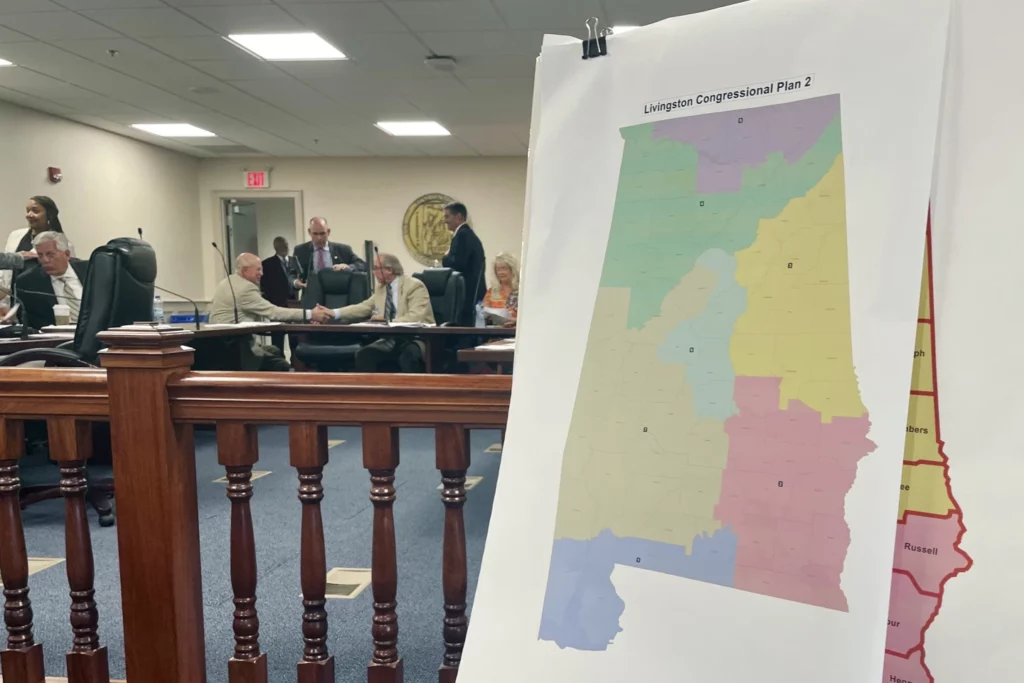
On Monday, the State of Alabama suffered another major setback in its ongoing congressional redistricting map saga when the federal three-judge panel that is hearing Alabama’s congressional redistricting case denied the state’s request that the ruling be paused to give the state time to appeal to the U.S. Supreme Court – again. The federal three-judge panel wrote in their ruling on Monday, “It is exceptionally unusual for a litigant who has presented his arguments to the Supreme Court once already — and lost — to assert that he is now ‘overwhelmingly likely’ to prevail on those same arguments in that Court in this case.” The three-judge panel ruled that the state likely violated the Voting Rights Act of 1965 when it passed a congressional redistricting plan in 2021 that created six majority-white and just one majority-Black Congressional District. The court ordered the state to suspend the 2022 congressional elections and submit a compliant map. The state refused and instead appealed to the Supreme Court. The high court upheld the three-judge panel’s order allowing the 2022 election to proceed with the 2021 maps. In June, the Supreme Court ruled in Allen v. Milligan that the three-judge panel was right in their 2022 preliminary ruling and remanded the case back to them in a controversial 5 to 4 ruling against the state of Alabama. After the state’s rebuke by the Supreme Court, the three-judge panel ordered the state to prepare a map with two majority-minority districts “or something close to it.” The Alabama State Legislature met in a July special session. Instead of complying with the court order, the Republican-dominated Legislature passed a new map that increased the Second Congressional District from 30% Black voting age population to 39.9%. The Republicans in the Senate claimed that their ‘Livingston 3’ map kept communities of interest together and was as compact as possible. They argued that this was as close to fulfilling the court’s order. Never mind that the Republican-dominated House of Representatives had passed a map by Representative Chris Pringle (R-Mobile) with a 43.3% Black 2nd District. When the Pringle plan arrived in the Senate, State Senator Steve Livingston (R-Scottsboro) simply substituted it for his Livingston 3 map. The state adopted the Livingston 3 map. Livingston and Pringle are the joint co-chairs of the Legislature’s Joint Committee on Reapportionment. The Legislature’s Democrats and the civil rights groups suing the state asked the three-judge panel to reject the partisan Livingston 3 map. The three-judge panel complied, ruling that it (like the 2021 redistricting map) violated the Voting Rights Act. The court has appointed a special master to draw Alabama’s new congressional districts map. Alabama Secretary of State Wes Allen (R), on the advice of Attorney General Steve Marshall (R), appealed that ruling to the U.S. Supreme Court. Monday’s setback by the three-judge panel means that the court-appointed special master will continue redrawing the state’s seven congressional districts to create that second majority Black District. That map, which nobody has seen yet, will likely be the map the state will use to vote next year. The special master is supposed to be finished with his new map by September 25. The state is still asking the Supreme Court to intervene, but there is no guarantee that the Court will even hear this case. If it does agree to listen to the case, it is unknown if the Justices will allow the 2024 election to proceed with the Legislature’s Livingston 3 map or if they will allow the election to proceed with the new special master map. Democrats hope to use the Allen v. Milligan ruling to force states to create new majority-minority districts. The major party primaries are on March 5. The Alabama Democratic Party told Alabama Today Monday that candidate qualifying for Democrats will open on September 29. The Alabama Republican Party announced during the day that GOP candidate qualifying will not begin until October 16. Both parties are closing qualifying on November 10. To connect with the author of this story or to comment, email brandonmreporter@gmail.com.
U.S. approves updated COVID-19 vaccines
The U.S. approved updated COVID-19 vaccines on Monday on an emergency basis. The U.S. Food and Drug Administration took action Monday to approve and authorize updated COVID-19 vaccines for emergency use. The agency approved updated mRNA vaccines for 2023-2024 made by ModernaTX Inc. and Pfizer Inc. The vaccines were “formulated to more closely target currently circulating variants and to provide better protection against serious consequences of COVID-19, including hospitalization and death,” according to the FDA. “Vaccination remains critical to public health and continued protection against serious consequences of COVID-19, including hospitalization and death,” said Dr. Peter Marks, director of the FDA’s Center for Biologics Evaluation and Research. “The public can be assured that these updated vaccines have met the agency’s rigorous scientific standards for safety, effectiveness, and manufacturing quality.” The updated mRNA vaccines were each approved for people 12 years of age and older and were authorized under emergency use for people 6 months through 11 years of age. The FDA said the bivalent Moderna and Pfizer-BioNTech COVID-19 vaccines were no longer authorized for use in the United States. Republished with the permission of The Center Square.
