
Hank Williams Centennial Birthday Celebration begins today
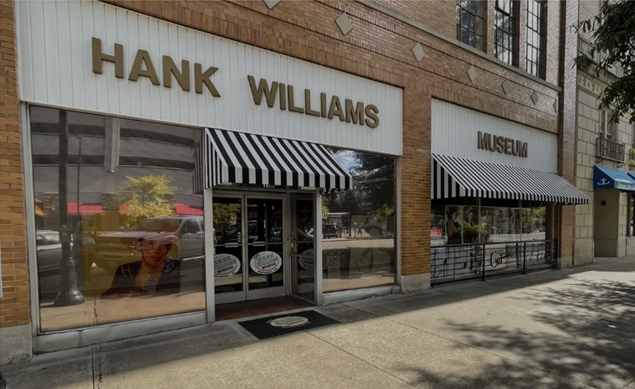
Hank Williams Sr. was born 100 years ago Sunday in Mount Olive, Alabama, in Butler County. Williams is considered by many to be the father of modern country music. A three-day birthday celebration kicks off in Montgomery today at the Davis Theater. The event is presented by the Hank Williams Museum in Montgomery from September 15 to 17, 2023. The Day 1 celebration begins on Friday, September 15, at 6:30 p.m. The doors open at 5:30 p.m. at the Troy University’s Davis Theatre. Friday night’s performance stars: Rhonda Vincent & The Rage, David Ball, and David Church. The Day 2 celebration begins on Saturday, September 16, at 2:00 p.m. The doors open at 1:00 p.m. at Troy University’s Davis Theatre. Day 2 stars: Leona Williams and Ron Williams with the Perley Curtis Band; Andy Norman and the Jukebox All Stars Band; and others. The Day 3 celebration will be held on Sunday, September 17, at 2:00 p.m. The doors open at 1:00 p.m. at Troy University’s Davis Theatre, starring Gene Watson, Jason Petty, and Zachariah Malachi & The Nashville Counts. This weekend, there will also be concerts in front of the blue Cadillac featuring Dalton McSwain, Larry Darnell, Trent Hudson, Gaynell Moore, David Paul Nowlin, Dewey Bass, and Alan Boyd. Williams’ mother gave him a guitar when he was eight years old, but his musical influence came from a local blues street singer, Rufus’ Tee Tot’ Payne. His mother moved the family to Montgomery, AL, in 1937, where she opened a boarding house. Here, Hank formed a band called the Drifting Cowboys and landed a regular spot on a local radio station, WSFA, in 1941. Hank married Audrey Mae Sheppard in 1944. In 1946, they visited Nashville to meet Fred Rose, one of the heads of Acuff-Rose Publishing. Rose liked Williams’ songs and asked him to record two sessions for Sterling Records, which resulted in two successful singles. Williams signed a contract with MGM Records in 1947. Rose became the singer’s manager and record producer. Hank William was an extremely successful performer with dozens of hit singles, and he was also an incredibly successful songwriter who wrote everything from sacred hymns to tales of broken hearts and troubled love to rousing dance tunes. Hank’s songs and performances were legendary even before his death at the age of 29 in 1953. Hank was buried in Montgomery. More than 25,000 mourners attended. Williams was inducted into the Country Music Hall of Fame in 1961. To connect with the author of this story or to comment, email brandonmreporter@gmail.com.
Rep. Mike Rogers is concerned about protecting U.S. satellites in the future
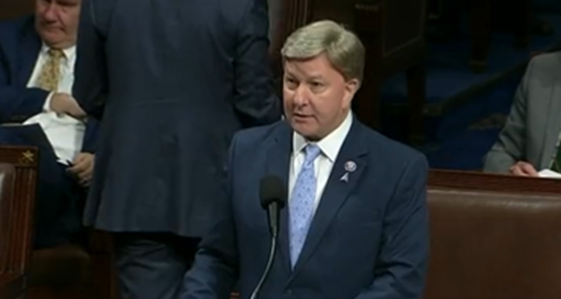
Until Sputnik in 1957, there were no satellites. Since then, they have proliferated. Satellites monitor the weather, are vital in communications, and allow us to watch sporting events and get news live from all over the world. Satellites are used in aviation, tell farmers which fields need more fertilizer, help forestry companies monitor their timber holdings, monitor our enemies, and give us early warning of an attack. What happens if an enemy were to take control of our satellites? Can we protect them? These questions increasingly perplex war planners. Congressman Mike Rogers (R-AL03) is the Chairman of the House Armed Services Committee. Rogers released a statement on the Department of Defense’s (DoD) most recent Space Policy Review and Strategy on Protection of Satellites. “We have seen significant changes in the space domain over the last decade,” Rogers said. “Not only did we stand up the U.S. Space Force, but China and Russia have accelerated their deployment of space weapons at an alarming rate. Both the restructuring of our own forces and the increased threats from adversaries created the need for a renewed public discussion of what exactly our policies in space, as a warfighting domain, are.” “With this report, the Department of Defense has started what needs to be a robust discussion of what we must do to protect the Joint Force from Russian and Chinese space weapons,” Rogers continued. “We must continue to move the ball forward as we look to achieve a comprehensive military advantage in space.” Much of the information on this topic is classified. A point that Rogers makes. “In particular, I also look forward to hearing more from DoD on how it is working to remove barriers to collaboration, like classification, with some of our closest allies and partners,” Rogers stated. “This is part of the broader problem with overclassification of space systems that has persisted for decades and must be addressed to normalize DoD’s approach to the space domain.” Reports indicate the Chinese established the People’s Liberation Army (PLA) Strategic Support Force in 2015 to approach space as a warfighting domain more effectively. China owns and operates roughly half of the world’s space-based intelligence, surveillance, and reconnaissance (ISR) satellites. The PLA’s ISR fleet enhances its ability to monitor forces across the globe, including U.S. expeditionary forces. The Chinese military views counterspace systems as a means to deter and counter outside intervention during a regional conflict. The PLA is developing, testing, and fielding capabilities intended to target U.S. and allied satellites, including electronic warfare to suppress or deceive enemy equipment, ground-based laser systems that can disrupt, degrade, and damage satellite sensors, offensive cyberwarfare capabilities, and direct-ascent anti-satellite (DA-ASAT) missiles that can target satellites in low Earth orbit (LEO). The PRC has launched multiple experimental satellites to research space maintenance and debris cleanup with advanced capabilities, such as robotic arm technologies that could be used for grappling other satellites. China is pursuing DA-ASAT weapons capable of destroying satellites. Russia reorganized its military in 2015 to create a separate space force because Russia sees achieving supremacy in space as a decisive factor in winning conflicts. Although Russia has a smaller fleet of satellites than China, Russia operates some of the world’s most capable individual ISR satellites for optical imagery, radar imagery, signals intelligence, and missile warning. Russia increasingly integrates space services into its military. Russia is developing, testing, and fielding a suite of reversible and irreversible counterspace systems to degrade or deny U.S. space-based services as a means of offsetting a perceived U.S. military advantage and deterring the United States from entering a regional conflict. These systems include jamming and cyberspace capabilities, directed energy weapons, on-orbit capabilities, and ground-based DA-ASAT missile capabilities. In November 2021, Russia tested a DA-ASAT missile against a defunct Russian satellite, which created more than 1,500 pieces of trackable space debris and tens of thousands of pieces of potentially lethal but non-trackable debris. The resulting debris continues to threaten spacecraft of all nations. Rogers is in his eleventh term representing Alabama’s Third Congressional District. He previously represented Calhoun County in the Alabama House of Representatives, where he was the Minority Leader. Prior to that, Rogers served on the Calhoun County Commission. Rogers is an attorney. To connect with the author of this story or to comment, email brandonmreporter@gmail.com.
Tommy Tuberville wants to know why Air Force pilots aren’t able to get adequate time in the air
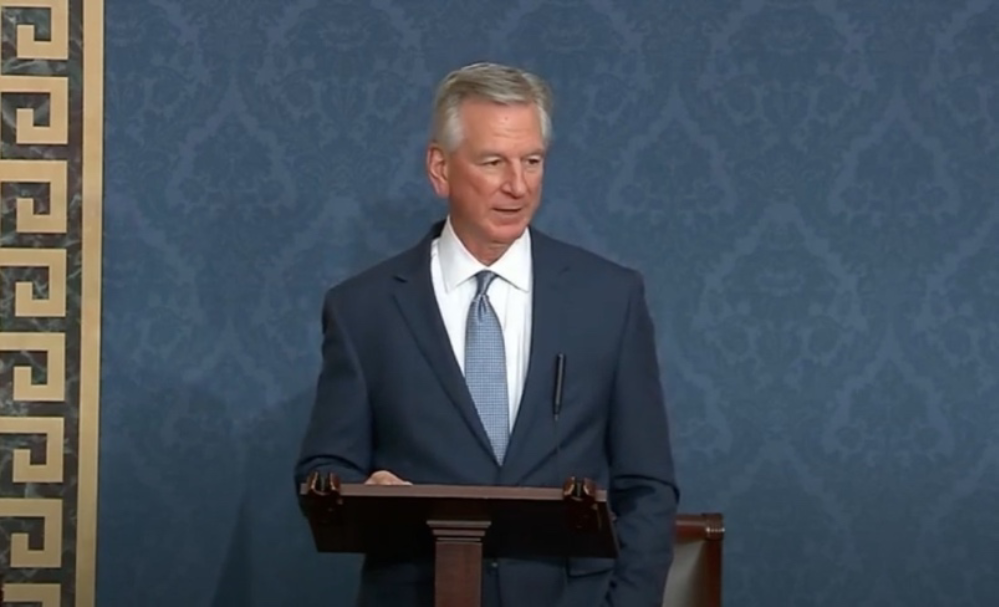
On Tuesday, U.S. Senator Tommy Tuberville (R-AL) spoke with U.S. Air Force Vice Chief of Staff General David Allvin about military readiness during his confirmation hearing before the Senate Committee on Armed Services. On Wednesday, he spoke with Alabama Today. “Being on the Armed Services Committee, that hearing was yesterday with the nomination of a new Chief of the Air Force,” Tuberville said. Tuberville is concerned that Air Force pilots are getting insufficient time in the cockpit. “I have gotten several calls from former and present pilots, people that are in the Air Force,” Tuberville explained. “They are very disappointed about the amount of time they get to practice. Of course, being a former football coach, I know the importance of practice. They only get to fly basically one time a month, while our adversaries are flying four times a month.” “The excuse given by the Chief, the potential new chief of that Air Force, was money, maintenance, and, as you said, the frames of some of our older airplanes,” Tuberville continued. “We are looking into that. I can’t say that is just an excuse. I know the money is there. We spend almost $900 billion a year on the military. I don’t think it is all spent in the right spots. We can’t get an accounting for a lot of it every year. We are going to continue to work on that.” The General stated one reason for less time in the air was because older planes are finding new ways to break, and those planes spend more time in the depot for refurbishment. Alabama Today asked if that means that we should purchase new F16 and F15 jet fighters as a stopgap until the next generation fighter can be built. “If we need new airplanes, we need to do it,” Tuberville responded. “I know we are behind in ships. We are far behind the Chinese in ships. A strong military is one of the most important things for this country to have because if we don’t have a strong military with a fighting force that is trained, that can fly, that can sail, that can fight in battle. If we don’t have that, we don’t have anything else in this country because freedom is the most important thing that we look up to, so very good question. We will continue to talk about that situation with the chief of the Air Force, and hopefully, we can get better answers than we got from the chief yesterday.” Tuberville represents Alabama in the United States Senate and is a member of the Senate Armed Services, Agriculture, Veterans Affairs, and HELP Committees. To connect with the author of this story or to comment, email brandonmreporter@gmail.com.
Terri Sewell commemorates the 60th anniversary of the 16th Street Baptist Church bombing
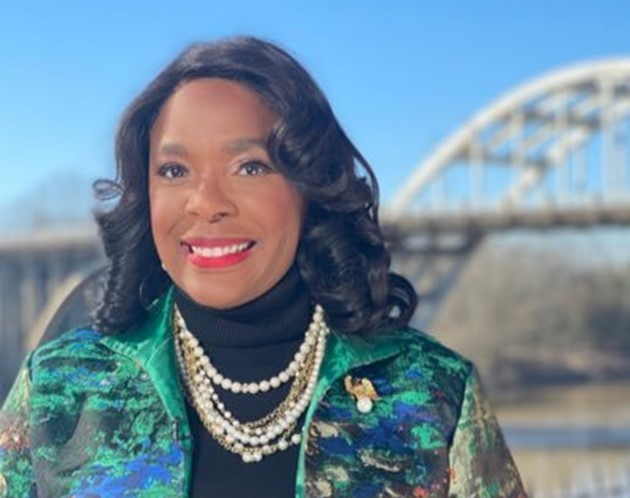
Today is the 60th anniversary of the bombing of the 16th Street Baptist Church in Birmingham that killed four little girls during the height of the Civil Rights Movement. Congresswoman Terri Sewell (D-AL07) spoke on the floor of the U.S. House of Representatives to commemorate this tragic incident of domestic terrorism. “I rise today to commemorate the 60th anniversary of the bombing of the 16th Street Baptist Church in Birmingham, Alabama in 1963, and to honor the lives and legacies of Four Little Girls killed in such a heinous attack,” said Rep. Sewell. “60 years ago, as parishioners of the 16th Street Baptist Church prepared for Sunday service, 19 sticks of dynamite placed by Ku Klux Klan members exploded. As the interior of the walls of the church caved in, over 100 churchgoers rushed for safety. Though most of the congregation escaped, under the debris lay the bodies of Addie Mae Collins, Denise McNair, Carole Robertson, and Cynthia Morris Wesley, as well as Sarah Collins Rudolph, who was injured but ultimately survived. “Tragically, the brutality did not stop after the bombing. When African American communities across the State of Alabama took to the streets to demand justice, they were met with unspeakable violence at the hands of law enforcement,” said Sewell. “Within a few hours, Johnny Robinson and Virgil Ware, ages 16 and 13, were killed in clashes between protesters and the police.” “Despite the horrific nature of this attack, it took over 34 years before the perpetrators faced justice,” Sewell continued. “In 2013, Mr. Speaker, I was honored that my very first bill I passed in this body awarded the Congressional Gold Medal, the highest civilian honor we can give, to the Four Little Girls posthumously to ensure that their lives were never forgotten.” “While we will never recover the lives lost or the injuries suffered, we know that their sacrifice was not in vain,” said Sewell. “Indeed, the loss of the Four Little Girls changed America forever, bringing into clarity our nation’s storied history of racially motivated violence and galvanized the Civil Rights Movement. It was their memory that inspired generations of freedom fighters to build a world where the color of your skin does not determine the value of your life. It was their memory that burned in the minds of the Foot Soldiers as they fought to pass the Civil Rights Act of 1964 and the Voting Rights Act of 1965. And it was their sacrifice that brought our nation closer to realizing its highest ideals of equality and justice for all.” “Without the influence of the Four Little Girls, I not only question where America would be, but where I would be,” Sewell added. “60 years after their passing, I get to walk the halls of Congress as Alabama’s first Black Congresswoman. I do so because of their sacrifice and because they cannot. Their premature and senseless death serves as a constant reminder that every battle, every gain in the fight for civil rights has come at a high cost, paid for by the sacrifice of others.” Dr. Martin Luther King Jr. described the bombing as one of the most vicious, tragic crimes ever perpetrated against humanity, The story of the 4 Little Girls was made into a Spike Lee documentary in 1997 by the same name. Terri Sewell represents Alabama’s Seventh Congressional District. To connect with the author of this story or to comment, email brandonmreporter@gmail.com.
Katie Britt and Jeanne Shaheen reintroduce ‘Access to Breast Cancer Diagnosis Act’
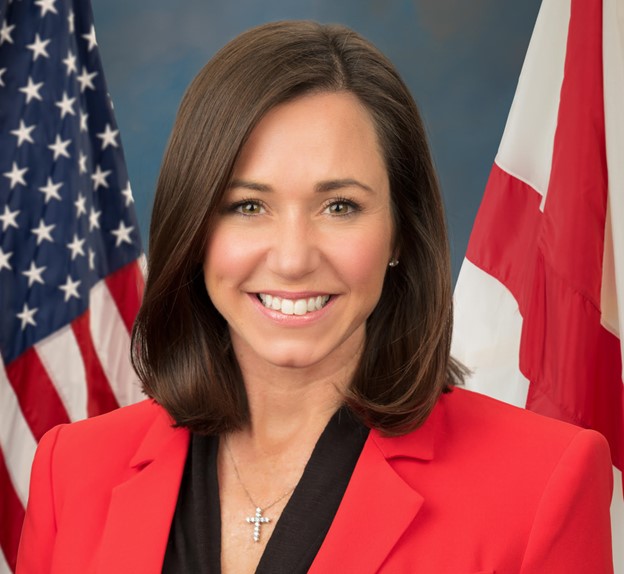
On Monday, U.S. Senator Katie Britt (R-Alabama) recently joined Senator Jeanne Shaheen (D-New Hampshire) in reintroducing the Access to Breast Cancer Diagnosis (ABCD) Act. The bipartisan, bicameral legislation would eliminate copays and other out-of-pocket expenses for breast cancer diagnostic tests, making them more accessible and affordable to women even of low income. Under current law, insurance companies must provide no-copay coverage for breast cancer screenings but not diagnostic testing. If the initial screening shows that a patient may have breast cancer, further testing, including mammograms, MRIs, and ultrasounds, may be needed to make a diagnosis. An estimated 10% of screening mammograms require follow-up diagnostic testing. Regular diagnostic testing may also be recommended for patients who have had a prior breast cancer diagnosis or are genetically predisposed to breast cancer. “The ability for women to receive an initial mammogram as part of their health insurance plan is a crucial, potentially lifesaving tool to detect breast cancer,” said Sen. Britt. “This commonsense legislation would ensure that a warranted follow-up diagnostic examination is also covered by health insurers at no out-of-pocket cost to the patient. No woman across America should be faced with the impossible choice between affording basic necessities such as food or being able to confirm whether she has a life-threatening illness. I’m proud to help lead this effort to provide greater access to mammography so women can be diagnosed as soon as possible, giving them the widest variety of treatment options and the best chance to defeat this disease.” “Detecting and treating breast cancer as quickly as possible saves lives. No one should ever forgo a screening because of cost,” said Shaheen. “I’m proud to reintroduce this bipartisan legislation to require health insurance to cover diagnostic breast cancer testing as they do other preventative screenings. I’ll keep working in the Senate to make sure lifesaving health care is affordable and accessible for Granite State families.” Molly Guthrie is the Vice President of Policy and Advocacy at Susan G. Komen. “It is too hard and too expensive for people to get the breast imaging they require, a contributing factor to the nearly 44,000 breast cancer deaths expected this year alone,” said Vice President Guthrie. “We need this legislation passed as soon as possible so that people don’t face barriers to a timely diagnosis or face the impact of high out-of-pocket expenses for necessary imaging due to their personal circumstances. Thank you to Senators Jeanne Shaheen and Katie Britt and Representatives Debbie Dingell and Brian Fitzpatrick for their leadership on this vital legislation.” The Breast Cancer Research Foundation of Alabama states that 1 in 8 women will be diagnosed with invasive breast cancer during their lifetime, including an estimated 4,500 women in Alabama in 2023. Susan G. Komen estimates that in 2023, over 297,000 new cases of invasive breast cancer will be detected in women across the United States. Additionally, a Susan G. Komen study estimated that diagnostic tests can cost patients between $234 and $1,041. Representatives Debbie Dingell (MI-06) and Brian Fitzpatrick (PA-01) recently introduced a companion bill, along with Reps. Colin Allred (TX-32) and Debbie Wasserman Schultz (FL-25). Senator Britt is a member of the Senate Committee on Appropriations Subcommittee on Labor, Health and Human Services, Education, and Related Agencies. She was elected to the Senate in 2022. To connect with the author of this story or to comment, email brandonmreporter@gmail.com.
Special election for House District 10 begins drawing candidates
BY: ALANDER ROCHA With a special election set for House District 10 after the resignation of former Rep. David Cole, R-Madison, candidates – new and familiar – are weighing their options. Cole resigned from his House seat on August 30 and pleaded guilty to a charge of knowingly voting at a polling place where he was not authorized to vote. The district is one of a handful of competitive seats in the Alabama Legislature. Cole got 52% of the vote in 2022 to Democratic nominee Marilyn Lands 45%. Libertarian Elijah Boyd got 3%. Lands, who announced her candidacy on Tuesday in a live video streamed on her campaign Facebook page, said in a phone interview Wednesday that she is running a second time because of the momentum her campaign built the first time around. “We worked really hard the first time around, and we knocked on lots of doors and we had a message that resonated with people, and I think we can turn our people back out again, she said. She also thinks she can make a difference. As a mental health professional, she said that the “state of our kids and the crisis we’re having in healthcare” compelled her to run again. “There’s been a lot of things that have been on my mind that we could do something about at the state level,” she said. House Minority Leader Anthony Daniels, D-Huntsville, backed her candidacy Wednesday, adding that he is confident in her ability to perform in a potentially competitive race. “The Marilyn story speaks for itself. She’s a mental health counselor. She worked for Boeing. She worked for the airport. She has been engaged in a lot of civic organizations within the community. She is of the community that she’s running in. Now, people get an opportunity to see Marilyn and understand her story,” Daniels said. Anson Knowles, who intended to run against Cole in the 2022 Republican primary, said that he’s still undecided. The Alabama Republican Party kicked Knowles off the ballot for previous work with the Libertarian Party. Knowles, who had raised questions about Cole’s residency, said in a recent interview that the last election took a toll on his family and with three kids, he said it’s a difficult decision to make. “I can’t run as a Republican. The GOP made it pretty clear they don’t want me,” Knowles said. “I considered running as a Democrat for a minute just because I thought that’d be the best way to make sure the Republicans didn’t win because I’m so mad at them for what they did to me the last time.” Knowles said that he rejoined the Libertarian Party in February and was appointed to the party executive board in March. He said that he is currently focused on recruiting Libertarian candidates for local Madison County races and has his hands full with candidate training. He said that ideologically, he doesn’t fit in with Republicans, Democrats, or Libertarians, but he is currently focused on building up the Libertarian Party’s infrastructure. “I’m an independent kind of thinker, and so I guess it didn’t sit well – like when I was in the GOP, that was part of the reason what why I had so many enemies in there, because I’d call up their establishment for their crap, and the Libertarians, I’d call out their people for their crap. It’s difficult to tell the truth to people sometimes,” Knowles said. Elijah Boyd, the Libertarian candidate for the seat in 2022, said he plans on running again, but that has to be decided by the Libertarian Party. He said he’s not ready to make any final decisions just yet. “I’ve been the representative for the party twice now, and I think I’m the best to represent, but I’ll let the party decide that,” Boyd said. Other people who have mentioned they may run for the seat are Republican D.J. Klein, a broadband business owner and former Madison City Council member who expressed interest in the seat previously. Klein wrote in an email that since redistricting, he no longer lives in the district. “And I hear that’s frowned on these days,” he wrote jokingly. Headmaster Jerry Reeder of the Whitesburg Christian Academy in Huntsville was mentioned by Knowles as a possible Republican candidate for the seat, but he said that was just a rumor. “We are, in fact, enjoying the humor of this situation and the fact there are, indeed, many rumors flying about,” Reeder said in an email. There may have been some confusion, he said in the email, because the principal for the upper-school, Robby Parker, was approached about running for the seat but declined. Parker said in an email that he was honored to be asked, but “firmly believe [he is] where The Lord wants [him].” According to a plea agreement, Cole decided to run for the House District 10 seat in the summer of 2021. The seat was held by retiring Rep. Mike Ball, R-Madison. But redistricting that year moved Cole’s home into House District 4, represented by Rep. Parker Moore, R-Hartselle, an incumbent who was seeking his second term in the House. The agreement said Cole contacted a friend, referred to as “H.S.,” and negotiated a $5-a-month lease at H.S.’s home in District 10. Cole later changed his voter registration to the address but only had mail sent there. The deadline for qualifying with major political parties will be Tuesday, Oct. 10, 2023. The deadline for independent candidates and minor parties is Tuesday, Dec. 12, 2023. Republished with the permission of the Alabama Reflector.
Bradley’s Mason Rollins Selected to 2023 ‘Top 40 Under 40’ by Alabama AGC
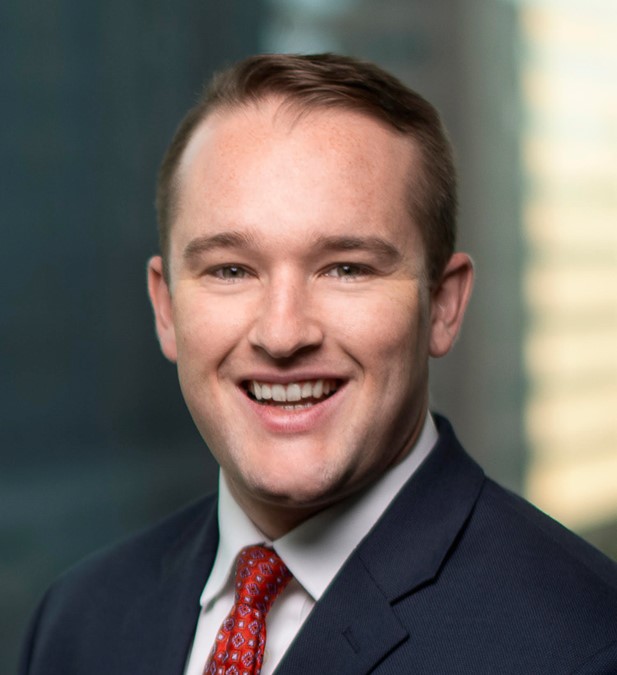
Bradley Arant Boult Cummings LLP recently announced that Mason Rollins, an associate in the firm’s Birmingham office, has been named to the Alabama Associated General Contractors (AGC) 2023 “Top 40 Under 40” in Construction list. The list, published by Alabama AGC and Business Alabama, recognizes outstanding up-and-coming individuals in commercial construction throughout Alabama. The honorees demonstrate a high level of leadership, professional excellence, and commitment to the construction industry. Rollins frequently litigates and represents general contractors, subcontractors, owners, architects, and engineers related to the variety of issues that may arise related to construction. He regularly litigates disputes involving breach of contract, construction defects, and project delay, as well as multiple other issues. Rollins was recognized in 2024 in Best Lawyers: Ones to Watch in America in the areas of Construction Law and Litigation – Construction. He has served on the Alabama AGC’s Construction Leadership Council, as well as participated in the AGC Leadership Program in 2019. Bradley’s award-winning Construction Practice Group has been recognized as the nation’s “Law Firm of the Year” for Construction Law by U.S. News – Best Lawyers “Best Law Firms” in 2018, 2020, and 2022, a designation only given to one law firm in the country per legal practice area each year. With offices in Alabama, Florida, Georgia, Mississippi, North Carolina, Tennessee, Texas, and the District of Columbia, the firm’s more than 600 lawyers represent regional, national, and international clients in various industries, including banking and financial services, construction, energy, healthcare, life sciences, manufacturing, real estate, and technology, among many others.
NWTF Alabama commits over $230K for 2024, boosts new Habitat for the Hatch Initiative
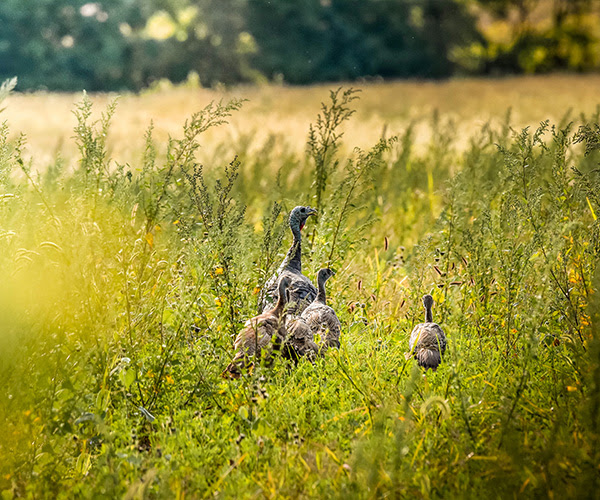
The Alabama National Wild Turkey Foundation State Chapter (NWTF) recently approved $183,613 for 25 projects across the state for the 2024 Fiscal Year, along with a $50,000 commitment to wild turkey research. With collaborative partner funding, the NWTF Alabama’s investment for 2024 will be leveraged to over $1 million, funding wild turkey research and enhancing over 121,000 acres of wildlife habitat from September 2023 to September 2024. The investment by the Alabama NWTF State Chapter amplifies the organization’s new Habitat for the Hatch Initiative, with 19 new projects in Alabama providing nesting, brood-rearing, and foraging habitats critical to wild turkey nest initiation, nest success, and brood survival. In addition to the projects in Alabama, the state chapter is allocating $50,000 to Habitat for the Hatch to be used across the initiative’s 18-state region. “The wild turkey decline doesn’t just affect us in Alabama; it affects all as turkey hunters and turkey enthusiasts,” said Scott Brandon, NWTF Alabama State Chapter president. “Through Habitat for the Hatch, we will put the habitat wild turkeys need on the ground to successfully recruit broods year after year, in Alabama and across the Southeast. We are proud to invest in this new initiative.” “When there is a challenge, the NWTF works to solve it,” said Derek Alkire, NWTF district biologist for Alabama, Tennessee, and Kentucky. “Our volunteers in Alabama are dedicated to ensuring wild turkeys and all of our natural resources will be around for future generations to enjoy. These new projects will directly help increase wild turkey habitat and enhance overall ecological health across the state. We are ready to hit the ground running this fiscal year!” Each year, the NWTF Alabama State Chapter allocates funds for a variety of conservation, education, and outreach events. Funding for these projects is provided through the NWTF Super Fund, a funding model where NWTF volunteers raise money at banquets and other types of fundraisers and then allocate a significant portion of those funds back into meaningful conservation and outreach projects the state board of directors approves. Additional funds are provided by the sale of Alabama-NWTF specialty vehicle license plates. The announcement of NWTF Alabama’s 2024 project allocations comes off the heels of a successful year of conservation in the state, including over $28,000 contributed to wild turkey research, $23,000 to equipment purchases to impact thousands of acres year over year, private land work and more. Since 1973, the National Wild Turkey Federation has invested over half a billion dollars into wildlife conservation and has conserved or enhanced over 22 million acres of critical wildlife habitat. The organization continues to drive wildlife conservation, forest resiliency, and robust recreational opportunities throughout the U.S. by working across boundaries on a landscape scale.
