
Tommy Tuberville and Katie Britt express their concerns over Pentagon appointee Ariane Tabatabai

On Monday, U.S. Senators Tommy Tuberville and Katie Britt joined 29 of their Senate Republican colleagues in a letter to the Secretary of Defense retired General Lloyd Austin, demanding a full accounting of actions taken by a senior Pentagon official who they claim has close links to the Iranian government. The Senators said that recently leaked emails show that Ariane Tabatabai, the chief of staff to the Assistant Secretary of Defense for Special Operations and Low Intensity Conflict (SOLIC), was reportedly engaged in an Iranian government-linked initiative to bolster the Iranian government’s image and reinforce Tehran’s national security views. The emails show Tabatabai asking the Iranian government for input on her speaking engagements and offering to consult with the Iranian government on a congressional briefing that she was invited to give. In the letter, the Senators call it “unconscionable” for Tabatabai to continue holding a sensitive national defense-related position. The letter calls for the immediate suspension of her security clearance. “Iran continues to threaten U.S. military personnel in the Middle East and remains intent on assassinating American citizens here in the United States,” the Senators wrote. “Given these facts, we find it simply unconscionable that a senior Department official would continue to hold a sensitive position despite her alleged participation in an Iranian government information operation,” the Senators wrote. “While we note that Assistant Secretary of Defense for SOLIC Christopher Maier, who is Ms. Tabatabai’s current supervisor, testified before the House on Thursday that the Department is “actively looking into whether all law and policy was properly followed in granting my chief of staff top secret special compartmented information,” we urge you to suspend Ms. Tabatabai’s security clearance immediately pending further review, as the State Department did with her former supervisor, Robert Malley.” The Senators also posed a range of questions related to the nature and extent of Tabatabai’s involvement with the Iran-backed initiative, demanding answers within a week of transmitting the letter. To connect with the author of this story or to comment, email brandonmreporter@gmail.com.
Inaugural Alabama Medical Cannabis Conference has been postponed

On Wednesday, the Alabama Cannabis Industry Association (ACIA) announced that their inaugural Alabama Medical Cannabis Conference has been postponed after the Alabama Medical Cannabis Commission (AMCC) voted in September to stay the issuing of the cannabis licenses. Early indications are that the AMCC will extend their stay until their November meeting. “The inaugural 2023 Alabama Medical Cannabis Conference was planned to compliment the Alabama Medical Cannabis Commission, support the licensees, and celebrate the fact that in a few short months, Alabamians with a legitimate medical need would finally be able to legally obtain lawfully grown Alabama cannabis to treat their conditions,” the ACIA wrote in a statement. “We anticipated being able to register patients and provide CME credits to physicians.” “Unfortunately, the ongoing legal drama around the issuing of the license means that at this point in time, holding the conference on October 13, 2023, would be counterproductive,” the ACIA continued. “We, at the Alabama Cannabis Industry Association, have consulted with our advisors, the presumptive licensees, and our legal counsel; and determined that the time is not right to celebrate the legalization of medical cannabis in Alabama as a timeline for issuing the license and getting the industry up and running would be speculative at best right now. The conference has had to be postponed.” In June, AMCC announced inaugural license awards; then days later stayed the issuing of the licenses. Litigation ensued, and in August they did it over again – with some licensees losing their licenses. That did nothing to satisfy the plaintiffs who have sued the AMCC. Lawsuits and litigants have only multiplied. “The awardees are concerned that under the present circumstances, anything they say and do will be used against them in pending and possible future litigation,” the ACIA continued. “There is also a strong possibility that the commission may have a new round of license awards, and there is presently no clarity in what that will look like or even if the presumptive licensees will all still be awarded licenses if the Alabama Medical Cannabis Commission awards licenses for a third time.” “For these reasons and the fact that building the future medical cannabis grow-and-process facilities are at a standstill pending the actual issuing of the licenses, we felt we could not move forward with the conference at this time,” the ACIA stated. “All attendees and exhibitors will receive credit toward future events.” It is expected that the AMCC expects to reissue the license awards at a meeting in November. The issue of who gets the limited number of licenses to grow, process, and dispense medical cannabis in Alabama will likely ultimately be decided by a court and subject to appeal. It likely will not be resolved before this year is over. The ACIA will reschedule when they know more about when licenses will be issued and who the final licensees are. “Expect more information on upcoming events in the coming months as we all look forward to the day that Alabamians with a diagnosed medical need can finally get the Alabama-grown cannabis they need,” the ACIA concluded. Chey Garrigan is the founder and executive director of the AMCIA. The Alabama Legislature passed, and Governor Kay Ivey signed medical cannabis legalization in 2021. That legislation created the AMCC, which was tasked with regulating the industry and making the license awards. To connect with the author of this story or to comment, email brandonmreporter@gmail.com.
Gary Palmer says Republicans must come together and choose a leader who can unify the party

On Tuesday, Congressman Matt Gaetz (R-Florida) led a successful effort to oust Rep. Kevin McCarthy (R-California) as the Speaker of the House. All of Alabama’s Republican congressional delegation supported McCarthy, but under the rules of the House, McCarthy’s ouster had enough votes to succeed given the razer-thin GOP majority in the Congress. Following the removal and McCarty’s telling the Republican Caucus that he would not run again, U.S. Representative Gary Palmer (R-AL06) released a statement. “What we just experienced has never occurred in the history of our nation,” said Rep. Palmer. “For the first time, a Speaker of the House has been removed. This action is reflective of how divided our nation is, including among Republican members of the House. While I am deeply disappointed about where we are, we still must find a way to govern.” McCarthy’s ouster comes at a critical time with the 12 spending bills still not having passed either House of Congress and the federal government having to operate under a 45-day continuing resolution that McCarthy negotiated on Saturday. “Our country faces a $33 trillion debt crisis threatening the future of all Americans – those living and those yet to be born,” said Rep. Palmer. “Our border is not secure, threatening not only our economy but also our national security. As Republicans, we must find a way to come together and choose a leader who can unify our party and has the ability to address these issues head on. We have a job to do for the American people, and they deserve a unified majority focused on what’s best for the nation.” The last GOP Speaker battle was an intense affair that required 15 votes of the House before McCarthy was finally elected as the 55th Speaker. At one point, it appeared as if Congressman Mike Rogers (R-AL03) had to be restrained from attacking Gaetz after Gaetz’s faction thwarted the 14th vote to elect McCarthy as the Speaker of the House. His tenure lasted less than nine months. The Speaker Pro Tempore – Patrick McHenry (R-North Carolina), has assumed the daily duties of Speaker in the wake of McCarthy’s ouster and ahead of the GOP choosing a new leader. Palmer is in the leadership in the House as the head of the House Republican Policy Committee. He represents Alabama’s Sixth Congressional District and has already announced that he is running for re-election next year. To connect with the author of this story or to comment, email brandonmreporter@gmail.com.
Robert Aderholt and Barry Moore vote against ouster of Speaker McCarthy; Terri Sewell is saddened by the move
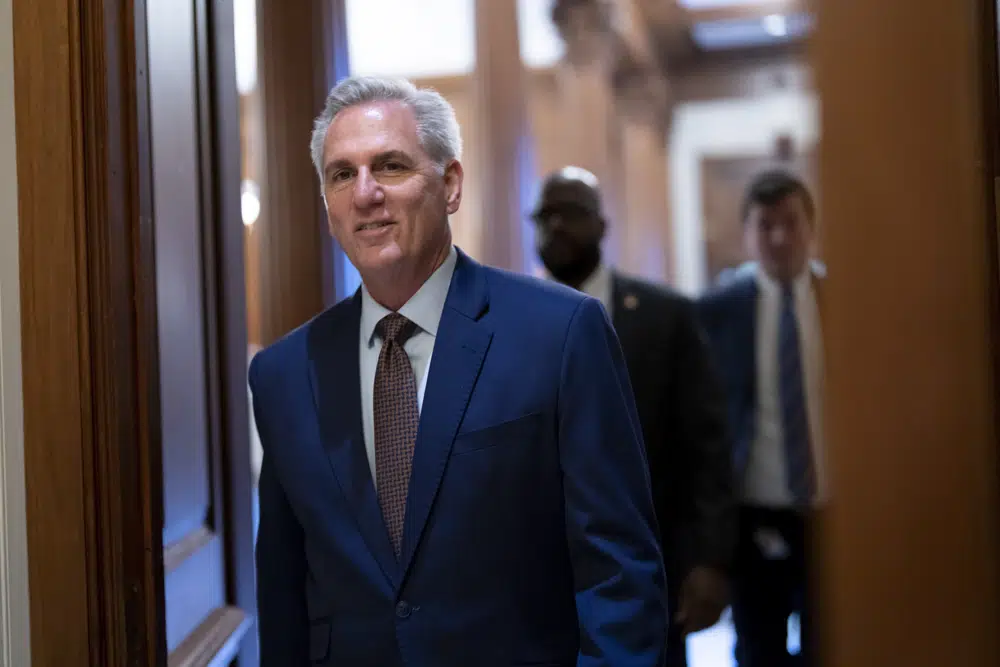
On Tuesday, extreme elements within the House majority successfully ousted Speaker of the House Kevin McCarthy (R-California) less than 72 hours after McCarthy’s ability to craft a bipartisan compromise saved the government from a crippling shutdown. Both Congressmen Robert Aderholt (R-AL04) and Barry Moore (R-AL02) voted against the motion to vacate the House Speakership. “Today, I voted against the removal of Kevin McCarthy as the current Speaker of the United States House of Representatives,” Aderholt said in a statement. “I am certainly disappointed that Speaker McCarthy has been removed. While no Speaker is perfect, as no member of Congress is perfect, I believe that Speaker McCarthy has done the best he can in bringing conservative bills to the floor. We must remember that Republicans have one of the narrowest margins in the history of the United States House of Representatives.” “Our nation currently has many challenges, and certainly, the debt of this country, and the crisis at the border, are issues that must be dealt with,” Aderholt continued. “Republicans must find a way to work together to do the most we can do until we can grow our majority. We don’t give up because we can’t win everything today. I will never give in and never quit fighting to solve the debt problem and the disaster at the border.” Barry Moore also voted against the motion to vacate the chair and remove McCarthy as Speaker. “Congress has 41 days left to fund the government by getting the remaining appropriations bills passed — let’s not waste them,” said Rep. Moore. “If we keep our eye on the prize, we have the chance to do something that hasn’t been done in 26 years. We can fund the government through regular order with cuts to Biden’s out-of-control spending that is currently imposing a 17% inflation tax on Americans, but not if we waste time on infighting about the motion to vacate.” Moore voted against the 45-day continuing resolution on Saturday that kept the government funded. Even House Judiciary Committee Chairman and Freedom Caucus member Jim Jordan spoke in support of McCarthy. Congresswoman Terri Sewell (D-AL07) released a statement regarding the passage of House Republicans’ motion to vacate the chair, removing McCarthy as House Speaker. “This is a sad and unprecedented day for America,” Rep. Sewell said in a statement. “Government works best when we have two functioning political parties that are willing to put people over politics. What is clear is that House Republicans are divided among themselves and have unleashed chaos, dysfunction, and extremism at every turn.” This is the first time in U.S. history that a sitting speaker has been voted to be removed. There are now essentially three factions in the House of Representatives: Democrats, mainstream Republicans, and a small faction of ultra-conservatives who are not swayed by even the majority of their own caucus. None of the three factions have enough votes to govern by themselves. “My Democratic colleagues and I remain willing to find common ground, but it is up to House Republicans to end this GOP civil war.” The Washington Post is reporting that McCarthy has told House Republicans that he will not be a candidate for Speaker of the House again. To connect with the author of this story or to comment, email brandonmreporter@gmail.com.
Steve Flowers: It’s Official – Alabama will have new Congressional Districts

It’s official and final. Alabama will elect our seven-member congressional delegation under new lines next year. The federal court has spoken. The special master drawing the lines has acted, and the final omnipotent power, the U.S. Supreme Court, has concurred and confirmed the decision. It is over. The result that the plaintiffs desired has been decreed by the courts. There will be a new second majority Black Congressional district. This accomplishment has been sought for decades. Now the question becomes, can the Democrats succeed in electing a Black Democrat to this new opportunity district? It is not a slam dunk. The new district is 50% Black and 50% White. It favors a Montgomery candidate. The bulk of the population and the geographic center of the new district is Montgomery County. Montgomerians are like the rest of the state. They adhere to the well-known predilection known as “friends and neighbors” politics. That means they prefer to vote for someone from their neck of the woods, especially their county. My early prediction is that Montgomery Mayor Steven Reed will be the Democratic nominee and the favorite to win the new seat. The special master that drew the new lines attached an index to his maps that revealed that if there were a congressional race within this new district that this district would have voted for the Democrat in 15 out of 17 of the last 17 elections. Therefore, the court’s desire to make a second minority Democratic district where a Democrat has a good opportunity to win has been accomplished. The entire basis of this high-profile federal case has been centered around the fact that Alabama has one Black Democratic Congressperson, Terri Sewell, and six White Republicans. One Black Democrat constitutes 14% of the state’s population. The plaintiff’s argument is that the state’s Black population is 27%. Therefore, there should be two Black Democratic congressional seats in the Heart of Dixie. The courts bought that argument and hung their hat on the 1965 Voting Rights Act, and having one seat rather than two violates and dilutes Black voters in Alabama’s voting rights. The question now becomes, what are the down-home political implications and results of these court-mandated new congressional lines? All of you who live in middle and north Alabama, which is most of you, are unaffected. The majority of the people in Alabama who live in Birmingham north are not affected. In fact, everyone north of Montgomery is unaffected. All of the commotion and redrawing has occurred in Montgomery, the Black Belt, the Wiregrass, and Mobile. Our three powerful Republican congressmen are left with basically their same districts. Republicans Robert Aderholt, Mike Rogers, and Gary Palmer, who are our centers of power in the House, have their same, if not enhanced, GOP districts. Huntsville’s freshman congressman, Dale Strong’s district is unchanged. Congresswoman Terri Sewell’s Democratic district has been favored in the drawings. She has a perfectly drawn district that pretty much mirrors her current Birmingham-based seat. She will probably be spared a Republican challenge. However, State Senator Bobby Singleton, who hails from the Black Belt, may challenge her in a Democratic primary out of spite. He wanted a district that favored him but lost to Sewell in the legislative battles over the drawing of the new Black district. The real rubber meets the road within the Republican ranks in the Wiregrass, and Mobile and Baldwin counties. The five Wiregrass counties of Covington, Dale, Geneva, Houston, and Coffee are sent to Baldwin and Mobile. Therefore, new Congressmen Jerry Carl from Mobile and Barry Moore from Enterprise/Coffee are in the same district. Moore is the odd man out in this dilemma. The majority of votes in this new district are in Baldwin and Mobile counties. Carl will be the prohibitive favorite against Moore or any other Republican. It will be a very conservative Republican district. Therefore, six of our seven seats will be in safe reelection journeys for our incumbent congressmen. Jerry Carl in the first, Mike Rogers in the third, Robert Aderholt in the fourth, Dale Strong in the fifth, Gary Palmer in the sixth, and Terri Sewell in the seventh are very safe bets for reelection in 2024. Therefore, all of the turmoil and court intervention only affects one area of the state. All the brouhaha and action will be in the newly drawn second district. It is Montgomery Democratic Mayor Steven Reed’s race to lose. He will be the favorite to win and change Alabama’s delegation in Washington from six Republicans and one Democrat to five Republicans and two Democrats. However, I would handicap that race as a 50/50 toss-up. There will be a lot of Republican dollars from Washington showered upon the Republican nominee. It will be interesting. See you next week. Steve Flowers is Alabama’s leading political columnist. His weekly column appears in over 60 Alabama newspapers. He served 16 years in the state legislature. Steve may be reached at www.steveflowers.us.
Daniel Sutter: Slavery, Justice, and Reparations

Slavery was a moral abomination now thankfully consigned to the dustbin of history. But should Americans who were never slaves receive compensation for their ancestors’ victimization? Reparations are widely viewed as left-wing policy. Many conceive reparations as racial justice: a past offense by Whites against Blacks demands compensation today. Viewing people exclusively as members of races is collectivist and incorrect; individuals act and should be judged based on their actions. Racial justice reflects collectivist thinking. But libertarian economist Walter Block observes how past injustice can require restitution today. Defenders of property rights would demand that a watch stolen last week be returned to its owner. The passage of 150 years does not change the demands of justice if we can verify the facts. Professor Block shows us that an individualist argument for reparations exists. But we do not have a watch to return. Let’s consider the two major things stolen from slaves: their dignity and autonomy and the value of their labor. Dignity and autonomy comprise our humanity. The slave family torn apart at the auction block signifies life without autonomy. Unfortunately, absent a time machine, the victims of American slavery cannot be compensated. Their descendants never experienced slavery. We cannot do justice here. Theft of the value of their labor left slaves in 1865 were poorer than if they had been free. Nor did freed slaves receive any compensation, such as “forty acres and a mule.” Accumulated savings could have been bequeathed to descendants. The value in today’s dollars represents potential compensation. How much might this be? Only earnings above subsistence can be saved. America was poorer in the early 1800s than today, so average earnings minus the cost of living would have been modest. Furthermore, these savings might have been lost in the market or spent during the intervening 150 years. Not every descendant of America’s free citizens of 1865 receives an inheritance. Libertarians believe criminals should pay restitution to their victims. Yet reparations proposals involve payment by the government. This, I think, seems proper. Making only descendants of slave owners pay would impose heavy burdens on persons who never owned slaves. The U.S. government permitted slavery and can pay any reparations. Some proponents, including the 1619 Project, justify reparations because slavery created America’s prosperity. This claim draws on the deeply flawed “new history of capitalism” literature. For details on these flaws, see economic historian Phil Magness’s The 1619 Project: A Critique. Indeed, far from creating prosperity, slavery held back humanity economically. Powerful people believed that commanding others yielded comfort and prosperity, but slaves will only repeat actions taught them. Trading with others as equals empowers them to use their intelligence and creativity to work faster and more efficiently. If slavery produced prosperity, humanity would have been wealthy long ago. Duke University’s William Darity is a prominent economist promoting reparations. Professor Darity considers discrimination and violence following Emancipation as helping justify reparations. Prosperous Blacks were often targets of violence, like in the Tulsa Massacre, while Jim Crow and housing redlining prevented the accumulation of assets. The economic impact today of these recent offenses may exceed the more distant crime of slavery. Professor Darity points to the Black-White wealth disparity, around $800,000, as a scale for reparations. But factors other than discrimination and slavery have contributed to this. As Shelby Steele observes in White Guilt, “The goal of the civil rights movement had escalated from a simple demand for equal rights to a demand for the redistribution of responsibility for black achievement from black to white America, from the ‘victims’ to the ‘guilty.’ This marked a profound – and I believe tragic – turning point in the long struggle of black Americans for a better life.” A panel recommended that California, a free state, pay reparations. This makes a mockery of the case for reparations. This recommendation suggests that slavery serves as cover for government handouts. The costs and challenges of doing justice for slavery 150 years later are enormous. We cannot compensate American slavery’s victims. And using righting past wrong as pretense for government redistribution is not justice. Daniel Sutter is the Charles G. Koch Professor of Economics with the Manuel H. Johnson Center for Political Economy at Troy University and host of Econversations on TrojanVision. The opinions expressed in this column are the author’s and do not necessarily reflect the views of Troy University.
Kevin McCarthy ousted from speakership
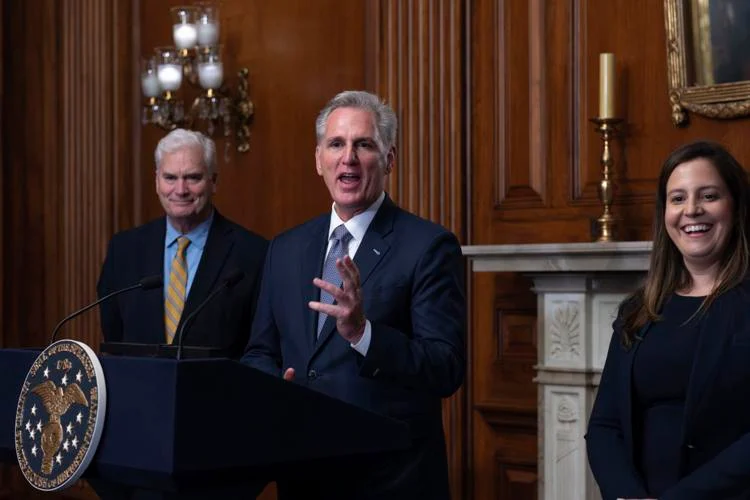
By Casey Harper | The Center Square The House of Representatives voted 216-210 Tuesday to vacate the Speakership, leaving the position open and likely kicking off a marathon of votes to either replace or reinstate California Republican Kevin McCarthy. A handful of House Republicans joined Democrats to oust McCarthy on Tuesday afternoon. McCarthy told reporters earlier Tuesday that he expected to survive the proceedings. As party leadership, he chose to bring the motion to vacate up quickly for a vote Tuesday afternoon. “You know, if I counted how many times somebody wanted to knock me out, I would have been gone a long time ago,” he told reporters. McCarthy only took on the speakership earlier this year after more than a dozen votes while holdout Republicans demanded concessions. One of those concessions was that a single lawmaker could file a motion to vacate the speakership and force a vote, something U.S. Rep. Matt Gaetz, R-Fla., started off when filing the motion to vacate late Monday. Gaetz said McCarthy broke his promises, pointing in particular to the latest Continuing Resolution to fund the government until mid-November. That deal with House Democrats provided for disaster relief and essentially maintained spending at current levels to buy more time just hours before a government shutdown over the weekend. McCarthy was able to whittle down the lawmakers who voted against him last time around to get the votes he needed to become Speaker, and he may be able to do it again unless another strong Republican successfully challenges him. Currently, there is no obvious choice to replace McCarthy. “I think Matt has planned this all along,” McCarthy told reporters. “It didn’t matter what transpired. He would’ve done it if we were in shutdown or not. I firmly believe it is the right decision to keep government open, to make sure our military is still paid, our border agents are still paid, and if that makes a challenge based upon whether or not I should be Speaker, I’ll take that fight.” Gaetz warned over the weekend that he would file the motion to vacate. He has demanded answers about an alleged side deal he says McCarthy made with the White House over more Ukraine funding, a sticking point and red line for some conservative Republicans who are unwilling to send the large sums overseas any longer. “I rise to raise a question,” Gaetz said from the House floor Monday. “What was the secret side deal on Ukraine? House Democrats and President [Joe] Biden have said that as Speaker McCarthy was asking Republicans to vote for a Continuing Resolution to take up the plus-up Ukraine money, that the Speaker of the House was actually cutting a side deal to bring Ukraine legislation to this floor with President Biden and House Democrats.” As The Center Square previously reported, Gaetz and other Republicans have pushed for passing all 12 appropriations bills in the traditional procedure instead of repeated Continuing Resolutions with topline numbers decided by a handful of members. But McCarthy says certain Republicans have slowed the appropriations process so that Congress did not meet the government shutdown deadline in time. Lawmakers passed several of those appropriations in the House already, though not enough to fully fund the government. Several were passed at the last minute last week before the shutdown. Now, the House must continue to hold votes for a new Speaker, with either McCarthy being reinstated or another taking his place all as the next shutdown deadline draws nearer. “I have enough Republicans where at this point next week one of two things will happen: Kevin McCarthy won’t be the Speaker of the House or he will be the Speaker of the House working at the pleasure of the Democrats,” Gaetz told reporters Monday evening. Republished with the permission of The Center Square.
Justice Department goes after China-based companies in fentanyl fight

By Brett Rowland | The Center Square The Justice Department unsealed eight indictments in Florida on Tuesday charging China-based companies and their employees with crimes related to fentanyl and methamphetamine production, distribution of synthetic opioids, and sales resulting from precursor chemicals. Tuesday’s indictments come after similar prosecutions announced in June. The indictments charge China-based chemical manufacturing companies and nationals of the People’s Republic of China for trafficking fentanyl precursor chemicals into the United States. “We know that the global fentanyl supply chain, which ends with the deaths of Americans, often starts with chemical companies in China,” Attorney General Merrick Garland said in a statement. “The United States government is focused on breaking apart every link in that chain, getting fentanyl out of our communities, and bringing those who put it there to justice.” U.S. officials reported 107,735 overdose deaths between August 2021 and August 2022 from drug poisonings, according to the U.S. Centers for Disease Control and Prevention. About 66% of those deaths involved synthetic opioids such as fentanyl. The Drug Enforcement Administration-led investigations used the agency’s authority to specially schedule protonitazene and metonitazene as Schedule I controlled substances. Swiss chemical company CIBA Aktiengesellschaft developed protonitazene, metonitazene, and other synthetic substances of the benzimidazole structural class in the 1950s. They have since emerged as drugs of abuse, according to the DEA. Protonitazene and metonitazene are synthetic opioids that were listed as Schedule I controlled substances in April 2022. Traffickers typically mix protonitazene and metonitazene with other opioids, such as fentanyl, to create powerful cocktails of opioids, according to the DEA. A study this summer found that nitazenes were being detected in overdose cases. Why nitazenes are showing up in the illicit drug supply is unclear, but researchers said it may be the result of changing regulations. “The exact motivation to produce nitazenes and brorphine are unclear,” according to the study. “The increased regulation of fentanyl and fentanyl analogues throughout the last decade may have led to a change in the chemical precursors required for clandestine laboratory production that were not yet regulated. This change in chemical precursors may have led to these newer and more potent opioids.” Homeland Security Investigations and U.S. Customs and Border Protection seized more than 1,000 kilograms of fentanyl-related precursor chemicals, and the United States Postal Inspection Service also traced packages containing the precursor chemicals mailed through the U.S. mail and analyzed their contents after seizure. Five indictments were unsealed in the Middle District of Florida. They charged five Chinese corporations and eight Chinese nationals with the illegal importation of fentanyl and fentanyl-related chemicals into the United States. The defendants openly advertised their ability to thwart U.S. customs and deliver the chemicals used to make fentanyl. The defendants used fake shipping labels and special delivery procedures to ensure the chemicals went undetected, according to the indictments. “We will continue to pursue cases against Chinese chemical companies who are knowingly manufacturing and exporting fentanyl precursors to profit on the pain and suffering of people in the United States,” U.S. Attorney Roger Handberg for the Middle District of Florida said in a statement. Prosecutors charged Hebei Shenghao Import and Export Company, based in Shijiazhuang, Hebei Province, China, with fentanyl trafficking conspiracy, along with Chinese nationals Qingshun Li, 29, who allegedly negotiates the sale of precursor chemicals and maintains a bank account for the receipt of payments; Qingsong Li, 32; and Chunhui Chen, 33, both of whom allegedly maintain cryptocurrency wallets for the remittance of payments of precursor chemicals; Chunzhou Chen, 30, who allegedly received Western Union payments on behalf of Hebei Shenghao. Prosecutors charged Lihe Pharmaceutical Technology Company, based in Wuhan, Hebei Province, China, with fentanyl trafficking conspiracy and international money laundering, along with Chinese nationals Mingming Wang, 34, who is the alleged holder for three bitcoin accounts shared by sales agents for Lihe Pharmaceutical, and Xinqiang Lu, 40, the alleged recipient of funds via Western Union on the company’s behalf. Prosecutors charged Henan Ruijiu Biotechnology Company, based in Zhengzhou, Henan Province, China, with attempted importation of fentanyl precursor and attempted international money laundering, along with Chinese national Yongle Gao, 30, who is the alleged registered owner of the bitcoin wallet associated with Henan Ruijiu. Prosecutors charged Xiamen Wonderful Biotechnology Company, based in Xiamen, Fujian Province, China, with attempted importation of fentanyl precursor and attempted international money laundering, along with Chinese national Guo Liang, 34, the alleged registered owner of the bitcoin wallet associated with Xiamen Wonderful. Prosecutors charged Anhui Ruihan Technology Company, based in Hefei, Anhui Province, China, with attempted importation of fentanyl precursor and attempted international money laundering. Three indictments were unsealed in the Southern District of Florida, charging three Chinese companies and four officers and employees with fentanyl trafficking, synthetic opioid trafficking, precursor chemical importation, defrauding the U.S. Postal Service, and making and using counterfeit postage. Hanhong Medicine Technology Company, a pharmaceutical company located in Wuhan, Hubei Province, China, was charged in a four-count indictment, along with Chinese nationals Changgen Du, 30, and Xuebi Gan, 28. According to the indictment, Hanhong exported large quantities of fentanyl precursors and non-opioid additives, such as xylazine, to the United States and Mexico, including to a drug trafficker in Pennsylvania and to a drug trafficker in the Sinaloa cartel for the manufacture of fentanyl in Mexico for eventual distribution in the United States. Xylazine is a non-opioid tranquilizer approved for animal use. Xylazine is not approved for use in people. But it has made its way into the unregulated supply of illicit drugs, including heroin, fentanyl, and other drugs. The U.S. Drug Enforcement Agency has seized xylazine and fentanyl mixtures in 48 of 50 states. The agency’s laboratory system reported that about 23% of fentanyl powder and 7% of fentanyl pills seized by the DEA in 2022 contained xylazine. Xylazine can be mixed with other drugs either to enhance drug effects or increase street value by increasing the weight of the product. The Du Transnational Criminal Organization is listed on the United States Attorney General’s Consolidated Priority Organization Target list. The CPOT list identifies the most significant transnational criminal organizations
