
REHAU holds event to celebrate latest expansion in Cullman
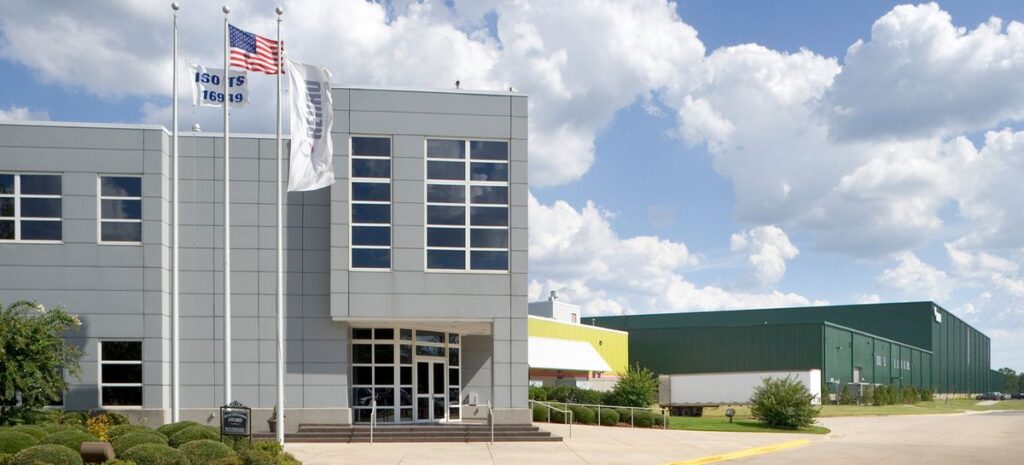
On Tuesday, the Cullman REHAU plant hosted a Roofing Ceremony/Richtfest to celebrate its latest expansion. The $12.8 million expansion will allow REHAU to increase production at its Cullman plant even more. Andrew Frohne is a senior executive with REHAU. “Thank you for coming to our milestone event,” Frohne said. “It was a pleasure having you here. We hope you have a good impression of our project and are looking forward to showing you the progress at the next big milestone.” Economic Developer Dr. Nicole Jones told Alabama Today, “REHAU, which now employs almost 800 at the Cullman plant, was the first Tier 1 supplier to serve Mercedes when it came to Alabama nearly three decades ago. Thank you, REHAU, for investing in our communities. “ The German word “Richtfest” translates to ‘roofing ceremony’ or ‘build celebration.’ In German tradition, building owners or homeowners host a “Richtfest” when the final roof beam is applied. The Mercedes Benz supplier opened its Cullman plant in 1996 with 30 employees. The company has had several expansions since then and now employs over 800 people. A PEXa pipe plant for heating and plumbing applications was opened in 2007, and a technical center was added in 2015. According to the Alabama Department of Commerce, the largest single permit issued in Alabama in the second week of July 2023 was a $12.8 million permit at the Cullman Rehau Automotive plant. “REHAU has played a vital role in the success of Alabama’s automotive industry for 25 years, and it’s great to see the company expand its operation in Cullman,” Governor Kay Ivey said when the expansion was first announced in 2022. “This expansion and the 125 new jobs it will create will be vital to Mercedes-Benz’s growth right here in Sweet Home Alabama.” The current facility is about 1 million square feet. The independent family-owned company was founded in Rehau, Germany. Today, REHAU has 21,500 employees in more than 190 locations worldwide. Dale Greer is the director of the Cullman Economic Development Agency. Greer said, “REHAU’s growth in Cullman is a tribute to both the company and the Cullman community.” The Mercedes Tuscaloosa plant was the company’s first major passenger car production facility outside Germany. REHAU followed Mercedes to Alabama. Since then, several other automobile makers have moved production facilities to Alabama. Both Mercedes and REHAU have expanded over the years. To connect with the author of this story or to comment, email brandonmreporter@gmail.com.
Medical marijuana issue heads back to court on Wednesday

Litigants in Alabama’s ongoing medical marijuana litigation will be back in court on Wednesday to seek approval to reboot the awarding of marijuana licenses. The State Legislature passed, and Governor Kay Ivey signed, legislation legalizing medical marijuana in 2021. A number of business entities denied licenses to enter the state’s newest industry have sued over issues surrounding the license awards. Judge James Anderson is hearing those cases in Montgomery Circuit Court. Last Thursday, the Alabama Medical Cannabis Commission (AMCC) voted on a series of rule changes to address issues that plaintiffs have raised. The AMCC hopes that Judge Anderson will be satisfied with those changes and will allow the state to rescind those previous cannabis awards made by the Commission in June and August. Southeast Cannabis, which was awarded a license by the Commission in June and then had its award reaffirmed in August, is seeking a temporary restraining order (TRO) on the AMCC’s plan to rescind the awards and reconsider all of the applications. Judge Anderson last Wednesday dismissed a lawsuit by Verano, who was granted a license award in June and then denied in August, arguing that the license award was a property owned by Verano and, once awarded, could not be rescinded. Anderson ruled against Verano, accepting the AMCC’s position that a license, even though Verano paid the Commission $50,000 for the license, is a privilege and not a right; thus, the Commission does have the authority to rescind Verona’s license. Based on the Verano decision, it seems likely that Judge Anderson will rule against Southeast Cannabis’s request for a TRO. Alabama Always was denied a permit in the Commission’s June and August meetings. They are suing the state, arguing that the AMCC’s process was flawed and that the Commission violated Alabama’s Open Meetings Act when the commissioners went into a lengthy closed executive session. Other entities denied permits have since joined this litigation, and those suits have been consolidated into one case. Commission Chairman Rex Vaughn told reporters that, if the court allows, the Commission will rescind the awards and then hold hearings, giving the applicants the opportunity to present their case directly to the Commission. It is hoped that the Commission will be able to grant new awards in either December or January. The Commission is represented in the litigation by attorney Mark Wilkerson. Vaughn praised Wilkerson and the legal team representing the AMCC. “They have been a great asset to us, helping us wade through to where we are. They have done a magnificent job,” Vaughn said. The Commission has set a meeting for October 26. The legislation legalizing medical cannabis and creating the AMCC is the most restrictive in the country. The maximum number of marijuana grower, processor, transporter, laboratory, and dispensary licenses that the AMCC can award is limited by the 2021 legislation. The most sought-after license, the integrated facility (which can grow, process, and market cannabis all in-house), is limited to a maximum of five in the state. Due to the strict limits, most applicants will ultimately be denied. It will be some time well into 2024 before Alabamians with a demonstrated medical need will be able to legally purchase medical cannabis in the state as no crop can legally be planted until final approval is issued from the AMCC, and that can’t happen until the court lifts its hold on the issuing of the licenses. To connect with the author of this story or to comment, email brandonmreporter@gmail.com.
Steve Flowers: The Shorty Price story
Alabama has had its share of what I call “run for the fun of it” candidates. The most colorful of all these perennial “also ran” candidates was Ralph “Shorty” Price. He ran for governor every time. His slogan was “Smoke Tampa Nugget cigars, drink Budweiser beer, and vote for Shorty Price.” In one of Shorty’s campaigns for governor, his campaign speech contained this line, “If elected governor, I will reduce the governor’s tenure from four to two years. If you can’t steal enough to last you the rest of your life in two years, you ain’t got enough sense to have the office in the first place.” He would use recycled campaign signs to save money, but he rarely garnered 2% of the votes in any campaign. Most people remember Shorty as one of the Alabama Crimson Tide’s most ardent cheerleaders. Like a lot of old-time Alabama fans, Shorty hated Tennessee, which is why I am highlighting Shorty this week since Alabama hosts Tennessee in Bryant Denny Stadium this Saturday. Shorty loved Alabama football. Following the Crimson Tide was Shorty’s prime passion in life. You could spot Shorty, even though he was only 5 feet tall, at every Crimson Tide football game, always sporting a black suit and a black hat with a round top, plus his Alabama tie and flag. I do not know if Shorty actually had a seat because he would parade around Denny Stadium or Legion Field posing as Alabama’s head cheerleader. In fact, he would intersperse himself among the real Alabama cheerleaders and help them with their cheers. There was no question that Shorty was totally inebriated. In fact, I never saw Shorty when he was not drunk. Shorty worshiped Paul “Bear” Bryant. Indeed, Bryant and Shorty were of the same era. Like Bryant, Shorty hated Tennessee. Speaking of the Tennessee rivalry, I will share with you a personal Shorty story. I had become acquainted with Shorty early in life. Therefore, on a clear, beautiful, third Saturday, fall afternoon in October, Alabama was playing Tennessee in Legion Field. As always, Shorty was prancing up and down the field. I was a freshman at the University on that fall Saturday. Shorty, even in his drunken daze, recognized me. I had a beautiful date that I was trying to impress, and meeting Shorty did not impress her. Shorty pranced up the aisle and proceeded to sit by me. His daily black suit had not been changed in probably over a year. He reeked of alcohol and body odor, and my date had to hold her nose. After about 20 minutes of offending my date, Shorty then proceeded to try to impress the crowd by doing somersaults off the six-foot walls of Legion Field. He did at least three, smashing his head straight down on the pavement on each dive. I thought Shorty had killed himself with his somersaults. His face and his head were bleeding profusely, and he was developing a black eye. Fortunately, Shorty left my domain and proceeded to dance with the Alabama cheerleaders that day, as bloody as he may have been. Shorty was beloved by the fans, and I guess that is why the police in Birmingham and Tuscaloosa seemed to ignore Shorty’s antics. However, that was not the case in a classic Alabama game four years later. By this time, I was a senior at the University, and we were facing Notre Dame in an epic championship battle in the old New Orleans Sugar Bowl on New Year’s Eve. It was for the 1973 national championship. Bear Bryant and Ara Parseghian were pitted against each other. We were ranked #1 and #2. One of the largest television audiences in history was focused on the 7:30 p.m. kickoff. It was electrifying. Those of us in the stands were awaiting the entrance of the football teams, as were the ABC cameras. Somehow, Shorty had journeyed to New Orleans, had gotten on the field, and was poised to lead the Alabama team out on the field. As was customary, Shorty was as drunk as Cooter Brown. He started off by beating an Irish puppet with a club, and the next thing I knew, two burly New Orleans policemen, two of the biggest I had ever seen, picked up Shorty by his arms and escorted him off the field. They did not know who Shorty was and did not appreciate him. Sadly, Shorty, one of Alabama’s greatest fans, missed one of Alabama’s classic games sitting in a New Orleans jail. I have always believed that Shorty’s removal from the field was a bad omen for us that night. We lost 24-23, and Notre Dame won the National Championship. See you next week. Steve Flowers is Alabama’s leading political columnist. His weekly column appears in over 60 Alabama newspapers. He served 16 years in the state legislature. Steve may be reached at www.steveflowers.us.
Jim Jordan fails in first ballot to be Speaker of the House
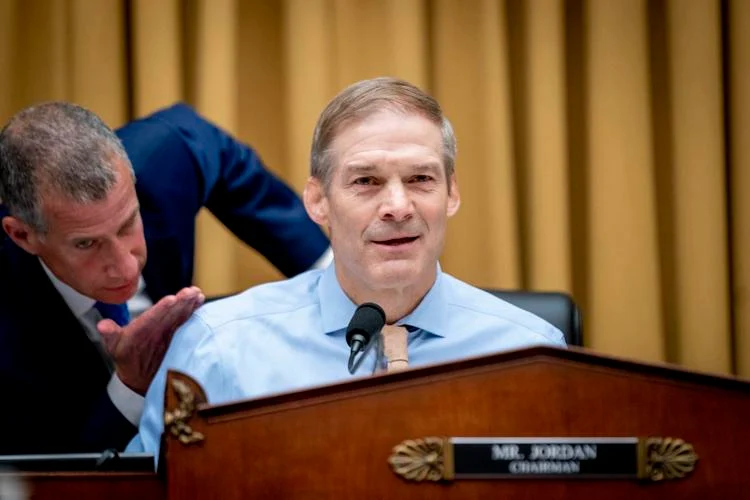
On Tuesday, the U.S. House of Representatives voted to consider Republican Party nominee Representative Jim Jordan (R-Ohio) for Speaker of the House. Jordan failed to get the 217 votes necessary to be elected. Six Republicans who voted NO on Jordan’s quest for the top spot in the House of Representatives are in swing districts and are considered highly vulnerable in 2024. Jordan, who voted to invalidate the 2020 election results, has the endorsement of former President Donald Trump. Jordan received only 200 votes on the first ballot. House Minority Leader Hakeem Jefferies (D-New York) received 212. Both were short of the 217 needed to get the position. Jordan seeks to succeed Rep. Kevin McCarthy (R-California) as Speaker. The first choice of the Conference, Rep. Steve Scalise (R-Louisiana), withdrew late on Thursday night after he could not get enough conservative support to win the nomination. Jordan then defeated Rep. Austin Scott (R-Georgia) for the GOP nomination in a meeting of the GOP conference on Friday. Scalise and McCarthy both got votes on that first ballot, though neither is a candidate. Six Republicans announced on Monday night that they would not support Jordan. Others had kept their decisions private until the vote. Jordan is the Chairman of the House Judiciary Committee investigating President Joe Biden. and his son Hunter Biden, as well as the President’s alleged dereliction of duty on the U.S. southern border. Jordan was a founding member and the first chairman of the conservative Freedom Caucus. Jordan had the support of Alabama’s six Republican Congressmen. Congressman Jerry Carl (R-AL01) said on X, “I voted for @Jim_Jordan for Speaker. He is the conservative leader we need so we can get to work delivering results for the American people. It’s time to come together as a party, get our country back on track, and hold @JoeBiden accountable.” Jordan can either bring another vote in hopes that recalcitrant Republican lawmakers change their minds, or the GOP Conference can meet again and select another nominee to run for Speaker of the House – one who is seen as less divisive than Jordan. At this point, it seems unlikely that Jordan can reach the 217 needed for victory. To connect with the author of this story or to comment, email brandonmreporter@gmail.com.
Ag officials: Drastic drop in U.S. farms over 4 decades causing pain in rural areas

By Andrew Hensel | The Center Square According to the United States Department of Agriculture, a lack of farms throughout the country impacts families in more ways than one. U.S. Agriculture Secretary Tom Vilsack, U.S. Rep. Robin Kelly, D-Illinois, and others discussed the state of farming in Illinois and elsewhere Monday in Kankakee. Vilsack told an agricultural panel that the country is losing farms in large quantities. “I was surprised to learn that we’ve lost 438,000 farms since 1981,” Vilsack said. “Just to give you a sense of how many farms that is, it is every farm in Iowa today, Minnesota, Wisconsin, Illinois, South Dakota, Nebraska, and Colorado.” Over that same period, 141.1 million acres of former farmland are no longer being farmed today across the country. Illinois is the top soybean producer in the country, with 15% of all U.S. soybeans being produced in Illinois. Vilsack said the lack of farms is impacting different areas. “That’s a lot of land,” Vilsack said. “Are we OK with that?” “It has an impact on communities because when you lose that many farms, you don’t just lose those farms, you also lose the small businesses that depend on those farms,” Vilsack said. “Which is why many small towns in this country today in rural places have empty storefronts.” According to Vilsack, the way to address the problems in farming is by creating more revenue streams for farmers, especially small and mid-sized farmers. “The key here is for these farming operations in particular to have additional revenue streams that come in at the same time they’re selling a crop, or selling livestock, or getting a government payment,” Vilsack said. Numbers from the Illinois Farm Bureau show that Illinois is the second top corn-producing state in the country, with 13% of our country’s supply of corn being grown on Illinois farms. That farmland makes up 76% of Illinois land. Republished with the permission of The Center Square.
Constant barrage of cyberattacks addressed during awareness month

By Donna Rolando | The Center Square contributor Technology has a dark side that is costing America an estimated $10 billion a year or more, according to the FBI. The agency’s Springfield Field Office describes the problem as a constant barrage of cyberattacks, many of which can be averted. During Cybersecurity Awareness Month in October, the FBI is offering tips on how to protect yourself from cybercrimes. Supervisory Special Agent Aaron Van Hoff with the Cyber Crime Unit told The Center Square the purpose is not to pinpoint new attacks but to start a dialogue with the community about the ongoing threat. “We try to do a lot of community outreach to inform individuals and businesses and organizations of what cyber threats look like and what to be aware of,” he said. “It’s just a way for us to get the word out there.” When it comes to cybercrime, he said Illinois is one of the top states on the radar, according to 2022 figures. “We ranked about fifth in crime victims at just a little under 15,000 individuals,” Van Hoff said, adding the state ranked seventh in losses from cybercrime estimated at $266 million in that same year. The problem is so intense it’s been called a barrage of cyberattacks by the Springfield office. Cyberattacks are prevalent among those older than 60, although technology users of all ages can fall victim. “They usually target those who have the potential of having the most wealth,” Van Hoff said. As technology becomes more and more a part of daily life, from doorbells to nanny cams, laptops to smartphones, the opportunities expand for thieves to try to use these devices in a cyberattack. But there are steps that consumers can take to protect themselves. On a computer or smartphone, the first line of defense is antivirus software. “You have to make sure that the antivirus is updating itself all the time,” Van Hoff said. Other tips are to change passwords regularly, resist opening unexpected emails or links, and utilize multi-factor authentication. Once the victim of such a crime, cyberattacks can be reported to the FBI Springfield at 217-522- 9675, through its Internet Crime Complaint Center. Republished with the permission of The Center Square.
