
Will Sellers: A history of corruption
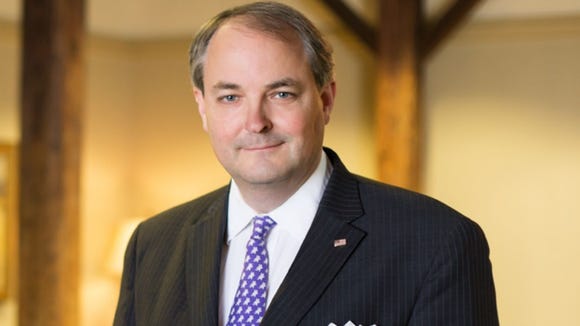
One Hundred Fifty years ago, the largest political corruption trial in history ended with the conviction of one William M. “Boss” Tweed, whose vice was so vast and comprehensive that no one is quite sure of how much money he actually stole. Estimates range on the low side of $50 million to the high side of $200 million, which, when converted from 1873 dollars, amounts to roughly $1.5 to $3.7 billion today. Tweed’s conviction makes the comparison with other cases of political corruption seem to be mere misdemeanors or foot faults. But, his ability to marshal votes is still the envy of political leaders. In fact, he was the first community organizer who realized that there was strength in numbers and votes in political patronage. The son of tough Scotsmen, Tweed emerged as a leader who could motivate people and capture their imagination by providing for their creature comforts. As a leader for a volunteer fire department, he eventually became a New York City alderman and continued his political climb by serving in the U.S. House of Representatives. Unlike New York City politics, he was merely one of a large number of legislators in Washington, so he quickly tired of his lack of influence and realized that the Big Apple was the place he would rather be. After only one term in Congress, Tweed headed home and thus began his rise as the unofficial mayor of New York City and shadow governor. Early in life, Tweed showed an interest in accounting and learned very quickly how numbers and dollar signs worked together. He realized, too, that with the jobs created by the Industrial Revolution, there was strength and votes in the numbers of workers. He also recognized that by pandering to the Irish immigrants flooding New York, he would make friends who would blindly follow him into the voting booths. Tweed’s sharp elbows landed him in a leadership role in the political machine of all machines: Tammany Hall. Originally organized as a social club for well-heeled New Yorkers, it developed into a well-oiled party machine that controlled votes and public patronage jobs. When Tweed arrived on the scene, Tammany was the de facto New York City Democratic Party. Although he would never be elected to office again, Tweed would create an organization that exercised almost absolute control over politics in New York State, and while he was truly a problem solver with great political instincts, instead of using these skills to foster good government, he became ostentatiously corrupt, eventually inviting enemies. His first real start in local politics came during the Civil War with the draft riots in New York City. Lincoln imposed a draft that provided an “exemption” for people who provided a substitute, but the idea of paying for a substitute benefited only the wealthy to the exclusion of the more numerous working class who rioted at being pressed into service. Tweed realized that catering to the working class was good for them but even better for himself. So, he established true exemptions for police and firemen while also utilizing a slush fund to help working-class men pay for substitutes. This pressure release cured further riots and fostered peaceful streets. This achievement was remarkable for ending the riots while creating a block of voters who could be counted on to vote at Tweed’s direction. Using this block, he prevailed upon officials in Albany to change the law to allow New York City to have more local control so that contracts for city services would escape the scrutiny of state lawmakers. This was Tweed’s most selfish act, as he realized that by securing home rule and using his position at Tammany, he could direct contracts and receive a commission for his work. Initially, this “commission” didn’t benefit him exclusively but was partially used to provide social services to the working classes. He helped build churches, schools, and hospitals. In doing so, he added to his loyal following. Tweed became a sort of Robin Hood, taking money from city vendors and helping the poor. He would argue that this was “honest” graft, which justified corruption because others benefited. But, while others did benefit and the services provided were real and significant, Tweed was not a distant beneficiary. From almost every city contract, Tweed profited. He did share the wealth, but the wealth he shared was a fraction of the graft he kept for himself. As dealing with Tweed became part of the cost of doing business in New York, he emerged as the father of all patronage, doling out jobs and favors to his constituents. Tweed was all three branches of government rolled into one person; nothing escaped his influence. Judges and courts were in his employ, legislators owed him their livelihood, and mayors and governors depended on his block votes for election. But, as his power grew and he flaunted his wealth, he developed enemies and alienated friends who became focused on ending his influence. Two isolated incidents started his downfall. First, he would tangle with the governor over something as insignificant as the Orange Day parade. Much like the draft riots, the parade by Scotch-Irish Protestants enflamed the Irish Catholics, and Tweed lost control of the streets of New York when more than 125 people died. Then, at about the same time, a former friend who had been rejected for political patronage, secretly smuggled Tweed’s accounting records detailing his corruption. This road map was turned over to a reporter for a fledging newspaper, The New York Times, and it began publishing the breadth of Tweed’s larceny. While the writing was incriminating enough, Tweed feared the political cartoons more than anything as even illiterate New Yorkers could understand the magnitude of his graft, kickbacks, and malfeasance. Tweed was tried, convicted, and sentenced to jail, but his influence was still great, and he was allowed to leave his jail cell for temporary visits home. On one of these visits, he fled the country but was caught in Spain, extradited
Steve Flowers: 2024 elections around the corner
Folks, don’t look now, but our 2024 election year is upon us. Next year is a major year in politics nationwide. Not only does the nation elect a president, but most states also elect their governors and legislators for four-year terms in presidential years. We, in Alabama and in most southern states, elect our governors and legislators in nonpresidential years. Those of us who study and talk about Alabama politics refer to these years as gubernatorial years. We elected our governor and legislature last year in 2022. Historically, presidential years have been very dull and unexciting years for Alabama politics. There are very few statewide contests, and those that happen will be decided on March 5. Since we are such an overwhelmingly Republican state, the only way to be elected statewide in the Heart of Dixie is as a Republican. There are 29 statewide elected offices in Alabama, and all 29 are held by a Republican. There are four seats up for election on our Alabama Supreme Court. Justices Jay Mitchell, Tommy Bryan, and Will Sellers are up for reelection to another six-year term on the high tribunal. Justice Sarah Stewart’s seat is up for reelection. However, Sarah has opted to move to the open Chief Justice position, being vacated by the retirement of Chief Justice Tom Parker. Justice Sarah Stewart is a good choice for Chief Justice. She was a Circuit Judge in Mobile County for 14 years before she was elected to the Supreme Court six years ago. The Chief Justice is the administrator of the entire state judicial system. Sarah Stewart’s experience as a circuit judge is invalu,able and she also has the respect and support of most of the circuit judges around the state. Circuit judges are very respected in their counties and communities throughout the state. Sarah Stewart has been campaigning extensively and effectively all over Alabama during 2023. She has let no grass grow under her feet. Speaking of working hard, the judge who will move up to take Sarah Stewart’s seat on the Supreme Court will be Criminal Court of Appeals Judge Chris McCool. Judge McCool is one of the most proven ardent campaigners I have seen in recent years. I said when he announced a year ago that he would not be outworked, and he has proven me right. He has traversed the state from one end to the other, putting over 60,000 miles on his vehicle. Chris McCool will make a great justice and is the perfect representative on the court from the rural area of the state. He hails from rural Pickens County near Gordo and close to the Tuscaloosa County Line. His family has very deep roots in that area. The McCools settled there over 180 years ago, prior to the Civil War. They have farmed the land the entire time. Chris lives in the same place his ancestors lived six generations ago. Chris McCool borders on folk legend for an Alabama judge. He has three full-time professions. He was a lawyer with impeccable credentials. He graduated from the University of Alabama, undergraduate and law school. He practiced law in Gordo before being elected District Attorney of the Pickens, Lamar, and Fayette Circuit at age 30. He served as DA for 18 years and was elected to the Alabama Court of Criminal Appeals six years ago. He is a minister. He pastors the Zion Primitive Baptist Church near his home. His family founded the church, and his great, great, great grandfather was the first pastor. He is also a farmer. Judge McCool’s seat on the Court of Criminal Appeals will be filled by one of two assistant attorney generals. Rich Anderson and Thomas Govan, both of Montgomery, are vying for McCool’s seat on the Court of Criminal Appeals. Both are well-qualified and would do a good job. Justices Chad Hansen and Christy Edwards are up for reelection to the Court of Civil Appeals. They are doing a good job. Justices Bill Cole and Richard Minor are up for reelection on the Court of Criminal Appeals. They both are doing an excellent job. This court has a very heavy caseload. Twinkle Cavanaugh will be elected to her fourth term as President of the Alabama Public Service Commission next year. Twinkle is becoming legendary as a public servant in our state. Although still young, she has built a stellar reputation for honesty, integrity, and conservatism. The former Chairman of the Alabama Republican Party is the best retail politician in Alabama today. She has crisscrossed the state campaigning in 2023 in preparation for 2024. Even though she will more than likely not have an opponent, she is running scared and not taking anything for granted. See you next week. Steve Flowers is Alabama’s leading political columnist. His weekly column appears in over 60 Alabama newspapers. He served 16 years in the state legislature. Steve may be reached at: www.steveflowers.us.
Tommy Tuberville gets three more military officers confirmed by Senate
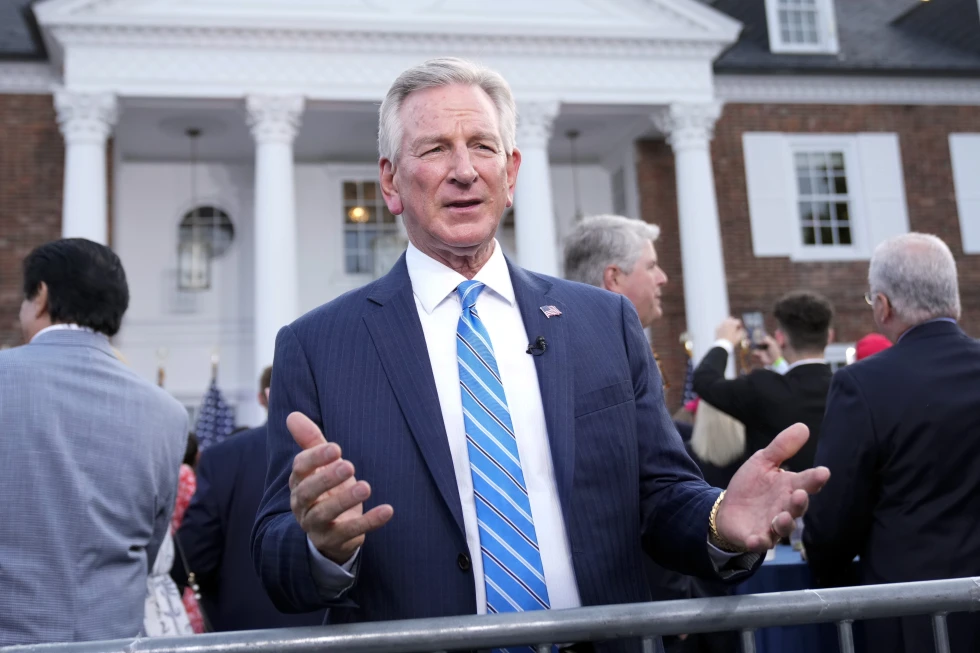
On Thursday, U.S. Senator Tommy Tuberville (R-Alabama) got three more military officers confirmed by the Senate. Tuberville obtained the 16 signatures needed for a successful cloture petition for the nomination of Lieutenant General Christopher Mahoney to be the Assistant Commandant of the Marine Corps. The United States Senate confirmed this nomination, as well as the nominations of Admiral Lisa Franchetti to be Chief of Naval Operations and General David Allvin for Chief of Staff of the Air Force. Sen. Tuberville spoke with the Alabama press corps before the vote on the three military nominations. “Putting a hold on these admirals and generals has put a lot of pressure on the White House and Senator [Chuck] Schumer himself and Chairman Reed of the Armed Services Committee,” Tuberville told Alabama reporters. “We all have to remember that this is a two-way street. I am fighting for the Constitution. I am fighting that the American people and taxpayers do not have to pay for anything to do with abortion. We had a very good abortion policy that had no problems being worked with for the last 35 years, but this White House decided to change it and go around the Constitution to force the American taxpayers to pay for something involved in abortion, and I am not standing for it. I don’t represent the people up here. I represent the people of Alabama. I am pro-life, and the people that sent me here expect me to get things done in that way. I am confident in General [Karsten] Heckl that he can get the job done waiting for our commandant who unfortunately had a serious health illness in the last few days. I don’t know the direction that that is going to go, but I have filed a petition with Chuck Schumer to put an assistant commandant on the floor. We did that. Hopefully, we will vote on it in the next two days to move that up the ladder, but again, I am showing Chuck Schumer how to do his job. I have said all along that we could be doing these. They have refused to do it. They have refused to work with the American people, and they have put us in a tough situation.” Since February, Senator Tuberville has imposed a blanket hold on senior military promotions over his opposition to the Biden Administration’s taxpayer-funded abortion-related travel policy which Tuberville says is illegal. Sen. Tuberville has repeatedly said that if the Pentagon reverses its policy, he will lift his hold and agree to give unanimous consent to the promotions. Senate Majority Leader Chuck Schumer (D-New York) can bring any of these nominations to the floor for a vote individually. As Tuberville has twice demonstrated, any of the 100 U.S. Senators can write up a cloture petition, and if they can get the 16 signatures necessary those nominations can be forced to the floor according to Senate rules. Tuberville pointed out that the Department of Defense’s authority to fund abortions is governed by 10 U.S.C. 1093, which limits abortions to cases of rape, incest, or pregnancies that threaten the life of the mother. These rules apply to both service members and their spouses and dependents. Given this provision, the Department of Defense has averaged fewer than 20 abortions per year, with 91 abortions at military facilities occurring between 2016 and 2021. According to a third-party study cited by officials, the number of abortions subsidized by the Department of Defense under the new policy could increase to 4,100 annually — 205 times the number of abortions performed in recent years. Acting on the orders of President Joe Biden, Secretary of Defense Lloyd Austin issued a memorandum on February 16, 2023, announcing the formal implementation of the abortion policy to fund travel and paid time off for service members and their dependents seeking an abortion, despite existing law – even though Congress never authorized this policy. It is counter to the policy that was previously in place under both Republican and Democratic administrations. Tuberville had threatened to put the hold on promotions in place if the administration implemented the proposed policy change without a vote of Congress. On February 16, 2023, Senator Tuberville followed through with his pledge to hold all general and flag officer nominations on the Senate floor. Tuberville represents Alabama in the United States Senate and is a member of the Senate Armed Services, Agriculture, Veterans Affairs, and HELP Committees. To connect with the author of this story or to comment, email brandonmreporter@gmail.com.
Katie Britt and colleagues want to redesignate Iran-Backed Houthis as a foreign terrorist organization
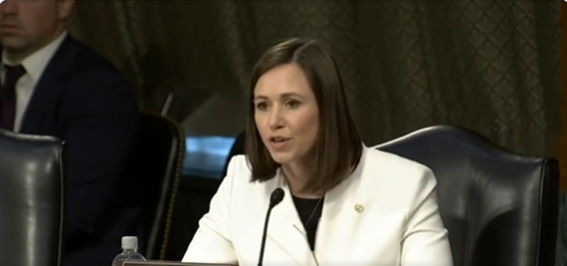
On Monday, U.S. Senator Katie Britt (R-Alabama) joined in a letter urging the Biden Administration and Secretary of State Anthony Blinken to redesignate Ansarallah, more commonly known as the Houthis, as a foreign terrorist organization (FTO). Sen. Britt cited their longstanding acts of terrorism, actions to destabilize the Middle East, the security threat they pose to the United States, and most recently, their involvement in the ongoing conflict in Israel, including missile and rocket attacks on Israel last week. The Houthis control a large swath of war-torn Yemen. In 2021, the Trump Administration designated the Houthis as an FTO. However, the Biden Administration inexplicably reversed that following Biden’s inauguration. The Houthis are longtime Iranian clients who, thanks to that relationship, have amassed one of the most sophisticated arsenals of ballistic missiles and drones in the region. This has become apparent in their frequent attacks on Israel as well as U.S. partners and interests. “An ongoing posture of appeasement by the Biden Administration only emboldens the Iranian regime to continue its barbaric proxy attacks on innocent children, women, and men, and this is evidenced in the Houthi’s recent terrorist attacks that have been intercepted by defensive actions by the United States and Saudi Arabia,” said Senator Britt. “It is imperative that America sends a message of complete condemnation of Iran and its proxies’ violence, as well as unwavering support toward our allies in the region. The Houthis are a terrorist organization, and this Administration should treat them as such while reimposing a comprehensive, maximum pressure sanctions campaign on all Iranian terror proxies. In order to achieve peace, now is the time for strength.” Last week Sen. Britt joined Senator Steve Daines (R-Montana) and 12 of their Senate colleagues in introducing the Standing Against Houthi Aggression Act. This legislation would redesignate the Houthis as a foreign terrorist organization and impose certain sanctions on the group. The legislation has also been cosponsored by Senators Roger Marshall (R-Kansas), Bill Hagerty (R-Tennessee), Susan Collins (R-Maine), Joni Ernst (R-Iowa), Marco Rubio (R-Florida), Roger Wicker (R-Mississippi), John Barrasso (R-Wyoming), Cynthia Lummis (R-Wyoming), Bill Cassidy (R-Louisiana), Shelley Moore Capito (R-West Virginia), Pete Ricketts (R-Nebraska), and John Kennedy (R-Louisiana). Katie Britt was elected to the U.S. Senate in 2022. To connect with the author of this story or to comment, email brandonmreporter@gmail.com
Gulf State Park Pier renovations begin on November 13

The Alabama Department of Conservation and Natural Resources (ADCNR) announced on Monday that Gulf State Park Pier will close at 5 p.m. on Sunday, November 12, 2023, so that work can begin to repair the damage caused to the pier by Hurricane Sally in 2020. The pier, a popular destination for fisherman and sightseers. will remain closed during the renovation process. Chris Blankenship is the Commissioner of ADCNR. “We are excited to announce this project to restore Gulf State Park Pier,” said Commissioner Blankenship. “The pier provides quality recreational fishing for thousands of anglers each year. Once the work is completed, anglers and other park visitors will have full access to one of the premier fishing and sightseeing destinations on the Gulf Coast.” M.D. Thomas Construction in Orange Beach, Alabama, was awarded the contract to perform the repairs which will include rebuilding a 200-foot section of the pier that collapsed during the storm. The pier is scheduled to reopen to the public in the summer of 2024. On September 16, 2020, Hurricane Sally hit Alabama’s Gulf Coast as a category two storm. Prior to Sally’s formation and landfall, the pier had been scheduled to reopen after the completion of a $2.4 million renovation. The newly renovated pier was devastated by the storm. Greg Lein is the Director of ADCNR’s State Parks Division. “The pier partially reopened to fishing and sightseeing in 2021,” said Director Lein. “Since then, visitors have had access to half of the pier. We look forward to welcoming anglers and sightseers back to the full pier next summer.” Species of fish commonly harvested at the pier include sheepshead, red drum, Spanish mackerel, flounder, Florida pompano, king mackerel, whiting, and more. The pier also is a site where birders can see numerous coastal birds including seagulls and pelicans. ADCNR is encouraging anglers to check out other fishing locations along Alabama’s Gulf Coast, including Gulf State Park’s Alabama Point, Romar Beach and Cotton Bayou (wheelchair accessible), and the Steve McMillan Fishing Pier and Boat Ramp at Fort Morgan during the closure. The state had hoped to do the repairs to the pier in 2022, but when that was bid out, the winning bid was $12 million, so the state elected to not proceed with repairs in May 2022. Alabama is a sportsmen’s dream, with year-round opportunities for saltwater fishing, freshwater fishing, and hunting. Alabama residents and nonresidents alike can purchase a license from the state. License fees are used to protect the state’s natural resources and promote sound conservation practices. To connect with the author of this story or to comment, email brandonmreporter@gmail.com.
Douglas Carswell: Bad ideas have bad consequences
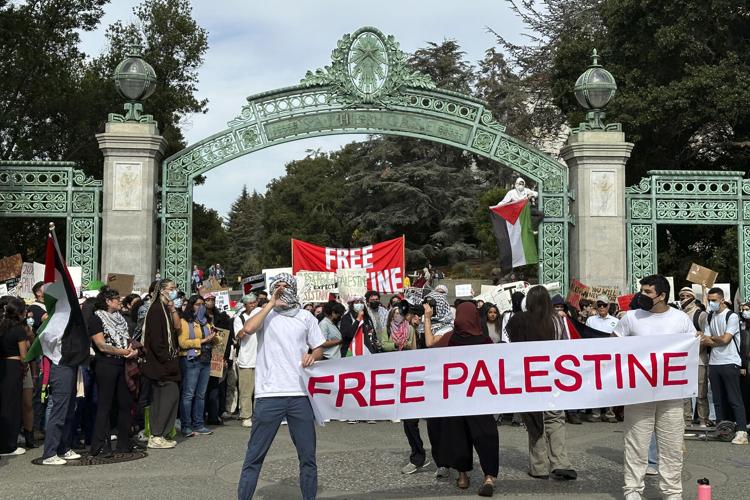
After Hamas’ terror attack on Israel, tens of thousands took to the streets. They marched in Manhattan and Chicago, as well as London and Paris. Rallies were held on the campuses of colleges across America. Were the protesters lamenting the death of Israeli civilians? Not at all. Were they there to demand the release of young children taken hostage by Hamas? I missed that bit. Instead, in the wake of a pogrom that saw the murder of 1,400 Jews, tens of thousands of Americans marched in support of their killers. The protesters literally chanted for the destruction of the state of Israel. How can it possibly be that the great-grandchildren of the generation of Americans that liberated Dachau could think this way? For a generation, “woke” ideas have been left to fester on college campuses. Over the past few weeks, we have started to see the real-world consequences. If we are to put this right, we first need to understand what has gone wrong. Looking at the protesters on social media, I was struck by the farcical contradictions. Progressive feminists were out there in support of an Islamist ideology that denies women rights. Self-styled democrats sided with those seeking to establish a theocracy. On social media, I saw a group calling themselves “Queers for Palestine”, holding aloft a rainbow motif. How long do you imagine they would survive in Gaza? This confusion by the pro-Hamas protesters, which would be comical if it were not so grim, points to the root cause of the problem; for millions of young Americans, a creed of cultural relativism has been allowed to establish itself as a secular belief system. If all cultures were of equal worth, then every culture would be as capable of producing science, innovation, and political liberty – not to mention a U.S. Constitution. Most cultures are not. The trouble is that if you refuse to accept that some ways of life are better than others, you have no means of measuring what is good. In your twisted belief system, the murderous head hackers of Hamas are no different from the Golani reservists prepared to take great personal risks to minimize civilian casualties. Cultural relativism begins by applying double standards. It rapidly descends to favoring the non-Western over the Western. Taught to believe in decolonizing the curriculum at school and university, perhaps you start to see Hamas terrorists as noble savages, battling to decolonize Palestine from the wicked West. Maybe this explains why the BBC, a once credible news organization, refused to call Hamas terrorists. Ambivalence about the Western way of life slips into open animus. “But what do you mean Western way of life?” some will ask. “What do people living in the southern U.S. or in Scandinavia possibly have in common with those in the Negev? There is no single Western culture”. Culture is indeed complex, like the branches of a very tall tree. But within the tree of culture, there is a definable trunk that one might call Judeo-Christian culture, from which extend a multiplicity of off shoots. Culture, as with the branches of a tree, can sometimes be grafted, some cultures fused onto another. You even get what arborists call ‘inosculation’, when branches that had separated fuse back together as one again. But as any arborist also knows, not every kind of graft will work. Not every kind of culture can be fused with every other. Some are incompatible. Nor can every way of life coexist alongside every other. Those Western feminists marching in support of Hamas seem not to have understood this. Their children and their grandchildren will. Nor, perhaps, have Western progressive understood that Western culture, whether we are conscious of it or not, has been profoundly shaped by a distinctive set of ideas, both secular and ecclesiastical. I doubt many atheists would appreciate me pointing it out, but even their humanist belief system is product of something uncontestably Judeo-Christian. (Try living under Hamas as a secular humanist and see how long you last). None of this would really matter if everyone around us — evangelical or atheist — shared the same underlying Western cultural assumptions. But they don’t. This is because there are now a growing number of people living in the West whose worldview is shaped by the ideology of political Islamism, and Islamism’s principal proponent, Sayyid Qtub. When political Islamism comes into conflict with Western ways, as it has with increasing frequency since the Salman Rushdie affair in the 1980s, the cultural relativists living in the West have no idea where to draw the line. Indeed, they do not even appreciate that there is a line to be drawn. “But what about the sins of Western culture?” some will counter. “Weren’t Western countries once at the center of the slave trade? Didn’t women and minorities have to endure unequal treatment within living memory?” Almost every contemporary non-Western culture around the world today falls short of the standards set by campus progressives. Only in the West are individual rights respected, often at times imperfectly (as the campus puritans are quick to point out). Anyone who does not know that may not know much about life outside America. That the West today is a far more pleasant place for minorities than it was in the past is not evidence of Western guilt. It is proof that cultural progress is possible. The way we used to live is not as good as it is today. Some ways of living are better than others. Not every way of living is of equal worth. And yes, some ways of life are worth fighting for. At the Mississippi Leadership Academy, we try to teach a cohort of young Americans some of the underlying ideas and principles that underpin Western liberty. We introduce them to the history of Western thought – Hobbes, Locke, and the Founding Fathers. We discuss with them the morality of the free market, and American exceptionalism. Students graduating from our program will, I hope,
