
Majority worry about 2020 meddling
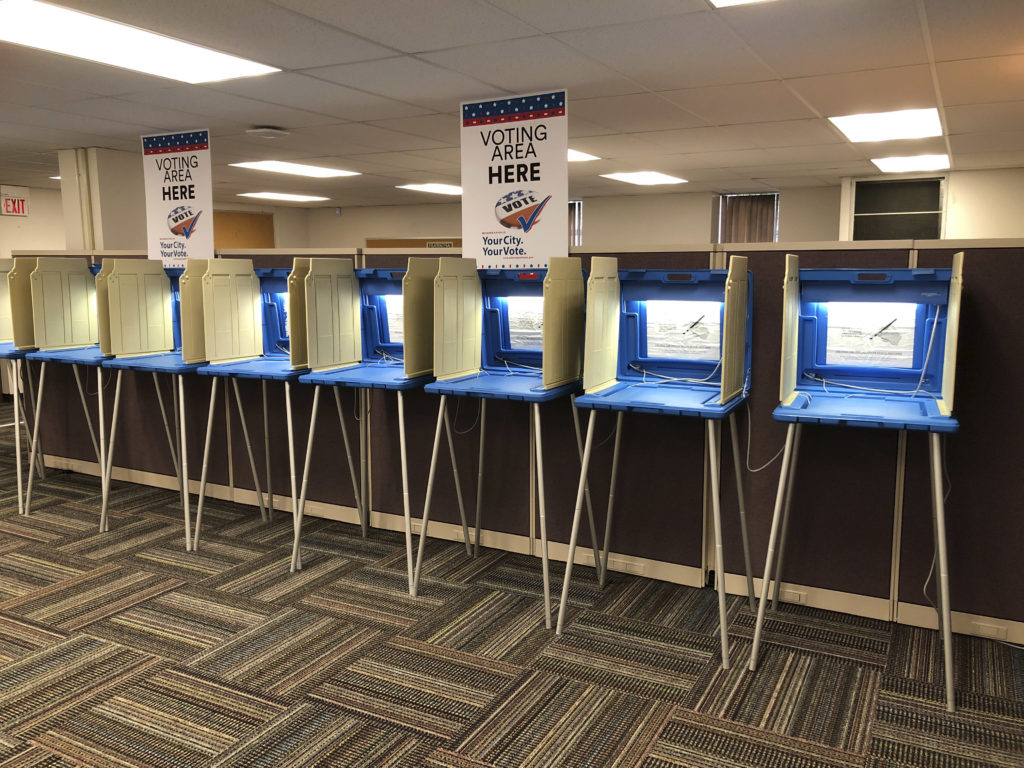
A majority of Americans are concerned that a foreign government might interfere in some way in the 2020 presidential election, whether by tampering with election results, stealing information or by influencing candidates or voter opinion, a new poll shows. The poll from The Associated Press-NORC Center for Public Affairs Research finds Democrats far more likely to express the highest level of concern, but Democrats and Republicans alike have at least some concerns about interference. Overall, half of Americans say they’re extremely or very concerned about foreign interference in the form of altered election results or voting systems, even though hackers bent on causing widespread havoc at polling places face challenges in doing so. An additional quarter is somewhat concerned. Similarly, about half are very concerned by the prospect of foreign governments influencing political candidates or affecting voters’ perceptions of the candidates, along with hacking candidate computer systems to steal information. In total, the poll, conducted Thursday through Monday, shows 63 percent of Americans have major concerns about at least one of those types of foreign election interference, including 80 percent of Democrats and 46 percent of Republicans. The results make clear that despite the efforts of U.S. officials to ward off election interference and to urge public awareness and calm, Americans remain anxious that some of the same tactics Russia used to meddle in the 2016 presidential election could surface again in the next race. Those include the spread of disinformation online to sow divisions among American voters, and the hacking by military intelligence officers of Democratic emails that were then published by WikiLeaks in the run-up to the election. The efforts were aimed at helping Republican Donald Trump over Democratic rival Hillary Clinton, according to special counsel Robert Mueller’s report. “I think that it’s been pretty well-documented that people have been influenced in the past by social media,” said Luci Dvorak, 32, an Illinois teacher. She said she found it concerning that Trump has been “very casual” about getting foreign help and even seemed to invite it. Trump said in a television interview last week that he would be open to receiving a foreign government’s help in the next election. He slightly walked back those comments in a follow-up interview, saying that though he would want to look at foreign dirt on an opponent to assess if it was correct, he would “of course” also report it to the FBI or the attorney general. U.S. officials are on high alert to protect against interference like what occurred in 2016. FBI Director Chris Wray has said the bureau regards last November’s midterm elections as a “dress rehearsal for the big show in 2020.” He has said efforts to undermine democracy and influence public opinion through social media, propaganda and false personas have continued unabated and are “not just an election-cycle threat.” “We saw that, therefore, continue full speed in 2018, in the midterms,” Wray said in April at a Council on Foreign Relations event. “What we did not see in 2018 was any material impact or interference with election infrastructure or, you know, campaign infrastructure.” The decentralized nature of the country’s elections, which are run on a local level and rely on different and varied voting systems, would make it hard for hackers to cause widespread problems. But concerns remain: Russian hackers gained access to voter databases in two Florida counties ahead of the 2016 election. Federal officials are also conducting a forensic analysis of electronic poll books to see if Russian military hackers who targeted a software provider may have tampered with registration information to disrupt voting in a North Carolina county. The poll was conducted roughly two months after the release of special counsel Robert Mueller’s report on his investigation into potential coordination between the Trump campaign and Russia. That report did not establish a criminal conspiracy between Trump associates and the Kremlin to sway the outcome of the election. It did not reach a conclusion on whether the president had criminally obstructed justice, citing a Justice Department legal opinion that says sitting presidents cannot be indicted. Trump has repeatedly said the report found “no collusion” and claimed vindication in Attorney General William Barr’s announcement that he found Mueller’s evidence insufficient to establish an obstruction charge. The poll shows about half of Americans think the Mueller report did not completely clear Trump of obstruction, while many also think it didn’t clear him of coordinating with Russia. Overall, 48 percent said they think the report didn’t clear Trump of obstruction, while just 20 percent think it did. Another 30 percent say they don’t know enough to say. Many Americans — 44 percent — also think the report did not clear Trump of coordination with Russia, while 24 percent think it did and 31 percent aren’t sure. “It’s the twisting of the opposition party that’s given him all this static, where he’s not able to move or do what he’d like to do,” said 88-year-old Dennis Halaszynski, who is retired and lives in McKeesport, Pennsylvania. “They said at the beginning that he’s going to go to jail, and they’re doing their best to put him in jail,” he added. “He’s just not having the time, the proper time, to do what he’d like to do.” The AP-NORC poll of 1,116 adults was conducted June 13-17 using a sample drawn from NORC’s probability-based AmeriSpeak Panel, which is designed to be representative of the U.S. population. The margin of sampling error for all respondents is plus or minus 4.0 percentage points. Respondents were first selected randomly using address-based sampling methods, and later interviewed online or by phone. By Eric Tucker and Emily Swanson Associated Press. Republished with the permission of the Associated Press.
House panel officially clears Donald Trump in Russia probe
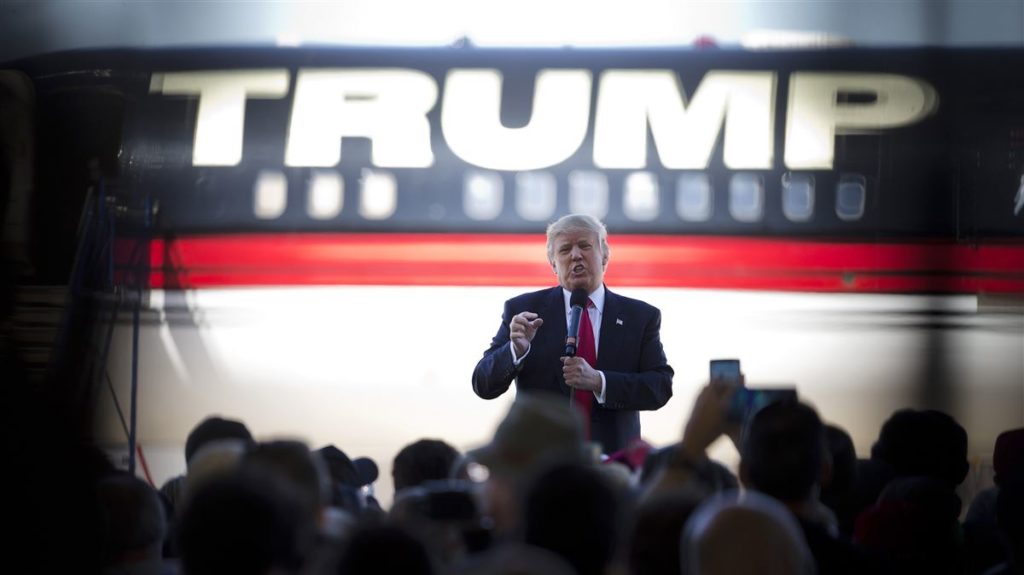
The Republican-led House intelligence committee on Friday officially declared the end of its Russia probe, saying in its final report that it found no evidence that the Trump campaign colluded with Russia in the 2016 presidential campaign. The report’s conclusion is fiercely opposed by committee Democrats, who say the committee did not interview enough witnesses or gather enough evidence to support its finding. The investigation began with bipartisan promise but ultimately succumbed to factional squabbling. Republicans had already announced the main findings last month. An investigation led by special counsel Robert Mueller is ongoing, as are probes led by the Senate intelligence and judiciary committees. The House panel did find that Russia sought to sow discord in the U.S. through cyberattacks and social media. Some portions of the public report are redacted for national security reasons. Republicans say they will pressure intelligence agencies to be able to release more information. Trump has repeatedly said there was “no collusion.” In a statement, Rep. Mike Conaway, R-Texas, who has been leading the investigation, said he was “extremely disappointed with the overzealous redactions” made by the intelligence agencies. He said many of the blacked out details include information already public such as witness names and previously declassified information. Conaway said the committee had pledged to be “as transparent as possible” with the report. “I don’t believe the information we’re releasing today meets that standard, which is why my team and I will continue to challenge the IC’s many unnecessary redactions with the hopes of releasing more of the report in the coming months,” he said. Republished with the permission of the Associated Press.
Hillary Clinton blames misogyny, FBI, Russia, herself for 2016 loss
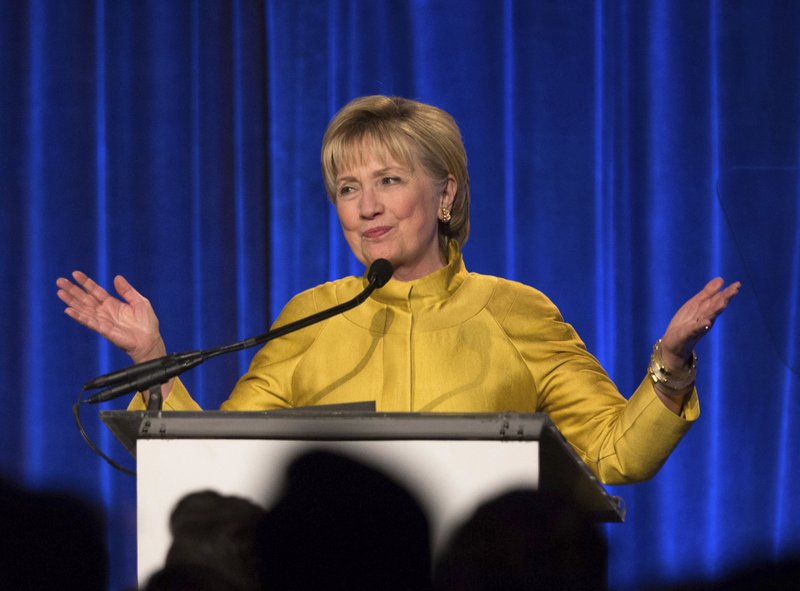
Hillary Clinton said Tuesday that she’s taking responsibility for her 2016 election loss but believes misogyny, Russian interference and questionable decisions by the FBI also influenced the outcome. The former Democratic presidential nominee offered extensive comments about the election during the Women for Women International’s annual luncheon in New York. Clinton said she’s been going through the “painful” process of reliving the 2016 contest while writing a book. “It wasn’t a perfect campaign. There is no such thing,” Clinton said in a question-and-answer-session with CNN’s Christiane Amanpour. “But I was on the way to winning until a combination of (FBI Director) Jim Comey‘s letter on Oct. 28 and Russian WikiLeaks raised doubts in the minds of people who were inclined to vote for me but got scared off.” She reminded the enthusiastic audience packed with women that she ultimately earned 3 million more votes than President Donald Trump. “If the election were on Oct. 27, I would be your president,” Clinton said. She also highlighted Russia’s role in hacking into her campaign’s internal emails and subsequently coordinating their release on WikiLeaks. U.S. intelligence agencies are investigating whether Russia coordinated with Trump associates to influence the election. “He (Russian President Vladimir Putin) certainly interfered in our election,” Clinton said. “And it’s clear he interfered to hurt me and help his opponent.” Amanpour also asked Clinton whether she was a victim of misogyny. “Yes, I do think it played a role,” she said, adding that misogyny is “very much a part of the landscape politically, socially and economically.” After two unsuccessful presidential campaigns, Clinton is not expected to run for public office again. “I’m now back to being an activist citizen and part of the resistance,” she said. Republished with permission of The Associated Press.
Donald Trump still fixated on 2016 election results
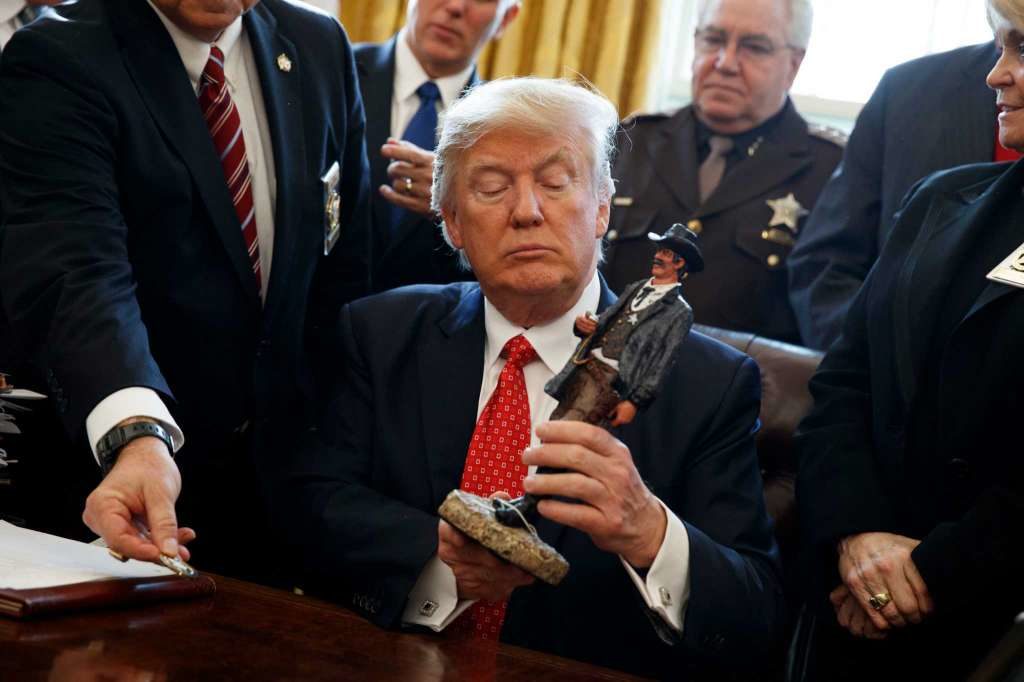
The 2016 election is never far from President Donald Trump‘s mind. When Trump met Tuesday with a group of sheriffs from around the country, he saw not just lawmen but battleground states. Trump talked about his victories with officials from Pennsylvania and North Carolina. And when a sheriff from Minnesota introduced himself, Trump said if he had campaigned in the state one more time he would have won it. More than two weeks into his presidency, the president is still fixated on the 2016 campaign. Many of his public comments include references to his election performance. At times, the comments appear to be light and boastful while in other moments, he’s awkwardly interjected election talk into forums that are decidedly apolitical. Republished with permission of The Associated Press.
A traditional end to an unconventional presidential election
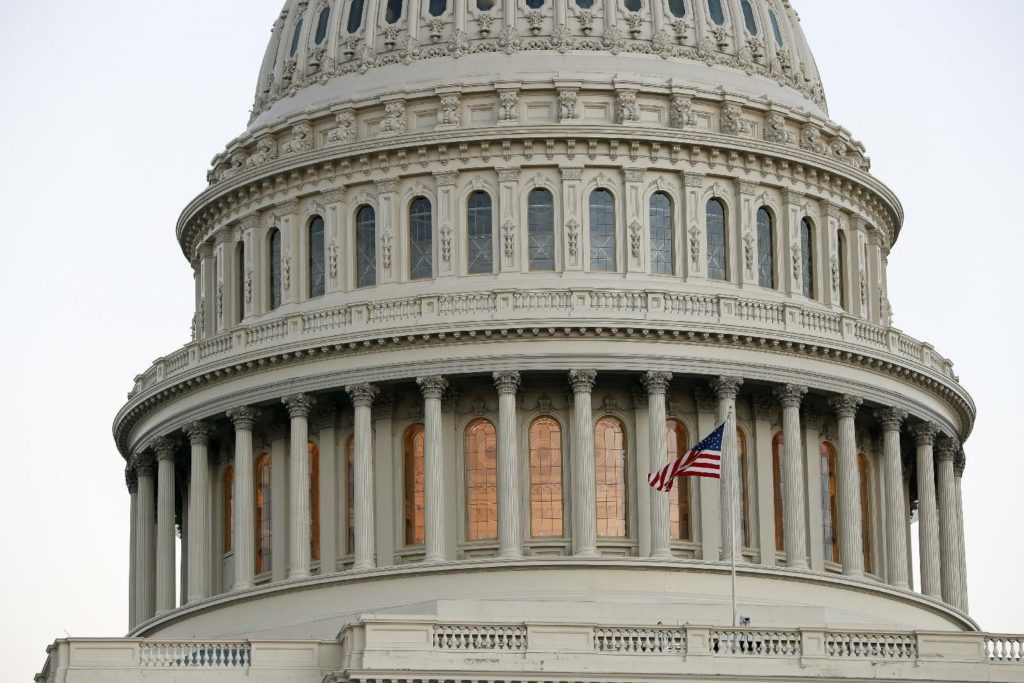
The end of the 2016 presidential election is at hand. A joint session of Congress is set to count the Electoral College votes on Friday, a traditional ending to a most unconventional presidential election. Friday’s vote count marks the last chance for Democrats and other anti-Trump forces to disrupt Donald Trump‘s election. But even if they are successful, the most Democrats could do is slow the process because they don’t have the votes to overturn the outcome. Barring something bizarre happening, Trump will be declared the winner and will be sworn in at his inauguration on Jan. 20. Vice President Joe Biden will preside over the vote count in his role as president of the Senate. All 538 electors met in their respective state capitals in December to cast their votes. Trump finished with 304 votes and Democrat Hillary Clinton with 227, according to a tally by The Associated Press. It takes 270 Electoral College votes to win the presidency. Trump won even though Clinton received nearly 2.9 million more votes. His election has generated much angst among Democrats and others who oppose the billionaire businessman. But they have been powerless to change the outcome. Despite rumblings of a revolt, only two Republican electors — both from Texas — cast protest votes for someone other than Trump. Clinton lost four Democratic electors in Washington state and one in Hawaii. The secretary of state’s office in Washington said the four “faithless” electors would be fined $1,000 apiece. During Friday’s session, Democrats will have an opportunity to file objections, questioning the validity of the vote count. Under federal law, if at least one senator and one House member object to the vote from any state, the House and Senate would meet separately to debate the merits of the objection. Several House Democrats have talked about filing an objection, but no senator has publicly backed the idea. Regardless, with Republicans controlling both chambers, any objection would have little chance of affecting the outcome. Rep. Ed Perlmutter, D-Colo., considered objecting but said, “This is not about trying to stop Donald Trump from becoming president.” Perlmutter said he wants to register his objection to Russia after U.S. intelligence community findings that Moscow engaged in computer hacking to sway the election in favor of Trump. America’s top intelligence official told Congress on Thursday that Russia undoubtedly interfered in the 2016 presidential election. “We cannot allow a foreign nation to ever influence our elections because it harms our liberty, freedom and independence,” Perlmutter said in a statement. “This is bigger than just one election, and for the sake of our democracy, we must remain vigilant.” Trump has not fully embraced the findings of the intelligence community. In fact, he has repeatedly mocked America’s intelligence officials. This week, Trump went on Twitter to question why an intelligence briefing he is to receive was delayed. However, intelligence officials said there had been no delay. Still, Trump wrote: “The ‘Intelligence’ briefing on so-called ‘Russian hacking’ was delayed until Friday, perhaps more time needed to build a case. Very strange!” Republish with permission of The Associated Press.
A first for the Donald: Trump says he regrets hurtful comments he’s made in heat of debate
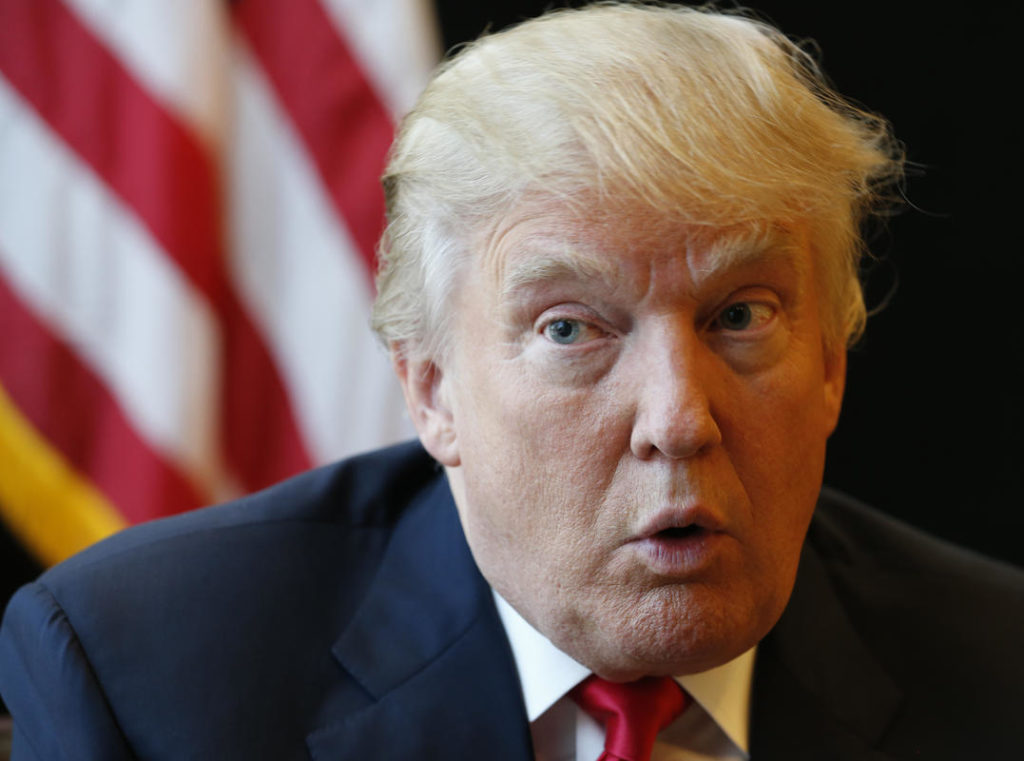
For the first time since declaring his presidential run, Republican Donald Trump offered an extended apology to those who may have been hurt by his caustic comments, saying that he regrets some of what he’s said “in the heat of debate.” “Sometimes in the heat of debate and speaking on a multitude of issues, you don’t choose the right words or you say the wrong thing. I have done that,” the GOP nominee reading from prepared text, said at a rally in Charlotte, N.C. “And believe it or not, I regret it, particularly where it may have caused personal pain.” He added: “Too much is at stake for us to be consumed with these issues.” As the crowd cheered, Trump pledged to “always tell you the truth.” The remarks came as Trump makes significant changes to a campaign that has struggled since the Democratic and Republican nominating conventions from self-created distractions. Earlier Thursday, Trump moved to invest nearly $5 million in battleground state advertising to address daunting challenges in the states that will make or break his White House ambitions. He also shook up his campaign in recent days, tapping a combative conservative media executive, Stephen Bannon, to serve as CEO of the campaign. The New York businessman’s campaign reserved television ad space over the coming 10 days in Florida, North Carolina, Ohio and Pennsylvania, according to Kantar Media’s political ad tracker. While Democrat Hillary Clinton has spent more than $75 million on advertising in 10 states since locking up her party’s nomination, Trump’s new investment marks his first of the general election season. Election Day is 81 days away, with early voting in the first states set to begin in five weeks. The step into swing-state advertising, which came after Trump’s second staffing shake-up in as many months, did little to alleviate the concerns of Republican officials frustrated with Trump’s refusal to adopt the tools of modern-day political campaigns. “We may have reached the point of no return for Donald Trump,” said Republican strategist Alex Conant, a senior aide to Florida Sen. Marco Rubio‘s presidential campaign. In addition to Bannon, Republican pollster Kellyanne Conway filled the campaign manager position left vacant since Trump fired his former campaign chief almost two months ago. But Trump struck a new, inclusive tone on Thursday, as he worked to improve his dismal poll numbers among non-white voters. “I will not rest until children of every color in this country are fully included in the American Dream,” he said. Conway insisted Thursday that the new team would help re-focus the nominee, without sacrificing the authenticity that fueled his successful primary campaign. “We’re going to sharpen the message,” Conway told CNN. “We’re going to make sure Donald Trump is comfortable about being in his own skin — that he doesn’t lose that authenticity that you simply can’t buy and a pollster can’t give you. Voters know if you’re comfortable in your own skin.” Rarely do presidential campaigns wait to advertise, or undergo such leadership tumult, at such a late stage of the general election. Yet Trump has struggled badly in recent weeks to offer voters a consistent message, overshadowing formal policy speeches with a steady stream of self-created controversies, including a public feud with an American Muslim family whose son was killed while serving in the U.S. military in Iraq. He now trails Clinton in preference polls of most key battleground states. And his party leaders, even at the Republican National Committee, have already conceded they may divert resources away from the presidential contest in favor of vulnerable Senate and House candidates if things don’t improve. Trump’s advertising plans highlight his shrinking path to the presidency. Although Trump claims his popularity with white, working-class voters could translate to victories in states such as Wisconsin, Michigan, Maine or Connecticut, there’s little evidence to back that up. His first major ad buys shows him focused on more conventional battlegrounds. Trump is spending at least $1.4 million in Florida, $1 million in Pennsylvania, about $831,000 in North Carolina and $746,000 in Ohio, according to Kantar Media. His biggest single-market investment comes in the Philadelphia area. “That is the most direct route to 270,” said Chris Young, RNC field director. “Those states are critical on that pathway.” Trump has struggled so far with women, minorities and young voters. “His performance with those voters is so dismal that it puts other states potentially in play in an offensive way for Democrats,” said Jeremy Bird, who ran field operations for President Barack Obama‘s 2012 campaign and is now advising Clinton’s operation. Republished with permission of the Associated Press.
Hillary Clinton warns Donald Trump would plunge economy into recession
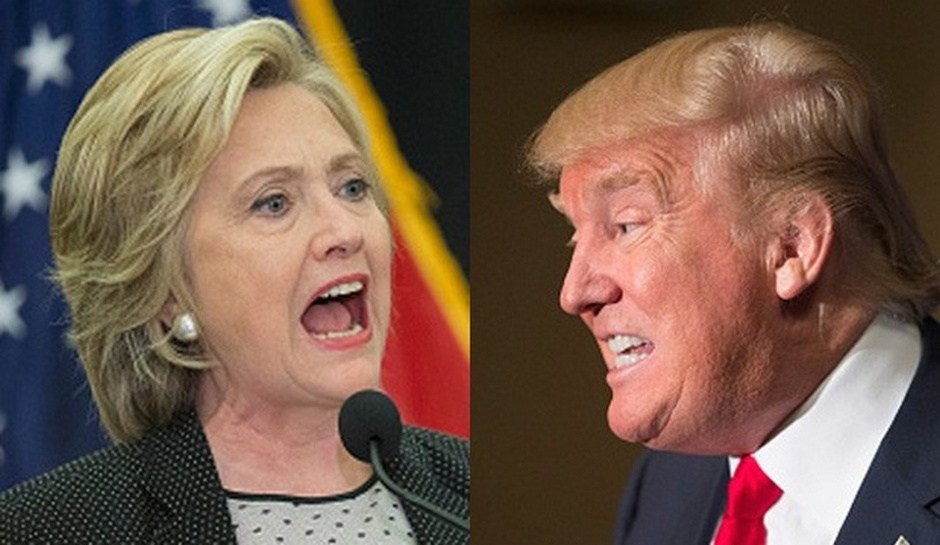
Hillary Clinton said Tuesday that Donald Trump would send the U.S. economy back into recession, warning his “reckless” approach would hurt workers still trying to recover from the 2008 economic turbulence. Clinton’s address in Ohio, one of the most important battleground states, sought to define Trump as little more than a con man, whose ignorance and ego would tank the global economy, bankrupt Americans and risk the country’s future. “Every day we see how reckless and careless Trump is. He’s proud of it,” the Democratic presidential candidate said. “Well, that’s his choice. Except when he’s asking to be our president. Then it’s our choice.” The speech was similar to one earlier this month in San Diego in which Clinton tried to undercut the Republican candidate’s foreign policy credentials. This time, at an alternative high school in Columbus, she questioned whether Trump has the temperament to guide the economy and repeatedly pointed to his business record as evidence of how he would treat small businesses and working families. “Just like he shouldn’t have his finger on the button, he shouldn’t have his hands on our economy,” Clinton said. Her speech included stinging one-liners, including a takedown of Trump’s best-selling books. “He’s written a lot of books about business. But they all seem to end at Chapter 11,” she said, in an allusion to the U.S. bankruptcy code. Trump responded on Twitter as Clinton delivered her address, writing in one tweet: “How can Hillary run the economy when she can’t even send emails without putting entire nation at risk?” He appeared to be referring to Clinton blending her personal and official emails on a homebrew server in her house, while she was secretary of state. The businessman later appeared to embrace one of Clinton’s attack lines, writing: ‘I am “the king of debt.’ That has been great for me as a businessman, but is bad for the country. I made a fortune off of debt, will fix U.S.” Republican National Committee chairman Reince Priebus said Clinton was “the last person qualified” to talk about improving the economy, pointing to “eight years of disastrous Obama policies.” Clinton used Trump’s own statements to undercut his economic credentials, citing remarks he made that that U.S. could sell off assets, default on its debt and that wages are too high. She also repeated a comment he made that pregnant employees are an “inconvenience.” Clinton said financial markets often “rise and fall” on comments by presidential candidates. Suggesting the United States could default on its debt could cause a “global panic,” she added. She also seized on a report Monday by Moody’s Analytics which found Trump’s plans would lead to a “lengthy recession,” costing nearly 3.5 million American jobs. The analysis by Moody’s Mark Zandi, a Clinton donor and former economic adviser to Republican Sen. John McCain‘s 2008 campaign, predicted Trump’s approach would swell the federal debt as the U.S. economy becomes more isolated by less trade and cross-border immigration. Trump has pointed to trade as a major difference with Clinton, saying last week that her support of past trade deals, such as the North American Free Trade Agreement, has cost the country “millions of jobs.” He also has assailed her promotion of the Trans-Pacific Partnership trade deal as Obama’s secretary of state as a sell-out of U.S. workers. Clinton announced her opposition to the TPP last October, saying it failed to meet her test of providing good jobs, raising wages and protecting national security. Brushing it aside, Clinton said there was a difference between “getting tough on trade” and “recklessly starting trade wars.” She noted that many of Trump’s products are made in countries like China, Mexico, Turkey, India and Slovenia. Bolstered by more than $40 million in television advertising, Clinton and her Democratic allies are trying to use this period before next month’s Democratic National Convention to disqualify Trump among moderate voters on the economy and prevent him from successfully wooing working-class voters in battleground states like Ohio, Wisconsin and Michigan. Fundraising reports filed Monday showed Clinton with a big advantage, starting the month with $42 million in the bank compared with Trump’s $1.3 million. Clinton was expected to talk about “ambitious new goals” for the economy Wednesday in Raleigh, North Carolina. Republished with permission of The Associated Press.
Donald Trump far behind in preparing for general election
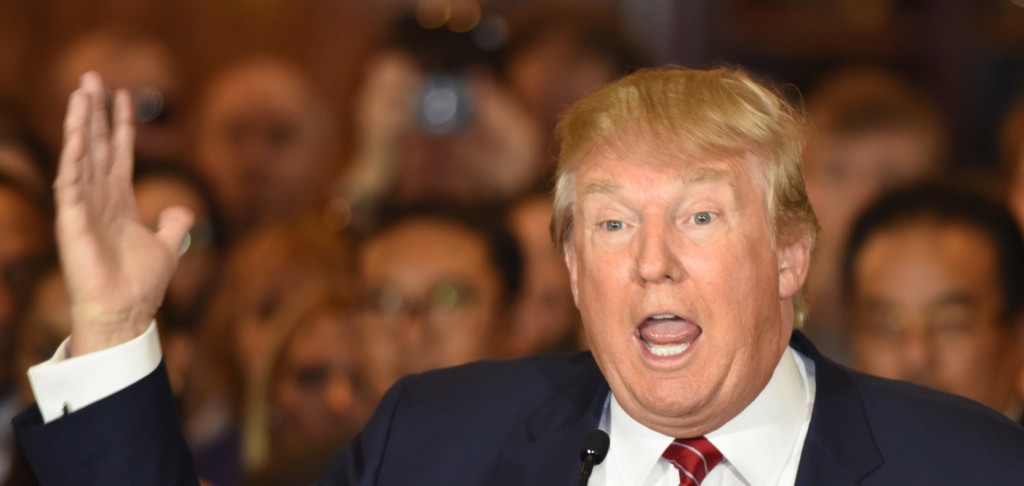
The Republican presidential nomination may be in his sights, yet Donald Trump has so far ignored vital preparations needed for a quick and effective transition to the general election. The New York businessman has collected little information about tens of millions of voters he needs to turn out in the fall. He’s sent few people to battleground states compared with likely Democratic rival Hillary Clinton, accumulated little if any research on her, and taken no steps to build a network capable of raising the roughly $1 billion needed to run a modern-day general election campaign. “He may be able to get by on bluster and personality during the primaries, but the general election is a whole different ballgame,” said Ryan Williams, a veteran of Mitt Romney‘s presidential campaigns. “They’re essentially starting from zero heading into the general election.” Trump’s early campaign efforts – fueled in the primary season by the sheer force of his personality and free media coverage – have defied all who predicted they would fall short of what’s required to win the nomination. Yet the billionaire’s aides acknowledged they’ll tap into the resources of the party’s establishment – the Republican National Committee, above all – as the scale and scope of the 2016 contest grow exponentially. That’s even as he rails daily against his party’s establishment as corrupt, and they predict his unique success so far will pay off again in November. “Our ability to run a different type of campaign against Hillary Clinton in a general election is unique to the success that Mr. Trump has shown in the primaries,” said Corey Lewandowski, Trump’s campaign manager. Trump’s late start marks a sharp break from past Republican campaigns and that of Clinton, who is already beginning to shift resources to the November election. The Republican front-runner’s organizational disadvantage marks another warning sign for GOP officials who already feared he was unelectable this fall – even if he were well-prepared. Trump has taken steps in recent week to add experienced political staff to expand his bare-bones organization. Yet the team has been consumed by playing catch up with Republican rival Ted Cruz, devoting almost no energy or planning to the next phase. Trump hopes he can score a victory in the Indiana primary Tuesday that can effectively end Cruz’s bid. Lewandowski and other aides have also signaled a willingness to work closely with the Republican National Committee should Trump claim the nomination – “hand in glove,” in Lewandowski’s words. Ed Brookover is working from a recently opened Washington-area office that is tasked with developing Trump’s detailed policy prescriptions and working with allies on Capitol Hill. “From all reports – we’ve not gone in and kicked the tires yet – the RNC’s got a larger ground game already in place than ever before,” Brookover said. “And they’ve been investing an incredible amount of money on data.” He said that’s “going to be incredibly helpful.” Indeed, the Republican National Committee has been expanding its national footprint and accumulating detailed information about millions of general election voters since soon after the GOP’s disastrous 2012 election. With only a few employees on the ground at this time four years ago, the RNC now has more than 200 in general election battlegrounds such as Florida, Ohio, North Carolina, Virginia and Colorado. “We are so far ahead of where we were,” said RNC chief strategist Sean Spicer. “Whether it’s Trump or someone else, that’s going to be a huge advantage.” On the Democratic side, Clinton has already begun to send waves of campaign staffers to battleground states. Adviser are starting to consider locations for a splashy convention rally in Philadelphia and lawyers are scrutinizing more than two dozen possible vice presidential picks. The Democratic front-runner also has a well-established donor network and is planning lucrative fundraisers in New York, Michigan, California and Texas later this month. Trump has lashed out at other candidates for raising money from wealthy donors, but GOP leaders anticipate he will need to do the same thing in the coming months. Many Republicans are skeptical that Trump has the willingness or the capacity to cover the estimated $1 billion cost of the campaign ahead. Absent a massive personal investment, Trump and his party will be tasked with raising millions of dollars a day to match spending levels from the past election. The Romney campaign spent years developing an extensive fundraising network and collected general election cash long before his primary contest was decided. For now, though, the Trump campaign concedes it has done little to prepare for the fall fight. “Once we are the nominee, we will look at all the options,” Lewandowski said of fundraising. Trump still has staff on board in battlegrounds such as Ohio and Florida, though employees and volunteers have been consumed by the primaries. “We’re focused on winning Indiana and then going on and winning California and New Jersey and anything in between,” said Stephen Stepanek, Trump’s co-chairman in New Hampshire, which is a perennial swing state. “Then we will start talking about the general election.” Republished with permission of the Associated Press.
New Jeb Bush ad uses Rick Santorum’s stumble to take a shot at Marco Rubio

Jeb Bush is jumping on Rick Santorum’s inability to name an accomplishment of Marco Rubio, using the footage of in a new television advertisement. As first reported by CNN, the 60-second spot will start running in New Hampshire on Saturday. The advertisement features clips from an interview with Santorum on MSNBC’s Morning Joe on Thursday. During the interview, Santorum struggles to name something Rubio had done during his first term in the Senate. After showing about 30 seconds of Santorum fumbling through the interview, Sean Hannity is heard interviewing Bush and rattling off a list of his accomplishments during his time in the governor’s mansion. “I was a reform-minded conservative. I did cut taxes every year. I balanced budgets every year. When I left, there were $9 billion in reserves, we reduced the state government workforce by 13,000,” the former Florida governor is shown saying in the advertisement. “My record, I think, shows the path of what could happen in Washington, D.C.” NEW AD: My conservative record of accomplishments vs. @MarcoRubio’s record of doing nothing in the Senate.https://t.co/vKbtrVGlmF — Jeb Bush (@JebBush) February 5, 2016 The advertisement is the second as many days using the Morning Joe footage. On Thursday, Chris Christie released a 30-second spot based on the interview. Recent polls show Rubio gaining ground in the Granite State. A NBC News/Wall Street Journal/Marist poll has Rubio in second place in New Hampshire with 17 percent. The survey found Bush was at 9 percent and Christie was at 4 percent.
Jeb Bush calls for “complete overhaul” of system in education plan
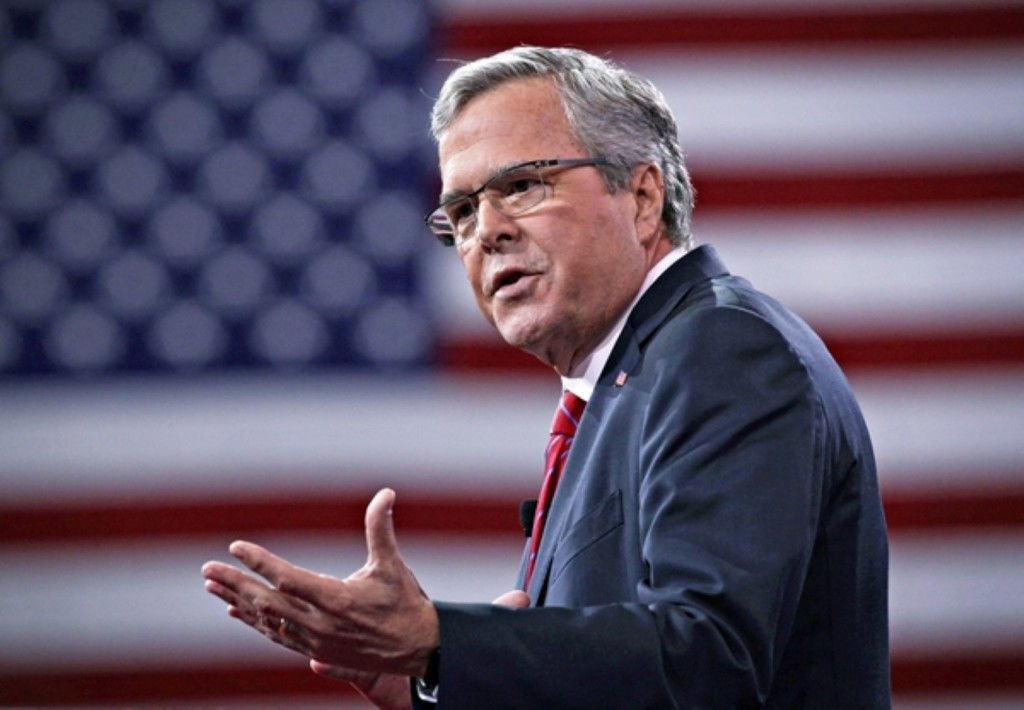
Jeb Bush is calling for a complete overhaul of the nation’s education system in a plan that focuses heavily on school choice. In a post on Medium, Bush unveiled a wide-sweeping education plan that increases support for charter schools and makes federal aid to low-income and special needs students portable. The proposal also gives high school graduates a $50,000 line of credit to help pay for college and would make the federal debt collection system more transparent. “Every individual in this country has the right to rise. Yet today, the American Dream — the idea that anything is possible through hard work — is threatened by an education system failing to prepare the next generation of children for success,” wrote Bush. “Too many low-income students start kindergarten already years behind their more affluent counterparts. Only one-third of students graduate high school prepared for college or a good career. And our higher education system has become too expensive for many Americans to afford.” Bush released his education proposal on Martin Luther King Jr. Day, and he invoked the civil rights leader in his post. Bush said he believes “that ensuring every individual has access to a quality education is the great civil rights challenge of our time.” NEW VIDEO: Ensuring every child has access to a quality education is the great civil rights challenge of our time. https://t.co/v7CrBH18yl — Jeb Bush (@JebBush) Jan. 18, 2016 The plan focuses on both K-12 and higher education, and Bush said his plan is “budget neutral and returns power to the states, local school districts and parents.” The proposal would allow 529 college savings accounts to be converted into an education savings account. Those accounts would then allow families to save tax-free for education, including pre-kindergarten, elementary school, college, and job training. Bush has been heavily involved in education since leaving office in 2008. He founded the Foundation for Excellence in Education, which has pushed for education reforms in Florida and across the country. The release of Bush’s education plan comes two weeks before the Iowa caucuses and three weeks before the New Hampshire primary.
Party insiders give Hillary Clinton early, commanding delegate edge

Hillary Rodham Clinton has locked up public support from half of the Democratic insiders who cast ballots at the party’s national convention, giving her a commanding advantage over her rivals for the party’s presidential nomination. Clinton’s margin over Vermont Sen. Bernie Sanders and former Maryland Gov. Martin O’Malley is striking. Not only is it big, but it comes more than two months before primary voters head to the polls — an early point in the race for so many of the people known as superdelegates to publicly back a candidate. “She has the experience necessary not only to lead this country, she has experience politically that I think will help her through a tough campaign,” said Unzell Kelley, a county commissioner from Alabama. “I think she’s learned from her previous campaign,” he said. “She’s learned what to do, what to say, what not to say — which just adds to her electability.” The Associated Press contacted all 712 superdelegates in the past two weeks, and heard back from more than 80 percent. They were asked which candidate they plan to support at the convention next summer. The results: Clinton: 359. Sanders: 8. O’Malley: 2. Uncommitted: 210. The 712 superdelegates make up about 30 percent of the 2,382 delegates needed to clinch the Democratic nomination. That means that more than two months before voting starts, Clinton already has 15 percent of the delegates she needs. That sizable lead reflects Clinton’s advantage among the Democratic Party establishment, an edge that has helped the 2016 front-runner build a massive campaign organization, hire top staff and win coveted local endorsements. Superdelegates are convention delegates who can support the candidate of their choice, regardless of who voters choose in the primaries and caucuses. They are members of Congress and other elected officials, party leaders and members of the Democratic National Committee. Clinton is leading most preference polls in the race for the Democratic nomination, most by a wide margin. Sanders has made some inroads in New Hampshire, which holds the first presidential primary, and continues to attract huge crowds with his populist message about income inequality. But Sanders has only recently started saying he’s a Democrat after a decades-long career in politics as an independent. While he’s met with and usually voted with Democrats in the Senate, he calls himself a democratic socialist. “We recognize Secretary Clinton has enormous support based on many years working with and on behalf of many party leaders in the Democratic Party,” said Tad Devine, a senior adviser to the Sanders campaign. “But Sen. Sanders will prove to be the strongest candidate, with his ability to coalesce and bring young people to the polls the way that Barack Obama did.” “The best way to win support from superdelegates is to win support from voters,” added Devine, a longtime expert on the Democrats’ nominating process. The Clinton campaign has been working for months to secure endorsements from superdelegates, part of a strategy to avoid repeating the mistakes that cost her the Democratic nomination eight years ago. In 2008, Clinton hinged her campaign on an early knockout blow on Super Tuesday, while Obama’s staff had devised a strategy to accumulate delegates well into the spring. This time around, Clinton has hired Obama’s top delegate strategist from 2008, a lawyer named Jeff Berman, an expert on the party’s arcane rules for nominating a candidate for president. Clinton’s increased focus on winning delegates has paid off, putting her way ahead of where she was at this time eight years ago. In December 2007, Clinton had public endorsements from 169 superdelegates, according to an AP survey. At the time, Obama had 63 and a handful of other candidates had commitments as well from the smaller fraction of superdelegates willing to commit to a candidate. “Our campaign is working hard to earn the support of every caucus goer, primary voter and grass roots and grasstop leaders,” said Clinton campaign spokesman Jesse Ferguson. “Since day one we have not taken this nomination for granted and that will not change.” Some superdelegates supporting Clinton said they don’t think Sanders is electable, especially because of his embrace of socialism. But few openly criticized Sanders and a handful endorsed him. “I’ve heard him talk about many subjects and I can’t say there is anything I disagree with,” said Chad Nodland, a DNC member from North Dakota who is backing Sanders. However, Nodland added, if Clinton is the party’s nominee, “I will knock on doors for her. There are just more issues I agree with Bernie.” Some superdelegates said they were unwilling to publicly commit to candidates before voters have a say, out of concern that they will be seen as undemocratic. A few said they have concerns about Clinton, who has been dogged about her use of a private email account and server while serving as secretary of state. “If it boils down to anything I’m not sure about the trust factor,” said Danica Oparnica, a DNC member from Arizona. “She has been known to tell some outright lies and I can’t tolerate that.” Still others said they were won over by Clinton’s 11 hours of testimony before a GOP-led committee investigating the attack on a U.S. consulate in Benghazi, Libya. Clinton’s testimony won widespread praise as House Republicans struggled to trip her up. “I don’t think that there’s any candidate right now, Democrat or Republican, that could actually face up to that and come out with people shaking their heads and saying, ‘That is one bright, intelligent person,’” said California Democratic Rep. Tony Cardenas. Republished with permission of The Associated Press.
Marco Rubio rallies GOP faithful in conservative stronghold Utah
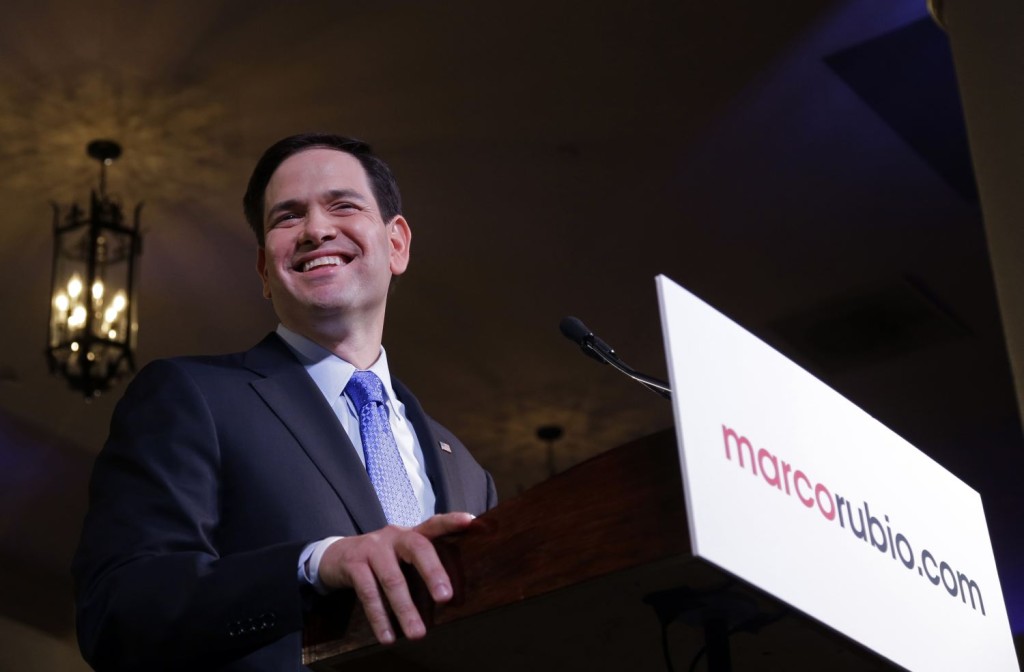
Republican presidential candidate Marco Rubio pitched himself as a fresh face in his party’s crowded primary contest during a Monday night campaign stop in Utah. The 44-year-old Rubio spoke about outdated government policies that haven’t kept up with disruptive technologies such as ride-hailing company Uber. He called the 2016 election “a generational choice” – a subtle jab at 62-year-old Jeb Bush, a fellow Florida Republican who is competing for similar voters. Rubio didn’t mention the former Florida governor or any of other 2016 contenders by name during his 30-minute speech. He drew his loudest applause in conservative Utah with calls to repeal President Barack Obama‘s 2010 health care law and to beef up military spending. About 300 people attended the indoor rally at fairgrounds in Salt Lake City, about a mile away from the headquarters of the Mormon church. The Florida senator was briefly a member of the faith during his childhood in Las Vegas, a fact that could reverberate with voters in Utah, where about 60 percent of the state’s residents are members of The Church of Jesus Christ of Latter-day Saints. Rubio, his sister and his mother were baptized in the LDS Church but returned to Catholicism by Rubio’s early teen years. His campaign said he has not asked the church to remove his name from a list of the faithful. He didn’t mention his Mormon ties during his Monday speech but noted he not been in Salt Lake City since he was 9 years old. He recounted that trip to visit famous Mormon sites in his memoir, “An American Son.” Stan Lockhart, the former head of the Utah Republican Party and a co-chair of Rubio’s Utah campaign, said Monday that he thinks Utah voters will be more interested in hearing what Rubio has to say about problems facing the country. “I think that’s secondary,” Lockhart said of Rubio’s childhood Mormonism. After Rubio’s Monday night rally, the Florida senator went to a fundraiser at a private home in the Salt Lake City area. Tickets for a round-table event started at $2,700, followed by $500-per-person reception. Republished with permission of The Associated Press.
