
Tom Jackson: With Donald Trump, GOP faces expensive overhaul
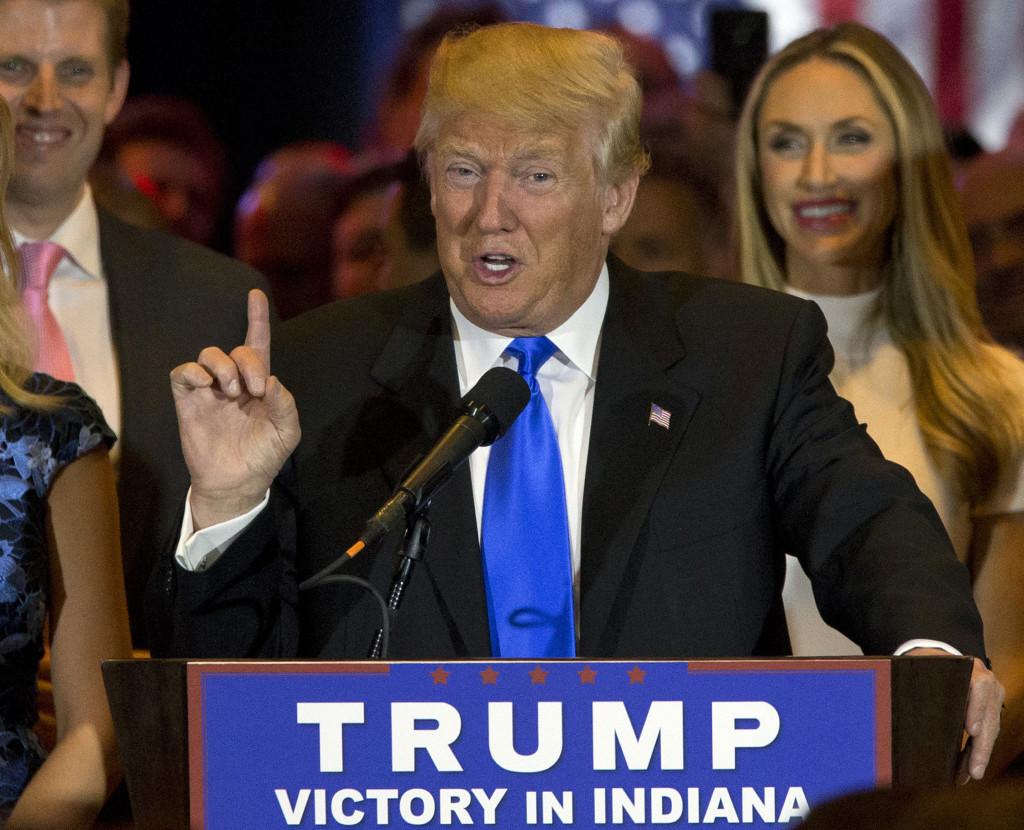
Surveying the conundrum confronting the Republican Party in the age of Donald Trump, an antique TV ad touting Fram oil filters comes to mind. If you bought the Beatles’ White Album the day it was released and remember Muhammad Ali in his prime, you know the spot: A mechanic in the midst of an overhaul pauses to point out the car’s owner could have avoided this wallet-crushing repair if only he’d been punctual about changing the oil. “You can pay me now,” said the mechanic, displaying the filter, “or” — with a nod to the mess over his shoulder — “you can pay me later.” In today’s either-or scenario, Trump is the looming, ugly, costly overhaul; the Republican National Convention might yet be the comparatively thrifty regular-maintenance alternative. Wait. The RNC? Wasn’t the outcome of that settled a month ago? Yes. Probably. Well, maybe. It depends. There was a flurry of activity on that front back in March, when North Dakotan Curly Haugland, a veteran member of the RNC’s standing rules committee, spun up a fascinating theory that no delegates were, in fact, bound to a candidate. Zero. No, not even on the first ballot, and certainly not, as Florida’s rules lay out, three. All of it had something to do with long-standing conflicts within the GOP’s convention rules. The headline on a story few read too deeply was at the time a shocker: “Voters don’t pick the nominee; we do: GOP official.” Trump and his loyalists decried the claim as an attempt to rig the nomination for some oily more-of-what-we-rejected insider. Gary Emineth, also from North Dakota, fretted about the perception of “shenanigans” driving undecided voters toward the Democratic nominee. All that chatter fell silent as Trump pulverized the last of his primary opposition, crested the threshold of the magic 1,237 pledged delegates to become the presumptive nominee, and began piling up oh-all-right-fine endorsements from high-ranking GOP officials. Who but the hardest-shelled #NeverTrump die-hards could blame them? They could risk the shenanigans charge — a potent indictment for a class that still can’t make sense of this unruly new breed of Republican voter — or embrace party loyalty swaddled in loathing of Hillary Clinton. Then, meet now. Since the top guns, including Speaker Paul Ryan, began tumbling into line, Trump has done nothing worthy of their support. Just last week, instead of blistering Clinton over ripe and low-hanging fruit — the withering report on her email practices by a State Department watchdog; an awful monthly jobs report linkable to White House policies she supports; a policy-free foreign policy rant — Trump was lost in an alternative universe of paranoia dipped in ego, topped with racism. Yep. Squandering opportunity in a fit of narcissistic pique, the presumptive presidential nominee of the party of Abraham Lincoln, Calvin Coolidge, Dwight Eisenhower and Ronald Reagan — presidents of high principle affixed to unwavering pole stars — whined about unfair treatment by a judge in a civil lawsuit, because the judge, born in Indiana, is Mexican and he — Trump — means to build a wall on the southern border. Listen. Even if, against scant supporting evidence, Trump is absolutely right, he sacrificed the privilege of waging his claims sometime around Super Tuesday, when voters elevated him from mad-as-hell novelty to viable contender, let alone now that he’s bundled more than sufficient delegates to avoid a contested convention. Or has he? Suddenly, Haugland’s gambit seems worth revisiting. South Carolina Sen. Lindsey Graham rescinded his commitment, charting a detour for other dismayed Republicans in his “off-ramp” speech. “I think it’s very un-American for a political leader to question whether a person can judge based on his heritage,” he said. And also, “If anybody was looking for an off-ramp, this is probably it. There’ll come a time when the love of country will trump hatred of Hillary.” Trump, naturally, offered a statesman’s retort: “Lindsey Graham is a disgrace.” Well. Takes one, etc. In fact, Graham is onto something. Rescinding endorsements is a good place to start. Responsible Republicans must put distance between themselves and Trump’s destructive rants. But it has to be more than a start, which introduces the pay-me-now part of the equation. Figuring out how to head Trump off in Cleveland seems, increasingly, like a necessary payout. Is Haugland right? Can RNC delegates vote their conscience — assuming they have one — from the get-go? The party, urged on by Arizona Sen. Jeff Flake, may have to figure that one out. Would there be fallout? You betcha. Lots of voters fueled by confused, anti-Federalist rage and keen to, well, shenanigans, might boycott Election Day. But the alternative — charging into November behind the drawn sword of an unstable, unhinged, uncurious, thin-skinned rouser of rabbles — would set back genuine, necessary, thoughtful conservative reforms for a generation. As for Republicans shouldering the pay-me-later alternative, the price of a post-Trump overhaul might be impossible to meet. ___ Recovering sports columnist and former Tampa Tribune columnist Tom Jackson argues on behalf of thoughtful conservative principles as our best path forward. Fan of the Beach Boys, pulled-pork barbecue and days misspent at golf, Tom lives in New Tampa with his wife, two children and two yappy middle-aged dogs.
Testy Donald Trump takes his war with the press to a new level
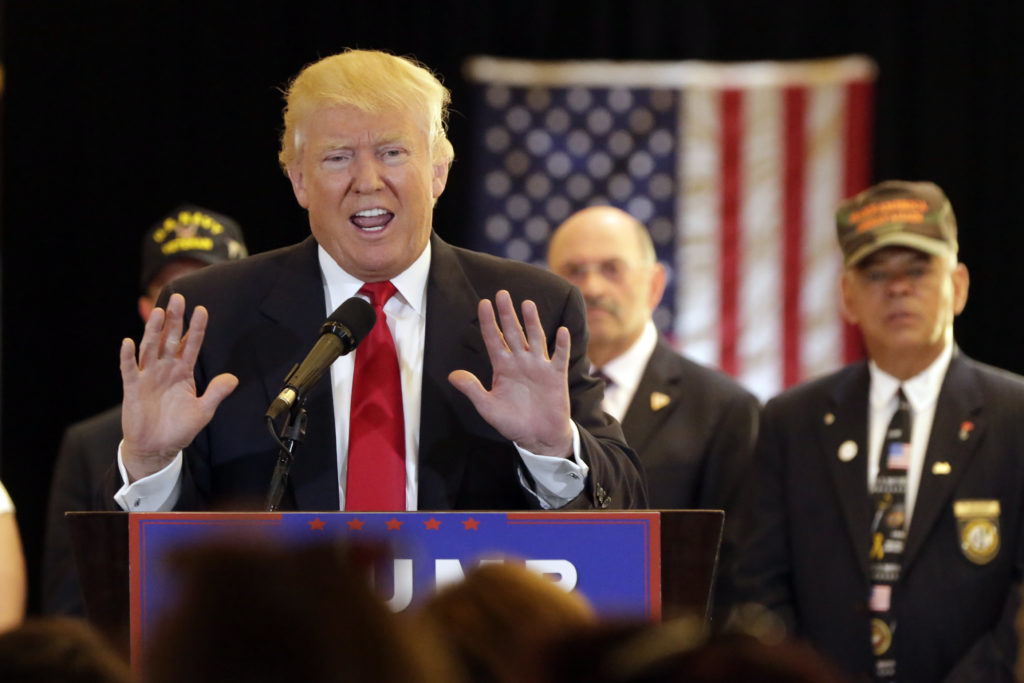
Donald Trump‘s heated war with the media reached new heights as he turned the brag-worthy feat of raising $5.6 million for veterans’ charities into a sparring match with reporters pressing him on the issue. “The press should be ashamed of themselves,” a defensive Trump railed during a Tuesday news conference at Trump Tower, called to announce a list of 41 charities that received a cut of the money he raised during a highly publicized January fundraiser. The presumptive Republican presidential nominee had previously declined to disclose which charities had received the $6 million he’d claimed to have raised, and his campaign had gone back and forth about how much pledged money had come through. The Washington Post had pressed for an accounting of the donations, and several charities said they received checks just last week. Throughout Tuesday’s 40-minute question-and-answer session, Trump accused the media of being “unbelievably dishonest” in their treatment of him. “I sent people checks of a lot of money. … And instead of being like, ‘Thank you very much, Mr. Trump,’ or ‘Trump did a good job,’ everyone’s saying: ‘Who got (the money)? Who got it? Who got it?’ And you make me look very bad,” he complained. “I have never received such bad publicity for doing such a good job.” While Trump has frequently made the media a punching bag, calling out reporters during his signature rallies, the taunts Tuesday were intense, even for him. The billionaire mogul interrupted his recitation of the list of groups receiving portions of the money to complain about the way reporters had called up charities to try to verify his contributions. He called the political press “disgusting” and dismissed one ABC News reporter as “a sleaze.” While Trump’s fundraiser, held opposite a Fox News debate he chose to boycott, should have been a positive story for Trump, his campaign’s refusal to disclose details about the money raised became a sticking point. Trump insisted Tuesday that “most of the money went out quite a while ago,” but that didn’t seem to be the case. The Associated Press spoke or left messages with each of the organizations Trump named. Of the 26 groups that responded by Tuesday, half said they had received checks from Trump just last week. Several said the checks were dated on or about May 24 and shipped out by overnight express — the same date as a Trump interview with The Washington Post, which for weeks had been pressing his campaign to disclose the recipients of the millions raised during the splashy telethon-style fundraiser in Iowa. Indeed, more than a dozen big checks were rushed out of New York early last week, bound for veterans’ charities around the country. The largest, a $1 million check dated May 24 and drawn from Trump’s personal account, was addressed to the Marine Corps-Law Enforcement Foundation, a small Tuckahoe, New York, group that provides scholarships to the children of fallen Marines. The foundation had presented Trump with an award at its 2015 gala held at a ritzy New York hotel. Trump’s campaign manager, Corey Lewandowski, had originally told The Post that the Iowa event had raised about $4.5 million — less than the $6 million originally announced by Trump — because some who’d pledged contributions had backed out. Appearing Tuesday on CNN, Democratic presidential front-runner Hillary Clinton said she was glad Trump had finally given out the promised money. “The problem here is the difference between what Donald Trump says and what Donald Trump does,” Clinton said. “He’s bragged for months about raising $6 million for vets and donating $1 million himself, but it took a reporter to shame him into actually making the contribution.” Trump repeatedly insisted during the news conference that he didn’t want “credit” for the contributions. However, he hadn’t appeared shy about giving away poster-size checks at campaign events in the weeks after the fundraiser. On Jan. 30, just before the Iowa caucuses, he gave a $100,000 check to the Puppy Jake Foundation, which provides service dogs to wounded veterans. Representatives from the foundation, accompanied by several service dogs, accepted the check at the Adler Theater in Davenport, Iowa, where Trump was being interviewed on stage. The next day, in Council Bluffs, Trump presented another check, also for $100,000, to Partners for Patriots, which also provides service dogs to disabled veterans. The public check presentations trickled off within days, though some of the groups contacted by the AP did report receiving checks in February, March and April. Trump spokeswoman Hope Hicks denied Tuesday that timing had anything to do with questions from the media. “Mr. Trump’s team worked very hard to complete this lengthy process prior to Memorial Day Weekend,” she said. The campaign also said it had taken months to carefully vet each of the groups receiving money. Trump, who has refused calls to moderate his tone and temperament, also said he has no plans to change his tone with the press if he’s elected to the White House. “Yeah, it is going to be like this,” he said of potential future news conferences led by a President Trump. Republished with permission of The Associated Press.
Donald Trump reaches the magic number to clinch nomination
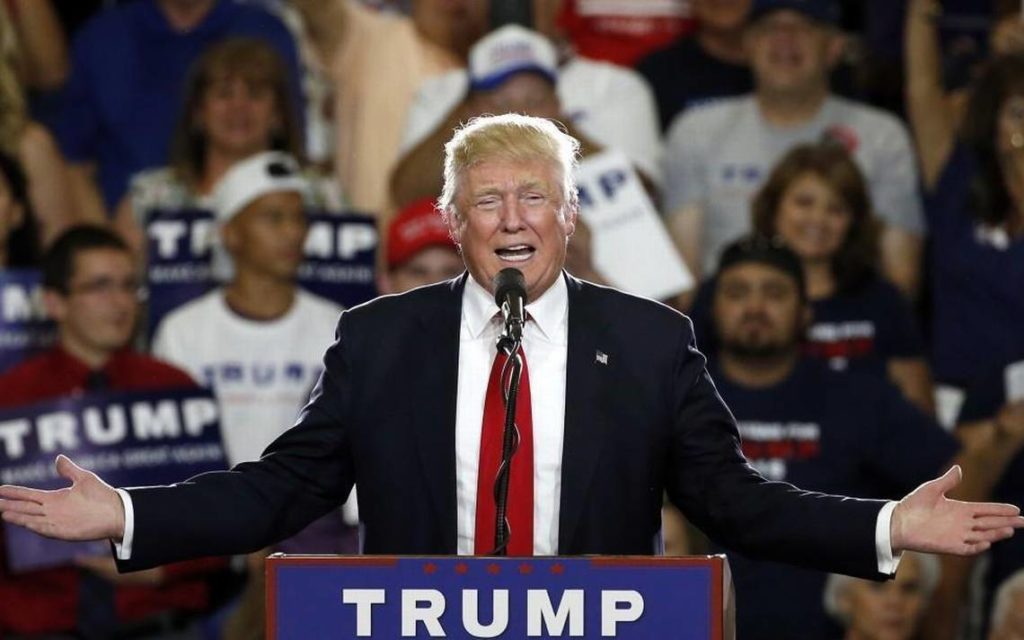
Donald Trump reached the number of delegates needed to clinch the Republican nomination for president Thursday, completing an unlikely rise that has upended the political landscape and set the stage for a bitter fall campaign. Trump was put over the top in The Associated Press delegate count by a small number of the party’s unbound delegates who told the AP they would support him at the national convention in July. Among them is Oklahoma GOP chairwoman Pam Pollard. “I think he has touched a part of our electorate that doesn’t like where our country is,” Pollard said. “I have no problem supporting Mr. Trump.” It takes 1,237 delegates to win the Republican nomination. Trump has reached 1,238. With 303 delegates at stake in five state primaries on June 7, Trump will easily pad his total, avoiding a contested convention in Cleveland. Trump, a political neophyte who for years delivered caustic commentary on the state of the nation from the sidelines but had never run for office, fought off 16 other Republican contenders in an often ugly primary race. Many on the right have been slow to warm to Trump, wary of his conservative bona fides. Others worry about his crass personality and the lewd comments he’s made about women. But millions of grass-roots activists, many of them outsiders to the political process, have embraced Trump as a plain-speaking populist who is not afraid to offend. Steve House, chairman of the Colorado Republican Party and an unbound delegate who confirmed his support of Trump to the AP, said he likes the billionaire’s background as a businessman. “Leadership is leadership,” House said. “If he can surround himself with the political talent, I think he will be fine.” Trump’s pivotal moment comes amid a new sign of internal problems. Hours before clinching the nomination, he announced the abrupt departure of political director Rick Wiley, who was in the midst of leading the campaign’s push to hire staff in key battleground states. In a statement, Trump’s campaign said Wiley had been hired only on a short-term basis until the candidate’s organization “was running full steam.” His hiring about six weeks ago was seen as a sign that party veterans were embracing Trump’s campaign. A person familiar with Wiley’s ouster said the operative clashed with others in Trump’s operation and didn’t want to put longtime Trump allies in key jobs. The person insisted on anonymity because the person was not authorized to publicly discuss the internal campaign dynamics. Some delegates who confirmed their decisions to back Trump were tepid at best, saying they are supporting him out of a sense of obligation because he won their state’s primary. Cameron Linton of Pittsburgh said he will back Trump on the first ballot since he won the presidential primary vote in Linton’s congressional district. “If there’s a second ballot I won’t vote for Donald Trump,” Linton said. “He’s ridiculous. There’s no other way to say it.” Trump’s path to the Republican presidential nomination began with an escalator ride. Trump and his wife, Melania, descended an escalator into the basement lobby of the Trump Tower on June 16, 2015, for an announcement many observers had said would never come: The celebrity real estate developer had flirted with running for office in the past. His speech then set the tone for the candidate’s ability to dominate the headlines with provocative statements, insults and hyperbole. He called Mexicans “rapists,” promised to build a wall between the U.S. and Mexico and proposed banning most Muslims from the U.S. for an indeterminate time. He criticized women for their looks. And he unleashed an uncanny marketing ability in which he deduced his critics’ weak points and distilled them to nicknames that stuck. “Little Marco” Rubio, “Weak” Jeb Bush and “Lyin’ Ted” Cruz, among others, all were forced into reacting to Trump. They fell one-by-one — leaving Trump the sole survivor of a riotous Republican primary. His rallies became magnets for free publicity. Onstage, he dispensed populism that drew thousands of supporters, many wearing his trademark “Make America Great Again” hats and chanting, “Build the wall!” The events drew protests too— with demonstrators sometimes forcibly ejected from the proceedings. One rally in Chicago was canceled after thousands of demonstrators surrounded the venue and the Secret Service could no longer vouch for the candidate’s safety. When voting started, Trump was not so fast out of the gate. He lost the Iowa caucuses in February, falling behind Cruz and barely edging Rubio for second. He recovered in New Hampshire. From there he and Cruz fiercely engaged, with Trump winning some and losing some but one way or another dominating the rest of the primary season — in votes or at least in attention — and ultimately in delegates. Republican leaders declared themselves appalled by Trump’s rise. Conservatives called the onetime Democrat a fraud. But many slowly, warily, began meeting with Trump and his staff. And he began winning endorsements from a few members of Congress. As with other aspects of his campaign, Trump upended the traditional role of money in the race. He incurred relatively low campaign costs — just $57 million through the end of April. He covered most of it with at least $43 million of his own money loaned to the campaign. He spent less than $21 million on paid television and radio commercials. That’s about one-quarter of what Jeb Bush and his allies spent on TV. Trump entered a new phase of his campaign Tuesday night by holding his first major campaign fundraiser: a $25,000-per-ticket dinner in Los Angeles. Trump, 69, the son of a New York City real estate magnate, had risen to fame in the 1980s and 1990s, overseeing major real estate deals, watching his financial fortunes rise, then fall, hosting “The Apprentice” TV show and authoring more than a dozen books. Republished with permission of The Associated Press.
Darryl Paulson: It’s now or never for #NeverTrump
The opposition to Donald Trump has been constant from the start of the 2016 presidential campaign. However, it has been unfocused and essentially leaderless. Many Trump opponents believed he would not enter the race. When he entered, they believed he had no chance of winning. Now that Trump has won the nomination, they believe he can be stopped by an independent or third party campaign. As early as December 2015, before the first caucus or primary, Mike Fernandez, a Coral Gables, Florida health care executive and financial backer of Jeb Bush, took out full-page ads in the Miami Herald and other newspapers stating that he would support Hillary Clinton over Donald Trump. Fernandez described Trump as a narcissistic ”Bullyionaire” with a hunger to be adored. Fernandez was critical of fellow Republicans “blinded by the demagoguery” of Trump. In January 2016, National Review devoted an issue to conservative writers who made the case that Trump was not a conservative, and his nomination would do long-term damage to conservatism and the Republican Party. The issue contributed to the formation of the #NeverTrump movement, but it failed to stop Trump from winning the GOP nomination. With Trump having secured the nomination, many Republicans now look at the race as a binary choice: Donald Trump or Hillary Clinton. Most Republicans, unlike Mike Fernandez, see Trump as the preferred option. Foster Friess, a Wyoming financier and supporter of Republican candidates and causes, said Trump was not his first choice, but “he’s better than Hillary.” During the presidential primaries, even Jeb Bush stated that “Anybody is better than Hilary.” Some of Trump’s strongest critics have now jumped aboard the bandwagon. Texas Governor Rick Perry, who called Trump a “cancer” on the GOP who would lead the party to “Perdition,” has now offered to help Trump win the election. Oh, by the way, he would also be interested in being Trump’s Vice President. Many Republicans believe it is now a question of party loyalty. As Republican strategist Ford O’Connell observes, “political parties are not meant to be ideological vessels, but competing enterprises whose job is to win elections.” Rick Wilson, one of the most vehement anti-Trumpers, described the party loyalty argument as nothing more than “the DC establishment rolling over and becoming the Vichy Republicans we all know they would.” The last hope of the #NeverTrump movement is recruiting an independent or third-party candidate to provide an alternative to Trump and Clinton. RNC Chair Reince Priebus calls such efforts a “suicide mission.” Supporters argue that an independent candidate would not only give discontented voters a choice, but they believe such a candidate could win. At the very least, such a candidate could siphon off enough electoral votes to throw the election into the House, where the Republican majority could select someone other than Trump or Clinton. Supporters of an independent option argue that recent polls show 58 percent of voters are not happy with their choices, and 55 percent say they support an independent candidate. Historically, the idea of an independent candidate is more appealing than the reality. Teddy Roosevelt and his Bull Moose Party is widely regarded the most effective third-party movement. Roosevelt actually came in second and swamped incumbent Republican President William Howard Taft. Roosevelt received 27.4 percent of the vote and 88 electoral votes to only 23.2 percent and 8 electoral votes for Taft. In 1948, Governor Strom Thurmond of South Carolina won only 2.4 percent of the national vote but, because it was concentrated in a few Deep South states where Truman’s name did not appear on the ballot, Thurmond captured the electoral votes of four states. Twenty years later, Governor George Wallace replicated much of Thurmond’s success in winning 13.5 percent of the vote and 46 electoral votes in five southern states. In 1992, Texas businessman Ross Perot and his Reform Party won almost one out of five votes, but failed to capture a single state. At one point, Perot led both George H. W. Bush and Bill Clinton but, as Election Day approached, many of his supporters returned to support their traditional party. To run as an independent or third-party candidate, there is one important requirement: you need a candidate. So far, the #NeverTrump movement has not found a willing person to oppose Trump. Among the possible candidates are Mitt Romney, the 2012 Republican presidential nominee. Romney has name recognition and money, and would likely qualify for the debates. Romney was opposed by many conservatives in his 2012 race which would once again be a problem. In addition, Romney’s enthusiastic acceptance of Trump’s endorsement in that campaign would be another concern. Marine Corps General James Mattis seriously considered running before backing out. Mattis would have commanded support as a military figure and a political outsider. But, Mattis is not an Eisenhower and is an unknown commodity. Marco Rubio‘s name is being tossed about as a possible candidate. Rubio is young, charismatic and has appealed to woman and minority voters. The downside is that Rubio won only in Puerto Rico, Minnesota and the District of Columbia, and badly lost his home state of Florida to Trump. In addition, Rubio signed the pledge to support the Republican nominee “and I intend to keep it.” Ben Sasse, a first-term Republican Senator from Nebraska, has been a leader in the #NeverTrump movement. Sasse is only in his second year as a senator, which will raise questions about his experience. He also is unknown outside of Nebraska. Finally, former House member and Senator Tom Colburn has expressed interest in running and is highly respected by conservatives for his attempts to cut federal spending. Colburn has stated that Trump “needs to be stopped,” but recently said he would not be the candidate. One of the maxims of politics is that it takes something to beat nothing. So far, nothing looks like he has the race all wrapped up. ___ Darryl Paulson is Professor Emeritus of Government at USF St. Petersburg.
Joe Henderson: Can America bridge the Great Divide?

Pundits and political pros have been talking about the Great Divide Among Americans, and we all know it is there. It always has been. People in a country this large and diverse are going to have different ways of looking at things, but we usually come together at some point and work out the problems. At least, that’s how it used to be. I’m starting to wonder, though, if those days are gone for good. For Exhibit A, I bring you The Washington Post/ABC News poll released Sunday. The Post wrote, “Never in the history of the Post-ABC poll have the two major party nominees been viewed as harshly as (Hillary) Clinton and (Donald) Trump.” That’s some plain talk, but let’s make it even more blunt. Boiled down to its essence, this poll indicates about half of the registered voters in America will literally hate whoever wins the election to lead this country. When Clinton supporters were asked why they would vote for her, 48 percent said it’s because they oppose Trump. It was the same story with Trump, where 53 percent of respondents said they’ll go for him because they can’t stomach Clinton. And 86 percent of those people said they could never vote for Clinton. Also, there’s this nugget: 48 percent of Trump’s supporters said he doesn’t represent the GOP’s core values, but they’ll vote for him anyway because they hate Hillary that much. Maybe we should have seen this coming, because there is no compromise on some of the sharpest issues that divide us. There is never going to be middle ground on a hot-button issue like abortion, but now you stir divisive topics like LGBT rights, immigration, climate change, gun control, police behavior and, yes, even the national debt into the stew. With so many information outlets available masquerading as “news services,” people aligned with one side or the other can find a source that reinforces their beliefs. And discourse being what it is – Trump has raised shouting and debasement to an art form – voila! Hatred becomes a platform. Bringing the nation together is a noble sentiment, and either Trump or Clinton will vow to do that come November. The numbers say that will be just another campaign promise neither can keep.
Stunned Donald Trump foes face diminished options at GOP convention

Still shaken by Donald Trump‘s triumph, Republican and conservative foes of the billionaire can still cause headaches for the party’s presumptive presidential nominee at this summer’s GOP convention. But their options are shrinking by the day. With Trump’s last two rivals — Texas Sen. Ted Cruz and Ohio Gov. John Kasich — abandoning their campaigns, there’s no remaining talk of snatching the nomination away from him with a contested, multi-ballot battle when Republican delegates gather in Cleveland. Instead, anti-Trump forces are trying to figure out how to use this July’s GOP meetings to keep him from reshaping the party and its guiding principles, perhaps with fights over the platform or even his vice presidential pick. Many expect Trump to build momentum as the convention nears, narrowing his opponents’ options. Even so, here’s what may be in store: ___ IT’S OVER? WHAT NOW? Trump’s foes concede he’s likely to arrive in Cleveland exceeding the 1,237 delegates needed to become the nominee. Yet many are still reeling from the contest’s unexpected finale last week and are just starting to think about what they could do at the convention that would be productive. “There’s going to be a lot of thinking, a lot of praying and a lot talking between all of us,” said Kay Godwin, a Cruz delegate from Blackshear, Georgia. “I wish I could give you an answer right now but I think if I did, it would be out of emotion.” “There are probably some who hope Trump will stick his foot in his mouth or some scandal will come out and that they’ll be able to rally everybody at that point, but at this point there’s really nothing they can do” to block his nomination, said Jason Osborne, a GOP consultant. ___ CONTAINING THE DAMAGE Many Trump opponents see the Republican platform, the party’s statement of ideals and policy goals, as a place for a stand in Cleveland. The convention’s 2,472 delegates must approve the platform before formally anointing the presidential nominee. All — including those chosen to support Trump — can vote however they want on the platform. Many conservatives say they will use that vote to keep Trump from reshaping GOP dogma against abortion, for free trade and on other issues. While it seems likely Trump would prevail, a showdown could be an embarrassment he’d seek to avoid by not pushing divisive changes. “If the party walks away from any of its clearly cut social, family values issues, it will be an issue,” said Tony Perkins, president of the conservative Family Research Council and GOP delegate from Louisiana. “We’re not just going to fall in line because he’s the nominee.” Trump has said he would seek to include exceptions for rape and incest to the GOP platform’s opposition to abortion. He’s also flouted the party platform by repeatedly criticizing trade deals and calling NATO obsolete. “We’d want to make sure the platform is protected from Donald Trump,” said Rory Cooper, senior adviser for the Never Trump political committee. Trump aides did not return messages seeking comment on his views about the platform. ___ A RUNNING MATE Trump has said he’d like a vice presidential candidate with government experience. Yet, as with the platform, delegates can vote as they please in choosing Trump’s running mate. Some opponents suggest they may challenge his choice, either as a protest or to try forcing him to make a different selection. Recent GOP conventions have formally approved vice presidential candidates by acclamation and no roll call. But if delegates make enough of a fuss, a roll call with plenty of votes for a rival vice presidential candidate is possible. “He’ll probably pick somebody, and that person is not going to have the automatic ratification status that’s been traditional,” said Roger Stauter, a Cruz delegate from Madison, Wisconsin, who said he would never support Trump. Others said the convention would likely defer to Trump’s thinking about a strategically smart choice. “He could pick somebody we’d all get pretty excited about,” said Shane Goettle, a Cruz delegate from North Dakota. Conservative talk show host Erick Erickson, a Trump opponent, said he expected delegates to accede to Trump’s selection, saying that by July, “the phases of depression and anger” will subside as Republicans accept “their coming defeat.” ___ MUST-WATCH TV? Many expect Trump — star of his own TV reality shows “The Apprentice” and “Celebrity Apprentice” — to run a more watchable convention than usual. Beth Myers, GOP presidential candidate Mitt Romney‘s campaign manager in 2012, was not a Trump supporter during the primaries. But she said Trump knows TV and expects his convention to outshine the Democrats’ in stagecraft and draw millions more viewers than usual. “My guess is that the Republican convention will not be a chaotic, contested convention,” she said. “Rather, it will be a production of Trump, Inc., and it will be pretty good live television.” Some of that glitz may not be by choice. Many Republican bigwigs are expected to shun the convention and avoid giving primetime speeches on Trump’s behalf. Republished with permission of the Associated Press.
No mending in sight for fractured GOP

Donald Trump grudgingly agreed Friday to meet with House Speaker Paul Ryan to work out their differences in the midst of an extraordinary display of Republican vs. Republican strife. But he said he had “no idea” if they would patch things up and it didn’t really matter that much when compared to all the votes he’d won in this year’s primary elections. “The thing that matters most are the millions of people that have come out to vote for me and give me a landslide victory in almost every state,” Trump said moments after Ryan, the nation’s highest-ranking Republican officeholder, announced their planned meeting. Ryan said that the meeting would occur next Thursday and that Trump also would meet with other House GOP leaders. Discussions will center on “the kind of Republican principles and ideas that can win the support of the American people this November,” Ryan said. The unlikely back-and-forth came a day after Ryan injected new uncertainty into the turbulent presidential contest by refusing, for now, to endorse Trump. Aides said that, far from seeking to helm an anti-Trump movement, Ryan hopes to exert a positive influence for the general election campaign after a nominating contest that has alienated women, minorities and other voter groups. Yet Trump’s reaction Friday made it unclear what impact Ryan could have on the bombastic billionaire. “With millions of people coming into the party, obviously I’m saying the right thing,” Trump said on Fox News Channel. “I mean, he talks about unity, but what is this?” So next week’s meeting could prove the beginning of a healing process in the GOP or another outlandish episode in an election season full of them. “This is not entertainment. This is not a reality show,” President Barack Obama said Friday when asked about Trump’s ascension. Yet just days after Trump essentially clinched the GOP presidential nomination with a win in Indiana’s primary, Ryan’s surprise decision to withhold his support dashed any hopes that the party could turn immediately from the brutal infighting of the primaries toward the November election. Ryan wasn’t alone. Two unsuccessful White House candidates, former Florida Gov. Jeb Bush and Sen. Lindsey Graham of South Carolina, issued statements saying they couldn’t support Trump, with Graham saying he is not “a reliable Republican conservative.” Trump responded to Graham by mocking his poor showing in the presidential race and declaring: “Like the voters who rejected him, so will I!” As the reality of those divisions sank in Friday, some Republicans were not shy about expressing their displeasure with Ryan. The telegenic Wisconsin Republican served as his party’s vice presidential nominee in 2012, was drafted to the high-profile role of House speaker last fall and is seen as having designs on the 2020 presidential nomination himself. “Yesterday’s statement emboldens others to be equally publicly difficult. And that runs the risk of creating a Goldwater kind of moment where the party really does split,” former House Speaker Newt Gingrich told The Associated Press, referring to the 1964 Republican presidential nominee whose candidacy divided the GOP and was followed by a big Democratic victory. “I don’t necessarily know that that’s his role, to be a sticking point for the Republican nominee,” said Rep. Duncan Hunter of California, one of a growing number of Trump supporters in the House. Added Rep. Lou Barletta of Pennsylvania: “The voters of our party have spoken loud and clear, and it’s their voice that matters.” Trump has criticized Ryan in the past and renewed his attacks Friday by arguing that Ryan and presidential candidate Mitt Romney, “lost a race that should have been won” in 2012. Trump and Ryan also have disagreements on policy, from immigration to Social Security to trade. In his latest surprising breach of orthodoxy on Friday Trump questioned whether the U.S. government would make good on its commitment to fully honor Treasury notes, suggesting he might try to get a better deal. It all comes at a moment when Trump needs to be reaching out to the women, minorities and others who will be crucial for him to triumph in November over Hillary Clinton, the likely Democratic nominee. Trump made what he appeared to believe was an overture in that direction Thursday by tweeting a photo of himself eating a taco bowl in celebration of Cinco de Mayo and declaring his love for Hispanics. The gesture landed with a thud, and many Latino leaders reacted negatively, although Trump insisted Friday that “People loved it.” Underscoring the split in the party, Ryan’s defenders Friday came from the ranks of the establishment. “This is what leadership is,” said former Republican National Committee chief of staff Mike Shields, who now heads a super PAC dedicated to helping House Republicans. He added that Ryan’s move gives vulnerable Republicans badly needed cover as they contemplate Trump’s impact on their elections this fall. Ryan himself said in his initial comments on CNN that he hopes to be able to come around to supporting Trump. He’s just not there yet. “You have to unify all wings of the Republican Party in a conservative movement,” he said. “And we’ve got a ways to go from here to there.” Republished with permission of the Associated Press.
Democratic advertising blitz awaits Donald Trump
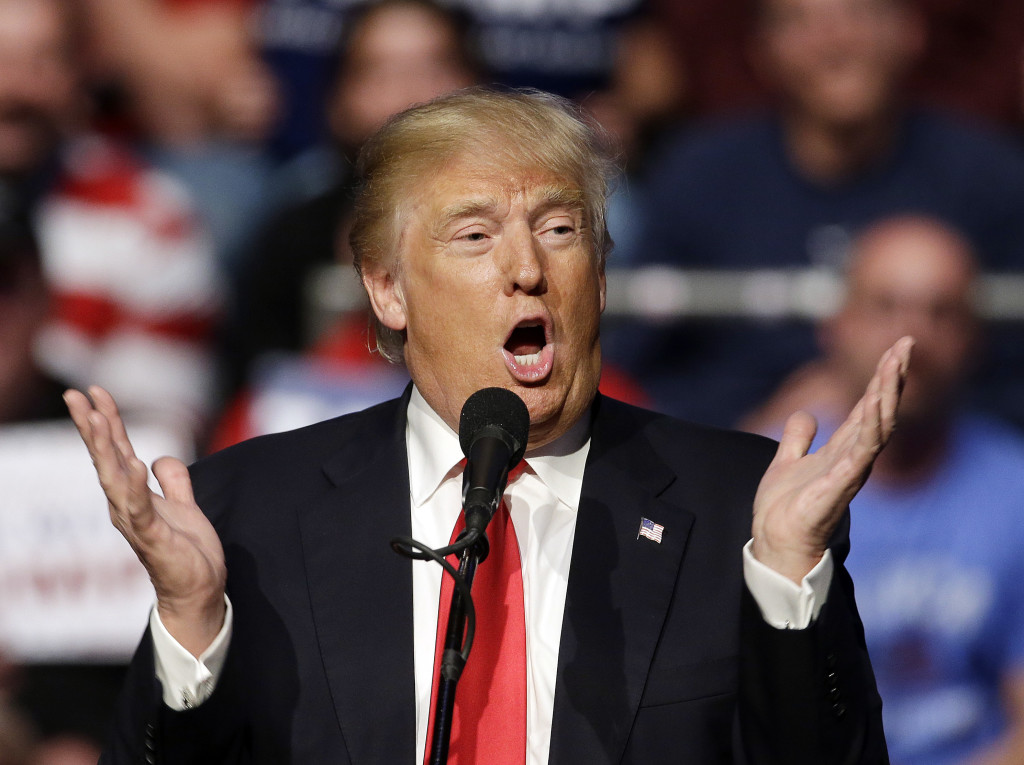
Long before Donald Trump swatted away his Republican presidential rivals, his likely Democratic opponent and her allies began laying traps for him. Priorities USA, the lead super PAC backing Hillary Clinton, has already reserved $91 million in television advertising that will start next month and continue through Election Day. In addition, Clinton’s campaign and Priorities USA have both debuted online videos that cast Trump in a negative light — a preview of what voters will see on TV over the next six months. So far, Priorities USA is the only group on either side that has rolled out such an ambitious advertising plan geared toward the general election. The group’s leaders say they’re trying to avoid what they see as the core mistake made by Trump’s Republican rivals — not pushing hard enough against him until it was too late. “There’s a reason that we have a head start,” said Justin Barasky, a Priorities USA spokesman, “and it’s that we’ve taken Donald Trump seriously all along, unlike the Republicans.” The group’s ad strategy will test what has been a hallmark of Trump’s GOP primary rise: his ability to withstand — even thrive in the face of — tens of millions of dollars in attack ads. An Associated Press review of Priorities USA’s TV buys, collected by Kantar Media’s Campaign Media Analysis Group, reveals a formidable 22-week advertising blitz through what the group considers key battleground states: Colorado, Florida, Iowa, Nevada, New Hampshire, Ohio and Virginia. In those states, Priorities USA will start ads in major metropolitan areas, then broaden its outreach to smaller cities as the November election approaches. The group will also start ads on satellite TV in September. According to the CMAG data, Priorities USA plans to spend about $4 million a week through most of June. The group then slows spending through July, taking off the weeks of the Republican and Democratic conventions, when widespread television coverage essentially provides free media time for the candidates. Priorities USA returns to the airwaves in August and begins unloading $60 million in ads between September and Election Day. The week of the election, Priorities USA plans to spend about $8 million in the seven battleground states. The heaviest concentration is in Florida, where the group has reserved $23 million in time, mostly in Orlando and in Tampa. The group also plans to spend about $19.5 million in the traditional presidential bellwether state of Ohio. More than half is for Cleveland, Akron and Columbus. There’s no substantive GOP counterweight to the pro-Clinton effort — partly because Trump has repeatedly trashed big donors and called the outside groups that can raise unlimited money from them “corrupt.” As the presumptive GOP nominee, Trump is now beginning his outreach to donors. But even if he fully embraces outside help, he’s far behind: One super PAC backing him, Great America, was almost $700,000 in debt at the end of March. Another group that was a major player in the 2012 race, American Crossroads, is still “evaluating what our specific role will be,” said spokesman Ian Prior. Television ads are only one part of Priorities USA’s strategy. It is putting at least $35 million into online advertising between June and Election Day, Barasky said. Those ads will largely aim to drive up turnout among core Democratic groups: African-Americans, Hispanics, women and younger voters, Barasky said. Trump is already getting a taste of what some these ads will say. On Thursday, Priorities USA overlaid audio of Trump talking about “unifying” the Republican Party with images of violence that has erupted inside and outside of his massive rallies. “I think we’re going to win in November,” Trump says at the end. “NOPE,” reads text on the screen. “Vote for Hillary Clinton.” That follows an online video the Clinton campaign put out Wednesday that features clips of prominent Republicans, including his former rivals, bashing Trump in every possible way. “He needs therapy,” says former Florida Gov. Jeb Bush at the end of the spot. Republished with permission of the Associated Press.
How Donald Trump broke the rules of modern politics, and won anyway
Donald Trump took the rules of modern politics, trashed them and became the last man standing for the Republican nomination anyway. 12 ways Trump did it his way: ___ SAY ANYTHING It’s what Trump’s supporters love about him: He blurts out whatever pops into his head. He rejects “political correctness.” He insults rivals and critics. He has fun. After one particularly salty salvo, Trump explained, “That’s what I mean about being politically correct, every once in a while you can have a little fun, don’t you think?” Plenty of candidates may think it, but Trump said it: “I’d like to punch him in the face,” he said of one protester. To listen to a Trump speech from start to finish is to enter an alternate grammatical universe. Sentences veer off in unexpected directions as Trump has a new thought. When he interjects his trademark “by the way,” there’s no telling where he’s headed next. ___ CHEAPSKATE The billionaire is proud to campaign on the cheap, milking free media in a way that other candidates could only envy. He functioned through most of the primaries with a bare-bones staff. He has no national finance chairman. He never set up a traditional fundraising operation. Sure, he has “donate” buttons on his website, and raises millions hawking hats and other gear. But forget the chicken dinner circuit. Or charging donors $1,000 for a grip-and-grin photo. Or asking supporters to “bundle” contributions from friends and neighbors. Early on, Trump tweeted: “So, I have spent almost nothing on my run for president and am in 1st place. Jeb Bush has spent $59 million & done. Run country my way!” ___ NO POLLING The poll-obsessed candidate doesn’t have a pollster. Other candidates spent hundreds of thousands of dollars on surveys to poll-test their words and messages, and track their standings in primary states. Trump goes with his gut and mines public polls for intel. He often tells crowds that he relies on his wife, Melania, to help him take the temperature of voters. “She’s my pollster,” he said, adding, “She’s really smart.” ___ CONSISTENCY Most candidates recoil from the dreaded “flip-flopper” label. Trump unabashedly changes his mind — not just week to week or day to day, but sometimes even within the same speech. He frames it as an asset. “I’ve never seen a successful person who wasn’t flexible,” Trump said at one GOP debate. “You have to be flexible, because you learn.” ___ POLICY GAPS Candidates love to trot out five-point plans and lofty position papers — some more detailed than others. Trump, not so much. His outline for replacing Obamacare is more aspirational than detailed. His recent “America First” foreign policy speech was a broad-brush endeavor. Trump makes a virtue of leaving enemies guessing about U.S. intentions. “We have to be unpredictable, starting now,” he says. ___ POTTY MOUTH Trump salts his speeches with vulgarities — although he’s dialed it back a bit after a scolding from Melania. Lots of politicians use profanities, of course, but typically not in public. Trump has publicly lip-synced the F-bomb, blurted out the S-word and hurled an offensive term at rival Ted Cruz. He fires a steady string of put-downs at other candidates whom he labels pathetic, liar, loser, nasty, evil and more. Oh, and not many candidates use the debate stage to refer to the size of their genitals. ___ DISSING SUPER PACS It’s become routine for candidates to rely on independent super PACs stocked with former aides and allies to play a strong supporting role for their campaigns, spending millions on political ads. Trump didn’t go that route in the primary, and was proud to proclaim he didn’t have a super PAC, although a few have sprung up to back him anyway. He said in his speech entering the race: “I don’t need anybody’s money. It’s nice. … I’m not using the lobbyists. I’m not using donors. I don’t care. I’m really rich.” Now that the general election race is under way, though, he’s warming to the idea. ___ GREED IS GOOD Remember how 2012 GOP nominee Mitt Romney was tarred by critics as a ruthless corporate fat cat? Trump has turned greed into a campaign asset. “My whole life I’ve been greedy, greedy, greedy,” he said at a rally in Iowa. “I grabbed all the money I can get. I’m so greedy. But now I want to be greedy for the United States. I want to grab all that money. I’m going to be greedy for the United States.” ___ INSULTS Women. Hispanics. Muslims. Trump kept winning even as he rolled out a stream of remarks that could be a turn-off to huge swaths of the electorate. It started with his campaign-announcement speech, when he said illegal immigration from Mexico is bringing rapists, drugs and crime to the U.S. Then came his pledge to bar foreign Muslims from entering the country. Throughout his campaign, he’s had harsh words for women and their appearances, mocking the looks of Carly Fiorina, retweeting an unflattering photo of Heidi Cruz and accusing Hillary Clinton of playing the “woman’s card.” Trump voters love that he “tells it like it is.” ___ POUTING, PICKING FIGHTS Trump isn’t afraid to pick a fight, even with a conservative powerhouse like Fox News Channel. He refused to participate in a Fox-sponsored debate in January after Fox refused to remove Megyn Kelly as a moderator. He was irked that Kelly had asked him in a previous debate about statements that he had made about women. Trump isn’t afraid to make up, though. He’s agreed to an interview with Kelly later this month. ___ PRESIDENTIAL? MAYBE LATER. Trump keeps promising he’ll act more “presidential’ when the time is right. But, for now, he’s having fun — and so are his supporters. “I can be presidential,” he said at rally last month. “But if I was presidential, only about 20 percent of you would be here because it would be boring as hell.” ___ THE HAIR
In Indiana, Ted Cruz faces make-or-break moment to stop Donald Trump
Facing a make-or-break moment for his slumping campaign, Texas Sen. Ted Cruz was blitzing through Indiana on Monday in a desperate bid to overtake Donald Trump in the state’s primary and keep his own White House hopes alive. A victory for Trump in Indiana on Tuesday would be a dispiriting blow for Cruz and other forces trying to stop the front-runner, leaving them with few opportunities to block his path. Trump is the only candidate in the race who can reach the 1,237 delegates needed for the GOP nomination through regular voting, though Cruz is trying to push the race toward a contested convention. “This whole long, wild ride of an election has all culminated with the entire country with its eyes fixed on the state of Indiana,” Cruz said Sunday at a late night rally. “The people of this great state, I believe the country is depending on you to pull us back from the brink.” Several hundred people came to see him Monday at Bravo Cafe in Osceola, where he predicted a close finish in the primary and said: “We need every single vote.” “You’re the perfect man for the job,” a man told him as diners consumed coffee and eggs. “God bless you,” Cruz said, gripping his hand. Cruz was holding five events across Indiana on Monday. Trump was holding a pair of rallies in the state, though he was already confidently looking past Cruz and setting his sights on Democratic front-runner Hillary Clinton. Trump made clear Monday that he would keep up his accusation that Clinton is playing gender politics: “We’re making a list of the many, many times where it’s all about her being a woman.” “I haven’t started on Hillary yet,” he told CNN, although actually he’s been trashing her record for quite some time. For her part, Clinton told thousands at an NAACP dinner in Detroit on Sunday that President Barack Obama‘s legacy can’t be allowed to “fall into Donald Trump’s hands” and be consumed by “these voices of hatred.” She cited Trump’s “insidious” part in the birther movement that questioned Obama’s citizenship. Clinton’s campaign announced Monday that she had raised $26 million in April. Vermont Sen. Bernie Sanders has vowed to stay in the Democratic race, though he acknowledged Sunday that he faces an “uphill climb.” His only path rests on a long-shot strategy of winning over superdelegates, the elected officials, lobbyists and other party insiders who are free to back either candidate. Trump can’t win enough delegates Tuesday to clinch the Republican nomination. But after his wins in five states last week, Trump no longer needs to win a majority of the remaining delegates in coming races to lock up the GOP nomination. The importance of Indiana for Cruz became evident even before he and fellow underdog John Kasich formed an alliance of sorts, with the Ohio governor agreeing to pull his advertising money from Indiana in exchange for Cruz doing the same in Oregon and New Mexico. But that strategy, which appeared to unravel even as it was announced, can’t help either man with the tens of thousands of Indiana voters who had already cast ballots: Early voting began in Indiana three weeks before they hatched their plan. It also risks alienating those who have yet to vote, said veteran Indiana Republican pollster Christine Matthews. She said she believes many have continued to vote for Kasich in Indianapolis and in the wealthy suburbs north of the city. “Indiana voters don’t like the idea of a political pact, or being told how to vote,” Matthews said. Trump went after Cruz on Sunday, suggesting evangelical conservatives have “fallen out of love with him” and mocked his decision to announce former GOP presidential candidate Carly Fiorina as his running mate. “They’re like hanging by their fingertips,” he said, mimicking Cruz and Kasich: “Don’t let me fall! Don’t let me fall!” Trump let on that he’s eager to move on to a likely general election race against Clinton. He said the end game of the primary battle with Cruz is “wasting time” that he could be spending raising money for Republicans running for the Senate. “It would be nice to have the Republican Party come together,” Trump told supporters in Fort Wayne. “With that being said, I think I’ll win anyway.” Republished with permission of the Associated Press.
Republicans beginning to make peace with Donald Trump as nominee
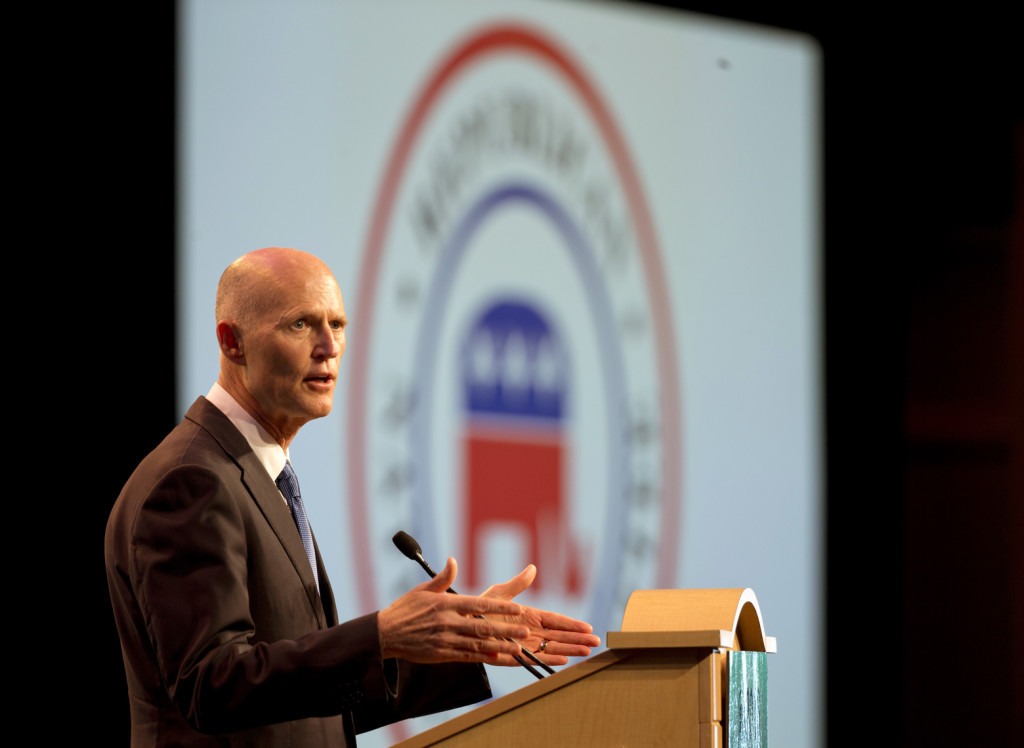
They thought it was impossible. Some still fear it. Others can barely believe it. But leading Republicans are beginning to accept the idea that Donald Trump will be their party’s presidential nominee. In the wake of the businessman’s commanding wins in five Eastern states this week, a growing number of national Republicans and GOP lawmakers on Capitol Hill say Trump has taken on an indisputable air of inevitability. Some argue they should get behind him now and abandon the “Never Trump” efforts still nursed by some establishment Republicans. Embracing Trump, these Republicans say, may be the GOP’s only hope of blocking Democrat Hillary Clinton in November. “Donald Trump is going to be our nominee,” Florida Gov. Rick Scott wrote on Facebook this week. “The Republican leaders in Washington did not choose him, but the Republican voters across America did choose him. The voters have spoken.” “Republicans now need to come together,” Scott wrote, warning that continued opposition to Trump “will be nothing more than a contribution to the Clinton campaign.” On Capitol Hill, support for Trump has also gotten markedly easier to find. “I don’t understand. I mean, it’s not ‘Never Trump.’ It’s ‘Never Hillary.’ Never, never, never Hillary. Come on. Wake up and smell the coffee,” said Rep. Mike Kelly of Pennsylvania, who earlier this week cast his ballot for Trump, along with all members of his large family and 57 percent of Republican primary voters in his state. “I’ve never seen a party attack one of its own candidates with this aggressiveness,” Kelly said of GOP establishment figures who oppose Trump, blaming it on an elitist Washington attitude out of touch with voters. Sen. Orrin Hatch of Utah, a respected senior member of the Senate, previously endorsed Jeb Bush and then Sen. Marco Rubio and said he doesn’t intend to endorse Trump. But Hatch said of Trump, “It looks to me like he’s going to win, and if he does, I’m going to do everything in my power to help him.” Some leading Republicans have forecast that a Trump candidacy could spell electoral disaster, help Democrats win back control of the Senate and even cost safe Republican seats in the House. They point to Trump’s disparaging comments about women and minorities that have contributed to high unfavorability ratings. Hatch, along with others, disagreed. “I think he could be great if he’ll get serious about being president, and I think he will,” Hatch said. “When he gets hit with reality that this is the toughest job in the world, he’s a clever, smart guy who I think will want to be remembered for doing good things, so I have a feeling he can make that transition.” On Thursday, Trump picked up endorsements from two House committee chairmen: Reps. Bill Shuster of Pennsylvania, who chairs the Transportation Committee, and Jeff Miller of Florida, who chairs Veterans Affairs. He talked foreign policy in a phone call with Sen. Bob Corker, R-Tenn., who heads the Foreign Relations Committee. Corker later was full of compliments about Trump, though he said he had no plans to endorse him. To be sure, not all are on board. Some in the GOP continue to cringe at the thought of vulnerable Senate Republicans and candidates getting linked to Trump’s provocative stances or attempting to distance themselves from them. “My feeling about Donald Trump is, I don’t think that that’s our best foot forward at all,” said Sen. Jeff Flake of Arizona, an outspoken Trump critic. “And I can’t imagine being forced to take some of those positions that he’s taken. A ban on Muslims, build a wall and make the Mexicans pay for it, you name it.” It remains uncertain whether Trump will amass the 1,237 delegates needed to clinch the nomination ahead of the Republican convention in Cleveland in July. If he does not, Texas Sen. Ted Cruz hopes to make a play to win the nomination as balloting progresses. Ohio Gov. John Kasich also remains in the race. Next week’s primary in Indiana, where polling suggests a close race, could be crucial in determining whether either Cruz or Kasich can continue to argue they have a path forward. Roger Villere, longtime Louisiana state GOP chief and one of the national party’s vice-chairmen, said a “clear supermajority” at the Republican National Committee spring meeting earlier this month in South Florida were warming to the idea of Trump as standard-bearer. “There were a lot of them who Trump wasn’t their first choice, but when we got in closed rooms and everybody started talking, the general consensus was that he’s going to be our nominee, and we will rally around him,” Villere said Friday. “I wouldn’t say it was even reluctance. It’s just the reality.” Offering a common party refrain, Villere added, “All of our possibilities are clearly superior to what the Democrats have.” Republished with permission of the Associated Press.
Congressional GOP beginning to accept Donald Trump as nominee
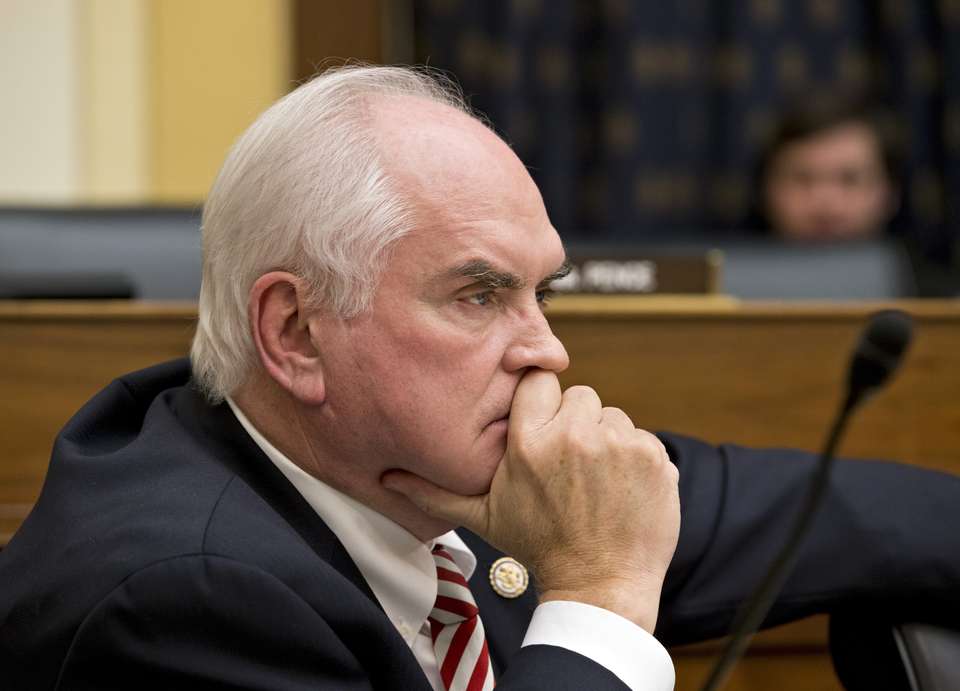
Congressional Republicans are beginning to accept, and even embrace, an outcome that was once unthinkable: Donald Trump as the GOP presidential nominee. In the wake of the businessman’s commanding wins in five Eastern states this week, a growing number of lawmakers say that Trump is taking on an air of inevitability. Some argue they should get behind him now instead of trying to stand in his way, as some establishment Republicans are still attempting to do by backing various “Never Trump” efforts. For some lawmakers, supporting Trump is seen as their only hope of stopping the Democrats’ likely candidate, Hillary Clinton, in November and ensuring a Democratic president doesn’t fill Supreme Court vacancies. “I don’t understand. I mean, it’s not ‘Never Trump.’ It’s ‘Never Hillary.’ Never, never, never, Hillary. Come on. Wake up and smell the coffee,” said Rep. Mike Kelly of Pennsylvania, who earlier this week cast his ballot for Trump, along with all members of his large family and 57 percent of Republican primary voters in his state. “I’ve never seen a party attack one of its own candidates with this aggressiveness,” Kelly said of GOP establishment figures who oppose Trump, blaming it on an elitist Washington attitude out of touch with voters. Sen. Orrin Hatch of Utah, a respected senior member of the Senate, previously endorsed Jeb Bush and then Sen. Marco Rubio and said he doesn’t intend to endorse Trump. But Hatch said Thursday of Trump: “It looks to me like he’s going to win and if he does I’m going to do everything in my power to help him.” Some leading Republicans have forecast that a Trump candidacy could spell electoral disaster, help Democrats win back control of the Senate and even cost Republicans seats in the House. They point to Trump’s disparaging comments about women and minorities that have contributed to high unfavorability ratings. Hatch, along with others, disagreed. “I think he could be great if he’ll get serious about being president, and I think he will,” Hatch said. “When he gets hit with reality that this is the toughest job in the world, he’s a clever, smart guy who I think will want to be remembered for doing good things, so I have a feeling he can make that transition.” To be sure, not all are on board, and some lawmakers cringe at the thought of vulnerable Senate Republicans and candidates getting linked to Trump’s controversial stances or attempting to distance themselves from them. “He’s looking more inevitable, yeah. I’ve been wrong all along,” said GOP Sen. Jeff Flake of Arizona, an outspoken Trump critic. “My feeling about Donald Trump is, I don’t think that that’s our best foot forward at all. And I can’t imagine being forced to take some of those positions that he’s taken. A ban on Muslims, build a wall and make the Mexicans pay for it, you name it.” It remains uncertain whether Trump will amass the 1,237 delegates needed to clinch the nomination ahead of the Republican convention in Cleveland in July. If he does not, Texas Sen. Ted Cruz hopes to make a play to win the nomination as balloting progresses. Ohio Gov. John Kasich also remains in the race. On Capitol Hill, Cruz remains an unpopular figure, having disparaged party leaders and led the charge to force a 16-day partial government shutdown in 2013 in a futile attempt to cut off money for President Barack Obama‘s health care law. Former House Speaker John Boehner, who resigned last fall under conservative pressure, lashed out at Cruz in comments published Thursday in Stanford University’s student newspaper, calling him “Lucifer in the flesh” and saying: “I get along with almost everyone, but I have never worked with a more miserable son of a bitch in my life.” Perhaps partly because of Cruz’s unpopularity, it’s getting easier to find leading lawmakers speaking publicly in favor of Trump. On Thursday, Trump picked up endorsements from House committee chairmen: Bill Shuster of Pennsylvania, who chairs the Transportation Committee, and Jeff Miller of Florida, who chairs Veterans Affairs. Sen. Bob Corker, R-Tenn., who heads the Foreign Relations Committee, spoke on the phone with Trump on Thursday and later told reporters they had a good and substantive conversation, though he has no plans to endorse him. On Trump’s foreign policy speech, Corker said: “Let’s face it, the foreign policy establishment in Washington hasn’t been exactly brilliant in their assessments of things, and I do like the fact that he’s challenging that status quo, I really do. … I think his campaign, like anybody who hadn’t been in the public arena before, is evolving.” Rep. Tom Rooney of Florida was a leading Rubio backer, but said now “it’s time to move on.” “The people have spoken. The Republican primary electorate has spoken so he deserves the opportunity to be our nominee,” Rooney said. “If he screws it up as the nominee and hurts the down-ballot ticket, then he screws it up. But right now the people want him to be the nominee.” Republished with permission of the Associated Press.
