
Hillary Clinton talks teamwork in wake of Orlando tragedy
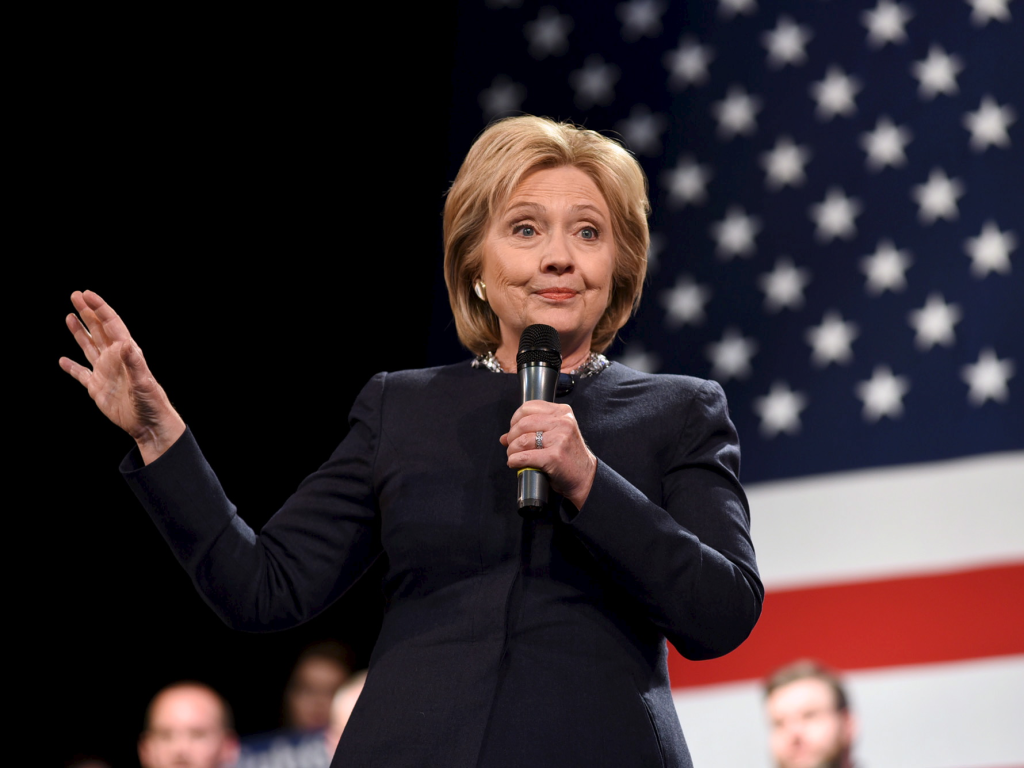
Hillary Clinton on Monday said that the Orlando nightclub massacre called for “statesmanship, not partisanship.” The presumptive Democratic presidential nominee spoke on MSNBC’s “Morning Joe” program. “This is a moment for Republicans, Democrats and Independents to work together as one team,” she said, according to a rush transcript. “The American team.” “I think that our fellow American citizens expect that … I remember we all came together as one nation after 9/11 and we should recapture that spirit,” she added. A gunman with a AR-15 assault rifle opened fire inside Pulse Orlando, a popular gay nightclub, early Sunday morning. Police say 49 people were killed, and another 53 were seriously injured. The shooter has been identified as Omar Mateen of Fort Pierce. He was killed at the scene. Authorities say Mateen called 911 during the attack and pledged allegiance to the Islamic State terror group, also known as ISIS. “You know, let’s have a very clear, rational discussion about what we do right and what we can improve on and how we’re going to protect Americans both from the threats of terrorism and ISIS, how we’re going to defeat ISIS and how we’re going to try to save people’s lives from the epidemic of gun violence now that we’re seeing terrorists use these assault weapons,” Clinton said. “That has to be part of the debate,” she said. The clip can be viewed here.
Steve Schale: Unsolicited advice for Bernie Sanders
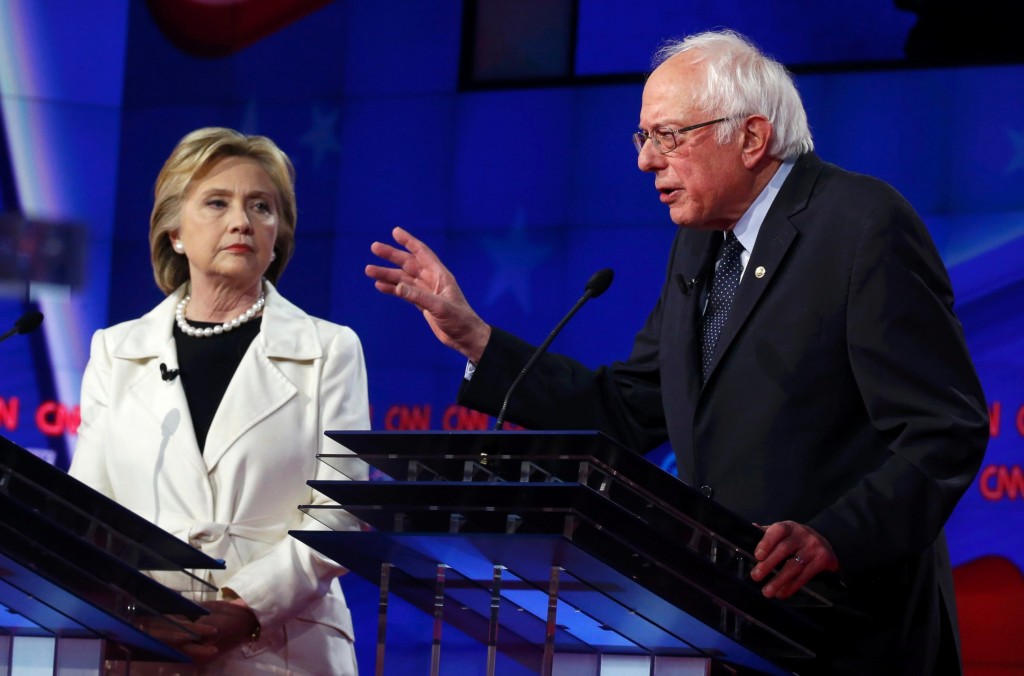
One of the hardest things for a campaign, particularly one completely engaged in the fight, is to see beyond itself. Typically, this only gets worse when campaigns, both ones winning and losing, reach the desperate phase — the point when you have simply run out of options because the end is near. Every candidate wants to win, so no campaign, at any level of the ballot, is immune. Right now, Bernie Sanders falls into this box. Over the past month or so, as it became more and more clear his campaign is nearing the end, the campaign has taken on a sharper edge, saying and doing things that make it harder for him to land the plane softly. But now the plane is going to land regardless – and after tomorrow, there really is no tomorrow. If he were to ask, below is the advice I would give to Bernie Sanders. So here goes, my Memo to Bernie Sanders 1. Use Your Political Capital Wisely: You will never have more political capital than you have today, but every day that goes by, you will lose a bit of your capital. Whether you want it to or not, the party is going to move on. You want to define the terms of your exit, not have it defined for you, and in this frame, you need to figure out what deliverables they can actually give you. As you know, politics is zero-sum, so be realistic, and remember, that conversation isn’t the end game. 2. You need to go all in for her: It may be counter-intuitive, but the success of your movement — and your ability to lead it, is entirely dependent on Hillary Clinton winning. If she loses, your movement won’t look to you for leadership, but instead will start looking for new candidates — and many Democrats will blame you for the loss. But when she wins, you can use your movement to push for more progressive policies. 3. Don’t obsess about the platform: No one has ever read it. No one ever will. And yes, the nomination process in both parties is messed up. But that isn’t today’s fight – beating Donald Trump is. 4. Help her win, then take credit for it: Right now, the sense is the Democratic Party is not united. You often say that you can’t make your followers do what you want, but we all know this isn’t true. Just like Hillary Clinton made it easy for her supporters to join up with Obama, you need to do the same. And when she wins in November, driven by a united Democratic coalition, the campaign obits will all give you credit for it, and all of the sudden, you will find yourself in charge of an incredibly powerful movement — with a president who can help you get things done. 5. Think long term. Change doesn’t happen in Washington, change starts in local communities. Encourage and help your activists run for school boards, city commissions, and state legislatures. Your campaign has been a moment — but you can build a movement by inspiring a generation of young activists to understand a lifetime of public service is an honorable one, and look back in 15-20 years and see what real change looks like. The biggest thing you should do Wednesday is get some sleep. Go back to Burlington for a day or two, get your team off the television, and take a day or two to catch your breath. At some level, I’ve been there. After three months in the barrel for Joe Biden, it was hard to stop fighting. But with space and rest, the path will become clear. And senator, remember leadership isn’t just about inspiring a movement, it is also about knowing when to lead your team off the mountain before you are trapped in a storm. Your job now is to give your movement the best chance to succeed in the future. Your loudest supporters will want you to push on — but your job is to help them understand why it is time to move on.
AP count: Hillary Clinton has delegates to win Democratic nomination
Striding into history, Hillary Clinton will become the first woman to top the presidential ticket of a major U.S. political party, capturing commitments Monday from the number of delegates needed to become the Democrats’ presumptive nominee. The victory arrived nearly eight years to the day after she conceded her first White House campaign to Barack Obama. Back then, she famously noted her inability to “shatter that highest, hardest glass ceiling.” Campaigning this time as the loyal successor to the nation’s first black president, Clinton held off a surprisingly strong challenge from Vermont Sen. Bernie Sanders. He mobilized millions with a fervently liberal message and his insurgent candidacy revealed a deep level of national frustration with politics-as-usual, even among Democrats who have controlled the White House since 2009. Clinton, the former secretary of state, New York senator and first lady, reached the 2,383 delegates needed to become the presumptive Democratic nominee Monday with a decisive weekend victory in Puerto Rico and a burst of last-minute support from superdelegates. Those are party officials and officeholders, many of them eager to wrap up the primary amid preference polls showing her in a tightening race with presumptive GOP nominee Donald Trump. Clinton has 1,812 pledged delegates won in primaries and caucuses. She also has the support of 571 superdelegates, according to an Associated Press count. The AP surveyed all 714 superdelegates repeatedly in the past seven months, and only 95 remain publicly uncommitted. While superdelegates will not formally cast their votes for Clinton until the party’s July convention in Philadelphia, all those counted in her tally have unequivocally told the AP they will do so. “We really need to bring a close to this primary process and get on to defeating Donald Trump,” said Nancy Worley, a superdelegate who chairs Alabama’s Democratic Party and provided one of the last endorsements to put Clinton over the top. Clinton outpaced Sanders in winning new superdelegate endorsements even after his string of primary and caucus wins in May. Following the results in Puerto Rico, it is no longer possible for Sanders to reach the 2,383 needed to win the nomination based on the remaining available pledged delegates and uncommitted superdelegates. Sanders said this past weekend he plans to fight on until the convention, promising to make the case to superdelegates that he is better positioned to beat Trump in November. Superdelegates can change their minds. But since the start of the AP’s survey in late 2015, no superdelegates have switched from supporting Clinton to backing Sanders. Indeed, Clinton’s victory is broadly decisive. She leads Sanders by more than 3 million cast votes, by 291 pledged delegates and by 523 superdelegates. She won 29 caucuses and primaries to his 21 victories. That’s a far bigger margin than Obama had in 2008, when he led Clinton by 131 pledged delegates and 105 superdelegates at the point he clinched the nomination. Echoing the sentiments of California Gov. Jerry Brown, who overcame a decades-long rivalry with the Clinton family to endorse her last week, many superdelegates expressed a desire to close ranks around a nominee who could defeat Trump in November. “It’s time to stand behind our presumptive candidate,” said Michael Brown, one of two superdelegates from the District of Columbia who came forward in the past week to back Clinton before the city’s June 14 primary. “We shouldn’t be acting like we are undecided when the people of America have spoken.” Though she marched into her second presidential primary campaign as an overwhelming favorite, Clinton could not shake Sanders until its final days. He campaigned aggressively in California ahead of the state’s Tuesday election, unwilling to exit a race Clinton stood on the cusp of winning. Beyond winning over millions of Sanders supporters who vow to remain loyal to the self-described democratic socialist, Clinton faces challenges as she turns toward November, including criticism of her decision to use a private email server run from her New York home while serving as secretary of state. Her deep unpopularity among Republicans has pushed many leery of Trump to nevertheless embrace his campaign. “This to me is about saving the country and preventing a third progressive, liberal term, which is what a Clinton presidency would do,” House Speaker Paul Ryan told the AP last week after he finally endorsed Trump, weeks after the New Yorker clinched the GOP nomination. Yet Clinton showed no signs of limping into the general election as she approached the milestone, leaving Sanders behind and focusing on lacerating Trump. She said electing the billionaire businessman, who has spent months hitting her and her husband with bitingly personal attacks, would be a “historic mistake.” “He is not just unprepared. He is temperamentally unfit to hold an office that requires knowledge, stability and immense responsibility,” Clinton said last week in a speech that was striking in its forcefulness, previewing a brutal five-month general election campaign to come. Even without the nomination, Sanders can claim ideological victory. His liberal positions pushed the issue of income inequality into the spotlight and drove Clinton to the left on issues such as trade, Wall Street and campaign finance reform. But she prevailed, in part, by claiming much of the coalition that boosted Obama. She won overwhelming support from women and minorities, catapulting her to decisive victories in diverse, delegate-rich states such as New York and Texas. When Clinton launched her campaign last April, she did so largely unopposed, having scared off more formidable challengers by locking down much of the party’s organizational and fundraising infrastructure. Vice President Joe Biden, seen as her most threatening rival, opted not to run in October. Of the four opponents who did take her on, Sanders was the only one who emerged to provide a serious challenge. He caught fire among young voters and independents, his campaign gaining momentum from a narrow loss in Iowa in February and a commanding victory in New Hampshire. His ability to raise vast sums of money online gave him the resources to continue into the spring. But
Talk of Jeff Sessions for VP continues as he warns GOP: Adapt to Donald Trump, or else
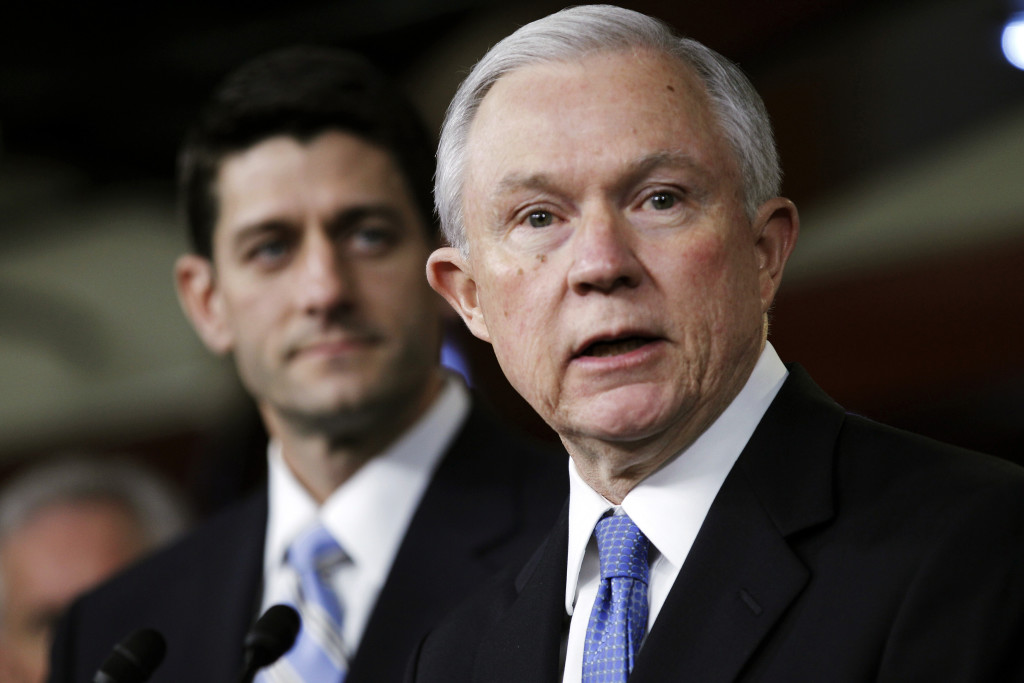
Speculation about the first-ever vice president from Alabama is intensifying as U.S. Sen. Jeff Sessions continues to push GOP leaders in the direction of Donald Trump. The speculation has continued at a more or less constant trickle since Sessions endorsed Trump in February — in a devastating move for U.S. Sen. Ted Cruz — but gained further momentum when he told The Daily Caller he “would consider” taking the VP nod if Trump offered to him, “If I could help him in some way — and he were to ask me — I would consider it like any other citizen should,” said Sessions. But Sessions has also been running a different, though related, sort of campaign — one to move the Republican Party in Trump’s populist direction. Sessions, for instance, challenged legislative leaders like Speaker Paul Ryan to get with Trump’s program when it comes to trade deals and immigration. “I think [Ryan] needs to recognize, on some of these issues, Trump is where the Republicans are and if you’re going to be a Republican leader you should be supportive of that,” said Sessions to POLITICO’s “Off Message” podcast last week. “My advice is to listen and accept the will of the American people, the Republican voters – the Republican Party is the Republican voters,” he added. When confronted with some of the “true conservative” criticisms of Trump by Ryan, as well as “#NeverTrump” advocates like former Florida Gov. Jeb Bush and his backers, Sessions did not abide. “Give me a break! A lot of our drift within our party has gotten away from [the will of the voters] … I think the leaders in all parties tend to adjust to reality. They just have to or they won’t remain in office … Already many are sensing it,” said Sessions. Many national Republican leaders seem to be incessantly re-hashing 2012, said Sessions, where a fiscally conservative GOP governor sought to ascend to the White House on a sensible center-right message. Sessions said that just won’t work nowadays. “[Mitt] Romney didn’t get beyond the numbers,” explained Sessions to POLITICO. “He couldn’t get 50 percent. Romney got killed by the under-$50,000-a-year income voter. He just got killed in that. You cannot win. You cannot be president of the United States if people below $50,000 don’t think you care about them and you have no real communication that motivates them to vote for you. And that’s the trend we’ve been on, and Trump has broken that.” As both parties continue to fight for the growing number of middle- and low-income voters, time will tell if GOP leaders will mimic Trump’s position — and if Sessions will assume a top position in a possible Trump administration.
Haley Barbour handicaps Donald Trump’s VP picks

The former head of the national Republican Party has plugged Newt Gingrich as one possible vice presidential pick for likely GOP presidential nominee Donald Trump. “I think of it as six words: Speaker of the House Newt Gingrich,” Haley Barbour said on Tuesday’s “Morning Joe” program on MSNBC. Barbour, a lobbyist, served as chair of the Republican National Committee in 1993-97 before becoming governor of Mississippi between 2004-12. Gingrich, Speaker of the U.S. House of Representatives in 1995-99, co-wrote the GOP’s “Contract with America” legislative agenda for the 1994 midterm election. He also unsuccessfully ran for the GOP presidential nomination in 2012. “There’s some obvious things like (Ohio Gov.) John Kasich,” Barbour said, according to a transcript. “Kasich says he’s not interested, but that’s normally the response of somebody who gets asked by the press or gets asked by somebody else. That’s different than being asked by the candidate, ‘Will you be my running mate?’” “But Newt is a bright, bright, bright guy,” Barbour added. “I think there are just some other geographical advantages with some other people. Marco Rubio, again, critical state, Florida. Popular guy. Very attractive, young.” New Mexico Gov. “Susana Martinez came up in the previous story,” Barbour said. “Outstanding governor in a tough state. Really a great person. So there are lots of choices.” Barbour, however, made clear he wasn’t “privy to any (inside) information”: “Newt is one of those people that’s on the list, apparently.”
‘Self-funded’ Donald Trump preparing to seek big-donor money
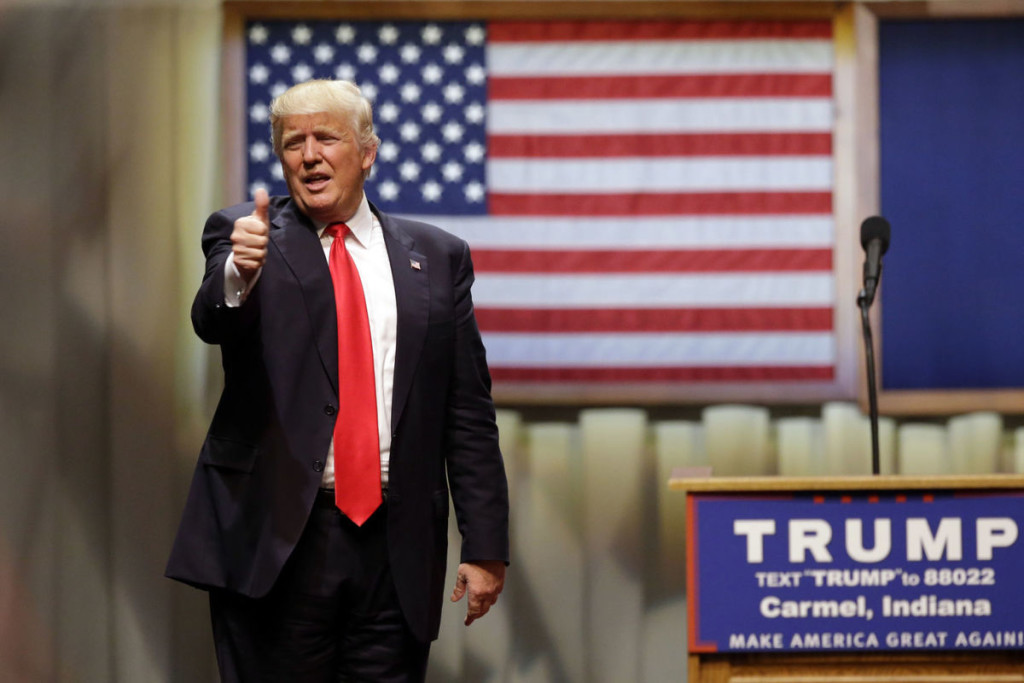
The billionaire presidential candidate who prides himself on paying his own way and bashed his competition for relying on political donors now wants their money — and lots of it. Donald Trump, the presumptive Republican presidential nominee, recently hired a national finance chairman, scheduled his first fundraiser and is on the cusp of signing a deal with the Republican Party that would enable him to solicit donations of more than $300,000 apiece from supporters. His money-raising begins right away. The still-forming finance team is planning a dialing-for-dollars event on the fifth floor of Trump Tower in New York, and the campaign is at work on a fundraising website focused on small donations. In addition to a May 25 fundraiser at the Los Angeles home of real estate developer Tom Barrack, he’ll hold another soon thereafter in New York. The political newcomer faces a gargantuan task: A general election campaign can easily run up a $1 billion tab. For the primary race, Trump spent a tiny fraction of that amount — he’s estimated $50 million of his own money, plus about $12 million from donors who sought his campaign out on their own. Trump told The Associated Press in an interview this week that he will spend minimally on a data operation that can help identify and turn out voters. And he’s betting that the media’s coverage of his rallies and celebrity personality will reduce his need for pricey television advertising. Yet he acknowledged that the general-election campaign may cost “a lot.” To help raise the needed money, he tapped Steven Mnuchin, a New York investor with ties in Hollywood and Las Vegas but no political fundraising experience. “To me this is no different than building a business, and this is a business with a fabulous product: Donald Trump,” Mnuchin said in an interview at a financial industry conference in Las Vegas. Trump’s new national finance chairman said prospective donors are “coming out of the woodwork” and he’s been fielding emails and phone calls from people he hasn’t heard from in 20 years. More experienced fundraisers are coming aboard, too, such as Eli Miller of Washington, Anthony Scaramucci of New York and Ray Washburn of Dallas. All three helped raise money for candidates Trump defeated in the primary. To convey the amount of work needed to vacuum up money, Scaramucci, part of 2012 GOP nominee Mitt Romney’s finance team, recently shared Romney’s old fundraising calendar with Trump. He said Trump was receptive to a schedule that has 50 to 100 fundraisers over the summer. Scaramucci said he didn’t expect Trump to grovel for donors. “But is he going to say thank you and be appreciative? Of course. He’s very good one-on-one. He’s a hard guy not to like.” Trump’s dilemma: By asking for money, he could anger supporters who love his assertion that he’s different from most politicians because he isn’t beholden to donors. He’s tried to navigate these tricky waters by saying he wants only to raise money to benefit the party and help elect other Republicans. But his planned joint fundraising agreement with Republican officials also provides a direct route to his own campaign coffers. Such an arrangement could work like this: For each large contribution, the first $2,700 or $5,400 goes to Trump’s campaign, the next $33,400 goes to the Republican National Committee, similar amounts could go to national party accounts and the rest is divided evenly among various state parties the candidate selects. Democrat Hillary Clinton set up such a victory committee in September, and it had collected $61 million by the end of March. She also counts on several super PACs. They’ve landed million-dollar checks from her friends and supporters and already scheduled $130 million in TV, radio and internet ads leading up to Election Day. Trump is only now beginning to turn his attention to this kind of big money. A decision on how fully to embrace outside groups is fraught with possible charges of hypocrisy, since he has called them “corrupt.” Still, wealthy Trump supporters have several options. On Thursday, Doug Watts, former communications director for Ben Carson’s 2016 bid, said he’d started a group called the Committee for American Sovereignty. Its advisers include former Trump resorts executive Nicholas Ribis Sr. and longtime GOP donor Kenneth Abramowitz. The group aims to raise $20 million before the GOP convention in July. Another entity, Great America PAC, has struggled to get off the ground but hopes to raise $15 million to $20 million in the next few months, said its chief fundraiser, Eric Beach. The group recently brought on Ronald Reagan‘s campaign manager Ed Rollins, whom Trump has praised. The super PAC raised more than $450,000 last month, its fundraising reports due next week to the Federal Election Commission will show. But it had not yet generated enough cash to cover the more than $1 million in satellite TV ads it has booked. In June, Rollins will go to the Texas ranch of billionaire oil investor T. Boone Pickens, who said Wednesday he intends to help finance Trump’s effort. While that meeting is not a fundraiser, it’s an opportunity for the super PAC to make a pitch to Pickens and his wealthy friends. One Trump emissary to the world of major donors is billionaire investor Carl Icahn, who made calls to Pickens and others to gauge their interest in Trump. Some are biting, either because of support for Trump or a desire to keep Clinton out of office. Among the latter group is Stanley Hubbard, a Minnesota broadcast billionaire who spent money trying to “stop Trump.” Having failed in that quest, he said he’s prepared to write a check to stop Clinton. Republished with permission of the Associated Press.
Donald Trump says he’s narrowed potential VPs to 5 or 6 experienced politicians, has not ruled out Chris Christie
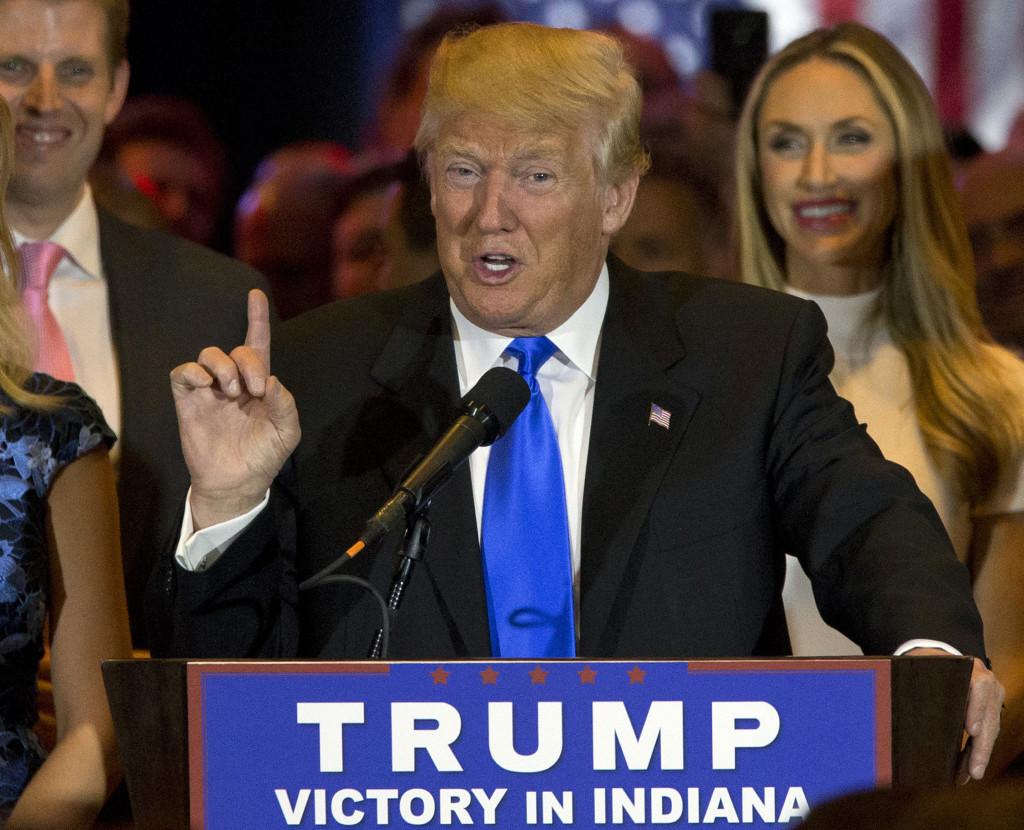
Donald Trump, the Republicans’ presumptive presidential nominee, says he’s narrowed his list of potential running mates to “five or six people,” all with deep political resumes. He says he has not ruled out New Jersey Gov. Chris Christie, a former rival who has embraced the billionaire’s campaign with gusto. “I have a list of people that I would like,” Trump said Tuesday in an interview with The Associated Press. The real estate mogul and former reality television star said he’s giving special weight to political experience because he wants a vice president who can help him “with legislation, getting things through” Washington if he wins the White House. “We don’t need another business person,” said Trump, who touts himself as one of the best in that category. He also said choosing a person who’s previously held elected office would help with the process of looking into the person’s background, in part because that person already would have been checked out by voters, the news media and to some extent the government. “For the most part, they’ve been vetted over the last 20 years,” he said. If he selects a military or business person, he said, “the vetting is a whole different story. Whereas the politicians are, generally speaking, pretty well vetted.” Trump would not reveal the full list of possible running mates, but said his decision this week to appoint Christie to head his White House transition team did not mean the New Jersey governor was out of consideration. “No, not at all,” he said. Trump’s vice presidential pick could be crucial to easing the concerns of Republicans who worry about their presumptive nominee’s lack of political experience, as well as his temperament to serve as commander in chief. Tapping a political insider would also be a way for Trump to signal a willingness to work with the party establishment he has thoroughly bashed throughout the primary. Former Texas Gov. Rick Perry and former Arizona Gov. Jan Brewer are among the Republicans who have suggested they would be open to joining Trump on the GOP ticket. Others, including Trump’s former primary rival Marco Rubio, have ruled out being considered. “I have never sought, will not seek and do not want to be considered for vice president,” the Florida senator wrote in a Facebook post Monday. Trump’s campaign manager, Corey Lewandowski, has been chosen to run the vetting effort “with a group” that includes former rival Ben Carson and Trump himself, he said. “Honestly, we’re all running it. It’s very much a group effort,” said Trump, adding that he’s in no rush to announce his pick. “I do think I don’t want to make a decision until the actual convention. Not even before it. I mean until it,” he said. Republished with permission of the Associated Press.
Donald Trump fires back after Paul Ryan withholds support
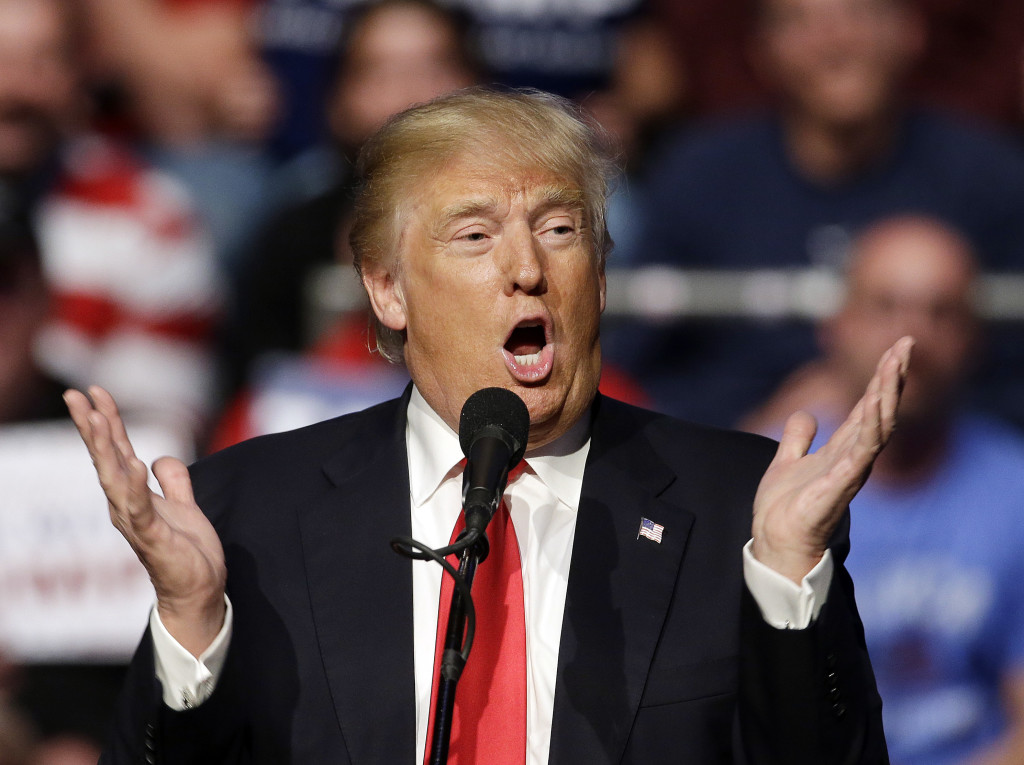
Donald Trump says he’s “not ready to support” House Speaker Paul Ryan‘s agenda after the country’s top elected GOP official said he’s not ready to back Trump as the party’s presidential nominee. In a statement released by his campaign, Trump says, “Perhaps in the future we can work together and come to an agreement about what is best for the American people.” Trump says Americans have been “been treated so badly for so long that it is about time for politicians to put them first!” Ryan said on CNN earlier Thursday that he’s “just not ready” to support Trump’s candidacy, even though the billionaire businessman is the presumptive GOP nominee. The statement from the popular Ryan is further evidence of how much resistance remains inside the party to Trump’s candidacy. Republished with permission of the Associated Press.
Outside groups deal themselves in for GOP delegate game

After burning through millions of dollars in a mostly failed attempt to sway Republican primary voters, big-money outside groups opposing Donald Trump have turned to a far smaller target audience: the delegates who will actually choose the presidential nominee. Our Principles, which is devoted to keeping Trump from winning, and super PACs backing Ted Cruz and John Kasich are spending their time and money researching the complex process of delegate selection and reaching out to those party insiders. None of the groups have put up ads for Tuesday’s New York primary. Delegates are the people – typically longtime Republicans and state party activists – who will have their say at the GOP convention this summer in Cleveland if Trump does not lock up the nomination first in the remaining voting contests. The hot pursuit of such low-profile people by outside groups is yet another unprecedented twist in a history-defying presidential primary season. The delegate focus comes after the groups’ earlier efforts turned out to be money not particularly well spent. GOP-aligned groups spent at least $218 million on presidential television and radio ads, according to advertising tracker Kantar Media‘s CMAG. In one example, last month Our Principles put $2.3 million into ads trying to persuade Florida voters to ditch Trump, but he won the state anyway. “At this stage, the delegate fight is the most important part of the race,” said Tim Miller, a spokesman for Our Principles. “The work we’re doing on it is how we get the biggest bang for our buck.” The Trump, Cruz and Kasich campaigns all pay specialists to help them with their own delegate strategy. Yet the outside groups can’t resist crafting a role for themselves. By law, candidates cannot direct their helpful super PACs on how to spend money on paid communications. However, candidates and the outside groups keep a close eye on what the others are doing. At a donor event last weekend at the Venetian casino resort in Las Vegas, pro-Cruz super PAC officials explained to a rapt audience how they are diving into data about Republican delegates. That super PAC event took place on the same floor as a Cruz campaign finance event, which delved into similar material. Douglas Heye, a former communications director for the Republican National Convention, said the organizational nature of a potential delegate fight plays into Cruz’s strengths. The Texas senator has cultivated relationships with conservative leaders across the country. Now they’re helping him woo delegates. “Cruz hasn’t done things in haphazard fashion,” said Heye, who opposes Trump but is otherwise unaligned. “It takes a real team and the hard work of surrogates and coalitions to succeed at mastering the process in all 50 states.” New Day for America, a super PAC backing Kasich, is “executing a delegate outreach strategy,” said spokeswoman Connie Wehrkamp. She declined to give details. — THE FREE AGENTS There are two phases to this fight for delegates. The first involves free agents in states where voters don’t have a say. Each time an anti-Trump delegate is selected, it gets a little harder for the front-runner to reach the 1,237 he needs to avoid a contested convention. Our Principles has keenly focused on these delegates, who hail from North Dakota, Colorado and Wyoming. The group began reaching out via online advertising back in February, Federal Election Commission filings show. It then worked the phones and mailed literature. Finally, at the state convention site in Colorado Springs last weekend, three of its paid employees and about a half-dozen volunteers distributed “voter guides” likening Trump to President Barack Obama. In both Colorado and North Dakota, Trump was shut out of delegates. Wyoming selects delegates this weekend. — POTENTIAL CONVERTS If Trump can’t win outright, most of the delegates who are initially pledged to him by state rules gain the freedom to vote at the convention for whomever they choose. That’s why the three candidates are looking to make friends with them. Incidentally, there are few rules limiting the ways candidates and outside groups can influence the delegates, Republican election lawyers say. So it’s easy to imagine a deep-pocketed super PAC paying for delegates’ accommodations in Cleveland and giving them other perks. Our Principles’ Miller said the group is assessing what it will do in this second phase of the delegate hunt. Another Trump opponent, the Washington group Club for Growth, has also at least temporarily stopped its TV ads. Spokesman Doug Sachtelben said that while it hasn’t done anything with delegates yet, “nothing is off the table.” Pro-Trump forces are also keen to get into the game. “We’re running ads and a data program to fill as many delegate slots as we can with delegates who like Trump,” said Jesse Benton, a spokesman for Great America PAC. The group has reported to the FEC its plans to spend more than $1 million in ads across the country – some aiming to whip up anger about a potential contested convention. “Donald Trump will have the most delegates by a wide margin, but the GOP establishment is determined to deny him the nomination in any way possible, even if it means a contested convention,” a narrator says in one. Callers are asked to give money to the super PAC as a show of support for Trump. Republished with permission of the Associated Press.
Fox gets 16.9 million viewers for GOP debate

The 16.9 million people who saw Fox News Channel’s coverage of the Republican presidential debate on Thursday have made it the fourth most-watched debate in a primary season ever. The Nielsen company said Friday that’s also the fourth most-watched Republican debate of the 2016 campaign cycle, a testament to the extraordinary interest these events have had for television viewers. The debate stages are getting less crowded, with the Detroit debate featuring Donald Trump, Ted Cruz, Marco Rubio and John Kasich. It was the 11th Republican debate so far; the Democrats have had six. The two previous debates on Fox News Channel reached 24 million viewers last August and 12.5 million in January. The next Democratic debate is Sunday. Former U.S. Secretary of State Hillary Clinton and Vermont Sen. Bernie Sanders will debate at 8 p.m. Sunday in Flint, Mich. Republished with permission of the Associated Press.
Report: Paul Singer may join Marco Rubio campaign as national finance chair

Marco Rubio could be getting a little help from a billionaire backer. The New York Post on Monday reported Paul Singer could be tapped as the national finance chair of Rubio’s presidential bid. In October, Singer announced he planned to back Rubio in the 2016 presidential election. At the time, Singer told dozens of other donors that Rubio was the only candidate who can “navigate this complex primary process, and still be in the position to defeat” Hillary Clinton in the fall, according to a letter obtained by the New York Times. Singer has helped raise money for both Rubio’s official campaign and his super PAC. The New York Post reported that Singer has not been involved with the political operation since super PACs can’t coordinate with the campaign. The New York Post reported that a source close to Singer said his move to the campaign was “not accurate.”
Bernie Sanders fundraising request draws $5 million in one day
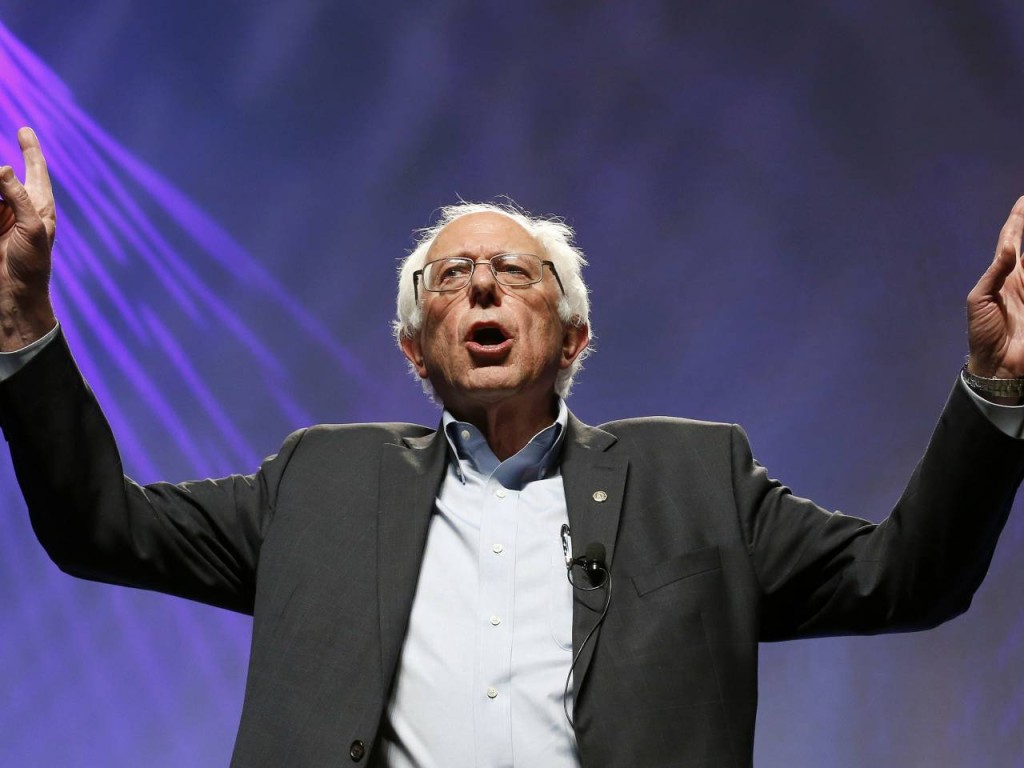
Bernie Sanders raised more than $5 million Monday by simply asking his network of small donors for more money. In the morning, his campaign announced it had raised $36 million in February, and he set a goal of hitting $40 million by the end of the day. A website tracking the fundraising effort shows the campaign had exceeded $41 million by Monday evening. Sanders bested Democratic presidential rival Hillary Clinton in January fundraising. He will have to file February’s campaign finance reports by March 20, a due date for all candidates. Those documents will show how much money he has left for his presidential bid. Republished with permission of the Associated Press.
