
Women of Influence: NASA astrophysicist Dr. Colleen Wilson-Hodge
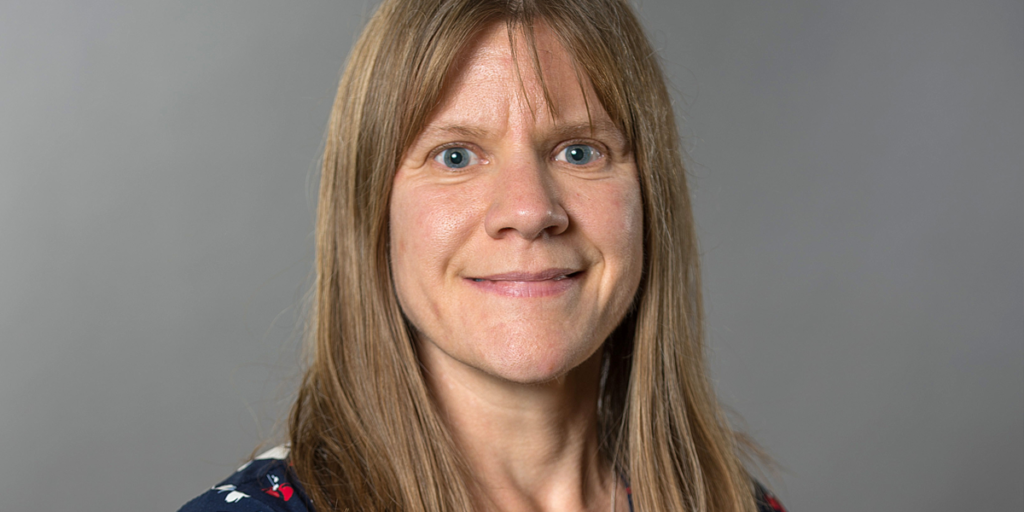
Alabama has been home to many pioneers in many different industries, but after several new astronomic discoveries, long-time Huntsville resident and NASA astrophysicist Dr. Colleen Wilson-Hodge has set herself apart in a big way. From an early age, Wilson-Hodge had a love for astronomy and space few could match. In the sixth grade, she took an overnight field trip to the Space and Rocket Center in Huntsville, Ala., where she toured NASA’s Marshall Space Flight Center. “I think that was the first time I realized I could actually work for NASA as a grownup,” she said. In college she became a NASA co-op student, alternating between classes and working for NASA she met Dr. Gerald Fishman, who was managing the Burst and Transient Source Experiment (BATSE) at the time. She caught his excitement for the project, and began studying gamma ray bursts in 1989. Wilson-Hodge graduated with a Master’s degree in Physics from the University of Alabama in Huntsville in 1996, and immediately began studying for her Ph. D. in Astrophysics, which she obtained in 1999. In 1999 Wilson-Hodge discovered a special type of pulsar called an X-ray pulsar, which led her to the finding of two new stars. X-ray pulsars emit X-rays and gamma-rays and are powered by accretion, stars gobbling up material from a companion star. “For just a little while, the universe is putting on a show that only I, and members of the gamma-ray team know about,” Wilson-Hodge told the Marshall Space Flight Center. She continued to work on the BATSE project until 2000, when the monitor was de-orbited. Wilson-Hodge continued working at the Marshall Space Flight Center, and made another discovery in 2011, when she and her team revealed unexpected changes in X-ray emission from the Crab Nebula. “For 40 years, most astronomers regarded the Crab as a standard candle,” she told UAH. “Now, for the first time, we’re clearly seeing how much our candle flickers.” In August of 2017, Wilson-Hodge and the Fermi Gamma-ray Burst Monitor (GBM) team gave the world its first detection of light from the same source as gravitational waves, which according to NASA are “ripples in space and time.” “This new way of learning about the universe is kind of like gaining a new sense. It’s as if we’ve been watching the news for all of human history, but the T.V. has been on mute, now with gravitational wave detectors, we’re finally able to turn on the sound,” said Wilson-Hodge’s associate Tyson Littenberg. “When we built GBM and launched it on Fermi in 2008, we designed it to detect gamma-ray bursts well,” Wilson-Hodge told NASA. “Back then, it was only slated to fly for five years. Today, GBM is at the forefront of an entirely new type of science, ushering in this new era of multi-messenger astronomy.” Her findings won her, and the GBM team the 2018 Bruno Rossi Prize, the top prize in high-energy astronomy. Wilson-Hodge is a extremely “bright star,” in the world of scientific discoveries, and was kind enough to take time out of her busy schedule to answer some of Alabama Today’s questions about her life, work and influences: How have other women influenced your success? Several women in my life have had a positive influence. The first is my Mom, Carol Wilson, who always encouraged me to pursue my dreams, even if they were out of the ordinary. She has always believed in me and celebrated my successes, and still does! Another was Ms. Sutherland, my high school speech and drama teacher. She taught me much about public speaking that I still use today. I hear her voice in my head sometimes when I’m preparing talks. Early in my career at NASA, I worked with mostly men. One woman did have a big impact on me though. Her name is Dr. Jean Swank. She was the project scientist for the Rossi X-ray Timing Explorer, a satellite that I used quite a bit of data from in my PhD Dissertation. She is an excellent scientist and an extremely capable leader and she is a quiet person like me. She was my first in person example of someone like me leading a space experiment, something that I always wanted to do, and she was a mentor to me. More recently Dr. Linda Sparke from NASA HQ spent a year leading the project that I now lead. She is also an excellent scientist and leader and an extremely good reader of people. She was leading a project where she wasn’t the expert in the specific science area, so she led collaboratively, getting the inputs she needed from the experts on the team to make decisions. She wasn’t afraid to say she didn’t know, but knew where to go to get the information. She was a great mentor to me as I became the principal investigator of the Fermi Gamma-ray Burst Monitor. What shaped your desire to work with NASA, specifically high energy astrophysics? I was fascinated by the Voyager images coming back from Jupiter and later Saturn when I was a child. I would clip the photos out of the newspaper and collect them. In the third grade, I told my classmates I wanted to be an astrophysicist, partially because I liked the big word and partially because I was interested in space. In the sixth grade, my school from Athens, TN, took an overnight field trip to the Space and Rocket Center in Huntsville, Ala., where we toured NASA’s Marshall Space Flight Center. I think that was the first time I realized I could actually work for NASA as a grownup! When I was in college, initially at University of Tennessee in Chattanooga, I was hired as a cooperative education student at NASA MSFC. Initially I wasn’t working in astrophysics at all, and I thought my interest was to go into radio astronomy. While I was at MSFC, I walked down the hall to the Astrophysics Division and met Dr. Gerald Fishman who led the Burst and Transient Source Experiment (BATSE) which was to be launched on the Compton Gamma ray
