
Second round debate takeaways: Should 2020 democrats go big or get real?
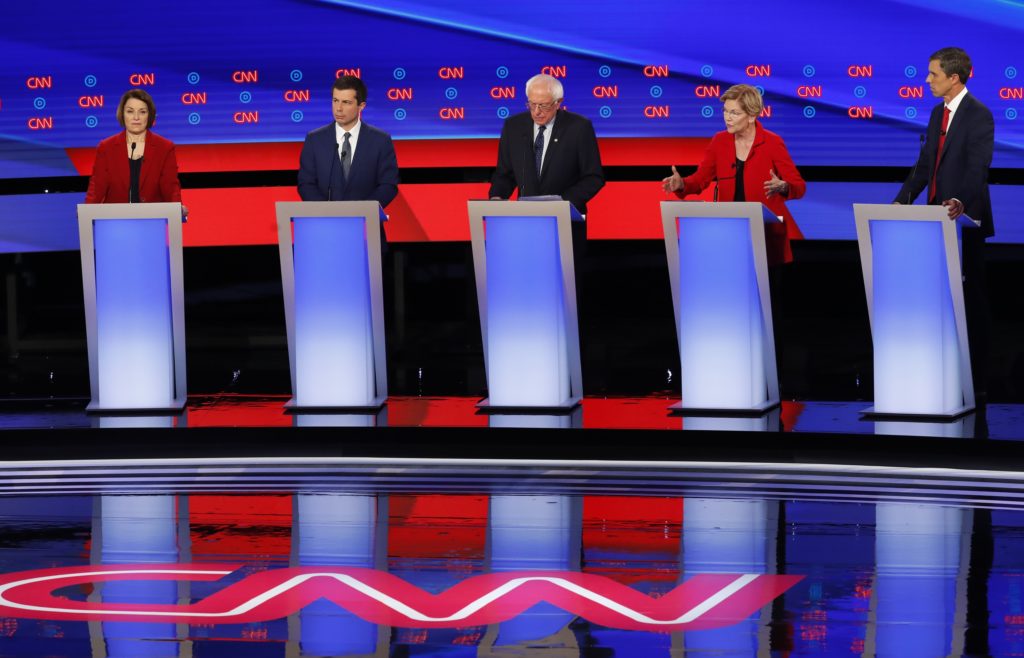
Should Democrats be going big or getting real? That’s the question that dominated the Democratic presidential primary debate as progressive favorites Elizabeth Warren and Bernie Sanders fended off attacks from lesser-known moderates. The display amounted to a sometimes testy public airing of the party’s anxieties about how far left is too left and how to beat President Donald Trump. Here are the key takeaways from the debate: EVOLUTION VS. REVOLUTION The battle lines were clear at Tuesday’s debate from the opening remarks. This was the pragmatists against the front-runners seeking transformational change. Over and over, moderate candidates like Montana Gov. Steve Bullock, former Colorado Gov. John Hickenlooper and former Rep. John Delaney argued Massachusetts Sen. Elizabeth Warren and Vermont Sen. Bernie Sanders’ plans — from “Medicare for All” to the Green New Deal — are unrealistic and would scare off voters. Bullock bemoaned the candidates’ “wish-list economics.” Minnesota Sen. Amy Klobuchar dismissed free college even for wealthy families as unworkable and touted her ideas “grounded in reality.” Hickenlooper called for “an evolution, not a revolution,” on health care. The attacks weren’t shocking in a debate that featured the progressive standouts Warren and Sanders onstage with a handful of lesser-known moderates looking to seize the spotlight. But the two senators’ unified front in fighting them off was notable. Though they are jockeying for some of the same voters, Warren and Sanders didn’t bother going after each other. They largely beat back the moderate critique of their call for sweeping, systemic change with similar arguments. Sanders argued his health plan is “not radical” and achievable. Warren said the country’s problems can’t be solved with “small ideas and spinelessness.” PLAYING INTO TRUMP’S HANDS? Donald Trump loomed large over the Democratic debate stage. Repeatedly, the candidates mixed their policy plans with political strategy, arguing over whether their party’s leftward push will only open them up to GOP criticism. On topics from Medicare for All to immigration, Warren and Sanders found themselves under attack as their more moderate competitors told them their policies only played into Trump’s hands. The notion of taking away private insurance from millions and a Green New Deal that “makes sure that every American’s guaranteed a government job that they want” is “a disaster at the ballot box,” Hickenlooper said. “You might as well FedEx the election to Donald Trump,” Hickenlooper said. Delaney wondered, “Why do we have to be so extreme?” Even self-help author Marianne Williamson chimed in to say she does “have concern about what the Republicans would say.” South Bend, Indiana, Mayor Pete Buttigieg tried to end the unusually public display of anxiety, declaring that “it is time to stop worrying about what the Republicans will say.” “If it’s true that if we embrace a far left agenda they’re going to say we’re a bunch of crazy socialists,” Buttigieg said. “If we embrace a conservative agenda, you know what they’re going to do? They’re going to say we’re a bunch of crazy socialists. So let’s just stand up for the right policy, go out there, and defend it.” MEDICARE FOR ALL TAKES HEAT If the fight was between centrists and progressives, Medicare for All was the weapon. The early moments of the debate were dominated by a fight over whether Sanders’ plan to eliminate private insurance in favor of a universal government health plan is possible, practical or political suicide. At times, with Medicare for All supporters Sanders and Warren outnumbered, the centrists piled on, raising doubts about the quality of care it could offer, the costs and the disruption to the health care system. Ohio Rep. Tim Ryan called it “bad policy and bad politics.” Bullock said he couldn’t support a plan that “rips away” insurance from Americans who have it. “It used to be Republicans who wanted to do repeal and replace,” Bullock said, referring to the Republican refrain on getting rid of President Barack Obama’s Affordable Care Act. Sanders, who has spent much of his career on the issue, grew agitated as he defended the plan. The coverage would actually be better, he argued. “You don’t know that, Bernie,” Ryan interjected. “I do know,” Sanders fired back. “I wrote the damn bill!” UNITED AGAINST TRUMP ON RACE For all the divisions onstage Tuesday, the candidates were unified in rebuking Trump’s racist comments and using race as a campaign theme for 2020. Trump in recent weeks has told four congresswomen of color to “go back” to the countries they came from even though they’re all U.S. citizens and has criticized Rep. Elijah Cummings’ Baltimore-area district as a “rat and rodent infested mess.” “I have had it with the racist attacks,” Klobuchar said in her opening statement.Sanders said Trump exploited racism. Warren said, “The president is advancing environmental racism, economic racism, criminal justice racism, health care racism.” Warren won strong applause from the Detroit audience when she declared her administration would treat white supremacy as a form of domestic terrorism. Buttigieg also directed criticism at members of Congress he said are supportive of or silent on “naked racism” in the White House. “If you are a Republican member of Congress, consider the fact that when the sun sets on your career, and they are writing your story of all the good and bad things you did in your life, the thing you will be remembered for is whether in this moment, with this president, you found the courage to stand up to him or you continued to put party over country,” he said. It was one of the loudest applause lines of the night. The Alabama Today post on the first democratic debate can be found here. By Sara Burnett and Brian Slodysko Associated Press Associated Press writer Hunter Woodall contributed from Detroit. Republished with permission of the Associated Press.
2020 election to test if democrats can draw multiracial coalition
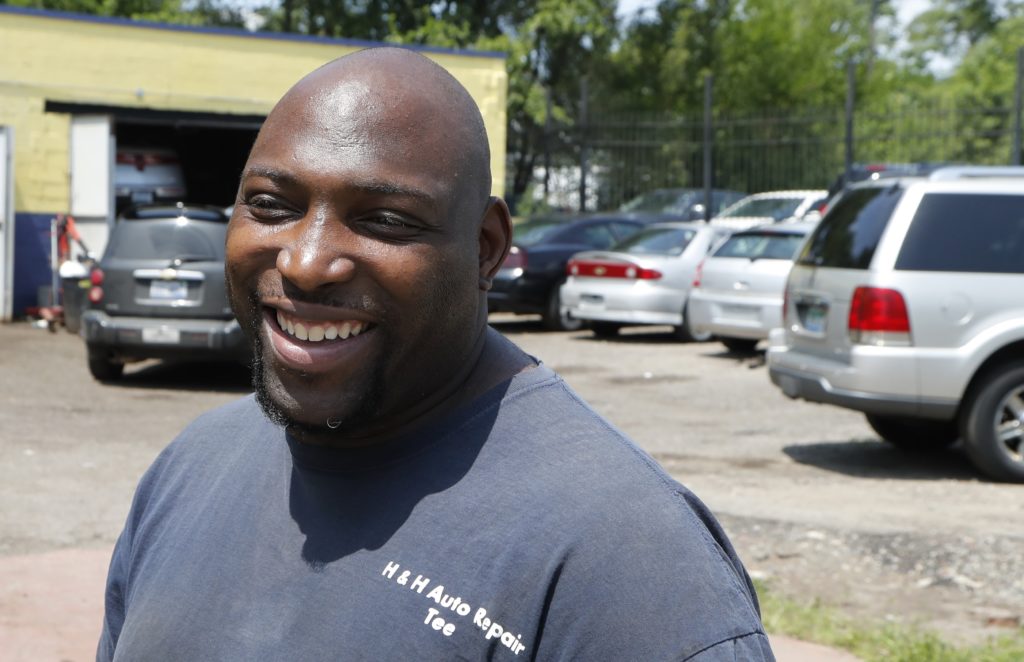
When Barack Obama was on the ballot in 2008 and 2012, there was no question that Terrance Holmes would vote for the first black president. But as he helped fix cars this week at a repair shop on Detroit’s west side, he recalled his ambivalence about the 2016 campaign. “I just didn’t feel no reason to” vote, said Holmes, who is black and holds a second job at an auto parts factory. The 34-year-old feels differently now as another election season begins. He hasn’t paid much attention to the early Democratic primary and didn’t know that two high-profile black candidates are running. But he vowed to help vote President Donald Trump out of office in 2020, regardless of which Democrat emerges as his challenger. The most important thing, Holmes said, is “to get Trump out.” The upcoming presidential campaign offers a critical test for Democrats of whether they can ever again rely on the multiracial coalition that helped propel Obama to the White House twice. Young black voters like Holmes are critical to that effort, especially in states like Michigan, which Democrats lost by just over 10,000 votes in 2016, ceding a state that hadn’t backed a Republican since 1988. Reclaiming it, along with Pennsylvania and Wisconsin, would put Democrats on a firmer path to the presidency. Black voters are the base of the Democratic Party and its most consistent and loyal voting bloc. Black people voted in record numbers for Obama in 2008 and 2012 and overwhelmingly supported Hillary Clinton in 2016. But nationally, the African American turnout rate dropped 7 percentage points in 2016 from its record high during Obama’s 2012 reelection, according to U.S. Census Bureau data. Other groups did not see a comparable decrease — white turnout increased slightly while Latinos held steady. Bernard Fraga, a political science professor at Indiana University, wrote a book on turnout last year. He attributes the drop in black voter turnout to several factors, including Russian interference in the election, tactical errors by Clinton’s Democratic presidential campaign and less enthusiasm for voting for someone other than Obama. But he said the most important thing Democratic candidates can do is prove to black voters that they’ll work for their support. “It’s not one single thing, but what it points to is Democrats can’t just take black turnout for granted,” Fraga said. Democrats insist they’ll reverse the decline in 2020. They’re already spending significant time in Michigan, holding their second set of presidential debates next week in Detroit. Many candidates were in town on Wednesday to address the NAACP’s annual convention, where they outlined their agendas for black communities. Several contenders are making explicit appeals to black voters and blasting their rivals as weak on issues related to civil rights. California Sen. Kamala Harris, one of the two leading black candidates in the contest, slammed former Vice President Joe Biden during the first debate for his opposition to busing in the 1970s. The other black candidate, New Jersey Sen. Cory Booker, is warning that the party needs a nominee who can turn out minorities who skipped 2016. Vermont Sen. Bernie Sanders, who won the support of many younger black Democrats during the 2016 primary, has stepped up his references to racial disparities. Other candidates speak regularly of criminal justice reform, the racial wealth gap and high mortality rates among pregnant black women. Not to be outdone, Trump has attempted appeals to black voters. Even as he ignited a firestorm this month with racist tweets targeting four congresswomen of color, he frequently touts the black unemployment rate that has declined under his administration and his support of a criminal justice overhaul bill. Activists worry that Democrats still aren’t doing enough to appeal to a minority population that remains alienated and demoralized, with unemployment rates higher than that of whites and continuing cases of police killing unarmed black men. “Candidates have to understand the fault lines that exist within the black electorate,” said Adrianne Shropshire of BlackPAC, which works on turning out African American voters. “The Democratic underperformance that we’ve seen can be explained in many ways by millennial dissatisfaction.” Younger black voters, like young people overall, aren’t as reliable as their older counterparts. But Michigan illustrates their importance. Based on data from state voter records, Fraga estimates a 12 percent drop in black voter turnout in Michigan in 2016 compared with 2012, the steepest decline in African American voting performance in the nation along with neighboring Wisconsin. Fraga said the falloff was disproportionately among younger and male voters. Democrats found some promising signs in Michigan last year. The party clinched the governor’s mansion and attorney general’s office and netted two House seats. Democratic groups say their internal data suggests some black voters who didn’t participate in 2016 showed up to the polls in 2018. In Detroit, 28,000 more ballots were cast than in the prior midterm election of 2014. Lavora Barnes, the chairwoman of Michigan’s Democratic Party, said the party started contacting black voters shortly after the 2016 election, knowing it had to invest more in turning them out. It also has had to tailor a message to younger voters whose political awareness started with Obama’s 2008 campaign. “It is a very different world where you grew up with Barack Obama, and then you saw your country turn on you and elect Donald Trump,” Barnes said. She tells younger black voters: “This is the moment you fight.” Democrats remain nervous about that fight. Priorities USA, a major Democratic campaign group, warns that it has found African Americans remain less motivated about 2020 than other Democratic voters. Branden Snyder was the deputy field director of Democrats’ 2016 Michigan campaign and now runs a group that tries to boost minority turnout in Detroit. He’s also worried. “The slice that isn’t being engaged by the Democrats is non-college black men. The people who are talking about this are the RNC,” Snyder said, referring to the Republican National Committee. “The RNC and Trump are coming and
2020 Democrats grapple with how to pay for “medicare for all”
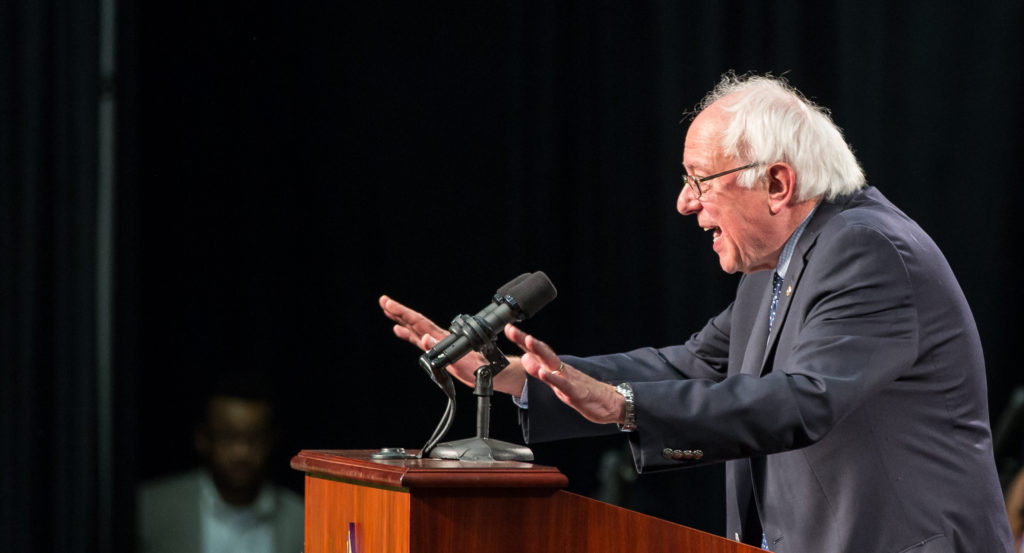
Democratic presidential candidates trying to appeal to progressive voters with a call for “Medicare for All” are wrestling with the thorny question of how to pay for such a dramatic overhaul of the U.S. health care system. Bernie Sanders, the chief proponent of Medicare for All, says such a remodel could cost up to $40 trillion over a decade. He’s been the most direct in talking about how he’d cover that eye-popping amount, including considering a tax hike on the middle class in exchange for healthcare without co-payments or deductibles — which, he contends, would ultimately cost Americans less than the current healthcare system. His rivals who also support Medicare for All, however, have offered relatively few firm details so far about how they’d pay for a new government-run, single-payer system beyond raising taxes on top earners. As the health care debate dominates the early days of the Democratic primary, some experts say candidates won’t be able to duck the question for long. “It’s not just the rich” who would be hit with new cost burdens to help make single-payer health insurance a reality, said John Holahan, a health policy fellow at the nonpartisan Urban Institute thinktank. Democratic candidates campaigning on Medicare for All should offer more specificity about how they would finance it, Holahan added. Sanders himself has not thrown his weight behind a single strategy to pay for his plan, floating a list of options that include a 7.5% payroll tax on employers and higher taxes on the wealthy. But his list amounts to a more public explanation of how he would pay for Medicare for All than what other Democratic presidential candidates who also back his single-payer legislation have offered. Kamala Harris, who has repeatedly tried to clarify her position on Medicare for All, vowed this week she wouldn’t raise middle-class taxes to pay for a shift to single-payer coverage. The California senator told CNN that “part of it is going to have to be about Wall Street paying more.” Her contention prompted criticism that she wasn’t being realistic about what it would take to pay for Medicare for All. Colorado Sen. Michael Bennet, a rival Democratic presidential candidate, said Harris’ claim that Medicare for All would not involve higher taxes on the middle class was “impossible,” though he stopped short of calling her dishonest and said only that candidates “need to be clear” about their policies. A Harris aide later said she had suggested a tax on Wall Street transactions as only one potential way to finance Medicare for All, and that other options were available. The aide insisted on anonymity in order to speak candidly about the issue. Another Medicare for All supporter, New York Sen. Kirsten Gillibrand, would ask individuals to pay between 4% and 5% of their income toward the new system and ask their employers to match that level of spending. Gillibrand’s proposal, shared by an aide who requested anonymity to discuss the campaign’s thinking, could supplement the revenue generated by that change with options that hit wealthy individuals and businesses, including a new Wall Street tax. Gillibrand is a cosponsor of Sanders’ legislation adding a small tax to financial transactions, while Harris is not. New Jersey Sen. Cory Booker, who also has signed onto Medicare for All legislation but said on the campaign trail that he would pursue incremental steps as well, could seek to raise revenue for the proposal by raising some individual tax rates, changing capital gains taxes or expanding the estate tax, according to an aide who spoke candidly about the issue on condition of anonymity. The campaign of Massachusetts Sen. Elizabeth Warren, who used last month’s debate to affirm her support for Sanders’ single-payer health care plan, did not respond to a request for more details on potential financing options for Medicare for All. Meanwhile, Sanders argued during a high-profile Medicare for All speech this week that high private health insurance premiums, deductibles and copayments, all of which would be eliminated by his proposal, amount to “nothing less than taxes on the middle class.” Medicare for All opponents are also under pressure to explain how they’d pay for changes to the health insurance market. Former Vice President Joe Biden is advocating for a so-called “public option” that would allow people to decide between a government-financed plan or a private one. He would pay for his $750 billion proposal by repealing tax cuts for the wealthy that President Donald Trump and the GOP cut in 2017, and by raising capital gains taxes on the wealthy. By Elana Schor Associated Press Associated Press writers Juana Summers in Washington and Alexandra Jaffe in Cedar Rapids, Iowa, contributed to this report. Republished with permission of the Associated Press.
2020 hopeful Elizabeth Warren pitches new private equity constraints
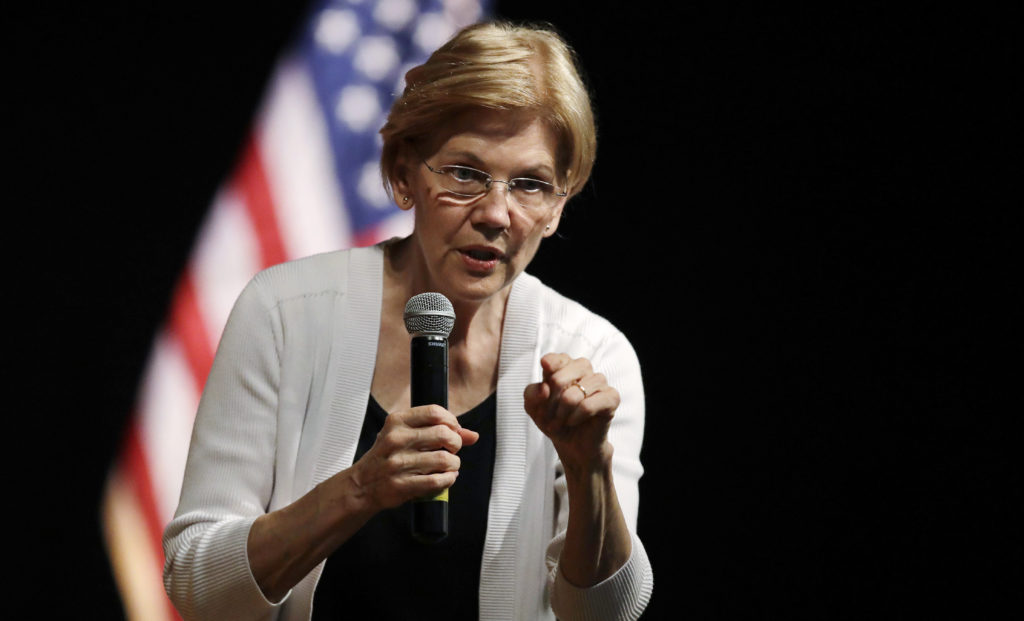
White House hopeful Elizabeth Warren is proposing new regulations on the private equity industry, pitching constraints designed to end what she decries as “legalized looting” by investment firms that take over troubled companies. Warren’s plan, the latest in a series of policy ideas that have propelled the Massachusetts senator to the top tier of the 2020 Democratic presidential primary, would hold private equity firms liable for debts and pension promises made by the companies they buy up. It would restrict the firms’ ability to pay dividends as well as high fees that shift money out of acquired companies. The new private equity rules bring Warren’s detail-driven campaign back to the familiar ground that launched her political career — reining in Wall Street. Warren, the former chair of the independent panel that oversaw the government’s 2008 bailout of major financial institutions, is a longtime foe of the financial industry who has underscored since launching her presidential run that she is a capitalist. But like democratic socialist Bernie Sanders , a rival for the Democratic nomination to challenge President Donald Trump, Warren is building her campaign around a promise of sweeping upheaval she says would spread around more of the benefits of economic growth. “I am tired of big financial firms looting the economy to pad their own pockets while the rest of the economy suffers,” Warren wrote in a Medium post announcing her plan on Thursday. “I am done with Washington ignoring the evidence and acting as though boosting Wall Street helps our families. Financial firms have helped push our economy badly off track.” Warren’s private equity proposals also include new rules that would require worker pay to take precedence over other obligations when companies declare bankruptcy as well as more open disclosure of investment firms’ fees, both of which are included in private legislation she’s set to introduce later Thursday alongside Senate and House Democratic colleagues. Her platform further calls for the restoration of dividing lines between commercial and investment banking that were repealed in 1999, a change that was part of both the Republican and the Democratic platforms during the 2016 presidential election despite Trump’s lack of emphasis on it during his campaign. Warren is headed to Iowa for a two-day campaign swing during which she’s likely to tout her new private equity plan, the latest installment of a broader self-described “economic patriotism” agenda that also includes a $2 trillion investment in environmentally friendly manufacturing . Besides bolstering her credentials as an antagonist of Wall Street, Warren’s new proposal also gives her the chance to tout her avoidance of high-dollar fundraisers and reliance on small donors to power her campaign. Sanders, a Vermont senator, has similarly vowed to forgo high-dollar fundraisers, but the private equity industry remains a notable supporter of several of their Democratic presidential rivals . Federal Election Commission records show that employees of Blackstone, which leads Private Equity International’s ranking of top private equity firms, have donated a total of $102,100 to 11 Democratic presidential hopefuls this year, with South Bend, Indiana, Mayor Pete Buttigieg topping the list of recipients at $30,800. Neither Warren nor Sanders reported receiving contributions from the private equity giant’s employees. By Elana Schor Associated Press Associated Press writer Brian Slodysko contributed to this report. Republished with permission of the Associated Press.
Joe Biden campaigns as Obamacare’s top defender
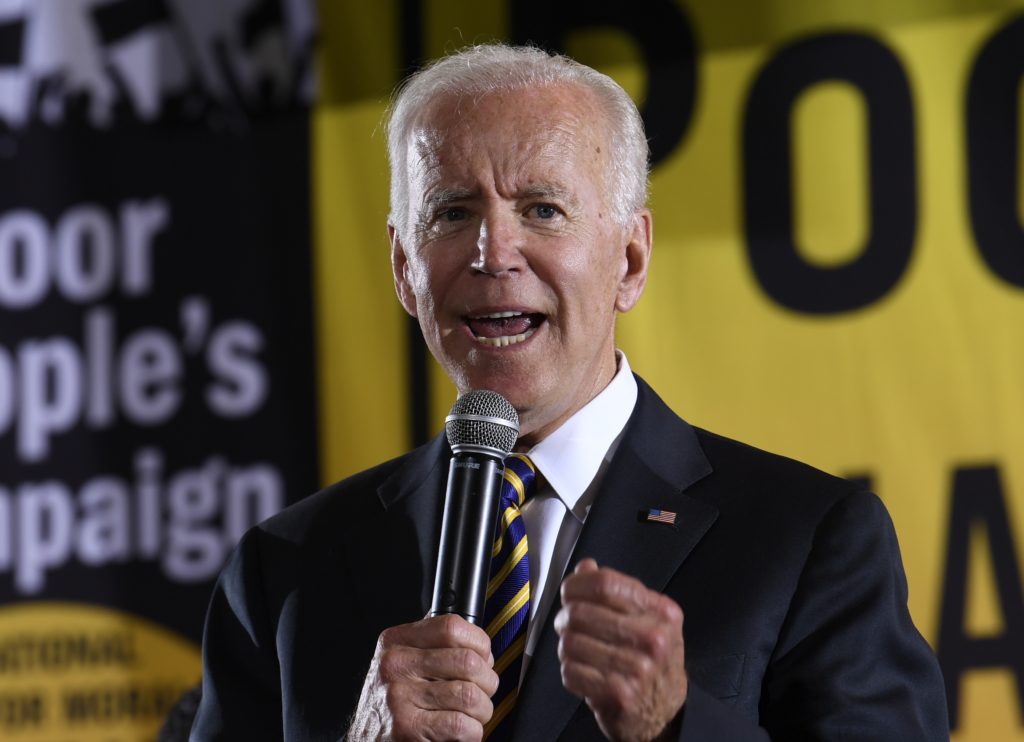
Joe Biden is taking an aggressive approach to defending Obamacare, challenging not just President Donald Trump but also some of his rivals for the Democratic presidential nomination who want to replace the current insurance system with a fully government-run model. The former vice president will spend much of the coming week talking about his approach to health care, including remarks he’ll deliver on Monday in Iowa at a presidential forum sponsored by AARP. His almost singular focus on the 2010 health care law has been on display recently in the early voting states. In Iowa, he declared himself “against any Republican (and) any Democrat who wants to scrap” Obamacare. Later in New Hampshire, he said “we should not be scrapping Obamacare, we should be building on it,” a reference to his approach to add a government insurance plan known as the public option to existing exchanges that sell private insurance. Biden is hoping his positioning as Obamacare’s chief defender could be helpful on several fronts. It’s a reminder of his close work alongside President Barack Obama, who remains popular among Democratic voters. And it could reinforce his pitch as a sensible centrist promising to rise above the strident cacophony of Trump and Democrats including Sens. Bernie Sanders, Elizabeth Warren and Kamala Harris, all single-payer advocates. Perhaps as important, it’s an opportunity for Biden to go on offense ahead of the next presidential debate at the end of July. Biden has spent the past several weeks on defense, reversing his position on taxpayer funding for abortions and highlighting his past work with segregationist senators. Harris slammed him during the first debate, blasting the segregationist comment and criticizing his opposition to federal busing orders to desegregate public schools during the same era. Each of the episodes raised questions about whether Biden can maintain his front-runner status. In New Hampshire over the weekend, it was clear Biden wanted to turn the tables as he touted the idea of a “Medicare-like” plan that any American could buy as opposed to a “Medicare-for-all” that would be imposed on everyone. “I think one of the most significant things we’ve done in our administration is pass the Affordable Care Act,” Biden said. “I don’t know why we’d get rid of what in fact was working and move to something totally new. And so, there are differences.”He argued that some of his opponents, with the exception of Sanders, aren’t fairly representing the consequences of their proposals. “Bernie’s been very honest about it,” Biden said. “He said you’re going to have to raise taxes on the middle class. He said it’s going to end all private insurance. I mean, he’s been straightforward about it. And he’s making his case.” Asked specifically whether Harris has been honest about how her plan would affect private insurance, Biden said, “I’ll let you guys make that judgment.” During last month’s debates, Harris, Warren and Sanders raised their hands when candidates were asked as a group whether they supported eliminating private insurance. A day later, Harris, a Senate co-sponsor of Sanders’ single-payer bill, reversed her answer — the second time since her campaign launch that she’d walked back her seeming endorsement of eliminating private insurance. She explained that she interpreted the debate moderator’s question as asking whether she’d be willing to give up her existing coverage as part of a single-payer model. She said she wants private policies to remain “supplemental” options for consumers. Sanders, meanwhile, hit back at Biden, clarifying that his plan would be a net financial benefit for most households: Their federal taxes would go up, but their private insurance premiums, deductibles and co-pays would be eliminated. “At a time when Donald Trump and the health insurance industry are lying every day about ‘Medicare for All,’ I would hope that my fellow Democrats would not resort to misinformation about my legislation,” Sanders said in a statement responding to Biden’s New Hampshire comments. Biden hasn’t yet introduced his full health care plan, but has said it will be anchored by a “Medicare-like” plan that would be available to anyone — including the 150 million-plus Americans now covered by job-based insurance, a group now ineligible for exchange-based policies. Biden has indicated that income-based subsidies would ensure that any household could get coverage. The idea is to expand coverage immediately and shake up insurance markets long-term by forcing private insurers to compete alongside the government, theoretically pressuring to lower their premiums and out-of-pocket costs for private policy holders. Biden isn’t the only public-option advocate running for president. Former Colorado Gov. John Hickenlooper warns that Republicans will brand single-payer as “socialism,” hurting Democrats in the general election. Colorado Sen. Michael Bennet echoes Biden’s argument with a call to “finish the work we started with Obamacare.”Minnesota Sen. Amy Klobuchar touts a public option as the next logical move even for single-payer advocates. “I think it is a beginning and the way you start and the way you move to universal health care,” she said in the first debate. If anything, the dynamics illustrate Democrats’ overall leftward shift on health care.A decade ago, as Obama pushed for ACA, the public option was effectively the left-flank for Democrats, a reality made obvious when Obama angered House liberals by jettisoning the provision to mollify some moderate Senate Democrats needed to pass the legislation. Now, after Sanders’ insurgent 2016 presidential bid and his promise of “health care as a human right,” the left has embraced single-payer, with moderates moving to the public option.Yet with the exception of Biden, the moderates are languishing far back in polls, leaving the former vice president to capitalize on the dividing lines and promising that he would do what Obama couldn’t. “And,” he declared, “it can be done quickly.” By Bill Barrow Associated Press Associated Press writers Hunter Woodall and Julie Pace contributed from Portsmouth, New Hampshire. Follow Barrow on Twitter at https://twitter.com/BillBarrowAP. Republished with the permission of the Associated Press.
2020 candidate Pete Buttigieg says he raised $24 million in 2nd quarter
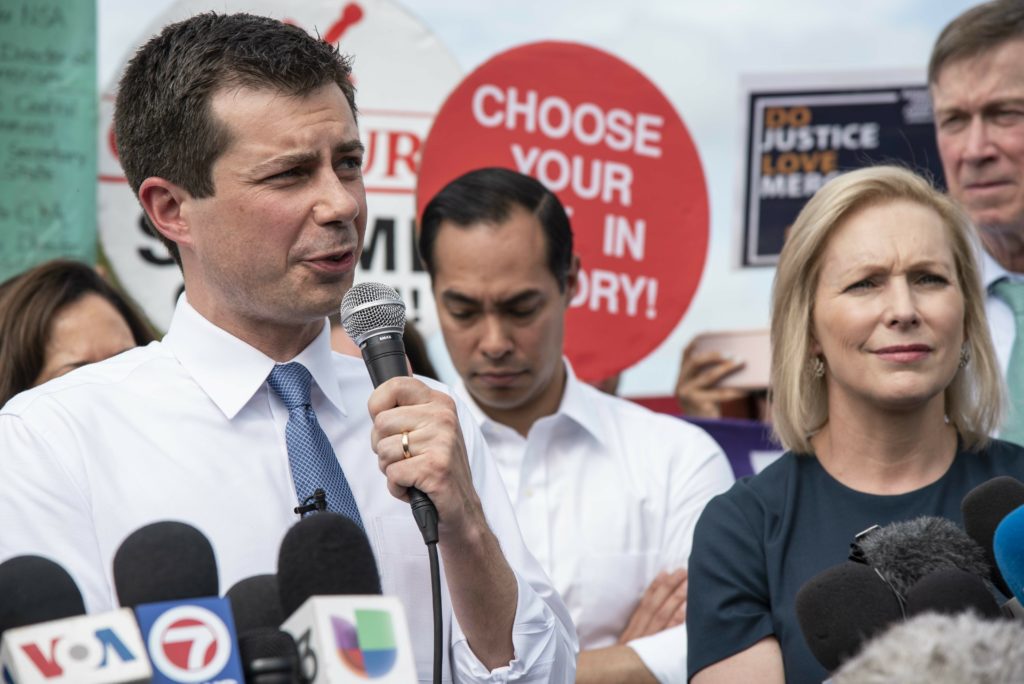
Pete Buttigieg said Monday that he raised $24.8 million during the second fundraising quarter, a massive sum that cements him as a top White House contender despite entering the Democratic presidential primary as a little-known Indiana mayor. The impressive haul tops the $18 million raised last quarter by Bernie Sanders, who led the Democratic field in fundraising during that period. It will help Buttigieg transition from a scrappy startup operation to a more formidable campaign for the 2020 Democratic nomination and give him staying power to weather the summer months, when fundraising typically dries up. Meanwhile, many of his better-known rivals have struggled to raise money and could face more challenging circumstances. “He did exactly what you are supposed to do,” said Rufus Gifford, who was finance director of President Barack Obama’s 2012 campaign. “They are seizing on opportunities, they are building infrastructure, hiring staff and working their butts off.” Campaigns often release an early glimpse of their end-of-quarter fundraising, particularly if the numbers are good. So far, none of his rivals have followed suit, though they have until July 15 to report the numbers to the Federal Election Commission. The figures will be a crucial factor in determining which candidates qualify for the September debate stage. Buttigieg, 37, surprised many people with a first quarter haul of roughly $7 million, which topped many of the better-known candidates in the race. Since then, he’s parlayed his biography as a gay military veteran and Rhodes scholar who was twice elected to lead the Rust Belt city of South Bend into becoming one of the hottest tickets in Democratic fundraising. “The LGBT community is very enthusiastic about supporting him,” said Gifford, who is gay. “That does not mean they are going to vote for him. But they want to support the candidacy because it’s historically important.”Buttigieg’s campaign says he has $22.6 million cash on hand and received money from donors from all 50 states, as well as U.S. territories, with an average contribution of about $47. His campaign says that will allow him to build out an operation in early voting states, including Iowa, New Hampshire, South Carolina and Nevada. Already, his staff has grown from a handful of strategists and volunteers to a headcount that exceeds 100. Recently, his South Bend headquarters moved into a larger office. While Buttigieg has drawn swooning donors, he still faces significant challenges. For one, his support with African Americans in public opinion polls is dismal, raising questions about his ability to build a winning coalition in an increasingly diverse Democratic Party. As most candidates were furiously trying to raise money during the last two weeks before the June 30 deadline, Buttigieg had to cancel a California fundraising trip to deal with unrest at home after a white South Bend police officer shot and killed a black man who police say was armed with a knife.“Clearly his support is not coming from people of color, yet he is getting lots and lots of donations,” said Steve Phillips, an African American civil rights attorney whose Dream United super PAC is supporting New Jersey Sen. Cory Booker, who is black. “In order to win, there has to be an enthusiastic and large turnout of voters of color.” For now, Buttigieg is doing well enough in overall polls and has received contributions from more than 400,000 people, securing his spot in the September debates. The Democratic National Committee requires participants to hit 2% in multiple polls and 130,000 individual donors. Although many campaigns are worried, DNC Chairman Tom Perez has resisted pressure to relax the requirements. Currently, the only other locks for the fall debates are former Vice President Joe Biden, Bernie Sanders, Massachusetts Sen. Elizabeth Warren and California Sen. Kamala Harris. Although his rivals have yet to release their numbers, Biden hinted last month that he’s taken in a similar amount to Buttigieg. Biden has said his campaign had amassed 360,000 donors, who gave an average of $55 apiece. The math suggests he collected about $19.8 million since entering the race in April, but his campaign declined to confirm the figure at the time. His campaign remained coy on how much he has raised but told supporters in an email on Monday that they “blew our fundraising goal out of the water.” Associated Press writer Sara Burnett contributed to this report from Chicago. By Brian Slodysko Associated Press. Republished with the permission of the Associated Press.
Elizabeth Warren challenges Bernie Sanders for progressives’ 2020 support
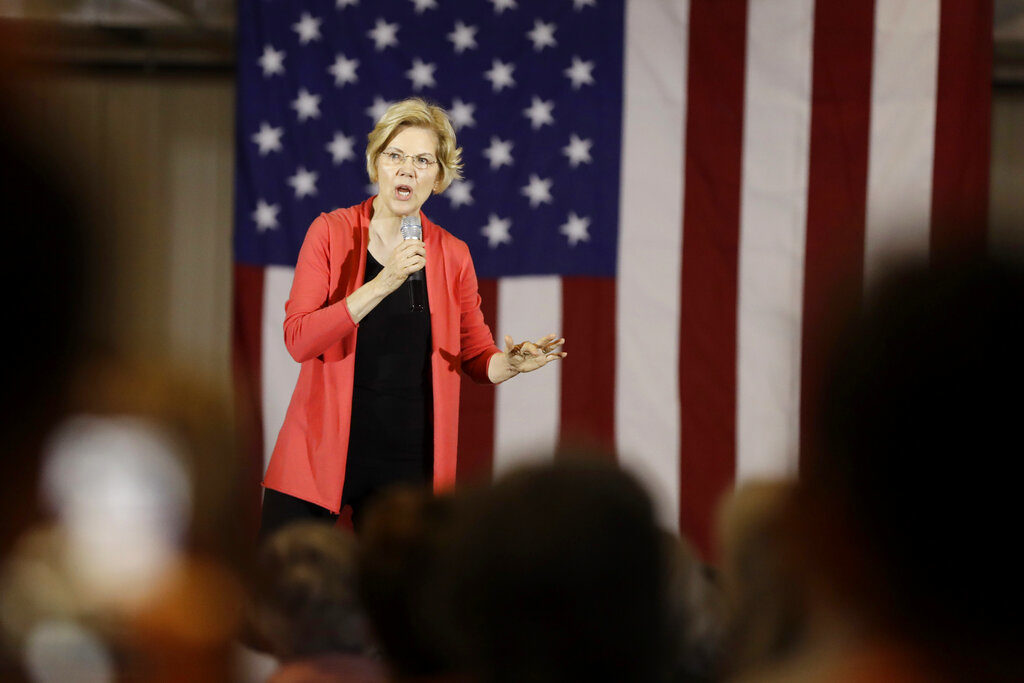
As a Michigan field organizer for Bernie Sanders‘ 2016 presidential campaign, Mike McDermott trained volunteers to knock on doors and call voters, helping the Vermont senator upset Hillary Clinton in a crucial Midwestern state. But as the 2020 campaign heats up , McDermott is all-in for Massachusetts Sen. Elizabeth Warren, creating a Michigan for Warren PAC to raise early money for her efforts and promoting her campaign through a website and Facebook page. While he’s still a Sanders fan, McDermott sees Warren as a fresher face who’s more electable and doesn’t have the baggage of a 2016 loss. “It’s really 1a and 1b for me,” McDermott said. “With Warren, I think there’s more crossover appeal. She doesn’t have 2016 branded on her.” That sentiment represents the new challenge facing Sanders, who is in second place in most national polls behind Joe Biden. The former vice president has eaten into Sanders’ base with appeals to blue-collar union voters. But Warren is emerging as another threat, winning over voters such as McDermott with a raft of proposals that sometimes go further left than those backed by Sanders. Warren and Sanders are vying to become the progressive alternative to Biden, a competition that’s especially pivotal in the Midwest. The region is critical to Democratic hopes of regaining the White House in 2020, and Sanders’ campaign wrote in an April memo that he’s “by far the best positioned candidate to win” in three upper Midwest states that handed President Donald Trump the White House. The central peril Warren poses for Sanders is her status as the fresher liberal face in the race, eager to demonstrate her energy with hours of post-town hall photo lines, according to more than a dozen interviews with Michigan voters last week. Sanders still draws bigger crowds than Warren, who recently promoted her economic agenda before nearly 2,000 people at Lansing Community College, but the pro-worker, anti-establishment brand he brought to 2016 is no longer his alone. “I don’t think, because Bernie Sanders did as well as he did in Michigan last time, that that means anything this time,” said Lisa Canada, political director with the Detroit-based Michigan Regional Council of Carpenters union. Alexandra Lee, a 35-year-old graduate student from Lansing, said she backed Sanders in 2016 but now plans to support Warren when Michigan holds its primary on March 10. That will be one week after Super Tuesday, when several states hold their nominating contests and the largest number of delegates are up for grabs. Lee said she thinks it’s time for a woman to be president: “I still like Bernie a lot. But I’d like to have someone younger and not male.” During her Michigan appearances, Warren laid out a populist pitch that subtly echoed some of the U.S.-workers-first messaging that helped Trump overtake Clinton in much of the Midwest. She attacked giant corporations that market themselves as American but make most their products overseas. “Those giant corporations, the more and more power they amass, understand this: They’re not loyal to America, and they’re not loyal to American workers,” the 69-year-old former law professor said in Lansing. “They are loyal to exactly one thing: their own bottom line, their own profits.” Warren’s economic plan calls for “aggressive intervention” to create U.S. jobs and benefit U.S. exports, a spirit that aligned broadly enough with the anti-globalization rhetoric Trump invoked in 2016 to earn kudos from Florida GOP Sen. Marco Rubio and conservative pundit Tucker Carlson. But Warren’s pro-union economic message also aligns with the case Sanders made in his Michigan victory over Clinton. The Vermonter continues to make worker protection in trade agreements a centerpiece of his campaign, alongside a $15-per-hour minimum wage and single-payer health care. Sanders told CNN on Sunday that his plan to lower student loan debt would “in some ways probably go further than” Warren’s, adding that “not only Senator Warren, but others have moved” toward his position, “considered to be pretty radical” in 2016. The key difference between Warren and Sanders as they jockey for position as the primary’s leading liberal — with Biden still far ahead in polls — may be their political liabilities. Warren has carefully set herself apart from Sanders’ self-identified democratic socialism, calling for stronger “rules” in the nation’s market economy to help make it more equal. Sanders’ supporters view him as the more proven commodity against Trump, pointing to polls that show him performing better against the president, but Warren is less well-known at this early stage of the 2020 primary, making it possible that she has more room to climb. In the critical early voting state of Iowa, a new CNN-Des Moines Register primary poll released Saturday found Sanders tightly clustered with Warren and South Bend, Indiana, Mayor Pete Buttigieg, rather than holding the clear second-place status he’s had in most national surveys. For Michigan Democrats like Abdul El-Sayed, whose unsuccessful gubernatorial campaign last year won Sanders’ endorsement, the presence of two strong progressives in the presidential race will ultimately mean “a far better candidate” than 2016. El-Sayed has not endorsed in the 2020 primary yet but noted that Sanders has “a profound amount of support in our state” thanks to his first presidential bid. Even so, some of that support may not remain firm. Cruz Villareal, a college writing tutor, supported Sanders in 2016 but said he’s looking for “radical change” — the same thing he was looking for in 2016 — and this time it’s Warren who can deliver as the less polarizing candidate. “I think that Bernie can’t win in the general, and I think they will fight him from the left and the right,” Villareal said. “They will do to Bernie what they did to him last time. I think they’re less likely to do it to Elizabeth.” Schor reported from Washington. Associated Press writer Emily Swanson contributed to this report. Republished with the permission of the Associated Press.
Joe Biden reverses position on federal dollars for abortions
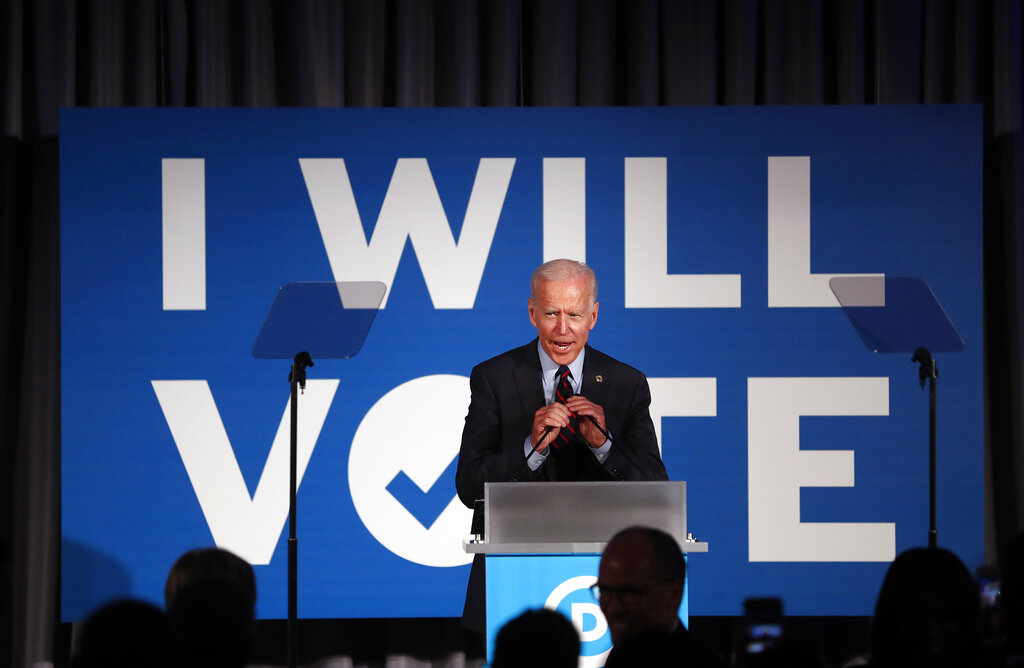
After two days of intense criticism, Democratic presidential candidate Joe Biden reversed course Thursday and declared that he no longer supports a long-standing congressional ban on using federal health care money to pay for abortions. “If I believe health care is a right, as I do, I can no longer support an amendment” that makes it more difficult for some women to access care, Biden said at a Democratic Party fundraiser in Atlanta. The former vice president’s reversal on the Hyde Amendment came after rivals and women’s rights groups blasted him for affirming through campaign aides that he still supported the decades-old budget provision. The dynamics had been certain to flare up again at Democrats’ first primary debate in three weeks. Biden didn’t mention this week’s attacks, saying his decision was about health care, not politics. Yet the circumstances highlight the risks for a 76-year-old former vice president who’s running as more of a centrist in a party in which some skeptical activists openly question whether he can be the party standard-bearer in 2020. And Biden’s explanation tacitly repeated his critics’ arguments that the Hyde Amendment is another abortion barrier that disproportionately affects poor women and women of color. “I’ve been struggling with the problems that Hyde now presents,” Biden said, opening a speech dedicated mostly to voting rights and issues important to the black community. “I want to be clear: I make no apologies for my last position. I make no apologies for what I’m about to say,” he explained, arguing that “circumstances have changed” with Republican-run states — including Georgia, where Biden spoke — adopting severe restrictions on abortion . A Roman Catholic who has wrestled publicly with abortion policy for decades, Biden said he voted as a senator to support the Hyde Amendment because he believed that women would still have access to abortion even without Medicaid insurance and other federal health care grants and that abortion opponents shouldn’t be compelled to pay for the procedure. It was part of what Biden has described as a “middle ground” on abortion. Now, he says, there are too many barriers that threaten that constitutional right, leaving some women with no reasonable options as long as Republicans keep pushing for an outright repeal of the Supreme Court’s 1973 decision that legalized abortion nationwide. The former vice president, who launched his 2020 presidential campaign in April, said he arrived at the decision as part of developing an upcoming comprehensive health care proposal. He has declared his support for a Medicare-like public option as the next step toward universal coverage. He reasoned that his goal of universal coverage means women must have full and fair access to care, including abortion. A Planned Parenthood representative applauded Biden’s reversal but noted that he has been lagging the women’s rights movement on the issue. “Happy to see Joe Biden embrace what we have long known to be true: Hyde blocks people — particularly women of color and women with low incomes — from accessing safe, legal abortion care,” said Leana Wen of Planned Parenthood, the women’s health giant whose services include abortion and abortion referrals. Other activists accepted credit for pushing Biden on the issue. “We’re pleased that Joe Biden has joined the rest of the 2020 Democratic field in coalescing around the Party’s core values — support for abortion rights, and the basic truth that reproductive freedom is fundamental to the pursuit of equality and economic security in this country,” said Ilyse Hogue, president of NARAL, a leading abortion-rights advocacy group. Repealing Hyde has become a defining standard for Democrats in recent years, making what was once a more common position among moderate Democrats more untenable, particularly given the dynamics of primary politics heading into 2020. At its 2016 convention, the party included a call for repealing Hyde in the Democratic platform, doing so at the urging of nominee Hillary Clinton. At least one prominent Democratic woman remained unconvinced. “I am not clear that Joe Biden believes unequivocally that every single woman has the right to make decisions about her body, regardless of her income or race,” said Democratic strategist Jess Morales Rocketto, who worked for Clinton in 2016. “It is imperative that the Democratic nominee believe that.” Republicans pounced, framing Biden’s change in position as a gaffe.“He’s just not very good at this. Joe Biden is an existential threat to Joe Biden,” said Tim Murtaugh, the communications director for President Donald Trump’s reelection campaign. A senior Biden campaign official said some aides were surprised at the speed of the reversal, given Biden’s long history of explaining his abortion positions in terms of his faith. But aides realized that as the front-runner, the attacks weren’t going to let up, and his campaign reasoned that the fallout within the Democratic primary outweigh any long-term benefit of maintain his previous Hyde support. The official spoke on condition of anonymity to discuss internal conversations. Biden’s decade long position first gained new scrutiny several weeks ago when the American Civil Liberties Union circulated video of the candidate telling an activist who asked about the Hyde Amendment that it should be repealed. His campaign later affirmed his support for his fellow Democrats’ call for a federal statute codifying the Roe v. Wade abortion decision into law. Associated Press writer Elana Schor and Juana Summers in Washington, Steve Peoples in New York and Thomas Beaumont in Des Moines, Iowa, contributed to this report. Republished with permission of the Associated Press.
Cory Booker proposes national license for all gun owners
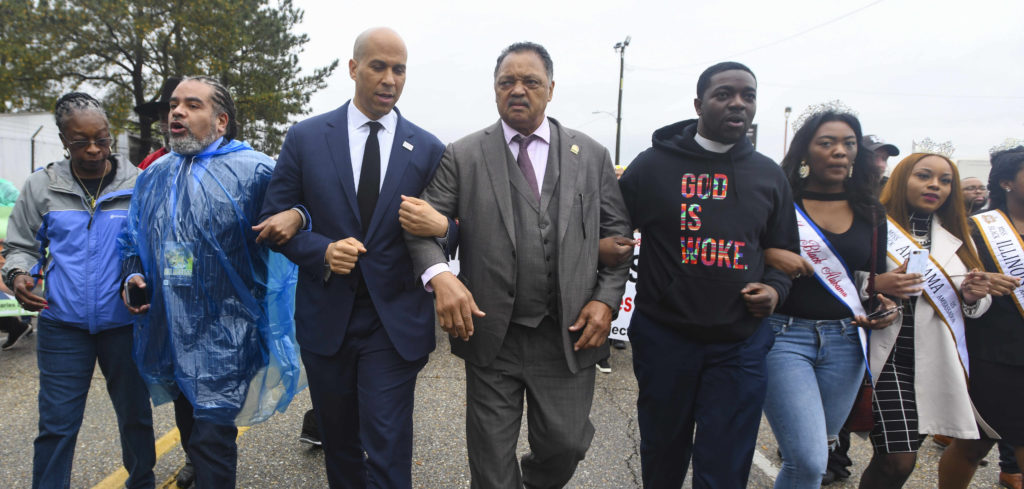
Democratic presidential candidate Cory Booker is proposing that all gun owners be licensed by the federal government, a process that would include an interview and safety training. National licensing is one of more than a dozen specific proposals in a sweeping gun control agenda the U.S. senator from New Jersey released on Monday. It’s his second policy rollout in three weeks as he tries to break through the crowded Democratic primary field . While current gun owners and first-time buyers would be subject to the federal license requirement, a transition period would allow current owners to come into compliance, the Booker campaign said. No such national gun license program currently exists. Thirteen states and the District of Columbia have enacted some form of licensing or permit rules before people can buy guns, according to the Giffords Law Center to Prevent Gun Violence. “I am sick and tired of hearing thoughts and prayers for the communities that have been shattered by gun violence — it is time for bold action,” Booker said in a statement. Last month during a high-profile speech in his hometown of Newark, Booker vowed to “bring a fight” to the National Rifle Association, which generally opposes gun restrictions. Booker, a former mayor of Newark, New Jersey’s largest city, said gun violence is an issue close to him, with several people being shot in his neighborhood recently. “We must step up and deal with something that is crushing communities, destroying lives and really just tearing apart families,” Booker said in an interview on CBS’ “CBS This Morning.” Booker’s gun control agenda includes universal background checks for gun buyers; the reinstitution of a ban on assault weapons and high-capacity firearm magazines; and the modernization of the Federal Bureau of Alcohol, Tobacco, Firearms and Explosives. The plan would face a steep climb to winning approval from a Democratic House and would face even stiffer resistance in a Republican-controlled Senate, where less-sweeping gun control measures have failed in recent years. President Donald Trump has said the constitutional right to bear arms is “under assault.” Trump, a Republican, spoke at the NRA’s annual convention last month, vowing to fight for gun rights and imploring NRA members to rally behind his reelection bid. Booker, who launched his presidential campaign in February, has struggled to rise from the low single digits in polls of the 21-candidate Democratic primary field, though he recently secured the 65,000 donors necessary to meet both qualifications for participation in next month’s first debate . He released an environmental justice plan late last month. Republished with the permission of the Associated Press.
