
Ann Coulter: Mo Brooks a ‘terrific’ choice to primary Donald Trump in 2020
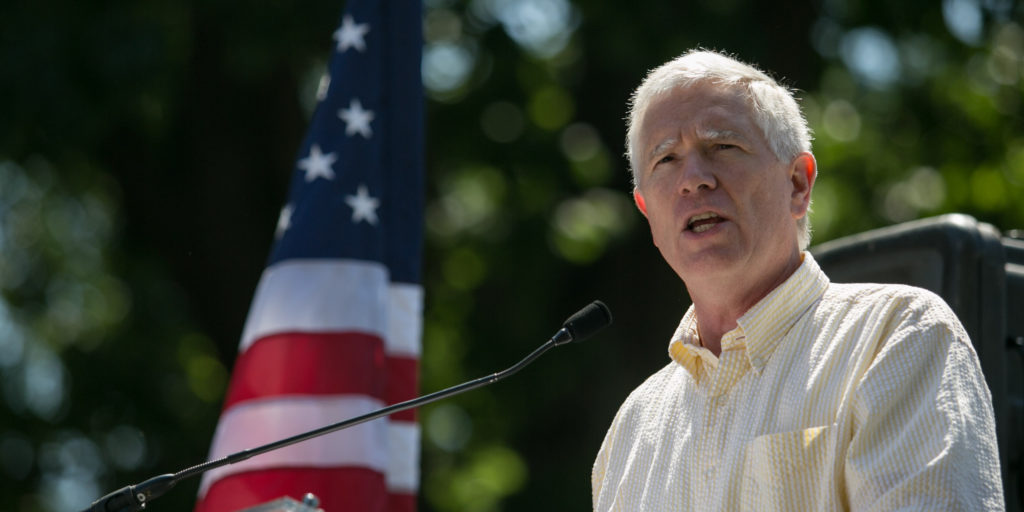
Ann Coulter, a conservative pundit once supportive of President Donald Trump who is now deeply critical of him, has suggested that Congressman Mo Brooks would be a good choice to challenge him for the Republican nomination in 2020. AL.com reports that Coulter said during a podcast interview that Trump has not done what he was elected to do. “We put this lunatic in the White House for one reason,” she said, which was to build a wall along our southern border. When host Michael Isikoff asked Coulter if she wanted a primary challenger to Trump in 2020, she said no, “I want him to build the wall, end anchor babies, deport dreamers …” If he does not do that, she said, a primary challenge would inevitably happen and “Mo Brooks is terrific.” Mo Brooks has a track record of staunch support for the border wall. He has twice introduced the Ensuring Lawful Collection of Hidden Assets to Provide Order (EL CHAPO) Act, which would use seized from drug cartels to pay for the border wall. “No nation can exist without borders and the EL CHAPO Act, which would reserve billions in assets forfeited to the U.S. Government by drug kingpins to be used for border security, is a significant step towards funding President Trump’s border wall, thereby restoring America’s control of her borders,” Brooks said in a press release. In his first campaign ad of 2017, Brooks promised to do whatever it takes to get the border wall funded. “I am willing to do whatever it takes in the Senate to ensure President Trump’s promise to the American people is kept,” Brooks said in the ad. “I’ll aggressively oppose every single spending bill that doesn’t fund the border wall and expose every Republican establishment Senator who sides with the Democrats against our President.” He continued “and if I have to filibuster on the Senate floor, I’ll even read the King James Bible until the wall is funded. And you know what, Washington could benefit from that.” Brooks has praised President Trump’s decision to use military force along our southern border, saying “Until Congress gives President Trump funding for the physical border wall, his decision to send troops to the border, consistent with his Constitutional power as commander in chief, not only sends a strong message to the world that our borders will be secure, but more importantly preserves America’s national sovereignty.” He continued to support a military presence against the illegal immigrant caravan. Initially a fervent supporter of Trump’s candidacy and presidency, Coulter soured on the president when immigration policies failed to meet her expectations.
Cory Booker launches 2020 bid
U.S. Sen. Cory Booker on Friday declared his bid for the presidency in 2020 with a sweeping call to unite a deeply polarized nation around a “common purpose.” The New Jersey Democrat, who is the second black candidate in a primary field that’s already historically diverse, delivered his message of unity amid an era marked by bitter political division. He announced his run on the first day of Black History Month, underscoring his consequential status as America’s potential second black president after Barack Obama. “I believe that we can build a country where no one is forgotten, no one is left behind; where parents can put food on the table; where there are good-paying jobs with good benefits in every neighborhood; where our criminal justice system keeps us safe, instead of shuffling more children into cages and coffins; where we see the faces of our leaders on television and feel pride, not shame,” Booker said in a video message to supporters, subtly jabbing at President Donald Trump. “It is not a matter of can we, it’s a matter of do we have the collective will, the American will?” he added. “I believe we do.” Booker enters what’s shaping up to be a crowded presidential primary, with three of his fellow Democratic senators — Elizabeth Warren of Massachusetts, Kamala Harris of California and Kirsten Gillibrand of New York — already either declared or exploring a run. But he’s spent months telegraphing his intentions to join the race, visiting the early-voting states of Iowa, New Hampshire and South Carolina to build connections with key powerbrokers. He already has slated trips back to those states later this month. Booker began reaching out to key constituencies Friday, calling in to three radio shows popular with black and Hispanic listeners. He spoke in fluent Spanish during his interview with Univision, vowing to work closely with “the Latino community,” and discussed his support for marijuana legalization in another interview. Later on Friday, Booker will be a guest on “The View,” a TV talk show popular with female viewers, where his mother plans to sit in the audience. A former mayor of Newark, New Jersey’s largest city, Booker won a special Senate election in 2013 to replace Democrat Frank Lautenberg and then won a full Senate term in 2014. He will be able to run for a second full Senate term in 2020 while running for president, thanks to a law that New Jersey’s governor signed in November. But that doesn’t mean the 49-year-old’s path to the nomination will be easy. As many as five more Democratic senators could soon mount their own primary bids, creating a competition for voters’ attention, and several of Booker’s rival presidential hopefuls bring higher name recognition to a race that may also feature popular former Vice President Joe Biden. The affable Booker, known for his fluency in connecting with voters during an age of selfies and social media, also could face some difficulty winning the hearts of the Democratic base due to his past financial ties to banking and pharmaceutical interests. Booker said he would stop taking contributions from pharmaceutical companies in 2017, the year that he partnered with potential presidential rival Sen. Bernie Sanders of Vermont on a bill that would allow importation of prescription drugs from Canada. He also likely will stand alone as an unmarried candidate, though he brings a compelling personal biography that could help elevate his message that “the only way we can make change is when people come together.” Booker’s father grew up in a low-income community in North Carolina, and the senator has recalled his family’s later struggle to settle in suburban New Jersey amid discrimination against black homebuyers. The senator has brought a heartfelt and passionate style to his achievements in the Senate, at times fusing his personal spirituality with policy proposals that focus on social justice. Booker played a key role in the bipartisan criminal justice reform bill that Trump supported last year, for example, helping strike that deal two months after sparring with Republicans during the battle over Supreme Court Justice Brett Kavanaugh’s confirmation. In his announcement video, Booker invoked the fight against slavery and the role of immigration in building the nation’s character. “The history of our nation is defined by collective action; by interwoven destinies of slaves and abolitionists; of those born here and those who chose America as home; of those who took up arms to defend our country and those who linked arms to challenge and change it,” he said. Born in the nation’s capital but raised in New Jersey, Booker made a name for himself as Newark mayor by personally shoveling the snow of residents. He has $4.1 million left in his campaign coffers that could also be used to assist his presidential run. Rather than opening an exploratory committee to test the waters, Booker took the direct step to open a campaign seeking the Democratic nomination. Booker is aligning with many other prominent Democratic White House contenders by forswearing all donations from corporate political action committees and federal lobbyists to his campaign, dubbed Cory 2020. A prominent Booker supporter, San Francisco attorney Steve Phillips, says he is working on millions of dollars in committed donations to a so-called super PAC that would boost the senator’s candidacy, but Booker’s campaign is openly against super PACs playing any role in the presidential race. Booker visited his local congregation at Metropolitan Baptist Church in Newark on Thursday night for prayers ahead of his Friday announcement, a decision that underscores the role his faith will play in his campaign. He has attended service at the church since moving to Newark in 1996. Booker’s campaign manager will be Addisu Demissie, who managed California Democratic Gov. Gavin Newsom’s campaign last year and previously worked on Hillary Clinton’s 2016 presidential bid. His deputy campaign manager, Jenna Lowenstein, is also a veteran of Clinton’s 2016 campaign, while his current Senate chief of staff, Matt Klapper, will serve as a senior campaign adviser.
2020 Democratic primary field puts diversity in spotlight

The early days of the Democratic primary campaign are highlighting the party’s diversity as it seeks a nominee who can build a coalition to take on President Donald Trump. Of the more than half dozen Democrats who have either moved toward a campaign or declared their candidacy, four are women: Sens. Kirsten Gillibrand of New York, Kamala Harris of California and Elizabeth Warren of Massachusetts and Rep. Tulsi Gabbard of Hawaii. Harris is also African-American. Former Obama Cabinet member Julian Castro, who is Latino, has also joined the race. And on Wednesday, Democrat Pete Buttigieg, the 37-year-old mayor of South Bend, Indiana, jumped into the campaign. If he wins the Democratic nomination, he would be the first openly gay presidential nominee from a major political party. He would also be the youngest person ever to become president if he wins the general election. The diversity is likely to expand in the coming weeks as other Democrats enter the race. The field that’s taking shape follows a successful midterm election in which Democrats elected a historically diverse class of politicians to Congress, a pattern they’d like to repeat on the presidential scale. Neera Tanden, president of the liberal Center for American Progress Action Fund, hailed the Democrats’ multiple trailblazing candidates for reflecting that “the central opposition to Trump is around a vision of the country that’s inclusive of all Americans.” “A lot of different people are going to see that they can be part of the Democratic Party” thanks to a field that showcases women, candidates of color, and the first potential LGBT nominee, Tanden said. The primary “hopefully will bring a lot of people into the process,” she added, recalling the high number of voters who engaged in a 2008 Democratic primary that featured a possible female nominee, Hillary Clinton, and the man who would become the first black president, Barack Obama. The array of backgrounds was on display Wednesday when Buttigieg spoke in personal terms about his marriage. “The most important thing in my life — my marriage to Chasten — is something that exists by the grace of a single vote on the U.S. Supreme Court,” Buttigieg told reporters. “So I’m somebody who understands — whether it’s through that or whether it’s through the fact that I was sent to war on the orders of the president — I understand politics not in terms of who’s up and who’s down or some of the other things that command the most attention on the news but in terms of everyday impacts on our lives.” Gillibrand has put her identity as a mother at the core of her campaign, and Harris launched her campaign on this week’s Martin Luther King holiday, a nod to her historic bid to become the first black woman elected president. A number of high-profile candidates remain on the sidelines, including two who would further bolster the diversity of the 2020 field: Sens. Cory Booker of New Jersey, who is black, and Amy Klobuchar of Minnesota. Booker, who’s widely expected to join the presidential fray in the coming days, visited the pivotal early-voting state of South Carolina this week for public events honoring King and private meetings with local activists. Klobuchar is set to speak at the University of Pennsylvania on Thursday about her work on the Senate Judiciary Committee, where Booker and Harris also are members. The affable Midwesterner recently told MSNBC that her family “is on board” if she opts to run in 2020, though she’s offered little clarity about her timetable to announce a decision. Though Klobuchar would be the fifth major female candidate in the Democratic primary, female candidates shouldn’t be shoehorned into a “narrative” dominated by their identity that excludes the policies they’re championing, said Virginia Kase, CEO of the League of Women Voters. Kase pushed back at one popular 2018 narrative in a recent interview, noting that that “every year is the year of the woman — the reality is that we’ve always been major contributors” in the electoral process. Rashad Robinson, executive director of the civil rights-focused nonprofit Color of Change, said in an interview that the diversity of the Democratic field is “a great thing and we should celebrate it,” adding that, “Our work is always about changing the rules — changing the rules of who can run and who can rule and who can lead is incredibly important.” But in addition to those “unwritten rules,” Robinson pointed to the urgency of changing the “written rules” of American life, adding that “diversity alone does not mean structures and policies and practices that have held so many back will change” overnight. Meanwhile, three white male candidates who could scramble the race — former Vice President Joe Biden, Sen. Bernie Sanders of Vermont, and former Texas Rep. Beto O’Rourke — are still weighing their own presidential plans. Biden addressed a key vulnerability in his potential candidacy this week by publicly airing regret about his support for a 1994 crime bill that’s had particularly negative effects on African-American communities, while Sanders built his own new connections to black voters during a trip to South Carolina. As Biden mulls a run for president, his allies have been sending supporters a memo that could serve as a rationale for a campaign. The memo hails Biden’s long track record in politics and argues that at a time of “unprecedented political chaos” during Trump’s administration, Biden would offer “trustworthy, compassionate leadership.” O’Rourke, for his part, continues to gauge his own future amid pundits’ criticism about blog posts he published during a recent road trip through multiple states. The 46-year-old Texan acknowledged that he’s been “in and out of a funk” following his departure from Congress after losing a high-profile Senate race in November, sparking questions about the luxury of his indecision given the family wealth and network of passionate backers he can lean on. As the Democratic field is poised to become more diverse, Republicans say Trump will run for re-election based on his
Pete Buttigieg enters race for 2020 Democrat presidential nomination
Democrat Pete Buttigieg, the 37-year-old mayor of South Bend, Indiana, says he’s forming an exploratory committee for a 2020 presidential bid. “The reality is there’s no going back, and there’s no such thing as ‘again’ in the real world. We can’t look for greatness in the past,” Buttigieg says in a video that includes before-and-after footage of South Bend, a Rust Belt city once described as “dying.” “Right now our country needs a fresh start,” he says. Buttigieg has touted his work to improve his city of 100,000 residents as he’s prepared for a jump from local politics to a presidential campaign. He’s also said Democrats could benefit from a new generation of leaders as they try to unseat President Donald Trump in 2020. He’s expected to travel to Iowa next week to meet with voters in the nation’s first caucus state, followed by stops in New Hampshire. Buttigieg is a Rhodes scholar who was first elected mayor of his hometown in 2011 at age 29, making him the youngest mayor of a U.S. city with at least 100,000 residents. A lieutenant in the Navy Reserve, he served a tour in Afghanistan in 2014. Buttigieg raised his national profile with an unsuccessful 2017 run for Democratic National Committee chairman, saying the party needed a new start. He withdrew from the race before a vote when it became clear he didn’t have the support to win. Buttigieg has spent time in Iowa and other battleground states in recent years as he tried to build financial support and name recognition. He cracks that those who do know his name still aren’t sure how to pronounce it. (It’s BOO’-tah-juhj.) Most of the time he goes by “Mayor Pete.” Amid his campaign for a second term, Buttigieg came out as gay in a column in the local newspaper. He went on to win re-election with 80 percent of the vote. In 2018, three years to the day after the column ran, he married his husband, middle school teacher Chasten Glezman. If he were to win the Democratic nomination, Buttigieg would be the first openly gay presidential nominee from a major political party. Buttigieg announced in December that he wouldn’t seek a third term as mayor, stoking speculation he would join a field of roughly two dozen candidates who may seek the Democratic nomination for president — most of them better known and with experience in higher office, and all of them older. “I belong to a generation that is stepping forward right now,” he says in the video released Wednesday. “We’re the generation that lived through school shootings, that served in the wars after 9/11, and we’re the generation that stands to be the first to make less than our parents unless we do something different. We can’t just polish off a system so broken. It is a season for boldness and a focus on the future.” Buttigieg is releasing in February a book about his life and his tenure leading South Bend. Republished with permission from the Associated Press.
Kamala Harris jumps into presidential race
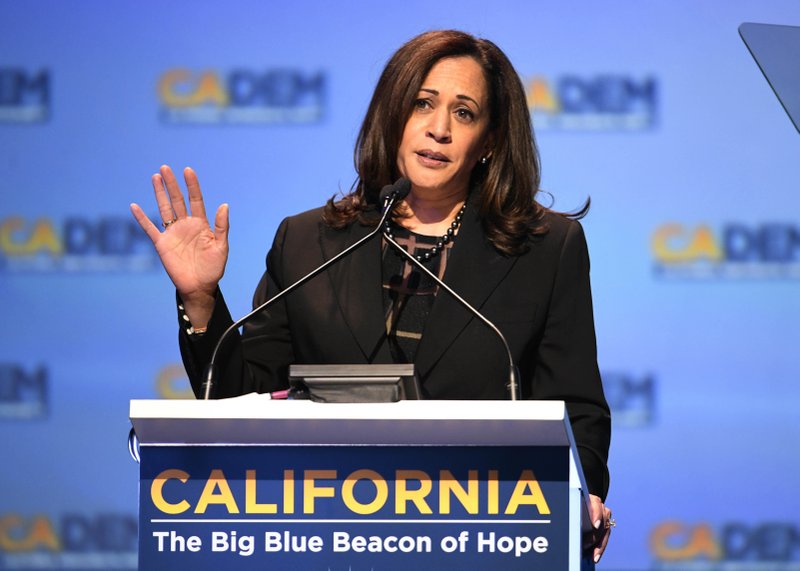
Kamala Harris, a first-term senator and former California attorney general known for her rigorous questioning of President Donald Trump‘s nominees, entered the Democratic presidential race on Monday. Vowing to “bring our voices together,” Harris would be the first woman to hold the presidency and the second African-American if she succeeds. Harris, who grew up in Oakland, California, and is a daughter of parents from Jamaica and India, is one of the earliest high-profile Democrats to join what is expected to be a crowded field. She made her long anticipated announcement on ABC’s “Good Morning America.” “I am running for president of the United States,” she said. “And I’m very excited about it.” The 54-year old portrayed herself as a fighter for justice, decency and equality in a video distributed by her campaign as she announced her bid. “They’re the values we as Americans cherish, and they’re all on the line now,” Harris says in the video . “The future of our country depends on you and millions of others lifting our voices to fight for our American values.” On ABC, she cited her years as a prosecutor in asserting: “My entire career has been focused on keeping people safe. It is probably one of the things that motivates me more than anything else.” Harris launched her presidential as the nation observes what would have been the 90th birthday of the slain civil rights leader Martin Luther King Jr. The timing was a clear signal that the California senator— who has joked that she had a “stroller’s-eye view” of the civil rights movement because her parents wheeled her and her sister Maya to protests — sees herself as another leader in that fight. She abandoned the formality of launching an exploratory committee, instead going all in on a presidential bid. She plans a formal campaign launch in Oakland on Jan. 27. The campaign will be based in Baltimore, with a second office in Oakland. Harris joins what is expected to be a wide-open race for the Democratic presidential nomination. There’s no apparent front-runner at this early stage and Harris will face off against several Senate colleagues. Sens. Elizabeth Warren of Massachusetts and Kirsten Gillibrand of New York have both launched exploratory committees. Sens. Cory Booker of New Jersey, Sherrod Brown of Ohio and Amy Klobuchar of Minnesota are also looking at the race. If Booker enters the race, he and Harris could face a fierce competition for support from black voters. Vermont Sen. Bernie Sanders, who unsuccessfully sought the 2016 Democratic nomination, is also considering a campaign. Several other Democrats have already declared their intentions, including former Maryland Rep. John Delaney and former Obama administration housing chief Julian Castro. Harris launches her campaign fresh off of a tour to promote her latest memoir, “The Truths We Hold,” which was widely seen as a stage-setter for a presidential bid. She is already planning her first trip to an early primary state as a declared candidate. On Friday, Harris will travel to South Carolina to attend the Pink Ice Gala in Columbia, which is hosted by a South Carolina chapter of the Alpha Kappa Alpha Sorority, which Harris pledged as an undergraduate student at Howard University. The sorority, founded more than 100 years ago, is a stronghold in the African-American community. South Carolina, where black voters make up a large share of the Democratic electorate, is likely to figure heavily into Harris’s prospects. And early voting in Harris’s home state of California will overlap with the traditional early nominating contests, which could give Harris a boost. Harris’s campaign team is already taking shape and includes several veterans of Democratic politics. Juan Rodriguez, who ran Harris’s 2016 Senate campaign, will manage her presidential bid. Her sister, Maya Harris, a former top adviser to Hillary Clinton, will be the campaign chair. The veteran campaign finance lawyer Marc Elias will serve as the Harris campaign’s general counsel, and Angelique Cannon, who worked for Clinton’s 2016 campaign, will serve as national finance director. David Huynh, who was Clinton’s director of delegate operations in 2016, will serve as a senior adviser. Lily Adams, a Clinton campaign alum who has worked as Harris’s spokeswoman, will be communications director. Her staff says she plans to reject the assistance of a super PAC, as well as corporate PAC money. She’s invested heavily in cultivating a digital, small-dollar donor network before her presidential bid. Before her 2016 victory in the Senate race, Harris made her career in law enforcement. She served as the district attorney in San Francisco before she was elected to serve as attorney general. Harris is likely to face questions about her law enforcement record, particularly after the Black Lives Matter movement and activists across the country pushed for a criminal justice overhaul. Harris’s prosecutorial record has recently come under new scrutiny after a blistering opinion piece in The New York Times criticized her repeated claim that she was a “progressive prosecutor,” focused on changing a broken criminal justice system from within. Harris addressed her law enforcement background in her book. She argued it was a “false choice” to decide between supporting the police and advocating for greater scrutiny of law enforcement. She “knew that there was an important role on the inside, sitting at the table where the decisions were being made,” she wrote. “When activists came marching and banging on the doors, I wanted to be on the other side to let them in.” Harris supported legislation that passed the Senate last year that overhauled the criminal justice system, particularly when it comes to sentencing rules. Harris is framing her campaign through her courtroom experience. The theme of her nascent campaign is “Kamala Harris, for the people,” the same words she spoke as a prosecutor, trying a case in the courtroom. Republished with permission from the Associated Press.
MLK holiday represents big moment for 2020 Democrats
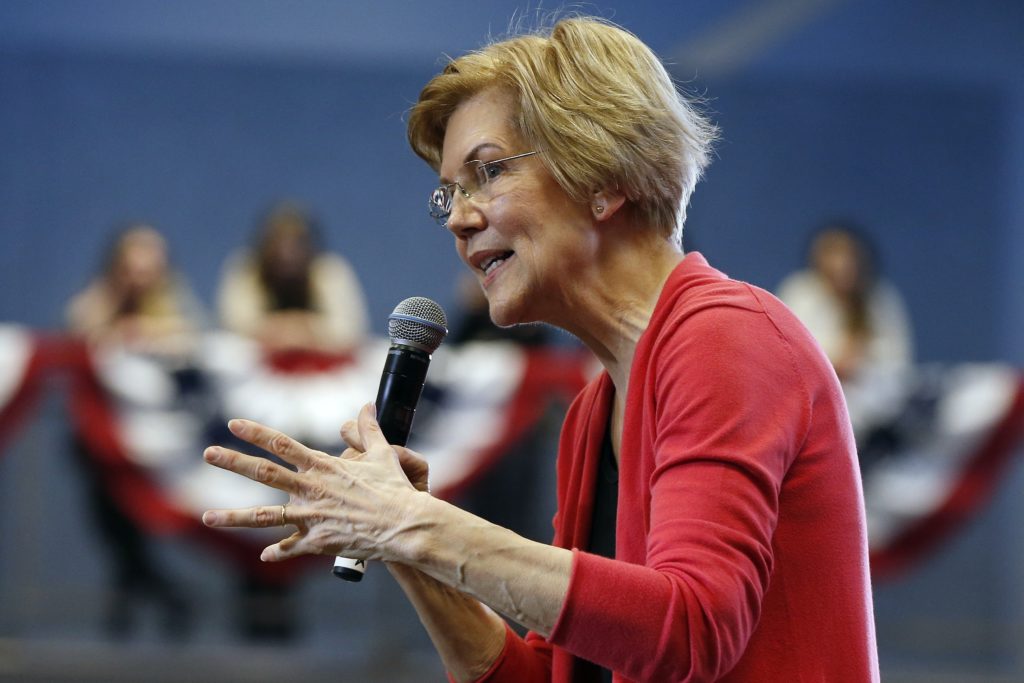
Monday’s observance of what would have been Martin Luther King Jr.’s 90th birthday is emerging as an important moment for Democrats eyeing the White House to talk about one of the most divisive issues in American politics: race. At least a half dozen declared or potential presidential candidates will attend events and talk about what King’s legacy means to Americans in 2019. Among them is former Vice President Joe Biden, who, amid intense speculation over whether he’ll seek the presidency, will make his first public appearance of the year at the National Action Network’s annual King breakfast in Washington with its founder, the Rev. Al Sharpton, and Martin Luther King III. Former New York Mayor Michael Bloomberg, still considering a bid, is also on the schedule. And New York Sen. Kirsten Gillibrand, who jumped in the 2020 race this week, will appear with Sharpton later in the day in Harlem. Meanwhile, Sens. Cory Booker of New Jersey and Bernie Sanders of Vermont will attend events in South Carolina, where black voters make up 60 percent of the Democratic primary. And Massachusetts Sen. Elizabeth Warren is expected to speak in Boston, where King attended seminary. The King holiday marks the first time in the early days of the Democratic primary that so many White House hopefuls are holding public events on the same day. That reflects the wide-open nature of the 2020 field, which is likely to include several candidates of color for the first time. Some Democrats say the party’s presidential nomination could ultimately go to the person who best navigates racial issues. “On King Day, they should all have messages for how we enable people who live on the outskirts of hope to come back into the circle of opportunity,” said Democratic strategist Donna Brazile. “That’s what Dr. King would do.” Politics loom large over this year’s remembrances. In a tweet earlier this week, President Donald Trump again mocked Warren, using the slur “Pocahontas” and referring to the 19th-century Battle at Little Bighorn and Wounded Knee Massacre. Rep. Steve King, an Iowa Republican, prompted bipartisan criticism with racist remarks that questioned how white supremacy and white nationalism became offensive terms. King has said his comments were taken out of context. Against that backdrop, Sharpton said it’s crucial for the candidates speaking on Monday to directly address racial politics. “It will be telling if they do not represent an alternative to the situation we’re in,” he said, referring to the country’s racial divisions. “They’ve got to deal with the issues in a way that we know that they’re not just making a one-day-a-year speech.” “The challenge,” he added, “is how you distinguish yourself without appearing disunifying.” Last fall’s midterm elections show the potential for assembling such coalitions, with several minority congressional candidates winning in mostly white districts. And while black Democrats suffered defeat in Georgia, Florida and Missouri, the gains they made show promise for minority candidates eyeing 2020. Andrew Gillum, who lost his Florida gubernatorial bid in November by 30,000 votes, has met with several potential 2020 candidates in recent weeks, and he said the topic of race has come up. The issue was unavoidable in his own bid to become Florida’s first African-American governor. “Under no circumstance could I deny my race and how that has informed who I am today,” Gillum said. “People aren’t stupid. I don’t want anyone to pull any punches about how race shows up in society and how it impacts us.” But the balance is tricky, particularly for candidates of color, he said. For them, navigating race “is like walking on a lake freshly frozen,” Gillum said. “You never know what step might take you under.” Regardless of their race, Democratic candidates will have to find a way to appeal to a broad coalition of voters with a message that energizes a diverse base without alienating whites whose support will also be crucial. In a video accompanying the launch of her presidential exploratory committee, Warren included a chart outlining the disparate household wealth between white and black families and called for an economy that “works for all of us.” A similar video from Gillibrand included broad appeals such as a pledge to support the middle class, along with a clip of her saying, “It is outrageous to ask women of color to bear the burdens of every single one of these fights over and over and over again.” Alabama Sen. Doug Jones, who is white, defeated African-American challengers in his primary before going on to win a special election in 2017, becoming the first Democrat in a generation to represent the solidly Republican state. Jones said his background as the prosecutor who brought the 16th Street Baptist Church bombers to justice was an advantage with black voters, but added that he also had a proven track record on issues of equality, respect and voting rights long after that case. “Folks are going to be looking at candidates and saying, ‘Have you got a history of this, or is it just the first time you’re looking at it?’” Jones said in an interview. “I talked about issues important to the African-American community, but they were really a lot of the same issues that were important to the white community: health care, jobs, education, those kitchen-table issues that cross all manner of racial lines and get to the heart of the matter.” Authenticity will be important for candidates, regardless of color, in delivering a message that resonates with voters, Jones said. “If you’re talking to the black preachers in the Black Belt of Alabama, you ought not be afraid of giving the same speech to the Chamber of Commerce in Madison County,” he said. “It’s a matter of messaging. You’ve got to be who you are. … Not trying to pander to anyone, not to appear that you’re pandering to anyone or not trying to minimize your support.” ___ Republished with permission from the Associated Press.
Democrats focus on voting rights ahead of 2020 primary
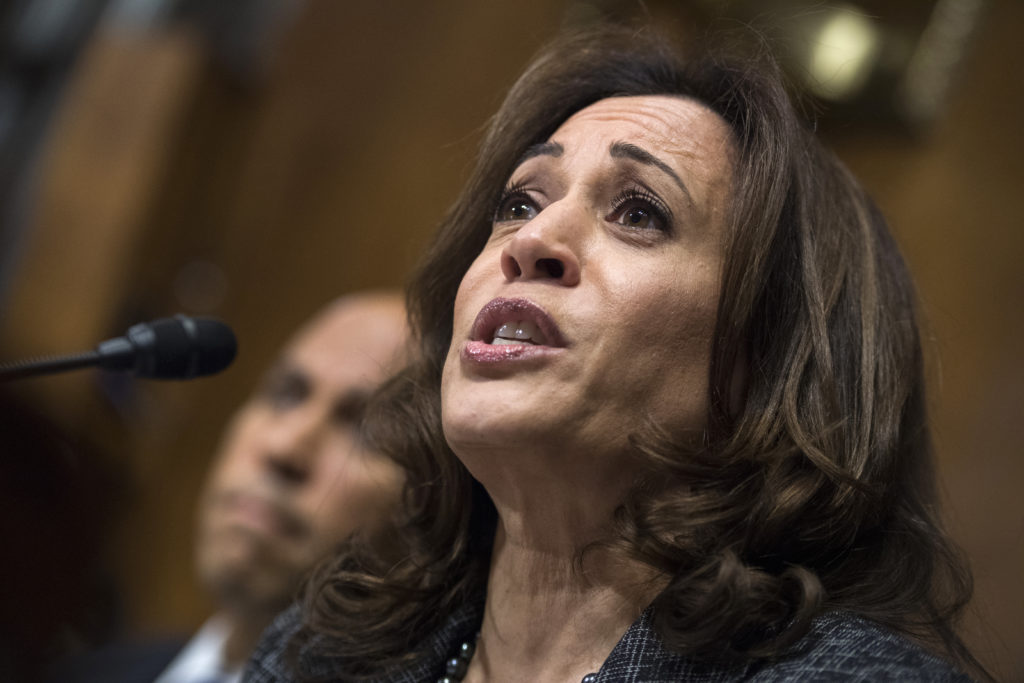
Democrats are trying to turn their most painful losses this year into a rallying cry they hope will electrify the 2020 presidential campaign: Every vote matters. Multiple potential contenders for the Democratic presidential nomination are elevating the issue of voting rights as they prepare to launch campaigns. They’re vowing to oppose Republican-backed efforts to require identification to vote, reinstate protections eliminated by a 2013 Supreme Court ruling and frequently highlight the necessity of counting every vote. The aim is to tap into the anger and frustration among Democrats who argue that Republicans win some elections by making it harder for their constituents, particularly minorities, to vote. That sentiment has long existed among Democrats but intensified after the party lost closely watched races for governor in Georgia and Florida last month. Both contests featured heated racial rhetoric and charges of voter suppression. The party’s suspicion of Republicans has also grown as a congressional race in North Carolina remains mired in allegations of absentee ballot fraud and GOP lawmakers in Wisconsin and Michigan seek to weaken the power of incoming Democratic governors. Democrats ultimately hope to turn the issue of voting rights into an argument that’s just as persuasive to voters in 2020 as health care proved to be in 2018. And there’s already competition among potential presidential contenders to build a reputation as the most aggressive in advocating for the right to vote. “This is not a new issue, and it is quite frankly the dark history of our country, which is specific populations being restricted from meaningful access to the right to vote,” Sen. Kamala Harris of California told The Associated Press. “There’s no question that 2018 highlighted an issue that has maybe seemed to be dormant for some time, but it’s very much alive and it should be the subject of dinner table conversations everywhere and it should be of real concern to everyone because, look, when people lose confidence in our democracy, when Americans lose confidence in our democracy, it will impair our strength. It will cause us to be weaker,” she said. Aides to Harris said that voting rights would be among her top priorities, and that she would likely frame it less as a civil rights issue and as more of a broader Democratic rallying point. She has argued that the entire Democratic agenda is weakened when Republicans restrict ballot access for unions, minorities and other groups. New Jersey Sen. Cory Booker, who is weighing his own presidential bid, has framed the issue of voting rights in the context of a traditional civil rights issue. During an October trip to Des Moines, Iowa, Booker sparked cheering standing ovations as he quoted from Martin Luther King Jr.‘s speech from the 1965 voting rights march on Montgomery, Alabama. “How long will it take? I’m going to tell you, not long now,” Booker proclaimed, turning the moment into a call-and-response. “Because it’s not long until November.” Harris, Booker and Sen. Amy Klobuchar of Minnesota are among the potential presidential candidates who will hold onto seats on the Senate Judiciary Committee heading into 2020, giving them an important post from which to address voting rights. That’s leaving some activists pleased that the issue appears to be moving into the mainstream of Democratic politics. “This is the first time where I feel like there has been a broad conversation because the examples were so egregious,” said Adrianne Shropshire, the executive director of BlackPAC, which works to mobilize black voters. “It was literally in every community that I went to, in every church that I stopped by, in every neighborhood when I was knocking on doors — that was almost one of the first things that people were talking about because everyone felt like their community was under assault.” Still, some caution that the focus on voting rights isn’t a successful strategy to win a crucial election and could instead backfire on Democrats who are trying to appeal to broader swaths of voters. Peter Guzman, a Republican who is the president of the Latin Chamber of Commerce in Nevada, said that while he feels every candidate — Democrat and Republican — should talk about voting rights, he didn’t see it as a singularly important issue to center a campaign on. “I think the conversation should be encouraging everybody to vote, and if anybody feels like that’s being suppressed, they certainly should call the authorities and make it known that they’re not able to vote,” Guzman said in an interview. He added that he could see potential backlash for a candidate who campaigns on it. “I’m not quite sure everybody in the country believes the problem is that significant,” he said. “Here in Nevada, I believe that we have some of the best, safest voting in the United States,” he added. “I think we’re a model for the rest of the nation. I do not believe that there’s voter suppression. Whenever I hear voter fraud, I believe those are buzzwords for other things.” That’s not stopping Democrats for now. At a post-election gathering on Capitol Hill of the National Action Network, the civil rights organization founded by the Rev. Al Sharpton, multiple senators who appear to be moving toward jumping into the 2020 presidential race eagerly discussed the issue. “When it comes to elections, there should be no hesitation: Every vote matters, period,” said Sen. Elizabeth Warren of Massachusetts. “If you can’t get more Americans to vote for you than the other guy or gal, then you lose. It’s that simple. Politicians are supposed to compete over how many voters they can persuade to come vote for them, not how many American citizens they can disqualify, discourage or demoralize.” Klobuchar, who could stake out a more moderate position among Democrats should she choose to seek the White House, told the gathering, “I think No. 1 on the agenda has got to be our economy.” “And then,” she continued, “you can’t have a fair economy for everyone if you don’t have fair voting rights.”
Bernie Sanders eyes ‘bigger’ 2020 bid despite some warning signs
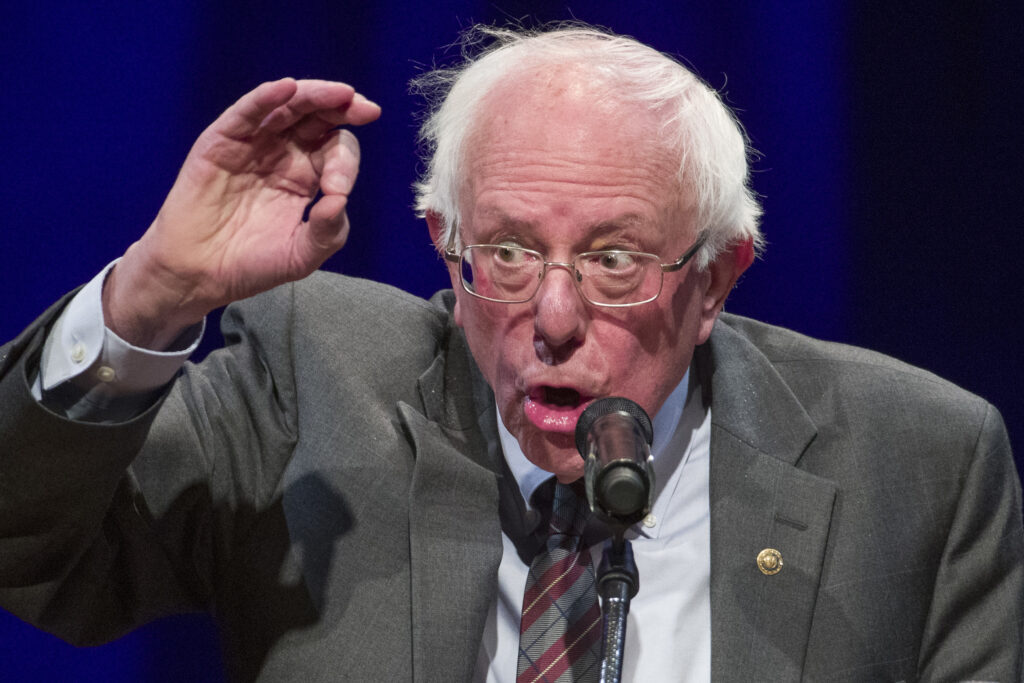
An insurgent underdog no more, Vermont Sen. Bernie Sanders is laying the groundwork to launch a bigger presidential campaign than his first, as advisers predict he would open the 2020 Democratic presidential primary season as a political powerhouse. A final decision has not been made, but those closest to the 77-year-old self-described democratic socialist suggest that neither age nor interest from a glut of progressive presidential prospects would dissuade him from undertaking a second shot at the presidency. And as Sanders’ brain trust gathered for a retreat in Vermont over the weekend, some spoke openly about a 2020 White House bid as if it was almost a foregone conclusion. “This time, he starts off as a front-runner, or one of the front-runners,” Sanders’ 2016 campaign manager Jeff Weaver told The Associated Press, highlighting the senator’s proven ability to generate massive fundraising through small-dollar donations and his ready-made network of staff and volunteers. Weaver added: “It’ll be a much bigger campaign if he runs again, in terms of the size of the operation.” Amid the enthusiasm — and there was plenty in Burlington as the Sanders Institute convened his celebrity supporters, former campaign staff and progressive policy leaders — there were also signs of cracks in Sanders’ political base. His loyalists are sizing up a prospective 2020 Democratic field likely to feature a collection of ambitious liberal leaders — and not the establishment-minded Hillary Clinton. Instead, a new generation of outspoken Democrats such as Massachusetts Sen. Elizabeth Warren, New Jersey Sen. Cory Booker and California Sen. Kamala Harris are expected to seek the Democratic nomination. All three have embraced Sanders’ call for “Medicare for All” and a $15 minimum wage, among other policy priorities he helped bring into the Democratic mainstream in the Trump era. Acknowledging the stark differences between the 2016 and 2020 fields, Hollywood star Danny Glover, who campaigned alongside Sanders in 2016, would not commit to a second Sanders’ candidacy when asked this weekend. “I don’t know what 2020 looks like right now,” Glover said before taking a front-row seat for Sanders’ opening remarks. “I’m going to support who I feel to be the most progressive choice.” One of Sanders’ chief supporters from neighboring New Hampshire, former state senate majority leader Burt Cohen, acknowledged that some people worry Sanders is too old for a second run, although that’s not a major concern of his. Like Glover, he’s not sure if he’ll join Sanders a second time. “There are other people picking up the flag and holding it high, and you know, it could be Bernie, but I think there are other people as well,” said Cohen, who did not attend the Vermont summit. “It’s not ‘Bernie or bust.’ That’s certainly not the case.” Another high-profile Sanders supporter who was in attendance, Cornel West, described the Vermont senator as “the most consistently progressive one out there,” suggesting that some would-be 2020 candidates have adopted Sanders’ words, but maintained ties to Wall Street and “militarism.” Still, West conceded that none of likely 2020 candidates “have as much baggage” as Clinton did. Perhaps the most important member of Sanders’ network, wife Jane O’Meara Sanders, said Democrats may be embracing Sanders’ “bold progressive ideas” on health care and the economy in some cases, but there’s need to go further on issues like climate change, affordable housing and student debt. Whether her husband will lead the debate as a presidential candidate in 2020, she said, remains unclear. O’Meara Sanders noted that one question above all others would guide their decision: “Who can beat Donald Trump?” “That has to be the primary goal. To win. We think you win by a very strong progressive commitment,” she told AP. When asked if Sanders could win in 2020, she said “every single poll” showed that Sanders would have beaten Republican nominee Donald Trump two years ago. O’Meara Sanders also downplayed the grueling personal demands of a presidential campaign, something that historically has led some other spouses to pressure their husbands to avoid the white-hot presidential spotlight more than once. “It was extremely inspiring meeting all the people all over the country,” she said of the 2016 campaign. “And what might be difficult for me is not as important as what might be difficult for them and whether or not we can help them with those difficulties.” “It’s not about us,” O’Meara Sanders added. “It’s about what’s right for the country.” Despite signs pointing to a 2020 run, Sanders has given himself a clear escape hatch. Weaver, like Sanders himself in a recent interview, suggested that the senator would step aside if he believes another candidate has a better shot at denying Trump a second term. There are no clear indications from Sanders or those closest to him, however, that he currently has that belief. “I know they haven’t announced, but it sort of seems like that’s what’s happening,” said John Cusack, another actor invited to the weekend summit. Asked about his preference for 2020, he called Sanders “the only real progressive candidate out there.” “All of the sudden, what was once fringe politics is now mainstream. Don’t get me wrong, it’s great that (Texas congressman) Beto O’Rourke and all these young candidates are running on the People’s Summit and progressive movement platform, but let’s not forget who broke us through.” “If he runs again, I’ll be on board,” Cusack said. Republished with permission from the Associated Press.
2020 Democratic contenders already eyeing top staff in Iowa
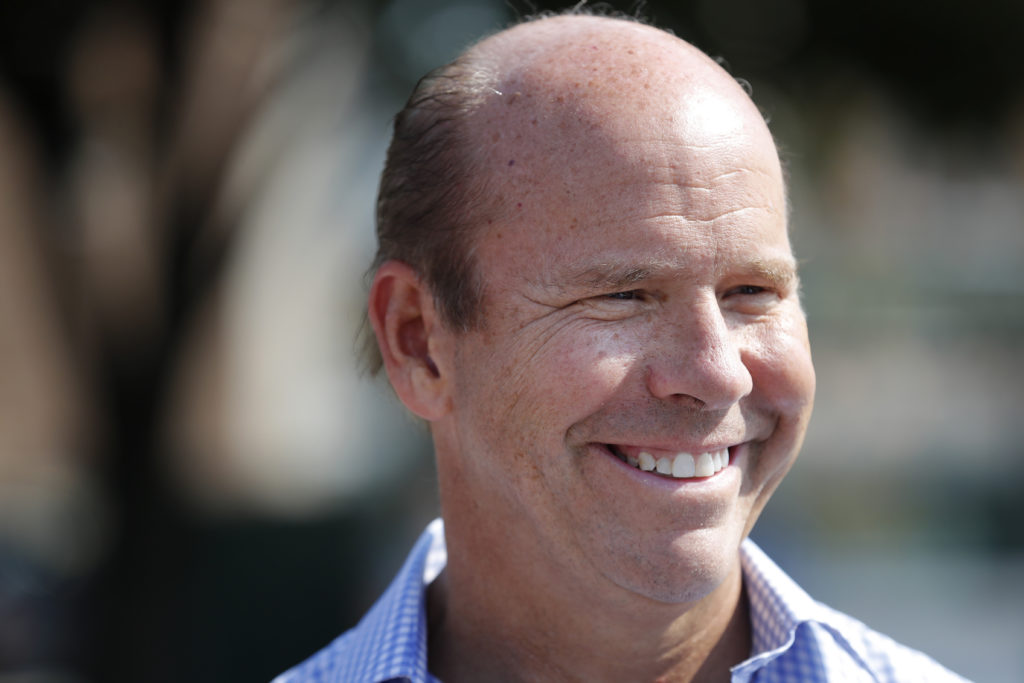
Andrew Turner was driving Iowa’s Democratic candidate for state auditor back to Des Moines last month when a potential presidential contender called to make an introduction. It was one of many such overtures the 23-year-old has fielded. “I’m hearing from them,” said Turner, who managed Rob Sand‘s winning campaign for auditor. “They’ve been pretty respectful, congratulating me, but saying we’d love to talk to you more.” The 2018 midterms are barely history, but the next campaign is already in full swing in Iowa, home to the first caucus of the 2020 Democratic presidential nominating campaign. In the two weeks since the election, potential White House contenders have intensified their effort to recruit operatives who could help them navigate an Iowa campaign. In a state that hasn’t had a wide-open campaign in more than a decade, recent Iowa success is a hot commodity. The competition is shaping up to be especially fierce because the field could include as many as two dozen candidates. “There are going to be so many candidates, the Iowa staff primary is more important this cycle than perhaps any other cycle on the Democratic side,” said Jennifer Palmieri, a former top aide to Hillary Clinton‘s 2016 campaign. The outreach ranges from friendly encouragement to all-out wooing. Sen. Cory Booker of New Jersey has been especially aggressive in reaching out to potential staffers, according to multiple who have spoken to him. That is in keeping with other early moves that suggest he would make a strong play in Iowa should he launch a campaign. He made an impression among some potential surrogates by calling more than a half dozen Democrats who ran for statewide office the day after the election. Sen. Kamala Harris of California and former Massachusetts Gov. Deval Patrick also have been in touch with top potential staffers and party organizers. Lesser-known Maryland Rep. John Delaney, who is banking on a strong Iowa finish to vault him into contention, already has 10 staff in Iowa, with plans to have 30 scattered across eight field offices by January. “It’s going to be difficult to find qualified staff with as many candidates in the race,” said Monica Biddix, Delaney’s spokeswoman. “That’s why we want to get in there early and expand our footprint now.” Meanwhile, other emerging Democrats are just starting to make Iowa contacts. Colorado Sen. Michael Bennet, a relatively new name to the 2020 discussion, has been in contact with some influential Iowa Democrats, while New York Gov. Andrew Cuomo, who won re-election to a third term this month, has contacted Des Moines-area Democrats. Many of the top staff prospects have key things in common: Youth, familiarity with presidential campaigns and a fresh understanding of Iowa’s Democratic politics. Turner worked on Martin O’Malley‘s 2016 presidential campaign and represents a class of young operatives eager to put their time learning the political nuances of Iowa’s 99 counties to use on politics’ largest stage. Kane Miller managed a winning House race in northeast Iowa this year. He worked for Clinton’s 2016 caucus campaign and has been courted, particularly by Harris. Another prized recruit could be Janice Rottenberg, an Ohio organizer for Clinton in 2016 who ran the Iowa Democratic Party’s campaign that helped all party candidates this year. There’s also Joe O’Hern, a native Iowan and 2016 O’Malley staffer in Iowa who ran Ohio’s statewide Democratic campaign this year and would be considered a likely pick for Ohio Sen. Sherrod Brown if he decides to launch a 2020 candidacy. Outreach to these and other 30-and-younger operatives who are fresh off the midterms and familiar with the caucuses’ nuances suggests those who know the players and the game have the edge. Unlike a primary election, the caucuses are political meetings held statewide where registered Democrats gather to publicly declare their preference for a candidate. It requires a degree of specific logistical organizing more precise than a primary. “People who can adapt and adopt are the people you want,” said Anita Dunn, a former adviser to Barack Obama. “It means landing people who are current.” Republished with permission from the Associated Press.
Bradley Byrne ‘seriously considering’ challenging Doug Jones in 2020 Senate run
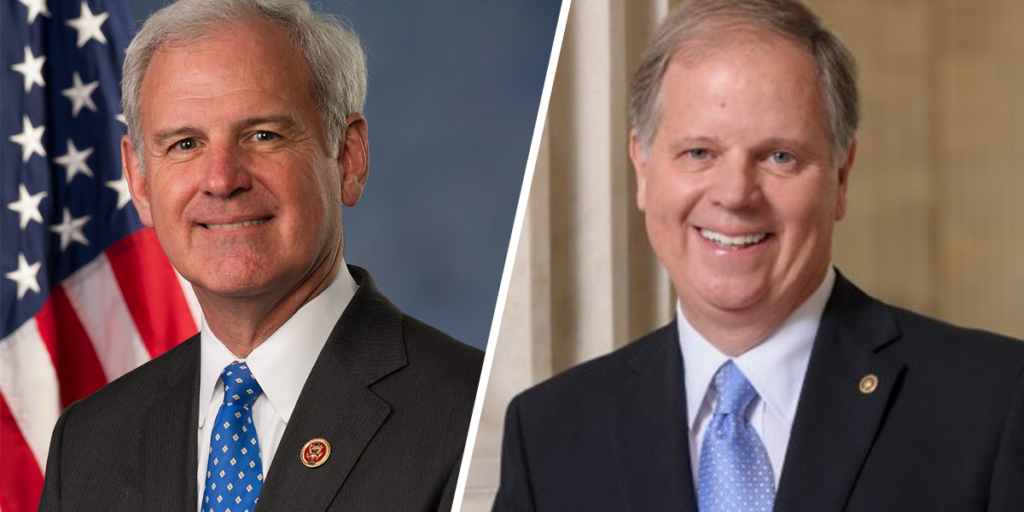
Alabama 1st District U.S. Rep. Bradley Byrne confirmed on Wednesday he is “actively looking” at a 2020 U.S. Senate bid against Democratic U.S. Senator Doug Jones. Byrne has been mulling the possibility since July, but confirmed in an interview with WPMI that he is seriously considering the matter. “I know Senator Doug Jones, I have nothing personal bad to say about him, I like him personally and admire his work as a prosecutor,” Byrne said in the interview according to C2C Sinclair on Twitter. “I don’t think his political philosophy lines up with the average person in Alabama.” .@RepByrne on possible 2020 Senate run: “I know @SenDougJones, I have nothing personal bad to say about him, I like him personally and admire his work as a prosecutor. I don’t think his political philosophy lines up with the average person in Alabama” @mynbc15 pic.twitter.com/mj78dABSOw — C2C Sinclair (@SBGC2C) September 5, 2018 “I love what I’m doing, I’m not unhappy being in the house,” Byrne continued. “But we in Alabama have become accustom to having very strong U.S. Senators; going back decades. And we’re very fortunate to Senator Shelby right now. I just don’t think, and I don’t mean this in any way personal, I don’t think Senator Jones fits into that mold. And I need someone who fits into that mold in the Senate to be a partner with me along with Senator Shelby and if there’s not anybody else to do it…then yes I’m happy to do it.” Jones beat out former Chief Justice Roy Moore in the December 2017 special election to fill the U.S. Senate seat previously occupied by Attorney General Jeff Sessions. Since then, he’s caused a few controversies within the Alabama Legislature, to the point that the Alabama State Senate passed a resolution condemning his January vote against legislation banning late term abortions. Byrne himself is a conservative through and through. He was awarded the ACUF’s Award for Conservative Excellence based on his 92.15 percent conservative voting record and successfully led an effort in Washington in June to express opposition to housing up to 10,000 illegal immigrants at Naval Outlying Field Silverhill and Naval Outlying Field Wolf in south Baldwin County.
Will Joe run? Biden feels the push to take on Donald Trump in 2020
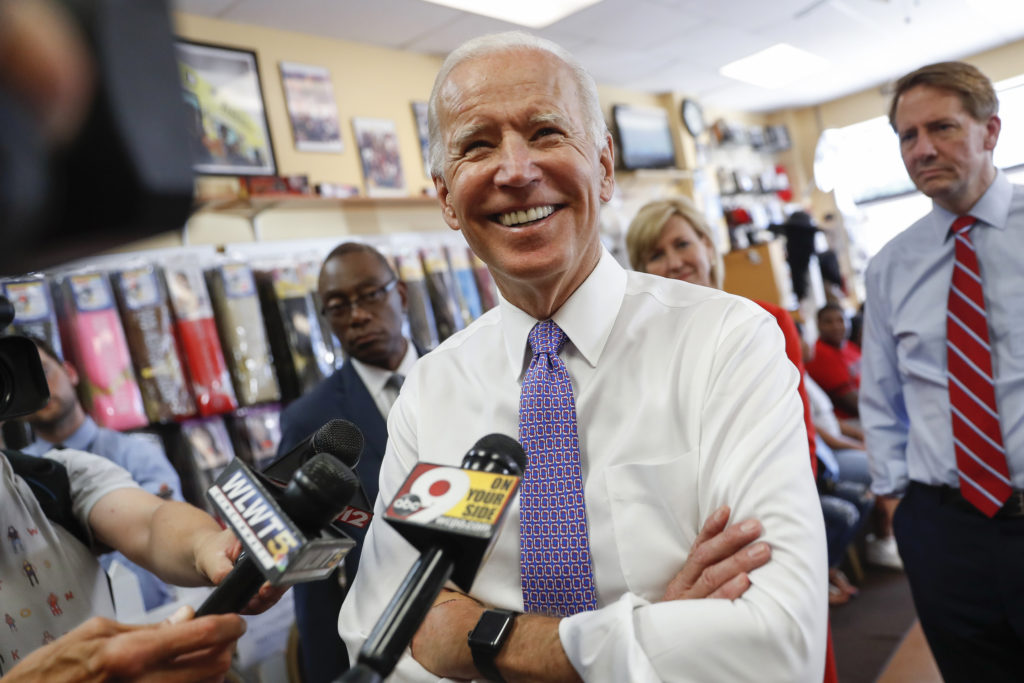
Shortly after Joe Biden boarded a recent flight from Washington to New York, a string of passengers began stopping at his seat in coach to deliver some version of the same message: Run, Joe, run. “We’re with you,” one said, according a Democratic strategist who happened to be on the plane and witnessed the scene. “You’ve got to do this,” said another. Biden himself is more conflicted — but he is listening keenly to the supporters pushing him to run for the White House in 2020. Biden is convinced he can beat President Donald Trump, friends and advisers say, and he has given himself until January to deliberate and size up potential competition for the Democratic nomination, according to people who have spoken to the former vice president about his decision making. In the meantime, Biden diligently maintains a network of supporters in key states, a group 30 years in the making, while some of those competitors are still making introductions. As he makes each careful step, Biden faces the same dilemma. For an elder statesman in a leaderless party, one who long envisioned himself in the top job, the pull toward another presidential bid is strong. But the 75-year-old former vice president must weigh the realities of jumping into a crowded primary full of up-and-comers eager to debate the future of the party. “He is not someone who needs to run to cement his place in history. He’s not someone who needs to run to feel he’s making a significant contribution to the public discourse and the Democratic Party,” said Anita Dunn, a former adviser to President Barack Obama. “But he is someone who, at the end of the day, feels a great deal of responsibility to listen to those people who are urging him to run.” Biden would likely cast a long shadow, but a candidate Biden is not expected to clear what will be a crowded field of aspiring presidents in 2020. He would have competition for the support of the Democratic establishment. And he would almost certainly face tough challenges from the left — the source of much of the party’s energy at the moment — possibly from liberal firebrands Vermont Sen. Bernie Sanders or Massachusetts Sen. Elizabeth Warren. Biden would likely cast himself as a more centrist Democrat with working-class appeal, bipartisan credentials and grounding in a more civil political culture that has faded in the Trump era, said Jim Margolis, a top adviser to Barack Obama‘s 2008 and 2012 campaigns. “He would carry the imprimatur of the Obama administration in addition to occupying a space in the middle that isn’t as crowded as others who are more actively running,” said Margolis. He hit those themes gently at a memorial service for his late Senate colleague, Republican John McCain, last week. “I always thought of John as a brother,” Biden said. “We had a hell of a lot of family fights.” Biden has eyed the presidency for more than 30 years, waging a failed campaign for the party nomination in 1988 and another 2008, before Barack Obama named him his running mate. He passed on running again in 2016 as he dealt with his older son Beau’s battle with brain cancer. The younger Biden died in March 2015, as the Democratic campaign was taking shape. Since leaving the vice president’s office he has emerged as among the party’s most popular national figures, and one of its most willing Trump adversaries. Biden is in regular talks with a small team of longtime friends and advisers. He also talks to potential donors and longtime staff about the possibility of another campaign. However, he has also signaled to them they are free to ally with other prospective candidates, as he eyes a January timeframe for deciding on whether to run, according to three people familiar with Biden’s thinking who spoke to The Associated Press about his plans on the condition of anonymity because they were not authorized to discuss private conversations. That leaves Biden for the next two months as one of his party’s most sought-after 2018 campaign headliners. He plans to make multiple campaign stops a week this fall for Democratic candidates, according to people familiar with the plans. “As the vice president has said many times himself, he is focused on electing as many Democrats as possible all across the country and on encouraging people to get out and vote this fall,” Biden adviser Kate Bedingfield said. “That’s the focus of his energy right now.” Biden’s choices so far have shown off his deep ties to key early states. He has campaigned for a young former aide now running for Congress in northeastern Iowa, a part of the state with enduring personal loyalty to Biden but that swung toward Trump in 2016. He recently penned an op-ed in The Des Moines Register eulogizing the late Rep. Leonard Boswell, an act that was not political but at the family’s request, according to aides. In South Carolina, Biden endorsed the Democratic nominee for governor, as well as longtime friend and former South Carolina Democratic Party Chairman Dick Harpootlian, a state Senate candidate. “If he wants, the day he says he wants to be running for president, he would have a built-in network here,” Harpootlian said. “He’s got friends here going back 30 years.” Not all early-state party activists are clamoring for Biden Part III. What’s left of his New Hampshire network, for instance, is fragmented, aging and undecided heading into 2020, said John Broderick, state chairman of Biden’s first campaign. Though Broderick, now 70, said his own family would gladly support Biden again, many in Biden’s New Hampshire support network “are getting longer in the tooth like I am.” Likewise, Iowa Democrat Mary Maloney, a leading campaign activist for both of Biden’s campaigns, said she would support him, but wondered if younger voters would roll their eyes at yet another Baby Boomer candidate. “I don’t know if a lot of young people get Joe Biden,” said Maloney,
2018 midterms show start of Democratic scramble for 2020
Look closely enough at the 2018 midterm campaign and you’ll see the stirrings of a Democratic scramble to reclaim the White House from President Donald Trump. The leading players — from established national figures such as former Vice President Joe Biden and Sens. Bernie Sanders and Elizabeth Warren to up-and-comers including Sen. Kamala Harris — don’t necessarily put it that way. But the potential 2020 candidates are making the rounds, raising and distributing campaign cash among fellow Democrats, endorsing candidates and meeting political activists. Their movements reflect competing strategies for establishing their reputations and shaping a party that lacks a clear leader and consistent message in the Trump era. For senators trying to get better known, a primary goal is proving fundraising strength and party loyalty, without necessarily taking sides in the larger fight between the left and moderates who split on the minimum wage, health insurance and other issues. “I just want to do whatever I can” to help Democrats win, Harris said at a recent stop in Georgia, where she was campaigning and raising money for Stacey Abrams’ race for governor. It is part of an aggressive effort for the freshman senator from California. She’s raised $3.5 million for her Senate colleagues and the Democratic Senatorial Campaign Committee, plus what she helps candidates such as Abrams raise directly when she appears with them, and at the end of April Harris had nearly a $1 million balance in the political action committee that she uses to back other Democrats. Warren boasts that she’s raised $15 million for other Democrats since her 2013 election. The Massachusetts senator faces a re-election campaign this fall, but not as tough a race as confronts 10 colleagues running in states where Trump won. Like Harris, Warren and New Jersey Sen. Cory Booker have aided those senators. Warren is also helping other branches of the party: a transfer of money to House Democrats’ campaign committee, $5,000 for every state party and $175,000 spread across state legislative campaigns in contested states. Democratic and Republican campaign veterans say such contributions and fundraising trips aren’t explicitly about future campaigns. “We’re not playing 3D chess,” says Harris spokeswoman Lily Adams, who describes the senator’s priority as “building our numbers in the Senate” for the final two years of Trump’s term, while looking for strong women and minority candidates. (Abrams would be the first female African-American governor in U.S. history.) Operatives also insist there are no quid pro quos, though Republican presidential campaign veteran Rick Tyler says, “These guys are out there accumulating chits.” Tyler worked for Texas Sen. Ted Cruz’s 2016 White House campaign. Cruz was among the conservatives who traveled the country before his campaign, endorsing like-minded conservatives and raising money. Trump’s improbable rise obliterated that groundwork, but Tyler said it’s nonetheless a necessary part of a national campaign, because prospective presidents build their networks and test messages as they meet activists and voters beyond their personal bases. Harris, for example, is noticeably avoiding most early presidential nominating states — no trips to Iowa or New Hampshire so far. Because 10 Senate Democrats must seek re-election in states Trump won, her travels do put her in some of the pivotal states in the battle to control the Senate. She’s been to Ohio five times for Sen. Sherrod Brown, twice to Michigan for Sen. Debbie Stabenow and once to Florida for Sen. Bill Nelson. She has a June trip planned for Wisconsin Sen. Tammy Baldwin. Warren has been to Ohio at least four times this campaign season and traveled to Michigan and Wisconsin, among others states. Those states helped give Trump the presidency. They also could prove important as primary states in an extended nominating fight that could materialize with a large field and Democrats’ proportional distribution of nominating convention delegates. Sanders, the Vermont independent whose insurgent presidential campaign in 2016 emboldened the Democrats’ left flank, is perhaps the most unabashed of the potential 2020 group about using this year’s midterms to put his preferred policy stamp on the Democratic Party. A prolific small-dollar fundraiser, he no longer has to prove he can raise money or draw a crowd. “I have been very critical about the business model of the Democratic Party,” Sanders told The Associated Press. He said his travel to 28 states since Trump took office and his endorsements in federal and state races are part of his promised “political revolution” intended to advance ideas like a $15 minimum wage, tuition-free college and universal health insurance. Sanders bet on liberal challenger Marie Newman in her unsuccessful House Democratic primary battle against conservative Rep. Dan Lipinski in Illinois. But Sanders scored a notable win Tuesday in Pennsylvania when his pick for lieutenant governor, John Fetterman, finished with a surprise primary victory. Biden is at the opposite end of Democrats’ identity battle. His endorsement list and fundraising itinerary are replete with state party dinners, events for sitting Democratic senators and rallies for candidates running as moderates, at least in tone, if not in policy preference. “I love Bernie, but … I don’t think 500 billionaires are the reason we are in trouble,” Biden said at a recent Brookings Institution speech about his priorities for the middle class. Biden’s aides say he’s willing to help any Democrat get elected, but the native of Scranton, Pennsylvania, who loves to wax eloquent about his working-class upbringing is in demand to campaign for Democrats running in GOP-leaning places. He headlined fundraisers and campaign rallies for first-year Alabama Sen. Doug Jones and new Pennsylvania Rep. Conor Lamb, who won among voters who had sided overwhelmingly with Trump in 2016. Biden’s next planned campaign venture is to North Carolina on behalf of Democrat Dan McCready, a veteran trying to win a suburban Charlotte House district that wasn’t competitive two years ago. Certainly, many Democratic hopefuls around the country are accepting help from multiple would-be presidents, and the alignments don’t always follow cleanly along the party’s philosophical battle lines. Abrams has campaigned as a liberal,
