
Kay Ivey: An Alabama solution to an Alabama problem: rebuilding the Alabama corrections system
In order to correct a problem, you must first admit there is a problem. In Alabama, we have a problem. Our problem is our state’s corrections system. Like many other states, issues of violence, poor living conditions and mental illness persist within our system. These issues, and others, are exacerbated by a crowded inmate population, correctional and health care staffing challenges, and aging prison infrastructure – each piece compounding the others. We have a problem in Alabama, and we have waited far too long to address it. The path forward to resolve these problems is clear and obvious. However, this path is neither quick nor simple. First, we must increase our correctional staffing levels by improving the pay scale for correctional officers and expanding our recruiting efforts. Second, we must construct prison facilities that meet the needs of a criminal justice system in the 21st century. We have already started making strides toward reducing our prison population and increasing staffing levels. In 2015, the Alabama Legislature passed historic criminal justice reform legislation that greatly reduced the number of inmates in Alabama prisons. Thanks to members of the Legislature, the state’s prison population has decreased from nearly 200 percent of capacity to approximately 160 percent, still too large but an important step in the right direction. Also in 2018, the Legislature helped improve our system by increasing funding for correctional and health services staffing. An additional $86 million was appropriated for the state’s 2018 and 2019 fiscal years to retain new staffing for medical and mental health services and to reduce the turnover rate of correctional staffing. For the upcoming Regular Session, my budget proposal will include an additional $31 million to hire 500 new correctional officers and increase the pay scale for all security personnel to make their salary competitive given current market conditions in Alabama. Alabama currently sits under a federal court order requiring the state to roughly double the number of correctional officers in the next two years. Although I disagree with many aspects of the lawsuit that led to this order, the fact of the matter is that it compels us to make staffing levels a necessary and vital part of the solution to our problem. In December, we saw our first increase in the number of correctional officers in years. With a rising retention rate, we can begin adding to our officer ranks, rather than simply maintaining our current staffing levels. This is a difficult task, but because of the commitment from members of the Legislature, we are now well on our way to addressing our staffing challenges. Next, we must improve the conditions in which we house inmates. “Deplorable”, “horrendous”, and “inadequate” are words which have been used to describe them. Our existing facilities need $750 million in maintenance alone. Last year, we closed the Draper Correctional Facility, a 79-year-old prison, because it was simply too costly to repair. Without costly maintenance, many other facilities may require closing as well. Repairing these facilities that do not meet the needs of today’s criminal justice system would be wasteful and ineffective. We must put aside politics of the past and fix this problem for the betterment of our state. Alabama must have new prison facilities because we must have better conditions, we must have better safety, and we must have better programs. The Department of Corrections hired a project management team that recommended we build three new regional men’s prisons. Of the three new facilities, one will have additional space centralizing services for special needs populations: the aged, the infirmed and those with mental health conditions. Additionally, there will be space in each new facility for educational and vocational training programs. These facilities will be a valuable and lasting investment in the future of our state. On average, 95 percent of our inmates, once they have completed their sentence and are eligible for release, will be returning to the cities, towns, communities and neighborhoods within Alabama. This investment will secure our opportunity to release these individuals back into society as more educated and more productive, law-abiding citizens. The investment in these new facilities will also ensure that we retain control of our correctional system. Across this nation, federal courts are intervening in unprecedented ways into the operations of correctional systems. In 2009, three federal judges ordered the release of thousands of inmates in the California prison system. Some estimate this order resulted in the release of more than 40,000 inmates. Following the release of these inmates, one study into the impact of this mass release called the increases in crime rates “alarming.” So, our public safety also demands this investment. Today, the Department of Corrections is preparing a “request for proposals” for distribution to contractors in Alabama and across the nation, asking for bids to build these new prisons. By taking this step, we will – for the first time – receive the most accurate view of the real cost of building these new facilities. Some opponents of this plan say that it is too costly. Here in Alabama and across our country, we have a set of laws to which every person must adhere. However, no matter what crime was committed, every human being deserves a certain level of care. I say to you that it is and will continue to be costly to provide adequate living conditions and health care for the more than 20,000 adults in our corrections system, to maintain aging facilities, and to sustain public safety. Others say special interests have a hand in this plan; that could not be further from the truth. In fact, I make a promise to you that part of this next step is to publicly provide the real costs we receive from contractors and to work closely with the Legislature to determine the most cost-effective way of moving forward. Whatever we do will be the best and most fiscally responsible decision for the state of Alabama. A tough decision will have to be made in
Judge: Alabama has been ‘indifferent’ to isolated inmates
A federal judge said Monday that Alabama has been “deliberately indifferent” about monitoring the mental health of state inmates placed in the isolation of segregation cells. U.S. District Judge Myron Thompson issued the ruling days after attorneys for inmates said the suicide rate in state prisons has reached a crisis level. “The court finds that the (Alabama prison system’s) failure to provide adequate periodic mental-health assessments of prisoners in segregation creates a substantial risk of serious harm for those prisoners,” Thompson wrote in the 66-page order. Thompson wrote that prison officials have been “deliberately indifferent with regard to their failure to provide adequate periodic evaluations of mental health to prisoners in segregation.” Alabama Department of Corrections spokesman Bob Horton said the department is reviewing the decision. Thompson in 2017 wrote that mental health care in state prisons was “horrendously inadequate” and violated the Eighth Amendment’s prohibition on cruel and unusual punishment. In his Monday order, Thompson said the failure to adequately monitor inmates in segregation contributes to the unconstitutional conditions. Thompson directed the prison system and attorneys for inmates to confer on how to proceed. The Southern Poverty Law Center, which is representing inmates in the ongoing class-action lawsuit over prison mental health care, praised the decision. “It has been evident for years that ADOC has failed to identify, monitor, and properly care for people who have serious mental illnesses and who develop them in ADOC custody. That systematic failure has led to needless suffering, especially for people in segregation,” said Maria Morris, senior supervising attorney at the SPLC. The advocacy organization said Friday that there have been 13 suicides in 14 months. “People are killing themselves in our prisons because conditions are horrendous,” Southern Poverty Law Center President Richard Cohen said at a news conference with the families of inmates. The prison system said in a response Friday that it was working to address the issue, and said the suicide spike “calls into question the long-term effectiveness of the suicide prevention measures proposed by the SPLC” during the litigation. Republished with permission from the Associated Press
Stop the madness: SCOTUS didn’t rule against Muslims when they said Dominique Ray’s imam couldn’t be in execution chamber with him
If you were to just read the headlines about the recent death row execution of Alabama Department of Corrections (ADOC) inmate Dominique Ray you’d think he was executed without the presence of his imam. The fact is his imam was in attendance and saw him just before he was led into the execution chamber. The imam was just not authorized to be IN the chamber. Period. That’s the issue at hand. Let me break down the timeline of this case based on court filings: 1995: Ray and a friend picks up and murders Tiffany Harville. The crime as described by Alabama Attorney General Steve Marshall in a statement released following the execution: “In 1995, Ray brutally deprived young Tiffany Harville of her life, repeatedly stabbing and raping her before leaving her body in a cotton field. A jury gave him a death sentence for this heinous crime. A year before, Ray had also taken the lives of two teenage brothers, Reinhard Mabins and Earnest Mabins. Tonight, Ray’s long-delayed appointment with justice is finally met.” July 28, 1999: Ray is convicted. The next day a jury sentences him to death. 2006: Ray converts to Muslim faith 2015: Ray starts worshiping with current imam Yusef Maisonet of Masjid As Salaam November 9, 2018: DOC sets Ray’s February January 23, 2019: Ray makes his first request to warden Cynthia Stewart, to have imam at his side during execution Jan. 28, 2019: Ray files suit to stay his execution. Feb. 06, 2019: 11th Court of Appeals issues an order to stay execution Feb. 07, 2019 U.S. Supreme Court rules in 5-4 decision to vacate the stay of execution and Ray is executed First, let me start with this: I agree with the SCOTUS decision and resent the fact that its being misrepresented as an attack on the first amendment or the Muslim faith. The issue here is not Ray’s religion. This is a cut and dry case of the state following its procedures for carrying out an execution. Procedures it’s important to note experts say are nearly universal in that clergy aren’t allowed in chambers in most places. The state very well may need to review their procedures for executions, rarely have I seen up to date regulations or procedures for a government agency that reflect all possible situations. True those changes may need to be reflect policies that would allow clergy of other faiths to be trained and authorized to be in the execution chambers of an inmate their the death penalty carried out. It was right of SCOTUS to say that the state should not be forced or rushed to do so. Ray’s rights to exercise his religion were not thwarted as many are claiming. His clergy man of choice was allowed to see him before the execution and attend just not be at his side. He was also able to ask that the Christian minister who had attended every execution since 1990 also not be there and that request was granted. If they would not have allowed his imam to see or give him late rites at all his rights surly would have been infringed upon. He could have asked about procedures at any time. It’s not as though the rules were arbitrary. His imam has been visiting the prison for three years, he could have inquired on behalf of those he leads. It wasn’t a matter of religion it was a matter of department policy and security clearance and specialized training. Again, should the imam want to receive that the state should not be able to refuse it but the burden wasn’t on the state to rush a new guideline or to halt an execution over it.
ADOC responds to SPLC’s claim state has prison suicide crisis

The Alabama Department of Corrections (ADOC) has responded to claims by the the Southern Poverty Law Center (SPLC) that the state has a suicide crisis that demands immediate action. The ADOC said the recent spike in suicides in an “on-going concern” and the department is actively working on a solution. As reported by a number of media outlets today, 13 inmates in the custody of the Alabama Department of Corrections have died by suicide in the past 14 months. While the total number of recent suicides is significant, each suicide within an ADOC facility is a tragic and unfortunate event. Each of these 13 suicides represents a different person who faced individual struggles and challenges that led to their death. Nevertheless, the ADOC investigates every suicide and the circumstances surrounding each suicide to evaluate ways in which the Department can improve its existing suicide prevention program. … The recent spike in suicides within ADOC is an on-going concern and will be addressed by the ADOC. On March 8, 2019, an expert retained by the ADOC will issue a report (jointly authored with an SPLC expert) on recommendations on additional suicide prevention measures. Once we receive this report, the ADOC intends to fully implement those measures that will ensure a long-term solution in the prevention of suicides. The ADOC is referring to the deaths of 13 inmates in state custody have committed suicide in the last 14 months. In fact, in 2018 the suicide rate in ADOC facilities was higher than any previous year. And since since November 21, 2018, there has been an average of one suicide every 11.4 days in the ADOC, with two of those having been completed in 2019 – just eighteen days into the year. Which is what led the SPLC to take action on Friday. The group, along with victims’ families and their attorney, met at the Alabama State House where they called on the ADOC, Governor Kay Ivey, and state legislators to immediately address the systemic mental health crisis and need for comprehensive criminal justice reform. “Since a federal court found that mental health care in ADOC facilities was grossly inadequate in the summer of 2017, ADOC has continued to fail to provide adequate protection for suicidal people in its custody,” said Maria Morris, senior supervising attorney for the SPLC. “The result is that Alabamians under the supervision of ADOC, many of whom suffer from mental illness, hopelessness, and despair and are not receiving the resources they need, have taken their own lives. ADOC should take action. They need to step up and treat this like what it is – a life and death emergency.” On staffing, ADOC’s previous analysis provided to a federal court states it must hire 2261 new corrections officers and 130 new corrections supervisors by February 2022 to meet basic legal and safety standards for both officers and prisoners, which will add over $100 million annually to the ADOC budget. According to the SPLC, there is little evidence that ADOC is on a path to meet those benchmarks. Meanwhile, press reports indicate that the governor and ADOC staff are preparing to build three mega-prisons at a cost of a billion dollars or more. “These men died senselessly from suicide because they did not get adequate care from the Alabama Department of Corrections,” added Mitch McGuire, attorney for many of the victims’ families. “That’s unacceptable and immoral, and their families will never replace them.” “The Legislature must solve this emergency because Governor Ivey and Commissioner Dunn have been derelict in their duty,” said Richard Cohen, president of the SPLC. “Every year without action, the crisis deepens and grows more expensive and harder to fix. The costs to the state of Alabama will grow and we will continue to mourn the deaths of incarcerated people who did not receive constitutionally-required care. Despite the SPLC’s complaints ADOC Commissioner Jeff Dunn says he is focused on solving this problem. “Our department is committed to providing appropriate care for those with mental illness and we have plan to address the conditions inside our prisons that hinder our ability to meet that commitment,” Dunn said. “In addition to increasing our mental health staff, we also are developing a prison revitalization plan that will consolidate the delivery of mental and medical health care in a new state-of-the-art health care facility. More information about the plan will be made public in the coming days. I am focused on solving this problem.” Suicides in ADOC from Dec. 2017 to Feb. 2019 (supplied by the SPLC):
Alabama prisons seek funding for 500 more officers, raises
The Alabama Department of Corrections (ADOC) Commission Jeff Dunn on Wednesday told state lawmakers it is seeking a $42 million funding increase to hire 500 new correctional officers and a 20 percent pay increase in in hopes of tackling the state’s perennial understaffing issues at state prisons. The request represents a roughly 8.8 percent increase for the next fiscal year, which starts Oct. 1. “The Department of Corrections is undergoing unprecedented change,” Dunn told legislators. The ADOC is, “transforming the department into the most respected and trusted law enforcement agency in the state…. Although our recruiting efforts have increased, we still are down to 50 percent or lower staffing levels in many of our major facilities. And there is a direct correlation between the shortage of officers in our prisons and the increase in violence.” According to Dunn, the 2018 occupancy rate is now 163 percent of capacity. His goal is to reduce that to 145 percent capacity. The overcrowding has led to violence within the state’s prisons and prison officers and inmates have been killed and injured in a series of violent crimes behind bars. Under federal order for improvement U.S. District Judge Myron Thompson ruled in 2017 that mental health care in Alabama’s prisons was “horrendously inadequate” and ordered the state to improve conditions. Since then the ADOC has been under federal court order to improve its mental health care and increase its security staff.
Alabama prison system ordered to report mental health segregation data
On Tuesday, U.S. District Judge Myron Thompson issued an order for the Alabama Department of Corrections (ADOC) to report how many inmates with mental illnesses have been placed in segregation units, The Associated Press reports. This comes when attorneys for inmates requested intervention after three suicides occurred in four weeks in state prisons. Thompson previously instructed state prisons not to isolate prisoners without extenuating circumstances after finding in 2017 that care for mentally ill inmates was “horrendously inadequate.” History of mental health issues in Alabama prisons The issue of mental health care in state prisons has been ongoing. In December 2018, Alabama prison officials stated that they were making “substantial progress” in increasing mental health staff and asked not to be held in contempt of court of an order requiring minimum levels of mental health staff. In a December filing, the ADOC wrote that Wexford Health Sources, the contractor hired to provide health care, had not been able to meet staffing targets but said “both are making all efforts to increase staffing as quickly as possible.” The letter continued, “In sum, the state is not contending that it has fulfilled every requirement of the staffing remedial order. But it has made in good faith all reasonable efforts to do so, and those efforts have resulted in substantial progress.” They claimed that a shortage of professionals available, especially in rural areas, has made staffing difficult. Lawyers for the inmates wrote “Defendants’ contempt is placing prisoners with serious mental-health needs at a substantial risk of serious harm every day. Their failures are most evident when looking at staffing levels for mental-health staff with advanced training, specifically psychiatrists, CRNPs, psychologists, and registered nurses.” In September of 2018, the Southern Poverty Law Center asked Judge Thompson to hold the ADOC in contempt. “Adequate staffing is critical to address the mental health needs and secure the safety of the prisoners in ADOC’s care,” said Maria Morris, senior supervising attorney at the SPLC. “Time and time again, ADOC has failed to meet court-ordered deadlines to fill essential staffing positions. We have no confidence that ADOC is doing all it can to hire enough staff to care for prisoners with mental illnesses. We are asking the court to rule ADOC in contempt for continuing to fail to meet these court-ordered deadlines.” This came after a warden testified in February 2018 after a mentally ill prisoner committed suicide.
State might lease prisons, instead of building them
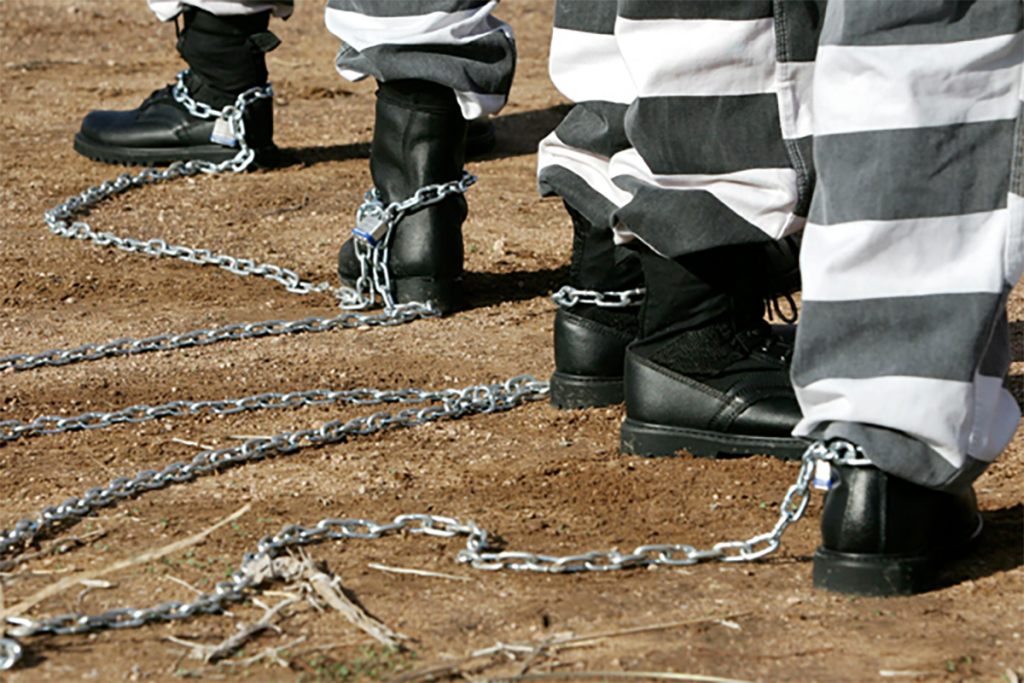
Alabama Gov. Kay Ivey’s options for replacing state prisons could include leasing facilities built by a private firm. Ivey in her inaugural address Monday said that she would be announcing a prison plan in the coming days. Alabama Department of Corrections spokesman Bob Horton wrote in a Friday email that the department is evaluating the possible construction of three new regional men’s correctional facilities. Horton said the analysis will evaluate the best approach for constructing the facilities “either through a bond issue, or a build-lease option.” Legislators in 2017 rejected a prison construction bill because of concerns about the price tag and job losses when existing prisons closed. State Sen. Cam Ward said one option before Ivey is to contract with a company that builds prisons and “lease it back.” Republished with permission from the Associated Press.
Personnel note: Charles Daniels named ADOC Deputy Commissioner of Operations
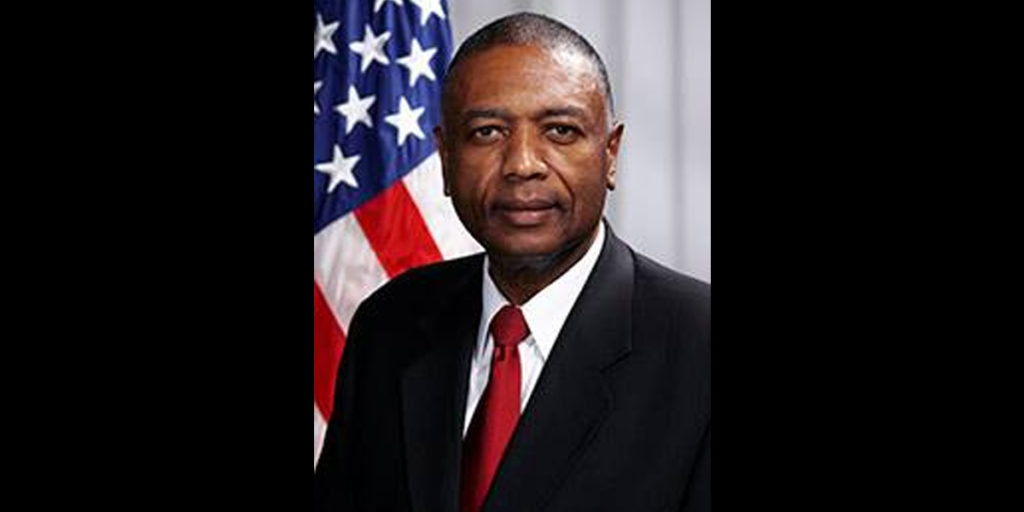
The Alabama Department of Corrections (ADOC) appointed Charles Daniels as Deputy Commissioner of Operations, the ADOC announced on Facebook Monday. ”I am pleased to announce the appointment of Mr. Charles Daniels as Deputy Commissioner of the Alabama Department of Corrections Operations Division,” said Jeff Dunn, ADOC Commissioner. “Mr. Daniels brings to the Department a wealth of knowledge and leadership experience that will prove invaluable to the fulfillment of ADOC’s mission and build upon a leadership team that has made tremendous progress working to strengthen a prison system that is in need of major reform.” Daniels is a career correctional professional who began his service with the Federal Bureau of Prisons in August 1988. He rose through the ranks in the corrections profession from correctional officer to holding key executive staff positions and culminating in serving as warden of several major facilities within the Bureau of Prisons. During his service, Daniels was responsible for developing curriculum used by the Bureau for the professional development and internal training of federal prison officials. H created an Emergency Response Model entitled, Immediate Incident Resolution, which is a five-step emergency response continuum designed to respond to, and resolve emergent situations within a correctional environment. Throughout his career, Daniels has held many special staff positions that include the following: Hostage Negotiation Team Leader and Regional Trainer; member of the Bureau’s Joint Terrorism Task Force and Negotiation Teams; Equal Employment Opportunity Counselor; Black Affairs Program Manager. Daniels is a graduate of the Aspen Institute Justice and Society Program, Center for Creative Leadership, and he holds a degree in Criminal Justice. He is also a Military Veteran with service in the United States Air Force.
Prison system: Alabama making progress in mental health
Alabama prison officials contend they are making “substantial progress” in increasing mental health staff and have asked a federal judge to not find the state in contempt of court. U.S. District Judge Myron Thompson has scheduled a Jan. 7 hearing on whether the Alabama Department of Corrections should be found in contempt of a court order to increase mental health staffing numbers to minimum levels. The department wrote in a Friday court filing acknowledged that Wexford Health Sources, the contractor hired to provide health care, had not been able to meet staffing targets but said “both are making all efforts to increase staffing as quickly as possible.”“In sum, the state is not contending that it has fulfilled every requirement of the staffing remedial order. But it has made in good faith all reasonable efforts to do so, and those efforts have resulted in substantial progress,” the filing stated. Attorneys for the inmates have asked the judge to find the prison system in contempt, arguing the prison system is “woefully short” of a requirement to fill 263 full-time mental health positions. “Defendants’ contempt is placing prisoners with serious mental-health needs at a substantial risk of serious harm every day. Their failures are most evident when looking at staffing levels for mental-health staff with advanced training, specifically psychiatrists, CRNPs, psychologists, and registered nurses,” lawyers for inmates wrote earlier this month. Elaine Gedman, chief administrative officer and executive vice president for Wexford Health Sources, disputed that characterization. She wrote in a declaration with the court filing that they had provided 227 full-time equivalent positions. The prison system wrote that there has been difficulty in recruiting staff because of a shortage of health professionals in the state, particularly in rural areas. They also said compliance should be measured by “hours of service” provided, instead of just positions filled. Thompson last year ruled that mental health care was “horrendously inadequate” in state prisons and created unconstitutional conditions. The ruling came after the Southern Poverty Law Center and the Alabama Disabilities Advocacy Program filed a class-action lawsuit over health care in state prisons. The first inmate to testify at the trial killed himself days after describing past suicide attempts and a lack of psychiatric treatment while in state custody. Republished with permission from the Associated Press.
In effort to break drug-crime nexus, Kay Ivey awards grant for drug rehabilitation in state prisons
The State of Alabama is continuing to take steps to help inmates at state prisons overcome drug addictions that may have led or contributed to their prison terms. On Wednesday, Gov. Kay Ivey awarded $504,892 in grant funding to the Residential Substance Abuse Treatment (RSAT) program to help break this drug-crime nexus. The program is six-month course that will be conducted at seven prisons —Bullock Correctional Facility; Bibb Correctional Facility; Donaldson Correctional Facility; Easterling Correctional Facility; Staton Correctional Facility; Tutwiler Correctional Facility; Ventress Correctional Facility — with the intention of breaking the link between drug addiction and criminal activity. “We should strive to ensure that once a person is released from prison they will become a productive member of society,” Ivey said. “This program provides inmates the opportunity to escape their drug habit while in prison and create a new slate when they are released.” According to Bob Horton, Public Information Manager at ADOC, “the grant more than doubles the funding that the treatment program has received in previous years, which will enable the ADOC to expand services.” The Alabama Department of Economic and Community Affairs (ADECA) is administering the program from funds made available to the state from the U.S. Department of Justice (DOJ). The DOJ describes that is goal of the RSAT Program “is to break the cycle of drugs and violence by reducing the demand for, use, and trafficking of illegal drugs. RSAT enhances the capability of states and units of local government to provide residential substance abuse treatment for incarcerated inmates; prepares offenders for their reintegration into the communities from which they came by incorporating reentry planning activities into treatment programs; and assists offenders and their communities through the reentry process through the delivery of community-based treatment and other broad-based aftercare services.” RSAT in Alabama In Alabama, the six-month RSAT Program curriculum is divided into three phases of treatment that are two months each. “In the program’s first phase, inmates who are enrolled take part in full-time treatment activities aimed at dealing with denial of addiction, recognition of drug abuse consequences, understanding of the addiction cycle, and a thorough understanding of the recovery cycle,” Horton explained. “The program’s second phase exposes inmates to recovery issues closely related to substance abuse such as anger management, character defects, criminal thinking, and poor coping skills and habit development. In the third phase, the program focuses on relapse prevention and aftercare planning while working to develop positive life skills.” The ADOC offers aftercare dorms with 768 beds to those who are enrolled in the program to allow a person to spend time practicing and refining their daily addiction recovery. The program will be conducted by counselors who specialize in drug addictions and inmates receive drug screenings while in the program to monitor their success and to measure the program’s effectiveness. “Our main objective is to foster a person’s sobriety and to help them develop a responsible lifestyle once they return back to their community,” said Horton. As of August 2018, 314 prisoners have completed the RSAT program in 2018. Ivey notified Alabama Department of Corrections (ADOC) Commissioner Jeff Dunn the FY2018 grant had been approved.
SPLC asks judge to rule Alabama’s prison system in contempt over mental health staffing
The Southern Poverty Law Center (SPLC) is asking U.S. District Judge Myron Thompson to hold the Alabama Department of Corrections (ADOC) in contempt for failing to meet deadlines for increasing mental health staffing. “Adequate staffing is critical to address the mental health needs and secure the safety of the prisoners in ADOC’s care,” said Maria Morris, senior supervising attorney at the SPLC. “Time and time again, ADOC has failed to meet court-ordered deadlines to fill essential staffing positions. We have no confidence that ADOC is doing all it can to hire enough staff to care for prisoners with mental illnesses. We are asking the court to rule ADOC in contempt for continuing to fail to meet these court-ordered deadlines.” In the summer of 2017, Thompson ruled Alabama’s psychiatric care of state inmates is “horrendously inadequate” and in violation the U.S. Constitution’s ban on cruel and unusual punishment. In February, he set deadlines in May, June and July for increasing mental health staff, which the ADOC has failed to do. On Friday, Thompson issued an order requesting a hearing to begin Tuesday at the federal courthouse in Montgomery, Ala. to give ADOC the opportunity to show they should not be held in contempt. Parties ruled to be in contempt can face fines and, in some cases, jail time. SPLC is asking here that a monitor be appointed to oversee how ADOC is progressing and to keep the Court and the Plaintiffs informed.
Three Robert Bentley appointees increase Alabama parole rate to 54 percent
Three gubernatorial appointees sit on the Alabama Pardon and Parole Board. Collectively the have the power to override a judge’s decision (we’ve been telling you just how important these appointments are) and grant Alabama prisoners parole as they see fit. And in FY 2017 the Parole Board, then comprised of three appointees made by former Gov. Robert Bentley, considered 7,098 paroles, of which 3,847 were granted. This resulted in an overall grant rate of 54 percent. Importance of the Parole Board More than 20,000 people are locked up in Alabama prisons. According to the Alabama Department of Corrections (ADOC), state facilities are are at 160 percent of their intended occupancy as they’re collectively designed to hold only only 13,000 prisoners. While the State Legislature added an additional $85 million for the state prison system over the next two years — to address the prison’s mental health systems, following U.S. District Judge Myron Thompson‘s declaration that the state has failed to provide mental health care to the state’s prison population and is in violation of the Eighth Amendment’s prohibition on cruel and unusual punishment — lawmakers have yet to tackle fully he systemic problem of overcrowding. Enter the Alabama Pardon and Parole Board — part of the state’s answer to helping reduce prison overcrowding. Since the passage of the Justice Reinvestment Act (Act 2015-185) in 2015, the board has been tasked with implementing specific reforms targeted at reducing the prison population. According to the Board’s FY 2017 Annual Report, the Justice Reinvestment Act “requires a clear definition of the parole standard of release and establishment of actuarially based ‘parole guidelines,’ which include reasons for granting and denying parole. Reforms involving the Board’s paroling process achieve greater transparency for the public, crime victims, inmates, and system stakeholders regarding the process, itself, and factors guiding release decisions.” Who’s on the Board now? The Board currently is made of two Bentley appointees and one made by Gov. Kay Ivey — Clifford (Cliff) Walker (effective Nov. 2013) and Lyn Head (effective Sept. 2016) were both made by Bentley. Meanwhile Dwayne Spurlock (effective May 2018) was made by Ivey. Each of them were subject to confirmation by the Alabama Senate and are serving a six year term. Consequences of a decision? The Parole Board has made headlines as of late (that would be the two Bentley appointees and one Ivey appointee) for granting parole to an inmate who was serving a life sentence. Jimmy Spencer was paroled in January 2018. Months after being released, he is now accused of killing three people in Guntersville, Ala. Spencer is now behind bars yet again. But he’s not the only one to be paroled amid scrutiny. Two Florence, Ala. men, Michael Prater and Darnell Rice, were both released this year despite objections from prosecutors. Prater, who pled guilty to aggravated stalking and escape and was sentenced to 15 years, only served four before the Parole Board released him. Meanwhile, Rice only served seven years of a 20 year sentence for shooting a man. Meanwhile Kayla French was released just last week after serving only two years of a 13 year sentence for stabbing her ex-boyfriend’s new girlfriend four times — including once in the heart.
