
Alabama ABC Board: decision to close stores protects consumers, fiscally sound

The recent decision by the Alabama Alcoholic Beverage Control Board to close or consolidate 15 state-run liquor stores at the end of the year because of budget cuts has generated a great deal of discussion in the media – and commentaries critical of the decision. Unfortunately, some of the opinions expressed are based on misinformation or a lack of understanding of the ABC Board’s operations. As administrator of the ABC Board, I want to help clarify the issue. I will start by pointing out the Alabama ABC Board does not cost Alabama taxpayers one red cent. Through the operation of its liquor stores and warehouse, the ABC Board generates millions of dollars in badly needed revenue to not only pay for its functions, but to help fund other state agencies as well. Only those who purchase spirits pay anything to the state to help it or the ABC Board. Last year, the ABC Board contributed $215 million to the state – after paying for the costs of its operations. This year, that figure should top $225 million. This money supports the General Fund, Department of Human Resources, Department of Mental Health, the Alabama Law Enforcement Agency, public education, cities and counties. To get an idea of the size of the contribution the ABC Board makes to the General Fund, note that the General Fund budget passed by lawmakers in September totaled about $1.75 billion. The $215 million from the ABC Board accounted for nearly 13 percent of that amount. The decision to close or consolidate 15 stores came after the Legislature arbitrarily reduced the ABC Board’s spending authority by transferring $5.5 million from our budget to the General Fund. The Legislature appropriates nothing to the ABC Board, but sets the amount we are allowed to spend from the revenues we generate. The reduction left the ABC Board – similar to other state agencies facing decreases in their budgets – with difficult decisions to make in order to ensure that our costs do not exceed our spending authority. In making those decisions, the ABC Board had to balance the needs of the residents we serve against those cuts. Not every ABC liquor store makes money. Some operate to meet the needs of local residents, even if the operation of the store – say, in a rural community – does not result in a net profit. It would be unfair to rural residents to deny them a service that Alabamians who live in urban areas receive. That is why some stores which have not been profitable will remain open. It is true that some stores which have been profitable will be closed. Some of these stores will be consolidated with other stores or reopened in areas where traffic patterns and population centers have shifted, thereby reducing costs and making them even more profitable. Unfortunately, some writers compared the decision by ALEA to close some driver licenses offices in rural counties to the ABC Board’s decision to close some of its stores and keep some open. They noted that some counties without a driver license office will continue to have a state liquor store. The operation of ABC stores has nothing to do with the operation of driver license offices. The decision by the ABC Board and the decision by ALEA were made independently of each other. The decision about what stores to close and what stores to keep open was based on sound business practices and our responsibility to meet the needs of residents, wherever they live. That decision was made by the ABC Board. In other words, the State of Alabama didn’t “choose liquor over driver licenses.” Each agency made difficult decisions based on its needs and finances. Finally, I want to address the matter of taxes and the price of liquor. Much has been made of the fact that Alabama’s liquor taxes are high compared to those of other states. It is true, Alabama’s liquor tax of $18.23 per gallon is higher than neighboring Georgia’s $3.79 per gallon, Tennessee’s $4.46, Florida’s $6.50 and Mississippi’s $7.41 (Tax Foundation figures). But it is the Alabama Legislature, not the ABC Board that sets tax rates. The Legislature can lower the rates, if it chooses to do so. Of course, that would reduce revenue to the already challenged state General Fund. I realize some of the negative commentaries directed toward the ABC Board are from those who want to see all ABC stores closed. Some have even suggested that the private sector would do a better job with price, quality and selection. Anyone who has shopped at ABC stores and private package stores knows that is simply not the case. ABC stores are well known for providing competitive prices, premier service and greater selection. And, ABC stores’ well-trained employees do an extraordinary job of not selling to underage buyers and those who already have had too much to drink. The Alabama Legislature created the ABC Board in 1937, after the repeal of Prohibition, to regulate the sale of alcoholic beverages, promote temperance and protect public safety and health. It is doing just that, while at the same time generating much needed revenue for the state and helping keep Alabamians’ overall tax burden low. Mac Gipson is administrator of the Alabama Alcoholic Beverage Control Board, which controls the sale of alcoholic beverages in the state through distribution, licensing, compliance enforcement and education.
State taking action to ensure voter readiness in Alabama
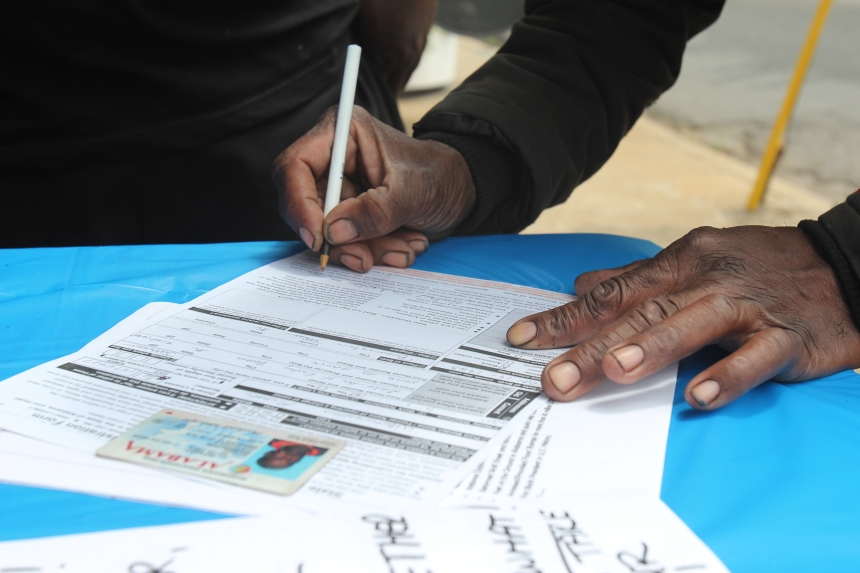
With 2016 just around the corner, Alabama Secretary of State John Merrill is teaming with the state Legislature to ensure Alabamians are prepared to fulfill their civic duty and vote. Together they have coordinated voter registration drives across the Yellowhammer state, where Merrill’s office will also issue photo I.D.s that are necessary to vote in the state. The issuance of photo I.D.s are of particular note to Alabamians as the Alabama Law Enforcement Agency (ALEA) announced its plans to close 31 driver license offices because of a significant loss of funding in the new state budget on Sept. 30, drawing nationwide criticism. In 2014, only 41 percent – 1.17 million of about 2.9 million – of Alabama’s registered voters turned out for the general election, the lowest participation in a general election since in at least 28 years. The upcoming voter readiness events will be held on: Saturday in Covington County at 8 a.m. at the Opp Fest Saturday in Pike County at 10 a.m. at the Peanut Butter Festival, Saturday in Jefferson County at 9 a.m. at the Magic City Classic Tuesday in Shelby County at 10 a.m. at the Roy Downs Memorial Library Wednesday in Lee County at 10 a.m. at the Smiths Station City Hall Since June 3, 2014, to participate in an election, a citizen must be registered to vote and present a valid form of photo ID. Forms of photo ID accepted at the polls are any of the following valid documents: driver’s license; Alabama photo voter ID card; state issued ID (any state); federal issued ID; US passport; employee ID from Federal Government, State of Alabama, County, Municipality, Board, or other entity of this state; student or employee ID from a public or private college or university in the State of Alabama (including postgraduate technical or professional schools); Military ID; or Tribal ID. To receive a free Alabama photo voter ID card, a citizen must be a registered voter and must not have one of the valid forms of photo ID listed above. For information on the site schedule as well as free Alabama voter identification cards, visit www.alabamavoterid.com or call 1-800-274-VOTE.
Presidential hopeful John Kasich to return to Alabama to campaign
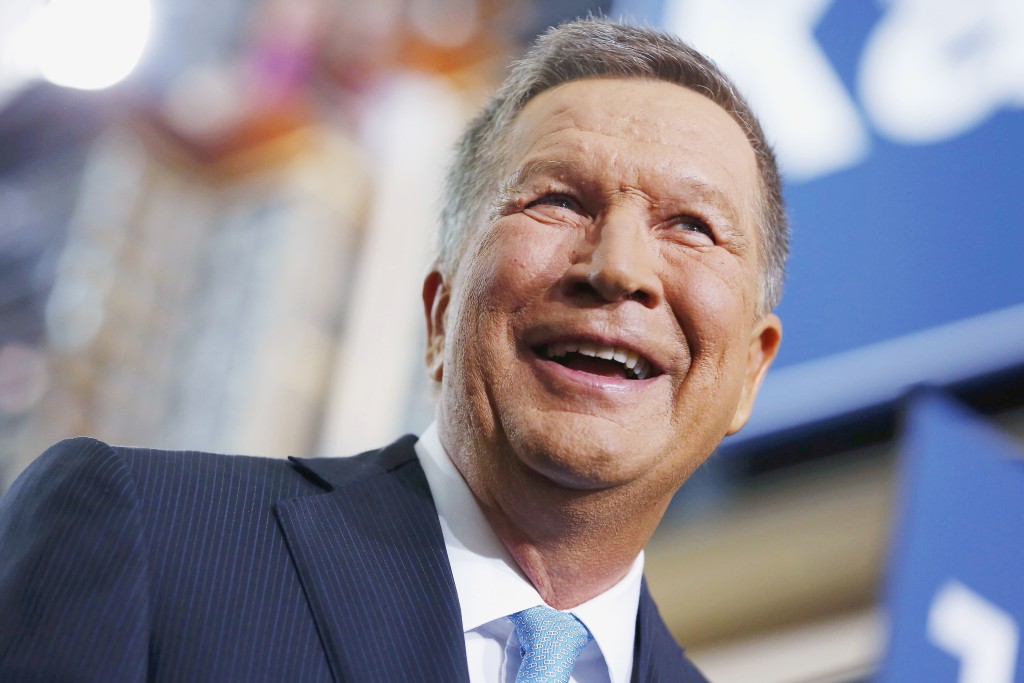
Republican presidential hopeful John Kasich will return to the Yellowhammer state next week in hopes of wooing SEC primary voters. Governor Kasich will be at Wintzell’s Oyster House in Mobile (605 Dauphin St.) for a rally at 5 p.m. Tuesday. During the event, Kasich will present his petition and filing fee to Republican Chairwoman Terry Lathan and make his pitch as to why Alabamians should cast their ballots for him in March. Kasich was last in Alabama in August, when he was endorsed by Gov. Robert Bentley. Alabama Secretary of State John Merrill announced Kasich’s upcoming visit in a news release Wednesday morning. Along with several other southeastern states, the Alabama Legislature passed a bill to move Alabama’s presidential primary to March 1 in what is now being referred to as the SEC Primary. “We’re excited to welcome Governor Kasich back in Alabama! With the assistance and full support of the Alabama Legislature, one of the most significant things we have done in the Secretary of State’s Office is change the primary date to March 1,” Merrill said. “Since the March primary legislation passed, two of the top Democratic candidates and seven of the top Republican candidates have made campaign stops in Alabama, which is unheard of for our state. When Presidential candidates are choosing to visit and re-visit Alabama, it is proof the SEC Primary is working.” Other candidates who have visited Alabama recently include former Florida Gov. Jeb Bush, Dr. Ben Carson, former Secretary of State Hillary Rodham Clinton, Sen. Ted Cruz, former Arkansas Gov. Mike Huckabee, Sen. Rand Paul, Sen. Bernie Sanders, former Sen. Rick Santorum, Donald Trump and before bowing out of the race Gov. Scott Walker.
State environmental department at odds with Legislature on budget future

Amid the ongoing budget fiasco has strained almost every relationship in Montgomery, you can add another pair of fiscal foes to the list: the Alabama Department of Environmental Management (ADEM) and the state Legislature, particularly the House. The state governmental institutions are at odds over agency funding and the source and amount of fees collected by ADEM being transferred to the state’s general revenue fund to cover an expanding budget shortfall. As funding from the state general fund has bottomed out to zero in recent years – or even negative levels, like it’s expected to next year – at the request of Lance R. LeFleur the Director of ADEM, it has begun to implement a program that would cut their reliance on the state and be completely reliant upon funding from permitting fees granted to agricultural firms and other industry players who must pass muster with ADEM in order to do business with the state. In other words, the regulators are relying on the regulated for their existence. While ADEM also receives funding from federal EPA grants and fees levied on Alabamians for certain purchases to mitigate environmental damage, permits held by industrial interests provide by far the bulk of the agency’s budget. The Alabama Environmental Management Commission (EMC) must approve fee increases prior to them changing. Alabama Environmental Management Commissioner Terry Richardson sees an inherent conflict there. “We’re being asked to shift the burden of the people to the permit holders, again,” Richardson said earlier this month. “I see an agency whose primary function is to manage the environment for the people of this state, more and more, being funded by the people we’re managing or protecting this environment from. “I don’t see that as a good situation to get into. It almost seems that it makes us more beholden to these industries and these permit holders,” Richardson continued. While the Legislature by and large does not see that state of affairs as compromising the agency, ADEM faces a threat in the wake of the cuts nonetheless. The agency will almost certainly seek permission to raise even more revenue from permit holders when the EMC meets in December, a move that will likely prove unpopular aside from the fact that it may exacerbate ADEM’s dependency on private sector sources. ADEM permitting fees were raised by 19 percent in 2011, just raised by 50 percent back in 2013. Some fear that may damage their already-weakened leverage when it comes to dealing with polluters, easement holders and other actors the state agency regulates. The state’s current budget for FY 2016 – banged out over two contentious Special Sessions in Montgomery which saw Gov. Robert Bentley veto an early version of the plan, and lawmakers nearly overriding the veto right back – contains just $280,000 in appropriations for ADEM. Adding insult to injury, says agency administrators, is a requirement the department pay back into the state’s general fund some $1.2 million the department collected for scrap tire and solid waste disposal. The situation is stoking fears in Montgomery that the EPA will revoke Alabama’s state water permitting authority, a move Director LeFleur says would be catastrophic. “EPA taking over the program would have a devastating impact on both attracting new industry and retaining existing industry,” LeFleur said. LeFleur and Richardson have yet to indicate publicly that such move – called for by environmental activists in years past, who see the state incapable of managing its own land and water – is imminent anytime soon, it is raising what Alabama Environmental Management Vice-Commissioner W. Scott Phillips called “hard questions” about the viability of the agency going forward. Testimony by Terry Richardson earlier this month at a department meeting summed up the budgetary situation best. “Are we a critical state agency? Or aren’t we?” Richardson intoned twice during ADEM’s most recent confab. “It doesn’t seem like our colleagues in the Legislature believe that we are.”
Governor, lawmakers clash over future budget process
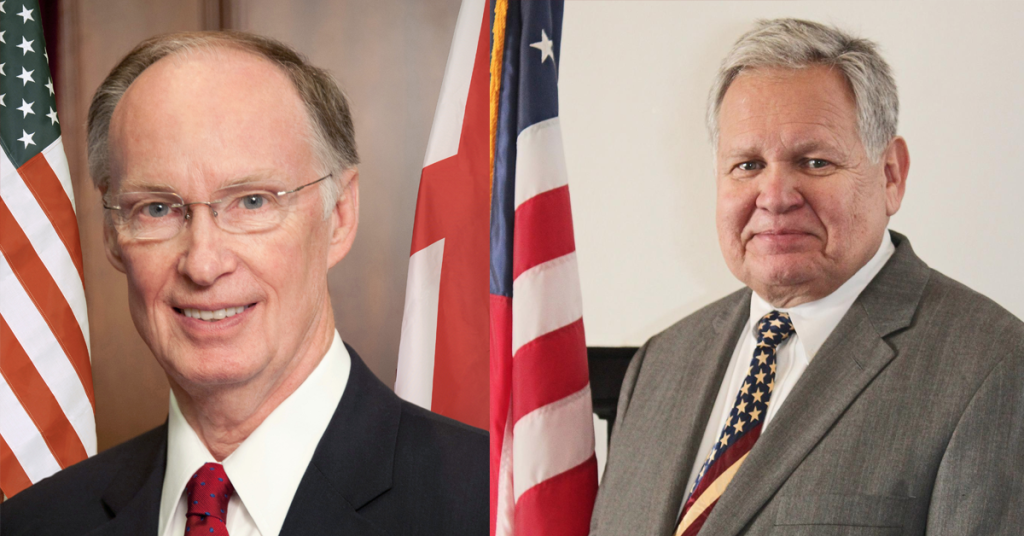
In the wake of a messy conflict between the executive and legislative branches over state spending, Sen. Paul Bussman of Cullman on Tuesday called for a hearing where all state department heads would testify during a “open communications meeting” regarding future budgets. But presumably prompted by the office of Gov. Robert Bentley, state Acting Finance Director Bill Newton issued a memo Thursday telling Bussman “Thanks, but no thanks,” claiming such a hearing would interfere with the annual formal budget process. “Each of you was invited to attend an open communications on future budget meeting on October 21,” wrote Newton. “I have been asked by the Governor to instruct you to not attend the meeting on October 21. The reason for this decision is the Budget Management Act.” “You and your staff are familiar with this 40 year old law that defines in detail our State’s budget process. This law clearly sets out the responsibilities of all parties involved in this process including the Legislature. The legislative branch is to consider the Governor’s budget proposal and evaluate alternatives. At this point in the budget process, the Governor has not sent his FY 17 proposal to the Legislature for their consideration,” explained Newton. State Auditor Jim Zeigler, however, thinks a hearing along the lines Bussman has suggest would not circumvent the formal budget process, and in fact “could greatly help that process.” Zeigler called Bentley’s decision to prevent department heads for testifying next week – which are by and large appointed by the governor – a “boycott.” “This is a strange application of the rules and procedures,” said Zeigler, saying more scrutiny would help the cause of an effective budget process. “One problem this year was the governor was chronically late in getting proposals and bills to the legislature. He promised a special session on a date certain with plenty of time for preparation, but he pulled a surprise and called the session for the very next Monday,” said Zeigler, who plans to attend the hearing despite Bentley’s protestations. “The early open communications meeting can be a great idea. It does not violate the procedures for the governor’s budget,” Zeigler said Thursday. The disagreement could set up a massive clash over spending and budget authority between the governor and the Legislature – and if Zeigler’s actions are a harbinger of the future, perhaps the governor and his own Cabinet. Zeigler’s state auditor post is a statewide elected position not appointed by Bentley. Sen. Bussman’s hearing is scheduled for 4 p.m. on October 21, in the Joint Briefing Room of the Alabama State House in Montgomery.
Robert Bentley calls license office closures a funding problem
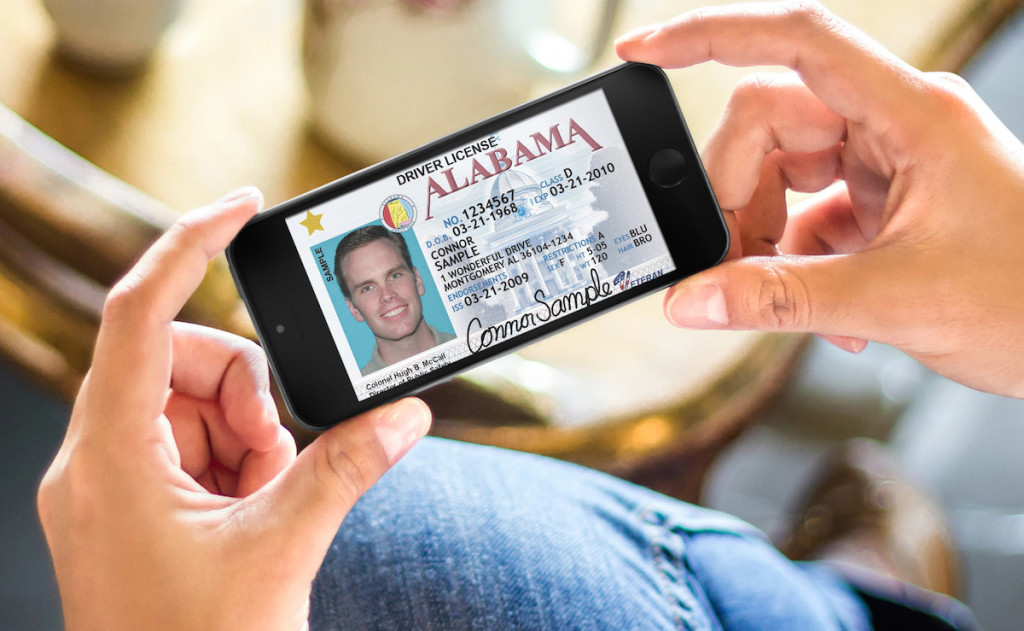
Gov. Robert Bentley on Wednesday said it’s up to lawmakers to come up with funding to reopen 31 rural driver’s license offices that were shuttered this fiscal year. “I do feel sorry for the rural areas. I do feel sorry for those who have to drive distances to get a driver’s license but the Legislature chose this. They chose not to fund these agencies,” Bentley said Wednesday. The governor said he is in discussions with lawmakers about how to reopen the offices, at least some of the time, but so far nothing has been finalized. The closures have become the latest point of contention between legislators and the governor. Bentley argued that lawmakers caused the closures when they rejected tax increases. Lawmakers have questioned the need for the closures, saying the state is saving little money while creating a hardship for people in rural, poverty-stricken areas of the state. The Alabama Law Enforcement Agency last month announced the closures of the satellite offices – where a state examiner would typically give driving tests one or two days a week – because of budget cuts. House Ways and Means General Fund Chairman Steve Clouse said Bentley had discussed using money from the governor’s emergency fund to reopen the offices until February and then asking lawmakers to approve a supplemental appropriation, or tax, when they return in February for the 2016 legislative session. Bentley said he, “talked about that, but we may not do it that way.” “There are different ways we could do this, but it still comes down to a funding issue. If the Legislature wants to do their job and fund these offices then they are going to have to come up with some money. It’s really up to them,” Bentley said. However, Clouse said he was unsure where additional state dollars would come from for ALEA. “The money is just not there,” Clouse, R-Ozark, said State agencies last week announced the closure of state parks, license offices and National Guard Armories because of funding reductions in the fiscal year that began Oct. 1. Shuttering the license offices has created the greatest backlash. U.S. Rep. Terri Sewell asked the Department of Justice to investigate the impact on minorities since Alabama requires a photo identification to vote. Black lawmakers held a news conference with the Rev. Jesse Jackson last week criticizing the closures as an added burden on poor, rural families who already struggle with transportation. The offices were largely located in county-owned buildings and a state examiner would travel to the offices to give driving tests typically one day a week. An ALEA spokeswoman said last week that the department was on track to spend $100,000 on travel to staff the offices. ALEA Secretary Spencer Collier has called the closures a business decision to allocate existing staff to the state’s 44 fulltime offices that serve a much higher number of people each week. The 31 locations in 2014 collectively issued 5,000 learners permits, 3,149 driver’s licenses and gave 10,587 permit exams, according to numbers from ALEA. Bentley said one of the possibilities under discussion was to have the rural offices open twice a month, instead of once a week. Republished with permission of the Associated Press.
Phil Williams: Perfection versus excellence
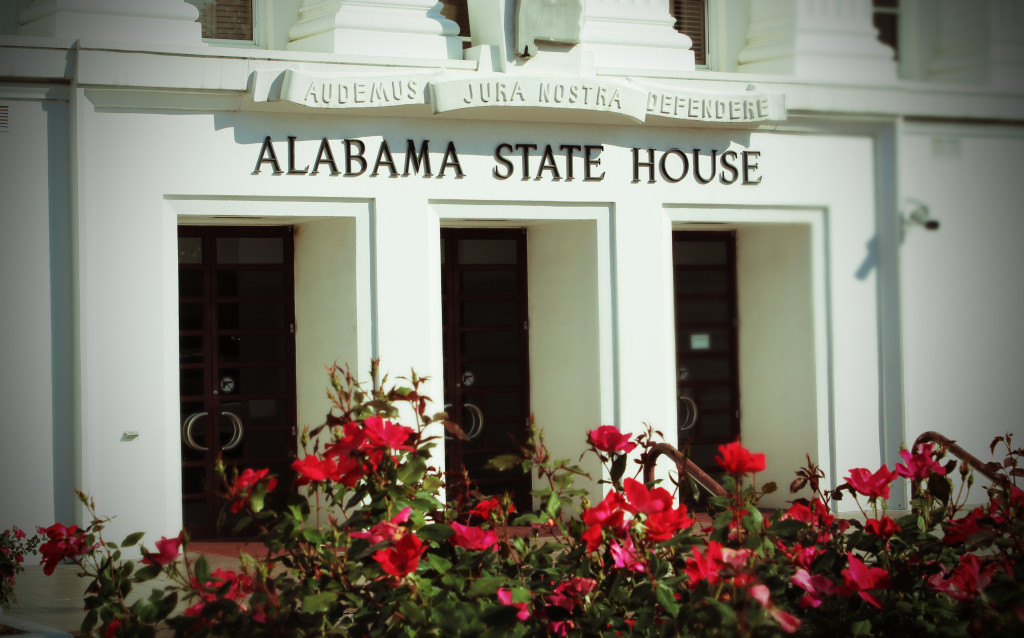
As I write this opinion, I am a few days removed from the final round of Alabama’s budgeting melee. It was a thorough and exhausting process and while I am not entirely satisfied with the result, I recognize that there were some solid victories in the process. It calls to mind a quote I’ve retained for many years from my first boss of my post-college years. My recollection of the quote is that it followed the end of a tough job-related issue. That issue resolved, but leaving me only partially satisfied with the result. In short, it was not my idea of a perfect resolution, to which my boss (a wise woman from whom I learned a great deal) said, “Perfection and excellence are not the same thing”. I pondered her point then, and I have mulled over it many times since. Sometimes, the measure of the result must include a weighing of the process of getting there as a part of the overall evaluation of the outcome. It didn’t always feel like excellence in Montgomery this year. A great deal of rhetoric flew around the halls of the Statehouse over the past ten months. There were times when the budget process was calm and well-ordered, and other times when teeth and hair were flying. Alabama already had a budget surplus but it was earmarked in such a way that there was virtually no flexibility to the budgeting process. The biggest issue was negotiating the revision of the earmarking of funds that we often refer to as “growth revenues”, which are those existing revenue sources that go up when the economy improves. Some years ago those growth revenues were perpetually allocated only to the education budget, leaving the General Fund stagnant. This year $80 million of those funds were appropriated forever to the General Fund, which means that State Troopers, Mental Health, Medicaid, Courts, National Guard, and other important functions of essential government services will now have the benefit of a good economic year. To do this we also ensured a strong measure of backfill to the education budget by passing a number of accountability measures to benefit education funding and unlocked some of the education budget’s reserves to allow more flexibility in education spending. The education budget actually came out ahead by almost 2:1 over the General Fund. In the midst of the process there were constant calls for new taxes. I personally opposed those calls and continually pushed for the debate to center on budgeting reforms. In the end I voted “no” on all tax increases. But I hope that the citizens of Alabama will remember that the initial call for taxes was for over $700 million in new measures that would have impacted the wallet of every adult citizen in the state. In the end over 80% of those measures were rejected by the Republican majority. Those taxes which some of my colleagues did choose to support were amended to shore up Medicaid and will be felt by very few citizens. While some Republicans did vote for a smaller cigarette tax than the Governor wanted, they also firmly rejected an outlandish number of new and harmful taxes. I’m proud to have stood with them in saying “no” to so many new taxes. The end result of two special legislative sessions for the citizens of this state is that the General Fund budget was passed in a manner that maintains the level of services necessary to keep the state functioning. The high point was that a measure of existing perpetual growth revenue was finally transferred to the General Fund for the first time in memory. It was only a portion of what I believe should have been transferred, but it was a victory for our General Fund agencies nonetheless. On top of that, the Republican majority still cut government spending several percentage points overall. The summation is that there was a measure of reform, a rejection of almost all of the taxes called for, un-earmarking of surplus funds, and reduced government spending. It was not perfection, but I believe the process was excellent in its transparency and effort. Phil Williams represents Etowah, Cherokee, DeKalb and St. Clair Counties in the Alabama Senate.
Lottery bill stumbles in Senate committee

A Senate committee has delayed a vote on a lottery bill, likely killing the proposal for the special session. The Senate Tourism and Marketing Committee debated the bill Thursday but did not vote on it. The proposal by Huntsville Sen. Paul Sanford would have Alabama join Powerball, Mega Millions and other multi-state lotteries. The Republican senator said a lottery is an option instead of taxes to raise money for the state’s general fund budget. Sanford said his bill is likely dead for the special session. The proposal ran into opposition from senators who want the state to authorize casino gambling along with a state lottery. Senate President Pro Tem Del Marsh is expected to introduce the casino and lottery legislation in the 2016 regular session that begins in February.
House committee approves cigarette tax, other revenue bills

An Alabama budget committee has approved a cigarette tax increase and other revenue bills as lawmakers try to fill a budget shortfall. The House Ways and Means Committee voted 8-6 for a 25-cent-per-pack cigarette tax increase. The increase would raise $66 million annually. The committee also voted for bills to raise the car rental tax from 1.5 to 2 percent; increase the car title fee from $15 to $28; and adjusts the business privilege tax so smaller businesses pay less and larger ones pay more. Lawmakers for months have been at a stalemate over a projected $200 million general fund shortfall. The committee action was the first sign of budding agreement. However, the proposals face difficult floor and Senate votes ahead. The House could vote on the tax bills Thursday. Republished with permission of the Associated Press.
Alabama lawmakers begin second special session on budget
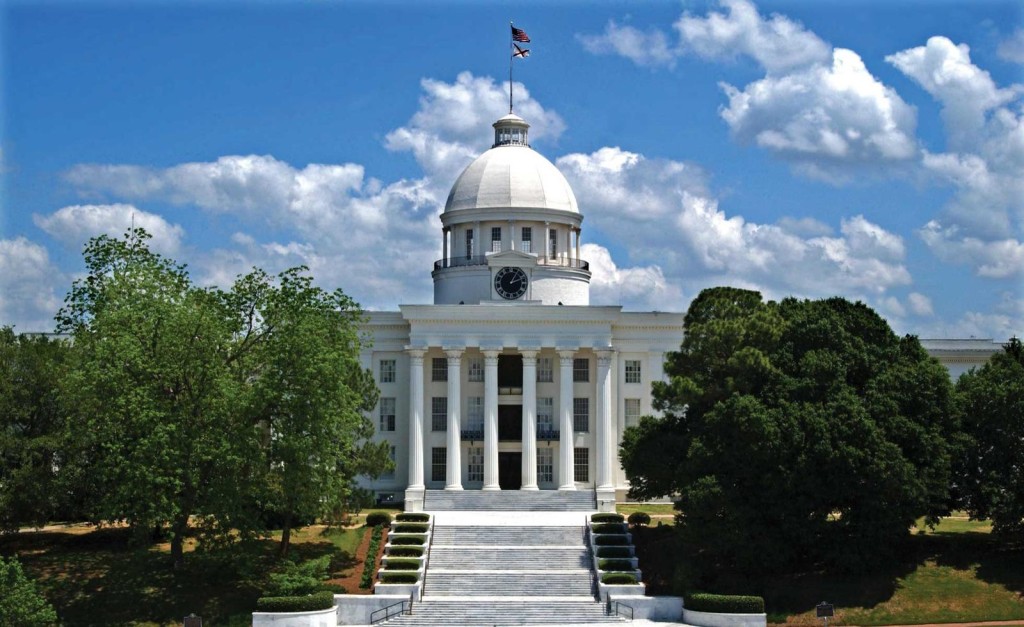
Alabama lawmakers are returning to Montgomery for their third attempt at approving a general fund budget. The special session begins at 5 p.m. Tuesday evening. Legislators have so far been unable to agree on how to handle a projected funding shortfall of at least $200 million. Gov. Robert Bentley is asking lawmakers to approve a 25-cent-per-pack cigarette tax and other tax increases to avoid cuts to state services. However, legislators have so far been resistant to his ideas, citing an opposition to tax increases. Bentley in June vetoed a cut-filled budget that lawmakers approved in the regular session. A first special session also ended without a budget. The lack of agreement means state agencies are without a spending plan for the fiscal year that begins Oct. 1. Republished with permission of The Associated Press.
Phil Williams: Finding a new way to budget is key for Alabama’s future
The Dickens’ classic Oliver Twist transcends time and was a catalyst for social change in its day. As we enter the second special session of the Alabama Legislature to focus on the anemic and malnourished General Fund budget, I am reminded of a specific, iconic scene from Dickens’ novel. Young Oliver underfed and with circles under his eyes, finished his small bowl of gruel and decided he must ask the unthinkable. With deep contrition, he approached the overseer of the workhouse and held up his empty bowl and asked, “Please sir, may I have some more?” It is a poignant scene and unfortunately reminds me of the negotiating process between Alabama’s equally important, but unequally treated budgets. This year the Legislature passed one of the strongest education budgets in years. Reflecting an increase in overall spending at nearly $6 billion, the Education Trust Fund is set to experience a nearly $400 million surplus by the end of fiscal year 2016. Let that sink in for a minute. In the midst of constant calls for new taxes, we actually have a projected surplus well in excess of what is needed to fund both budgets. Alabamians have sent far more to Montgomery than is needed. The problem is not a lack of revenue but rather the unequal distribution of existing revenues. Every year the scene is repeated in Dickensian style as the General Fund looks to the Education Trust Fund and asks, “Please sir, may I have some more?” And the overseers decide if a bit more gruel will keep the little waif mollified. Make no mistake: I am proud of the education budget and I do not plan to reduce it. I was the deciding vote on the 2015 budget and a willing “yes” vote on the 2016 budget. I am a product of public education and have a family filled with public education employees. But I am asking for my fellow legislators to have the broader, statesmanlike view of the state as a whole. If we provide our citizens with a solid education but leave them with a state that does not properly fund medical needs, mental health, National Guard soldiers, prisons, the court system, State Troopers, senior meals, child advocacy, and all of the other crucial components of the General Fund, then they will take that state-funded education and go somewhere else. We can build the best state in the nation. We can have a state in which quality of education and quality of life coexist without one having to beg from the other. And believe it or not, we can do so without raising taxes. Unbeknownst to many Alabamians, a very simple bill has been introduced twice this year and promptly shelved by the gatekeepers who refuse to allow any crossover between the budgets. The bill authored by my conservative colleague Senator Paul Sanford simply allows for a perpetual split of recurring revenues: 78% to the Education Trust Fund, and 22% to the General Fund. This would increase the General Funds revenue base by an estimated $156 million and maintain a strong reserve for education. It is the right thing to do. It is systemic change and does not require new taxes. It is the change that I am prepared to fight for. The tax-raising bullies have been loud and boisterous lately. It is time for the citizens who have asked me over and over not to raise taxes to make themselves heard. It is time for the General Fund to be treated as an equal and not as a little beggar from a 19th century workhouse. Phil Williams represents Etowah, Cherokee, DeKalb and St. Clair Counties in the Alabama Senate. You may reach Senator Williams by phone at (334) 242-7857 or by e-mail at phil@williamsstatesenate.com.
Katherine Robinson: The empty promise of “no new taxes”
Beginning early in the regular legislative session, Democrats laughingly claimed that Republicans were stealing their agenda, namely on tax increases. Various Republicans from the top down who ran on promises of no new taxes are now exerting substantial energy to convince both their colleagues and the general public that state government cannot function without more of the taxpayers’ money. Is the shortfall itself really causing this one-eighty or is there a deeper, philosophical problem? Perhaps some of those who promised not to raise taxes did so without giving much thought to the principles that underlie this position, resulting in their sudden change of course. A promise of no new taxes is never issued on the campaign trail with the caveat of “unless revenues go down” or “unless we need to increase spending.” A principle-based pledge not to raise taxes is made with the understanding that revenues will fluctuate and that government won’t ever voluntarily spend less. It is based in a belief that government–like any family or business–must live within its means. Tax increases have always been considered a cardinal sin in conservative politics because they require taxpayers to bail out elected officials who either cannot or will not solve problems without more of your money. Without a genuine, policy-based commitment not to raise taxes, politicians are easily persuaded that certain increases aren’t that bad. The “tax them, not me” mentality of outside influences kicks in, leading lawmakers to privately weigh which tax hikes will allow them to keep the most friends. Raising the cigarette and business privilege taxes, and eliminating the FICA deduction, are still on the table seemingly due to a mistaken belief that these are the least politically dangerous–never mind the costs to smokers, small business owners, and half of all tax filers (those who itemize deductions). The “tax them, not me” mentality fails to recognize that tax increases deter reform and restraint; thus, more revenue will continue to be necessary and, next time, it will have to be found in other places. The necessity of efficiency in spending is lost when taxes are raised because, to quote Milton Friedman, “very few people spend other people’s money as carefully as they spend their own.” Maybe voters in five Alabama localities had this in mind when they voted down tax increases this year. Some legislators claim to see no correlation between what’s going on at the local level and what’s being debated in Montgomery. Politicians who miss the message here do so at their own peril. Voters are far more likely to sympathize with the need for more revenue at the lowest tier of government, to benefit specific projects within their own neighborhoods and schools, than at the state or national level. All of the justifications given in the statewide campaign to raise taxes–children losing access to pediatricians, closing state parks, limiting access to drivers’ license offices, and turning the lights off at armories–would only come to fruition if lawmakers refuse to prioritize their spending. These kinds of threats are very familiar, but usually come from the mouths of Democrats. One notable exception is the Republican-led attempt to raise taxes in 2003, else 4,000 teachers would be laid off, 5,000 inmates would be released, and access to jury trials would be limited. That ballot initiative was defeated by 67% of voters. Former U.S. Senator Tom Coburn (R-OK) remarked to an audience last week, “You have to be courageous not to spend money . . . and we don’t have many people who have that courage.” Conservative Republicans in the Alabama Legislature have shown courage as they have stymied tax increases now for six months. They must continue to hold the line and generate support for alternatives like the 78/22 split that would close 75% of the shortfall without raising taxes. Where cuts are still needed, an additional dose of courage will be required for making tough choices on prioritization. The significant achievements made under Republican leadership since 2010 are laudable, but could easily become a distant memory to taxpayers who gave their votes and their trust away for an empty promise of no new taxes. Katherine Robertson is vice president for the Alabama Policy Institute (API), an independent non-partisan, non-profit research and education organization dedicated to the preservation of free markets, limited government and strong families. If you would like to speak with the author, please email katheriner@alabamapolicy.org or call (205) 870-9900.
