
Michael Bloomberg opens door to 2020 Democratic run for president
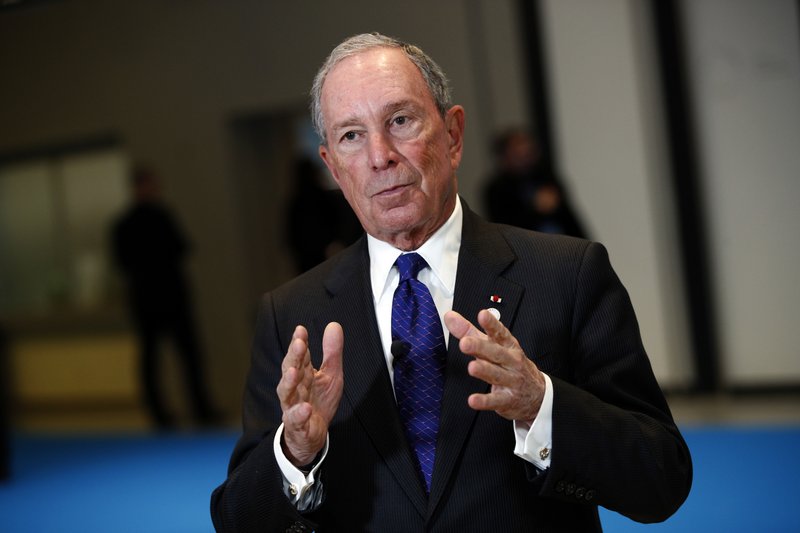
Michael Bloomberg, the billionaire former mayor of New York City, is opening the door to a 2020 Democratic presidential campaign, warning that the current field of candidates is ill equipped to defeat President Donald Trump. Full Coverage: Election 2020 Bloomberg, who initially ruled out a 2020 run, has not made a final decision on whether to jump into the race. If he were to launch a campaign, it could dramatically reshape the Democratic contest less than three months before primary voting begins. The 77-year-old has spent the past few weeks talking with prominent Democrats about the state of the 2020 field, expressing concerns about the steadiness of former Vice President Joe Biden’s campaign and the rise of liberal Massachusetts Sen. Elizabeth Warren, according to people with knowledge of those discussions. In recent days, he took steps to keep his options open, including moving to get on the primary ballot in Alabama ahead of the state’s Friday filing deadline. In a statement on Thursday, Bloomberg adviser Howard Wolfson said the former mayor believes Trump “represents an unprecedented threat to our nation” and must be defeated. “But Mike is increasingly concerned that the current field of candidates is not well positioned to do that,” Wolfson said. Bloomberg’s moves come as the Democratic race enters a crucial phase. Biden’s front-runner status has been vigorously challenged by Warren and Vermont Sen. Bernie Sanders, who are flush with cash from small-dollar donors. But both are viewed by some Democrats as too liberal to win in a general election faceoff with Trump. Despite a historically large field, some Democrats anxious about defeating Trump have been looking for other options. Former Attorney General Eric Holder and former Massachusetts Gov. Deval Patrick have quietly had conversations with supporters urging them to consider a run, but neither appears likely to get in the race. Bloomberg, a Republican-turned-independent who registered as a Democrat last year, has flirted with a presidential run before but ultimately backed down, including in 2016. He endorsed Hillary Clinton in that race and, in a speech at the Democratic Party convention, pummeled Trump as a con who has oversold his business successes. Bloomberg plunged his efforts — and his money — into gun control advocacy and climate change initiatives. He again looked seriously at a presidential bid earlier this year, traveling to early voting states and conducting extensive polling, but decided not to run in part because of Biden’s perceived strength. Biden did not address Bloomberg’s potential candidacy at a fundraiser Thursday night in Boston. With immense personal wealth, Bloomberg could quickly build out a robust campaign operation across the country. Still, his advisers acknowledge that his late entry to the race could make competing in states like Iowa and New Hampshire, which have been blanketed by candidates for nearly a year, difficult. Instead, they previewed a strategy that would focus more heavily on the March 3 “Super Tuesday” contests, including in delegate-rich California. Some Democrats were skeptical there would be a groundswell of interest in the former New York mayor. “There are smart and influential people in the Democratic Party who think a candidate like Bloomberg is needed,” said Jennifer Palmieri, who advised Clinton’s 2016 campaign. “But there is zero evidence that rank-and-file voters in the early states of Iowa and New Hampshire feel the same.” Still, others credited Bloomberg with taking on “some of America’s biggest challenges” and finding success. “While this is not an endorsement, Michael Bloomberg is a friend and I admire his track record as a successful business leader and Mayor who finds practical solutions to some of America’s biggest challenges, from creating good jobs to addressing the opioid crisis and fighting for common-sense gun safety,” said Rhode Island Gov. Gina Raimondo, a Democrat. Bloomberg reached out to several prominent Democrats on Thursday, including Raimondo. One Democrat Bloomberg hasn’t spoken to as he’s reconsidered his run is former President Barack Obama. Bloomberg would pose an immediate ideological challenge to Biden, who is running as a moderate and hopes to appeal to independents and Republicans who have soured on Trump. But the billionaire media mogul with deep Wall Street ties could also energize supporters of Warren and Sanders, who have railed against income inequality and have vowed to ratchet up taxes on the wealthiest Americans. “He’s a literal billionaire entering the race to keep the progressives from winning,” said Rebecca Katz, a New York-based liberal Democratic strategist. “He is the foil.” Warren on Thursday tweeted: “Welcome to the race, @MikeBloomberg!” and linked to her campaign website, saying he would find there “policy plans that will make a huge difference for working people and which are very popular.” Bloomberg would face other challenges as well, particularly scrutiny of his three terms as mayor. He has defended the New York Police Department’s use of the controversial stop-and-frisk policy that has been criticized as targeting African Americans and Hispanics. Black voters in particular are one of the most powerful constituencies in Democratic politics. Bloomberg will have to move quickly in the coming days and weeks to get on the ballot in many of the primary states, including Alabama. New Hampshire’s filing deadline is Nov. 15. In Arkansas, another Super Tuesday state, a Democratic Party spokesman said a person representing a “mystery candidate” reached out Thursday afternoon asking about the requirements to join the ballot. Reed Brewer, communications director for the Arkansas Democrats, said he walked the individual through the process — which simply requires filing documentation with both the state party and secretary of state, as well as paying a $2,500 fee — and was assured that the fee would be “no problem” for the mystery candidate. There is no filing requirement for a candidate to run in the Iowa caucuses, which are a series of Democratic Party meetings, not state-run elections. It means a candidate can enter the race for the Feb. 3 leadoff contest at any time. Associated Press writers Jill Colvin in Washington; Alexandra Jaffe and Thomas Beaumont in Des Moines,
From toast of town to toxic: Mark Zuckerberg on outs with democrats
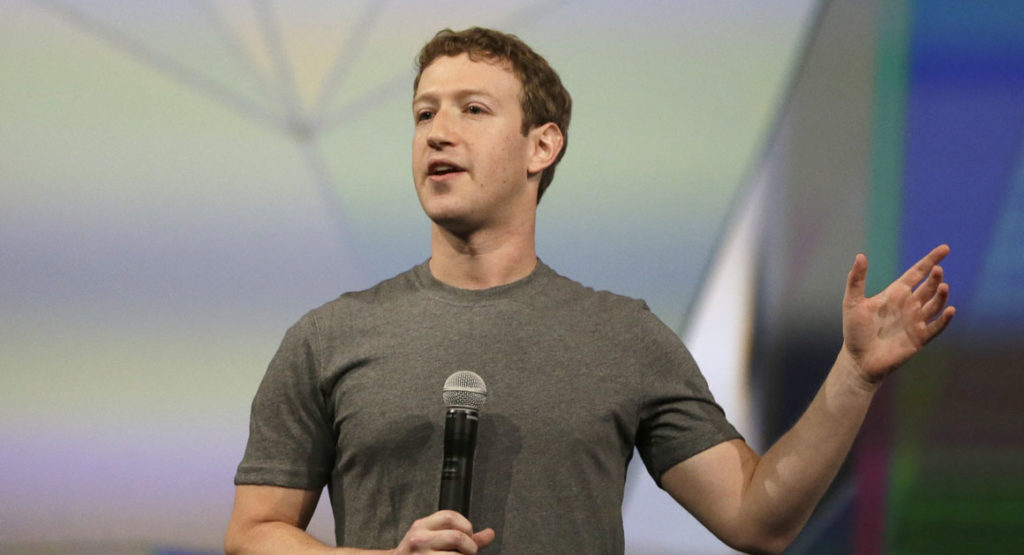
Mark Zuckerberg’s social network in Washington is shrinking. Bipartisan hostility against Facebook has been building for months, fueled by a series of privacy scandals, the site’s role in Russian meddling in the 2016 presidential campaign and accusations that Facebook crushes competitors. Now, with the 2020 elections approaching, Democrats especially are homing in on the conduct of the social media giant and its refusal to fact-check political ads and remove false ones. “When you’re the No. 1 monopoly, people are going to come after you,” says John Feehery, a veteran Republican communications strategist. The challenge for Democrats, as he sees it: “They’re facing a base that is very angry and restive. So they have to be much more aggressive in taking on corporations.” Zuckerberg enjoyed a cozy relationship with the Obama administration. But in the face of growing public outrage, the co-founder of the upstart born under the motto “Move fast and break things” is learning the art of smoothing over and piecing back together. His new strategy: a personal blitz featuring serial private meetings in Washington with key lawmakers of both parties and President Donald Trump; small, off-the-record dinners at his California home with conservative journalists and opinion makers; and the occasional public address or TV interview. Addressing criticisms from Democratic lawmakers and civil rights groups over Facebook’s track record on fighting discrimination, Zuckerberg and Chief Operating Officer Sheryl Sandberg planned to host a dinner Monday night with civil rights leaders. The two executives want to hear the leaders’ “direct perspective and feedback,” the company said. The Rev. Al Sharpton said last week that Zuckerberg would meet with him and others to discuss concerns such as Facebook’s handling of political messages. Misinformation on the platform can contribute to the suppression of voting by African Americans and other minorities, civil rights leaders say. Zuckerberg has become lobbyist-in-chief for a tech giant that has about 60 people officially playing that role. The company spent an estimated $12.6 million on federal influencing last year. The political ad issue hits close to home for Democrats. Facebook, as well as Twitter and Google, refused in September to remove a misleading video ad from Trump’s reelection campaign that targeted top-tier Democratic candidate Joe Biden. Sen. Elizabeth Warren, another top Democratic contender, chose to hit back by running her own ad and making it personal by falsely claiming that Zuckerberg had endorsed Trump for 2020. Warren, who has called for breaking up Facebook and other tech giants, acknowledged the ad’s deliberate falsity to make her point. Then came Zuckerberg’s speech last month at Georgetown University in which he promoted free expression as the foundation for Facebook’s refusal to take down content it deems newsworthy, even if the material violates company standards. The next week, during prickly questioning by Democratic lawmakers at a televised House hearing, Zuckerberg dug in on not fact-checking politicians’ speech and the handling of hate speech and potential incitements to violence. “This really is not about money,” Zuckerberg insisted. “It is important that people can see for themselves what politicians are saying.” Facebook says political advertising accounts for less than half of 1 percent of its total revenue. Separately from political advertising, Facebook has policies and improved technology that it says now enables it to more efficiently detect terrorist content in many languages. Following the mass shooting in New Zealand last spring, for example, Facebook now prohibits livestreaming by people who have violated rules covering organizations and individuals deemed dangerous and potentially violent. In the lambasting from Democrats, Rep. Joyce Beatty of Ohio, the vice chair of the Congressional Black Caucus, focused on Facebook’s track record on civil rights and diversity. She told Zuckerberg that he had “ruined the lives of many people, discriminated against them.” As part of a legal settlement with civil rights groups, Facebook changed its ad-targeting systems this year to prevent discrimination in housing, credit and employment ads. It previously had allowed such ads to be targeted to people based on age, sex or race, which is illegal. At some points, friendlier Republican members of the House Financial Services Committee asked Zuckerberg how he was holding up through the six-hour hearing. “I’m doing OK,” replied the 35-year-old co-founder, chairman and CEO. He’s one of the world’s richest individuals, with a net worth currently estimated at $71 billion. Summing up, Rep. Maxine Waters, the California Democrat who leads the committee, told Zuckerberg, “You have opened up a discussion about whether Facebook should be broken up.” A mandated breakup would be the worst-case scenario for Facebook and the other big tech companies. Facebook says splitting up large tech corporations would make the election system more vulnerable to interference because the companies wouldn’t be able to work together to prevent it. For Zuckerberg and the Democrats, “it may be a nasty divorce,” said James Thurber, a professor of government at American University who founded its Center for Congressional and Presidential Studies. “He clearly has taken a stand that’s really quite unpopular.” Thurber called Zuckerberg’s backstage celebrity approach to lobbying efforts “very dangerous.” “You’ve got to be very careful about that, if you think you can do it yourself,” he said. Rep. David Cicilline, a senior House Democrat who leads the Judiciary Committee’s investigation into the market dominance of big tech companies, is working on legislation that may target the profits made by Facebook from political ads it knows are false. The measure likely would also apply to social media rivals Twitter and Google. Last Wednesday, Twitter made the unexpected announcement that it will ban all political advertising from its service. “This is a good first step,” Cicilline tweeted. “Your move, Google/Facebook.” Zuckerberg’s quick riposte, during Facebook’s quarterly conference call on earnings, was to reaffirm the company’s commitment to the value of free speech, including for politicians. It’s a sharp reversal of fortune for Facebook from the days of the Obama administration, when the company was hailed as an exemplar of innovation and an engine of economic growth. Campaign money flowed to the
Democrats push candidates to fully commit to 2020 nominee
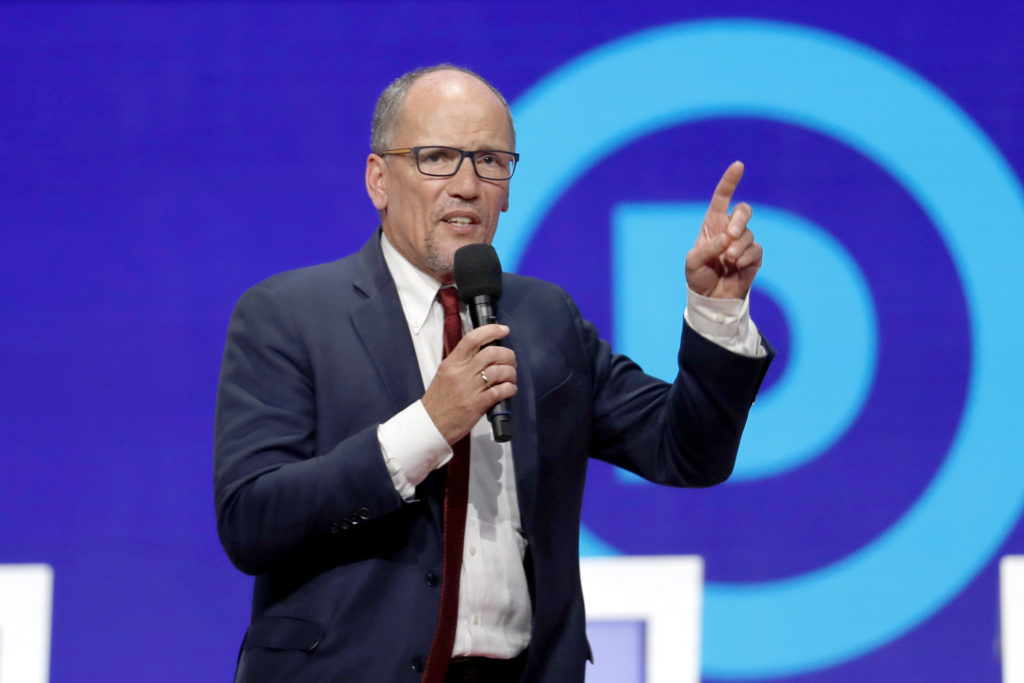
The Democratic National Committee is increasing pressure on its presidential candidates to commit to campaign actively for the party’s nominee in 2020, going beyond a previous loyalty pledge for White House hopefuls. The push from Chairman Tom Perez is part of a wide-ranging strategy designed to prevent the mistakes that cost Democrats the 2016 presidential election. It comes as the Republican National Committee continues to dwarf the Democratic Party in fundraising, while Democrats face the prospect of a bruising, expensive nominating fight that could last well into election year. “We’ll need every Democrat working together in order to defeat Donald Trump,” Perez said, repeating his pledge for a full national campaign even as most Democrats remain focused on the primary campaign. As an example, the DNC holds up former President Barack Obama, who is already raising money and remains neutral in a nominating fight that includes his vice president, Joe Biden, and who is already raising money for the party. An Oct. 25 email from Obama to grassroots donors produced the party’s best online fundraising day of the cycle, the DNC said, and the former president will headline a fundraising gala in California in November. DNC officials say Obama has already talked with party leaders about campaigning on behalf of the nominee, whoever it is. Perez is asking all candidates to commit, like Obama, to serve as surrogates, with a focus on battleground states in the weeks after the July 13-16 nominating convention in Milwaukee. And Perez wants each campaign, as candidates drop out, to designate a senior adviser to serve as a liaison to help the national party use the vestiges of individual candidates’ campaigns to build out Democrats’ general election campaign. DNC officials say the effort isn’t targeted at any campaign. But since President Donald Trump’s 2016 election, Democratic power players have lamented the bitterness that lingered among many supporters of Bernie Sanders after he lost the nomination to Hillary Clinton. Sanders endorsed and campaigned for Clinton, but some of his supporters never fully embraced her candidacy, and some Clinton loyalists blamed them for her narrow losses in key states like Wisconsin, Michigan and Pennsylvania. DNC officials say the overall purpose of what Perez calls a “unity effort” is to pool all Democratic resources, making them available to state parties in battleground states to benefit the presidential nominee and all other Democrats running for lower offices. Perez already has required candidates to pledge explicitly to support the nominee. Candidates also have been asked to help the party raise money and, as a condition of getting the DNC’s national voter file, pledge to give back the additional data they gather on voters once they drop out of the presidential race. The DNC says 10 candidates to date have sent fundraising emails and 15 have participated in fundraising events. That list includes Elizabeth Warren, who has shunned high-dollar fundraisers for her own campaign but agreed to help the party with events that include wealthy donors who legally can give the party hundreds of thousands of dollars. Sanders, Warren’s chief rival for the Democrats’ progressive faction, has sent a fundraising email but hasn’t yet hosted a DNC fundraiser. Sanders’ campaign says he is willing to attend such events provided they are open to low-dollar donors. Both Sanders and Warren have criticized Biden for leaning on wealthy donors and accepting the help of an independent political action committee that can accept unlimited contributions from individuals and corporations. The data requirements, meanwhile, are part of Democrats’ attempts to catch up to a Republican data operation that surprised the Clinton campaign in 2016 and to avoid the scenario under Obama, whose campaign ran its own sophisticated data operation but never fully integrated it with the party. Sanders also never turned over his voter data after ending his 2016 bid. By Bill Barrow Associated Press. Republished with the permission of the Associated Press.
Budget deal allows far less money than Donald Trump wanted for wall

Congressional negotiators reached agreement to prevent a government shutdown and finance construction of new barriers along the U.S.-Mexico border, overcoming a late-stage hang-up over immigration enforcement issues that had threatened to scuttle the talks. Republicans were desperate to avoid another bruising shutdown. They tentatively agreed Monday night to far less money for President Donald Trump’s border wall than the White House’s $5.7 billion wish list, settling for a figure of nearly $1.4 billion, according to congressional aides. The funding measure is through the fiscal year, which ends on Sept. 30. It’s not clear whether Trump will support the deal, although GOP negotiators said they were hopeful. The agreement means 55 miles (88 kilometers) of new fencing — constructed through existing designs such as metal slats instead of a concrete wall — but far less than the 215 miles (345 kilometers) the White House demanded in December. The fencing would be built in the Rio Grande Valley in Texas. “With the government being shut down, the specter of another shutdown this close, what brought us back together I thought tonight was we didn’t want that to happen” again, said Senate Appropriations Committee Chairman Richard Shelby, Republican-Ala. Details won’t be officially released until Tuesday, but the pact came in time to alleviate any threat of a second partial government shutdown this weekend. Aides revealed the details under condition of anonymity because the agreement is tentative. “Our staffs are just working out the details,” said House Appropriations Committee Chairwoman Nita Lowey, Democrat-N.Y. The pact also includes increases for new technologies such as advanced screening at border entry points, humanitarian aid sought by Democrats, and additional customs officers. This weekend, Shelby pulled the plug on the talks over Democratic demands to limit immigrant detentions by federal authorities, frustrating some of his fellow negotiators, but Democrats yielded ground on that issue in a fresh round of talks on Monday. Asked if Trump would back the deal, Shelby said: “We believe from our dealings with them and the latitude they’ve given us, they will support it. We certainly hope so.” But Fox News Channel’s Sean Hannity, a Trump ally, said the barrier money in the agreement was inadequate. He warned late Monday that “any Republican that supports this garbage compromise, you will have to explain.” Trump traveled to El Paso, Texas, for a campaign-style rally Monday night focused on immigration and border issues. He has been adamant that Congress approve money for a wall along the Mexican border, though he no longer repeats his 2016 mantra that Mexico will pay for it, and he took to the stage as lawmakers back in Washington were announcing their breakthrough. “They said that progress is being made with this committee,” Trump told his audience, referring to the congressional bargainers. “Just so you know, we’re building the wall anyway.” Democrats carried more leverage into the talks after besting Trump on the 35-day shutdown but showed flexibility in hopes on winning Trump’s signature. After yielding on border barriers, Democrats focused on reducing funding for detention beds to curb what they see as unnecessarily harsh enforcement by Immigration and Customs Enforcement, or ICE. The agreement yielded curbed funding, overall, for ICE detention beds, which Democrats promised would mean the agency would hold fewer detainees than the roughly 49,000 detainees held on Feb. 10, the most recent date for which figures were available. Democrats claimed the number of beds would be ratcheted down to 40,520. But a proposal to cap at 16,500 the number of detainees caught in areas away from the border — a limit Democrats say was aimed at preventing overreach by the agency — ran into its own Republican wall. Democrats dropped the demand in the Monday round of talks, and the mood in the Capitol improved markedly. Trump met Monday afternoon with top advisers in the Oval Office to discuss the negotiations. He softened his rhetoric on the wall but ratcheted it up when alluding to the detention beds issue. “We can call it anything. We’ll call it barriers, we’ll call it whatever they want,” Trump said. “But now it turns out not only don’t they want to give us money for a wall, they don’t want to give us the space to detain murderers, criminals, drug dealers, human smugglers.” The recent shutdown left more than 800,000 government workers without paychecks, forced postponement of the State of the Union address and sent Trump’s poll numbers tumbling. As support in his own party began to splinter, Trump surrendered after the shutdown hit 35 days, agreeing to the current temporary reopening without getting money for the wall. The president’s supporters have suggested that Trump could use executive powers to divert money from the federal budget for wall construction, though he could face challenges in Congress or the courts. The negotiations hit a rough patch Sunday amid a dispute over curbing ICE, the federal agency that Republicans see as an emblem of tough immigration policies and Democrats accuse of often going too far. According to ICE figures, 66 percent of the nearly 159,000 immigrants it reported detaining last year were previously convicted of crimes. Reflecting the two administration’s differing priorities, in 2016 under President Barack Obama, around 110,000 immigrants were detained and 86 percent had criminal records. Few convictions that immigrants detained last year had on their records were for violent crimes. The most common were for driving while intoxicated, drugs, previous immigration convictions and traffic offenses. The border debate got most of the attention, but it’s just part of a major spending measure to fund a bevy of Cabinet departments. A collapse of the negotiations would have imperiled another upcoming round of budget talks that are required to prevent steep spending cuts to the Pentagon and domestic agencies. Republished with permission from the Associated Press
Democrats seek Green New Deal to address climate change

Democrats including Rep. Alexandria Ocasio-Cortez of New York are calling for a Green New Deal intended to transform the U.S. economy to combat climate change and create thousands of jobs in renewable energy. The freshman lawmaker and veteran Sen. Ed Markey of Massachusetts are teaming up on the plan, which aims to eliminate the U.S. carbon footprint by 2030. A joint resolution drafted by Ocasio-Cortez and Markey sets a goal to meet “100 percent of the power demand in the United States through clean, renewable and zero-emission energy sources,” including dramatic increases in wind and solar power. A news conference at the Capitol is set for later Thursday as the lawmakers introduce the nonbinding resolution. While setting lofty goals, the plan does not explicitly call for eliminating the use of fossil fuels such as oil and natural gas, a nod to pragmatism that may disappoint some of Ocasio-Cortez’s strongest supporters. Even so, their Green New Deal goes far beyond the Clean Power Plan proposed by President Barack Obama. President Donald Trump has scrapped Obama’s plan, which imposed emissions limits on coal-fired power plants, as a job-killer. The Democrats are likely to meet resistance to their proposal in Congress, especially in the Republican-controlled Senate. Trump, who has expressed doubts about climate change, also is likely to oppose it. The announcement of the Green New Deal came as House Speaker Nancy Pelosi tapped eight Democrats to serve on a special committee to address climate change. Ocasio-Cortez was not among those selected for the panel, which is chaired by Rep. Kathy Castor, D-Fla. Ocasio-Cortez declined to answer Thursday when asked about the snub. Pelosi said in a statement that the climate committee will “spearhead Democrats’ work to develop innovative, effective solutions to prevent and reverse the climate crisis.” She made no mention of the Green New Deal. The resolution being introduced Thursday marks the first time Ocasio-Cortez and other lawmakers have attached legislative language to the Green New Deal, a concept that until now has been largely undefined other than as a call for urgent action to head off catastrophic climate change and create jobs. Several Democratic presidential hopefuls have embraced the idea of a Green New Deal without saying exactly what it means. Ocasio-Cortez said in a statement that the plan will create “unprecedented levels of prosperity and wealth for all while ensuring economic and environmental justice and security.” She calls for a “World War II-scale mobilization” that includes high-quality education and health care, clean air and water and safe, affordable housing. Answering critics who call the plan unrealistic, Ocasio-Cortez says that when President John F. Kennedy wanted to go to the moon by the end of the 1960s, “people said it was impossible.” She also cites Franklin D. Roosevelt’s New Deal, Lyndon B. Johnson’s Great Society and the interstate highway system begun under Dwight D. Eisenhower as examples of American know-how and capability. While focusing on renewable energy, Ocasio-Cortez said the plan would include existing nuclear power plants but block new nuclear plants. Nuclear power does not emit greenhouse gases, which contribute to global warming. The resolution does not include a price tag, but some Republicans predict it would cost in the trillions of dollars. They denounced the plan at House hearings on climate change on Wednesday. “If anyone thinks that decarbonizing America is going to save the planet, they’re delusional,” said Rep David McKinley, R-W.Va. The Green New Deal would be paid for “the same way we paid for the original New Deal, World War II, the bank bailouts, tax cuts for the rich and decades of war — with public money appropriated by Congress,” Ocasio-Cortez said. Government can take an equity stake in Green New Deal projects “so the public gets a return on its investment,” she said. Republished with permission from the Associated Press
2020 Democratic primary field puts diversity in spotlight
The early days of the Democratic primary campaign are highlighting the party’s diversity as it seeks a nominee who can build a coalition to take on President Donald Trump. Of the more than half dozen Democrats who have either moved toward a campaign or declared their candidacy, four are women: Sens. Kirsten Gillibrand of New York, Kamala Harris of California and Elizabeth Warren of Massachusetts and Rep. Tulsi Gabbard of Hawaii. Harris is also African-American. Former Obama Cabinet member Julian Castro, who is Latino, has also joined the race. And on Wednesday, Democrat Pete Buttigieg, the 37-year-old mayor of South Bend, Indiana, jumped into the campaign. If he wins the Democratic nomination, he would be the first openly gay presidential nominee from a major political party. He would also be the youngest person ever to become president if he wins the general election. The diversity is likely to expand in the coming weeks as other Democrats enter the race. The field that’s taking shape follows a successful midterm election in which Democrats elected a historically diverse class of politicians to Congress, a pattern they’d like to repeat on the presidential scale. Neera Tanden, president of the liberal Center for American Progress Action Fund, hailed the Democrats’ multiple trailblazing candidates for reflecting that “the central opposition to Trump is around a vision of the country that’s inclusive of all Americans.” “A lot of different people are going to see that they can be part of the Democratic Party” thanks to a field that showcases women, candidates of color, and the first potential LGBT nominee, Tanden said. The primary “hopefully will bring a lot of people into the process,” she added, recalling the high number of voters who engaged in a 2008 Democratic primary that featured a possible female nominee, Hillary Clinton, and the man who would become the first black president, Barack Obama. The array of backgrounds was on display Wednesday when Buttigieg spoke in personal terms about his marriage. “The most important thing in my life — my marriage to Chasten — is something that exists by the grace of a single vote on the U.S. Supreme Court,” Buttigieg told reporters. “So I’m somebody who understands — whether it’s through that or whether it’s through the fact that I was sent to war on the orders of the president — I understand politics not in terms of who’s up and who’s down or some of the other things that command the most attention on the news but in terms of everyday impacts on our lives.” Gillibrand has put her identity as a mother at the core of her campaign, and Harris launched her campaign on this week’s Martin Luther King holiday, a nod to her historic bid to become the first black woman elected president. A number of high-profile candidates remain on the sidelines, including two who would further bolster the diversity of the 2020 field: Sens. Cory Booker of New Jersey, who is black, and Amy Klobuchar of Minnesota. Booker, who’s widely expected to join the presidential fray in the coming days, visited the pivotal early-voting state of South Carolina this week for public events honoring King and private meetings with local activists. Klobuchar is set to speak at the University of Pennsylvania on Thursday about her work on the Senate Judiciary Committee, where Booker and Harris also are members. The affable Midwesterner recently told MSNBC that her family “is on board” if she opts to run in 2020, though she’s offered little clarity about her timetable to announce a decision. Though Klobuchar would be the fifth major female candidate in the Democratic primary, female candidates shouldn’t be shoehorned into a “narrative” dominated by their identity that excludes the policies they’re championing, said Virginia Kase, CEO of the League of Women Voters. Kase pushed back at one popular 2018 narrative in a recent interview, noting that that “every year is the year of the woman — the reality is that we’ve always been major contributors” in the electoral process. Rashad Robinson, executive director of the civil rights-focused nonprofit Color of Change, said in an interview that the diversity of the Democratic field is “a great thing and we should celebrate it,” adding that, “Our work is always about changing the rules — changing the rules of who can run and who can rule and who can lead is incredibly important.” But in addition to those “unwritten rules,” Robinson pointed to the urgency of changing the “written rules” of American life, adding that “diversity alone does not mean structures and policies and practices that have held so many back will change” overnight. Meanwhile, three white male candidates who could scramble the race — former Vice President Joe Biden, Sen. Bernie Sanders of Vermont, and former Texas Rep. Beto O’Rourke — are still weighing their own presidential plans. Biden addressed a key vulnerability in his potential candidacy this week by publicly airing regret about his support for a 1994 crime bill that’s had particularly negative effects on African-American communities, while Sanders built his own new connections to black voters during a trip to South Carolina. As Biden mulls a run for president, his allies have been sending supporters a memo that could serve as a rationale for a campaign. The memo hails Biden’s long track record in politics and argues that at a time of “unprecedented political chaos” during Trump’s administration, Biden would offer “trustworthy, compassionate leadership.” O’Rourke, for his part, continues to gauge his own future amid pundits’ criticism about blog posts he published during a recent road trip through multiple states. The 46-year-old Texan acknowledged that he’s been “in and out of a funk” following his departure from Congress after losing a high-profile Senate race in November, sparking questions about the luxury of his indecision given the family wealth and network of passionate backers he can lean on. As the Democratic field is poised to become more diverse, Republicans say Trump will run for re-election based on his
GOP rejected Barack Obama’s executive reach, but accepts Donald Trump’s
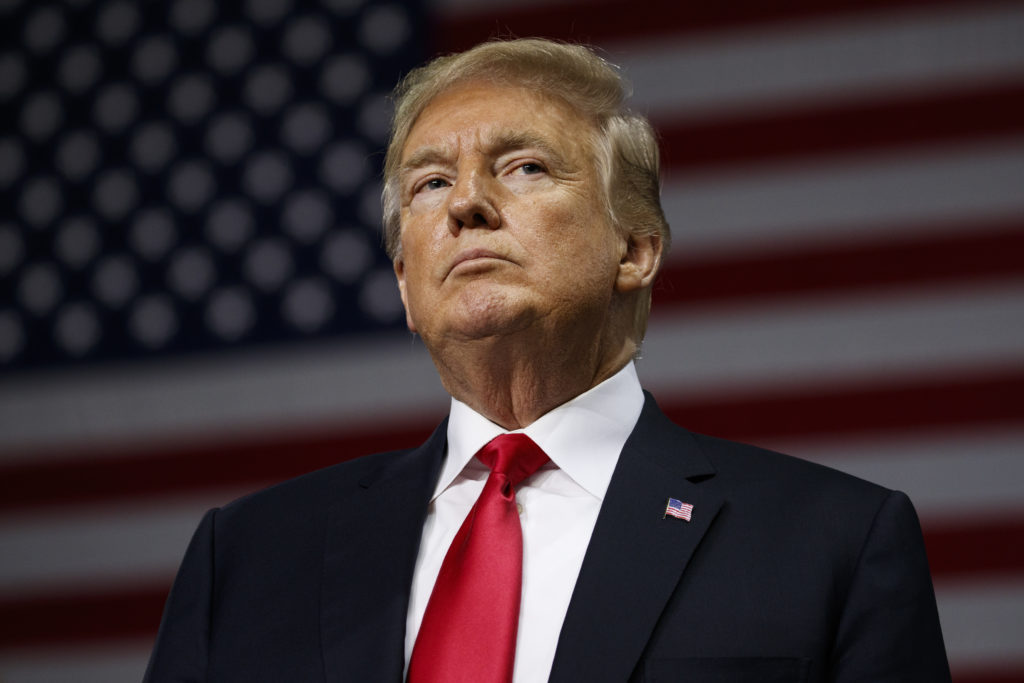
President Barack Obama stunned Republicans when he bypassed Congress and, relying on what he called his pen and his phone, used executive powers to enact his agenda, including protecting millions of young immigrants from deportation. Now, with President Donald Trump proposing an even more dramatic end-run around Congress to build his promised border wall with Mexico, many Republicans are uneasily cheering him on. The potential use of a national emergency declaration by Trump for the border wall shows the extent to which the party is willing to yield on treasured values — in this case, the constitutional separation of powers — to steer clear of confronting the White House and give the president what he wants. It’s a different accommodation from just a few years ago. Then Republicans often called out Obama as overstepping his authority in using executive actions when Congress failed to act on White House priorities. They complained about Obama as “king,” ”emperor” or “tyrant.” Rep. Mark Meadows, R-N.C., a leader of the House Freedom Caucus, said most conservatives would go along with Trump’s decision to declare a national emergency as “the last tool in the tool box” for building the wall. “Does the president have the right and the ability to do it? Yes. Would most of us prefer a legislative option? Yes,” Meadows told reporters this week. “Most conservatives want it to be the last resort he would use. But those same conservatives, I’m sure, if it’s deployed, would embrace him as having done all he could do to negotiate with Democrats.” Other Republicans say Trump has few options left after talks broke down at the White House over his long-promised border wall. “This is not something you would want to do,” said Rep. Doug Collins of Georgia, now the top Republican on the Judiciary Committee. “But we’ve been put into this position,” he said. “The Democrats are forcing him into a choice of doing the national emergency because they won’t sit down and discuss it.” On Saturday, the partial government shutdown will stretch in its 22nd day and Trump’s plans for ending the stalemate are shifting yet again. Trump indicated he was slowing what had appeared to be momentum toward the national emergency declaration as the way out of the stalemate. Invoking the power would allow him to tap unspent Defense funds to build the long-promised wall along the border that was central to his presidential campaign. On the campaign trail, the president often said at rallies that Mexico would pay for the wall. But Mexico has refused forcing Trump to ask Congress for the money instead. Trump walked out of negotiations this week when Speaker Nancy Pelosi and Democrats refused to give, saying they support dollars for border security just not the big wall Trump envisions. They call the wall ineffective and say it’s a symbol that does not reflect the nation’s values. After having talked for days about invoking the national emergency power to unleash the funds, the president hit pause Friday. “I’m not going to do it so fast,” Trump said during an event Friday at the White House. Experts have said even though the president may have the authority to invoke powers under the 1976 National Emergencies Act, using it will almost certainly bring on a court battle. The courts did not allow President Harry Truman to nationalize the U.S. steel industry during the Korean War. Moreover, they say, it could lead the country into uncharted areas. Declaring an emergency could give the president access to many other powers, according to the Brennan Center for Justice at NYU School of Law. “The president thinks that he can do whatever he wants by declaring something a national emergency,” said Sen. Mazie Hirono, D-Hawaii who serves on the Judiciary Committee. “I think it’s a very dangerous thing.” But what cuts to the core of the concern on Capitol Hill is the executive branch wading into legislative domain to shift money Congress has already approved to the wall. The constitution provides the Congress, not the White House, the power of the purse, and lawmakers are not eager to cede their role to the president, even for a wall many Republicans support. Lawmakers on Capitol Hill objected to the administration eyeing shifting unspent disaster funding Congress approved last year for Army Corps of Engineer projects to help hurricane-ravaged Puerto Rico, Texas and other areas to pay for the wall. By Friday, lawmakers said they were being told those projects will not be touched and the White House was now looking for other funds to pay for the border wall. Sen. John Cornyn of Texas, part of the GOP leadership, said at a forum Friday in Austin that the lawmakers “worked very hard to make sure that the victims of Hurricane Harvey – their concerns are addressed and Texas is able to rebuild.” He said, “I will tell you that I will oppose any reprogramming of Harvey disaster funds.” Republican Richard Shelby of Alabama, the chairman of the Appropriations Committee, acknowledged the dilemma, especially as the shutdown continues with no end in sight. Trump invoking a national emergency “might break an impasse and it needs to be broken one way or another,” Shelby said as the Senate adjourned. But he prefers a negotiated settlement with Congress. “I’m still hoping we’ll have a breakthrough, but right now I don’t see one.” Republished with permission from the Associated Press.
Barack Obama’s return: good or bad for Democrats?
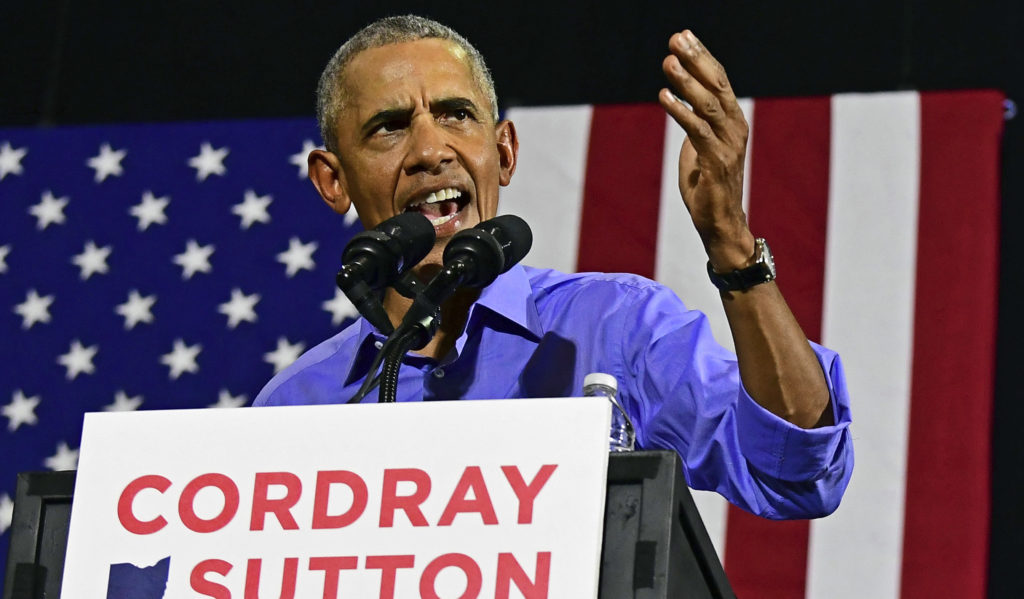
Nearly two years out of the White House, former President Barack Obama is facing another political test. To the delight of many Democrats, he’s stepped back into the fray that former presidents often try to avoid, campaigning for Democratic candidates ahead of the midterms and blasting the political culture of the Trump era. He attracted a large, adoring crowd this past week in Ohio and will be in Pennsylvania on Friday campaigning for Democratic Sen. Bob Casey. But Obama’s return poses challenges for both the former president and his party. For one, Obama has struggled to turn admiration for him into votes when he’s not on the ballot. Democrats lost significant ground in the 2010 and 2014 midterms and his enthusiastic campaigning for Hillary Clinton didn’t carry her across the finish line in 2016. Perhaps more importantly, Obama’s public re-entry into politics could serve as a motivating factor for Republicans, potentially handing the GOP a gift at a time when they face an uphill battle to maintain their grip on Congress. “This is perfect for us,” said Rep. Lou Barletta, the Republican challenging Casey for the Senate seat. “It will energize Republicans as a reminder.” The former president will also “energize those blue-collar Democrats who worried about their jobs under Obama and went out to vote for Donald Trump,” Barletta added. For their part, Democrats say an Obama visit is a huge boon. Massive crowds give candidates and the party a chance to organize, update contact lists, motivate new donors and boost volunteerism. Michael Halle, the campaign manager for Richard Cordray, the Democratic candidate for governor in Ohio, said Obama’s visit sent a message about the stakes of the race, which could have implications for redistricting and voting rights in the future. “First and foremost, it’s important for the people who live in Ohio,” he said. “But secondly, there are also significant national implications, and I think the (former) president weighed those in making the decision.” An aide to the former president said Obama is aware that he does not have a strong record of aiding Democrats in midterm elections and that his presence can have the effect of galvanizing Republican voters. The aide said Obama would take a strategic approach to the midterm races and pointed to the light footprint that the former president kept earlier in his post-presidency. That’s when he recorded a get-out-the-vote robocall for Democrat Doug Jones, rather than travel to Alabama to appear with Jones ahead of his upset Senate victory. The aide cast the decision as an example of how Obama could still lend his voice in a part of the country where he is less popular. The aide lacked authorization to discuss publicly Obama’s thinking and spoke on condition of anonymity. Scott Mulhauser, who served as Vice President Joe Biden‘s deputy chief of staff during the 2012 election, said Obama left office as the “most admired man in the country, and his popularity has only increased since.” “Part of his success is being strategic in his approach to campaigning — coordinating with campaigns to maximize his impact and minimize any blowback, stumping where it makes sense and avoiding where it doesn’t,” Mulhauser said, noting Obama’s role in the Jones campaign. “He’s rightfully out on the trail for certain campaigns, taking a pass on others and recording calls and sending emails on behalf of those that want to use him and his popularity in a targeted manner.” In Pennsylvania, Obama returns to a state he carried twice but that swung to Trump in 2016. The state features critical contests for Congress and governor. Rep. Dwight Evans of Philadelphia, where Obama will campaign, said that the former president’s presence will be important for his ability to motivate African-American voters, college-aged voters and the poor. “I think that he can help Democrats, and I think it needs to be really targeted,” Evans said. Both African-Americans and college-age voters were crucial to Obama’s victories in 2008 and 2012, and because Obama was the first black president, Evans said, “he can say some things to the African-American community that cannot be said by anybody else.” While in Philadelphia, Obama will fundraise for Senate Democrats in general and in particular, Casey, who was among Obama’s earliest Senate backers when he sought the Democratic presidential nomination in 2008. While Obama’s full schedule is taking shape, aides say he is weighing how to best engage on behalf of Democratic candidates across the nation. Earlier this year, he endorsed more than 80 Democrats across more than a dozen states, and aides say a second wave of endorsements is expected this fall. Brenda Boots, 42, who attended the Ohio rally, said Obama is a welcome presence and hoped he would inject the governor’s race with new life. “How could he hurt?” she asked. “I don’t think he could hurt.” Republished with permission from the Associated Press.
Trump administration ready to ease rules on coal-fired power plants
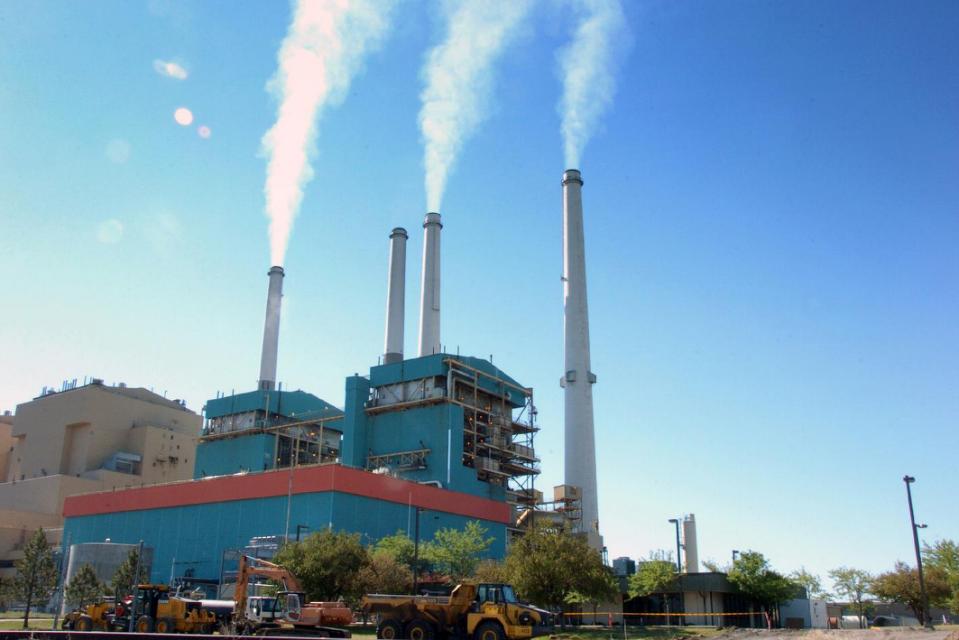
The Trump administration is set to roll back the centerpiece of President Barack Obama’s efforts to slow global warming. It’s expected to propose regulations that give states broad authority to determine how to restrict greenhouse gas emissions from coal-fired power plants. The plan would let states relax pollution rules for power plants that need upgrades. That would reverse an Obama-era push to shift away from coal and toward less-polluting energy sources. The plan is to be announced in coming days. Combined with a planned rollback of car-mileage standards, the plan represents a significant retreat from Obama-era efforts to fight climate change. President Donald Trump has already vowed to pull the U.S. out of the Paris climate agreement as he pushes to revive the coal industry. Republished with the permission of the Associated Press.
White House admits error for false claim on African-American employment
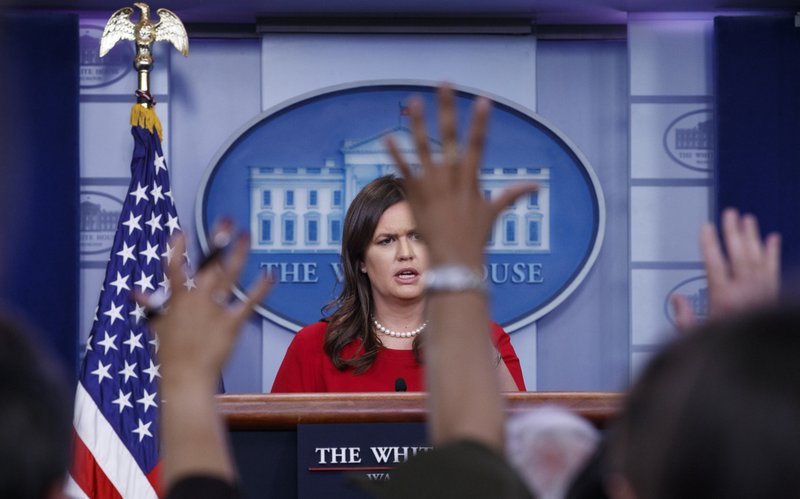
The White House has acknowledged error in its false claim that President Donald Trump created three times as many jobs for African-Americans than President Barack Obama. It was a rare admission of fault for an administration that frequently skews data and overstates economic gains. White House press secretary Sarah Huckabee Sanders said on Twitter late Tuesday that she had been wrong earlier that day when she told reporters that Obama created only 195,000 jobs for African-Americans during his tenure compared with Trump’s 700,000 new jobs in just two years. The U.S. economy actually added about 3 million jobs for black workers during Obama’s tenure, according to the Bureau of Labor Statistics. “President Trump in his first year and a half has already tripled what President Obama did in eight years,” she told reporters during a Tuesday press briefing. But that assertion is false. Official statistics show black jobs went from 15.5 million when Obama took office in January 2008 to 18.4 million when he left in January 2017. In fact, the most dramatic drop in black unemployment came during the Obama administration as the nation climbed out of a crippling recession. Unemployment of black workers fell from 16.8 percent in March 2010 to 7.8 percent in January 2017. It is true that black workers under Trump have continued to see gains, reaching a record low of 5.9 percent in May. Still, black unemployment rate is now nearly double that of whites, which is 3.4 percent. Sanders tweeted Tuesday: “Jobs numbers for Pres Trump and Pres Obama were correct, but the time frame for Pres Obama wasn’t. I’m sorry for the mistake, but no apologies for the 700,000 jobs for African-Americans created under President Trump.” Sanders linked to a tweet by the White House Council of Economic Advisers, which claimed responsibility for the “miscommunication.” Republished with the permission of the Associated Press.
Five things you need to know about Dr. Will Boyd
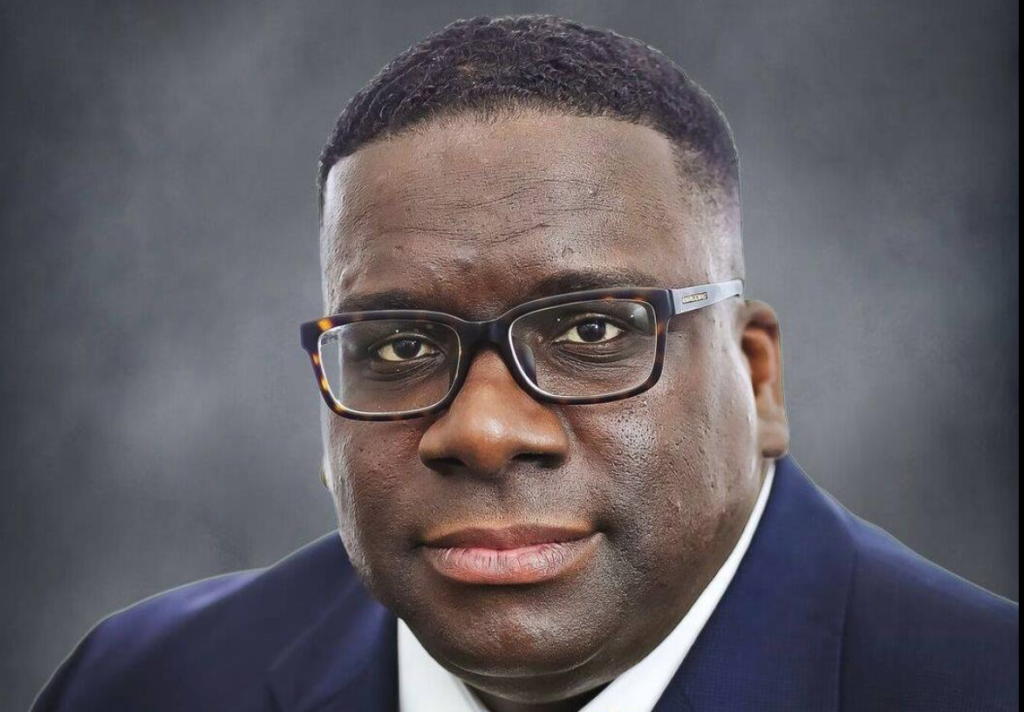
Now that the runoff elections are over, voters are turning their attention to the November General Election less than 90 days away. Democratic Lieutenant Governor candidate Dr. Will Boyd, who had no primary opponent, now faces one big challenger in the November general election, Republican nominee Will Ainsworth. With that in mind, here are the five things you need to know about Will Boyd: 1. He holds numerous degrees, in several different fields. Born in South Carolina, Boyd received a Bachelor’s degree in Engineering from the University of South Carolina. He later returned to school, earning a Master’s of Business Administration (MBA) from Regis University, a Doctorate’s degree in Philosophy and Religion from Capella University, and another Doctorate’s of Psychology with a focus on Clinical Christian Psychology with a Christian Worldview. He has also been awarded several honorary doctorates in Divinity and Christian Counseling, according to his campaign website. 2. He’s held several jobs in various career fields. Beginning his career in the business field, Boyd began working as a Manager-In-Training in both the U.S. and the People’s Republic of China at A.O. Smith, the largest manufacturer and marketer of water heaters in North America. Boyd then held several positions in various firms the manufacturing industry including Production Manager, Quality Manager and Manufacturing Engineer. Signaling a transition in his career, Boyd began serving as the Dean of Student Success & Adjunct Assistant Professor at Greenville College in Illinois. He’s also written three books entitled: Scratching the Surface; Can You Hear Me Now? How Active Listening and Continuous Articulation of Core Values Can Improve Leadership Effectiveness in Any Organization, Even the Church; and Watch God! 3. He is a Bishop and Pastor. Transitioning his career further into ministry, Boyd moved to Florence, Ala. to become the Chancellor at St. James the Elder Theological Seminary, a Co-Patriarch and Dean of the Holy Catholic Church International college of cardinals. Boyd currently serves as the Bishop of Zion Ministries and Pastor of the Saint Mark Missionary Baptist Church in Florence, acording to his Linkedin profile. 4. He’s previously run for two separate U.S. Senate seats, and held several elected positions. Before moving to Alabama, Boyd was the first African American elected to serve as a City Councilman in Greenville, Ill. he also ran for the senate seat left vacant by then U.S. Senator Barack Obama. Once in Alabama, Boyd picked up the politics again becoming the Democratic nominee for Alabama’s 5th congressinal disctict, and running for the U.S. Senate seat won by Doug Jones in 2017. 5. He currently serves as chairman of the Lauderdale County Democratic Executive Committee. Boyd currently serves as the Chairman of the Lauderdale County Democratic Executive Committee, and Lauderdale County Chair on the Alabama Democratic Executive Committee.
For now, Army suspends discharges of immigrant recruits

The U.S. Army has stopped discharging immigrant recruits who enlisted seeking a path to citizenship — at least temporarily. A memo shared with The Associated Press spells out orders to high-ranking Army officials to stop processing discharges of men and women who enlisted in the special immigrant program. “Effective immediately, you will suspend processing of all involuntary separation actions,” read the memo signed July 20 by Acting Assistant Secretary of the Army for Manpower and Reserve Affairs Marshall Williams. The disclosure comes one month after the AP reported that dozens of immigrant enlistees were being discharged or had their contracts cancelled. Some said they were given no reason for their discharge. Others said the Army informed them they’d been labeled as security risks because they have relatives abroad or because the Defense Department had not completed background checks on them. In a statement Thursday, Army Lt. Col. Nina L. Hill said they were stopping the discharges in order to review the administrative separation process. The decision could impact hundreds of enlistees. “We continue to abide by all requirements to include completing a thorough background investigation” on all recruits, she said. The Army has reversed one discharge, for Brazilian reservist Lucas Calixto, 28, who had sued. Nonetheless, discharges of other immigrant enlistees continued. Attorneys sought to bring a class action lawsuit last week to offer protections to a broader group of reservists and recruits in the program, demanding that prior discharges be revoked and that further separations be halted. A judge’s order references the July 20 memo, and asks the Army to clarify how it impacts the discharge status of Calixto and other plaintiffs. As part of the memo, Williams also instructed Army officials to recommend whether the military should issue further guidance related to the program. Margaret Stock, an Alaska-based immigration attorney and a retired Army Reserve lieutenant colonel who helped create the immigrant recruitment program, said Wednesday the memo proves there was a policy. “It’s an admission by the Army that they’ve improperly discharged hundreds of soldiers,” she said. “The next step should be go back and rescind the people who were improperly discharged.” Discharged recruits and reservists reached Thursday said their discharges were still in place as far as they knew. One Pakistani man caught by surprise by his discharge said he was filing for asylum. He asked that his name be withheld because he fears he might be forced to return to Pakistan, where he could face danger as a former U.S. Army enlistee. The reversal comes as the Defense Department has attempted to strengthen security requirements for the program, through which historically immigrants vowed to risk their lives for the promise of U.S. citizenship. President George W. Bush ordered “expedited naturalization” for immigrant soldiers after 9/11 in an effort to swell military ranks. Seven years later the Military Accessions Vital to the National Interest program, known as MAVNI, became an official recruiting program. It came under fire from conservatives when President Barack Obama added DACA recipients — young immigrants who were brought to the U.S. illegally as children — to the list of eligible enlistees. In response, the military layered on additional security clearances for recruits to pass before heading to boot camp. The Trump Administration added even more hurdles, creating a backlog within the Defense Department. Last fall, hundreds of recruits still in the enlistment process had their contracts canceled. Government attorneys called the recruitment program an “elevated security risk” in another case involving 17 foreign-born military recruits who enlisted through the program but have not been able to clear additional security requirements. Some recruits had falsified their background records and were connected to state-sponsored intelligence agencies, the court filing said. Eligible recruits are required to have legal status in the U.S., such as a student visa, before enlisting. More than 5,000 immigrants were recruited into the program in 2016, and an estimated 10,000 are currently serving. Nearly 110,000 members of the Armed Forces have gained citizenship by serving in the U.S. military since Sept. 11, 2001, according to the Defense Department.’ Republished with the permission of the Associated Press.
