
Where did Donald Trump’s claim of an FBI mole come from?

President Donald Trump and his supporters are circulating an explosive theory: The FBI, they say, may have planted a mole, or “spy,” inside the 2016 campaign to bring him down. The unverified allegation has lit up conservative media and earned space on Trump’s Twitter feed just as special counsel Robert Mueller enters his second year in the Russia probe. But where did the allegation come from? The AP takes a look at what we know so far and how Trump has used similar claims in the past to try to discredit the Russia investigation. The ‘Wiretap’ Trump and his supporters have long floated the idea of an opposing “deep state” at the Justice Department and the FBI, including allegations that President Barack Obama ordered wiretaps on his phones during the election. The Justice Department denied such a wiretap, and House intelligence committee Chairman Devin Nunes, an ardent Trump supporter, later confirmed that an Obama-ordered wiretap never existed. But like many conspiracy theories, it appeared to grow out of a less sensational truth: U.S. surveillance on foreign officials — a common practice in the world of spycraft — likely picked up what’s called “incidental” communications with Americans in Trump’s orbit. That included former national security adviser Michael Flynn’s discussions with Russia’s ambassador to the U.S. during the presidential transition. The Mole At issue now isn’t a wiretap, but the identity of a top-secret FBI informant who allegedly helped investigators on the Russia probe. Trump and his lawyer, Rudy Giuliani, say they suspect the FBI planted someone inside the campaign as a setup. “Reports are there was indeed at least one FBI representative implanted, for political purposes, into my campaign for president,” Trump tweeted early Friday. “It took place very early on, and long before the phony Russia Hoax became a ‘hot’ Fake News story. If true – all time biggest political scandal!” This claim actually isn’t new for Trump supporters either. But it seemed to find new life after news reports confirmed the existence of a confidential source in the Russia investigation. The conservative National Review suggested the puzzle pieces all point toward a mole, attracting Trump’s attention. “If so, this is bigger than Watergate!” Trump tweeted. What We Know Last August, Glenn Simpson of Fusion GPS, who compiled opposition research on Trump, told a Senate panel that former British spy Christopher Steele relied on an “internal Trump campaign source” to compile his now-famous Trump dossier. A person familiar with Simpson’s testimony told the AP at the time that he did not mean to suggest the FBI had a direct source of information from within the Trump campaign. Then last week, The Washington Post reported on the existence of a U.S. citizen who had provided intelligence to the CIA and FBI in the Russia probe. The source had become of particular interest to Nunes, whose committee was quick to dismiss any allegations of collusion between Trump associates and Russia. According to the Post, the Justice Department clashed with Nunes and refused his request for specific details on the person. On Wednesday, The New York Times seemed to lend credence to the idea by reporting that “at least one government informant” met several times with former Trump campaign advisers George Papadopoulos and Carter Page. On Friday, the Times expanded its description, saying the informant is an American academic who teaches in Britain and was sent by the FBI to talk to Papadopoulos and Page because they were suspected of having “suspicious contacts” linked to Russia. What We Don’t Know A person who provides information to investigators wasn’t necessarily planted by authorities. The person could have been someone already working with Trump’s campaign before they agreed to provide information. Or it could be someone who wasn’t affiliated with the campaign and just interacted with people around it. The FBI and Mueller have been extraordinarily tight-lipped about the investigation, providing few public clues to what sources they are relying on or where the probe is headed. Trump and his lawyer, Giuliani, acknowledge they don’t have the answers either. But that hasn’t stopped them from floating the mole theory as a way of undercutting Mueller’s work as an attempt by liberals to bring down the president. Giuliani said in a Friday interview on CNN’s “New Day” that he doesn’t know for sure what happened — and the president doesn’t either. But “for a long time, we’ve been told that there’s been some kind of infiltration,” he said. Republished with the permission of the Associated Press.
Women of Influence: fair pay champion, Lilly Ledbetter
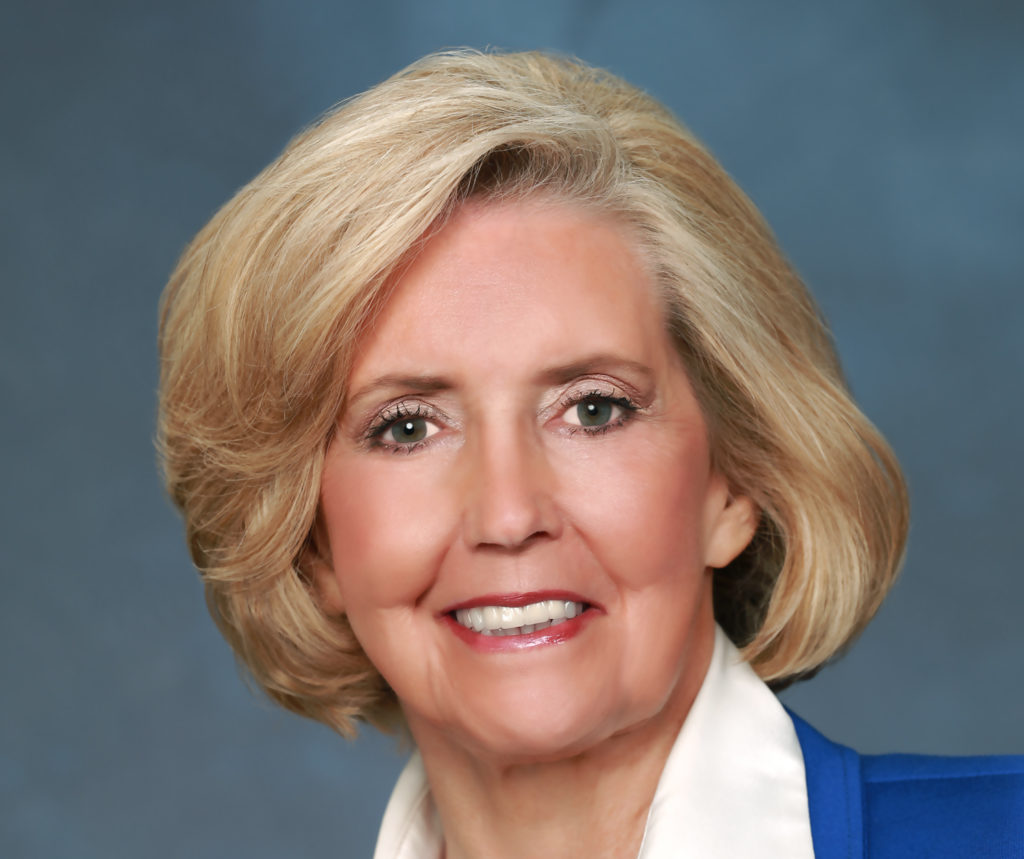
One of the most inspiring stories in Alabama women’s history is Lilly Ledbetter — a fair pay champion since the late 90’s. From her humble beginnings — in a house with no running water or electricity in the small town of Possum Trot, Ala. — Ledbetter became nationally recognized as one of the many faces of gender prejudice and sexual harassment in the workplace by the mid 2000’s. A graduate of Jacksonville High School in Jacksonville, Ala., Ledbetter started working as a district manger for H&R Block in 1969 where she oversaw 14 locations in Jacksonville and the surrounding area. By the time she left the company, she was overseeing 16 locations. While she was working with H&R Block, she also spent three years working at Jacksonville State University as an Assistant Financial aid director. “I would go in to teach classes, and do tax prep at night and on the weekend,” Ledbetter said. In 1979, Ledbetter applied and accepted her dream position as a manager at the Goodyear Tire plant in Gadsden, Ala. where she became one of the first women hired on for a management position. She said she could go toe-to-toe with any man, doing any job at the factory, nevertheless she still experienced sexual harassment and gender prejudice. After 19 years of working with the company, Ledbetter received an anonymous tip that she was receiving thousands less than her male peers in wages. Heartbroken, Ledbetter filed a sexual discrimination complaint with the Equal Employment Opportunity Commission (EEOC) in 1999. Her case went to trial, and the jury awarded her $3.3 million in compensatory and punitive damages for the pay discrimination she had been subjected to. In November of 2006, the Court of Appeals for the Eleventh Circuit Court reversed the jury’s verdict, saying that because the company’s original decision on her pay had been made years earlier, Ledbetter’s case was filed too late, even though she continued to receive discriminatory pay. In a 5-4 decision, the Supreme Court upheld the Eleventh Circuit decision and ruled employees cannot challenge ongoing pay discrimination if the employer’s original discriminatory pay decision occurred more than 180 days earlier, even when the employee continues to receive paychecks that have been discriminatorily reduced. “It was not fair, it wasn’t even close to being fair. We must go to congress, the house and the senate to prevent this from happening in the future to other females and minorities,” Ledbetter said in an interview. And she did. After realizing that the Supreme Court’s decision could undermined the Congressional goal of eliminating discrimination in the workplace, and after being called upon by Supreme Court Justice Ruth Bader Ginsberg. Congress and President Barack Obama‘s Administration acted quickly Less than two years after the Supreme Court’s decision, both the House and Senate passed the Lilly Ledbetter Fair Pay Act of 2009. A crucial piece of legislation, restoring the longstanding laws that ensure individuals who are subjected to unlawful pay discrimination are able to effectively assert their rights under the federal anti-discrimination laws. Ledbetter is still an activist today, spending her time traveling the country and educating women on fair and equal pay. “There’s still so much work to be done for women and their family’s,” Ledbetter said. “In 2020 women will have only been able to vote for 100 years! We haven’t even been able to even vote for 100 years and we still have so few rights that politicians want to do away with.” “We have to pay attention, especially with things like equal pay, where there are laws in place, but no one is enforcing them. Women have to make sure they’re being enforced so they can take care of themselves and their families.” Ledbetter is still fighting for women and equal pay across the nation, but was kind enough to answer some of Alabama Today’s questions about her life, work, and influences: How have other women influenced your success? Marcia D. Greenberger from the National Women’s Law Center, was absolutely instrumental in helping me navigate the legislative and political events I attended. She jokingly told me that she was my “bag carrier” at the Democratic National Convention in 2008. I had never been in a large group of politicians like that, as I’m not from a political background, I had no idea what I was doing and she guided me like a professional. She has inspired me tremendously, and many other women have succeeded because of her. Today Justice Ruth Bader Gingsburg is my hero! She has made a tremendous progress for women/minorities! She was the one who challenged Congress to change the Law after ruling in Ledbetter v Goodyear verdict. Did you know when you began fighting for equal pay that it would gain as much attention as it did? When I began fighting for Equal Pay, it was for myself and then it became a battle for everyone!! I had no idea the fight would gain so much attention, but everyone “got it”— Unequal Pay breaks the Law! Equal Pay is a Family affair— Unequal Pay will affect a person’s retirements also. What has been your favorite area of service, and what is your favorite thing about that position? My favorite area of service are the groups that had never thought about how Equal Pay affects your life while working and retirements! Young college groups also think we have Equal Pay and it will not be a problem when they start work. They know have Equal Pay Law, but do not understand it was enforced. Have you read any books that have shaped your perspective on life? Books on Elenor Roosevelt helped me understand the difference one person could make. First Lady E.R. made much progress and was ahead of her time. What advice would you give to young women who lack the courage to stand up for themselves? Young women need to make sure they get the Pay their work, experience, etc. because what they are short changed will affect their lives forever!! When it is lost—no way to ever get it corrected. How do you spend your free time? I try to stay very involved with my grandchildren and I love to visit them
Annual Supreme Court guessing game: Will Anthony Kennedy stay or go?

Justice Anthony Kennedy has his law clerks lined up for next year. He plans to teach in Salzburg, Austria, in July, as he has done almost every summer for more than two decades. In short, there are no outward signs that the 81-year-old justice is in his final months on the Supreme Court. So why are liberals in a state of heightened anxiety that Kennedy might leave? And why are some conservatives hopeful that, appearances aside, Kennedy could step down after more than 30 years on the high court? Because if he goes, President Donald Trump gets to nominate his successor, whom a slim Republican Senate majority is likely to confirm. The replacement justice would be more conservative than Kennedy and the right would have a solid working majority of the nine justices. The speculation reflects the darkest fears and fondest wishes of people who care about the court on both sides of the political spectrum. As the justice closest to the middle on an otherwise starkly divided court, Kennedy controls the outcome of a disproportionate share of big-ticket cases. That divide allows Kennedy to decide how far to the right or left the court moves on a range of issues, including abortion, gun rights, capital punishment, affirmative action, and voting rights. Filling the vacancy could be as contentious as it was when Justice Lewis Powell, Kennedy’s predecessor, retired in 1987 and President Ronald Reagan settled on Kennedy only after his first two choices for the seat failed, said David Yalof, chairman of political science at the University of Connecticut. “The difference is that in 1987 you had a Democratic Senate face off against a Republican president in his final two years in office. Here, you have a Republican Senate and a Republican president in his first two years in office,” Yalof said. The concern among liberals is palpable. Kennedy is nearly 82 and the average retirement age of the last 15 justices who retired is just over 77 years. That includes John Paul Stevens, who was 90 when he retired in 2010 and 58-year-old Abe Fortas, who left the court amid revelations of financial improprieties in 1969. If Kennedy were to announce his retirement this spring, it would inject the court into the middle of the midterm congressional elections and put his “critical fifth vote in the hands of perhaps the least competent president in modern history to manage and value it,” said Elizabeth Wydra, president of the liberal Constitutional Accountability Center. The New York Times editorial board penned an open letter to Kennedy on Sunday, imploring him to hang on. “How can we put this the right way? Please don’t go,” it said. The two older justices, Ruth Bader Ginsburg, 85, and Stephen Breyer, 79, are Democratic appointees who are unlikely to go anywhere during a Trump administration if they can help it. The pleas for Kennedy to stay come in a term when he could side with conservative justices to erode the power of labor unions for government workers, give the upper hand to employers who want to prevent workers from banding together to complain about pay and workplace conditions, side with Texas in a dispute over electoral districts that were struck down by a lower court for being discriminating against black and Hispanic voters, limit state efforts to regulate anti-abortion pregnancy centers and uphold Trump’s ban on travel from several majority Muslim countries. Kennedy’s vote also is likely to be decisive in two other high-profile issues, a Colorado baker’s objection to creating a wedding cake for a same-sex couple and efforts to rein in the drawing of electoral districts for partisan gain. A retirement announcement could come at any time, and perhaps sooner rather than later if Kennedy is interested in the relatively quick and smooth confirmation of the next justice. Stevens and Justice David Souter, the last two retirees, revealed their intentions in April 2010 and May 2009, respectively. That enabled President Barack Obama to announce his choices in time for final Senate action by early August. By contrast, in 1987, Powell waited until late June to say he was retiring. When the Senate voted down Robert Bork, Reagan’s first choice, and Douglas Ginsburg withdrew as Reagan’s second pick, the court began its next term with just eight justices on the bench. Kennedy, Reagan’s third choice, did not join them until February 1988. The timing of his announcement also might influence the effective date of his retirement. The soonest Kennedy would leave is at the end of June, after all the court’s current cases have been decided. Some justices step down immediately. Others stay until their successor is confirmed, sometimes reflecting a worry that the court might start its term short-staffed. Those concerns probably are not very serious at the moment because Republicans have every incentive and few procedural impediments to confirming a new justice. “I think it will be very difficult to defeat any Trump nominee for that seat unless of course there are character issues or that sort of thing,” said Richard Arenberg, a longtime Democratic Senate aide who now teaches political science at Brown University. They probably would not want to chance waiting for the election results and the possibility of losing control of the Senate. Even in that circumstance, however, Senate Majority Leader Mitch McConnell still could push for a confirmation between the election and the start of the next Congress in January, Yalof said. But if Kennedy decides to serve another a year or two and Democrats win the Senate in November, it could be considerably harder for Trump to get a nominee confirmed, especially since McConnell refused to act on Merrick Garland’s nomination in the last year of Obama’s presidency. Republished with the permission of the Associated Press.
Is Donald Trump right about judges’ leanings? Maybe, review shows
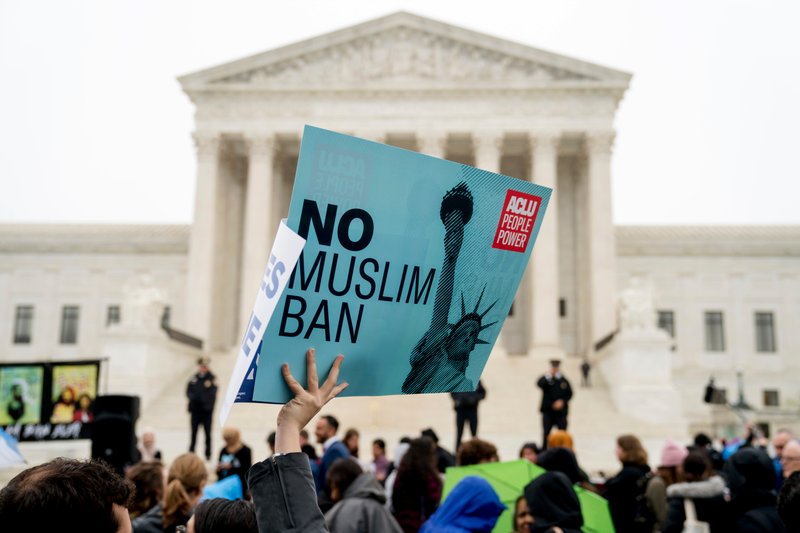
President Donald Trump has called courts unfair and political and repeatedly assailed the 9th Circuit, the U.S. court system’s westernmost division, where some of his key immigration policies have stalled. Other observers describe America’s judges as conservative or liberal, implying they bring an ideology to their decision-making that goes beyond a careful assessment of law and precedent. That view has made the U.S. Senate’s confirmation of federal judges fraught, with each party battling to block nominees they view as unsympathetic to their positions. But is there any evidence politics plays a role in judicial opinions? An Associated Press review suggests it might. The AP looked at opinions by nearly 40 federal district court and appellate judges about Trump’s ban on travelers from mostly Muslim countries. It found only one judge nominated by a Democratic president has supported Trump’s authority to keep out all travelers or deport those who arrived just as the first ban took effect. With some exceptions, Republican nominees have taken a broader view of presidential power and rejected limits on the executive orders. The travel ban is now in its third iteration and under consideration by the U.S. Supreme Court. HOW HAS THIS SPLIT PLAYED OUT IN THE COURTS? One of the first federal judges to consider the ban gave it the all-clear, saying Trump provided a legitimate reason for his January 2017 executive order and that a lawsuit challenging it was likely to fail. The decision by U.S. District Judge Nathaniel Gorton in Boston came days after a federal judge in Los Angeles, Andre Birotte, reached the opposite conclusion and ordered the administration to allow immigrants with valid visas into the U.S. The judges considered different lawsuits in different courts 3,000 miles (4,830 kilometers) apart. But they were also nominated to the bench by presidents from different parties — Gorton by Republican George H.W. Bush and Birotte by Democrat Barack Obama. For the most part, the judicial split along party lines has continued as the ban’s various versions have made their way through federal courts. The three bans have had a tortuous legal journey that has taken them before dozens of district court and appellate judges nominated by presidents from both major parties. The AP completed an extensive review of that journey, examining 26 decisions by 38 judges. The two key findings: — A majority of the judges — 24 — were nominated by Democratic presidents. Only one of those judges supported Trump’s power to block all travelers. In February, 4th U.S. Circuit Court of Appeals Judge William Traxler, nominated by President Bill Clinton, said in a dissenting opinion that the administration provided “logical conclusions and rationale” for the third ban and addressed his earlier concerns that it was motivated by anti-Muslim bias. — In contrast, 10 of the 14 Republican judges in the group sided with the administration and moved to uphold restrictions on foreign travelers. One of the notable exceptions is James Robart in Seattle — a nominee of President George W. Bush —, who issued a nationwide order blocking the first ban. AREN’T JUDGES SUPPOSED TO BE APOLITICAL? The code of conduct for federal judges says they should not allow “family, social, political, financial or other relationships to influence” their judgment. Judges generally refrain from overt partisanship and often hold themselves up as neutral arbiters of law. But the law can be unclear and open to varying interpretations. In a widely cited 2006 book, “Are Judges Political,” Harvard University’s Cass Sunstein and other researchers studied thousands of decisions by three-judge federal appellate court panels. Some areas of the law — such as appeals of criminal convictions — produced no significant difference in the decisions of Republican and Democratic judicial nominees. But in other areas, political affiliations were good predictors of judges’ rulings. Affirmative action and environmental regulations were among the issues on which Republican nominees were more likely to take a conservative view, while their Democratic counterparts were more likely to go in a liberal direction, the researchers found. “The reality is, there are certain hot button issues where you’ve got these splits, and there’s not that many people in the middle,” said David Levine, a professor at the University of California, Hastings College of the Law who has followed the travel ban cases. WHERE DO REPUBLICAN AND DEMOCRATIC NOMINEES DIFFER ON THE TRAVEL BAN? Democratic nominees have pointed to the president’s campaign rhetoric about barring Muslims from entering the country as evidence the bans are illegally motivated by religious prejudice. They said the administration provided insufficient evidence for its claim that the bans are needed for U.S. security. “The ‘initial’ announcement of the Muslim ban, offered repeatedly and explicitly through President Trump’s own statements, forcefully and persuasively expressed his purpose in unequivocal terms,” U.S. District Judge Theodore Chuang in Maryland, who was nominated by Obama, said in an October ruling blocking the third ban. Republican judicial nominees have assailed their Democratic counterparts for second-guessing the president’s national security claims by looking beyond his order to campaign statements. “Even if we have questions about the basis for the President’s ultimate findings — whether it was a ‘Muslim ban’ or something else — we do not get to peek behind the curtain,” 9th U.S. Circuit Court of Appeals Judge Jay Bybee, a President George W. Bush nominee, said in March 2017. Bybee was dissenting from the 9th Circuit’s decision not to revisit its ruling keeping the first travel ban on hold. Four other judges — all Republican nominees — signed the dissent. WHAT’S NEXT? The U.S. Supreme Court will have the final word. It heard arguments April 25 about the ban’s latest version, which restricts travel to the United States by residents of five majority-Muslim countries — down from seven in the first ban — as well as North Korea. It also restricts travelers from Venezuela. The justices in December allowed that version to take full effect even as the legal fight over it continued. They appeared split during the hearing, though it
Fed set to leave rates alone amid signs of rising inflation
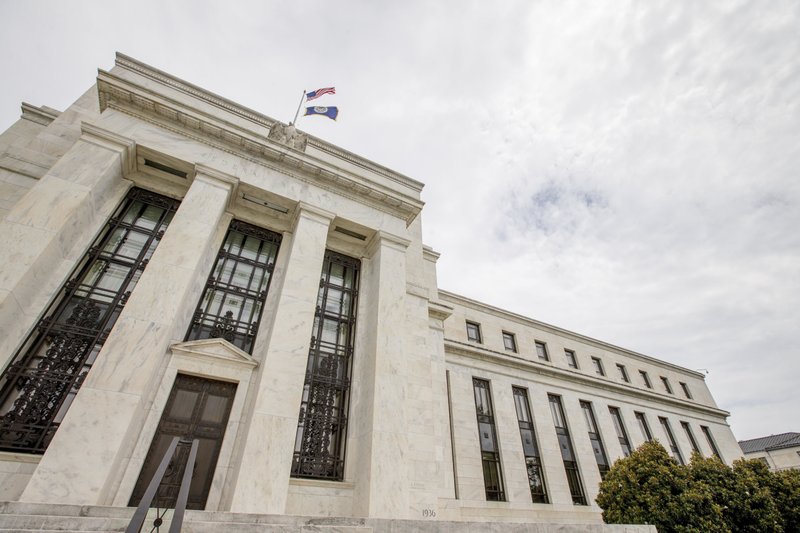
The Federal Reserve achieved an inflation milestone this week, but that isn’t likely to alter expectations for what the Fed will announce when its latest policy meeting ends Wednesday. After six years of mostly missing its annual 2 percent target for inflation, the Fed learned Monday that its preferred gauge of consumer inflation had reached a year-over-year pace of 2 percent. And in the coming months, inflation is widely expected to stay around that level. The debate the Fed is now likely to have is whether it should accept a period in which inflation rises above 2 percent without accelerating its pace of rate increases. But for now, a rate increase is considered unlikely. In a statement it will issue Wednesday afternoon, the Fed is expected to leave its benchmark rate unchanged at a still-low level of 1.5 percent to 1.75 percent. Solid economic growth, low unemployment and evidence of inflation pressures, though, are expected to keep the central bank on a path of gradual rate hikes the rest of the year. Most Fed watchers foresee either two or three additional increases in the Fed’s key rate by year’s end, coming after an earlier hike in January. The central bank is meeting as its board is undergoing a makeover, with a raft of new appointees by President Donald Trump who appear generally supportive of the Fed’s cautious approach to rates since the Great Recession ended. Despite Trump’s complaints during the presidential race that the Fed was aiding Democrats in keeping rates ultra-low under President Barack Obama, his choices for a chairman and for other slots on the Fed’s board have been moderates rather than hard-core conservatives who would favor a faster tightening of credit. “The Trump Fed could have been a much more hawkish Fed but so far, these choices are pretty middle-of-the road,” said Diane Swonk, chief economist at Grant Thornton in Chicago. As Jerome Powell, Trump’s hand-picked new Fed chairman, said at a news conference after the central bank’s most recent meeting in March, “We’re trying to take the middle ground, and the committee continues to believe that the middle ground consists of further gradual increases in the federal-funds rate.” Bond investors are signaling that they expect a pickup in U.S. inflation, having bid up the yield on the 10-year Treasury note last week above 3 percent before the yield settled just below that by week’s end. A year ago, the 10-year yield was just 2.3 percent. Under Powell’s predecessors, Janet Yellen and Ben Bernanke, the Fed’s board endured criticism from House Republicans over its decision to pursue a bond purchase program designed to lower long-term borrowing rates and to leave its key rate at a record low near zero for seven years. The critics charged that those policies would eventually produce destructive bubbles in the prices of stocks and other assets and, eventually, undesirably high inflation. But so far, Trump’s reshaping of the Fed’s board reflects a generally status quo approach. “Trump’s criticisms during the campaign have not been borne out by his decisions on who to put on the Fed,” said Mark Zandi, chief economist at Moody’s Analytics. Since the Fed began raising rates in December 2015, the pace has been modest and gradual: One quarter-point rate increase in 2015, one in 2016, three in 2017 and one so far this year. When the Fed announced its most recent rate hike in March, it forecast that it would raise rates twice more this year. But some economists think that the Fed will respond to the increased government stimulus in the form of tax cuts and higher spending to accelerate the rate hikes slightly from three to four this year. Congress in December passed a $1.5 trillion tax cut that took effect in January. And then in February, it approved $300 billion more in government spending for this year and next year. That stimulus, coming at a time when unemployment is at a 17-year low of 4.1 percent, could raise the threat of higher inflation. Yet even against this backdrop, the prevailing view is that the Trump-shaped Fed will remain cautious about rate increases. “The central bank does not want to make the mistakes made in the past when the Fed raised rates too high, too fast and became the No. 1 cause of a recession,” said Sung Won Sohn, an economics professor at California State University, Channel Islands. Republished with the permission of the Associated Press.
In Donald Trump era, the death of the White House press conference

The presidential news conference, a time-honored tradition going back generations, appears to be no longer. More than a year has passed since President Donald Trump held the only solo news conference of his administration — a rollicking, hastily arranged, 77-minute free-for-all during which he railed against the media, defended his fired national security adviser and insisted nobody who advised his campaign had had contacts with Russia. But there are no signs the White House press shop is interested in a second go-round. Instead, the president engages the press in more informal settings that aides say offer reporters far more access, more often, than past administrations. “President Trump is more accessible than most modern presidents and frequently takes questions from the press,” says White House press secretary Sarah Huckabee Sanders. The president often answers shouted questions at so-called pool sprays, in which a small group of rotating reporters is given access to events such as bill signings and Cabinet lunches. Trump has also taken to answering shouted questions on the White House lawn as he arrives at and departs the White House. The frenzied exchanges — frequently taking place over the roar of Marine One’s rotor — often produce news. But the format also gives the president far more control than he would have during a traditional question-and-answer session. Trump can easily ignore questions he doesn’t like and dodge follow-ups in a way that would be glaring in a traditional news conference. On Friday, for instance, Trump answered several questions in the Oval Office about North Korea and Iran. But when a reporter asked about his threats regarding intervening in the Justice Department, Trump responded with a curt “thank you” that signaled to reporters that he was done with the Q&A session. The president also holds joint news conferences with visiting world leaders, a format reporters call “two and two” because each leader selects two of its country’s reporters to ask questions. While the format looks similar to a solo news conference, the president more often than not calls on friendly reporters from conservative outlets and limits the opportunity for follow-up questions. On Friday, during a joint news conference with German Chancellor Angela Merkel, Trump called on reporters from Fox Business Network and the Christian Broadcasting Network. Fox News correspondent John Roberts has been called on so often that Trump once picked him and then changed his mind. “Actually, we’ll go somebody else this time, John. You’ve been doing enough, John,” he said to laughs. Trump also submits to occasional one-on-one interviews with individual news outlets. Last week, he called in to “Fox & Friends,” his favored format during the campaign. And several times he has held longer, impromptu question-and-answer sessions, including one in the Rose Garden with Senate Majority Leader Mitch McConnell that, for reporters, had the feel of a mosh pit. Margaret Talev, a longtime White House reporter and president of the White House Correspondents Association, said the association welcomes Trump’s “openness to engage on a regular basis, in pool sprays in the Oval Office and less traditional settings such as South Lawn departures.” But, she said, “We have been disappointed at his reluctance to engage in regular full-format news conferences and we will continue to encourage him and his team to return to the practice. Such news conferences help the public to gain a deeper understanding of a president’s thinking on an issue; show transparency and accountability; allow journalists to raise questions the public may be concerned about; and also allow a president to shape his message.” Indeed, during his campaign, Trump often criticized his rival, Democrat Hillary Clinton, for failing to engage more with the press. “Crooked Hillary Clinton has not held a news conference in more than 7 months. Her record is so bad she is unable to answer tough questions!” he tweeted in June 2016. The pattern marks a dramatic departure from historic precedent, according to records kept by The American Presidency Project and dating back to Calvin Coolidge. In their first years alone, President Barack Obama held 11 solo news conferences, George W. Bush held five, and Bill Clinton a dozen. Trump held just one. It’s part of a pattern reflecting Trump’s extraordinarily hostile relationship with a press he loves to hate. “The White House isn’t legally mandated or required to hold press conferences, but it’s a tradition that’s been in place because it serves the public,” said Katie Townsend, the litigation director at Reporters Committee for Freedom of the Press. “And I think the idea that the media is the enemy of the American people and an enemy of the president itself … I think the unwillingness to talk to the members of the media is part of that.” But Ari Fleischer, who served as press secretary for George W. Bush, said there is little benefit for a White House to hold solo new conferences anymore since the president can communicate with the public in other ways. “So long as the president is held accountable as a result of frequent pool sprays, as a result of frequent press conferences with heads of state, one-on-one interviews, the public gets its accountability through other tactics beyond formal long-winded news conferences,” Fleischer said. Bush, he noted, wasn’t a fan of the prime-time news conference, complaining that reporters would “peacock” at those events, making them more about themselves than the president. Trump, however, seems to like the format, which he credited last year for his election win. “Tomorrow, they will say, ‘Donald Trump rants and raves at the press.’ I’m not ranting and raving. I’m just telling you. You know, you’re dishonest people. But I’m not ranting and raving. I love this,” he said during his press conference last year. “I’m having a good time doing it.” Republished with the permission of the Associated Press.
Travel ban case is justices’ first dive into Trump policy
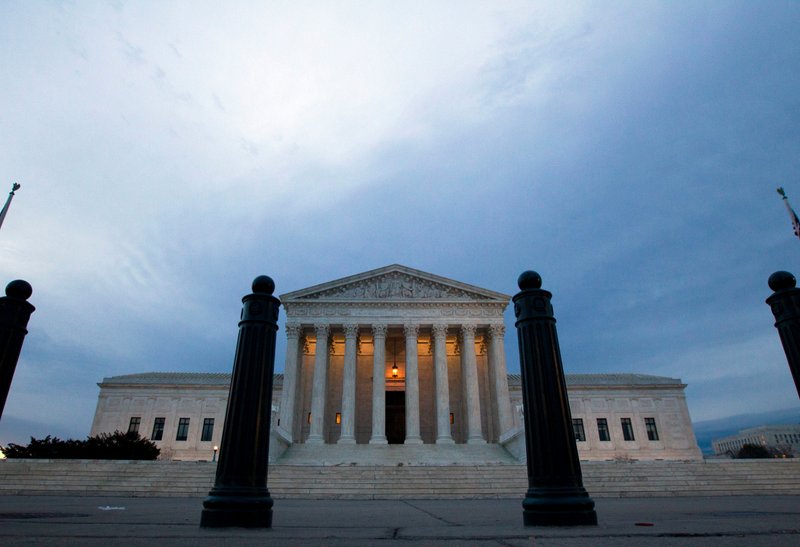
The Supreme Court has so far had little to say about Donald Trump’s time as president, even as the nation has moved from one Trump controversy to another. That’s about to change. The justices’ first deep dive into a Trump administration policy comes in a dispute over the third and latest version of the administration’s ban on travel from some countries with majority Muslim populations. Opponents of the policy and some lower courts have labeled it a “Muslim ban,” harking back to Trump’s campaign call to keep Muslims from entering the country. The high-stakes arguments at the high court on Wednesday could offer some indication about how a court that runs on respect for traditions and precedent will deal with a president who regularly breaks with convention. Apart from the campaign statements, Trump’s presidential tweets about the travel ban and last fall’s retweets of inflammatory videos that stoked anti-Islam sentiment all could feature in the court’s discussion of the travel ban’s legality. “The court could get to the right outcome without getting into the question of his tweets. But I think the president set it up so that it’s virtually impossible to ignore him when he’s shouting from the rooftops about what his purpose was in the three versions of the ban,” said Cecillia Wang, the American Civil Liberties Union’s deputy legal director. Solicitor General Noel Francisco, who will argue the administration’s case, said in a court filing that the ban is well within the president’s authority and is not based on prejudice against Islam. In a sign of heightened public interest, the court is taking the rare step of making an audio recording of the proceedings available just hours after the arguments end. One key issue will be how the court evaluates administration actions. Neil Eggleston, President Barack Obama’s last White House counsel, suggested in an online forum last week that Trump does not merit the same measure of latitude that courts usually give presidents, especially in the areas of national security and immigration. “The court will have to wrestle with how much to defer to a President who has created this record of chaos and animus,” Eggleston and co-author Amanda Elbogen wrote on justsecurity.org. Josh Blackman, a professor at the South Texas College of Law in Houston, cautioned that the court would be breaking new ground if it were to treat Trump differently from other presidents. The policy under review at the court applies to travelers from five countries with overwhelmingly Muslim populations — Iran, Libya, Somalia, Syria and Yemen. It also affects two non-Muslim countries: blocking travelers from North Korea and some Venezuelan government officials and their families. A sixth majority Muslim country, Chad, was removed from the list this month after improving “its identity-management and information sharing practices,” Trump said in a proclamation. Francisco said the Chad decision shows that the restrictions are premised only on national security concerns. He also said that the State Department has cleared more than 430 visa applicants from the affected countries for waivers that would allow them to enter the U.S. But the challengers argue that the administration cannot ask the court to ignore all that has happened. Trump’s first travel ban was issued just a week after he took office in January 2017, and was aimed at seven countries. It triggered chaos and protests across the U.S. as travelers were stopped from boarding international flights and detained at airports for hours. Trump tweaked the order after the 9th U.S. Circuit Court of Appeals in San Francisco refused to reinstate the ban. The next version, announced in March 2017, dropped Iraq from the list of covered countries and made it clear the 90-day ban covering Iran, Libya, Somalia, Sudan, Syria and Yemen didn’t apply to those travelers who already had visas. It also eliminated language that would give priority to religious minorities. Critics said the changes didn’t erase the ban’s legal problems. The 9th Circuit and the 4th U.S. Circuit Court of Appeals in Richmond, Virginia, agreed with the ban’s opponents. The 4th Circuit said the ban “drips with religious intolerance, animus and discrimination.” The 9th Circuit ruled that Trump violated immigration law. The third version is indefinite, unlike the other two, and the administration said it is the product of a thorough review of how other countries screen their own citizens and share information with the U.S. It fared no better than its predecessors in the lower courts, but the Supreme Court said in an unsigned order in December that it could take full effect while the legal dispute continues. The justices said nothing about the substance of the policy, either in December or in earlier actions involving the ban. Now, though, they are confronted with the administration’s view that Trump has broad discretion to impose limits on immigration and that the courts don’t even have a role to play. The Justice Department has said throughout the course of the legal fight that the lawsuits challenging the policy should be dismissed without ever reaching the challengers’ claims. The administration says that foreigners have no right to enter the United States and no right to challenge their exclusion in American courts. Supporting briefs for the ban’s challengers dwarf filings on the administration’s side. Retired high-ranking military officers, former Republican officeholders, Catholic bishops, Amazon, Facebook and 113 other companies, the children of Japanese-Americans who were held in internment camps during World War II and more than a dozen mainly Democratic-led states are among those calling on the court to strike down the Trump policy. The administration’s supporters include roughly the same number of Republican-led states, as well as conservative groups and Jay Sekulow, one of Trump’s personal lawyers. A decision in Trump v. Hawaii, 17-965, is expected by late June. Republished with the permission of the Associated Press.
Donald Trump builds on Barack Obama opioid policy
Deep within President Donald Trump’s plan to combat opioid abuse, overshadowed by his call for the death penalty for some drug traffickers, is a push to expand the use of medication to treat addiction. It’s a rare instance in which Trump isn’t trying to dismantle Obama administration policies, and where fractious Republicans and Democrats in Congress have come together. Trump declared last month that “we’re making medically assisted treatment more available and affordable,” even as Congress was working to approve $1 billion for a new treatment grant program for opioids as part of the massive government funding bill. Not to offer such treatment is like “trying to treat an infection without antibiotics,” new Health and Human Services Secretary Alex Azar told the National Governors Association earlier this year. Experts have long argued that medication-assisted treatment should be the standard of care for people addicted to heroin and other opioid drugs. But acceptance lags. Cost is a barrier, as are government regulations. Some of the medications are opioids themselves and there’s no consensus on how long patients should remain in treatment. In its final year, the Obama administration pushed through Congress $1 billion for opioid crisis grants to states. Of that, $500 million was to be released last year and the other $500 million this year. States had to show that their opioid programs are based on clinical evidence, so medication-assisted treatment got a big boost. The 2018 spending bill provides another $1 billion, and the Trump administration says it will carry even more specific requirements for states to use treatment supported by clinical evidence, including medications. “The government is talking about treatment and medication-assisted treatment in a way that the government has never done before,” said Tom Hill, vice president of addiction and recovery at the National Council for Behavioral Health, which advocates for mental health and addiction treatment. Overdose deaths from heroin, synthetics like fentanyl, and prescription painkillers, reached 42,000 in 2016, according to the latest statistics. “This is being addressed as the illness that it is,” said Elinore McCance-Katz, assistant secretary of HHS for mental health and substance abuse. “Most definitely the government is acknowledging the disease of addiction as it pertains to opioids — and other substances as well — but opioids of course are an emergency.” Grants are awarded to states based on a variety of factors, including overdose deaths and the number of people who can’t find treatment. A study looking at New England by the nonprofit Institute for Clinical and Economic Review found that every dollar invested in medication treatment would return about $1.80 in savings, when factoring in society’s costs from lost productivity and crime. Vermont has been hard hit by the addiction epidemic and is among states that have previously gotten federal money for medication-assisted treatment. Its central goal is to improve access, according to a federal report. In Massachusetts, the plan is aimed in part at pregnant women and new mothers. Indiana wants to focus on rural residents. One Vermont physician, Dr. Deborah Richter, says medications have helped her patients, especially when combined with counseling. “People got back to what they were before the addiction seized them,” she said. As a doctor, “it was on a personal level so rewarding to save other mothers’ children.” Skeptics of the government emphasis on medication-assisted treatment say it’s not a cure-all. Jonathan Goyer, manager of the Anchor recovery program in Pawtucket, Rhode Island, said he sees many patients who don’t want to take medication, because they want to be free of drugs altogether. “We should be increasing medication-assisted treatment,” said Goyer. “But we should also be increasing everything else.” At the Neil Kennedy Recovery Centers in Youngstown, Ohio, outpatient director Pam Ramsey said her program emphasizes medication as an aid, not as the sole treatment. “It really is an assist to the treatment,” said Ramsey. Along with medication, treatment incorporates a version of the traditional 12-step approach to quitting, counseling sessions, group meetings, and follow-up. “Our goal is still abstinence.” Home remodeling contractor Rob Judy said he’s wrestled with heroin addiction for more than 20 years. Medication alone did not keep him drug free, nor did a faith-based program. Finally Judy signed up for comprehensive treatment at Neil Kennedy. The medication puts out “the fire of active addiction, of having to wake up and use,” said Judy. But he says that needs to be followed with counseling, peer support and follow-up care. “I believe that addiction is based on and driven by loss, and at the core of it is pain,” said Judy. “If you don’t address those issues, sooner or later you’re going to relapse.” Republished with the permission of the Associated Press.
Republican attorneys general support citizenship question on census
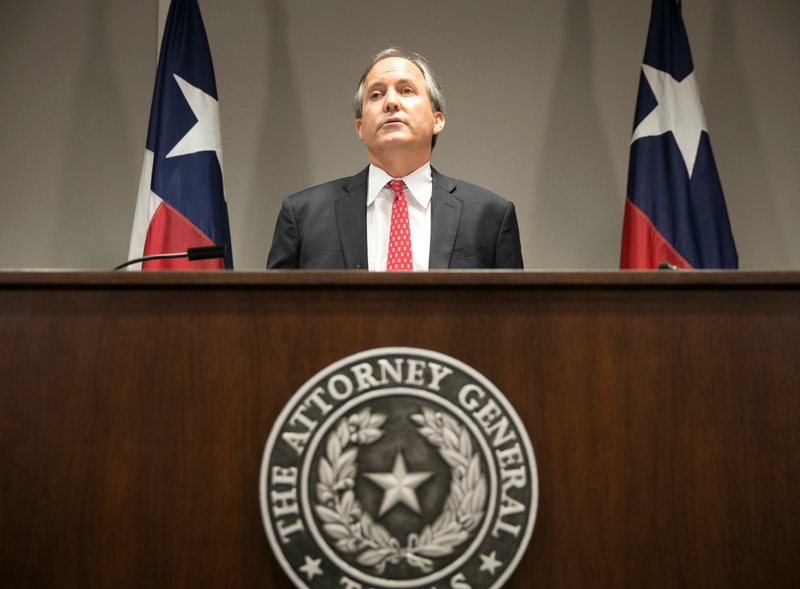
A Trump administration plan to ask people if they are U.S. citizens during the 2020 census has prompted a legal uproar from Democratic state attorneys general, who argue it could drive down participation and lead to an inaccurate count. Yet not a single Republican attorney general has sued — not even from states with large immigrant populations that stand to lose if a census undercount of immigrants affects the allotment of U.S. House seats and federal funding for states. In fact, many GOP attorneys general had urged Trump’s census team to add a citizenship question. “We always are better off having a more accurate count of citizens versus non-citizens. I see no downside in this,” said Texas Attorney General Ken Paxton, vice chairman of the Republican Attorneys General Association. The diverging views of top Republican and Democratic state attorneys highlight how even the most basic data collection decisions can quickly split along partisan lines amid the intense debate about immigration policies. Concerns among immigrants have risen as President Donald Trump’s administration has cracked down on so-called sanctuary jurisdictions, increased arrests by federal immigration officers, called the National Guard to the border with Mexico and sought to limit travel to the U.S. from certain predominantly Muslim countries. U.S. Commerce Secretary Wilbur Ross announced last month that the 2020 census distributed to every U.S. household will include a citizenship question for the first time since 1950. He said the question was needed in part to help the government enforce the Voting Rights Act, the 1965 law that was intended to protect the political representation of minority groups. He said it will provide a more accurate tally of voting-eligible residents than is currently available from a smaller sampling survey that includes the citizenship question. In a letter explaining his decision, Ross said the U.S. Census Bureau estimated that as many as 630,000 additional households might not respond if a citizenship question is included. Yet he acknowledged the administration did not know what the actual consequences might be because it hasn’t tested the change. The nation’s only dress rehearsal for the 2020 census, currently taking place in Providence, Rhode Island, does not include the citizenship question on the survey forwarded to residents. Nevertheless, Ross determined the benefits of including the question outweigh any concerns. California Attorney General Xavier Becerra, a Democrat, filed a federal lawsuit immediately after Ross announced the question would be added. The nation’s most populous state also has the highest number of foreign-born residents, most of whom are naturalized U.S. citizens or hold some other legal status. Last week, New York Attorney General Eric Schneiderman led a coalition of 17 Democratic attorneys general, the District of Columbia, six cities and the bipartisan U.S. Conference of Mayors in filing a second federal lawsuit. They contend the citizenship question will deter participation and illegally inhibit the Constitution’s requirement for an “actual enumeration” of residents. A third lawsuit was filed this past week by a group of seven Maryland and Arizona residents who say adding the question could lead to an undercount that could diminish federal funding and congressional representation for their states. The Constitution requires representation in the U.S. House to be based on a count of the total residents in each state, not just citizens. The census, undertaken every 10 years, also is used to determine how much money to distribute to local communities through various federal programs. “If we don’t count all the people who live in our city — all the residents we have — it could mean that our community doesn’t get our fair share of moneys or aid,” said Steve Adler, mayor of Austin, Texas, and a Democrat who is on the board of the U.S. Conference of Mayors. “It could also mean that we don’t get the representation in government at all levels. The impacts could be huge.” The George Washington University Institute of Public Policy recently analyzed how a hypothetical 1 percent undercount beyond the figures reported in the 2010 census would have affected 2015 federal funding for Medicaid and several other social programs in each state, assuming the undercount occurred only in that state. The largest financial hits would have been to the Republican-led states of Texas, Florida and Ohio, the swing state of Pennsylvania and the traditionally Democratic state of Illinois, the report found. Democratic-led California and New York would not have been affected because their Medicaid reimbursement rates already are at minimum levels. Estimates of those living in the U.S. illegally range from 11 million to a little over 12 million people. Census data is not shared with immigration enforcement authorities. Yet immigrant advocates believe a citizenship question could discourage even some who are lawfully present from responding, partly because of fears the government could track down relatives living in the U.S. illegally. The U.S. has about 44 million residents who were not citizens at birth, comprising 13.5 percent of the total population, according to the most recent Census Bureau information. More than half of all immigrants live in California, Texas, New York or Florida. Last week, a Democratic state senator in Florida formally asked the state’s attorney general, Republican Pam Bondi, to join the New York lawsuit challenging the citizenship question. That’s unlikely because Bondi was among 11 Republican state attorneys general and two governors who signed a March 13 letter urging the Commerce Department to include a citizenship question. Minority Democrats in the Arizona Legislature also urged GOP Attorney General Mark Brnovich to join the lawsuit. But his spokesman said that won’t happen, just as he refused to sign onto the Republican letter urging the question be included. “We have concerns this issue has been overly politicized,” Brnovich spokesman Ryan Anderson said in a statement. The letter from Republican state officials said a census citizenship question could help minority communities by allowing those drawing legislative districts to ensure there are enough voting-eligible citizens in a particular district for minorities to be able to elect a candidate of their choice under
U.S. raises prospect of Trump-Putin meeting at the White House
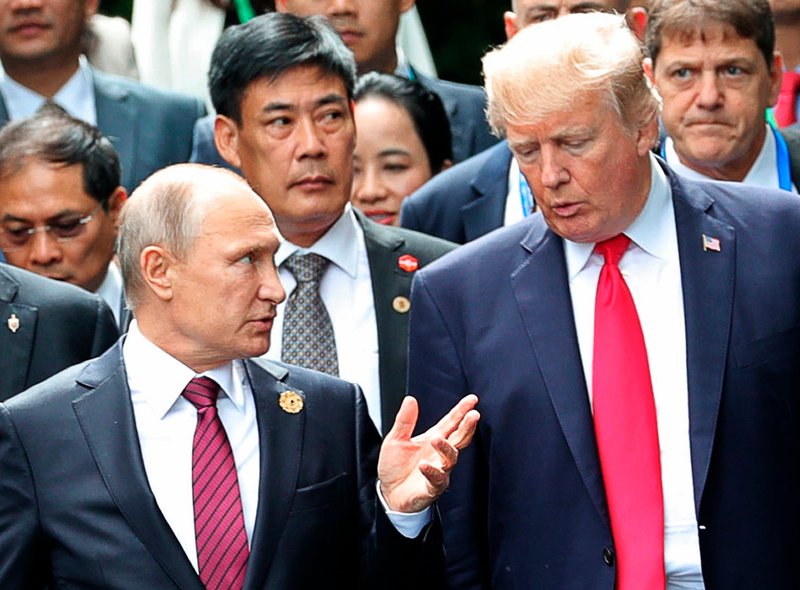
The Trump administration says it is amenable to a White House meeting between President Donald Trump and Russian President Vladimir Putin, raising the prospect of the Russian president’s first Washington visit in more than a decade even as relations between the two powers have eroded. White House press secretary Sarah Huckabee Sanders said the White House was among “a number of potential venues” discussed in Trump’s telephone call last month with Putin. The Kremlin said earlier Monday that Trump invited Putin during the call. Both sides said they hadn’t started preparations for such a visit. If it happens, Putin would be getting the honor of an Oval Office tete-a-tete for the first time since he met President George W. Bush at the White House in 2005. Alarms rang in diplomatic and foreign policy circles over the prospect that Trump might offer Putin that venue without confronting him about Russia’s interference in the 2016 presidential election or allegations that Russia masterminded the March 4 nerve agent attack on a former Russian double agent. “It would confer a certain normalization of relations and we’re certainly not in a normal space,” said Alina Polyakova, a foreign policy fellow at the Brookings Institution. “Nothing about this is normal.” Much has happened since Trump and Putin spoke in the March 20 phone call. Trump said afterward he hoped to meet with Putin “in the not too distant future” to discuss the nuclear arms race and other matters. But their call was followed by reports that Trump had been warned in briefing materials not to congratulate the Russian president on his re-election but did so anyway. Since the call, two dozen countries, including the U.S. and many European Union nations, and NATO expelled more than 150 Russian diplomats in solidarity with Britain over the poisoning of Sergei Skripal, the former spy, and his daughter Yulia. Moscow has denied any involvement in the nerve attack and retaliated by expelling the same number of diplomats from each nation. Putin’s foreign affairs adviser, Yuri Ushakov, told reporters Monday that when the two leaders spoke by phone, “Trump suggested to have the first meeting in Washington, in the White House,” calling it a “quite interesting and positive idea.” Ushakov voiced hope that tensions resulting from the diplomatic expulsions wouldn’t derail discussions about a summit. Trump has said maintaining a strong personal relationship with Putin is in the U.S. interest and has signaled to allies that he trusts his own instincts in dealing with the Russian president. A White House official, speaking on condition of anonymity to describe private discussions, said Trump raised the possibility of a White House meeting in a “casual, open-ended” fashion during the call. The official reiterated that no extensive preparations had taken place. Talk of a White House summit comes as Trump is preparing to meet North Korean leader Kim Jong Un at an undetermined location. White House welcomes are typically reserved for friends and allies. Trump has avoided criticizing Putin personally even as his administration has crossed Moscow by providing Ukraine with lethal weapons and upholding Obama-era sanctions against Russia and its shuttering of diplomatic outposts. Michael McFaul, who served as the U.S. ambassador to Russia under President Barack Obama, said the “symbolism of Putin standing in the East Room with the president at a news conference” would be a major goal for the Russian leader. “The only reason you should do it is if you’re going to obtain a concrete objective that serves America’s national security interest before the meeting,” he said. McFaul said he feared that Trump “thinks that a good meeting with Putin is the objective of his foreign policy with Russia. That should never be the objective. That should be the means to achieve things that are actually of importance to the United States.” Trump had already fallen under sharp criticism from some Republican lawmakers for congratulating Putin on his re-election during the call and for not raising the ex-spy’s poisoning. The fact that Trump also extended a White House invitation during that call was likely to increase concerns that Trump, when in direct contact with Putin, is inclined to offer olive branches and reluctant to raise difficult issues. “I worry that Trump wittingly or unwittingly may be sending a more positive signal to Putin than he deserves,” said Nicholas Burns, a top State Department official during the Bush administration who also served as U.S. ambassador to NATO. Russia’s disclosure of the invitation came the day before the leaders of three Baltic countries — Latvia, Lithuania and Estonia — were to visit the White House. The three NATO nations are seen as a bulwark against Russia’s aspirations of extended influence west of its border. Trump has met Putin twice as president, at the Group of 20 summit in Germany last summer and briefly at the Asia-Pacific economic summit in Vietnam in November. Putin, who was president of Russia once before, visited the White House in 2005, when Bush welcomed him in the East Room as “my friend.” Putin has been to other parts of the U.S. frequently in recent years, including a visit to the Bush family compound in Maine. Putin’s meetings with Obama occurred at international summits and along the sidelines of the United Nations gathering in New York. Obama met Russian President Dmitry Medvedev at the White House in 2010, when the pair also chowed down on burgers at a popular hamburger joint outside the capital. Republished with the permission of the Associated Press.
Donald Trump calls for border legislation using ‘nuclear option’
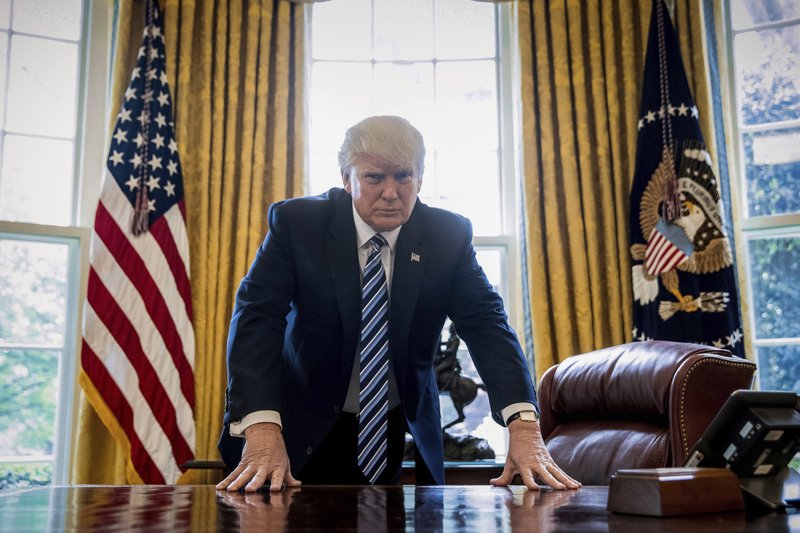
President Donald Trump demanded Monday that Congress pass new border legislation using the “Nuclear Option if necessary” to muscle it through the Senate — a drastic change in rules the Republican leader has previously dismissed. Trump tweeted that the U.S. must build a border wall, but argued that “Democrats want No Borders, hence drugs and crime!” He also said that a deal to help “Dreamer” immigrants is “dead because the Democrats didn’t care or act.” Trump has previously called for the “nuclear option” — changing Senate rules to end the filibuster. But Senate Majority Leader Mitch McConnell has dismissed that option in the past, saying Republicans will welcome the filibuster if they return to being the Senate minority. The White House did not immediately answer questions about Trump’s tweets. The $1.3 trillion funding package Congress passed last month included $1.6 billion in border wall spending. But much of that money can only be used to repair existing segments, not build new sections. Congress also put restrictions on the types of barriers that can be built. Trump began tweeting over the weekend on immigration from Florida, threatening to pull out of a free trade agreement with Mexico unless it does more to stop people from crossing into the U.S. The U.S., Canada and Mexico are participating in tense negotiations over the North American Free Trade Agreement at Trump’s insistence. He also claimed that people are flowing over the border “trying to take advantage of DACA. They want in on the act!” It was not immediately clear what Trump was referring to when he said people are coming to take advantage of the program Former President Barack Obama created the Deferred Action for Childhood Arrivals program to provide temporary protection and work permits to hundreds of thousands of immigrants who are living in the U.S. illegally after being brought here as children. The Obama administration allowed signups during a set period of time, and the program is closed to new entrants. Trump ended the program last year, but gave Congress six months to pass legislation enshrining it. A deal has so far proved elusive and Trump has blamed Democrats. The Department of Homeland Security is not issuing new permits, though existing ones can be renewed. Proposed DACA deals crafted by lawmakers and rejected by Trump also were not open to new participants. Trump did not explain what he meant when questioned by reporters as he entered the Church of Bethesda-by-the-Sea for an Easter Sunday service on Sunday, but again blamed Democrats for failing to protect the “Dreamers.” “The Democrats have really let them down,” he added during the annual White House Easter Egg Roll, adding: “It’s a shame.” Trump’s comments also ignore the fact that the DACA solution he proposed mustered only 39 votes in the Senate, not enough to pass even if the Senate did approve the nuclear option. Meanwhile, the bipartisan option the White House vigorously lobbied against did gain a majority of votes, but fell six votes shy of the 60 needed to advance under Senate rules. Trump promised during the 2016 presidential campaign to build a Southern border wall to stop illegal immigration and drugs from Mexico, but Congress has frustrated him by not moving as quickly as he wants to provide money for construction. The president also complained on Twitter that border patrol agents can’t do their jobs properly because of “ridiculous liberal (Democrat) laws” that allow people caught for being in the country illegally to be released while they await a hearing before a federal immigration judge. Trump tweeted that the situation is “Getting more dangerous” and “Caravans” are coming. The president’s tweets came after Fox News’ “Fox & Friends” reported early Sunday on what it said is a group of 1,200 immigrants, mostly from Honduras, headed to the U.S. About 1,100 migrants, many from Honduras, have been marching in a caravan along roadsides and train tracks in the southern Mexico state of Oaxaca. These “Stations of the Cross” migrant caravans have been held in southern Mexico for at least the last five years. They began as short processions of migrants, some dressed in biblical garb and carrying crosses, as an Easter-season protest against the kidnappings, extortion, beatings and killings suffered by many Central American migrants as they cross Mexico. Individuals in the caravans often try to reach the U.S. border, but usually not as part of the caravan. The caravans usually don’t proceed much farther north than the Gulf coast state of Veracruz. The current march is scheduled to end this month with a conference on migration issues in the central Mexican state of Puebla, east of Mexico City. The Fox headline was “Caravan of illegal immigrants headed to U.S.” The president is known to watch the cable TV program in the morning. Brandon Judd, leader of the union representing border patrol agents, predicted on “Fox & Friends” that those in the caravan would create havoc and chaos in the U.S. as they wait for what he described as immigration reform. Judd also said Congress needs to pass tougher laws, an idea Trump appeared to echo, and create more bed space for immigration authorities to house people. Mexico routinely stops and deports undocumented Central Americans, sometimes in numbers that rival those of the United States. Deportations of foreigners dropped from 176,726 in 2015 to 76,433 in 2017, in part because fewer were believed to have come to Mexico, and more were requesting asylum in Mexico. Republished with the permission of the Associated Press.
Alabama women suing for equal pay lack state protection

Amy Heatherly believes she would have been paid at least $50,000 more to do her job over the past five years if she had been a man. As the only female human resources director overseeing compensation at the University of Alabama’s main campus, Heatherly said she knew for years she was getting paid less than three men on a similar management level with fewer years of experience. She filed a complaint with the Equal Employment Opportunity Commission in 2014, after receiving a raise that was half of her male colleagues’. In 2016, she sued the university. “It did not have as much to do with the money but me feeling like I’m paid my worth, or at least paid equitably, like you’re being respected and recognized for what you do,” said Heatherly, 52, who has worked at the university for 19 years. The university argues differences in pay are justified because her position is not comparable to her male colleagues. Heatherly says that she is a victim of gender discrimination because she’s not receiving equal pay for equal work. White women in Alabama make 72 cents to a white man’s dollar. Black women make 57 and Latinas 47, the National Women’s Law Center calculated. Federal law prohibits wage discrimination on the basis of sex for equal work, except where there is a difference in experience or productivity. Alabama and Mississippi are the only two states that don’t have equal pay laws. Rep. Adline Clarke, a Democrat from Mobile, unsuccessfully pushed lawmakers to approve equal pay legislation. Clarke’s bill, which failed this legislative session, mirrored federal law but tasked the Alabama Department of Labor with enforcement. She said that would hold employers more accountable. Lilly Ledbetter, the Alabama woman who lost a lawsuit over being paid less than her male counterparts, is the namesake of the law signed by former President Barack Obama to make it easier for women to sue over wage discrimination. She said people wrongly think that pay discrimination does not exist. “It seems like they all have blinders on,” Ledbetter told the Associated Press. “The corporate world in some regards feels that equal pay for equal work is a myth. They think we have it.” The university said in court filings that it explained Heatherly’s low raise was because of how she handled an employee complaint and software problems. Heatherly said they never talked with her about disciplinary problems at the time and gave her no performance evaluation. Heatherly’s complaint said that when she sued, she and her three male colleagues all had the title of director, each with unique responsibilities. “She’s the only person in the job, so then can she never be a victim of sex discrimination because there’s no comparator?” said Heatherly’s attorney Charles Guerrier, who worked for the EEOC for three decades. “If you segregate the jobs and underpay the women, you can’t violate law because there are no men doing the same jobs.” The university counters in court filings that Heatherly’s role was not comparable because it wasn’t systemwide and had different responsibilities. The university uses a pay grade system that tallies salaries based on the differentials. A statistical analysis by Heatherly’s economic expert reported she was paid less than 19 out of 20 men in her pay grade. The expert calculated the university paid female administrators between 5 to 14 percent less. The university’s expert responded that the analysis was “flawed” because jobs can’t be compared within the same pay grade. The university said doing so is “ignoring legitimate factors that drive compensation,” like type of work and job performance. Monica Watts, the university’s associate vice president for communications, said the university could not answer questions or comment on the ongoing case. In response to an open records request for documentation of equal pay complaints, lawsuits and settlements, the university said they have “no responsive public documents that compile the information.” Federal court records show two University of Alabama at Birmingham professors sued over unequal pay in 2006. One settled and one left the university, according to their attorney. Heatherly said the lawsuit has dashed her dreams of a promotion. She is her family’s breadwinner, currently earning more than her husband at $131,000 a year. “There are days when I wonder, why do I keep helping a place that’s done this to me?” she said, wiping at tears. “If I can help to make it better for other females, and I know I can’t change the world, but if I do that I’ll feel like I’ve had an impact.” Republished with the permission of the Associated Press.
