
New black sheriff, court officer in Birmingham rethinking policing
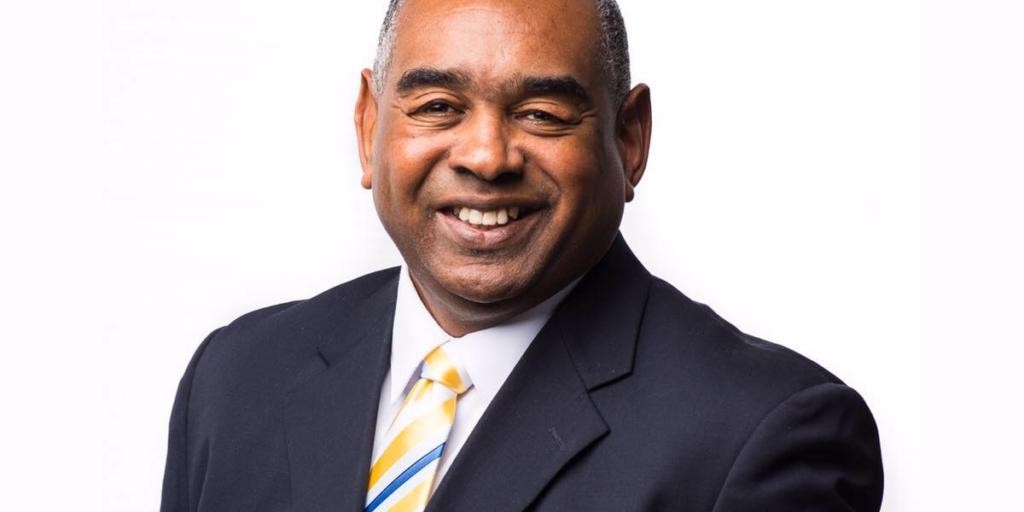
Veteran Alabama law enforcement officer Mark Pettway grew up in a black neighborhood called “Dynamite Hill” because the Ku Klux Klan bombed so many houses there in the 1950s and ’60s. Now, after becoming the first black person elected sheriff in Birmingham – on the same day voters elected the community’s first black district attorney – Pettway sees himself as part of a new wave of officers and court officials tasked with enforcing laws and rebuilding community trust fractured by police shootings, mass incarceration, and uneven enforcement that critics call racist. In a state where conservative politicians typically preach about getting tough on crime, Jefferson County’s new sheriff ran and won on an alternative message. He favors decriminalizing marijuana, opposes arming school employees, supports additional jailhouse education programs to reduce recidivism and plans for deputies to go out and talk to people more often, rather than just patrolling. “Going forward we need to think about being smarter and not being harder,” said the Democrat Pettway, 54. While the nation’s law enforcement officers are still mostly white men, and groups including the American Civil Liberties Union and Black Lives Matter call for sweeping changes in the criminal justice system, minorities appear to be making gains nationwide. In Pettway’s case, strong turnout by African-American voters, combined with national concern over police shootings of unarmed people of color, helped him defeat longtime Sheriff Mike Hale, a white Republican, said professor Angela K. Lewis, interim chair of political science at the University of Alabama at Birmingham. Winners in other cities attributed their success to similar factors. Houston voters elected 17 black women as judges in the midterms. Even before the election, nearly the entire criminal justice system in the Georgia city of South Fulton, near Atlanta was run by black women, including the chief judge, prosecutor, chief clerk and public defender. They’re offering more chances for criminal defendants to avoid convictions through pre-trial programs and increased use of taxpayer-funded lawyers to protect the rights of the accused. Chief Judge Tiffany C. Sellers of South Fulton’s municipal court said officials also explain court procedures in detail to defendants, many of whom haven’t been in court before and are scared. “Black and brown people often feel disenfranchised from the system, and I want them to understand what is going on,” Sellers said. “At the end of the day they may not like what I did with their case, but at least they know I explained things to them.” Midterms voters in five North Carolina counties elected black Democratic sheriffs for the first time, including Gerald Baker in Wake County. He defeated a longtime Republican incumbent by campaigning on ending the county’s participation in a Trump administration program to detain people suspected of being in the country illegally and advocating for greater police accountability. The message resonated in a county where a deputy and two highway troopers were charged in the beating of a black man earlier this year. Kyron Hinton suffered injuries including a broken nose, multiple dog bites and a fractured eye socket. “If we make a mistake out here in the actions that we take then we should take responsibility for those things,” Baker said in an interview after the election. Yet despite gains by people of color, officials like Baker still represent a minority in U.S. law enforcement. A Justice Department report released in 2013 showed that law enforcement agencies had become more racially and ethnically diverse over a 26-year period, yet the nation’s overall law enforcement community remained overwhelmingly white and male. Local police departments, which typically patrol inside city police jurisdictions, were about 73 percent white, the report said. Sheriff’s offices, which usually patrol in less urban areas and often operate county jails, were even whiter, at about 78 percent white. The report said research found that African-American, Latino and Asian-American communities were all underrepresented within police agencies relative to the populations they served. The disparity was greatest among blacks in areas where black population is proportionately largest, said the report. In Birmingham, Sheriff-elect Pettway of Jefferson County said he wants to increase hiring among minorities and women after he takes office in January. The department’s roughly 680-person staff should better reflect the county’s population, which is almost evenly split between blacks and whites, he said. Some of Pettway’s positions track those of the National Organization of Black Law Enforcement Executives, with about 3,000 members in all levels of police work. The group opposes arming teachers and held a conference last year aimed at broadening communication between police and community members. Pettway said he plans to increase the use of police body cameras, which he said was a big selling point during his campaign. “People loved that. With all the things that have been happening in law enforcement, people wanted accountability,” he said. Republished with permission from the Associated Press.
Five things you need to know about Cara McClure
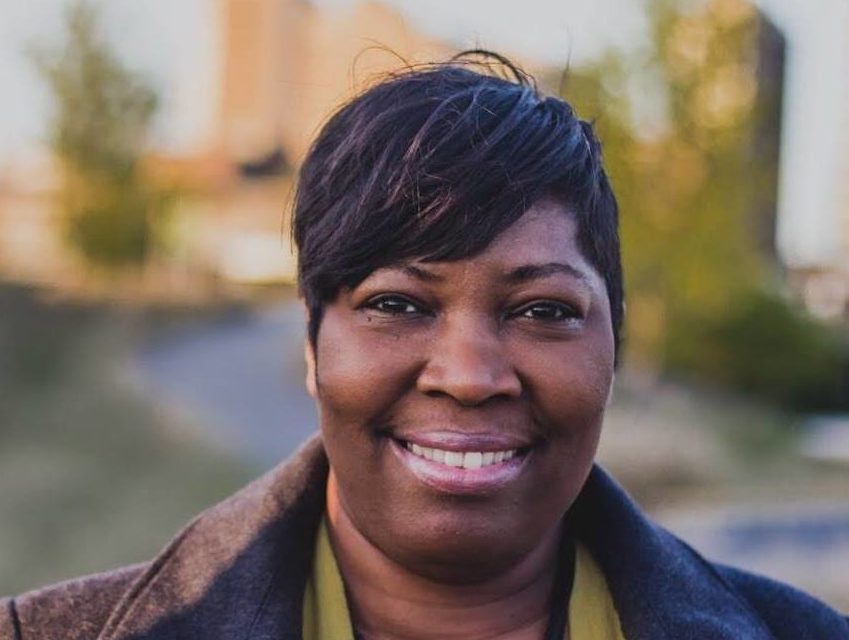
Cara McClure, the Democratic candidate for Public Service Commission Place 1 ran unopposed in the June 5 primary. But now that the primaries are over, the real battle has begun. McClure now faces incumbent Republican Commissioner Jeremy Oden in the November 6 general election for the PSC seat. With that in mind, here are the five things you need to know about Cara McClure: 1. She’s an entrepreneur by nature Nurturing her entrepreneurial spirit, McClure’s parents allowed her to work for their family’s cleaning service while she was in elementary school. There she made cold calls to apartment complexes and small businesses, she also sold candy door-to-door she says in her campaign bio. 2. She is a co-founder of the Magic City Chapter of Black Lives Matter group. After a dispute between group members on whether or not to join with the national Black Lives Matter group, the Black Lives Matter in Birmingham group split into two separate entities from which the Magic City Chapter of Black Lives Matter was formed. McClure was a co-founder of the second group, which voted to join the national coalition of BLM groups. “I’ve been with that group [Black Lives Matter in Birmingham] since Day One,” McClure told AL.com. “I didn’t like how the women were treated. I said we really need to join the national group, and they voted no. We’ve put together an awesome group. We’re not just out there screaming. We want real change.” 3. She’s a dedicated activist. Beyond her work with the BLM movement, McClure also helped launch Showing Up for Racial Justice Birmingham — a group that works to undermine white supremacy and to work toward racial justice through community organizing, mobilizing, and education. She also spearheaded “Black Mama’s Bail Out Day” in Birmingham, which raised money to help bail out incarcerated black mothers to help reunite with their children and families ahead of Mother’s Day. As a recent Glamour Magazine article that featured McClure pointed out, “if elected, she would become the first African American—male or female—to serve on the commission in Alabama. Her hope is to represent the people she’s been fighting for throughout her life: ‘the marginalized and poor black and brown communities that are underrepresented on the commission,’ she says. ‘Those who don’t have a voice or seat at the table.’” 4. She was briefly homeless. Following a marital separation McClure and her son were left homeless. Rebounding quickly and using her personal struggle as a tool, McClure founded her own apartment locator service, ASAP Apartment Locators in January of 2013 to help individuals and families find their ideal homes, which she continues to operate today. 5. She and Kari Powell are leading a double-team effort for PSC Places 1 and 2. In addition to creating McClures branding, Kari Powell and McClure are leading a double-team effort for PSC Places 1 and 2 traveling, campaigning and speaking together at events. Both running as Democrats, they seek to bring fair and affordable utility rates to Alabama.
Democratic lawmakers release thousands of Russian Facebook ads
Democrats on the House intelligence committee have released more than 3,500 Facebook ads that were created or promoted by a Russian internet agency, providing the fullest picture yet of Russia’s attempt to sow racial and political division in the United States before and after the 2016 election. Most of the ads are issue-based, pushing arguments for and against immigration, LGBT issues and gun rights, among other issues. A large number of them attempt to stoke racial divisions by mentioning police brutality or disparaging the Black Lives Matter movement. Some promote President Donald Trump or Bernie Sanders, who ran against Hillary Clinton in the Democratic presidential primary. Few, if any, support Clinton. The intelligence committee Democrats released a sampling of the ads purchased by Russia’s Internet Research Agency last year, but they are now releasing the full cache of ads that Facebook officials turned over to the panel after acknowledging in September they had discovered the Russian efforts. The release of ads from early 2015 through mid-2017 does not include 80,000 posts that the agency also shared. Some of the ads are partially redacted, part of an effort by Facebook and the committee to protect unsuspecting people whose names or faces were used. An Associated Press review of the thousands of ads and their data shows how precisely — and sometimes randomly — the agency targeted them. Some ads designed to appeal to critics of immigration were targeted to users who liked specific Fox News hosts, WikiLeaks founder Julian Assange, “Old Glory” and the United States Constitution, among other words. Others were more narrowly targeted. Facebook users within 12 miles of Buffalo, New York, were directed to an event supporting justice for a black woman who died in a county jail. Another ad criticizing a Texas school teacher who lost her job after making racist remarks was aimed at adults living in Cleveland, Baltimore, St. Louis and Ferguson, Missouri. One ad that targeted African-Americans concerned about discrimination was only to be shown to users accessing Facebook on Wi-Fi, rather than cellular. There was no explanation as to why that was. Sometimes the targeting appeared to work — after a try or two. A January 2016 ad that promised news on “bad” refugees got five clicks when targeted at those interested in immigration or conservatism. But the same ad got 163 clicks when targeted at those interested in Syria, the Republican Party or politics. Others got many more clicks. A pro-patriotism ad created on June 23, 2015 featuring a stylized drawing of a bald eagle was viewed nearly 530,000 times and was clicked on 72,000 times. As the Russians attempted to pose as Americans, their language sometimes hinted at their origin. One ad railed against immigrants who “should prove that they are deserved to stay in the United States.” Another read: “Your life matter. My life matter. Black matters.” Facebook revealed in September that it had discovered the divisive ads, which were paid for in rubles. Ads were still running in July and August of 2017, weeks before Facebook made the effort public. In February, special counsel Robert Mueller indicted 13 Russians of an elaborate plot to disrupt the 2016 presidential election, charging several people associated with the Internet Research Agency with running a huge but hidden social media trolling campaign aimed in part at helping Trump defeat Clinton. The indictment was part of Mueller’s larger investigation into Russian intervention in the election and whether Trump’s campaign was involved. There has been no evidence that Trump’s campaign was in any way associated with the social media effort. The trove of ads released Thursday appears to back the assertion that the Russians wanted to hurt Clinton. Some spread rumors about her husband, former president Bill Clinton, or promote lies about her. Several depict Clinton behind bars. Hundreds of the ads ran after the election, continuing the effort to sow discord. A series of ads posted two days after Trump was elected urge his supporters to show up at Trump Tower in Manhattan to respond to the “massive crowds of libtards” who protested him. It targets people within 50 miles of New York City and provides the street address. That was one of many ads that attempted to set up events — sometimes on opposing sides of an issue. In May 2017, the fake group “United Muslims of America” ran seven ads promoting two June 3 protests against the war in Syria — one at Trump Tower, the other at the White House. One of those ads targeted people with interests in peace, human rights, feminism and pacifism and those who were “likely to engage with political content (liberal).” Facebook has said that more than 10 million people in the United States saw the ads, more than half of which ran after the election. Under fire from Congress, the social media giant has pledged improvements to its ad policies and enforcement. Facebook has made it easier to see the origins of ads, is forcing buyers to be more transparent about who they are and has worked to find more fake accounts, among other changes. California Rep. Adam Schiff, the top Democrat on the intelligence committee, said he was releasing the ads so it doesn’t happen again. “The only way we can begin to inoculate ourselves against a future attack is to see first-hand the types of messages, themes and imagery the Russians used to divide us,” he said. Republished with permission from the Associated Press.
How the media, BLM activists are pushing false narrative of Chikesia Clemons arrest and why we shouldn’t let them
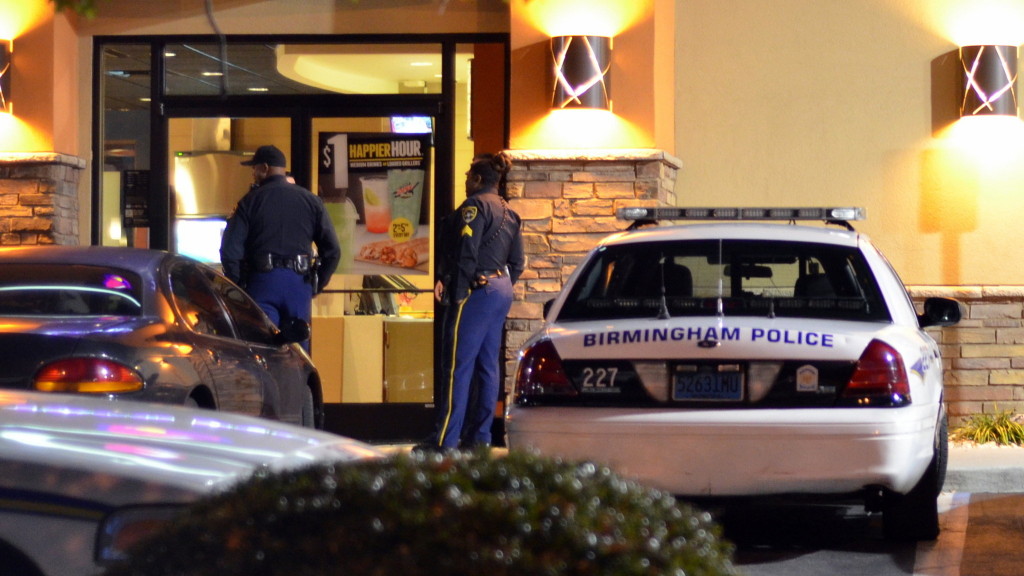
Law enforcement officers haves a tough jobs these days. Just last week two deputies in Florida were ambushed, shot and killed while simply having a meal together. While the Sunshine State, and the nation, mourns their unnecessary deaths, we also need to stop and recognize the danger our law enforcement faces these days extends beyond just that of violence. It’s also the threat of mistruths and outright lies by those who would discredit the career field as a whole. This week Alabama has found itself in the spotlight for an incident at a Waffle House where an edited portion of a video taken of Chikesia Clemons being arrested went viral. Quickly Black Lives Matter, and others, took to social media to scream that the arrested woman was mistreated. The woman’s mother and friends are also pushing their own false narrative of the situation to anyone who will listen. A full copy of the video of the incident made available to press later showed Clemons and friends being asked to leave multiple times. Her version, and that of her friend who released the edited tape, of events are completely different than those from multiple witnesses including other black women, and women in the restaurant. A full report indicates that witnesses, who included six employees and one customer, told police that the two women were loud and used profanities toward employees. The fact remains that Clemons isn’t a victim of anything but her own bad behavior and poor decisions. Al.Com reported according to the video and witnesses, these were the words of the woman Black Lives Matters and others are wrongly trying to call a “victim”: “I’ll come over this counter and beat your f**king ass, bitch I’m gonna have your job, you ain’t gonna be here tomorrow.” This is according to witness statements read by Det. Mims Another witness said that one of the two women said they could come back to the store and “shoot this place up if I need to.” So to be clear: A drunk woman walks into a restaurant holding alcohol, is told she can’t have it and asked to leave. She leaves, then returns shouting and threatening people. At one point on the video she is seen standing on a chair while screaming. She called the restaurant obscene employees names. She threatened to shoot them. Officers come in and ask her to leave and she refuse. Then, on video, she resists arrest and when the officer warns her that her resisting could lead to her breaking her arm she’s a victim? Only if you live in a world where you have no idea what victimhood actually is or looks like, is Clemons an actual “victim”. Yes, her dress came down. That’s not the police officers’ fault. Had she not resisted arrest, it wouldn’t have happened. The officers ask her friend to fix it as soon as they have the situation under control. Wardrobe malfunctions can be a terrible side effect of a lawful arrest. In the future maybe the woman shouldn’t have behaved the way she did to warrant an arrest, or perhaps she shouldn’t have rolled around and tried to stop the officers from cuffing her — then she wouldn’t have had to worry about the wardrobe problems. Just a thought on the complaints about her dress coming down. Facts don’t matter to some (read in this case: many) these days. The woman has already raised over $12,000 on a GoFund me page that inaccurately sums up the incident. That’s $12,000 that could go to so many kids and causes that need it, but instead it will go to a woman whose violent tirade has gone viral with a misinformation campaign aimed at discrediting cops who were simply doing their job. One author on The Cut asks, “Who will stand up for Chikesa Clemons?” The author starts out saying, “While watching the video of 25-year-old Chikesia Clemons at a Waffle House in Saraland, Alabama, I realized Chikesia could have easily been me, my friends, or my cousins.” Well Brittney Packnett if you and your cousins trespass, threaten violence and resist arrest, then yes, this too could happen to you. Because those are the reasons this happened to Clemons. Not her race. Her actions. Period. An important fact to keep in mind is this incident happened the same day — Sunday morning — as the shooting at a Waffle House in Tennessee that killed four. So here we have a drunk woman saying she could come back and shoot up the place and officers and employees were suppose to do what? Just ignore her? That sounds ridiculous. We are living in time in which law enforcement officers have to worry about being called racist or sexist, just because they are doing their jobs. Sometimes the facts reveal actual bias was an issue. Sometimes the facts show that the cops did the right thing. How anyone can look at Clemons’ video, read the witness testimony, and still see this as anything but another drunk person arrested for their own dumb choices is beyond me. But to the cops who are getting very little support I say, the facts are on your side. Stay safe men (and women) in blue. Thank you for all you do.
White Birminghamians for Black Lives holds weekly witness event
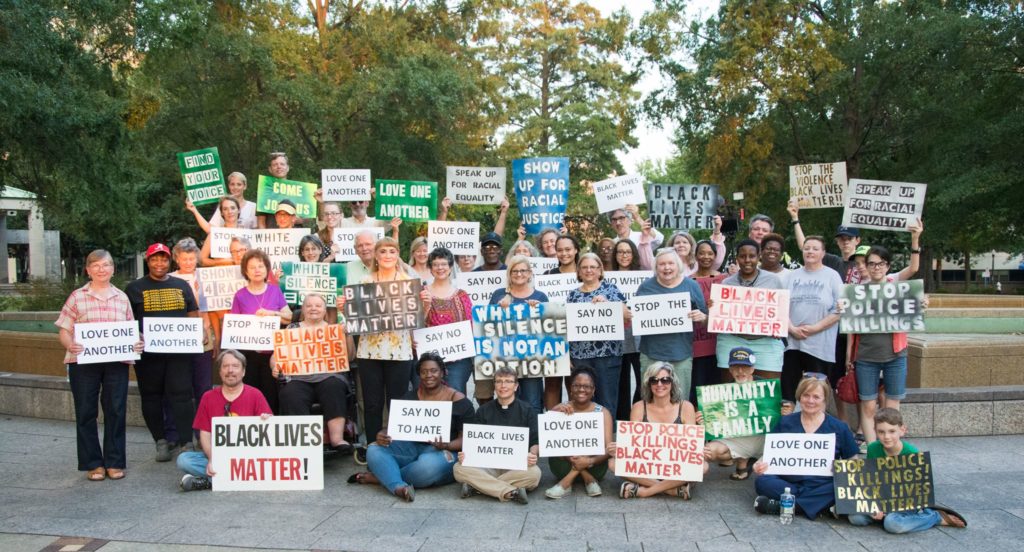
For over year, a group of dedicated Birmingham citizens have come together every Friday to support a shared belief — that Black Lives Matter. White Birminghamians for Black Lives holds a weekly gathering that takes place in the Birmingham Civil Rights District at the historic Kelly Ingram Park “to bear witness to the truth that Black Lives Matter.” Don’t let the name fool you, White Birminghamians for Black Lives is open to all “as an opportunity especially, but not exclusively, for white Birminghamians.” The group’s name is derived from the Black Lives Matter (BLM) movement and the weekly witness events are held in a spirit of solidarity with the local BLM movement and in support of their work. Each week at the witnesses, participants carry signs bearing statements of their beliefs as they peacefully walk around the outer sidewalks of the park. While others sit with signs in the middle of the park. The Friday, Nov. 3 witness runs from 4:30 p.m. – 6:30 p.m. CT. Those interested in attending are invited to attend for a short period or for the entire block of time. For more information, check out the group’s Facebook page.
Barack Obama racial legacy: Pride, promise, regret — and deep rift
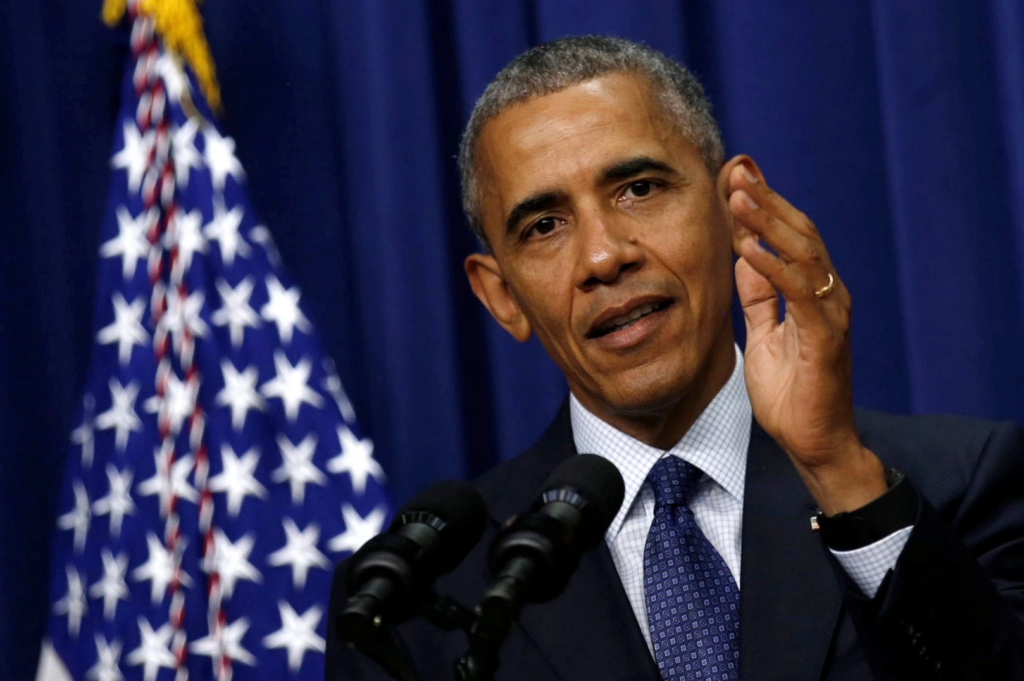
He entered the White House a living symbol, breaking a color line that stood for 220 years. Barack Obama took office, and race immediately became a focal point in a way that was unprecedented in American history. No matter his accomplishments, he seemed destined to be remembered foremost as the first black man to lead the world’s most powerful nation. But eight years later, Obama’s racial legacy is as complicated as the president himself. To many, his election was a step toward realizing the dream of a post-racial society. He was dubbed the Jackie Robinson of politics. African-Americans, along with Latinos and Asians, voted for him in record numbers in 2008, flush with expectations that he’d deliver on hope and change for people of color. Some say he did, ushering in criminal justice reforms that helped minorities, protecting hundreds of thousands of immigrants from deportation, and appointing racially diverse leaders to key jobs, including the first two black attorneys general. These supporters say he deserves more credit than he gets for bringing America back from the worst recession since the Great Depression, the killing of Osama bin Laden, and a major expansion of health care that secured insurance for millions of minorities. They celebrate his family as a sterling symbol of black success. But Obama also frustrated some who believe he didn’t speak out quickly or forcefully enough on race or push aggressively enough for immigration reform. And his presidency did not usher in racial harmony. Rather, both blacks and whites believe race relations have deteriorated, according to polls. Mounting tensions over police shootings of African-Americans prompted protests in several cities and the emergence of the Black Lives Matter movement. Perhaps most strikingly, the president’s successor, Donald Trump, is seen by many as the antithesis of a colorblind society, a one-time leader of the “birther” movement that spread the falsehood that Obama was born in Africa. Trump’s strong reliance on white voters was in sharp contrast to the multiracial coalition that gave Obama his two victories. “President Obama represents the face of the future – multicultural America. Donald Trump represents the old racial order of the black-white divide,” says Fredrick Cornelius Harris, director of the Center on African American Politics and Society at Columbia University. “And for the next decades to come, there will be a battle between those two viewpoints of what America is.” It took more than two centuries for America to elect a black president. It will take many years after he leaves office to sort out what it all meant. — “If he can do it, I can do it, too.” –Cheryl Johnson, of Chicago’s Altgeld Gardens public housing project, on Obama as a lasting symbol. — Two iconic images of the Obama presidency: The president patiently bends over as a 5-year-old black boy touches his head, after the child asked Obama if they had the same kind of hair. A 106-year-old black woman joyfully dances with the president and first lady, beaming as she declares: “I am so happy. A black president. Yay!” Born a century apart, these two visitors to the White House convey the potent symbolism of Obama’s presidency, a luster that hasn’t dimmed. For many black Americans, it’s not so much what policies Obama proposed but his mere presence in the Oval Office that has mattered most. “You can’t put a price tag on that,” says Loretta Augustine-Herron, a former community activist who worked with Obama in Chicago’s Altgeld Gardens in the 1980s. “If he never did anything else for African-Americans, just the fact that he occupies the White House, it lets us see ourselves in a different light. … We see a chance for us to fit into the United States society in a way we’ve never fit in. Just knowing that opportunity is not everybody else’s, it’s OURS, too. … The sky is the limit. And it was never that feeling before.” Perhaps nowhere are those sentiments stronger than at Altgeld Gardens, where a 20-something Obama honed his political skills as a community organizer. It was there, in the shadow of rusted steel mills, where Obama had his first up-close exposure to a black community mired in poverty. In his memoir, “Dreams from My Father,” Obama describes the sprawling housing project in “a perpetual state of disrepair” with crumbling ceilings, backed-up toilets and burst pipes. He helped residents agitate, rally and fight City Hall to improve their lives. Three decades later, Altgeld is in the middle of a massive renovation. Crime and poverty persist, but there’s also a sense of hope, especially for kids who, for the first time, see a president who looks like them when they walk by Obama’s photo on their schoolroom walls. Cheryl Johnson is among the few remaining residents who remember Obama’s organizing days. He plotted strategies with her mother, Hazel, a well-known environmental activist. Johnson, who followed in her footsteps, sees Obama as an inspiration. His presidency, she explains, allowed people to say: “If he can do it, I can do it, too.” “It’s the influence, the motivation that he has given to people who may have been hopeless in their life, like, ‘I can’t get this far,’” Johnson says. “Now you hear young people, young as 5 and 6, saying, ‘I’m going to be the next president of the United States.’” Obama changed perceptions of black people, says Ellen Singletary, a youth specialist at Altgeld. “The media depicts us … in such an unfair and defaming way,” she says, “and to see the pride of who we really are demonstrated on the world stage means the world to me.” That attitude is part of what Michael Eric Dyson, a Georgetown professor and prominent African-American commentator, described in a New York Times op-ed as black America’s “unrepentant love affair” with the president. That pride, he wrote, overlooks Obama’s failings, including skimping on black cabinet appointees until his second term, forgoing the nomination of a black woman to the U.S. Supreme Court and a
U.S. election voted top news story of 2016
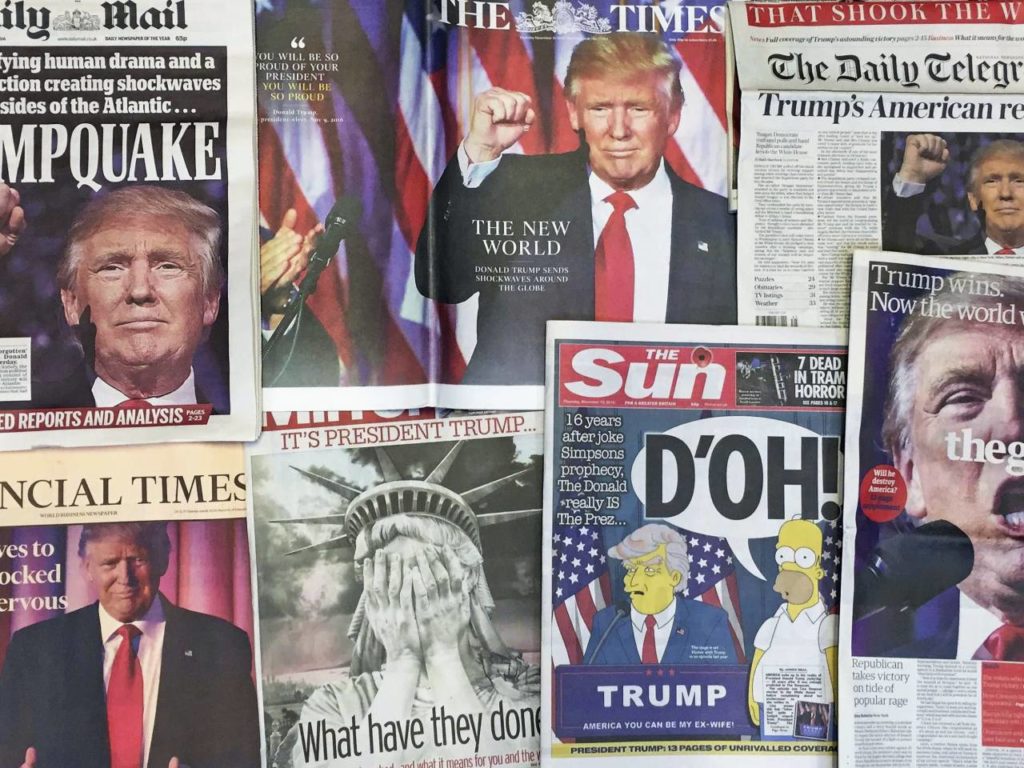
The turbulent U.S. election, featuring Donald Trump‘s unexpected victory over Hillary Clinton in the presidential race, was the overwhelming pick for the top news story of 2016, according to The Associated Press’ annual poll of U.S. editors and news directors. The No. 2 story also was a dramatic upset — Britons’ vote to leave the European Union. Most of the other stories among the Top 10 reflected a year marked by political upheaval, terror attacks and racial divisions. Last year, developments related to the Islamic State group were voted as the top story — the far-flung attacks claimed by the group, and the intensifying global effort to crush it. The first AP top-stories poll was conducted in 1936, when editors chose the abdication of Britain’s King Edward VIII. Here are 2016’s top 10 stories, in order: 1. US ELECTION: This year’s top story traces back to June 2015, when Donald Trump descended an escalator in Trump Tower, his bastion in New York City, to announce he would run for president. Widely viewed as a long shot, with an unconventional campaign featuring raucous rallies and pugnacious tweets, he outlasted 16 Republican rivals. Among the Democrats, Hillary Clinton beat back an unexpectedly strong challenge from Bernie Sanders, and won the popular vote over Trump. But he won key Rust Belt states to get the most electoral votes, and will enter the White House with Republicans maintaining control of both houses of Congress. 2. BREXIT: Confounding pollsters and oddsmakers, Britons voted in June to leave the European Union, triggering financial and political upheaval. David Cameron resigned as prime minister soon after the vote, leaving the task of negotiating an exit to a reshaped Conservative government led by Theresa May. Under a tentative timetable, final details of the withdrawal might not be known until the spring of 2019. 3. BLACKS KILLED BY POLICE: One day apart, police in Baton Rouge, Louisiana, fatally shot Alton Sterling after pinning him to the ground, and a white police officer shot and killed Philando Castile during a traffic stop in a suburb of Minneapolis. Coming after several similar cases in recent years, the killings rekindled debate over policing practices and the Black Lives Matter movement. 4. PULSE NIGHTCLUB MASSACRE: The worst mass shooting in modern U.S. history unfolded on Latin Night at the Pulse, a gay nightclub in Orlando. The gunman, Omar Mateen, killed 49 people over the course of three hours before dying in a shootout with SWAT team members. During the standoff, he pledged allegiance to the Islamic State. 5. WORLDWIDE TERROR ATTACKS: Across the globe, extremist attacks flared at a relentless pace throughout the year. Among the many high-profile attacks were those that targeted airports in Brussels and Istanbul, a park teeming with families and children in Pakistan, and the seafront boulevard in Nice, France, where 86 people were killed when a truck plowed through a Bastille Day celebration. In Iraq alone, many hundreds of civilians were killed in repeated bombings. 6. ATTACKS ON POLICE: Ambushes and targeted attacks on police officers in the U.S. claimed at least 20 lives. The victims included five officers in Dallas working to keep the peace at a protest over the fatal police shootings of black men in Minnesota and Louisiana. Ten days after that attack, a man killed three officers in Baton Rouge, Louisiana. In Iowa, two policemen were fatally shot in separate ambush-style attacks while sitting in their patrol cars. 7. DEMOCRATIC PARTY EMAIL LEAKS: Hacked emails, disclosed by WikiLeaks, revealed at-times embarrassing details from Democratic Party operatives in the run-up to Election Day, leading to the resignation of Democratic National Committee chair Debbie Wasserman Schultz and other DNC officials. The CIA later concluded that Russia was behind the DNC hacking in a bid to boost Donald Trump’s chances of beating Hillary Clinton. 8. SYRIA: Repeated cease-fire negotiations failed to halt relentless warfare among multiple factions. With Russia’s help, the government forces of President Bashar Assad finally seized rebel-held portions of the city of Aleppo, at a huge cost in terms of deaths and destruction. 9. SUPREME COURT: After Justice Antonin Scalia‘s death in February, President Obama nominated Merrick Garland, chief judge of the U.S. Court of Appeals, to fill the vacancy. However, majority Republicans in the Senate refused to consider the nomination, opting to leave the seat vacant so it could be filled by the winner of the presidential election. Donald Trump has promised to appoint a conservative in the mold of Scalia. 10. HILLARY CLINTON’S EMAILS: Amid the presidential campaign, the FBI conducted an investigation into Clinton’s use of a private computer server to handle emails she sent and received as secretary of state. FBI Director James Comey criticized Clinton for carelessness but said the bureau would not recommend criminal charges. Stories that did not make the top 10 included Europe’s migrant crisis, the death of longtime Cuban leader Fidel Castro, and the spread of the Zika virus across Latin America and the Caribbean. Republished with permission of The Associated Press.
Activists split as Hillary Clinton makes push for black millennials
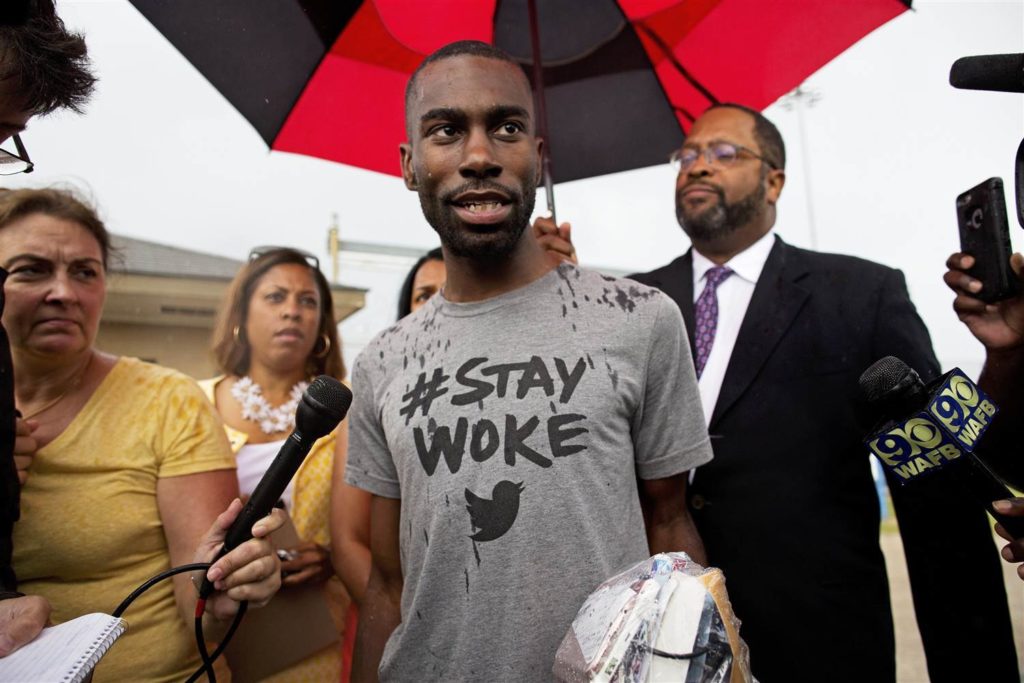
Six months into Hillary Clinton‘s presidential campaign, she met with a group of Black Lives Matter activists in Washington to make her case and seek their support. DeRay Mckesson left disappointed, feeling Clinton lacked a grasp of the issues he had spent the previous year protesting in cities like Ferguson, Missouri, and Baltimore, including police brutality and income inequality. He came out of the October 2015 meeting unwilling to support her publicly. On Wednesday, though, The Washington Post published an op-ed by Mckesson announcing his plans to vote for her after meeting again with her last week in Cleveland. He said he heard a candidate well-versed in the things that matter to him. “There was no platform the first time,” the 31-year-old Mckesson said in a telephone interview. “There is a platform now. I reflected on the things I’ve heard her say, commit to and seen in writing, and that’s how I came to my decision.” A growing number of black millennials who were initially skeptical of Clinton – questioning her commitment to end mass incarceration, confront racial bias in policing and repudiate her husband’s tough policies on welfare and crime during the 1990s – now support her. Some do so enthusiastically, others pragmatically, because they find Donald Trump so repugnant with his talk of violence in “inner cities” and the need for “law and order.” But other activists are still not convinced that Clinton will address their priorities and are withholding their votes and public support as she makes a final push to enlist a group seen as key to her path to victory in November. “It’s a challenge and we’re just facing it head-on,” said Clinton aide Christopher Huntley, who focuses on millennials. He said the candidate is mounting a full-court press to reach young black voters and is being helped by “folks who have been skeptical now realizing and coming to that ‘Aha!’ moment that she’s the best one to carry our water.” Clinton’s platform includes establishing national guidelines on police use of force; police training in recognizing implicit bias; legislation to end racial profiling; increased funding for body cameras; sentencing reform; and federal aid to create jobs for young people, ex-convicts and small businesses in poor communities. To help make her case to black voters, she has enlisted the Mothers of the Movement, a group of black women who have lost children to violence. They include the mothers of Trayvon Martin and Michael Brown. The mothers joined Clinton on the campaign trail in North Carolina last weekend. Clinton is also reaching out to Black Lives Matter activists, several of whom have social media platforms that give them tremendous influence, and is campaigning at historically black colleges, deploying surrogates like New Jersey Sen. Cory Booker and tapping the likes of rapper Jay-Z to perform a get-out-the-vote concert. On her 69th birthday on Wednesday, Clinton stopped by “The Breakfast Club,” a popular urban radio show. Over the weekend, she tweeted a shout-out to historically black Howard University, which was celebrating its homecoming. According to a new GenForward poll of Americans ages 18 to 30, 49 percent of blacks say they will definitely vote in November. That’s similar to the percentage of all young people. Eighty percent of the likely black voters say they plan to cast their ballots for Clinton, versus 4 percent for Trump. Clinton has enjoyed strong support from older African-Americans, particularly in the South, where she defeated primary rival Bernie Sanders with 77 percent of the overall black vote in states with exit polling. But in the GenForward poll, black millennials reported supporting Sanders over Clinton during the primary season 46 to 28 percent. In endorsing Clinton last week in an Elle magazine interview, Brittany Packnett – a St. Louis organizer who was also at both Clinton meetings – voiced some of the conflict felt by young black voters during the election season. “These young people are understandably asking, ‘What is the point of continuing to participate in this system that assaults me?’” Packnett said. “I have been wrestling with the same frustrations, but I have a responsibility to young people, to my community and to our work. The best way I can use my platform is to support Secretary Clinton.” Many black millennials had doubts about Clinton early in the campaign because of a 1996 speech in which she referred to young “super-predators” in the black community. She has since apologized for the remark. In a heated moment on the campaign trail in April, Philadelphia activist Erica Mines confronted former President Bill Clinton about his support for welfare reform that activists say punished poor people and a crime bill that put many blacks behind bars. Mines said she plans to vote for an independent next month. “I do not believe she is someone who can be trusted,” Mines said of Clinton. “She has been pushed because of Bernie Sanders to be more left than she has in the past. I do not trust her to do what is right for our communities. I only hear her talk about the middle class, which is not representative of those living at or below the poverty line.” Ferguson protester Johnetta Elzie said Clinton has done nothing to earn her endorsement. Elzie was among the protesters who met with Clinton in October 2015, but did not meet with her last week. “There is no way I could promise to black people that she’s not going to be horrible for us,” she said. “That’s not the hill I want my credibility to die on. I’m not going to guilt-trip people. I’m encouraging people to vote however you want on Nov. 8 – or don’t vote.” Republished with permission of the Associated Press
Police shooting affects presidential politics in Charlotte
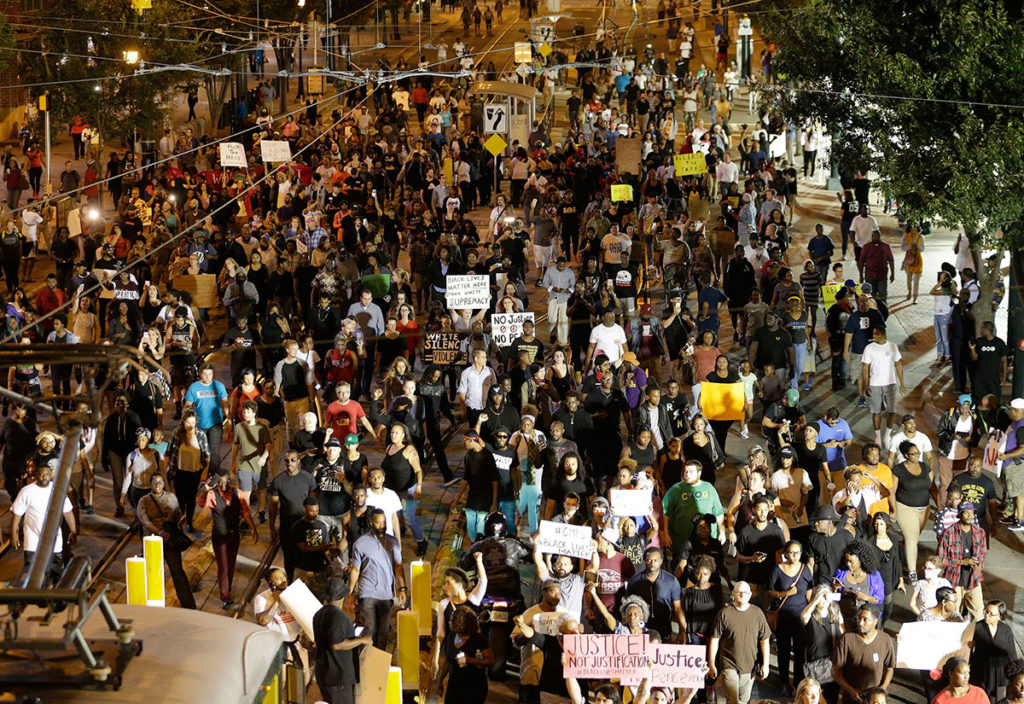
The killing of a black man by a Charlotte police officer, and the sometimes violent protests that followed, have intensified the political divide in a state crucial to deciding whether Hillary Clinton or Donald Trump wins the presidency. Republicans and Democrats alike say the killing of Keith Lamont Scott will energize both parties’ strongest supporters in a presidential battleground state that also has competitive races for governor and the U.S. Senate. Both camps are citing the case as they push familiar arguments on race relations, law enforcement and social unrest. “Both sides think they are right in this,” says Dee Stewart, a Republican consultant in North Carolina. “This all fits very well with Trump’s argument of ‘law and order’ and respecting our officers. It fits with the left’s narrative that anytime law enforcement acts with force in certain communities, it should be viewed with suspicion.” It’s unclear if or how Scott’s killing and its aftermath will affect undecided voters, but even subtle shifts in support can be crucial. Polls show a tight race in a state that Barack Obama barely lost in 2012 after barely winning in 2008. In the state-by-state contest for the presidency, it’s difficult to see how Trump can win the presidency without capturing North Carolina. Scott, 43, was shot Sept. 20 standing outside his vehicle. Police maintain he was armed. Video released by Charlotte-Mecklenburg authorities was inconclusive. The officer who shot Scott is also black. Both Trump and Clinton had planned appearances in Charlotte in the days after Scott’s death, but both canceled them. Trump has said little specifically about Scott and the Charlotte protests, beyond calling the situation “tragic.” But at Monday’s debate, he again cast himself as the “law-and-order” candidate. He chided Clinton for avoiding the same phrase, and he renewed his endorsement for the kind of “stop-and-frisk” police practices that critics deride as racial profiling. Clinton has campaigned extensively with Mothers of the Movement, a group of African-American women, some of whose sons have been killed by police. She called for Charlotte police to release their videos of the shootings before they had done so. Clinton also held a phone call with black pastors in the area. She campaigned Tuesday in the state capital, Raleigh, where she urged caution and said “there’s still a lot we don’t know” about Scott’s death and the police killing of Terence Crutcher four days earlier in Tulsa, Oklahoma. Throughout her campaign, Clinton has argued the United States must confront “systemic racism” in its law enforcement and criminal justice structure. Trump’s running mate Mike Pence has described that as “rhetoric of division” and declared that “the men and women of law enforcement are a not a force for racism in this country; they’re a force for good.” Alma Adams, a Democratic congresswoman whose district includes parts of Charlotte, said Clinton’s approach will appeal to African-American voters, millennials and others concerned about police practices. “They’re going to be looking for answers at the polls,” she said in an interview. Adams added that Trump’s rhetoric will stoke the Democratic base, pointing specifically to his comments a day after violent Charlotte protests dominated the news. Trump said “drugs are a very, very big factor in what you’re watching on television at night.” His campaign later said he was talking about America’s drug problem in general, not the protests. Still, Trump’s comments could influence voters like 19-year-old Niesy Figueroa, a student who said she knows some of Scott’s extended family and participated in peaceful protests. Figueroa said she’s not thrilled with casting her first presidential ballot for Clinton, but said Trump’s Charlotte reaction helps her get over her “hurt” that Bernie Sanders lost the Democratic nomination. “Trump? No,” Figueroa said. “He just seems a little racist.” Dallas Woodhouse, executive director of the state Republican Party, concedes that Democrats can add the Scott case to the argument aimed at their base. But he argues that the television images of the protests and Democratic rhetoric about police are more important to independent and moderate whites than anything Trump says about protesters. “Democrats come across always pointing the finger at police,” Woodhouse said. He recalled a scene at the Carolina Panthers football game Sunday in Charlotte, where he said he watched scores of fans seek out law enforcement officers. “This is still a Southern state, a cordial state, a state that has people lined up to thank the police because they think they are being unfairly maligned.” Republished with permission of the Associated Press.
Former Miss Alabama suspended from Miami TV station after calling Dallas shooter a ‘martyr’
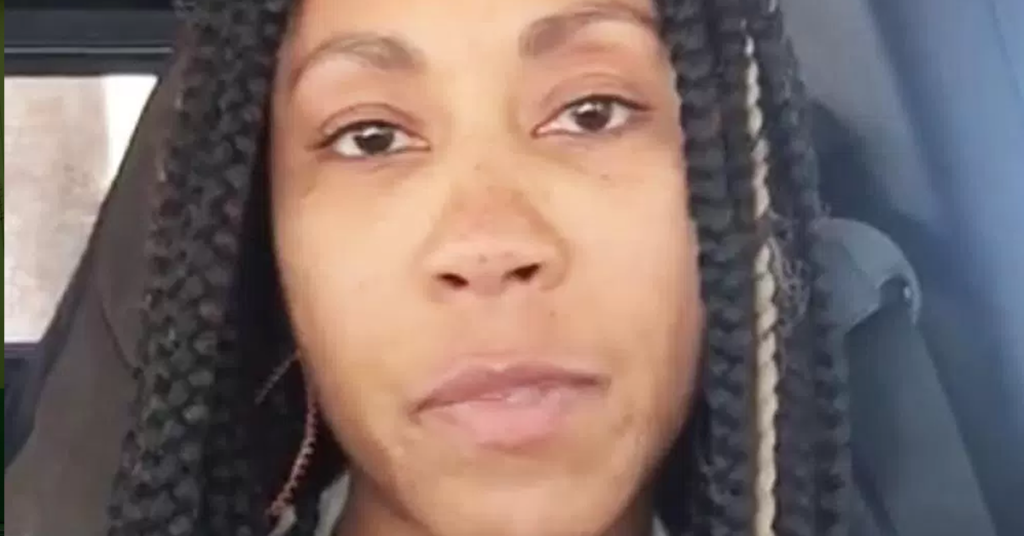
The first African-American Miss Alabama has been placed on administrative leave from her job at a Miami television station after she called the man who shot and killed five Dallas police officers during a Black Lives Matter protest on Thursday a “martyr” on social media. Kalyn Chapman James, who was crowned in 1993, posted an emotional video from her vehicle on her Facebook page Sunday explaining that, while she doesn’t want to “feel this way,” she finds it difficult to be sad for the fallen police officers and “can’t help but feeling like the shooter was a martyr.” “And I know it’s not the right way to feel because nobody deserves to lose their lives,” she said in the two-minute video. “But I’m so torn up in my heart about seeing these men, these black men, being gunned down in our community …. I wasn’t surprised by what the shooter did to those cops and I think a lot of us feel the same way and I know it’s not right and I definitely don’t condone violence against innocent people.” The local Florida television station James works for as a host, WPBT2, placed her on administrative leave in the wake of video and issued a statement on its Twitter account Monday afternoon stating, “WPBT2 South Florida PBS does not condone the personal statements made by one of its independent contractors regarding the events in Dallas.” The station did not name James directly. According to the station’s post, it “placed the contractor on administrative leave while it actively and carefully looks further into the matter and will determine additional course of actions based on its thorough review of the matter.” James’ comment has not come without other consequences as well. James told Alabama TV station WPMI there are now “people telling me to watch my back, people telling me to be careful, people telling me the police should never protect me.” James has since apologized for her comments, telling WPMI, “I apologize to anyone who was offended by my comments — my heart was not filled with hate.” You can watch James’ Facebook video, which is still up on her Facebook page, below:
Minn. cop fatally shoots black man during traffic stop, stirs social media outrage
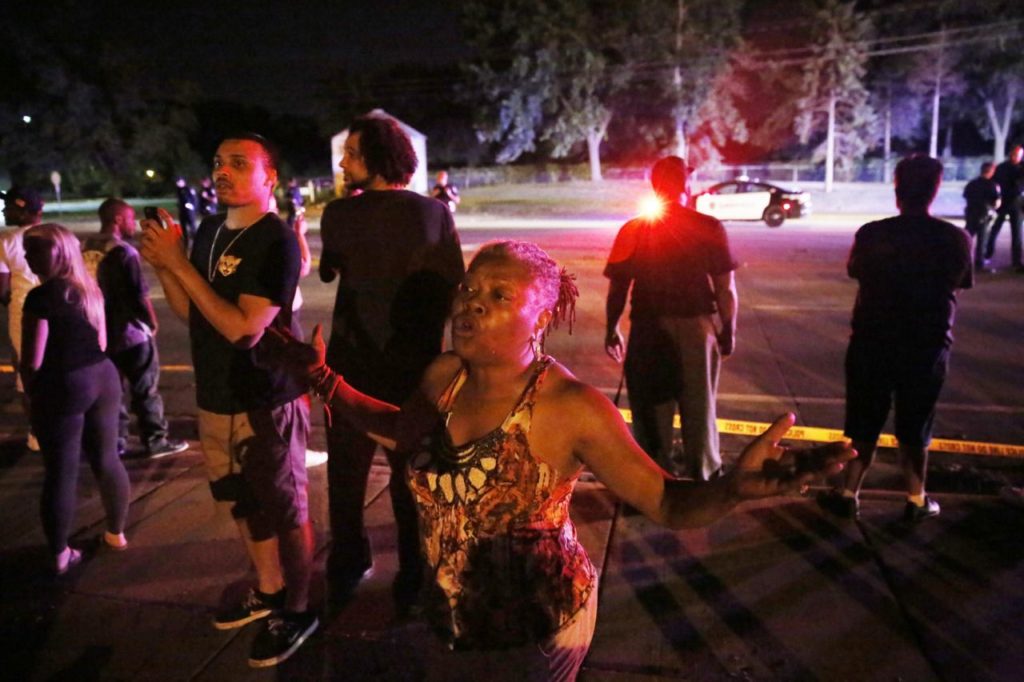
The fatal shooting of a black man in his car by a Minnesota police officer went viral Thursday, its aftermath broadcast live over Facebook by the victim’s girlfriend, who cried that he had just been shot “for no apparent reason.” The shooting happened late Wednesday during a traffic stop in the St. Paul suburb of Falcon Heights. The interim police chief in nearby St. Anthony, Jon Mangseth, said he was aware of the video but had not seen it. In the video, the woman describes being pulled over for a “busted tail light” and says her boyfriend had told the officer he was carrying a gun for which he was licensed. She says he was shot as he reached for his wallet. The video appeared to be genuine, but The Associated Press could not immediately verify it with family members, and authorities did not confirm its authenticity. As word of the shooting spread, relatives of the man joined scores of people who gathered at the scene and outside the hospital where he died. They identified him as Philando Castile of St. Paul, a cafeteria supervisor at a Montessori school. Castile’s girlfriend said Thursday that he was killed even though he complied with the officer’s instructions. Diamond Reynolds told reporters that Castile did “nothing but what the police officer asked of us, which was to put your hands in the air and get your license and registration.” Speaking to CNN early Thursday, Castile’s mother said she suspected she would never learn the whole truth about her son’s death. “I think he was just black in the wrong place,” Valerie Castile said, adding that she had underlined to her children that they must do what authorities tell them to do to survive. “I know my son … we know black people have been killed … I always told them, whatever you do when you get stopped by police, comply, comply, comply.” Castile’s exact age was not immediately clear. Relatives said he was 32. Reynolds said he was to turn 35 later this month. Police did not release any details about the officer who fired except to say he had been placed on paid administrative leave. Reynolds described him as Asian. It was the second fatal shooting this week, coming only days after a black 37-year-old man was killed by officers in Baton Rouge, Louisiana. Alton Sterling‘s death was caught on video. On Wednesday, the Justice Department launched a civil rights investigation into Sterling’s shooting, which took place after he scuffled with two white police officers outside a convenience store. In a written statement, Minnesota Gov. Mark Dayton said he asked the White House to begin a Justice Department probe into Castile’s death. The state Bureau of Criminal Apprehension opened its own independent investigation overnight, he said. Castile’s cousin, Antonio Johnson, told the Star Tribune that because Castile was a black man driving in a largely middle-class suburb, he “was immediately criminally profiled and he lost his life over it.” The site of the shooting in Falcon Heights is close to the Minnesota State Fairgrounds and not far from a clutch of fields associated with the University of Minnesota’s agricultural campus. Late Wednesday, protesters moved to the governor’s mansion in nearby St. Paul, where around 200 people chanted and demanded action from Dayton, a Democrat. By daybreak, around 50 protesters remained outside the mansion despite a light rain. The video posted Wednesday night on Facebook Live shows the woman in a car next to a bloodied man slumped in a seat. A clearly distraught person who appears to be an armed police officer stands at the car’s window, telling the woman to keep her hands where they are and intermittently swearing. Mangseth said he was “made aware there was a livestream on Facebook” but that he did not know anything about its contents. In the video, the officer tells her to keep her hands up and says: “I told him not to reach for it. I told him to get his hand out.” “You shot four bullets into him, sir. He was just getting his license and registration, sir,” the woman responds. The video goes on to show the woman exiting the car and being handcuffed. A young girl can be seen and is heard saying at one point, “I’m scared, Mommy.” The woman describes being put in the back seat of the police car and says, “The police just shot my boyfriend for no apparent reason.” A handgun was recovered from the scene, police said. Clarence Castile spoke to the Star Tribune from the Hennepin County Medical Center, where he said his nephew died minutes after arriving. He said Philando Castile had worked in the J.J. Hill school cafeteria for 12 to 15 years, “cooking for the little kids.” He said his nephew was “a good kid” who grew up in St. Paul. Minnesota court records online show Castile had some misdemeanor violations, mainly related to driving. The president of the Minneapolis NAACP, Nekima Levy-Pounds, told the crowd she has no faith in the system in the wake of this and other police shootings of black men. “I’m tired of the laws and policies on the books being used to justify murder,” Levy-Pounds, a civil rights attorney, said as rain began to fall. “This is completely unacceptable. Somebody say, ‘Enough is Enough.’” Republished with permission of the Associated Press.
Hillary Clinton now faces struggle to win back younger voters

Standing in a line of thousands outside an arena at Colorado State University, Aleksandr Cronk contemplated the grim possibility that the man he was waiting to see, Bernie Sanders, may not make it to the November ballot and he’d have to decide whether to vote for Hillary Clinton. Like millions of young voters nationwide, Cronk has been electrified by Sanders’ longshot bid for the Democratic presidential nomination. Even as Clinton has racked up a commanding lead in the contest, she’s overwhelmingly losing voters between ages 18 and 29 in early-voting states. Her lukewarm reception among people like Cronk points to a challenge for her in November, should she win the nomination. Overwhelming support from young voters twice helped secure the White House for Barack Obama. “I don’t think there’s going to be a lot of change” if Clinton wins, said Cronk, 21. Like many younger voters, he’s especially alarmed by income inequality, the issue that Sanders has made a centerpiece of his campaign. “The Clintons don’t really stand in that position very well. Clinton’s weakness with younger voters has stood out consistently this year — she lost Democratic primary voters who are aged 18 to 29 by 70 points in Iowa, 68 points in New Hampshire and 25 points on Super Tuesday, when she won seven of the 11 states in play for Democrats. “Hillary’s weakness with millennials has to be very worrisome for the Democratic Party,” said Simon Rosenberg, president of the New Democrat Network, a center-left advocacy group. “What you’re seeing is the millennial generation has essentially seceded from the Democratic establishment.” Obama’s presidential campaigns showed the power of voters under 30, who gave him 2-1 support in both 2008 and 2012. In 2016, even more millennials than Baby Boomers are eligible to vote, and they make up a large share of potential voters in battleground states such as Ohio, Pennsylvania and Iowa, demographers say. For months, Clinton tried to connect with younger voters through famous supporters such as singer Katy Perry and actor Lena Dunham. She embraced the anti-police-brutality movement Black Lives Matter, spearheaded by young African-Americans, and vowed to expand President Obama’s deportation relief for young people in the country illegally and their families. She promised debt-free college for all, only to be one-upped by Sanders’ pledge of free college for all. Clinton has acknowledged she’s fallen short, saying she has to work harder to convince young people she will help them. When an Iowa college student asked her in January why so many other youths found her dishonest, Clinton blamed decades of Republican attacks. “I have been around a long time and people have thrown all kinds of things at me and I can’t keep up with it,” replied Clinton. “If you are new to politics and it’s the first time you’ve really paid attention, you go, ‘Oh my gosh, look at all of this.’” Joelle Gamble of the Roosevelt Institute, a liberal New York think-tank, said young voters are increasingly distrustful of institutions like political parties. She noted that, on the Republican side, many have rallied around Texas Sen. Ted Cruz, who boasts of how hated he is by Washington Republicans. “I don’t think there’s any one candidate that can fix this,” she said. Sanders, a socialist senator who was an independent until launching his quixotic Democratic primary run last year, has come the closest. His call for a political revolution has reached people like Daniel Harty, a 21-year-old computer science student in Las Vegas who once saw himself as a libertarian but registered as a Democrat to support Sanders. Should Clinton be the nominee, Harty said, he’d never back her. “Hillary Clinton doesn’t seem like a genuine person,” Harty said. “She changes her opinions based on what’s politically expedient.” Jay Morris, 24, of Oklahoma City, has $72,000 in student debt and no job. A Sanders supporter, he said he’d never back Clinton. “I think she’s completely entrenched in the political machine,” he said. “I just wouldn’t vote.” Michelle Williams, 20, a natural resources student, didn’t pay attention to politics until the hashtag #FeeltheBern began popping up in her social media feeds. She was excited to see Sanders speak in Fort Collins. “He keeps it real about how America truly is,” she said. But she would drop out of politics if the nominee were Clinton. “She’s weird,” Williams said. Cronk has a running debate with his parents about his support of Sanders. They’re Clinton voters, fearful of what Republicans could do to Sanders in a general election. Cronk, on the other hand, was in elementary school when a Republican last won a presidential election and believes the increasing divide between the wealthy and everyone else demands dramatic action. He worries whether he’ll be able to have the same life as his parents, a librarian and part-time teacher who own a house in a nice San Diego, California, neighborhood. “To see how quickly the gap is increasing is kind of scary,” he said. Cronk said that, if it came down to it, he’d vote for Clinton in a general election. She’d be better than whoever emerges from the Republican primary, he said. “You feel kind of forced.” Republished with permission of the Associated Press.
