
Katie Britt backs bipartisan legislation to solidify American sanctions on Iran
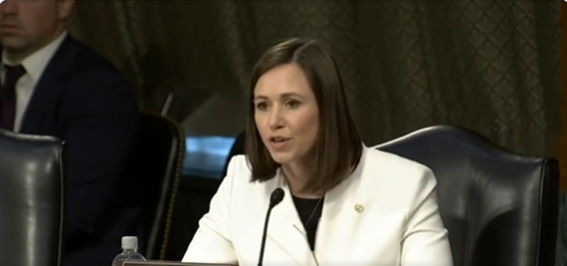
U.S. Senator Katie Britt recently joined Presidential candidate U.S. Senator Tim Scott (R-South Carolina) and Senators Maggie Hassan (D-New Hampshire), Bill Hagerty (R-Tennessee), and Jacky Rosen (D-Nevada) in cosponsoring the Solidify Iran Sanctions Act (SISA) to make permanent the Iran Sanctions Act of 1996. “This legislation sends an important bipartisan message to Iran that the United States will not tolerate continued threats to American national security,” said Sen. Britt. “Peace is achieved through strength. We must stand firm against bad actors and ensure that, first and foremost, our homeland is protected against aggression. I will always fight for America’s safety, and this act is a strong step to safeguard our nation’s future.” “As evidenced by the recent Iranian-backed drone strike in Syria that tragically killed South Carolinian Scott Dubis and the recent seizure of a U.S.-bound oil tanker, it is clear that Iran continues to engage in destabilizing activities that threaten the safety of America, Israel, and our other partners in the region,” Sen. Scott said. “Cementing these sanctions will apply pressure on Iran and help restrain this regime from developing weapons that threaten safety and security around the world.” “We must do everything that we can to prevent Iran from building a nuclear weapon and stop its support of terrorism,” said Sen. Hassan. Cementing these sanctions would advance national security by restraining Iran from engaging in malign activities that threaten the United States and its allies. SISA would also ensure that America’s sanctions regime continues to apply pressure on Iran amid its continuing dangerous nuclear escalation. In 1996, Congress passed the Iran Sanctions Act (ISA), which allowed the president to impose secondary sanctions on Iran’s energy sector. Throughout the years, ISA provisions were expanded to include other Iranian industries. ISA consists of “triggers” that place sanctions on firms or entities that violate U.S. sanctions under this law. As Iran continues its nuclear enrichment towards a weapons-grade level, it is essential that the United States solidifies its pivotal sanctions to apply pressure toward the rogue regime. The Solidify Iran Sanctions Act removes the sunset provision in the ISA and signals that the U.S. remains firmly committed to sanctioning the regime until it changes its malign behavior. A companion bill was introduced in the House of Representatives by Rep. Michelle Steel (R-California), Rep. Michael McCaul (R-Texas), the Chairman of the House Committee on Foreign Affairs, and Rep. Susie Lee (D-Nevada). There were international sanctions on Iran, but those went away in the Iran nuclear deal negotiated during the Obama administration. President Donald Trump reimposed U.S. sanctions, but the rest of the international community did not follow America’s lead. President Joe Biden has made some overtures towards negotiating a new deal with Iran, but Iran has not been receptive. U.S. Secretary of State Antony Blinken said on Wednesday that there was no nuclear deal with Iran on the table. “There is no agreement in the offing, even as we continue to be willing to explore diplomatic paths,” Blinken said at the Council on Foreign Relations in New York. “We’ll see by their actions.” Blinken called on Iran to “not take actions that further escalate the tensions” with the United States and the Middle East. Katie Britt was elected to the U.S. Senate in 2022 To connect with the author of this story or to comment, email brandonmreporter@gmail.com.
Ted Cruz calls for special counsel to investigate Attorney General Merrick Garland
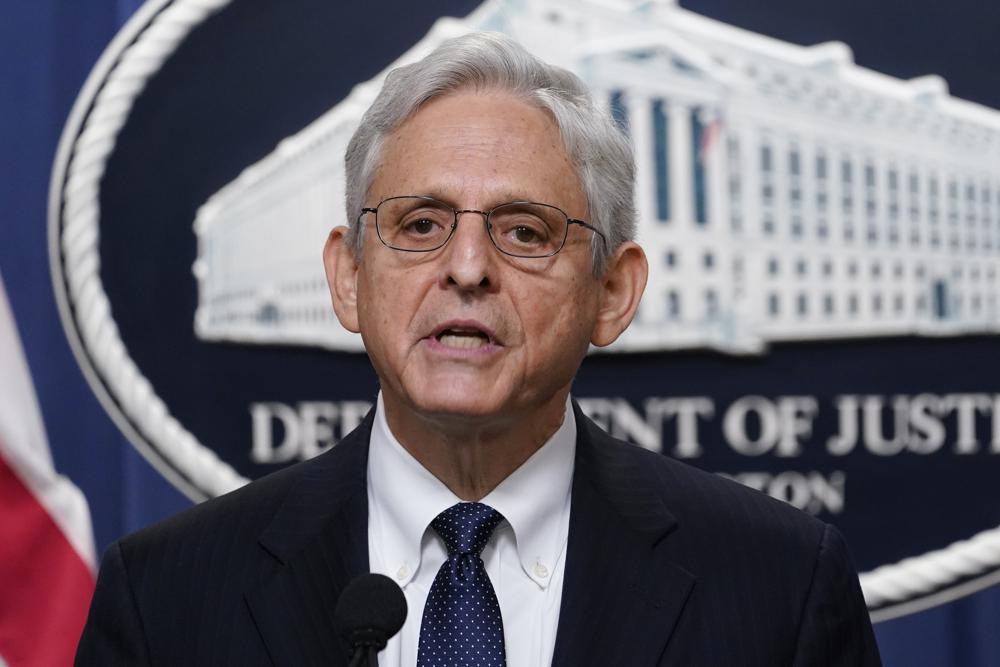
U.S. Sen. Ted Cruz, R-Texas, is calling for a special counsel to investigate Attorney General Merrick Garland over perjury and obstructing justice claims. Cruz did so as U.S. House Speaker Kevin McCarthy, R-California, said the House would begin an impeachment inquiry into Garland after IRS whistleblowers came forward to members of Congress alleging Garland blocked an investigation into Hunter Biden, President Joe Biden’s son, and lied about it under oath. McCarthy tweeted, “We need to get to the facts, and that includes reconciling these clear disparities. U.S. Attorney David Weiss must provide answers to the House Judiciary Committee. If the whistleblowers’ allegations are true, this will be a significant part of a larger impeachment inquiry into Merrick Garland’s weaponization of the DOJ.” IRS whistleblower Gary Shapley testified before Congress that the U.S. Attorney in charge of an investigation into Hunter Biden, David Weiss, said he wanted to bring charges but was prevented from doing so by Garland. McCarthy also told Fox News the inquiries would start by July 6. In his podcast, “Verdict with Ted Cruz,” on Monday, Cruz said, “The evidence is mounting and mounting and mounting … it is getting so bad even the corrupt corporate media cannot ignore this anymore.” Cruz played a clip of Garland saying at a news conference, “I certainly understand that some have chosen to attack the integrity of the Justice Department … by claiming that we do not treat like cases alike,” referring to what senators have argued when comparing how President Biden and former President Donald Trump have been treated by the department. “Nothing could be further from the truth. We make our cases based on the facts and the law,” Garland said. Cruz said Garland is “the one who has politicized this process and is burning down the integrity of the Department of Justice to the ground. The people accusing him work for him … they are his own … employees, and they’re … mad.” Cruz said Garland’s response was self-righteous and compared him to a despot. He also said what Garland said was “objectively false: ‘We use the same standards for everyone.’ Well, OK, you’re name is Biden you can have classified documents everywhere … but if you’re Trump, we’re sending in the stormtroopers.” “It’s time the Department of Justice needs to appoint a special counsel to investigate Merrick Garland for obstruction of justice and perjury,” he said. Cruz cited Shapley’s testimony, which indicated that Garland committed perjury and lied under oath to Congress. Garland then removed him from the case, which Cruz said is illegal and needs to be investigated. Cruz called for an investigation after he previously called out the deputy director of the FBI over bribery allegations related to both the president and his son, and is still demanding answers. Cruz also welcomed the House impeachment inquiry, saying, “There is serious evidence that Merrick Garland lied to me, under oath, when I questioned him about his role in obstructing the Hunter Biden probe.” When asked by Newsmax’s James Rosen about the accusations, White House spokesman John Kirby walked out of the room and wouldn’t answer questions. At another press briefing, when similar questions were asked, another White House spokesperson said she didn’t know what the reporters were referring to and didn’t have a comment. When asked if the White House believed Garland committed perjury, she smirked and made several facial expressions, shaking her head, and said, “I don’t have any comment on this.” Republished with the permission of The Center Square.
Rivalry between Donald Trump and Ron DeSantis deepens with dueling New Hampshire campaign events
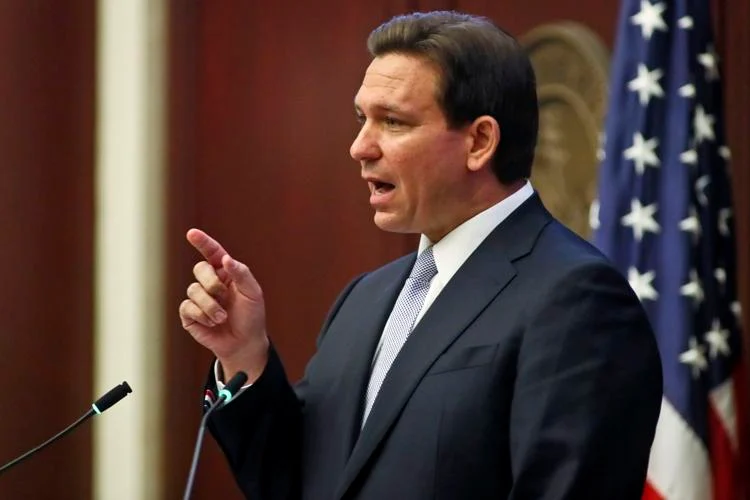
The rivalry between Florida Gov. Ron DeSantis and former President Donald Trump deepened Tuesday as the two leading Republican White House candidates mocked each other during dueling events in the critical early voting state of New Hampshire. Addressing a town hall in Hollis, DeSantis vowed to “actually” build the U.S.-Mexico border wall that Trump tried but failed to complete as president. He also pledged to tear down Washington’s traditional power centers in ways that Trump fell short. Speaking later at a Republican women’s luncheon in Concord, Trump countered that DeSantis was being forced to settle for second place in the primary and accused the governor of supporting cuts to Social Security, Medicare, and other entitlement programs as a way to tame federal spending. Beyond the rhetoric, the conflicting events demonstrated each candidate’s evolving strategy. DeSantis took extensive audience questions — a trademark in New Hampshire politics that he eschewed during his previous visit to the state, drawing criticisms that he was stilted and overly scripted. Trump, meanwhile, offered a free-wheeling speech for more than an hour. He didn’t take questions in Concord, and reporters covering the event were confined to a pen, chaperoned to the bathroom, and told they could not speak to attendees in the conference center ballroom or even in the hallways. But the former president answered questions at a subsequent stop in Manchester, where he opened his New Hampshire campaign office. DeSantis, asked about people who had twice voted for Trump because of his promises to “drain the swamp” in Washington, used his answer to draw some of his sharpest contrasts yet with the former president. “He didn’t drain it. It’s worse today than it’s ever been,” DeSantis said. He added that such promises don’t go far enough because a subsequent president “can just refill it.” “I want to break the swamp,” DeSantis said, pledging to take power out of Washington by instructing Cabinet agencies to halve the number of employees there. DeSantis has tried to gain ground on Trump by questioning the former president’s continued hold on the national Republican party. At his town hall, the governor slammed the GOP’s “culture of losing” under Trump and mentioned the “massive red wave” that many in the GOP predicted but that never materialized nationally in last year’s midterm elections. “We had a red wave in Florida,” DeSantis said, noting he easily won reelection last fall. “But that’s because we delivered results in Florida.” Many leading Republicans remain fiercely loyal to Trump, but there is some evidence that the attacks against the former president are resonating. Speaking about Trump on Tuesday, House Speaker Kevin McCarthy, a California Republican, said, “Can he win that election? Yeah, he can win that election.” “The question is, is he the strongest to win the election?” McCarthy continued on CNBC’s “Squawk Box.” “I don’t know that answer.” He clarified later in the day to the conservative news outlet Breitbart that Trump “is stronger today than he was in 2016.” In his own speech, Trump noted that polls show him with large primary leads. He seized on DeSantis saying that, while Social Security and other programs need to be guaranteed for older adults, there may be work “in a bipartisan way to figure out how do you strengthen this” when it comes to younger people. “You can bet he’ll be doing it later,” Trump said of cuts to the programs. “And he’ll be doing it to you.” Trump also vowed to “drain the swamp once and for all” but used the slogan more to criticize President Joe Biden than the Florida governor. “You can’t drain the swamp if you’re part of the swamp, and Joe Biden and other opponents, many of them, are all owned, controlled, bought and paid for, 100%,” Trump said. The former president also largely echoed DeSantis’ sentiments in promising that “this election will be the end of the world for the corrupt political class in our nation’s capital.” DeSantis was also asked about the pro-Trump mob that overran the U.S. Capitol in January 2021, and responded, “If it’s about relitigating things that happened two or three years ago, we’re going to lose.” “I had nothing to do with what happened that day. Obviously, I didn’t enjoy seeing it,” DeSantis said. “But we’ve got to go forward on this stuff. We cannot be looking backwards.” That, too, clashed with Trump, who repeated baseless claims Tuesday that he was denied a second term by election fraud. Numerous federal and local officials, a long list of courts, top former campaign staffers, and even Trump’s own attorney general have all said there is no evidence of the fraud he alleges. The candidates’ simultaneous visits highlighted the role that New Hampshire, the first-in-the-nation GOP primary state, will play in deciding the next Republican presidential nominee. Much of the focus of the early primary has been on Iowa and South Carolina, where evangelical Christians are dominant. Spending time in New Hampshire, by contrast, gives the candidates were testing their messages in front of a more libertarian-leaning electorate. Trump’s first-place finish in New Hampshire’s 2016 Republican primary, after losing Iowa to Texas Sen. Ted Cruz, helped propel him to party dominance. But his Democratic rivals won the state in the 2016 and 2020 general elections. Before his speech Tuesday, Trump announced that his New Hampshire team features 150-plus dedicated activists and organizers throughout the state’s 10 counties. Sabrina Antle, from the town of Henniker, said she couldn’t afford to attend the Concord lunch. She and her 9-year-old daughter tried to see the former president later in Manchester, but that event reached capacity before they got in. “I’m a Trumper, but I wouldn’t be upset with Ron DeSantis because I think he’d do a stand-up job,” Antle said. “I just don’t know if he has the attitude Trump has, just the assertiveness.” DeSantis’ campaign angered some members of the New Hampshire Federation of Republican Women by scheduling his town hall around the same time Trump was addressing the group’s luncheon. It called DeSantis’ event “an attempt to steal focus from” its
Rep. Gary Palmer says Hunter Biden deal exposes ‘glaring double standard of justice’ at DOJ
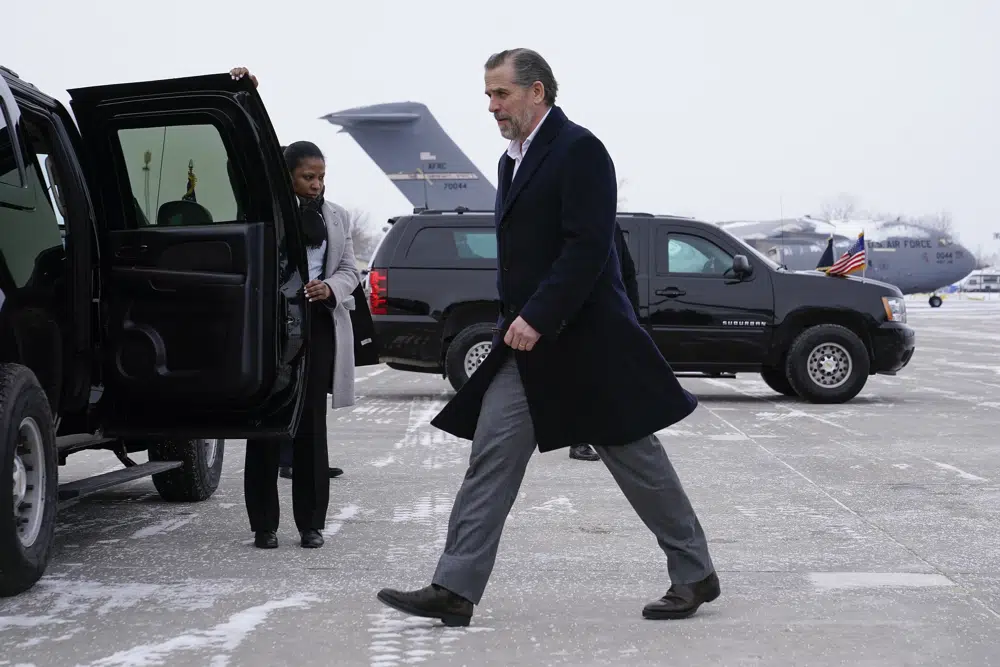
On Tuesday, it was announced that President Joe Biden’s son, Hunter Biden, had negotiated a plea deal with the Department of Justice in which he will plead guilty to tax crimes. According to the court, he has also reached a diversion agreement on a weapons charge. The plea deal, which a judge must accept, will likely help Hunter Biden avoid serving any time in jail. Following the announcement of the Department of Justice and Hunter Biden’s plea deal regarding tax evasion and gun crimes, Congressman Gary Palmer (R-AL06) expressed his disappointment with the deal. “The Department of Justice continues to show just how politicized it has become with plea deals like the one Hunter Biden received,” said Rep. Palmer. “His crimes were serious, but he was given punishment reeking of political favoritism. All of this is happening while the Biden Administration pushes gun rules to make law-abiding veterans and other innocent civilians into felons overnight, while Hunter Biden knowingly broke the law to purchase a gun. Tax evasion and the illegal purchase of a gun are felonies with penalties that would not be waived for the average American. While Hunter Biden may have been given a plea deal version of a “Get Out of Jail Free” card, he still faces far more serious allegations. The House Committee on Oversight will continue to investigate the alleged bribery schemes using his father’s influence as Vice-President to make millions for the Biden family. Unlike the politicized Justice Department’s unserious investigation, the Oversight Committee will continue to follow the evidence, and the evidence will speak for itself.” Congressman Jerry Carl (R-AL01) agreed. “Broken Justice system,” Carl wrote on Twitter. “Our best hope for holding the Bidens accountable for their years of corruption and involvement in pay for play schemes is through the investigation being done by @RepJamesComer and @GOPoversight.” Broken Justice system. Our best hope for holding the Bidens accountable for their years of corruption and involvement in pay for play schemes is through the investigation being done by @RepJamesComer and @GOPoversight. https://t.co/Zq9po2CJPX — Rep. Jerry Carl (@RepJerryCarl) June 20, 2023 Carl shared a tweet by Rep. James Comer in which the Kentucky Republican wrote: “Hunter Biden is getting away with a slap on the wrist when growing evidence uncovered by the House Oversight Committee reveals the Bidens engaged in a pattern of corruption, influence peddling, and possibly bribery.” Former President Donald Trump was even more forceful in his response. “Wow! The corrupt Biden DOJ just cleared up hundreds of years of criminal liability by giving Hunter Biden a mere ‘traffic ticket.’ Our system is BROKEN!” Trump wrote on Truth Social. Trump was recently indicted by the DOJ for 37 counts of mishandling classified documents. Hunter Biden, age 53, has been under investigation for tax issues for over five years and reportedly paid off his tax debt in 2020 to avoid harsher consequences. “With the announcement of two agreements between my client, Hunter Biden, and the United States Attorney’s Office for the District of Delaware, it is my understanding that the five-year investigation into Hunter is resolved,” Biden attorney Christopher Clark said in a statement. “Hunter will take responsibility for two instances of misdemeanor failure to file tax payments when due pursuant to a plea agreement. A firearm charge, which will be subject to a pretrial diversion agreement and will not be the subject of the plea agreement, will also be filed by the Government.” “I know Hunter believes it is important to take responsibility for these mistakes he made during a period of turmoil and addiction in his life,” Clark said. “He looks forward to continuing his recovery and moving forward.” To connect with the author of this story or to comment, email brandonmreporter@gmail.com.
House censures Rep. Adam Schiff over Trump-Russia investigations

The House voted Wednesday to censure California Rep. Adam Schiff for comments he made several years ago about investigations into Donald Trump’s ties to Russia, rebuking the Democrat and frequent critic of the former president along party lines. Schiff, who will stand in front of the House while the resolution is read, becomes the 25th House lawmaker to be censured. He was defiant ahead of the vote, saying he will wear the formal disapproval as a “badge of honor” and charged his GOP colleagues of doing the former president’s bidding. “I will not yield,” Schiff, who is running for the Senate in his home state, said during debate over the measure. “Not one inch.” More than 20 Republicans voted with Democrats last week to block the censure resolution, but they changed their votes this week after the measure’s sponsor, Republican Rep. Anna Paulina Luna of Florida, removed a provision that could have fined Schiff $16 million if the House Ethics Committee determined he lied. Several of the Republicans who opposed the resolution last week said they opposed fining a member of Congress in that manner. The final vote was 213-209. The revised resolution says Schiff held positions of power during Trump’s presidency and “abused this trust by saying there was evidence of collusion between Trump’s campaign and Russia.” Schiff was one of the most outspoken critics of the former president as both the Justice Department and the Republican-led House launched investigations into Trump’s ties to Russia in 2017. Both investigations concluded that Russia intervened in the 2016 presidential election but neither found evidence of a criminal conspiracy. “Representative Schiff purposely deceived his Committee, Congress, and the American people,” the resolution said. Schiff, the former Democratic chairman of the House Intelligence Committee and the lead prosecutor in Trump’s first impeachment trial, has long been a top Republican political target. Soon after taking back the majority this year, Republicans blocked him from sitting on the intelligence panel. The House has only censured two other lawmakers in the last 20 years. Republican Rep. Paul Gosar of Arizona was censured in 2021 for tweeting an animated video that depicted him striking Rep. Alexandria Ocasio-Cortez, D-N.Y., with a sword. Former Democratic Rep. Charlie Rangel of New York was censured in 2010 for serious financial and campaign misconduct. The censure itself carries no practical effect, except to provide a historic footnote that marks a lawmaker’s career. But the GOP resolution would also launch an ethics investigation into Schiff’s conduct. While Schiff did not initiate the 2017 congressional investigation into Trump’s Russia ties — then-House Intelligence Committee Chairman Devin Nunes, a Republican who later became one of Trump’s most ardent defenders, started it — Republicans arguing in favor of his censure Wednesday blamed him for what they said was the fallout of that probe, and of the separate investigation started that same year by Trump’s own Justice Department. Luna said that Schiff’s comments that there was evidence against Trump “ripped apart American families across the country” and that he was “permanently destroying family relationships.” Several blamed him for the more than $30 million spent by then-special counsel Robert Mueller, who led the Justice Department probe. Schiff said the censure resolution “would accuse me of omnipotence, the leader of some a vast Deep State conspiracy, and of course, it is nonsense.” Democrats aggressively defended their colleague. Maryland Rep. Jamie Raskin, who led Trump’s second impeachment, called the effort an “embarrassing revenge tour on behalf of Donald Trump.” Mueller, who led the two-year Justice Department investigation, determined that Russia intervened on the campaign’s behalf and that Trump’s campaign welcomed the help. But Mueller’s team did not find that the campaign conspired to sway the election, and the Justice Department did not recommend any criminal charges. The House intelligence committee probe launched by Nunes similarly found that Russia intervened in the election but that there was no evidence of a criminal conspiracy. Schiff was the top Democrat on the panel at the time. Schiff said last week that the censure resolution was “red meat” that Speaker Kevin McCarthy was throwing to his conference amid squabbles over government spending. Republicans are trying to show their fealty to Trump, Schiff said. He said he warned the country during impeachment proceedings three years ago that Trump “would go on to do worse. And, of course, he did worse in the form of a violent attack on the Capitol.” After Democrats won the House majority in 2018, the House impeached Trump for abuse of power after he threatened to withhold military aid to Ukraine and urged the country’s president to investigate then-candidate Joe Biden. Schiff was the lead House prosecutor making the case for conviction to the Senate, arguing repeatedly that “right matters.” The Republican-led chamber ultimately acquitted him. Trump was impeached a second time a year later, after he had left office, for his role in the January 6, 2021, insurrection at the Capitol. The Senate again acquitted Trump. In the censure resolution against Schiff, Luna also cited a report released in May from special counsel John Durham that found that the FBI rushed into its investigation of Trump’s campaign and relied too much on raw and unconfirmed intelligence. Durham said investigators repeatedly relied on “confirmation bias,” ignoring or rationalizing away evidence that undercut their premise of a Trump-Russia conspiracy as they pushed the probe forward. But he did not allege that political bias or partisanship were guiding factors for the FBI’s actions. Trump had claimed that Durham’s report would reveal the “crime of the century” and expose a “deep state conspiracy” by high-ranking government officials to derail his candidacy and later his presidency. But the investigation yielded only one conviction — a guilty plea from a little-known FBI employee — and the only two other cases that were brought both ended in acquittals at trial. On Wednesday, just before the vote, Schiff’s campaign sent out a fundraising email that said Luna had introduced “yet ANOTHER resolution to censure me.” “The vote and debate will happen imminently,” the email read,
Hunter Biden will plead guilty in a deal that likely averts time behind bars in a tax and gun case
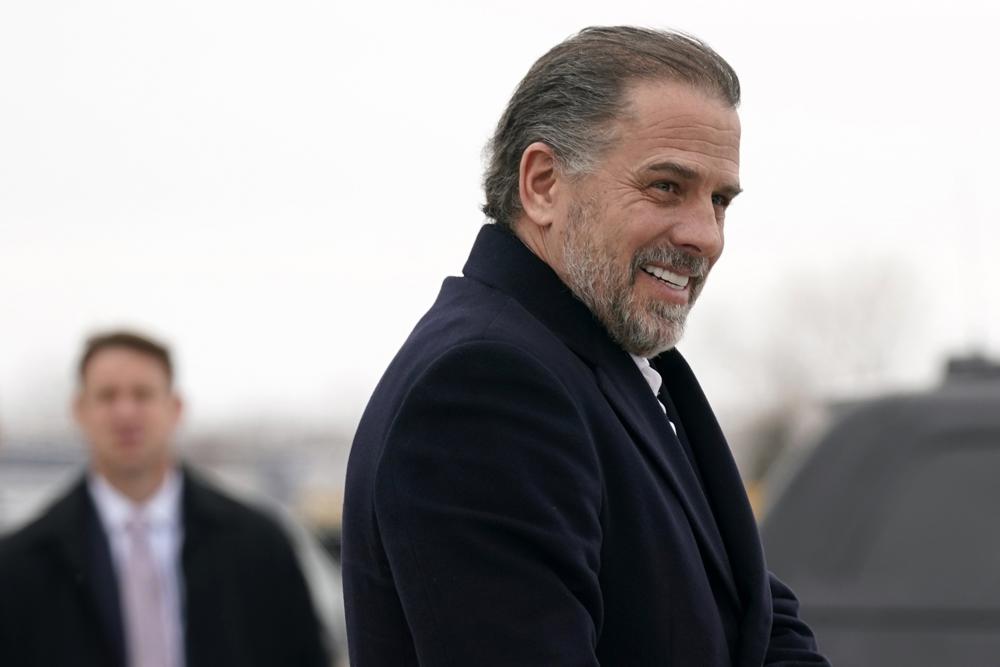
President Joe Biden’s son Hunter Biden will plead guilty to federal tax offenses but avoid full prosecution on a separate gun charge in a deal with the Justice Department that likely spares him time behind bars. Hunter Biden, 53, will plead guilty to the misdemeanor tax offenses as part of an agreement made public Tuesday. The agreement will also avert prosecution on a felony charge of illegally possessing a firearm as a drug user, as long as he adheres to conditions agreed to in court. The deal ends a long-running Justice Department investigation into the taxes and foreign business dealings of President Biden’s second son, who has acknowledged struggling with addiction following the 2015 death of his brother Beau Biden. It also averts a trial that would have generated days or weeks of distracting headlines for a White House that has strenuously sought to keep its distance from the Justice Department. The president, when asked about the development at a meeting on another subject in California, said simply, “I’m very proud of my son.” The White House counsel’s office said in a statement that the president and first lady Jill Biden “love their son and support him as he continues to rebuild his life.” While the agreement requires the younger Biden to admit guilt, the deal is narrowly focused on tax and weapons violations rather than anything broader or tied to the Democratic president. Nonetheless, former President Donald Trump and other Republicans continued to try to use the case to shine an unflattering spotlight on Joe Biden and to raise questions about the independence of the Biden Justice Department. Trump, challenging President Biden in the 2024 presidential race, likened the agreement to a “mere traffic ticket,” adding, “Our system is BROKEN!” House Speaker Kevin McCarthy compared the outcome to the Trump documents case now heading toward federal court and said, “If you are the president’s son, you get a sweetheart deal.” Florida Gov. Ron DeSantis, another presidential challenger, used the same term. Two people familiar with the investigation said the Justice Department would recommend 24 months of probation for the tax charges, meaning Hunter Biden will not face time in prison. But the decision to go along with any deal is up to the judge. The people were not authorized to speak publicly by name and spoke to The Associated Press on the condition of anonymity. He is to plead guilty to failing to pay more than $100,000 in taxes on over $1.5 million in income in both 2017 and 2018, charges that carry a maximum possible penalty of a year in prison. The back taxes have since been paid, according to a person familiar with the investigation. The gun charge states that Hunter Biden possessed a handgun, a Colt Cobra .38 Special, for 11 days in October 2018 despite knowing he was a drug user. The rarely filed count carries a maximum sentence of up to 10 years in prison, but the Justice Department said Hunter Biden had reached a pretrial agreement. This likely means as long as he adheres to the conditions, the case will be wiped from his record. Christopher Clark, a lawyer for Hunter Biden, said in a statement that it was his understanding that the five-year investigation had now been resolved. “I know Hunter believes it is important to take responsibility for these mistakes he made during a period of turmoil and addiction in his life,” Clark said. “He looks forward to continuing his recovery and moving forward.” The agreement comes as the Justice Department pursues perhaps the most consequential case in its history against Trump, the first former president to face federal criminal charges. The resolution of Hunter Biden’s case comes just days after a 37-count indictment against Trump in relation to accusations of mishandling classified documents on his Florida estate. It was filed by a special counsel, appointed by Attorney General Merrick Garland to avoid any potential conflict of interest in the Justice Department. That indictment has nevertheless brought an onslaught of Republican criticism of “politicization” of the Justice Department. Meanwhile, congressional Republicans continue to pursue their own investigations into nearly every facet of Hunter Biden’s business dealings, including foreign payments. Rep. James Comer, the Republican chairman of the House Oversight Committee, said the younger Biden is “getting away with a slap on the wrist,” despite investigations in Congress that GOP lawmakers say show — but have not yet provided evidence of — a pattern of corruption involving the family’s financial ties. Democratic Sen. Chris Coons of Delaware, on the other hand, said the case was thoroughly investigated over five years by U.S. Attorney David Weiss, a Delaware prosecutor appointed by Trump. Resolution of the case, Coons said, “brings to a close a five-year investigation, despite the elaborate conspiracy theories spun by many who believed there would be much more to this.” California Gov. Gavin Newsom, who was scheduled to campaign with the president Tuesday evening, reaffirmed his support for Biden’s reelection. “Hunter changes nothing,” Newsom told the AP on Tuesday. Misdemeanor tax cases aren’t common, and most that are filed end with a sentence that doesn’t include time behind bars, said Caroline Ciraolo, an attorney who served as head of the Justice Department’s tax division from 2015 to 2017. An expected federal conviction “is not a slap on the wrist,” she said. Gun possession charges that aren’t associated with another firearm crime are also uncommon, said Keith Rosen, a past head of the criminal division in the U.S. Attorney’s Office in Delaware. For people without a significant criminal history, the total number of multiple types of illegal possession cases filed every year in Delaware amounts to a handful, he said. The Justice Department’s investigation into the president’s son burst into public view in December 2020, one month after the 2020 election, when Hunter Biden revealed that he had received a subpoena as part of the department’s scrutiny of his taxes. The subpoena sought information on the younger Biden’s business dealings with a number of entities, including
Democrats may change Senate rules over Tommy Tuberville’s hold on promotions
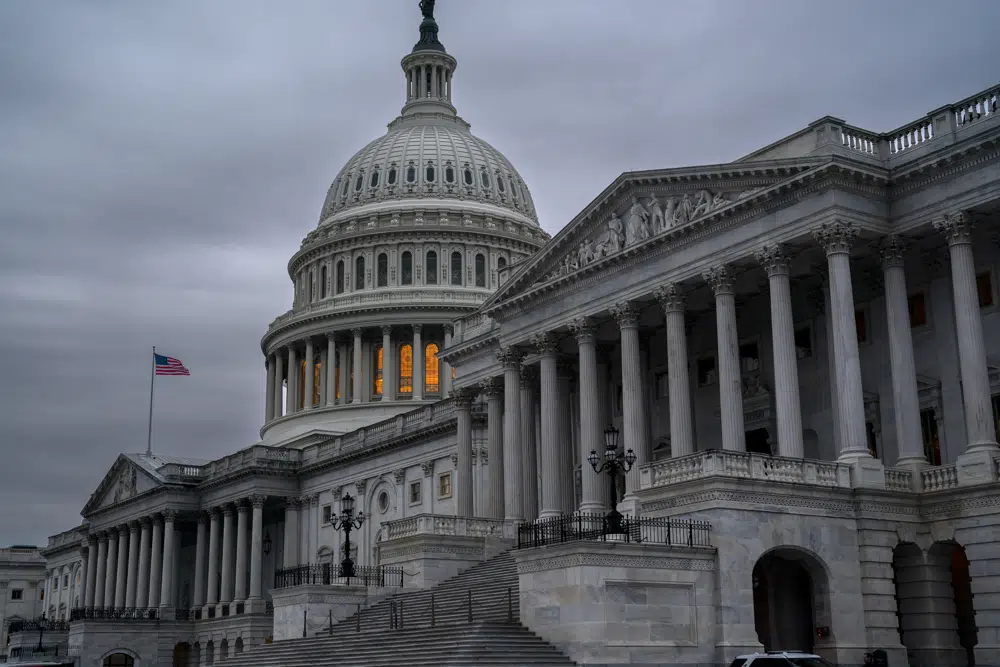
The Hill’s Alexander Bolton reported on Tuesday that Senate Democrats may look at rules changes to break through the blockade U.S. Senator Tommy Tuberville has put in place against more than 200 military promotions to protest the Pentagon’s abortion policy. Democrats accuse Tuberville of abusing the Senate rules by keeping his hold on Joe Biden’s military promotions in place since February. “We need to talk about changing rules that Republicans have learned to exploit. We can’t continue in a world where one senator puts our entire national defense at risk because he doesn’t like one policy followed by the Department of Defense,” said Sen. Elizabeth Warren (D-Massachusetts), a member of the Senate Armed Services Committee. Warren says that she has repeatedly asked for unanimous consent to advance Biden’s nonpolitical military promotions only to be blocked by Tuberville. “Sen. Tuberville’s hold is just another indication of the madness that seems to have seized extremists in the Republican Party,” she said. “I don’t think one person should be able to hold up the promotions and lives of everybody in the military or any other part of government,” said Sen. Debbie Stabenow (D-Michigan), the chairwoman of the Senate Democratic Policy and Communications Committee. “The Senator from Alabama’s actions are not just the usual back and forth in Washington. His holds pose a grave threat to our national security and our military readiness,” Warren said in a floor speech on June 1. “They actively hurt our ability to respond quickly to threats worldwide. That is not my conclusion. That is the conclusion of the Secretary of Defense.” President Joe Biden brought up Sen. Tuberville’s hold on military promotions without mentioning the Senator by name in comments at an event on Monday. “Because the military said if you’re in the military and you’re having a troubled pregnancy, and you’re in a state where you’re not allowed to see the doctor performing any remedial operation on you, then you can get paid – you can have leave to go to where you can do that,” Biden said. “I know I don’t look like I’ve been around, but I’ve been around a long time. There’s so many things of consequence that we can solve. And the vast majority of people, all the data shows, support the positions we’re generically taken.” On Thursday, Tuberville said that he is not backing down. “This is the ninth time that Democrats have come to the floor to try to break my hold on the Department of Defense’s nominees,” said Tuberville. “This is the ninth time that I’ve come to the floor to keep my word. Since the last time we did this, nothing has changed. And so, my hold will remain in place.” Tuberville continued, “Yesterday, the White House Press Secretary was asked why they haven’t reached out to me at all. She said, “I do not know when the last time is they talked to the senator.” I’ll tell you when the last time was — never. The White House has not reached out once in four months. No one has contacted me. There has not been one conversation, no path forward. I have spoken to Secretary (Lloyd) Austin, outside of Armed Services hearings, exactly once in the last two years. That was a 10-minute phone call — three months ago. He made absolutely no effort to find a compromise in our situation.” “Many of the claims made about me have been completely false. Many of them,” said Tuberville. “This is no way to negotiate with a colleague — especially in this body, the United States Senate. Frankly, this kind of behavior from the Democrats just steels my resolve. The more false claims the Democrats make about me, the more inclined I am to keep the holds in place.” “But I would note that just yesterday, a news story reported correctly that these military positions are being fulfilled by acting officials,” stated Tuberville. “These jobs are being done right now. They’re not empty. Four months into this situation that is obvious that people are doing the job. It is not affecting readiness. Anyone who says otherwise is wrong.” “I will keep my hold until the Pentagon follows the law [or] Congress changes the law,” vowed Tuberville. “That’s the way we do it here in the Senate. A ‘show vote’ in committee is not good enough. We can do that all we want. It’s not going to make any difference. An amendment that gets stripped out on the floor by Senator [Chuck] Schumer is not good enough. What I have said from the beginning: either follow the law or change it. Follow the law that we have made in this body, or change the law.” It is far from certain that Democrats have the votes to change the Senate rules, as any proposed rule change on this would dramatically decrease the power of every individual senator – of both parties. This slowdown of routine Senate business could be getting worse. Sen. JD Vance (R-Ohio) is following Tuberville’s example when he declared last week that he will put a hold on all nominees to the Justice Department over the prosecution of former President Donald Trump. “Donald Trump is merely the latest victim of a Department of Justice that cares more about politics than law enforcement,” Vance said in a statement. “Merrick Garland’s department harasses Christians for pro-life advocacy but allows hardened criminals to walk our streets unpunished. This must stop, and I will do everything in my ability to ensure it does. Starting today, I will hold all Department of Justice nominations. If Merrick Garland wants to use these officials to harass Joe Biden’s political opponents, we will grind his department to a halt.” To connect with the author of this story or to comment, email brandonmreporter@gmail.com.
Donald Trump faces questions about whether he’ll drag down the Republican Party after his indictments
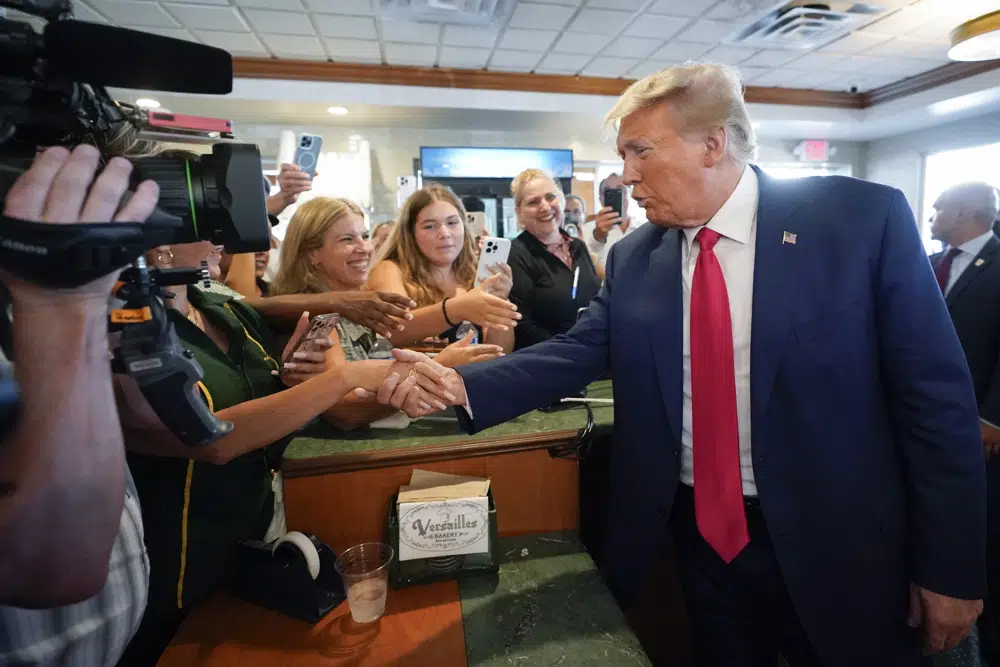
Donald Trump’s grip on the Republican faithful was evident from the moment he left the federal courthouse in Miami last week. Fresh off becoming the first former president to face criminal charges levied by the government he once oversaw, Trump’s motorcade moved through a crowd of hundreds of mostly adoring fans. He met more supporters at a Cuban restaurant in Little Havana, a Miami neighborhood that, like much of south Florida, has swung toward Republicans in recent years. A federal indictment on charges of mishandling the nation’s most sensitive national security secrets would doom any other White House hopeful. But Trump’s reception in Miami — and the more than $7 million he raised after the indictment — was a reminder of the central tension coursing through the Republican Party as the 2024 presidential primary gets underway. For now, no one comes close to Trump in his command of the voters who will decide the GOP’s nominee next year. But Trump’s path beyond the primary is far more perilous as he faces significant and growing questions about his ability to appeal to a broader, more moderate set of voters in a possible general election matchup against President Joe Biden. If Trump fails, he risks not just losing the White House contest but also dragging down other Republican candidates on the ballot as the party aims to retake the U.S. Senate and keep the House. Former Maryland Gov. Larry Hogan is among those warning Republicans that what is popular in a primary may not carry the general election. The frequent Trump critic backed a moderate Republican to succeed him in last year’s governor’s race. But Trump’s preferred candidate carried the primary and was soundly defeated in the general election, a result that played out in key races across the country. “We had three losing cycles in a row,” Hogan said. “It’s pretty hard to lose the White House, but we did it. It’s pretty hard to lose the House, the Senate, and the White House, but we did that also. And in the last election when we should have won the Senate back, picked up governor seats, and picked up 50 seats in the House … Republicans did not make gains really.” Trump is not the only GOP contender facing such concerns. Florida Gov. Ron DeSantis’ national electability has been called into question after he signed into law a state ban on abortions performed after six weeks, delighting conservatives but leaving him as an outlier among broader voters. While many Americans back some restrictions on abortion, especially after the first trimester, many do not agree with the most extreme measures pushed in Republican-led states such as Florida, according to polling that also showed most Americans support a federal law allowing access to abortion nationwide. DeSantis also alienated some Republicans when he appeared to dismiss Russia’s brutal invasion of Ukraine as a “territorial dispute,” comments he later had to walk back. No one in the race, however, carries the same level of baggage as Trump, particularly after the latest indictment, which follows charges in New York City that he paid hush money to porn actor Stormy Daniels to cover up an affair. He’s unlikely to attract new support after the allegations in Florida, which center on allegations that he took and refused to return boxes of classified documents, including some that could put military members and other sources at risk if disclosed. The hand-wringing over the GOP’s future began well before Trump’s latest indictment. In announcing her presidential campaign in February, former South Carolina Gov. Nikki Haley, who was Trump’s ambassador to the United Nations, was blunt in addressing the party’s general election challenge. “We’ve lost the popular vote in seven of the last eight presidential elections,” she said. “Our cause is right, but we have failed to win the confidence of a majority of Americans.” Since Trump’s federal indictment in Miami, some of his rivals have begun to test how far they can go in criticizing him, positioning themselves in a way that may be helpful in a general election but also tempering their remarks by blasting the Department of Justice for bringing charges. While Trump’s rivals may not be ready to fully take him on, the party establishment is increasingly active in trying to block his acolytes from being nominated in down ballot races or encouraging hopefuls to change the subject from its losing messages of the past. The Republican National Committee, for example, conducted a review of the GOP’s recent performance. A draft report, which did not mention Trump by name, concluded that the party needs to move beyond “relitigating previous elections,” an apparent allusion to the incessant but debunked claims he won the 2020 presidential contest. The National Republican Senatorial Committee, the campaign arm of the Senate GOP, also has said it’s shifting tactics after opting to sit out last year’s primary elections and let voters decide the nominees. After failing to retake Senate control, the organization now says it will play in primaries if needed, providing money and other resources to candidates it believes have the best chance to win a general election. The organization already got news it hoped for when Doug Mastriano, a far-right Pennsylvania lawmaker who was endorsed by Trump last year and lost badly to the Democratic governor candidate, opted not to run for the Senate in 2024. Republicans are hopeful that former hedge fund CEO David McCormick, who lost last year’s primary to another Trump-backed candidate, will run again and take on Democratic Sen. Bob Casey. Trump, who has falsely called the charges against him a political prosecution, insists that he had redefined the GOP, saying earlier this year that “the old Republican Party is gone, and it’s never coming back.” The former president and his supporters point to his 2016 victory as evidence of his ability to win, noting he won Ohio and Florida when the GOP nominees in 2012 and 2008 could not and was the first Republican presidential candidate to win Michigan, Wisconsin, and Pennsylvania in decades. “We forever revolutionized the electoral map for Republicans,” Trump
Democrats and Republicans share core values but still distrust each other
Americans on the right and the left have a lot more in common than they might think — including their strong distrust of each other. A survey published on Wednesday finds that when asked about core values, including fairness, compassion, and personal responsibility, about nine in 10 Democrats and Republicans agreed they were very or extremely important. Yet only about a third of either group said they believed the same was true for the opposing party. The results of the poll, conducted by NORC at the University of Chicago and the nonprofit group Starts With Us, reveal a stark truth at the source of the polarization that has a powerful grip on American politics: While most Americans agree on the core principles underlying American democracy, they no longer recognize that the other side also holds those values. “This is a hidden opportunity for Americans to reestablish a sense of shared values,” said Tom Fishman, chief executive at Starts With Us, a nonpartisan organization that works to bridge political polarization. Americans from both parties need to understand that they still share common values, he said, and to recognize their misconceptions about the opposing party. Americans have a long tradition of quarrelsome politics, dating back to before the Boston Tea Party. But with the notable exception of the Civil War, a sense of unity has kept those forces of division at bay. Experts who study partisanship and trust say that while a certain amount of polarization is natural, it can become a significant problem when it’s exploited by political parties or when one party no longer views the other as legitimate opposition but as an enemy. A number of factors are cited as possible causes for an increase in division, including the decline and fragmentation of legitimate news sources, politicians who stoke distrust, and social media platforms that spread misinformation while too often sorting users into echo chambers where they seldom encounter an opposing view. This loss of unity is tied to growing distrust in the media, government, science, and public health while political anger has sometimes boiled over into hate speech or violence like that seen on Jan. 6, 2021, when supporters of then-President Donald Trump violently attacked the U.S. Capitol in a bid to overturn the Republican’s 2020 election loss to Democrat Joe Biden. “When you get worried is when polarization turns into dehumanization — a sense that the other is somehow less than human, or evil, or unable to share your decent human values,” said Nealin Parker, executive director of Common Ground USA, a group that works to resolve conflict by building trust among Americans. “That should be concerning to anybody, because those are the necessary psychological steps to doing harm to each other.” In the survey, respondents were asked to rate the importance of six principles: personal responsibility, fair enforcement of the law, representative government, government accountability, compassion and respect across differences, and learning from the past. In each case, about 90% of both Democrats and Republicans rated these values as very or extremely important. When asked if members of the opposing party thought those values were very or extremely important, however, about two-thirds of respondents said no. For example, while 91% of Republicans said they think it’s very or extremely important that citizens should learn from the past to improve the country, only about a third of Democrats said they believed that to be true of GOP voters. And while only 31% of Republicans say Democrats believe government accountability is very or extremely important, 90% of Democratic respondents said they do. The findings reflect a phenomenon known as “affective polarization,” in which disagreements are based on animosity and a lack of trust instead of an actual debate over values or policy. Julia Minson, a professor who studies conflict and collaboration at Harvard University’s Harvard Kennedy School, said recognizing common values is a good start to bridging America’s divides. Too often, Minson said, “We ascribe negative things to people we disagree with. We see them as an adversary that doesn’t want to be a partner. It’s very much about emotions and trust and largely divorced from actual differences.” ___ The nationwide survey of 1,003 adults was conducted May 11-15 using NORC’s probability-based AmeriSpeak Panel, which is designed to be representative of the U.S. population. The margin of sampling error is plus or minus 4.3 percentage points. Republished with the permission of The Associated Press.
Donald Trump to speak at Alabama GOP dinner in August
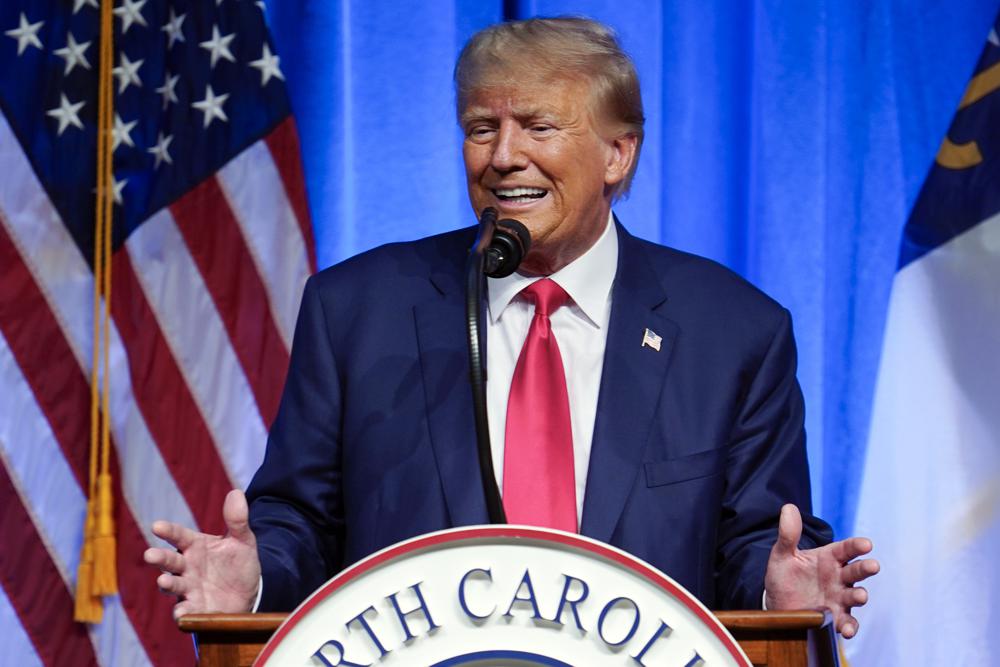
Former President Donald Trump will speak at the Alabama Republican Party’s summer dinner on August 3 as he continues his presidential bid despite facing criminal charges. Trump will be the keynote speaker for the 2023 ALGOP Summer Dinner in Montgomery, the party announced Wednesday. The event is an annual fundraiser for the state party. Trump on Tuesday pleaded not guilty to federal charges of mishandling classified documents. In appearances before and after his arrest, he has attempted to cast his indictment as an attempt to damage his chances of returning to the White House. Florida Gov. Ron DeSantis, one of Trump’s rivals in the Republican presidential primary contest, spoke at the Alabama Republican Party’s winter fundraiser in March. Republished with the permission of The Associated Press.
Miami Mayor Francis Suarez enters crowded GOP presidential race days after Donald Trump’s indictment

Miami Mayor Francis Suarez filed paperwork Wednesday to launch his bid for the Republican presidential nomination, jumping into the crowded race just a day after GOP front-runner Donald Trump appeared in court on federal charges in Suarez’s city. The 45-year-old mayor, the only Hispanic candidate in the race, declared his candidacy with the Federal Election Commission. He had teased an announcement, noting that he would be making a “big speech” Thursday at the Reagan Library in California. Before Trump arrived at the courthouse Tuesday, Suarez toured the media encampment wearing a T-shirt with a police logo, as his city’s police force had jurisdiction over the downtown area. “If I do decide to run,” he told CNN, “it’s starting a new chapter, a new conversation of a new kind of leader who maybe looks a little different, speaks a little different, had a little bit of a different experience, but can inspire people.” Suarez, the president of the U.S. Conference of Mayors, is the son of Miami’s first Cuban-born mayor. He has national attention in recent years for his efforts to lure companies to Miami, with an eye toward turning the city into a crypto hub and the next Silicon Valley. Suarez, who is vying to become the first sitting mayor elected president, joins a GOP primary fight that includes Florida Gov. Ron DeSantis, former Vice President Mike Pence, Sen. Tim Scott of South Carolina, former United Nations Ambassador Nikki Haley and former New Jersey Gov. Chris Christie. Despite having a candidate field in the double digits, the race is largely seen as a two-person contest between Trump and DeSantis. But the other competitors are hoping for an opening, which Trump has provided with his myriad legal vulnerabilities — none more serious than his federal indictment on charges of mishandling sensitive documents and refusing to give them back. He pleaded not guilty Tuesday in Miami federal court to 37 felony counts. Suarez has said he didn’t support Trump in either the 2016 or 2020 presidential elections, instead writing in the names of U.S. Sen. Marco Rubio and then-Vice President Pence. In 2018, Suarez publicly condemned Trump after reports came out that he had questioned why the United States would accept more immigrants from Haiti and “shithole countries” in Africa. But times have changed, with Trump advisers now praising Suarez’s work and helping him promote what he calls “the Miami success story.” Trump’s former White House counselor Kellyanne Conway has even floated Suarez’s name as a possible vice presidential pick. Suarez, who is married with two young children, is a corporate and real estate attorney who previously served as a city of Miami commissioner. He has also positioned himself as someone who can help the party further connect with Hispanics. In recent months, he has made visits to early GOP voting states as he weighed a possible 2024 campaign. He is more moderate than DeSantis and Trump but has threaded the needle carefully on cultural issues that have become popular among GOP politicians. Suarez has been critical of DeSantis, dismissing some of the state laws he has signed on immigration as “headline grabbers” lacking in substance. He has said immigration is an issue that “screams for a national solution” at a time when many Republicans back hard-line policies. The two-term mayor previously expressed support for a Florida law championed by DeSantis and dubbed “Don’t Say Gay” that bans classroom instruction on sexual orientation or gender identity in kindergarten through third grade, but he has not specified whether he supported the expansion of the policy to all grades. Like other Republicans, Suarez has criticized DeSantis’ feud with Disney over the same law, saying it looks like a “personal vendetta.” Further ingratiating himself with the Trump team, Suarez has echoed Trump’s attacks on DeSantis’ demeanor, saying the governor doesn’t make eye contact and struggles with personal relationships with other politicians. In 2020, the mayor made a play to attract tech companies to Florida after the state relaxed its COVID-19 restrictions. He met with Big Tech players and investors such as PayPal founder Peter Thiel and tech magnate Marcelo Claure, began appearing on national television, and was profiled by magazines. Suarez, who has said he takes his salary in Bitcoin, has also hosted Bitcoin conferences and started heavily promoting a cryptocurrency project named Miami Coin, created by a group called City Coins. But the hype dissipated as virus restrictions eased elsewhere, eliminating Miami’s advantage on the COVID-19 front. Suarez’s vision also hit roadblocks with the collapse of the cryptocurrency exchange FTX, which was set to move its U.S. headquarters to Miami’s financial district before its founder and CEO Sam Bankman-Fried was arrested in the Bahamas last December. The only cryptocurrency exchange that traded Miami Coin suspended its trading, citing liquidity problems, and not living up to its promise to generate enough money to eliminate city taxes. Miami also ranks among the worst big U.S. cities for income inequality and has one of the least affordable housing markets. Republished with the permission of The Associated Press.
Rep. Robert Aderholt secures Space Command spending language in House appropriations bill

On Tuesday, Congressman Robert Aderholt (R-AL04) announced that he has been able to secure language halting the development of the U.S. Space Command (SPACECOM) in Colorado until an official basing decision has been made. “Now more than ever, the establishment of a permanent Space Command Headquarters remains vital to our national security,” said Rep. Aderholt. “The language incentivizes the Secretary of the Air Force to determine the permanent headquarters location as quickly as possible.” “In this matter, timeliness remains of the utmost importance,” Aderholt continued. “I urge the Department to move the headquarters to its preferred permanent location as quickly as possible; however, if the Administration continues to delay, I am relieved that General (James H.) Dickinson, the SPACECOM Commander, last week assured the Alabama Delegation that he had no national security concerns about moving the headquarters.” The bipartisan language is included in the House Appropriations Subcommittee on Military Construction and Veterans Affairs fiscal year 2024 spending bill, following a review and approval by the United States Air Force. During the Trump administration, the Air Force held a national search for a permanent home for Space Command. Dozens of sites across the country were considered for a multitude of factors. Two different evaluations found that Redstone Arsenal in Huntsville was the best possible site. Nebraska came in second, followed by San Antonio, Texas. Colorado, where Space Command is presently, came in fourth. A review by the inspector general found that the decision to locate SPACECOM in Huntsville was the correct decision and was not tainted by politics. “The fact is, Air Force already made the correct decision well over two years ago,” said Congressman Mike Rogers (R-AL03). That decision was affirmed by the GAO and the DoD Inspector General over a year ago. This decision was based on multiple factors, and Redstone Arsenal in Huntsville, Alabama, was the clear winner in the Evaluation and Selection phase. I am deeply concerned that the continued delays in making this move final are politically motivated and damaging to our national security.” Over 24 months later, no action has been taken to relocate SPACECOM. A recent report by NBC News claims that the White House may halt plans to move Space Command. The report cites Alabama’s restrictive abortion law. Alabama’s congressional delegation, however, points to the fact that Colorado voted for President Joe Biden while Alabama voted to keep President Donald Trump. The SPACECOM basing decision remains a responsibility of the Secretary of the Air Force, Frank Kendall, a decision delegated by the President of the United States and the Secretary of Defense. “As we take this step, I would like to thank the Alabama delegation for their commitment to this fight,” said Aderholt. “We all know that Space Command belongs in the Rocket City.” According to a June 2022 Government Accountability Office (GAO) report, the decision-making process that the Air Force used to decide to move Space Command headquarters from Colorado Springs to Alabama had “significant shortfalls in its transparency and credibility.” “Over the past year, we’ve repeatedly raised concerns that the previous administration used a flawed, untested, and inconsistent process to select a location for U.S. Space Command. The reports from the Government Accountability Office and the Department of Defense Inspector General both confirm that the basing process lacked integrity and neglected key national security considerations,” Sens. Michael Bennet and John Hickenlooper and Reps. Doug Lamborn and Jason Crow said in a joint statement. Additionally, legislators from Colorado argue that the decision to move Space Command was politically motivated, arguing that former President Trump indicated that he would decide the 2020 election. AL.com reported in 2021 that during an interview on the Rick & Bubba show, Trump stated, “Space force – I sent to Alabama. I hope you know that. (They) said they were looking for a home, and I single-handedly said, ‘Let’s go to Alabama.’ They wanted it. I said let’s go to Alabama. I love Alabama.” Robert Aderholt is in his 14th term representing Alabama’s Fourth Congressional District. He is an attorney and was formerly counsel for Alabama Governor Fob James. He is a native of Haleyville. To connect with the author of this story or to comment, email brandonmreporter@gmail.com.
