
Tommy Tuberville wants to make daylight savings time permanent
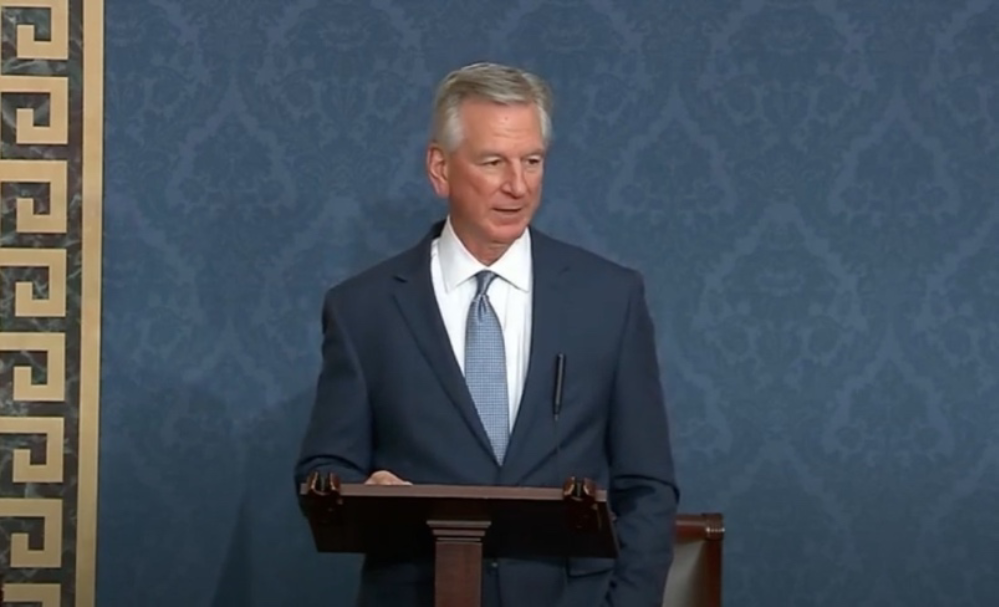
On Sunday, we will all get to sleep for an extra hour before getting up to prepare for Church, but the sun will set at 4:51 – an hour earlier than on Saturday. This is because we are changing from daylight savings time to standard time. In the spring, we will change back to daylight savings time. U.S. Senator Tommy Tuberville wants to change this annual rolling clocks forward and setting clocks back ritual and go to daylight saving time permanently. Tuberville is a cosponsor of the Sunshine Protection Act, a bill to make DST permanent. Tuberville joined sponsor Marco Rubio and his colleagues earlier this year to raise awareness on the issue. The Senate passed the Sunshine Protection Act by unanimous consent on March 15, 2022. “First of all, I would like to thank my colleagues on both sides of the aisle for getting out here and starting us down the road of making daylight saving time permanent,” Tuberville stated. “I cannot overstate how grateful that I am that this bill has passed this chamber by unanimous consent. It is especially timely because we all had to change our clocks this weekend, and we are now experiencing longer, sunnier days, but it would be better if this were a new norm and not a cause for a temporary seasonal celebration. That is why I hope my colleagues in the House of Representatives pass this bill quickly. The practice of springing forward impacts folks across the nation and has a far-reaching impact beyond the obvious.” “An enjoyable hour of daylight brings happy times to everybody,” Tuberville said. “Alabamians have made this clear. Since I joined Senator Rubio in support of the Sunshine Protection Act, the phones in my office have been absolutely ringing off the hook in support of permanently adopting daylight savings time. Moms and dads who want more daylight time before putting their kids to bed, so dinner time does not feel like bedtime. Elderly people who want more time in the evening to take a walk and to work in their yards. Farmers who could use the extra daylight time to work in the fields. For them, it is a better business model and adds to the bottom line.” “Locking the clock or doing away with twice-a-year time changes is a simple measure that would have far-reaching results,” Tuberville continued. “From a health perspective, cases of SAD or seasonal affective disorder are much more common in the winter months than the summer months. From an economic perspective, the time change costs the U.S. economy $430 million annually when accounting for lost productivity. It makes common sense to update this outdated practice.” “I hope the House acts quickly so we can get this to the President’s desk so we can get the result that the American people want, which is more sunshine,” Tuberville concluded. The House has yet to act on the measure. Sen. Tuberville was elected in 2020 – defeating Democratic incumbent Sen. Doug Jones. To connect with the author of this story, or to comment, email brandonmreporter@gmail.com.
Barry Moore endorses Beatrice Nichols for Congress
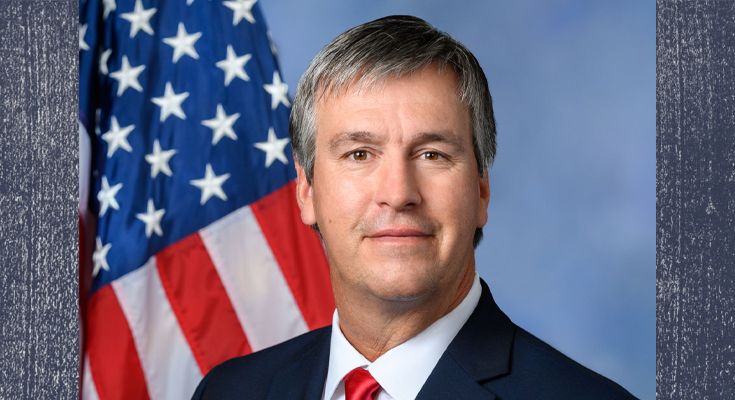
On Wednesday, the Beatrice Nichols campaign announced that Nichols has received the endorsement of Republican Congressman Barry Moore. Nichols is challenging incumbent Democratic Congresswoman Terri Sewell in Alabama’s Seventh Congressional District. Republicans are hopeful that they can win control of the U.S. House of Representatives in this year’s midterms, and Alabama’s Seventh Congressional District is the only district in Alabama represented by a Democrat. “The November 8th election is quite possibly the most important one of my lifetime,” Moore said. “It’s this simple, our country is at a tipping point. We have an opportunity to take back the House and Senate to stop the insanity in Washington DC and start to take our country back. We need every Republican we can get. Alabama is a conservative state. We believe in the value of hard work, the value of life, and the vital importance of freedom from government overreach. We believe our rights are given by God and not government. Because Bea Nichols believes this, too, it is my honor to endorse her for Congress. She will fight for the unborn and for our 2nd Amendment rights. She will fight for Alabama values in Washington. I ask the people of district 7 to please send Bea Nichols to DC to help me and other Republicans fight the progressive agenda. Together we can save our nation.” Nichols is married and a mother of three. She graduated from Hale County High School. She attended community college, where she received a nursing license. After graduating, she worked in Tuscaloosa for a local doctor. She went back to school and graduated from the University of Alabama with a degree in elementary and special education. They then taught second grade at a local private school for six years. While teaching and raising children, Nichols earned a master’s degree in special education. After graduation and having a third child, she went to work at a local public school as a self-contained special education teacher. Currently, she is enrolled at the University of Alabama pursuing a doctorate in special education. The Seventh Congressional District is the poorest in Alabama. “Our district is plagued with poverty, unemployment, and crime, especially in places like Perry, Greene, Lowndes, Wilcox, and Dallas counties,” Nichols said on her website. “In some of these counties, children do not have clean drinking water. The schools are closing because people are leaving in search of jobs and good schooling for their children. Throughout the district, our small towns are crumbling before our eyes. There are no opportunities for our young adults, and they are having a very hard time finding work in the area they live. Our current representative for the 7th district comes and speaks at the entrance of a historic bridge about all the good things that are happening in our district – using the Edmond Pettis bridge as a backdrop for publicity when not more than 50 yards away there is unimaginable poverty where living conditions are paralleled to some third world countries.” Nichols also recently received the endorsement of the Americans for Legal Immigration PAC. “Americans for Legal Immigration PAC is endorsing and asking voters to support, volunteer for, and donate to the campaigns of J.R. Majewski (R-OH-9) and Beatrice Nichols (R-AL-7) for US Congress because both candidates have completed ALIPAC’s 2022 federal candidate survey indicating they oppose licenses, in-state tuition, and DACA Amnesty for illegals while supporting the full enforcement of America’s existing immigration laws,” the group wrote on their website. ALIPAC has also endorsed incumbent Republican Congressman Barry Moore in Alabama’s Second Congressional District and incumbent Republican Congressman Mike Rogers in Alabama’s Third Congressional District. Sewell is the only Democrat in the Alabama congressional delegation. Her district is majority-minority, but after 2021’s redistricting and reapportionment by the Alabama Legislature, the Seventh District has become considerably more White and Republican than it was during the 2020 election. Some Republicans are hopeful that a large turnout of Republican voters on November 8 could flip the district to GOP control. Sewell was hosted on Wednesday by former U.S. Sen. Doug Jones for a fundraiser in Huntsville. Nichols, Sewell, and Libertarian nominee Gavin Goodman are all on the November 8 general election ballot for Alabama’s Seventh Congressional District. To connect with the author of this story, or to comment, email brandonmreporter@gmail.com.
Tommy Tuberville and colleagues express concern about policy that allows terrorism supporters to immigrate to the U.S.
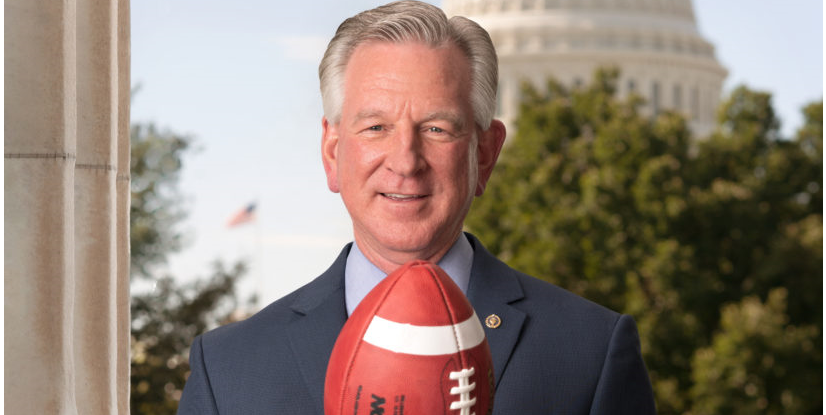
On Tuesday, U.S. Senator Tommy Tuberville joined nine of his Senate colleagues in a letter to Department of Homeland Secretary Alejandro Mayorkas and Secretary of State Antony Blinken expressing their concerns over their departments’ recent determination allowing individuals who provided “insignificant material support” or “limited material support” to terrorist organizations to legally immigrate to the United States. This determination which dates to June 8, changes the current U.S. immigration policy. “We write because the American people deserve an explanation regarding the broad, open-ended nature of this authority for exempting individuals who would otherwise be barred from immigration to the United States for supporting a terrorist organization,” Tuberville and the other Senators wrote. “In contrast, the June 8 determination is not limited to certain conflicts, terrorist organizations, geographic regions, or time periods. Instead, it “broadly permits the admission of foreign individuals who provided material support to terrorist organizations that the Biden Administration deems insignificant or limited. This could include, for example, current or former members of Iran’s Islamic Revolutionary Guard Corps (IRGC) and IRGC-linked entities, which are responsible for the deaths of hundreds of U.S. service members in Iraq and Afghanistan. It could include individuals seeking asylum at the southern border.” “The timing of the June 8 Determination, nearly a year after the Administration’s botched withdrawal from Afghanistan, also raises questions. If its intent is to ensure that Afghan refugees are able to gain asylum in the United States, there is no explanation regarding why this decision was not made months ago with prudent restrictions limiting its application to Afghan refugees,” the letter continued. The Senators requested that Secretaries Mayorkas and Blinken provide a timely explanation and justification for this broad new authority, which they claim substantially changes U.S. immigration policy. Sen, Tuberville was joined in the letter by Sen. Bill Hagerty (R-Tennessee), Rick Scott (R-Florida), Kevin Cramer (R-North Dakota), Ted Cruz (R-Texas), Marco Rubio (R-Florida), Joni Ernst (R-Iowa), Roger Marshall (R-Kansas), John Hoeven (R-North Dakota), and Steve Daines (R-Montana). There does appear to be a renewed effort by terrorists to enter the United States. “Democrats are more focused on raising your taxes than resolving the crisis at our southern border,” Tuberville said on social media. “In July alone, 10 people on the FBI’s terrorist watch list illegally crossed into the U.S.” Thus far this year 66 individuals on the FBI’s terror watchlist have been apprehended trying to enter the United States. This is double the number of incidents that occurred in the last five years combined. U.S. forces are continuing to fight the War on Terror. On Tuesday, airstrikes were conducted against militia bases linked to the Iranian Revolutionary Guard in Syria after a remote U.S. outpost was attacked by a drone that intelligence sources believe came from the groups. The airstrikes were ordered by President Joe Biden. Tuberville is in his first term representing Alabama in the U.S. Senate after his election in 2020, where he defeated incumbent U.S. Sen. Doug Jones (D-Alabama). To connect with the author of this story, or to comment, email brandonmreporter@gmail.com.
Jury: Democratic PAC defamed Roy Moore, awards him $8.2M
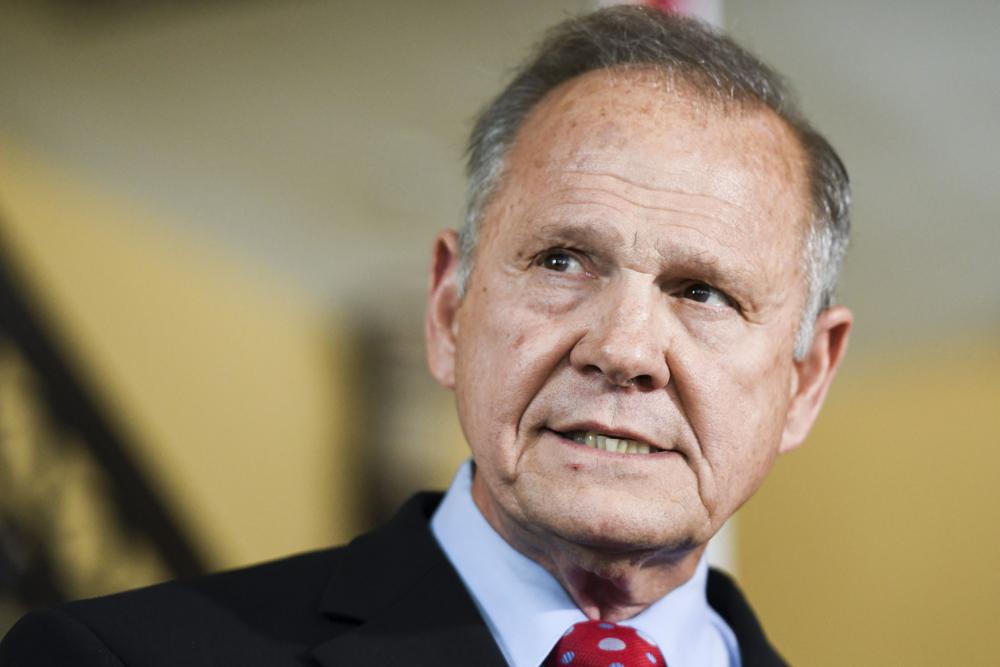
A federal jury awarded Republican Roy Moore $8.2 million in damages Friday after finding a Democratic-aligned super PAC defamed him in a TV ad recounting sexual misconduct accusations during his failed 2017 U.S. Senate bid in Alabama. Jurors found the Senate Majority PAC made false and defamatory statements against Moore in one ad that attempted to highlight the accusations against Moore. The verdict, returned by a jury after a brief trial in Anniston, Alabama, was a victory for Moore, who has lost other defamation lawsuits, including one against comedian Sacha Baron Cohen. “We’re very thankful to God for an opportunity to help restore my reputation, which was severely damaged by the 2017 election,” Moore said in a telephone interview. Ben Stafford, an attorney representing Senate Majority PAC, said in an emailed statement that they believe the ruling would be overturned on appeal. Moore, a former Republican judge known for his hardline stances opposing same-sex marriage and supporting the public display of Ten Commandments, lost the 2017 Senate race after his campaign was rocked by misconduct allegations against him. Leigh Corfman told The Washington Post and said Moore sexually touched her in 1979 when she was 14 and he was a 32-year-old assistant district attorney. Moore denied the accusation. Other women said Moore dated them or asked them out on dates when they were older teens. The accusations against Moore contributed to his loss to Democrat Doug Jones, the first Democrat to represent Alabama in the Senate in a quarter-century. The seat returned to Republican control with the 2020 election of Tommy Tuberville, a former college football coach. Senate Majority PAC funded a group called Highway 31 that ran a $4 million advertising blitz against Moore. The lawsuit centered on one TV commercial that recounted accusations against Moore. Moore’s attorneys argued the ad, through the juxtaposition of statements, falsely claimed he solicited sex from young girls at a shopping mall, including another 14-year-old who was working as a Santa’s helper, and that resulted in him being banned from the mall. The advertisement began with: “What do people who know Roy Moore say?” It followed with the statements “Moore was actually banned from the Gadsden mall … for soliciting sex from young girls” and “One he approached was 14 and working as Santa’s helper.” Wendy Miller had previously testified that she met Moore when she was 14 and working as a Santa’s helper at the local mall. She testified Moore told her she was pretty, asked her where she went to high school, and offered to buy her a soda. He asked her out two years later, but her mother told her she could not go. Moore’s attorneys argued the juxtaposition of statements in the ad painted Moore in a false light and falsely made it look like he was soliciting sex from girls at the mall. “In their ad, they strung quotes together to make a single statement. That’s what the jury found offensive. They got up and lied and said they didn’t intend that,” Jeffrey Scott Wittenbrink, an attorney for Moore, said. The Senate Majority PAC had argued the ad was substantially true and that there were widespread reports about Moore’s inappropriate behavior at the mall. An attorney said they planned to appeal. According to a Thursday court filing from Senate Majority, a Gadsden police officer who worked as security at the Gadsden Mall in the late 1970s — J.D. Thomas — testified that he told Moore not to return to the mall after receiving complaints from store managers that Moore was asking out teen employees or making them uncomfortable. Moore maintained he was never banned from the mall. “No amount of deflection or distraction from Roy Moore will change the fact that multiple individuals testified under oath to corroborate credible accusations against him. Many others have come forward to make their allegations public, at serious personal cost. We do not think this verdict is the right decision, but we believe the facts are clear, and this ruling will be overturned on appeal,” Stafford, an attorney representing Senate Majority PAC, said in an emailed statement. Republished with the permission of The Associated Press.
Roy Moore’s defamation suit against Sacha Baron Cohen rejected
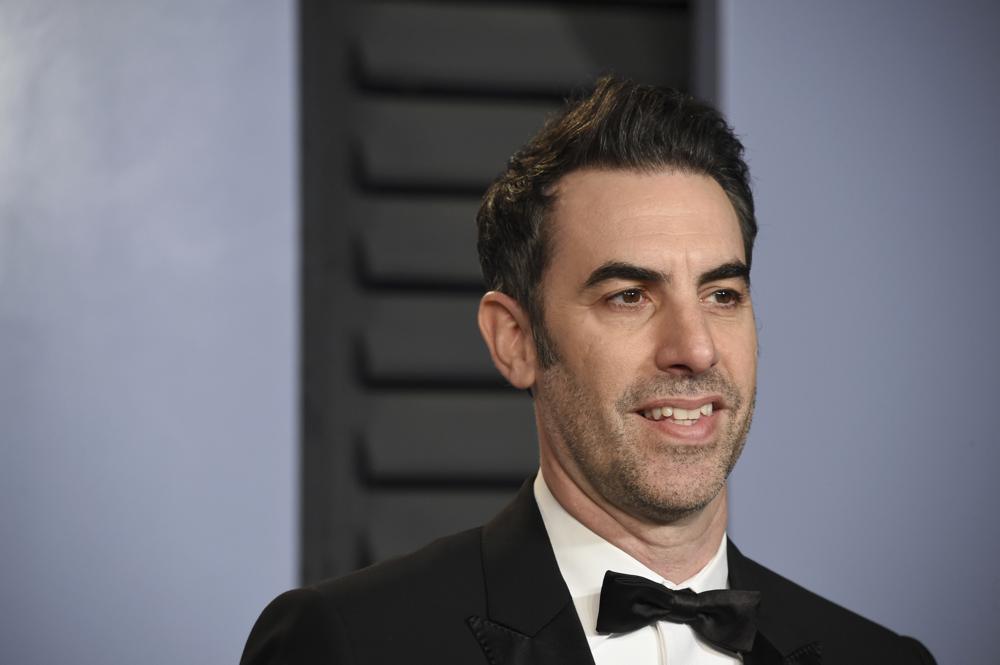
An appeals court on Thursday rejected a $95 million defamation lawsuit against comedian Sacha Baron Cohen filed by former Alabama Supreme Court Chief Justice Roy Moore, who said he was tricked into a television appearance that lampooned sexual misconduct accusations against him. The 2nd U.S. Circuit Court of Appeals in Manhattan, upholding a lower court’s ruling in favor of Baron Cohen, said Moore signed a disclosure agreement that prohibited any legal claims over the appearance. The three judges also found it was “clearly comedy” when Baron Cohen demonstrated a so-called pedophile detector that beeped when it got near Moore and no viewer would think the comedian was making factual allegations against Moore. The lawsuit centered on Moore’s unwitting appearance on the comic’s “Who is America?” show. The segment ran after Moore faced misconduct accusations during Alabama’s 2017 U.S. Senate race that he had pursued sexual and romantic relationships with teens when he was a man in his 30s. He denied the allegations. Moore, a Republican known for his hardline stances opposing same-sex marriage and supporting the public display of Ten Commandments, had been told he was receiving an award for supporting Israel. But in the segment, Baron Cohen appeared as faux counterterrorism instructor “Col. Erran Morad” discussing bogus military technology, including the supposed pedophile detector. The fake device beeped repeatedly as it got near Moore, who sat stone-faced. “Baron Cohen may have implied (despite his in-character disclaimers of any belief that Judge Moore was a pedophile) that he believed Judge Moore’s accusers, but he did not imply the existence of any independent factual basis for that belief besides the obviously farcical pedophile detecting ‘device,’ which no reasonable person could believe to be an actual, functioning piece of technology,” the court wrote in the unsigned summary order. Moore and his wife, Kayla, sued, arguing that the segment defamed Moore and caused them emotional distress. The couple claimed the waiver Moore signed was unenforceable because it was obtained under a false representation. The appellate court noted that it was indeed a ruse that got Moore to appear on the show but Moore signed a binding release waiving all legal claims. The accusations against Moore contributed to his loss to Democrat Doug Jones, the first Democrat to represent Alabama in the Senate in a quarter-century. The seat returned to Republican control when Jones lost the following election to Sen. Tommy Tuberville, a former college football coach. Baron Cohen has for years lured unwitting politicians into awkward interviews. He has faced past lawsuits over similar pranks, but those were also tossed out because the individuals had signed releases. Moore and his wife indicated they will appeal. “For far too long the American people have been subjected to the antics of Sasha Baron Cohen. His pusillanimous and fraudulent conduct must be stopped. We will appeal,” the couple said in a statement texted to The Associated Press. Republished with the permission of The Associated Press.
Paul DeMarco: Unpredictable U.S. Senate races in Alabama now the new normal
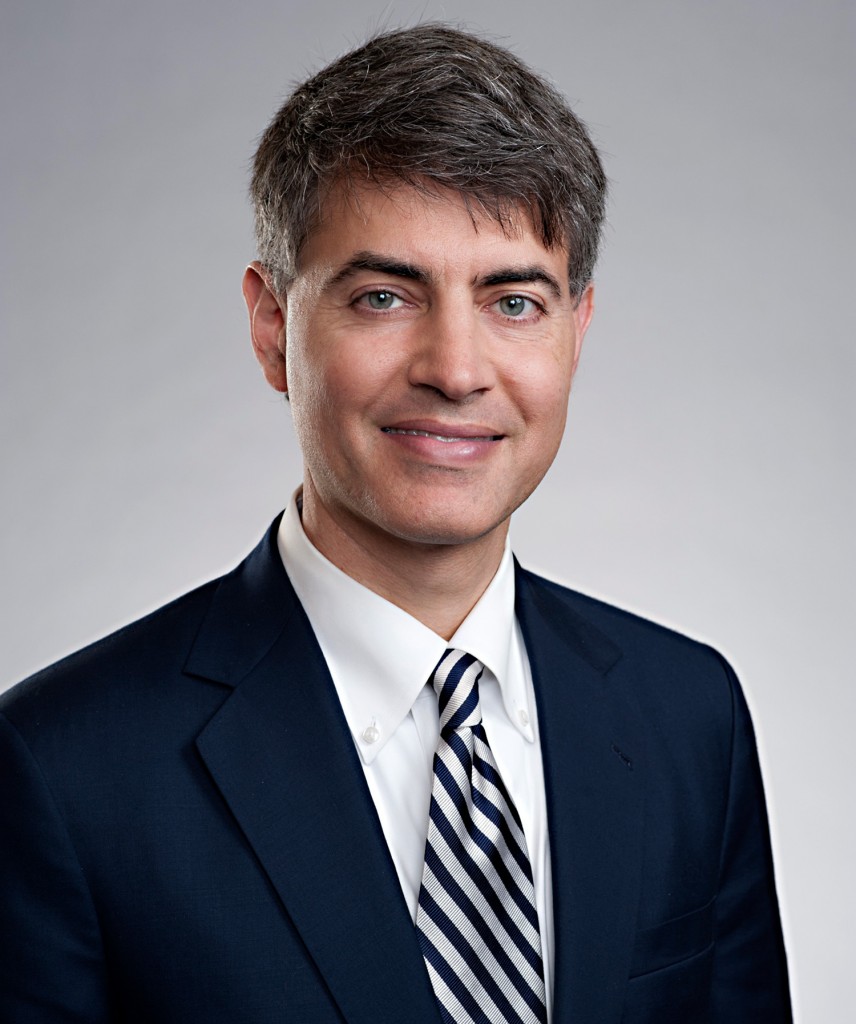
So the party primaries are over in Alabama and Katie Britt is now the Republican nominee for the United States Senate. We could say this race was one for the history books, but candidly so have the last three U.S. Senate elections in Alabama. It used to be that Senate contest came along rarely in Alabama, but the past five years have proven otherwise. First, there was the 2017 special election with the Republican Primary between then-Attorney General Luther Strange that ended with former Alabama Supreme Court Justice Roy Moore prevailing. The general election that year had the eyes of the Nation watch Moore then go on to lose to Democrat Doug Jones. The 2020 election then came when former Auburn Football Coach bested former Senator Jeff Sessions for the Republican nomination. Coach Tuberville ousted then-Senator Doug Jones from his seat to return the seat to Republican hands. There have been tens of millions spent on races to represent Alabama in the United States Senate in the past five years, and this current election is still not over. However, count on Republican Katie Britt winning in the fall and being the next United States Senator to represent Alabama. We cannot predict the next Senate race in Alabama, but based on recent history it will be another roller coaster ride for both candidates and state voters. Paul DeMarco is a former member of the Alabama House of Representatives and can be followed on Twitter @Paul_DeMarco.
ALGOP Chairman John Wahl calls on changes to primary system after ‘crossover voting’ issues
“Crossover voting” has become a hot topic of conversation among Republican leaders. Since 2010, crossover voting has not been allowed in primary runoff elections in Alabama. However, voters in Alabama are not required to register with a party prior to voting, so there is no mechanism to prevent crossover voting from happening in Republican primary elections because Alabama has open primaries. After Mo Brooks accused Senate opponent Katie Britt of soliciting Democrat votes in last month’s primary, Jennifer Montrose, president of the West Alabama Republican Assembly, issued a resolution requesting the Republican Party Steering Committee conduct “a fully public hearing or meeting with notice to the public to consider the facts and potential sanctions against candidate Katie Britt.” Now Alabama GOP chairman John Wahl is also calling for changes in the way Alabama Republican primaries are handled. Yellowhammer News reported that Alabama GOP chairman John Wahl said the comments that Alabama Democratic Party executive director Wade Perry made were “concerning”. Perry commented on Twitter about how “helpful” Republican Senate candidate Katie Britt was in electing Doug Jones to the U.S. Senate in 2017. Wahl said it was a wake-up call for the Republicans on how Democrats were trying to influence the Republican primary process. Wahl argued on WVNN’s “The Yaffee Program” that it was time for a closed primary system in Alabama. “I’ll tell you one thing — next legislative cycle, I’m going to encourage closing the primary,” he commented, “and having a registered party system where we know only registered Republicans will be voting in the Republican primary.” Wahl continued, “[W]e are seeing in Alabama a push from the Democrats to try and insert themselves into our primary and have influence in picking out nominees,” he said, “and I think it’s very inappropriate.” Wahl said changing the primary process would be a major focus for him next session. “I’d like to think that even in politics good common sense reasoning and a good argument, when you can explain it, can carry the day. For me this is one of my number one targets for the next legislative cycle,” he concluded.
Pressure grows for ALGOP response to Katie Britt’s alleged Democratic Party support
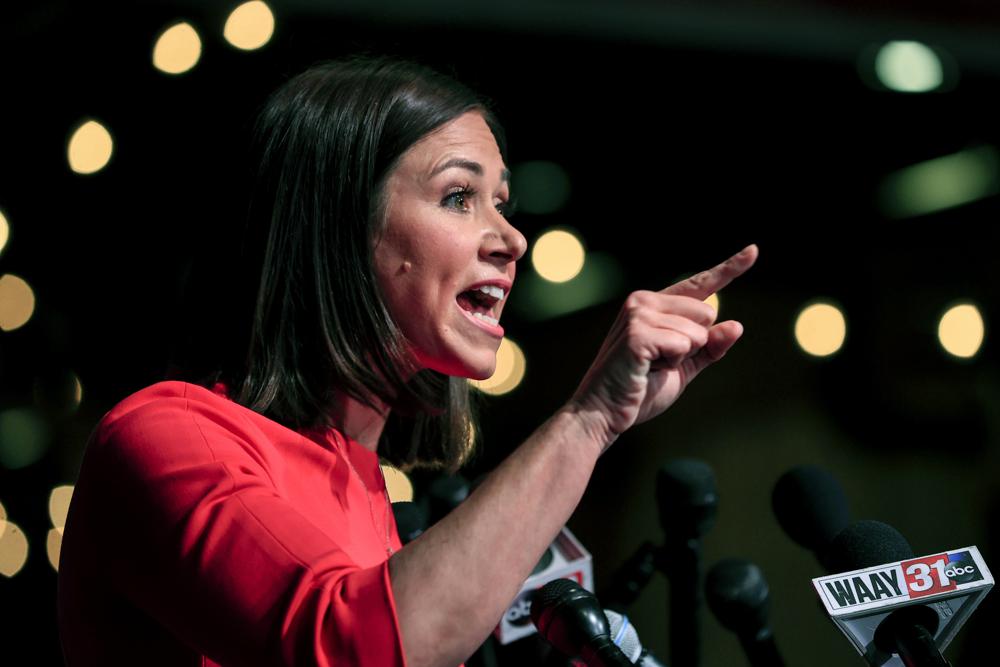
In a state like Alabama, the Republican Party rules supreme. Winning a primary is tantamount to winning an election because Republicans hold a supermajority in the state. “Crossover voting” during primaries allows Democratic voters to have a say in who will be the winner, given that the general election is often nothing more than a formality. Since 2010, crossover voting has not been allowed in primary runoff elections in Alabama. However, voters in Alabama are not required to register with a party prior to voting, so there is no mechanism to prevent crossover voting from happening in Republican primary elections because Alabama has open primaries. 1819 News reported that Mo Brooks has accused opponent Katie Britt of soliciting Democrat votes in last month’s primary. During a radio interview on WVNN’s “The Dale Jackson Show,” Brooks stated, “No question. Katie Britt had an activist effort, kind of behind the scenes, to encourage Democrats to crossover and to pollute our Republican primary.” Brooks also argued that she would do the same in the June 21 runoff. “It will probably happen to some degree on June 21 when we have to runoff. That’s not right,” Brooks continued. “The Democrats should never be participating in Republican primaries and vice-versa. But we’ll see how Republicans across the state react to Katie Britt’s outreach program that is coming to greater and greater light. By outreach program, I’m talking about getting Democrats to tamper in our elections.” Brooks’s accusations seem valid to some Republican leaders after Democratic Party executive director Wade Perry posted on Twitter, describing Britt as “pretty awesome” and “super helpful” during the Doug Jones 2017 win over Roy Moore. Additionally, Democrat U.S. Rep. Parker Griffith stated he supported Britt. “She’s running a great campaign,” Griffith commented last year on WVNN’s “The Dale Jackson Show.” “She’s got a lot of assets. I’ve got a Katie Britt sign in my front yard … because the Democrats cannot win in Alabama. We need good government. We’re going to have to vote for good people and start being Americans instead of Republican or Democrat, particularly in Alabama.” Michael Hoyt, the chairman of the Republican Party in Baldwin County, has called for closed primaries. During an interview on FM Talk 106.5’s “The Jeff Poor Show,” Hoyt stated, “Principally, I would be in favor of having a closed primary. I think the party and members of the party should choose who their nominees are. And that shouldn’t be people for Democrats, for Libertarians, or whatever coming over.” Hoyt also said he expected the ALGOP to look into the issue in the near future. “[I] support having a closed primary system, and I suspect that that’s something that will be addressed by the state party, perhaps even at the summer meeting this year, and certainly be taken up by the legislature,” Hoyt commented. “When you’re in an essentially one-party state, and they know the election is determined by the primary, you have to be careful of who is even running in those races, and we certainly don’t want Democrats coming in and voting in them. So, I agree with [that] 100%.” Jennifer Montrose, president of the West Alabama Republican Assembly, issued a resolution requesting the Republican Party Steering Committee conduct “a fully public hearing or meeting with notice to the public to consider the facts and potential sanctions against candidate Katie Britt.” Essentially, the resolution accuses Britt of supporting “a nominee of another political party,” an infraction that can “deny ballot access to a candidate for public office.” In February, the Alabama Republican Party’s candidate committee voted to remove three candidates from its primary ballot in state legislative races because of alleged affiliations with other parties. “[W]e take it extremely serious that we keep the Republican primary ballots pure,” ALGOP chair John Wahl stated. “And what I mean by that is we’re not going to let a Nancy Pelosi or Hillary Clinton come in and run on the Republican ticket. It’s not going to happen. Sometimes it gets hard. It’s very hard to know who is a Republican and who is not a Republican. The candidate committee makes those decisions, and I chair that committee. I choose not to take a vote because I feel like it is important for the chairman dispense all the information to provide the body information they need to make the best decision.” During the Republican primaries, Britt led opponent Brooks by a 45%-to-29% margin in votes.
GOP primary race for Alabama Senate seat turns bitter
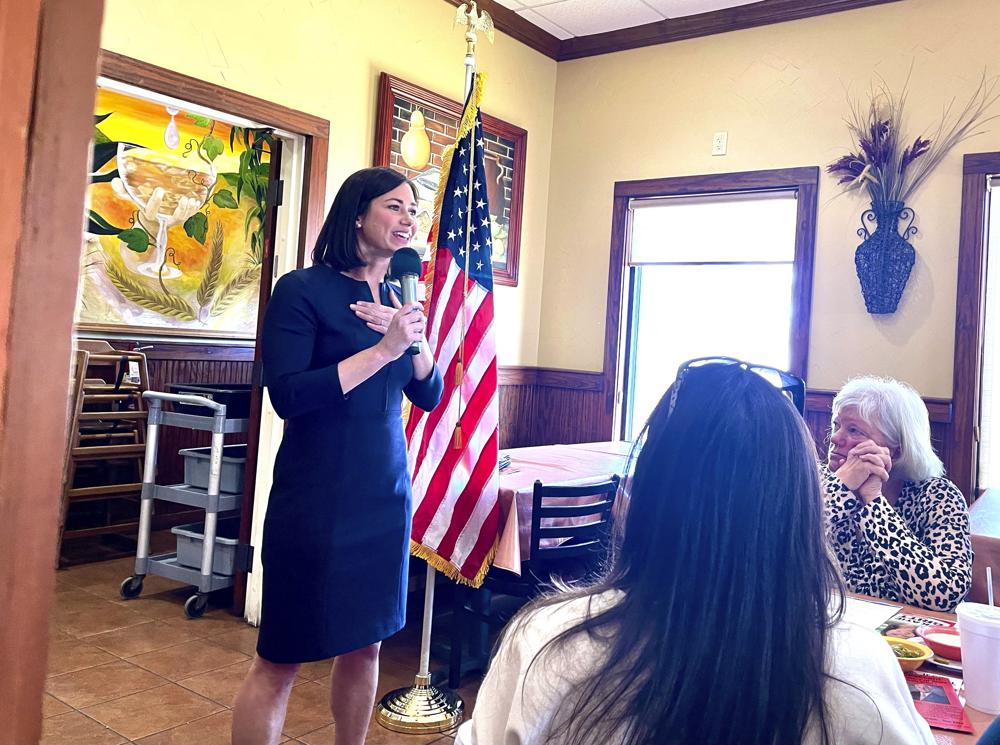
Alabama’s Republican primary for the U.S. Senate seat being vacated by retiring U.S. Sen. Richard Shelby has become a bitter high-dollar contest with the three strongest contenders jockeying for the nomination. The leading candidates are U.S. Rep. Mo Brooks, who won — and then lost — former President Donald Trump’s backing in the race; Katie Boyd Britt, the former leader of Business Council of Alabama and Shelby’s former chief of staff; and Mike Durant, an aerospace company owner best known as the helicopter pilot whose capture during a U.S. military mission in Somalia was chronicled in the “Black Hawk Down” book and subsequent movie. Lillie Boddie, Karla M. Dupriest, and Jake Schafer are also seeking the GOP nomination. Observers say it’s hard to predict whether the nomination will be settled in Tuesday’s primary. The fractured field increases the chances that the race will go to a June 21 runoff, which is required unless one candidate captures more than 50% of Tuesday’s vote. David Mowery, an Alabama-based political consultant, said the race has an up-for-grabs feel. “It’s anybody’s guess as to who’s in first and who’s in second in the runoff,” he said. As for the barrage of negative campaign ads in the primary’s closing days, Mowery said: “The gloves have come off.” The Alabama race is one of several bitterly contested GOP primaries for open Senate seats. Retirements also sparked heated races this season in Pennsylvania, North Carolina, and in Ohio. Trump further scrambled the Alabama race this spring when he rescinded his endorsement of Brooks. Both Britt and Durant have courted Trump’s nod, but he has so far stayed out of the Alabama race. “We look at this country and don’t recognize it right now. Unfortunately, under the Biden administration, every single thing in this nation is moving in the wrong direction,” Britt said during a speech to the Republican Women of East Alabama. Before leading the Business Council, Britt served as chief of staff to Shelby, one of the Senate’s most senior members and a traditional Republican known for his ability to bring home federal projects and funding to his home state. But in speeches Britt, running under a slogan of Alabama First, has leaned away from her hefty Washington resume. She said it’s important voters get to know her and the kind of senator she will be. Her experience, she said, gave her an opportunity to understand how the Senate works. “I can hit the ground running on day one. And for me, Alabama First is not just a slogan. It’s a mission,” she said. Brooks, a six-term congressman from north Alabama, is banking on his long history with Alabama voters to overcome his feud with Trump. “If you’re a conservative Republican, I would submit to you that I’m the only proven conservative in this race. With me, there is no rolling the dice to determine how I’m going to go on major public policy issues,” Brooks said, urging people to look up his ratings from the National Rifle Association, Heritage Action, and other groups. Despite losing Trump’s backing, he continues to run as “MAGA Mo,” invoking Trump’s Make America Great Again slogan, and his campaign website continues to include old video footage of Trump praising the north Alabama congressman. Trump initially endorsed Brooks last year, rewarding the conservative firebrand who whipped up a crowd of Trump supporters at the January 6, 2021 “Stop the Steal” rally that preceded the U.S. Capitol insurrection. “Today is the day that American patriots start taking down names and kicking ass,” Brooks said. But Trump withdrew the endorsement in March after their relationship soured. Trump cites Brooks’ languishing performance and accused the conservative congressman of going “woke” for saying it was time to move on from the 2020 presidential outcome and focus on upcoming elections. Brooks said Trump was trying to get him to illegally rescind the election. Trump has not made a new endorsement in the race. Both Durant and Britt have maintained they are the superior choice for Trump’s backing if the race goes to a runoff. At a speech in Phenix City, a town in the shadow of the U.S. Army’s Fort Benning, Durant pitched himself as the outsider in the race. He began a speech by describing his combat service — which included not just Somalia but Desert Storm and missions in Panama — and then working in the defense industry and founding an aerospace company. “I’m not a politician,” Durant said. “That is what people are tired of. That’s why people want outsiders. That is why people want straight shooters.” Durant said his military experience separates him from those in Washington who “don’t know what they’re talking about” when discussing deploying troops. “This is serious business. We don’t deploy troops, we don’t get in skirmishes, we don’t try to do nation-building unless we truly understand the commitment that we’re about to make, not only financially, but the lives of young men and women, our national credibility, all those things that are on the line.” Durant, a helicopter pilot who was held prisoner after being shot down, is seeking the endorsement of Trump, who once disputed that Sen. John McCain was a war hero because he was held as a POW. “I like people that weren’t captured,” Trump said in 2015. Asked about that, Durant said he thought the divisions between the two were “based on politics, not based on service.” Both Britt and Brooks have criticized Durant for “dodging debates” after his campaign declined three separate dates offered by the Alabama Republican Party. Durant said he is willing to debate but could not make it fit his schedule. Outside groups have pumped more than $20 million into the race to either support or oppose one of the frontrunners. The Super PACS have been responsible for many of the attack ads in the race. Alabama Patriots PAC spent $4 million to support Durant after receiving money from America’s Project, a Virginia-based PAC associated with Jacob Harriman,
Progressive environmental activists pick ‘Republican’ favorites in Alabama Public Service Commission primary races

According to Alabama Secretary of State campaign finance records, radical “environmental justice” activists are once again pushing their agenda in Alabama. They have selected their preferred “Republican” primary candidates Robin Litaker and Brent Woodall for the Public Service Commission. As first reported by Dylan Smith of Yellowhammer News, both candidates have taken large sums of money from Nelson Brooke, of Black Warrior Riverkeeper. Brooke has made a total of $73,000 in contributions to Alabama candidates all of the money going to democrats except three contributions: $20,000 to Litaker this cycle, $10,000 to her in her last race, and $10,000 to Woodall. Alabama Today reported on Brooke’s contribution history in an opinion piece last cycle when Litaker, who is attempting her third run to the Public Service Commission. She ran against Twinkle Andress Cavanaugh in 2020. Cavanaugh handily won that election with 73.8% of the vote. In 2018, Litaker ran against Beeker with him getting 68.7% of the vote. In that race, she was her own biggest contributor and the next closest gave her $250.00. According to the Yellow Hammer report, the Federal Election Commission (FEC) campaign finance records show that Margaret Wade Johnston, from the advocacy group Sierra Club, loaned Litaker’s campaign $45,000. Johnston has a history of backing progressive candidates in an attempt to defeat incumbent conservatives in Alabama. Johnston donated to the Democratic challengers of U.S. Reps. Robert Aderholt and Mo Brooks in the 2018 general election and also donated to former U.S. Sen. Doug Jones in 2020. Like Johnston, Brooke also has a history of financially supporting far-left candidates in federal races, including former President Barack Obama’s 2012 reelection campaign and socialist U.S. Sen. Bernie Sanders’ 2016 presidential bid. It is unknown if the ALGOP will take action to decertify their elections based on these contributions. Earlier this year, Trip Powell was removed from the ballot for giving a $500 contribution to Walt Maddox. Litaker and Woodall supporter Brooke gave Maddox a total of $6,000. In 2018, the party voted to not certify a candidate who made social media posts that were described as “anti-Semitic, racist or otherwise offensive.” The primary election is on May 24, 2022. You can find your polling place or get more voting information at AlabamaVotes.gov.
Ketanji Brown Jackson pledges to decide cases ‘without fear or favor’
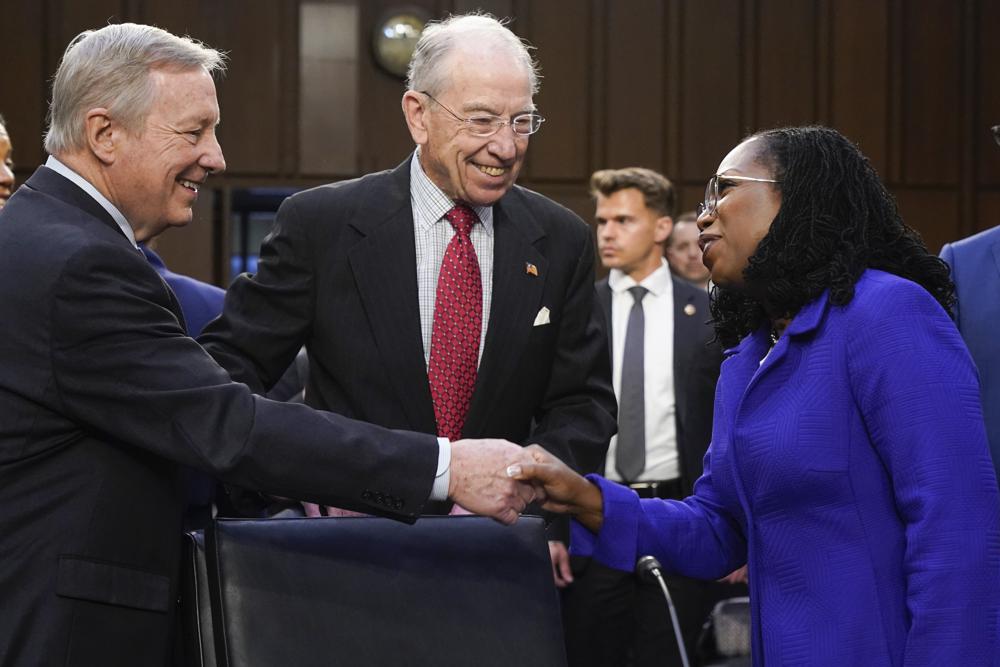
Supreme Court nominee Ketanji Brown Jackson pledged Monday to decide cases “without fear or favor” if the Senate confirms her historic nomination as the first Black woman on the high court. Jackson, 51, thanked God and professed love for “our country and the Constitution” in a 12-minute statement to the Senate Judiciary Committee at the end of her first day of confirmation hearings, nearly four hours almost entirely consumed by remarks from the panel’s 22 members. Republicans promised pointed questions over the coming two days, with a special focus on her record on criminal matters. Democrats were full of praise for President Joe Biden’s Supreme Court nominee. With her family sitting behind her, her husband in socks bearing George Washington’s likeness, Jackson stressed that she has been independent, deciding cases “from a neutral posture” in her nine years as a judge, and that she is ever mindful of the importance of that role. “I have dedicated my career to ensuring that the words engraved on the front of the Supreme Court building — equal justice under law — are a reality and not just an ideal,” she declared. Barring a significant misstep, Democrats who control the Senate by the slimmest of margins intend to wrap up her confirmation before Easter. She would be the third Black justice, after Thurgood Marshall and Clarence Thomas, as well as the first Black woman on the high court. Jackson’s sternest Republican critics, as well as her Democratic defenders, all acknowledged the historic, barrier-breaking nature of her presence. There were frequent reminders that no Black woman had been nominated to the high court before her and repeated references to another unique aspect of her nomination: Jackson is the first former public defender nominated to be a justice. “It’s not easy being the first. Often, you have to be the best, in some ways the bravest,” Democratic Sen. Dick Durbin of Illinois, the committee chairman, said in support. Sen. Cory Booker, D-N.J., spoke of the “joy” in the room and acknowledged her family’s pride as Jackson’s parents beamed behind her. Booker repeated a story Jackson has frequently told about a letter her youngest daughter wrote to President Barack Obama several years ago touting her mother’s experience. “We are going to see a new generation of children talking about their mamas and daring to write the president of the United States that my mom should be on the Supreme Court,” Booker said. “I want to tell your daughter right now, that dream of hers is so close to being a reality.” In their opening statements, Democrats sought to preemptively rebut Republican criticism of her record on criminal matters as a judge and before that as a federal public defender and a member of the U.S. Sentencing Commission. Jackson “is not anti-law enforcement” and is not “soft on crime,” Sen. Patrick Leahy, D-Vt., said, noting that members of Jackson’s family have worked in law enforcement and that she has support from some national law enforcement organizations. ”Judge Jackson is no judicial activist.” The committee’s senior Republican, Sen. Chuck Grassley of Iowa, promised Republicans would “ask tough questions about Jackson’s judicial philosophy” without turning the hearings into a ”spectacle.” Sen. Lindsey Graham, R-S.C., noted that Democrats had opposed some past Republican judicial nominees who were Black or Hispanic, and he said that he and his GOP colleagues wouldn’t be deterred by Jackson’s race from asking probing questions. He said of some criticism from the left: “It’s about, ‘We’re all racist if we ask hard questions.’ That’s not going to fly with us.” Graham was one of three Republicans to support Jackson’s confirmation, 53-44, as an appellate judge last year. But he has indicated over the past several weeks that he is unlikely to vote for her again. While few Republicans are likely to vote for her, most GOP senators did not aggressively criticize Jackson, whose confirmation would not change the court’s 6-3 conservative majority. Several Republicans used their time to denounce Senate Democrats instead of Jackson’s record. The Republicans are trying to use her nomination to brand Democrats as soft on crime, an emerging theme in GOP midterm election campaigns. Biden has chosen several former public defenders for life-tenured judicial posts. In addition, Jackson served on the U.S. Sentencing Commission, an independent agency created by Congress to reduce disparity in federal prison sentences. With Jackson silently taking notes, Sen. Josh Hawley, R-Mo., said in his opening statement that his research showed that she had a pattern of issuing lower sentences in child pornography cases, repeating comments he wrote in a Twitter thread last week. The Republican National Committee echoed his claims, which Hawley did not raise when he questioned Jackson last year before voting against her appeals court confirmation. The White House, along with several Democrats at the hearing, has rejected Hawley’s criticism as “toxic and weakly presented misinformation.” Former Alabama Sen. Doug Jones, who is guiding Jackson as she navigates the Senate process, told reporters afterward that “she will be the one to counter many of those questions” from Hawley and others on Tuesday and Wednesday. Hawley is one of several committee Republicans, along with Ted Cruz of Texas and Tom Cotton of Arkansas, who are potential 2024 presidential candidates, and their aspirations may collide with other Republicans who would prefer not to pursue a scorched-earth approach to Jackson’s nomination. Her testimony will give most Americans, as well as the Senate, their most extensive look yet at the Harvard-trained lawyer with a broader resume than many nominees. She would be the first justice with significant criminal defense experience since Marshall. Jackson appeared before the same committee last year, after Biden chose her to fill an opening on the federal appeals court in Washington, just down the hill from the Supreme Court. The American Bar Association, which evaluates judicial nominees, has given her its highest rating, “well qualified.” Biden chose Jackson in February, fulfilling a campaign pledge to nominate a Black woman to the Supreme Court for the first time in American history. She would take the seat of Justice
Across the bridge: Terri Sewell carries torch for voting bill
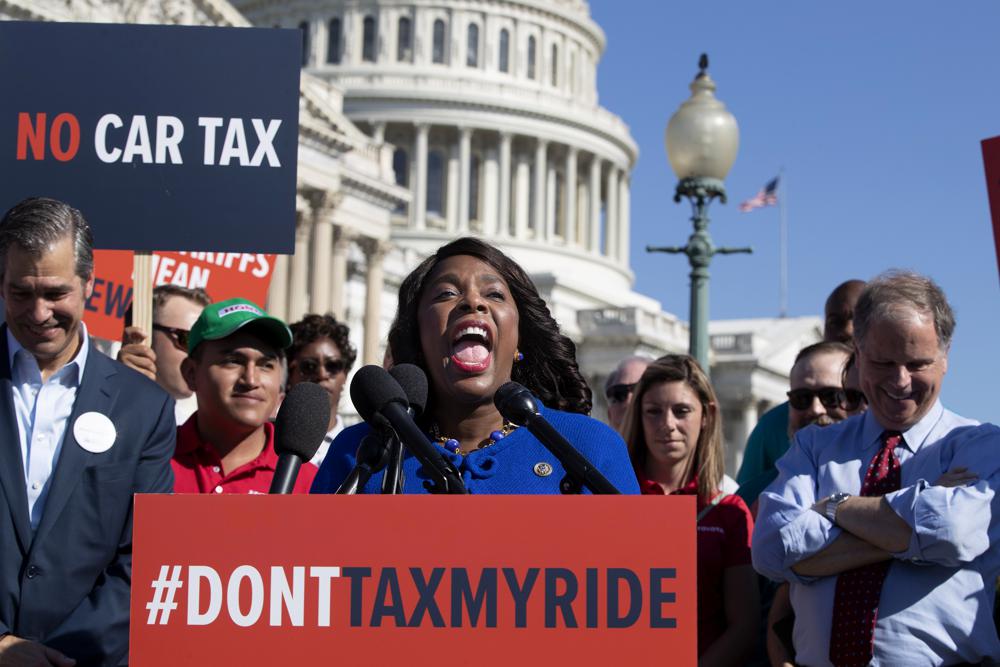
Growing up in the civil rights epicenter of Selma, Alabama, Terri Sewell heard all the stories. About the police violence during the “Bloody Sunday” march at the Edmund Pettus Bridge. About the beating of the young man who went on to become Rep. John Lewis. About the blood that was shed and the lives undone to ensure Black people would finally have the right to vote when the Voting Rights Act of 1965 became law. As she set out for the Ivy League, law school, and eventually Congress, Sewell focused on the civil rights battles to come. Income inequality, she thought, would be her work for the new era. Then the Supreme Court gutted the Voting Rights Act. And the fight of her parents’ and teachers’ and neighbors’ generation suddenly became her own. “Never in a million years did I think that I — 57 years later — would have the cause for which John Lewis and those foot soldiers marched become my cause, too,” Sewell said in an interview. “We fought that. They were bludgeoned on a bridge for the right to vote — the equal right of every American to vote,” she said. “But so it is.” The Democratic congresswoman’s journey from rural Selma to the halls of Congress offers a vivid portrait of the nation’s progress toward ending voter discrimination, but also of accumulating setbacks in the long campaign for voting rights. Her work trying to restore the Voting Rights Act is testing the resolve of a nation that celebrates its civil rights heroes of the past but cannot muster support in Congress to update what has historically been a popular, bipartisan law. Since the Supreme Court in 2013 struck down part of the law, many states free from federal oversight have been imposing new rules, changing polling times, and even installing limits on handing out water for those waiting in line — changes that voter advocates say could make it more difficult to cast ballots in this year’s elections. Wade Henderson, interim president of the Leadership Conference on Civil and Human Rights, said of Sewell: “She’s emerged as someone who is uniquely qualified to play the role that history seems to have given her.” Elected in 2010 as the first Black congresswoman from Alabama, Sewell arrived at the Capitol about as backbench as it gets, among a new handful of Democrats in a Republican tea party wave. That was a tough start for the first Black valedictorian at Selma High School and someone who can boast of attending college with both Obamas, Michelle Obama at Princeton, and the future president at Harvard Law. Coming from a long line of “preachers and teachers,” she confides she really wanted to be an actor but recalled her late father’s admonitions: “We’re not eating cornflakes for dinner for you to be majoring in theater at Princeton University.” Her family’s church in Selma was the historic Brown Chapel AME Church, the starting point for the historic voting rights marches and the place that Lewis — the future congressman, who died in 2020 — and others would return years later to commemorate “Bloody Sunday.” Her mother was the city’s first Black city councilwoman. “For me, growing up in Selma, Alabama, I didn’t have to read in the history books about these amazing foot soldiers,” said Sewell, who is 57. Many of them were “ordinary Alabamians,” she said, and once the marches were over, and the voting rights bill became law, “They went on with their lives, and many of them were my neighbors and my church members.” In Congress, Sewell put her public finance law background to work trying to preserve the historic civil rights sites in her district, which stretches across the state’s Black Belt to her current home in Birmingham. One bill she steered into law awarded the Congressional Gold Medal to the four Black girls killed in the 1963 bombing at the city’s 16th Street Baptist Church. The region has been so underserved that when “Selma” the movie opened in 2014, her mom pointed out there was no movie theater open in town for a screening. Residential yard sewage remains a stubborn problem because of lagging public investment in wastewater systems. “We can’t just come to Selma and walk across that bridge and keep on walking,” she said ahead of next month’s anniversary of the marches. “It’s a city that is dying on the vine, a city that needs economic revitalization.” Two years after Sewell took office, the Supreme Court’s stunning decision to reject the Voting Rights Act’s “preclearance” formula governing state election changes thrust the congresswoman to the forefront alongside Lewis to try to salvage the law, which had been seen as among the most enduring achievements of the Civil Rights era. Since the court’s decision, every session of Congress, she has introduced legislation, now called the John R. Lewis Voting Advancement Act. It failed in the Senate in January, part of a broader bill halted by a Republican filibuster and two Democrats unwilling to change the rules for passage. For Sewell, it was a reminder of how the battle of the earlier civil rights generation has swiftly, intractably become her own. “That’s very much part of the experience of Black leaders,” said Sherrilyn Ifill, the president and director-counsel of the NAACP Legal Defense and Educational Fund. “If you are a Black person in leadership, and you care about and love your community, the circumstances in which Black people live in this country will compel you, sooner or later … to become a civil rights activist.” Alabama is again at the center of the nation’s voting rights debate. Shelby County, not far from Selma, brought the court case in which Chief Justice John Roberts writing for the conservative majority, argued, “Our country has changed in the past 50 years.” The Roberts court will hear another Alabama case, expected later this year. The state, where one in four voters is Black, is asking the high court to reject the creation of a second, mostly Black congressional seat, despite a lower court’s finding that having just
