
FDA: 38 sick from tainted eggs from Alabama

The government says 38 people in seven states have gotten sick from eggs produced by an Alabama poultry farm. The Food and Drug Administration says the illnesses are linked to salmonella-tainted eggs from Gravel Ridge Farms, which is north of Birmingham in Cullman. The agency issued a recall notice last month, and it provided an update Tuesday. The FDA says 10 people were hospitalized after coming in contact with cage-free eggs from the farm, but no one has died. The government says recalled eggs were sold to several grocery stores in Georgia, Tennessee, and Alabama. Most of the illnesses are in Tennessee, where 23 people have been affected. Alabama has had seven cases and Ohio has four. Single cases have occurred in Colorado, Iowa, Kentucky and Montana. Republished with permission from the Associated Press.
Carly’s Law study at UAB finds medical marijuana oil helps epilepsy patients

It’s official: cannabidiol, or CBD oil, oil derived from marijuana plants, helps reduce the number of seizures in patients with treatment-resistant epilepsy. That’s according to findings by the University of Alabama at Birmingham (UAB) released earlier this month. CBD oil, which contains little of the “high-inducing” chemical THC, came into the Alabama lexicon with the passage of “Carly’s Law,” in 2014 after piece of legislation provided the UAB Epilepsy Center and Children’s of Alabama the ability to conduct clinical trials of cannabidiol, a component of cannabis. Starting in 2015, UAB launched the landmark study, which focused on 132 patients, 72 children and 60 adults, with intractable epilepsy who did not respond to traditional therapies. “The study analyzed data from the 132 patients at baseline and at visits at 12, 24 and 48 weeks. Seizure frequency decreased from a mean of 144 seizures every two weeks at baseline to 52 seizures over two weeks at 12 weeks into the study. The reduction remained stable through the 48-week study period,” wrote Bob Shepard at UAB. “This is a highly significant reduction in the number of seizures that the majority of patients experienced, nearly a two-thirds reduction across the entire study population,” said Martina Bebin, M.D., professor in the Department of Neurology in the School of Medicine and principal investigator of the pediatric arm of the study. “Some patients experienced an even greater reduction of seizure frequency.” The investigators also noted parallel decreases in both seizure severity and seizure frequency, indicating that, for many patients, use of CBD oil led to both fewer and less intense seizures. UAB research makes national impact Thanks in part to the research coming out of UAB, on June 25, the U.S. Food and Drug Administration (FDA) approved Epidiolex® for seizures associated with two rare and severe forms of epilepsy, Lennox-Gastaut syndrome and Dravet syndrome, marking the first FDA approval of a purified drug derived from cannabis. “This approval serves as a reminder that advancing sound development programs that properly evaluate active ingredients contained in marijuana can lead to important medical therapies. And, the FDA is committed to this kind of careful scientific research and drug development,” said FDA Commissioner Scott Gottlieb, M.D. “Controlled clinical trials testing the safety and efficacy of a drug, along with careful review through the FDA’s drug approval process, is the most appropriate way to bring marijuana-derived treatments to patients. Because of the adequate and well-controlled clinical studies that supported this approval, prescribers can have confidence in the drug’s uniform strength and consistent delivery that support appropriate dosing needed for treating patients with these complex and serious epilepsy syndromes.”
Daniel Sutter: Are we making the opioid problem worse?

Opioid abuse is taking a tremendous toll on America, with 42,000 opioid-related deaths in 2016. The problem involves both prescription opioid-based painkillers and illegal heroin and fentanyl. Might our public policy response be worsening this terrible problem? Economists have analyzed prohibition, both alcohol in the 1920s and illegal drugs more recently. We evaluate prohibition, or any other government policy, by comparing the world with and without the policy in question. This necessarily involves a state of the world which does not exist. We will never see the toll opioids would have taken in 2018 if we had significantly different policies in place. We must construct an alternative. Rules govern the construction of alternatives to produce meaningful comparisons. One key is allowing only the policy to vary, not other factors, so differences can be attributed to alternative policy. For example, prohibition does not automatically stop people from taking a substance. Some potential users will be deterred because of illegality, but others won’t, as we saw with alcohol in the 1920s. Economic analysis distinguishes harm from the substance itself and those due to prohibition. Drug violence, for example, is almost entirely due to prohibition. Dealers’ cash and drugs are vulnerable to theft, and these thefts will not be reported to the police. Dealers will use violence to protect, steal or retrieve drugs and money. Walgreens and CVS do not have gun battles to control the OxyContin market. Prescription painkillers provide a distinctive twist to the opioid crisis. Introduction of opioid painkillers in the 1990s opened new options for millions of American pain sufferers. Prescription drugs occupy a middle ground in prohibition, legal under government-approved conditions and illegal otherwise. Perhaps the major controversy for policy and lawsuits brought by dozens of states and cities against drug companies is the addictiveness of opioid painkillers. Studies in leading medical journals show that perhaps one or two percent of patients using the drugs as prescribed become dependent. Many of the Americans addicted to painkillers obtained them on the black market or through a bogus prescription. In 2010, the Food and Drug Administration reformulated OxyContin to make the pills harder to crush and make into more potent opioids. Other restrictions on prescribing followed, and pill mills have been shut down. Yet the crisis has become much deadlier since 2010, with heroin- and fentanyl-related deaths increasing by factors of five and six respectively, with only a slight decline in prescription-related deaths. (Overdose victims often used more than one narcotic, so deaths are described only as related to a drug.) Heroin, especially when laced with fentanyl, is far deadlier than prescription opioids. It is tragic when people fall into substance abuse, which often happens after traumatic life events. Rehab is often not effective until people decide to change their lives. Unfortunately, public policy may only be able to limit the harm during a dark period in people’s lives, and ensure the availability of help when requested. Forcing people to turn to heroin by restricting access to painkillers increases harm. Restricting access to prescription opioids is costly. Many people can no longer successfully manage their chronic pain, with tragic consequences. In some documented cases, patients have committed suicide after being denied painkillers. Any policy limiting access for people who do not “need” painkillers will deny some patients in pain needed help because pain is subjective; no doctor or nurse can know if it is tolerable. And a strong argument exists that American adults should be able to decide how to treat their pain without the government’s approval. Libertarian psychiatrist Thomas Szasz argued that free people have a right to drugs. The concentration of the opioid deaths in regions with dwindling manufacturing and mining jobs suggests a significant economic element to the crisis. And this, to me, is the crisis’ most disturbing element. America today boasts tremendous prosperity and opportunity. Given the high overall quality of life today, why is the economy seemingly leading so many Americans to addiction? ••• Daniel Sutter is the Charles G. Koch Professor of Economics with the Manuel H. Johnson Center for Political Economy at Troy University and host of Econversations on TrojanVision. The opinions expressed in this column are the author’s and do not necessarily reflect the views of Troy University.
Mo Brooks fights for patients’ ‘Right to Try’
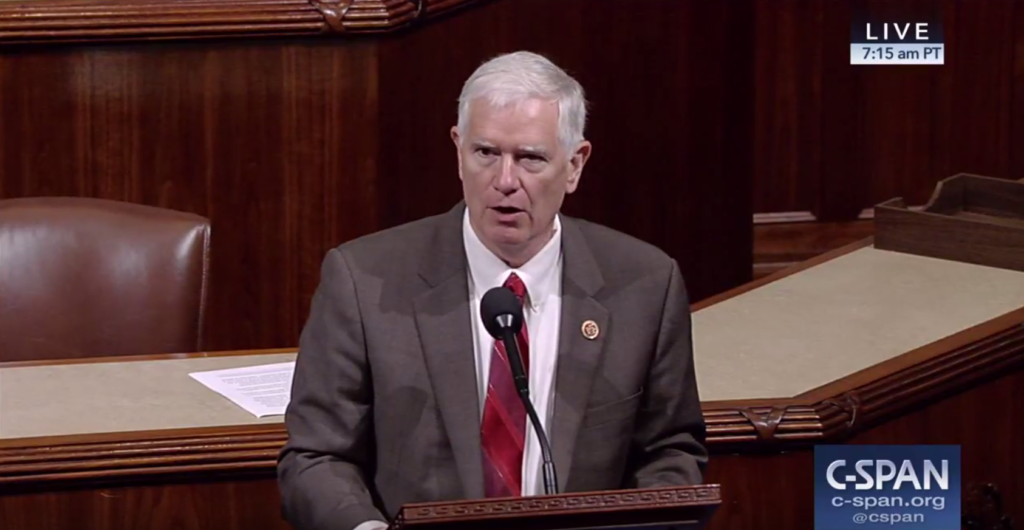
On Thursday, Alabama 5th District U.S. Congressman Mo Brooks delivered a house floor speech requesting a vote on S. 204: the Right to Try Act, which gives terminally ill patients the option to try experimental treatments that have not yet been approved by the Food and Drug Administration (FDA). Often the FDA’s approval of new treatments is a lengthy and complex processes that can takes decades to fully be completed. This bill would allow terminally ill patients to try potentially life-saving experimental treatments and gives patients the right to fight their diseases without having to fight federal bureaucracy. “Patients shouldn’t have to give up their liberty, their freedom, their fight against terminal illness merely because the FDA says so” said Brooks. Brooks was inspired by the story of Steve Mayfield, a beloved football coach at Central High School in Lauderdale County Alabama. Mayfield died in March of 2017 after a long and arduous battle with both Lou Gehrig’s disease (ALS) and the FDA. Like most terminally ill Americans, Mayfield did not have access to investigative treatments due to the FDA’s current policies. “While the Food and Drug Administration grants compassionate use waivers, meant to allow terminal patients access to experimental drugs, only about 1,500 waivers were granted in 2016” said Brooks. “What are other terminally ill Americans to do? Nothing? Just waste away and die without a fight?” Brooks believes the Right to Try Act is the best solution to this problem as it only grants access to treatments that have successfully completed the FDA’s Phase 1 approval requirement. This keeps patients safe from potentially harmful treatment processes while allowing them access to try potentially life changing medical care. “Given the stark contrasts between life and death, between freedom and federal dictates, between hope and hopelessness, the House should take up and pass the Right to Try Act, thereby giving a chance for life to terminally ill patients and their families.” The Senate passed Right to Try legislation last year, and it currently awaits a vote in the House.
Alabama Department of Public Health urges vaccination against HPV

The human papillomavirus – or HPV – is the most common sexually transmitted infection in the world. With more than 170 types of HPV, roughly a dozen strands are linked to cancer. And according to the Centers for Disease Control and Prevention (CDC), more than half of all sexually active people will contract one of the viruses during their lifetime. Which is why the Alabama Department of Public Health (ADPH), Immunization Division, wants to increase awareness about a cancer-prevention vaccine, human papillomavirus (HPV) vaccine. “HPV is such a common virus, and nearly all men and women contract it at some point in their lives. The danger of HPV is the nine different types of strains of infection it causes, seven of which are cancer causing,” said Dr. Karen Landers, District Medical Officer. The HPV vaccine has been approved by the U.S. Food and Drug Administration (FDA) and is recommended by the CDC for both males and females to protect young children from cancer. The vaccine is routinely given at 11 or 12 years of age, but it may be given beginning at age 9 years through age 26 years. Since its introduction in 2006, HPV vaccine has consistently demonstrated effectiveness by decreasing the number of infections and HPV precancers in young people. The vaccine underwent years of extensive safety testing before being licensed by the FDA. According to the National Cancer Institute, the HPV vaccine is highly effective in preventing infection when given before initial exposure to the virus. Video contest to increase awareness In an effort to increase awareness of the HPV vaccine and its benefits, ADPH is conducting a video contest in partnership with the Alabama Chapter of the American Academy of Pediatrics (AAP) that will be open to teenagers who reside in Alabama, ages 15-19. Videos should focus on the occupations or activities they would like to have in the future without the threat of cancers caused by HPV. A panel of judges comprised of ADPH Immunization staff, Cancer Prevention staff, and the AAP will review the video submissions and select the winning video. Submissions are due by Dec. 15, 2017, and the winning video will be announced on Dec. 29, 2017. “Our goal is to educate both young children and parents about the importance of getting vaccinated,” said Dr. Landers. “This is a vaccine that can save lives and allow young Alabamians to have a healthier future.” The winner of the contest will receive a $250 gift card from Target, as well as be promoted on the ADPH website.
Alabama passes SUNucate, allowing sunscreen in school to protect kids from skin cancer
Thanks to a new law signed by Gov. Kay Ivey earlier this month, Alabama children will be allowed to bring and apply sunscreen at school or camp without a doctor’s note. Previously, following U.S. Food and Drug Administration (FDA) guidelines, school systems categorized sunscreen as an over-the-counter medication like Tylenol or ibuprofen and required a doctor’s note to have it at school. Alabama has loosened these restrictions to make it easier for kids to protect themselves from skin cancer. The law, deemed SUNucate, eliminates barriers prohibiting students from possessing and using over-the-counter sunscreen by exempting these products from requirements implemented by broad reaching ”medication bans,” such as the need for a physician’s note or prescription. Alabama is the fourth state to pass this law in 2017. The American Society for Dermatologic Surgery Association (ASDSA) applauds the bill’s sponsors, Springville-Republican State Sen. Jim McClendon and Talladega-Republican State Rep. Ron Johnson – sponsors of Senate Bill 63 and House Bill 147 – for their leadership on the issue, and thanks both the legislature and Governor Ivey for their support of the efforts to help protect children from skin cancer. “Creating a culture of sun-safe behavior in our youth is a real part of how we can reduce the risk of skin cancer,” said ASDSA President Thomas E. Rohrer, MD. “As dermatologic surgeons, we must help the public understand the real risks of excessive sun exposure and how to mitigate them.” The ASDSA said in a statement allowing “the regular and routine use of sunscreen at schools without a prescription” is key to reducing skin cancer in the U.S. The Centers for Disease Control (CDC) and Prevention and the U.S. Preventive Services Task Force both agree — children should have access to sunscreen and other sun-protective measures in order to reduce the risk of skin cancer.
FDA approves more drugs, and faster, than Europe, study says

Contrary to some political claims, the U.S. Food and Drug Administration approved more drugs, and two to three months faster on average, than European regulators did in recent years, new research shows. “It’s an urban myth” that the FDA is slower than other countries to clear promising treatments for patients, said the agency’s longtime cancer drugs chief, Dr. Richard Pazdur. He had no role in the approval rate research, which was published Wednesday in the New England Journal of Medicine. The new research compared how new drugs fared before the FDA and the European Medicines Agency between 2011 and 2015. The FDA approved more drugs than the Europeans — 170 versus 144 — with a median review time of 306 days versus 383 days in Europe. Reviews were speedier at the FDA for drugs for cancer and blood diseases, but not other maladies, compared to the Europeans. The FDA also moved quicker on so-called orphan drugs, for relatively rare conditions. The results are similar to a previous analysis that some of the same researchers did for therapies approved between 2001 and 2010. The latest study was done by Dr. Nicholas Downing at Boston’s Brigham and Women’s Hospital, Audrey Zhang at New York University and Dr. Joseph Ross at the Yale School of Medicine. President Donald Trump has called the FDA’s drug approval process “slow and burdensome,” and his nominee to head the agency, Dr. Scott Gottlieb, has criticized what he calls unnecessary regulations. Gottlieb’s confirmation hearings began on Wednesday. Some other doctors defended the FDA’s track record. “We’re the best in the world. Our FDA is great,” said Dr. George Demetri of the Dana-Farber Cancer Institute. He is a board member of the American Association for Cancer Research, and spoke from the group’s annual meeting in Washington, attended by some 20,000 cancer scientists from around the world. Republished with permission of The Associated Press.
ADPH supports new FDA regulations for all tobacco, smoking products effective Aug. 8

New Food and Drug Administration (FDA) regulations for all tobacco and smoking products are poised to take effect next month in attempt to reduce the number of minors purchasing and using tobacco products. Beginning Aug. 8, the FDA will review new tobacco products not yet on the market, help prevent misleading claims by tobacco product manufacturers, evaluate the ingredients of tobacco products and how they are made and communicate the potential risks of tobacco products by issuing health warnings and advisories. The Alabama Department of Public Health (ADPH) came out Wednesday in support of the new regulations to restrict the sale of all tobacco products, including e-cigarettes, cigars, hookah tobacco and pipe tobacco, among others, as well as to restrict the sale of all tobacco products to minors. “Tobacco use remains a significant public health threat and is the leading cause of preventable disease and death in Alabama,” Alabama State Health Officer Dr. Tom Miller said. “We applaud efforts by the Food and Drug Administration (FDA) to control these dangerous products.” According to the ADPH, 9,000 deaths annually in Alabama are attributed to smoking-related diseases. These deaths are due to cancer, cardiovascular disease, respiratory disease, secondhand smoke and smoking related fires. A recent survey supported by the FDA and the Centers for Disease Control and Prevention show current e-cigarette use among high school students has increased from 1.5 percent in 2011 to 16 percent in 2015 — more than 900 percent. The ADPH is concerned with a particular variety of e-cigarettes called “vaping,” which includes the use of liquid tobacco in e-cigarettes. These are battery-powered devices that heat a liquid — usually containing nicotine mixed with the chemicals propylene glycol and glycerin, and often flavorings ranging from bubble gum to watermelon — into a vapor that users can inhale. They deliver nicotine, a highly addictive drug, to the body without producing any smoke. The ADPH hopes these new regulations will help combat the use of these dangerous products.
Mike Ball to introduce new bill aimed at decriminalizing marijuana medicinal oil

A new bill aimed at decriminalizing the possession of CBD oil will likely come up for discussion during the upcoming legislative session, according to the bill’s sponsor, GOP state Rep. Mike Ball of Huntsville). A previous bill, “Carly’s Law,” gave the University of Alabama – Birmingham the opportunity to research the use of CBD oil, a medicinal oil derived from marijuana but containing little of the “high-inducing” chemical THC, and eventually led to chemical trials for children and adults suffering from myriad ailments. However, after the U.S. Food and Drug Administration narrowed the margins for who could have access to the medicine, many of the state’s most needy were denied access to the program. Specifically Leni Young and her family, who fled to Oregon last year where access to the oil is more readily available. “They’re refugees,” Ball said. Leni’s parents fought tirelessly for “Carly’s Law,” only to see their daughter, who suffers from intractable complex epilepsy and a rare form of cerebral palsy, left out of the trials and following dispersion of medication. Since moving to Oregon and using “high CBD cannabis oil” regularly, Leni has gone from hundreds of seizures a day to one every four to six weeks and has had her cocktail of medication reduced by 20 percent with no adverse side effects. Further, Leni is using her hands for the first time, engaging with her family more thoroughly and able to sit on her own with minimal assistance. Thus, Ball will introduce “Leni’s Law” during the upcoming session. “This is a spiritual issue, not a political issue” Ball said. “It’s time to take this step.” To ensure that his bill is on legal footing, Ball had the bill drafted by the Alabama Law Institute and is planning to have it examined by district attorneys. Ball noted that the issue is complex – federal law has created a climate where doctors are afraid to prescribe the drug and desperate families are afraid to be in possession of it. For that reason, Ball believes a resolution should be drafted to petition the federal government to change its stance on marijuana policy, specifically as it pertains to the use and dispersion of CBD oil, and the Alabama legislature should eradicate fears of prosecution for potential patients. “These people are not criminals,” Ball said. “It’s just common sense. Leni is the catalyst for me, but there are lots of other families who need this medication and we have got to do something to help them.”
Daniel Sutter: Making good decisions about risk

Can Americans make good decisions about risks to life and limb? Many policy experts don’t think so. Although there are challenges, I think that people make better decisions than they sometimes get credit for. The mirage of perfect safety provides a huge obstacle to good decisions. We value safety, so zero risk seems like a reasonable goal. But zero risk, when not impossible, almost always entails enormous costs. To see why, consider driving. Auto accidents claim over 35,000 victims annually, so it would be great to reduce this toll. We can do so by driving slower, but we then spend more time traveling. We drive faster than 5 mph because we want to get places in a reasonable time. Given the cost, we do not choose zero risk. An excessive focus on one risk also leads us to ignore costs or unavoidable tradeoffs. A person who is extremely afraid of flying might choose to drive instead. They reduce the risk of dying in a plane crash to zero, but face a greater risk of dying overall. People also estimate risks inaccurately. Misperceptions, which some observers view as evidence of poor decisions, are a consequence of the cost of information. Reading the Census of Fatal Occupational Injuries or the Centers for Disease Control’s mortality reports takes time and is boring. Most people rely instead on news reports. The mass media, however, covers stories people find interesting. Consequently Americans tend to think that more murders than suicides occur each year, and overestimate the chances of dying in plane crashes, tornadoes, or terrorist attacks. Undoubtedly people make mistakes concerning risky choices. But government bureaucrats find it nearly impossible to unambiguously identify and correct mistakes, because of peoples’ different values and tolerances for risk. Personally I see no value and only risk in riding motorcycles and rock climbing. Yet I know that other people accept some risk of injury or death to enjoy these activities. The dread of the person who fears flying may lead her to choose a riskier but less terrifying mode of transportation. These decisions are not wrong. Government also makes poor risk decisions. This really shouldn’t surprise us, since voters, politicians and bureaucrats all make the types of mistakes discussed above. But the environment also encourages poor decisions. One factor is bureaucracies addressing narrowly defined risks. Thus the FDA handles foods and medicines, the EPA covers environmental risks, and so on. This allows the assembling of great expertise about risks, but also encourages bureaucratic tunnel vision. Here’s an example I’ve observed while researching the societal impacts of severe weather. Researchers or bureaucrats might remark how Americans’ preference to spend $5,000 on flat-screen TVs and not in-home tornado shelters is a problem. Holding one risk as paramount might strike us as ridiculous, but the attitude results from the narrowness of professional expertise combined with exclusive organizational focus on one risk. The symbolic and disjointed nature of legislation also leads to trade offs being ignored. When a threat emerges, politicians want to be seen taking action to protect the public. So they pass a law and announce that we are now safe. The costs emerge only with implementation of the law, and then regulatory costs are typically hidden in new higher prices. Consequently we never really debate whether the improvement in safety is worth the cost. Estimates of costs per life saved for different safety measures by economists help us make better decisions. A regulation estimated to cost $30 million and save 10 lives would have a cost per life saved of $3 million. Costs per life saved are comparable across different regulations. This identifies regulations with really high costs per life saved as bad investments. Some people believe that it is wrong to talk about how much we should spend to save lives. They think that we should save lives regardless of the cost. And yet this is perhaps the greatest error we face when thinking about risk. Every potential life-and-death decision involves a value of life; our only choice is whether we evaluate the trade off. Ignoring trade offs produces inconsistent and costly decisions. Daniel Sutter is the Charles G. Koch Professor of Economics with the Manuel H. Johnson Center for Political Economy at Troy University and host of Econversations on TrojanVision.
Lawmakers grant final approval to Right to Try bill

Alabama lawmakers granted final passage Thursday to a bill that would allow physicians to prescribe terminally ill patients promising, but unapproved medical treatments. House Bill 463, known as the Right to Try Act, passed the House of Representatives by a vote of 97-0. The bill says that doctors caring for people with terminal illnesses can prescribe medications that the Food and Drug Administration has deemed promising, but not yet ready for mass consumption. Thursday’s vote makes Alabama one of at least 12 states that have passed right to try legislation this year. House Bill 463 and Senate Bill 357 were inspired by 9-year old Gabe Griffin of Shelby County. At age 3, Gabe was diagnosed with Duchenne, one of nine types of Muscular Dystrophy. The disease causes generalized weakness and muscle wasting that increases over time and with muscle activity. Not only is the disease incurable, according to the Muscular Dystrophy Association, boys with Duchenne typically did not survive beyond their teens. Two Alabama lawmakers, Sen. Cam Ward and House health committee chair Rep. April Weaver, agreed to sponsor legislation that would help Gabe and other terminal patients work with their doctors to access medication in the earliest stages of FDA approval. Ward’s bill has already passed the Senate. When he introduced the Senate version of the bill, Ward said in a prepared statement: “Terminal patients should have a right to try, and as a father and an elected official I believe we should do everything we can to help remove unnecessary bureaucratic red tape from the process so that doctors and terminally ill patients can determine the best course of action in each individual situation.” The initial barriers, according to Gabe’s father, Scott Griffin, came from the Food and Drug Administration when the family tried to gain accelerated access to experimental treatments for Gabe. In a recent interview with Alabama Today, Griffin recalled one of his conversations with FDA administrators. “The first argument was that the patient population of one of the studies was too small: just 12 kids. Then they said the results in the study may have been just the natural difference in the disease … They said, ‘Well we have the best drug approval process in the world’ and ‘You have to understand that we have to worry about long-term side effects.’ And I said to them, ‘Explain to me what a long-term side effect is to a child who is going to die.’” The Food and Drug Administration has acknowledged that the accelerated approval process can be daunting for patients and medical providers. In a statement on the FDA website, assistant commissioner Peter Lurie M.D. said that although approvals can happen within days – or even hours – of a finished application, the process has given them cause for concern. “It called for 26 separate types of information and seven attachments,” Lurie wrote. “In fact, it was originally designed for manufacturers seeking to begin human testing, not for physicians seeking use by single patients.” According to Lurie, those concerns are what drove the FDA to announce a new streamlined process to allow patients access to experimental drugs. The FDA website says that the new forms “will be used for requesting the medications, and is designed to greatly simplify and accelerate the process by which a physician can request that FDA permit the use of an experimental — so-called ‘investigational’ — drug or biological product while it’s still being tested to establish its safety and effectiveness.” However, the forms are still going through the administrative rulemaking process and not yet available to the public. The official website gave no indication on when the final guidelines would be available for patients or providers. For the Griffins, the FDA roadblocks helped fuel their decision to lobby Alabama lawmakers. “We believe those drugs could save him, but we can’t get them because they’re not FDA approved,” Griffin said. “And after years of petitioning the FDA, we decided to take our fight to the state level.” The Griffins aren’t alone. According to the National Conference of State Legislatures, a growing number of states are considering legislation to work around those barriers and help patients gain access to experimental drugs. Thursday’s vote makes Alabama one of 12 states that have passed right to try bills so far this year. The NCSL reports that lawmakers in at least 36 states proposed “right to try” measures in 2015.
#Hope4Gabe family excited to see “Right to Try” Act move closer to finish line

One family’s winding journey to secure medicine they hope could save their son’s life is several steps closer to the finish line. A group of Alabama lawmakers voted Wednesday in favor of House Bill 463, also known as the Right to Try Act. The bill says that doctors caring for people with terminal illnesses can prescribe medications that the Food and Drug Administration has deemed promising, but not yet ready for mass consumption. The Griffin family and their son, Gabe, are at the center of the legislation. Scott Griffin and his wife Traci live in Birmingham with their four children: Turner, age 14; Cooper, age 11; and 9-year-old twins, Gabe and Addie. In an interview with Alabama Today, Griffin said he and his wife had suspected since the twins were babies that Gabe wasn’t developing as quickly as his sister. “When you have a twin right beside him and she’s hitting all her benchmarks, and he’s not, it becomes a little evident that something’s not right,” Griffin said. “Our doctors kept saying, ‘Nothing’s wrong. He’s just a boy twin and they’re slower to develop.’ So we just kind of dismissed it. But something didn’t seem right.” The Griffin’s neighbor was the first to suggest that Gabe might need to be tested for muscular dystrophy. An occupational therapist, she sometimes babysat the kids and noticed subtle differences in Gabe’s attempts to stand and walk. She told the Griffins about Duchenne Muscular Dystrophy and recommended that 3-year-old Gabe see a doctor. Duchenne is one of nine types of Muscular Dystrophy. It causes generalized weakness and muscle wasting that increases over time and with muscle activity. The disease primarily effects boys and shows up between ages 3 and 5. According to the Muscular Dystrophy Association, boys with Duchenne typically did not survive beyond their teens. But advances in medical treatments and care have increased their life expectancy: “Survival into the early 30s is becoming more common and there are cases of men living into their 40s and 50s.” Scott Griffin says those medical advances could save Gabe’s life. “He’s 9 now. The typical progression of the disease is that by 10 or 12, they’re wheelchair bound. And then, between 17-20, they usually die.” He says that’s why the family started looking into cutting-edge therapies to slow – or even reverse – the degeneration of Gabe’s muscles. However, the drugs that the Griffins and their doctors feel would help Gabe are still going through the FDA approval process. “We believe those drugs could save him, but we can’t get them because they’re not FDA approved,” said Griffin. “And after years of petitioning the FDA, we decided to take our fight to the state level.” The Griffins started a foundation called Hope for Gabe (H4G) to raise awareness about Duchenne. They also enlisted the help of Michael Staley, former chief of staff to U.S. Congressman Spencer Bachus and current lobbyist at Birmingham law firm Waller Landsen Dortch and Davis, to educate legislators about the proposed law. Two lawmakers, Sen. Cam Ward and health committee chair Rep. April Weaver, agreed to sponsor legislation that would allow doctors to prescribe medication in the earliest stages of FDA approval to terminally ill patients. Sen. Ward’s bill has already passed the Senate. Today, Rep. Weaver’s legislation received a favorable report from the health committee and can move to the House floor for open debate. “Right to Try is the right thing to do,” Weaver said just after the committee vote. “I’m a mother and a nurse with more than 20 years in health care. I believe that anything that we can do to help doctors and terminal patients work together on their plan of care and remove barriers to treatment that might be beneficial is just the right thing to do.” Griffin said that the timing of the legislation is critical to securing medical treatment for Gabe. “Getting him these drugs now means that we can stop the disease before he needs a wheelchair or breathing tubes. They could even turn his condition around.” For Gabe, passing the Right to Try Act means being able to “ride a bike, run, and climb stairs like everybody else.” He said that he’s also looking forward to excelling in his favorite subject in school: physical education. Weaver said she hopes to see the bill head to the House floor by late next week.
