
Only 7 democrats will be on the stage for the last presidential debate of 2019
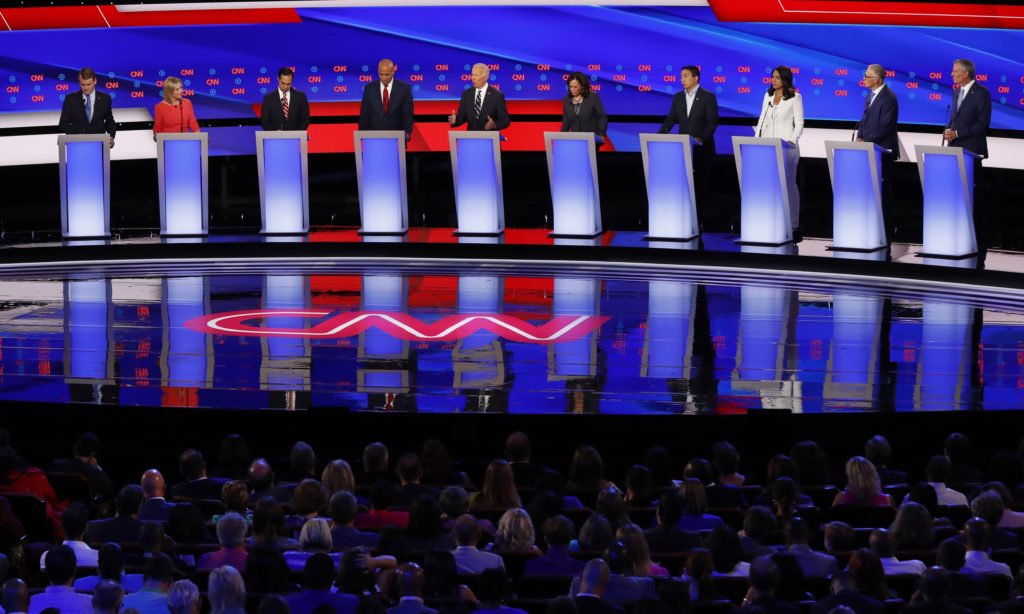
A winnowed field of Democratic presidential contenders takes the debate stage for a sixth and final time in 2019, as candidates seek to convince anxious voters that they are the party’s best hope to deny President Donald Trump a second term next year. Thursday night’s televised contest ahead of Christmas will bring seven rivals to heavily Democratic California, the biggest prize in the primary season and home to 1 in 8 Americans. And, coming a day after a politically divided House impeached the Republican president, the debate will underscore the paramount concern for Democratic voters: Who can beat Trump in November? With voters distracted by the holidays and the impeachment proceedings in Washington, the debate in Los Angeles could turn out to be the least watched so far. Viewership has declined in each round though five debates, and even campaigns have grumbled that the candidates would rather be on the ground in early voting states than again taking the debate stage. The lack of a clear front-runner reflects the uncertainty gripping many voters. Would Trump be more vulnerable to a challenge from the party’s liberal wing or a candidate tethered to the centrist establishment? Should the pick be a man or a woman, or a person of color? The Democratic field is also marked by wide differences in age, geography and wealth, and the party remains divided over issues including health care and the influence of big-dollar fundraising. There will be a notable lack of diversity onstage compared to earlier debates. For the first time this cycle, the debate won’t feature a black or Latino candidate. The race in California has largely mirrored national trends, with former Vice President Joe Biden, Vermont Sen. Bernie Sanders and Massachusetts Sen. Elizabeth Warren clustered at the top of the field, followed by South Bend, Indiana, Mayor Pete Buttigieg, Minnesota Sen. Amy Klobuchar, businessman Andrew Yang and billionaire philanthropist Tom Steyer. Conspicuously missing from the lineup at Loyola Marymount University on Thursday will be former New York City Mayor Michael Bloomberg, a billionaire who is unable to qualify for the contests because he is not accepting campaign donations. But even if he’s not on the podium, Bloomberg has been felt in the state: He’s running a deluge of TV advertising in California to introduce himself to voters who probably know little, if anything, about him. Bloomberg’s late entry into the contest last month highlighted the overriding issue in the contest, electability, a sign of the unease within the Democratic Party about its crop of candidates and whether any is strong enough to unseat an incumbent president. The eventual nominee will be tasked with splicing together the party’s disparate factions — a job Hillary Clinton struggled with after defeating Sanders in a long and bitter primary fight in 2016. Biden adviser Symone Sanders said to expect another robust exchange on health care. “This is an issue that is not going away and for good reason, because it is an issue that in 2018 Democrats ran on and won,” she said. Jess O’Connell with Buttigieg’s campaign said the candidate will “be fully prepared to have an open and honest conversation about where there are contrast between us and the other candidates. This is a really important time to start to do that. Voters need time to understand the distinctions between these candidates.” The key issues: health care and higher education. The unsettled race has seen surges at various points by Biden, Warren, Sanders and Buttigieg, though it’s become defined by that cluster of shifting leaders, with others struggling for momentum. California Sen. Kamala Harris, once seen as among the top tier of candidates, shelved her campaign this month, citing a lack of money. And Warren has become more aggressive, especially toward Buttigieg, as she tries to recover from shifting explanations of how she’d pay for “Medicare for All” without raising taxes. In a replay of 2016, the shifting race for the Democratic nomination has showcased the rift between the party’s liberal wing, represented in Sanders and Warren, and candidates parked in or near the political center, including Biden, Buttigieg and Bloomberg. Two candidates who didn’t make the stage will still make their presence felt for debate watchers with ads reminding viewers they’re still in the race. New Jersey Sen. Cory Booker and former Housing Secretary Julián Castro are airing television ads targeted to primary voters during the debate. Booker’s is his first television ad, and in it he says even though he’s not on the debate stage, “I’m going to win this election anyway.” It’s airing as part of a $500,000 campaign, running in Iowa, New Hampshire, Nevada and South Carolina, as well as New York, Washington, D.C., and Los Angeles. A pro-Booker super PAC is also going up with an ad in Iowa highlighting positive reviews of Booker’s past debate performances. Meanwhile, Castro is running an ad, in Iowa, in which he argues the state should no longer go first in Democrats’ nominating process because it doesn’t reflect the diversity of the Democratic Party. Both candidates failed to hit the polling threshold to qualify for the debates and have in recent weeks become outspoken critics of what they say is a debate qualification process that favors white candidates over minorities. By Kathleen Ronayne and Michael R. Blood Associated Press Associated Press writer Michelle L. Price in Las Vegas contributed to this report. Catch up on the 2020 election campaign with AP experts on our weekly politics podcast, “Ground Game.” Republished with the Permission of the Associated Press.
Kamala Harris ends campaign for presidential bid, citing lack of funding
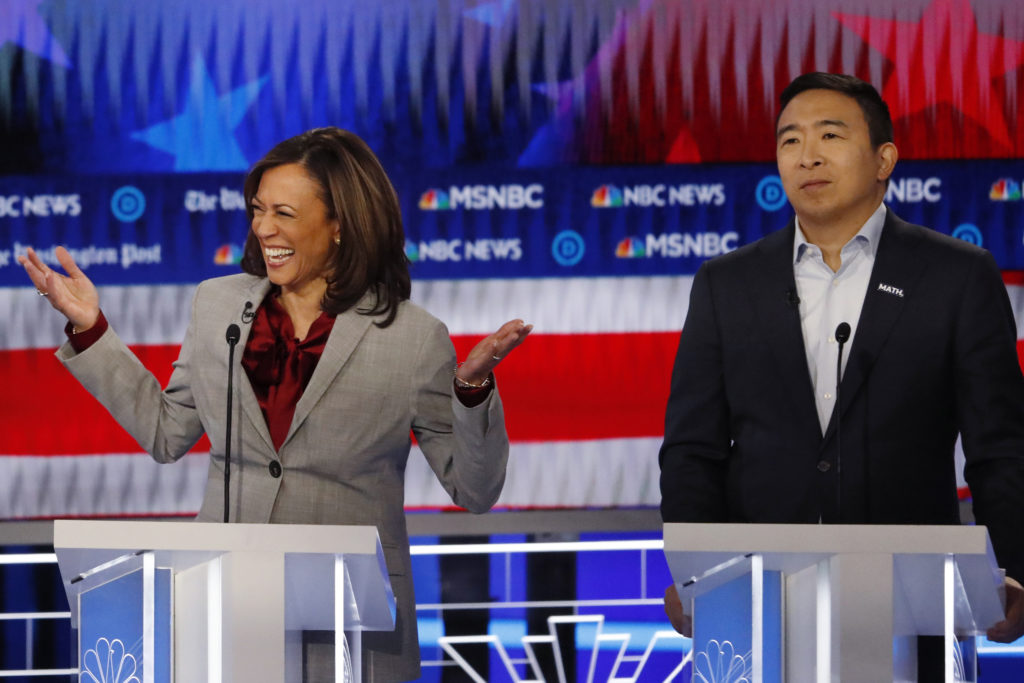
Sen. Kamala Harris told supporters on Tuesday that she was ending her bid for the 2020 Democratic presidential nomination, an abrupt close to a candidacy that held historic potential. “I’ve taken stock and looked at this from every angle, and over the last few days have come to one of the hardest decisions of my life,” the California Democrat said. “My campaign for president simply doesn’t have the financial resources we need to continue.” A senior campaign aide said Harris made the decision Monday after discussing the path forward with family and other top officials over the Thanksgiving holiday. Her withdrawal marked a dramatic fall for a candidate who showed extraordinary promise in her bid to become the first black female president. Harris launched her campaign in front of 20,000 people on a chilly January day in Oakland, California. The first woman and first black attorney general and U.S. senator in California’s history, she was widely viewed as a candidate poised to excite the multiracial coalition of voters that sent Barack Obama to the White House. Her departure erodes the diversity of the Democratic field, which is dominated at the moment by a top tier that is white and mostly male. “She was an important voice in the race, out before others who raised less and were less electable. It’s a loss not to have her voice in the race,” said Aimee Allison, who leads She the People, a group that promotes women of color. Harris ultimately could not craft a message that resonated with voters or secure the money to continue her run. She raised an impressive $12 million in the first three months of her campaign and quickly locked down major endorsements meant to show her dominance in her home state, which offers the biggest delegate haul in the Democratic primary contest. But as the field grew, Harris’ fundraising remained flat; she was unable to attract the type of attention being showered on Pete Buttigieg by traditional donors or the grassroots firepower that drove tens of millions of dollars to Elizabeth Warren and Bernie Sanders. In her note to supporters, Harris lamented the role of money in politics and, without naming them, took a shot at billionaires Tom Steyer and Michael Bloomberg, who are funding their own presidential bids. “I’m not a billionaire,” she said. “I can’t fund my own campaign. And as the campaign has gone on, it’s become harder and harder to raise the money we need to compete.” Harris suffered from what allies and critics viewed as an inconsistent pitch to voters. Her slogan “For the people” referenced her career as a prosecutor, a record that was viewed skeptically by the party’s most progressive voters. Through the summer, she focused on pocketbook issues and her “3 a.m. agenda,” a message that never seemed to resonate with voters. By the fall, she had returned to her courtroom roots with the refrain that “justice is on the ballot,” both a cry for economic and social justice as well as her call that she could “prosecute the case” against a “criminal” president. At times, she was tripped up by confusing policy positions; particularly on health care. After suggesting she would eliminate private insurance in favor of a fully government-run system, Harris eventually rolled out a health care plan that preserves a role for private insurance. Stumbles, often of the campaign’s making, continued to dog Harris into the winter, stymieing her ability to capitalize on solid moments. Harris kicked off November with a well-received speech at a massive Iowa dinner, just a day after her campaign announced it would fire staff at its Baltimore headquarters and was moving some people from other early states to Iowa. Her message was regularly overshadowed by campaign aides and allies sharing grievances with the news media. Several top aides decamped for other campaigns, one leaving a blistering resignation letter. “Because we have refused to confront our mistakes, foster an environment of critical thinking and honest feedback, or trust the expertise of talented staff, we find ourselves making the same unforced errors over and over,” Kelly Mehlenbacher wrote in her letter, obtained by The New York Times. Mehlenbacher now works for businessman Bloomberg’s campaign. With Harris’ exit, 15 Democrats remain in the race for the nomination. Several praised her on Tuesday. Former Vice President Joe Biden, who had a memorable debate stage tussle with Harris this summer, called the senator a “solid person, loaded with talent.” Vermont Sen. Bernie Sanders commended Harris for “running a spirited and issue-oriented campaign.” New Jersey Sen. Cory Booker, one of two black candidates still in the campaign, called Harris a “trailblazer.” Harris anchored her campaign in the powerful legacy of pioneering African Americans. Her campaign launch on the Martin Luther King Jr. holiday included a nod to Shirley Chisholm, the New York congresswoman who sought the Democratic Party’s presidential nomination 47 years ago earlier. One of her first stops as a candidate was to Howard University, the historically black college that she attended as an undergraduate. She spent much of her early campaign focusing on South Carolina, which hosts the first Southern primary and has a significant African American population. But Harris struggled to chip away at Biden’s deep advantage with black voters who are critical to winning the Democratic nomination. Harris and her aides believe she faced an uphill battle — and unfair expectations for perfection — from the start as a woman of color. Her campaign speech included a line about what Harris called the “donkey in the room,” a reference to the thought that Americans wouldn’t elect a woman of color. Harris often suggested it was criticism she faced in her other campaigns — all of which she won. Her departure from the presidential race marks her first defeat as a political candidate. Associated Press writers Steve Peoples in New York and Bill Barrow in Mason City, Iowa, contributed to this report. By Kathleen Ronayne and Nicholas Riccardi Associated Press. Republished with the Permission of the Associated Press.
Takeaways from the democratic presidential debate
Democrats spent more time making the case for their ability to beat President Donald Trump than trying to defeat each other in their fifth debate Wednesday night. Civil in tone, mostly cautious in approach, the forum did little to reorder the field and may have given encouragement to two new entrants into the race, Mike Bloomberg and Deval Patrick. Here are some key takeaways. IMPEACHMENT CLOUD HOVERS The impeachment inquiry of President Donald Trump took up much of the oxygen early in the debate. The questions about impeachment did little to create much separation in a field that universally condemns the president. The candidates tried mightily to pivot to their agenda. Massachusetts Sen. Elizabeth Warren talked about how a major Trump donor became the ambassador at the heart of the Ukraine scandal, and reiterated her vow to not reward ambassadorships to donors. Former Vice President Joe Biden tried to tout the investigation as a measure of how much Trump fears his candidacy. Impeachment is potentially perilous to the Democratic candidates for two reasons. A Senate trial may trap a good chunk of the field in Washington just as early states vote in February. It also highlights a challenge for Democrats since Trump entered the presidential race in 2015 — shifting the conversation from Trump’s serial controversies to their own agenda. Vermont Sen. Bernie Sanders warned, “We cannot simply be consumed by Donald Trump, because if you are you’re going to lose the election.” OBAMA COALITION Perhaps more than in any debate so far, Democrats explicitly acknowledged the importance of black and other minority voters. California Sen. Kamala Harris said repeatedly that Democrats must reassemble “the Obama coalition” to defeat Trump. Harris, one of three black candidates running for the nomination, highlighted black women especially, arguing that her experiences make her an ideal nominee. Another black candidate, New Jersey Sen. Cory Booker, added: “I’ve had a lot of experience with black voters. … I’ve been one since I was 18.” Neither Booker nor Harris, though, has been able to parlay life experiences into strong support in the primary, in no small part because of Biden’s strong standing in the black community. Biden’s standing is also a barrier to other white candidates, including South Bend, Indiana, Mayor Pete Buttigieg, who is surging in overwhelmingly white Iowa but struggling badly with black voters in Southern states like South Carolina that have proven critical to previous Democratic nominees. Buttigieg acknowledged as much, saying he welcomes “the challenge of connecting with black voters in America who don’t yet know me.” The exchanges show that candidates seemingly accept the proposition that the eventual nominee will have to put together a racially diverse coalition to win, and that those whose bases remain overwhelmingly white (or just too small altogether) aren’t likely to be the nominee. CLIMATE CRISIS GETS AIR The climate crisis, which Democratic voters cite as a top concern, finally gained at least some attention. There were flashes of the debate Wednesday night, as billionaire environmental activist Tom Steyer swiped at Biden by suggesting the former vice president wants an inadequate, piecemeal approach to the crisis. Biden hit right back, reminding Steyer that he sponsored climate legislation as a senator in the 1980s while Steyer built his fortune in part on investments in coal. Buttigieg turned a question about the effects of Trump’s policies on farmers into a call for the U.S. agriculture sector to become a key piece of an emissions-free economy. But those details seem less important than the overall exchange — or lack thereof. Perhaps it’s the complexities of the policies involved. Or perhaps it’s just the politics. Whatever the case, the remaining field simply doesn’t seem comfortable or willing to push climate policy to the forefront, and debate moderators don’t either. HEALTH CARE GROUNDHOG DAY Before every debate, Democratic presidential campaigns aides lay out nuanced, focused arguments their candidates surely will make on the stage. And every debate seems to evolve quickly into an argument over health care. So it was again. Within minutes of the start, Warren found herself on the defensive as she explained she still supports a single-payer government run insurance system — “Medicare for All” — despite her recent modified proposal to get there in phases. Not to be outdone, Sanders reminded people that he’s the original Senate sponsor of the “Medicare for All” bill that animates progressives. “I wrote the damn bill,” he quipped. Again. Biden jumped in to remind his more liberal rivals that their ideas would not pass in Congress. The former vice president touted his commitment to adding a government insurance plan to existing Affordable Care Act exchanges that now sell private insurance policies. The debate highlights a fundamental tension for candidates: Democratic voters identify health care as their top domestic policy concern, but they also tell pollsters their top political priority in the primary campaign is finding a nominee who can defeat Trump. The top contenders did nothing to settle the argument Wednesday, instead offering evidence that the ideological tug-of-war will remain until someone wins enough delegates to claim the nomination. DID YOU HEAR THE ONE … The debate was so genial that some of the most memorable moments were the candidates’ well-rehearsed jokes. Asked what he’d say to Russian President Vladimir Putin if he’s elected to the White House, technology entrepreneur Andrew Yang said his first words would be, “Sorry I beat your guy.” Minnesota Sen. Amy Klobuchar drew laughs for an often-repeated anecdote about how she set a record by raising $17,000 from ex-boyfriends during her first campaign. She also pushed back at fears of a female candidacy by saying, “If you think a woman can’t beat Donald Trump, Nancy Pelosi does it every day.” Booker, criticizing Biden for not agreeing to legalize marijuana, said, “I thought you might have been high when you said it.” And Harris may have issued the zinger of the night at the president when discussing his nuclear negotiations with North Korea: “Donald Trump got
Key takeaways from the 2020 democratic candidates’ debate
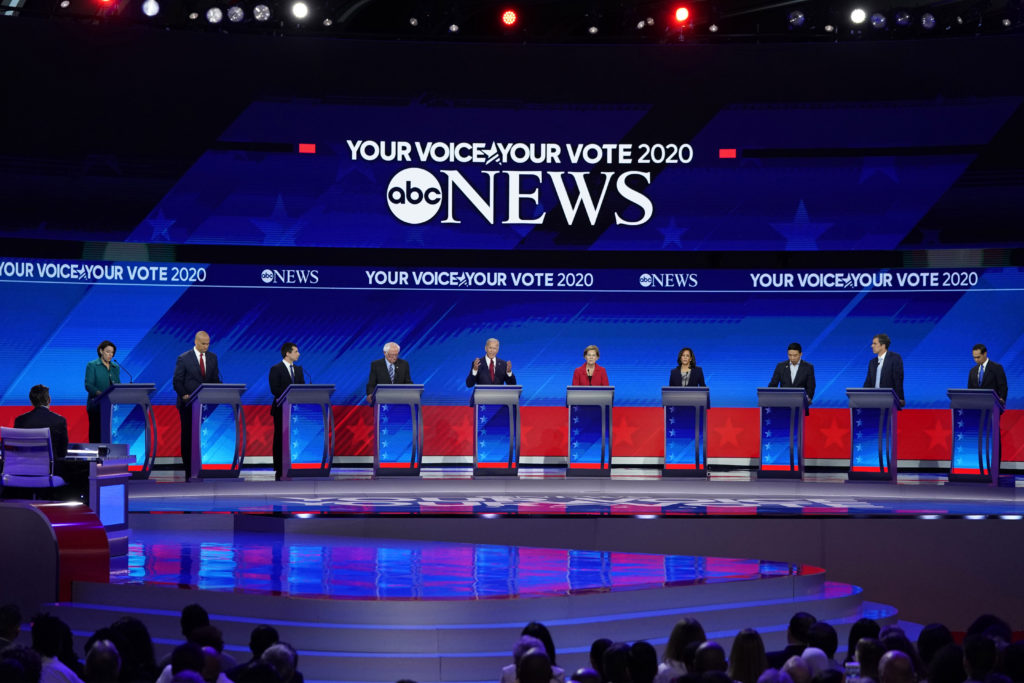
Democratic debate night No. 3: Attacks and counter-attacks. Love for one former president, loathing for the current one. A 76-year-old front-runner essentially got called old, and he turned around and called another rival a “socialist.” But will it change the fundamentals of a nominating fight that remains remarkably stable at the top with five months until voting begins? Here’s a look at some takeaways and potential answers: STATUS QUO PREVAILED The third Democratic debate seemed to end in a 10-way tie. Former Vice President Joe Biden was sure-footed (until the end), at least for him and compared with the previous two debates. There were more attacks on President Donald Trump than on each other. No one dominated. Biden took on the most fire, but parried it and, as front-runner, benefits the most from a no-decision. Sen. Bernie Sanders faced sharp criticism about his universal health care plan from several candidates, but his base has demonstrated its loyalty. Sen. Elizabeth Warren was more in the background than in prior debates but didn’t damage herself, and she closed with a compelling personal story. Sens. Kamala Harris and Cory Booker were both crisp but got lost on the crowded stage at times. Mayor Pete Buttigieg, former Rep. Beto O’Rourke and Sen. Amy Klobuchar helped form a sensibility caucus, offering pragmatism and civic-mindedness. Andrew Yang, a tech entrepreneur, spoke eloquently about immigration and assured himself a mention with his proposal to give 10 families $1,000 a month, from his campaign. The normally mild-mannered Julián Castro, a former Housing secretary, decided that attacking Biden, often in personal terms, was one way to get noticed. The likely result: little change in a primary that has been remarkably static for months. FIGHT THAT DIDN’T BREAK OUT The first matchup between Biden and Warren had so much anticipation — and so little fireworks. There were a few criticisms of Warren on health care, though she not directly answer whether her plan would raise taxes on the middle class. During a discussion on trade, Biden even said he agreed with Warren’s call to bring labor to the table. Certainly, the head-to-head confrontation will come if Biden continues as the front-runner and Warren maintains her momentum as perhaps the most likely progressive alternative. But perhaps the two campaigns were right after all when they said privately before the debate that September — five months before the Iowa caucuses — isn’t necessarily the time for a titanic fight at the top of the field. BERNIE BATTERED ON HEALTH CARE Sanders took heavy fire on his single-payer health insurance proposal, with Biden and others hammering the Vermont senator for the cost and the political palatability of effectively eliminating the existing private insurance market. The former vice president went hardest at Sanders when the senator argued that his estimated $30 trillion cost over a decade is cheaper than the “status quo,” which he put at $50 trillion — with most of the money being what Americans spend privately on premiums, co-pays and out-of-pocket costs. Sanders’ argument is that most U.S. households would pay less overall under his system, even if their taxes go up. Biden roared that Sanders would effectively be handing Americans a pay cut, arguing employers who now pay a share of workers’ premiums would pocket that money instead of giving workers raises if the government were to cover all health care costs. Biden punctuated the point with one of the quotes of the night: “For a socialist, you’ve got a lot more confidence in corporate America than I do.” Buttigieg piled on Sanders, too. Buttigieg said he “trusts the American people to make the right decision” between private insurance and a public option. “Why don’t you?” he asked Sanders. OF AGE AND EXPERIENCE At the center of the debate stage were three candidates in their 70s who have had a collective headlock on the upper tier for months. Of the seven younger contenders, Castro, 44, was most explicit in arguing it was time for a new generation — and he specifically targeted the front-runner, 76-year-old Biden. “Our problems didn’t start with Donald Trump,” Castro said in his opening statement. “We won’t solve them by embracing old ideas.” Castro also seemed to allude to speculation about Biden’s mental acuity during an exchange about health care. When Biden denied that his health plan required people to buy into Medicare, Castro exclaimed, “Are you forgetting what you said 2 minutes ago?” He continued to suggest Biden didn’t remember what he’d just said about his own plan. Later, during a discussion about deportations under the Obama administration, Castro mocked Biden for clinging to former President Barack Obama, but then saying he was only vice president when Obama’s conduct was questioned. “He wants to take credit for Obama’s work but not answer any questions,” Castro said. MONEY FOR NOTHING Yang is an unorthodox candidate, and he came to the debate with an offer to match his persona: a proposal to use his campaign funds to pay 10 randomly-selected families $1,000 a month. Yang announced the maneuver in his opening statement. It’s intended to illustrate the center of his quixotic campaign, to provide monthly $1,000 payments to all Americans 18 and over. After lamenting how the country is in thrall to “the almighty dollar,” Yang, 44, urged viewers to go to his campaign website and register for the contest to win the money.His offer drew cheers from the audience and chortles from some of the other candidates onstage. “It’s original, I’ll give you that,” Buttigieg said. By Bill Barrow and Nicholas Riccardi Associated Press. Republished with the permission of the Associated Press.
Analysis: Black votes will define electability for Democrats
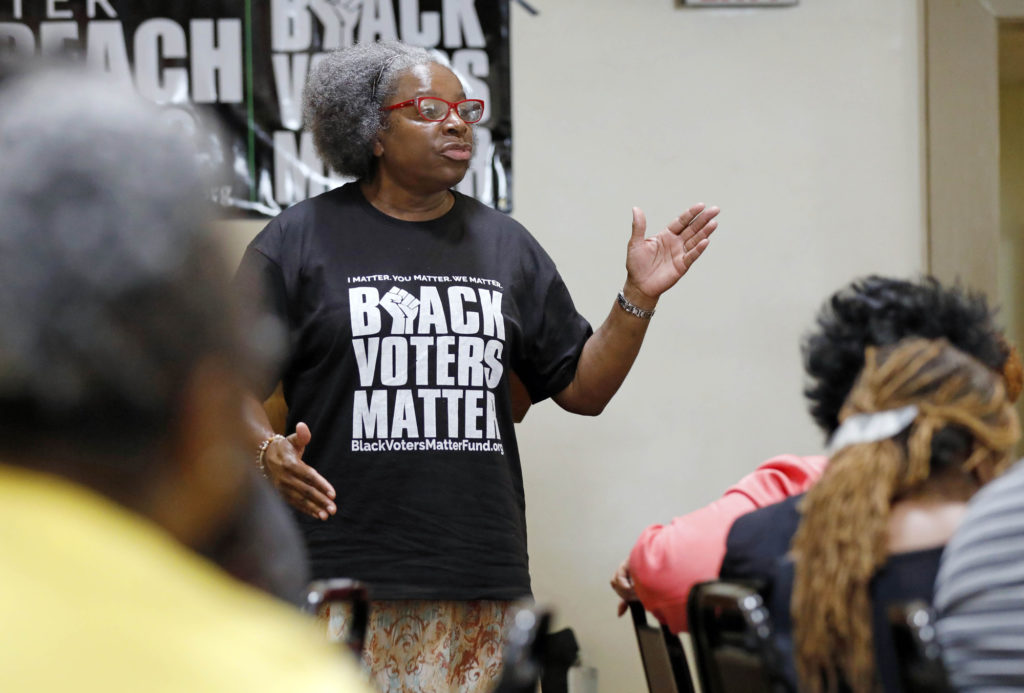
For all the strategic calculations, sophisticated voter targeting and relentless talk about electability in Iowa and New Hampshire, the Democratic presidential nomination will be determined by a decidedly different group: black voters. African Americans will watch as mostly white voters in the first two contests express preferences and winnow the field — then they will almost certainly anoint the winner. So far, that helps explain the front-running status of former Vice President Joe Biden. He has name recognition, a relationship with America’s first black president and a decadeslong Democratic resume. Black voters have long been at the foundation of his support — his home state of Delaware, where he served as a U.S. senator for nearly four decades, is 38 percent black — and until another presidential candidate proves that he or she can beat him, he is likely to maintain that support. In the 2008 campaign, Hillary Clinton held a strong lead among black voters over Barack Obama until he stunned her by winning the Iowa caucuses and proved to black voters that he was acceptable to a broad spectrum of Democrats. Those same voters returned to Clinton in 2016. Full Coverage: Election 2020 This cycle, many black voters are also making a pragmatic choice — driven as much or more by who can defeat President Donald Trump as the issues they care about — and sitting back to see which candidate white voters are comfortable with before deciding whom they will back. At the same time, the early courtship of black voters, overt and subtle, is part of a primary within the primary that includes detailed plans on issues like criminal justice reform, reparations, maternal mortality among black women, voter suppression and systemic racism. “As black voters and movers and drivers of national politics, our self-image and awareness of our power and influence is evolving,” said Aimee Allison, founder of the She the People network, which hosted the first presidential forum aimed specifically at female voters of color. Trump appealed to black voters during the 2016 campaign by saying “What the hell do you have to lose?” and ended up with only 8 percent of the black vote. But the Republican president again is saying he will try to win over black voters, frequently citing low unemployment and his own success in signing criminal justice legislation. So far, there is no evidence to suggest that he will succeed. But the first test of the decisiveness of black voters will come in the primaries. African Americans make up roughly 13 percent of the U.S. population but 24 percent of the Democratic primary electorate. That number is more formidable in the early primary state of South Carolina, where black voters are two-thirds of primary voters, and in other early voting states like Georgia, Alabama and Virginia. Biden reminded black reporters in a recent roundtable that his strength is not just with working class whites, but with the black voters he’s known for more than half a century in politics. “After all this time, they think they have a sense of what my character is and who I am, warts and all,” Biden said. “I’ll be surprised if you find any African Americans that think I’m not in on the deal, that I’m not who I say I am … I’ve never, ever, ever in my entire life been in circumstances where I’ve ever felt uncomfortable being in the black community.”He acknowledged that his familiarity is no assurance of success. And he noted that black voters may ultimately prefer black candidates like Sens. Kamala Harris of California or Cory Booker of New Jersey. First, though, one of them would have to prove to black voters that they were viable alternatives. Black voters can be decisive not only in determining the Democrats’ nominee but also the ultimate winner. While Democrats have peaked in recent cycles with white voters at around 40 percent, black voters have been their most loyal constituency. But in 2016, a drop-off among black voters had consequences. Black voter turnout dropped from about 67 percent in 2012 to about 60 percent, according to government data. “It comes down to a strategy decision that campaigns have to make: Do they believe that the way to win the White House is to win white voters, or do they believe that the way to White House is to mobilize voters of color?” said Leah Daughtry, who recently hosted a 2020 Democratic forum for black faith voters in Atlanta. “Is there a strategy that allows you to do both? Perhaps,” Daughtry said. “But one is a sure bet. If you get us to the polls, we are most likely to vote Democrat. If you get white folks to the polls, you don’t know what they’re going to do.” In the past, Biden would have been a prohibitive favorite, said LaTosha Brown, co-founder of Black Voters Matter. But black voters are demanding that candidates deliver on their priorities in a way they haven’t done in recent history. “Black folks are looking to figure out who white voters are going to align with, but I don’t think that’s the driver that it has been in the past,” she continued. “Black voters, like white voters, are increasingly frustrated with the process. No longer is it good enough to choose between the devil or the witch.” EDITOR’S NOTE — Errin Haines is national writer on race and ethnicity for The Associated Press. Follow her work on Twitter at https://www.twitter.com/emarvelous. Republished with the permission of the Associated Press.
Steve Flowers: 2020 races around the corner
Folks, don’t look now, but the 2020 Presidential Election is upon us. Indeed, as many as 21 Democratic aspirants are already announced and campaigning. They are quite a liberal group as you might expect. Leading the pack of Democrats trying to take Donald Trump out of the White House is an avowed, true socialist, Bernie Sanders. Behind ole Bernie are a host of ultra-liberal U.S. Senators who are socialists wannabes. They hail from either the left coasts of California or New England. Included in the pack of CNN/MSNBC/Stephen Colbert watchers are Elizabeth “Pocahontas” Warren of Massachusetts. She makes Teddy Kennedy look like a conservative. You also have Kamala Harris of California, Senator Cory Booker of New Jersey and losing Texas Senate candidate, Beto O’Rourke, in the race. Our own anomaly Democratic Senator Doug Jones really should run for president next year. He would have a much better chance of winning the Democratic nomination for President than winning a seat in the U.S. Senate from the Heart of Dixie. He has been a liberal Democrat in Alabama his entire adult political life. He has been the soul of the liberal Alabama Democratic Party for decades. He has campaigned and voted for George McGovern, Walter Mondale, Teddy Kennedy, Jesse Jackson, Barack Obama, Bill Clinton and Hillary Clinton. Since he has been in Washington for the past year, he has organized with and voted with Chuck Schumer and Nancy Pelosi. Therefore, he is just as liberal with a much lengthier liberal pedigree than all of the aforementioned liberal Democratic Senators in the race; plus he has a proven Civil Rights record. The scenario that occurred in last year’s special election to fill Jeff Sessions’s seat was a perfect storm that will never occur again. First of all, it was the only show in the country and the first opportunity for liberals all over the country to show their distaste for Donald Trump and the Republican Party. Having Judge Roy Moore as an additional lightning rod just added fuel to the fire. It attracted over $20 million of liberal, left-wing money to Doug Jones. He was able to out spend Moore 21 to 3. That is almost impossible to overcome, plus, with it being a Special Election it became a referendum on Doug Jones versus Roy Moore and the Republican vs Democratic delineation became obscured. During this race, Doug Jones built a national liberal fund-raising base from left-wing America, much like Beto O’Rourke did in Texas. They both have become national stars as Democrats in Red States. Although O’Rourke probably has an edge on Jones in looks and youth. However, recently, Jones appeared on the left leaning Democratic Stephen Colbert Show. Jones may very well be eyeing national politics. Doug Jones, as a lifelong stalwart Democrat, has worked diligently for the State and National Democratic party for most of his adult life. In recent months, he has tried to wrestle some control away from longtime Democratic dictator Joe Reed. It is practically impossible to understand what is going on in the State Democratic Party. Eventually, there may be a new vote on the party chairmanship. The National Democratic Party has mandated a new election due to the clandestine way that Nancy Worley was elected. The state hierarchy has ignored the National Party. There is no doubt that Joe Reed is still in control of the Alabama Democratic Party. You can bet your bottom dollar that he calls all the shots. My guess is that he has his horse picked out of the 21 Democratic presidential candidates. He asked California Senator, Kamala Harris, to be the keynote speaker at his Alabama Democratic Conference June annual event. Therefore, Senator Harris might be a good horse to bet on to win next year’s March third Alabama Democratic Presidential Primary. The Democratic Party in Alabama continues to be a big mess. The bottom line is that on the state level the Party is essentially irrelevant. The odds of a Democratic candidate for President carrying Alabama or a Democratic nominee winning any statewide race in the Heart of Dixie is slim to none. See you next week. Steve Flowers is Alabama’s leading political columnist. His weekly column appears in over 60 Alabama newspapers. He served 16 years in the state legislature. Steve may be reached at www.steveflowers.us.
Jill Biden says American people know Joe Biden isn’t racist
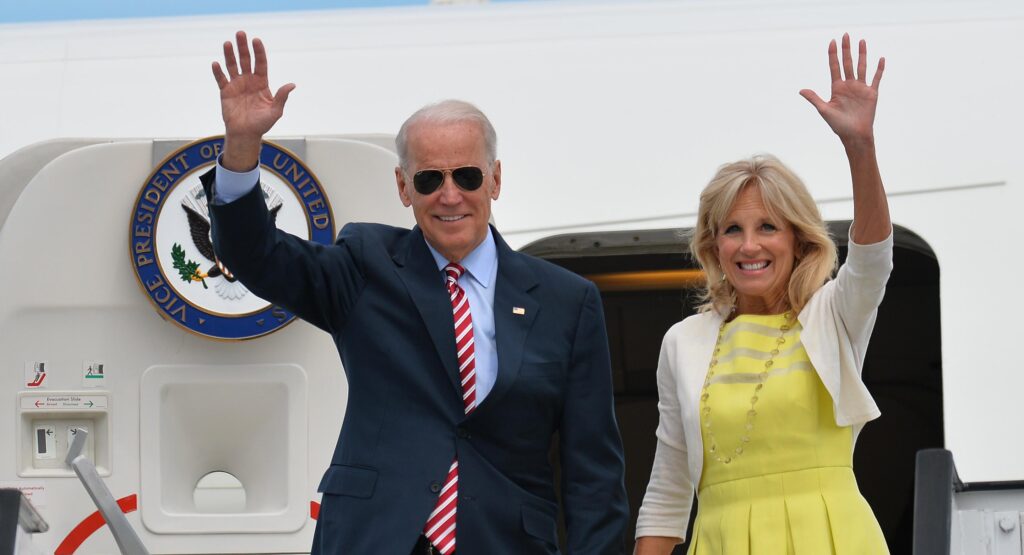
Jill Biden says the American people “didn’t buy” any insinuation during the Democratic presidential debate that her husband, former Vice President Joe Biden, is racist. In an interview that aired Monday on CNN, the former second lady was asked about Sen. Kamala Harris’ comments last month. The California senator started out by saying she didn’t think Joe Biden was racist, but she criticized him for defending his work with segregationist senators and for opposing mandatory busing of students to desegregated public schools.Jill Biden says as soon as she heard the words “I do not believe you are a racist,” she thought, “Uh oh, what’s coming next?” She says, “The American people know Joe Biden. They know his values. They know what he stands for. And they didn’t buy it.” Republished with the permission of the Associated Press.
Harris, Gillibrand offer plans to bolster maternal care
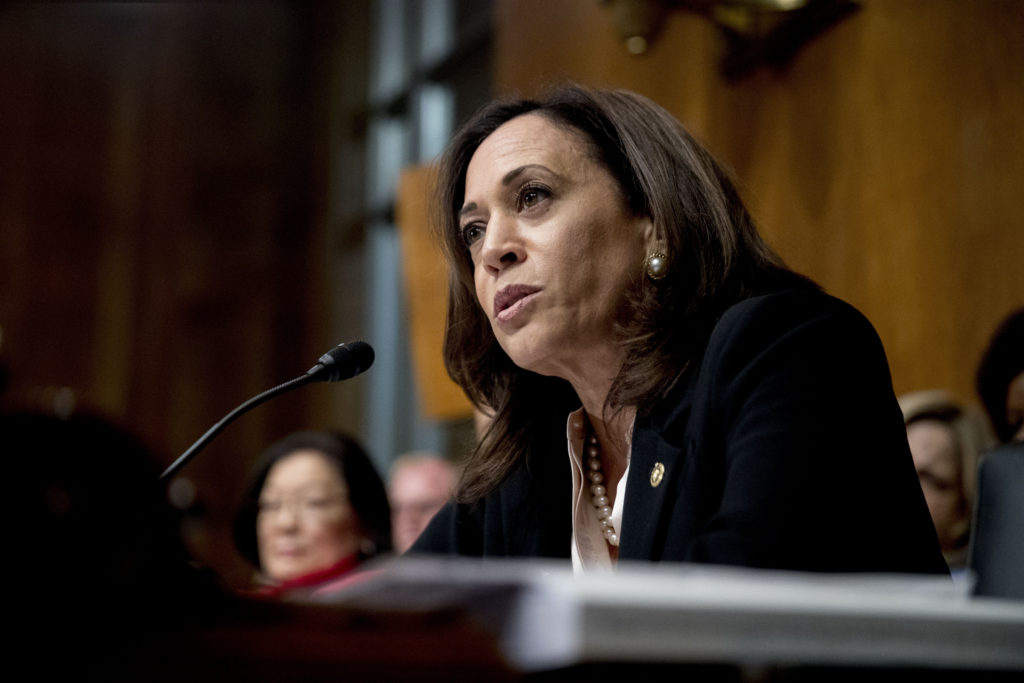
Two Democratic women running for president unveiled plans Wednesday to improve maternal health care, with Sen. Kamala Harris reintroducing a bill aimed at addressing racial disparities in childbirth care and Sen. Kirsten Gillibrand promising to make adoptions and high-tech fertility treatments more accessible to those who want children. Harris’ bill, first introduced in 2018, would create a $25 million program to fight racial bias in maternal care. It would direct grants to medical schools, nursing schools and other training programs to improve care for black women, who are three to four times more likely than white women to die in childbirth . Her revived proposal also would allocate an additional $125 million toward identifying high-risk pregnancies and, according to her Senate office, provide mothers with the “culturally competent care and resources they need.” “Black mothers across the country are facing a health crisis that is driven in part by implicit bias in our health care system,” Harris, of California, said in a statement. “We must take action to address this issue, and we must do it with the sense of urgency it deserves.” Harris and Gillibrand, of New York, are among a number of contenders for the Democratic presidential nomination focused on maternal mortality rates. The issue was the first that Massachusetts Sen. Elizabeth Warren was questioned on at a recent candidate forum in Houston focused on issues key to women of color, and she recently penned an op-ed for Essence magazine on the topic. New Jersey Sen. Cory Booker earlier this year teamed up with Massachusetts Rep. Ayanna Pressley and introduced legislation aimed at reducing the country’s maternal mortality rate, particularly among black women. Gillibrand announced a plan for a Family Bill of Rights , which she vowed to implement promptly if elected president. It seeks to improve access to obstetrician-gynecologists in rural areas, while making adoptions or in vitro fertilization more affordable for everyone wanting children, regardless of income, religion or sexual orientation. Her plan would provide government-sponsored “baby bundles” for new parents, with diapers, onesies, a small mattress and other items designed to make newborn nurseries healthier. It further includes beefed-up paid family leave allowing parents to care for their children into infancy, universal prekindergarten programs and expanded child care tax credits. “The Family Bill of Rights will make all families stronger — regardless of who you are or what your zip code is — with a fundamental set of rights that levels the playing field starting at birth,” Gillibrand said in a statement.Gillibrand said she had a “several ideas” to pay for the proposed initiatives, including a 0.1% tax on financial transactions like stock purchases, which she says would generate $777 billion over 10 years. Associated Press Writer Laurie Kellman contributed to this report.
Senate backs major public lands, conservation bill
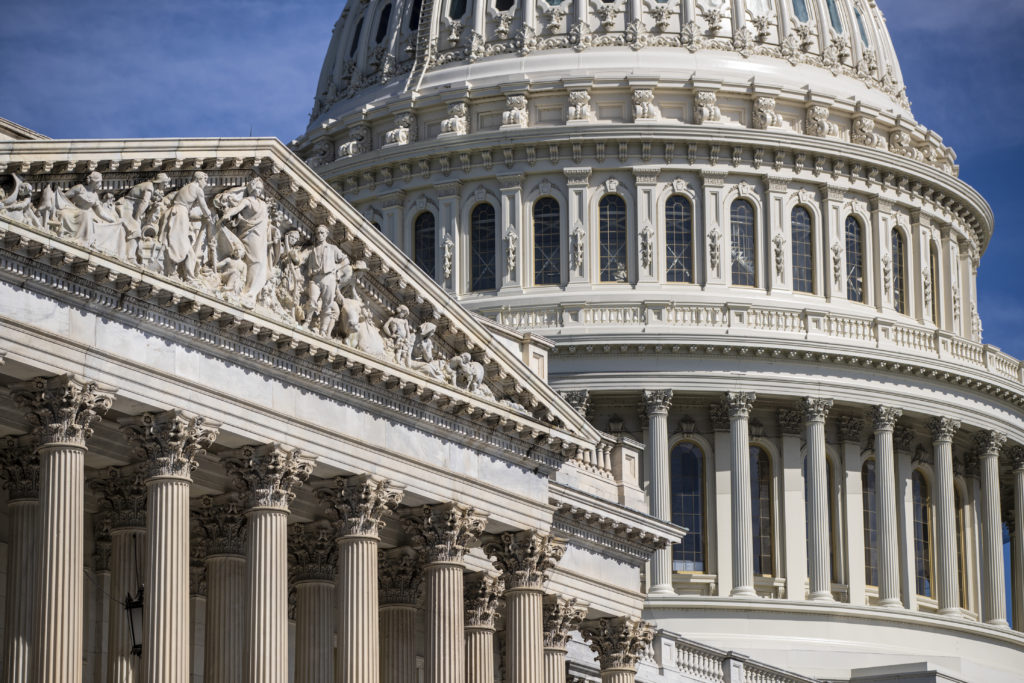
The Senate on Tuesday approved a major public lands bill that revives a popular conservation program, adds 1.3 million acres of new wilderness, expands several national parks and creates five new national monuments. The measure, the largest public lands bill considered by Congress in a decade, combines more than 100 separate bills that designate more than 350 miles of river as wild and scenic, add 2,600 miles of new federal trails and create nearly 700,000 acres of new recreation and conservation areas. The bill also withdraws 370,000 acres in Montana and Washington state from mineral development. The Senate approved the bill, 92-8, sending it to the House. Lawmakers from both parties said the bill’s most important provision was to permanently reauthorize the federal Land and Water Conservation Fund, which supports conservation and outdoor recreation projects across the country. The program expired last fall after Congress could not agree on language to extend it. “The Land and Water Conservation Fund has been a pre-eminent program for access to public lands” for more than 50 years, said Sen. Maria Cantwell, D-Washington. The program has supported more than 42,000 state and local projects throughout the U.S. since its creation in 1964. The hodgepodge bill offered something for nearly everyone, with projects stretching across the country. Even so, the bill was derailed last year after Republican Sen. Mike Lee objected, saying he wanted to exempt his home state of Utah from a law that allows the president to designate federal lands as a national monument protected from development. Lee’s objection during a heated Senate debate in December forced lawmakers to start over in the new Congress, culminating in Tuesday’s Senate vote. Sen. Cory Gardner, a Colorado Republican who clashed with Lee on the Senate floor, said the vote caps four years of work to reauthorize the Land and Water Conservation Fund and protect public lands. Sen. Lisa Murkowski, Republican-Alaska, who chairs the Senate Energy and Natural Resources Committee, said the bill enhances use of public lands and water, while promoting conservation and sporting activities such as hunting and fishing. The bill includes provisions sponsored by more than half of the senators, Murkowski said, applauding a “very, very collaborative” process. She and other senators called the Land and Water Conservation Fund one of the most popular and effective programs Congress has ever created. The program uses federal royalties from offshore oil and gas drilling to fund conservation and public recreation projects around the country. The fund is authorized to collect $900 million a year but generally receives less than half that amount from Congress. “This victory was a long time in the making, and it is the result of the steadfast efforts of many who care deeply about America’s natural treasures,” said Sen Richard Burr, Republican-N.C. “Protecting this program is the right thing to do for our children, grandchildren and countless generations so that they may come to enjoy the great American outdoors as we have.” The bill creates three new national monuments to be administered by the National Park Service and two others overseen by the Forest Service and Bureau of Land Management, respectively. The three park service monuments are the Medgar and Myrlie Evers Home National Monument in Mississippi and the Mill Springs and Camp Nelson national monuments in Kentucky. The Evers site was the home of the slain civil rights leader, while Mill Springs commemorates a Civil War battlefield. Camp Nelson was used as Union Army hospital and recruiting center during the Civil War. President Donald Trump proclaimed Camp Nelson a national monument last year, but the bill gives it permanent, congressionally approved protection. The bill also designates the former Saint Francis Dam site in California as a national memorial and monument. The dam outside Los Angeles collapsed in 1928, killing 431 people in one of the largest tragedies in California history. “While this monument will serve as a reminder of the consequences of a failure of infrastructure, it offers a lesson going forward,” said Sen. Kamala Harris, Democrat-Calif. The bill also sets aside 850 acres in central Utah as the Jurassic National Monument, designed to enhance the area’s “paleontological, scientific, educational and recreational resources.” Republished with permission from the Associated Press
Donald Trump calls for end of resistance politics in State of Union
Facing a divided Congress for the first time, President Donald Trump on Tuesday called on Washington to reject “the politics of revenge, resistance and retribution.” He warned emboldened Democrats that “ridiculous partisan investigations” into his administration and businesses could hamper a surging American economy. Trump’s appeals for bipartisanship in his State of the Union address clashed with the rancorous atmosphere he has helped cultivate in the nation’s capital — as well as the desire of most Democrats to block his agenda during his next two years in office. Their opposition was on vivid display as Democratic congresswomen in the audience formed a sea of white in a nod to early 20th-century suffragettes. Trump spoke at a critical moment in his presidency, staring down a two-year stretch that will determine whether he is re-elected or leaves office in defeat. His speech sought to shore up Republican support that had eroded slightly during the recent government shutdown and previewed a fresh defense against Democrats as they ready a round of investigations into every aspect of his administration. “If there is going to be peace and legislation, there cannot be war and investigation,” he declared. Lawmakers in the cavernous House chamber sat largely silent. Looming over the president’s address was a fast-approaching Feb. 15 deadline to fund the government and avoid another shutdown. Democrats have refused to acquiesce to his demands for a border wall, and Republicans are increasingly unwilling to shut down the government to help him fulfill his signature campaign pledge. Nor does the GOP support the president’s plan to declare a national emergency if Congress won’t fund the wall. Wary of publicly highlighting those intraparty divisions, Trump made no mention of an emergency declaration in his remarks, though he did offer a lengthy defense of his call for a border wall. But he delivered no ultimatums about what it would take for him to sign legislation to keep the government open. “I am asking you to defend our very dangerous southern border out of love and devotion to our fellow citizens and to our country,” he said. Trump devoted much of his speech to foreign policy, another area where Republicans have increasingly distanced themselves from the White House. He announced details of a second meeting with North Korea’s Kim Jong Un, outlining a summit on Feb. 27 and 28 in Vietnam. The two met last summer in Singapore, though that meeting only led to a vaguely worded commitment by the North to denuclearize. As he stood before lawmakers, the president was surrounded by symbols of his emboldened political opposition. House Speaker Nancy Pelosi, who was praised by Democrats for her hard-line negotiating during the shutdown, sat behind Trump as he spoke. And several senators running for president were also in the audience, including Sens. Kamala Harris of California and Cory Booker of New Jersey. Another Democratic star, Stacey Abrams, will deliver the party’s response to Trump. Abrams narrowly lost her bid in November to become America’s first black female governor, and party leaders are aggressively recruiting her to run for U.S. Senate from Georgia. In excerpts released ahead of Abrams’ remarks, she calls the shutdown a political stunt that “defied every tenet of fairness and abandoned not just our people, but our values.” Trump’s address amounted to an opening argument for his re-election campaign. Polls show he has work to do, with his approval rating falling to just 34 percent after the shutdown, according to a recent survey conducted by The Associated Press-NORC Center for Public Affairs Research. One bright spot for the president has been the economy, which has added jobs for 100 straight months. He said the U.S. has “the hottest economy anywhere in the world.” He said, “The only thing that can stop it are foolish wars, politics or ridiculous partisan investigations” an apparent swipe at the special counsel investigation into ties between Russia and Trump’s 2016 campaign, as well as the upcoming congressional investigations. The diverse Democratic caucus, which includes a bevy of women, sat silently for much of Trump’s speech. But they leapt to their feet when he noted there are “more women in the workforce than ever before.” The increase is due to population growth — and not something Trump can credit to any of his policies. Turning to foreign policy, another area where Republicans have increasingly been willing to distance themselves from the president, Trump defended his decisions to withdraw U.S. troops from Syria and Afghanistan. “Great nations do not fight endless wars,” he said, adding that the U.S. is working with allies to “destroy the remnants” of the Islamic State group and that he has “accelerated” efforts to reach a settlement in Afghanistan. IS militants have lost territory since Trump’s surprise announcement in December that he was pulling U.S. forces out, but military officials warn the fighters could regroup within six months to a year of the Americans leaving. Several leading GOP lawmakers have sharply criticized his plans to withdraw from Syria, as well as from Afghanistan. Trump’s guests for the speech include Anna Marie Johnson, a woman whose life sentence for drug offenses was commuted by the president, and Joshua Trump, a sixth-grade student from Wilmington, Delaware, who has been bullied over his last name. They sat with first lady Melania Trump during the address. Republished with permission from the Associated Press
Donald Trump calls for end of resistance politics in State of Union
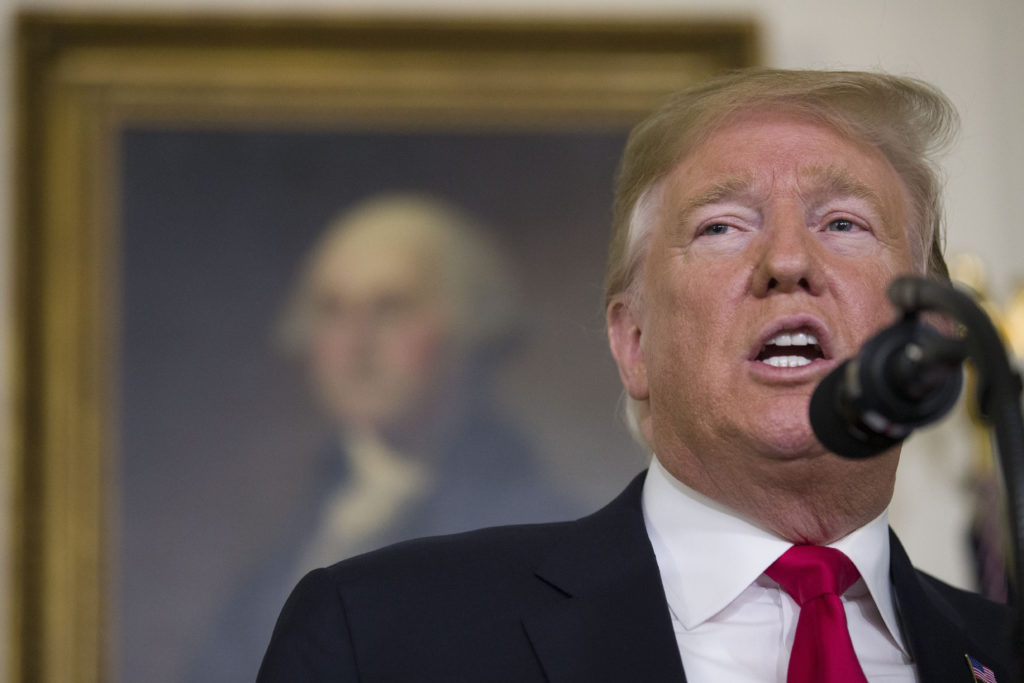
Facing a divided Congress for the first time, President Donald Trump on Tuesday called on Washington to reject “the politics of revenge, resistance and retribution.” He warned emboldened Democrats that “ridiculous partisan investigations” into his administration and businesses could hamper a surging American economy. Trump’s appeals for bipartisanship in his State of the Union address clashed with the rancorous atmosphere he has helped cultivate in the nation’s capital — as well as the desire of most Democrats to block his agenda during his next two years in office. Their opposition was on vivid display as Democratic congresswomen in the audience formed a sea of white in a nod to early 20th-century suffragettes. Trump spoke at a critical moment in his presidency, staring down a two-year stretch that will determine whether he is re-elected or leaves office in defeat. His speech sought to shore up Republican support that had eroded slightly during the recent government shutdown and previewed a fresh defense against Democrats as they ready a round of investigations into every aspect of his administration. “If there is going to be peace and legislation, there cannot be war and investigation,” he declared. Lawmakers in the cavernous House chamber sat largely silent. Looming over the president’s address was a fast-approaching Feb. 15 deadline to fund the government and avoid another shutdown. Democrats have refused to acquiesce to his demands for a border wall, and Republicans are increasingly unwilling to shut down the government to help him fulfill his signature campaign pledge. Nor does the GOP support the president’s plan to declare a national emergency if Congress won’t fund the wall. Wary of publicly highlighting those intraparty divisions, Trump made no mention of an emergency declaration in his remarks, though he did offer a lengthy defense of his call for a border wall. But he delivered no ultimatums about what it would take for him to sign legislation to keep the government open. “I am asking you to defend our very dangerous southern border out of love and devotion to our fellow citizens and to our country,” he said. Trump devoted much of his speech to foreign policy, another area where Republicans have increasingly distanced themselves from the White House. He announced details of a second meeting with North Korea’s Kim Jong Un, outlining a summit on Feb. 27 and 28 in Vietnam. The two met last summer in Singapore, though that meeting only led to a vaguely worded commitment by the North to denuclearize. As he stood before lawmakers, the president was surrounded by symbols of his emboldened political opposition. House Speaker Nancy Pelosi, who was praised by Democrats for her hard-line negotiating during the shutdown, sat behind Trump as he spoke. And several senators running for president were also in the audience, including Sens. Kamala Harris of California and Cory Booker of New Jersey. Another Democratic star, Stacey Abrams, will deliver the party’s response to Trump. Abrams narrowly lost her bid in November to become America’s first black female governor, and party leaders are aggressively recruiting her to run for U.S. Senate from Georgia. In excerpts released ahead of Abrams’ remarks, she calls the shutdown a political stunt that “defied every tenet of fairness and abandoned not just our people, but our values.” Trump’s address amounted to an opening argument for his re-election campaign. Polls show he has work to do, with his approval rating falling to just 34 percent after the shutdown, according to a recent survey conducted by The Associated Press-NORC Center for Public Affairs Research. One bright spot for the president has been the economy, which has added jobs for 100 straight months. He said the U.S. has “the hottest economy anywhere in the world.” He said, “The only thing that can stop it are foolish wars, politics or ridiculous partisan investigations” an apparent swipe at the special counsel investigation into ties between Russia and Trump’s 2016 campaign, as well as the upcoming congressional investigations. The diverse Democratic caucus, which includes a bevy of women, sat silently for much of Trump’s speech. But they leapt to their feet when he noted there are “more women in the workforce than ever before.” The increase is due to population growth — and not something Trump can credit to any of his policies. Turning to foreign policy, another area where Republicans have increasingly been willing to distance themselves from the president, Trump defended his decisions to withdraw U.S. troops from Syria and Afghanistan. “Great nations do not fight endless wars,” he said, adding that the U.S. is working with allies to “destroy the remnants” of the Islamic State group and that he has “accelerated” efforts to reach a settlement in Afghanistan. IS militants have lost territory since Trump’s surprise announcement in December that he was pulling U.S. forces out, but military officials warn the fighters could regroup within six months to a year of the Americans leaving. Several leading GOP lawmakers have sharply criticized his plans to withdraw from Syria, as well as from Afghanistan. Trump’s guests for the speech include Anna Marie Johnson, a woman whose life sentence for drug offenses was commuted by the president, and Joshua Trump, a sixth-grade student from Wilmington, Delaware, who has been bullied over his last name. They sat with first lady Melania Trump during the address. Republished with permission from the Associated Press
Doug Jones hosts HBCU event: NFL great John Stallworth says attendance a ‘life-changing event’
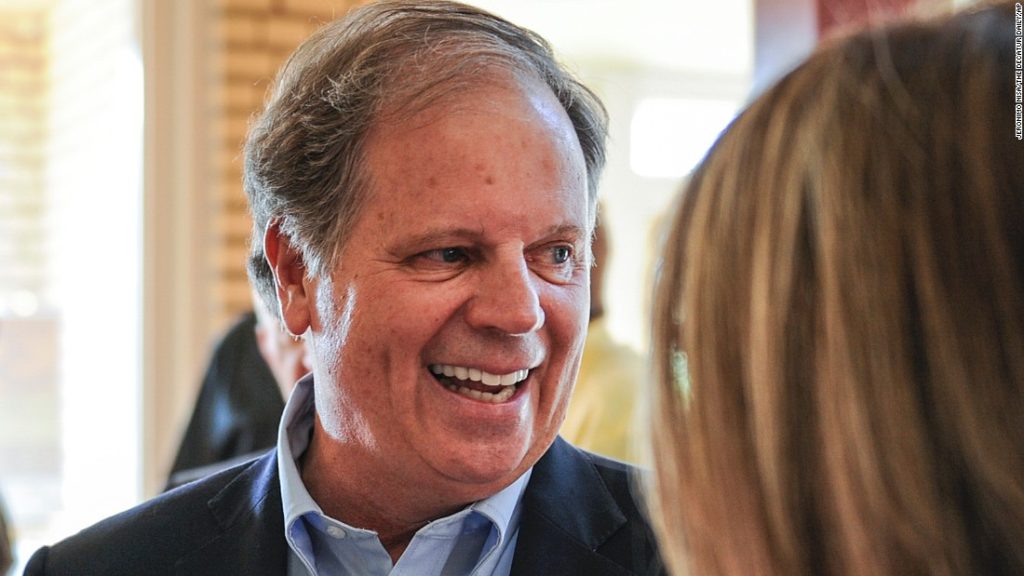
At the inaugural Historically Black Colleges and Universities (HBCU) Summit in Birmingham, students and leaders from these schools gathered and discussed ways to meet the demands of Alabama’s changing workforce, Alabama Newscenter Reports. NFL’s John Stallworth, a graduate of Alabama A&M, said in his keynote speech that going to an HBCU was a “life-changing event.” The event was organized by Sen. Doug Jones-Democrat, who also moderated a panel on how HBCUs can partner with other schools and businesses across Alabama to ensure that their students are ready for tomorrow’s jobs. “We’ve got some of the leading businesses in the state of Alabama that came to Birmingham today because they recognize the quality of education these students are getting at these HBCUs,” Jones said, according to the outlet. “I want people to see that. Alabama has more HBCUs than any other state in the country. They provide well over $1 billion in economic engine for the state. One of the purposes of the event today was (to) highlight the phenomenal job that these colleges and universities do for these graduates. They’re forward thinking.” U.S. House Majority Whip James E. Clyburn– Democrat, reintroduced legislation just days ago that would reauthorize the Historically Black Colleges and Universities Historic Preservation Program, which would support the preservation of historic sites at these schools. In 1998, the Government Accountability Office found that 712 structures on 103 HBCU campuses were in need of historic preservation, according to The T&D, and the estimated cost of that preservation was $755 million. To date, more than 60 of those buildings in 20 states have been renovated through Clyburn’s program, which is managed by the National Parks Service. Clyburn is seeking $10 million per year for the next seven years. “We have made significant progress towards the restoration and preservation of historic buildings and sites on the campuses of HBCUs, but there is still much more that needs to be done,” he said. “I am proud of the continued bi-partisan support of this effort. Senators Kamala Harris and Lindsey Graham reintroduced their companion bill today in the Senate, and I will continue to work with them to restore and preserve these critical pieces of American history.” This is not the first bipartisan effort in support of HBCUs. Clyburn continued. “These federal investments have transformational impacts on the communities that surround our HBCU campuses, and bring new life to historic buildings, many of which were built more than a century ago by student labor and designed by unsung Black architects. By continuing these efforts, we are extending a tremendous legacy.” That legacy is one that Stallworth was proud to have been a part of. “I’ve had a blessed life and, yes, I would not change a thing,” he concluded his speech. “I am John Stallworth, a proud graduate of an HBCU.” This article published with permission including content from Alabama Newcenter
