
Gov. Kay Ivey awards grant for child safety campaign involving vehicles

Gov. Kay Ivey has awarded a $127,780 grant to prevent the accidental death and injury of children left in hot vehicles. The grant will enable Children’s of Alabama in Birmingham to conduct a statewide campaign to remind parents and caretakers that leaving children alone in vehicles, even for a short time, can have severe consequences. “The loss of a child’s life due to being carelessly left alone in a hot vehicle is an unspeakable tragedy that sadly continues to occur across this nation,” said Gov. Ivey. “This grant will perform a vital role in enabling Children’s of Alabama to conduct a public awareness campaign to drive home the critical message that children must never be left unattended in vehicles. Young lives are at stake.” According to Children’s, pediatric vehicular deaths due to heatstroke are a leading cause of vehicle-related deaths in children in the United States. The medical center, through its Health Education and Safety Center, will conduct safety and public awareness campaigns to reinforce its message. The Alabama Department of Economic and Community Affairs (ADECA) is administering the grant from funds made available by the U.S. Department of Transportation’s National Highway Traffic Safety Administration. “ADECA is pleased to join Gov. Ivey and Children’s of Alabama in this life-saving campaign,” ADECA Director Kenneth Boswell said. ADECA administers a wide range of programs that support law enforcement, victim programs, economic development, water resource management, energy conservation, and recreation.
Gov. Kay Ivey lacks confidence in library chief Nancy Pack

On Wednesday, Alabama Governor Kay Ivey sent an open letter to Alabama Public Library Service director Nancy Pack. Ivey had previously sent a letter to Pack expressing her growing concern about the libraries and the state’s affiliation with the ultra-liberal American Library Association. Pack, in her response, defended the Alabama Libraries Association. Ivey made it clear in Wednesday’s letter that she was displeased. “I still lack confidence that our libraries are most effectively fulfilling their mission,” Ivey said. “In my previous letter to you, I described the core problem as the exposure of children and youth to inappropriate materials without adequate means of parental supervision. Unfortunately, your response does not persuade me that Alabama libraries have policies in place to strike the right balance in responding to this problem.” Pack said it is the parent’s responsibility to protect children from harmful material, not the libraries. “Parents should be confident that the materials available in children’s sections are, in fact, suitable for children. And children should have the freedom to wander freely in a children’s section without being exposed to harmful materials,” Ivey wrote. Libraries have become front and center in the ongoing culture wars. As one former librarian explained to Alabama Today, a large part of a librarian’s work is “managing and building their collections.” Children’s books about children and alternative lifestyles, gender transitioning, and the LGBTQ+ experience did not just suddenly appear on the shelves at a neighborhood public library. Libraries have fixed budgets and only so much money to buy new books and shelf space to store books. If those books are on the shelves in the library, in most cases, it was the librarian who made the decision that the library needs LGBTQ+ books geared to kids. As Pack said in a recent appearance on Capital Journal, children living in an LGBTQ+ home where there are two mommies or two daddies want to be able to go to the library and find books with families like theirs. Social conservatives argue that LGBTQ+ books should be in an LGBTQ+ section, if present at all. The librarians say that that is censorship. Conservatives, on the other hand, contend that the local library is an arm of city government and that the city governments should have some say on the content that is on the shelves in the city library and are thus putting pressure on city mayors and councils to get their libraries more appropriate for children. Alabama Republican Party Chairman John Wahl, who also serves on the state’s library board, has suggested that there are ways that the state Legislature could step in to this situation. To connect with the author of this story or to comment, email brandonmreporter@gmail.com.
Inaugural Alabama Medical Cannabis Conference has been postponed
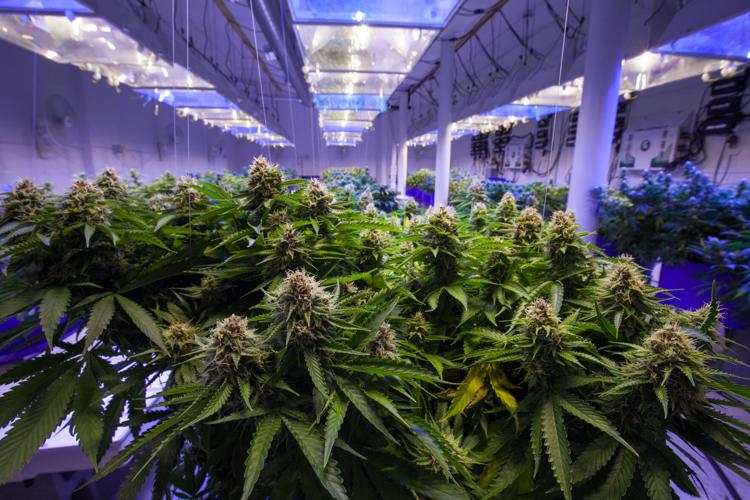
On Wednesday, the Alabama Cannabis Industry Association (ACIA) announced that their inaugural Alabama Medical Cannabis Conference has been postponed after the Alabama Medical Cannabis Commission (AMCC) voted in September to stay the issuing of the cannabis licenses. Early indications are that the AMCC will extend their stay until their November meeting. “The inaugural 2023 Alabama Medical Cannabis Conference was planned to compliment the Alabama Medical Cannabis Commission, support the licensees, and celebrate the fact that in a few short months, Alabamians with a legitimate medical need would finally be able to legally obtain lawfully grown Alabama cannabis to treat their conditions,” the ACIA wrote in a statement. “We anticipated being able to register patients and provide CME credits to physicians.” “Unfortunately, the ongoing legal drama around the issuing of the license means that at this point in time, holding the conference on October 13, 2023, would be counterproductive,” the ACIA continued. “We, at the Alabama Cannabis Industry Association, have consulted with our advisors, the presumptive licensees, and our legal counsel; and determined that the time is not right to celebrate the legalization of medical cannabis in Alabama as a timeline for issuing the license and getting the industry up and running would be speculative at best right now. The conference has had to be postponed.” In June, AMCC announced inaugural license awards; then days later stayed the issuing of the licenses. Litigation ensued, and in August they did it over again – with some licensees losing their licenses. That did nothing to satisfy the plaintiffs who have sued the AMCC. Lawsuits and litigants have only multiplied. “The awardees are concerned that under the present circumstances, anything they say and do will be used against them in pending and possible future litigation,” the ACIA continued. “There is also a strong possibility that the commission may have a new round of license awards, and there is presently no clarity in what that will look like or even if the presumptive licensees will all still be awarded licenses if the Alabama Medical Cannabis Commission awards licenses for a third time.” “For these reasons and the fact that building the future medical cannabis grow-and-process facilities are at a standstill pending the actual issuing of the licenses, we felt we could not move forward with the conference at this time,” the ACIA stated. “All attendees and exhibitors will receive credit toward future events.” It is expected that the AMCC expects to reissue the license awards at a meeting in November. The issue of who gets the limited number of licenses to grow, process, and dispense medical cannabis in Alabama will likely ultimately be decided by a court and subject to appeal. It likely will not be resolved before this year is over. The ACIA will reschedule when they know more about when licenses will be issued and who the final licensees are. “Expect more information on upcoming events in the coming months as we all look forward to the day that Alabamians with a diagnosed medical need can finally get the Alabama-grown cannabis they need,” the ACIA concluded. Chey Garrigan is the founder and executive director of the AMCIA. The Alabama Legislature passed, and Governor Kay Ivey signed medical cannabis legalization in 2021. That legislation created the AMCC, which was tasked with regulating the industry and making the license awards. To connect with the author of this story or to comment, email brandonmreporter@gmail.com.
Nathaniel Ledbetter announces House members who will serve on labor force participation study
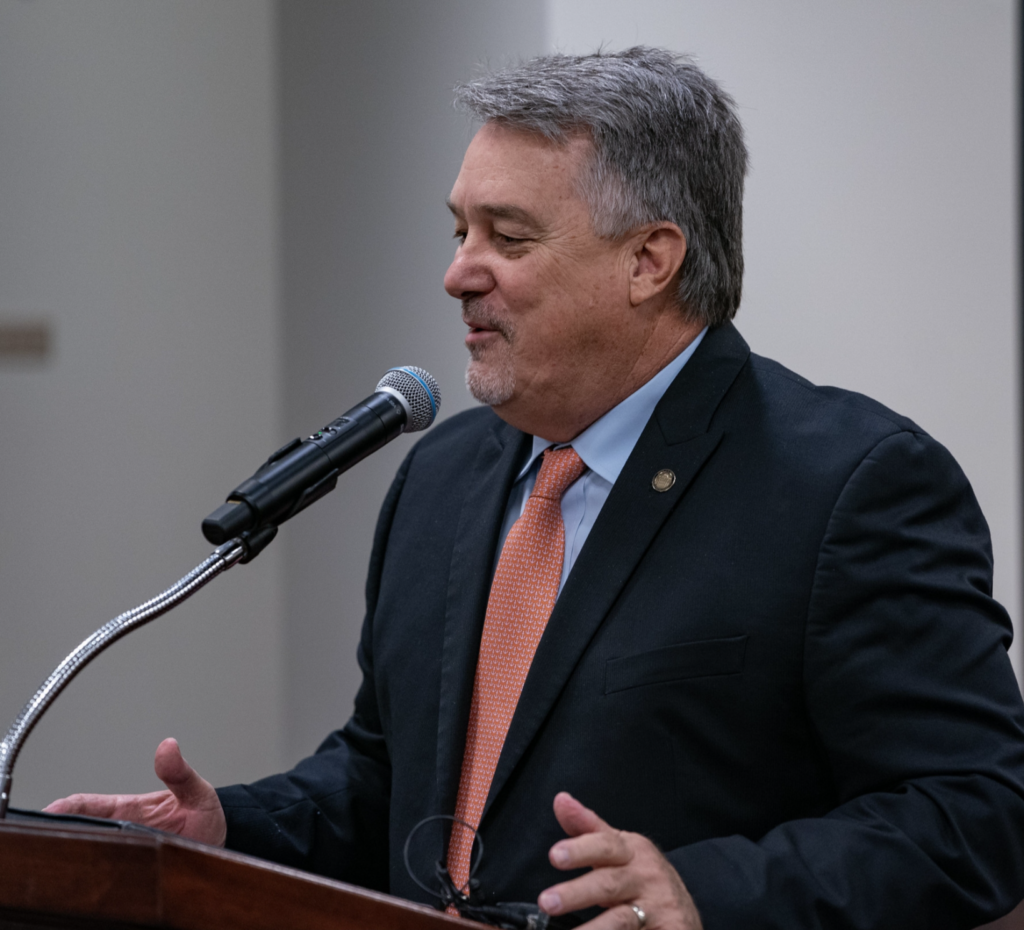
With unemployment still sitting at a record low of 2.1%, the state is looking for ways to increase the number of Alabamians in the workforce. Speaker of the House Nathaniel Ledbetter announced on Monday key House members that will serve on an ad hoc committee studying Alabama’s labor force participation rates and identifying barriers to workforce entry. In July, Gov. Kay Ivey said labor force participation was a top priority. “Despite having one of the lowest unemployment rates in the country and a record number of Alabamians working, the percentage of Alabamians participating in the labor force is lower than almost any other state,” Gov. Ivey wrote in an op-ed. “While we are increasing that by the tens of thousands, we have to change this statistic. Getting folks off the sidelines and into the labor force is my next priority.” In September, Alabama Department of Labor Secretary Fitzgerald Washington announced that Alabama’s Labor Force Participation Rate (LFPR) rose only slightly in August to 57.0%. This is up from last August’s rate of 56.9%. “Alabama is witnessing record-breaking economic growth and historically low unemployment rates,” Ledbetter said in a press release. “Despite these numbers, in Alabama, there are roughly 140,000 job openings and, at the same time, 48,834 unemployed workers across our state. That means we are lacking nearly 100,000 workers over 16 years old, which puts our labor force participation rate at a mere 57 percent—one of the lowest rates in the entire country.” “Yet again, we are announcing record-breaking economic statistics this month,” said Secretary Washington. “While our labor force participation rate remained unchanged, we are continuing to work with marginalized groups to get them into our labor force.” The House Members serving on the study commission will be Rep. Reed Ingram (R–Pike Road) – Chairman; Rep. Danny Garrett (R–Trussville); Rep. Donna Givens (R–Robersdale); Rep. Anthony Daniels (D–Huntsville); Rep. James Lomax (R–Huntsville); Rep. Barbara Drummond (D–Mobile); Rep. Mike Kirkland (R–Scottsboro); Rep. Bill Lamb (R–Tuscaloosa); Rep. Kelvin Lawrence (D–Hayneville); Rep. Curtis Travis (D–Tuscaloosa); Rep. Chris Pringle (R–Mobile); Rep. Matt Woods (R–Jasper); Rep. Wes Kitchens (R–Guntersville); Rep. Jim Carns (R–Birmingham); Rep. Scott Stadthagen (R–Hartselle). “Over the coming months, it will be imperative for this group to build on the progress of, and collaborate with, existing entities such as the Lt. Governor’s Commission on 21st Century Workforce, the Alabama Community College System, Alabama higher-education institutions, and essential stakeholders across the private sector,” stated Ledbetter. Some specific areas the study commission will address are extending adequate childcare to families, examining the correlation between productivity growth and labor output, ensuring wages and salaries are competitive, addressing workforce housing concerns, and offering improved and more expansive mental health programs and services. “An insufficiency of resources such as these creates barriers to workforce entry as much as an absence of quality education,” Ledbetter concluded.
Road and bridge projects fueled by $2.3M locally, $2.25M from state
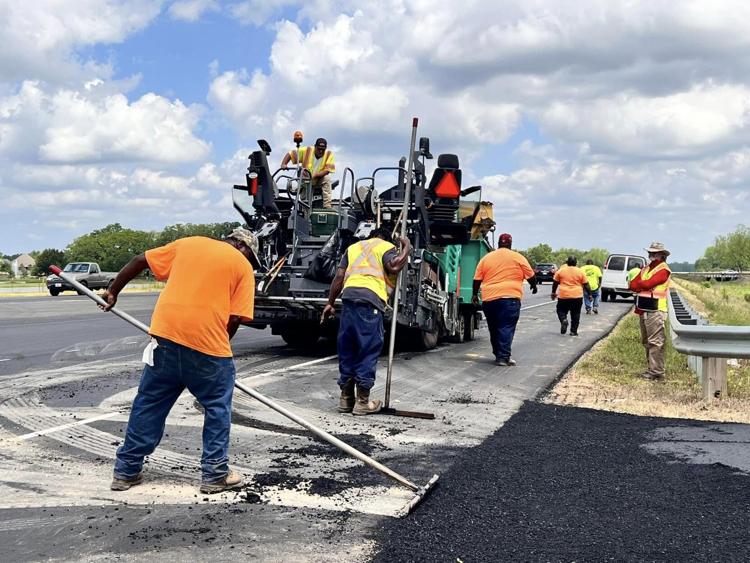
By Steve Wilson | The Center Square Cities and counties throughout Alabama have contributed $2.3 million for various road and bridge projects to match gifts totaling $2.25 million from the state. Projects are within the Rebuild Alabama program, a 2019 legislative initiative. According to state law, projects must be started within a year of receiving funds. The Rebuild Alabama Act included a 10-cent per gallon gasoline tax increase. “I am proud to announce today’s latest installment of road and bridge projects, a testament to our enduring dedication to improving our state’s infrastructure in all 67 counties,” Alabama Gov. Kay Ivey said in a release. “For several years now, Rebuild Alabama has been the bedrock of progress, and our state continues to see its transformative impact. We are taking tangible steps toward safer, more efficient travel, and there is more to come.” The projects include: • Sumter County will receive $250,000 to widen and resurface County Route 30 from the Mississippi state line to State Route 17. The county will match the state grant with $1,075,590. • Sardis City in Etowah County will receive $250,000 for a bridge replacement on Whitesboro Road over Short Creek. The city will contribute $600,000 to the project. • The resurfacing of 17 streets in Weaver in Calhoun County, with the city providing $169,250 in local funding and the state providing $250,000. • Highway in Opp in Covington County. The state will provide $250,000, while the city will kick in an additional $150,000. • Resurfacing Maloy St. from State Route 52 to the Opp-Elba Highway. • A $250,000 resurfacing of Railroad Street, Plank Road, Kelly Drive, First Street, Robinson Street, and McElwain Street in Clio in Barbour County. The city also provided $92,000 in matching funds. • The city of Opelika in Lee County will receive $250,000 for a new traffic signal at the intersection of State Route 51 and Gateway Drive. • Madison County will receive $250,000 for new guardrails on Zierdt Road at Barren Fork Creek between Beadle Lane and Nature Valley Drive. The county will provide $39,096. • Alexander City in Tallapoosa County will receive $250,000 and contribute $149,535 to recoat the bridge on the Coven Abbet Highway that spans Lake Martin/Elkahatchee Creek. • West State Street in Citronelle in Mobile County will be resurfaced with a $250,000 state grant. Republished with the permission of The Center Square.
State Rep. John Rogers indicted on obstruction of justice charges
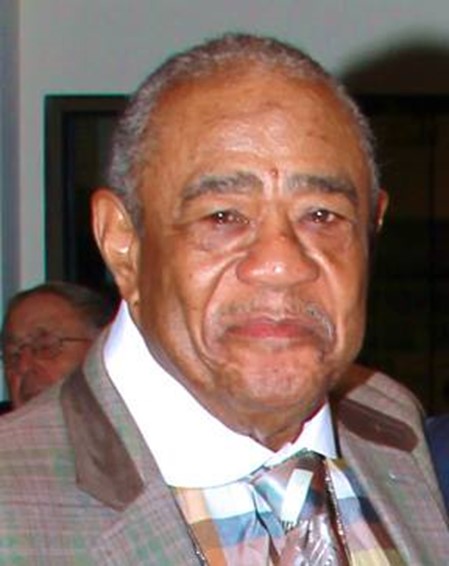
We are still just in the first year of this four-year term, but three of the 105 Alabama House of Representatives members have already been indicted. The latest is State Representative John Rogers (D-Birmingham). The U.S. Attorney’s office in Birmingham announced that Rogers has been indicted on two federal charges of obstruction of justice. Rep. David Cole (R-Madison) pleaded guilty and resigned to voting in the wrong precinct when it was discovered that he ran in 2022 for a seat in a district different from the one where he lives. Rep. Fred Plump (D-Fairfield) has already been indicted, pleaded guilty, and resigned his House District 55 seat in this same federal corruption case. Plump admits to receiving $400,000 from Rogers in Jefferson County Community Service funds ostensibly to benefit a rec league Coach Plump ran. Instead of using all the money for the children, Plump admits to giving $200,00 to Varrie Johnson Kindall, Rogers’ longtime legislative assistant, who lives in Chelsea. Plump was indicted for both corruption and for obstruction of justice for notifying Kindall of the federal investigation after authorities told him not to. Kindall has been indicted 21 times by federal authorities for her role in this scheme and the effort to cover it up. The federal government alleges that Rogers and Kindall attempted to obstruct justice by offering an unidentified witness additional grant money as a bribe and otherwise trying to corruptly persuade the witness to give false information to federal agents.” Rogers could face as much as 25 years imprisonment and a $250,000 fine if convicted. Rogers has denied any wrongdoing. None of Wednesday’s news was unexpected. The Jefferson County Republican Party is already actively recruiting candidates to run for Rogers’ seat, assuming that it will become vacant when he agrees to a guilty plea or is found guilty by a jury of his peers. Jefferson County Republican Party Chairman Chris Brown said on Tuesday night that he and Alabama Republican Minority GOP Chairman Phillip Brown are actively looking for a candidate in neighboring House District 52, where Rogers is “tied up in the same corruption scandal as Plump.” If Rogers surrenders his seat or is removed upon conviction, Governor Kay Ivey will call a special election to fill the vacancy. The special Democratic primary for Plump’s HD55 seat was held just Tuesday. “We don’t know that there is going to be an opening (in HD52), but we want to be ready if there is,” Chris Brown said. Rogers has, to this point, denied any wrongdoing. He is 83 years old and served in the Alabama House of Representatives for the last 42 years. To connect with the author of this story or to comment, email brandonmreporter@gmail.com.
AG Steve Marshall announces Jackie Hornsby to serve as office’s Law Enforcement Coordinator after retirement of Tommie Reese
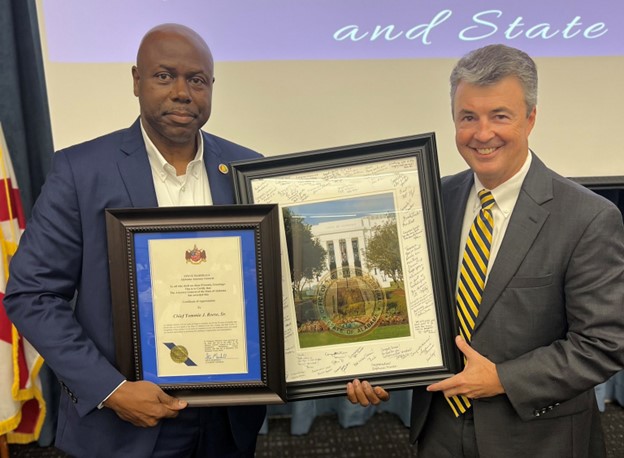
On Monday, Attorney General Steve Marshall announced that long-time law enforcement professional Jackie Hornsby has been appointed as the new Law Enforcement Coordinator for the Alabama Attorney General’s Office. Hornsby will take over the role from Chief Tommie Reese, who will be retiring at the end of the month. Reese has served in the position since January 2019. “Special Agent Hornsby has proven himself to be a knowledgeable and dedicated law enforcement officer over his more than 26 years of service. Jackie’s wealth of knowledge will be a tremendous asset to our office and will contribute immensely to our relationships with other law enforcement agencies,” Marshall said in a press release. “With his understanding of our office’s resources and expertise, Special Agent Hornsby will be a great asset for local and state law enforcement who are facing a variety of new challenges in their communities.” Hornsby will work with law enforcement agencies across the state to develop training programs, notify officers of changes in criminal law, and facilitate communication and cooperation between the Attorney General’s Office and law enforcement statewide. “I have worked closely with General Marshall for many years, and I know and respect his genuine support for law enforcement,” said Special Agent Hornsby. “I am truly honored by the opportunity to continue serving the citizens of Alabama and the men and women of law enforcement as his Law Enforcement Coordinator.” Hornsby is a Pike County native who graduated from Troy University with a Bachelor of Science in Criminal Justice. He began his law enforcement career in 1997 with the Alabama Department of Public Safety as an Alabama State Trooper. After the creation of the Alabama Law Enforcement Agency (ALEA), Hornsby became a Special Agent Senior with the State Bureau of Investigation and later transferred to the Dignitary Protection Unit of ALEA. He has served on the security details of then Lt. Gov. Kay Ivey and Attorney General Luther Strange. Hornsby served on Attorney General Marshall’s security detail since he came into office in 2017 and became Detail Leader in 2019. Marshall commended Reese on his service. “Alabama is a safer state because of the relationships Chief Reese has forged in his 38 years of public service. Thank you, Chief, for your dedication to our men and women in blue. We wish you all the best in retirement,” Marshall said. Thank you, Chief Tommie Reese for your 38 years of service to our great state. It has been an honor and a privilege to have you serve as our law enforcement coordinator for the past five years. You will be missed dearly! pic.twitter.com/4qt6Evwdan — Attorney General Steve Marshall (@AGSteveMarshall) September 25, 2023
Tommy Tuberville cosponsors the Prevent Government Shutdowns Act
U.S. Senator Tommy Tuberville (R-Alabama) joined Senator James Lankford (R-Oklahoma) in cosponsoring bipartisan legislation titled the Prevent Government Shutdowns Act of 2023. This legislation would take government shutdowns off the table and force Congress to stay in town until the budgets are passed. “Shutdowns don’t accomplish anything,” said Sen. Tuberville. “Where I come from, you stay at work until you get the job done. Congress should be forced to stay in D.C. until we pass a responsible, fiscally conservative budget.” Lankford said that the problem is out-of-control federal spending. “If you go back 20 years ago to 2003, our total spending was just over $2 trillion,” Sen. Lankford said. “If you go back to 2013, ten years ago, our total spending was less than $3.5 trillion. Our spending this year will be right at $6.5 trillion. So, in the past 20 years, our spending has increased from just over $2 trillion to $6.5 trillion. To again set this in context, the revenue that’s coming into the federal Treasury this year is estimated at $4.8 trillion–$4.8 trillion. We’re spending an estimated $6.4 trillion.” “This is not going to be a simple process to be able to come out of,” Lankford continued. “This is not going to be two Administrations in a row making agreements to be able to get back to balance. This is going to take decades. And my concern is, is that many here are not willing to start the first year of decades of work to be able to get us out. So we have work to do on this.” Lankford said that he and Sen. Maggie Hassan (D-New Hampshire) crafted the bill to end future government shutdowns. “So Senator Hassan and I came up with a simple proposal,” Lankford said. “If we get to the end of the fiscal year, and the appropriations work is not done, like it is this year, we stay in session seven days a week, and the only bills that can actually come up that actually can be called up during that time period are appropriations bills. The second part of it is there is no travel for anyone, so we couldn’t fly home and fly back. So, no official or campaign funds could be used to be able to travel. So we’re in session seven days a week. The only bills that are allowed to be brought up are Appropriations bills. There is no travel. And the next part of it is simple. There’s what’s called a Continuing Resolution to maintain the government to be open so that the American people and federal workers are held harmless. It puts the pressure on this room, not on federal workers that are working for FAA, not on people that are working for the Housing Administration, not on our Border Patrol. Those individuals don’t get a vote on this. They should not feel the pressure of a government shutdown.” The Prevent Government Shutdowns Act is supported by the Committee for a Responsible Federal Budget, Council for Citizens Against Government Waste, FreedomWorks, National Taxpayers Union, Americans for Prosperity, America First Policy Institute, and Americans for Tax Reform. The Prevent Government Shutdowns Act would require all Members of Congress to stay in Washington and work until spending bills are completed. The bill would prevent a government-wide shutdown and continue critical services while Congress completes the legally required appropriations process. In addition, under the bill, no other votes would be in order in the House or Senate unless they pertain to the passage of appropriations bills or mandatory quorum calls in the Senate. However, after 30 days under the automatic C.R., certain expiring authorization bills and executive calendar nominations would be eligible for consideration on the Senate floor, including a nomination for a Justice of the Supreme Court or a Cabinet Secretary, and narrow reauthorization legislation for programs operating under an authorization that has already expired or will expire within the next 30 days. These restrictions can be waived by a two-thirds vote in either chamber, but not for longer than seven days. Additionally, the bill provides for expedited consideration of bipartisan funding bills if appropriations have not been enacted 30 days after the start of the fiscal year. This would further incentivize Congress to process bipartisan spending bills and fund the government on time. Congress would not be subject to these restrictions if they pass the necessary legislation but await the President’s signature. However, if the President vetoes any of the funding bills, then the restrictions on congressional travel and floor consideration would be re-imposed. Sen. Katie Britt (R-Alabama) is also a cosponsor of this legislation. There are only three days left in the current fiscal year, and Congress has not passed the budget for the fiscal year that begins at midnight Saturday while Congress is mired in partisan inertia. The Alabama Legislature, by comparison, passed with bipartisan support, and Alabama Governor Kay Ivey signed both of its budgets back in May. The budgets are balanced, and the state is expected to roll a surplus into the fiscal year, which begins on Sunday. The federal budget deficit is bigger than the entire budget during the Clinton years. Tommy Tuberville represents Alabama in the United States Senate and is a member of the Senate Armed Services, Agriculture, Veterans Affairs, and HELP Committees. To connect with the author of this story or to comment, email brandonmreporter@gmail.com.
Gov. Kay Ivey announces a major tax reform measure to benefit small businesses

On Tuesday, Alabama Governor Kay Ivey announced the implementation of a major tax reform initiative intended to help Alabama small businesses. Effective October 1, 2023, more than 3,000 Alabama small businesses will no longer be required by the state to pay monthly estimated sales taxes to the state Department of Revenue. “Alabama’s economy is anchored in the stability and prosperity of many thousands of hard-working small businesses,” said Gov. Ivey. “In my 2023 State of the State Address, I called on the Legislature to help lower the financial load shouldered by most small businesses, making it easier for them to thrive in a challenging national economy.” The Legislature responded to the governor’s call by passing legislation, which Governor Ivey signed into law on June 9, 2023. The new law removes the monthly estimated sales tax requirement for businesses with less than $20,000 in average monthly sales tax liability – most Mom and Pop single proprietorships. “I am pleased to report that this small business tax reform law, which will take effect October 1, is expected to positively affect over 3,000 Alabama small businesses,” said Ivey. “By freeing small businesses with less than $500,000 in monthly sales from having to pay estimated monthly sales taxes and allowing them to pay the taxes after the point of sale, they will experience greater cash flow and accordingly more flexibility to operate.” As of October 1, 2023, affected small businesses will be required to pay sales taxes based on the previous month’s sales tax receipts, payable in monthly installments on or before the 20th of the month rather than paying the sales taxes before they collect them as they have been required to do for years. According to the Alabama Department of Revenue, businesses’ monthly sales tax returns for calendar year 2022 will be reviewed to identify those affected by the new law. Those affected by the change in threshold will be notified by letter. Businesses may contact the Alabama Department of Revenue’s Sales Tax Administration Section for more information. House Bill 77 was sponsored by State Representative Danny Garrett (R-Trussville). In recent sessions, the Legislature has also gotten rid of the business privilege tax and the business property tax for small businesses. This is part of a bipartisan effort by Gov. Ivey and the Legislature to make the state tax code more friendly for small and beginning businesses. To connect with the author of this story or to comment, email brandonmreporter@gmail.com.
Grants available for middle-mile broadband infrastructure

On Wednesday, the Alabama Digital Expansion Division of the Alabama Department of Economic and Community Affairs (ADECA) announced that it has recently launched the Alabama Anchor Institution/Middle-Mile Program (AIMM). The purpose of AIMM is to provide grants to support the deployment of middle-mile broadband infrastructure to anchor institution facilities with a need for service. Anchor institutions include universities, community colleges, rural hospitals, government and municipal buildings like courthouses, circuit clerk offices, city halls, and public safety facilities such as police stations, fire stations, and jails. Several anchor institutions with concerns about service have already approached the Alabama Digital Expansion Division. These include: Washington County Circuit Clerk 45 Court Street Chatom, AL 36518-0548 Choctaw County Circuit Clerk 117 South Mulberry Avenue Butler, AL 36904 Bullock County Circuit Clerk 217 North Prairie Street PO Box 230 Union Springs, AL 36089-0230 Lowndes County Circuit Clerk 1 South Washington Street Hayneville, AL 36040-0876 Greene County Circuit Clerk 400 Morrow Avenue Eutaw, AL 35462 Cherokee County Circuit Clerk 100 Main Street Centre, AL 35960-1510 J. Paul Jones Hospital 317 McWilliams Avenue Camden, AL 36726 Broadband providers and contractors may wish to contact one or more of these anchors to determine whether they can address their needs. ADECA will continue to share with all potential AIMM applicants information regarding anchor institutions that express interest in the AIMM Program or concerns about inadequate service. ADECA has been accepting AIMM applications beginning on August 14, 2023. The deadline to turn in completed applications is no later than 11:59 p.m. (Central) on October 13, 2023. Any application received by ADECA after the deadline will not be considered. Applications and all supporting documentation must be submitted to ADECA by email to broadband.fund@adeca.alabama.gov. For more information about the program, please visit their website or contact broadband.fund@adeca.alabama.gov. Governor Kay Ivey has made expanding rural broadband a major priority of her administration. This effort has been boosted by $hundreds of millions of federal dollars from the Biden and Trump administrations. In June, the U.S. Department of Commerce announced it would send $1.4 billion to Alabama to boost the ongoing broadband expansion efforts. The National Telecommunications and Information Administration released the state allocations from the Broadband Equity, Access, and Deployment program. ADECA, which oversees state broadband initiatives, is administering the grant funds. To connect with the author of this story or to comment, email brandonmreporter@gmail.com.
Alabama unemployment still at record low rate of 2.1 percent

Alabama is at full employment, and businesses and governments are struggling to fill vacancies. Unemployment remains at its all-time record low, while state officials remain perplexed that the labor participation rate continues to trail the rest of the nation. On Friday, Alabama Department of Labor Secretary Fitzgerald Washington announced that Alabama’s Labor Force Participation Rate (LFPR) rose only slightly in August to 57.0%. This is up from last August’s rate of 56.9%. The “prime-age” participation rate, which measures the labor force participation rate for individuals aged 25-54, remains at 77.8% in Alabama. The regular labor force participation rate measures individuals aged 16 and up. Washington also announced that Alabama’s preliminary, seasonally adjusted August unemployment rate held steady at its record low of 2.1%. August’s rate is well below August 2022’s rate of 2.6%. The August 2023 rate represents just 48,605 unemployed persons, a new record low, compared to 48,789 in July and 60,200 in August 2022. The number of people counted as employed increased by 32,631 over the year to a new all-time record high of 2,259,025. The civilian labor force also reached a new record high of 2,307,630, with 21,036 more people joining the labor force over the year. “Yet again, we are announcing record-breaking economic statistics this month,” said Secretary Washington. “While our labor force participation rate remained unchanged, we are continuing to work with marginalized groups to get them into our labor force.” “Despite having one of the lowest unemployment rates in the country and a record number of Alabamians working, the percentage of Alabamians participating in the labor force is lower than almost any other state,” Governor Kay Ivey wrote recently. “While we are increasing that by the tens of thousands, we have to change this statistic. Getting folks off the sidelines and into the labor force is my next priority.” Over the year, wage and salary employment increased by 38,100 to 2,149,800, with gains in the leisure and hospitality sector (+4,900), the private education and health services sector (+7,100), the government sector (+5,900), the trade, transportation, and utilities sector (+8,100), and the professional and business services sector (+6,000), among others. Over the month, wage and salary employment increased by 1,900 to 2,149,800, with gains in the government sector (+2,800), the professional and business services sector (+2,400), and the private education and health services sector (+2,100), among others. The counties with the lowest unemployment rates are Shelby County at 1.8%, Morgan, Marshall, Madison, and Cullman Counties at 2.0%, and St. Clair, Limestone, Elmore, and Blount Counties at 2.1%. The counties with the highest unemployment rates are Wilcox County at 7.3%, Dallas County at 5.5%, and Perry County at 5.0%. The major Alabama cities with the lowest unemployment rates are Vestavia Hills at 1.6%, Alabaster, Homewood, Madison, and Trussville at 1.7%, and Hoover at 1.8%. The major cities with the highest unemployment rates are Selma at 6.5%, Prichard at 4.9%, and Bessemer at 4.0%. The establishment survey, conducted by the Bureau of Labor Statistics (BLS), a division of the U.S. Department of Labor, surveys employers to measure how many jobs are in the economy. This is also referred to as wage and salary employment. To connect with the author of this story or to comment, email brandonmreporter@gmail.com.
Tuscaloosa federal building renamed in honor of Richard Shelby
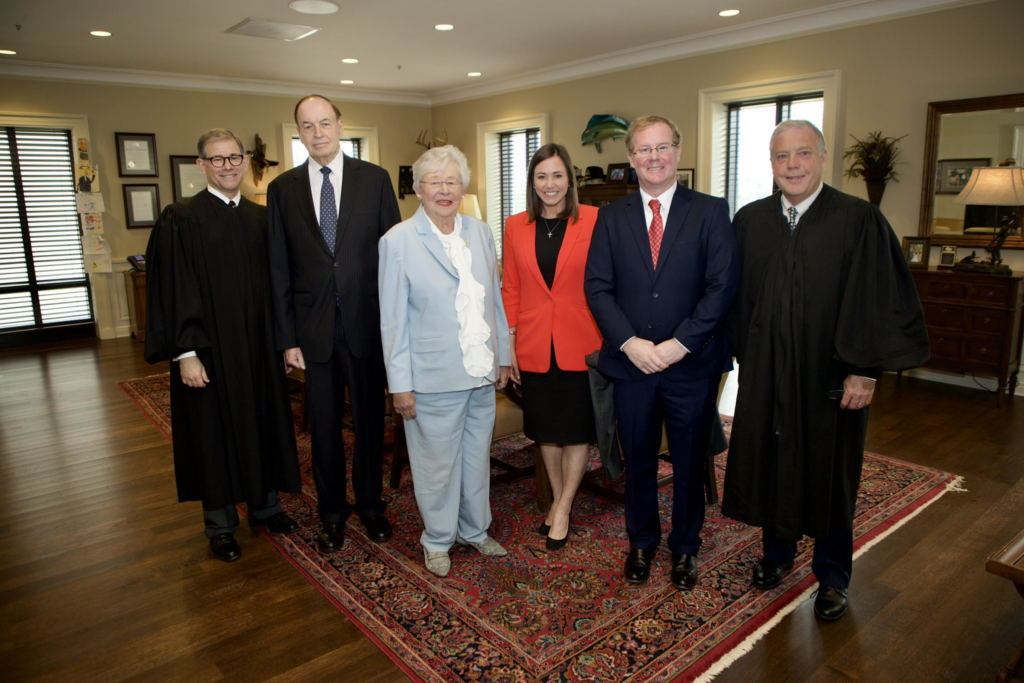
On Friday, former U.S. Senator Richard Shelby (R-Alabama) was back home in Tuscaloosa, where the courthouse and federal building were renamed in his honor. Judge L. Scott Coogler said that Shelby “has touched each and every one of our lives.” Alabama Governor Kay Ivey said, “I am proud to join this historic occasion to pay tribute to Richard Shelby.” Ivey applauded the naming of the Courthouse in Shelby’s honor. “What an appropriate way to honor Richard Shelby,” Ivey said. “He laid the groundwork for our state’s economic development.” “In March, the Alabama Legislature held a joint session to honor Richard Shelby,” Ivey continued. “Thank you to Richard Shelby for his dedicated service to the State of Alabama.” Alabama Attorney General Steve Marshall said, “It is a privilege to be here today to celebrate the life of this man.” Marshall applauded the many projects that Shelby brought to the state, “What has truly been achieved far exceeds any dollar amount.” “Senator, thank you for your service, and may God bless you,” Marshall said. Federal judge and former Alabama Attorney General Bill Pryor said, “In 2009, I was here to celebrate the groundbreaking of this Courthouse. I thank Senator Shelby for his leadership for making this building possible. He could not be here then because he was in Washington attending to the nation’s business.” “If there is anything more important than securing the peace and prosperity of the nation, it is the rule of law,” stated Pryor. Pryor said that a federal courthouse secures the rights of the people every day. “Senator Shelby has recommended the names of many talented lawyers who have served and continue to serve as federal judges,” said Pryor. The judges applauded Shelby for “his lifelong commitment to defending the Constitution of the United States.” “Thank you for being a friend to the courts of the federal judiciary,” Pryor said. U.S. Senator Katie Britt (R-Alabama) said, “I have the best job of the day. I get to introduce Senator Shelby. It is truly an honor to introduce such a legendary Alabamian.” Britt thanked Senator Shelby “for his vision and his determination.” Katie Britt was an intern for Shelby, who later joined his staff, rising to the level of Chief of Staff. She returned to public life in 2022, winning Shelby’s open seat after he retired. “At a time when so many people wanted to serve in order to generate a headline, you genuinely wanted to serve,” Britt said. Sen. Shelby thanked the Governor, Britt, and everyone else for attending Friday’s event. “Thank you all very, very much for this great honor,” Shelby said Shelby’s grandchildren then unveiled a portrait of the Senator that will hang in the Courthouse. Shelby represented Alabama in the U.S. Senate from 1987 to 2022. He represented Alabama’s Seventh Congressional District from 1979 to 1986. He represented Tuscaloosa in the Alabama Senate from 1970 to 1978. Before becoming an elected official, Shelby worked as an assistant Alabama Attorney General and prosecutor for the City of Tuscaloosa. To connect with the author of this story or to comment, email brandonmreporter@gmail.com
