
Steve Flowers: 2022 elections six months away
Believe it or not, we are six months away from the 2022 elections. All statewide offices will be decided in the May 24, 2022, Republican Primary. Winning the Republican Primary is tantamount to election in the Heart of Dixie. Therefore, garnering the endorsement of the most conservative group in the state is vitally important towards an election. That group is the Alabama Farmers Federation or commonly known as Alfa. The Farm PAC Alfa endorsement is the gold standard for conservatism, and it is the ticket to election in Alabama. The Alabama Farmers Federation is governed by county federation leaders in each of the state’s 67 counties, and the word leaders should be emphasized. The leaders of each county federation are respected men who have been born and raised in their community. Many have owned farmland for generations, are respected agribusinessmen, deacons in their churches, and board members of their local banks. In other words, they are centers of influence, and their words and recommendations extend well beyond their agricultural base. To win the Alfa endorsement, statewide candidates have to go see each of the county federation members in all 67 counties. There are over 100,000 actual farmers in the state that vote the Alfa endorsed ballot right down the line. There are also affiliated agribusiness groups that toe the Alfa line. In addition, there are over 100,000 insurance policyholders throughout the state who have their car and homeowners’ insurance with Alfa, and they see the Farm PAC endorsement and usually follow it because they have contributed to Farm PAC. Additionally, a good many Alabamians will see their friends and neighbors with an Alfa ballot and ask them who Alfa has endorsed in certain races. Then they will vote that way because they know Alfa has vetted the candidates and chosen the most conservative ones. The Alfa endorsements for the May 24, 2022 elections were decided on September 28, 2021. These endorsements will be decisive. Katie Britt won the endorsement for the open U.S. Senate race, which will be the marquee race next year. She got it the old-fashioned way. She worked for it. She got out and visited and got to know almost every farmers federation member in the state. This endorsement will probably propel her to victory. Governor Kay Ivey received the endorsement. She has been the darling of Alfa her entire career. The Farm PAC endorsement was critical in allowing her to win the governorship without a runoff four years ago. They have been with her from the get-go when she was State Treasurer two terms and Lt. Governor two terms. Will Ainsworth received the Alfa endorsement for reelection as Lt. Governor. This endorsement is the reason he upset Twinkle Cavanaugh in their race four years ago. Alfa was the reason he won that race and has made his political career. Incumbent Attorney General Steve Marshall has been endorsed by Alfa because he has proven to be a real conservative. Rick Pate has won the Alfa endorsement for a second term as Agriculture Commissioner. He had the endorsement four years ago, and it helped him win. Folks are really interested in who Alfa endorses for Agriculture Commissioner. Incumbent PSC Commissioners Chip Beeker and Jeremy Oden received the coveted Alfa nod. One of the most critical endorsements Alfa made was selecting Greg Cook for the Alabama Supreme Court seat of retiring Judge Mike Bolin. This endorsement of Greg Cook is pivotal. It proves that he is the conservative pro-business candidate for the Supreme Court. It will probably assure his victory. Popular incumbent Supreme Court Justice Kelli Wise got the endorsement even though she may be unopposed. Three candidates for secondary constitutional offices received the endorsement of Alfa and will be instrumental in their elections are Wes Allen for Secretary of State, Young Boozer for State Treasurer, and Rusty Glover for State Auditor. Glover’s getting the endorsement is that race is pivotal, as is Wes Allen’s in the Secretary of State. Alfa has endorsed all of the incumbent Republican Congressmen, including Jerry Carl, Barry Moore, Mike Rogers, Robert Aderholt, and Gary Palmer. They have endorsed Dale Strong in the open 5th district congressional race. He appears to be the favorite. All of Alfa’s statewide endorsements are Republicans. That makes sense because every statewide officeholder in the state is a Republican. If you made me bet, I would wager that all of the above-mentioned Alfa endorsed candidates will win next year. We will see in about six months. See you next week. Steve Flowers is Alabama’s leading political columnist. His column appears in over 60 Alabama newspapers. He served 16 years in the state legislature. Steve may be reached at www.steveflowers.us.
Justin Bogie: Alabama lawmakers must choose the people over bigger government
Despite the pandemic, the business of state government is booming in Alabama. It is past time for the state to give some of its newfound wealth back to citizens. A recent court ruling should pave the way for Alabama’s elected officials to do so if they choose to. But lawmakers already missed one opportunity. To recap, in March, Congress passed a second massive COVID-19 stimulus bill, the American Rescue Plan Act (ARPA). Alabama’s state government has already received half of its $2.1 billion allotment from the bill and will receive the second half early next year. So far, the state has committed $480 million of its ARPA funds, with the bulk of that going towards prison construction projects. In total, state government alone has been handed $4 billion in federal stimulus funds since the start of the pandemic. In addition to the stimulus money, the state saw $1.2 billion in new revenue flow into the state in 2021. Most of that money has been reinvested in the public sector. A controversial provision of ARPA blocked states from being able to cut taxes and then use stimulus funds to replace lost revenue. In response, 13 states, including Alabama, sued the Treasury Department, arguing that the federal government had no Constitutional authority to dictate state tax policy. On November 15th, U.S. District Court Judge L. Scott Coogler issued a permanent injunction against the provision, writing that the restriction is “a federal invasion of State sovereignty.” Coogler further wrote that the mandate pressures states into adopting federally preferred tax policy and disincentivizes states “from considering any tax reductions for fear of forfeiting ARPA funds.” The bottom line is that the federal court ruling clears the way for Alabama to use its ARPA funds for tax relief. It also proves that elected officials missed an opportunity to provide relief much sooner. Alabama received $1.8 billion from the Coronavirus Aid, Relief, and Economic Security Act (CARES) in 2020. In June of last year, the Alabama Policy Institute (API) presented a proposal to Governor Kay Ivey that would have set aside a portion of the state’s CARES funding to implement an extended statewide sales tax holiday. If the proposal had been adopted, it would have saved citizens money and provided a much-needed boost to Alabama’s brick and mortar businesses during the heart of the pandemic. Before presenting the proposal, API commissioned an outside legal opinion that determined a sales tax holiday was a permissible use of CARES Act funds. Ultimately the governor’s office refused to implement the sales tax holiday, hiding behind U.S. Treasury guidance that said the money couldn’t be used to replace lost revenue. However, other states, like Idaho, went full speed ahead with measures to reduce citizens’ tax burden. The federal government never intervened. If state government wanted to use CARES Act funds to provide a sales tax holiday, it likely would have been allowed. But the desire to use the money to grow government outweighed the need to help struggling citizens and businesses. While we as citizens cannot change past government actions, we can demand better for the future. There are a number of ways that Alabama’s government could use ARPA funds to help the citizens and business owners of this state. API believes that an extended sales tax holiday would still provide benefits to both, but there are other ways. Alabama is one of just three states that fully taxes grocery and food items, something that every person living here relies on. The stimulus funds would go a long way towards permanently eliminating that tax burden. Because of a rise in unemployment claims over the last two years, employers are now paying more in unemployment compensation tax than they were before the pandemic. In 2021 the employer tax rate increased by 92 percent, adding additional strain to businesses already hit hard by COVID-related shutdowns. The state could use ARPA funds to reduce unemployment taxes in 2022. The state has more than $1.5 billion in remaining ARPA funds at its disposal. To put that in perspective, it is enough money to eliminate unemployment taxes for up to six years. It could wipe out the grocery tax for three years. That’s not including this year’s $1.2 billion revenue windfall. Regardless of the method, Alabama citizens deserve tax relief. A federal court has already ruled that Washington cannot tell Alabama and other states how to use that money. If lawmakers fail to provide tax relief to the citizens of Alabama, it is because they chose government over the people they are elected to serve, not because they can’t. Justin Bogie is the Senior Director of Fiscal Policy for the Alabama Policy Institute.
Kay Ivey awards $480,000 to assist low-income residents

Alabama Department of Economic and Community Affairs (ADECA) announced today that Gov. Kay Ivey has awarded funds totaling $480,000 to assist community action agencies in Alabama with programs aimed at helping lift people out of poverty. The Community Action Agencies Association of Alabama is using $450,000 to provide support to 19 Community Action Agencies across Alabama. These programs offer assistance to low-income residents to help with things like GED testing fees, food assistance, and rental or utility assistance. $30,000 will go to the Community Action Partnership of North Alabama to support a program that provides food to low-income senior citizens and disabled individuals in Marion and Winston counties. Ivey stated, “By assisting those most in need, community action agencies can provide a path to a better life for many families and individuals. As we celebrate Thanksgiving this week, we are also reminded how important it is to help those in need. I am pleased to provide these funds to these agencies who work every day to give those who need a helping hand to improve their lives and lift themselves out of poverty.” The Alabama Department of Economic and Community Affairs administers the grants from funds allocated by the Legislature in the Alabama General Fund budget. ADECA manages programs that support law enforcement, workforce development, energy conservation, water resource management, economic development, and recreation. “ADECA is proud to support Gov. Ivey’s efforts to improve the lives of some of our most vulnerable residents,” ADECA Director Kenneth Boswell said. “Our partnerships with these agencies across the state continue to make an impact.”
Paul DeMarco: Governor Kay Ivey popularity still high as deadline to challenge approaches soon
While we are now less than six months away from the Republican Party Primary on May 24, 2022, so far Governor Kay Ivey does not have a candidate who would appear to mount a serious challenge to her reelection. There have been grumblings from some circles about her conservative credentials and open discussions about who may throw their hat in the ring for the state’s top executive spot. The two names mentioned most prominently have been businessman Tim James and Senate candidate Lynda Blanchard. Both would have the financial resources for a race, but with the qualifying deadline the end of January, both will have to make a decision soon. There is still time for someone to qualify against the governor, but a poll released by Morning Consult this past week should give Ivey a boost of confidence. The polling showed that Ivey was ranked eighth in the Nation as one of the most popular governors in the Nation. With a 62 percent job approval, she also tops all other governors in the Southeast. Throughout her term as governor, Ivey has always enjoyed a high level of support from state voters. Her strong standing has remained, despite her taking on some of the most controversial issues during the pandemic and the tough economic times. Now politics in Alabama can change on a dime, so while this is good news for Ivey, we do not know what the future may hold before next year’s elections. Paul DeMarco is a former member of the Alabama House of Representatives
Indian tribes seek return of remains, artifacts from Alabama

Seven tribes are asking an Alabama university to return the remains of nearly 6,000 people excavated over the years from what once was one of the largest Native American settlements in North America. The Oklahoma-based Muscogee Nation, Choctaw Nation of Oklahoma, and five other tribes have filed a petition under a federal law for the return of 5,982 “human remains of our ancestors” and funerary objects now held by the University of Alabama and its Moundville Archaeological Park. “These are human beings. We consider them to be our grandparents,” Raelynn Butler, the Muscogee Nation’s historic and cultural preservation manager, said in an interview. Butler said tribes are seeking the return so the remains can be reburied with the funerary objects. In a Friday letter to tribal officials, James T. Dalton, Executive Vice President and Provost of the University of Alabama, said that the university hopes to work with the tribes. The Alabama site, simply known as Moundville because of the large earthen mounds constructed there, once housed what was believed to be a large and thriving settlement. While its ancient name is unknown, the city was founded around 1120 and, at its peak, was one of the largest Native American settlements in North America, according to the university. The site included a great plaza and 26 earthen mounds. It later fell into decline, although it was used as a ceremonial site and burial ground. It was largely abandoned by the 1500s. The site and museum run by the University of Alabama is now a regular stop for elementary school students on field trips. Tens of thousands of indigenous peoples, including the Muscogee Nation, were forcibly removed from their ancestral homelands by the U.S. government between 1830 and 1850 during the devastating Trail of Tears. Muskogee Nation officials came to Alabama this week to meet with university representatives and deliver a letter to the governor. “The remains held by the University were left behind when our ancestors were forced from our ancestral homes in the Southeastern United States and into other states through the nene estvmerkv or ‘road of misery’ also known as the “Trail of Tears,” David W. Hill, Principal Chief of the Muscogee Nation and Chief Gary Batton wrote in letters to Gov. Kay Ivey. “While no one can change the past, it is our hope that you will help encourage others to do what is right in the present,” they added. The 1990 federal Native American Graves Protection and Repatriation Act requires federally funded institutions, such as universities, to return Native American remains and cultural items to lineal descendants, Indian Tribes, and Native Hawaiian organizations. However, the return has been slow to happen. While nearly 83,000 remains in the U.S. had been returned to descendants, the National Park Service indicates remains of about 116,000 Native Americans are still held by institutions around the country. Many of them have not been linked to a particular tribe — a designation called “culturally affiliated” — that allows return. The settlement at Moundville predates the modern tribes, but the seven tribes argue they are linked by lineage and language. Tribal officials are asking the Native American Graves Protection and Repatriation Review Committee to declare the site culturally affiliated with the tribes to pave the way for the return of the remains. A hearing is scheduled for next week. “We still have a lot of work to do in the Southeast. Only 26% of remains of ancestors that have been dug up or excavated from the Southeastern states have been returned or repatriated to tribes through the NAGPR process,” Butler said. Dalton said the University of Alabama will be providing more suggestions on the “most productive and efficient manner to address the pending joint request.” “It is our hope that, in joining with the tribes in consultation, all parties can reaffirm their shared goals of honoring and preserving the cultural heritage of the Moundville civilization,” Dalton wrote. The tribe has been seeking the return of the remains and objects taken from Moundville since 2018 and have “thus far been unsuccessful in obtaining rightful return,” they wrote. “We are hopeful the university does the right thing. We are hopeful the state urges the university to do the right thing,” Muskogee Creek ambassador Jonodev O. Chaudhuri said.
Donald Trump looking for revenge; looking for candidate to run against Kay Ivey
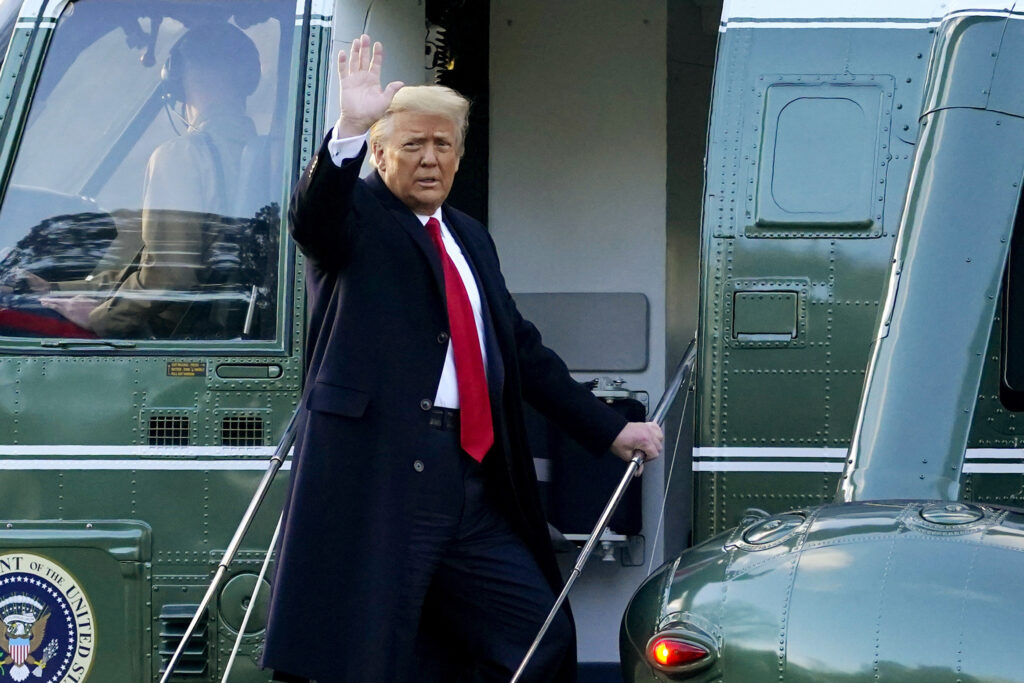
Former President Donald Trump is reportedly trying to find a Republican to run against Gov. Kay Ivey. According to a Rolling Stone report, Trump blames Ivey for canceling one of his rallies in Alabama this summer. The rally in question was a July 3 “Freedom Rally” at the USS Alabama Battleship Memorial Park in Mobile. Defenders of Ivey note that the rally was canceled by the Battleship Commission, not the governor herself though the commission is stacked with appointees she chose. Trump has “privately blamed” Ivey, according to The Wall Street Journal. Trump’s plan for vengeance is taking shape in the form of Lynda Blanchard. Blanchard is currently running for U.S. Senate in Alabama but did not receive Trump’s endorsement for her campaign. Instead, that endorsement went to Mo Brooks. Rumors have swirled for months that the former ambassador to Slovenia might be looking to make a move from a Senate run to a run for governor. In an August interview on FM Talk 106.5’s Jeff Poor Show, Blanchard commented, “You know, I can tell you that I’ve been all over this state, and there are a lot of people that, you know, like we saw this weekend, want everything Trump. And they want a Trump governor, as well. So, I do have people reaching out to me. I’m praying about it, and you know, I’m in the race for U.S. Senate, and love the president and respect anything that he would like.” Trump is now talking to Blanchard about a run for governor against Ivey, a move that would undoubtedly give her the sought-after Trump endorsement. Ivey has remained committed to the message that she is a Trump supporter even as her record remains unclear. At the end of July, Gov. Ivey penned an op-ed in The Washington Post titled “The Trump administration gave us the best weapons against covid-19. We should use them.”
Steve Flowers: Governor John Patterson’s first lesson
Governor John Patterson, who passed away earlier this year at 99, shared a funny story that occurred during the opening days of his administration. He entered the Governor’s office in January 1959 as the clean government, strict law enforcement governor. He followed Big Jim Folsom’s second administration, which had been less than perfect when it came to favoritism, nepotism, and corruption. Patterson was determined to run a clean ship. On his first day as governor, he called his cabinet in for a pep talk and told them to run their departments aboveboard and free of any semblance of favoritism. He dismissed them and told them to get to work running the state. He turned to his new public safety director, Floyd Mann, and asked him to stay behind. Floyd Mann was a well-respected man in Alabama politics. He had been chief of police in Opelika prior to Patterson appointing him head of the highway patrol. Mann and Patterson were lifelong friends. They had grown up and gone to school together in Tallapoosa County. Patterson looked at his friend and said, “Floyd, under no circumstances are we going to fix any tickets during my administration. Do you understand?” Mann went on his way to his first day as public safety director and supervisor of the highway patrol. That was about 11:00 a.m. About 2:30 in the afternoon, the new governor got a message that he had had a call from senior U.S. Senator Lister Hill. Within 30 minutes, he had a message that Senator John Sparkman had called as well as Congressmen George Andrews and Frank Boykin. He assumed that all our distinguished congressional delegates were calling to wish him well on his first day as governor. When he called these four very powerful Washington solons back, he learned that an equally powerful congressman from Missouri had been detained and indeed arrested in south Alabama. The congressman had been vacationing in Florida with his family and driving back to Missouri when he was caught speeding in Conecuh County. At that time, an out-of-state driver could not sign his own bond in Alabama, so the good congressman had been detained for more than three hours with his family waiting to locate a justice of the peace. The congressman was upset, to say the least. Hill and Sparkman were somewhat tactful with the new governor. They simply suggested that the speeder was a powerful and important member of Congress and that it would be helpful to them if Patterson could help their colleague get back on his way home to Missouri. Frank Boykin was more direct. He informed Patterson that this congressman chaired the committee that oversaw all the appropriations for waterways. He further explained that he and Senators Hill and Sparkman had been working diligently for years to get funding for the Tennessee-Tombigbee Waterway and the project was pending in this congressman’s committee at this time. Governor Patterson called Colonel Mann and said, “Floyd can you come over here a minute?” When Mann arrived in the governor’s office, Patterson told his buddy, “You know, Floyd, when I told you this morning not to fix any tickets? Well, we’ve had a change in policy.” The no-ticket-fixing policy of the Patterson Administration lasted four hours. Mann dispatched a trooper to not only release the congressman but to give him a trooper escort out of the state. Governor Patterson learned a lesson from that experience – never say never. He also should be given some credit for obtaining funding for the Tennessee-Tombigbee Waterway. A similar story was told to me by former congressman, Governor Kay Ivey’s Chief of Staff and recently crowned Chancellor of the University of South Alabama, Jo Bonner. He was a new congressman from Mobile-Baldwin. The district has had some illustrious congressmen, including Frank Boykin, Jack Edwards, Sonny Callahan, and Jo Bonner. Edwards, Callahan, and Bonner were all good friends, and they were headed to the famous annual Frank Boykin gathering in Washington County. It fell to the new congressman, Bonner, to drive. As they were heading back to Mobile, Bonner noticed a blue light in the rearview mirror. Callahan had already told Bonner he was driving too fast. A deputy sheriff pulled them over and looked in the window, and before he asked for Bonner’s driver’s license, he saw Sonny in the backseat and asked, “Sir, aren’t you Congressman Callahan?” Then looked next to Callahan and asked, “Aren’t you Congressman Edwards?” Callahan and Edwards assured the deputy that he was correct. Then they proceeded to tell the deputy that the driver and third member of this trio was a congressman and a new one and that the deputy should give him a ticket. See you next week. Steve Flowers is Alabama’s leading political columnist. His weekly column appears in over 60 Alabama newspapers. He served 16 years in the state legislature. Steve may be reached at www.steveflowers.us.
Kay Ivey names Liz Filmore as chief of staff, first woman to be appointed
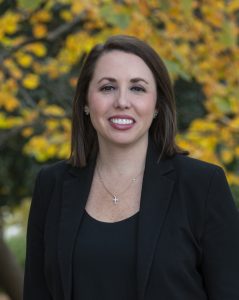
Governor Kay Ivey announced that Liz Dowe Filmore will replace Jo Bonner as the governor’s next chief of staff. Filmore, Ivey’s top deputy, will take the positing on December 1, 2021. Bonner served in the Governor’s Office for three years and was tapped to be president of the University of South Alabama last week. Filmore holds two degrees from Troy University, a bachelor’s degree in Journalism and a Master’s in Public Administration. She will become the first female chief of staff to any Alabama governor. “Loyalty and integrity are two of the most important qualifications needed to be an effective chief of staff,” Governor Ivey said. “Liz possesses both of these qualities and more. I am proud she has agreed to take on the critical responsibilities that accompany this position.” Political commentator Steve Flowers wrote of Filmore, “She commands the governor’s respect because of her unwavering loyalty and keen political senses.” Bonner, who will remain on Ivey’s staff and transition through the end of the year, said, “I’ve been fortunate to work with a lot of really smart, talented young leaders throughout the years, but Liz Filmore is the best of the best. Governor Ivey couldn’t have found a brighter or more dedicated person to lead her team than Liz.”
Groundbreaking held for nearly $760M west Alabama highway

Gov. Kay Ivey and other officials held a ceremony Friday to break ground on a project to construct a four-lane highway spanning rural western Alabama from north to south. Expected to cost some $758 million over five years, the West Alabama Corridor project will provide an interstate-type highway that will eventually connect Mobile and Tuscaloosa. A bypass at the Marengo County city of Linden is the first phase of the project. After that project, a southern leg will begin at U.S. 43 in Thomasville and run northward to the bypass. A northern section will begin from Linden to Alabama 69 north of Moundville, located just south of Tuscaloosa. Officials in the Black Belt region have long cited the lack of access to four-lane highways as a factor holding back development in the area. Passed in 2019, the Rebuild Alabama Act has allowed the state to spend more on economic development and road projects, Ivey’s office said. Tuscaloosa Mayor Walt Maddox, a Democrat who opposed Ivey in the 2018 gubernatorial race, attended the groundbreaking and praised Ivey’s leadership on the highway. Republished with the permission of the Associated Press.
Last in math: Alabama politicians look for ways to close gap
Alabama students for years have ranked at the bottom in a national math assessment. That has led one lawmaker to propose an overhaul in math instruction that would include more math coaches in schools, summer programs, and interventions. Eventually, fifth-grade students would need to show they were meeting certain math benchmarks to move to the sixth grade under the proposal, he said. Republican Sen. Arthur Orr, who chairs the state education budget committee, is working on the proposal for the legislative session that begins in January. He said it would be a math counterpart to the Alabama Literacy Act, which puts a similar promotion requirement on third-grade reading skills. “When you are 50th in the country you have no choice but to improve,” Orr, R-Decatur, said. He said the persistent lagging scores shows the need for the state to put a heavy emphasis on math. The proposed promotion requirement is likely to be controversial since lawmakers pushed last year to delay the reading promotion test because of the pandemic. Orr emphasized the math promotion requirement for fifth graders wouldn’t kick in until the latter part of this decade and only after students had been in the revamped math program since first grade, he said. Orr said he supports the retention component because students must have basic math skills — adding, subtraction, multiplication, division, and fractions — to function well in life or to be ready to take on advanced math. “You need to have a comfort level with those fundamentals,” he said. Alabama’s math performance in fourth and eighth grades ranked dead last among states in the 2019 National Assessment of Educational Progress, often called “The Nation’s Report Card.” Education officials have expressed concern that the pandemic led to learning losses. Test scores from last spring, after the pandemic interrupted classrooms, showed just 24% of fourth-graders and 14% of eighth-graders were considered proficient in math. Students took a new assessment last year called the Alabama Comprehensive Assessment Program, complicating comparisons with prior years, but officials said the test results were concerning. Alabama Gov. Kay Ivey told state Board of Education members this week that she is supportive of developing a math counterpart to the Alabama Literacy Act. “In the weeks and months ahead, I look forward to working with you to place the same sense of urgency on mathematics as we have rightfully placed on reading,” Ivey said Asked if the governor supports a requirement to hold back fifth graders who don’t meet math benchmarks, spokeswoman Gina Maiola said, “improving mathematics education in Alabama will require a comprehensive plan that is informed by all stakeholders. The 2019 Alabama Literacy Act will require third graders to meet reading benchmarks to be promoted to the fourth grade. The promotion requirement is set to take effect this spring. However, Ivey said she will ask lawmakers to delay the promotion requirement for one year. Orr said he is working with subject-matter experts on the proposal. “It’s no secret the state is last in math,” said Mark Dixon, president of the A+ Education Partnership. “We need a statewide commitment to improving math achievement.” Republished with the permission of the Associated Press.
Kay Ivey seeks delay of 3rd grade reading promotion requirement
Gov. Kay Ivey said Wednesday that she will ask lawmakers to delay a requirement to hold back third-graders who don’t meet reading benchmarks but said the state must strengthen efforts to boost math and reading scores. The Republican governor recommended a one-year delay of the promotion policy scheduled to take effect at the end of this school year. Alabama Superintendent of Education Eric Mackey said he supports the delay because the COVID-19 pandemic disrupted the last two school years. Mackey said his department had estimated about 12% of third graders would be held back if the requirement were implemented this year. “I just feel like with the impact of the pandemic that we need to give our teachers and our students and our families a little breathing room,” Mackey said. The governor said policymakers need more data, particularly upcoming test scores, before implementing the promotion requirement. It will be up to the Alabama Legislature to change the law and implement the delay. “Because we are implementing a new assessment, we need the spring 2022 data to further validate the ‘cut score’ before we implement the promotion policy. In the meantime, we will be doubling down on providing the support needed to implement the Alabama Literacy Act,” Ivey said. In 2019, Alabama lawmakers approved several initiatives to try to boost reading scores. Beginning in the 2021-22 school year, third graders would be required to meet reading benchmarks before moving to the fourth grade. Students would have to make a minimum score on a reading assessment or demonstrate mastery of all third-grade state reading standards. Ivey made the announcement at a state Board of Education meeting, as board members voted on the minimum score for the promotion requirement. The board on Wednesday approved a cut-off reading score on the standardized test that 23% of third graders fell below on the latest assessment and would have put them in jeopardy of being held back. However, Mackey said his department predicted a lower percentage of students would have been held back because spring test scores should improve and other factors. Mississippi saw 8% of third-graders fail a similar reading test requirement after it implemented a similar reading requirement. Alabama lawmakers had already tried to delay the promotion requirement by two years, arguing it would be unfair to force the requirement on students who were out of the traditional classroom for long stretches during the pandemic. Ivey, in May, let the measure die by a pocket veto, saying it was too early to make that decision. Republican Rep. Terri Collins, the sponsor of the 2019 Literacy Act, said she agrees with the governor’s recommendation for a delay of a single year. She said lawmakers originally thought they would have three years of test scores before the promotion requirement took effect, but the pandemic disrupted that. Collins said the state should move forward with the requirement next school year. “The goal is that every child can read on level before we move them to fourth grade, where they are expected to read to learn,” Collins said. Republished with the permission of the Associated Press.
Governor’s top aide named president at South Alabama
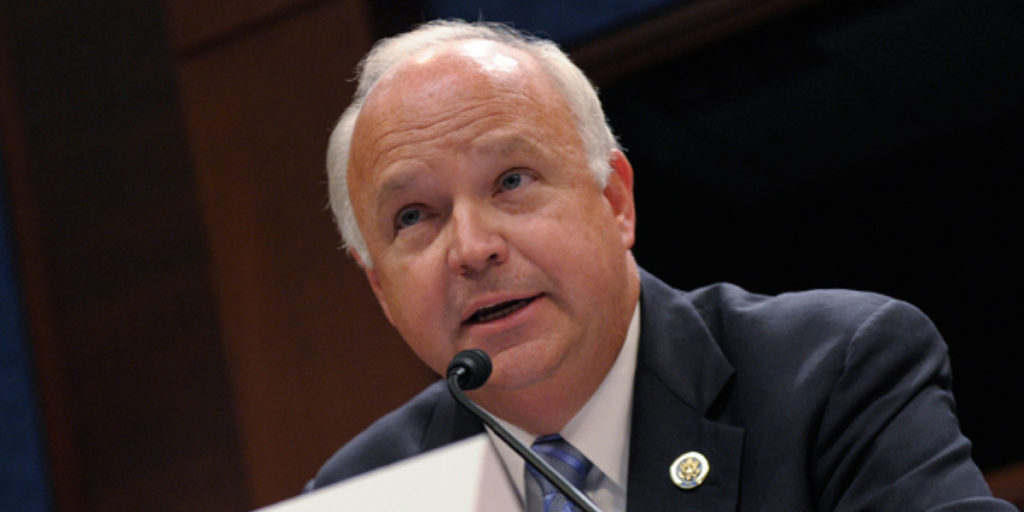
Gov. Kay Ivey’s chief of staff, former U.S. Rep. Jo Bonner, was named president of the University of South Alabama on Wednesday over two candidates with more degrees and experience in higher education. Bonner, 61, “is a proven innovator, a skilled administrator and a respected, admired and influential leader in our state,” board pro tem Jimmy Shumock said in a statement announcing Bonner’s selection. “With his leadership, we look forward to the continued elevation of the University of South Alabama’s reputation as a leading academic, research and health care institution,” Shumock said. Bonner, who represented the Mobile area while in Congress, is the younger brother of former University of Alabama President Judy Bonner. Trustees chose him over Damon Andrew, the education dean at Florida State University; and Michael Tidwell, the immediate past president of the University of Texas at Tyler. Bonner was the only candidate without an earned doctoral degree — he has a bachelor’s degree in journalism from Alabama — and his resume doesn’t include experience in academic administration, although he served as vice chancellor for economic development of the three-campus University of Alabama System. Bonner, who will become the university’s fourth president, will be formally introduced at a trustee meeting on Dec. 2. By law, the governor appoints members of the university’s board. “Over the coming days and weeks, I look forward to working with the Board members to better understand their timetable and expectations for helping to move the University of South Alabama to the next level. There is obviously a lot of success and momentum on which to build. For today, however, I remain deeply humbled,” he said in a statement. South Alabama had an enrollment of 13,136 students in the spring, according to its website. The university announced then-president Tony Waldrop’s retirement in February. Republished with the permission of the Associated Press.
