
Tommy Tuberville welcomes Nikki Haley to 2024 presidential race
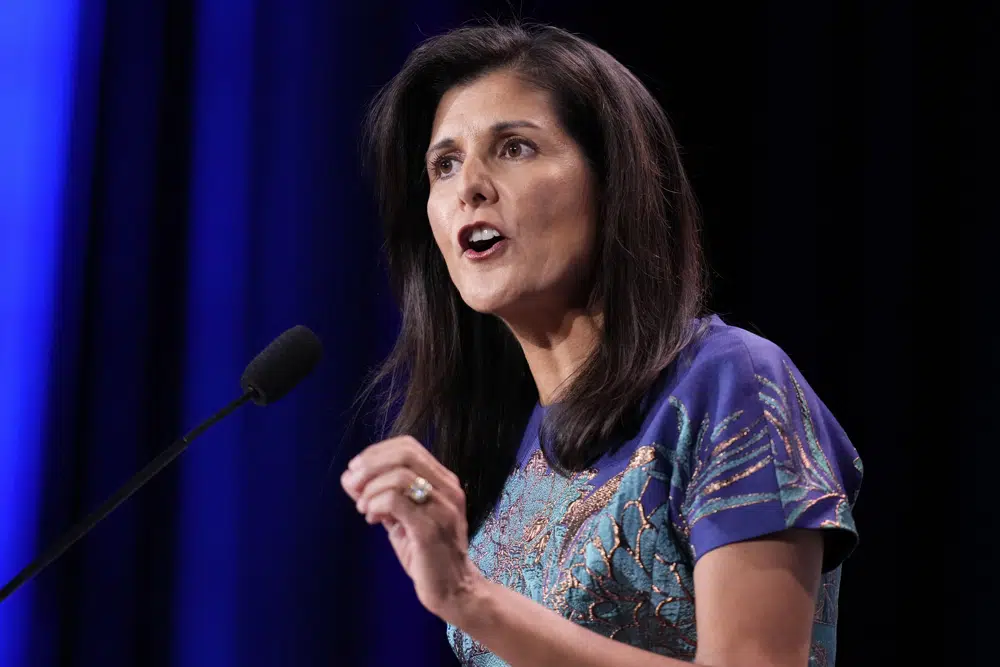
On Monday, former South Carolina Governor and UN ambassador Nikki Haley announced her candidacy for the Republican nomination for President of the United States. U.S. Senator Tommy Tuberville, who has already announced his endorsement of former President Donald Trump, welcomed Haley’s entrance into the 2024 presidential race. Tuberville told reporters that she would be a “great candidate.” Tuberville favors a large GOP primary field and said that he has recently spoken with Trump and told the former President that he hopes “they all get in.” “He needs the challenge as well as anybody,” Tuberville said. “They need to work for it. They need to fight for it.” In the 2020 election, President Trump endorsed Tuberville in his Republican primary battle for U.S. Senate with former Trump Attorney General Sen. Jeff Sessions. Tuberville had spent forty years as a teacher and coach – including stints as head football coach at Ole Miss, Auburn, Texas Tech, and Cincinnati – prior to that 2020 first run for public office. At this point, the only announced GOP candidates for the Republican nomination for 2024 are Haley and Trump, but that is expected to change quickly. Florida Gov. Ron DeSantis, former Vice President Mike Pence, and former Secretary of State Mike Pompeo are widely believed to be seriously looking at entering the race. According to the Hill, former Arkansas Gov. Asa Hutchinson, New Hampshire Gov. John Sununu, former Maryland Gov. Larry Hogan, U.S. Sen. Rick Scott, and Virginia Gov. Glenn Youngkin are also possible presidential candidates. GOP Senators who oppose a third Trump presidential run fear that a crowded GOP primary field makes it easier for Trump to emerge as the eventual GOP nominee. “Look, we were all concerned with the fact that we had 15 or 16 or 17 individuals vying for attention in the last one,” said Sen. Mike Rounds (South Dakota) told the Hill referring to the 2016 election. “We really don’t want to see that happen again. We just don’t.” U.S. Sen. Katie Britt was endorsed by Trump in her 2022 GOP primary battle with then-Congressman Mo Brooks and war veteran and defense contractor Mike Durant. Britt, however, cannot make an endorsement in the Presidential primary because she is serving on the national Republican steering committee. Trump faced a crowded field in 2016 that included U.S. Sens. Ted Cruz, Marco Rubio, Rand Paul, Rick Santorum, and Lindsey Graham, as well as former Florida Gov. Jeb Bush, former Ohio Governor John Kasich, former Arkansas Gov. Mike Huckabee, then-New Jersey Gov. Chris Christie, businesswoman Carly Fiorina, former Virginia Gov. Mike Gilmore, former New York Gov. George Pataki, then Louisiana Gov. Bobby Jindal, and Dr. Ben Carson. Trump won the 2016 Alabama Republican Primary despite the crowded field. Trump went on to win the Republican nomination and then beat former Secretary of State Hillary Clinton in the general election. Trump was unseated by former Vice President Joe Biden in 2020. Biden appears to be virtually unopposed at this point for the 2024 Democratic nomination for President. The 2024 Alabama Republican Primary is only 55 weeks away on March 5. DeSantis will speak to the Alabama Republican Party in Birmingham on March 9. To connect with the author of this story, or to comment, email brandonmreporter@gmail.com.
Mike Pence to fight special counsel subpoena on 2020 election
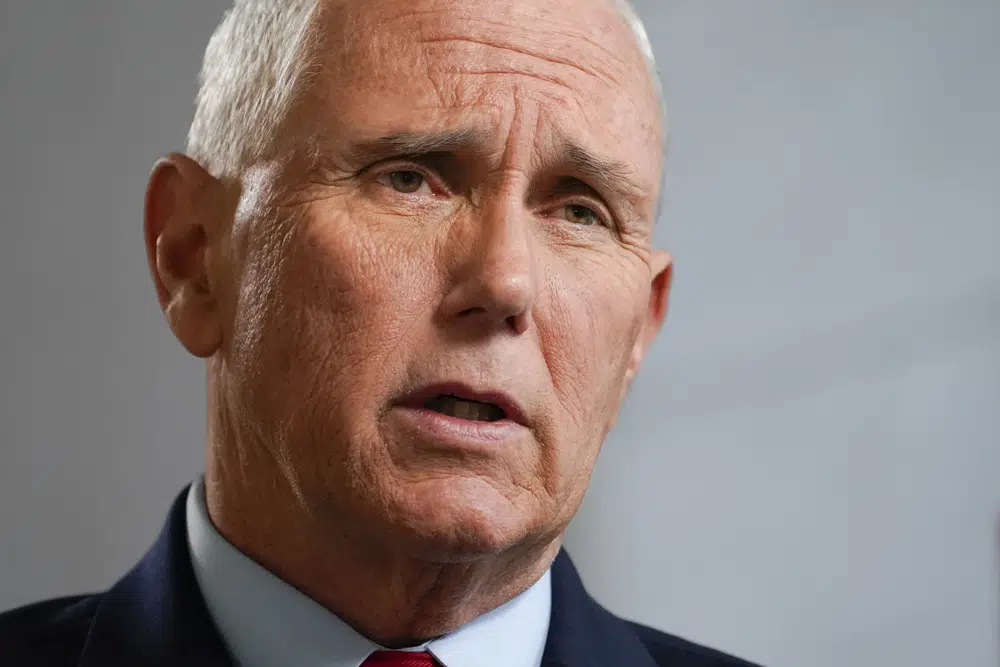
Former Vice President Mike Pence is planning to fight a subpoena by the special counsel overseeing investigations into efforts by former President Donald Trump and his allies to overturn the results of the 2020 election, according to people familiar with his thinking. Pence and his attorneys are planning to cite constitutional grounds as they prepare to resist special counsel Jack Smith’s efforts to compel his testimony before a grand jury. They argue that because Pence was serving in his role as president of the Senate on January 6, 2021, as he presided over a joint session of Congress to certify the election results, he is protected from being forced to address his actions under the Constitution’s “speech-or-debate” clause that shields members of Congress. “I think he views it as essential protection of his Constitutional role,” said Marc Short, a close adviser to Pence who served as his White House chief of staff. Short compared Pence’s position to the one he took on January 6 when he refused to go along with Trump’s unconstitutional scheme to try to overturn the results of the 2020 election, as well as Pence’s rejection of using the 25th Amendment to remove Trump from office in the aftermath. “The vice president of the United States is the president of the Senate, and the fact is the functions of January 6 were specific to that role,” he said of Pence, who has been laying the groundwork for a likely presidential campaign that would put him in direct competition against his former boss. Whether Pence’s arguments will succeed in limiting or altogether avoiding grand jury testimony is unclear, but the Justice Department is expected to oppose those efforts and to make the case that the former vice president’s cooperation is essential for a probe focused on Trump’s actions. The decision to try to fight the subpoena, which was first reported by Politico, marks a change in posture from Pence, who has cooperated with the Justice Department as it investigates how documents with classified markings ended up at his Indiana home after the end of the Trump administration. He permitted the FBI to search the property last week. Even if his objection is ultimately rebuffed from the courts, an antagonistic posture could allow Pence to argue that he tried to fight the Justice Department — a potentially useful position in a GOP primary, as many in the Republican base have grown distrustful of federal law enforcement, in part due to Trump’s drumbeat of criticism. And it could delay the special counsel probe, which Smith is working to rapidly advance. Pence has spoken extensively about Trump’s pressure campaign urging him to reject President Joe Biden’s victory in the days leading up to January 6, including in his book, “So Help Me God.” Pence, as vice president, had a ceremonial role overseeing the counting of the Electoral College vote but did not have the power to impact the results. Pence’s decision to resist the subpoena also came after extensive back-and-forth between his lawyers and the special counsel’s office, according to a person familiar with the discussions who spoke on condition of anonymity to discuss the closed-door negotiations. The Justice Department declined to comment Tuesday on Pence’s plans. Pence is expected to address the issue in more detail during a visit to Iowa Wednesday as he inches closer to a likely presidential run. Richard Levy, a constitutional law professor at the University of Kansas, said it is true that the vice president is in a unique position as the technical presiding officer of the Senate, making the officeholder in some respects a member of the chamber. But he said that not everything a member does is protected by the speech-or-debate clause, and it is debatable whether the vice president’s role in certifying the election, which involves a mix of constitutional and senatorial functions, would be protected. In any event, Pence’s argument would likely serve to limit the scope of his testimony rather than to block it altogether, he said. “I don’t think the speech or debate clause would be a basis for quashing the subpoena altogether. It would be a basis for objecting to particular questions,” he said. The subpoena has been an aggressive step from Smith as he continues to investigate efforts by Trump and his allies to remain in power, including the storming of the Capitol building on January 6. Trump supporters, driven by the lie that the election was stolen, brutally pushed past the police and smashed through the windows and doors while Pence was presiding over the certification of Biden’s victory. The vice president was steered to safety with his staff and family as some in the mob chanted, “Hang Mike Pence!” While the mob was in the Capitol, Trump tweeted, “Mike Pence didn’t have the courage to do what should have been done to protect our Country and our Constitution.” A House committee investigating the January 6 attack recommended that the Justice Department bring criminal charges against Trump and others over his efforts to overturn his 2020 election loss. Republished with the permission of The Associated Press.
Nikki Haley faces ‘high-wire act’ in 2024 bid against Donald Trump
Few have navigated the turbulent politics of the Trump era like Nikki Haley. In early 2016, the then-South Carolina governor said she was “embarrassed” by candidate Donald Trump and decried his reluctance to condemn white supremacists. Nine months later, she agreed to join his Cabinet, serving as a key validator as Trump sought to win over skeptical world leaders and voters at home. And shortly after Trump left the White House, Haley, whose resume by then included an ambassadorship to the United Nations, vowed not to step in the way if he ran for the 2024 Republican presidential nomination. Yet on Wednesday, she is poised to become the first major Republican candidate to enter the race against him. “It’s going to be quite the high-wire act,” said veteran Republican strategist Terry Sullivan. “She says she’s always been an underdog. She will be again.” The 51-year-old Haley may be the first to take on Trump, but a half-dozen or more high-profile Republicans are expected to join the GOP’s 2024 presidential nomination contest over the coming months. Some would-be competitors may be more popular than Haley, even in South Carolina, where she lives and has established a campaign headquarters. Likely rivals include Sen. Tim Scott, a fellow South Carolinian and perhaps the most celebrated elected official in a state where Trump has already locked up endorsements from the governor and its senior senator, Lindsey Graham. Florida Gov. Ron DeSantis and former Vice President Mike Pence could also be formidable foes should they run, as widely expected. Indeed, on the eve of this week’s announcement, there is broad agreement that Haley — the only Republican woman of color expected in the 2024 contest, a politician who loves to remind people that she has never lost an election — is about to be tested as never before. Trump, for instance, has already stepped up his attacks on Haley. But allies describe the former governor, who is the daughter of Indian immigrants, as a savvy executive uniquely positioned to lead a new generation of Republicans. They understand that the fight ahead could get ugly. “She took the bull by the horns and said, ‘That doesn’t matter to me, I’m going to run,’” said longtime supporter Gavin J. Smith. “She did that when she ran for governor, and that’s what you’re going to see when she runs for president.” Perhaps more than anyone this young presidential primary season, Haley personifies the Republican Party’s shifting views on Trump. Her reversal on whether to challenge the former president was based less on concerns about his divisive leadership or policy disagreements than the growing belief within the GOP that Trump is losing political strength. New York-based Republican donor Eric Levine says he’s convinced that another Trump Republican nomination would lead to his party’s destruction. Haley, he said, is among the three favorite Trump alternatives. “I think as a woman of color and a daughter of legal immigrants from India, she’d give the Democratic Party no reason to exist. All their woke crap goes out the window,” Levine said. “I think she’s a spectacular candidate.” Haley’s announcement will take place Wednesday in Charleston, the historic coastal city where her campaign will be based. Almost immediately, she’ll travel to meet voters in New Hampshire and Iowa. She’s entrusted her campaign to a collection of senior staff led by longtime aides. Betsy Ankney, who heads up Haley’s PAC, will manage the campaign, with the PAC’s development director, Mary Kate Johnson, as finance director, Haley’s team told The Associated Press. Longtime Haley adviser Chaney Denton and Nachama Soloveichik, who was a spokeswoman for recently retired Pennsylvania Sen. Pat Toomey, will head up communications. Strategist Jon Lerner will serve as senior adviser, and Barney Keller of Jamestown Associates will be Haley’s media consultant. For Haley, this week’s launch marks a significant step on a long road that began in South Carolina’s “Good Old Boys Club,” she wrote in a Friday fundraising appeal. “People thought I was too brown … too female … too young … too conservative … too principled,” she wrote. Born in 1972 in rural South Carolina, Haley has long spoken of a Southern rural childhood in which she felt she didn’t fit. She was raised in the Sikh faith with a mother who wore traditional saris and a father clad in a turban. “Nikki has been regularly underestimated,” said Catherine Templeton, a Republican who served Haley in two roles, leading South Carolina’s labor and public health agencies. “But it makes her work harder.” In her first campaign in 2004, Haley, formerly an accountant, defeated the longest-serving member of South Carolina’s House. After six years in the Legislature, she was considered a longshot when she mounted her 2010 gubernatorial campaign. The GOP field was filled with more experienced politicians, and at times, she faced blatant racism. Then-state Sen. Jake Knotts appeared on a talk show and used a racial slur in reference to Haley. He apologized, saying it was meant as a joke. Still, Haley became the first woman and person of color elected South Carolina’s governor — and the nation’s youngest state executive. After winning reelection in 2014, her second term was marred by crisis. She spent weeks attending funerals of Black parishioners gunned down by a self-avowed white supremacist at a Charleston church in 2015. Later that year, she pushed for and signed legislation to remove the Confederate flag from the Statehouse grounds, where it had flown for more than 50 years. Haley’s political skills were tested in a different way in 2016, as Trump went from late-night television punchline to serious Republican presidential contender. She endorsed Florida Sen. Marco Rubio ahead of South Carolina’s high-stakes Republican primary, then backed Texas Sen. Ted Cruz once Rubio was knocked out. Then, Haley described Trump as “everything a governor doesn’t want in a president.” She also said she was “embarrassed” by his attacks against former President George W. Bush and condemned Trump’s reluctance to disavow the KKK. But shortly after Trump won the presidency, she agreed to serve as the new administration’s ambassador to the United Nations, a Cabinet-level position.
Conservative groups look beyond Donald Trump for 2024 GOP nominee
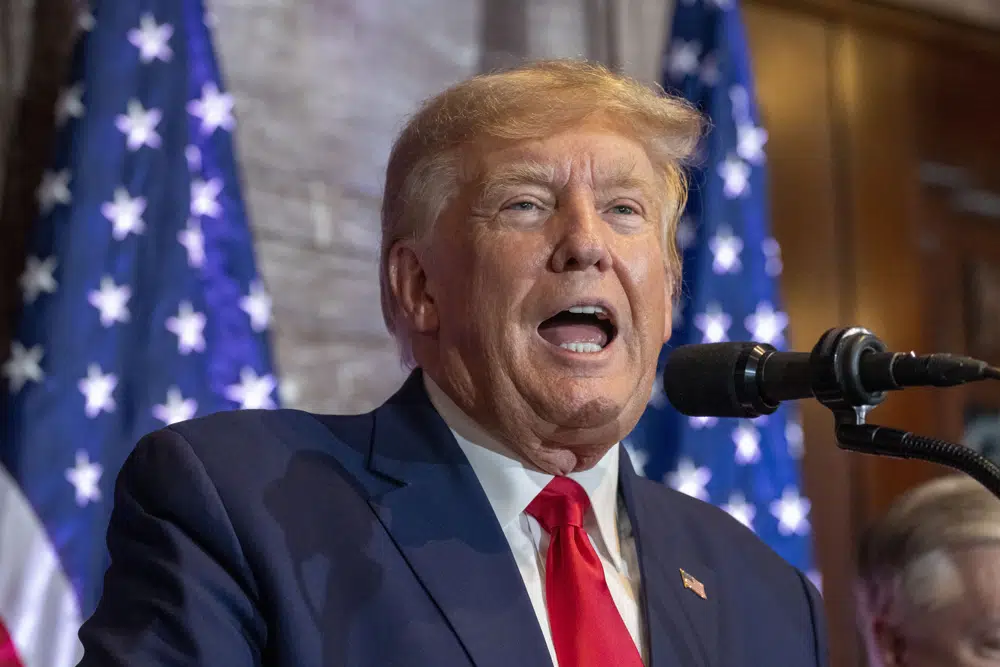
Two major conservative groups have signaled they are open to supporting someone other than Donald Trump in the 2024 race for the White House, the latest sign from an increasingly vocal segment of the Republican Party that it’s time to move on from the former president. David McIntosh, the president of the influential Club For Growth group, said Tuesday that the group has invited a half dozen potential Republican candidates to its donor summit in Florida next month, but Trump — the only declared major candidate in the race so far — is not among them. Instead, the group has invited Florida Gov. Ron DeSantis, who is viewed as Trump’s most formidable likely challenger, along with Nikki Haley, the former South Carolina governor and United Nations ambassador; former Vice President Mike Pence; former Secretary of State Mike Pompeo; Sen. Tim Scott of South Carolina; and Virginia Gov. Glenn Youngkin. “We think it would be great for our members to hear them, see what they have to say, where they want to lead the country,” McIntosh said in an interview. His comments came on the heels of a memo released over the weekend by the conservative advocacy group Americans For Prosperity that said the group was prepared to support someone other than Trump in the GOP primary. Tensions between Trump and both groups are not new, but their willingness to get involved on behalf of another candidate may only encourage at least half a dozen potential rivals who are considering campaigns. Haley is expected to announce her 2024 campaign next week in South Carolina. Both groups join several megadonors who have signaled in recent months that they’re looking elsewhere for a presidential nominee. Trump is facing a swirl of legal problems and has been blamed for the GOP’s underwhelming performance in last year’s midterm elections. However, he remains the most dominant figure in the party and has been a prolific fundraiser, relying on a network of small donors. Asked for comment Tuesday, Trump’s campaign pointed to messages on his Truth Social network in which he called McIntosh’s organization the “Club For NO Growth.” He later posted an additional message Tuesday, calling the group “an assemblage of political misfits, globalists, and losers.” Club For Growth, an anti-tax group, opposed Trump during his 2016 campaign but became a big ally once he won the White House. But the group has been at odds with Trump over the last year after it endorsed opposing candidates in Republican primaries, especially in the Ohio and Pennsylvania Senate races. McIntosh said the group is open to supporting a candidate in the Republican presidential primary, potentially running ads on their behalf. But he made clear that the group would support Trump in the general election if he became the nominee. “One of the factors that we’re taking into account is that the Democrats successfully used him in the last election to win a lot of races,” he said. “There’s a sense in all of this that we want to make sure whoever we nominate can win in the presidential race, and people want to see that.” Americans For Prosperity, founded by the billionaire industrialist Koch brothers, has long clashed with Trump. Their substantial network refused to endorse him or any candidate in the 2016 and 2020 presidential elections. Trump, in the past, has lashed out at the brothers, calling them a “total joke” and “globalists” who are “against Strong Borders and Powerful Trade.” In the new memo, the group said, “the best thing for the country would be to have a president in 2025 who represents a new chapter.” It said the political advocacy arm of AFP is prepared to support a candidate in the GOP primary “who can lead our country forward, and who can win” — with an added emphasis on “win.” A spokesperson for the group did not offer any further details about the process, including when the organization might make a decision on whom to endorse and which candidates might win the group’s backing. The pro-business, free-market group spent more than $30 million in advertising against President Barack Obama’s reelection in 2012. AFP’s political arm spent almost $80 million in the 2022 midterms on behalf of House and Senate candidates, according to reports filed with the Federal Election Commission. Once more candidates enter the race in the coming months, AFP is expected to go through a comprehensive vetting process based first on each candidate’s policy positions. The organization has long refused to endorse Trump because he wasn’t viewed as sufficiently conservative on trade and federal spending, among other issues. But AFP will also prioritize viability as a key factor in the endorsement process. By doing so, AFP — viewed as the largest and best-funded grassroots organization in the nation — could help narrow the Republican field in 2024 by starving lower-tier contenders of funding and attention. Trump critics within the GOP fear that the former president may benefit from a crowded field that ultimately divides the anti-Trump vote in the early primary states. Republished with the permission of The Associated Press.
Ron DeSantis to speak to Alabama Republican Party

Florida Governor and likely 2024 presidential candidate Ron DeSantis will be coming to Alabama in March as the speaker for the Alabama Republican Party’s annual Winter Dinner event. The Alabama Republican Party announced on Facebook, “It’s official! The Alabama Republican Party is excited to announce that Ron DeSantis will be our 2023 Winter Dinner special guest and keynote speaker. Join us March 9th when we host one of the most respected leaders in Conservative politics.” “The Alabama Republican Party is excited to announce that Florida Governor Ron DeSantis will be our special guest and keynote speaker at our annual Winter Dinner on March 9th,” the ALGOP wrote in an email to supporters. “Governor DeSantis needs no introduction, and we are thrilled to welcome him to the Yellowhammer State. This is an amazing opportunity for Republicans across Alabama, and we hope you will join us for this historic event.” The ALGOP Winter Dinner will be held on Thursday, March 9, 2023, in the Birmingham Sheraton Ballroom. Tickets are $250 per person or $400 per couple. DeSantis appears to be openly campaigning for the GOP nomination for President. Former President Donald Trump has already announced his intention to run for the office again. Trump lost the presidency to former Vice President Joe Biden in the 2020 election. Other possible GOP candidates include former South Carolina Governor and U.S Ambassador to the United Nations Nikki Haley, former Wyoming Congresswoman and noted Trump critic Liz Cheney, former Secretary of State Mike Pompeo, and former Vice President and Indiana Governor Mike Pence. Trump won the 2016 Alabama Presidential primary in a big way. U.S. Senator Ted Cruz finished second even though then-Governor Robert Bentley had endorsed then-Ohio Governor John Kasich. President Biden has announced his intent to seek a second term, though there is speculation that the President could face a challenge in the Democratic primary. The Alabama Presidential Primary will be on March 5, 2024. To connect with the author of this story or to comment, email brandonmreporter@gmail.com.
Ronna McDaniel re-elected to fourth term as Chair of RNC

On Friday, the Republican National Committee (RNC) met and voted to give incumbent Ronna Romney McDaniel an unprecedented fourth term as Chair of the RNC. McDaniel fought off fierce challenges from California Lawyer Harmeet Dhillon and My Pillow founder and President Mike Lindell. It was a landslide victory for McDaniel, who won 111 of the votes, Dhillon won 51 votes, and Lindell just 4. “With us united, the Democrats are going to hear us in 2024,” McDaniel said after thanking Dhillon and Lindell for the races that they ran. Florida Governor Ron DeSantis had openly backed Dhillon, saying on Thursday, “I think we need to get some new blood in the RNC.” “We’ve had three sub-standard election cycles in a row—’18, ’20, and ’22—and I would say of all three of those, ’22 was probably the worst given the political environment of a very unpopular President [Joe] Biden,” DeSantis said. “Huge majorities of the people think the country is going in the wrong direction.” The Alabama Republican Steering Committee had made national headlines by voting “no confidence” in McDaniel earlier this month. “The Alabama Republican Party’s Steering Committee cannot support or endorse Ronna McDaniel for RNC Chair and declare our vote of no-confidence in her leadership,” the Steering Committee said in a statement. “We encourage all RNC members across the country to support new leadership at the RNC Winter Meeting.” Alabama had three votes: ALGOP Chairman John Wahl, National Committeeman Paul Reynolds, and National Committeewoman Barbara Drummond. It is not known how the Alabama delegates voted as this was a secret ballot. Most Republican heavyweights, including former President Donald Trump, Speaker of the House Kevin McCarthy, and former Vice President Mike Pence, had steered clear of the RNC battle. More than 150 Republican donors endorsed McDaniel in the RNC leadership race. U.S. Sen. Rick Scott endorsed McDaniel. Sen. Scott said, “[McDaniel] has played a major role in helping turn Florida red and fighting for conservative values across the country. Thank you, Ronna, for all you’ve done to help elect strong Republicans in the Sunshine state!” McDaniel defended her record as RNC chair and said that it is not her fault that the GOP has not performed better in elections during her tenure. “I’m not the coach. I don’t pick the players. The voters do. I don’t call the plays. The candidates pick their own plays,” she told Semafor in an interview published earlier this month. “I mean, we defied history in 2018, picking up three Senate seats in a midterm year. We picked up 15 seats in 2020 in the House, which was unprecedented, and then this year, winning back the House,” she also noted at the time. Dhillon made national headlines when she accused some Alabama Republicans of waging a whisper campaign about her non-Christian religious beliefs (she is an immigrant from India and a member of the Sikh faith). This election will make McDaniel the longest-serving Chair in the history of the Republican Party. To connect with the author of this story or to comment, email brandonmreporter@gmail.com.
Past U.S. presidents, VPs asked to recheck for classified docs
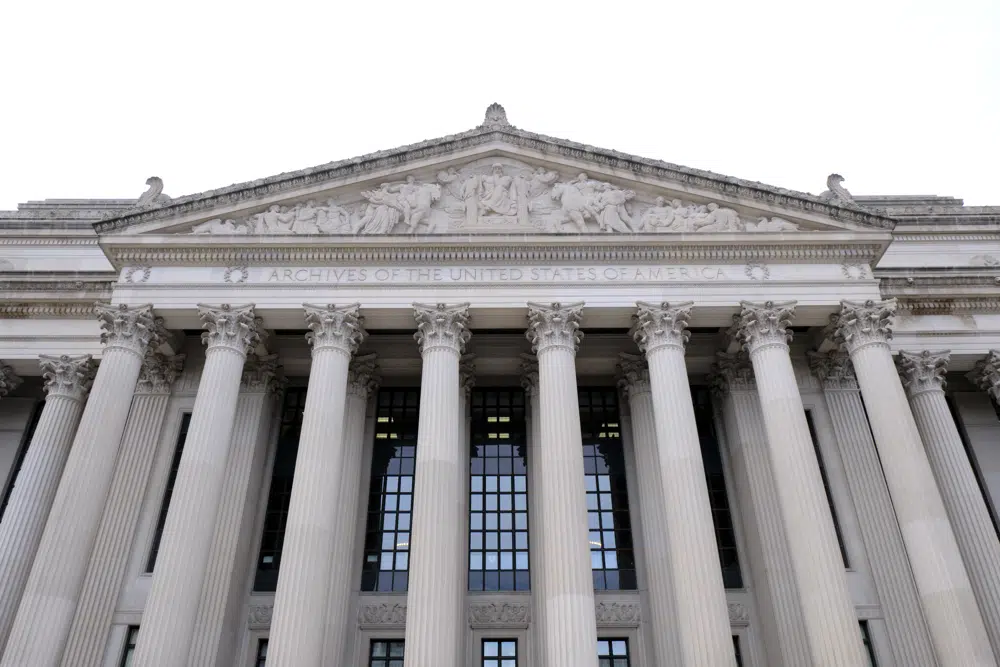
The National Archives has asked former U.S. presidents and vice presidents to recheck their personal records for any classified documents following the news that President Joe Biden and former Vice President Mike Pence had such documents in their possession, two people familiar with the matter said Thursday. The Archives sent a letter Thursday to representatives of former presidents and vice presidents extending back to Ronald Reagan to ensure compliance with the Presidential Records Act, according to the two people, who spoke on condition of anonymity because they were not authorized to speak about investigations. The act states that any records created or received by the president are the property of the U.S. government and will be managed by the archives at the end of the administration. The Archives sent the letter to representatives of former Presidents Donald Trump, Barack Obama, George W. Bush, Bill Clinton, George H.W. Bush, and Ronald Reagan, and former Vice Presidents Pence, Biden, Dick Cheney, Al Gore, and Dan Quayle, they said. The letter was first reported by CNN. Spokespeople for former presidents Trump, Obama, George W. Bush, and Clinton and former vice presidents Pence, Dick Cheney, Al Gore, and Dan Quayle did not immediately respond to requests for comment. Biden’s lawyers came across classified documents from his time as vice president in a locked cabinet as they were packing up an office he no longer uses in November. Since then, subsequent searches by the FBI and Biden’s lawyers have turned up more documents. Former Vice President Pence, too, this week, discovered documents and turned them in after saying previously he did not believe he had any. The White House did not immediately respond to a request for comment, but the searches by Biden’s attorneys and the FBI appear to fulfill the Archives’ request. The Archives had no comment. Handling of classified documents has been a problem off and on for decades, from presidents to Cabinet members and staff across multiple administrations stretching as far back as Jimmy Carter. But the issue has taken on greater significance since former President Donald Trump willfully retained classified material at his Florida estate, prompting the unprecedented FBI seizure of thousands of pages of records last year. Attorney General Merrick Garland appointed a special counsel to investigate Trump’s handling of the documents and also Biden’s. It turns out that officials from all levels of government discover they are in possession of classified material and turn it over to authorities at least several times a year, according to another person familiar with the matter who spoke on the condition of anonymity due to the sensitive nature of classified documents. Current and former officials involved in the handling of classified information say that while there are clear policies for how such information should be reviewed and stored, those policies are sometimes pushed aside at the highest levels. Teams of national security officials, secretaries, and military aides who share responsibility for keeping top-level executives informed — and the executives themselves — may bend the rules for convenience, expediency or sometimes simple carelessness. While much of the attention has been on classified information, the Presidential Records Act actually requires that, from the Reagan administration onward, all records must be transferred to the Archives regardless of classification. It’s against federal law to have classified documents at an unauthorized location, but it’s only a crime if it was done intentionally. Speaking Thursday at an unrelated news conference, FBI Director Christopher Wray said that though he could not discuss any specific ongoing investigation, “We have had for quite a number of years any number of mishandling investigations. That is, unfortunately, a regular part of our counterintelligence division’s and counterintelligence program’s work.” He said there was a need for people to be conscious of laws and rules governing the handling of classified information. “Those rules,” he said, “are there for a reason.” Republished with the permission of The Associated Press.
Senate passes $1.7 trillion bill to fund government, aid Ukraine
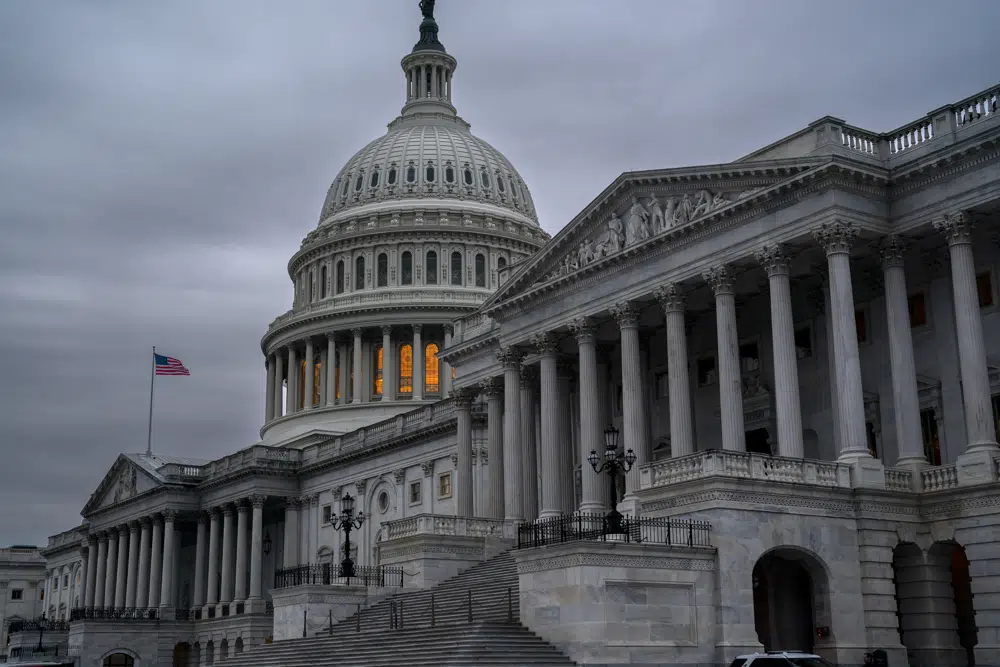
The Senate passed a massive $1.7 trillion spending bill Thursday that finances federal agencies through September and provides another significant round of military and economic aid to Ukraine one day after Ukrainian President Volodymyr Zelenskyy’s dramatic address to a joint meeting of Congress. The bill, which runs for 4,155 pages, includes about $772.5 billion for domestic programs and $858 billion for defense and would finance federal agencies through the fiscal year at the end of September. The bill passed by a vote of 68-29 and now goes to the House for a final vote before it can be sent to President Joe Biden to be signed into law. “This is one of the most significant appropriations packages we have done in a very long time,” said Senate Majority Leader Chuck Schumer, D-N.Y. “The range of people it helps is large and deep.” Lawmakers were racing to get the bill approved before a partial government shutdown would occur at midnight Friday, and many were anxious to complete the task before a deep freeze, and wintry conditions left them stranded in Washington for the holidays. Many also want to lock in government funding before a new GOP-controlled House next year could make it harder to find compromise on spending. Senators heard from Zelenskyy about the importance of U.S. aid to his country for its war with Russia on Wednesday night. The measure provides about $45 billion in military, economic, and humanitarian assistance for the devastated nation and NATO allies, more than Joe Biden even requested, raising total assistance so far to more than $100 billion. “Your money is not charity,” Zelenskyy told lawmakers and Americans watching from home. “It’s an investment in the global security and democracy that we handle in the most responsible way.” Lawmakers were in disagreement over which amendments were to be voted upon to lock in a final vote on an expedited basis. The impasses had the potential to prevent passage of the bill before the midnight Friday deadline. But negotiations overnight led to a breakthrough and senators gathered early Thursday morning to work through more than a dozen amendments before getting to a final vote. The House won’t be able to take up the bill until Friday morning, and while it is expected to pass, House Majority Leader Steny Hoyer, D-Md., said the chamber will also approve a stopgap spending resolution to ensure government services continue without interruption before the bill is signed into law. The spending bill was supported by Schumer and Senate Republican leader Mitch McConnell, though for different reasons. McConnell cited the bill’s nearly 10% boost in defense spending, which he says will give America’s Armed Forces the funding and certainty needed to ensure the country’s security. “The world’s greatest military will get the funding increase that it needs, outpacing inflation,” McConnell said. “Meanwhile, non-defense, non-veterans spending will come in below the rate of inflation, for a real-dollar cut.” McConnell faced pushback from many Republicans who don’t support the spending bill and resent being forced to vote on such a massive package with so little time before a potential shutdown and the Christmas holiday. “There has not been enough time for a single person to have read this entire bill. The bill and process ignores soaring inflation, rising interest rates and our ballooning debt of $31 trillion,” said Sen. Rand Paul, R-Ky. “Enough is enough.” Eighteen Republican senators joined with Democrats in voting for the bill. For two senators, the bill puts the finishing touches on their work in Washington. Sen. Patrick Leahy, D-Vt., is retiring after serving some 48 years in the Senate and as the current chairman of the Senate Appropriations Committee. He negotiated the bill for months with Sen. Richard Shelby of Alabama, the committee’s ranking Republican, who was elected to the Senate in 1986 and is also retiring. “What a capstone to a brilliant career,” Schumer said. The bill also contains roughly $40 billion in emergency spending in the U.S., mostly to assist communities across the country recovering from drought, hurricanes, and other natural disasters. And, of course, it includes scores of policy changes unrelated to spending that lawmakers sought to include in what is going to be the last major bill of the Congress, else they start from scratch next year in a divided Congress where Republicans will be returning to the majority in the House. One of the most notable examples was a historic revision to federal election law that aims to prevent any future presidents or presidential candidates from trying to overturn an election. The bipartisan overhaul of the Electoral Count Act is in direct response to former President Donald Trump’s efforts to convince Republican lawmakers and then-Vice President Mike Pence to object to the certification of Biden’s victory on January 6, 2021. The bill also allowed Congress to follow through on some of the most consequential bills it had passed over the past two years, such as a measure aiming to boost computer chip production in the U.S. and another to expand health care services to veterans exposed to toxic burn pits. Some $5 billion was provided help the VA implement some of the changes called for in the PACT Act, and the amount of money provided specifically for VA health care soared 22% to nearly $119 billion. “These benefits are deserved,” Leahy said. “They were earned, and they are owed.” Republished with the permission of The Associated Press.
January 6 panel prepares to unveil final report on insurrection
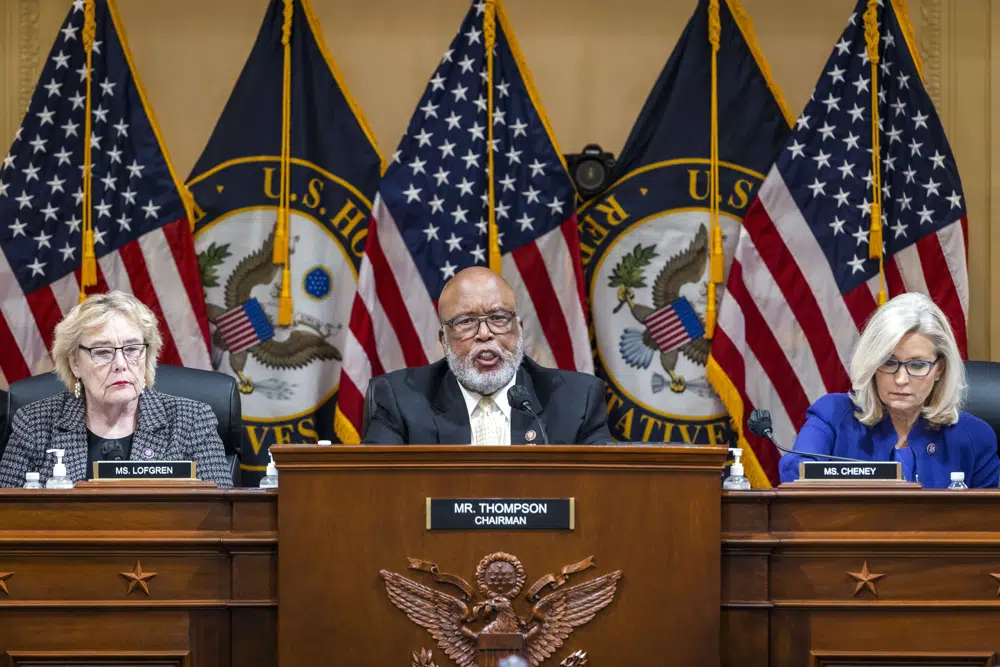
An 800-page report set to be released Thursday by House investigators will conclude that then-President Donald Trump criminally plotted to overturn his 2020 election defeat and “provoked his supporters to violence” at the Capitol with false claims of widespread voter fraud. The resulting January 6, 2021, insurrection of Trump’s followers threatened democracy with “horrific” brutality toward law enforcement and “put the lives of American lawmakers at risk,” according to the report’s executive summary. “The central cause of January 6 was one man, former President Donald Trump, who many others followed,” reads the report from the House January 6 committee, which is expected to be released in full on Thursday. “None of the events of January 6 would have happened without him.” Ahead of the report’s release, the committee on Wednesday released 34 transcripts from the 1,000 interviews it conducted over the last 18 months. Included in the release is testimony from the onetime leaders of two extremist groups, the Proud Boys and the Oath Keepers, both of whom were involved in planning ahead of the rioting. Oath Keepers founder Stewart Rhodes was convicted last month of seditious conspiracy for his role in the planning, and former Proud Boys leader Enrique Tarrio and four other members of the extremist group are in court on similar charges this month. The report’s eight chapters of findings will largely mirror nine hearings this year that presented evidence from over 1,000 private interviews and millions of pages of documents. They tell the story of Trump’s extraordinary and unprecedented campaign to overturn his defeat and his pressure campaign on state officials, the Justice Department, members of Congress, and his own vice president to change the vote. A 154-page summary of the report released Monday detailed how Trump, a Republican, amplified the false claims on social media and in public appearances, encouraging his supporters to travel to Washington and protest Democrat Joe Biden’s presidential election win. And how he told them to “fight like hell” at a huge rally in front of the White House that morning and then did little to stop the violence as they beat police, broke into the Capitol, and sent lawmakers running for their lives. It was a “multi-part conspiracy,” the committee concludes. The massive, damning report comes as Trump is running again for the presidency and also facing multiple federal investigations, including probes of his role in the insurrection and the presence of classified documents at his Florida estate. A House committee is expected to release his tax returns in the coming days — documents he has fought for years to keep private. And he has been blamed by Republicans for a worse-than-expected showing in the midterm elections, leaving him in his most politically vulnerable state since he won the 2016 election. It is also a culmination of four years of a House Democratic majority that has spent much of its time and energy investigating Trump, and that is ceding power to Republicans in two weeks. Democrats impeached Trump twice — both times he was acquitted by the Senate — and investigated his finances, his businesses, his foreign ties, and his family. But the 18-month January 6 probe has been the most personal for the lawmakers, most of whom were in the Capitol when Trump’s supporters stormed the building and interrupted the certification of Biden’s victory. While the lasting impact of the probes remains to be seen — most Republicans have stayed loyal to the former president — the committee’s hearings were watched by tens of millions of people over the summer. And 44% of voters in November’s midterm elections said the future of democracy was their primary consideration at the polls, according to AP VoteCast, a national survey of the electorate. “This committee is nearing the end of its work, but as a country, we remain in strange and uncharted waters,” said the panel’s chairman, Democratic Rep. Bennie Thompson of Mississippi, at the meeting Monday to adopt the report and recommend criminal charges against Trump. “We’ve never had a president of the United States stir up a violent attempt to block the transfer of power. I believe nearly two years later, this is still a time of reflection and reckoning.” The “reckoning” committee members are hoping for is criminal charges against Trump and key allies. But only the Justice Department has the power to prosecute, so the panel sent referrals recommending the department investigate the former president on four crimes, including aiding an insurrection. While its main points are familiar, the January 6 report will provide new detail from the hundreds of interviews and thousands of documents the committee has collected. Transcripts and some video are expected to be released as well over the coming two weeks. Republicans take over the House on January 3, when the panel will be dissolved. “I guarantee there’ll be some very interesting new information in the report and even more so in the transcripts,” Rep. Adam Schiff, D-Calif., told “CBS Mornings” on Wednesday. The summary of the report describes how Trump refused to accept the lawful result of the 2020 election and plotted to overturn his defeat. Trump pressured state legislators to hold votes invalidating Biden’s electors, sought to “corrupt the U.S. Department of Justice” by urging department officials to make false statements about the election, and repeatedly, personally tried to persuade Vice President Mike Pence to upend democracy with unprecedented objections at the joint congressional session, it says. Trump has tried to discredit the report, slamming committee members as “thugs and scoundrels” as he has continued to falsely dispute his 2020 loss. In response to the panel’s criminal referrals, Trump said that “These folks don’t get it that when they come after me, people who love freedom rally around me. It strengthens me.” The report will give minute-by-minute detail of what Trump was doing — and not doing — for around three hours as his supporters beat police and broke into the Capitol. Trump riled up the crowd at the rally that morning and then did little to stop his supporters for several hours as he watched the violence unfold on television inside the White House
January 6 panel urges Donald Trump prosecution with criminal referral
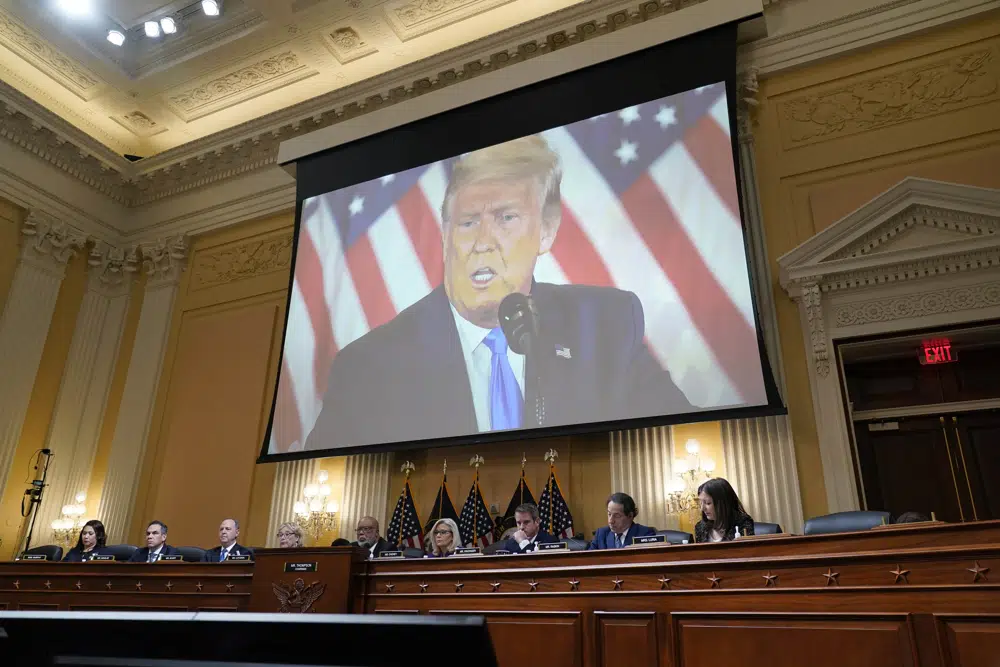
The House January 6 committee urged the Justice Department on Monday to bring criminal charges against Donald Trump for the violent 2021 Capitol insurrection, calling for accountability for the former president and “a time of reflection and reckoning.” After one of the most exhaustive and aggressive congressional probes in memory, the panel’s seven Democrats and two Republicans are recommending criminal charges against Trump and associates who helped him launch a wide-ranging pressure campaign to try to overturn his 2020 election loss. The panel also released a lengthy summary of its final report, with findings that Trump engaged in a “multi-part conspiracy” to thwart the will of voters. At a final meeting Monday, the committee alleged violations of four criminal statutes by Trump, in both the run-up to the riot and during the insurrection itself, as it recommended the former president for prosecution to the Justice Department. Among the charges they recommend for prosecution is aiding an insurrection — an effort to hold him directly accountable for his supporters who stormed the Capitol that day. The committee also voted to refer conservative lawyer John Eastman, who devised dubious legal maneuvers aimed at keeping Trump in power, for prosecution on two of the same statutes as Trump: conspiracy to defraud the United States and obstructing an official proceeding. While a criminal referral is mostly symbolic, with the Justice Department ultimately deciding whether to prosecute Trump or others, it is a decisive end to a probe that had an almost singular focus from the start. Chairman Bennie Thompson, D-Miss., said Trump “broke the faith” that people have when they cast ballots in a democracy and that the criminal referrals could provide a “roadmap to justice” by using the committee’s work. “I believe nearly two years later, this is still a time of reflection and reckoning,” Thompson said. “If we are to survive as a nation of laws and democracy, this can never happen again.” Wyoming Rep. Liz Cheney, the panel’s Republican vice chairwoman, said in her opening remarks that every president in American history has defended the orderly transfer of power, “except one.” The committee also voted 9-0 to approve its final report, which will include findings, interview transcripts, and legislative recommendations. The full report is expected to be released on Wednesday. The report’s 154-page summary, made public as the hearing ended, found that Trump engaged in a “multi-part conspiracy” to overturn the election. While the majority of the report’s main findings are not new, it altogether represents one of the most damning portraits of an American president in recent history, laying out in great detail Trump’s broad effort to overturn his own defeat and what the lawmakers say is his direct responsibility for the insurrection of his supporters. The panel, which will dissolve on January 3 with the new Republican-led House, has conducted more than 1,000 interviews, held ten well-watched public hearings, and collected more than a million documents since it launched in July 2021. As it has gathered the massive trove of evidence, the members have become emboldened in declaring that Trump, a Republican, is to blame for the violent attack on the Capitol by his supporters almost two years ago. After beating their way past police, injuring many of them, the January 6 rioters stormed the Capitol and interrupted the certification of Joe Biden’s presidential election win, echoing Trump’s lies about widespread election fraud and sending lawmakers and others running for their lives. The attack came after weeks of Trump’s efforts to overturn his defeat — a campaign that was extensively detailed by the committee in its multiple public hearings and laid out again by lawmakers on the panel at Monday’s meeting. Many of Trump’s former aides testified about his unprecedented pressure on states, federal officials, and Mike Pence to object to Biden’s win. The committee has also described in great detail how Trump riled up the crowd at a rally that morning and then did little to stop his supporters for several hours as he watched the violence unfold on television. The panel aired some new evidence at the meeting, including a recent interview with longtime Trump aide Hope Hicks. Describing a conversation she had with Trump around that time, she said he told her that no one would care about his legacy if he lost the election. Hicks told the committee that Trump told her, “The only thing that matters is winning.” Trump’s campaign did not immediately respond to a request for comment, but the former president slammed members of the committee Sunday as “thugs and scoundrels” as he has continued to falsely dispute his 2020 loss. While a so-called criminal referral has no real legal standing, it is a forceful statement by the committee and adds to political pressure already on Attorney General Merrick Garland and special counsel Jack Smith, who is conducting an investigation into January 6 and Trump’s actions. On the recommendation to charge Trump with aiding an insurrection, the committee said in the report’s summary that the former president “was directly responsible for summoning what became a violent mob” and refused repeated entreaties from his aides to condemn the rioters or to encourage them to leave. For obstructing an official proceeding, the committee cites Trump’s relentless badgering of Vice President Mike Pence and others to prevent the certification of the election results on January 6. And his repeated lies about the election and efforts to undo the results open him up to a charge of conspiracy to defraud the United States, the panel said. The final charge recommended by the panel is conspiracy to make a false statement, citing the scheme by Trump and his allies to put forward slates of fake electors in battleground states won by President Joe Biden. Among the other charges contemplated but not approved by the committee was seditious conspiracy, the same allegation Justice Department prosecutors have used to target a subset of rioters belonging to far-right groups like the Oath Keepers and Proud Boys. Thompson said after the hearing that the seditious conspiracy charge is “something that the committee didn’t come to agreement on.” The panel was formed in the summer
Donald Trump’s Constitution remarks put Mitch McConnell, GOP on defense

Senate Republican leader Mitch McConnell said Tuesday that anyone who thinks the Constitution should be suspended would have a “very hard time” becoming president in the United States, trying to distance himself from Donald Trump’s new White House bid. It’s the second time McConnell has been forced to open his weekly press conference preemptively responding to questions about the former president’s remarks and behavior. Last week, it was over Trump’s dinner meeting with a white nationalist Holocaust denier. “Let me just say that anyone seeking the presidency who thinks the Constitution can somehow be suspended or not followed, it seems to me, would have a very hard time being sworn in as President of the United States,” McConnell said at the Capitol. The remarks come as Trump, who announced he is running again for the presidency in 2024, is putting his party into the familiar position of responding to his ideas, statements, and outbursts, forcing Republicans to publicly answer for his behavior. Trump, over the weekend, called for “the termination of all rules, regulations, and articles, even those found in the Constitution” after new revelations of what he said was Twitter’s unfair treatment of him during the 2020 presidential election that he lost to Joe Biden. Reaction from Republicans has been critical, even as many GOP officials remain unwilling to directly confront Trump as the leader of their party. Speaking Tuesday in South Carolina, Mike Pence, Trump’s former vice president, said, “I think anyone who serves in public office, anyone who aspires to serve in public office or serve again in public office should make it clear that they will support and defend the Constitution of the United States.” McConnell, as the Republican leader trying to steer his party in a post-Trump era — the two have not spoken since McConnell agreed to the Electoral College tally for Biden at the end of 2020 — faces an endless task of reacting to the former president’s outbursts. Still, McConnell deflected questions over whether he could support Trump if he becomes the Republican Party’s 2024 presidential nominee. Instead, the Senate GOP leader reiterated the difficulty of taking the oath, which requires the president-elect to defend the Constitution. “It would be pretty hard to be sworn into the presidency if you’re not willing to uphold the Constitution,” McConnell said. Over the weekend, Trump latched on to a report from new Twitter owner Elon Musk suggesting favoritism on the social media platform during the 2020 presidential race. Twitter was asked to moderate content about Biden’s family, particularly his son, Hunter Biden, that Republicans wanted to amplify in their attacks against the Democrat. Trump, on his social media app, had said that, “Fraud of this type and magnitude allows for the termination of all rules, regulations, and articles, even those found in the Constitution.” He later accused the media of distorting his comments and “trying to convince the American People that I said I wanted to ‘terminate’ the Constitution.” Two weeks ago, Trump came under criticism for having dinner with Nick Fuentes, a known white nationalist and Holocaust denier. Trump said he was unaware of Fuentes’ beliefs. Republicans have been unable to firmly reject Trump as their potential nominee, even as many of them try to distance themselves from his recent activities. House GOP leader Kevin McCarthy, who is in line to become the House speaker when Republicans take control in the new year, has yet to fully weigh in on Trump’s latest comments. Republican Rep. Liz Cheney, a staunch Trump critic, tweeted directly at McCarthy to respond: “This week Trump said we should terminate all rules, regulations etc ‘even those in the Constitution’ to overturn the election. Are you so utterly without principle that you won’t condemn this either?” Republished with the permission of The Associated Press.
Supreme Court weighs ‘most important case’ on democracy
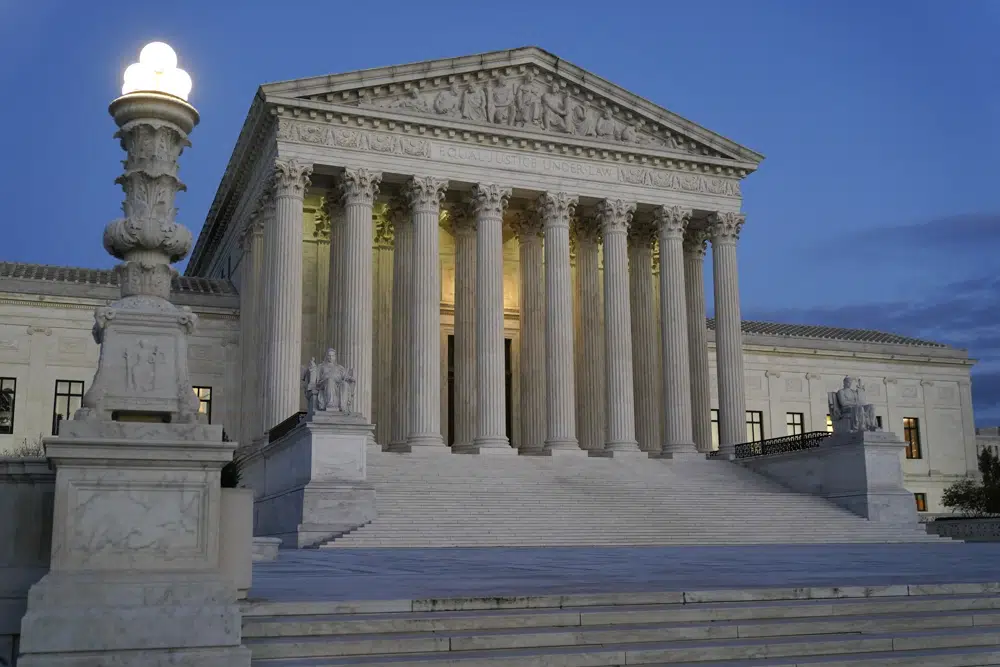
The Supreme Court is about to confront a new elections case, a Republican-led challenge asking the justices for a novel ruling that could significantly increase the power of state lawmakers over elections for Congress and the presidency. The court is set to hear arguments Wednesday in a case from North Carolina, where Republican efforts to draw congressional districts heavily in their favor were blocked by a Democratic majority on the state Supreme Court because the GOP map violated the state constitution. A court-drawn map produced seven seats for each party in last month’s midterm elections in highly competitive North Carolina. The question for the justices is whether the U.S. Constitution’s provision giving state legislatures the power to make the rules about the “times, places and manner” of congressional elections cuts state courts out of the process. “This is the single most important case on American democracy — and for American democracy — in the nation’s history,” said former federal judge Michael Luttig, a prominent conservative who has joined the legal team defending the North Carolina court decision. The Republican leaders of North Carolina’s legislature told the Supreme Court that the Constitution’s “carefully drawn lines place the regulation of federal elections in the hands of state legislatures, Congress, and no one else.” Three conservative justices already have voiced some support for the idea that the state court had improperly taken powers given by the Constitution when it comes to federal elections. A fourth has written approvingly about limiting the power of state courts in this area. But the Supreme Court has never invoked what is known as the independent state legislature theory. It was, though, mentioned in a separate opinion by three conservatives in the Bush v. Gore case that settled the 2000 presidential election. If the court were to recognize it now, opponents of the concept argue, the effects could be much broader than just redistricting. The most robust ruling for North Carolina Republicans could undermine more than 170 state constitutional provisions, over 650 state laws delegating authority to make election policies to state and local officials, and thousands of regulations down to the location of polling places, according to the Brennan Center for Justice at the New York University School of Law. Luttig, who advised former Vice President Mike Pence that he had no authority to reject electoral votes following the 2020 election, is among several prominent conservatives and Republicans who have lined up against the broad assertion that legislatures can’t be challenged in state courts when they make decisions about federal elections, including congressional redistricting. That group includes former California Gov. Arnold Schwarzenegger, law professor Steven Calabresi, a founder of the conservative Federalist Society, and Benjamin Ginsberg, a longtime lawyer for Republican candidates and the party. “Unfortunately, because of ongoing and widespread efforts to sow distrust and spread disinformation, confidence in our elections is at a low ebb,” Ginsberg wrote in a Supreme Court filing. “The version of the independent state legislature theory advanced by Petitioners, in this case, threatens to make a bad situation much worse, exacerbating the current moment of political polarization and further undermining confidence in our elections.” The arguments are taking place a day after the final contest of the 2022 midterms, the Georgia Senate runoff between Democratic Sen. Raphael Warnock and Republican Herschel Walker. In that contest, state courts ruled in favor of Democrats to allow for voting on the Saturday before the election, over the objections of Republicans. Jason Snead, of the conservative Honest Elections Project, said the case is an opportunity for the high court to rein in out-of-control state courts which are being pushed by Democratic attorneys to effectively create new rules governing voting, including the Georgia example. “We’ve seen a fairly pervasive attempt to use courts to rewrite election laws if those laws don’t suit partisan agendas,” Snead said in a call with reporters. “That’s not something we want to see when it flies in the face of the Constitution.” He is among proponents of the high court’s intervention who argue the case doesn’t represent “a threat to democracy.” The justices can instead write a narrow opinion that places limits on state courts without upsetting the choices New York and other states have made to restrict partisan redistricting, a group of New York voters wrote in a court filing. The New Yorkers implicitly recognize that if the court gives more power to state legislatures over drawing congressional lines, Republicans may not necessarily benefit. During the last redistricting cycle, states that used independent redistricting commissions rather than legislatures were largely Democratic-dominated ones. Commissions drew 95 House seats in states with Democratic legislatures and governors, as opposed to only 12 in states with GOP control. A ruling that grants legislatures ultimate power over redistricting could eradicate those commissions and let Democrats redraw a major chunk of the House map. “The bottom line is the impact of this fringe theory would be terrible,” said former Attorney General Eric Holder, chairman of the National Democratic Redistricting Committee. “It could unleash a wave of gerrymandering from both parties.” Even less dramatic changes may not necessarily tilt the GOP’s way on a national redistricting map that was essentially fought to a draw, and where state court rulings cost Democrats about as many House seats as Republicans. The Supreme Court refused to step into the North Carolina case in March, allowing the court-drawn districts to be used this year. Justices Samuel Alito, Neil Gorsuch, and Clarence Thomas dissented. Writing for the three, Alito said, “there must be some limit on the authority of state courts to countermand actions taken by state legislatures when they are prescribing rules for the conduct of federal elections. I think it is likely that the applicants would succeed in showing that the North Carolina Supreme Court exceeded those limits.” Justice Brett Kavanaugh has separately written about the need for federal courts to police the actions of state courts when it comes to federal elections. Chief Justice John Roberts’ record on this question gives both sides some hope. In 2015,
